

Blog
Milwaukee 12V Cordless Rotary Tool Review: Our Shop?

Ever tried easing a sharp edge inside a cabinet, cleaning up a hinge mortise, or carving a small detail—only to find your full-size sander or router is too bulky, too aggressive, or just plain awkward in tight spaces? Those fussy, precision tasks are where a rotary tool can save a project from looking “shop-made” in the wrong way.
The Milwaukee Cordless rotary Tool (12.0V, bare tool) is built for detail work like light cutting, sanding, grinding, and shaping, with a 1/8-inch collet that fits common rotary accessories. It pairs a variable-speed range of 5,000–32,000 RPM with a slide on/off switch and speed dial, plus an LED light for visibility. At 9-1/2 inches and 1.3 lb, it’s aimed at control in cramped setups and small shops.
In this review, we’ll look at key features, build and durability cues (including Milwaukee’s protected front bearing and exhaust ports), ease of use for beginners, and what customers report about power under load, handling, and value—especially since it’s battery-not-included (Li-Ion, 1.5Ah platform). We’re longtime woodworkers who focus on practical tool choices, not hype.
Tool Overview and Build Quality in the Shop

On the bench, the Milwaukee cordless Rotary Tool (M12) reads like a detail-worker’s tool built with jobsite sensibilities: 12.0V Li‑Ion platform, variable speed 5,000–32,000 RPM, and a compact body that comes in at just 9-1/2 in. long and 1.3 lb. (bare tool).In our shop, that size-to-speed combo matters more than raw numbers—high RPM helps with clean trimming, sanding, and carving in tight spots, while the lighter weight reduces fatigue when we’re doing long, fussy passes.Milwaukee also leans into durability with “grinder style exhaust ports” and a protected front bearing, and multiple customer reviews echo that it “feels tough and reliable” and has a “serious punch” for a cordless rotary. We did notice a recurring theme in feedback worth keeping in mind for fine woodworking: a few users report it’s a little “fat” in the hand and can vibrate a bit—not a dealbreaker for occasional shaping and trimming, but something we’d weigh if we were doing day-in, day-out carving sessions where balance and low vibration are everything.
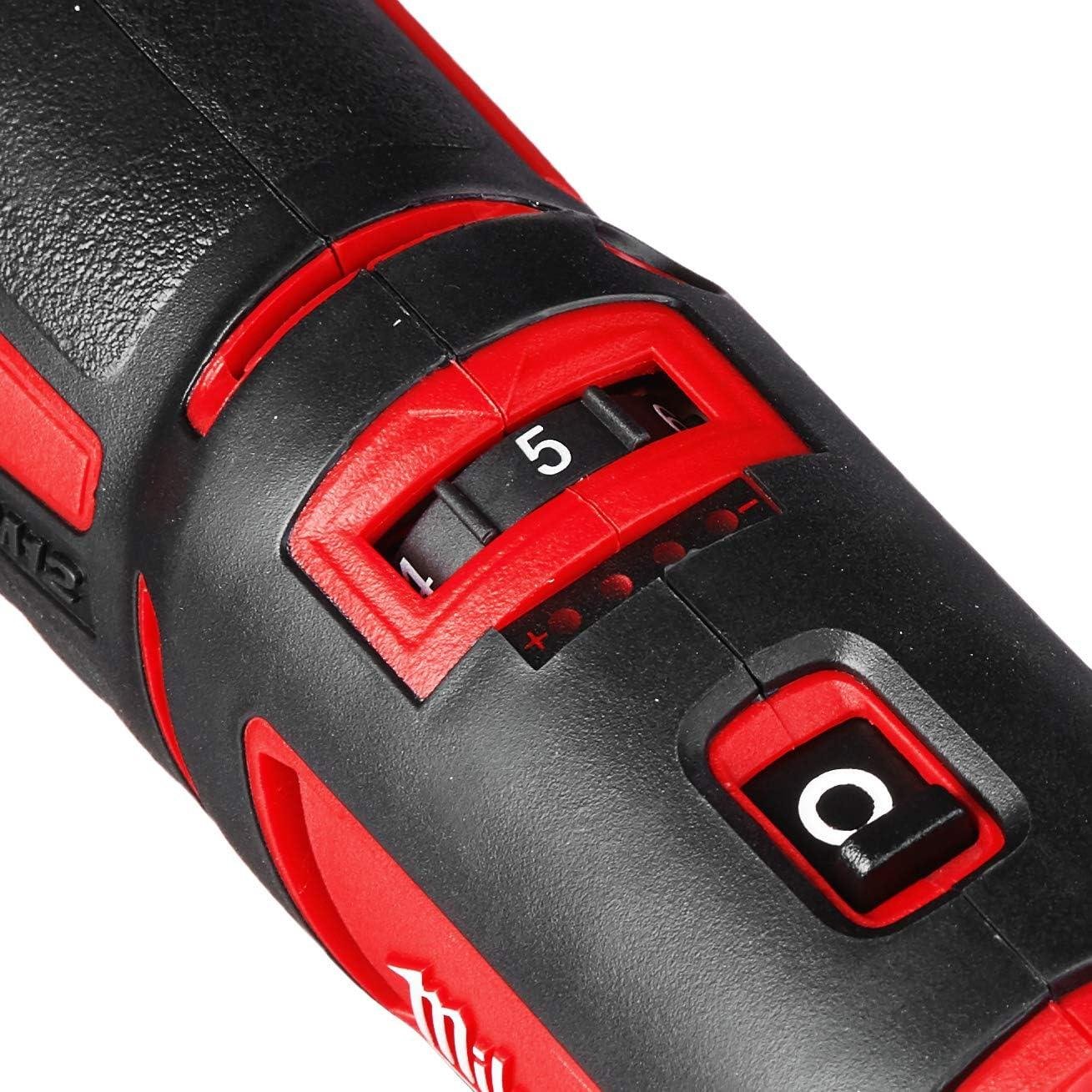
Build quality in real use also shows up in the small ergonomics: the tool uses a slide on/off switch with speed dial and includes an LED light, which is more helpful than it sounds when we’re under a cabinet lip, inside a case corner, or cleaning up a plug cutout where overhead light doesn’t reach. Bit changes aren’t tool-free—Milwaukee includes a wrench and relies on a 1/8 in. collet—but reviewers consistently describe swapping accessories as easy once you press the lock button and snug the collet. The biggest “shop reality” note is power system planning: this is commonly purchased as a bare tool (battery included: no), so if we don’t already own M12 packs and a compatible charger, that’s an extra step (and cost) before the first cut. customers repeatedly praise the cordless convenience—“no leash”—and many highlight that all the Dremel attachments (including a flex shaft/pen) fit, which makes this a practical upgrade path for woodworkers who already own rotary accessories and just want a sturdier, battery-based handle to drive them. As with any rotary tool, technique matters: we get the cleanest results when we set speed to match the accessory (lower for some sanding and polishing, higher for small burrs and cut-off wheels), use light-to-medium pressure, and let RPM—not force—do the work to reduce burning and chatter on hardwoods.
- Included accessories
- Wrench
- (5) Cutting wheels
- Mandrel
- Compatible attachments/accessories
- Most 1/8 in. shank rotary accessories (customers frequently mention Dremel accessories fit)
- Flex shaft / flex “pen” style attachments (per customer review themes)
- Cut-off wheels, sanding drums, polishing points (commonly used add-ons per reviews)
- Ideal project types
- Inlay and small trim adjustments (careful, controlled nibbling)
- Carving and relief detail work where a full-size grinder is too aggressive
- Hardware cleanup: trimming screws/bolts, refining hinge mortise corners
- Small sanding and edge breaking in tight assemblies
- wood types tested by customers
- Not consistently specified in reviews; most feedback references general carving and small weekly projects rather than species
| Spec | Milwaukee M12 cordless Rotary Tool | What it means in a woodworking shop |
|---|---|---|
| Voltage | 12.0V (Li‑Ion platform) | Portable detail work without cord snagging; plan for M12 batteries/charger if you’re new to the system. |
| No-load speed | 5,000–32,000 RPM (variable) | Wide RPM range helps match speed to sanding vs cutting vs carving to reduce burning and improve control. |
| Collet capacity | 1/8 in. | Fits the most common rotary-tool shank size; reviewers say dremel-style accessories are compatible. |
| Weight | 1.3 lb. (bare tool) | Lighter tool is easier for long detailing sessions; battery adds additional weight depending on pack size. |
| Length | 9-1/2 in. | Compact enough for cabinet interiors and tight joinery touch-ups. |
| Lighting | LED | Helps track layout lines and edges when your hands block overhead light. |
| Dust collection | None specified | Plan on a shop vac nearby and a mask—rotary sanding makes fine dust fast. |
| Accessory type | Fit/Requirement | Shop use |
|---|---|---|
| Rotary bits/burrs | 1/8 in. shank | Carving, shaping, hinge/corner relief, and detail texturing. |
| Cut-off wheels | Uses included mandrel (and similar mandrels) | Trimming small hardware, cutting slots, light material removal. |
| Sanding drums/discs | 1/8 in. mandrel systems | Feathering edges, small radii, inside curves where larger sanders can’t reach. |
| Flex shaft / detail “pen” | Common rotary-tool standard interfaces (customers report compatibility) | Improves precision for carving and inlay cleanup by moving weight off the handpiece. |
| Capacity consideration | Recommended in the shop | Actual tool spec / reality |
|---|---|---|
| continuous heavy material removal | use light passes; step up to a die grinder or small grinder for big jobs | high RPM, compact tool—best for detail and intermittent grinding/sanding, not hogging off stock. |
| Run time planning | Keep a spare battery ready if you work in longer sessions | Battery not included with bare tool; reviewers like the modular battery approach to avoid downtime. |
| Dust control | Vacuum nearby + respirator for sanding | No dust port specified; rotary sanding can generate vrey fine dust quickly. |
See Full Specifications & Customer Photos
Real World Performance for Carving Routing and Detail Sanding

For carving router-style details and doing tight sanding passes, we keep coming back to how controllable the Milwaukee M12 rotary tool feels in the hand. At 9-1/2 in. long and only 1.3 lb. (bare tool),it’s light enough for one-handed work when we’re tracing relief carving lines or cleaning up inside corners where a palm router base simply won’t reach. The variable-speed dial (5,000–32,000 RPM) matters in real wood: lower RPM helps us “kiss” end grain and avoid scorching, while higher RPM is handy for quick stock removal with burrs and aggressive drums—provided we keep a steady, light pressure. Multiple reviewers echo the same theme: cordless convenience makes it faster to jump into detail work (“no annoying cables” and less setup vs. hanging a flex shaft), and several mention the tool has a “serious punch” for its size. We also appreciate the built-in LED light for sighting layout lines in shadows, especially when we’re shaping recesses or easing chamfers inside casework.
In sanding and carving, technique and bit choice matter as much as RPM. The tool uses a standard 1/8 in.collet, and reviewers consistently report that Dremel-style attachments (including flex-shaft-type accessories) fit, which opens up a huge ecosystem of carving burrs, sanding drums, and flap wheels for wood. A few users note it can feel a bit “fat” in the grip and that there’s some vibration/noise—roughly “on par with an average Dremel”—so for long sessions we’d recommend taking breaks, using sharp/clean abrasives, and letting the speed do the work instead of bearing down. one practical detail from reviews we agree with: the tool has a protective shutoff when bogged down or hot, which is a good reminder that rotary carving is about light, controlled passes rather than forcing the cutter. Also, as this is a bare tool, we need an M12 Li‑Ion battery and charger to run it; several reviewers highlight how the modular battery system keeps downtime low when we keep a spare pack ready.
- Included accessories
- Wrench
- (5) Cutting wheels
- Mandrel
- Compatible attachments/accessories
- 1/8 in. shank carving burrs (ball, flame, and cylinder shapes)
- Sanding drums and sleeves
- flap wheels and small abrasive wheels
- Cutoff wheels (for hardware trimming and shop tasks)
- Dremel-style accessory ecosystem (per customer reports)
- Flex-shaft style detailing accessories (per customer reports)
- Ideal project types
- Relief carving touch-ups and texture work
- Inlay pocket cleaning and fine relief shaping
- Sanding inside corners of boxes, drawers, and casework
- Rounding over tight edges where sanding blocks can’t reach
- Small hardware tweaks (cutting/sanding screws, hinges, brackets)
- Wood types tested by customers
- Not consistently specified in reviews; users broadly report success on “wood carving” and general shop materials.
| Spec | Milwaukee Cordless Rotary Tool (M12) | Why it matters for carving & sanding |
|---|---|---|
| Speed range | 5,000–32,000 RPM (no-load) | Lower speeds help avoid burning; higher speeds increase material removal with the right bit. |
| Collet capacity | 1/8 in. | Fits common rotary burrs/drums used for woodworking detail work. |
| Tool length | 9-1/2 in. | Manageable reach for interior work and close-in detailing. |
| Weight | 1.3 lb. (bare tool) | Less fatigue during long detail sanding and carving sessions. |
| power system | 12V Li-Ion (M12), 1.5Ah listed (battery not included) | Plan for battery/charger; spare packs reduce downtime for sustained sanding. |
| Accessory Type | What it’s used for in the woodshop | fit/Notes |
|---|---|---|
| Carving burrs (1/8 in. shank) | Grooves, texture, relief shaping, small mortise cleanup | Compatible via 1/8 in. collet |
| Sanding drums | Inside curves, tight chamfers, quick shaping | Common rotary format; use light pressure to reduce burning |
| Flap wheels | Smoother blending on profiles and contours | Good for controlled sanding without deep gouges |
| Cutoff wheels + mandrel | trimming screws, small hardware cuts | Mandrel + (5) wheels included |
| Use Case | Recommended Approach | Real-World Notes (Specs/Reviews) |
|---|---|---|
| Detail sanding in corners | Medium RPM, fresh abrasive, short passes | 32,000 max RPM available; some users note vibration, so avoid over-gripping. |
| Carving fine lines | Lower RPM + sharp burr; brace hands | 5,000 RPM low end helps control; LED improves visibility on layout lines. |
| Aggressive material removal | Higher RPM, light-to-medium pressure | Reviews mention auto-shutoff if bogged/heated—let the tool cut, don’t force it. |
See Full Specifications & Customer Photos
Key Features Woodworkers Will Appreciate for Precision Work

For fine joinery touch-ups and small-scale shaping, we appreciate that the Milwaukee Cordless Rotary Tool runs a genuinely useful variable-speed range of 5,000–32,000 no-load RPM. In our shops, that range matters because softwoods can scorch quickly at high RPM, while harder species and dense end grain often respond better to higher speed with a lighter touch. The slide on/off switch with speed dial lets us “sneak up” on delicate work—like easing a sharp edge, flushing a plug, or refining a carved detail—without the tool jumping straight to an aggressive setting. Several customer reviews echo this,calling the variable speed a “godsend” and praising how cordless use “eliminates all the set up time and annoying cables,” which lines up with the reality that rotary-tool precision frequently enough improves when we’re not fighting a cord while trying to brace our hands.
Precision also comes from control and compatibility, and this Milwaukee earns points for both. At 9-1/2 in.long and 1.3 lb., it stays nimble for extended detail sessions, though one reviewer does note it can feel “a little fat” in the hand and “vibrates a bit,” which is worth considering if we do all-day carving. The 1/8-inch collet is a big win for woodworkers because customers repeatedly confirm it “uses all Dremel accessories,” including popular add-ons like a flex shaft/“flex pen,” meaning we can plug it into an existing rotary ecosystem. Bit changes are straightforward—reviewers describe using the spindle lock button plus the included wrench—and one review highlights an auto-shutoff if the motor bogs or heats up. From an educational standpoint, that protection reinforces proper technique: we get cleaner, more accurate cuts when we use light-to-medium pressure, keep the accessory moving, and let RPM (not force) do the work.
- Included accessories
- Wrench
- (5) cutting wheels
- Mandrel
- Compatible attachments/accessories
- Most 1/8-inch shank rotary accessories (customers report it “uses all dremel accessories”)
- Flex shaft / “flex pen” style extension (not included; customers report fitment)
- Cutoff wheels, sanding drums, carving burrs, polishing points (sold separately)
- Ideal project types
- Carving and relief detailing
- Inlay cleanup and recess tuning
- Flush-trimming small plugs/dowels (with appropriate accessories)
- Hardware adjustments (tiny notches, strike-plate reliefs, hinge mortise nibbling)
- Small sanding and edge-breaking where a full sander is overkill
- Wood types tested by customers
- Not consistently specified in reviews; customers report success on wood carving generally
| Spec | Milwaukee Cordless Rotary Tool (12.0V) | Why it matters for precision woodworking |
|---|---|---|
| Voltage | 12.0V (Li-ion platform) | Enough power for detail work while staying compact |
| Speed range | 5,000–32,000 RPM (no-load) | Low RPM helps reduce burning; high RPM improves burr/cutoff efficiency |
| Collet Capacity | 1/8 in. | Matches the most common rotary accessory shank size |
| Length | 9-1/2 in. | Shorter body can be easier to index for fine control |
| Weight | 1.3 lb. | Lighter tool = steadier hands during sustained detail passes |
| Battery/Charger Included | No (bare tool); reviews remind buyers they’ll need both | Important for first-time Milwaukee buyers budgeting for a full setup |
| Accessory Type | Fits? | Notes from specs/reviews |
|---|---|---|
| 1/8″ shank rotary bits | Yes | 1/8-inch collet; customers report broad Dremel compatibility |
| Dremel-brand accessories | Yes (per reviews) | Multiple reviews: “Uses all Dremel accessories” |
| Flex shaft / flex pen | Yes (per reviews) | Customers state the flex attachment fits and improves fine control |
| Cutoff wheels (with mandrel) | Yes | Mandrel + wheels included; reviewers mention using cutoff wheels successfully |
| Use Case | Recommended Approach | What this tool actually supports |
|---|---|---|
| Fine carving/engraving | Lower-to-mid RPM, light pressure, steady bracing | 5,000–32,000 RPM variable speed; compact 1.3 lb. tool body |
| Flush sanding/small smoothing | Use sanding drums/flap wheels; keep moving to avoid dips | Supports common 1/8″ sanding accessories (sold separately) |
| Cutting small hardware / trimming | Use cutoff wheels; let RPM work; avoid side-loading | Includes (5) cutting wheels + mandrel; reviews report reasonable performance |
See Full Specifications & Customer Photos
Ease of Use for Beginners and Seasoned Makers

For beginners, the Milwaukee M12 cordless rotary tool feels approachable as there’s very little “tooling up” before we can get to shaping wood. At only 9-1/2 in. long and 1.3 lb., it sits in the hand more like a chunky marker than a small grinder, and the slide on/off switch with speed dial helps us ease into control instead of jumping straight to full tilt.The variable speed range (5,000–32,000 no-load RPM) matters in the shop: we can slow down for plastics, softwoods, or careful touch-ups near an edge, then speed up for quick cutoffs or aggressive sanding. Several reviewers echo that “attaching and removing the bits is very easy,” using the spindle lock and included wrench, and multiple people highlight the cordless convenience—being “free of being on leash” makes it simpler to carve, sand, or flush-trim small spots without rearranging the whole bench. We do want to be clear: this is commonly sold as a bare tool, so as customers warn, we’ll need an M12 battery and charger if we aren’t already on the platform.
For seasoned makers, ease of use shows up in how well the tool integrates into existing rotary workflows.Milwaukee kept it straightforward with a 1/8 in. collet, and customers repeatedly note it “uses all Dremel accessories”—including popular items like sanding drums, cutoff wheels, and even flex-shaft style attachments—so we can keep our consumables drawer intact. In practical woodworking terms, that means quick transitions between tasks like easing a tight mortise corner, sanding plug cuts flush, or cleaning up routing fuzz in end grain. A few reviews mention it’s “a little fat,” with “noise levels…ok” and “vibrates a bit” (roughly on par with average Dremel units),so for long detail sessions we’ll want to use a lighter grip and let RPM do the cutting.One especially useful note is the tool’s protection behavior: a reviewer describes an auto-shutoff if it bogs down or heats up—good for durability, but also a reminder of proper technique: we’ll get cleaner results (and fewer burn marks) by using light-to-medium steady pressure, keeping bits sharp, and matching speed to the operation rather than muscling through dense hardwood.
- Included accessories
- Wrench
- (5) Cutting wheels
- Mandrel
- Compatible attachments/accessories
- Most Dremel-style 1/8 in. shank bits (as customers report)
- Cutoff wheels, sanding drums, small burrs/engraving cutters, polishing points
- Flex-shaft / flex-pen style accessories reported to fit by reviewers
- Ideal project types
- Small carve details and relief touch-ups
- Hardware fitting (hinge corners, strike plates, latch recess clean-up)
- Joinery cleanup (easing inside corners, trimming glue squeeze-out carefully)
- Small sanding and edge-breaking on parts too awkward for a sander
- Wood types tested by customers
- Not consistently specified in reviews; users broadly describe wood carving and weekly “little projects” without naming species
| Spec | Milwaukee Cordless Rotary Tool (M12) | What it means for us in the shop |
|---|---|---|
| Voltage / platform | 12.0V (M12), Li‑ion | Compact cordless setup; requires M12 battery + charger if not owned |
| No-load speed | 5,000–32,000 RPM | Slow for control and reduced burning; fast for quick cutoffs/sanding |
| Collet capacity | 1/8 in. | Matches the most common rotary accessory shank size |
| Size / weight | 9-1/2 in., 1.3 lb. | Easy to maneuver for detail work; some users still find it a bit bulky |
| Lighting | LED | Better visibility when carving/sanding in tight corners |
| Accessory category | Fits this tool? | Notes based on specs & review themes |
|---|---|---|
| 1/8 in. shank rotary bits | Yes | Reviewers repeatedly report using “all Dremel accessories” |
| Cutoff wheels + mandrels | Yes | Tool includes cutting wheels & a mandrel; users report good behavior on cutoffs |
| Sanding drums / flap wheels | Yes | Use lower-to-mid RPM on wood to reduce scorching and loading |
| Flex-shaft style attachments | Reported yes | Multiple reviewers state flex-pen/flex-shaft type accessories fit |
| Use case | Recommended approach | What users actually report |
|---|---|---|
| Long carving/sanding sessions | Use higher-capacity M12 packs; keep pressure light | Users mention strong runtime, especially with bigger M12 batteries; cordless helps avoid setup time |
| Aggressive grinding/cutoff under load | Let RPM do the work; avoid bogging | reviewer notes protective auto-shutoff if bogged/heated—back off and continue |
| Precision detail work | Lower RPM + steady bracing of hands/work | Some note mild vibration; still considered workable for “odd rotary jobs” |
See Full Specifications & Customer Photos
Customer Reviews Analysis

what Woodworkers Are Saying: Milwaukee Cordless Rotary tool, 12.0V (M12)
1. overall sentiment from woodworking customers
Overall feedback from woodworking and DIY users trends strongly positive, with multiple reviews highlighting the convenience of cordless operation, compatibility with Dremel-style accessories, and “serious punch” for a compact tool.Several woodworkers mentioned it felt like a more “trade-ready” rotary tool than typical hobby units. A small number of reviews were negative or non-specific (e.g., “No servía para mi”), but most commentary emphasizes satisfaction and repeat-platform loyalty (M12/M18).
2. Performance feedback (accuracy,power,results)
Common praise includes strong power for a cordless rotary tool and consistent results when used with the right technique.
- Power under load: Multiple reviews highlight ample power—one user described it as having “overkill” power for typical cordless rotary tasks, and another said it “has more power than the Dremel” based on their research and weekly use.
- Speed control: Several woodworkers mentioned the variable speed selector as a major plus (one called it “a godsend”), helping with control across carving, sanding, and cutting tasks.
- Cutting/working results: Users reported successful cutting work with cutoff wheels (including on aluminum) without frequent wheel breakage—one reviewer took that as a sign of decent bearing stability and control.
- Best-results technique: Some users reported that performance is best with “light to medium steady pressure,” letting the tool do the work—especially because it may protect itself if pushed too hard.
3. Build quality and durability observations
Multiple reviews highlight a tough, reliable feel and thoughtful protection features, with a few notes on vibration.
- durability impressions: Several woodworkers mentioned it “feels tough and reliable,” and some chose it after another long-serving tool failed (including a Dremel that lasted decades).
- Protective shutoff: Some users reported an auto-shutoff if the motor bogs down or heats up, framed as a longevity feature rather than a flaw—though it can interrupt aggressive cutting.
- Vibration/balance: A couple of reviews noted it “vibrates a bit” and suggested the assembly could be better balanced. One reviewer ranked the bearing performance as roughly on par with an average Dremel.
4. Ease of use for different skill levels
Ease of use is mostly rated well, especially for anyone already familiar with rotary tools.
- Beginners / casual DIYers: Several users reported it’s “super easy to hold,” ergonomic enough for handheld detail work, and convenient for quick tasks without setup.
- Experienced woodworkers: Experienced users appreciated the cordless freedom for detail work (where cords and hanging setups get in the way) and liked the variable speed for controlled carving and shaping.
- Bit changes / setup: Attaching and removing bits is described as easy, but not fully tool-free—some users reported it requires pressing a lock button and using the included small wrench for the chuck.
5. Common project types and success stories
While many reviews speak generally,a few clear use cases show up repeatedly:
- customers successfully used this for wood carving,especially where a corded tool/flex-shaft setup is normally required. one woodcarver said the M12 eliminates “set up time and annoying cables” and makes it easy to carve “just about anywhere.”
- General small-shop and “little projects” came up often—weekly light-to-medium rotary tasks, odd jobs, and quick detail work.
- Cutting and trimming with cutoff wheels was specifically mentioned (even on metal), suggesting the tool has the power and stability for mixed-material shop tasks that often come up alongside woodworking.
6. Issues or limitations reported
Some users reported challenges with ergonomics, platform requirements, and pro-level daily use expectations.
- tool-only needs battery/charger: Multiple reviews highlight a practical limitation: if you’re new to Milwaukee, you’ll need to buy an M12 battery and charger (some users already had M18 chargers that also support M12).
- Not the slimmest grip: Some users reported the body is “a little fat,” which may matter for very fine, pen-like detailing or extended carving sessions.
- Vibration: A small set of users noticed vibration in hand, implying average (not premium) balancing.
- Auto-shutoff under heavy pressure: The protective shutoff can trigger if bogged down or hot—great for protecting the tool, but it can feel limiting if you expect to lean hard into material removal.
- Not ideal for daily production use: one reviewer explicitly suggested that if you need a rotary tool daily, a higher-end alternative (they cited Proxxon) may be a better fit—positioning the Milwaukee as excellent for frequent DIY and shop use, but not necessarily “every day, all day” precision work.
| Aspect | Common Feedback |
|---|---|
| Performance | Praised for strong cordless power,variable speed control,and good results with proper (lighter) pressure |
| precision | Generally consistent; bearing feel described as “on par with average Dremel,” with some noting vibrations |
| Durability | Often described as tough and reliable; auto-shutoff seen as motor protection |
| Ease of Use | Pleasant in hand and quick to deploy; bit changes are easy but require a small wrench |
| Versatility | Strong accessory compatibility—multiple reviewers mentioned it works with Dremel attachments (including flex-shaft style accessories) |
| Issues / Limits | Requires M12 battery/charger (often sold separately),slightly bulky grip,some vibration,protective shutoff can interrupt heavy grinding |
Pros & Cons

Pros & Cons
| Pros (What we liked) | Cons (What we didn’t) |
|---|---|
| Strong, steady power under load—doesn’t feel “hobby-grade” when we lean into tougher cuts or grinds. | Bare tool only—if we’re not already in the Milwaukee 12V ecosystem,batteries and charger add to the real cost. |
| Wide variable speed range (5,000–32,000 RPM) gives us control from delicate polishing to aggressive cutting. | 1/8-inch collet only—great for standard rotary accessories, but it limits us if we want larger shanks without adapters. |
| Compact and lightweight (about 1.3 lb, 9.5 in. long), so our hands don’t feel cooked after detail work. | Runs on a smaller platform (12V, typically 1.5Ah packs)—for extended runtime,we’ll want spare batteries. |
| LED light helps us stay on the line when the workpiece is shadowy or tucked into a corner. | Slide on/off with speed dial can be easier to bump than we’d like when repositioning mid-task. |
| Durability-focused design (protected front bearing,grinder-style exhaust) feels built for a shop shelf,not a drawer. | Included accessories are basic (cutting wheels + mandrel)—we’ll still be shopping for specialty bits quickly. |
- Our takeaway: The Milwaukee 12V cordless rotary tool is a compact, shop-friendly performer with serious RPM range and a tougher-than-average feel. The main trade-off is value depends heavily on whether we already own Milwaukee 12V batteries and accessories.
Q&A

Is this powerful enough for hardwoods like oak or maple?
For a cordless rotary tool, yes—within the limits of what rotary tools are meant to do. The Milwaukee M12 runs 5,000–32,000 RPM and is described as having “unmatched performance under load,” and reviewers regularly call it “powerful” with “a serious punch.” For hardwoods (oak/maple), it works best for carving details, trimming, small mortises/hinge tweaks, and sanding in tight areas. Use higher RPM with light pressure and the right burr/bit; forcing the cut can bog the motor and trigger its protective shutoff (noted by a customer), which is the tool telling you to back off and let the accessory do the work.
What wood types can this handle effectively (softwoods, hardwoods, plywood, veneers)?
It’s well-suited to pine, cedar, poplar, and most common hardwoods for detail work, shaping, and small cut/trim tasks. On plywood and veneers, the variable speed is a big advantage: you can slow down to reduce tear-out and burning, and use light passes. Like any high-RPM rotary tool, aggressive bits/cutoff wheels can splinter thin veneer edges—masking tape on the cut line and multiple shallow passes usually help.
Can this handle production work or is it mainly for hobby and detail projects?
It can work hard, but it’s primarily a detail/utility tool rather than a production machine. Milwaukee highlights durability (“protected front bearing… up to 10X the tool life”), and users praise runtime—especially with higher-capacity M12 packs. That said, one reviewer noted it’s “perfect for the odd rotary job” and suggested a Proxxon if you need daily, continuous rotary-tool use. For batch work, it’s great for repeated small operations (flush trimming, rounding tiny edges, carving, cleanup), but not a substitute for a router, trim router, or spindle sander when you’re doing high-volume stock removal.
Does it work with standard rotary tool accessories (Dremel bits, sanding drums, flex shaft, etc.)?
yes. The tool uses a standard 1/8-inch collet and Milwaukee states it’s “compatible with all current rotary tool accessories.” Multiple reviewers specifically mention that “all the Dremel attachments” fit and that it “uses all Dremel accessories.” If you already own 1/8″ shank burrs, sanding drums, and polishing bits, they should transfer over directly.
How easy are bit changes and speed adjustments?
Bit changes are straightforward but not fully tool-free. The kit includes a wrench, and users describe swapping bits as easy: press the spindle/lock button and use the wrench to loosen/tighten the collet. Speed is adjusted with a slide on/off switch and a speed dial, covering 5,000–32,000 RPM, which is useful for dialing down for plastics/veneers or dialing up for carving and sanding.
Will this fit in a small workshop, and can I use it away from the bench?
It’s a strong choice for small shops and mobile work. The tool is compact (9-1/2″ long) and light (1.3 lb.),and the cordless design removes cord management—something reviewers specifically liked for carving and setup convenience. It’s easy to keep in a drawer or tote and grab for quick chamfers, hinge/strike plate tweaks, carving, or cleanup without setting up larger machines.
What do I need to run it—does it come with a battery/charger, and what about dust collection?
This is the bare-tool version: no battery included (Li-Ion M12 platform) and you’ll need an M12 battery and a charger. Reviewers commonly mention buying extra M12 batteries and using existing Milwaukee chargers that support M12 packs. For dust, there’s no built-in dust port—typical for rotary tools—so plan on a shop vac nearby, a bench hood, or at minimum a respirator when sanding or carving (rotary sanding can make very fine dust).
Is it beginner-friendly, and would it satisfy a professional woodworker?
Beginners usually do well with it because it’s light, ergonomic, and the variable speed helps prevent common mistakes like burning or grabbing. The main learning curve is accessory selection and using light pressure—pushing too hard can bog the tool and may trigger the built-in protection shutoff described by a customer. for professionals, it’s a solid “problem-solver” and detail tool (especially if you’re already on M12), but it won’t replace dedicated production tools for heavy routing, large sanding tasks, or continuous all-day rotary grinding.
Embrace a New Era

the Milwaukee Cordless Rotary Tool (12.0V) is a compact, 1.3 lb rotary tool built around Milwaukee’s M12 Li‑ion system, with a 1/8″ collet and variable speed from 5,000–32,000 RPM. It includes an LED light, slide on/off with speed dial, a wrench, and basic cutting wheels/mandrel, and customers consistently praise its cordless convenience, strong performance under load, and compatibility with common Dremel accessories—while noting you’ll need to supply an M12 battery and charger and that it can feel a bit thicker in hand than some rivals.
Best for hobby woodworkers with small to medium projects, cabinet makers needing precision trimming/sanding, and beginners learning detail work like carving, inlay clean-up, and hardware relief.
Consider alternatives if you want a slimmer daily-use rotary for long sessions, need maximum smoothness/low vibration, or you’re budget-focused and don’t already own M12 batteries.
it’s a solid mid-range option that delivers durable, practical performance with minimal setup—especially for woodworkers already invested in Milwaukee’s ecosystem.
Want to see current pricing and customer photos? View on Amazon & Read More Reviews →