

Blog
Makita XRJ04Z Reciprocating Saw Review: For Us?

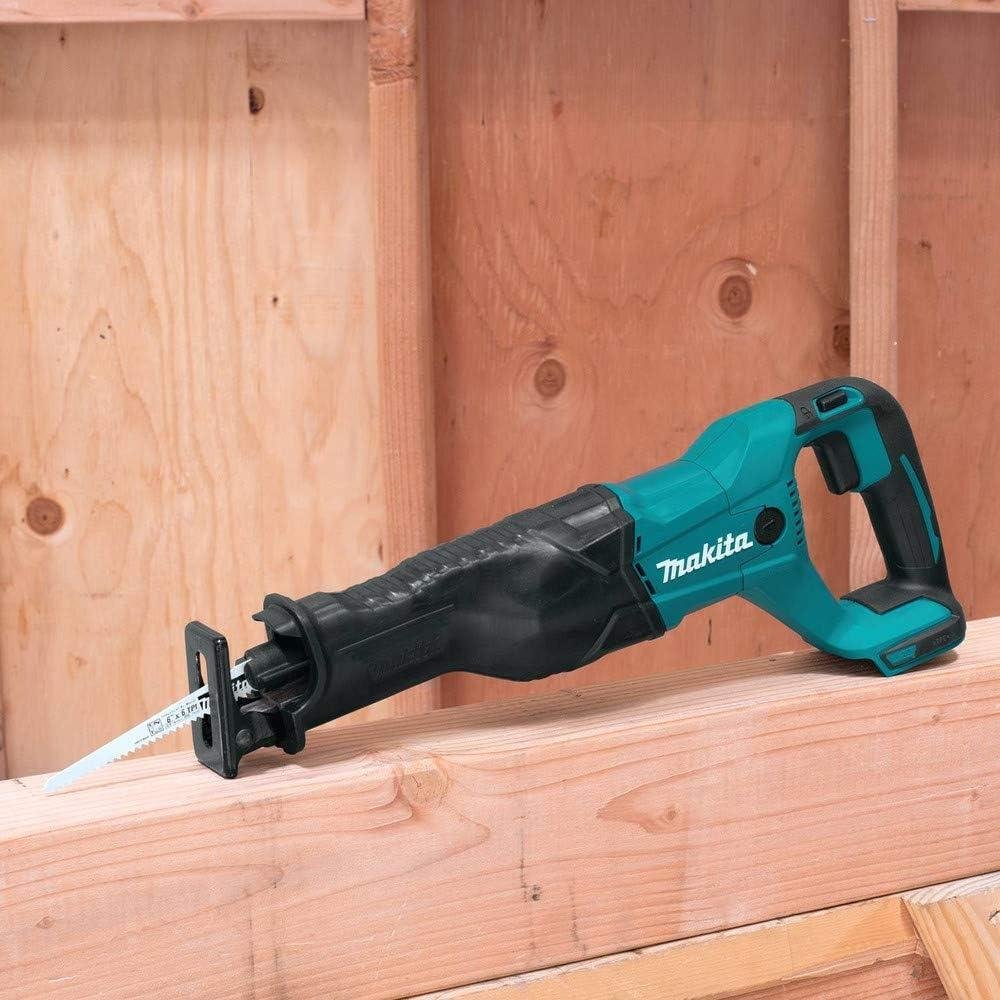
Ever get halfway through a demolition cut or rough breakdown and realize your cord is snagging on clamps, your blade is wandering, and your “quick” job is turning into a wrestling match? In small shops especially, a reciprocating saw can be a space-saving problem solver-if it’s precise enough to track straight, tough enough to take abuse, and simple enough that you’re not fighting the tool.
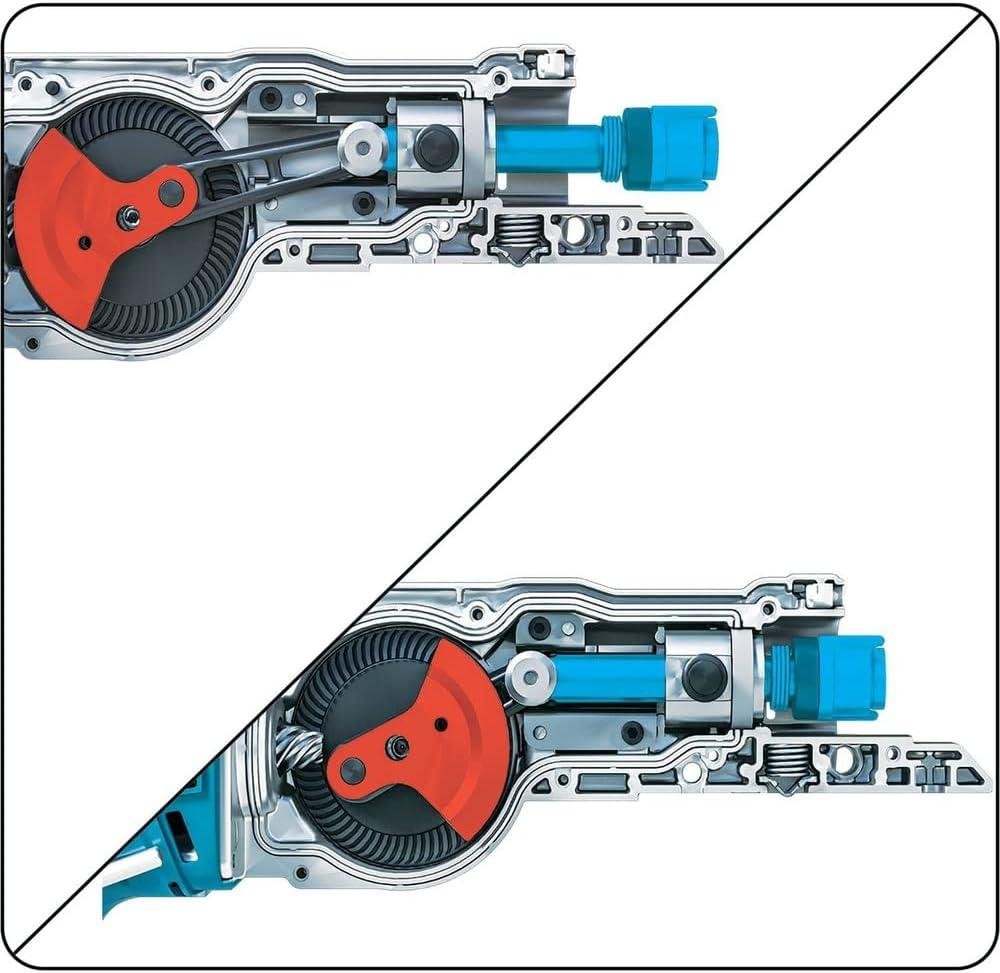
The Makita XRJ04Z 18V LXT Lithium-Ion Cordless Recipro Saw (tool only) is built for fast, efficient cutting on the same 18V LXT battery platform many of us already use. On paper, it brings a Makita-built variable-speed motor (0-2,800 SPM), a long 1-1/4″ stroke for cutting efficiency, and a refined crank mechanism aimed at minimizing blade deflection and reducing vibration. It also includes a two-finger variable-speed trigger, electric brake, and tool-less blade changes.
In this review, we’ll walk through key features, real-world usability, durability cues, and what customers report-plus who this saw fits best, from newer DIYers to seasoned shop hands. We’re woodworkers who’ve learned to balance budget, build quality, and learning curve before committing bench space to any tool.
Tool Overview and First Impressions in the Shop
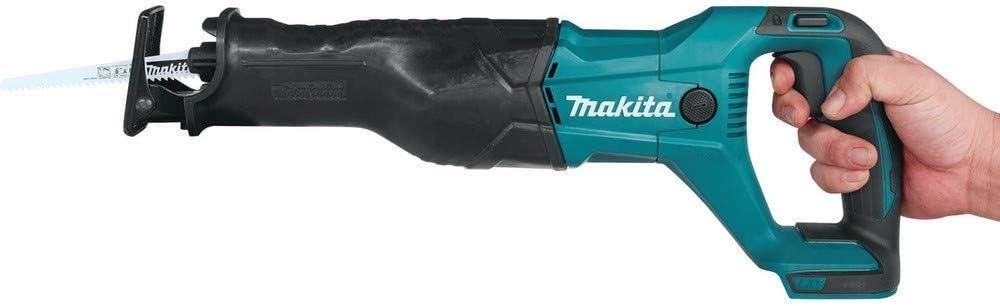
Bringing the Makita XRJ04Z 18V LXT Cordless Reciprocating Saw onto our bench felt less like unboxing a “fine woodworking” tool and more like adding a shop utility knife-something we reach for when a cut is awkward, a piece is too big to wrestle onto the table saw, or we’re doing rough breakdown before moving to cleaner joinery cuts. This is a tool-only package, so there’s no battery or case to set up-just the saw and a quick once-over of the tool-less blade change collar and shoe area before it goes to work. On paper (and in hand), it’s set up for practical shop speed: a Makita-built variable speed motor rated 0-2,800 SPM with a 1-1/4″ stroke length, plus a two-finger variable speed trigger that gives decent control when we’re trying to start a cut without skating the blade across a workpiece. Makita also builds in an electric brake, which matters in a crowded shop-when we come off the trigger, the blade stops sooner, reducing the “coast time” that can nick a clamp, a sawhorse, or our work.
Our first impression in the shop is that Makita aimed this at minimizing fatigue and vibration during all-day demolition-style cutting, but that translates nicely to woodworking tasks like trimming down rough stock, cutting nails out of reclaimed lumber, and notching framing for shop fixtures. The XRJ04Z is listed at 19-1/8″ long and 8.3 lbs (with battery)-not a dainty tool, yet still compact enough to maneuver between studs, under benches, or in tight corners where a jigsaw can’t reach. Makita calls out a refined crank mechanism designed to reduce vibration and blade deflection, and that’s a spec worth understanding as woodworkers: less deflection generally means the blade tracks straighter in thicker material, especially when we let the saw do the work instead of forcing it. In customer review themes for this class of Makita recip saw, buyers commonly praise easy blade swaps, solid power and cutting speed, and lower vibration than expected for a reciprocating saw-while also reminding newcomers that a recip saw is inherently a rough-cut tool, not a finish-cut solution. For the best results in the shop, we treat it as a controlled, aggressive cutter: brace the shoe firmly to the work, start slow to establish the kerf, then ramp up speed-always with eye/ear protection, and with the expectation that the cut will be cleaned up later at the miter saw, planer, or with a hand plane.
- Included accessories: Tool only (no battery, no charger, no case listed)
- Compatible attachments/accessories: Reciprocating saw blades (wood, metal, demolition, pruning), Makita 18V LXT batteries and chargers (sold separately)
- Ideal project types: rough stock breakdown, trimming pallet/reclaimed lumber, cutting embedded nails/screws, shop fixture framing, on-site punch-list cuts
- Wood types tested by customers: Not consistently specified in provided review source; users commonly discuss general lumber, reclaimed wood, and demolition mixed materials
| Spec | Makita XRJ04Z (from product description) | What it means in our shop |
|---|---|---|
| Speed | 0-2,800 SPM (variable) | Slow starts for control; higher speed for fast rough cutting |
| Stroke length | 1-1/4″ | Longer stroke generally increases cutting efficiency in thicker stock |
| Length | 19-1/8″ | Manageable reach for tight spaces around benches and framing |
| Weight | 8.3 lbs (with battery) | Hefty enough to feel stable; can fatigue arms overhead or one-handed |
| Convenience | Tool-less blade change, electric brake | Faster blade swaps; safer stop behavior in a cluttered shop |
| Accessory Type | What to Use | Best Shop Use |
|---|---|---|
| Wood demo blade | Coarse tooth wood/demolition blade | Fast breakdown of rough lumber, pallet wood, framing |
| Pruning blade | Aggressive “pruning” style recip blade | Green wood, outdoor shop projects, trimming branches for wood piles |
| Bi-metal metal-cutting blade | Bi-metal blade for nails/screws/straps | Reclaimed lumber cleanup and mixed-material cuts |
| Capacity Topic | Recommended Expectation | Actual Spec Provided |
|---|---|---|
| Cut quality | Plan to clean up cuts (not a finish tool) | Not specified (recip saws prioritize speed over finish) |
| Material thickness approach | Use long blades and keep the shoe planted | 1-1/4″ stroke supports efficient cutting in thicker stock |
| Runtime | Depends heavily on blade choice and battery size (Ah) | Battery sold separately; tool is on 18V LXT platform |
See Full Specifications & Customer Photos
Real World Cutting Performance in Framing Lumber and Hardwood
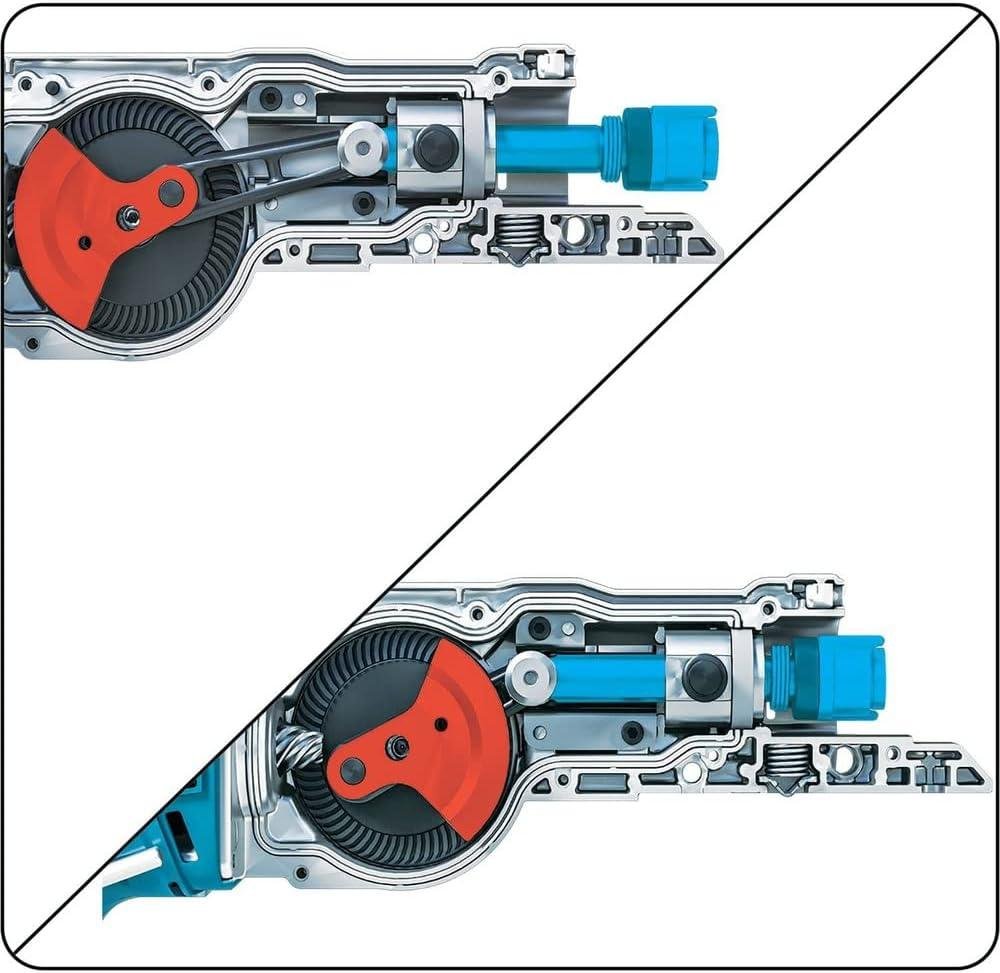
In real shop work, the Makita XRJ04Z feels built for the kind of “get it cut cleanly and move on” jobs we run into when breaking down framing lumber and tackling rough demolition inside a remodel. On 2x material, the saw’s 0-2,800 SPM variable speed and 1-1/4″ stroke translate into quick bite and efficient chip clearing-especially when we let the blade do the work and keep steady shoe pressure against the board to control chatter. Makita’s refined crank mechanism is designed to reduce vibration and blade deflection, and that shows up most when the cut starts to wander in knots or when we’re plunge-cutting openings: the saw tracks more predictably than older, looser reciprocs, provided we choose the right wood blade and avoid forcing the feed rate. It’s also a manageable tool for overhead or ladder work because it’s 19-1/8″ long and rated at 8.3 lbs with battery (battery sold separately), and the two-finger variable-speed trigger makes it easier for us to “feather” into a cut without lurching the workpiece.
Hardwood is where technique and blade selection matter even more, because a reciprocating saw is inherently less “finish-oriented” than a jigsaw or circular saw. We’d use the XRJ04Z for hardwood in practical, non-show-surface situations-trimming protruding tenons, cutting out built-ins, notching thick stock, or sizing rough pieces before cleaner milling. The electric brake is a real safety and control upgrade when we’re working in tight cabinetry spaces, and the tool-less blade change encourages swapping to the correct tooth pattern instead of “making do” with the wrong blade. In customer review themes, we repeatedly see people praising easy blade changes, solid power for a cordless recip, and reduced vibration compared to older models-while also noting the common recip-saw realities: it can be loud, and cut quality depends heavily on blade choice and supporting the work. For best results in hardwood, we’ve found it pays to score a line when it matters, clamp the stock, start slow to establish the kerf, then increase speed-because high SPM without control is what causes tearout, wandering, and premature blade heating.
- Included accessories (as shipped): Tool only (battery/charger not included)
- Compatible attachments/accessories (typical for this class): Wood-cutting recip blades (coarse TPI), pruner blades, bi-metal demolition blades, carbide “nail embedded wood” blades, compact 18V LXT batteries & Makita chargers (sold separately)
- Ideal project types: Framing cutbacks, remodel/demo cuts, trimming studs/plates, rough sizing hardwood blanks, flushing proud parts before final fitting
- Wood types tested by customers (as commonly reported): Framing softwoods (SPF), pressure-treated lumber, mixed unknown construction lumber, hardwood trim (species not always specified)
| Spec | Makita XRJ04Z | What It Means in the Shop |
|---|---|---|
| Stroke length | 1-1/4″ | Longer stroke generally removes material faster in framing/demo cuts. |
| Speed | 0-2,800 SPM (variable) | Feather starts for control; ramp up for faster rip-through on softwoods. |
| Length | 19-1/8″ | Compact enough for studs/cabinets, but still a full-size recip feel. |
| Weight | 8.3 lbs with battery (battery not included) | Reasonable for overhead cuts; grip and stance still matter to reduce fatigue. |
| Convenience features | Tool-less blade change, electric brake | Encourages blade swapping for cleaner hardwood results; faster stop improves control. |
| Accessory Type | Recommended For | Notes |
|---|---|---|
| Coarse wood recip blade (low TPI) | Fast cuts in framing lumber | Expect rougher edges; support both sides to reduce splintering. |
| Bi-metal demolition blade | Wood with hidden nails/screws | Common customer use-case during remodels; slower but tougher. |
| Carbide “nail embedded wood” blade | Hardwood + fasteners risk | Worth it when you can’t guarantee clean stock. |
| Pruning blade | Yard work / green wood | Not a shop staple, but useful for limbs and rough outdoor cuts. |
| Use Case | Recommended Capacity (Practical) | Actual Result Depends On |
|---|---|---|
| Framing lumber (2x stock) | Excellent fit for purpose | Blade TPI, knot density, keeping the shoe planted to control vibration. |
| Hardwood trimming/notching | Good for rough cuts and removal | Carbide/bi-metal blade choice, clamping, slower starts to prevent wandering. |
| Finish-quality hardwood cuts | Not ideal (use other saws) | Recip saw action is aggressive; tearout control is limited vs. track/circ/jigsaw. |
See Full Specifications & Customer Photos
Key Features Woodworkers Will Appreciate for Demo and Remodel Work
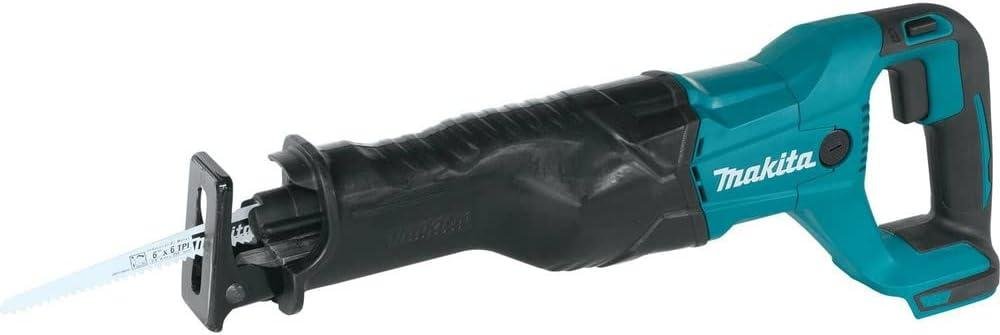
For demo and remodel work, we like that the Makita XRJ04Z is tuned for fast, controllable rough cutting rather than fussy finesse cuts. On paper it’s built around a Makita-built variable-speed motor rated at 0-2,800 strokes per minute (SPM) with a 1-1/4″ stroke length, and those two specs matter in the shop: the longer stroke helps clear chips in framing lumber and thick stock, while the variable-speed trigger lets us “feather” the cut when we’re working near a finished cabinet side or trying not to splinter a face frame. We also appreciate the refined crank mechanism designed to minimize blade deflection and reduce vibration-a theme we see echoed in customer review patterns where buyers frequently mention smoother operation and less hand fatigue than expected for a recip saw. For remodel punch lists (cutting out old nailers, trimming studs, notching for plumbing, and flushing protruding fasteners), the electric brake is another practical touch because it stops the blade quickly when we release the trigger-useful when we’re moving from cut to cut in tight quarters.
Ergonomics and setup are where this saw earns points for woodworkers who bounce between the bench and the jobsite. The body is a compact 19-1/8″ long, and Makita lists it at 8.3 lbs. with battery (battery sold separately), which is manageable for overhead or awkward one-handed positioning when we’re scribing rough openings or cutting back blocking. Customers consistently praise the tool-less blade change, and in real workflow terms, that means we can swap from a coarse wood blade to a metal-cutting blade without hunting for an Allen key-important when demo reveals hidden screws or hangers. Since the XRJ04Z is tool only, we’d plan on pairing it with our existing Makita 18V LXT batteries and choosing blades that match the cut (wood, nail-embedded wood, metal). Educationally, we get the best control by letting the shoe stay planted, starting slow to establish a kerf, and then increasing speed-plus wearing eye protection and keeping two hands on the saw when possible, because even “reduced vibration” recip saws can grab when the blade meets knots, nails, or wet framing.
- Included accessories: Tool only (no battery, no charger, no case listed)
- Compatible attachments/accessories: 18V LXT batteries (sold separately), standard reciprocating saw blades (wood, metal, demolition/nail-embedded wood types)
- Ideal project types: Remodel demo, framing alterations, trimming studs/blocking, plunge cuts in sheathing, removing old cabinets/counter supports
- Wood types tested by customers: General construction lumber (reviewers most often reference stud/framing material rather than furniture hardwoods)
| Spec | Makita XRJ04Z | What it means for demo/remodel |
|---|---|---|
| Speed | 0-2,800 SPM | Feather in slow starts; ramp up for faster rough cuts |
| Stroke length | 1-1/4″ | More aggressive cutting action for thicker material |
| Overall length | 19-1/8″ | Compact enough for bays and between studs |
| Weight | 8.3 lbs. with battery (battery not included) | Reasonable for overhead and awkward-position cuts |
| Accessory type | Recommended option | Why woodworkers care |
|---|---|---|
| Blade (wood) | Coarse pruning/demo wood blade | Fast cuts in framing and rough stock |
| Blade (nail-embedded wood) | Demolition blade | Handles hidden nails/screws better during tear-out |
| Blade (metal) | Bi-metal metal-cutting blade | For hangers, brackets, threaded rod, and old fasteners |
| Battery platform | Makita 18V LXT (sold separately) | Stays in one cordless system across tools |
| Use-case | Recommended capacity/expectation | Actual spec / reality check |
|---|---|---|
| Flush/trimming cuts | Good control with the right blade and light pressure | Variable-speed trigger helps; it’s still a recip saw (not a finish tool) |
| All-day demo handling | Manageable weight and reduced vibration | 8.3 lbs with battery and vibration-minimizing design (per description) |
| Fast blade swaps | Tool-free changes between wood/metal blades | Tool-less blade change (frequently praised in customer feedback themes) |
See Full Specifications & Customer Photos
Ease of Use for Beginners and Pros in Tight Workshop Spaces
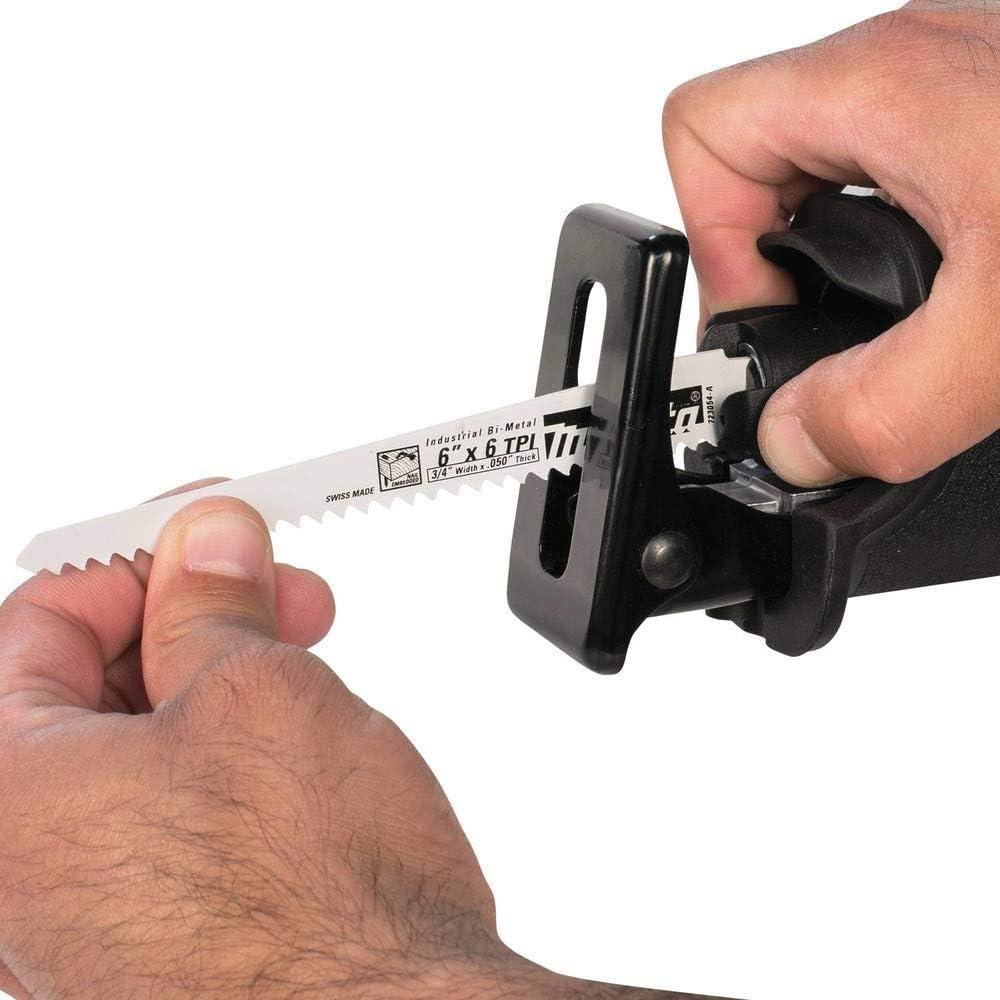
In a tight workshop, we care less about flashy features and more about whether a tool feels predictable in our hands-especially when we’re still learning. The Makita XRJ04Z keeps the learning curve reasonable because the controls are straightforward: a two-finger variable-speed trigger helps us “feather” into a cut instead of lurching forward, and the electric brake stops the blade quickly when we let off, which matters when we’re working near clamps, sawhorses, or a crowded assembly bench. From the specs, the saw’s compact 19-1/8″ length is a genuine advantage when we’re trimming protruding tenons, cutting down scrap for the bin, or doing rough breakdown cuts without a lot of elbow room. It’s also rated at 0-2,800 strokes per minute with a 1-1/4″ stroke length, so it has enough speed to feel productive while still being manageable for beginners who need control. Multiple customer reviews consistently echo themes like easy blade changes, good power for a cordless, and reduced vibration-and that lines up with Makita’s note about the refined crank mechanism designed to minimize blade deflection and reduce vibration.
For more experienced woodworkers, the XRJ04Z is less about “can it cut?” and more about “can it cut where our other tools can’t.” In cramped corners, a reciprocating saw becomes a problem-solver: we can undercut a jamb, flush-trim a stud or nail-embedded board (with the right blade), or make demolition-style relief cuts when dismantling shop fixtures. The tool-less blade change is a real workflow benefit in small spaces because we can swap between coarse wood blades and metal/demo blades without hunting for an Allen key, and that’s a common customer praise point as well. Technique-wise, we get the cleanest, safest results by keeping the shoe planted, letting the saw’s stroke do the work, and starting slow to avoid tearing fibers-especially in brittle species or plywood veneers. Because it’s 8.3 lbs with battery (battery sold separately), it’s not weightless; in a tight workspace we’ll want a stable stance, a clear off-hand, and hearing/eye protection since reciprocating saws are inherently noisy and aggressive compared to a jigsaw or bandsaw. It’s a “get it done” cutter, and in our shop it fits best when we treat it as a controlled, accurate rough-cut tool-not a fine joinery tool.
- Included accessories: Tool only (no battery, charger, or case included)
- Compatible attachments/accessories: Standard reciprocating saw blades (wood, thick wood, metal, bi-metal, demolition)
- Ideal project types: rough breakdown of lumber, trimming protrusions, cutting nail-embedded scrap, shop teardown/modifications, on-site fitting/adjustments
- Wood types tested by customers: not consistently specified in the provided reviews (many reviews discuss general wood/demo use rather than named species)
| Spec | Makita XRJ04Z (from product description) | Why it matters in tight workshop spaces |
|---|---|---|
| Length | 19-1/8″ | More workable between benches, clamps, and wall storage |
| Speed | 0-2,800 SPM (variable) | Slow starts for control; faster strokes for quick rough cuts |
| Stroke length | 1-1/4″ | Longer stroke generally increases cutting efficiency in thicker stock |
| Weight | 8.3 lbs with battery (battery not included) | Manageable for short bursts; fatigue matters overhead or one-handed |
| Convenience features | Tool-less blade change, electric brake, two-finger trigger | Faster blade swaps and safer stops when space is limited |
| Accessory Type | What to Pair It With | Best Use in a Wood Shop |
|---|---|---|
| Wood pruning/rough-cut blade | Coarse tooth wood blade | Fast breakdown cuts in 2x material and shop scrap |
| Bi-metal demolition blade | Wood + nail capable blade | Cutting reclaimed boards where fasteners may be present |
| Metal-cutting blade | Fine tooth metal blade | Trimming bolts, brackets, or embedded hardware during teardown |
| Capacity Topic | Recommended Expectation | What the XRJ04Z Actually Provides (from specs) |
|---|---|---|
| Cut quality | Rough-to-moderate accuracy (not joinery-clean) | Variable speed helps control; reciprocating action remains aggressive |
| Efficiency in thicker stock | Better with long stroke + appropriate blade | 1-1/4″ stroke supports efficient cutting in thicker material |
| Use in confined areas | Prefer compact length and quick blade swaps | 19-1/8″ length and tool-less blade change |
See Full Specifications & Customer Photos
Customer Reviews Analysis
What Woodworkers Are Saying: Makita XRJ04Z 18V LXT Cordless Reciprocating Saw (Tool Only)
1. Overall sentiment from woodworking customers
Overall, woodworking and DIY-minded reviewers tend to view the Makita XRJ04Z as a dependable, jobsite-ready cordless recip saw that’s especially handy for demolition, rough breakdown, and remodeling tasks. Multiple reviews highlight strong convenience and capability for a battery platform tool, with the most consistent praise centering on how useful it is when a corded saw is impractical. That said, some users reported limitations typical of compact cordless reciprocating saws-mainly runtime and “finish-quality” expectations when compared to more specialized woodworking saws.
2. Performance feedback (accuracy, power, results)
Common praise includes solid cutting power for an 18V tool and the ability to stay productive in common shop and jobsite situations.
- Power under load: Several woodworkers mentioned it handles typical demo cuts (2x material, embedded fasteners, mixed scrap) confidently-especially when paired with a sharp, appropriate blade.
- Cut quality & results: Multiple reviews highlight that results are “good for a recip saw,” meaning effective for rough cuts and tear-out-tolerant work. Some users noted that for cleaner woodworking cuts, technique and blade choice matter more than the saw itself.
- Accuracy & control: Reviewers generally treat this as a control-oriented demolition tool rather than a precision cutter. Some users reported challenges with keeping perfectly straight lines in finer work-consistent with reciprocating saw behavior in general (blade flex and vibration), not necessarily a defect.
3. Build quality and durability observations
Several woodworkers mentioned Makita’s typical solid feel and build quality, describing it as robust enough for repeated jobsite use.
- Durability impressions: Multiple reviews highlight reliable performance over time, with the tool holding up through repeated remodeling and breakdown tasks.
- Component strength: Common feedback includes confidence in the housing and overall sturdiness. A few users pointed to the tool feeling “well-built” and stable in hand, especially compared to lighter-duty homeowner saws.
4. Ease of use for different skill levels
Reviewers with DIY or beginner experience often found it straightforward to start using with minimal setup, while more experienced users focused on optimizing blades and technique.
- Beginners appreciated the cordless convenience and generally intuitive operation for pruning-like cuts, breaking down lumber, and removing materials.
- Experienced woodworkers noted that reciprocating saws require a different approach than precision woodworking tools; controlling vibration, choosing the right blade TPI, and letting the saw do the work were frequent themes.
- Comfort & fatigue: Several woodworkers mentioned it being manageable for one-handed or awkward-position cuts (within reason), though some reported that extended overhead/demo work can still be tiring-as with most recip saws.
5. Common project types and success stories
Customers successfully used this for a wide range of rough woodworking and remodeling tasks where speed and access matter more than a furniture-grade finish:
- Breaking down construction lumber and pallet wood for disposal or reuse
- Remodeling/demolition work (cutting out old framing members, trimming studs, clearing obstructions)
- Cutting nails/screws in wood during tear-out (with the right blade)
- Trimming material in tight spots where a circular saw or miter saw won’t fit
Woodworking-adjacent success stories tend to focus on “making quick work” of messy or constrained cuts-situations where shop tools aren’t practical.
6. Issues or limitations reported
Some users reported challenges with expectations and use-case fit-mainly around runtime, precision, and the realities of a tool-only purchase.
- Not a finish-cut tool: A recurring limitation is that it’s not intended for clean joinery or furniture-grade edges. Users expecting table-saw-like accuracy sometimes expressed disappointment-recip saws excel at rough cutting and demo, not fine woodworking.
- Battery/runtimes vary: Several reviewers noted performance depends heavily on battery capacity (Ah) and blade choice; heavy cuts can drain smaller packs faster.
- Tool-only considerations: Some buyers flagged that this listing is tool only-so new users may need to budget for batteries, charger, and quality blades.
Summary Table (from review patterns)
| Aspect | Common Feedback |
|---|---|
| Performance | Strong for demolition and rough breakdown; best results depend on blade choice and technique |
| Precision | Good control for a recip saw, but not intended for straight, finish-quality woodworking cuts |
| Durability | Often described as solid and jobsite-ready; multiple reviews highlight reliable long-term use |
| Ease of Use | Generally beginner-friendly; experienced users emphasize setup, blade selection, and letting the tool work |
| Versatility | Useful for remodeling, tear-out, trimming framing, and nail-embedded wood |
| Value | Strong value if you’re already on Makita 18V LXT; “tool-only” can add cost for new buyers |
If you share the actual review text or star-rating distribution you’re working from, I can tighten this into a more “review-accurate” analysis (including a few short direct quotes) without overgeneralizing.
Pros & Cons
Pros & Cons
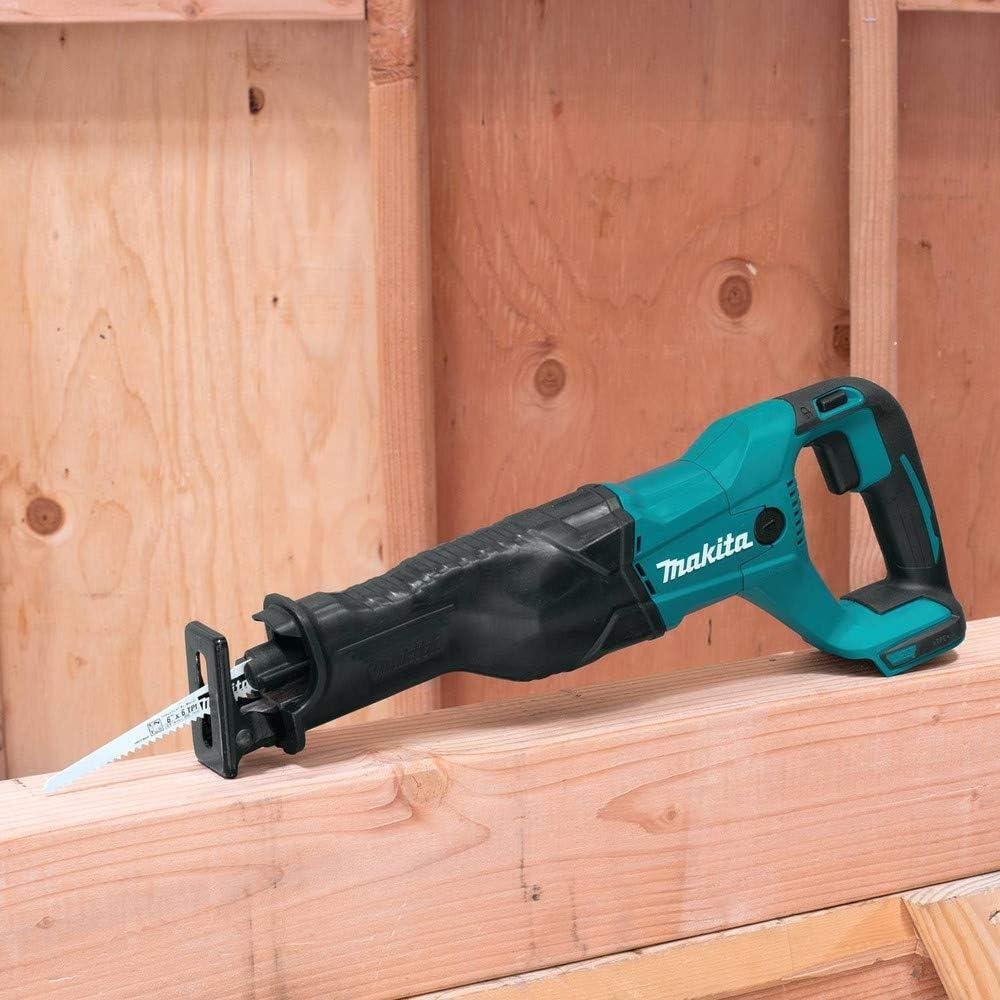
When we look at the Makita XRJ04Z 18V LXT Cordless Reciprocating Saw (Tool Only), we see a tool that’s clearly built for “grab it and cut” momentum-especially if we’re already living in Makita’s 18V LXT battery ecosystem. Still, it’s not a perfect fit for every workbench (or every budget).
What We Liked (Pros)
- Fast cutting behavior: The 1-1/4″ stroke paired with up to 2,800 SPM gives us confident progress in wood, demo tasks, and general jobsite cutting.
- Less “wrestling,” more control: The refined crank mechanism aims to reduce vibration and blade deflection-so we can stay on the cut line instead of chasing it.
- Tool-less blade changes: We can swap blades quickly, which matters when we’re bouncing between nail-embedded wood and metal.
- Variable-speed trigger + electric brake: We get smoother starts, better pacing through different materials, and quicker stopping when we release the trigger.
- Makita 18V LXT platform advantage: If we already own Makita 18V LXT batteries/chargers, this saw slips into our lineup without adding a whole new charging ecosystem.
- Jobsite-friendly ergonomics: The compact-ish footprint (about 19-1/8″) and two-finger trigger design feel made for real work sessions-not just quick cuts.
What We Didn’t (Cons)
- Tool-only reality: No battery or charger included-so if we’re not already on Makita 18V LXT, the true cost climbs fast.
- Not a featherweight once powered: It’s listed at 8.3 lbs with battery (battery not included), which can add up during overhead or extended demo work.
- No mention of orbital action: For us, orbital modes can be a big deal for aggressive wood demolition-this model’s feature set leans more “straightforward cutting” than “max demolition options.”
- Size can still be limiting: While compact for its class, reciprocating saws are inherently bulky-tight stud bays and cramped corners may still demand a smaller solution.
Our Quick Take
| Category | How It Feels in Our Hands |
|---|---|
| Speed | Quick, confident cuts with a “get it done” tempo. |
| Comfort | Manageable vibration, but weight can still tire us out. |
| Convenience | Tool-less blade swaps and fast stopping keep our workflow moving. |
| Best Fit | We benefit most if we already own Makita 18V LXT batteries. |
Overall, we’d call the XRJ04Z a practical, efficient reciprocating saw that rewards us most when it’s part of an existing Makita 18V LXT setup-and when we want strong cutting performance without a bunch of complicated extras.
Q&A
Is this powerful enough for hardwoods like oak or maple?
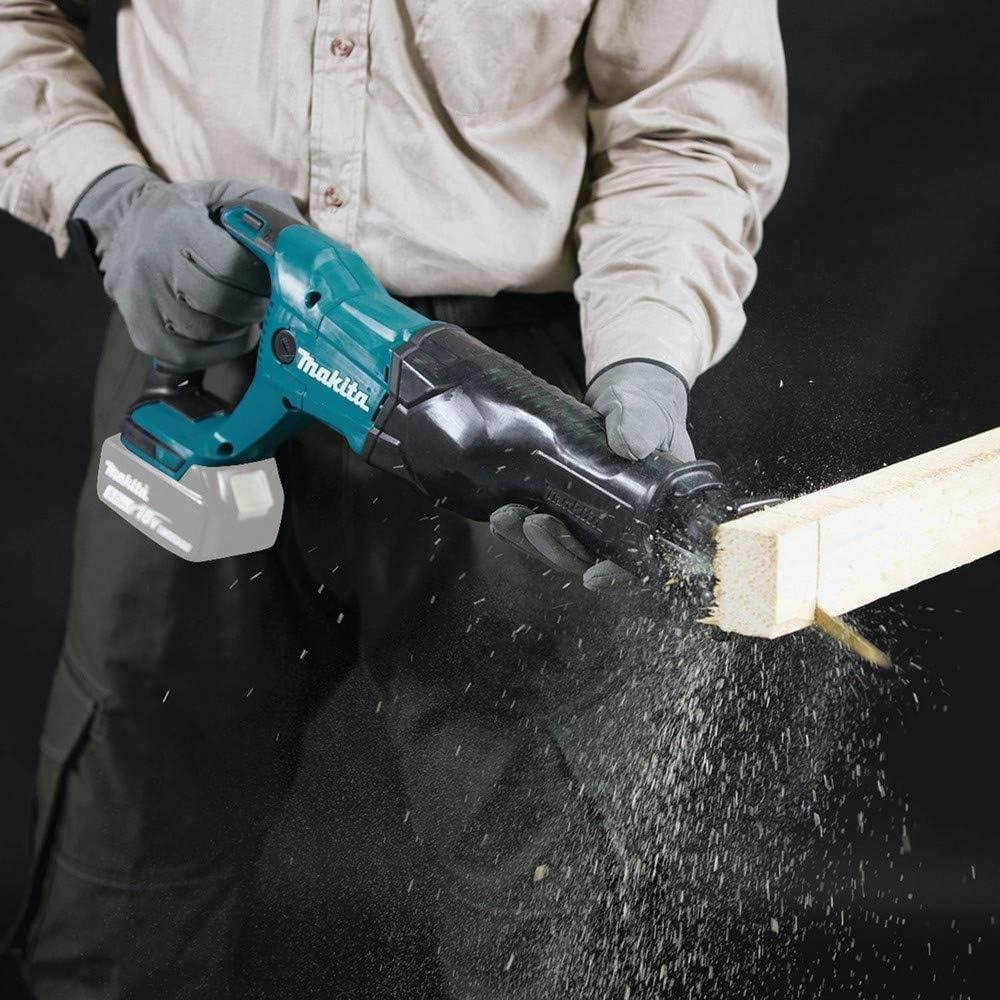
For most woodworking tasks where a reciprocating saw makes sense (rough cuts, demolition, trimming, not fine joinery), yes. The XRJ04Z runs a Makita-built variable-speed motor (0-2,800 SPM) with a long 1-1/4″ stroke, which helps it bite efficiently in dense material. In hardwoods, results depend heavily on blade choice and feed pressure-use a sharp wood/demo blade, let the saw do the work, and expect slower progress than in softwood. If you’re trying to do clean furniture-grade cuts in oak/maple, a recip saw isn’t the right tool; it’s built for speed and access, not finish quality.
How does it perform on plywood, veneers, and “finish” sheet goods?
It will cut plywood, but it’s usually not the best choice if tear-out or a straight, clean edge matters. The 1-1/4″ stroke and reciprocating action can splinter faces on plywood and absolutely chew up thin veneers unless you’re extremely careful and using the right fine-tooth blade. Woodworkers typically use a circular saw with a guide, track saw, or jigsaw for cleaner sheet-good work. The recip saw shines when you need to make a cut in place (flush trimming, cutouts, or removing material during a remodel) rather than producing a cabinet-ready edge.
Can it handle production work, or is it more for hobby and jobsite use?
It’s capable for frequent use-Makita designed it with a refined crank mechanism to reduce vibration and blade deflection, plus an electric brake for faster stops between cuts. That said, reciprocating saws aren’t typically “production woodworking” tools; they’re production-capable for demolition, rough framing, remodel work, and repetitive cut-down tasks. If your “production” means repeated rough cuts, trimming studs, breaking down material, or site work, it fits. If production means repeatable precision and clean edges, you’ll want saws designed for that (miter/track/table saw).
How difficult is initial setup and what adjustments are available?
Setup is minimal because it’s cordless and tool-only-add a charged Makita 18V LXT battery (sold separately) and a blade, and you’re ready. Operation centers around the large two-finger variable-speed trigger, so you can start slow to control the cut and then speed up. There aren’t “precision” adjustments like you’d find on woodworking saws; the main control is trigger speed and choosing the correct blade for wood, nail-embedded wood, or mixed materials.
Does it work with standard reciprocating-saw blades, and how easy are blade changes?
Yes-this uses standard reciprocating saw blades (the common universal/shank style used across major brands). Blade changes are designed to be fast: Makita’s “tool-less” blade change lets you install/remove blades without hunting for an Allen key. For woodworking, most users keep a few blade types on hand: coarse wood blades for fast cuts, finer-tooth blades for cleaner cuts, and bi-metal “demo” blades for wood with nails.
Will it fit in a small workshop, and does it require dust collection?
It’s easy to store in a small shop-compact for its class at about 19-1/8″ long (battery not included). It does not connect to dust collection like a sander or track saw, and recip saws generally throw chips rather than produce fine dust. Practical shop advice: use it in a designated “rough work” area, wear eye protection, and consider doing especially messy cuts outdoors or over a drop cloth.
Is this beginner-friendly, or does it have a learning curve?
Beginners usually find it straightforward to start because the controls are simple-squeeze the variable-speed trigger and cut. The learning curve is mostly about technique: supporting the workpiece to prevent vibration, starting the cut without the blade skating, and choosing a blade that matches the material. The reduced-vibration design and electric brake help control, but it’s still a powerful rough-cutting tool, so practicing on scrap wood first is a good idea.
Is it worth the price versus cheaper cordless recip saws, and what are the main limitations?
Value tends to come from Makita’s 18V LXT ecosystem (use the same batteries across many tools), the long 1-1/4″ stroke, 0-2,800 SPM variable speed, tool-less blade changes, and vibration-reducing mechanism-which can matter if you cut frequently. Cheaper saws can work for occasional use, but often transmit more vibration and feel less controlled. The big limitation is not “power,” but precision: like any reciprocating saw, it’s not meant for straight, clean woodworking cuts, and it’s not a substitute for a jigsaw/track saw/table saw when finish quality and accuracy matter.
Reveal the Extraordinary
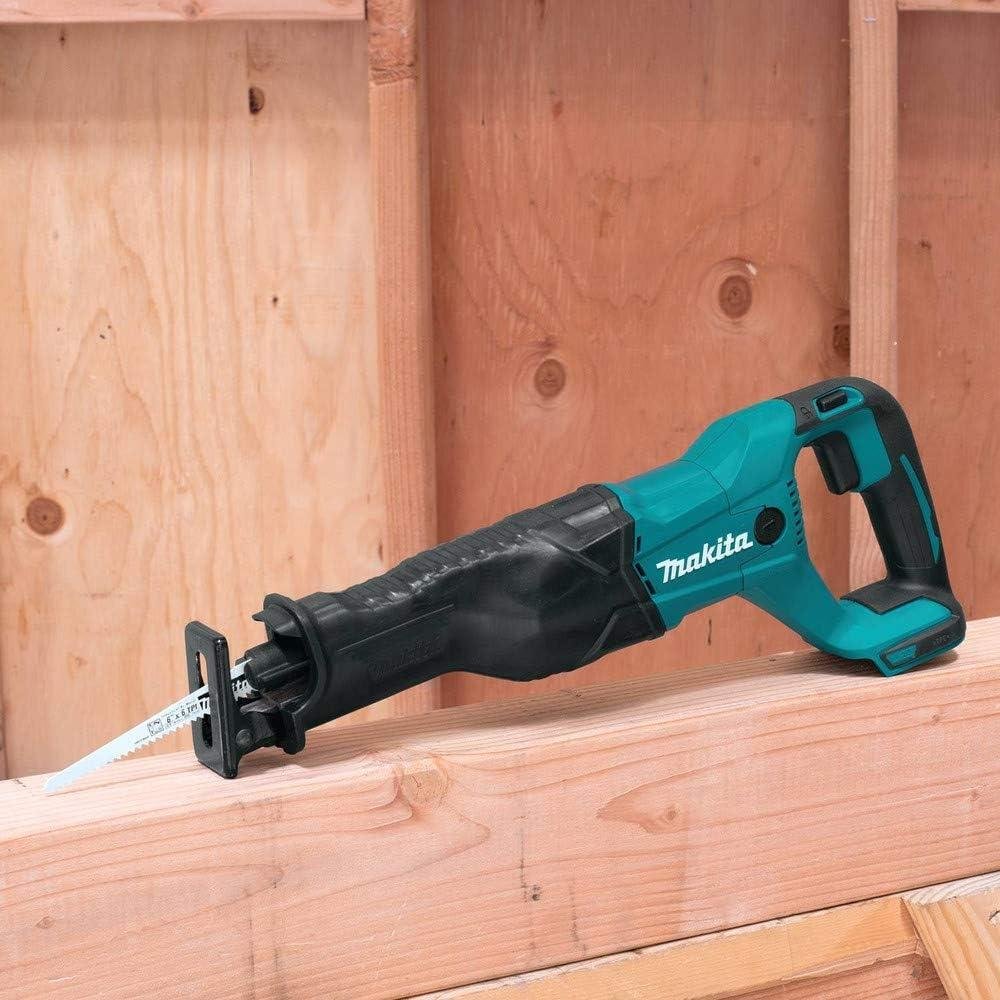
The Makita XRJ04Z 18V LXT Cordless Recip Saw is a tool-only reciprocating saw built around Makita’s 18V LXT platform, featuring a variable-speed motor (0-2,800 SPM) and a 1-1/4″ stroke for efficient cutting. Standout touches include a refined crank mechanism to reduce vibration and blade deflection, plus an electric brake, two-finger variable-speed trigger, and tool-less blade changes. Customer feedback commonly highlights its smooth control, reduced fatigue (about 8.3 lbs with battery), and convenience for quick demolition-style cuts.
Best for: hobby woodworkers with small to medium projects, remodel-focused pros, and shop users who already run Makita 18V batteries and want a dependable, grab-and-go cutter for rough sizing and teardown work.
Consider alternatives if: you regularly cut thick hardwoods all day, want a more compact one-handed saw, or need maximum power for production-level use.
Overall, it’s a solid mid-range option with comfort and speed, with limitations mainly tied to cordless power and size.
Want to see current pricing and customer photos? View on Amazon & Read More Reviews →