

Blog
HOTO D-A03 Mini Drill Review: Right for Our Shop?

Ever tried drilling tiny pilot holes for hinge screws, dowel pins, or hardware templates—only to watch a bulky drill wobble, skate, or chew up teh edge of a carefully sanded piece? In a small shop, precision matters as much as power, and the right compact tool can save both workpieces and workspace.
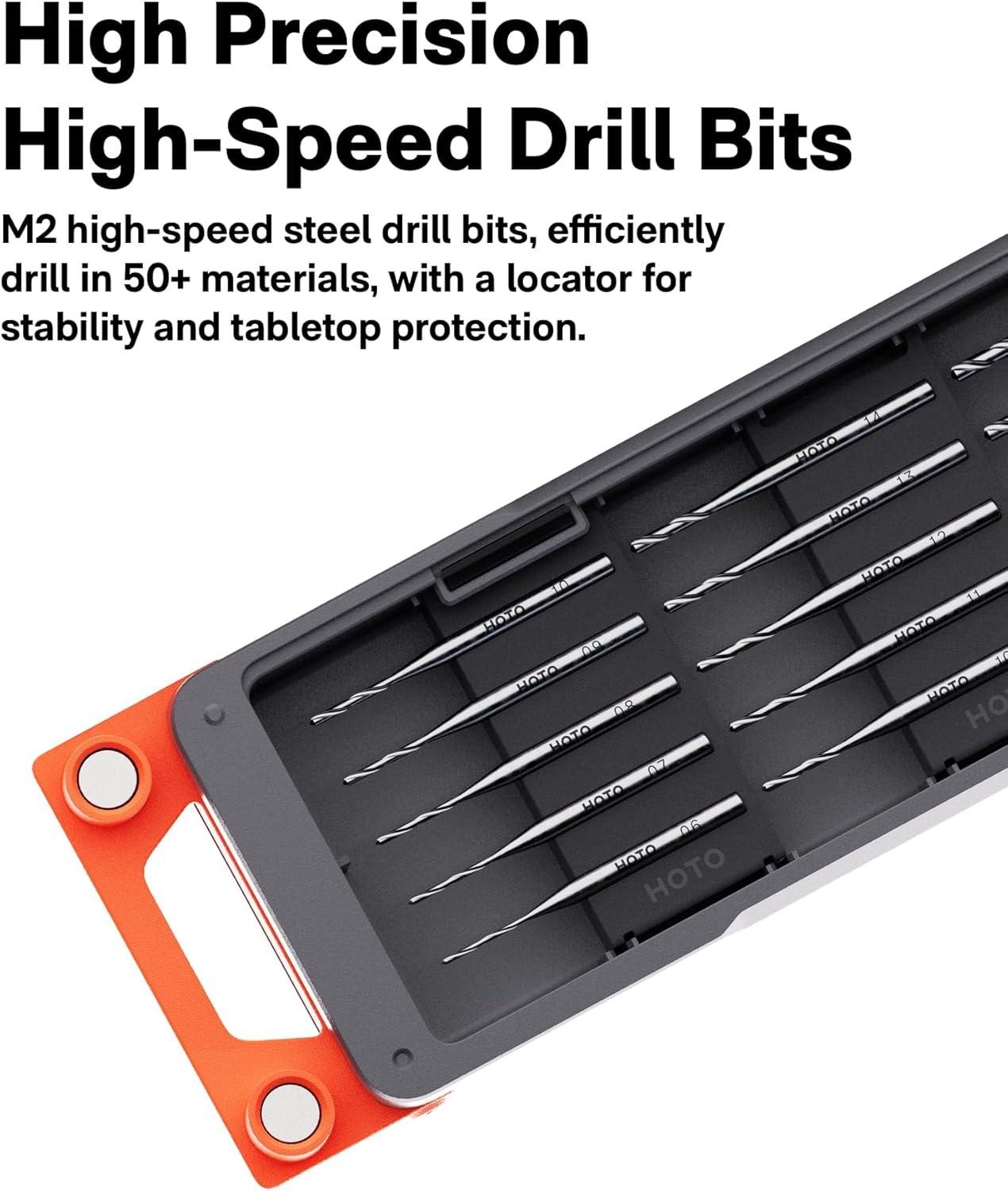
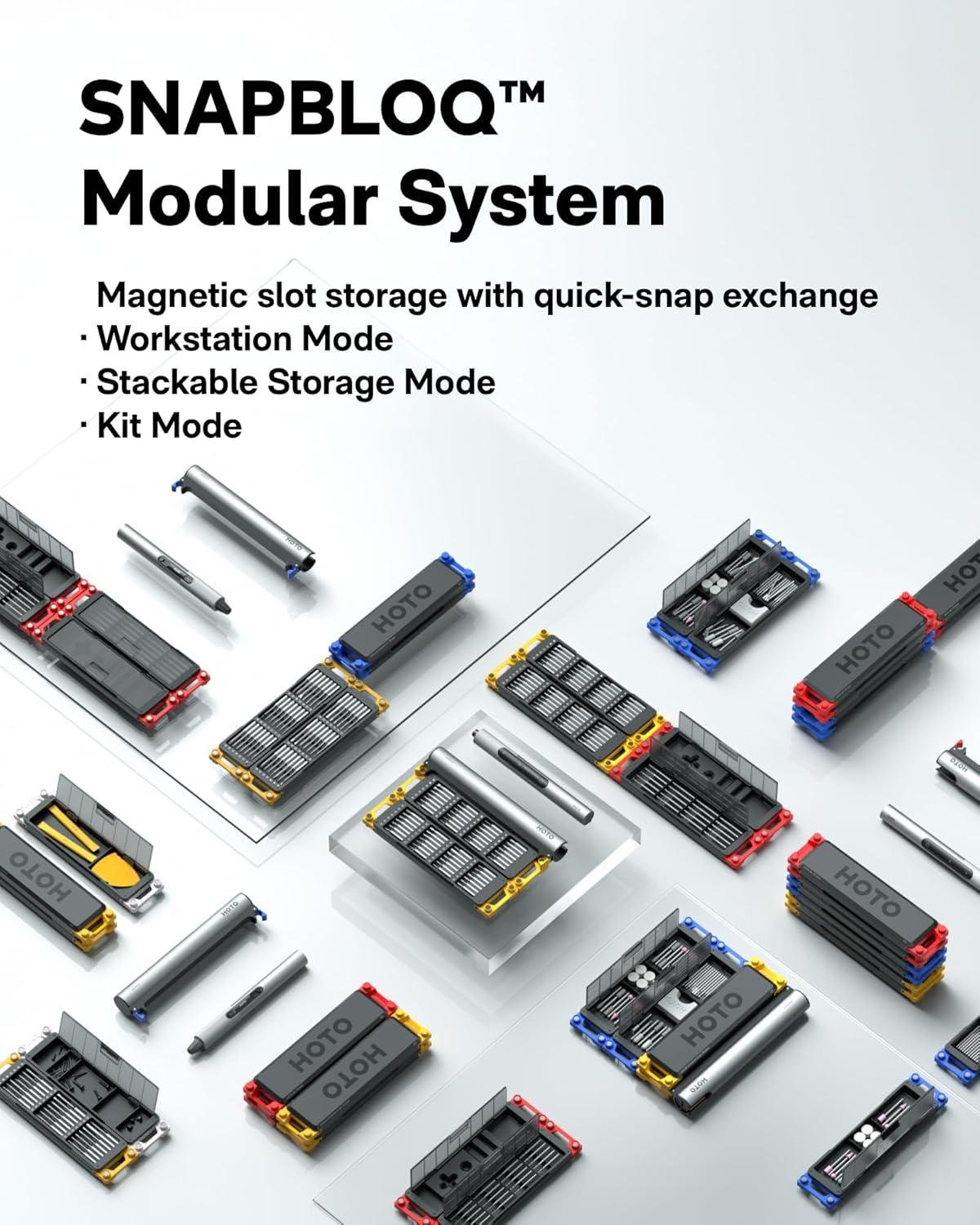
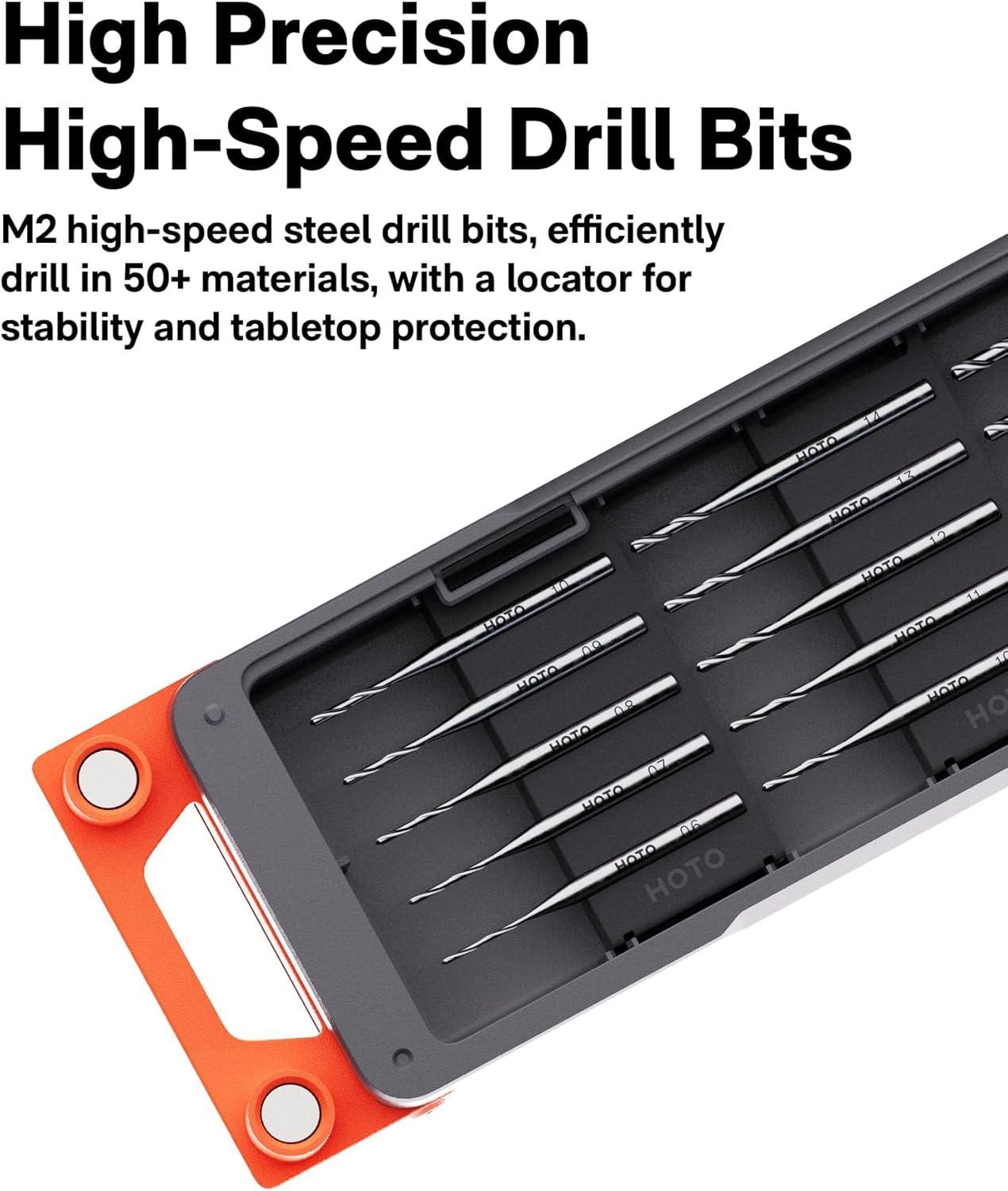
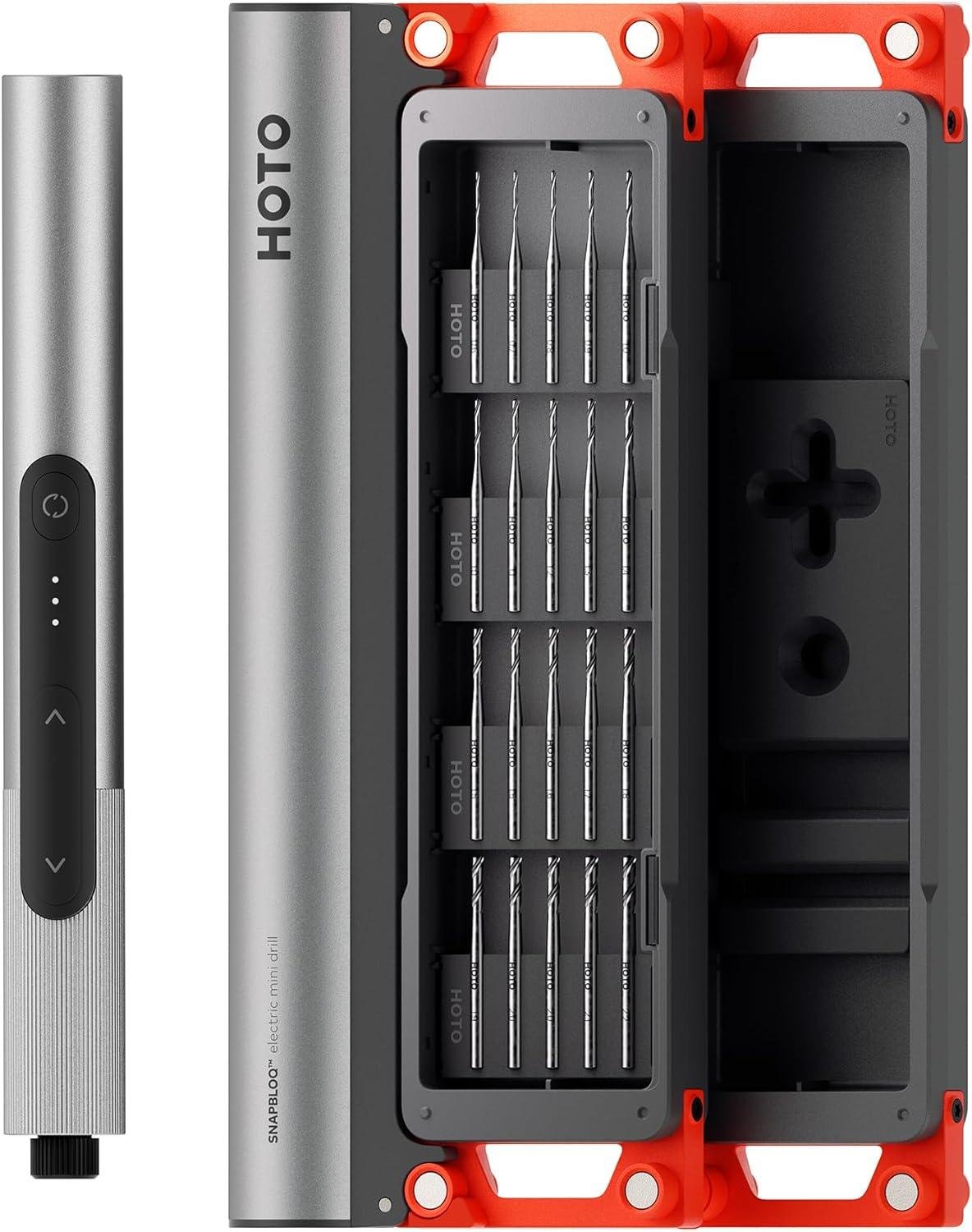
That’s where the HOTO SNAPBLOQ™ D-A03 Cordless Electric Mini Drill Pen comes in. It’s a pen-style, 3-speed precision drill (600/900/1200 RPM) built around a coreless brushless motor, powered by an 800mAh type‑C rechargeable battery, and finished with an LEAD ring light for clear sightlines on detail work. the kit includes 20 M2 high-speed steel micro bits and a modular magnetic SNAPBLOQ storage system designed to keep small parts organized.
In this review, we’ll walk through the key features, what they mean for real woodworking tasks (and where limits like bit centering concerns may matter), plus who this tool fits best—beginners, hobbyists, and space-conscious makers. We’ve spent years building furniture and jigs, and we no “nice on paper” doesn’t always translate to clean, accurate holes at the bench.
Tool Overview and build Quality in the Hand
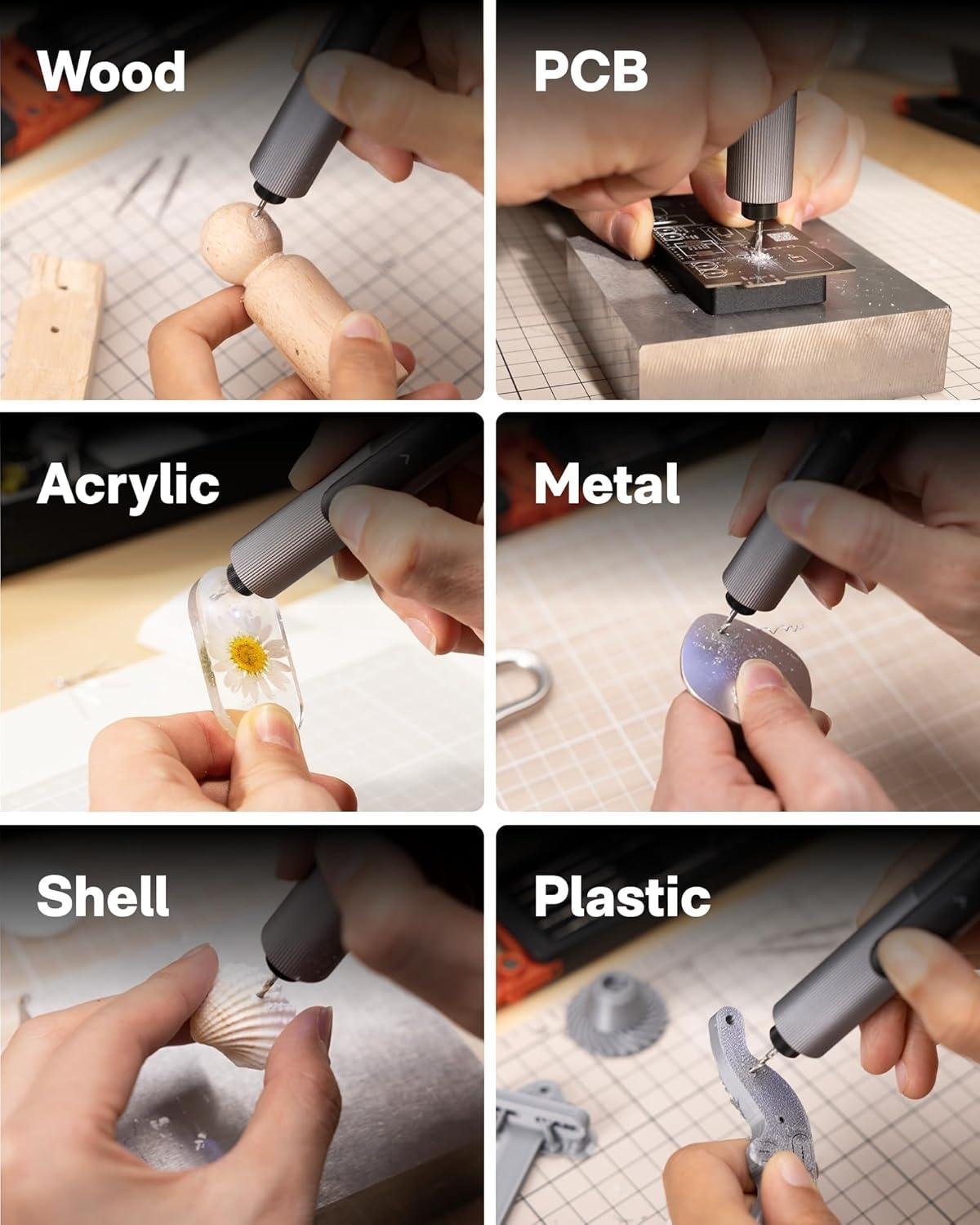
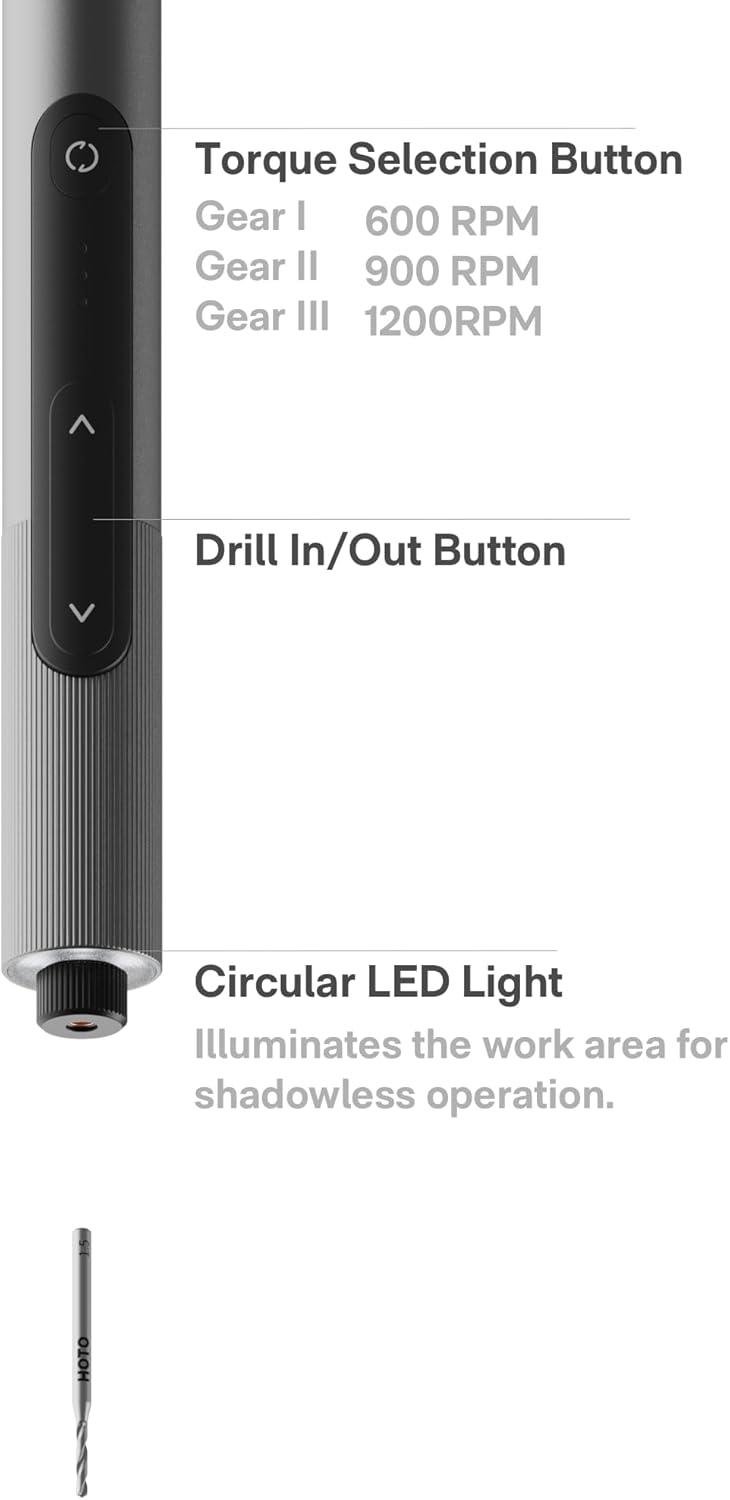
In the hand, the HOTO SNAPBLOQ™ D-A03 feels more like a layout-pencil-meets-micro-driver than a “mini drill,” which is exactly why it earns a spot on our bench for detail work. The pen-style body stays controllable when we’re trying to put tiny pilot holes dead-on for things like miniature hinges, small hardware, or clean holes in thin stock and veneer.The coreless brushless motor and 3-speed control (600 / 900 / 1200 RPM) fit the pace of careful woodworking—slow enough to start holes without skating, and fast enough for speedy, repeatable pin holes when we’re batch-marking parts. The built-in LED ring light is also a practical shop feature: it reduces shadows right at the bit tip, which helps when our overhead lights don’t reach into a carcass corner or when we’re drilling inside a jig.
Build-quality impressions from customers are a bit split, and that matches what we’d expect from a precision, micro-chuck tool living in a woodworking world full of side-loads and accidental bumps. Many reviewers call it well-built, quiet, extremely lightweight, and easy to use, and several praise the magnetic SNAPBLOQ modular case for keeping everything together.At the same time, a recurring theme is that some units (or setups) can have bits that don’t center perfectly, leading to wobble—something we should take seriously in woodworking because runout can enlarge holes in softwoods and make delicate starts harder. A smart technique here is to treat it like a precision tool: seat the bit carefully, keep overhang short, let the bit do the cutting (don’t push), and remember the chuck only accepts up to 2.2mm bits—so it’s not meant to replace our cordless drill/driver for cabinet screws or larger brad-point work. If our needs are “tiny, clean, controlled holes” rather than “power and diameter,” this form factor makes sense for our skill level and shop tasks.
See Full Specifications & Customer Photos
Real World Performance on Small Stock Joinery Pilot Holes and Hardware Work
when we shifted the HOTO SNAPBLOQ™ D-A03 from “craft tool” into small-shop joinery tasks, it proved most useful for the fussy, easy-to-blow-out holes we drill in tight spaces—think pilot holes for tiny brass hinges on jewelry boxes, pre-drilling for small screws in fragile muntins, or boring clean starters for hardware where a full-size drill feels clumsy. The three fixed speeds—600 / 900 / 1200 RPM—are slow enough for control but fast enough to keep micro bits cutting instead of skating,and the LED ring light genuinely helps us keep the bit on our awl mark when we’re working inside a cabinet or under a bench lamp. Several customer themes match what we’d expect in the wood shop: reviewers frequently call it “easy to use,” “quiet,” and “extremely lightweight,” and more than one points out it’s “way nicer than a pin vise” for quick, repetitive holes. That said, its small-drill focus shows up fast in hardwoods—customers repeatedly note it “isn’t very strong” and to “reserve this for crafts and softer materials,” which aligns with how we’d treat an 800mAh USB‑C rechargeable mini pen drill: it’s a precision pilot-hole tool, not a torque monster for driving screws or hogging larger holes.For hardware work, the big constraint is the bit capacity: multiple reviews mention the chuck only accepts up to about 2.2mm, so we’re realistically in the regime of tiny pilots for #2–#4 screws (depending on species) and delicate layout drilling—ideal when we’re trying to prevent splitting in thin stock. Educationally,the best results come from treating it like a micro drill press in your hands: start with an awl dimple,keep the tool perpendicular,and let the bit cut with light pressure—one Vine reviewer even noted it “stops if there’s too much force applied,” which we’d interpret as a protection feature that also reminds us not to lean on it. A caution from the customer feedback is worth taking seriously: there are mixed reports of bits not centering and wobble, which can make precise starts harder; in woodworking terms, that means we’d test-run the bit at low speed and, if needed, “kiss” the surface to create a shallow seat before committing to depth. If your workflow is mostly cabinetry and furniture with standard pilots, a 12V/18V drill still wins—but for small stock joinery, hinge screws, and delicate hardware layout, this pen drill can earn a spot in our apron pocket.
See Full specifications & Customer Photos
Key Features woodworkers Will Appreciate for Precision Drilling and Control
For precision drilling at the bench, the HOTO SNAPBLOQ™ D-A03’s 3-speed control (600 / 900 / 1200 RPM) is the kind of spec we actually feel in wood—especially when we’re pin-holing for hardware pilots, hinge screws in small boxes, or dowel/jig indexing marks where a full-size drill wants to “grab” and wander.Paired with the coreless brushless motor, it’s designed for lower noise and reduced vibration, and that lines up with what customers keep saying: “quiet,” “easy to use,” and “extremely lightweight” for small, detailed work.We also appreciate the built-in LED ring light as clean starts matter with micro bits; it helps us watch the brad-point (or micro twist bit) seat into an awl mark without shadowing—an underrated advantage when we’re drilling in darker woods or under cabinet lighting. Technique-wise, we get the best control by starting at 600 RPM, letting the bit establish a shallow dimple, then stepping up speed only if the chips clear cleanly—this reduces bit flex and helps prevent tear-out around the rim of tiny holes.
That said, the mini-drill-pen format has real limits woodworkers should respect. The chuck is built around small work, and multiple reviewers note it only accepts up to a 2.2 mm bit—great for micro pilots, not for “shop drill” jobs. Review themes are also mixed on true runout: several customers praise “drill accuracy”, but others report bits not centering and wobble/vibration, which can make pinpoint placement harder on joinery layout. Our takeaway is to treat it like a precision hand tool, not a torque tool: apply light pressure, keep bits short (or well-supported), and consider drilling a tiny starter with an awl to prevent skating—especially in hard, ring-porous species. For power and convenience, the 800mAh USB-C rechargeable battery and modular magnetic storage are workshop-pleasant, and customers repeatedly like the comprehensive set of micro bits and sturdy, magnetic case—even while one common wish is a lock-on mode so it can run without holding the button during longer, repetitive drilling.
See Full Specifications & Customer Photos
Ease of Use for Beginners and Experienced Woodworkers in the Shop
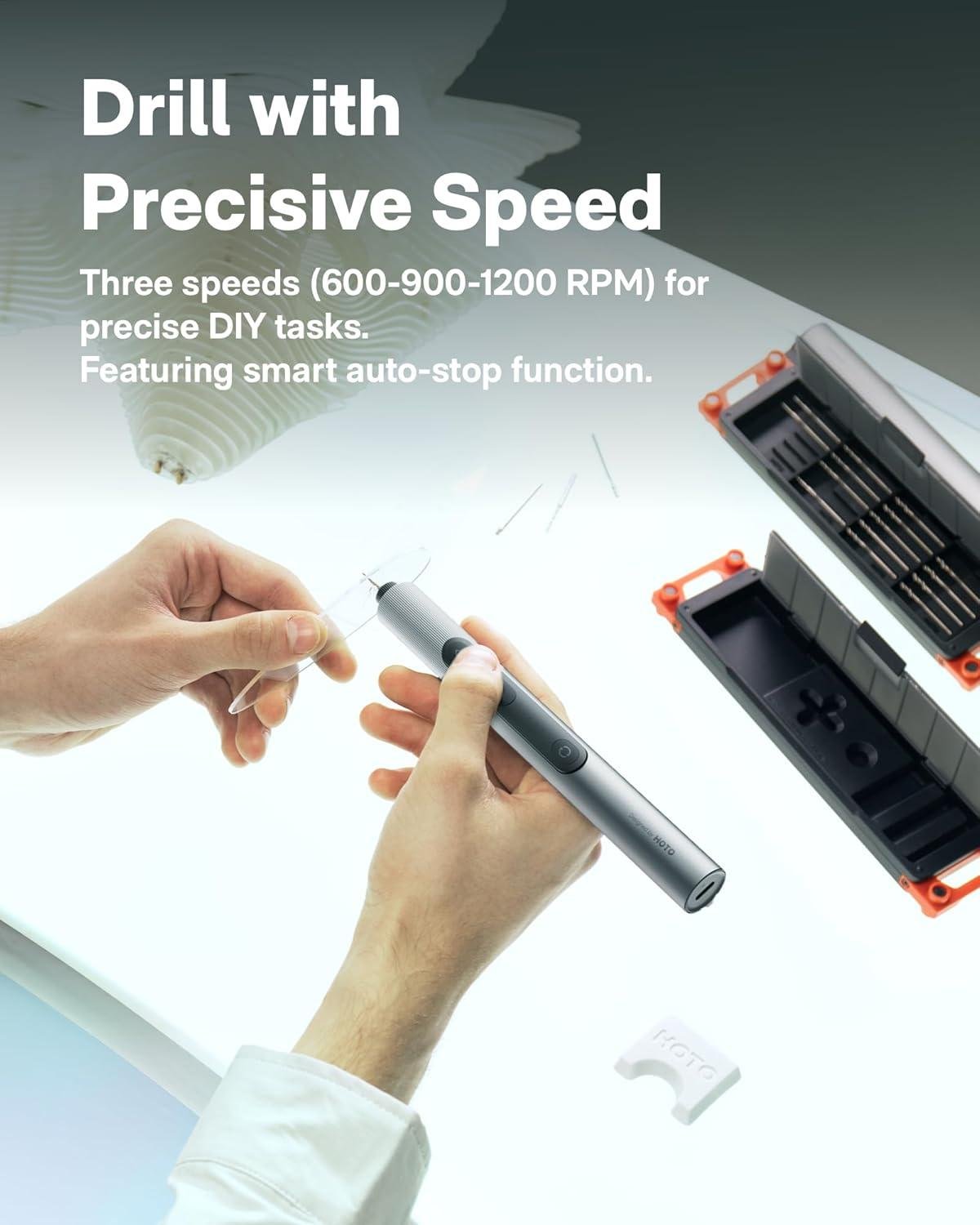
In the shop, we find the HOTO SNAPBLOQ™ D-A03 is almost “plug-and-play” for beginners because there’s no cord to wrangle and it charges via Type‑C on an 800mAh battery—so it lives happily next to our glue-ups and small-parts bins instead of at the big-tool charging station. The 3-speed control (600 / 900 / 1200 RPM) is simple enough that we can teach a new woodworker to match speed to material: slower for starting tiny pilot holes in thin stock or fragile edges, faster for clean-through holes in softer woods—always with a light touch.the built-in LED ring light genuinely helps on dim benches when we’re trying to hit a pencil mark on a small dowel or drill a centered hole in a plug. Customer review themes line up with that learning curve: several call it “easy to use”, “quiet,” and “extremely lightweight”, and more than one notes it’s “way nicer to use than a pin vise” for quick micro-holes. Where we set expectations for first-timers is strength and capacity—reviewers repeatedly say it’s best for small needs and not very strong, so it’s not the tool we’d hand someone to drive larger bits into hardwood or run long, deep holes.
For experienced woodworkers,ease of use comes down to whether a tool is predictable—and this one is,within its micro-drilling lane.The chuck only accepts up to about 2.2mm bits (as one reviewer points out), which is perfect for hinge screws in delicate hardware, tiny pilot holes for brads, or drilling clean holes in jigs, templates, and small parts without hauling out a full drill/driver. We also appreciate the organization: it ships with 20 M2 high-speed steel micro bits and a SNAPBLOQ magnetic storage system that keeps the drill and bits together—several buyers praise the nicely labeled bits and the sturdy, magnetic case. The main usability caveat we’d flag from reviews is precision consistency: some users report the bits don’t center properly and mention wobble/vibration, which can make it harder to start a hole exactly on a knife line—so we’d recommend testing runout with a bit you trust and starting with a shallow dimple (awl or punch) when accuracy matters. Another common note is the lack of a lock-on feature—meaning you may be holding the button through longer operations—fine for quick shop tasks, less ideal for extended sanding or repetitive drilling sessions.
- Included accessories: 20× M2 micro drill bits; SNAPBLOQ modular magnetic storage/case; integrated LED ring light; Type‑C charging (cable/adapter may vary by package)
- Compatible attachments/accessories: Micro bits up to 2.2mm; some users report compatibility with Dremel-style thread/shaft ecosystem via third-party adapters (verify fit before buying)
- Ideal project types: Hardware pilot holes; jig/template pin holes; model-scale parts; inlay and small trim pre-drilling; delicate assembly where a full drill feels oversized
- Wood types tested by customers: Reviews commonly mention “softer materials” rather than specific species; we’d treat it as best suited to softwoods and light-duty work in hardwoods
| Ease-of-Use Spec | What It Means in Our shop | Beginner Friendly? |
|---|---|---|
| 3 speeds: 600/900/1200 RPM | Simple control for clean starts and reduced bit breakage on tiny holes | Yes |
| Brushless coreless motor | Lower noise and smoother feel for detail work (per product description; many reviews mention “quiet”) | Yes |
| Max bit capacity ~2.2mm | micro-drilling only; not a substitute for our drill/driver or drill press | Yes (with clear expectations) |
| 800mAh Type‑C rechargeable | Convenient charging and cable commonality; reviewers often call battery “sufficient/great” | Yes |
| Accessory / Bit Type | Fit Guidance | Notes |
|---|---|---|
| Micro drill bits | Up to 2.2mm shank/bit size | Best for pilots and delicate parts |
| Dremel-style adapters (third-party) | Some reviewers report matching thread pitch/O.D.; confirm before purchase | Can expand capability,but increases runout risk if mismatched |
| Capacity Question | Recommended | Actual/Reported |
|---|---|---|
| Hole size in wood | Micro pilots for small screws,pins,and hardware | users report it can only drill small holes (chuck to 2.2mm) |
| Duty level | Short bursts, detail tasks | Reviews describe it as great for hobby/small needs; not very strong for heavy work |
See full Specifications & Customer Photos
Customer Reviews Analysis
What woodworkers Are Saying (Review Analysis)
| Aspect | Common Feedback |
|---|---|
| Overall Sentiment | Mostly positive for precision, convenience, and kit completeness; a few “wish list” features and power limits noted. |
| Performance | Praised for accuracy and smooth, low-vibration operation; not intended for heavy drilling in hard materials. |
| Build Quality | Frequently described as well-built/robust with premium presentation; storage container quality drew occasional criticism. |
| Ease of Use | Simple setup and bit changing; some want a continuous-run/lock-on mode. |
| Best Use Cases | Small pilot holes, detail work, hobby/craft tasks, and light-duty sanding; ideal where a full-size drill is overkill. |
| Limitations | Stops under too much force (safety feature) and lacks “strength” for tougher jobs; chuck is basic. |
1. Overall sentiment from woodworking customers
several woodworkers and DIY-minded reviewers describe the HOTO SNAPBLOQ™ mini drill pen as a smart, well-engineered precision tool—especially appreciated for small, controlled drilling where a larger drill feels bulky. Common praise includes the compact all-in-one kit,solid battery life,and smooth operation. A smaller set of users reported challenges with feature omissions (notably no lock-on/constant run) and expectations around power—this is repeatedly framed as a light-duty tool, not a torque monster.
2. Performance feedback (accuracy, power, results)
Multiple reviews highlight accuracy and consistency for tiny holes and detail work. One reviewer called out “drill accuracy” directly and paired it with “battery life is great,” suggesting reliable results over a session.
On the power side,some users reported it “isn’t very strong,” recommending it for “crafts and softer materials.” Another reviewer noted it “does stop if there’s too much force applied,” described as a security feature—helpful for preventing snapped micro-bits,but a potential frustration if you’re trying to push through harder stock. For smoothness, at least one detailed comparison praised the HOTO for low vibration versus a competing cordless rotary tool (“vibrated like a nightmare”), implying cleaner control and less wandering at small diameters—exactly what woodworkers want when drilling delicate pilot holes.
3. Build quality and durability observations
Several woodworkers mentioned the tool feels robust and well made. One review (in French) describes it as “robuste,” “all steel,” and “extremely powerful and very quiet,” with good accessories and solid charging/holding capacity—language that aligns with “shop tool” confidence rather than disposable hobby gear.
That said, build quality feedback isn’t universally perfect: some users reported the container/storage for tool heads “could be a little better for the price,” and another mentioned being “not too sure about a few parts” despite saying it works well. net takeaway: the pen itself gets stronger marks than a few of the kit/storage elements.
4.Ease of use for different skill levels
Beginners and casual DIYers seemed to like how approachable it is. Several reviewers called it “simple to use,” “extremely lightweight,” and easy to swap bits. The compact kit format also reduces friction—everything stays together instead of becoming a scattered set of small parts.
more experienced, tool-savvy users appreciated compatibility and practical details. One very technical reviewer highlighted that the HOTO’s shaft OD and thread pitch match Dremel-compatible accessories, enabling a chuck adapter setup—suggesting the tool can integrate into an existing bench ecosystem for those who like to customize.
The main usability complaint: one-handed continuous use. Some users reported challenges with having to hold the button and wished for a lock-on mode to keep it running without constant pressure.
5. Common project types and success stories
Customers successfully used this for:
- Precision drilling for small parts (tiny holes; micro bits repeatedly praised for being labeled and including duplicates)
- Hobby-scale fabrication and detail work, including 3D printing workflows (“expand my 3D printing kit”)
- Resin work (one reviewer said it “goes through resin like paper”)
- Light sanding/detail smoothing (one user bought it wanting a “slow” and “whisper quiet sanding tool” and said it “absolutely excels” in that role)
For woodworking specifically, the review patterns point toward use cases like small pilot holes, hardware prep on delicate pieces, model/fine craft work, and situations where you want control and minimal tear-out risk rather than brute force.
6.Issues or limitations reported
Some users reported challenges with:
- No lock-on/constant-run mode,requiring you to keep pressing the button during use
- Limited strength/torque,with repeated guidance to reserve it for softer materials and hobby tasks
- force-limiting shutoff,which can interrupt work if you press too hard (helpful for safety and micro-bit protection,but not ideal for stubborn drilling)
- Basic chuck,described as simple but functional—fine for included micro bits,less ideal for heavier accessory demands
- Storage/case component quality,with at least one reviewer wishing the “container for the tool heads could be a little better for the price”
reviewers frame the HOTO SNAPBLOQ™ mini drill pen as a high-precision,low-hassle tool that shines in delicate drilling and light-duty shop tasks—just don’t expect it to replace a full-size drill when the material or bit size demands torque.
Pros & Cons
Pros & Cons
In our shop, the HOTO SNAPBLOQ™ D-A03 feels less like a “power tool” and more like a precision instrument—something we’d reach for when the job is tiny, fussy, and absolutely unforgiving. That said, it’s not trying to be a full-size drill, and the trade-offs show up fast if we ask it to do heavy-duty work.
Pros
- Precision-first vibe: The pen format makes it easy for us to “write” a hole exactly where we want it—great for jewelry,miniatures,and PCB-style tasks.
- Three speeds that actually matter: 600 / 900 / 1200 RPM gives us a simple, no-drama way to match softer plastics vs. wood vs. thin aluminum without instantly turning things into melted craters.
- Quiet, low-vibration character (for a mini tool): The coreless brushless motor leans smooth and controlled—ideal when we’re hovering over delicate parts.
- LED ring light is genuinely useful: The “tiny hole, tiny shadow” problem goes away, which helps us start cleanly and avoid skittering across a surface.
- Rechargeable convenience: Type-C charging and an 800mAh battery fit our bench workflow—top it up and keep moving.
- Organization done right: The SNAPBLOQ magnetic storage feels made for people like us who hate chasing micro bits across the table.
- Solid bit variety included: The included set of 20 M2 bits covers most “micro hole” scenarios we run into for crafts and hobby work.
cons
- Not a muscle tool: If we push it into harder materials or treat it like a shop drill, it can bog down—this is for finesse, not force.
- Bit centering can be hit-or-miss: Some users report the chuck doesn’t always center bits perfectly, which can introduce wobble and make precise starts harder.
- Small chuck capacity: It’s built for micro work (some feedback notes a max around ~2.2mm), so our larger drill bits simply won’t be invited to this party.
- No “lock-on” mode: We have to keep pressing the button; for longer sanding/drilling sessions, that can get a little tedious.
- Case/accessories may feel premium… or just “okay”: Packaging and storage are clever, but not everyone loves the container execution for the price.
At-a-Glance: What It’s Great For vs. Not Great For
| best When We’re… | Not the Best When We’re… |
|---|---|
| Drilling tiny, clean holes in plastics, resin, thin wood | Trying to power through thick hardwood or steel |
| Doing jewelry work, miniatures, 3D-print cleanup add-ons | Needing big-bit capacity or high RPM range |
| Working at the bench and want tidy magnetic bit storage | Wanting hands-free continuous running (lock-on) |
| needing visibility on tiny targets (LED ring light helps) | Ultra-critical concentricity with zero tolerance for wobble |
Q&A
What wood types can this handle effectively?
This mini drill pen is best for softwoods and light-duty woodworking tasks—think pine, cedar, poplar, balsa, and thin stock where you need clean, tiny holes (pilot holes for small screws, hardware indexing, dowel markers, ornament and model work). It can also work on hardwoods in a limited way (small diameters, shallow depth, patient feed rate). Specs and reviews point to it being optimized for precision and control rather than brute force,and several customers describe it as “perfect for small projects” and “small needs/hobby applications.”
Is this powerful enough for hardwoods like oak or maple?
For small pilot holes, yes—within the tool’s micro-drilling focus. The key limitation is the chuck capacity: it only accepts bits up to about 2.2mm, which caps you at very small diameters. In dense woods like oak/maple,use the lowest speed setting (600 RPM),light pressure,and clear chips often to avoid stalling or breaking bits. One review specifically notes “it isn’t very strong, so reserve this for the crafts and softer materials,” which matches what you should expect: great for tiny precision holes, not for driving larger twist bits or spade bits through hardwood.
How does this perform on plywood and veneers—will it splinter?
For thin plywood, veneer, and delicate laminations, this tool is actually a good fit because it runs at controlled, relatively low RPM (600/900/1200) and is meant for precision. The lower speeds can reduce tear-out compared to a high-RPM rotary tool. Practical tip: back up the workpiece with scrap, start with a very small pilot, and don’t push—let the bit cut. The built-in LED ring light helps you start exactly where you want, which also reduces skating and surface chipping on face veneers.
Can it handle production work, or is it just for hobby projects?
It’s primarily a hobby/bench-detail tool. The 800mAh battery and brushless/coreless motor design are aimed at long-ish DIY sessions and stable, quiet operation, but the small bit capacity and precision orientation make it less suitable for production woodworking (cabinet installs, repetitive furniture joinery, etc.). If your “production” is batch drilling tiny holes for jigs, templates, inlay indexing, or miniature parts, it can be useful—just don’t expect it to replace a drill press, cordless drill/driver, or trim router in a pro workflow.
How difficult is the initial setup and bit changes?
Setup is straightforward: charge via Type-C, pick a speed (3 modes), insert a bit, and tighten the chuck. Customers frequently call it “easy to use,” and the kit’s magnetic SNAPBLOQ storage keeps the drill and bits organized on the bench.Bit swaps are quick, but note a common wish in reviews: some users want a “lock-on” mode so it can run without holding the button—so expect a “press/hold to run” style feel during longer drilling sequences.
Does it work with standard accessories and drill bits?
It includes 20 M2 micro drill bits and is designed around micro diameters; the stock chuck only goes up to ~2.2mm. That means most “standard woodworking” bits (1/8″,1/4″,brad-points,countersinks) won’t fit.Though, one customer specifically noted that HOTO uses the same shaft O.D. and thread pitch as Dremel-compatible setups, and they successfully used a Dremel-style chuck adapter kit to broaden accessory options. If you plan to adapt it,understand you’re still limited by the tool’s torque and purpose—adapters can add versatility,but they don’t turn it into a full-size drill.
Will this fit in a small workshop,and does it need dust collection or a special outlet?
It’s very small-shop friendly: handheld,battery powered,and charges by type‑C (no dedicated outlet or corded station needed). For dust,there’s no built-in collection—treat it like hand drilling: use a bench brush or a small vac nozzle nearby,especially if you’re drilling MDF/plywood where fine dust adds up. The compact magnetic case is also a plus for tight benches because it stores the tool and bits together instead of spreading small parts across drawers.
Is it beginner-friendly, and woudl it satisfy a professional woodworker?
Beginners generally do well with it as speeds are limited and the tool is designed for control; reviews repeatedly mention it’s lightweight, quiet, and easy to use. Where beginners may stumble is precision: a few users report the chuck/bit not centering perfectly,which can cause wobble and make accurate starts harder—important when you’re drilling tiny pilot holes. For professionals, it’s best viewed as a specialty add-on (micro holes, jig-making, delicate detail work) rather than a primary drill.if your work regularly involves very small holes where a pin vise feels too slow, it can be a worthwhile “detail drill” to keep at the bench.
Achieve New Heights
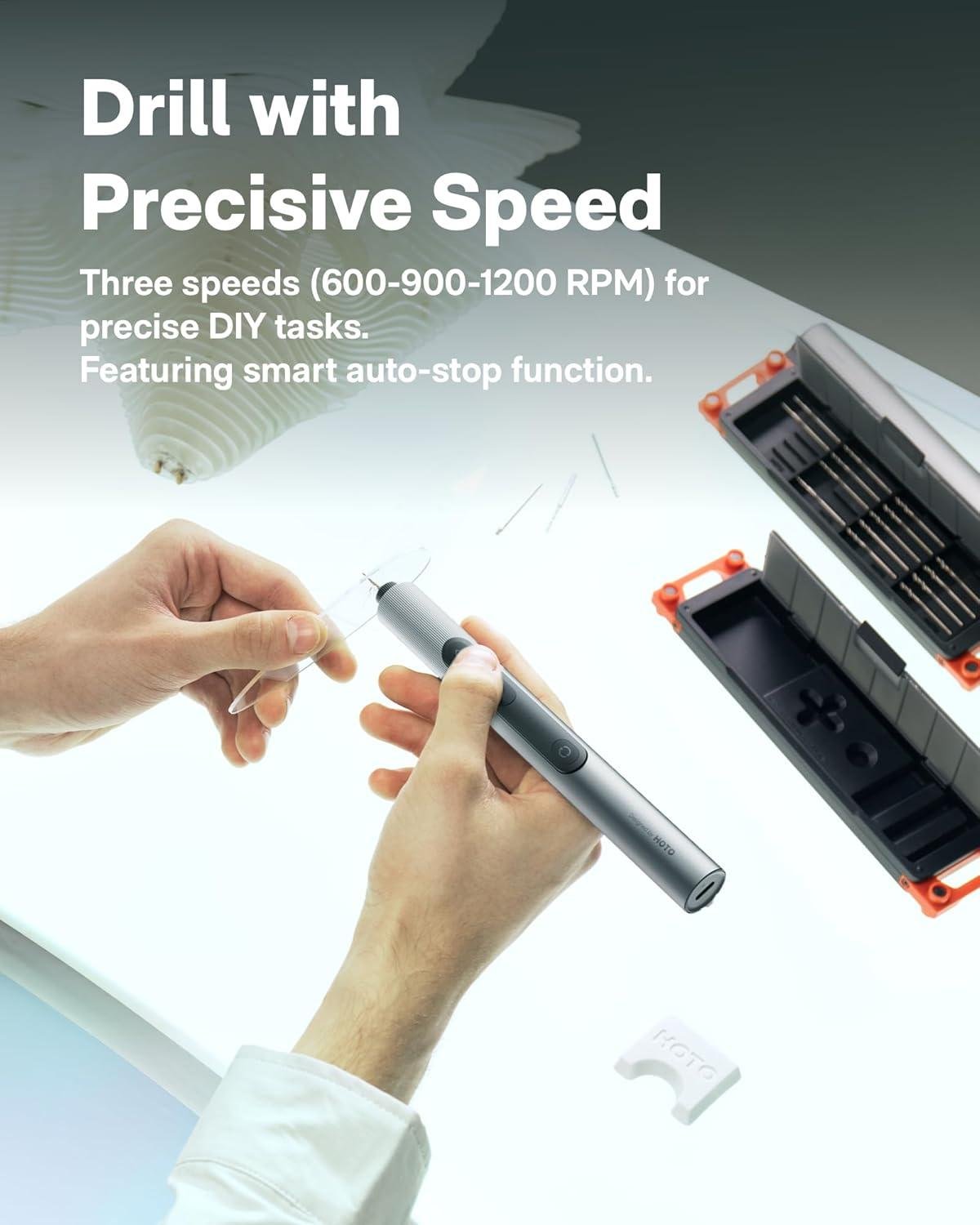
The HOTO SNAPBLOQ™ D-A03 Mini Drill Pen is a compact, cordless precision drill built around a coreless brushless motor, 3 speeds (600/900/1200 RPM), an 800mAh USB‑C rechargeable battery, and a helpful LED ring light for clean, shadow-free starts. Its kit includes 20 M2 micro drill bits and a magnetic modular storage case that keeps small parts organized. Customer feedback consistently highlights ease of use, quiet operation, and convenience for quick small holes, though some report runout/bit wobble or a basic chuck that can affect ultra-accurate work.
Best for: hobby woodworkers with small to medium projects, cabinet makers needing precision for pilot holes, and beginners learning careful drilling in softwoods, veneers, and thin stock.
Consider alternatives if: you drill thick hardwoods regularly, need larger bits (micro-only capacity), or require production-grade concentricity.
Final assessment: the D-A03 is a solid precision companion tool, not a replacement for a full-size drill.
Want to see current pricing and customer photos? View on Amazon & Read More Reviews →