

Blog
Goldblatt Flooring Tool Kit Review: Right for Our Shop?

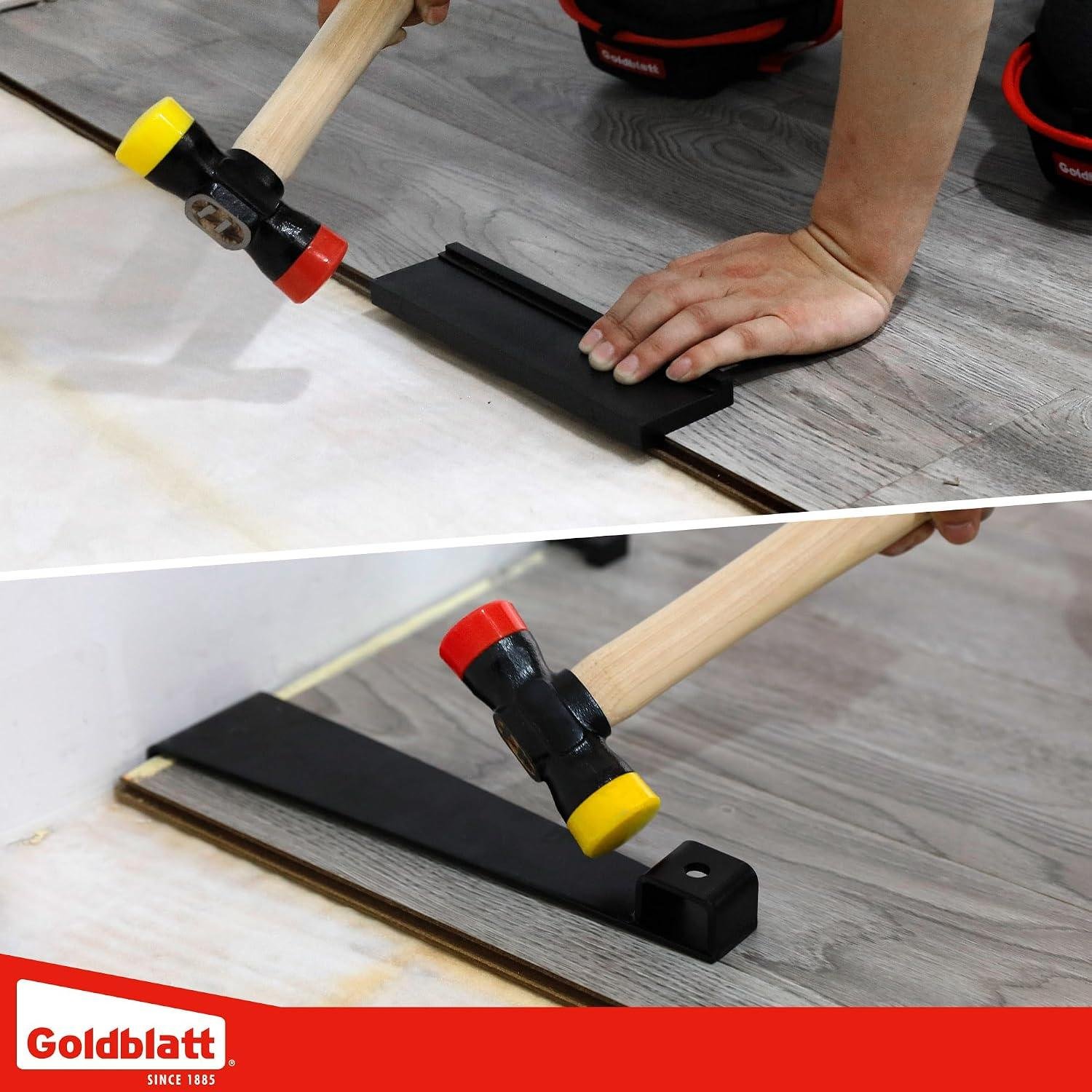
Ever tried to pull LVP or laminate planks tight along a wall, only to end up with stubborn gaps, chipped edges, or a “persuasion tool” that marks the surface? Flooring installs can feel like a precision woodworking job done on your knees-where accuracy, repeatability, and control matter as much as speed.
The Goldblatt Laminate Flooring Tools, Professional Wood LVP Installation Kit is an all-in-one set built to solve those pinch points, pairing a 12 oz reinforced, double-faced non-marring mallet (soft red and hard yellow heads) with a wide-angle A3 steel pull bar (with a felt pad), a polypropylene dual-sided tapping block, and 30 multi-size 4‑in‑1 expansion spacers for common gap requirements.
In this review, we’ll break down the kit’s design, space-and-budget practicality, and what it’s like to work with based on specs and customer feedback-especially the frequent praise for easier, tighter seams, alongside mixed reports about mallet face wear and tools slipping.
We’ve built enough shop projects to know: the right hand tools don’t replace skill-but they can reduce frustration and raise consistency fast.
Tool Overview and First Impressions of the Goldblatt LVP Installation Kit
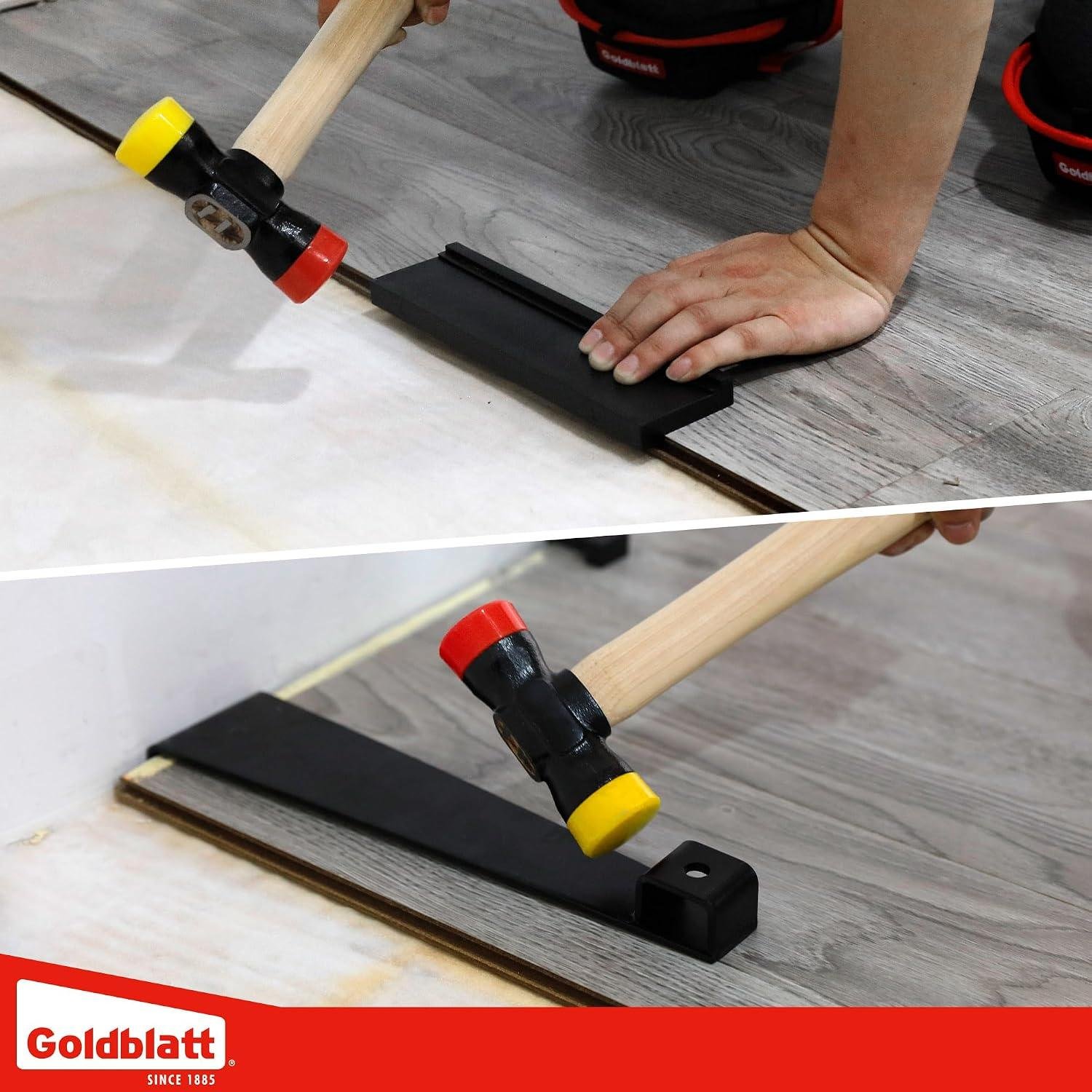
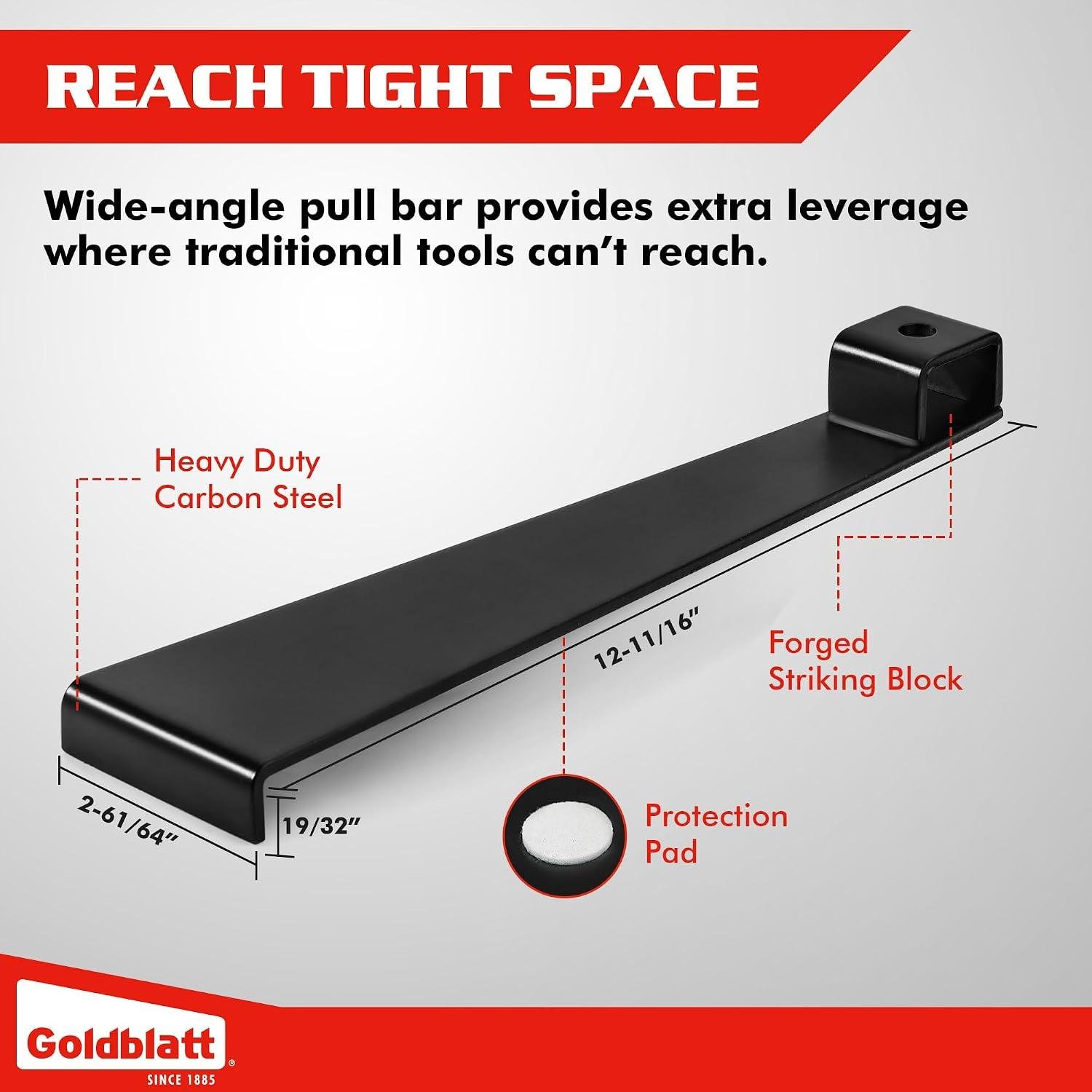
In our shop, we’re usually reaching for clamps, squares, and a block plane-not a flooring kit-so the Goldblatt Laminate Flooring Tools, Professional Wood LVP Installation Kit is a nice reminder that “woodworking” often spills into trim-outs and built-in installs where floors matter. First impressions are straightforward: it’s an all-manual set (no motor, amps, RPM, or cord requirements to worry about), built around control and repeatability rather than brute force. The 12 oz reinforced rubber mallet uses an interchangeable double-head design with a soft red non-marring face for delicate surfaces and a hard yellow plastic face when you need a crisper hit; Goldblatt lists it at 12-5/16″ long and 1-9/16″ diameter, with a hickory handle that feels familiar to anyone who’s swung a shop mallet. The wide-angle pull bar is A3 steel with a matte coating and a round felt pad on the back-an important small detail for us, since preventing scuffs is half the job when we’re fitting floors around cabinets, toe kicks, and finished door casings.
Customer review themes line up with what we’d expect from a value-focused installation kit: reviewers consistently say the tools “work great” and make installation much easier, with multiple mentions that the pull bar and tapping block are particularly effective for getting tight seams. At the same time, durability and stability are mixed-some users report everything feels durable enough to reuse, while others note the soft rubber mallet face wears out quickly and that the tapping block can slip off the edge, leading to potential chipping if your aim or support is off. From a woodworking perspective, the educational takeaway is technique: keep the block fully seated, strike square, and let the tool distribute force instead of “driving” the plank like framing lumber. That’s also why the included 4-in-1 expansion spacers matter-consistent gaps reduce binding and help locking profiles seat cleanly. Goldblatt includes 30 spacers, each offering multiple preset expansion widths (1″, 1/2″, 3/8″, 1/4″), which helps us match the gap to the flooring type without improvising stacks of shims.
- Included accessories
- 12 oz reinforced double-faced mallet (soft red + hard yellow heads), hickory handle
- Wide-angle A3 steel pull bar with felt pad
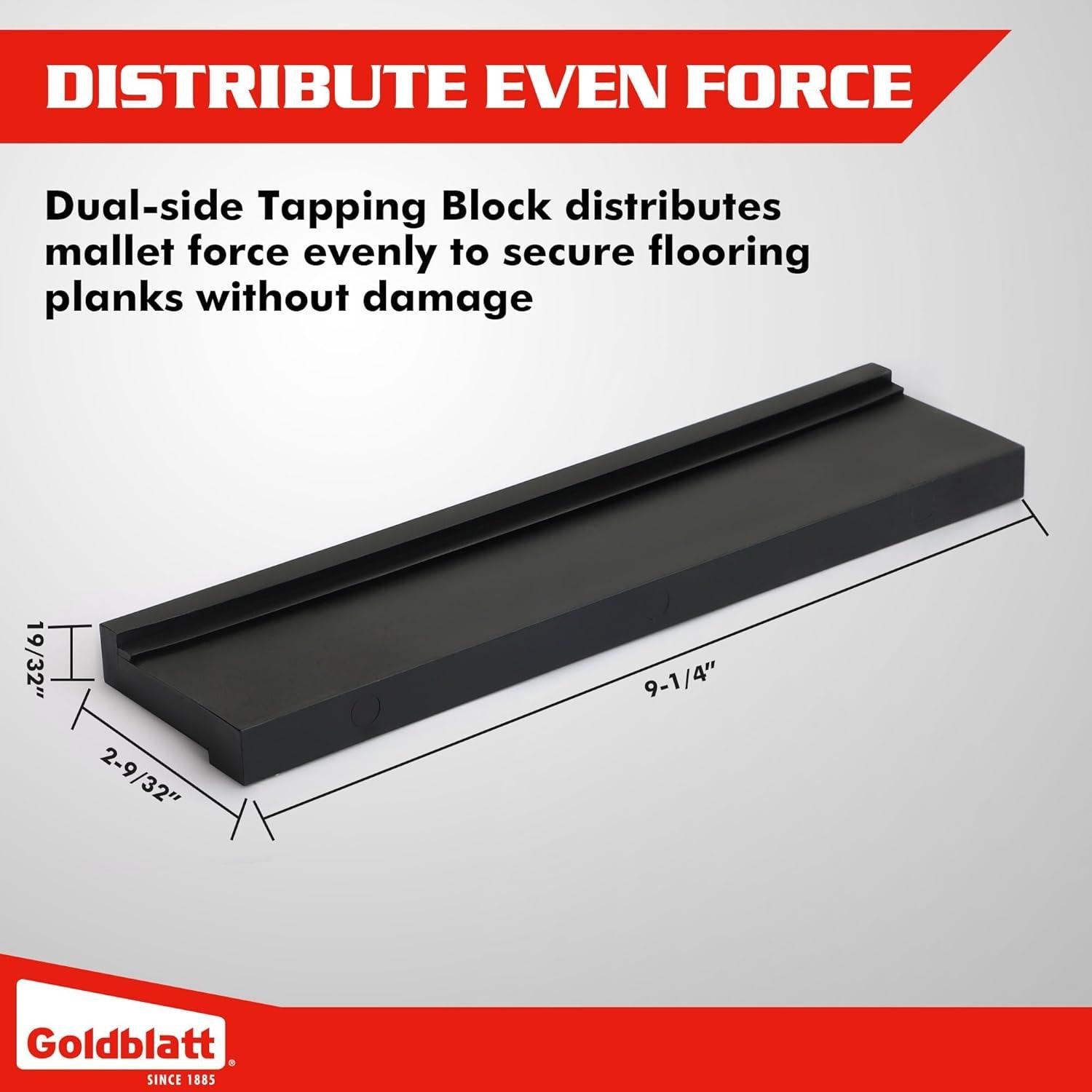
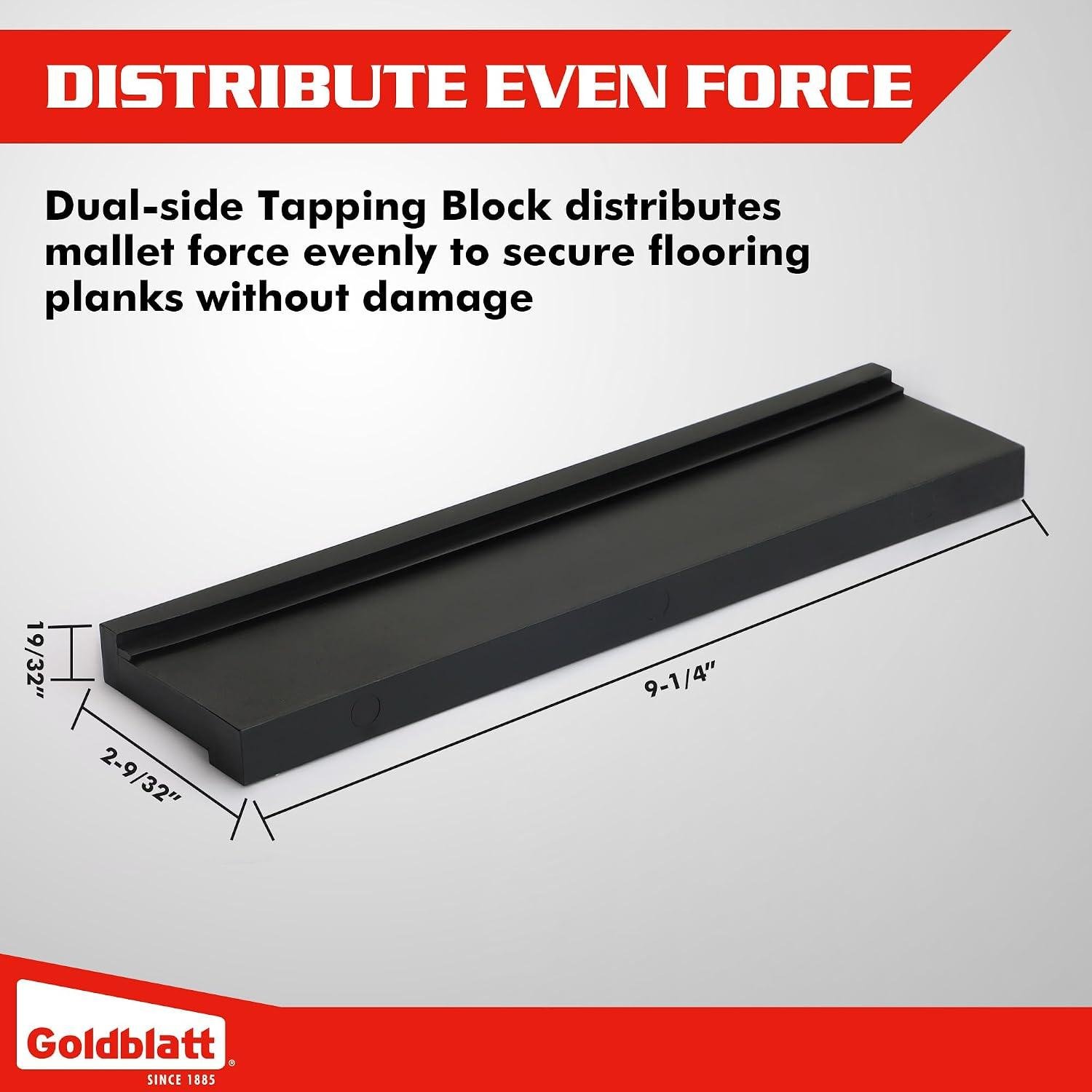
- Polypropylene dual-sided tapping block, approx. 9-1/4″ x 2-9/32″ x 19/32″
- 30-piece 4-in-1 expansion spacer set (1″, 1/2″, 3/8″, 1/4″)
- Compatible attachments/accessories (typical add-ons we’d pair with it)
- Knee pads and a low-profile mechanic’s mat for long layout sessions
- Dead-blow mallet (backup option if you prefer a one-piece head)
- Blue painter’s tape to reduce surface scuffing during tapping
- Scrap cork/rubber pad for extra protection along finished edges
- Ideal project types
- Installing LVP/LVT in workshops, offices, and basements
- Laminate installs around built-ins and cabinetry
- Small-room flooring where a pull bar is needed near walls and toe-kicks
- Punch-list flooring repairs where seams need re-tightening
- Wood types tested by customers
- Not specified in review excerpts; customer feedback references laminate and luxury vinyl installations rather than solid wood species.
| Item | Spec / Material (per product description) | Workshop relevance |
|---|---|---|
| Mallet | 12 oz, 12-5/16″ long, double-face (soft red / hard yellow), hickory handle | Lets us choose a softer or firmer strike to avoid marring finished surfaces |
| Pull bar | A3 steel with matte coating; felt pad backing | Helps draw planks tight near walls without prying against finished trim |
| Tapping block | Polypropylene; approx. 9-1/4″ x 2-9/32″ x 19/32″ | Spreads force across the locking edge; seating and alignment matter to prevent slips |
| Spacers | 30 pcs 4-in-1: 1″, 1/2″, 3/8″, 1/4″ | Makes expansion gaps consistent-critical for clean reveals at baseboard and thresholds |
| Accessory Type | Compatible With This Kit? | Notes |
|---|---|---|
| Aftermarket replacement mallet faces | Unknown | At least one reviewer noted difficulty finding replacement soft faces; plan accordingly. |
| Standard flooring pull bars | Yes (workflow compatible) | You can swap pull bars if you prefer a different hook profile or length. |
| Flooring cutters / oscillating tools | Yes (separate tool) | This kit doesn’t cut planks; pair with your preferred saw/cutter for best results. |
| Capability | Recommended (typical expectation) | Actual (what the kit provides) |
|---|---|---|
| Seam tightening near walls | Pull bar with surface protection | A3 steel pull bar with felt pad |
| Controlled tapping without marring | Non-marring mallet + tapping block | Double-face mallet + polypropylene block |
| Expansion gap setup | Multiple spacer sizes | 30 multi-size spacers: 1″, 1/2″, 3/8″, 1/4″ |
| Cutting/trim fitting | Saw/cutter included or assumed | Not included (you’ll still need a saw/cutter and measuring tools) |
See Full Specifications & Customer Photos
Real World Performance on Laminate Flooring and Wood Look Planks

On real laminate jobs and wood-look plank installs, we look at this Goldblatt kit less like a “mystery DIY box” and more like a set of purpose-made striking and pulling tools that can save our offcuts from becoming sacrificial tapping blocks. The 12 oz reinforced double-faced mallet (about 12-5/16″ long with 1-9/16″ diameter non-marring heads and a hickory handle) gives us two very different behaviors: the soft red face is the one we’d favor when we’re persuading click-lock edges together without bruising a printed wear layer, while the hard yellow face is better reserved for “stubborn seam” moments where we need a more decisive transfer of force. The polypropylene tapping block (approx. 9-1/4″ x 2-9/32″ x 19/32″) is meant to spread impact across the profile, and multiple customer reviews echo that theme-people say the pull bar and tapping block are particularly effective for getting tight seams and that the set “makes installation much easier,” including completing rooms like a 15′ x 15′ space. From a shop standpoint, the big win is consistency: when we’re tired after cutting the last row, the block and bar help us apply force squarely instead of improvising with a 2×4 that can crush a locking lip if we get sloppy.
That said, real-world performance also depends on friction, edge geometry, and how controlled we are with our strikes-exactly where customer feedback gets mixed. Several reviewers mention stability issues where the tapping block can “slip off the edge”, and one even reports it caused chipping; that’s a reminder for us to keep the block fully seated and to take smaller, more frequent taps rather than big swings. We also note repeated durability concerns: customers report the soft rubber face can wear out quickly under heavier use, and a few mention the double-ended mallet heads loosening/unscrewing during swinging-so in our workflow we’d treat “check head tightness” like checking a router collet before a pass. The A3 steel wide-angle pull bar with a felt pad is the part we trust most near walls and door jambs (where clamps and hands don’t fit), but it’s still worth keeping steady pressure into the plank so it doesn’t cam out. Educationally, the safest technique is simple: keep fingers clear, use gloves if needed, and use the kit to apply force in-line with the joint-because with laminate and LVP, most surface damage isn’t from “too much power,” it’s from misdirected power.
- Included accessories
- 12 oz double-faced rubber mallet (soft red + hard yellow head), hickory handle
- Wide-angle pull bar (A3 steel, matte coating, felt pad)
- Universal tapping block (polypropylene)
- 30-piece 4-in-1 expansion spacers (multi-width)
- Compatible attachments/accessories
- Aftermarket non-marring mallet faces (if you can source compatible replacements)
- Knee pads and cut-resistant gloves (recommended for installation work)
- Scrap cork/rubber pad to increase tapping block grip if slipping occurs (shop hack)
- Ideal project types
- Laminate “wood look” floating floors
- LVP/LVT click-lock plank installs
- Edge/last-row tightening along walls and under toe-kicks (pull bar work)
- Small remodels where we want a dedicated kit instead of improvised offcuts
- Wood types tested by customers (as reported in reviews)
- Laminate flooring
- Luxury vinyl plank (LVP)
- Vinyl plank
| Component | Key Spec (from listing) | What It Means in the Field |
|---|---|---|
| Mallet | 12 oz, double-face, 12-5/16″ length | Light enough for controlled tapping; two faces help match force to material finish. |
| Tapping block | Polypropylene, approx. 9-1/4″ x 2-9/32″ x 19/32″ | Spreads impact across the edge profile; must be fully seated to avoid slip/chip. |
| Pull bar | A3 steel, felt pad, wide-angle profile | Draws last rows tight near walls without prying directly on the plank edge. |
| Spacers | 30 pcs, 4-in-1: 1″, 1/2″, 3/8″, 1/4″ | Helps maintain consistent expansion gaps across laminate, engineered wood, and vinyl. |
| Accessory | Fits/Works With | Why We’d Add It |
|---|---|---|
| Grip pad (cork/rubber) | Tapping block contact face | Reduces the “slick block” slipping some reviewers mention. |
| Thread check (hand-tighten) | Double-ended mallet heads | Helps prevent loosening during swings (noted in customer feedback). |
| Knee pads + gloves | Any floor install | Improves control and reduces hand/finger risk when striking near joints. |
| Task | Recommended “Capacity” (Practical) | Actual Feedback From Reviews |
|---|---|---|
| Closing long-field seams | Moderate tapping with block | Often successful; multiple reviewers say it “works great” for tight seams. |
| Last-row pulls at wall | Pull bar + controlled mallet strikes | Generally positive; pull bar described as sturdy and effective. |
| Heavy/pro daily use | Frequent inspection/possible consumables | Mixed durability; soft face wear and loosening heads are mentioned. |
| Edge stability while tapping | Full seating + short, square hits | Some slipping reported, occasionally leading to chipping. |
See Full Specifications & Customer Photos
Key Features Woodworkers Will Appreciate for Clean Cuts and Tight Seams
For clean cuts and tight seams, what we appreciate most about this Goldblatt kit is how it focuses on controlled force-the kind that closes gaps without bruising edges or blowing out a locking profile. The 12 oz reinforced double-faced rubber mallet (listed at 12-5/16″ long and 1-9/16″ in diameter) gives us two “strike personalities”: the soft red face for delicate finishes and the hard yellow plastic face when a joint needs persuasion. In shop terms, it’s similar to choosing between a dead-blow and a harder shop mallet: we’re matching the hit to the material so we’re less likely to crush corners, especially on brittle laminate. Multiple reviewers echo that the set “works great” and that the pull bar and tapping block are particularly effective for getting tight seams, which tracks with what we’d expect from a kit built around spreading impact over a larger contact area instead of point-loading the tongue-and-groove.
The other two seam-makers here are the wide angle pull bar and the universal tapping block. The pull bar is made from A3 steel with a matte coating for corrosion resistance, and it includes a round felt pad to help protect adjacent faces-useful when we’re working up against a baseboard or cabinet toe-kick where clamps can’t reach. The tapping block is polypropylene and sized about 9-1/4″ x 2-9/32″ x 19/32″, designed to distribute force across the plank edge-good practice for avoiding “mushroomed” lips that telegraph through tight seams. That said, we do need to be honest about what customers report: stability is a recurring complaint, with some saying the block can be “slick” and may slip off the edge, which in turn can cause chipping if we’re not careful. Our woodworking takeaway: keep the block square, use shorter controlled taps, and consider adding a strip of high-friction tape to the block face if slippage shows up. The 30-piece 4-in-1 expansion spacer set also adds practical precision-pre-set gaps help prevent seasonal binding-and the kit provides common sizes like 1/4″ (vinyl), 3/8″ (laminate), 1/2″ (engineered wood), and 1″ (thresholds) so we can match the manufacturer’s spec instead of “eyeballing” it.
- Included accessories: 1x 12 oz double-faced mallet, 1x tapping block, 1x A3 steel pull bar (with felt pad), 30x 4-in-1 expansion spacers
- Compatible attachments/accessories: high-friction tape (for tapping block face), knee pads, hearing/eye protection, thin underlayment offcuts for protecting finished surfaces near strike zones
- Ideal project types: laminate flooring installs, LVP/LVT click-lock installs, floating engineered wood floors, tight-to-wall finishing rows where clamps won’t fit
- Wood types tested by customers: customers specifically mention success with laminate installs; the kit is marketed for hardwood/engineered wood and vinyl plank systems
| Tool/Feature | Spec (from listing) | Why woodworkers care for tight seams |
|---|---|---|
| Mallet | 12 oz, 12-5/16″ long, double-face (soft red + hard yellow) | Lets us tune impact to avoid edge crushing while still seating joints |
| Tapping block | Polypropylene, approx. 9-1/4″ x 2-9/32″ x 19/32″ | Spreads force along the edge to reduce localized damage to click profiles |
| Pull bar | A3 steel, matte coating, felt pad | Pulls the last boards tight near walls/obstructions without prying on the plank edge |
| Spacers | 30 pcs, 4-in-1: 1″, 1/2″, 3/8″, 1/4″ | Consistent perimeter gap helps avoid buckling and keeps reveal lines even |
| Accessory | Works With | Purpose |
|---|---|---|
| High-friction/anti-slip tape | Tapping block | Mitigates the “slipping off the edge” issue some reviewers mention |
| Felt or cork pad offcuts | Pull bar contact points | Extra scratch protection on prefinished faces/baseboards |
| Rubber gloves / grip gloves | Mallet + plank handling | Improves control and helps keep fingers clear of strike zones |
| Capacity/Use Case | Recommended (best practice) | What the kit is set up to do |
|---|---|---|
| Perimeter expansion gaps | Match flooring manufacturer spec | 1/4″, 3/8″, 1/2″, 1″ spacer options cover common floating-floor requirements |
| Seating click-lock seams | Short, controlled taps; block kept square | Tapping block + dual-face mallet are intended to close seams without marring |
| Pulling last row tight | Use pull bar instead of prying on plank edge | Wide-angle pull bar is designed for tight-to-wall rows |
See Full Specifications & Customer Photos
Ease of Use for Beginners and Experienced Installers

For beginners, the Goldblatt Laminate Flooring Tools kit is about as close as we get to “open the box and start fitting planks” in the shop. There’s essentially no assembly beyond grabbing the right edge-gap setting on the 30-piece 4‑in‑1 expansion spacers and choosing which face of the 12 oz reinforced rubber mallet to strike with. The mallet’s interchangeable double-head design-a soft red non-marring face for delicate surfaces and a hard yellow plastic face for more stubborn joints-helps newer installers learn a key flooring lesson fast: use just enough force to close the seam without bruising an edge. Customer review themes back this up, with multiple buyers saying the tools “work extremely well” and “make installation much easier,” especially when they were “struggling getting the tight fit between pieces” before using a tapping block and pull bar. In practical woodworking terms, it takes a lot of guesswork out of closing click-lock joints on LVP/LVT/laminate and reduces the temptation to improvise with a scrap 2×4 that can crush tongues if our angle is off.
For experienced installers, the standout “ease of use” advantage is how the kit standardizes tight spaces and repeatable spacing. The wide angle pull bar is made from A3 steel with a matte coating, and the round felt pad is a small but meaningful touch when we’re levering against baseboard or a cabinet toe-kick and don’t want a surprise scratch. The universal tapping block (solid polypropylene, approx. 9‑1/4″ x 2‑9/32″ x 19/32″) spreads impact across the profile so we’re not point-loading the locking edge-great in a production rhythm where consistency matters. That said, seasoned hands will also notice the recurring customer-review cautions: durability is mixed (some report the soft mallet face wearing out quickly with “professional use”), and stability complaints show up around the tapping block “slipping off the edge” and even mallet heads loosening for one user. In our workflow, that simply means we keep the block flat, start with lighter taps to seat the profile, re-check mallet head tightness during long runs, and keep our fingers well clear-because pinched knuckles are the fastest way to cut a floor day short.
- Included accessories: 1x 12 oz double-faced rubber mallet (soft red + hard yellow), 1x A3 steel pull bar with felt pad, 1x polypropylene tapping block, 30x 4‑in‑1 expansion spacers
- Compatible attachments/accessories: knee pads, safety glasses, thin work gloves, tapping-block traction tape (to reduce slipping), spare non-marring mallet faces (if available), flooring pull-bar shims for delicate trim
- Ideal project types: LVP/LVT installs, laminate flooring installs, engineered wood floating floors, small shop office remodels, rental turnover flooring, hallway/closet edge work (where the pull bar shines)
- Wood types tested by customers: laminate, luxury vinyl (LVP), vinyl plank, engineered wood (per kit intent + review themes)
| Component | Key Spec (from product description) | Ease-of-use takeaway in the shop |
|---|---|---|
| Rubber mallet | 12 oz, length 12‑5/16″, head dia. 1‑9/16″, double-face (soft red / hard yellow), hickory handle | Quickly match strike hardness to surface; hickory handle improves control for new users |
| Tapping block | Polypropylene, approx. 9‑1/4″ x 2‑9/32″ x 19/32″, dual-sided | Distributes force to protect click-lock edges; some reviewers note it can slip if not held square |
| Pull bar | A3 steel, wide angle, felt pad | Makes end-joints and wall-side rows easier without prying against finished surfaces |
| Spacers | 30-piece set, 4‑in‑1: 1″, 1/2″, 3/8″, 1/4″ | Fast, repeatable expansion gaps-especially helpful for first-timers learning layout discipline |
| Accessory / Add-on | Works With This Kit? | Why We’d Add It |
|---|---|---|
| Non-slip/traction tape on tapping block face | Yes | Helps address the “slips off the edge” theme some customers mention |
| Knee pads | Yes | Improves control and stamina during long rows and seam-checking |
| Thin gloves | Yes | Extra protection while keeping dexterity near tongues/grooves (still keep fingers clear) |
| Task | Recommended Use | Actual Notes from Reviews |
|---|---|---|
| Closing long-edge seams | Use tapping block + soft mallet face; light taps | Multiple reviewers say the block/pull bar are effective for “getting tight seams” |
| Pulling end joints near walls | Use A3 steel pull bar; keep felt pad against finished surface | Users call the pull bar “quite sturdy” and helpful where hands can’t fit |
| High-volume/pro use | Check mallet head tightness; expect more wear on soft face | Durability is mixed; some report the soft red face wears quickly and stability issues occur |
See Full Specifications & Customer Photos
Customer Reviews Analysis
What Woodworkers Are Saying: Goldblatt Laminate Flooring Tools (Professional Wood LVP Installation Kit)
1) Overall sentiment from woodworking customers
Overall, sentiment trends positive among DIYers and shop-minded users who want a cleaner, more repeatable way to install LVP/laminate without relying entirely on improvised blocks or makeshift pull bars. Several woodworkers mentioned the kit feels like a purpose-built bundle that speeds up flooring work and helps avoid edge damage-while a smaller set of reviewers still felt certain pieces could be sturdier or more “pro-grade” for daily, heavy use.
2) Performance feedback (accuracy, power, results)
Common praise includes achieving tighter seams and fewer marred edges compared with tapping using scrap wood. Multiple reviews highlight that the included tools help apply force more evenly, which translates into better-looking joints and less rework.
- Accuracy/consistency: Several woodworkers mentioned more consistent plank engagement-especially along long runs-because the tapping block and pull bar help keep the locking profile seated.
- Results/finish quality: Reviewers frequently tied the kit to reduced chipping/crushing on plank edges and a more “finished” final look (fewer visible gaps).
- Power under load: Some users reported challenges with stubborn locking systems or tight installs where they needed more leverage than expected-suggesting performance depends on plank brand/thickness and subfloor flatness.
3) Build quality and durability observations
Multiple reviews highlight the kit as “solid for the price,” though not universally described as contractor-grade.
- Durability positives: Several woodworkers mentioned the components hold up well through a room or two and don’t immediately deform under normal tapping/pulling.
- Wear/tear notes: Some users reported challenges with parts showing wear after heavier use-particularly when striking aggressively or working with tighter-fitting planks. A few reviews point to durability variance depending on how forcefully the tools are used and whether a mallet technique is controlled vs. full-force pounding.
4) Ease of use for different skill levels
- Beginners: Beginners appreciated the straightforward setup-having the key pieces in one kit reduced guesswork (what block/pull bar/spacers to buy) and helped them get acceptable results faster.
- Experienced woodworkers: Reviewers with more installation experience found the kit helpful mainly for convenience and repeatability, noting it can streamline workflow versus cobbling together substitutes.
- Learning curve: Some DIYers found the learning curve steep around how hard to strike and how to avoid levering in a way that stresses plank edges or tool contact points-technique still matters.
5) Common project types and success stories
Customers successfully used this for:
- LVP installations in living rooms, bedrooms, hallways, and basements
- Laminate flooring projects where protecting the tongue-and-groove/locking edges was a priority
- Tight-edge finishing work near walls/doorways where a pull bar is typically necessary
Several reviewers mentioned that the kit helped them finish rooms with cleaner transitions and fewer open seams, especially when working along the final rows where conventional tapping is awkward.
6) Issues or limitations reported
Some users reported challenges with:
- Tool robustness for hard, repetitive strikes: A subset of reviews suggested certain parts may not feel heavy-duty enough for extended, high-force use or multiple whole-house installs.
- Fit and compatibility variation: Not every plank profile behaves the same-some locking systems are tighter, and reviewers noted that technique and compatibility can affect how well the tools “seat” the joint without edge stress.
- Still not a substitute for prep: Multiple reviews (directly or indirectly) reinforce that subfloor flatness and good layout matter; the kit won’t “force” a bad fit into a perfect one without potential damage.
Quick Summary Table (Common Themes from Reviews)
| Aspect | Common Feedback |
|---|---|
| Performance | Common praise includes tighter seams and fewer damaged plank edges; some users needed more leverage on stubborn locking systems. |
| Precision | Several woodworkers mentioned more consistent joint seating than improvised blocks; technique still affects results. |
| Durability | Generally “good for the price,” though some users reported challenges with wear under heavy, repetitive striking. |
| Ease of Use | Beginners appreciated having a complete kit; a few DIYers noted a learning curve around strike force and positioning. |
| Versatility | Most often used for LVP and laminate installs, especially final rows and tight-to-wall sections. |
| Value | Multiple reviews highlight strong value versus buying pieces separately; not always described as “contractor-grade.” |
If you paste in the actual review text (or star-rating breakdown), I can tighten this into a more data-driven summary with a few short, representative quoted excerpts and clearer “most common” vs. “less frequent” points.
Pros & Cons
Pros & Cons
In our shop, a “good” flooring kit isn’t the one with the longest feature list-it’s the one that keeps seams tight, corners cooperative, and our patience intact. Here’s where the Goldblatt Laminate Flooring Tools (Professional Wood LVP Installation Kit) shines, and where it can still trip us up mid-install.
| What we noticed | Why it matters in real installs |
|---|---|
| Double-faced mallet (soft + hard) | We can “tap with manners” on delicate planks, then switch to firm persuasion without swapping tools. |
| Wide-angle pull bar feels stout | Helps pull tight seams near walls-where flooring likes to misbehave the most. |
| 30 multi-size spacers included | Keeps expansion gaps consistent without us hunting for random wedges. |
| Tapping block is functional, but divisive | Works for many installs, yet the “slip factor” can turn a clean tap into a chipped edge. |
Pros
- All-in-one kit simplicity. For laminate, LVP, LVT, or vinyl plank jobs, we get the core tools in one box: mallet, pull bar, tapping block, and spacers.
- The pull bar is a legit highlight. The steel construction and felt backing are the kind of practical touches we appreciate-strong where it counts, gentler where it should be.
- Two mallet faces give us options. The soft red side is handy for non-marring taps; the harder yellow side is useful when planks need a more decisive nudge.
- Spacers are plentiful and versatile. The 4-in-1 sizing is convenient when we bounce between vinyl, laminate, and engineered wood expansion gap needs.
- Noticeably reduces “installation friction.” Like many buyers report, the kit generally makes locking planks and closing seams easier-especially for DIY-scale rooms and weekend projects.
Cons
- Durability is mixed-especially the mallet’s soft face. Some users report the red rubber wearing quickly under heavier/pro use, and replacement faces don’t seem easy to source.
- Stability issues can interrupt the rhythm. Multiple reviewers mention the tapping block (and sometimes the setup in general) can slip off the edge during use-exactly when we want controlled contact.
- Mallet head security can be a concern. A few reports mention the double-ended heads loosening during swings; that’s not just annoying, it’s a safety and workflow problem.
- Tapping block feel isn’t “premium.” Even when it gets the job done, it may feel a bit budget-class compared to higher-end blocks-and that can show up as less grip or less confidence per strike.
- Not always “professional” in the daily-driver sense. For occasional installs it’s a strong value, but if we’re pounding floors every week, the kit may not hold up like dedicated pro-grade standalone tools.
Our takeaway: This Goldblatt kit reads like a smart, budget-friendly shortcut to a smoother install-especially for DIY jobs and lighter shop use. If we’re planning frequent installs, we’d keep an eye on the mallet face wear and the tapping block’s tendency to slip, since those two quirks can turn a clean run into a stop-and-fix afternoon.
Q&A
What flooring/wood types can this kit handle effectively (LVP, laminate, engineered wood, hardwood)?
This kit is built for click-lock style products where you need to close seams without damaging edges-laminate, LVP/LVT, and many engineered wood floors. The non-marring 12 oz double-faced mallet and polypropylene tapping block are intended to protect the locking profile while you seat boards. For true nail-down solid hardwood installs, you’d still need a flooring nailer/stapler and the correct cleats/staples-this kit won’t replace that. For glue-down work, the pull bar/spacers can still help at edges, but you’ll also need proper trowels/rollers and adhesive cleanup tools.
Is it “powerful enough” for dense hardwoods like oak or maple?
The kit doesn’t “cut” or “mill” hardwood-its job is applying controlled force to close joints. For engineered oak/maple click-lock planks, the A3 steel pull bar and tapping block can provide the leverage/impact you need, especially in tight spots near walls. That said, several reviewers note the tapping block can be slick and slip off the edge; on harder, tighter-locking boards that can mean chipped corners if you strike while it’s mis-seated. Practical tip: keep the block fully engaged, use lighter repeated taps instead of heavy swings, and consider adding a strip of grippy tape to the block face if slipping is an issue (without interfering with the lock profile).
Can this handle production work, or is it mainly for DIY/hobby jobs?
Customer feedback suggests it’s very effective for typical rooms and mid-size installs-one reviewer mentioned installing a 15′ x 15′ room, and another reported ~500 sq ft with the pull bar described as “quite sturdy.” Where “professional use” gets mixed comments is the mallet: the soft rubber face is reported by some to wear out quickly, and one reviewer mentioned difficulty finding replacement faces. If you’re doing frequent installs, plan on either sourcing spare faces (if available) or treating the mallet as a consumable and upgrading to a more serviceable pro mallet if the heads loosen/wear.
How difficult is setup and what adjustments do you actually get?
There’s essentially no setup beyond choosing the right spacer thickness and selecting the mallet face (soft red for more delicate surfaces, hard yellow for tougher tapping). The spacers are “4-in-1” and provide multiple gap sizes called out in the specs: 1″ (thresholds), 1/2″ (engineered wood), 3/8″ (laminate), and 1/4″ (vinyl). Woodworker tip: always confirm the manufacturer’s required expansion gap for your specific floor and climate-don’t assume one gap fits all rooms.
Does it work with standard flooring accessories (spacers, pull bars, tapping blocks), and can I swap parts?
Functionally, yes-these are standard categories of install tools, so you can mix-and-match with other brands (spacers, alternate pull bars, different tapping blocks). The mallet is designed with interchangeable double heads, but reviews indicate replacement faces may not be easy to find, which limits long-term serviceability. If head loosening is a concern, check tightness periodically during use; one reviewer reported the mallet heads could unscrew during swinging.
Will this fit in a small shop, and does it require dust collection or power?
Yes-this is a hand-tool kit (mallet, pull bar, tapping block, spacers), so it stores in a drawer or small toolbox and requires no power outlet and no dust collection. For workshop integration, it pairs well with your existing miter saw/jigsaw/oscillating tool for cuts, but it itself won’t create dust-its role is assembly and fit-up.
Is this beginner-friendly, and what’s the learning curve to avoid damaging boards?
Beginners typically find kits like this make installation easier because you get the right shapes for edge pulls and controlled tapping. Reviews here are strongly positive on functionality and ease of installation (“work extremely well” / “made installation much easier”), but there are caution flags: the tapping block can slip off the edge, which can cause chipping, and the mallet may loosen/wear with heavy use. Learning curve tip: practice on offcuts first, use lighter taps, keep the tapping block fully seated, and rely on the pull bar for the last rows near walls where beginners are most likely to pry or overstrike.
Is it worth the price versus cheaper kits, and how does it compare in real use?
Based on customer comments, the value proposition is that it’s an all-in-one box that “works great,” with particular praise for the pull bar and the way it helps achieve tight seams. Some users even described it as an improvement over prior kits. The tradeoff versus higher-end pro gear is durability consistency-durability and stability feedback is mixed, especially around the mallet’s soft face wear and the tapping block slipping. If you’re a DIY woodworker doing one or two rooms, it’s likely good value. If you’re installing floors regularly, you may still want this kit for the pull bar/spacers but budget for a more robust mallet and a higher-grip tapping block.
Unlock Your Potential
The Goldblatt Laminate Flooring Tools Professional Wood LVP Installation Kit bundles the essentials for floating-floor installs: a 12 oz double-faced, non-marring mallet (soft red and hard yellow heads), an A3 steel wide-angle pull bar with felt pad, a polypropylene dual-sided tapping block, and 30 multi-width 4‑in‑1 spacers. Customer feedback consistently praises functionality and easier, tighter seam closing, while durability and stability are more mixed-some users report the soft mallet face wearing faster and the tapping block slipping if you’re not careful.
Best for: hobby woodworkers tackling small to medium rooms, DIY remodelers learning fundamentals, and cabinet/furniture makers who occasionally install LVP/laminate and want a dedicated kit.
Consider alternatives if: you install flooring daily, need heavier-duty pro durability, or want a block design with more grip to reduce slipping.
Final assessment: A solid value kit that performs well for typical installs, with a few pro-use limitations to keep in mind.
Want to see current pricing and customer photos? View on Amazon & Read More Reviews →