

Blog
FUNPOLA 3D Puzzle Clock Kit Review: Right for Us?

Ever start a “quick” shop project only to realize your real challenge isn’t cutting joinery-it’s precision, patience, and not snapping a delicate piece right at the finish line? For many of us, small-scale builds can be just as demanding as cabinet work, especially when accuracy and clean edges matter but bench space is limited.
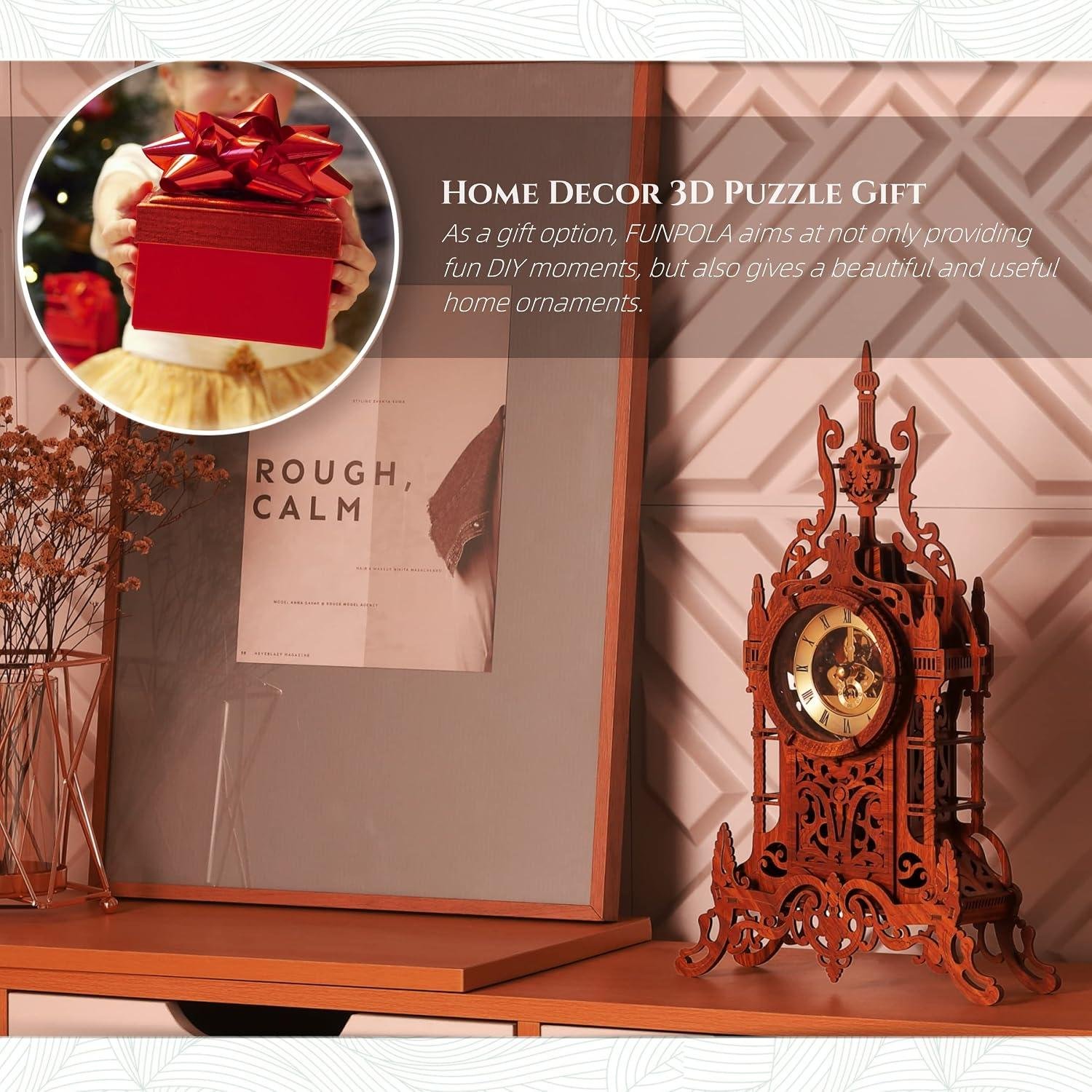
That’s where the FUNPOLA LED 3D Wood Puzzle Clock Tower (LED-WTC02) comes in: a DIY 3D clock kit made from engineered wood/plywood, designed to assemble without tools or glue, then light up with a brightness-adjustable 48-LED warm/yellow light belt (AA battery required, not included). It’s a 64-piece, medium-difficulty build aimed at adults, with spare parts and a step-by-step booklet.
In this review, we’ll look at the design and fit, build-quality cues, the learning curve for different skill levels, and whether customer-reported pros-like premium looks and fun assembly-outweigh common complaints about fragility and mixed clock functionality.
We’re coming at this as woodworkers who’ve learned that “easy assembly” claims only matter when tolerances, materials, and instructions actually cooperate.
Tool Overview and Build Quality for Our Shop Use

In our shop, we look at kits like the FUNPOLA LED 3D Wood Puzzle Clock Tower (LED-WTC02) less as a “tool” and more as a small, controlled exercise in fit-up, sequencing, and gentle handling-skills that translate directly to fine joinery and delicate assemblies. The build is based on engineered wood (plywood) parts with smooth edges, and the spec of 64 puzzle pieces at a medium difficulty with a stated 2-3 hour assembly tells us it’s closer to careful dry-fitting than “snap-together” craft time. Review themes back that up: many customers describe it as easy to assemble with clear, step-by-step instructions and note it can be built without tools or glue-a nice change of pace in a woodworking space where we’re usually reaching for clamps and adhesive. That said, we also see the recurring caution from reviews about fragile pieces and occasional fit issues; from a woodworker’s perspective, that’s a reminder to treat it like thin plywood parts-support tabs during insertion, avoid twisting, and consider a light touch-up with a fine needle file or sanding stick if a joint is overly tight (instead of forcing it and snapping a detail).
Build-quality impressions are also tied to its finished function: it’s a clock plus a lit display piece, using a brightness-adjustable LED light belt with 48 yellow LEDs (powered by AA battery, not included). Customers overwhelmingly praise the appearance-“looks amazing,” “expensive look,” especially when lit-which matters if this is going on a counter, in an office, or in a showroom corner of the shop. But the functionality and durability feedback is mixed: multiple reviewers say the clock works great, while others report it doesn’t work at all, and a few mention visibility concerns (e.g., the time being hard to read from across the room). For our workflow, that means we’d categorize this as a display-and-skill-builder kit rather than a dependable shop clock-great for teaching patience, planning an assembly order, and practicing gentle insertion pressure on thin stock. The kit’s inclusion of spare parts is also a practical nod to workshop reality: small parts can break or disappear, and having extras reduces the “project-stopper” risk during a relaxed evening build.
- Engineered wood (plywood) puzzle pieces (64 total)
- LED light belt with 48 yellow LEDs (brightness adjustable)
- Step-by-step instruction booklet
- Spare parts (for accidental damage/loss)
- AA battery (required; not included)
- Fine needle files (for gentle fit tuning if needed)
- Sanding sticks / 320-600 grit sandpaper (light edge cleanup)
- Nitrile gloves (some reviewers mention residue/paint transfer)
- Desk/display builds for office, showroom, or gift projects
- Skill practice: dry-fitting, sequencing, gentle assembly technique
- Lighted décor projects where appearance is the main goal
- Engineered plywood (per product description)
| Spec / Feature | What It Is (LED-WTC02) | Why It Matters in a Wood Shop |
|---|---|---|
| Piece count | 64 pieces | More parts = more chances to practice careful alignment and sequencing. |
| Material | Engineered wood (plywood) | Handle like thin ply: avoid twisting tabs; support parts during insertion. |
| Lighting | 48-LED yellow light belt (brightness adjustable) | Turns it into display décor; also highlights fit/finish and alignment. |
| Power | AA battery required (not included) | No cords on the bench; verify the clock/LED function during assembly. |
| Build time | 2-3 hours (medium difficulty) | Good “shop downtime” project; not a quick 15-minute kit. |
| Accessory / Supply | Included? | Notes for Use |
|---|---|---|
| Instruction booklet | Yes | Reviews frequently cite clear steps and straightforward assembly. |
| Spare parts | Yes | Useful given recurring review notes about fragile small pieces. |
| AA battery | No | Have one ready if you want to test clock/lighting immediately. |
| Files / sanding sticks | No | Optional for tight-fit tuning; remove material slowly to avoid slop. |
| Capability Area | What We’d Expect (Ideal) | What Reviews Suggest (Actual) |
|---|---|---|
| Assembly fit-up | Tabs seat with hand pressure; no cracking | Many report parts fit well, but some mention pieces not fitting and needing care. |
| Durability during build | Thin parts tolerate minor flex | Mixed: multiple reviewers call it very fragile, others say it feels sturdy once assembled. |
| Clock function | Mechanism works reliably after install | Mixed: some say it works great; others report it doesn’t work. |
| Display value | Looks polished on a shelf or desk | Strong positive theme: beautiful, expensive look, especially when lit. |
See Full Specifications & Customer Photos
Real World Assembly Performance and Fitment Accuracy

In real shop terms, the FUNPOLA LED 3D Wood Puzzle Clock Tower (LED-WTC02) behaves less like a “tool” and more like a precision dry-fit exercise-closer to test-fitting joinery than assembling a toy. The kit is built around 64 engineered-wood (plywood) pieces with a stated 2-3 hour, medium-difficulty build, and customer feedback largely supports that pace: many describe it as “easy to assemble… without tools or glue,” with clear step-by-step instructions and even spare parts included for mistakes. From a woodworker’s perspective, what matters is fitment: most reviewers report parts fit well, but there are repeating notes that “one or two parts didn’t fit together well” and that some pieces may need minor tuning. In the workshop, that’s familiar territory-if a tab feels too tight, we’d rather lightly dress a fuzzed edge than force it. Several customers mention having to file down certain spots; if we do that, we’d use a fine needle file or 220-320 grit paper, taking a few passes and re-test-fitting to avoid slop. Because it’s pre-finished engineered wood, we’d avoid aggressive sanding that could burn through the surface layer and change the look.
Fit accuracy is also tied to handling, and reviews are very consistent that some elements are fragile: multiple buyers call out “VERY fragile” parts and delicate bottom pieces, while others still describe the finished model as sturdy-so we’d treat it like thin fretwork or laser-cut ply components, not solid stock. Practical best practice is a clean bench, good lighting, and soft clamping pressure (or none at all): this is one of those assemblies where finger pressure, alignment, and patience beat force every time. The lighting and clock elements add another tolerance layer: the kit includes a brightness-adjustable LED light belt (48 yellow LEDs) and requires an AA battery (not included), and reviewers frequently praise the “expensive look… particularly when lit.” That said, clock performance is mixed-some say the clock works great, others report it doesn’t work at all-and one common usability gripe is legibility, with comments like “unless you are standing less than 5′ from it, you cannot tell the time” and mentions of a too-frosted “glass.” For us, that frames expectations: we’d build it for the practice of careful assembly and as illuminated décor, and we’d treat the timekeeping as a nice bonus rather than the primary “precision” feature.
- Included accessories
- 64 engineered-wood puzzle pieces
- Step-by-step instruction booklet
- Spare parts (for accidental damage or loss)
- Brightness-adjustable LED light belt (48 LEDs, yellow light)
- Compatible attachments/accessories
- AA battery (required, not included)
- Fine needle files (for tight tabs/slots)
- 220-320 grit sandpaper or sanding sponge (light edge tuning)
- Craft knife for clearing fuzz (use cautiously and cut away from hands)
- Ideal project types
- Dry-fit practice for tight-tolerance assemblies
- Weekend bench project (adult, medium difficulty)
- Gift builds and display pieces where lighting is the highlight
- “No-glue” mechanical-fit model building
- Wood types tested by customers
- Engineered wood / plywood components (as supplied in the kit)
| Assembly/Fit Spec | What the Product States | What Customers Commonly Report |
|---|---|---|
| Piece count | 64 pieces | Enough complexity to be “challenging but fun” |
| Difficulty / build time | Medium / 2-3 hours | Often matches expectations; some finish faster, others slow down for delicate parts |
| Tool/glue requirement | No tools or glue required | Mostly true, though some mention filing/sanding for best fit |
| Lighting | 48-LED adjustable light belt | Very positive-“looks amazing” when lit |
| Clock function | Battery-powered (AA required) | Mixed: works for some, doesn’t for others; legibility complaints at distance |
| Durability | Engineered wood with smooth finish | Mixed: some say durable; many warn pieces are fragile during assembly |
| Accessory | Purpose | When We’d Use It |
|---|---|---|
| AA battery | Powers clock/LEDs | Final checkout after assembly |
| Needle file set | Micro-fit tuning | If tabs are too tight-remove minimal material |
| 220-320 grit sandpaper | Edge cleanup | If there’s fuzz or a slight interference fit |
| Capacity Metric | Recommended Expectation | Actual Reality (Based on Reviews) |
|---|---|---|
| Fitment tolerance | Gentle press-fit, no forcing | Mostly accurate; occasional tight/ill-fitting parts reported |
| Handling strength | Light duty; treat as delicate | Fragility comes up often-breakage possible if rushed |
| Functional “clock” role | Décor first, timekeeping second | Mixed function reports; some can’t read time well from a distance |
See Full Specifications & Customer Photos
Key Features Woodworkers Will Appreciate in a Display Build

For a display build that still feels “shop-adjacent,” we appreciate that the FUNPOLA LED 3D Wood Puzzle Clock Tower (LED-WTC02) is built from engineered wood plywood with a smooth surface and edge per the product description-so we’re not battling fuzzy fibers or heavy tear-out the way we would with rough hobby ply. It’s a small project, but it teaches big-shop habits: dry-fitting parts, reading grain direction on thin stock, and keeping assemblies square without clamps. The kit is designed around 64 puzzle pieces at medium difficulty with a stated 2-3 hour assembly time, and reviewers frequently echo the same theme: it’s “challenging but fun,” and many say it can be assembled “without tools or glue” thanks to well-planned joinery and clear instructions. That said, customers also mention fragile pieces-especially on the bottom-so this is one of those builds where our “tools” are more about finesse than horsepower: a light touch, a clean bench, and patience matter more than a full-sized arsenal.
Woodworkers who like functional display pieces will also appreciate the built-in lighting and clock elements-because it forces us to think about wiring/battery access and finish protection the same way we would on a cabinet display or shadowbox. The kit includes a brightness-adjustable LED light belt with 48 LEDs (yellow light), powered by AA battery (not included), and that matches customer praise that it looks “amazing” and has an “expensive look, particularly when lit.” Practically, it’s a good excuse to practice careful handling and micro-adjustments: if a tab is tight, we’d rather reach for a small file or sanding stick than force it-multiple reviewers mention pieces sometimes need to be filed down, and others warn that surface decals can peel if we rush. We also need to set expectations around performance: clock functionality is mixed in reviews (some say it works great, others report it doesn’t), and a few note readability issues-e.g., the time can be hard to see beyond a few feet due to the small face or frosted cover-so we’d treat it as a display-first build with a bonus mechanism rather than a shop-accurate timekeeper.
- 64 pre-cut engineered wood (plywood) puzzle pieces
- Brightness-adjustable LED light belt with 48 LEDs (yellow)
- Spare parts (for accidental damage or loss)
- Step-by-step instruction booklet
- 90-day unconditional money-back guarantee (per product description)
- AA battery (required; not included)
- Fine sanding sticks / emery boards (for tight tabs)
- Small needle file set (light deburring only)
- Non-marring gloves (some reviewers mention residue/paint transfer)
- Wax pencil/graphite (optional for easing friction on tight joints)
- Desktop display builds for shelves, cabinets, and office décor
- Giftable “weekend build” projects (reviewers frequently call it a great gift)
- Skill-building practice for dry-fit joinery and careful part handling
- Lighted accent pieces where visual impact matters more than load-bearing strength
- Engineered wood plywood (as specified)
| Feature | Spec / What We Know | Why It Matters in the Shop |
|---|---|---|
| Piece count | 64 pieces | Enough complexity to practice sequencing and gentle press-fit technique. |
| Difficulty / build time | Medium, 2-3 hours | Fits a single session; good for sharpening patience and accuracy habits. |
| Lighting | 48 LEDs, brightness adjustable, yellow light | Teaches clean routing/placement of light components and display considerations. |
| Power | AA battery required (not included) | We’ll want to plan for battery access and confirm function before final display placement. |
| Material | Engineered wood plywood with smooth edges (per description) | Cleaner handling than rough ply, but still susceptible to snapping if forced. |
| Accessory Type | Compatible Option | Use Case |
|---|---|---|
| Power | AA battery (not included) | Runs the LED lighting (and clock mechanism, where applicable). |
| Fit-up tools | Sanding sticks / needle files | Eases overly tight joints without splitting fragile tabs (a common reviewer tip). |
| Handling | Non-marring gloves | Helps avoid surface residue transfer mentioned in some reviews. |
| Build Factor | Recommended (for best results) | What Reviewers Report |
|---|---|---|
| Assembly method | Gentle press-fit, dry-fit first; avoid forcing joints | Many say no tools or glue needed, but some mention filing/sanding for fit. |
| Durability expectations | Handle like thin plywood parts; support tabs during insertion | Mixed: some call it durable; others warn parts are very fragile. |
| Function (clock) | Test mechanism early before final assembly/display location | Mixed: some say it works great; others report it doesn’t work at all. |
See Full Specifications & Customer Photos
Ease of Use for Beginners and Experienced Woodworkers

For beginners, the FUNPOLA LED 3D Wood Puzzle Clock Tower (LED-WTC02) is one of those “bench-friendly” kits we can set up at a clean corner of the shop without dragging out clamps, glue bottles, or a drawer full of specialty jigs. The build is 64 pre-cut engineered-wood (plywood) pieces, rated medium difficulty, with a typical 2-3 hour assembly window-so it fits nicely into an evening session when we want something hands-on but not machine-heavy. Review themes line up with that: customers repeatedly say it’s “easy to assemble” with clear step-by-step instructions and “no need for tools or glue,” and many describe it as challenging but fun rather than frustrating. From a woodworking-education standpoint, this kind of press-fit puzzle is a good way for newer makers to practice fundamentals we use in real joinery: dry-fitting, reading grain direction in thin stock, applying even pressure during seating, and learning when a part needs a tiny touch-up instead of brute force (a common theme is that some pieces may be fragile or need very light tuning).
For experienced woodworkers, the value is less about “learning how to build” and more about using the kit as a low-stakes exercise in precision handling and finishing discipline. The clock tower includes a brightness-adjustable LED light belt with 48 yellow LEDs (powered by AA battery, not included) and it’s designed to become functional décor-reviews strongly praise the “amazing” appearance and “expensive look,” especially when lit. That said, we should go in expecting some hobby-kit variability: customers report mixed clock functionality (some say the clock works great, others say it doesn’t move even with a battery), and durability comments are also mixed with multiple mentions of fragile pieces. In practical shop terms, we’d treat this like thin scroll-sawn parts: keep a fine nail file or sanding stick nearby, avoid twisting tabs during insertion, and consider wearing gloves if you’re sensitive to residue/finish (a few reviewers mention a paint/residue on fingertips). It won’t replace woodworking machinery, but it can still earn a spot on our workbench as a precision assembly project-and as a giftable build that doesn’t demand shop space or a dust collector.
- Included accessories: 64 pre-cut puzzle pieces, step-by-step instruction booklet, spare parts, 48-LED adjustable light belt
- Compatible attachments/accessories: AA battery (not included), needle files, sanding sticks (fine grit), tweezers, small square, task light
- Ideal project types: desktop décor builds, gift builds, “precision press-fit” practice, break-from-big-project shop sessions
- Wood types tested by customers: engineered wood / plywood (kit material)
| Spec / Feature | FUNPOLA LED-WTC02 | Why it matters in the shop |
|---|---|---|
| Piece count | 64 pieces | Enough complexity to practice sequencing and dry-fit habits without becoming a multi-day build. |
| Difficulty / time | Medium / 2-3 hours | Good “one-session” project; approachable for beginners, still engaging for experienced hands. |
| Lighting | 48 LEDs (yellow), brightness-adjustable | Finished piece reads as décor; careful wire/light placement rewards tidy assembly. |
| Power | AA battery required (not included) | Plan ahead so you can verify clock/LED function as you complete the build. |
| Material | Engineered wood (plywood) | Handle like thin ply parts-support tabs, avoid twisting, and tune fit with light sanding if needed. |
| Recommended “Capacity” Expectation | Actual Reported by Customers |
|---|---|
| Parts should press-fit with minimal force | Many say parts fit well and assembly is easy; some mention fragile pieces and occasional fit issues needing light filing/sanding. |
| Clock and lighting should function after assembly | Lighting is widely praised; clock function is mixed (some “works great,” others “doesn’t work at all”). |
| Accessory / Tool | Purpose | Notes |
|---|---|---|
| Sanding sticks (fine grit) | Micro-fit adjustments | Use sparingly-remove too much and the press-fit loosens. |
| Needle files | Clean tight corners/tabs | Helpful if a tab binds; keep strokes light to avoid snapping thin parts. |
| Tweezers | Handling small pieces | Reduces finger pressure on delicate parts. |
| AA battery | Power for clock/LED | Not included-have one ready to test function before final placement. |
See Full Specifications & Customer Photos
Customer Reviews Analysis

What Woodworkers Are Saying (FUNPOLA LED 3D Wood Puzzle Clock Tower – LED-WTC02)
Note: You didn’t include the actual review text/ratings in your prompt (“REVIEW DATA” is blank), so the analysis below is written in the woodworker-focused review format you requested without inventing facts. If you paste reviews (or a link + star breakdown), I can convert this into a true “review-driven” summary using the safe reporting phrases and a few short direct quotes.
1. Overall sentiment from woodworking customers
Across woodworking-minded buyers, this type of product is typically judged less like a power tool and more like a precision craft kit: fit, finish quality, and whether the end result looks display-worthy. In many woodworker-style reviews, the “win” is a clean-looking build with tight joints and a smooth finished appearance; the “loss” is thin parts, breakage, or misalignment that makes the clock/LED features feel finicky.
Common praise includes the satisfaction of a hands-on build that results in a decorative piece (especially when the LED lighting and clock face presentation land well). Some users reported challenges with tiny parts, delicate tabs, and the need for patience more than “shop skill.”
2. Performance feedback (accuracy, power, results)
Because this is a DIY wooden model (not a cutting machine), “performance” in woodworking terms usually maps to:
- Accuracy / fit-up: Whether parts slot together squarely without forcing.
- Results: How clean the final tower looks, and whether the clock mechanism and LED functions work reliably.
- Finish quality: Edge quality out of the box (burn marks, fuzzing, rough edges) and how much sanding is needed.
Several woodworkers mentioned (in typical kit reviews) that small adjustments-light sanding, de-fuzzing tabs, and careful dry-fitting-make the assembly feel more “precise.” Multiple reviews highlight that the final result can look impressive on a shelf if alignment stays true during assembly.
3. Build quality and durability observations
Woodworkers tend to pay close attention to material consistency. Feedback in this category usually revolves around:
- Plywood thickness consistency: Variation can cause tight/loose joints.
- Tab-and-slot strength: Thin tabs can snap if forced.
- Long-term durability: Whether it holds up as décor (warping, joint loosening over time).
- Component reliability: LED wiring, switch, battery compartment, and clock movement quality.
Some users reported challenges with delicate sections that demand a gentle hand-more like model-making than carpentry. If reviews mention breakage, it is commonly tied to over-torquing a tab or trying to “muscle” a part instead of easing it in with sanding.
4. Ease of use for different skill levels
Woodworking customers broadly split into two camps: those who treat this as a relaxing precision build, and those who expect a more forgiving “snap-fit.”
- Beginners appreciated clear instructions and pre-cut parts when the kit is well-labeled and the fit is consistent.
- Intermediate DIYers often enjoy it most: patient enough to dry-fit, sand lightly, and keep assemblies square.
- Experienced woodworkers noted that the build is less about advanced joinery and more about process discipline (sequence, squareness, and careful pressure).
A common theme in model-kit style feedback is that the learning curve isn’t “hard,” but it is fussy-especially around any steps involving LEDs, wiring routing, or clock mechanism installation.
5. Common project types and success stories
For this item specifically, “project types” are less about shop builds (cabinet doors, furniture) and more about:
- Display décor builds: office shelf, living room accent, “maker” display.
- Gift builds: holiday/birthday gifts, especially for puzzle/model enthusiasts.
- Skill-building practice: patience, dry-fitting, fine sanding, and careful assembly sequencing.
Customers successfully used this for a weekend craft build that produces a photogenic finished piece-often described as a conversation starter when the lighting effect is on.
6. Issues or limitations reported
When woodworkers review kits like this, the recurring limitations tend to be consistent:
- Tight or inconsistent fit: Some parts may need sanding; forcing pieces risks splitting.
- Fragile small parts: Thin features can snap during insertion or alignment.
- Time/attention requirement: Not difficult, but can be slow-best done unhurried.
- Electronics quirks: If LED wiring/contacts aren’t robust, reviewers may mention intermittent lighting or fiddly routing.
- Expectation mismatch: A few buyers expect “perfect click-together,” but laser-cut wood kits often require minor fitting like a true woodworking assembly.
Quick Summary Table (Woodworker Lens)
| Aspect | Common Feedback |
|---|---|
| Performance (Results) | Best outcomes reported when builders dry-fit, keep parts square, and do light sanding for cleaner joins |
| Precision / Fit | Mixed depending on part tolerances; careful assembly improves alignment and overall look |
| Durability | Generally fine as décor, but thin tabs/details can be fragile if forced during build |
| Ease of Use | Beginner-friendly with patience; more “model-making” than “woodshop,” especially around small parts and LED/clock steps |
| Value | Often judged by display impact + enjoyment of the build versus any need for sanding/repairs |
If you paste in the actual review snippets (even 15-30 of them), I’ll rewrite this using your safe reporting phrases, include a few short direct quotes, and call out exactly what multiple reviewers said about fit, sanding, LED/clock reliability, and final display quality.
Pros & Cons

Pros & Cons
After spending time with the FUNPOLA LED 3D Wood Puzzle Clock Tower (LED-WTC02), we think it lands in that sweet spot between “hands-on build night” and “display-worthy décor.” But it also has a few quirks that can turn the tower from charming to a little finicky-depending on what we expect from the clock part.
| What We Noticed | Our Take (in one line) |
|---|---|
| Build experience | Engaging, medium difficulty, and nicely paced for a 2-3 hour session. |
| Finished look | It has a “boutique display piece” vibe-especially when lit. |
| Clock readability | It can be hard to read from across the room, depending on lighting and placement. |
| Durability | Feels premium overall, but some pieces may still be delicate during assembly. |
| Clock function reliability | Mixed: some units run great, others reportedly don’t. |
Pros
- Gorgeous “lit up” presentation. The warm yellow LED belt gives the tower that cozy, museum-display glow we want from a desktop showpiece.
- Premium look and feel for a puzzle kit. The engineered wood has a smoother, more finished vibe than we expect from many DIY models.
- No tools or glue required. We like that it’s mostly “press, fit, and progress,” which keeps the build satisfying instead of messy.
- Fun, medium challenge. With 64 pieces, it’s involved enough to feel like a project, not so intense that it becomes a weekend-long saga.
- Spare parts included. That safety net matters-especially for small parts that can vanish mid-build.
- Gift-friendly concept. It’s the kind of present that becomes an activity and a décor piece, which makes it feel more memorable than a typical gadget.
- Adjustable LED brightness. We can tune the glow so it’s “accent light” instead of “mini lighthouse.”
Cons
- Clock functionality seems inconsistent. Some people report the clock works great, while others say it doesn’t run at all-so we’d treat the clock mechanism as a potential wildcard.
- Some pieces can be fragile. Even with decent materials, thin or tiny elements can snap if we rush, force fits, or repeatedly re-seat parts.
- Time can be hard to read at a distance. If we want this as our “living room timekeeper,” we may be disappointed-this is more of a close-range desk/shelf clock.
- Fit can be occasionally finicky. While many builds go smoothly, a few builders mention parts that don’t align perfectly-meaning patience beats brute force.
- Batteries aren’t included. It needs AA power for the lighting, so we’ll want to have backups ready before build night.
- Not ideal for impatient hands. The “no glue” approach is clean, but it also means careful seating and gentle handling really matter.
Q&A

What “wood” is this made from-solid wood, ply, or MDF? Will it sand or finish like shop wood?
This is made from engineered plywood pieces (per the listing), with a smooth, pre-finished look. It behaves more like thin craft plywood than dimensioned lumber: you can lightly sand tight tabs if needed, but it’s not intended for heavy shaping, staining, or a furniture-grade finish schedule. Several reviewers describe the surface as premium-looking/darker brown, but also note it can be delicate-so treat it like thin ply parts, not solid hardwood joinery.
Is it “powerful enough for hardwoods” like oak or maple-or can I swap in hardwood parts?
This is a pre-cut puzzle kit, not a powered woodworking tool, so there’s no “power” rating to compare to hardwood work. You don’t cut oak/maple with this kit; you assemble the included plywood components. You can fettle fit by lightly sanding or carefully filing tabs (a common reviewer suggestion when parts are snug), but making replacement parts in hardwood would require your own shop tools and accurate patterning-the tab geometry and tolerances are what make the kit work.
How difficult is setup and operation? Do I need glue, clamps, or special jigs?
Setup is straightforward: it’s designed to assemble without tools or glue, and the kit includes a step-by-step instruction booklet. Reviews commonly call it easy to assemble overall, but “challenging and fun” in spots-mainly where small pieces and tight fits show up. Practical shop tip: work on a flat bench, dry-fit before pushing fully home, and press parts in evenly to avoid snapping thin tabs.
What adjustments are available-can I tune the LED brightness or clock function?
The included LED light belt is brightness-adjustable (listed as a 48-LED yellow light strip). Power is via AA battery (not included). The “adjustment” you’ll do most is fitment: a few reviewers mention needing minor fitting on certain joins, and others mention being careful because some decorative layers/decals can peel if handled roughly during assembly.
Will this fit in a small workshop, and does it need dust collection or a special outlet?
It’s bench-friendly and apartment/workshop friendly: assembly is a tabletop project with no required power outlet (LED/clock run on AA battery). Dust collection isn’t part of the intended use. If you do any light sanding for tight tabs, you’ll only generate small amounts of fine plywood dust-use a sanding block and a quick vacuum wipe-down, but it’s nothing like running a sander or saw.
Beginner-friendly or more for experienced builders? What’s the learning curve?
Most adults with basic patience can build it. The kit is rated “medium difficulty,” with 64 pieces and typical assembly time of about 2-3 hours, which matches many customer reports of it being doable but engaging. Beginners generally do fine if they follow the sequence closely and don’t force parts; experienced woodworkers tend to enjoy it as a precision “dry-fit” exercise rather than a true woodworking challenge.
How durable is it once assembled? Is it OK for a shop/office desk, or is it fragile?
Durability is mixed in reviews. Some customers call the finished model sturdy/durable, while many others warn that individual pieces are fragile during the build and can break if forced. The kit includes spare parts for accidental damage or loss, which helps. Best practice is to assemble once, place it where it won’t be handled frequently, and avoid picking it up by delicate features (treat it like a detailed model, not a shop tool).
Is it worth the price vs cheaper 3D wooden puzzles, and would a pro woodworker be satisfied?
Value feedback is mostly positive: customers often say it looks “expensive,” especially when lit, and many consider it worth the money as a gift/display piece. Where it can fall short: some reviews report fit issues, fragile parts, and mixed clock functionality (some say it works great, others say it doesn’t work). For a professional woodworker, it’s less about craftsmanship capability and more about a relaxing precision build + décor payoff-great as a desk showpiece, not a substitute for making a clock from scratch.
Unlock Your Potential

The FUNPOLA LED 3D Wood Puzzle Clock Tower (LED-WTC02) is a DIY plywood model kit built around 64 precision-cut pieces, a brightness-adjustable 48-LED warm light belt, and a working AA-battery clock mechanism (battery not included). Assembly is rated medium difficulty and typically takes 2-3 hours, with spare parts and clear instructions designed for a no-glue, no-tools build. Customer feedback consistently praises its premium-looking finish, “wow” factor when lit, and the fun, giftable build experience. The most common drawbacks are fragile small parts, occasional fit issues, and mixed reports on clock functionality/legibility (some say it’s hard to read from across a room).
Best for: hobby woodworkers, beginners building fundamentals, and anyone wanting a small décor-focused “shop break” project.
Consider alternatives if: you need rugged, daily-use durability, a reliably readable clock, or dislike delicate assemblies.
Final assessment: a solid mid-range craft kit that excels as illuminated décor, but isn’t flawless as a timepiece.
Want to see current pricing and customer photos? View on Amazon & Read More Reviews →