

Blog
Evolution R210CMS Miter Saw Review: Right for Us?

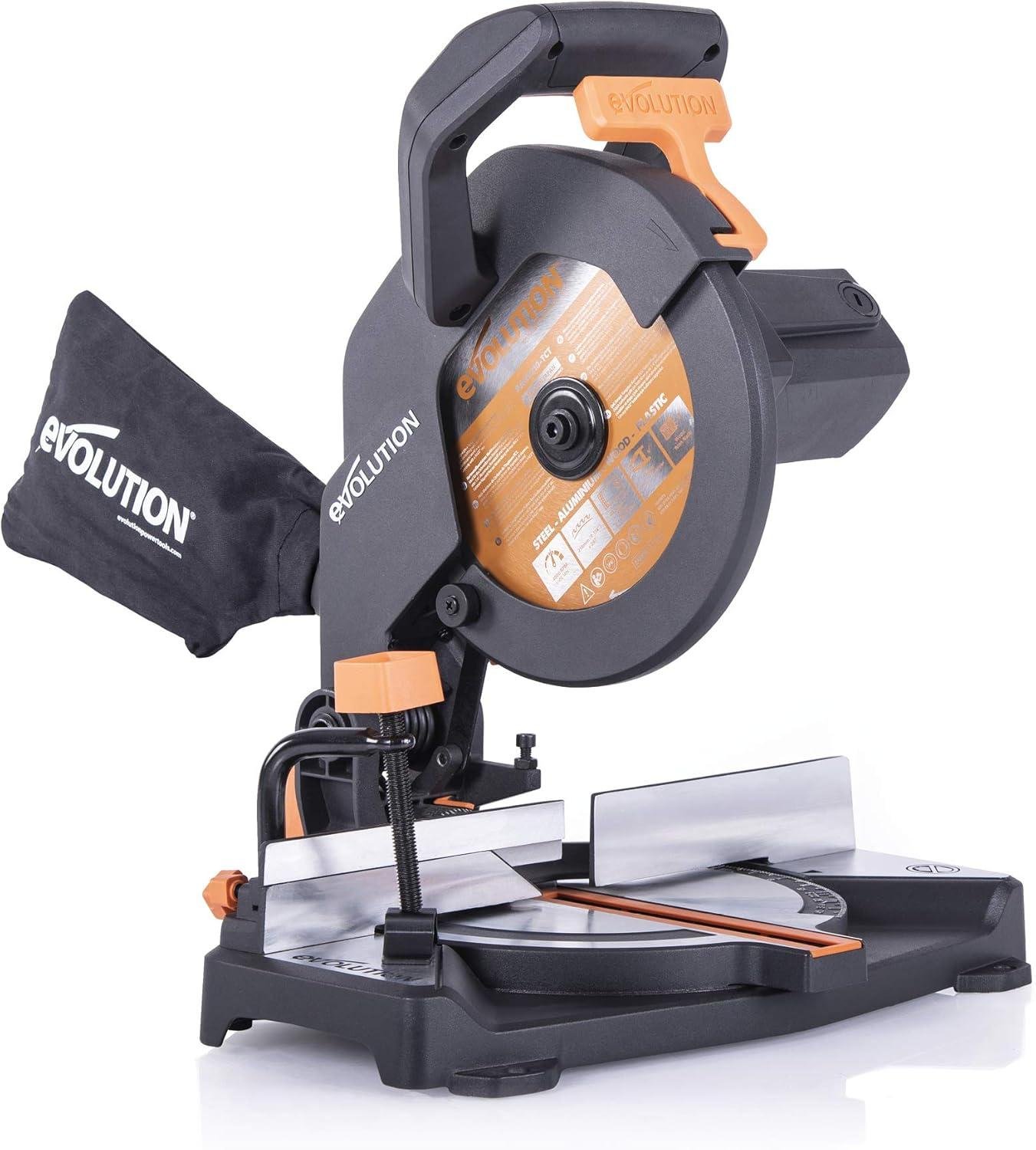
Ever tried to sneak a “rapid” trim cut into a tight garage shop, only to fight a wobbly setup, questionable angles, and a blade that hates anything beyond clean softwood? Those moments—when precision matters but space, budget, and time are tight—are exactly where a compact miter saw can either save the day or sabotage the project.The Evolution Power Tools R210CMS is a compact compound miter saw built around the brand’s multi-material approach: one 8-1/4″ Japanese TCT blade included for cutting wood, metal, and plastic, with up to 2-3/16″ cutting depth. On paper, it also checks the accuracy boxes with 45°–45° miter capability and a 0°–45° bevel tilt, powered by a 1200W high-torque motor and backed by a 3-year limited warranty.
In this review, we’ll look at the key features, what reviewers commonly report about cut quality, usability, and build feel, and who this saw makes the most sense for—DIYers, beginners, and space-conscious woodworkers.As woodworkers who’ve learned to balance tool cost against real shop needs, we’ll keep the focus on practical decision-making, not hype.
Tool Overview and Build Quality

In our shop, the evolution R210CMS reads like a purpose-built “small but mighty” station saw: a compact 8-1/4″ (210mm) compound miter saw driven by a 1200W hi-torque motor with an optimized gearbox/blade system. That power level is squarely in the DIY-to-light-shop range, and the big story here is versatility—Evolution’s Multi-Material Cutting Technology is designed to let one saw and one blade handle wood alongside metal and plastics.The included Japanese Tungsten-Carbide-Tipped (TCT) multi-material blade helps explain why multiple buyers describe it as “plugged in and it was ready to cut,” with several reporting clean, fast cuts on aluminum extrusion and steel tubing with “a very light touch.” For woodworkers, that same “light touch” lesson matters: smaller saws and multi-material tooth geometry can reward controlled feed pressure more than brute force, especially when crosscutting harder species or cutting reclaimed lumber with embedded nails.
Build-quality feedback is more mixed, and it’s worth matching the tool to the tolerance level of our work. On the plus side, reviewers frequently call it very lightweight and easy to move around—ideal for a garage shop that has to share space—while also praising smooth cutting on metal with “less sparks” than an abrasive wheel.On the caution side, several customers are blunt that the angle markings are “fully useless” and recommend verifying setup with a machinist square or a reliable angle gauge; one reviewer also complains about blade side-to-side slop and poor miter accuracy (framing-level rather than furniture-level precision). Dust/chip handling is another theme: even with a vacuum on the port, one buyer reports chips “went everywhere,” which is especially relevant when we switch from wood dust to sharp metal chips—so eye protection, a face shield, and a controlled cleanup routine become part of the “build quality” conversation in real shops. the miter and bevel ranges—45°–45° miter and 0°–45° bevel—cover common trim and casing angles, but if our workflow depends on repeatable, dead-on miters for tight joinery, we should plan on careful calibration and external measuring rather than trusting the factory scales.
- Included accessories
- 8-1/4″ (210mm) Japanese TCT multi-material blade
- 3-year limited manufacturer’s warranty
- Compatible attachments/accessories
- 8-1/4″ (210mm) replacement TCT blades (wood / multi-material / metal-rated)
- Shop vacuum or dust extractor (to connect to the dust/chip port)
- Aftermarket angle gauge / machinist square (for verifying miter/bevel settings)
- Ideal project types
- Closet retrofits (shelves + metal hanging rod tubing)
- Aluminum extrusion builds (e.g., 2020 extrusion frames)
- Small shop cutoffs, trim work, and light carpentry
- Mixed-material DIY assemblies where portability matters
- Wood types tested by customers
- Not consistently specified in reviews; most detailed feedback centers on metal (steel tubing, aluminum extrusion) and general “wood shelves.”
| Spec / Feature | Evolution R210CMS (from listing) | Why it matters in a woodworking shop |
|---|---|---|
| Motor | 1200W hi-torque | Enough for crosscuts and trim; benefits from controlled feed, especially on dense stock. |
| blade size | 8-1/4″ (210mm) TCT multi-material | Compact footprint and portability; smaller blade limits max cut capacity vs. 10″/12″ saws. |
| Max cutting depth | Up to 2-3/16″ | Guides expectations for thicker shelving, small posts, and multi-material stock. |
| Miter range | 45°–45° | Covers common trim angles; reviews suggest verifying angles with external tools. |
| Bevel range | 0°–45° | Useful for basic bevels; some reviewers report bevel scale isn’t “exact.” |
| Accessory Type | What to look for | Shop benefit |
|---|---|---|
| Replacement blade | 210mm / 8-1/4″ TCT suited to your primary material | Cleaner cuts and better control—dedicated wood blades can improve finish on trim. |
| Measuring tools | Digital angle gauge, machinist square | Compensates for reported weak factory markings; improves repeatability. |
| Dust/chip extraction | Vacuum + separator if cutting mixed materials | Helps manage chips; reviewers note chips can scatter even with a vac attached. |
| Capacity Check | Recommended expectation | Actual (listed / review-informed) |
|---|---|---|
| Thickness | Plan stock within listed limits | Up to 2-3/16″ depth (listing) |
| Accuracy needs | Use for trim/carpentry unless calibrated | Some report clean, square cuts after setup; others report miter inaccuracy and scale issues |
| Mess management | Use in an area where chips are acceptable | One reviewer: chips went everywhere even with vacuum |
See Full Specifications & Customer Photos
Real World Cutting Performance in Wood and Beyond

In real shop use, the Evolution R210CMS feels built around quick, confident crosscuts more than fussy cabinetry—its 1200W hi-torque motor paired with the included 8-1/4″ (210mm) Japanese TCT multi-material blade is meant to keep one saw doing multiple jobs. On wood, that “one saw, one blade” idea can be genuinely convenient for garage builds and trim work, especially when we’re bouncing between pine shelving, construction lumber, and the occasional nail-hidden board. The published max cut depth of 2-3/16″ tells us right away this is a compact-class saw: it’s great for 1x and 2x stock and smaller moldings, but it’s not the tool we’d pick for tall baseboard standing vertically or wide crown without extra handling. Review themes also line up with a “grab-and-go” workflow—several customers describe it as basically plug-in-and-cut with minimal setup,while others warn that for angle work we should bring our own measuring/verification tools (a machinist square or digital angle gauge),as the 45°–45° miter and 0°–45° bevel ranges are useful,but some users found the onboard markings unreliable.
Where this saw really earns its keep is beyond wood: customers repeatedly mention clean,fast cuts in aluminum extrusion (like 2020),steel tubing,and closet hardware—often emphasizing less sparking than a cut-off wheel and surprisingly smooth results “with a light touch.” That said, we need to treat it like a multi-material chop station: chips can go everywhere even with a vacuum on the port (a common complaint), and prolonged metal cutting can leave hot shavings that some reviewers say may stick or melt into nearby plastic parts, so housekeeping and positioning matter.Accuracy is the dividing line in the reviews—many users are thrilled with smooth, burr-minimizing cuts, while a smaller but vocal group reports blade/slop issues that make precision miters frustrating. Our takeaway: if we’re doing practical workshop builds, closet retrofits, light fabrication, and square crosscuts where we can verify setup, this multi-material format is legitimately handy; if we’re expecting repeatable, furniture-grade miters straight off the scale, we should plan on careful calibration—or consider a higher-precision miter saw.
- Included accessories: 8-1/4″ (210mm) Japanese TCT multi-material cutting blade
- Compatible attachments/accessories: Shop vacuum (to the dust/chip port), digital angle gauge, machinist square, clamp/hold-down (work-holding support)
- Ideal project types: closet retrofits, shelving and garage storage, small trim jobs, aluminum extrusion frames, light metal tubing work
- Wood types tested by customers (reported): general “wood shelves” / typical DIY lumber (species not specified in reviews)
| Spec / Feature | What It Means in the Shop |
|---|---|
| Motor: 1200W | Compact power for fast crosscuts and multi-material work; still benefits from a steady feed rate. |
| Blade: 8-1/4″ (210mm) TCT multi-material (included) | Convenient for switching between wood/metal/plastic, but it’s not the same optimization as a dedicated fine-tooth wood blade. |
| Max cut depth: up to 2-3/16″ | Comfort zone is 1x/2x stock and smaller profiles; not a replacement for larger sliding miter saw capacity. |
| Miter range: 45°–45° | handles common trim angles,but many reviewers recommend verifying angles with external measuring tools. |
| Bevel range: 0°–45° | Useful for basic bevels; accuracy depends on careful setup and checking before repeat cuts. |
| Accessory | Why We’d Add It |
|---|---|
| Digital angle gauge | Helps bypass complaints about the factory angle markings and dial in repeatable miters/bevels. |
| Machinist square | Fast way to confirm 90° for extrusion and framing cuts, a common reviewer workaround. |
| Shop vacuum | Improves chip control (though reviews note debris can still scatter during metal cuts). |
| Capacity | Recommended Use | actual Reality (from specs/review themes) |
|---|---|---|
| Thickness | Stock up to ~2-3/16″ thick for crosscuts | Works well for typical DIY lumber and tubing within depth limits; larger/taller stock needs repositioning or a bigger saw. |
| Angle work | Occasional 45° miters and up to 45° bevels | Some users report excellent results; others report poor scale accuracy or play—verify before committing to finish parts. |
| multi-material cleanup | Use vac + frequent clearing | Many reviewers say chips scatter and metal shavings can be messy; plan a “dirty” cutting zone. |
Check Current Price & Reviews on Amazon
Key Features Woodworkers Will Appreciate

In a small shop, the Evolution R210CMS earns points for being a genuinely compact compound miter saw that still brings useful capability to the bench. The 1200W hi‑torque motor and included 8‑1/4″ (210mm) Japanese TCT multi‑material blade make it attractive for woodworkers who bounce between lumber and “shop reality” materials—like cutting wood with an occasional hidden nail, trimming aluminum angle for jigs, or sizing closet hardware. A recurring customer theme we’ve seen is how quickly it goes from box to first cut—several reviewers mention it’s easy to set up, “just plugged in and it was ready to cut,” and that it produces clean, fast cuts in metal and extrusion. For woodworking, that same blade can be convenient for rough breakdown and site-style cuts, but we’d still treat it like a multi-purpose blade: great when we need versatility, not necessarily the first choice when we’re chasing glass-smooth hardwood miters.
The adjustment ranges are practical on paper—45°–45° miter and 0°–45° bevel tilt—and that covers most casing, picture-frame, and small box work.That said, customer feedback on precision is mixed: more than one reviewer praises “clean, smooth, no burs, no chatter,” while others warn the on-board angle markings aren’t reliable and recommend setting angles with a square or an external gauge. In our workflow, that’s not a deal-breaker if we treat this saw like a compact cutter for repeatable 90s and “good-enough” trim work—but if our projects demand tight glue-line miters, we’ll plan on calibrating carefully and test-cutting before committing.Dust/chip control is another reality check: reviewers report that chips can go everywhere even with a vac on the port, which matters in a woodworking shop where fine dust management and cleanup time are part of the cost of every cut.
- Included accessories
- 8‑1/4″ (210mm) Japanese TCT multi‑material cutting blade
- Compatible attachments/accessories
- Shop vacuum for the dust/chip port (recommended by reviewers, though not perfect)
- Miter/protractor gauge or digital angle finder (helpful given angle-marking complaints)
- Clamps/stop blocks for repeatable cuts (especially for small parts)
- Ideal project types
- Closet retrofits (shelves + metal hanging rod tubing)
- Shop jigs and fixtures using aluminum angle/extrusions
- Small trim and repair work where portability matters
- Rough carpentry cuts when absolute precision isn’t the priority
- Wood types tested by customers
- Not consistently specified in reviews (most customer feedback highlights metal/extrusion performance rather than named wood species)
| Feature | What the spec says | Why we care in the woodshop |
|---|---|---|
| motor | 1200W | Enough power for general miter-saw work; reviewers often describe cuts as fast, especially in metal. |
| Blade | 8‑1/4″ (210mm) TCT multi‑material | Convenient “one saw, one blade” versatility, but fine woodworking may still benefit from a wood-optimized blade. |
| Miter range | 45° to 45° | Covers common trim and box angles; plan to verify with a square/angle gauge per review themes. |
| Bevel range | 0° to 45° | Useful for bevelled trim and joinery accents, but accuracy complaints mean test cuts are important. |
| Max depth | Up to 2‑3/16″ | Helps us estimate real-world thickness capacity for boards and small posts. |
| Accessory/Consumable | Compatibility | Use case |
|---|---|---|
| 8‑1/4″ (210mm) replacement blade | Yes (same diameter class) | Swap to material-specific blades when you want cleaner wood cuts or dedicated metal cutting. |
| Shop vacuum (dust extraction) | Yes (via dust/chip port) | Reduces mess, though reviewers still report wide chip scatter. |
| Digital angle finder / machinist square | Yes (external tool) | Helps set accurate miters/bevels when factory markings aren’t trustworthy. |
| Capacity check | Recommended for best results | Actual spec / review reality |
|---|---|---|
| Cut thickness | Stay under the saw’s depth limit and support the workpiece close to the cut | Up to 2‑3/16″ depth; reviewers note diameter/size limits on larger stock. |
| Precision work | Measure angles externally, calibrate, and make test cuts | Some reviewers call markings “a joke” and report difficulty achieving accurate miters/bevels. |
| chip control | use a vac + plan for cleanup (especially with metal chips) | Multiple reviewers: chips went everywhere even with a vac. |
See Full Specifications & Customer Photos
Ease of Use and Setup for Beginners and experienced Woodworkers

for setup, we like that the Evolution R210CMS keeps the learning curve low: it’s a compact, portable compound miter saw with a 1200W (hi‑torque) motor and ships ready to work with a 210mm / 8‑1/4″ Japanese TCT multi‑material blade.Multiple reviewers echo the “packaged well, just plugged in and it was ready to cut” theme, which matters if we’re squeezing shop time between projects. From a beginner standpoint, the big win is that one blade can crosscut common workshop materials—wood, aluminum extrusion, and even steel tubing—without swapping wheels, and several customers mention it takes a “very light touch” on metal with “less sparks” than a typical abrasive cut-off wheel. Educationally,we still want to treat it like any miter saw: support the stock,let the blade reach full speed,lower the head smoothly,and clamp short pieces—especially when cutting metal or plastic where grabbing can surprise newer users.
- included accessories: 8‑1/4″ (210mm) multi‑material TCT blade
- Ideal project types: closet retrofits (shelves + rod tubing), small trim/casing cuts, garage fixtures, aluminum extrusion frames
- Wood types tested by customers: not consistently specified in reviews (most feedback centers on tubing/extrusion), so we’d assume standard softwoods and sheet goods are the likely use case
For experienced woodworkers, ease-of-use is a bit more nuanced: the saw offers 45°–45° miter and 0°–45° bevel ranges, but several reviews warn that the on-board angle markings can be unreliable—one person flatly said the markings were “a joke,” and others recommend setting square/angles with a machinist square or a reliable digital gauge instead of trusting the scales. That’s not a deal-breaker if we’re using it as a compact multi-material “job saw,” but it does change how we approach setup: we should verify 90° and 45° with test cuts and dial it in before precision joinery. Dust/chip control is also part of the real-world setup—one reviewer noted that even with a vac on the port, chips went everywhere, so we’d plan to use it in a space where mess is acceptable and consider a dedicated vac, hood, or chip curtains when cutting metal. a few customers mention issues like blade slop/wobble affecting accuracy and metal shavings interacting with plastic parts over time; for us, that’s a reminder to inspect the arbor/blade seating during assembly, keep the guard area clean, and treat this model as best suited to compact crosscutting and mixed-material work rather than fine-furniture miter perfection.
- Compatible attachments/accessories: shop vacuum (via dust port), machinist square/digital angle gauge for calibration, alternate 210mm multi‑material blades
| Setup / Ease-of-Use Area | What We Get (specs & Themes) | What We Recommend in the shop |
|---|---|---|
| Out-of-box readiness | Blade included; reviewers say “plugged in and ready to cut” | Do a quick bolt/fastener check and a scrap test cut before production work |
| Angle setup | 45°–45° miter, 0°–45° bevel; markings criticized as inaccurate by some | Calibrate with a square/digital gauge; confirm with test cuts |
| Cutting different materials | Multi-material; customers report clean, fast cuts on aluminum/steel tubing | Use a light feed rate, clamp short stock, and deburr sharp edges after metal cuts |
| Chip/dust management | Reports that chips can scatter even with a vac | Cut metal in a “mess-kind” zone; add shielding and vacuum often |
| Recommended vs.“Real-World” Capacity | Manufacturer / Reviewer Notes |
|---|---|
| Cut depth | Rated up to 2‑3/16″ depth (multi-material) |
| Precision mitering | Some users report it’s great for square cuts; others report angle scale/accuracy limitations—plan to measure independently |
| Compatible Accessories | Why We’d Use It |
|---|---|
| 210mm / 8‑1/4″ multi‑material TCT blades | Maintain performance cutting wood/metal/plastic; keep a spare for metal-only work |
| Shop vacuum | Helps with chips, though reviews suggest it won’t capture everything |
| Digital angle gauge / machinist square | Improves setup accuracy when the printed scales aren’t trustworthy |
See Full Specifications & Customer Photos
Customer Reviews Analysis

What Woodworkers Are Saying (Evolution R210CMS 8-1/4″ Multi‑Material Compound Miter Saw)
| Aspect | Common Feedback |
|---|---|
| Overall Sentiment | Mostly positive for multi-material cutting and portability; precision opinions are mixed-to-polarized. |
| Performance | Frequently praised for fast, clean cuts in metal/aluminum and decent results in wood; minimal sparks noted. |
| Precision | Split feedback: some report “easy and exact” 45° cuts; others say miter/bevel accuracy and markings are unreliable. |
| Build & durability | Generally “safe and reliable,” but some users noted durability issues when cutting steel frequently. |
| Ease of Use | Often described as plug-and-play and lightweight; setup/verification tools recommended for accurate angles. |
| Limitations | Small cutting capacity, dust/chip control complaints, and some reports of blade/arbor slop affecting accuracy. |
1. Overall sentiment from woodworking customers
Multiple reviews highlight strong satisfaction with the saw as a compact, affordable, multi-material cutter—especially for DIY and small shop tasks. Common praise includes how easily it transitions from cutting wood to cutting metal with the included TCT blade. That said, sentiment becomes sharply negative among users prioritizing high-precision miter/bevel work, with a few calling it unsuitable for accuracy-critical joinery.
2. Performance feedback (accuracy, power, results)
Power & cutting speed: Several woodworkers mentioned it cuts “like butter” through metal tubing and aluminum extrusion, with one user comparing it favorably to an “old school chop saw.” Customers successfully used this for steel tubing, aluminum extrusion (including 2020 extrusions), and mixed-material jobs like closet retrofits (shelves + metal rod).
Cut quality: Common praise includes clean, smooth results—comments mention “no burs, no chatter, and FAST,” plus notably fewer sparks than an abrasive wheel. A light touch during cutting came up as a tip that improves results.
accuracy & consistency: This is the most divided area:
- Some users reported challenges with the on-board angle markings,calling them “completely useless,” and recommended using a machinist square or other measuring method rather.
- One experienced reviewer (30+ years) reported persistent inaccuracies in miter/bevel adjustments (e.g., measurable taper through the cut) and described the saw as only acceptable for rough carpentry.
3. Build quality and durability observations
Several woodworkers mentioned the saw feels solid “for the price,” packaged well, and generally safe/reliable. Though, some users reported challenges with durability when cutting steel repeatedly—one short comment states it’s “not durable cutting steel,” and another noted metal shavings starting to stick and “melt into plastic” after heavy metal use. Taken together, reviewers suggest it can handle metal—but frequent steel cutting may accelerate wear or create cleanup/maintenance issues.
4.Ease of use for different skill levels
Beginners/DIYers: Beginners appreciated the straightforward setup—one review emphasized it was essentially “plugged in and it was ready to cut.” DIYers also liked the compact size for occasional projects and “small jobs.”
More experienced users: Reviewers with more experience tended to focus on calibration and repeatability. Several implied that if you need accurate angles, you’ll want external reference tools (square/angle gauge) rather than trusting the factory scales.
5. Common project types and success stories
Customers report using this saw for:
- Closet retrofits (wood shelving + metal hanging rod tubing) with the included blade
- Aluminum extrusion builds (including 2020 extrusions)
- small shop “intricate cuts” and light fabrication
- Cutting steel and aluminum tubing where portability matters
One user specifically praised the portability: compact enough to move around easily, though size limits the diameter/capacity of what you can cut.
6. Issues or limitations reported
Some users reported challenges with:
- Miter/bevel accuracy,calibration,and scale markings: the most serious negative feedback centers on inconsistent or unreliable angle settings. One reviewer also alleged side-to-side blade slop/wobble that prevented accurate miters.
- dust/chip collection: even with a vacuum attached,“chips went everywhere,” so several reviewers recommend using it where a mess is acceptable.
- Cut capacity: the 8-1/4″ format is praised for portability, but it limits the size of material you can cut.
- Heavy steel use durability/cleanup: reports include metal shavings embedding/melting into plastic and at least one complaint about durability when cutting steel often.
- Blade cost: one experienced reviewer felt replacement blades are overpriced.
Bottom line from reviews: Many owners love it as a compact, fast multi-material saw for DIY builds and mixed wood/metal tasks—but if your woodworking depends on repeatable, dead-on miters and bevels (fine trim, tight joinery, precise frames), multiple reviews suggest verifying angles independently and being aware that precision complaints are a real theme.
Pros & Cons

Pros & Cons
After putting the Evolution R210CMS 8-1/4″ compound miter saw through the kind of mixed-material, “one more cut” DIY sessions we tend to create, here’s where it shines—and where we had to adjust our expectations.
Pros
- True multi-material personality. We love the “one saw, one blade” idea in practice—cutting wood, plastic, and metal without swapping tools feels like cheating (the good kind).
- Compact and easy to live with. Its small footprint makes it friendlier for crowded garages, sheds, and “temporary workshop” corners of the house.
- Blade included—and not a throwaway. The Japanese TCT blade being in the box means we can start cutting immediately, and it’s built for the saw’s multi-material purpose.
- Solid angle range for most DIY work. With 45°–45° miter and 0°–45° bevel,we can cover picture frames,trim,basic furniture parts,and plenty of around-the-house fixes.
- High-torque 1200W motor feels “small but mighty.” For an 8-1/4″ unit, it has the attitude to handle tough jobs without feeling like a toy.
- warranty adds confidence. A 3-year limited manufacturer’s warranty gives us some peace of mind for a saw that’s likely to get dragged from job to job.
Cons
- Not a depth monster. The max cut depth (up to 2-3/16″) is fine for lots of DIY lumber, but it’s not built for chunky beams or oversized stock.
- 8-1/4″ size means trade-offs. We gain portability, but we give up some capacity compared to larger 10″ or 12″ miter saws.
- Angle flexibility is “DIY-wide,” not “pro-wide.” The 45° limits cover common cuts, but if our projects demand more extreme angles, we may hit the ceiling.
- Multi-material cutting can change the feel of the cut. When switching between wood and metal, we found we had to slow down and let the blade do the work—rushing invites rougher results.
- Space-saving can mean smaller support areas. With compact saws, we sometimes need extra stands or supports for longer pieces to keep cuts stable and cozy.
Quick Snapshot (Our Take)
| What We Wanted | What We Got | Our Note |
|---|---|---|
| One saw for mixed materials | Multi-material blade + compatible design | Great for “wood today, metal tomorrow” projects |
| Easy storage | Compact, portable body | Fits our tighter workspace routine |
| Strong everyday cutting | 1200W hi-torque motor | Feels capable, especially for its size |
| Big cut capacity | Up to 2-3/16″ depth | Enough for most DIY; not for oversized stock |
Q&A

Is the 1200W motor powerful enough for hardwoods like oak or maple?
for typical DIY and trim-sized hardwood cuts, yes—this saw’s 1200W hi-torque motor and optimized gearbox/blade system generally have enough power, especially if you feed steadily and don’t force the cut. It’s not a full-size “jobsite miter saw replacement,” but users report it cutting quickly and smoothly when used with a light touch. For thick, wide hardwood stock, the main limitation is capacity: the 8-1/4″ blade is rated up to about 2-3/16″ depth, so it’s better suited to small-to-medium parts than big beams or wide crown.
How does it do on plywood, veneers, and finish cuts?
It can cut plywood cleanly, but it’s not automatically a “cabinet-grade” finish saw. The included Japanese TCT multi-material blade is designed to cut wood, metal, and plastic—great for versatility, but multi-material blades don’t always leave the same ultra-clean edge as a dedicated fine-finish wood crosscut blade. If your priority is tear-out control on veneers and prefinished ply, plan to upgrade to a high-tooth-count wood blade (and use standard tear-out prevention techniques like a backing board and slow feed). Also note that some reviewers criticize accuracy and wobble/slop, which can show up as less-than-perfect miters on visible trim.
Can I rely on the miter/bevel scales for accurate angles (45° miter and 45° bevel)?
It offers 45°–45° miter and 0°–45° bevel, but don’t assume the printed scales are dead-on. Multiple customers mention the onboard angle markings being “completely useless” and recommend setting angles with a machinist square or an external angle gauge—especially for anything beyond basic 90° cuts. If you do trim/frames where gaps matter, expect to spend time calibrating and verifying cuts on scrap, and consider it more “portable multi-material saw” than precision miter station out of the box.
What’s the initial setup like—do I have to tune it before it cuts well?
Setup is generally straightforward (some users said thay “just plugged in and it was ready to cut”), but accuracy may require tuning. Reviews are mixed: some owners report clean, fast cuts after setup, while others report blade slop/wobble that affected miter accuracy and was hard to correct.Practical advice: check fence alignment, verify 90° with a reliable square, make test cuts, and don’t trust the factory scales until you’ve confirmed them.
Will it work with standard blades and accessories?
It ships with an 8-1/4″ (210mm) TCT multi-material blade, and you can typically swap to other 210mm miter-saw blades if they match the saw’s arbor size and RPM rating (confirm in the manual/spec plate before buying). For woodworking, many people keep the included blade for “mixed material / nail-embedded lumber” and add a dedicated fine-finish wood blade for trim and plywood. Blade changes are the usual miter-saw process—straightforward, but always unplug the saw and follow the guard/lock procedures in the manual.
Does this fit in a small shop, and can it be bench-mounted?
Yes—this is positioned as Evolution’s most compact multi-material miter saw, and owners frequently mention its light weight and portability. That makes it a good choice for small garages, apartment workshops, or a “bring it out when needed” setup. For best stability and repeatability, mount it to a bench or a dedicated board that can be clamped to sawhorses; portable saws benefit a lot from a solid base when you’re trying to hold tight miters.
How messy is dust/chip collection—do I need special dust extraction?
Plan for a mess, especially when cutting metal or aluminum. One reviewer noted that even with a vacuum on the port, chips went “everywhere, all directions.” That’s common with multi-material cutting because the chips are heavier and fly differently than wood dust. Use a shop vac, position the saw where cleanup is easy, and consider adding chip shields/guards around your cutting station. If you cut a lot of metal, keep the saw and surrounding area cleaned out—metal chips can cling and accumulate.
Is it suitable for beginners—and would a pro woodworker be happy with it?
Beginners who need an affordable, compact saw for home projects (shelving, closet work, mixed-material DIY) tend to like it because it’s portable and cuts multiple materials with one blade. It’s also backed by a 3-year limited manufacturer’s warranty, which helps reduce risk. That said, professionals or precision-focused woodworkers may be frustrated by reported accuracy issues (scale inaccuracy, potential blade slop, and less consistent miters). If your work depends on tight, repeatable miters (trim carpentry, picture frames, fine furniture), you may want a more rigid, precision-focused miter saw or plan on careful calibration and verification on every setup.
Seize the Possibility

The Evolution Power Tools R210CMS is a compact 8-1/4″ compound miter saw built around a 1200W hi‑torque motor and an included Japanese TCT multi‑material blade, with 45°–45° miter capability and 0°–45° bevel. Its standout advantage is “one saw, one blade” cutting for wood, plastic, and even metal (including tubing and aluminum extrusions) up to about 2-3/16″ deep. Customer feedback commonly praises clean, fast cuts and portability, while critiques focus on inaccurate angle markings, messy chip collection, and some reports of blade slop that can hurt precision.
Best for hobby woodworkers, DIY remodelers, and makers who need a small, portable saw for trim, closet builds, light framing, and occasional multi‑material cuts.Consider alternatives if you rely on repeatable, cabinet‑grade miters, cut thick hardwoods daily, or need better dust control and durability for production work.it’s a solid mid‑range option for versatile jobsite cutting—just plan to verify angles with a square and prioritize setup.
Want to see current pricing and customer photos? View on amazon & Read More Reviews →