

Blog
DEWALT DWFP12231 Brad Nailer Review: Fit for Trim?

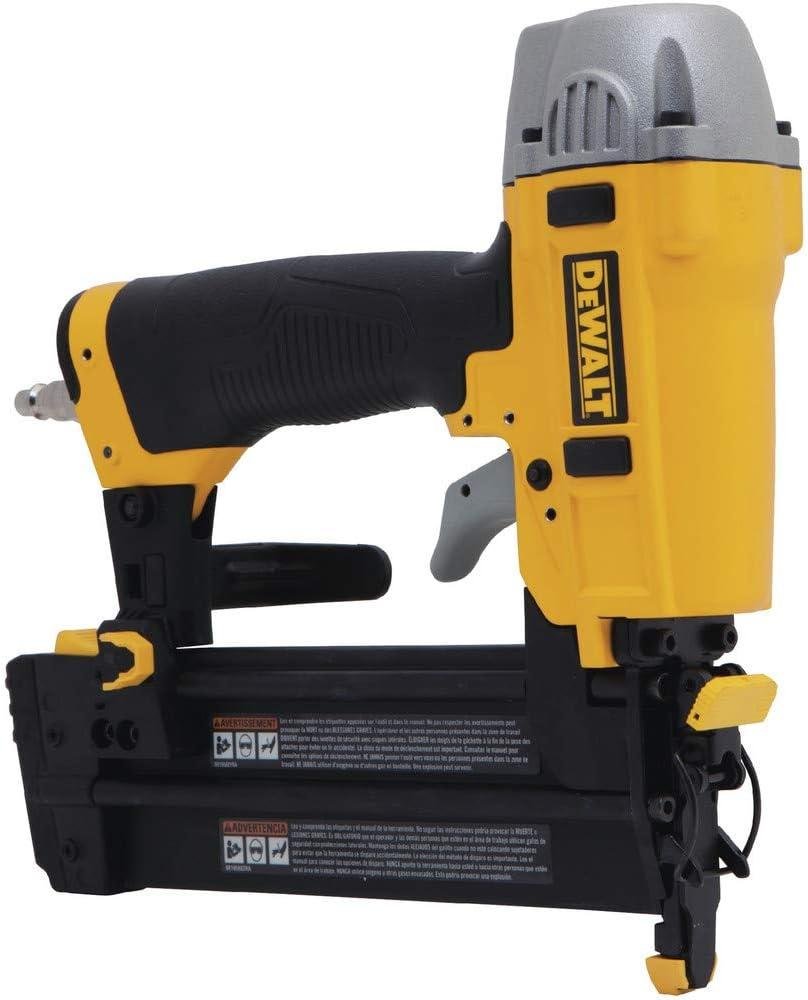
Ever tried to pin up delicate crown or shoe molding and watched the trim shift right as you pull the trigger—leaving proud nail heads, tiny dents, or a line you have to fill and sand back out? In a small shop, those little mistakes add up fast, especially when you’re juggling air hose tangles, tight corners, and a budget that doesn’t allow for “buy twice” tools.
The DEWALT Brad Nailer Kit, 18GA, Pneumatic (DWFP12231) is built to drive 18-gauge brads from 5/8″ to 2″, aiming squarely at finish work like decorative molding, casing, kitchen crown, and shoe molding. On paper, it checks the boxes that matter: a maintenance-free motor, tool-free depth-of-drive with detents, tool-free jam release, rear exhaust, and a non-marring nose tip with storage—plus a carrying case and belt hook.
In this review, we’ll break down the key features, what customer reviews commonly praise or criticize (precision, durability, ease of use), and who this nailer makes the most sense for. We’ll lean on general shop experiance with finish nailers—without pretending every jobsite is the same.
Tool Overview and Build Quality
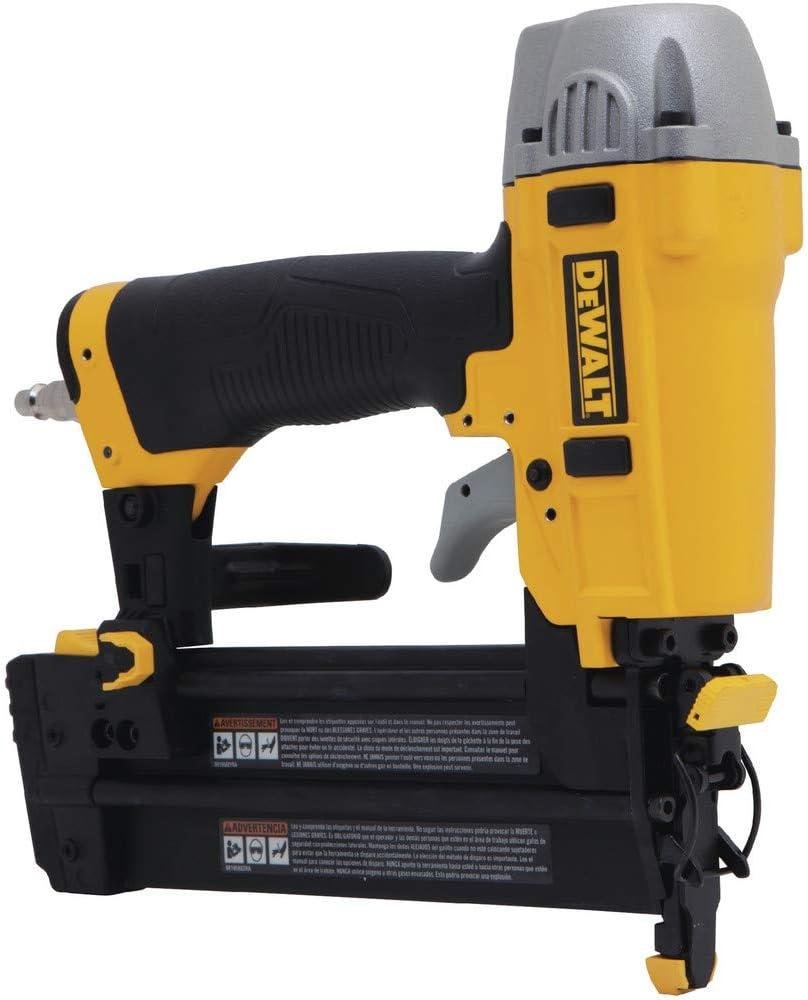
In our shop, the DEWALT Brad Nailer Kit (DWFP12231) reads like a purpose-built trim and cabinetry tool: it’s a pneumatic 18-gauge brad nailer designed to drive 5/8-inch to 2-inch brads—right in the sweet spot for casing, shoe moulding, and light assembly where we want holding power without the split-prone footprint of thicker fasteners. Because it’s air-powered,the “motor” is really its internal driver and valve system,and DEWALT positions it as a long-life,maintenance-free motor (multiple reviewers highlight that it’s “nice you do not have to oil it”, though one customer did note seeing oil at the exhaust port and chose to keep an eye on it). Build-wise, the nailer feels workshop practical: the integrated rubber grip and rear exhaust keep it cozy and help blow air away from our face and the work surface, and the narrow nose is repeatedly praised for reaching tight spaces—a real advantage when we’re pinning returns, nailing inside face frames, or working along a cabinet toe-kick.
Setup and adjustability are where this tool’s build quality shows up in day-to-day use. Customers consistently describe it as “worked great out of the box” and “trouble free”, with several reporting no jams early on and calling the action smooth and precise. The standout control is the tool-free depth-of-drive adjustment with detents—educationally, this matters as depth depends on both air pressure (PSI) and the depth setting: one reviewer mentioned shooting ~90 PSI for MDF shoe moulding and bumping pressure higher (~100 PSI) and clicking the depth deeper when stepping up to longer brads. That detented dial helps us teach newer woodworkers a repeatable workflow: test on scrap, dial depth to leave a tiny fillable divot, then only change one variable at a time. For maintenance and uptime, the tool-free jam release is there when we need it (even if many won’t), and the removable non-marring nose tip helps protect finished surfaces—though one common theme is that the plastic tip can fall off sometimes, so we’d treat it as a “check it before the final shots” consumable rather than a set-and-forget part.
- Included accessories
- Carrying case
- Owner’s manual
- Compatible attachments/accessories (commonly paired by customers)
- Quick-connect couplers (M-style)
- 1/4-inch air fittings
- Air hose (example: 3/8-inch x 50-foot)
- Pancake compressor (example: 6-gallon class)
- 18-gauge brad nails in the 5/8-inch to 2-inch range
- Ideal project types
- Shoe moulding and base shoe installation
- door and window casing
- Crown and decorative molding
- Cabinet trim, face frames, and light assembly
- Repair work where fast, low-impact fastening helps (e.g., trim rework)
- Wood types tested by customers (as reported)
- 3/4-inch plywood
- MDF (including shoe moulding / base components)
- Finger-jointed trim stock
- General “regular wooden” baseboard/trim
| Spec / Feature | DWFP12231 (per product description) | What it means in the shop |
|---|---|---|
| Nail gauge | 18GA | great balance of holding power and small holes for trim/cabinet work. |
| Nail length capacity | 5/8″ to 2″ | Covers thin returns up through thicker trim stacks; still not meant for structural fastening. |
| Depth adjustment | Tool-free, detents | Repeatable countersink depth; ideal for dialing in on MDF vs plywood. |
| Jam clearing | Tool-free jam release | Faster recovery when a brad misfeeds; less downtime on long trim runs. |
| Exhaust | Rear exhaust | Keeps air off the work and out of our face when shooting at odd angles. |
| Nose tip | Removable non-marring tip (on-tool storage) | Helps protect prefinished trim; some reviewers note the tip can fall off. |
| Trigger style | Sequential | Better control for precise placement—especially for beginners and finish work. |
| Accessory Category | Compatibility | Notes |
|---|---|---|
| Fasteners | 18GA brad nails, 5/8″–2″ | Match length to material thickness; test on scrap to avoid blow-through. |
| Air supply | Pneumatic compressor + hose | Users commonly mention pancake compressors and standard shop hoses/couplers. |
| Fittings | Quick-connect couplers (typical M-style) | Choose the style that matches your shop system to prevent leaks/mismatch. |
| Use Case | Recommended capacity (practical) | actual Rated Capacity (spec) |
|---|---|---|
| Fine trim / small returns | 5/8″–1-1/4″ brads | 5/8″–2″ |
| Shoe moulding / casing | 1″–2″ brads (depending on stud/edge targets) | 5/8″–2″ |
| Structural fastening | Not recommended (use framing/finish nailer as appropriate) | 18GA brad nailer (not a structural tool) |
See Full Specifications & Customer Photos
Real World Performance on Trim Work and Light Joinery
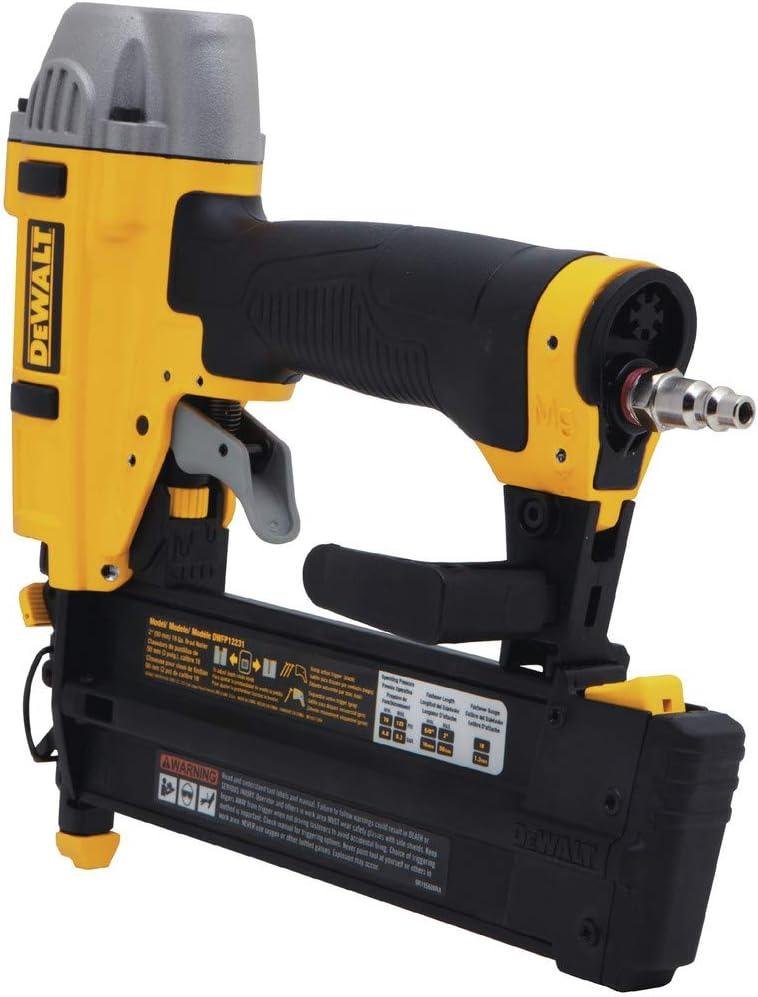
On trim work, the DEWALT DWFP12231 behaves like the kind of shop tool we reach for when we want clean results without slowing down. It’s built to drive 18-gauge brad nails from 5/8 in. to 2 in., and that range lines up with everyday tasks like casing, shoe molding, and light panel trim where we’re trying to pin pieces in place while glue sets.In reviews, woodworkers repeatedly describe it as “worked perfectly out of the box,” “trouble free,” and “no jams so far” even after the first hundred nails—exactly what we want when we’re moving room to room. The tool-free depth-of-drive adjustment with detents is genuinely practical: we can fine-tune whether the head sits just proud (for fragile profiles) or sinks slightly below the surface (for filler-ready trim), and customers specifically mention how easy it is to adjust when switching materials like MDF, finger-joint trim, and plywood.For technique, we get the best consistency by keeping the nose flat, letting the gun settle before pulling the sequential style trigger, and watching the low-nail indicator tab to reduce the temptation to dry fire (a common way to wear nailers prematurely).
For light joinery—think small cabinet face frames, scribe strips, thin returns, and quick jigs—the DWFP12231’s control features matter as much as raw fastening power. The removable non-marring nose tip (with on-tool storage) helps protect pre-finished stock, and several reviewers echo the theme that it “doesn’t leave any marks in the wood” compared with other nailers they own. When we do get into awkward cabinetry corners, the narrow tip is a real advantage (one customer even called out that it reaches tight spaces better than their older gun). In use, the rear exhaust keeps air and debris from blasting our face when we’re leaning into a cabinet opening, and the integrated rubber grip helps during longer trim runs. There are a couple real-world caveats from reviews: a few users note the plastic non-marring tip can fall off sometimes, so we’d treat it like a removable accessory—check it before critical shots and keep spares in mind if we’re on finish work. also, because it’s pneumatic, our results depend on consistent air supply; customers commonly mention dialing pressure and depth together when changing nail length/material. With that workflow, it’s a very approachable nailer for DIYers stepping up to air tools, and still refined enough for careful finish carpentry and small-shop woodworking.
- Carrying case
- Owner’s manual
- Quick-connect air couplers (e.g., 1/4″ industrial/M-style)
- Air hose (commonly 1/4″ or 3/8″ ID, length to suit jobsite)
- 18-gauge brad nails (5/8″ to 2″)
- Compressor capable of steady trim-gun pressures (varies by workflow)
- Shoe molding & baseboard installation
- Door and window casing
- Crown molding and decorative trim
- Light cabinet trim, scribe, and small assembly pinning
- MDF trim (frequently cited by customers)
- Finger-joint trim (frequently cited by customers)
- 3/4″ plywood (customers report it “worked great”)
- solid wood trim/baseboard (commonly referenced)
| Spec / Feature | DEWALT DWFP12231 (from product description) | Why it matters for trim & light joinery |
|---|---|---|
| Nail gauge | 18 GA | Good balance of holding power and small hole size for finish work. |
| Nail length capacity | 5/8 in.to 2 in. | Short brads for delicate trim; longer brads for thicker base/casing into framing. |
| Depth adjustment | Tool-free, detented depth-of-drive | Fast, repeatable changes when switching between MDF/plywood/solid wood. |
| Jam clearing | Tool-free jam release | less downtime—especially helpful during long trim runs. |
| Nose protection | Removable non-marring tip | Helps protect pre-finished or paint-grade surfaces (though some say it can fall off). |
| Trigger style | Sequential trigger | Better control for accurate placement in visible finish areas. |
| Accessory Type | Compatible With | Notes (based on common customer setups) |
|---|---|---|
| Brad nails | 18 GA, 5/8″–2″ | Customers mention using ~1″ brads for shoe molding; longer brads for baseboard work. |
| Air fittings | Standard shop quick-connect systems | Reviewers often pair it with M-style/industrial couplers and typical shop hoses. |
| Non-marring nose tip | DWFP12231 tip | Helpful for finish surfaces; some reviewers note it may come loose occasionally. |
| Task | Recommended Nail Length (typical) | DWFP12231 Rated Capacity | What customers report in practice |
|---|---|---|---|
| Shoe molding to baseboard | ~1″ | 5/8″–2″ | Users describe easy depth tuning and clean countersink in MDF. |
| Casing/trim returns | ~5/8″–1 1/4″ | 5/8″–2″ | Common theme: accurate placement with sequential trigger and narrow nose. |
| thicker baseboard into studs/plate | ~1 1/2″–2″ | 5/8″–2″ | Reviewers mention stepping up nail length and adjusting depth/pressure for tougher fastening. |
see Full Specifications & Customer Photos
Key Features Woodworkers Will Appreciate
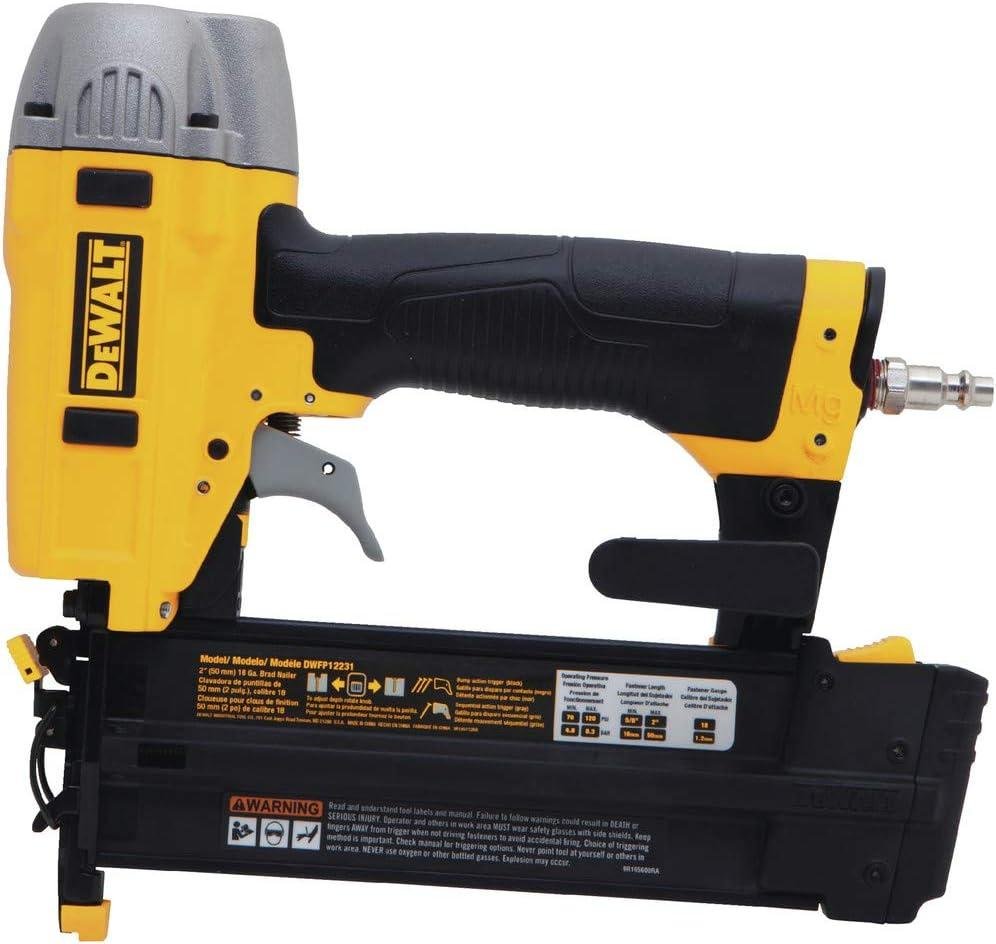
In day-to-day shop work, what we appreciate most about the DEWALT Brad Nailer Kit (DWFP12231) is how directly its core specs map to real trim and assembly tasks. It drives 18-gauge brad nails from 5/8″ up to 2″, which puts it squarely in the sweet spot for decorative molding, casing, kitchen crown, and shoe molding—the exact use cases DEWALT calls out. Multiple reviewers echo that it works “out of the box” with “no jams” over the first ~100 nails and that it performed well on 3/4″ plywood. For us, an 18ga brad nailer is also one of the best “third-hand” tools in the shop: we can tack parts in place while glue sets, pin returns on trim, and hold face frames or light assemblies without the splitting risk we’d get from heavier finish nails. Since it’s pneumatic, we control drive energy with shop air pressure, and several customers specifically mention bumping pressure (such as, around 90–100 PSI) and then fine-tuning the depth for MDF and baseboard work—good reminders that air tools reward a quick scrap-board test before moving to the actual workpiece.
The features that make it feel dialed-in for woodworking are the “small adjustments that save big time.” The tool-free depth-of-drive adjustment with detents is the one we end up using constantly; it’s how we avoid proud heads in hardwood and also prevent overdriving in softer species or MDF (where deep shots can crater the surface). when a brad does hang up, the tool-free jam release is designed to get us back to work fast, and the rear exhaust helps keep air blast and contaminants off the freshly sanded or pre-finished face. Customers also praise “smooth” operation and “ergonomic” feel, and one recurring theme we’d plan around is the non-marring nose tip: reviewers like that it “doesn’t leave marks,” but a few mention the plastic tip can fall off sometimes, so we’d keep an eye on the on-tool storage and consider it a small shop habit to check before we start a long run. As an educational note: brad nailers are for fastening, not clamping—so we still rely on clamps for true joinery pressure, and we avoid “dry-firing” (also mentioned in reviews) by watching the magazine indicator and keeping the tool loaded to protect the internal driver.
- Included accessories: Carrying case, owner’s manual
- Compatible attachments/accessories: Air compressor (rated to supply typical brad-nailer PSI), 1/4″ quick-connect couplers (Milton “M” style is commonly referenced by customers), air hose (e.g., 3/8″ x 50′), 18ga brad nails (variety packs)
- Ideal project types: Shoe molding runs, baseboard/casing install, crown and decorative trim, light cabinet assembly pinning, tacking jigs and fixtures, small furniture trim details
- Wood types tested by customers: MDF, finger-jointed trim stock, “regular wooden” baseboard, 3/4″ plywood
| Spec / Feature | What It Is (DWFP12231) | Why We Care in the Shop |
|---|---|---|
| Nail gauge | 18GA | Good balance of holding power and low split risk for trim and light assemblies |
| Nail length capacity | 5/8″ to 2″ | Covers most molding and casing; reaches through thicker trim when needed |
| Depth adjustment | Tool-free, detented | Repeatable settings to avoid proud heads or blow-through, especially on MDF/softwoods |
| Jam clearing | Tool-free jam release | Faster recovery mid-install without digging for Allen keys |
| Exhaust direction | Rear exhaust | Keeps air blast off the work surface and our face in tight trim corners |
| nose protection | Removable non-marring tip (on-tool storage) | Helps protect pre-finished or sanded stock; note some reviewers say it can pop off |
| Accessory Category | What to Look For | why It Matters |
|---|---|---|
| Compressor | Stable regulated output for brad nailers (many users cite ~90–100 PSI use) | Consistent depth and fewer misfires when running long trim lines |
| Couplers | 1/4″ quick-connect set (common shop standard) | Fast setup/teardown and easier swapping between tools |
| Hose | Durable air hose (customers commonly use 50′ runs) | Reach around rooms without dragging the compressor everywhere |
| Brad nails | 18ga brads in multiple lengths (5/8″–2″) | Right length prevents blow-through and improves holding in different materials |
| Use Case | Recommended (Typical Practice) | actual Tool Capacity (DWFP12231) |
|---|---|---|
| Light trim / small returns | 5/8″–1-1/4″ brads (less chance of blowing out) | Supports 5/8″ minimum |
| Shoe molding to baseboard | 1″–1-1/2″ brads (depending on thickness and backing) | Supports up to 2″ |
| thicker baseboard / re-fastening to framing | 1-1/2″–2″ brads (situational; verify holding needs) | Supports up to 2″ |
See Full Specifications & Customer Photos
Ease of Use for Beginners and Experienced Woodworkers
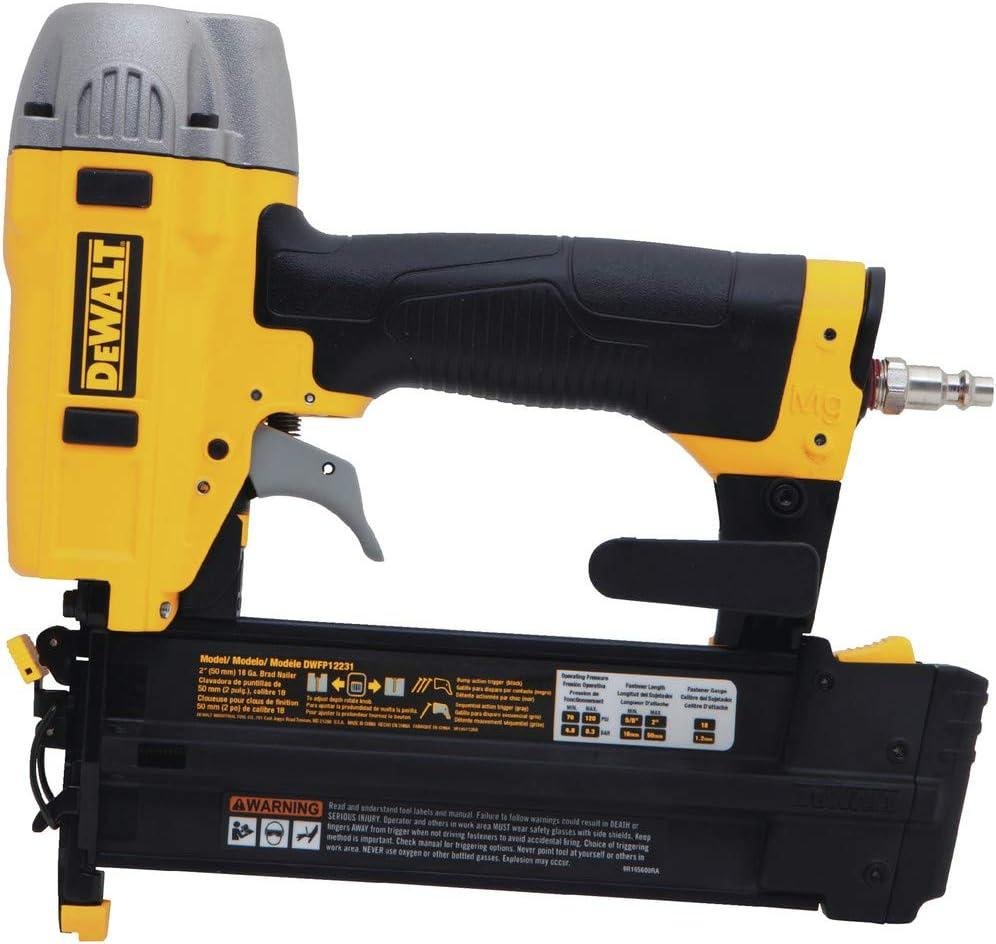
For beginners, the DEWALT DWFP12231 feels like one of those pneumatic tools that “clicks” quickly once we understand the basics of air supply. It’s a pneumatic 18-gauge brad nailer that drives 5/8-inch to 2-inch brads, which puts it squarely in the trim-and-light-assembly sweet spot—think casing, shoe moulding, and decorative molding. Multiple reviewers describe it as “worked great out of the box,” “dirt-something-simple,” and “trouble free,” which matches what we want when we’re still learning how to set air pressure and dial in nail depth. The real learning curve isn’t the tool itself—it’s understanding that pneumatic nailers depend on compressor PSI and hose fittings. we reccommend practicing on scrap first (as one reviewer did) and using the tool-free depth-of-drive adjustment with detents to tune whether the head sits flush or slightly below the surface (especially important on MDF trim, where a deep sink can crater the face).
For experienced woodworkers, the appeal is how quickly the DWFP12231 gets out of our way on repetitive fastening. The sequential style trigger supports controlled placement for finish work, while the tool-free jam release, rear exhaust, and removable non-marring nose tip (with on-tool storage) are the kinds of small design details that help during long install days. Reviewers consistently mention smooth operation, good depth control, and the ability to reach tighter spots thanks to a narrow tip; one even called out that it “doesn’t leave any marks in the wood,” which matters when we’re trying to minimize touch-up. The most common usability gripe we see is also practical: a reviewer noted the plastic non-marring tip can fall off sometimes, so it’s worth checking it periodically or keeping the spare handy before we move from paint-grade trim to stain-grade stock.
- Included accessories
- Carrying case
- Owner’s manual
- Compatible attachments/accessories (customer-mentioned & typical for pneumatic setups)
- Air compressor (e.g., a pancake compressor matched to finish nailing tasks)
- Air hose (commonly 3/8-inch diameter)
- Quick-connect couplers/fittings (common 1/4-inch styles)
- 18-gauge brad nails in lengths 5/8-inch to 2-inch
- Ideal project types
- Shoe moulding and baseboard touch-ups
- Door and window casing
- crown and decorative molding
- Light cabinetry trim and face frames (with proper length selection)
- Paneling and thin stock fastening where a small nail hole matters
- Wood types/materials tested by customers
- 3/4-inch plywood
- MDF (shoe moulding/baseboard)
- Finger-joint trim
- General “regular wooden” baseboard/trim
| Spec / Feature | What the DWFP12231 Provides | Why It Matters in the Shop |
|---|---|---|
| Nail gauge | 18GA | Smaller holes than finish nails; great for trim, light assembly, and cleaner fill work. |
| Nail length range | 5/8″ to 2″ | Covers most moulding/casing needs; longer lengths help when fastening trim into framing. |
| Depth adjustment | Tool-free depth-of-drive w/ detents | Faster tuning when switching from plywood to MDF or changing nail length. |
| Jam clearing | Tool-free jam release | Less downtime; helpful for beginners still learning alignment and pressure settings. |
| Work surface protection | Non-marring nose tip (removable) | Reduces dents on paint/stain-grade trim; note some users say the tip can come off. |
| Trigger style | Sequential | More controlled placement than bump fire—better for precise trim work. |
| Accessory / Consumable | Compatibility | Notes for Woodworkers |
|---|---|---|
| 18GA brad nails | Yes (5/8″–2″) | Select length by material thickness; test sink depth on scrap before final pieces. |
| Air compressor | Required (pneumatic) | Set PSI to suit material and nail length; adjust depth-of-drive for final tuning. |
| Quick-connect couplers | Commonly used | Customers frequently pair it with quick-connect sets for fast setup and hose swaps. |
| Non-marring tip | Included | Keep an eye on it during use; some users report it may loosen/fall off. |
| Capacity item | recommended Use | Actual Rated Capacity (Spec) |
|---|---|---|
| Brad length | Trim to framing,moulding,casing,light assembly | 5/8″ to 2″ |
| Material fit (based on reviews) | Plywood,MDF trim,finger-joint moulding | Customers report success on 3/4″ plywood and MDF |
See Full Specifications & Customer Photos
Customer Reviews Analysis
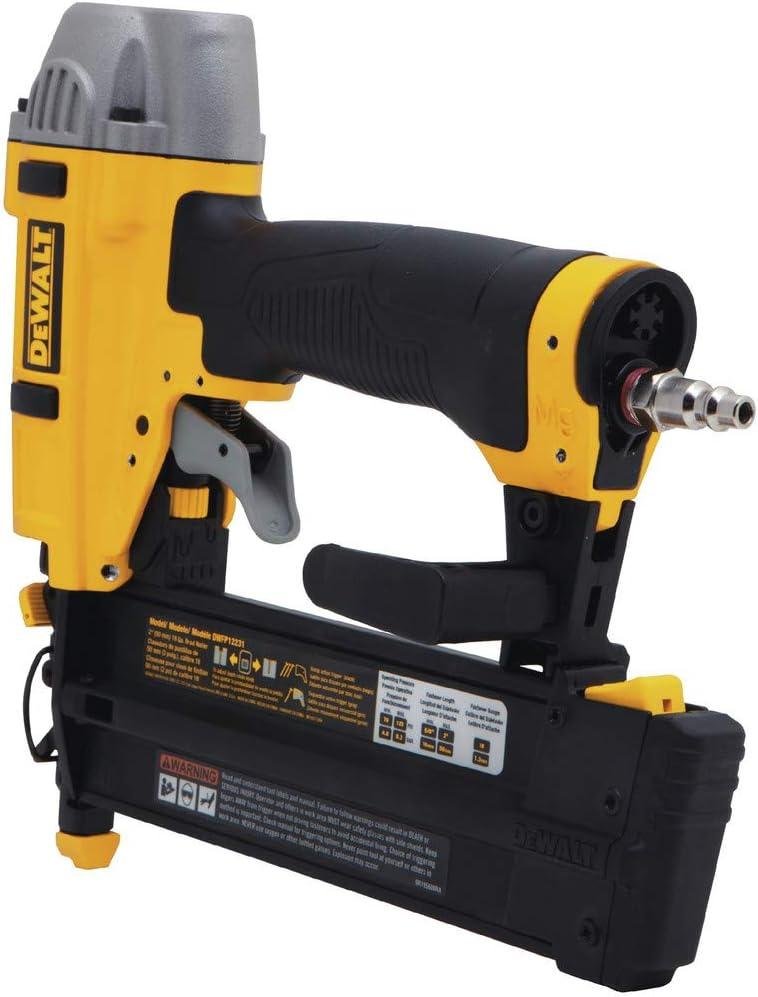
What Woodworkers Are Saying: DEWALT Brad nailer Kit (DWFP12231)
| Aspect | Common Feedback |
|---|---|
| Overall Sentiment | Strongly positive—reviewers frequently describe it as trouble-free, precise, and “top-quality.” |
| Performance | Consistent driving and clean results in trim and plywood; depth/pressure adjustments help match different materials. |
| Build Quality | Frequently enough called rugged and well-made; a few small complaints about a plastic tip coming loose. |
| Ease of Use | Beginner-friendly setup and intuitive depth control; narrow nose helps in tight spaces and angled shots. |
| Projects | Shoe moulding, baseboards, door-frame trim fixes, plywood work, and even fence repair were reported as good fits. |
| limitations | Occasional accessory/fit-and-finish gripes (tip falling off), plus some confusion around “no oil” guidance. |
1. Overall sentiment from woodworking customers
Multiple reviews highlight high satisfaction—especially from DIYers and home woodworkers doing trim and interior finishing. Common praise includes “trouble free” operation, no jams early on, and results that make moulding and trim feel faster and cleaner than hand nailing. One reviewer even summed up the experience as “BUY THIS NAILER!!” after a large trim job.
2. Performance feedback (accuracy, power, results)
Several woodworkers mentioned smooth operation and consistent nail driving, including out-of-the-box success on 3/4″ plywood. Customers also successfully used this for both lighter trim work (around 1″ brads) and more demanding fastening when they increased air pressure and adjusted depth.
Precision comes up often:
- The depth adjustment wheel is frequently described as easy to understand and effective—reviewers noted they could dial in a slight countersink (e.g., a small hole in MDF with the brad set below the surface).
- Multiple reviews highlight the ability to place nails accurately in real-world trim situations, including angled nailing into door frames and getting into tight spaces thanks to a narrow nose.
Finish quality is a recurring theme, too. One user specifically praised that it “doesn’t leave any marks in the wood,” which matters for paint-grade trim and visible surfaces.
3. Build quality and durability observations
Durability feedback is mostly reassuring.Some users reported it as “very rugged” and said it “continues working day after day.” Another reviewer compared it favorably after long-term experience with a different brand nailer (Porter-Cable BN200), appreciating the feature set and form factor on the DeWalt.
That said, there are a couple of build-related notes:
- some users reported challenges with a plastic tip that can fall off sometimes, which can be annoying on finish work if you’re moving quickly.
- One experienced owner flagged uncertainty about lubrication: the manual says don’t oil, but they noticed oil near the exhaust port and planned to double-check. This reads more like maintenance confusion than a confirmed defect, but it’s worth noting.
4. Ease of use for different skill levels
Beginners appreciated the straightforward setup: load brads, connect air, test on scrap, and go. One reviewer described doing a handful of test shots to learn aim and depth, then immediately moving into production work.
Experienced woodworkers noted practical usability details:
- The depth adjustment icons/direction were considered intuitive.
- The narrow tip made it easier to work in places a bulkier nailer couldn’t.
- A visible low-fastener indicator (yellow tab) was appreciated as a reminder to avoid dry-firing.
Ergonomics also got a nod—one reviewer mentioned the design felt comfortable and reduced fatigue during longer sessions.
5. Common project types and success stories
Reviewers commonly describe finish/trim carpentry and repair tasks,including:
- Shoe moulding installation (including large runs like “400–500 linear feet”)
- Baseboards and re-fastening loose trim to studs/sole plates
- Door-frame trim straightening and re-nailing
- Plywood work (3/4″ mentioned)
- Fence repair work (one user bought it specifically for this and said it handled the job with ease)
Success stories tend to emphasize speed,reduced hand fatigue versus hammering,and improved final appearance—especially when tightening trim to walls cleanly with controlled depth.
6. Issues or limitations reported
While sentiment is overwhelmingly positive, a few limitations show up:
- plastic/no-mar tip retention: some users say it can fall off, which could slow you down or risk marring work if you rely on it.
- Lubrication guidance confusion: the “don’t oil” instruction conflicted with what one reviewer observed, prompting caution.
- Packaging/accessories expectations: one reviewer wished it “had came in a case” (even though another review mentions DeWalt-style hard case packaging). This suggests the included kit/case may vary by listing or purchaser expectations.
- Air supply dependency: as a pneumatic tool, a few reviewers naturally end up describing the need for a proper compressor/hoses/couplers—great performance, but not as grab-and-go as cordless.
woodworking customers describe the DWFP12231 as a reliable, accurate 18-gauge brad nailer that shines on trim and interior finish work— with only minor accessory quirks reported.
Pros & Cons
Pros & Cons
After putting the DEWALT DWFP12231 18GA Pneumatic Brad Nailer in the “trim-and-molding” mindset, here’s where we think it shines—and where it asks for a little patience (or a little extra gear).
Pros
- Wide nail range for trim work: It drives 5/8″ to 2″ 18-gauge brads,which covers a lot of baseboard,casing,shoe molding,and crown situations.
- Clean, consistent depth control: The tool-free depth-of-drive with detents makes it easier for us to dial in nail heads without constantly “test-firing” on scrap.
- Fast jam recovery: A tool-free jam release means less downtime when a brad goes rogue—handy when we’re in the rythm of trim runs.
- Friendlier to finished surfaces: The non-marring nose tip (with on-tool storage) helps us stay confident near painted trim and pre-finished molding.
- Comfort and handling: The integrated rubber grip plus an adjustable belt hook makes it easier to keep the tool close and comfortable during room-to-room work.
- Rear exhaust placement: the rear exhaust helps keep air and debris pointed away from our face and the work area.
- kit-ready basics: We like that it includes a carrying case for storage and transport (and avoids the “loose tool in a bin” fate).
- Maintenance-friendly motor: The long-life, maintenance-free motor is a practical plus for anyone who just wants it to work and keep working.
Cons
- pneumatic = compressor required: We don’t get around it—this nailer needs an air compressor and hose, which adds cost, setup time, and noise.
- Sequential trigger only: The sequential-style trigger favors control over speed; great for careful trim,but it can feel slower for larger runs.
- Not a heavy-duty fastener tool: As an 18-gauge brad nailer, it’s not meant for structural fastening or thicker stock where we’d reach for a finish nailer rather.
- Depth still depends on air settings: Even with tool-free adjustment,we still need to keep an eye on air pressure and material hardness to avoid proud nails or overdrive.
- Kit is minimal: we get the case and manual,but we shouldn’t expect a bundle of extras beyond the essentials.
| Feature | What It Means for Us on Trim |
|---|---|
| 5/8″–2″ brad capacity | One nailer can handle delicate returns and thicker casing stacks. |
| Tool-free depth adjustment | Faster tweaks between MDF, pine, and hardwood. |
| Non-marring tip | Less worry around painted or pre-finished surfaces. |
| Tool-free jam release | We can clear a jam and keep the line moving. |
| Pneumatic design | Great runtime,but we’re tethered to a compressor. |
Q&A
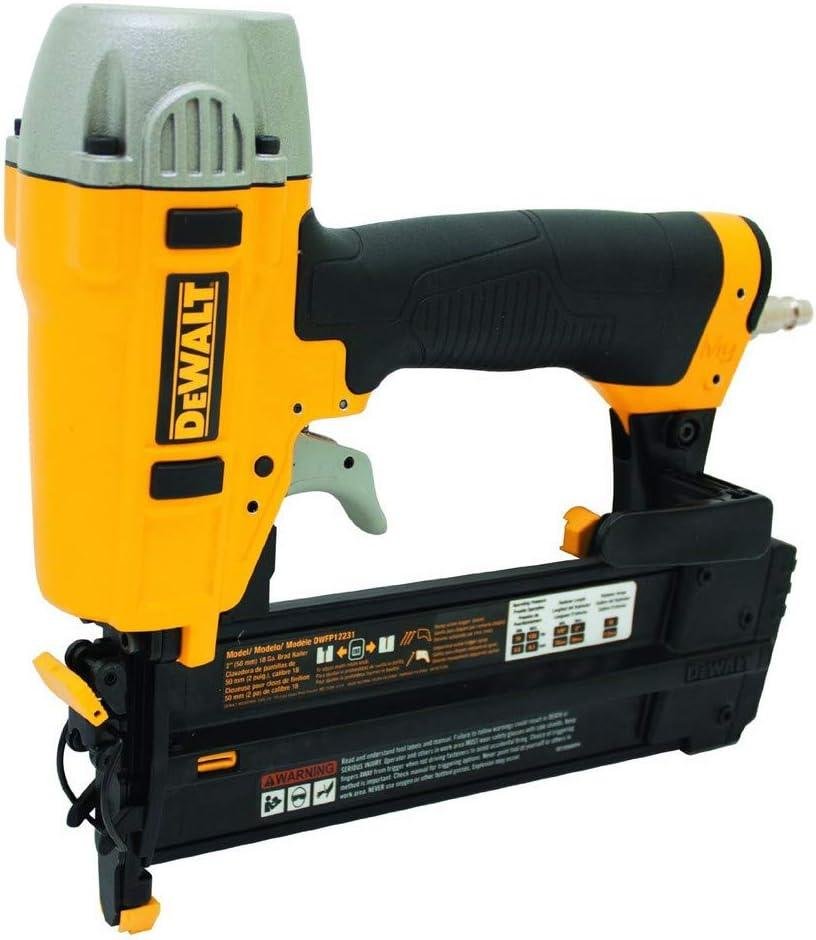
What wood types can this handle effectively—and is it strong enough for hardwoods like oak or maple?
This DEWALT pneumatic brad nailer drives 18-gauge brads from 5/8″ to 2″, which makes it a great match for typical trim woods (pine, poplar), paint-grade trim, and many hardwood applications when you size the brad correctly. In denser hardwoods (oak/maple), users generally get good results by bumping compressor pressure (many report around 90–100 PSI depending on nail length) and fine-tuning the tool-free depth-of-drive. It’s not a substitute for a finish nailer when you need maximum holding power in hardwoods, but for trim attachment, returns, and light fastening, it’s commonly reported as plenty capable.
How does it perform on plywood, MDF, veneers, and prefinished trim?
For sheet goods and paint-grade materials, this model tends to shine. Reviewers mention it working “great on 3/4″ plywood out of the box,” and the removable non-marring nose tip helps reduce dents on prefinished faces. On MDF, it’s commonly used for shoe molding and base/shoe installs; the depth detents make it easier to set the head slightly below the surface (so you can fill) without blasting through thin stock. Like any brad nailer, very thin veneer or fragile edges can still split—best practice is shorter brads, lower air pressure, and test shots on scrap.
Can it handle production work, or is it mainly for hobby projects?
It can do both as long as your air supply keeps up. The tool is pneumatic with a “long life, maintenance-free motor” design, which many users describe as rugged and consistent “day after day.” For production-like workloads (lots of repetitive trim), the key is pairing it with an adequate compressor and hose setup so pressure doesn’t sag during rapid cycles. The sequential trigger is geared more toward controlled, accurate placement than maximum-speed bump firing.
how difficult is the initial setup, and what adjustments are available?
Setup is typically straightforward: connect to an air hose, set compressor pressure, load 18GA brads (5/8″–2″), and dial in depth. Woodworkers consistently call it “worked perfectly out of the box,” with the main learning step being pressure + depth tuning for different materials. Adjustments include tool-free depth-of-drive (with detents so settings are repeatable), rear exhaust direction (to keep air/debris off the work), and an adjustable belt hook for carry/positioning.
Does it work with standard shop accessories (hoses, fittings, compressors), and does it need oil?
Because it’s pneumatic, it’s designed to integrate with typical air-tool setups (standard hoses and quick-connect couplers). Many owners pair it with common pancake compressors successfully. DEWALT positions it as maintenance-free / no-oil operation (per included instructions noted by customers), which is helpful if you’re worried about oil mist staining trim. If you ever notice residue near the exhaust, it’s worth double-checking your airline (water/oil contamination) and using clean, dry air—an inline filter/regulator can be a practical upgrade for finish work.
How easy is it to clear jams and work in tight spots?
This nailer includes a tool-free jam release, which is a big deal when you’re mid-install on casing or crown and don’t want to hunt for hex keys. Users also like the narrow nose, noting it fits better into tighter spaces than some older nailers. In normal use, many report very low jamming (including “no jams so far after about 100 nails”), but the quick-release design is there for when angled shots, knotty stock, or inconsistent brads cause a hang-up.
Is it beginner-friendly, and what’s the learning curve for clean results?
It’s generally beginner-friendly as the controls are simple and the sequential trigger encourages purposeful placement. New users typically get good results after a short scrap-wood test session to learn aim, pressure, and depth. The most common “skill” is knowing when to change nail length vs. when to increase pressure—e.g., if nails sit proud in hardwood, first adjust depth and pressure, but also consider a shorter brad or pre-drilling near edges to prevent splitting.
What maintenance and durability issues come up most often (and is it worth the price vs. cheaper nailers)?
Routine upkeep is mostly about keeping it clean, using good brads, and feeding it dry air; the maintenance-free design reduces day-to-day fuss. Durability feedback is strong including comparisons from owners replacing older workhorses (e.g., rebuilding an older gun costing nearly as much as buying new). One minor recurring complaint is the non-marring tip: some users say the plastic tip can fall off occasionally, so it’s smart to check the on-tool storage and keep track of it—especially on finish surfaces. Value-wise, many woodworkers feel it earns its price through consistent depth control, fewer marks on wood, jam-clearing convenience, and overall reliability compared with bargain options.
Experience the Difference
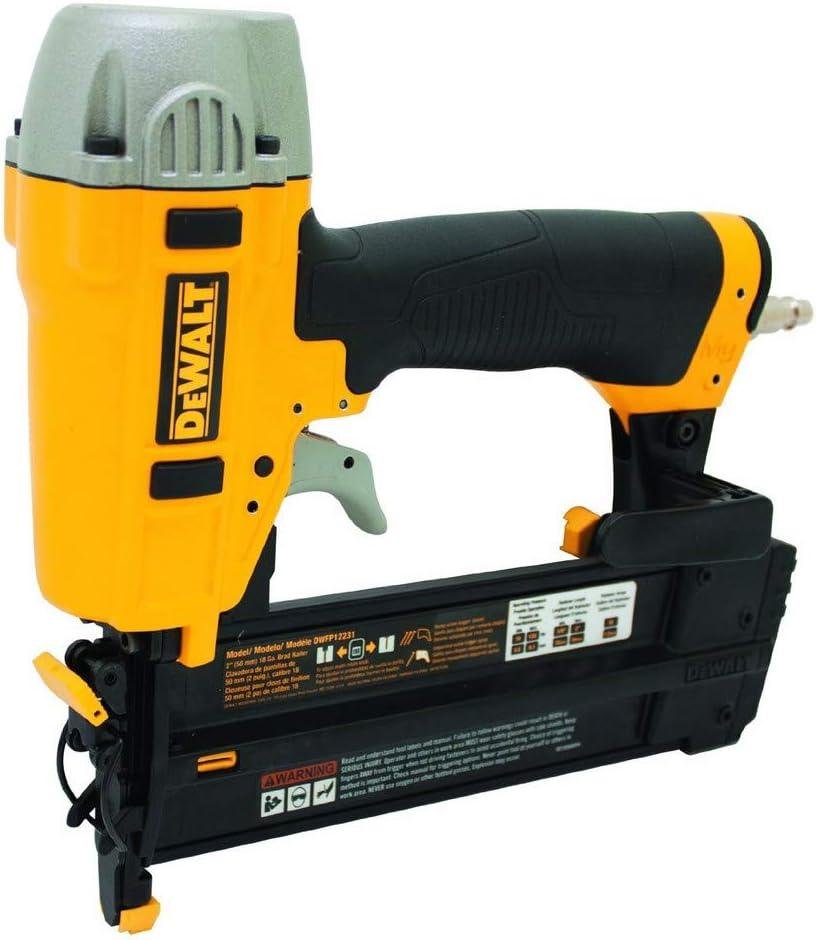
TOOL SUMMARY: The DEWALT DWFP12231 is an 18-gauge pneumatic brad nailer that drives 5/8″ to 2″ brads, aimed at trim and light fastening—think casing, decorative molding, crown, and shoe molding. It pairs a long-life,maintenance-free motor with tool-free depth-of-drive (detents),tool-free jam release,a rear exhaust,and a removable non-marring nose tip (with on-tool storage). Customer feedback commonly highlights smooth,trouble-free shooting,easy depth adjustments,and good access in tighter spots,with an occasional note that the plastic tip can loosen.
BEST FOR: Ideal for hobby woodworkers with small to medium projects, cabinet makers needing precision, and beginners learning trim fundamentals; it’s also a solid choice for pros doing daily install work with a compressor on hand.
CONSIDER ALTERNATIVES IF: You primarily need heavier fastening into thick hardwoods, want cordless convenience, or run high-volume production where a more robust system might potentially be preferred.
FINAL ASSESSMENT: It’s a reliable, mid-range brad nailer with consistent real-world praise for clean results and adjustability—minor nuisances aside, it’s a practical choice for trim-heavy work.
want to see current pricing and customer photos? View on amazon & read More Reviews →