

Blog
ADAK Caulking Gun Review: Right for Our Shop?


Ever tried laying a clean bead of silicone on a cabinet toe-kick or sealing a benchtop seam—only to watch the line surge, skip, then drool all over your freshly sanded work? In a tight shop where every clamp, offcut, and tool fights for space, a caulking gun that’s sloppy or fatiguing can turn a quick, precision step into a mess you have to scrape and refinish.
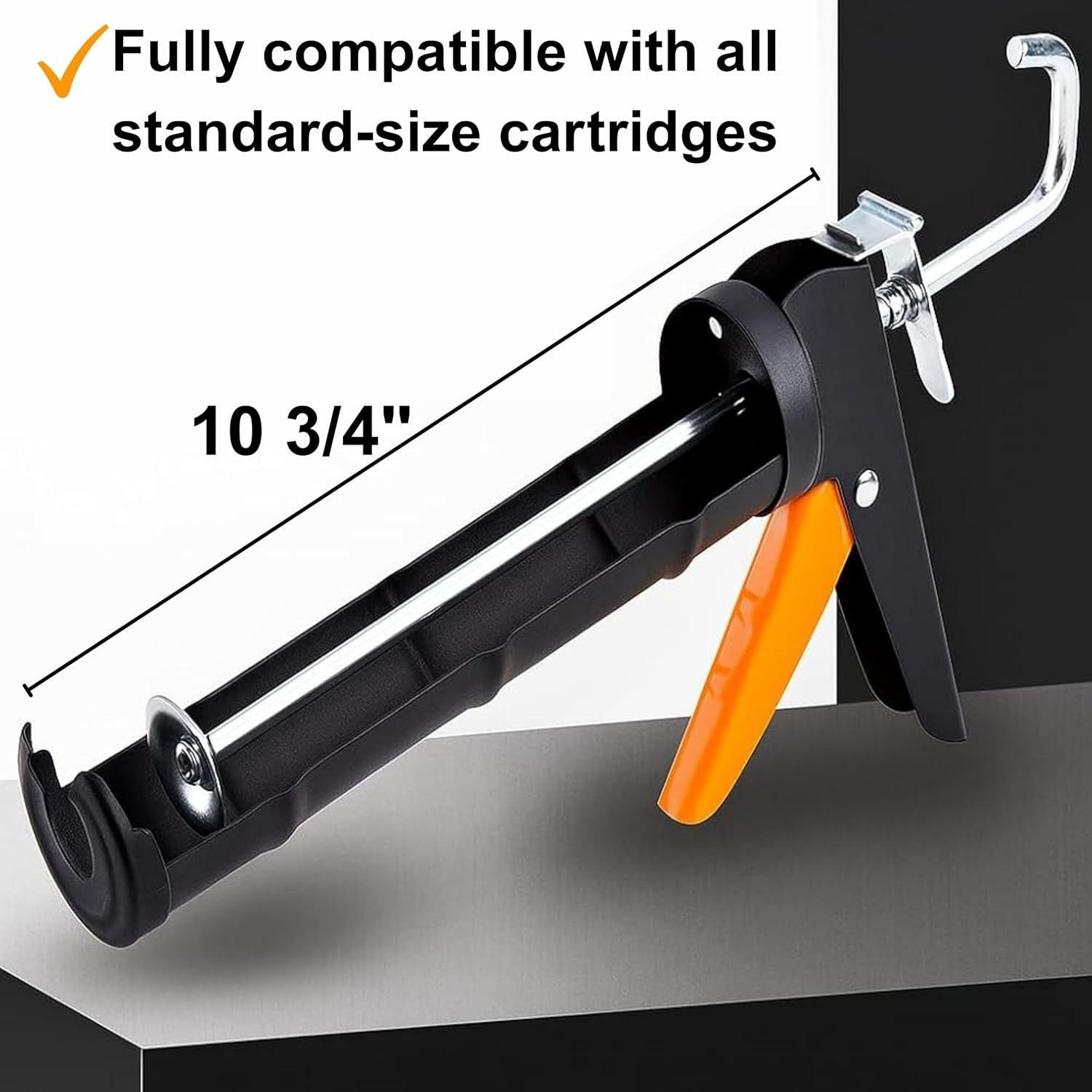
That’s where the ADAK Professional Caulking Gun aims to fit: it’s a smooth-pressure, no-drip hand tool built for silicone and sealant application, featuring a 10:1 thrust ratio, an ergonomic comfort grip, and compatibility with standard 10 oz cartridges.
In this review, we’ll look at the design and build quality, how the 10:1 ratio should affect control and hand strain, and what the no-drip claim means for accuracy and cleanup—plus who it makes sense for on a budget. We’ll also weigh in on customer feedback: many reviewers call it sturdy, lightweight, easy to use, and a good value, while a few note limitations like no built-in puncture/seal opener or occasional tube removal issues.
As woodworkers, we know the “small” tools often decide whether the final details look professional.
Tool Overview and Build Quality for Shop Use
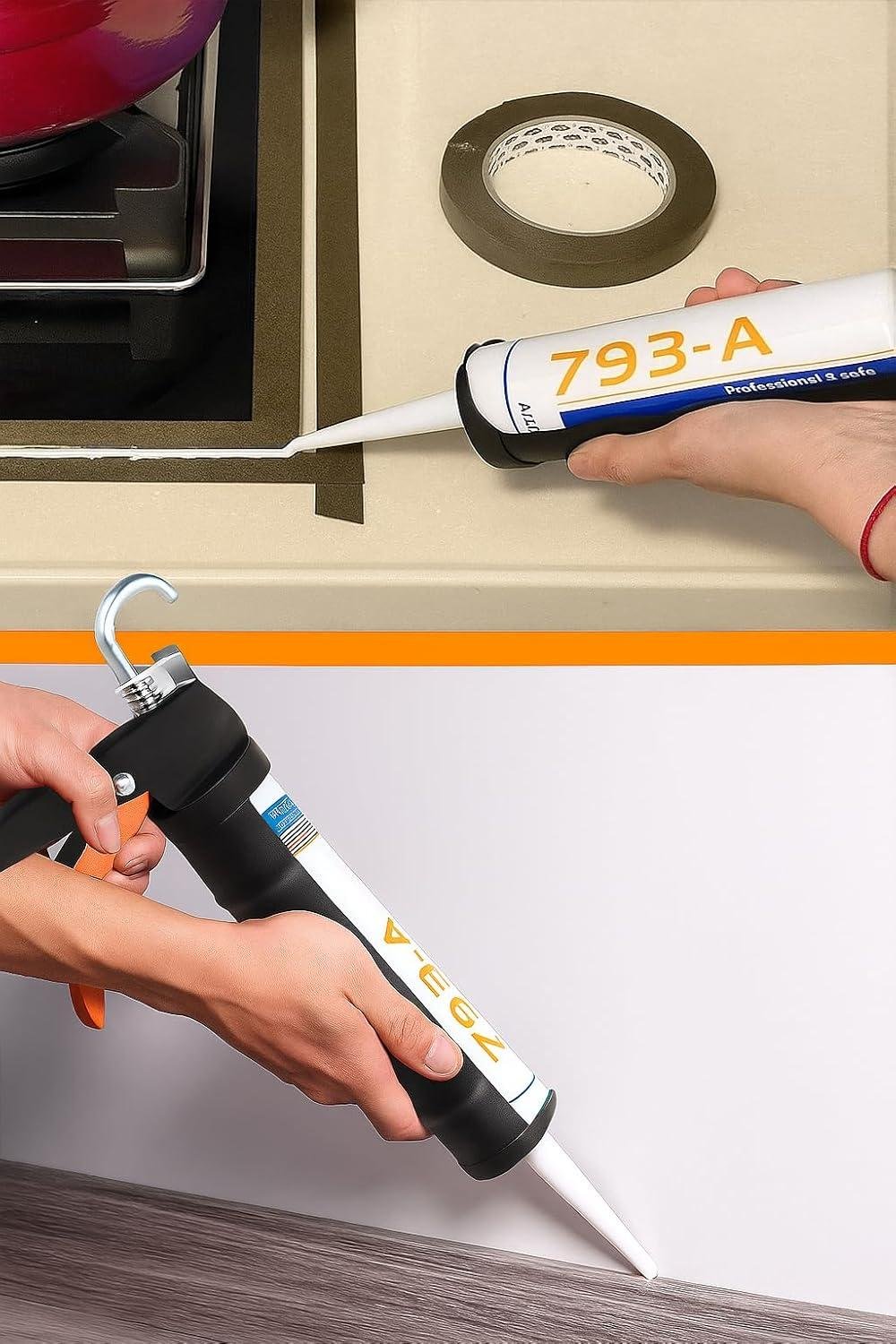
In a woodworking shop, a caulking gun earns its keep when we’re doing the “unseen” work—sealing cabinet backs, bedding shop jigs, applying construction adhesive to cleats, or running a clean line of silicone around a utility sink. The ADAK is a manual gun built around two specs that matter for day-to-day control: the 10:1 thrust ratio and a no-drip mechanism. In practical terms, that ratio is the leverage that converts our squeeze into steady push on the plunger, which is especially helpful when we’re laying down thicker sealants or adhesive caulks and want fewer starts-and-stops in a bead. It’s also sized for the common stuff we actually buy: fits standard 10 oz cartridges, so we can keep using our usual silicone, polyurethane sealant, or construction adhesive tubes without hunting for oddball sizes.
Build-wise, customer feedback trends positive on feel and daily handling—reviewers repeatedly call it “well built and sturdy”, “excellent quality”, and lightweight, and several mention the trigger has smooth action with even dispensing (one notes “good spring action”). That squares with what woodworkers need when we’re trying to maintain consistent bead pressure along a cabinet toe-kick or a backsplash scribe: smooth trigger travel helps prevent over-squeezing and reduces hand fatigue during longer runs. Having mentioned that, shop use also exposes weak points fast, and the reviews aren’t unanimous—one customer reports it broke after one use, and the “caulking seal” experiance is mixed, including remarks like “does not include a way to open caulking seal” and occasional tube removal jamming. For us, that translates to a simple readiness tip: keep a utility knife/awl (or the puncture tool on your multitool) nearby to open foil seals cleanly, and treat this as a solid, budget-amiable option for general assembly and sealing tasks rather than assuming it’s a forever gun under daily commercial abuse.
See Full Specifications & Customer Photos
Real World Performance on Trim Glue Ups and Cabinet Sealing
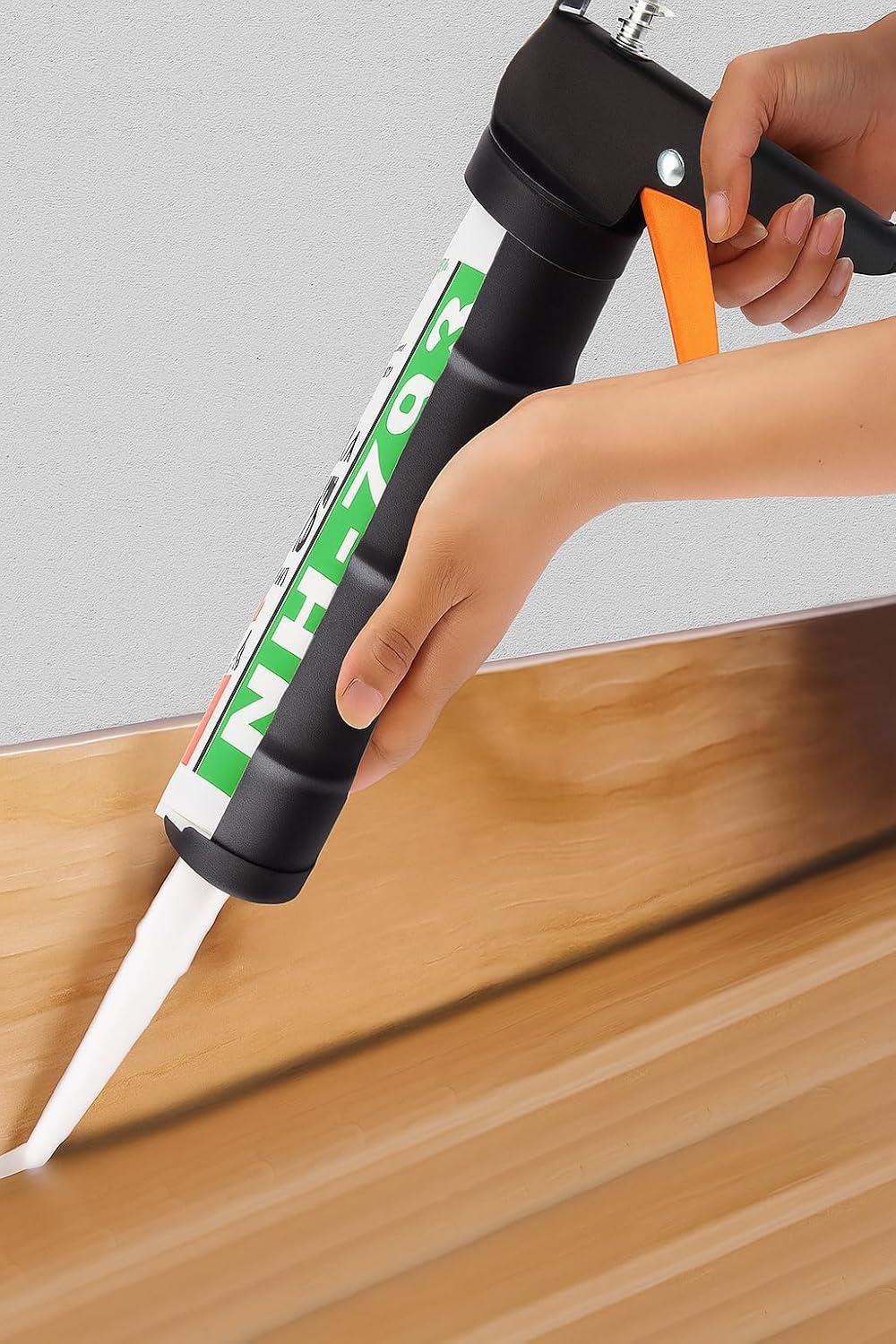
In the shop, we look at a caulking gun like the ADAK as a “control tool” more than a brute-force dispenser—especially when we’re doing trim glue-ups where squeeze-out can ruin a crisp paint line. The ADAK’s 10:1 thrust ratio is designed to keep pressure consistent, and that shows up in how predictably we can lay a bead for back-buttering small returns, tacking on light mouldings, or running a thin adhesive line behind scribe moulding before pinning it in place. multiple customer review themes line up with what we want for this kind of work: “smooth trigger action,” “dispenses evenly,” and “easy to handle” are repeated comments, and the no-drip feature gets called out as helping keep things “neat and mess-free.” For woodworkers, that matters because the moment we set a gun down on the bench between clamps, we don’t want a slow ooze creating a silicone smear where a finish has to go later. Spec-wise, it’s also a practical fit: it accepts standard 10 oz cartridges, so we can use common construction adhesive, latex/siliconized acrylics, and many sealants without buying proprietary tubes.for cabinet sealing,we’re typically chasing tidy,paintable beads at toe-kicks,crown-to-ceiling transitions,and filler strips—places where a steady flow beats raw pushing power. Reviewers consistently describe the ADAK as “works great,” “good spring action,” and “good value for money,” which aligns with the idea of a reliable general-use gun for punch-list sealing and install work. Having mentioned that, we also have to plan around a real limitation noted in customer feedback: it “does not include a way to open the caulking seal”, meaning there’s no built-in puncture rod/cutter on the frame—so we’ll want a utility knife to cut the nozzle cleanly and a nail/awl to puncture inner foil seals (common on some adhesives and sealants). Technique-wise, we get the best cabinet-ready result by cutting the tip small, pulling the gun at a shallow angle, and releasing pressure at the end of each run (the ADAK’s no-drip design helps here) before tooling with a damp finger or profiling tool—especially vital on paint-grade trim where a fat bead will telegraph under finish.
- Included accessories: None stated in the listing (plan on using your own knife and seal-puncture tool).
- Compatible attachments/accessories:
- Standard 10 oz caulk/sealant cartridges (all common brands)
- Utility knife or nozzle cutter (for clean tip cuts)
- Nail/awl (to puncture inner seals when present)
- Caulk tooling set (for consistent cabinet-grade beads)
- Ideal project types:
- Trim install touch-ups and adhesive beads behind mouldings
- Cabinet-to-wall and filler strip sealing (paint-grade)
- Toe-kick seams and crown-to-ceiling caulk lines
- General shop sealing where clean starts/stops matter
- Wood types tested by customers: Not specified in reviews (most feedback is about handling/trigger feel and general usage rather than species).
| Spec / Feature | ADAK Caulking Gun | Why it matters for trim & cabinets |
|---|---|---|
| Thrust ratio | 10:1 | Smoother, more controlled flow; less hand strain on long beads |
| Cartridge size | Fits standard 10 oz cartridges | Works with common caulks/adhesives used on installs |
| No-drip | Yes (per listing) | Cleaner bench, fewer accidental smears on prefinished parts |
| Puncture/seal opener | not included (per reviews) | Requires a separate tool to puncture inner seals on some tubes |
| Accessory | Compatible? | Use in woodworking |
|---|---|---|
| Nozzle tooling set | Yes | Consistent, professional beads on cabinet seams |
| Utility knife / nozzle cutter | Yes | Clean tip cuts for tight trim lines |
| Nail / awl (seal puncture) | Yes | Backup for tubes with inner foil seals |
| Capacity Item | Recommended | Actual (per specs) |
|---|---|---|
| Cartridge size | Standard-size tubes for shop/install use | 10 oz cartridges |
See Full Specifications & Customer Photos
Key Features Woodworkers Will Appreciate for Silicone and Sealant Control
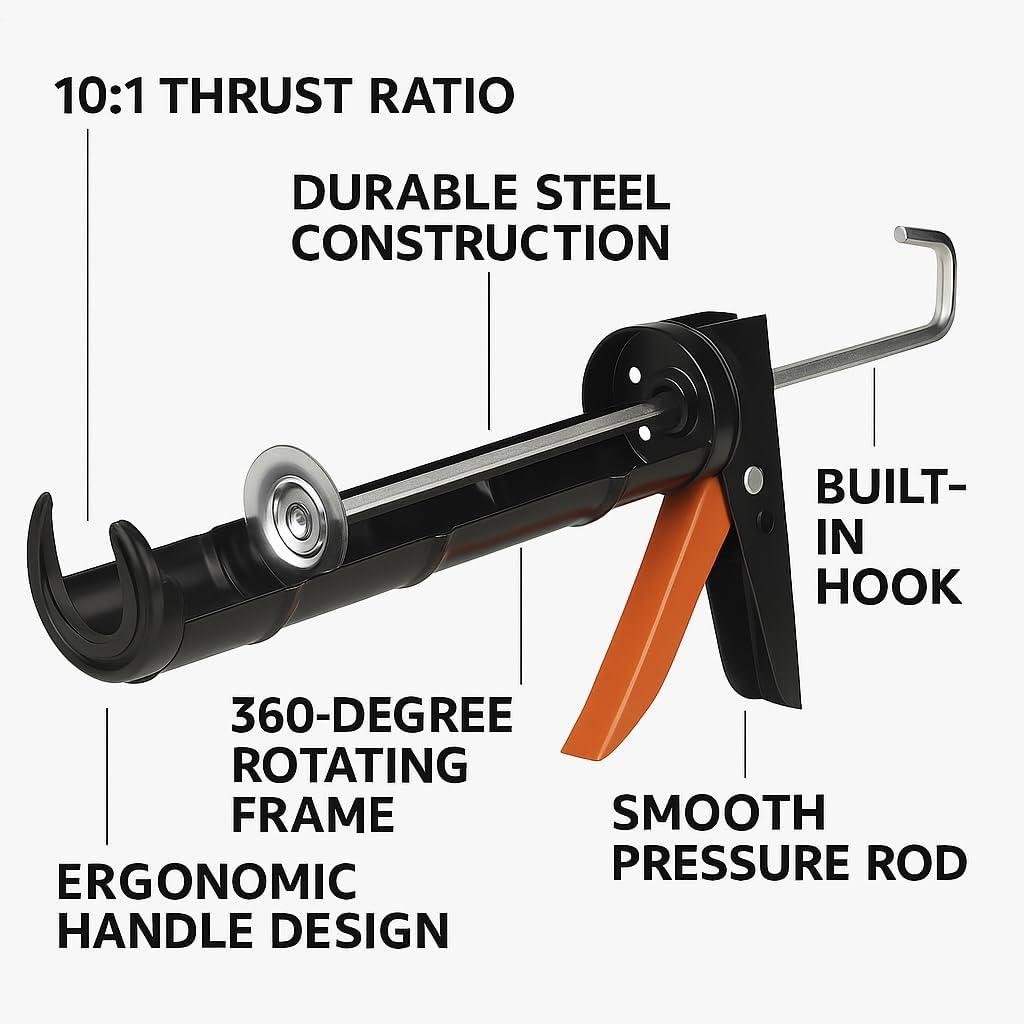
In a woodworking shop, silicone and sealant control is really about consistency—clean beads in corners, predictable squeeze-out on assemblies, and less rework once finish is on the line. The ADAK caulking gun’s 10:1 thrust ratio is the spec we care about most here, because it’s designed to maintain steady pressure for a smoother flow—even with thicker construction-style adhesives—without turning our forearms into clamps. Multiple reviewers echo that theme, calling out “smoother trigger action”, “good spring action”, and that it “dispenses the caulk evenly”, which tracks with what we want when laying a thin, paintable bead along base, toe-kicks, or a cabinet scribe. The maker also highlights a no-drip design, and customers mention it helps keep things “neat and mess-free”—a practical win any time we’re sealing shop fixtures, jigs, or dust-collection seams where stray strings of silicone love to grab sawdust.
We also appreciate that it’s built to fit standard 10 oz cartridges, which is the common size we keep around for silicone, latex caulk, and panel adhesives—no special tubes required. Reviewers repeatedly describe it as lightweight, easy to use, and well made/sturdy, which matters when we’re doing long runs (like sealing a benchtop backsplash or gasketing a router-table fence face) and want control without hand fatigue.that said, a couple of customer comments are worth learning from: one notes it “does not include a way to open caulking seal”, and there’s also a mention of it jamming when taking out the tube. From a technique standpoint, we’ll want to keep a simple awl/nail or a utility knife handy for puncturing inner seals, cut the nozzle at a shallow angle for a smaller bead, and relieve pressure instantly after each pass (even with “no drip”) to avoid oozing while we reposition. it reads like a solid, budget-friendly hand tool for woodworkers who do frequent sealing and adhesive dispensing—but we’ll still treat it like a shop consumable: keep it clean, don’t force the plunger, and store it unloaded if it starts binding.
- Included accessories: Not specified by the manufacturer in the provided listing details
- compatible attachments/accessories: Standard 10 oz sealant/adhesive cartridges (global fit)
- Ideal project types:
- Sealing cabinet installs (scribes,fillers,toe-kicks)
- Gasketing/dust-proofing shop fixtures and tool stands
- Applying construction adhesive for jigs and shop-built storage
- Finish-prep caulk lines on paint-grade trim parts
- wood types tested by customers: Not specified in customer review text (reviews focus on tool feel and general usage rather than species)
| Feature | ADAK Caulking Gun (per listing/reviews) | Why it matters in a wood shop |
|---|---|---|
| Thrust Ratio | 10:1 | Smoother feed,less hand strain,easier thin/consistent beads |
| Cartridge Size | Fits standard 10 oz cartridges | Works with common caulks/silicones/adhesives we already stock |
| No-Drip | Yes (claimed) + “mess-free” theme in reviews | Less clean-up around clamps,benches,and finished parts |
| User Feedback Themes | “Smooth trigger action,” “dispenses evenly,” “lightweight,” “sturdy” | Better bead control for trim work and shop sealing tasks |
| Accessory/Consumable | Compatibility | Workshop note |
|---|---|---|
| 10 oz silicone/latex caulk cartridges | Compatible | Great for paint-grade trim parts and gap filling before finish |
| 10 oz construction adhesive cartridges | Compatible | Useful for jigs/fixtures; apply thin beads to reduce squeeze-out |
| Awl/nail (for inner seal puncture) | Recommended (not included per review theme) | One reviewer notes no built-in way to open the seal |
| Capacity Category | Recommended Use (based on design + reviews) | What reviewers report |
|---|---|---|
| Workload | Light to general usage | One reviewer explicitly calls it “light duty…for light/general usage” |
| Material Flow Control | Controlled,smooth dispensing | Multiple reviewers mention smooth trigger and even dispense |
See Full Specifications & Customer Photos
Ease of Use for Beginners and Pros in Tight joinery Spots
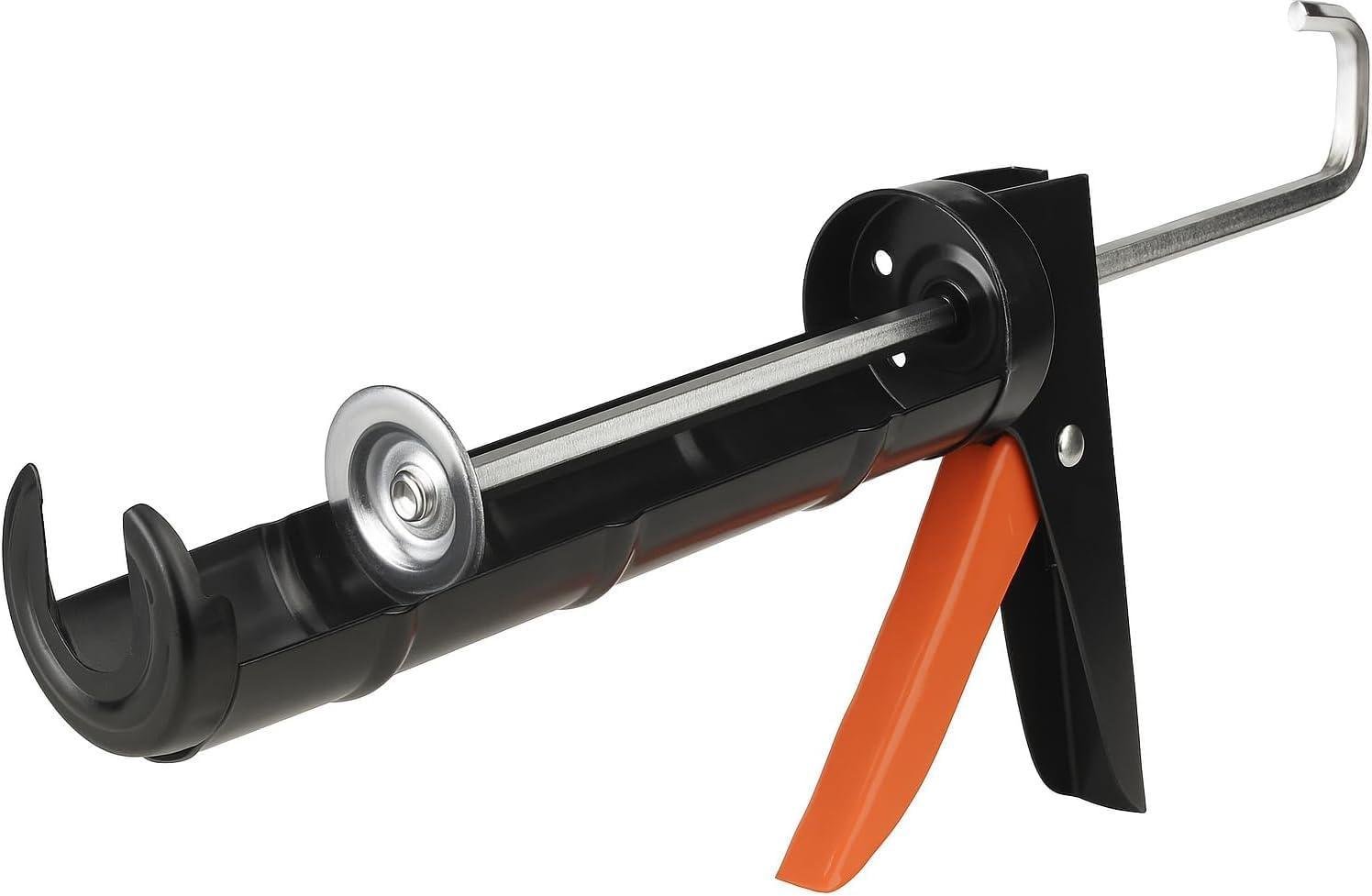
In tight joinery spots—like sealing a sink cutout on a plywood countertop, running a thin bead under a backsplash return, or bedding a small spline jig where we don’t want squeeze-out—the ADAK caulking gun feels friendly for both first-timers and seasoned shop hands. The big help here is the 10:1 thrust ratio, which gives us steadier pressure with less grip strain, so we can “feather” the trigger rather of pumping too hard and flooding a corner.Multiple reviewers echo that theme, calling out a “smoother trigger action”, that it “dispenses the caulk evenly,” and that it’s “easy to handle”—all of which matters when our workpiece is clamped up and we’re working one-handed around an awkward clamp head. The tool is also rated as no-drip, and customers frequently mention it helps keep application “neat and mess-free”; in woodworking terms, that’s less cleanup near unfinished edges and less risk of contaminating surfaces we plan to glue or finish.
For beginners, the simplest technique we’ve found is to cut the nozzle small, keep the tube at a consistent angle, and let the gun’s mechanical advantage do the work—especially with thicker construction adhesives that can make cheap “squeeze” tools feel jerky.This ADAK model fits standard 10 oz cartridges, so it’s easy to load common silicone and sealants, and reviewers report it “works great” with good spring action. That said, there are a couple practical “pro tips” worth knowing before we head into cramped joinery: some customers note it doesn’t include a way to open/puncture the inner seal, and another mentions it can jam when removing tubes. in our shop, we’d simply keep a puncture nail/awl in the apron and make sure the release lever is fully engaged before pulling a cartridge—small habits that make a big difference when we’re threading a bead into a corner we can barely see.
See Full Specifications & Customer Photos
Customer Reviews Analysis

What Woodworkers Are Saying (Review Analysis)
1. Overall sentiment from woodworking customers
Overall sentiment is strongly positive. Multiple reviews highlight smooth dispensing, reduced hand fatigue, and solid value for the price. Common praise includes the tool feeling “strong and durable” while still being affordable—an appealing mix for woodworkers who want reliable shop tools without overspending.
2. Performance feedback (accuracy, power, results)
Several woodworkers mentioned consistent, smooth trigger action and even material flow—two traits that matter when you’re trying to lay a controlled bead along trim, panels, or joints.
- Smooth pressure & control: One reviewer noted the trigger action is “smoother and better than other brands,” which translates to steadier application and fewer starts/stops.
- Power under load: Multiple reviews highlight the 10:1 thrust ratio making application “smooth and effortless,” suggesting it handles thicker adhesives/sealants with less force.
- clean results: The no-drip feature was praised for keeping work neat and “mess-free,” helpful for finish-quality applications where excess squeeze-out is a nuisance.
Sparse excerpt: “dispenses the caulk evenly.”
3. Build quality and durability observations
Multiple reviews highlight a sturdy feel, especially considering the budget price point.
- Positive durability signals: “overall build feels strong and durable,” “durable and good quality,” and “seems ample for a budget price.”
- Expectation setting: One reviewer framed it as “light duty…for light/general usage,” which suggests it’s solid for typical shop and household tasks, but may not be intended for daily heavy commercial abuse.
4. Ease of use for different skill levels
Reviewers with mixed experience levels found it approachable.
- Beginner/DIY-friendly: several users described it as “easy to use” and “easy to handle,” indicating a low learning curve for basic caulking and adhesive application.
- Pros also approved: One review explicitly called it “an excellent pick for professional use,” largely due to smooth action and reduced strain.
5.Common project types and success stories
While the reviews aren’t woodworking-project specific, customers successfully used this for construction-style bonding where controlled dispensing matters.
- Adhesive application: One user reported it “fits well with the cement adhesive…from Home Depot.”
- Masonry/planter build: One reviewer described using it to “glue cinder blocks to planter pots,” suggesting it can push heavier materials—useful overlap for shop builds, outdoor fixtures, and general property projects where woodworkers often apply construction adhesives and sealants.
6. Issues or limitations reported
Some users reported challenges or omissions that could impact convenience in the shop:
- No puncture tool: One review notes it “does not include a way to open caulking seal,” meaning you’ll need a nail,awl,utility knife tip,or a gun that includes a built-in puncture rod.
- “Light duty” positioning: At least one reviewer described it as best suited for “light/general usage,” which may be a limitation if you plan to run lots of thick adhesive through it continuously.
Quick Themes Table
| Aspect | Common Feedback |
|---|---|
| Performance | Multiple reviews highlight smooth trigger action, even dispensing, and less hand strain (10:1 thrust ratio). |
| Precision / Cleanliness | Common praise includes the no-drip feature helping reduce mess and improve control. |
| Build Quality | Often described as strong/durable and “substantial” for a budget price; one user calls it light-duty for general use. |
| Ease of Use | Several users reported it’s easy to handle and straightforward, suitable for DIY and pro users. |
| Limitations | Does not include a built-in way to puncture/open the caulk tube seal; may not be intended for heavy continuous use. |
Pros & Cons
pros & Cons
When we bring a caulking gun into our shop, we’re not just buying a trigger and a frame—we’re buying cleaner bead lines, fewer callbacks, and less hand fatigue at the end of the day. Here’s how the ADAK Professional Caulking Gun (10:1 thrust ratio, no-drip) stacks up for us.
Pros
- Smooth trigger action with steady output: The 10:1 thrust ratio helps us keep a consistent bead, especially when we’re moving at “jobsite pace” instead of “DIY pace.”
- No-drip behavior keeps things tidier: When we set the gun down between passes, it’s less likely to keep oozing and painting the ladder, the floor, or our patience.
- Comfort-forward grip: The handle shape and overall feel lean ergonomic, which matters when we’re sealing more than one seam in a session.
- Lightweight, easy to handle: It’s not a wrist workout, making it a reasonable grab for quick touch-ups or longer runs.
- Works with standard 10 oz cartridges: No special tubes or oddball sizes—just load the common cartridges we already stock.
- Strong value perception: Based on customer feedback, it often lands in that sweet spot where it feels better than “budget,” without demanding “premium.”
Cons
- Seal puncture/cut tools may be missing: Some users note there’s no built-in way to open the inner seal, meaning we may need a separate puncture tool or utility knife on hand.
- Potential tube removal quirks: Mixed feedback suggests it can jam when removing cartridges—not a dealbreaker, but it can slow us down.
- Not universally “heavy-duty forever”: While many call it sturdy, at least one review suggests it may not be the best pick for relentless, long-term daily abuse.
- “professional” depends on workload: For our lighter/general jobs it sounds ideal, but for thick adhesives all day, every day, we’d want to confirm it keeps up.
| What We Care about | how ADAK Seems to Perform | What That Means in Our Shop |
|---|---|---|
| Trigger feel | smooth, controlled | cleaner lines with fewer “whoops” moments |
| Mess control | No-drip design | Less cleanup between passes |
| all-day comfort | Ergonomic + lightweight | Less hand strain on multi-seam jobs |
| Convenience features | Possible missing seal puncture | We’ll keep a puncture tool in the kit |
Our takeaway: The ADAK reads like a practical, smooth-running caulk gun with a welcome no-drip focus—especially attractive for general sealing and repair work. The main friction points are convenience details (like puncturing the seal) and a few mentions of cartridge removal hiccups.
Q&A

Is the 10:1 thrust ratio powerful enough for thick construction adhesives (PL Premium), subfloor adhesive, or heavy silicone?
For most woodworking-adjacent shop and install tasks, yes. The ADAK’s 10:1 thrust ratio is designed to give smoother pressure and better control than basic bargain guns, and reviews mention an “even dispense” and “good spring action.” It’s a solid match for common silicones, painter’s caulk, many polyurethane sealants, and typical construction adhesives in standard 10 oz tubes. That said, if you regularly dispense very stiff products in cold temperatures or do all-day adhesive work, a higher-thrust (e.g., 18:1–26:1) pro gun will reduce hand strain even more.
Will this help me lay clean beads on plywood edges, veneer seams, and cabinet installs without making a mess?
It should help, mainly because the tool is built around controlled, consistent pressure and a “no-drip” style release. Woodworkers applying sealant along plywood-to-wall transitions, toe-kick gaps, sink/counter caulk lines, or around built-ins typically want a predictable flow and quick stop—this gun is intended for that, and customers specifically call out smoother trigger action and less mess. Your final bead quality still depends heavily on tip cut size, bead speed, and keeping steady angle/pressure.
how hard is the setup—can I go from tube to bead quickly?
Setup is the standard caulk-gun routine: load a standard 10 oz cartridge, cut the nozzle, puncture the inner seal (if your tube has one), and start dispensing. Reviews consistently describe it as easy to use and easy to handle. One limitation noted by customers is that it doesn’t include an integrated puncture rod or seal opener, so you may need a nail, awl, or small screwdriver to pierce the foil/inner seal on some tubes.
Does it work with standard 10 oz tubes and common shop accessories like different nozzles or sausage packs?
It’s designed to fit standard 10 oz cartridges, which covers most silicones, acrylic/latex caulks, and many construction adhesives sold at hardware stores. Standard replacement nozzles/tips for 10 oz cartridges will work as usual. This listing doesn’t indicate sausage-pack compatibility, so if you rely on sausage packs for production work, you’ll want a gun specifically made for them.
Is this suitable for beginners doing trim, baseboards, and paint-prep caulking?
Yes. Customer feedback trends positive on ease of use, smooth trigger action, and the no-drip behavior—exactly the things beginners struggle with on cheaper guns (sudden surges and messy run-on). the learning curve is mostly technique: cut a smaller nozzle opening than you think you need, practice steady trigger pulls, and release pressure before you stop moving to keep a clean end.
Can it hold up to professional woodworking punch-list work, or is it just for occasional projects?
It appears well-suited for regular DIY and light pro use: multiple reviews call it “well built,” “sturdy,” and “durable,” and one reviewer described it as a good pick for professional use due to smooth, low-strain dispensing. Though, there is also at least one durability complaint (a unit breaking after one use) and one review describing it as “light duty…for light/general usage.” If you’re a contractor or cabinet installer dispensing multiple tubes per day, it may be wise to keep a higher-end backup gun or step up to a heavier pro model for maximum long-term reliability.
Will it fit in a small workshop, and does it need any special power/dust setup?
Yes—this is a manual hand tool, so it’s easy to store in a drawer, tool tote, or hang on a pegboard. No power outlet is required and there’s no dust collection involved. For shop workflow, many woodworkers keep it near finishing supplies for sealing sink cutouts, sealing around shop fixtures, and applying construction adhesive during jigs/fixtures assembly.
Any maintenance tips to keep it “no drip” and prevent tube jams when swapping cartridges?
Wipe the carriage and any caulk residue off the plunger area after use, and store it with pressure released so the rod isn’t constantly pushing the tube. A small number of customers mentioned jamming when removing tubes, so when you’re done, fully release pressure before pulling the cartridge out. Also, cap the nozzle or wrap it to prevent the product from curing—forcing cured material through the tip is a common cause of hard trigger pulls and messy flow on any caulk gun.
Experience the Difference
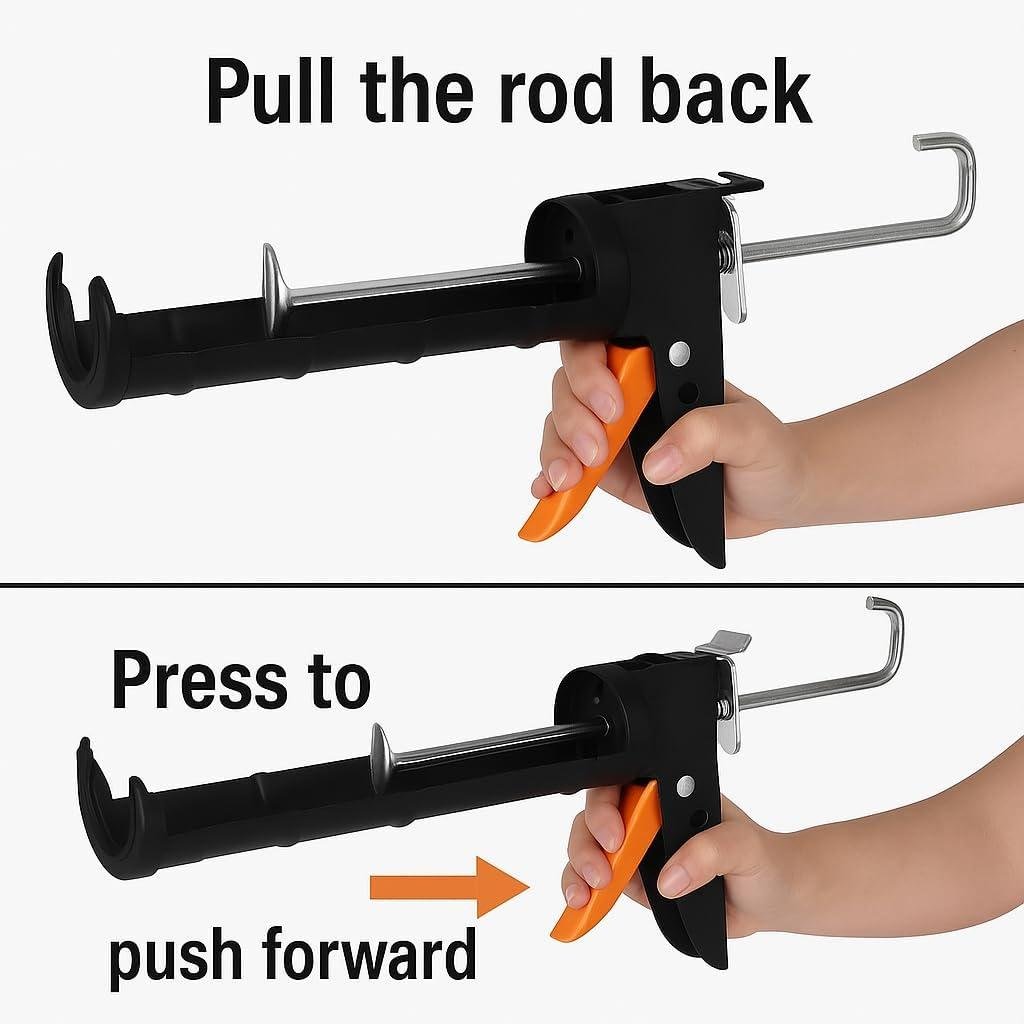
The ADAK Professional Caulking Gun is a manual,10:1 thrust-ratio applicator built for standard 10 oz cartridges,designed to deliver smooth pressure and a no-drip release for cleaner beads. In customer feedback, the biggest themes are sturdy build quality, lightweight handling, and smooth trigger action that dispenses caulk evenly with less hand strain. Value is frequently praised, while a recurring limitation is that it doesn’t include a puncture tool/cutter for opening seals, and a few users note it might potentially be light-duty for long-term daily abuse.
Best for: hobby woodworkers with small to medium projects, cabinet makers needing precision when sealing joints, and beginners learning clean silicone/adhesive application.
Consider alternatives if: you run production work, want an all-in-one gun with puncture/cut features, or need higher thrust for consistently thick adhesives.
Final assessment: a solid mid-range option that emphasizes control and neat results, with a few convenience tradeoffs.
Want to see current pricing and customer photos? View on Amazon & Read More Reviews →