
Blog
Rowood 1/8 Basswood Sheets Review: Right for Our Laser?


Ever dial in a laser cut or scroll-sawn pattern, only to watch the job drift because your sheet isn’t flat, consistent, or truly the size you planned around? When we’re building ornaments, architectural models, or layered projects, precision starts long before the first pass-it starts with the material.
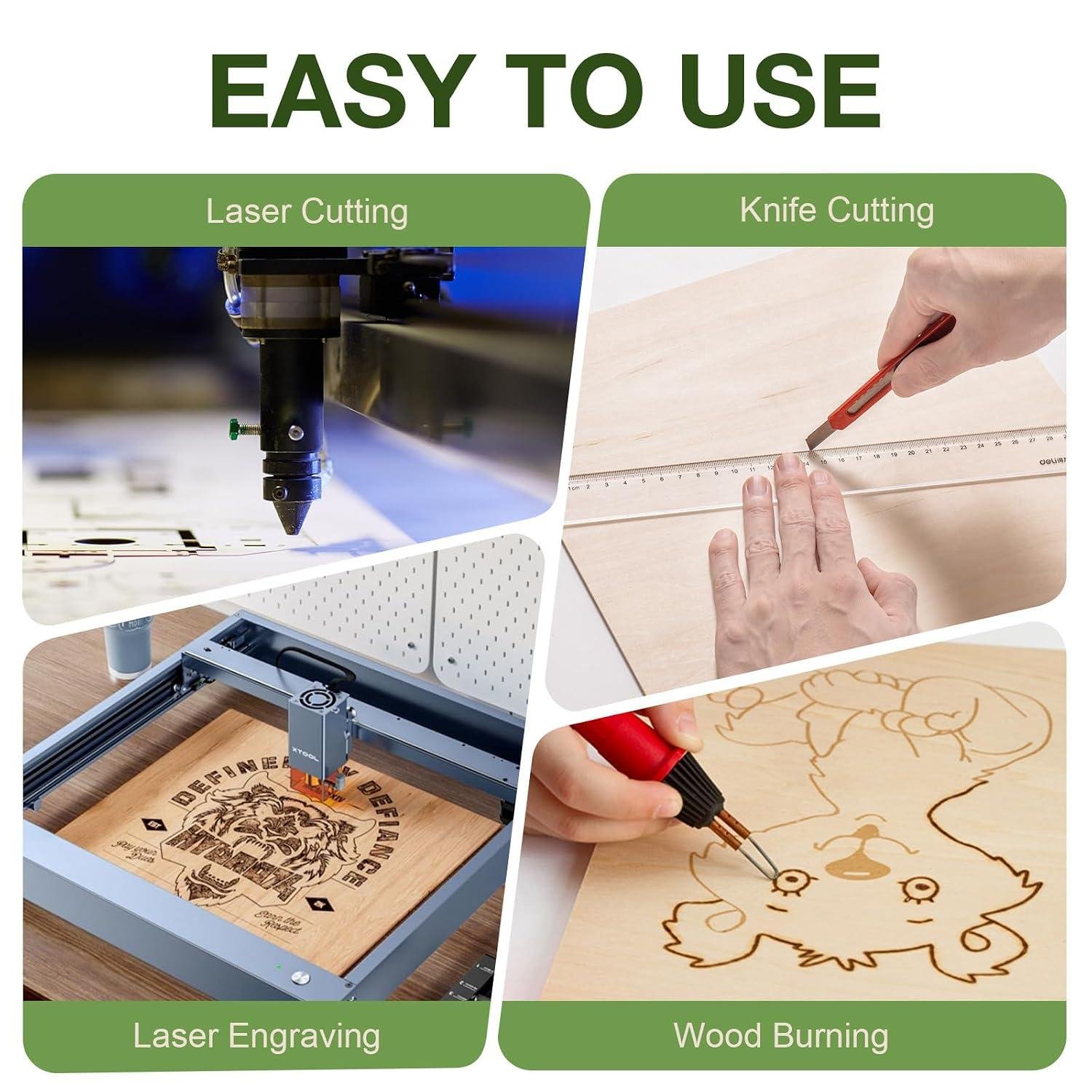
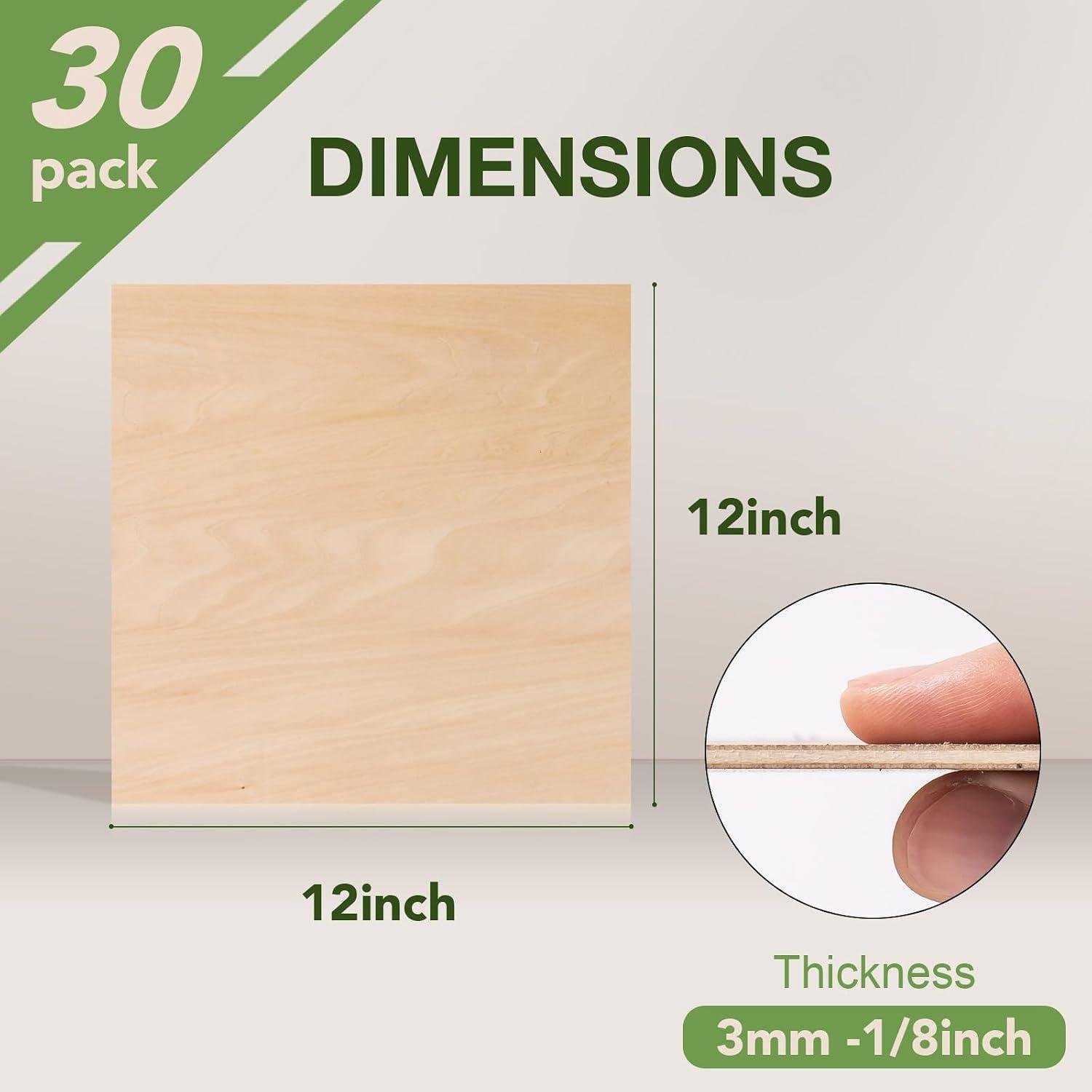
The Rowood 30 Pack Basswood Sheets are 1/8″ (3mm) thin, unfinished basswood panels aimed at laser cutting, engraving/burning, painting, and knife or scroll-saw work. Rowood highlights a smooth, sturdy surface with natural texture, plus storage guidance to help prevent warping and a ±0.2mm thickness tolerance.
In this review, we’ll look at the key specs (thickness, available sizes like 12×12, 12×16, and 12×18), how the pack makes sense for tight shop space and repeatable batching, and whether the price-to-quality balance fits hobbyists versus heavier makers. We’ll also weigh customer feedback-many reviewers praise the quality and flatness for laser work, while size accuracy gets mixed comments.
We’ve spent years choosing sheet goods for clean cuts and reliable layouts, and we’ll focus on what matters before you buy.
Tool Overview and Sheet Quality Out of the Pack
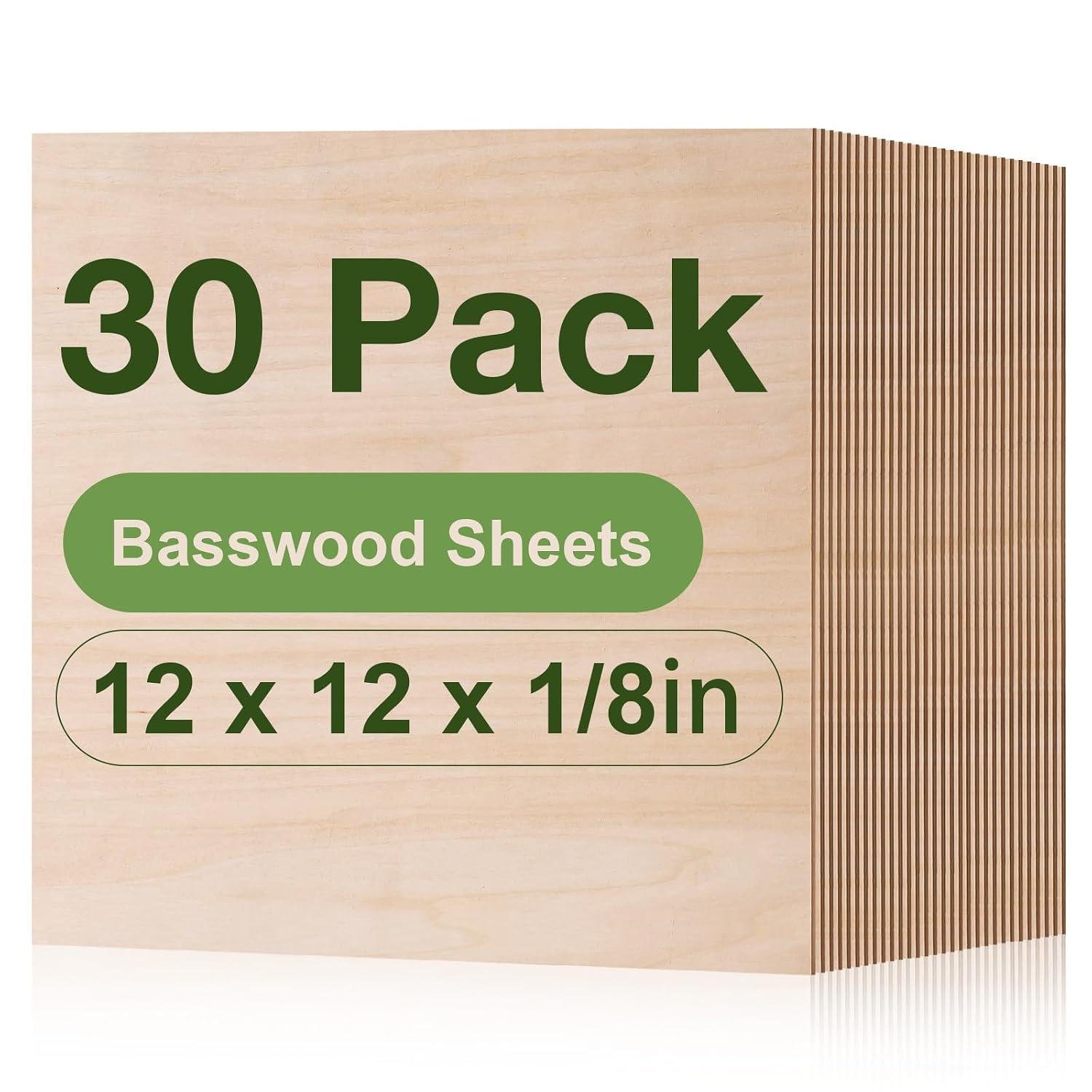
Out of the pack, these Rowood basswood sheets present more like a shop-ready *consumable* than a “tool,” but in a laser/scroll-saw workflow the sheet stock *is* the tool that determines whether our cut lines stay crisp. The key specs are straightforward: a 30-pack of 1/8 in (3mm) unfinished basswood sheets, offered in listed sizes of 12×12, 12×16, and 12×18 (with a stated ±0.2mm thickness tolerance). In practical terms, 3mm basswood is the sweet spot for many hobby lasers and light-duty scroll saw use-stiff enough to stay flat on a honeycomb bed, yet thin enough to accept engraving cleanly and cut without excessive scorching. Multiple reviewers consistently praise “excellent quality” and mention sheets being flat/unwarped with consistent surfaces, which matters when we’re trying to avoid focus variation on the laser or chatter on a fine scroll-saw blade. Basswood’s naturally tight, even grain is also workshop-friendly for detail work: it sands quickly, takes paint well, and burns/engraves with predictable contrast compared to more resinous species.
Where we’d urge woodworkers to pay attention is sheet sizing and workflow planning. Customer feedback on dimensions is mixed: some say the size “fits a lot of designs,” while others report sheets are not the advertised 12″ x 16″ (one review theme notes boards arriving at 12″ x 16.5″, and others mention being undersized). That’s not a dealbreaker for ornaments, test cuts, or model parts, but it can bite us when we’ve nested parts tightly in CAD for production runs. Our best practice is to measure each batch, set up a small “safe margin” in our layout, and store sheets flat in a stable environment-Rowood explicitly notes avoiding heat and humidity swings to prevent warping. For day-to-day shop use, this pack makes sense when we need reliable 3mm basswood for quick prototypes, engraved tags, inlays, and craft components-just don’t assume the nominal size without verifying before committing to a full sheet layout. See Full Specifications & Customer Photos
Real World Performance for Laser Cutting Scrolling and Woodburning
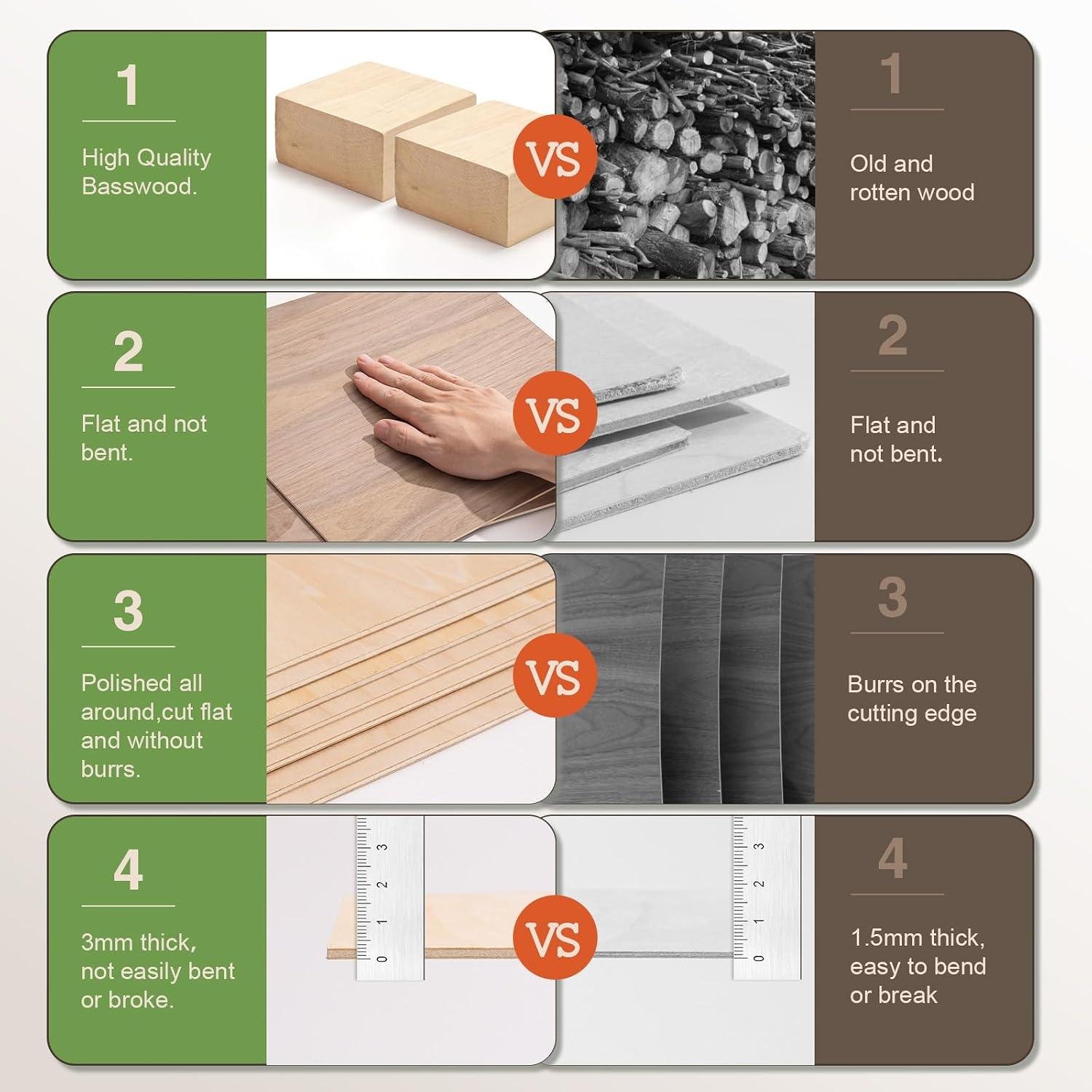
In day-to-day shop use, the big advantage of these sheets is their predictable thickness: they’re sold as 1/8 in (3mm) basswood, which is right in the sweet spot for hobby lasers and small-format CNC/scroll patterns where we want crisp detail without fighting excessive char or long cut times. Basswood’s naturally low density also means it generally engraves cleanly and takes shading well, so for laser cutting and woodburning we can focus more on dialing in power/speed and less on wrestling grain tear-out or resin pockets. Reviewers consistently echo that theme, calling them “excellent for laser cutting” and “very nice…perfect for my laser,” with multiple mentions that the boards arrive flat/unwarped-a practical win when we’re trying to hold focus height and keep kerf consistent across the sheet. The main real-world caveat we’d plan around is sizing: customer feedback is mixed, and several note the sheets are not the exact dimensions shown/listed (one mentions 12″ x 16.5″ rather than what they expected). In our workflow, that means we’d measure every batch and set our laser bed origin and hold-down strategy accordingly before committing to a nested layout.
For scrolling and hand burning, 3mm basswood behaves like a forgiving “practice hardwood”-it cuts easily with fine scroll blades and responds well to a steady feed rate, making it suitable for ornaments, fretwork, and architectural/mock-up parts where we want clean edges. Because these are thin panels, we’d treat them like veneer-core stock: prevent chatter with a solid backer, use blue tape if needed to reduce surface smoke/soot from laser work, and sand lightly to avoid dishing. Rowood notes a ±0.2mm thickness tolerance and specifically recommends storage in consistent temperature/humidity to prevent warping; in a small shop, we’d keep them stickered flat or in a sealed bin so they stay ready for engraving runs. When sizing matters (templates, multi-layer stacking, or model parts), we’d advise building in a small border and trimming after cutting-especially since reviewers are split on whether the sheets are “great” sized or undersized/not as advertised. Overall, the real-world performance profile is what we want from craft basswood: consistent surfaces, easy cutting/engraving, and a manageable learning curve-so long as we verify actual sheet dimensions before we design.
See Full Specifications & Customer Photos
Key Features Woodworkers Will Appreciate in a Basswood Sheet Bundle
In our shop, a basswood bundle earns its keep when it’s predictable at the bench, and the Rowood pack leans into that with a workshop-friendly spec: 30 sheets at 1/8 in (3mm) thickness in the maker’s listed formats (12×12, 12×16, and 12×18). That 3mm thickness is a sweet spot for scroll-saw patterns, light jigs, and layered parts because it’s stiff enough to stay flat during layout, yet still cuts cleanly with a knife, fret saw, or laser without feeling spongy. The product description calls out a smooth, sturdy surface and encourages proper storage to prevent warping-good advice for any thin stock: we like to keep sheets stacked flat with a little weight on top and away from sudden humidity changes. In customer review themes, the most repeated praise is “excellent for laser cutting” and flat/unwarped sheets, which matters to us because a sheet that starts flat is easier to hold down, easier to tape-mask for engraving, and less likely to rock on the scroll-saw table.
The feature we pay closest attention to, though, is dimensional consistency, and reviews are mixed: some woodworkers say the sizing is “great,” while others explicitly report sheets “not 12″ x 16″ as advertised” or note boards arriving at “12″ x 16.5″” rather than what they expected. Practically, that means we recommend treating these as nominal sizes and measuring each sheet before committing to CNC/laser bed layouts or tight-fitting architectural model panels; it’s the same habit we use with any thin stock that can vary slightly. For tool use, basswood at 3mm also rewards lighter, cleaner technique: sharp blades (or fresh laser focus), painter’s tape or transfer paper to reduce scorch on engravings, and a backer board when knife-cutting to prevent tear-out along the last fibers. If our work depends on exact sheet dimensions (fixture bases, repeatable inlay templates), we’d plan to square/trim on the table saw with a zero-clearance insert or use a shooting board-simple steps that turn a craft bundle into more reliable shop material.
- Included accessories: None (sheets only)
- Compatible attachments/accessories: Laser cutter honeycomb bed & hold-down pins, low-tack masking/transfer tape, craft knife + fresh blades, scroll-saw blades, small clamps, sanding block
- Ideal project types: Laser-cut ornaments, layered wall art, stencils/templates, architectural models, pyrography/wood burning panels, small box dividers, prototype parts
- Wood types tested by customers: Basswood (reviewers frequently refer to these as “plywood sheets” but the listing specifies basswood sheets)
| Spec | Rowood Bundle (Listed) | Why It Matters in the Shop |
|---|---|---|
| Pack count | 30 sheets | Batch runs for ornaments, model parts, test cuts, and dialing in laser settings without rationing material. |
| Thickness | 1/8 in (3mm) (±0.2mm tolerance noted) | Common thickness for laser/scroll work; tolerance matters for stacked laminations and tab-and-slot fits. |
| Sheet sizes | 12×12, 12×16, 12×18 (size feedback mixed in reviews) | Measure before layout if your design depends on exact boundaries (laser bed nesting, model elevations). |
| Surface/flatness | Described as smooth; reviews often mention flat/unwarped | Flat stock registers better against fences and holds consistent laser focus across the sheet. |
| Accessory | Compatible? | Use Case |
|---|---|---|
| Masking/transfer tape | Yes | Reduces smoke staining during laser engraving and keeps surfaces cleaner for finishing. |
| Honeycomb laser bed | Yes | Improves airflow and reduces backside char on through-cuts. |
| Scroll saw (fine blades) | Yes | Clean curves and fretwork; backer support helps minimize fuzzing on exits. |
| Craft knife + metal straightedge | Yes | Quick straight cuts and trimming to true size when sheets vary. |
| Capacity Topic | Recommended Expectation | Actual Notes from Reviews/Specs |
|---|---|---|
| Dimensional accuracy | Plan for nominal sizing; confirm with a tape/calipers | Some report sheets not matching advertised dimensions; maker allows ±0.2mm tolerance (thickness). |
| Cutting/engraving suitability | Good for 3mm laser cuts, engraving, and light hand-tool work | Multiple reviewers say “perfect for my laser” and excellent for laser cutting. |
See Full Specifications & Customer Photos
Ease of Use for Beginners and Experienced Makers in the Shop

In the shop, these Rowood sheets are about as beginner-friendly as sheet goods get: they arrive as pre-cut basswood panels in a consistent 1/8 in (3mm) thickness, so we’re not asking a newer maker to resaw stock, plane to thickness, or true up rough lumber before they can start. For folks just getting comfortable with layout and measuring, the predictable thickness helps a lot when setting a scroll saw table, dialing in a laser cutter focus, or choosing a knife/scoring technique without guesswork. According to customer review themes, many makers call the sheets “excellent quality”, “flat/unwarped”, and “perfect for my laser”-all of which translates to fewer early frustrations like rocking workpieces, inconsistent kerfs, or scorch marks from uneven material. That said, size expectations are where beginners can get tripped up: multiple reviewers mention the sheets are not always exactly “12 x 16” as advertised, so in our workflow we’d treat them like “nominal” panels and measure each sheet before nesting parts (especially if we’re trying to squeeze a design to the edges).
For experienced makers, the appeal is speed and repeatability: a 30-pack of ready-to-run 3mm basswood is easy to stage near the laser, veneer saw, or bench for rapid prototyping, jigs, templates, and small batch ornaments without breaking down a full board. The product description also calls out a smooth surface and recommends humidity-controlled storage, which matters in a real shop-thin stock will telegraph moisture swings quickly, so we’d keep these sheets flat, weighted, and away from heat sources to preserve that “arrives flat” advantage. Reviewers report success with laser cutting, and basswood’s fine grain is generally forgiving for engraving/wood burning, but for crisp results we still want good habits: use masking tape** to reduce smoke staining, support the sheet on a honeycomb/pins to limit back-burn, and always run a small power/speed test grid before committing to a full layout. If you need true-to-spec panel dimensions for architectural models or tight-fitting inlays, the mixed size feedback means we’d verify actual sheet measurements and adjust CAD templates accordingly.
See Full Specifications & Customer Photos
Customer Reviews Analysis
What Woodworkers Are Saying (Review Analysis)
| Aspect | Common Feedback |
|---|---|
| Overall Sentiment | Generally positive for craft/laser use-valued for convenience and project-ready sizing; some caution around sheet consistency. |
| Performance | Praised for clean laser cuts/engraving and easy sanding; occasional notes that boards can vary, which affects repeatable settings. |
| Build Quality | Most describe the basswood as smooth and workable; some users reported warping or minor imperfections in a few sheets. |
| Ease of Use | Beginner-friendly for DIY kits and ornament work; experienced makers preferred inspecting/flattening sheets before precision jobs. |
| Project Fit | Commonly used for ornaments, engraving blanks, architectural models, and small craft parts. |
| Limitations | Not always “precision stock”-variations in flatness/thickness can require test cuts and extra prep. |
1. Overall sentiment from woodworking customers
Several woodworkers mentioned this pack is a solid, practical choice for laser cutting, pyrography, and small shop projects where you want ready-to-use basswood sheets without milling your own stock. Common praise includes the value of getting a 30-pack and the fact that basswood is forgiving for craft-scale work. At the same time, some users reported challenges with occasional inconsistency (like a few sheets not being perfectly flat), which matters more for repeatable laser settings and tight-fitting assemblies.
2. Performance feedback (accuracy, power, results)
Multiple reviews highlight basswood’s typical strengths here: it cuts and engraves cleanly and tends to produce crisp burn lines and predictable engraving depth compared with harder, more resinous woods. Common praise includes:
- Clean cut edges for ornaments and model parts
- Smooth sanding behavior, especially on edges after cutting
- Good engraving contrast for text and line art
Some users reported challenges with tuning laser settings across the whole pack if sheets vary slightly-meaning you may need test cuts for consistent kerf and through-cuts on each batch (or even each sheet if you’re chasing tight tolerances).
3. Build quality and durability observations
Reviewers generally describe the sheets as lightweight, soft, and easy to work, with faces that are typically smooth enough for engraving and finishing. That said, customers also noted basswood sheets can be:
- Prone to minor warping (especially if stored in fluctuating humidity)
- Occasionally showing small surface marks or grain variation that can telegraph through clear finishes or detailed engravings
For woodworkers using these as “parts stock,” several mentioned it’s worth sorting sheets on arrival: reserve the flattest, cleanest boards for precision assemblies and use imperfect ones for test cuts or painted projects.
4. Ease of use for different skill levels
Beginners appreciated the straightforward nature of basswood: it’s easy to cut, sand, and glue, making it suitable for adult craft kits and first-time laser owners. Reviewers with more experience found it approachable too, but emphasized workflow habits that help results:
- Inspect for flatness before long cuts (reduces focus issues on lasers)
- Masking and light sanding for cleaner engraved surfaces
- Clamping/weighting slightly bowed sheets before cutting or assembly
Overall, the learning curve is less about the material being difficult and more about managing sheet-to-sheet variability if you’re producing repeatable parts.
5. Common project types and success stories
Customers successfully used this for:
- DIY ornaments and holiday decor blanks
- Wood engraving and burning (names, logos, line art)
- Architectural models (walls, roofs, small structural pieces)
- Small craft components like tags, plaques, and layered cutouts
Several reviewers mentioned that basswood’s easy machining makes it especially good for stacked/layered laser projects, where consistent glue-up and quick edge cleanup matter.
6. Issues or limitations reported
Some users reported challenges with:
- Warped or slightly bowed sheets (can affect laser focus and cut-through consistency)
- Thickness/flatness variation across the pack (less ideal for precision-fit joints without calibration)
- Occasional surface blemishes that may need filling, sanding, or paint to hide
Net takeaway from reviews: woodworkers tend to like this set for craft-scale, laser, and model work where convenience and quantity matter, while recommending a quick inspection and a few test cuts if you need high repeatability or showroom-grade faces on every sheet.
Pros & Cons
Pros & Cons
After putting Rowood’s 1/8″ (3mm) basswood sheets into our usual “will it behave in the laser?” routine, we came away with a pretty clear picture: it’s a solid craft-friendly material with a small asterisk next to size accuracy.
Pros
- Laser-cutter friendly surface: We appreciate the generally smooth faces-less prep sanding, more cutting.
- Good consistency for engraving: For ornaments, labels, and line art, the surface tends to take burns cleanly and predictably.
- Flat sheets (when stored right): Multiple reviewers mention minimal warping; that matters when we’re trying to keep focus distance consistent.
- Versatile beyond the laser: We can pivot to craft knives, scroll saw work, painting, and pyrography without changing materials.
- Bulk pack convenience: A 30-pack means we can iterate: test grids, dial in settings, then run the “real” pieces without rationing wood.
- Beginner-to-adult craft sweet spot: It’s approachable for DIY kits and architectural model pieces where 3mm hits a nice balance of cuttable and sturdy.
Cons
- Size can be a gamble: The biggest recurring complaint is sheets arriving not quite the advertised dimensions. That’s a real headache when our design files expect exact board size.
- Manual tolerances apply: Rowood notes a ±0.2mm tolerance-usually fine, but we can feel it when press-fitting tight joints.
- Storage sensitivity: Like most thin wood, humidity swings can invite warp. We have to store it flat and stable, or it punishes us later.
- Not a “premium ply” substitute: If we’re building structural assemblies or showroom-finish model work, we may still reach for higher-grade specialty sheets.
Quick Pros/Cons Snapshot
| Category | What We Liked | What Bugged Us |
|---|---|---|
| Laser Cutting | Clean cuts on 3mm; smooth faces | Exact sizing matters for full-bed layouts |
| Engraving | Consistent burn/marking for most designs | Wood grain variation can shift contrast |
| Build Accuracy | Good for general craft fits | ± tolerance can affect tight press-fit parts |
| Everyday Use | Big pack supports testing + production | Needs careful storage to stay flat |
Our takeaway: If our projects are tolerant of slight dimension variance-or we’re willing to measure each sheet and adjust placements-these are a practical, laser-ready option. If we’re counting on exact “advertised” size to match our templates edge-to-edge, we’ll want to verify dimensions before we commit a full design.
Q&A
Is this actually basswood, and what kinds of projects does it suit best?
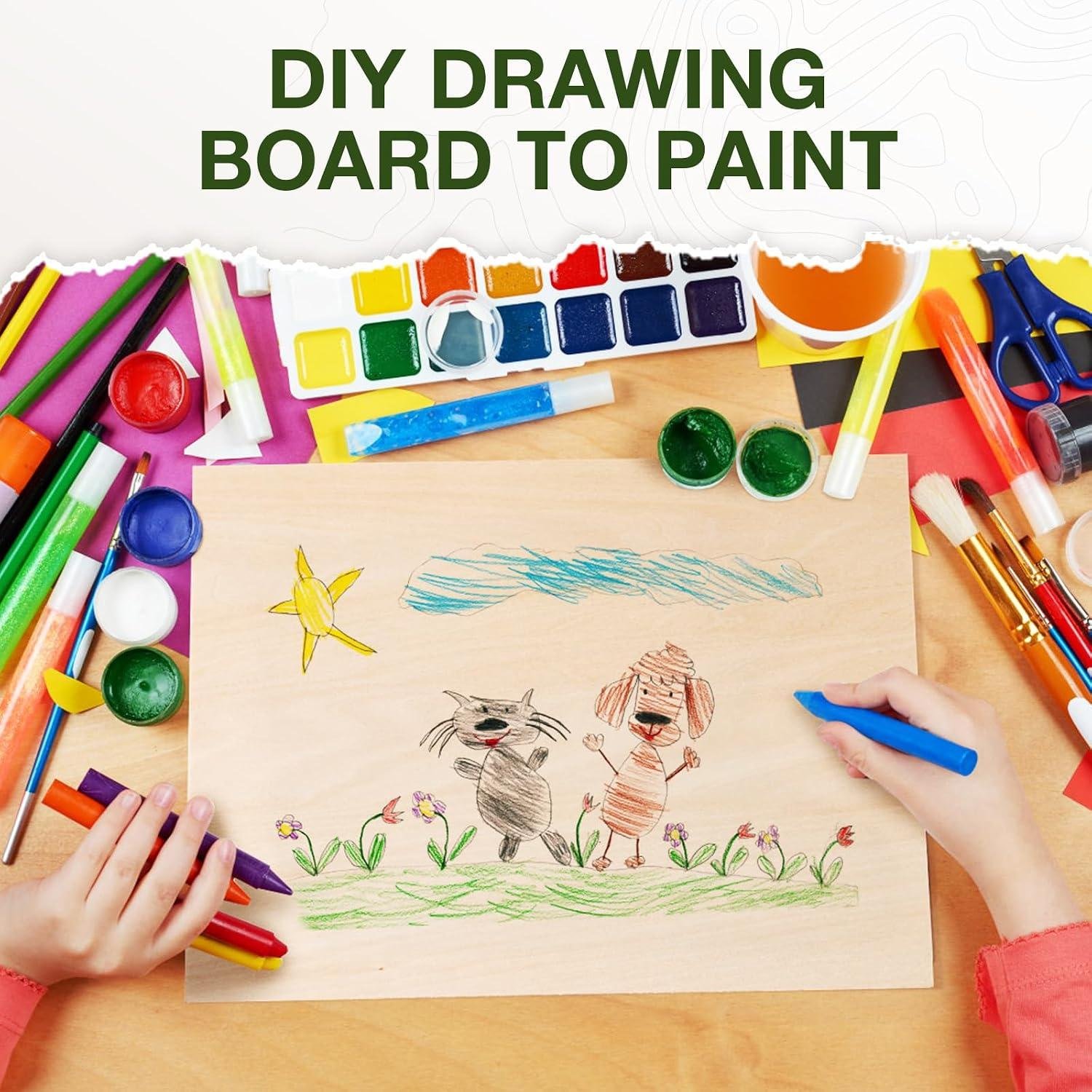
These are 1/8″ (3mm) unfinished basswood sheets aimed at light-duty woodworking and maker projects: laser cutting/engraving, scroll-saw work, craft-knife cutting, wood burning, ornaments, puzzles, and architectural models. Basswood is a soft, fine-grain wood, so it machines and engraves cleanly compared with many cheaper mixed-species “craft plywood” sheets. Reviews frequently mention good surface consistency and sheets arriving flat/unwarped, which is what most woodworkers want for clean cuts and predictable engraving.
Can it handle “real woodworking” like hardwoods (oak/maple) or structural parts?
Not really-basswood is intentionally soft and lightweight. It’s great for detail work, prototypes, patterns, and decorative parts, but it’s not a substitute for oak/maple panels or load-bearing components. If you need strength, impact resistance, or screw-holding for shop fixtures/furniture, you’ll typically want hardwood, Baltic birch plywood, or thicker stock. These sheets are best viewed as precision craft material rather than structural lumber.
How does it perform on laser cutters and for engraving/burning?
Customer feedback calls these “excellent for laser cutting,” and basswood is a common choice because it cuts with relatively low power and engraves with good contrast. Expect normal laser variables (machine wattage, air assist, focus, and speed) to drive results more than the brand of sheet. Practical tip: run a small test grid first-3mm basswood often cuts cleanly in one pass on higher-power diode/CO₂ systems, while lower-power diodes may need slower speeds or multiple passes to avoid char and incomplete cuts.
Are the sheets truly the advertised size (e.g., 12″×16″)?
Size is the one area with mixed review feedback. Several customers said the sheets worked great for their designs, but others reported the boards were not the exact size shown/expected (some noted undersizing versus what was advertised). The listing also notes a manual measurement tolerance (±0.2mm), but reviewer comments suggest there may be occasional larger real-world variance in length/width. If your project relies on a tight “full-sheet” dimension (like nesting a cut file to the edge), plan for a margin, measure each sheet, or choose a size option that gives you extra layout room.
What setup or prep do woodworkers typically do before cutting?
Setup is minimal-these come unfinished and ready to cut. For best results, woodworkers typically (1) check thickness and dimensions with calipers, (2) keep sheets stickered/flat for a day in the shop to acclimate, and (3) tape or mask the surface for laser work if they want cleaner faces with less smoke staining. If you’re scroll-sawing or using a knife, a sacrificial backer board helps prevent tear-out and keeps the sheet supported.
Will this fit a small workshop, and does it need dust collection or special power?
Yes-these are 12″×12″, 12″×16″, or 12″×18″ sheets (depending on the option), so they store easily in a flat drawer, portfolio, or on a shelf with support. There’s no power requirement because it’s raw material, not a machine. Dust collection depends on your tool: lasers need proper fume extraction/filtration; saws and sanders benefit from even a small shop vac. The manufacturer also advises storing in a stable temperature/humidity environment to help prevent warping.
Is this beginner-friendly, or do I need advanced woodworking skills?
Beginner-friendly. Basswood is forgiving: it cuts easily, sands quickly, and accepts paint/stain/finish well (though it can blotch with some stains-many woodworkers seal first). The main “learning curve” is tool technique-dialing in laser settings, avoiding scorch marks, and preventing splintering with aggressive blades. For new users, a few test cuts and light sanding usually get professional-looking results.
Will these hold up for production work, and what about long-term durability/warping?
For small-batch production (ornaments, tags, model parts), the 30-pack format is convenient and reviews suggest consistent quality. Long-term durability is mostly about storage and environment: thin wood can warp if exposed to heat or humidity swings. The listing specifically recommends controlled temperature/humidity storage to prevent warping. If you’re producing items for sale, it’s smart to standardize your workflow-measure sheets, keep them flat/weighted, and do a quick QC check before committing a full cut run.
Elevate Your Lifestyle
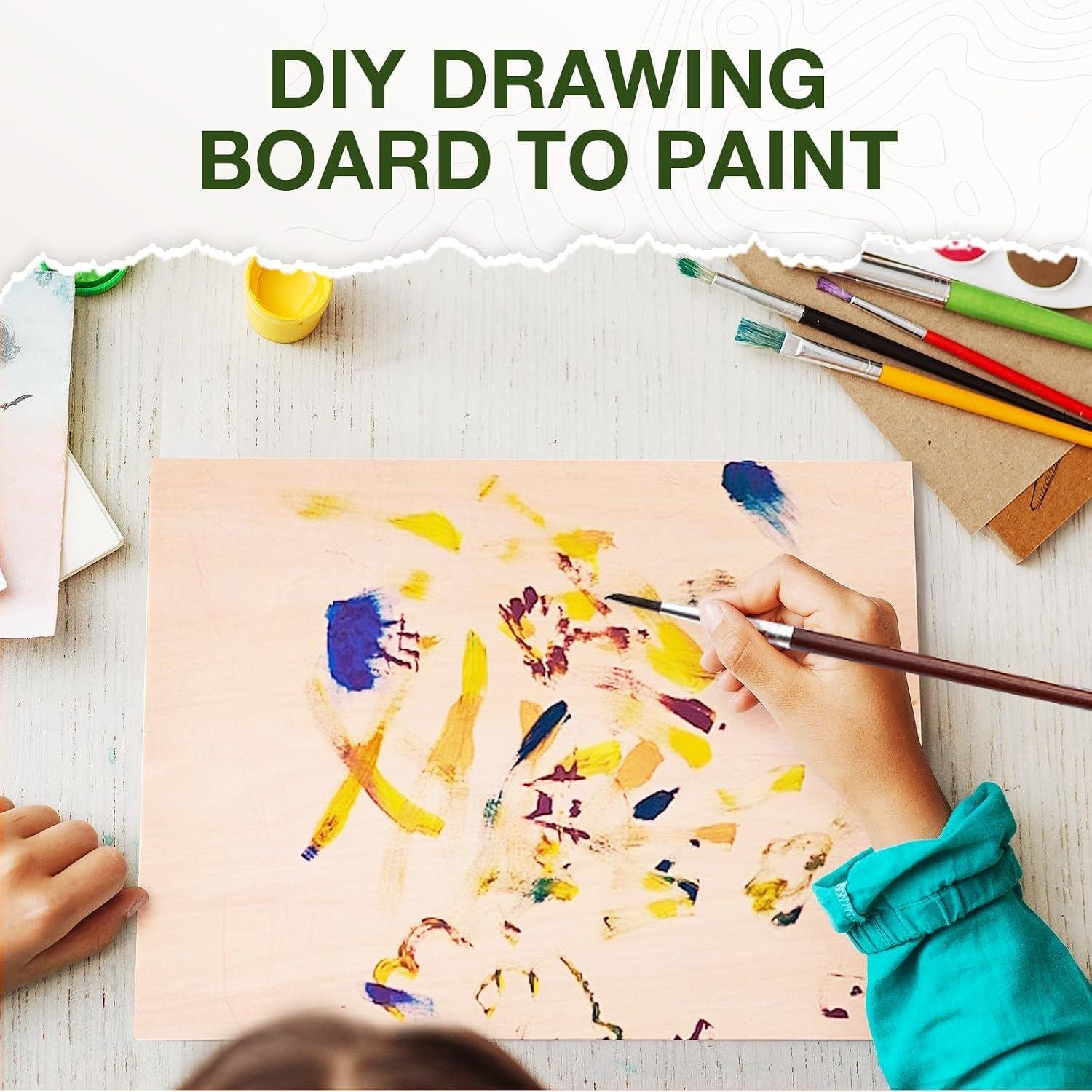
Tool Summary: The Rowood 30 Pack Basswood Sheets deliver 1/8″ (3mm) unfinished basswood panels designed for laser cutting, engraving, wood burning, and light hand-tool work. The surface is generally reported as smooth, sturdy, and flat, and customer feedback frequently praises the consistent quality for clean laser results. The main drawback is size inconsistency-some buyers note sheets may not match the advertised dimensions, so measuring before cutting critical layouts is smart.
Best For: Ideal for hobby woodworkers with small to medium projects, Cricut/laser users, model builders, ornament makers, and beginners practicing scroll-saw patterns, pyrography, and paint finishes.
Consider Alternatives If: You need guaranteed true-to-size panels for production templates, or you primarily build thicker hardwood projects where 3mm stock is too light.
Final Assessment: Rowood offers reliable basswood performance for craft and laser work, with strong quality feedback, but dimension tolerance can affect precision jobs.
Want to see current pricing and customer photos? View on Amazon & Read More Reviews →