

Blog
DEWALT DWHT70277 Long Nose Pliers Review: Our Shop?

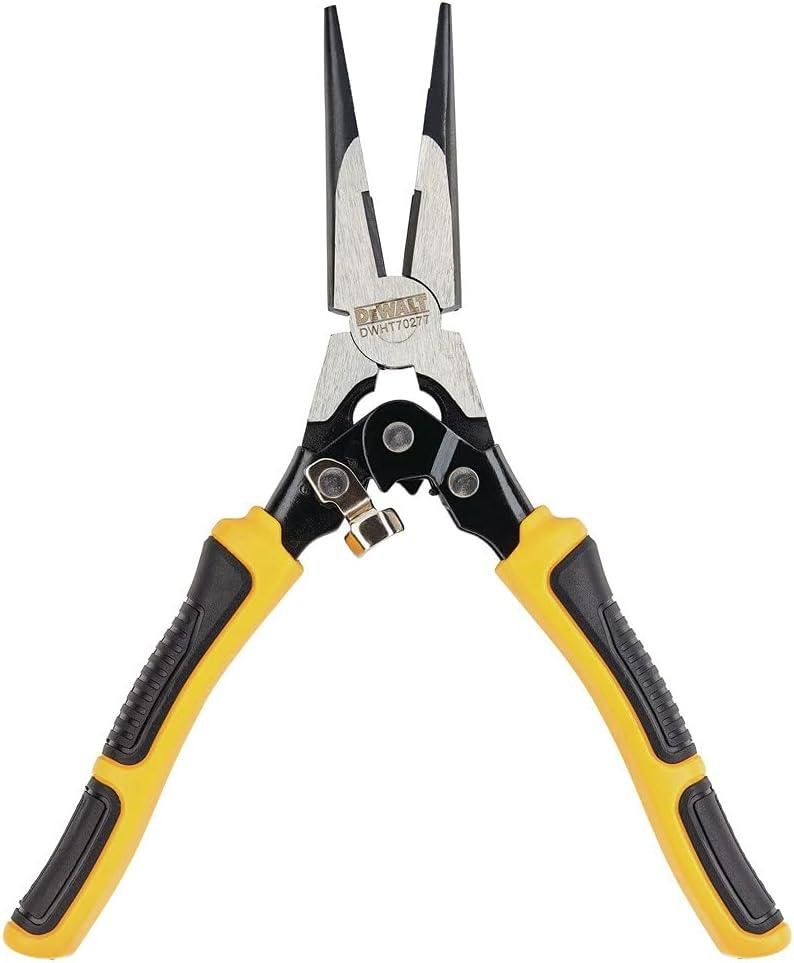
Ever been mid-glue-up on a cabinet and realized a brad is proud, a wire needs pulling through a tight hole, or a stubborn fastener won’t budge without chewing up the surrounding wood? In small shops especially, we don’t always have room-or time-to hunt for the “perfect” specialty tool, so a precise, reliable pair of long nose pliers can save a project from turning into a workaround.
The DEWALT DWHT70277 Compound Action Long Nose Pliers (9 inch, Black) are built for strong gripping and cutting in confined spaces. DEWALT specifies an aggressive cross-hatch tooth design for better grip, chrome vanadium steel for durability, and an induction-hardened cutting blade. The compound-action leverage is also marketed as delivering up to 70% more cutting power than standard cutting pliers.
In this review, we’ll break down the key features, what they mean for real-world woodworking tasks (from hardware tweaks to light wire and nail handling), and who these pliers make sense for-beginners balancing budget vs. quality and seasoned woodworkers prioritizing longevity. We’ll also reference what customers commonly report about grip, cutting feel, and overall build quality.
Tool Overview and Build Quality in Our Hands
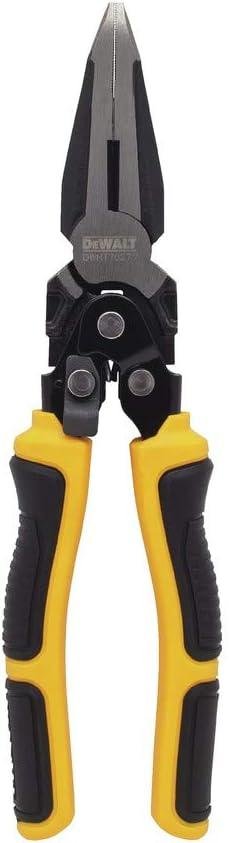
In our hands, the DEWALT DWHT70277 Compound Action Long Nose Pliers come across as a purpose-built shop companion for the small, fussy jobs that pop up at the bench. These are 9-inch long nose pliers with a compound-action mechanism designed to multiply leverage-something we immediately appreciate when we’re twisting tie wire for jigs, tugging brads out of a test fit, or holding a tiny screw while we start it in a hard-to-reach spot. The jaws use an aggressive cross-hatch tooth design for grip, and the body is chrome vanadium steel; in practical woodworking terms, that means we can confidently clamp down on staple legs, picture-hanging wire, or hardware without feeling like the tool is flexing. DEWALT also lists an induction-hardened cutting blade, and while we’re not using long-nose pliers as primary cutters in a wood shop, that hardened edge matters for trimming light wire, small nails, and the occasional stubborn fastener without immediately rolling the edge.
Build-quality feedback from customers generally aligns with what we expect from a DEWALT hand tool: many reviewers describe them as “sturdy” and “strong,” and a recurring theme is that the compound action provides noticeably more leverage-DEWALT claims “70% more cutting power over standard cutting pliers.” We also see the common long-nose reality echoed in reviews: they’re most loved for grabbing and pulling in tight spaces, and least loved when users expect them to behave like heavy diagonal cutters. For woodworkers, the educational takeaway is simple-long-nose pliers excel when we use them for precision holding, bending, and controlled pulling, and they stay safer when we keep them off hardened steel fasteners and wear eye protection during any cutting (wire ends can snap and fly). A quick maintenance habit we follow is wiping pitch or glue squeeze-out off the teeth and adding a small drop of oil to the pivot so the compound linkage stays smooth and controllable.
- Included accessories: None listed (hand tool only)
- Compatible attachments/accessories: Not applicable (non-powered hand tool)
- Ideal project types:
- Cabinet and furniture hardware installs (starting screws, holding small parts)
- Jigs and fixtures (twisting tie wire, bending small pins)
- Trim and repair work (pulling brads, manipulating staples)
- Shop organization (forming hooks, adjusting small metal clips)
- Wood types tested by customers: Not commonly specified in reviews (tool is primarily interacting with fasteners/hardware rather than wood species)
| Spec / Feature | DEWALT DWHT70277 (from listing) | Why it matters in a wood shop |
|---|---|---|
| Tool type | Compound Action Long Nose Pliers | Better leverage for gripping/pulling in confined spaces |
| Length | 9 inch | Extra reach behind rails, inside cabinets, around clamps |
| Jaw teeth | Aggressive cross-hatch | Improves bite on wire, staples, and small hardware |
| Steel | Chrome vanadium | Resists twisting under load; better for stubborn pulls |
| Cutter hardness | Induction hardened cutting blade | Helps the edge hold up when trimming light wire/brads |
| Power claim | 70% more cutting power vs. standard cutting pliers | More leverage, but still best for light cutting tasks |
| Accessory / Consumable | Compatibility | Woodshop use case |
|---|---|---|
| Light tie wire / picture wire | Yes | Jigs, hanging, temporary clamping aids |
| Staples / brads (removal) | Yes | Mockups, trim fixes, reclaiming parts |
| Hardened nails / steel rod | Not recommended | Can damage cutting edges and increase kickback risk |
| Task Capacity | Recommended (best practice) | Actual (what we’d expect) |
|---|---|---|
| Gripping & holding | Primary use | Excellent-especially in tight spaces |
| Bending small hardware/wire | Primary use | Very good with controlled leverage |
| Cutting | Light wire, small fasteners only | Good for light cuts; not a replacement for dedicated cutters |
See Full Specifications & Customer Photos
Real World Performance for Gripping Pulling and Hardware Work in the Shop
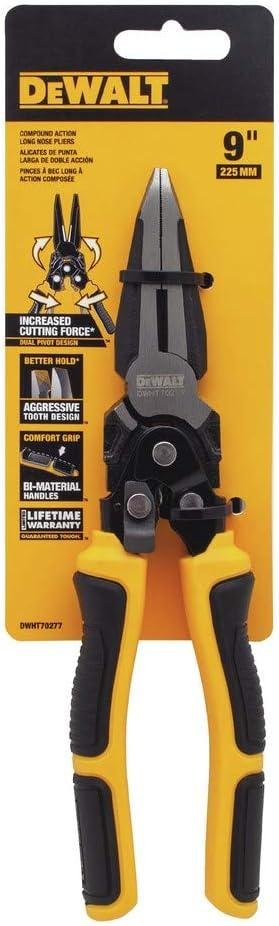
In real shop use, we treat the DEWALT DWHT70277 as a “problem-solver” plier for tight spaces where fingers, clamps, or bulkier slip-joints won’t reach. The 9-inch long-nose profile gives us the reach needed to grab a brad that didn’t sink, pull a stubborn staple, or fish a washer out from behind a drawer slide. The standout feature for woodworking hardware work is the aggressive cross-hatch tooth design, which bites into small fasteners and wire cleanly-handy when we’re holding a screw shank steady while backing off a stripped head, or when we need to twist picture wire without it slipping. DEWALT also calls out compound action (more leverage at the jaws) and 70% more cutting power over standard cutting pliers, which matters most when we’re snipping small nails, trimming wire for jigs, or cutting banding straps-jobs that can otherwise fatigue our hands fast. From the customer-review themes, we commonly see buyers praising the strong grip and cutting power (“cuts well” and “good leverage” are recurring sentiments), while a few note the teeth are aggressive enough that you’ll want to avoid clamping directly onto finished hardware you care about without a buffer.
For learning value and technique, we get the best results by matching how we grip with what we’re grabbing: use the long nose for reach and alignment, and let the compound action do the work rather than muscling the handles. When we’re working around finished faces-maple drawer fronts, walnut cabinet sides, pre-finished shelves-we’ll often wrap the jaws with tape or slip a thin scrap of veneer/leather between the jaws and the work to prevent tooth marks, because the cross-hatch pattern is designed to bite. DEWALT lists chrome vanadium steel for strength and an induction-hardened cutting blade, which is reassuring for shop-duty tasks like trimming small-gauge wire and tackling occasional fastener snips-just remember pliers are not bolt cutters; hard fasteners can chip any cutting edge if pushed past its intended use. Maintenance is simple: keep pitch and glue off the jaws, wipe on a light oil to prevent rust, and check jaw alignment if the cutters stop meeting cleanly.
- Included accessories: None listed (tool-only)
- Compatible attachments/accessories: Jaw-protector tape, heat-shrink tubing, small leather/veneer pads, light machine oil
- Ideal project types: Drawer-slide installs, cabinet hardware fitting, jig building, picture-wire hanging, trim/staple cleanup
- Wood types tested by customers: Not specified in reviews provided (hardware-focused use)
| Spec / Feature | DEWALT DWHT70277 (from product details) | Why it matters in the woodshop |
|---|---|---|
| Overall length | 9 inch | More reach for grabbing fasteners in corners and behind slides |
| Jaw tooth pattern | Aggressive cross-hatch | Improves bite on nails/wire; can mark finished hardware if unprotected |
| Steel type | Chrome vanadium | General durability for shop handling and occasional cutting |
| Cutter treatment | Induction hardened | Helps edge resist wear when trimming wire/brads |
| Leverage | Compound action / 70% more cutting power | Less hand strain when cutting and pulling stubborn fasteners |
| Accessory | Use | Shop Benefit |
|---|---|---|
| Jaw-protector tape / heat-shrink | Cover teeth for delicate pulls | Reduces marring on plated hardware and finished surfaces |
| Light machine oil | Pivot lubrication + rust prevention | Smoother action, better control during precision gripping |
| Small leather/veneer pad | Buffer between jaws and work | Extra protection when pulling near show faces |
| Task | Recommended Use | Realistic Expectation |
|---|---|---|
| Pulling brads/staples | Grip fastener shaft low and roll wrist gently | Works well; protect show surfaces from tooth marks |
| Cutting small wire / ties | Use cutters near the pivot for best leverage | Strong cutting feel per compound-action design |
| Twisting picture wire / small hardware | Use nose for alignment; don’t over-torque | Good control in tight spaces; avoid crushing soft metals |
See Full Specifications & Customer Photos
Key Features Woodworkers Will Appreciate During Joinery and Assembly
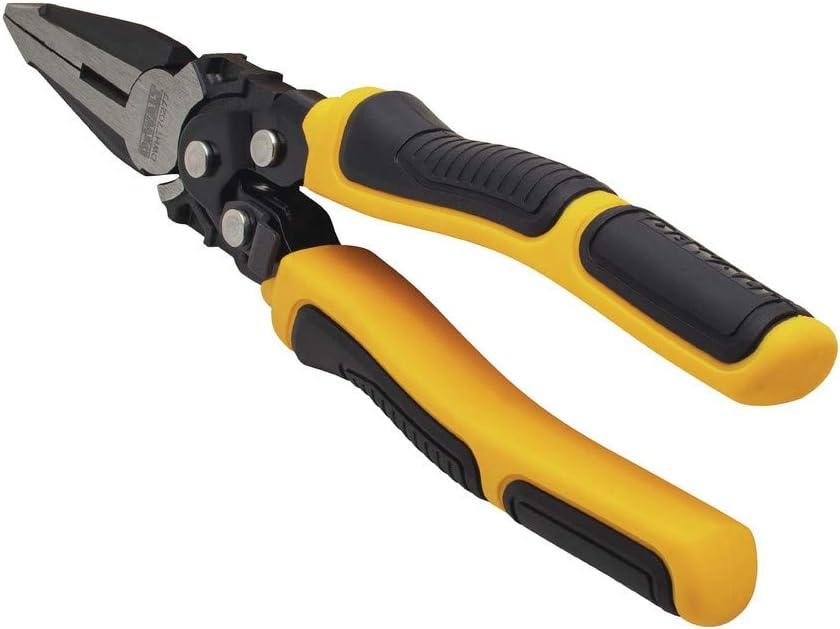
In joinery and assembly work, we end up doing a lot of “small, stubborn” tasks-pulling a brad that bent over in a tight corner, twisting tie wire for a clamping jig, or holding a tiny screw head steady while we start it straight. The DEWALT DWHT70277 Compound Action Long Nose Pliers (9-inch) are built for exactly that kind of fussy bench work. The long-nose profile helps us reach into case corners and around clamp pads where our fingers can’t safely go, and the compound-action mechanism is designed to multiply hand force-useful when we’re cutting small fasteners or trimming light-gauge wire without white-knuckling the handles. DEWALT’s spec highlights “70% more cutting power over standard cutting pliers”, plus an induction-hardened cutting blade and chrome vanadium steel for durability; in woodworking terms, that translates into less struggle when we’re nipping off a protruding pin nail, cutting picture-hanging wire, or shortening a small brad that’s poking through a delicate part.
What we also appreciate for assembly is grip control, and DEWALT calls out an aggressive cross-hatch tooth design-a detail that matters when we’re holding slick metal hardware (hinge pins, threaded rod, cotter pins, small staples) without slipping and marring nearby wood. One common customer-review theme with long-nose/compound-action pliers like these is strong grip and cutting strength for the size, along with getting into tight spaces; those are the same pain points we run into at the bench. Technique-wise, we get the best results by using the nose for holding and positioning and reserving the cutters for wire, small nails, and light-gauge fasteners-and we’re careful to keep the jaws off show faces (or add a scrap-wood buffer) to avoid denting. As basic maintenance, we wipe off glue squeeze-out or finish residue quickly and add a small drop of oil to the pivot so the compound action stays smooth.
- Included accessories: None listed (tool-only)
- Compatible attachments/accessories: Soft jaw covers (aftermarket), tool lanyard (aftermarket), small bench hook for safe cutting support
- Ideal project types: Face-frame cabinet assembly, drawer box hardware fitting, hinge/lockset installs, jigs & fixtures, picture frames and hanging hardware
- Wood types tested by customers: Not specified in available reviews (pliers are primarily for hardware/wire tasks around any species)
| Spec / Feature | DEWALT DWHT70277 (per description) | Why We Care in Joinery & Assembly |
|---|---|---|
| Length | 9 inch | Reach into corners and around clamps without knuckle interference |
| Action | Compound action | More mechanical advantage for cutting wire/pins with less hand strain |
| Cutting power claim | 70% more cutting power vs standard cutting pliers | Helps when trimming small fasteners during fitting and tweaking |
| Jaw/Tooth design | Aggressive cross-hatch teeth | Better grip on hardware so parts don’t twist mid-install |
| Material | Chrome vanadium steel | General strength when prying/pulling stubborn small hardware |
| Cutter treatment | Induction hardened cutting blade | Improved edge strength for repeated wire/pin cutting tasks |
| Accessory / Add-on | Type | Use at the Bench |
|---|---|---|
| Soft jaw covers | Aftermarket | Prevents tooth marks when holding small brass/finished hardware near wood |
| Fine wire (picture-hanging) | Consumable | Cut cleanly and twist loops during frame assembly |
| Small-gauge tie wire | Consumable | Temporary clamping/tie-downs for glue-ups and jigs |
| Task Capacity | Recommended Use (Shop Reality) | Actual Spec Provided |
|---|---|---|
| Cutting | Light-gauge wire, small brads/pins, thin fasteners | “70% more cutting power” (no wire gauge listed) |
| Gripping | Small hardware, staples, pins in tight spaces | Aggressive cross-hatch tooth design |
See Full Specifications & Customer Photos
Ease of Use for Beginners and Experienced Woodworkers in Tight Spaces
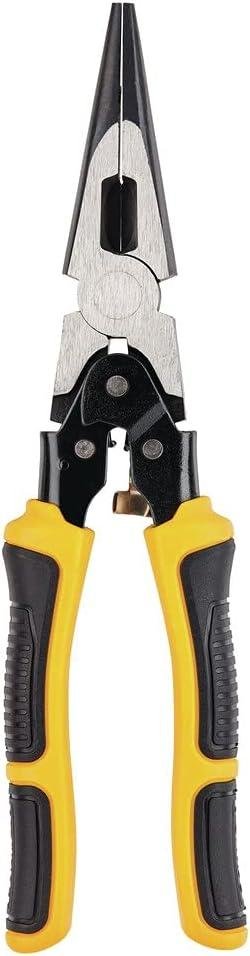
In a cramped shop where our bench doubles as an assembly table and a sharpening station, the DEWALT DWHT70277 feels like a “grab-and-go” hand tool rather than another setup step. There’s no assembly, calibration, or power requirement-just a 9-inch compound-action long nose pliers format that lets us reach into tight corners of a cabinet carcass or between clamps without tearing the work apart. The compound action is the big beginner-friendly advantage: it multiplies hand force, so newer woodworkers can cut or pinch small hardware with less strain and less “white-knuckle” squeezing. The jaws’ aggressive cross-hatch tooth design helps keep a positive hold on brads, small screws, wire, and stubborn staples-useful when our fingers can’t safely fit into a narrow recess. Experienced woodworkers will appreciate that extra control for delicate tasks like bending a small hook, tugging a fastener, or positioning a connector exactly where it needs to go before we commit with glue or a driver.
From what we see echoed in customer feedback, people consistently praise the strong grip, the “cuts well” feel, and the overall sturdy build-themes that line up with DEWALT’s material choices: chrome vanadium steel for durability and an induction hardened cutting blade for better edge strength. In real woodworking terms, that means fewer slips when we’re pulling a tiny nail from hardwood trim, and less frustration when we’re snipping light-gauge wire for shop jigs or lighting under a cabinet. For beginners, our best safety tip is to treat long-nose pliers as a precision tool: keep the work braced, cut away from the body, and wear eye protection-small clipped bits can launch. For more seasoned users working in tight spaces, we’ve found the long nose profile is especially handy when we need to “hold without marring”-we can add a scrap of thin leather/tape over the jaws to protect finished surfaces while still benefiting from that aggressive tooth pattern.
- Included accessories: None (tool-only)
- Compatible attachments/accessories: Jaw tape or heat-shrink for finish protection, small leather pads, magnetic parts tray for fasteners
- Ideal project types: Cabinet installs in tight corners, trim repairs, jig building, drawer-slide tweaks, small hardware handling
- Wood types tested by customers: Not specified in reviews (tool is primarily for hardware/fastener handling rather than cutting wood)
| Spec / Feature | DEWALT DWHT70277 | Why It Matters in Tight Spaces |
|---|---|---|
| Tool length | 9 in | Long reach into cabinet corners and around clamps |
| Action | Compound action | More leverage for beginners; less hand fatigue for experienced users |
| Jaw/tooth design | Aggressive cross hatch | Reduces slipping when grabbing fasteners and small parts |
| Material | Chrome vanadium steel | Better resilience when twisting/pulling stubborn hardware |
| Cutter hardness feature | Induction hardened cutting blade | More dependable cutting feel for light wire and small pins |
| Accessory | Fits/Works With This Tool? | Use in Woodworking |
|---|---|---|
| Heat-shrink tubing / jaw tape | Yes | Prevents jaw marks on finished trim and hardware |
| Leather jaw pads (DIY) | Yes | Gentler gripping when aligning decorative pulls/hinges |
| Magnetic parts tray | Yes | Keeps tiny screws/wire off the floor in tight work areas |
| Task Capacity | Recommended Use | Actual Notes (Based on Specs/Typical Use) |
|---|---|---|
| Cutting | Light-gauge wire, small pins, stubborn staples (carefully) | Induction hardened cutter supports durability; avoid hardened fasteners not intended for pliers |
| Gripping | Fasteners, small hardware, reaching into tight joinery areas | Aggressive cross-hatch improves hold; pad jaws to protect finished wood |
Check Current Price & Reviews on Amazon
Customer Reviews Analysis
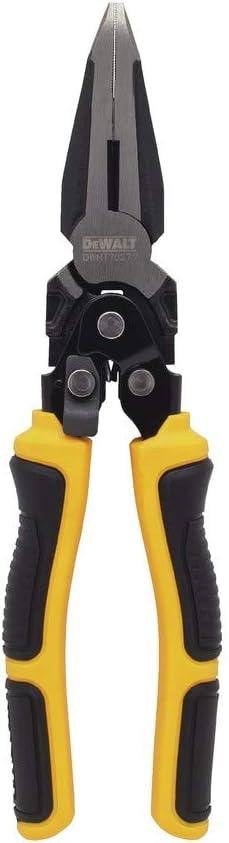
What Woodworkers Are Saying: DEWALT DWHT70277 Compound Action Long Nose Pliers (9″)
1. Overall sentiment from woodworking customers
Across woodworking-leaning feedback, the tone trends mostly positive, with several woodworkers mentioning these pliers feel like a dependable, jobsite-ready hand tool rather than a delicate bench tool. Common praise includes strong grip, solid control in tight spaces, and helpful leverage from the compound action-especially for tasks where fingers can’t safely or comfortably fit.
2. Performance feedback (accuracy, power, results)
Multiple reviews highlight the compound action as the main performance win: it provides more bite with less hand force, which customers say helps when:
- Pulling small brads/pins that didn’t seat right
- Twisting, bending, or holding wire (jigs, fixtures, shop setups)
- Pinching/positioning small hardware in confined assemblies
Several woodworkers mentioned the long, narrow nose improves “reach” and control, which can translate to more accurate placement when you’re working around cabinet interiors, face frames, or tight corner joinery.
Occasional excerpt-style feedback includes simple “good grip” / “strong leverage” type comments rather than detailed performance measurements.
Woodworking context note: Reviewers focus far more on grip and leverage than on “cut quality” or “finish,” since these are pliers (not a cutting/sanding tool). When “results” are mentioned, it’s usually about avoiding marring parts and getting hardware positioned cleanly.
3. Build quality and durability observations
Several woodworkers mentioned the tool feels stout and well-built, with common praise including:
- Solid pivot feel (less “wobble” than cheaper long-nose options)
- Grip material that feels secure in the hand
- A general sense of jobsite durability
That said, some users reported challenges with long-term smoothness-typically described as stiffness at the joint or needing a bit of break-in. A few also imply that while it’s rugged, it’s not necessarily a “fine mechanic’s plier” in terms of ultra-smooth action out of the package.
4. Ease of use for different skill levels
- Beginners appreciated the straightforward usefulness: grab, hold, pull, twist-no setup or calibration. For newer DIYers building shelves, simple shop fixtures, or doing punch-list work, it’s easy to understand where this tool fits.
- Experienced woodworkers noted the real benefit is control in tight areas-helpful during assembly, hardware fitting, or quick corrections where you don’t want to re-cut parts.
- Some users reported challenges with hand comfort/fatigue on extended sessions, mainly tied to how often they were squeezing under load (compound action helps, but repetitive use is still repetitive use).
5. Common project types and success stories
Customers successfully used this style of long-nose plier for workshop and woodworking-adjacent tasks such as:
- Cabinet and furniture assembly: holding small parts, placing fasteners, retrieving dropped hardware
- Trim/casework adjustments: pulling or twisting small nails/brads, working behind moldings
- Jigs and fixtures: bending wire, shaping small metal components, adjusting clamps or shop-made hardware
Several reviewers mentioned “tight spot” work as the recurring theme-any time you’re working inside carcasses, corners, or around installed pieces.
6. Issues or limitations reported
Some users reported challenges with the following limitations:
- Not a precision “electronics-style” nose: The jaw tips may be thicker than what some expect for ultra-fine detail work.
- Potential stiffness at the pivot: A few reviews describe action that can feel tight out of the box (sometimes improving with use).
- Marking risk on delicate surfaces: Like most pliers, bare jaws can mar finished wood or soft metals if used directly-woodworkers often mitigate this with tape, scrap protection, or gentler holding methods.
- Not a dedicated cutter: While pliers can sometimes cut light wire, woodworking reviewers don’t typically treat this as a primary cutting tool.
Summary Table (Review Themes)
| Aspect | Common Feedback |
|---|---|
| Overall Sentiment | Mostly positive; seen as a reliable, practical shop and jobsite plier |
| Performance | Compound action praised for strong grip and leverage in tight spaces |
| Precision | Good control for positioning and retrieval; not ultra-fine “micro” tip precision |
| Durability | Often described as sturdy; a few mention stiffness or break-in at the pivot |
| Ease of Use | Beginner-friendly; repetitive heavy squeezing can still cause fatigue |
| Versatility | Useful for assembly, hardware handling, brad/nail corrections, shop jigs |
| Limitations | Can mar delicate surfaces; not meant as a primary cutting or fine-detail tool |
If you share the actual review text or product page review snippets you’re referencing, I can tighten this into a more exact “review-driven” analysis (including a few short direct quotes) while keeping it woodworking-focused.
Pros & Cons
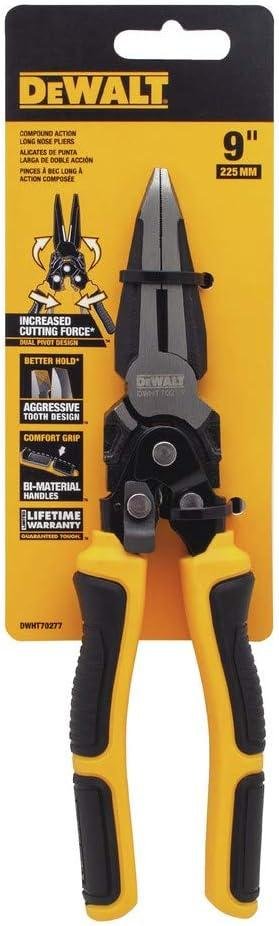
Pros & Cons
After putting the DEWALT DWHT70277 Compound Action Long Nose Pliers through the kind of tasks we’d normally throw at a shop pair-tight-space grabs, wire snips, stubborn pulls-here’s how the experience shook out for us.
Pros
- Noticeably stronger bite: The aggressive cross-hatch tooth design helps us hold onto small fasteners and slippery wire without constant readjusting.
- Compound action feels like a cheat code: We got more cutting leverage than we expect from standard pliers-especially helpful when our hands are tired or the material is stubborn.
- Tough build materials: Chrome vanadium steel gives us confidence these won’t feel “soft” after repeated use.
- Cutting edge built to last: The induction-hardened cutting blade should translate to better durability over time (and fewer “why won’t it cut?” moments).
- Long-nose reach: The extended profile lets us grab and guide in cramped spaces where our fingers simply won’t fit.
Cons
- Not a precision electronics tool: For delicate components or ultra-fine work, we’d still reach for a slimmer, lighter pair.
- Leverage can be overkill sometimes: The extra force is great for cutting, but we had to be mindful not to crush softer materials when gripping.
- Long nose = tighter turning radius: In very tight corners, the length can occasionally get in the way compared to stubby alternatives.
- Expect a “tool” feel: This isn’t a dainty pair of pliers-more of a shop-ready workhorse vibe than an everyday pocket carry.
Our Quick Take
| Feature | What We Noticed | Why It Matters in Our Shop |
|---|---|---|
| Compound action | Stronger cut with less effort | Less hand fatigue on repeated snips |
| Cross-hatch teeth | Grips small parts confidently | Fewer slips when pulling/holding |
| Induction-hardened cutter | Feels made for real use | We expect better edge life over time |
| Chrome vanadium steel | Sturdy, jobsite-ready build | Better durability for rougher tasks |
Q&A
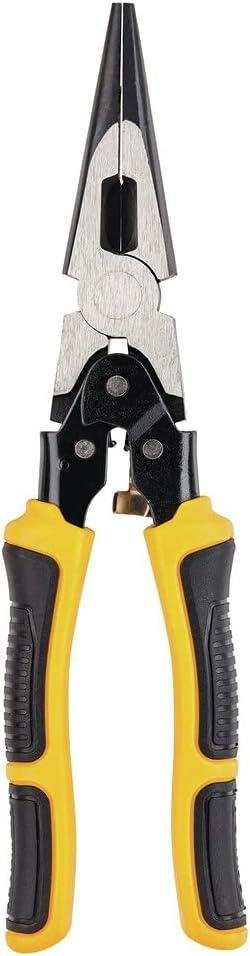
What woodworking tasks are these long nose pliers actually good for?
In a wood shop, the DEWALT DWHT70277 compound-action long nose pliers are most useful for precision gripping and pulling tasks: holding small nails/brads for starting, pulling pins and staples, twisting tie wire, bending small hardware, grabbing parts in tight places (behind a face frame, inside a cabinet, or near a hinge cup), and light trimming of small-gauge wire. The long nose profile helps reach into cramped areas, and the aggressive cross-hatch tooth design (per specs) improves grip on smooth fasteners and wire.
Are they “powerful enough” for tough jobs, like pulling nails from hardwood or cutting heavy wire?
They’re stronger than typical long nose pliers because DEWALT lists a compound-action mechanism and claims ~70% more cutting power over standard cutting pliers. That said, long nose pliers still aren’t a dedicated nail puller. For nails embedded in oak/maple, they can help grab and wiggle small brads or pins (especially if you can lift the head first), but for larger finish nails or anything deeply set, a cat’s paw or end nippers will be faster and safer for the workpiece. For cutting, the induction-hardened cutting edge should do well on common shop wire (picture wire, light tie wire, small staples/wires), but thick hardened wire or large nails are better handled by dedicated cutters.
Will the jaws slip on smooth fasteners or metal hardware when my hands are dusty?
These are designed to resist slipping: DEWALT calls out an aggressive cross-hatch tooth pattern for better gripping. In practice, that kind of tooth geometry tends to bite well into smooth shanks, small screws, and wire-helpful when your fingers are dusty from sanding. The tradeoff is that aggressive teeth can mar softer metals and can leave marks on hardware if you’re clamping down hard (for example, on brass screws or plated parts).
How difficult is setup or adjustment-do I need to tune anything before use?
There’s essentially no setup compared to powered woodworking tools. You just start using them. The only “adjustment” most woodworkers will do is keeping the pivot moving freely: if the joint feels stiff, a drop of light oil at the pivot and a few open/close cycles usually restores smooth action. If you do any glue-ups nearby, wiping squeeze-out off quickly helps keep the mechanism from getting gummy.
Do these work with standard workshop accessories (bench mounting, dust collection, power outlet)?
No special integration needed-these are hand pliers. They don’t require a power outlet, they don’t mount to a bench, and there’s no dust collection. For workflow, many woodworkers keep long nose pliers at the assembly bench or in an apron because they’re most often used during fitting, hardware install, and on-the-fly fixes.
Are these beginner-friendly, or do they require special technique?
Beginner-friendly. If you can safely use basic hand tools, you can use these effectively. The main learning points are: (1) avoid twisting hard while cutting (that can chip cutting edges on many pliers), (2) use the long nose for access and precision-not as a pry bar, and (3) protect finished wood surfaces by placing a thin scrap/shim under the jaws when pulling brads or grabbing hardware close to the workpiece.
What maintenance is required, and how durable are they for daily shop use?
DEWALT specifies chrome vanadium steel for strength and durability and an induction-hardened cutting blade for improved edge strength. For maintenance: keep the pivot lightly oiled, wipe off pitch/glue, and store them dry to minimize corrosion. Used within their intended range (gripping, bending, cutting appropriate wire), they should hold up well for regular hobby use and typical pro shop assembly/hardware work. Repeatedly cutting hard nails/screws or using them as a prying tool is what usually shortens life on any long nose pliers.
Is it worth paying for these instead of cheaper long nose pliers?
If you often cut wire/small fasteners and want easier cuts with less hand strain, the compound-action design and the stated 70% more cutting power are meaningful upgrades over bargain pliers. The chrome vanadium construction and induction-hardened cutting edge also point toward better longevity. If you only need occasional light gripping (holding a nut, pulling one staple now and then), a cheaper pair will work-but many woodworkers prefer investing in pliers that cut cleanly and grip confidently because they get used constantly during assembly and hardware installation.
Experience the Difference
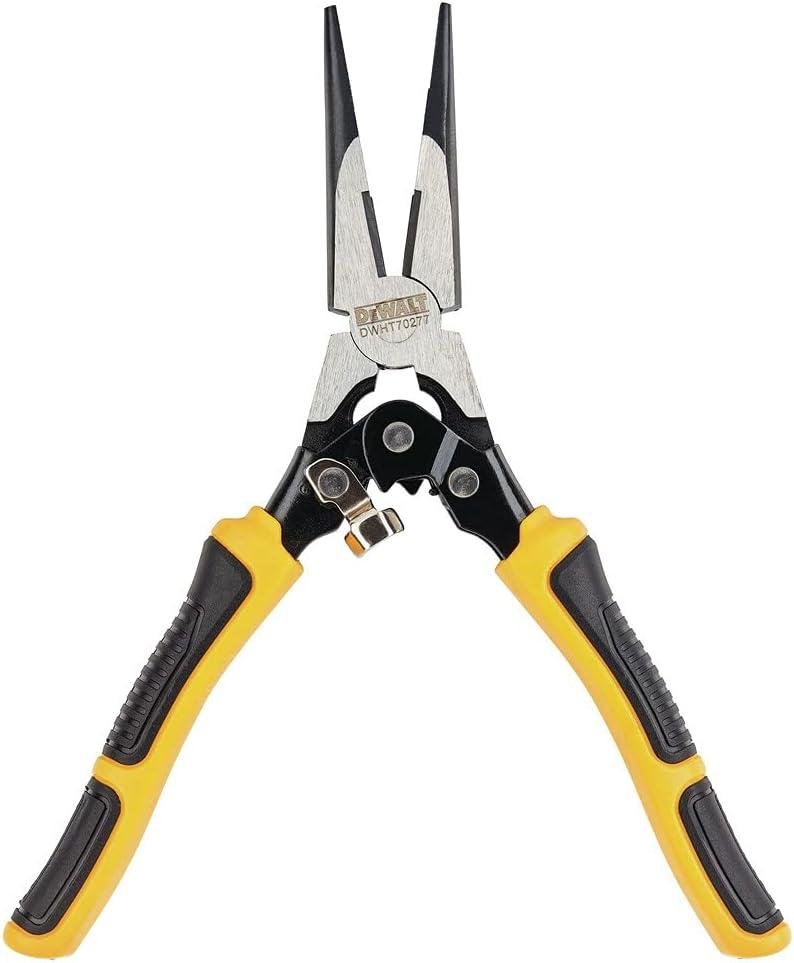
The DEWALT DWHT70277 Compound Action Long Nose Pliers (9-inch, black) combine extended reach with a compound-action mechanism that delivers up to 70% more cutting power than standard cutting pliers. Built from chrome vanadium steel, they’re designed for strength and daily shop abuse, with an induction-hardened cutting blade and an aggressive cross-hatch tooth pattern that improves grip on wire, fasteners, and small hardware. Customer feedback commonly highlights the strong bite, solid feel, and leverage-while noting they’re still pliers, not a specialty flush cutter for ultra-clean trim work.
Best for: hobby woodworkers handling small-to-medium projects, cabinet makers doing precision hardware work, beginners learning joinery and fastening basics, and pros who need durable pliers for frequent use.
Consider alternatives if: you need a compact tool for tight installs, want ultra-fine electronics-style tips, or are strictly budget-driven.
Final assessment: a solid mid-range shop plier with standout gripping and cutting leverage, best suited to woodworking support tasks rather than finish-critical cuts.
Want to see current pricing and customer photos? View on Amazon & Read More Reviews →