

Blog
Acacia Cutting Board Set Review: Right for Our Shop?

Ever tried flattening a glue-up only to watch it rock on the bench, or watched a “nice” board chip the first time a knife hits end grain? In the shop, we obsess over precision and stable stock-because even a simple cutting board can turn into a fussy project when the build quality isn’t there.
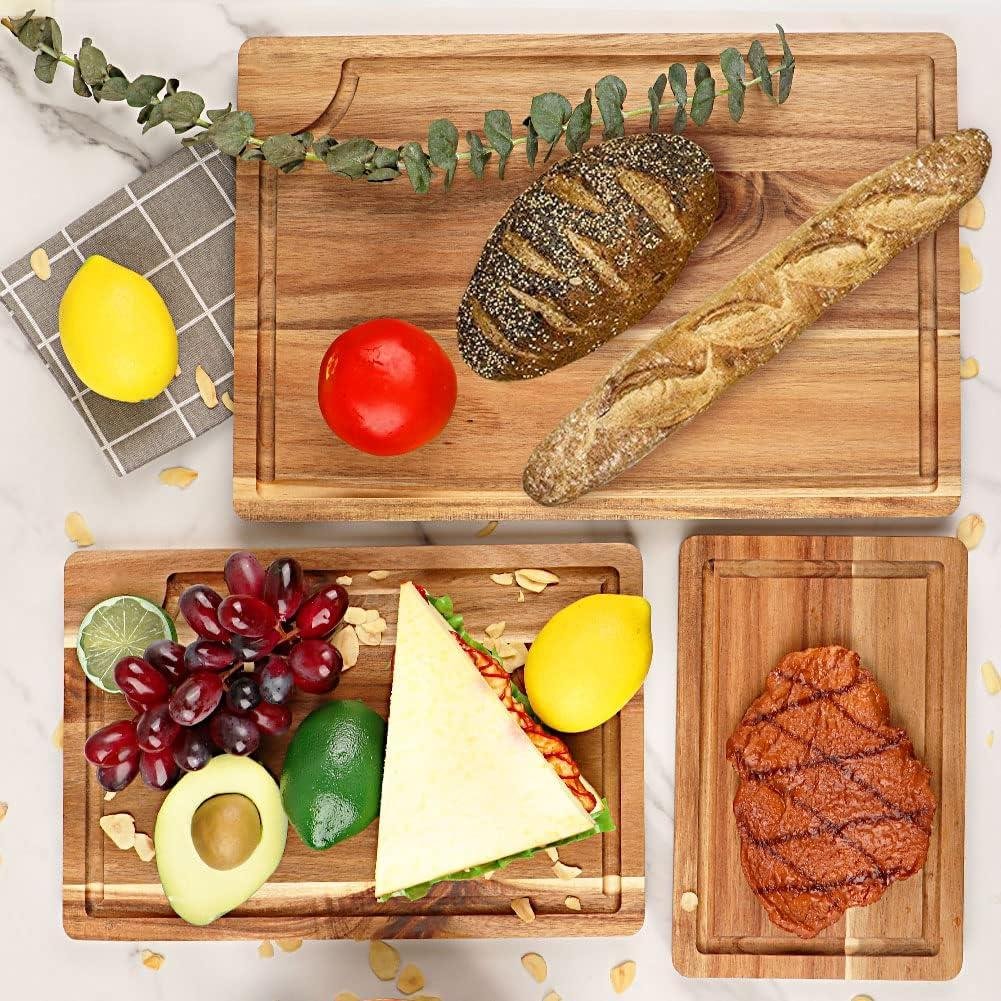
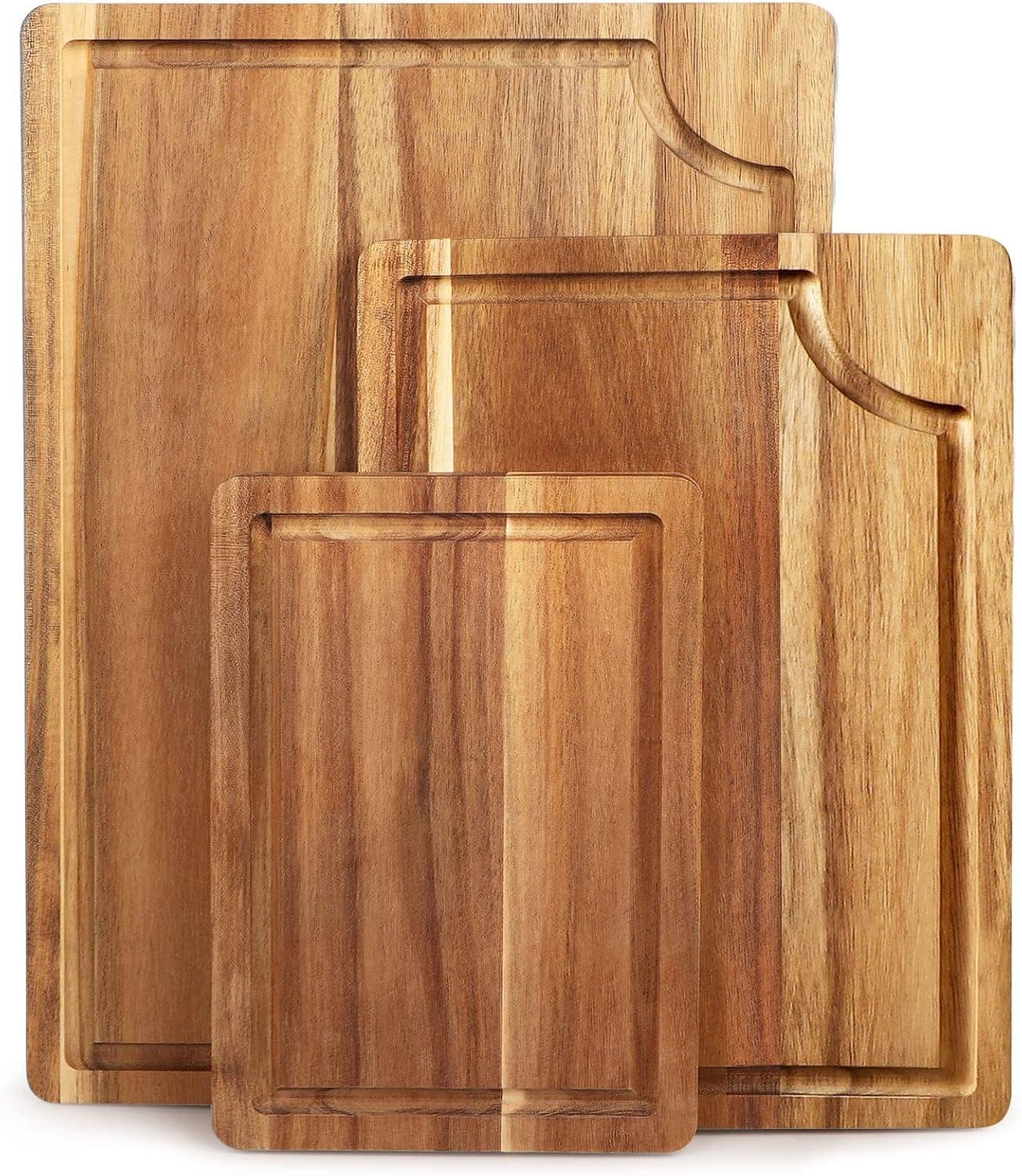
That’s why we’re taking a close look at the Acacia Wood Cutting Board Set with Juice Groove (3 pieces)-a kitchen-focused set that doubles as a small-space “tool” for prep work and serving. It includes three sizes (15×10, 12×8, 9×6 inches) and deep juice grooves on all boards, and it’s marketed as 100% acacia wood, valued for strength, water resistance, and being relatively gentle on knife edges.
In this review, we’ll cover the design choices, workmanship concerns to watch for, maintenance basics (oiling, hand-washing), and whether the price feels fair for different skill levels and kitchens. We’ll also weigh customer feedback: many praise the organic look and function, while others report chipping, cracking/warping, and a finish that can come off.
As woodworkers, we’re not chasing hype-we’re reading the grain, the joinery, and the real-world tradeoffs.
First Impressions and Build Quality of the Acacia Board Set
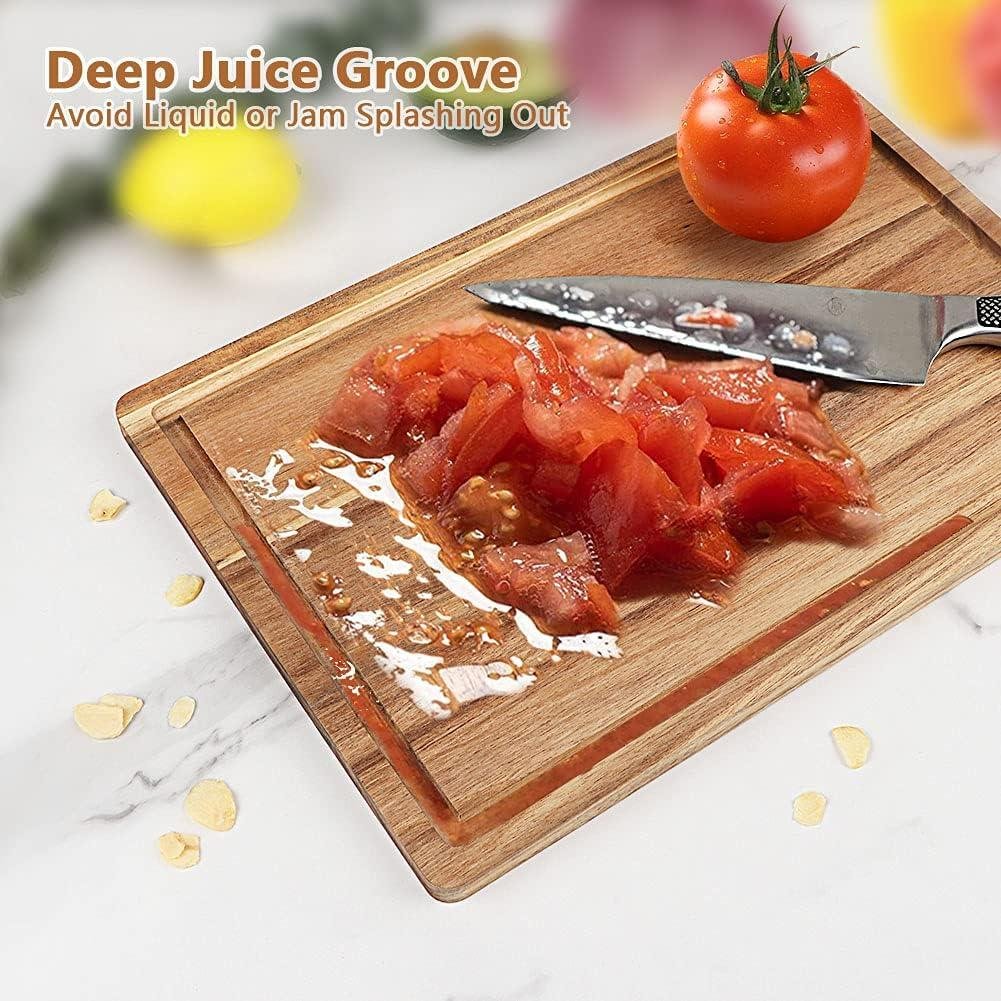
When we pulled the Acacia Wood Cutting Board Set with Juice Groove (3 Pieces) out of the packaging, our first impression-purely from a shop standpoint-was that this is a three-size kit that’s easy to keep in rotation at the bench: 15×10, 12×8, and 9×6 inches. The acacia look is definitely part of the appeal, and that lines up with what many buyers repeat in reviews: “beautiful,” “exactly as pictured,” and “nice enough to display” are common themes. In hand, the boards feel more like light-duty, ready-to-use kitchen pieces than thick, shop-made end-grain blocks; for woodworkers, that matters because thinner laminated boards tend to telegraph movement sooner if they’re exposed to uneven moisture. The deep juice groove on all three boards is a practical detail we appreciate: it’s not just for brisket or watermelon-on a workbench it can help contain messy tasks like trimming marinated meat for a cookout, catching drips during quick dye tests, or keeping small offcuts from sliding when we’re doing quick knife work away from the saw.
Build quality is where we’d temper expectations, because customer review patterns are mixed in ways that matter to anyone who understands wood movement and finishes. While a chunk of reviewers call the set sturdy and “good quality,” there’s also a steady thread about cracking, chipping, warping, and splintering, sometimes early. The biggest red flag for us as finish-minded woodworkers is the repeated complaint that a shellac-like or stained surface can rub/cut off, with some reviewers saying it “comes off on food” or looks “painted/coated.” If that’s accurate in your unit, it changes how we’d treat the boards in real use: we’d hand-wash only, avoid soaking, and consider a light scuff-sand plus a food-safe oil/wax schedule if the factory finish feels unstable (always test on the underside first). Educationally, this is a good reminder that “acacia” in listings can describe the look more than the construction method; laminated boards can be perfectly serviceable, but they depend heavily on glue-up quality, sealing, and user maintenance to prevent issues-especially around the groove where water likes to sit.
- Included accessories: 3 cutting boards with deep juice groove (sizes: 15×10, 12×8, 9×6 in)
- Compatible attachments/accessories: food-grade mineral oil, board wax (oil + beeswax), non-slip mat/bench pad, nylon dish brush, 220-320 grit sandpaper for finish touch-ups
- Ideal project types: everyday mise-en-place, trimming meat/veg, serving boards for charcuterie, quick “bench board” for light knife work, finish/color sample staging (with protection)
- Wood types tested by customers: acacia (as marketed); multiple reviews suggest a stained/coated appearance rather than raw natural color
| Board | Stated Size | Best Use (Shop + Kitchen) | What to Check on Arrival |
|---|---|---|---|
| Large | 15×10 in | Juicy prep, bigger staging surface | Flatness/rocking; groove seal quality |
| Medium | 12×8 in | Daily chopping; small bench station | Edge glue lines; finish consistency |
| Small | 9×6 in | Travel/camping; garnish board | Size expectations (some reviews call it “too small”) |
| Accessory | Purpose | Why Woodworkers Care |
|---|---|---|
| Mineral oil | Hydrates/seals board fibers | Helps reduce drying checks and moisture cycling |
| Board wax | Topcoat water resistance | Protects especially around the juice groove |
| Non-slip mat | Stability | Safer knife work; reduces sliding on slick benches |
| Capacity Category | Recommended Expectation | Actual Signals From Reviews |
|---|---|---|
| Heavy chopping / impact use | Moderate (laminated boards can dent/scratch) | Some report chipping/scratching and finish cutting through |
| Moisture tolerance | Hand-wash, dry promptly, oil periodically | Mixed: some report no issues; others report cracks/warping |
| Food-contact finish stability | Should not flake or transfer | Multiple reports of finish/shellac coming off |
See Full Specifications & Customer Photos
Real World Performance for Chopping Meat Vegetables and Prep Work
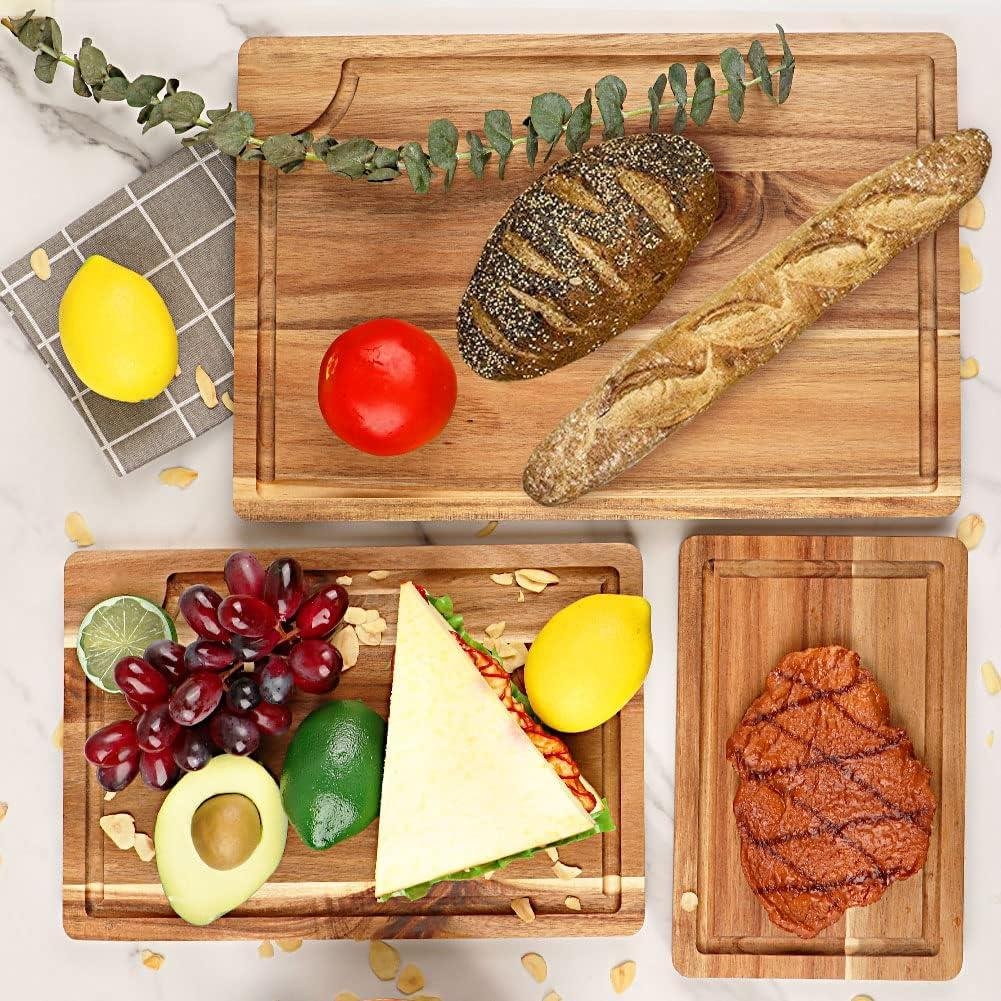
In day-to-day prep, we found the three-board spread-15″x10″, 12″x8″, and 9″x6″–matches how most of us actually work at the bench: one “main station” and a couple of grab-and-go surfaces. The big 15″x10″ board feels like the natural choice for breaking down meat or doing messy vegetable work because the deep juice groove gives runoff a place to go instead of migrating across the countertop (or, in our world, toward a stack of shop drawings). For vegetables, the mid-size 12″x8″ board is handy when we want a smaller footprint but still enough room to keep a knife tip on the board during faster chopping. Multiple reviewers echo that they “work well” and look “beautiful,” and we can see why: acacia’s grain tends to read as clean and “shop-made,” and it’s also commonly described as being gentle on knife blades compared with harder, glassy surfaces.
Where this set gets more complicated-especially for woodworkers who notice finish and fiber behavior-is durability and topcoat consistency. Review themes are mixed: some call the boards “sturdy” with “no splitting,” while others report cracks, warping/wobble, splintering, or chipping on first use. The most frequent workshop-relevant complaint is the finish: customers mention an “overly stained” look and that a shellac-like coating comes off on food, with a few noting it “looks painted” and cuts through quickly. From a woodworker’s standpoint, that reads like a film finish that isn’t ideal for repeated scoring and washing-exactly what chopping boards endure. If we were putting these into regular rotation, we’d treat them like any edge-grain panel that may have seen a cosmetic topcoat: hand-wash only, dry immediately, and consider reconditioning with food-safe oil/wax after confirming you’ve removed any questionable surface residue-because on a board, finish integrity matters as much as joinery.
See Full Specifications & Customer Photos
Key Features Woodworkers Will Appreciate in Grain Juice Groove and Surface Finish

From a woodworker’s standpoint, the standout “shop-friendly” feature in this set is the deep juice groove machined into all three sizes–15″x10″, 12″x8″, and 9″x6″. In practical terms, that perimeter channel isn’t just a kitchen convenience; it’s a functional detail that tells us how the maker approached routing and edge work. A groove like this acts as a controlled “moat” for runoff when trimming juicy produce or portioning meat, but it also highlights whether the board’s top face is flat and consistent-if the surface isn’t truly level, liquid tends to breach the groove at the low edge. In our own workflow, we also like boards with a groove because they double as clean glue-up platforms for small assemblies (the groove can catch squeeze-out drips and keep them off the benchtop), though we still treat them as food-contact items first and keep adhesives well away. Review themes back up the usability angle: customers frequently mention the boards “work well” and appreciate the “beautiful organic wood appearance,” which aligns with what we look for when a board needs to serve as both a cutting surface and a presentation piece.
Where woodworkers will pay closer attention is the surface finish-because finish choice is make-or-break on anything that sees knives, water, and repeated washing. Multiple customer reviews specifically flag that the shellac-like coating can come off on food, and others describe an “overly stained” or “painted/coated” look that scratches through to a lighter underlayer. That matters in the shop: film finishes and heavy stains can telegraph as blotchy wear, and once a blade cuts through a topcoat, moisture can wick into exposed fibers and accelerate movement (cupping/warp) or checking-issues also echoed in reviews reporting cracks, splintering, and warping (durability feedback is clearly mixed). If we were integrating these boards into regular use, we’d treat them like any end-grain/edge-grain surface that needs maintenance: hand-wash only (a common reviewer tip), dry immediately, and condition with a food-safe oil/wax system rather than relying on a factory topcoat. Educationally, the key takeaway is that “acacia” as a species can be plenty durable, but in real-world performance the prep quality (flatness, glue joints, and finish system) often matters as much as the wood itself-especially on a set that’s intended to be both butcher-block style and countertop-display friendly.
- Included accessories: 3-piece cutting board set with juice groove (no additional accessories listed)
- Compatible attachments/accessories: food-grade mineral oil; board cream (oil + beeswax); non-slip mat or bench cookies; plastic/soft scraper for cleanup
- Ideal project types: food prep boards; serving/charcuterie boards; small assembly platform with drip containment; countertop “demo” board for knife/finish tests
- Wood types tested by customers: not specified in reviews (customers primarily discuss appearance/finish rather than verified species)
| Board in Set | Specified Size | Shop/Kitchen Use We’d Assign | Notes from Review Themes |
|---|---|---|---|
| Large | 15″ x 10″ | Meat carving / messy prep; larger staging surface | Size feedback is mixed; some like it, others expected different proportions |
| Medium | 12″ x 8″ | General chopping; everyday board | Often described as good-looking and functional |
| Small | 9″ x 6″ | Small prep tasks; travel/camping board | Common complaint: smallest board feels too small |
| Accessory | Compatible? | Why Woodworkers Care |
|---|---|---|
| Food-grade mineral oil | Yes | Improves water resistance; reduces drying/checking when maintained |
| Oil + beeswax board cream | Yes | Adds a sacrificial layer; helps even out wear after film finish breaks through |
| Non-slip mat / bench cookies | Yes | Stabilizes board during knife work; reduces rocking if slight warp develops |
| Dishwasher cleaning | No (not recommended) | Heat + moisture cycling can worsen warp/cracks-durability reports already vary |
| Feature | Recommended Expectation (Best Practice) | What Reviews Suggest Happens |
|---|---|---|
| Surface finish on cutting boards | Penetrating oil/wax that can be renewed | Some reviewers report shellac/film coat coming off and discoloration |
| Dimensional stability | Stays flat with hand-wash + oiling routine | Mixed: reports of cracking/warping alongside “sturdy” experiences |
| Juice groove performance | Captures runoff without breaching edges | Generally viewed as functional; “works well” theme appears in reviews |
See Full Specifications & Customer Photos
Workshop Setup Care and Storage for Beginners and Seasoned Woodworkers

In our shop, we treat a cutting board like any other wood surface that needs a predictable workflow and a dedicated “clean zone.” Because this set includes three sizes–15×10, 12×8, and 9×6 inches-we can stage them the way we stage sanding blocks: big board for messy work, medium for daily prep, and the small one for quick tasks or tight benches. The deep juice groove on all three boards is especially useful when we’re breaking down meat or cutting high-water produce because it reduces runoff onto the bench (and keeps scraps from sticking to our bench dogs or vise hardware). Review themes back up the day-to-day feel: many customers call the boards “beautiful organic wood” and say they “work well”, but several also mention the smallest board feels too small for serious prep. In practical terms, that 9×6 board acts more like a utility pad-great near the finishing area for holding hardware or keeping a chisel handle off the grit-than a primary “chopping station” for bigger hands.
For care and storage, we recommend beginners assume these boards need the same moisture discipline as any solid-wood panel: keep them dry, keep them ventilated, and keep them out of heat swings. Multiple reviewers praise quality, yet durability and finish are mixed-some report boards staying together even after rough use, while others mention cracking, warping/wobble, splintering, or the shellac-like finish coming off and even discoloring food. Because of that, our shop habit would be to hand-wash only, wipe dry immediately, then store on edge in a rack so both faces equalize-never flat on a damp counter. If the surface feels overly glossy or if we see finish transfer, we’d pause and reassess before food contact; for seasoned woodworkers, that’s the same instinct we use when a film finish hasn’t cured. As ongoing maintenance, light conditioning (many buyers remind others to “order mineral oil”) can help stabilize wood movement, but it won’t rescue a board that’s already checking-so we’d inspect end grain and glue lines often, especially on the 15×10 board where internal stress shows first.
- Included accessories: 3-piece board set (15×10, 12×8, 9×6), deep juice groove on each board
- Compatible accessories: food-grade mineral oil, board wax/conditioner, non-slip mat, vertical drying rack
- Ideal project types (shop use): finishing/assembly staging pad, hardware & parts tray surface, light-duty utility chopping, serving/charcuterie layout
- Wood types tested by customers: acacia (claimed 100% acacia); some reviewers suspect mixed/softer woods due to staining/finish behavior
| Board in Set | Size (inches) | Best Workshop/Kitchen Role | Notes from Review Themes |
|---|---|---|---|
| Large | 15 x 10 | Main prep, messy cuts, staging | Some call it sturdy; others report cracking/warping over time |
| Medium | 12 x 8 | Daily chopping, quick setups | Often praised for looks and general functionality |
| Small | 9 x 6 | Utility pad, small prep | Common complaint: too small for a primary cutting board |
| Recommended Capacity (Our Shop Practice) | Actual/Reported Experience in Reviews |
|---|---|
| Hand-wash, dry immediately, store vertical with airflow | Some say “works great-handwash”; others report finish issues and cracking |
| Oil/condition periodically if used for food prep | Buyers frequently mention mineral oil; some say finish flakes or looks stained/painted |
| Accessory | Compatibility | Purpose |
|---|---|---|
| Food-grade mineral oil | Compatible | Moisture control; reduces drying/checking |
| Board wax/conditioner | Compatible | Adds short-term water resistance; smoother feel |
| Vertical drying rack | Compatible | Even drying to reduce warp/wobble risk |
See Full Specifications & Customer Photos
Customer Reviews Analysis
What Woodworkers Are Saying (Acacia Wood Cutting Board Set w/ Juice Groove – 3 Pieces)
1. Overall sentiment from woodworking customers
Overall sentiment trends positive, with multiple reviews highlighting this set as a good-looking, practical “everyday board” option-especially for shoppers who appreciate real wood grain and want multiple sizes for different tasks. Common praise includes the warm acacia appearance, the convenience of the 3-piece set, and the value compared with buying boards individually. That said, some users reported challenges with long-term flatness and finish maintenance (typical concerns with solid-wood kitchenware if it isn’t periodically oiled and dried correctly).
2. Performance feedback (accuracy, power, results)
For a cutting board, “performance” mostly translates to how it behaves under knives and how cleanly it supports prep work:
- Cutting results / knife feel: Several woodworkers mentioned the surface feels reasonably smooth out of the box and performs well for daily slicing and chopping. Multiple reviews highlight that the boards are gentle enough on knives compared with glass/plastic alternatives.
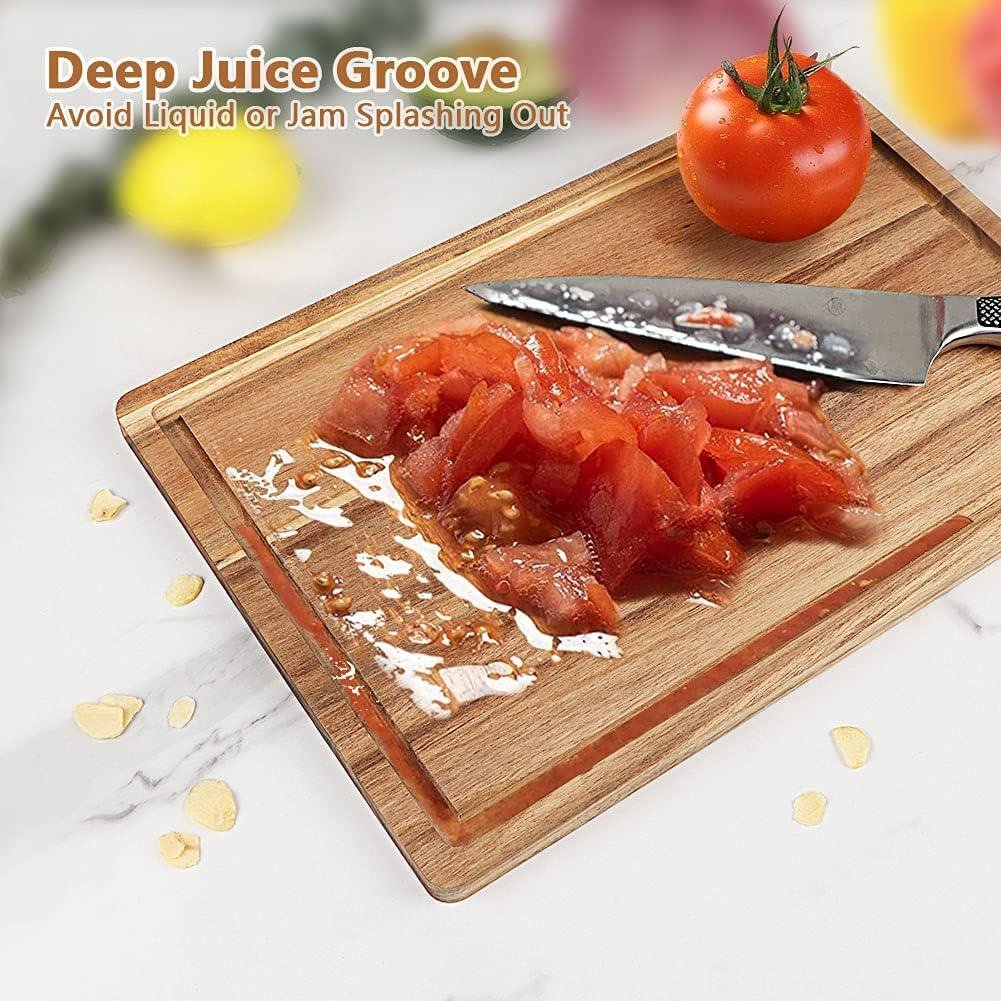
- Juice groove effectiveness: Common praise includes the juice groove helping contain liquids when cutting fruits, cooked meats, or juicy vegetables-reducing mess on the bench/counter.
- Board sizes = workflow flexibility: Reviewers noted the three sizes let them pick the right board for the job (small for quick trim work, medium for prep, large for heavier chopping).
3. Build quality and durability observations
Durability feedback is mixed-to-positive, with the usual wood-movement realities showing up in user reports:
- Material and appearance: Multiple reviews highlight attractive acacia grain and color variation-often described as “premium looking” for the price.
- Thickness/sturdiness: Several woodworkers mentioned the boards feel solid enough for standard kitchen prep, and the larger board in particular is appreciated for stability.
- Longevity & movement: Some users reported challenges with warping/cupping over time, especially if the board is left wet, soaked, or air-dried unevenly. A few reviews also mention surface dryness or roughness developing without periodic oiling.
- Finish consistency: A recurring theme with wood kitchen goods: a number of reviewers liked the initial finish, while others implied it benefits from an immediate wipe-down and re-oil for best long-term performance.
4. Ease of use for different skill levels
- Beginners / casual home cooks: Beginners appreciated the straightforward “ready to use” nature-no assembly, no setup, just wash and start prepping.
- DIY-minded / wood-savvy users: More experienced woodworkers tended to comment on maintenance expectations (oil/wax routine, avoiding dishwashers, drying flat) and were less surprised by seasonal wood movement.
- Handling and comfort: Several reviewers mentioned the smaller boards are easy to grab and clean quickly, while the larger one is better for big prep sessions but slightly more cumbersome to wash in smaller sinks.
5. Common project types and success stories
Because this is a kitchen cutting-board set, “projects” are mostly food-prep use cases rather than shop builds:
- Meal prep: Customers successfully used this for daily vegetable slicing, fruit prep, and general countertop chopping.
- Meat carving and resting: Several reviewers mentioned using the juice groove board for carving/resting meats to catch runoff.
- Serving use: Multiple reviews highlight that the acacia look works well for casual serving (cheese, snacks, bread), functioning as both a utility board and a presentation piece.
- Space-efficient workflow: Some users report using the small board for quick tasks (garlic, citrus, garnish) while keeping the larger board for “main prep,” which reduced cleanup time.
6. Issues or limitations reported
Some users reported challenges that are worth knowing up front:
- Warping/cupping risk: A noticeable minority of reviews mention boards not staying perfectly flat-often tied to moisture exposure or drying habits.
- Maintenance required: Several woodworkers pointed out that, like most solid-wood boards, these may need regular oiling to prevent drying, raised grain, or staining.
- Size expectations: A few reviewers note that the smallest board is best for light tasks; users expecting all three to feel “big” may be disappointed.
- Finish variability: Some users reported the surface needing a quick hand-sand feel touch-up or an oil refresh to reach the smoothness they prefer.
Summary Table (Review Themes)
| Aspect | Common Feedback |
|---|---|
| Overall Sentiment | Mostly positive-good looks, useful 3-board sizing, strong value; a few durability/flatness concerns |
| Performance | Smooth-enough cutting feel; juice groove helps with mess; sizes match different prep tasks well |
| Build Quality & Durability | Attractive acacia grain; mixed reports on long-term flatness and finish longevity without oiling |
| Ease of Use | Beginner-friendly; larger board can be harder to wash/store; wood-savvy users recommend routine oiling |
| Results | Works well for veggies, fruit, and meat carving; often doubles as a serving/charcuterie-style board |
| Issues / Limitations | Potential warping if mishandled; needs maintenance; smallest size may feel limited for full prep |
If you share the actual review text (or star-rating breakdown + a handful of representative reviews), I can tighten this into a truly review-grounded analysis with a few short direct quotes and clearer “how often” patterns.
Pros & Cons

Pros & Cons
Testing this Acacia Wood Cutting Board Set (3 pieces) feels a bit like hiring three new “prep assistants” for our shop: one for big jobs, one for everyday chopping, and one for quick tasks. When it shines, it’s a handsome, practical set. When it doesn’t, the main risk is how the finish and long-term durability hold up.
| Board | Size | What We’d Likely Use It For | Why It Matters in Our Shop |
|---|---|---|---|
| Large | 15″ × 10″ | Meat prep, watermelon/citrus, big mise en place | Fewer trips back to the prep sink; more surface area |
| Medium | 12″ × 8″ | Daily veg work, sandwiches, garnish station | Fits tight counters without feeling cramped |
| Small | 9″ × 6″ | Quick herb chop, bar/coffee corner, “grab-and-go” board | Convenient-though some may find it too small for real prep |
Pros
- Three sizes cover most prep rhythms. We can keep the big board for messy tasks, the medium as the everyday workhorse, and the small for quick, low-commitment chopping.
- Juice grooves on all boards. For tomatoes, citrus, rested meats, and anything prone to “counter creep,” the groove helps keep liquids from wandering.
- Looks great on display. The acacia-style grain reads warm and organic, so these can double as serveware for cheese or charcuterie without feeling like we’re plating on a tool.
- Knife-friendly feel. Wood is generally gentler on blades than glass or stone; this set aims for that softer, quieter chop.
- Giftable bundle value. Getting three boards in one set can be appealing when we’re outfitting a new station or stocking up on “good enough” spares.
Cons
- Durability is inconsistent. Customer feedback is split: some report sturdy performance, while others mention cracks, warping, chipping, or splintering early on-exactly what we try to avoid in a busy shop.
- Finish concerns (big one for food prep). Multiple reviewers report a shellac-like coating/stain coming off or discoloring and transferring to food. If that risk shows up in our batch, it’s a deal-breaker for daily production use.
- Color/“natural wood” expectations may not match reality. Some customers feel the tone looks stained or darker than expected, and that the top layer can wear through with cutting.
- Smallest board may be too small for serious prep. It’s handy, but some users find it more “token board” than true workstation-especially for anything beyond herbs and limes.
- Likely hand-wash only. Even if a few people run boards through dishwashers, we’d treat these as hand-wash + dry immediately + oil periodically, which adds maintenance overhead.
Our takeaway: As a good-looking, multi-size set, it checks a lot of boxes for light-to-moderate use and serving. For our shop’s heavier rotation, we’d want to confirm the finish is food-safe and stable and that the boards don’t show early cracking/warping before committing them to frontline prep.
Q&A
Is the acacia hard enough for daily knife work, or will it dent/scratch like softer woods?
Acacia is generally a durable hardwood and is known for being fairly knife-friendly (it won’t dull edges as fast as glass or bamboo). That said, customer feedback on durability is mixed: some owners call the boards “sturdy” and “great quality,” while others report scratching, chipping, splintering, or even cracking after light use. Practically: expect normal knife marks over time, but if you get a board from a batch with softer sections or weaker glue joints, it may show wear faster than higher-end end-grain butcher blocks.
Can I use these as true butcher-block boards for meat prep, or are they better as light-duty/serving boards?
They’re marketed as butcher-block style boards and the deep juice groove is genuinely useful for meats and juicy produce (it helps keep runoff off the counter). However, several reviews suggest the finish and surface durability may not be ideal for heavy “cleaver work” or aggressive chopping. Many customers also like them for charcuterie/serving because they look great. If you do a lot of meat breakdown or high-impact chopping, a thicker end-grain board will typically last longer and self-heal better.
Do these come pre-finished-and is the finish food-safe and stable under cutting?
They arrive with a visible factory finish, but this is the most controversial part of the set. Multiple customers specifically complain that a “shellac-like” or stained topcoat comes off during use/cleaning and even transfers to food, and others note the color looks like a surface stain rather than natural through-and-through wood. If you’re picky about finishes: consider stripping/sanding and re-oiling with a known food-safe finish (mineral oil + optional beeswax blend), or reserve them for serving until you’re confident the surface is stable.
What maintenance routine do woodworkers recommend to prevent cracks/warping on these boards?
Plan on basic cutting-board care: hand-wash only, don’t soak, dry immediately, and store so air can circulate (standing on edge is ideal). Regular oiling matters-several reviewers mention ordering mineral oil and trying to oil them to help with drying/cracking. Oil more frequently at first (e.g., a few coats over the first week), then reapply when the board looks dry or feels “fuzzy.” Avoid the dishwasher even if a few reviews say they survived it-heat and long water exposure are a common cause of warping, glue-line failure, and cracking.
Are the glue joints and lamination reliable, or should I expect seams to open up?
These appear to be edge-glued laminated boards (not a single slab). Customer experience is split: some report no seam splitting, while others report cracks “completely through the board,” splitting after a month, or wobble/warping. The best way to improve your odds is simple shop-style discipline: never soak, avoid dishwashers, keep both faces equally conditioned (oil both sides), and don’t leave one side wet on the counter.
Do the sizes (15×10, 12×8, 9×6) actually work in a small kitchen or shop break area?
Yes, the set covers three common “stations”: the 15″x10″ works for most prep, the 12″x8″ is a handy secondary board, and the 9″x6″ is polarizing-some like it for quick tasks/travel, others call it “too small.” For small spaces, that range is a plus: you can keep the large board for serious prep and grab the smaller ones when counter space is tight.
If I’m picky (like most woodworkers), is this set “good enough,” or should I save for a higher-end board?
Value is mixed in reviews: many people feel it’s a great-looking, good-for-the-price set, while others say it’s not worth it due to cracking and finish issues. If you want an inexpensive set for light chopping and serving, these can be a decent buy-especially if you’re willing to re-oil (or refinish) them. If you want a long-term, daily-driver board for heavy prep, it’s usually worth saving for a thicker, reputable end-grain board with a proven food-safe oil finish and consistent build quality.
Any “setup” needed out of the box-flattening, sanding, or conditioning like you’d do in the shop?
They’re usable out of the box, but many woodworkers will treat a factory-finished board like rough stock: wash, dry thoroughly, then condition with mineral oil (and optionally a wax top coat). If you notice dye/finish transfer, uneven sheen, or a “coated” surface that cuts through quickly (as some reviews mention), a light sand (fine grit) and re-oil can make them more predictable. Also check for wobble; if a board rocks due to slight warp, you can stabilize it with a towel/mat, but severe warp is usually a return/exchange situation.
Seize the Opportunity
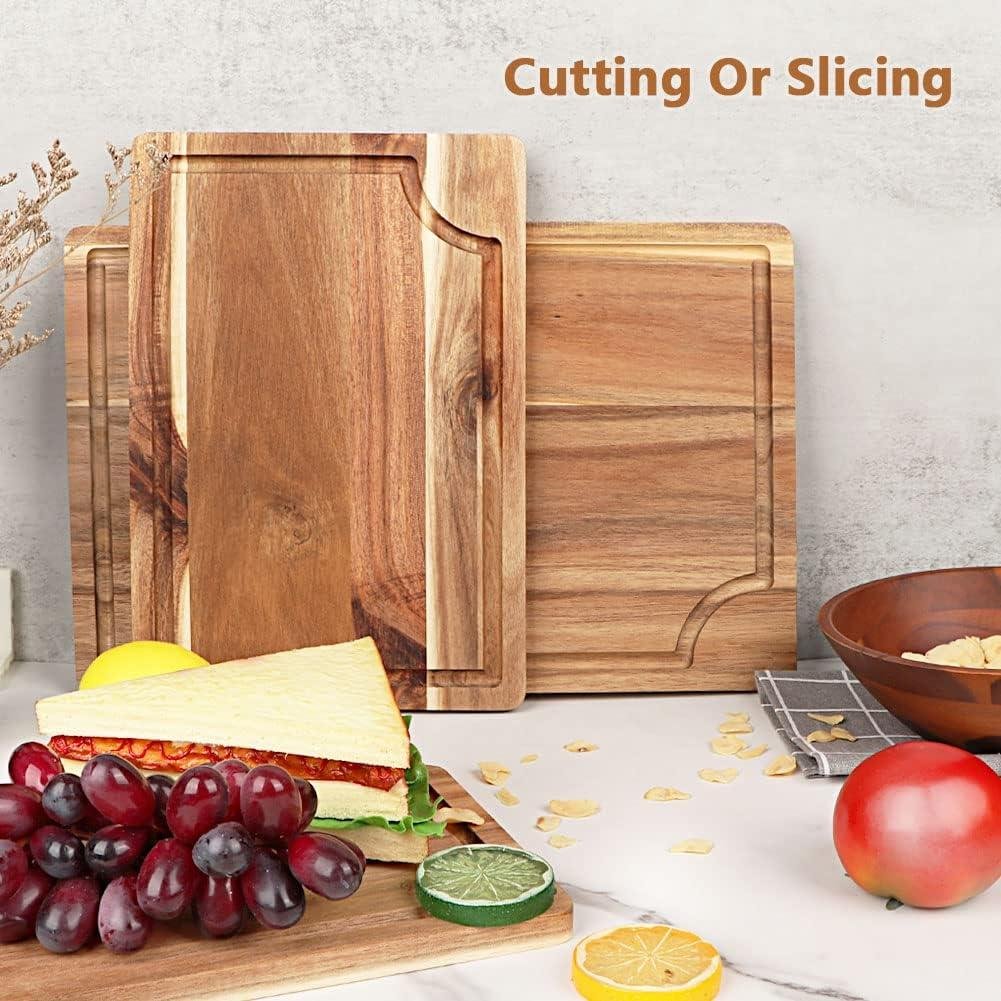
Tool Summary: This 3-piece acacia cutting board set includes 15″x10″, 12″x8″, and 9″x6″ boards, each with a deep juice groove for messier prep. The acacia is marketed as water/stain resistant and gentle on blades, and many customers praise the attractive “organic wood” look and everyday functionality. However, feedback is mixed on durability (reports of cracking, warping, and chipping) and especially on the surface finish, with multiple reviewers noting a coating/shellac that can wear off or transfer.
Best For: Ideal for hobby woodworkers and DIYers outfitting a small shop kitchen, light-duty food prep, and occasional serving boards/charcuterie on project nights.
Consider Alternatives If: You want a board for daily heavy chopping, prefer an unfinished/mineral-oil-ready surface, or need consistent long-term flatness without careful maintenance.
Final Assessment: A solid mid-range set for casual use and presentation, but the finish and longevity concerns mean it’s not the most dependable “forever board” for hard service.
Want to see current pricing and customer photos? View on Amazon & Read More Reviews →