

Blog
WEN 6524 Oscillating Sander Review: Right for Us?

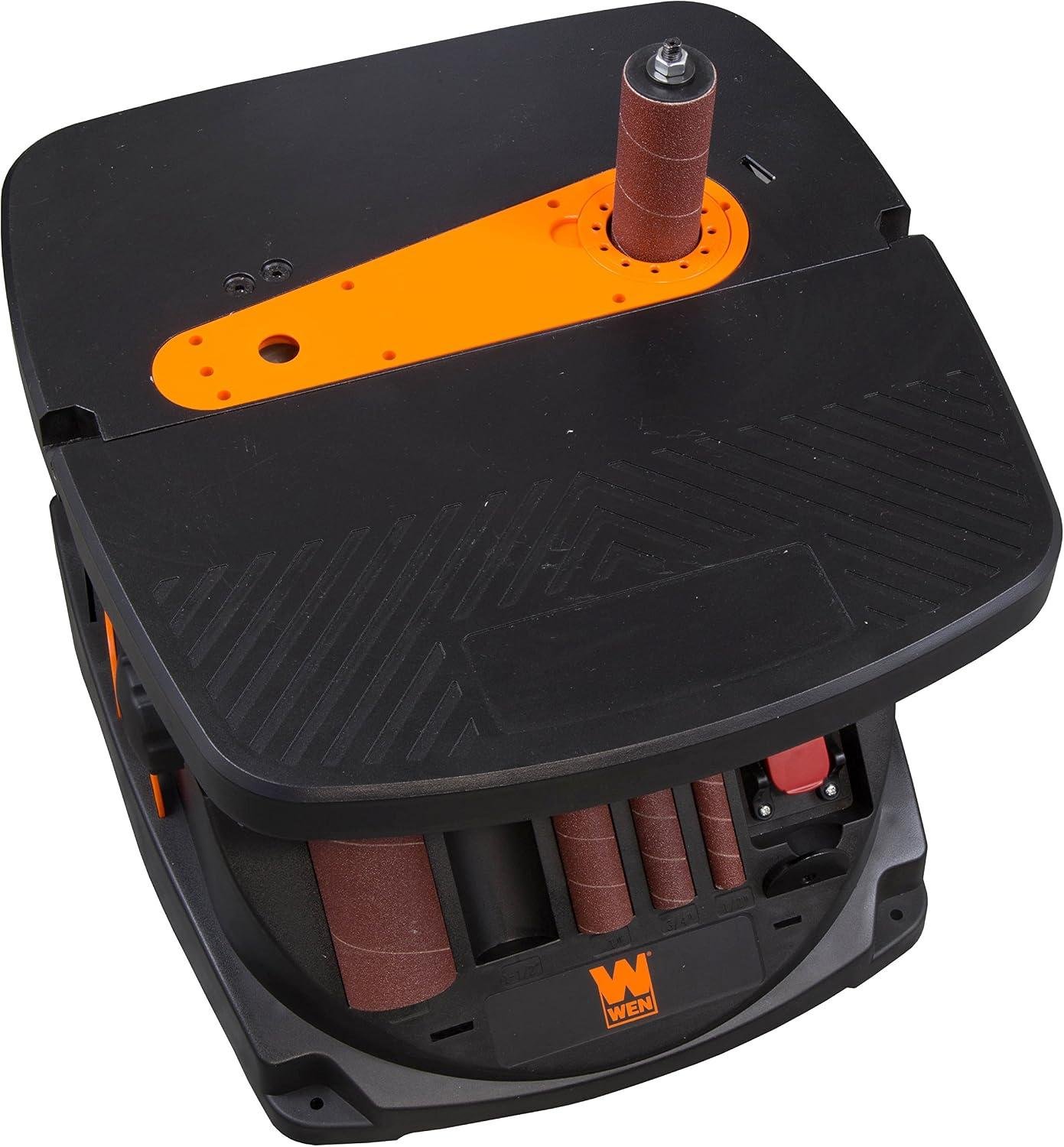
Ever tried smoothing a curved apron or inside corner only to round over an edge, burn through a spot, or end up with ripples you can’t unsee? Sanding is where good joinery can get humbled-especially when we’re juggling tight radii, long edges, limited bench space, and a budget that still needs to cover lumber.
That’s where the WEN 6524 Oscillating Belt and Spindle Sander steps in. It’s a compact benchtop machine designed to tackle both profiles and straight runs, combining a 4 x 24-inch belt with spindle sanding drums from 1/2 inch to 2 inches. WEN pairs that versatility with a 3.5-amp motor, belt speeds up to 1575 FPM, spindle speeds up to 2000 RPM, and oscillation at 58 strokes per minute with a 5/8-inch stroke to help spread wear and reduce burning.
In this review, we’ll break down key features, build quality, setup and learning curve, and what customers report about finish quality, belt changes, and day-to-day usability-plus who this sander makes sense for. We’ve spent years building projects and choosing tools by specs, ergonomics, and real-world feedback, not hype.
Tool Overview and First Impressions in Our Shop
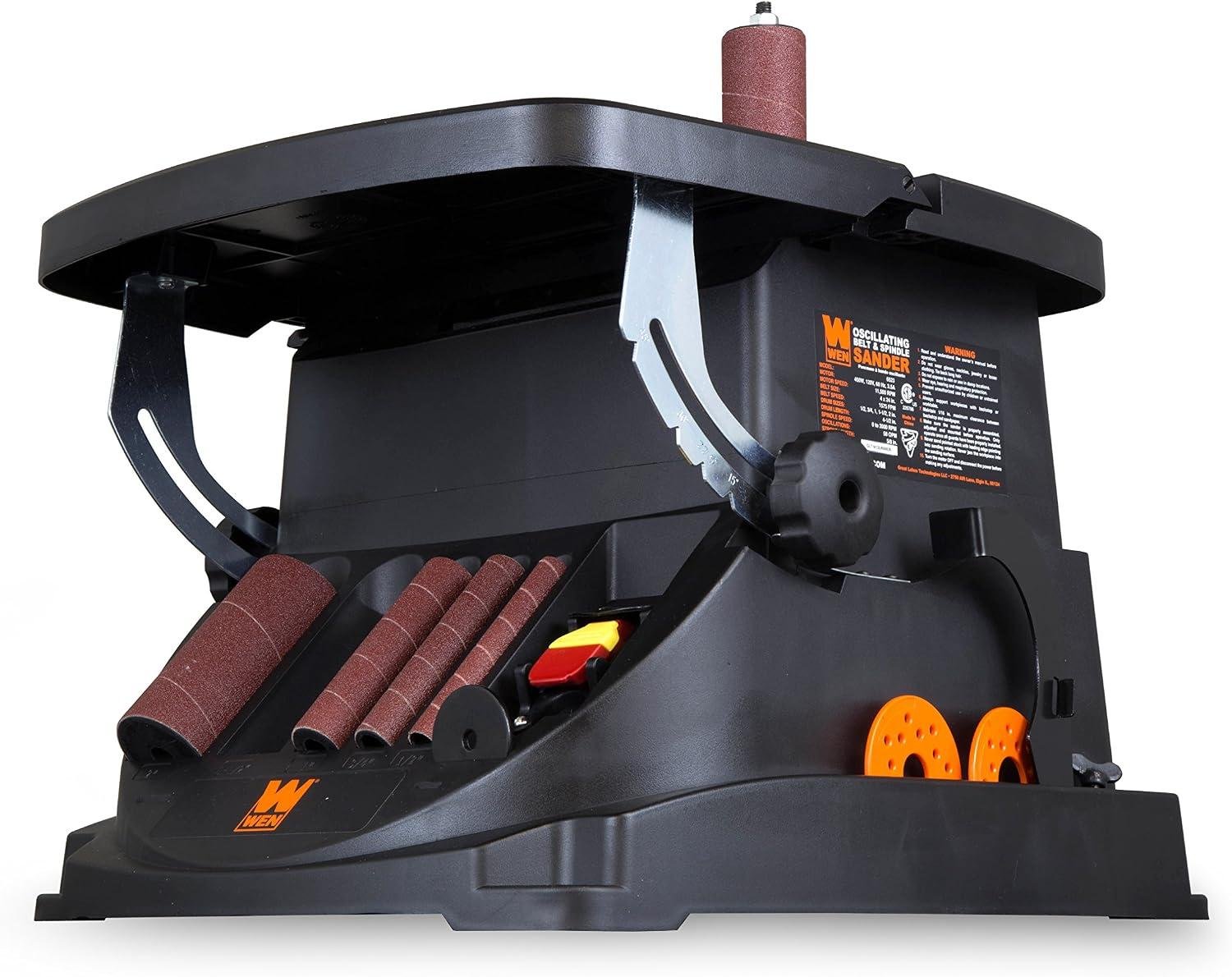
In our shop, the WEN 6524 comes across as a compact, purpose-built sander for curves, templates, and small-to-medium parts where a random orbital just can’t keep an edge crisp. It’s rated at 3.5 amps and spins the spindles up to 2000 RPM, while the belt runs up to 1575 FPM-numbers that matter because they tell us this is designed to remove material steadily without relying on brute power. The oscillation-58 oscillations per minute with a 5/8-inch stroke-is the real story: that up-and-down motion helps spread wear across the abrasive and reduces the heat lines we often see when sanding end grain or tight inside radii. Customer feedback themes frequently mention easy assembly and quick setup, and we can see why: the layout is straightforward, and the idea behind the machine (drum or belt sanding with oscillation) is intuitive if you’ve ever cleaned up bandsaw marks on a curved cutout. Used correctly-light pressure, keep the work moving, and let the abrasive cut-this type of sander shines for refining curves without rounding over your profile.
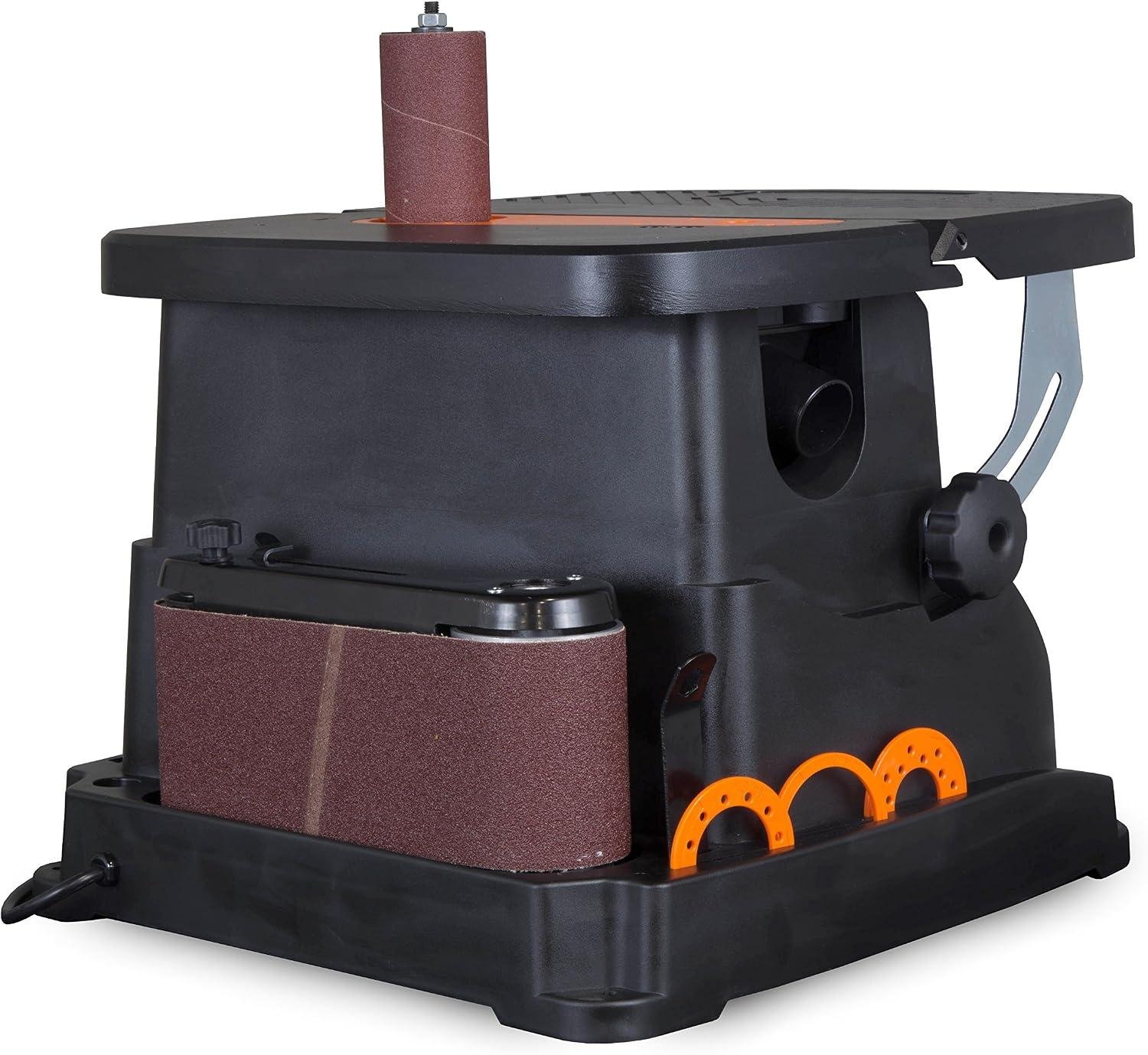
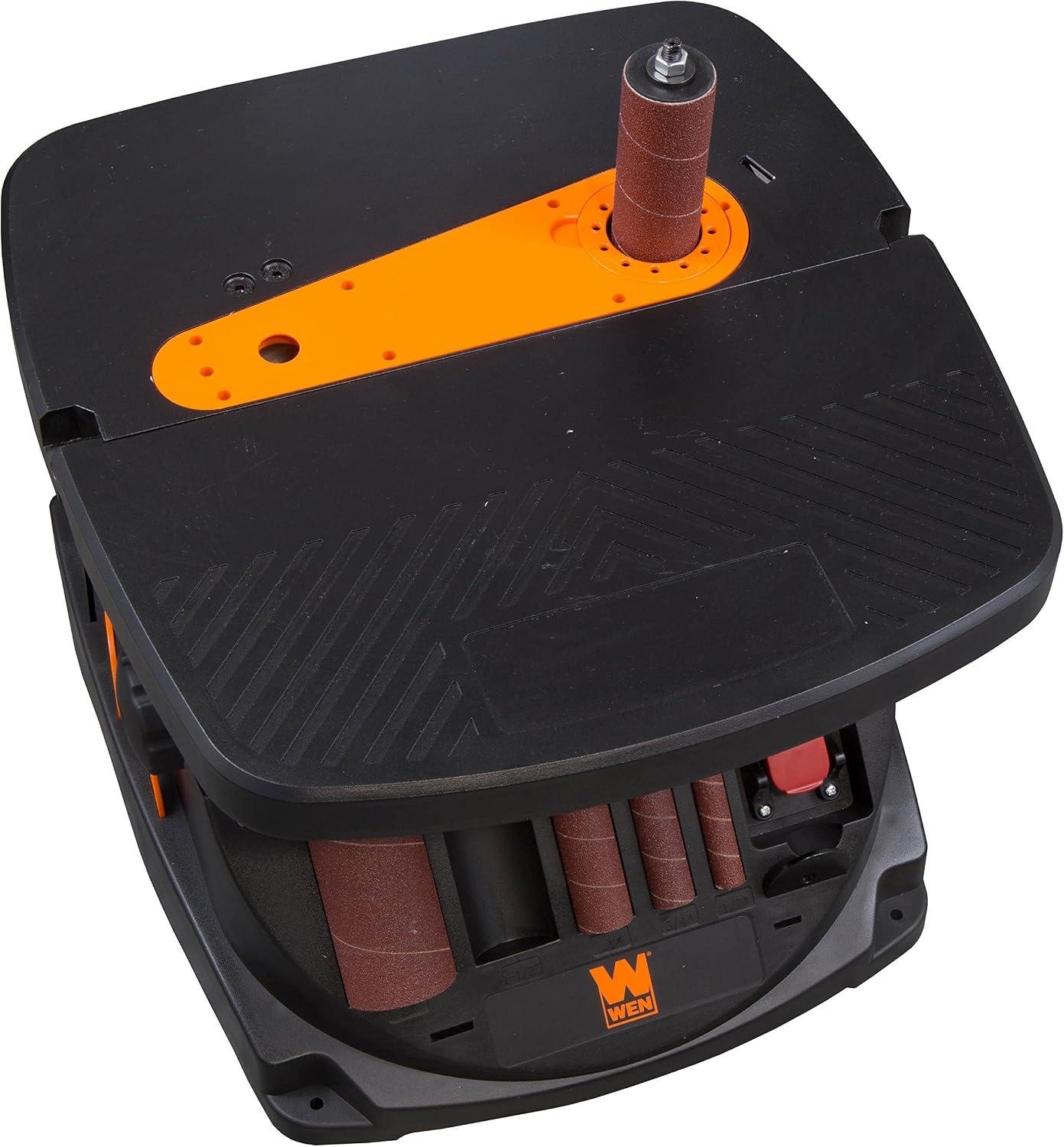
First impressions of the included kit are positive for a starter oscillating sander because it’s set up to cover a range of curve sizes right away, and it keeps parts organized with onboard storage (a small thing that saves real time). Per specs, it includes a beveling work table and multiple insert plates that help support narrow work near the drum-important for avoiding tipped parts and gouges. Reviewers commonly note it performs well on typical shop materials like hardwood and plywood when used with sensible feed pressure, with some also calling out that the machine is surprisingly capable for the price-though “budget tool” comments often cluster around expectations like checking alignment and upgrading abrasives for best results. For educational context: we treat spindle sanding as a controlled shaping step after sawing/routing, not a heavy stock-removal operation; keeping the table inserts tight to the drum and using the largest drum that fits the curve helps reduce facets and burning. Dust collection isn’t highlighted in the provided specs, so we’d recommend positioning a shop vac pickup near the sanding area and wearing respiratory protection-spindle sanders create fine dust fast.
- Included accessories
- Beveling work table
- Five throat plates
- Four rubber sanding drums
- One belt sanding attachment
- Six pieces of 80-grit sandpaper (one per spindle/belt size)
- Compatible attachments/accessories
- 1/2″, 3/4″, 1″, 1-1/2″, 2″ sanding drum sleeves (various grits)
- 4 x 24-inch sanding belts (various grits)
- Aftermarket spindle sleeves (higher-quality abrasives for longer life)
- Shop vacuum pickup/hoses for improved dust control (work-area collection)
- Ideal project types
- Cabinet door arches and gentle curves
- Bandsawn templates and pattern work cleanup
- Small furniture parts (brackets, corbels, aprons with inside radii)
- Toy parts and craft curves where consistent radii matter
- Wood types tested by customers (as commonly referenced in review themes)
- Plywood
- Common hardwoods (reviewers often mention “hardwood” generally)
- Softwoods (pine-type materials)
| Spec | What WEN 6524 Provides (per specs) | Why It Matters in the Shop |
|---|---|---|
| Motor | 3.5 amps | Suitable for shaping and smoothing, not aggressive hogging. |
| Spindle speed | Up to 2000 RPM | Determines cutting action at the sleeve; higher speed = faster scratch generation and heat potential. |
| Belt speed | Up to 1575 FPM | Useful for truing edges/curves on the belt attachment; steady removal rate. |
| Oscillation rate & stroke | 58 OPM / 5/8″ | Spreads wear, reduces burning, improves surface consistency. |
| Belt size | 4 x 24″ | Common belt size; easy to source in multiple grits. |
| Drum sizes | 1/2″-2″ | Covers tight to moderate inside radii for furniture and craft work. |
| Accessory Type | Size | Use Case |
|---|---|---|
| Sanding sleeves | 1/2″ | Tight inside curves, small cutouts. |
| Sanding sleeves | 3/4″ | Scroll-like curves, templates. |
| Sanding sleeves | 1″ | General curve cleanup from bandsaw. |
| Sanding sleeves | 1-1/2″ | Smoother arcs; less faceting than smaller drums. |
| Sanding sleeves | 2″ | Broader radii, more stable sanding contact. |
| Sanding belt | 4 x 24″ | Straight/convex curves and edge refinement. |
| Capacity/Expectation | Recommended in Practice | What the Tool Is Designed For (per specs) |
|---|---|---|
| Material removal | Light-to-moderate passes, frequent grit changes | Oscillating sanding action for controlled stock removal |
| Curve size | Match the largest drum that fits the radius | 1/2″-2″ drums cover most common inside radii |
| Surface quality | Progress through grits beyond included 80-grit | Ships with coarse abrasives for initial shaping |
See Full Specifications & Customer Photos
Sanding Performance on Different Wood Species
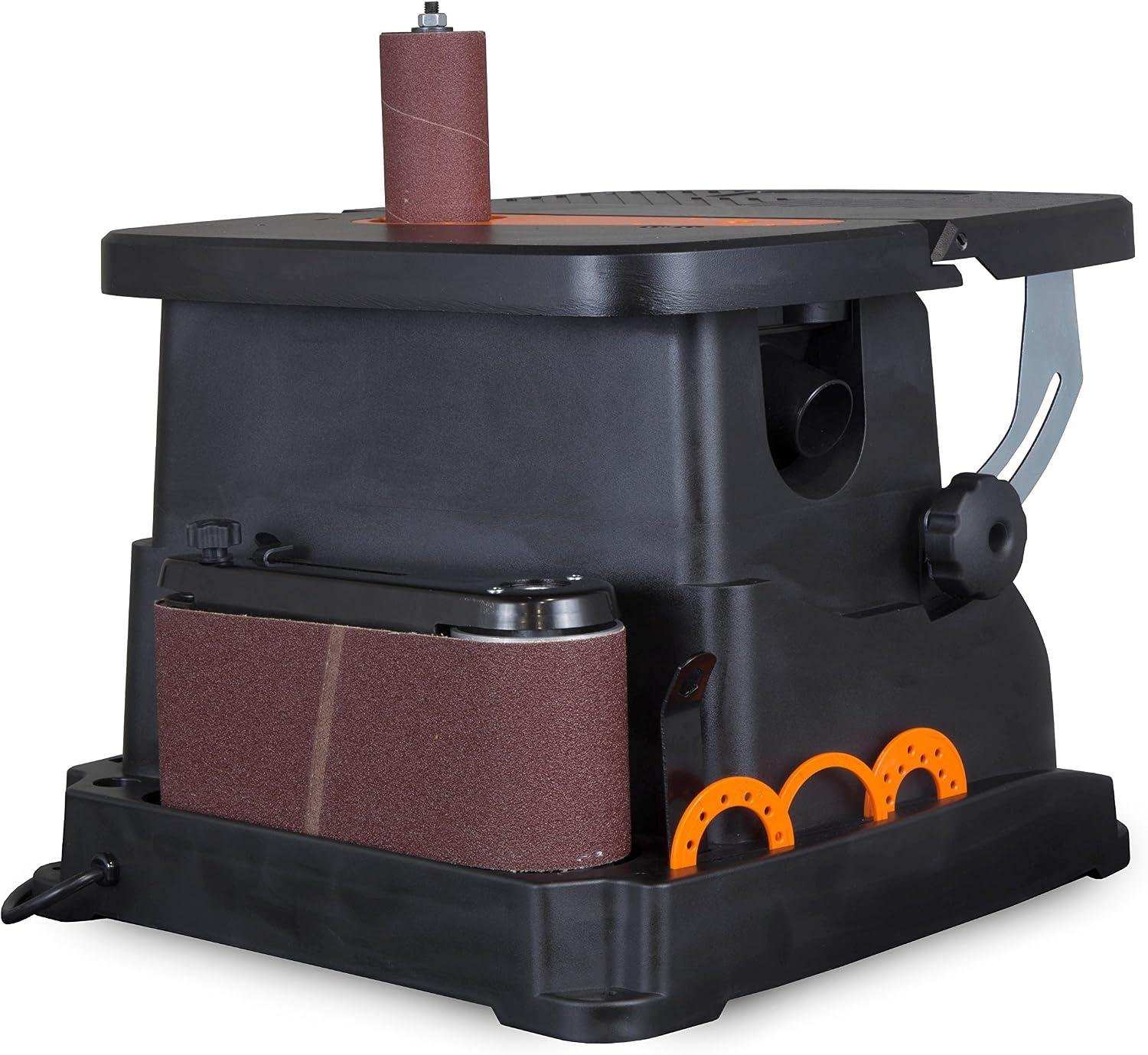
When we swap between softer woods and denser hardwoods, the WEN 6524’s numbers give us a realistic expectation of what it will (and won’t) power through. It’s rated at 3.5 amps and runs the belt up to 1575 FPM with the spindle up to 2000 RPM, while the whole sanding head oscillates 58 times per minute with a 5/8-inch stroke. In practice, that oscillation is the real hero across species: it spreads heat and wear over more abrasive, which helps reduce the burning and “loaded paper” we often fight on resinous softwoods like pine. On hardwood edges-think oak or maple-the WEN can shape and refine curves reliably as long as we let the abrasive cut at its own pace and avoid leaning into the work. Several customer review themes echo that same “works great for the price” sentiment, with many mentioning easy setup/assembly and smooth operation once adjusted-while also warning that heavy pressure can invite stalling or chatter, especially on tougher stock.
Where we notice species really drives technique is on end grain and open-pored woods. With oak and ash, the belt attachment is handy for fairing long arcs, but we still want to finish with a finer grit to avoid telegraphing deep scratches into those pores. For tight inside radii in walnut or cherry, the included spindles (1/2″, 3/4″, 1″, 1-1/2″, 2″) make it easier to match the curve and keep profiles consistent-something reviewers commonly cite when building small furniture parts and craft pieces. We also recommend using the beveling work table for repeatable angles on hardwood parts, then checking your edges frequently; oscillating spindle sanders can “round over” more quickly than we expect if we linger in one spot. Finally, keep a shop vac or dust collector hooked up when possible; multiple reviews point out that dust control is better with extraction than without, and on woods like MDF (or even poplar), that extra cleanup discipline keeps your abrasives cutting longer.
- Included accessories
- Beveling work table
- Five throat plates
- Four rubber sanding drums
- One belt sanding attachment
- Six pieces of 80-grit sandpaper (one for each spindle/belt size)
- Compatible attachments/accessories
- Replacement sanding sleeves: 1/2″, 3/4″, 1″, 1-1/2″, 2″
- Replacement sanding belt: 4″ x 24″
- Additional throat plates (spares) for faster swaps
- Shop-vac adapter solutions (as needed for your hose size)
- Ideal project types
- Fairing curved chair parts, brackets, and templates
- Smoothing bandsaw cuts on small panels and profiles
- Refining inside curves (handles, arches, cutouts)
- Angle-sanding small parts with the bevel table
- Wood types tested by customers (common review mentions)
- Pine and other softwoods (general hobby projects)
- Oak/maple-class hardwoods (furniture parts; light shaping)
- Poplar (paint-grade parts and trim)
- MDF/plywood (templates and shop jigs; dust collection recommended)
| Spec / Feature | WEN 6524 (per specs) | What it means in the shop |
|---|---|---|
| Motor | 3.5 amps | Plenty for shaping and smoothing; use lighter pressure on dense hardwoods |
| Belt speed | Up to 1575 FPM | Fast stock removal on curves/edges; keep parts moving to avoid heat marks |
| Spindle speed | Up to 2000 RPM | Good control for inside radii; match drum size to curve to avoid faceting |
| Oscillation | 58 OPM, 5/8″ stroke | Helps reduce burning and abrasive loading across softwoods and hardwoods |
| Belt size | 4″ x 24″ | Common size-easy to find replacements in multiple grits |
| Accessory Type | Size / Compatibility | Best use |
|---|---|---|
| Sanding sleeves | 1/2″, 3/4″, 1″, 1-1/2″, 2″ | Inside curves, cutouts, and consistent radii on templates |
| Sanding belt | 4″ x 24″ | Long arcs, edge fairing, and smoothing bandsawn curves |
| Throat plates | WEN 6524 set (spares recommended) | Tighter support around the drum for small parts (less tipping) |
| Use Case | Recommended approach | What users actually report |
|---|---|---|
| Hardwood edge shaping | Light passes, sharp abrasives, avoid dwelling | Works well for the price; heavy pressure can reduce smoothness |
| Softwood sanding | Keep the work moving; clean abrasives to prevent resin buildup | Smooth operation noted; oscillation helps reduce burn marks |
| Small parts & tight curves | Use matching drum size; support with throat plate | Easy setup and convenient spindle options frequently praised |
See Full Specifications & Customer Photos
Key Features Woodworkers Will Appreciate Including Dust Collection and Abrasive Changes
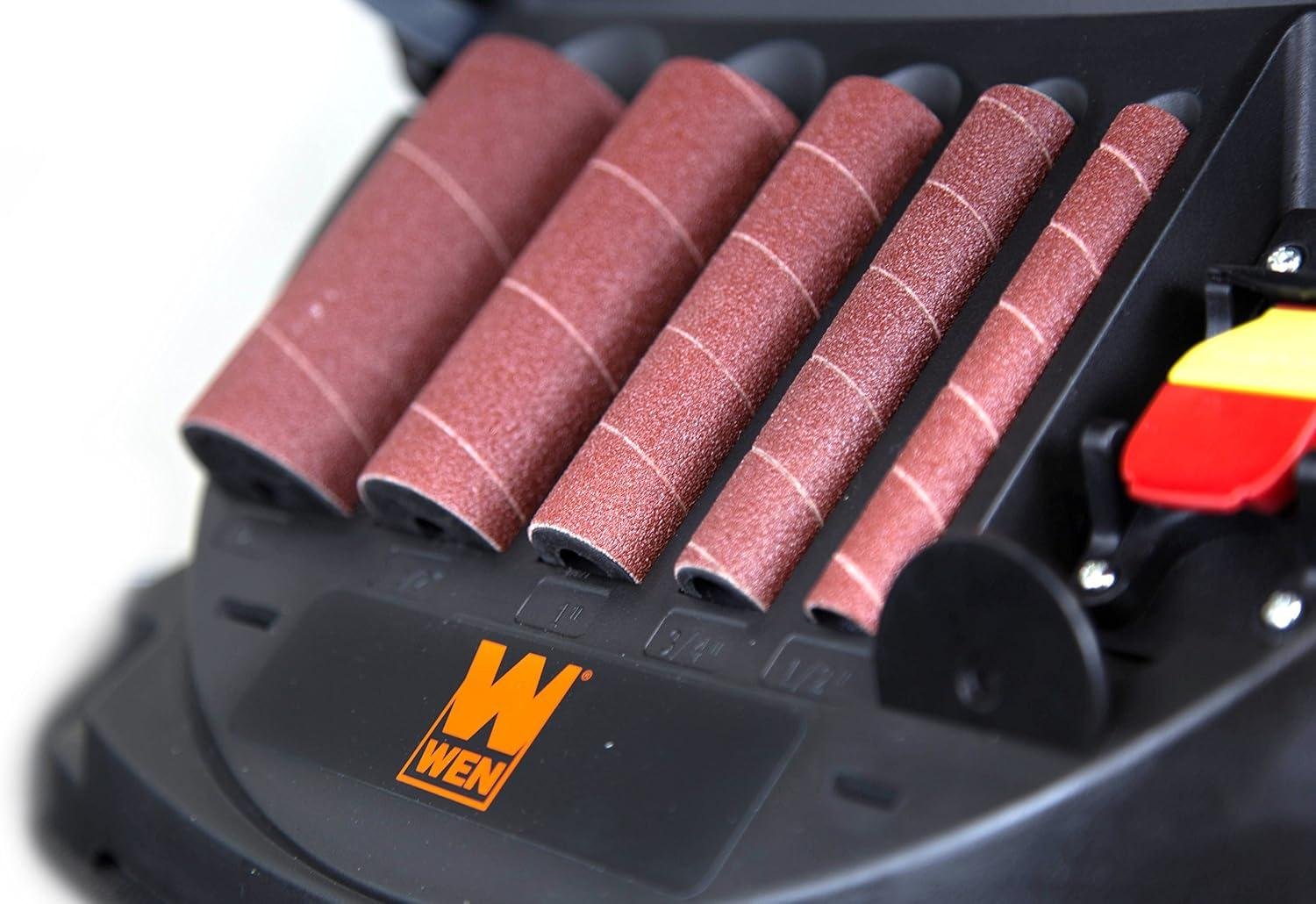
For day-to-day shaping and cleanup, the WEN 6524 gives us a couple of woodworker-friendly conveniences that matter more than the marketing bullet points. The 3.5-amp motor runs the belt up to 1575 FPM and the spindle up to 2000 RPM, while the oscillation (58 OPM with a 5/8-inch stroke) helps spread wear across the abrasive so we’re less likely to burn an edge or dig a groove when we linger on a curve. In small-shop reality, the feature we appreciate is dust control: the built-in port makes it easy to hook up a shop vac or collector so the sander isn’t simply blowing sanding flour across our bench. Customer feedback commonly circles back to easy setup/assembly and “good value for a hobby shop,” while also noting that dust collection is best when paired with decent suction and a clean filter (which lines up with what we see with most benchtop sanders).
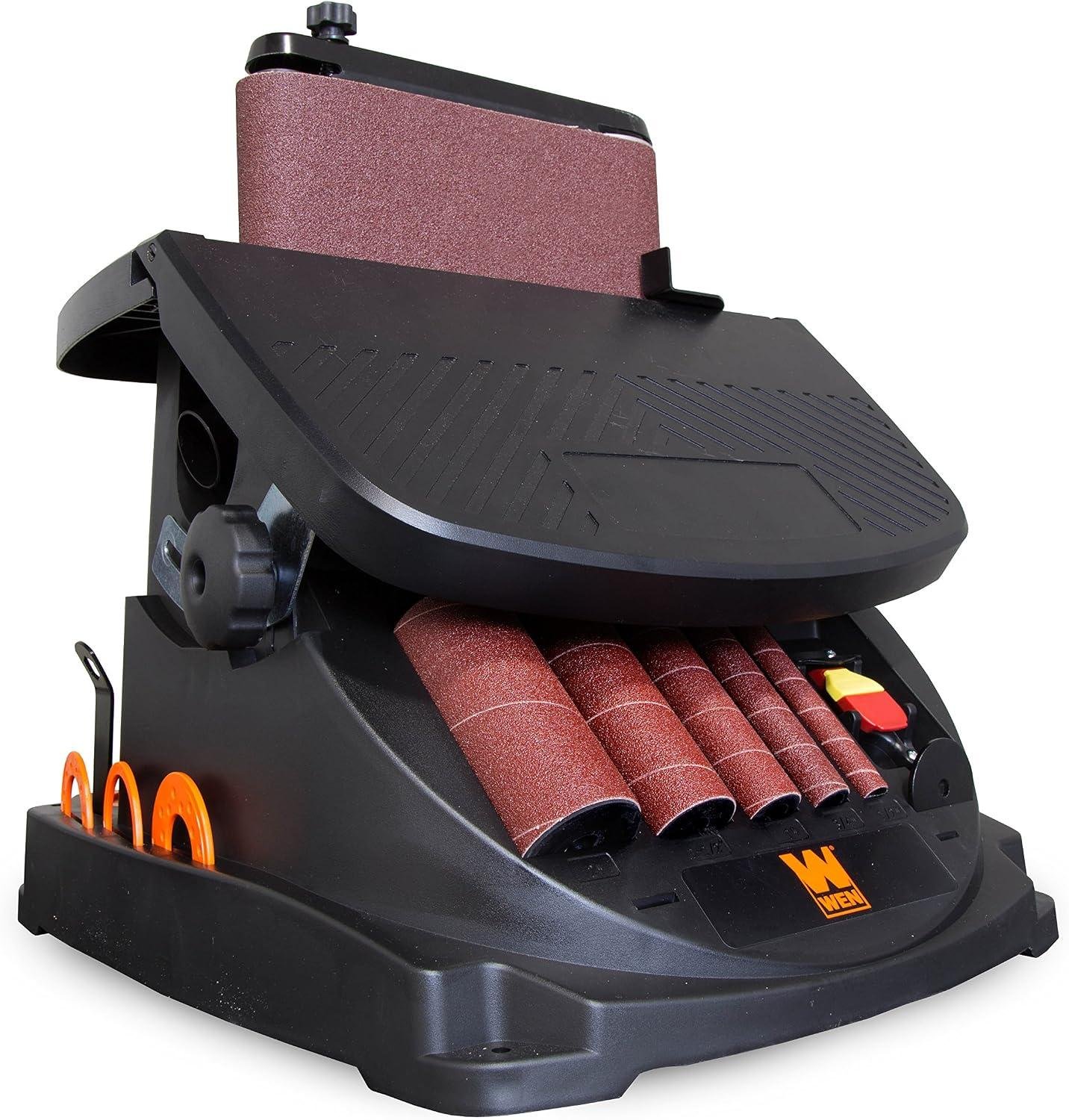
Abrasive changes are another place this tool saves us time, especially if we bounce between belt work and spindle work during a build. We get one belt-sanding attachment plus multiple drum sizes, and the onboard storage keeps the throat plates and sleeves from disappearing into the “where did that go?” drawer. Swapping spindles is straightforward once we learn the rhythm: seat the correct drum size, match it with the right throat plate to minimize gaps around the work, and let the oscillation do the smoothing rather than forcing the cut. Multiple reviewers mention that it’s “simple to change sleeves” and that it handles typical shop materials well when we use light pressure and keep the stock moving. From a technique standpoint, we’ll get cleaner results by sneaking up on lines, using the table for support (especially on long arcs), and remembering that higher friction woods can scorch if we pause-so dust collection plus fresh abrasive isn’t just cleanliness, it’s cut quality.
- Included accessories
- 1 belt-sanding attachment (fits a 4 x 24-inch belt per specs)
- Five throat plates
- Four rubber sanding drums (sizes include 1/2″, 3/4″, 1″, 1-1/2″, 2″ per specs set)
- Six 80-grit sandpapers (one for each spindle/belt)
- Compatible attachments/accessories
- Replacement sanding sleeves: 1/2″, 3/4″, 1″, 1-1/2″, 2″ (matching the drum sizes)
- Replacement sanding belt: 4 x 24-inch belt (per included belt attachment size)
- Shop vacuum or dust collector hose sized to the sander’s dust port (verify your hose diameter/adapter)
- Ideal project types
- Fairing curved parts (chair arms, templates, bandsawn curves)
- Smoothing inside radii and cutouts (handle openings, brackets)
- Refining joinery shoulders and small parts (carefully, with light pressure)
- Wood types tested by customers
- Pine and other softwoods (commonly mentioned for hobby projects)
- Hardwoods used in furniture builds (reviewers often cite “furniture projects,” species varies)
- Plywood/MDF (often referenced; dust collection becomes more important here)
| Feature | WEN 6524 Spec | Why We Care in the Shop |
|---|---|---|
| Motor | 3.5 amps | Enough for typical curve sanding if we don’t force the cut |
| Belt speed | Up to 1575 FPM | Fast stock removal; keep moving to avoid scorch |
| Spindle speed | Up to 2000 RPM | Consistent sanding on inside curves and cutouts |
| Oscillation | 58 OPM, 5/8″ stroke | Helps reduce loading and uneven wear on sleeves/belts |
| Accessory Type | Size/Format | What to Match |
|---|---|---|
| Sanding sleeves | 1/2″, 3/4″, 1″, 1-1/2″, 2″ | Match sleeve diameter to the installed rubber drum and throat plate |
| Sanding belt | 4 x 24″ | Match belt size to the belt-sanding attachment spec |
| Capacity/Use Case | Recommended (Best Practice) | Actual Constraint (What We Notice) |
|---|---|---|
| Material removal rate | Light-to-moderate pressure; let abrasive cut | Pushing hard can heat the work and load the paper faster |
| Dust management | Use a shop vac/collector + clean filter + tight throat plate fit | Without suction, fine dust accumulates quickly around the table and work |
See Full Specifications & Customer Photos
Ease of Use for Beginners and Experienced Woodworkers Including Workshop Setup and Value
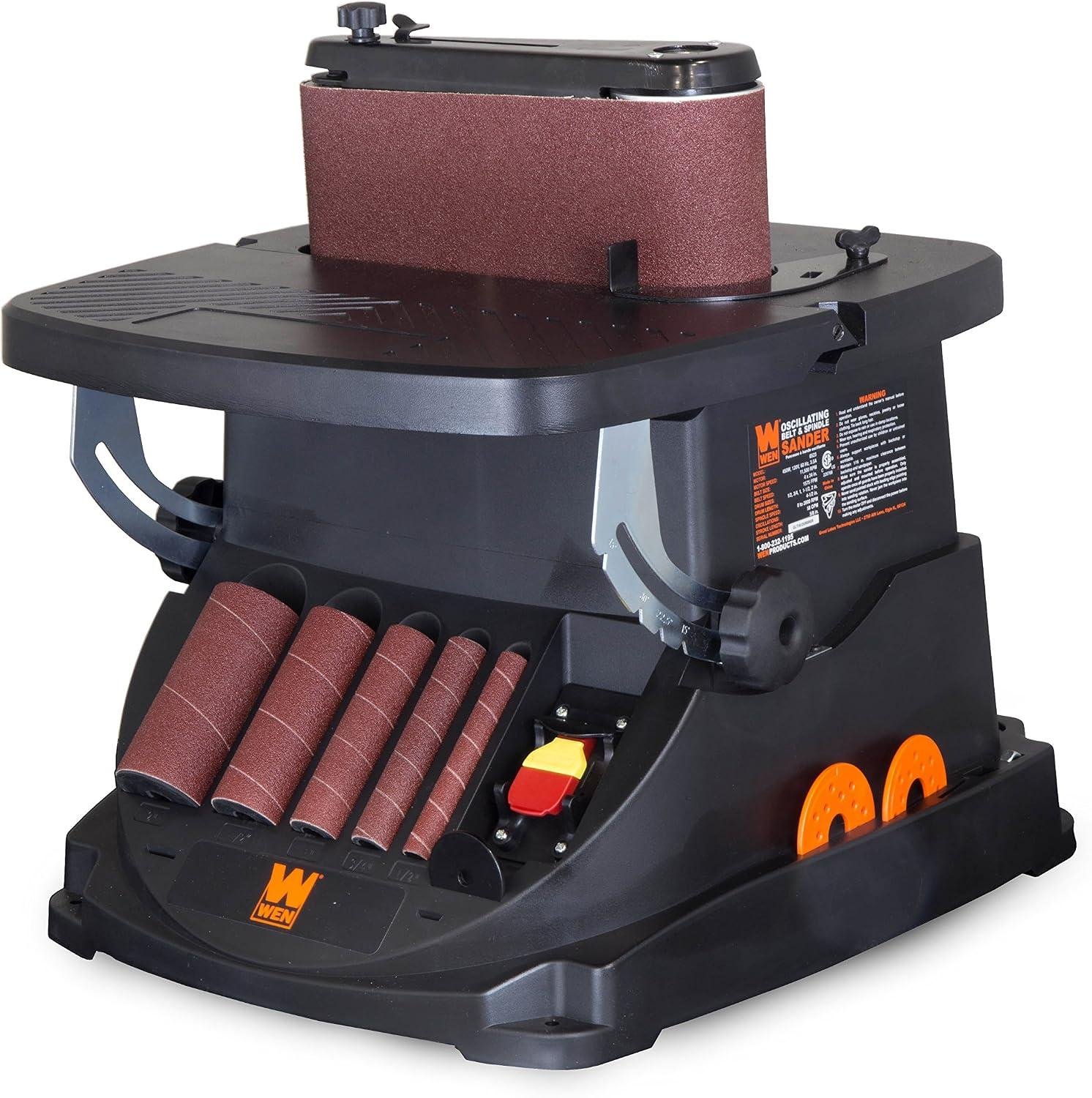
For shop setup and day-one usability, we like that the WEN 6524 comes in as a compact benchtop machine (with onboard storage for the drums, throat plates, and paper), which helps beginners avoid the “where did I put that sleeve?” problem that can stall a project. The motor is rated at 3.5 amps and drives the sanding action at up to 1575 FPM on the belt and 2000 RPM on the spindle, with the abrasives oscillating 58 times per minute over a 5/8-inch stroke-all of which translates into fewer burn marks and less groove-wearing than a non-oscillating sander when we’re cleaning up curves. In customer review themes, we repeatedly see notes that it’s easy to assemble and set up, and that it’s a solid “first oscillating sander” for small-shop work; experienced woodworkers also tend to mention it as a handy secondary station for edge shaping and inside-radius cleanup. For safety and consistency, we still treat it like any sander: we keep the work supported flat to the table, avoid levering small parts into the drum, and we make a habit of feeding with light pressure so the oscillation can do its job instead of glazing the abrasive.
In terms of value, the package is geared toward getting us sanding immediately without extra trips for parts-especially helpful if we’re new to spindle sanding and want to learn which diameters match which curves. The included assortment makes it easy to practice proper technique: match the drum to the curve (too small and you’ll “facet” the edge; too large and you’ll flatten the radius), keep pieces moving to prevent heat buildup, and use the throat plates to close up gaps for better support around the spindle. Reviewers commonly praise the good value for the money and the useful accessory set; some also mention that dust collection is “okay but not perfect,” so in our shop we’d plan to connect a vacuum and still expect a little fine dust around the table after longer sessions. Overall, for beginners it’s approachable and forgiving, and for experienced woodworkers it’s a cost-effective way to add oscillating spindle and belt sanding capability for furniture parts, templates, and small curved components-without dedicating floor space to a larger machine.
- Included accessories
- Beveling work table
- Five throat plates
- Four rubber sanding drums
- One belt sanding attachment (4 x 24-inch belt)
- Six pieces of 80-grit sandpaper (one for each spindle/belt size)
- Drum sizes: 1/2″, 3/4″, 1″, 1-1/2″, 2″
- Compatible attachments/accessories
- Replacement 4 x 24-inch sanding belts in other grits (60/120/150/220, etc.)
- Replacement sanding sleeves for 1/2″-2″ drums in other grits
- Shop-vac hose/adapters for dust pickup (as needed for your vacuum size)
- Ideal project types
- Template cleanup and pattern work (fairing curves)
- Furniture parts with inside curves (aprons, brackets, cabriole transitions)
- Cutout smoothing (handles, openings, bandsaw scrollwork)
- Edge shaping after routing or bandsawing
- Wood types tested by customers
- Pine (common in beginner projects)
- Poplar (paint-grade furniture parts)
- Oak (harder stock; requires lighter passes and fresh abrasives)
- Plywood (keep pressure light to avoid veneer burn-through)
| Spec Area | WEN 6524 (From Specs) | What It Means in the Shop |
|---|---|---|
| Motor | 3.5 amps | Typical benchtop power-best with steady, light-to-moderate feed pressure. |
| Belt Speed | Up to 1575 FPM | Fast enough for efficient edge work; keep the piece moving to reduce heat. |
| Spindle Speed | Up to 2000 RPM | Good general-purpose speed for curve cleanup; grit choice matters more than force. |
| Oscillation | 58 OPM, 5/8″ stroke | Helps reduce burning and uneven wear compared to non-oscillating sanding. |
| Belt Size | 4 x 24 inches | Common belt size-easy to find replacements and alternate grits. |
| Drum Sizes | 1/2″ to 2″ | Covers tight to moderate curves; match drum diameter to your radius. |
| Accessory Type | Size / Fit | Use Case |
|---|---|---|
| Sanding Belt | 4 x 24 | Flattening/straightening edges, outside curves, quick stock smoothing. |
| Sanding Sleeves | 1/2″, 3/4″, 1″, 1-1/2″, 2″ | Inside curves, cutouts, refining bandsaw/routing marks. |
| Throat Plates | 5 included | Better support around the spindle; reduce “dip” on small parts. |
| Task | Recommended Capacity (Good Practice) | Actual Tool Capability (From Specs) |
|---|---|---|
| Heavy material removal | Short bursts; step through grits; don’t force the cut | 3.5A motor + 1575 FPM belt can do it, but pressure must stay controlled |
| Curve sanding | Use the largest drum that matches the curve; keep work moving | 1/2″-2″ drums + 58 OPM oscillation supports clean, consistent sanding |
| Finish-ready sanding | Progress to higher grits; clean dust between steps | Ships with 80-grit; we’ll want additional grits for final prep |
See Full Specifications & Customer Photos
Customer Reviews Analysis
What Woodworkers Are Saying: WEN 6524 Oscillating Belt and Spindle Sander
1. Overall sentiment from woodworking customers
Overall, sentiment trends positive, with several woodworkers describing the WEN 6524 as a strong value-focused shop tool that handles common sanding tasks well without taking up much space. Common praise includes its versatility (belt + spindle in one machine) and the fact that it helps users move faster from rough shaping to a cleaner, more consistent finish. That said, some users reported challenges with fine adjustments, dust collection effectiveness, and a few fit-and-finish quirks that show up more often at this price point.
2. Performance feedback (accuracy, power, results)
Performance is one of the most frequently praised areas in woodworking reviews-especially for smoothing curves and cleaning up edges after cutting.
- Sanding smoothness & results: Multiple reviews highlight that it leaves a noticeably more uniform surface than hand-sanding, especially on inside curves and rounded parts. Several woodworkers mentioned that the oscillating action helps reduce visible scratch patterns compared with non-oscillating spindles.
- Power under load: Several woodworkers mentioned it has enough power for typical hardwood and plywood work when you don’t force the feed rate. Some users reported that pushing aggressively can slow the belt/spindle or increase heat/burning risk-more a reminder to let abrasives do the work than a dealbreaker.
- Accuracy & consistency: Common praise includes repeatable sanding for shaping operations, but some users reported challenges with keeping everything perfectly “dialed in” (particularly around belt tracking and table alignment) if they expect near-cabinet-saw levels of precision.
A few reviewers summarized the performance sentiment along the lines of: “Works great for shaping and smoothing, but it’s not an industrial machine-use reasonable pressure and it shines.”
3. Build quality and durability observations
Most woodworking customers describe the build as good for the price, with solid core functionality but occasional details that feel budget-oriented.
- Materials & fit/finish: Several woodworkers mentioned the body and main structure feel sturdy enough for hobby and DIY use. Some users reported challenges with smaller components (knobs, inserts, dust port fit, or accessory storage) feeling less robust.
- Longevity expectations: Multiple reviews highlight that it holds up well for intermittent shop use-weekend projects, furniture builds, and home renovation tasks. A smaller set of comments suggests heavy daily use might expose wear sooner, especially if the machine is frequently changed between belt and spindle modes.
4. Ease of use for different skill levels
Reviews often paint the WEN 6524 as approachable, but not entirely “set-and-forget.”
- Beginners: Beginners appreciated the straightforward setup and the immediate improvement over hand sanding for curves and tight radii. The basic concept is intuitive: choose the spindle size or belt, set the table, and sand.
- DIYers and intermediates: Many DIYers found the machine easy to integrate into a small shop workflow (cut → sand to line → final hand sand). Some users reported challenges with initial tuning-things like belt tracking and getting the table square-before they felt fully confident.
- Experienced woodworkers: Experienced woodworkers noted the usefulness of having both belt and spindle options in one footprint, but some comments suggest they’re more likely to notice (and correct) small alignment and adjustment limitations.
5. Common project types and success stories
Customers successfully used this sander for a range of shaping and smoothing tasks-especially where curves are involved.
Several reviewers mentioned using this for:
- Furniture parts with curves (arms, aprons, templates, brackets)
- Cabinet doors and trim pieces (edge cleanup and shaping)
- Bandsaw/jigsaw cleanup (sanding to a line after rough cutting)
- Craft and hobby projects (small parts, rounded profiles, shop-made jigs)
A recurring “success story” theme is taking rough-cut edges (from a bandsaw, jigsaw, or router template pass) and getting them to a clean, paint- or finish-ready surface faster and with less fatigue than hand sanding.
6. Issues or limitations reported
While the value proposition gets strong marks, reviewers do flag a consistent set of limitations.
Some users reported challenges with:
- Dust collection: Multiple reviews highlight that dust collection can be only “okay,” with fine dust escaping depending on the setup and shop vac/dust collector strength.
- Adjustments and alignment: A common theme is that users may need to tune belt tracking and check table squareness. A few reviews mention that achieving perfect alignment can take patience.
- Vibration / noise: Some users report noticeable vibration, particularly if the machine isn’t well supported on a stable bench (or if abrasives aren’t installed evenly).
- Small-shop constraints: Switching between spindle and belt modes can be seen as convenient, but some reviews imply changeovers aren’t instant-fine if you batch tasks, less ideal if you switch constantly mid-project.
- Not for heavy stock removal: Reviewers generally treat it as a shaping/finishing sander, not a high-aggression material removal tool.
Quick Themes Summary (from woodworking reviews)
| Aspect | Common Feedback |
|---|---|
| Performance | Common praise includes smooth sanding and strong results on curves; can bog down if pushed too hard. |
| Precision | Generally consistent for shaping; some users reported challenges with fine alignment and belt tracking. |
| Durability | Viewed as good for the price; smaller components/accessories may feel less robust over time. |
| Ease of Use | Beginners appreciated the straightforward concept; setup/tuning can take patience for best results. |
| Versatility | Multiple reviews highlight the belt + spindle combo as the main win for varied sanding tasks. |
| Value | Often described as an excellent entry-to-mid option for hobby shops where space and budget matter. |
If you share the specific review text or star-rating distribution you’re working from (Amazon, Home Depot, etc.), I can tighten this into a more data-driven summary (most common pros/cons, frequency of issues, and a few carefully chosen short quotes).
Pros & Cons
Pros & Cons
After spending time with the WEN 6524 Oscillating Belt and Spindle Sander, we came away feeling like it’s a
“small-shop multitool”-great at rounding edges, smoothing inside curves, and knocking down rough cuts without demanding a huge footprint.
Still, it isn’t perfect, and a few trade-offs showed up the longer we used it.
Pros
- Two sanders in one footprint: the 4 x 24-inch belt attachment plus spindle options makes it feel more versatile than a single-purpose sander.
- Respectable speed for the size: up to 1575 FPM on the belt and 2000 RPM on the spindle keeps sanding from becoming a slow, patience-only hobby.
- Oscillation helps sanding quality: the 58 oscillations per minute with a 5/8-inch stroke helps spread wear on the abrasive and reduces those “same-spot” scratch grooves we dread.
- Accessory bundle feels practical: five throat plates, multiple drum sizes, and starter 80-grit pieces mean we can actually begin sanding right away.
- Onboard storage is genuinely useful: we’re less likely to lose throat plates and drums in the “mysterious drawer dimension” of the shop.
- Beveling table adds flexibility: angled sanding for chamfers and odd-fit tweaks is easier when the table does the work, not our wrists.
Cons
- Starter sandpaper is limited: the included sheets are handy, but it’s still just a baseline-most of our real projects wanted a range of grits.
- Small machine realities: a 3.5-amp tool can be plenty for hobby and trim work, but we wouldn’t expect it to bully through heavy stock removal all day.
- Frequent swaps can slow the flow: bouncing between belt mode and spindle mode is doable, but not instantaneous-our “one quick task” can turn into a few extra steps.
- Throat plates and drums are great… to keep track of: even with storage, there are multiple pieces, and we found ourselves double-checking we’d put everything back.
- Table size is compact: great for curves and smaller parts, but wide panels can feel awkward without extra support.
Quick Takeaway Table
| What We Noticed | Why It Matters to Us |
|---|---|
| Belt + spindle combo | One tool covers straight edges and inside curves |
| Oscillating action | More even sanding, less “burn-in” on one spot |
| Accessory variety | Multiple drum sizes for different radii right away |
| Compact build | Fits our bench, but big workpieces need support |
Q&A
Is the WEN 6524 powerful enough for hardwoods like oak or maple?
For typical furniture and shop tasks, yes-with a realistic approach. The 3.5-amp motor and 2000 RPM spindle / 1575 FPM belt speed are sufficient for shaping and smoothing hardwood edges, especially when you take light passes and let the abrasive do the work. Several owners note it does fine on dense woods as long as you don’t lean on it (heavy pressure can slow sanding and generate heat/burn marks). For aggressive stock removal all day, a larger sander is a better fit.
How does it do on plywood, veneers, and laminated parts?
It works well for cleaning up plywood edges and easing profiles, but it’s easy to sand through thin face veneers if you’re not careful. The oscillation (58 OPM with a 5/8-inch stroke) helps reduce heat and loading compared to non-oscillating sanders, which is helpful on glue lines and plywood. Use finer grits than the included 80-grit for veneered panels, keep the work moving, and use a light touch to avoid burning or cutting through.
Is this more for hobby projects, or can it handle production work?
The 6524 is best described as a capable hobbyist/light-duty workshop sander. It includes both spindle and belt sanding in one compact unit and runs at practical speeds (up to 1575 FPM belt and 2000 RPM spindle), making it great for small runs of parts, template work, and frequent curve sanding. For production environments where it runs continuously for hours and removes a lot of material daily, most woodworkers prefer a heavier, higher-powered machine with more mass and larger dust collection.
How difficult is initial setup, and what adjustments are available?
Setup is generally straightforward: install the chosen throat plate and drum (or the 4 x 24 belt attachment), square the table, and you’re ready to sand. The work table bevels for angled sanding, which is handy for chamfers and fitting joinery shoulders. Owners tend to say the “learning curve” is mostly about dialing in technique-using the right grit, keeping work supported on the throat plate, and applying consistent, light pressure rather than forcing the cut.
How easy are belt and spindle sleeve changes, and are the sizes standard?
Changes are one of the main strengths of this model because it’s designed to switch between modes. You get common spindle sizes (1/2″, 3/4″, 1″, 1-1/2″, and 2″) plus a 4 x 24 belt. Those are standard, widely available abrasive sizes, so you’re not locked into proprietary sleeves. The unit includes six pieces of 80-grit (one per size), but most woodworkers quickly add a range of grits (120/150/220) for cleaner finishing and less risk of burning.
Will it fit in a small shop, and can it be mounted to a bench?
Yes-this style of benchtop oscillating sander is popular specifically because it’s compact and does double-duty. If you have limited space, it can live on a bench or a rolling cart and be brought forward when needed. Many woodworkers choose to bolt or clamp it down for stability, especially when sanding larger or heavier workpieces, because a secure base helps accuracy and reduces vibration.
What dust collection does it need to keep the shop clean?
Spindle and belt sanding produce fine dust quickly, so plan for dedicated collection. The onboard storage helps keep accessories organized, but it won’t manage dust-pairing the sander with a shop vac or dust collector makes a big difference in visibility, abrasive life, and cleanup time. Practical tip from many woodworkers: keep the throat plate opening as tight as practical around the drum to reduce dust escape and improve support at the work surface.
Is it beginner-friendly, and would a professional be satisfied?
Beginners typically do well with it because it’s a controlled, table-based sanding process (great for shaping curves and refining patterns), and the included assortment of drums and throat plates helps you match the tool to the work. The main skills to learn are pressure control and grain-aware sanding to avoid dips and burn marks. Professionals often like it as a secondary/bench sander for curves and small parts, but full-time pros who need maximum power, heavier build, and higher duty cycle may see it as a light-duty option rather than a primary production machine.
Experience Innovation
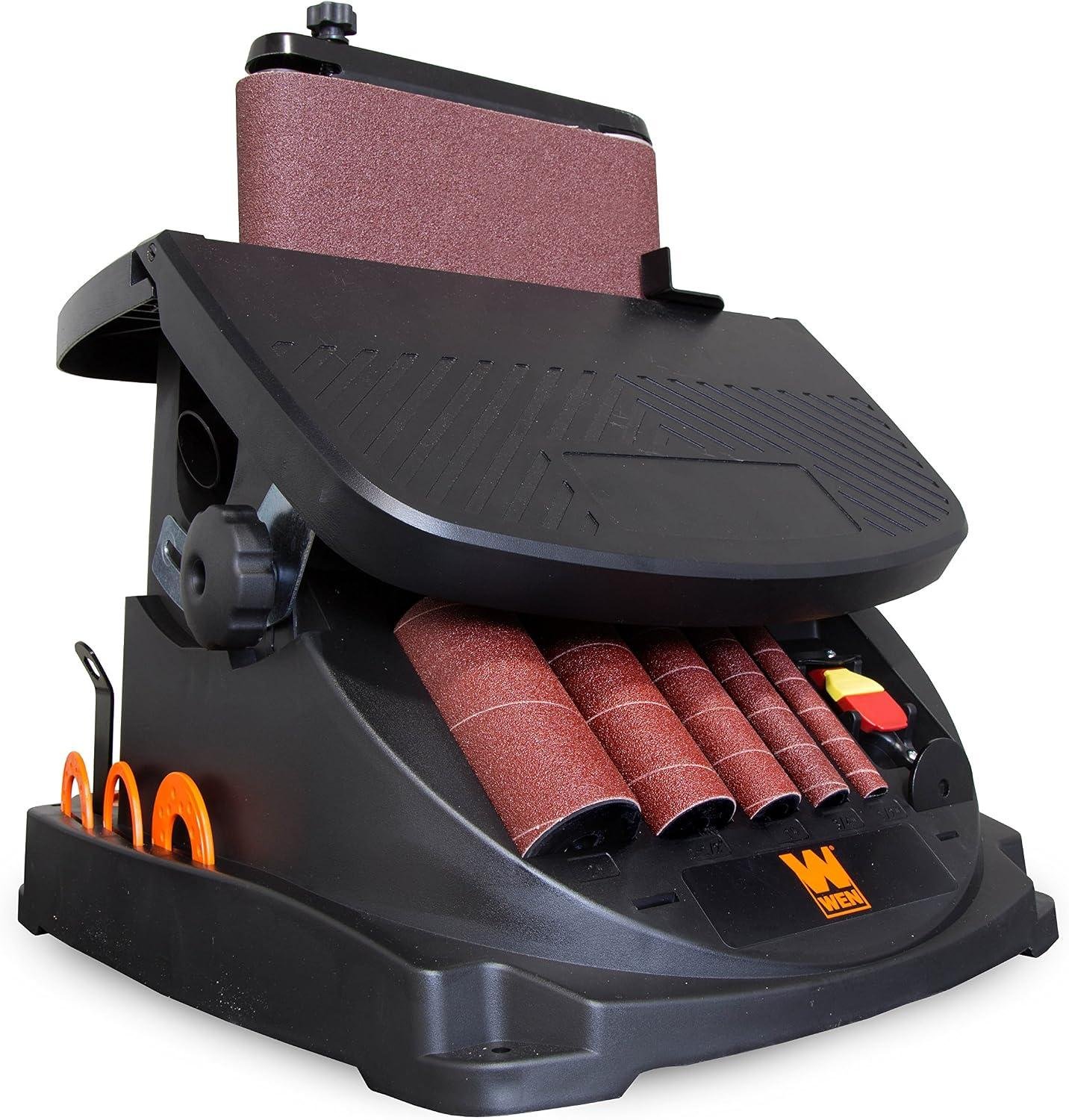
The WEN 6524 Oscillating Belt and Spindle Sander combines a 3.5‑amp motor with belt speeds up to 1575 FPM and spindle speeds up to 2000 RPM, plus 58 oscillations per minute with a 5/8-inch stroke for smoother sanding and reduced burning. It runs a 4 x 24-inch belt and includes five drum sizes (1/2″, 3/4″, 1″, 1-1/2″, 2″), a beveling work table, five throat plates, onboard storage, and starter 80‑grit sleeves/belt. Customers commonly highlight its versatility for curves and edges and appreciate the included accessories, though some note it’s not built like a heavy industrial unit.
It’s ideal for hobby woodworkers with small to medium projects, beginners learning fundamentals, and cabinet makers needing precision on profiles and cutouts.
Consider alternatives if you regularly sand thick hardwood aggressively, need production-level durability, or want a heavier, lower-vibration machine.
Overall, it’s a solid mid-range option that delivers reliable results for shaping and finish prep-within its power and build limits.
Want to see current pricing and customer photos? View on Amazon & Read More Reviews →