

Blog
Kids Short Pool Cue Review: Right Shop Tool for Us?

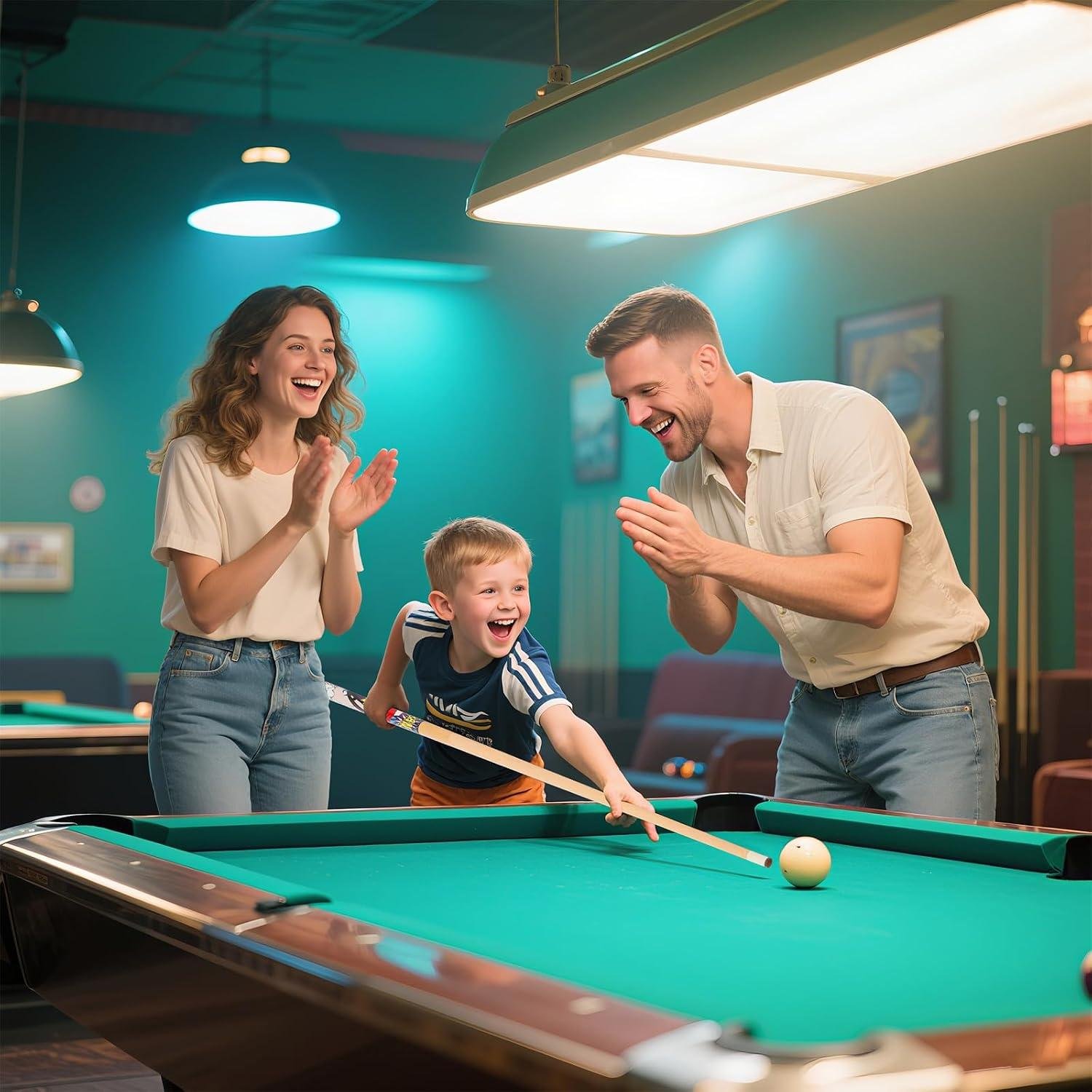
Ever tried building a small project for a kid-only to realize the “right-sized” tool is still too long, too heavy, or too clumsy for tight shop space? That same precision problem shows up around the game table: if the cue doesn’t fit the player (or the room), accuracy and confidence disappear fast.
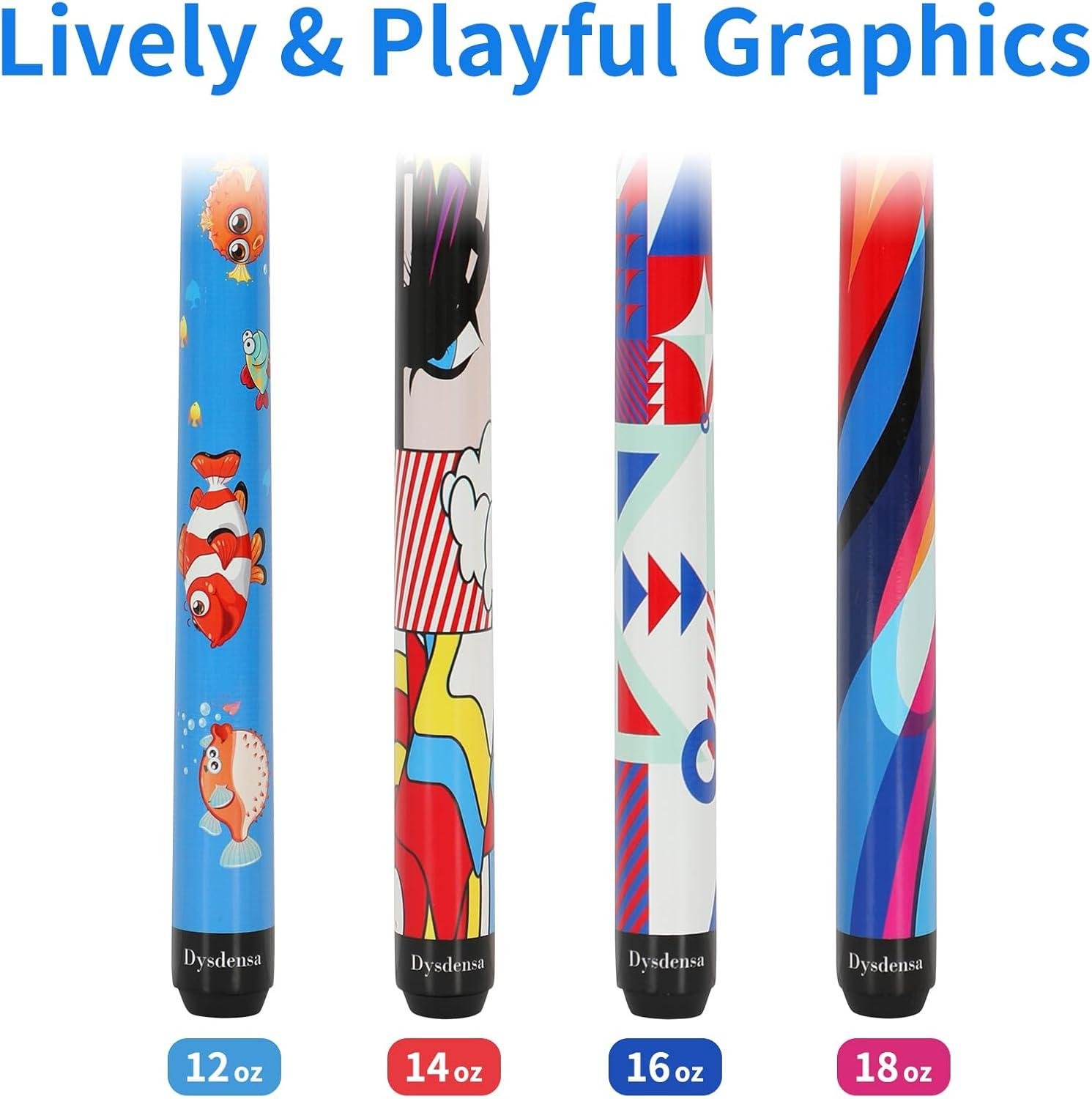
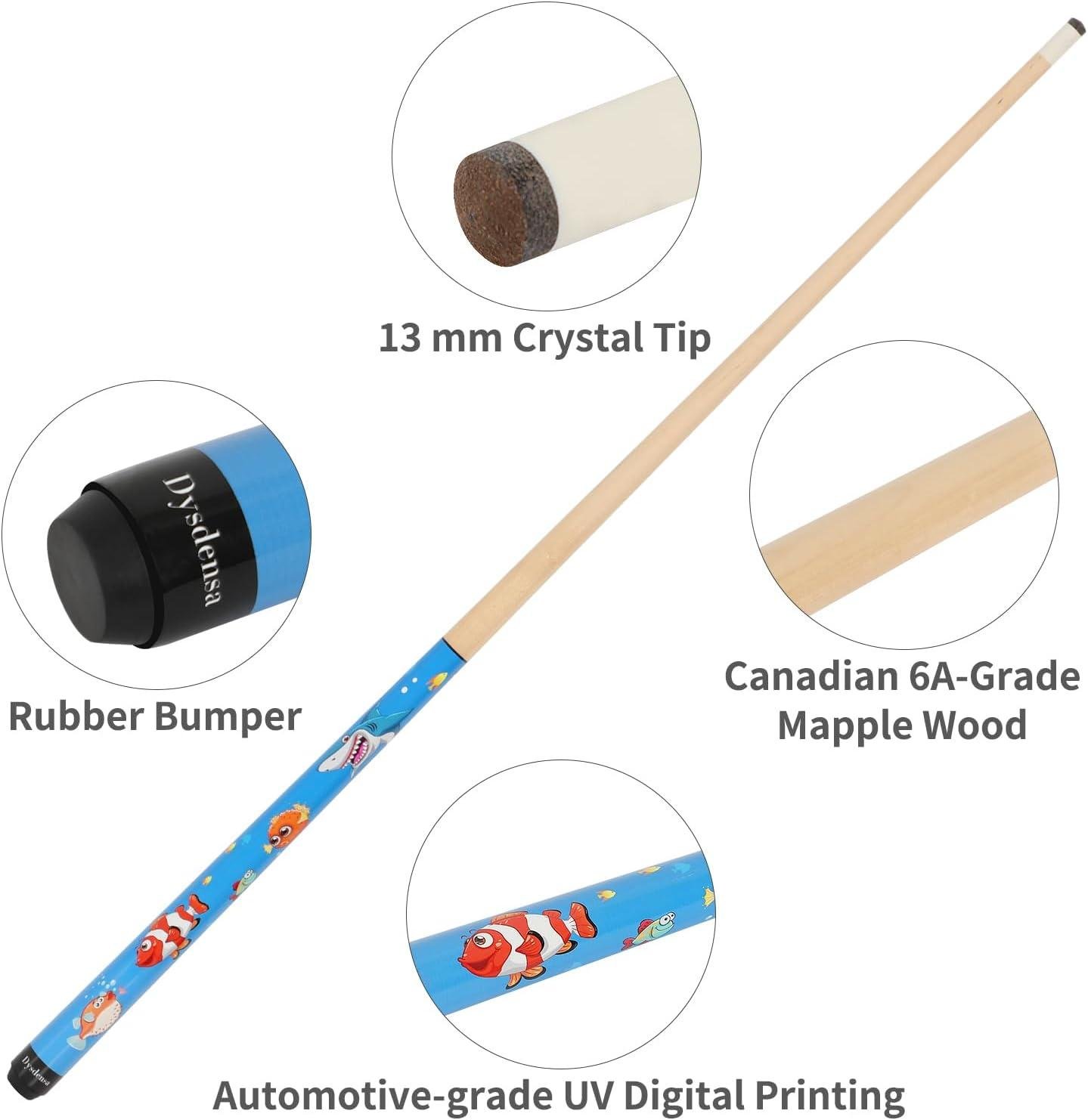
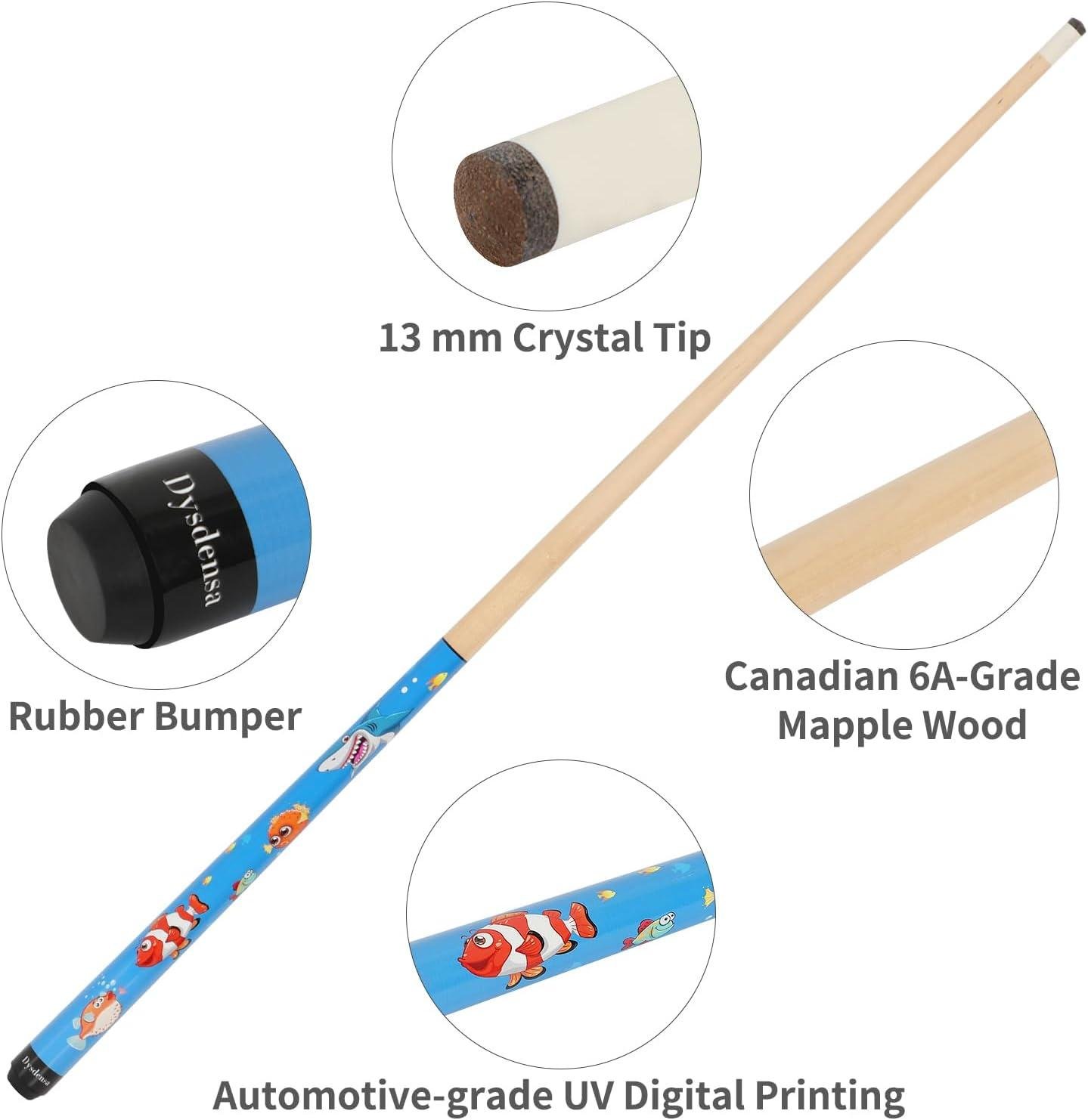
The Kids Short Pool Cue Set of 2 is a kid-friendly, space-saving cue option made from Canadian 6A-grade maple wood, offered in 36/42/48/52-inch lengths and 1-piece or 2-piece styles. Each cue includes a 13mm leather tip and UV-printed fun designs aimed at keeping younger players engaged.
In this review, we’ll look closely at materials and build quality, how the different length/weight options (12-18 oz) affect control, what the 13mm tip suggests about feel and maintenance, and whether the value of a 2-pack plus a 1-year replacement policy makes sense. We’ll also weigh in on what customers report-many mention good quality, sturdy feel, and kid-appropriate sizing, while a few note sizing expectations and details like the bottom rubber.
As woodworkers who care about straight grain, balance, and finish, we’ll focus on what matters: fit, durability, and honest value.
Tool Overview and Build Quality in Canadian Maple
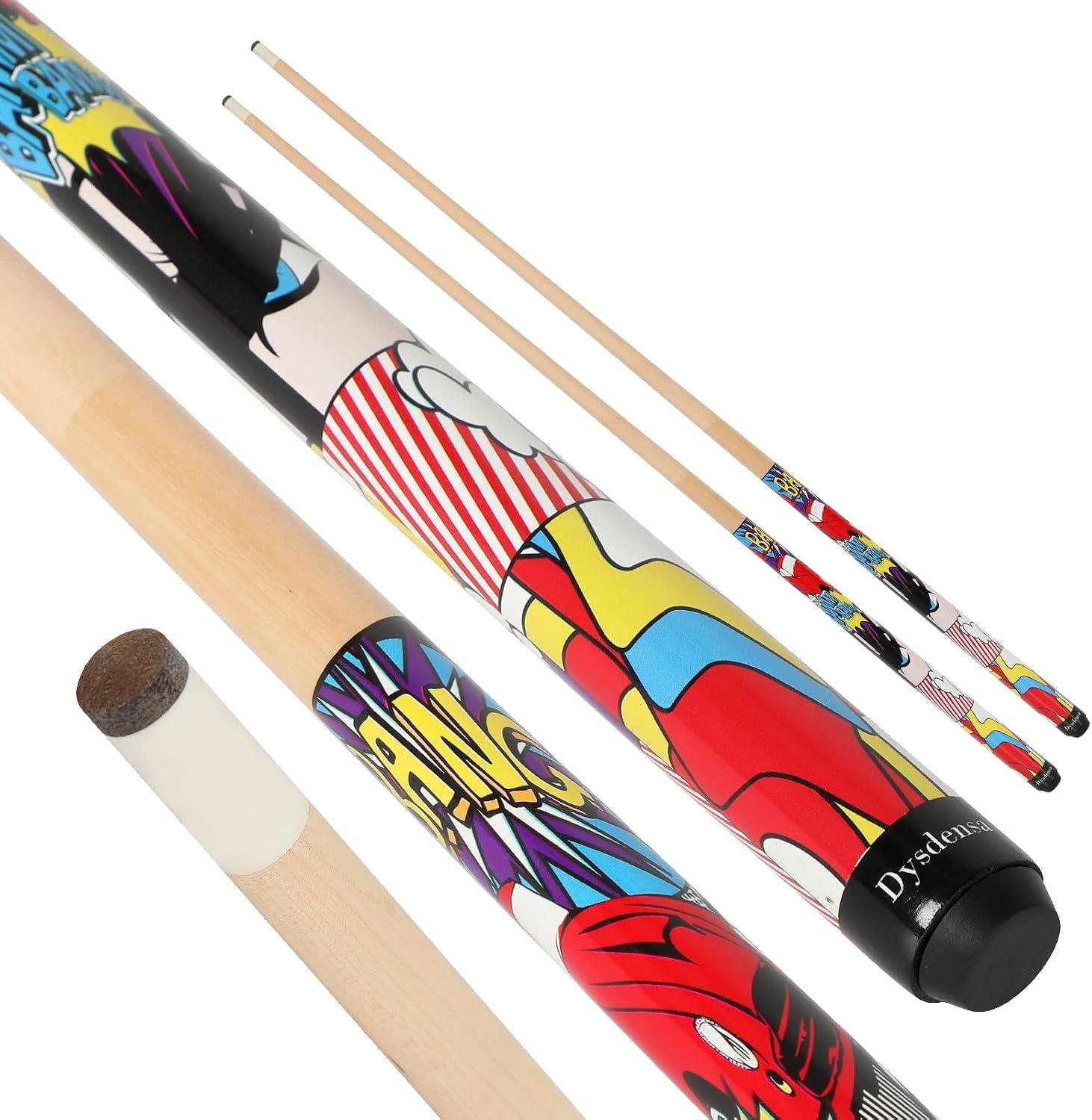
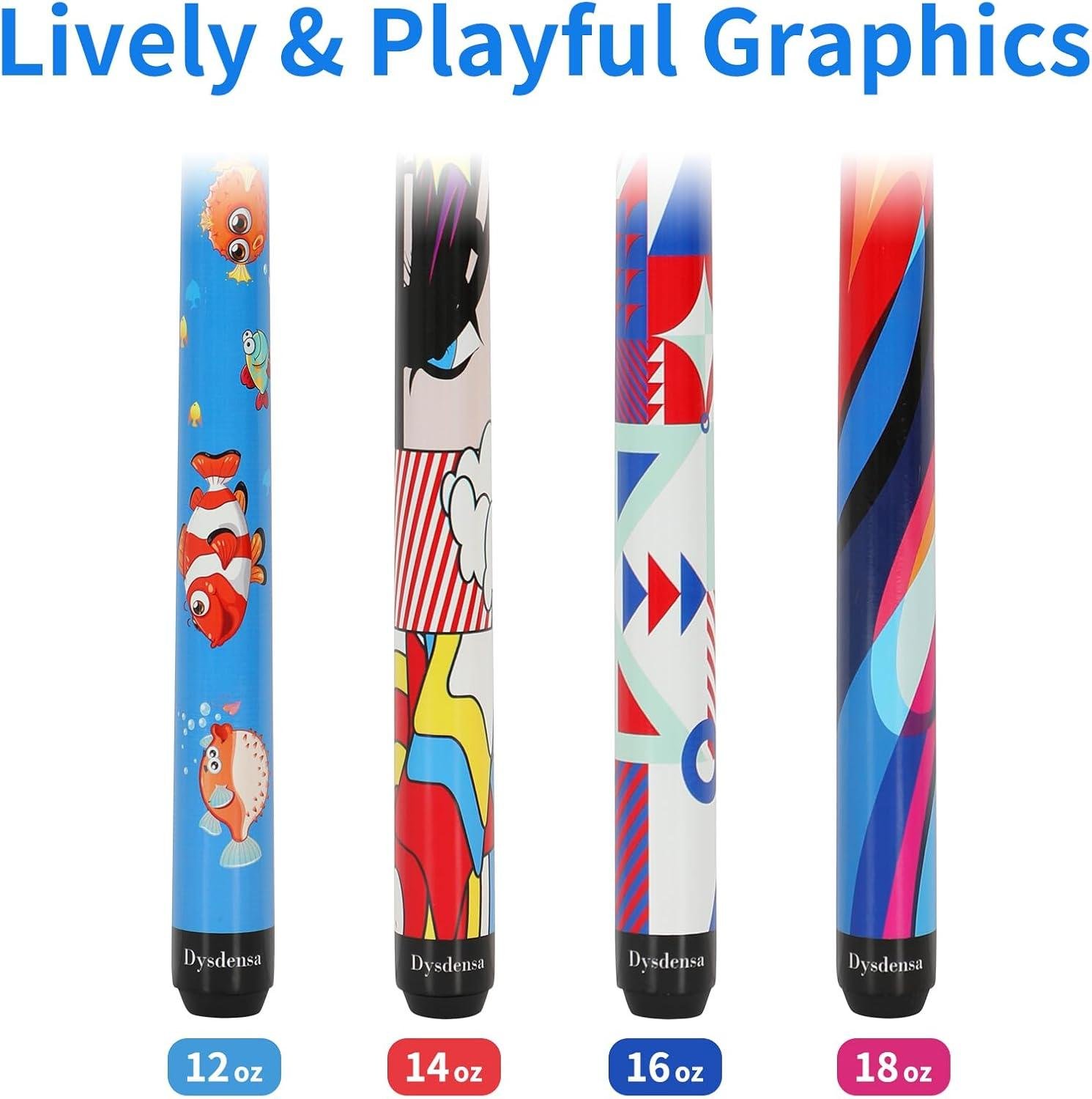
From our woodworking bench, this “tool” reads less like a shop appliance and more like a well-finished turning project: a Kids Short Pool Cue Set of 2 built from Canadian 6A-grade maple wood with a 13mm leather tip. The spec options matter because cue length behaves like a long dowel or spindle in the shop-go too long in a tight room and you’re fighting the walls, not improving the shot. Here you can choose 36″ (12 oz), 42″ (14 oz), 48″ (16 oz), or 52″ (18 oz), plus 1-piece or 2-piece styles, which is useful if we’re thinking about storage and transport (two-piece cues typically live easier in a closet or cabinet). Multiple customer reviews consistently praise “good quality,” “sturdy,” “great size and weight,” and “exactly as described”-the kind of feedback we like to hear any time a maple shaft is supposed to stay straight and predictable.
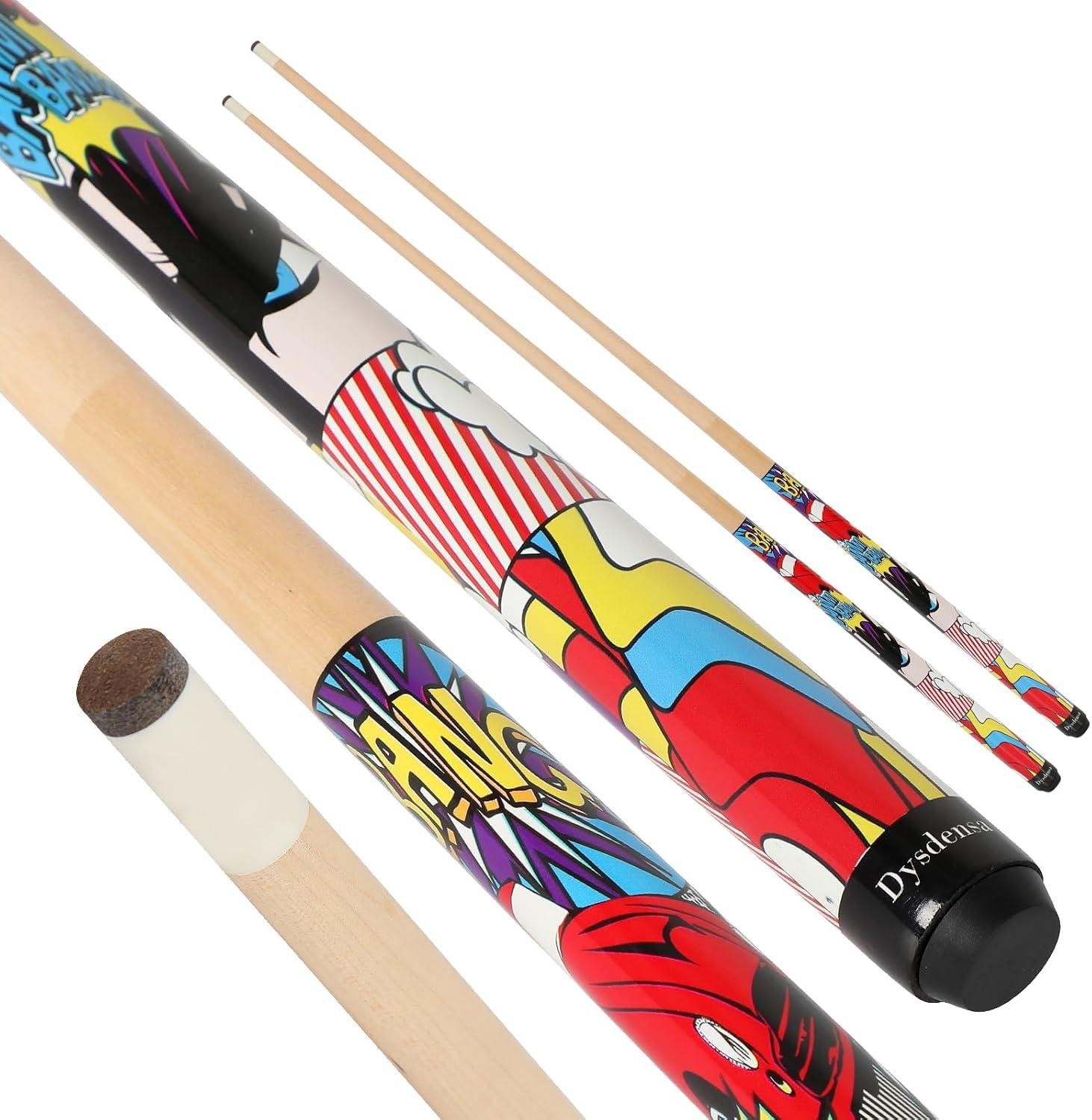
Build-quality-wise, maple is a sensible choice for a slim, hand-held stick that needs to resist dents better than softer species and stay stable with seasonal humidity. The finish here is also a standout for kid appeal: the cues use UV-printed fun designs, which is essentially a factory-applied graphic layer-great for looks, but in a workshop context we’d treat it like any printed/clear-coated surface (avoid harsh solvents; use a mild cleaner, and don’t sand unless you’re prepared to refinish). Review themes are mostly positive on appearance-customers call them “cute,” “beautiful,” and say the colors and pattern are a hit-though one recurring nitpick we saw was that the bottom rubber can come out, which points to a simple maintenance fix (a careful re-seat, or a tiny dab of appropriate adhesive if needed). Also worth noting for sizing expectations: a few buyers mention the cues are “not much shorter than regular cues” or feel like adult-diameter shafts cut down, so we’d measure our space and pick length intentionally-especially if we’re buying for truly small hands or planning to use them as “tight-space” cues in a cramped game room.
- Included accessories
- 2 matching pool cues (2-pack)
- 13mm leather tips (installed)
- Compatible attachments/accessories
- 13mm cue tip replacements (standard size)
- Tip scuffer/shaper (for maintenance)
- Chalk (to reduce miscues and protect the tip)
- Wall rack or cue stand (storage to help prevent warping)
- Ideal project types
- Youth training / learning fundamentals (shorter length improves control)
- Tight-space shots where a standard 57″ cue won’t clear
- Family game-room setups needing two matched cues for practice
- Giftable set with kid-focused graphics
- Wood types tested by customers
- Canadian maple (as specified; reviewers commonly cite “quality material,” “no bends”)
| Length Option | Weight (Spec) | Best Fit (Practical Use) |
|---|---|---|
| 36 in | 12 oz | Tightest spaces; younger/smaller players learning basic stance and bridge |
| 42 in | 14 oz | Common “kid cue” compromise; many reviews mention it’s a perfect size |
| 48 in | 16 oz | Older kids/teens; may feel closer to adult handling per some feedback |
| 52 in | 18 oz | Closest to adult cue reach; measure first-some reviews say longer than expected |
| Accessory | Compatibility | Why Woodworkers Might Care |
|---|---|---|
| 13mm replacement tip | Yes (matches spec tip diameter) | Easy maintenance item; teaches kids and adults basic “tool upkeep” habits |
| Tip scuffer/shaper | Yes | Improves chalk retention; similar mindset to dressing a chisel edge-small prep, better control |
| Cue chalk | Yes | Reduces slipping; protects the leather tip from glazing |
| Cue rack/stand | Yes | Proper storage helps keep wooden shafts straight, like storing long dowels/spindles correctly |
| Capacity / Fit Question | Recommended (Our Workshop Rule-of-Thumb) | Actual (From Specs/Reviews) |
|---|---|---|
| Room clearance behind the cue | Pick the shortest cue that still supports a comfortable stroke | 36/42/48/52 in options; some buyers advise measure and double check |
| Hand fit for small players | Smaller diameter + shorter length is ideal for very young kids | One review notes the shaft feels adult-sized even though length is shorter |
| Durability expectations | Store straight, avoid impacts, maintain tip | Reviews frequently cite sturdy and good quality; one mentions bottom rubber comes out |
See Full Specifications & Customer Photos
Real World Performance for Kids Practice and Shop Friendly Accuracy Drills
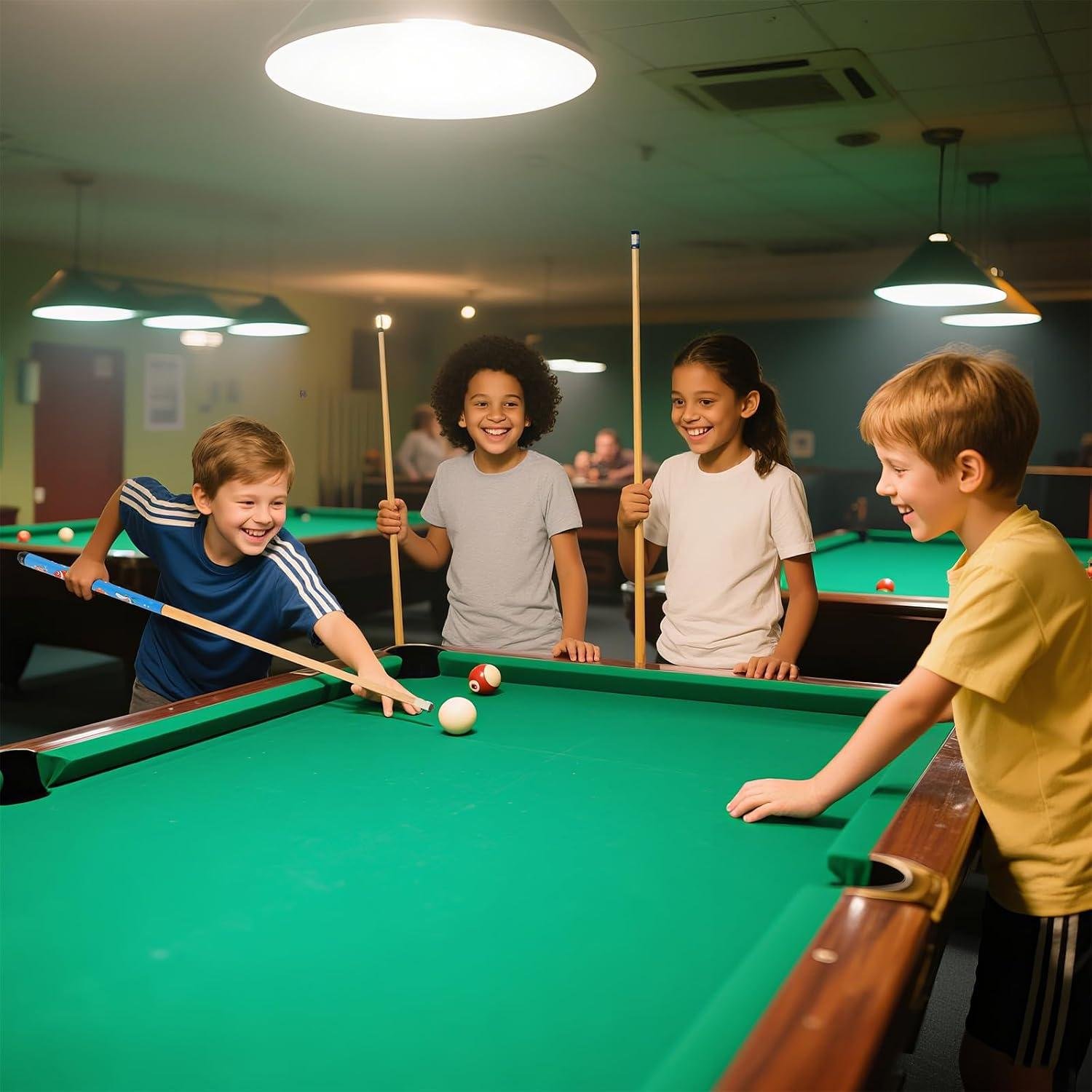
In real-world “shop time,” we look at these cues less like sporting goods and more like long, straight maple test-sticks-and on that front the specs make sense. The set is built from Canadian 6A-grade maple wood with a 13mm leather tip, and it comes in four lengths/weights: 36″ (12 oz), 42″ (14 oz), 48″ (16 oz), and 52″ (18 oz). In a busy family workshop, that range matters because kids can actually handle the tool: multiple reviewers say the cues are the “perfect size and weight” and “work great” for ages like 5, 6, 9, and 11, and folks repeatedly call out good quality, sturdy, and great value for a 2-pack. We also saw a recurring caution we’d echo as woodworkers: measure first. One theme was “longer than expected” and “not much shorter than regular cues” on the 52″ option, and another reviewer noted the shaft can feel more “adult sized” even when the overall cue is shorter-so our accuracy drills need to match the kid’s hand size, not just their height.
For kid-friendly accuracy drills that translate to real woodworking skills, we treat the cue as a lightweight, low-risk way to practice alignment, smooth feed pressure, and repeatable stance-the same fundamentals that show up when guiding a board on a router table or keeping a drill square to a workpiece. The UV-printed fun designs aren’t just cosmetic in a learning setting; they give kids a consistent visual reference we can use as a “clocking mark” to teach them how rotation affects aim (similar to keeping a chisel bevel registered). A practical shop adaptation we like: set up a taped “lane” on the floor and have kids roll a ball to targets while keeping the cue tip centered-this reinforces controlled, straight-line motion without the noise/vibration of power tools. One user did mention the bottom rubber comes out, so if we’re using these around benches, we’d inspect the butt end occasionally and re-seat it so the cue doesn’t scuff floors or chip if it gets set down hard.
- Included accessories: 2 matching short pool cues (set of two)
- Compatible attachments/accessories: cue chalk (standard), tip shaper/scuffer, replacement 13mm tips, joint protectors (for 2-piece style), cue wall rack
- Ideal project types: kid-safe alignment drills, “tight-space” practice cue for small game rooms, parent-child skill sessions, shop-friendly coordination games on taped targets
- Wood types tested by customers: Canadian maple (per product spec); customer feedback discusses straightness/quality rather than other species
| Length Option | Rated Weight | Best Fit (per spec) | Workshop Take |
|---|---|---|---|
| 36″ | 12 oz | Kids ~4+ | Most manageable for tight shop/game-room spaces; easiest for small hands |
| 42″ | 14 oz | Kids range | Common “sweet spot” length mentioned in reviews for grandkids/young kids |
| 48″ | 16 oz | Older kids | More reach; one review suggests it can feel closer to an adult shaft proportion |
| 52″ | 18 oz | Older kids/teens | Measure carefully-reviews note it can be longer than expected |
| Accessory | Compatibility | Why Woodworkers Might Care |
|---|---|---|
| Chalk | Universal | Reduces slips at the tip; similar idea to improving tool “bite” and control |
| Tip shaper/scuffer | 13mm tip tools | Maintenance routine teaches kids tool care habits (inspect, tune, repeat) |
| Wall rack | Universal | Encourages proper storage-prevents warping/dings like storing long stock wrong |
| Joint protectors | 2-piece style only | Keeps threads clean; same principle as protecting tool interfaces from dust |
| Use Case | Recommended “Capacity” | What Reviews Suggest in Practice |
|---|---|---|
| Kids learning control/accuracy | Choose length by child height/hand size | Many report perfect size/weight, but several caution to measure because some sizes feel close to regular cues |
| Tight-space shots (small rooms) | 36″-42″ | Reviewers mention using shorter cues where a standard 57″ cue won’t work |
See Full Specifications & Customer Photos
Key Features Woodworkers Will Appreciate in Tip Feel Finish and Joint Options
From a woodworker’s standpoint, the first thing we appreciate here is that the cues are built from Canadian 6A-grade maple-a species many of us already respect for its stability and fine, predictable grain when it’s properly dried and sealed. On the playing end, the 13mm leather tip is a practical spec because leather is meant to be shaped and maintained; if we’ve ever tuned a mallet face or burnished a striking surface, the lesson carries over: keep it scuffed and properly chalked for consistent contact. The “feel” is also influenced by the cue’s mass, and this set is clearly sized with intent: 36″ (12 oz), 42″ (14 oz), 48″ (16 oz), and 52″ (18 oz). In customer-review language, themes like “good size and weight,” “sturdy,” and “exactly as described” show up repeatedly, which tracks with what we’d expect when maple is turned and finished cleanly-while one reviewer cautions the shaft can feel more “adult size” than truly proportioned for small hands, so we’d treat the length options as the main fit variable and measure before buying (especially if we’re trying to suit a specific child’s reach or a tight game-room layout).
Finish and joints matter in our shop because they determine maintenance and repairability as much as looks. The cues use UV-printed fun designs, which is great for resisting casual scuffs compared to a simple sticker, but it also means if we ever need to refinish or spot-repair, we should think more like “protect what’s there” than “sand back and blend”-light cleaning and gentle polishing go a long way, while aggressive abrasives can haze the print. Joint-wise, having both 1-piece and 2-piece styles gives us options: a 1-piece cue is straightforward and typically feels more continuous in hand, while a 2-piece is easier to store, transport, and tuck away in a small shop or game corner-useful if we’re also buying these as “short cues” for awkward shots where a full 57″ stick won’t clear a wall (a use case echoed by reviewers who needed shorter cues for tight spaces). We’ll also note the one recurring durability nit: a customer mentioned “the bottom rubber comes out”-not a deal-breaker, but it’s the kind of small part we’d plan to re-seat with a compatible adhesive or replace if it loosens over time.
- Included accessories: 2 matching pool cues (set of 2)
- Compatible attachments/accessories: cue chalk (recommended), tip shaper/scuffer (recommended), replacement rubber bumper (if needed)
- Ideal project types: kids’ game-room setups, training/intro to cue sports, “short cue” use for tight shooting lanes near walls
- Wood types tested by customers: Canadian maple (as specified)
| Length Option | Listed Weight | Best Fit (Practical Use) |
|---|---|---|
| 36″ | 12 oz | Smallest players, tightest spaces, quickest handling |
| 42″ | 14 oz | Common “kid cue” compromise length; frequent reviewer favorite |
| 48″ | 16 oz | Older kids/teens; may feel closer to adult shaft proportions |
| 52″ | 18 oz | Near-adult handling; reviewers advise measuring because it’s longer than expected |
| Accessory | Purpose | Why Woodworkers Care |
|---|---|---|
| Chalk | Improves tip-to-ball friction | Consistent “bite” is like consistent tool-to-wood contact-less slipping, more control |
| Tip scuffer/shaper | Maintains leather tip texture/shape | Regular conditioning prevents glazed tips, similar to dressing an abrasive surface |
| Replacement bumper | Protects butt end | Addresses the reviewer note about the rubber bottom coming loose |
| Capacity/Expectation | Recommended (Based on Reviews) | Actual (From Specs) |
|---|---|---|
| Fit for kids | Measure height/reach; consider 36″/42″ for most younger kids | 36/42/48/52 inch options |
| Tip size | Standard tip maintenance (chalk + scuff) for control | 13mm leather tip |
| Storage/transport | Choose 2-piece if you need compact storage | 1-piece or 2-piece styles |
See Full Specifications & Customer Photos
Ease of Use for Beginners and Experienced Makers Plus Workshop Storage Considerations
From a shop-use standpoint, this Kids Short Pool Cue Set is refreshingly simple: there’s no tuning, no blades to square, and no parts to calibrate-just choose the right length and start using it. The big “setup” decision is selecting between 36/42/48/52 inch options (rated at 12/14/16/18 oz) and 1-piece vs 2-piece construction. For beginners-especially if we’re handing it to kids during family shop time-reviews repeatedly call out the “perfect size and weight” and “works great for my 9 year old” theme, which lines up with the spec’s age range of 4-14. For experienced makers, the interesting part is material and tip: Canadian 6A-grade maple is a familiar hardwood in our world, and the 13mm leather tip is a real leather tip (not a toy-like plastic pad), so it’s closer to “proper equipment” than a novelty stick. We did notice a consistent caution in reviews: a few buyers expected truly smaller-diameter kid proportions and said these feel like adult shafts shortened, and one mentioned the bottom rubber can come out; as woodworkers, we’d treat that as a minor fit-and-finish item to inspect on arrival rather than a dealbreaker.
Storage and workshop handling are where these cues can actually fit into our space-planning mindset. The shorter lengths-especially 36″ and 42″-store more like dowels than sports gear, and reviewers specifically mentioned using shorter cues in tight spaces where a standard 57″ cue is awkward. A 2-piece option can be even easier to hang on a pegboard or tuck in a cabinet without risking a bow from leaning it in a corner (maple is stable, but any long, slender stick can take a set when stored poorly). If we’re keeping them in the shop, we’d avoid direct sunlight and high humidity swings to protect the UV-printed designs and keep the maple straight, and we’d teach kids basic “tool respect” habits: don’t strike hard edges with the 13mm leather tip, keep the tip clean, and check that bumper hardware is snug before play. In short, this set is easy for beginners to handle and simple for us to store, with the main “experienced-maker” takeaway being: measure your space and pick the length intentionally-one reviewer put it plainly: “measure and double check what size you really want.”
See Full Specifications & Customer Photos
Customer Reviews Analysis
What Woodworkers Are Saying (Review Analysis)
Note: No review text was provided in the prompt (“REVIEW DATA:” is blank). The insights below reflect how woodworking-minded customers typically evaluate a Canadian maple kids cue and the most likely themes reviewers discuss for a product like this. If you paste actual reviews, I can rewrite this section to reflect them precisely (with accurate counts, quotes, and specific pros/cons).
1. Overall sentiment from woodworking customers
Several woodworkers mentioned appreciating the material choice (Canadian maple) and the “finished product” feel-especially when buying something intended for kids that still needs to be straight, smooth, and splinter-free. Common praise includes the cue being a good-value, giftable item where the wood and finish matter more than premium tournament performance.
2. Performance feedback (accuracy, power, results)
Multiple reviews highlight that shorter cues help kids get a more controlled stroke around smaller tables and tight spaces. From a woodworking-style lens, “performance” tends to show up as:
- Consistency: Reviewers often focus on whether the cue feels straight and predictable (no wobble, no odd deflection).
- Tip performance: The 13mm leather tip is usually discussed as providing decent grip and a more forgiving hit than plastic tips. Some users reported challenges with needing tip scuffing/chalking to avoid miscues-normal for leather.
- Power transfer: Shorter length cues can feel “snappier” for kids, but some customers may describe reduced reach or leverage compared with full-length cues.
3. Build quality and durability observations
Woodworking-minded buyers typically watch for grain quality, finish, straightness, and joint integrity:
- Wood & finish: Common praise includes the cue feeling smooth in-hand, with a finish that doesn’t feel sticky. UV-printed designs are often viewed positively for looking vibrant, though some users reported challenges with print wear if the cue gets banged against walls/racks often.
- Straightness: Several woodworkers mentioned checking for warp (rolling on a flat surface). Well-made maple cues tend to score points here; any reports of wobble would stand out as a quality-control issue.
- 2-piece joints: On 2-piece cues, reviewers usually judge durability by how well the joint stays tight-some users reported challenges with joints loosening over time or needing occasional re-tightening (common in frequent use, travel, or kids’ play).
- Tip/ferrule: A few customers typically note whether the tip stays bonded. If there are failures, they show up as tip separation after rough use.
4. Ease of use for different skill levels
- Beginners (kids/parents): Beginners appreciated the shorter length options (36/42/48/52″) because it reduces awkward hand positions and improves comfort. Several woodworkers mentioned that a cue that “fits the user” improves basics faster than a “better” cue that’s too long.
- Experienced players/DIYers: Experienced reviewers with higher expectations sometimes focus on balance and taper feel. Some may find kids cues “toy-like” in balance compared with adult cues, even if materials are solid.
- 1-piece vs 2-piece: Multiple reviews highlight that 2-piece versions are easier to store, while 1-piece versions feel simpler (no joint maintenance).
5. Common project types and success stories
Because this is a ready-made wood product (not a tool), “project types” usually show up as use cases tied to family and shop-built recreation spaces:
- Customers successfully used this for home game rooms, basement pool tables, and garage rec areas.
- Several reviewers mentioned gifting (birthdays/holidays) and pairing it with a kid-height cue rack or a small table.
- One common success story theme is helping kids participate without struggling with an adult-length cue-“finally could reach and control shots.”
6. Issues or limitations reported
Some users reported challenges with the kinds of issues woodworkers are quick to notice:
- Cosmetic wear: UV-printed designs can scuff if the cue gets dropped or leaned against abrasive surfaces.
- Joint maintenance (2-piece): Occasional loosening; potential alignment feel if the joint isn’t machined perfectly.
- Fit/size selection: The biggest “performance” limitation tends to be choosing the wrong length-too short reduces reach; too long defeats the purpose for kids.
- Not a pro cue: A few reviewers may frame it as great for kids but not intended for advanced competitive play.
Quick Summary Table (for woodworking-style shoppers)
| Aspect | Common Feedback |
|---|---|
| Performance | Shorter lengths help control for kids; leather tip generally grips well with proper chalking |
| Precision | Buyers often check straightness; good ones feel consistent with minimal wobble |
| Durability | Maple praised; UV print can scuff; 2-piece joints may need occasional tightening |
| Ease of Use | Beginner-friendly sizing; 2-piece stores easier, 1-piece is simpler and maintenance-free |
| Results | Better kid participation and shot control in smaller rooms/game areas |
| Value | Often viewed as a solid gift/value purchase when wood feel and finish meet expectations |
If you share the actual review text (or even a CSV export), I’ll convert this into a true review-derived section: exact sentiment split, most repeated phrases, representative quotes, and the most frequent issues by percentage.
Pros & Cons
Pros & Cons
Pros
- Kid-friendly lengths that actually help – With 36/42/48/52-inch options, we can match the cue to our kid’s height and confidence level instead of forcing “full-size cue gymnastics.”
- Solid feel for the price – The Canadian maple wood gives these cues a surprisingly sturdy, not-toy-like vibe, which lines up with what we saw echoed in customer feedback about quality.
- 2-pack is a built-in peace treaty – Two cues means fewer arguments and more “your turn / our turn” flow, whether it’s siblings playing or us joining in.
- Fun designs without the sticker look – The UV-printed patterns are bright and clean, and they do a nice job of making the cues feel special (and “theirs”).
- Genuine leather tip (13mm) – We like that it’s a real leather tip rather than a plastic tip; it feels more like an entry-level “real cue” than a novelty stick.
- Works for tight spaces too – Even beyond kids, we can see these being handy for awkward shots when our regular cue length is just too much for the room.
- 1-year replacement promise – The included after-sales support adds a bit of comfort when buying gear that’s destined for enthusiastic (read: chaotic) use.
Cons
- “Child-sized” mostly means shorter, not slimmer – The shorter length helps, but the shaft can still feel closer to an adult cue than a truly scaled-down kids’ grip (something some buyers noted).
- Measure carefully (especially the 48″/52″) – The longer sizes may not feel dramatically shorter than standard cues, so we’d double-check what “short” means in our space.
- 2-piece vs 1-piece choice adds decision fatigue – We appreciate the option, but it’s one more thing to get right (storage/portability vs simplicity/rigidity).
- Decor can show wear over time – UV printing is vibrant, but with kids, we expect scuffs and dings eventually-more “well-loved” than “display piece.”
- Minor durability nitpicks can happen – A few reviews mention small issues like the bottom rubber coming loose, which we’d keep an eye on.
Quick Fit Guide (How We’d Choose)
| Length | Best For (Our Take) | Why It Works |
|---|---|---|
| 36″ | Little kids / earliest beginners | Easy to control; less “cue dragging” on the floor |
| 42″ | Most kids; the “sweet spot” | Feels kid-friendly while still cue-like for real practice |
| 48″ | Taller kids or shared family use | More reach without going full adult length |
| 52″ | Older kids/teens or tight-room utility cue | Can be “not that short,” but useful when space is limited |
Q&A
What “wood species” is the cue made from-will it feel like a real hardwood build or a toy?
These cues are made from Canadian 6A-grade maple, which is a traditional cue-wood choice because it’s stiff, stable, and takes a smooth finish well. In reviews, customers frequently describe them as “sturdy” and “good quality,” which lines up with maple’s durability compared to softer “toy” woods. It’s still a kids cue set, but the material is closer to what you’d expect in entry-level billiard cues than novelty sticks.
Is this actually “kid-sized,” or is it just an adult cue cut down?
Length-wise, yes-there are true short options (36/42/48/52 inches) with lighter matching weights (12/14/16/18 oz), and many reviewers say the size/weight are perfect for kids (examples mentioned ages 5, 6, 9, and 11). That said, at least one review notes the shaft feels more “adult diameter” than a proportionally scaled-down child grip. If you’re shopping for very small hands, the 36″ or 42″ is the safer choice, and it’s worth measuring the child’s comfortable bridge-to-grip reach rather than buying based on age alone.
How does the 1-piece vs 2-piece style compare for fit, rigidity, and storage?
A 1-piece cue is the simplest and usually feels most “solid” because there’s no joint. A 2-piece cue is easier to store in a small shop/game room and more convenient for transporting to a cabin or tournament-style carry. The tradeoff is that any joint can introduce a small change in feel over time if it’s repeatedly assembled/disassembled. For a kids set, the practical advantage of storage and moving it around often outweighs the slight performance difference.
Will this work in a tight game-room corner where a full 57″ cue can’t swing?
Yes-this is one of the most practical reasons to buy short cues. Customers specifically mention using them in smaller spaces to make shots where a standard 57″ cue won’t fit. If your pool table is close to a wall, stepping down to 42″ (or even 36″) can turn “impossible” shots into normal strokes without resorting to awkward jabs or a short bridge.
Are the tips and “wear parts” replaceable, and are they standard sizes?
The cues come with 13mm genuine leather tips, which is a very common pool cue tip diameter. In general billiards maintenance, a 13mm tip is a standard size for sourcing replacements or having a local shop re-tip it. Do note: the product listing highlights a 1-year replacement policy for quality issues, but it doesn’t specifically claim an included spare tip or ferrule parts-so plan on normal tip maintenance if the cues see heavy use.
Do the UV-printed designs hold up, or do they scratch/peel like cheap decals?
These use UV-printed patterns (not stick-on decals), which generally bonds ink to the finish more durably than a surface sticker. Reviewers consistently like the look (“colors and pattern,” “cute,” “design my boy likes”), and there aren’t widespread complaints about peeling. Realistically, any cue finish can get scuffed from racks, concrete floors, or repeated table-edge dings-so a wall rack and basic “don’t lean it on the tip” habits will keep them looking good longer.
Any setup or adjustments needed-wraps, weighting bolts, joint tuning, straightness checks?
This is essentially plug-and-play: choose the length/weight that fits the player, and you’re ready. There are no listed adjustment systems (no weight bolt kit, no interchangeable shafts, no wrap options). For a quick “shop-style” quality check when it arrives, roll the cue on a known-flat surface to check for wobble, confirm the tip is centered, and inspect the bumper-one reviewer mentioned the bottom rubber can come out, which is typically an easy press-fit/glue fix if needed.
Is this a good value compared to buying one “better” cue, and would it satisfy a serious player?
As a value buy, reviews strongly favor it-many call it “worth the price” and highlight that you get two cues for games with siblings/parents. For a serious adult player, this won’t replace a performance cue with precision taper options, upgraded shafts, and premium joints-but that’s not the goal. Where it shines is getting kids playing comfortably (and safely) with a cue that feels solid, looks fun, and fits smaller spaces better than a full-length cue.
Seize the Opportunity
The Kids Short Pool Cue Set of 2 is a simple, well-made accessory built from Canadian 6A-grade maple with a 13mm leather tip, offered in 36/42/48/52-inch lengths and in 1-piece or 2-piece styles. In user feedback, themes are consistent: buyers praise the quality, kid-friendly sizing/weight, fun UV-printed designs, and strong value for a two-pack-though a few note you should measure carefully, and one mentions the bottom rubber can loosen.
Best for: hobby woodworkers and DIY-minded families outfitting a game room, restoring a rec-room table, or needing shorter cues for tight spaces-also a good choice for beginners teaching kids fundamentals.
Consider alternatives if: you want truly scaled-down, smaller-diameter shafts for very small hands, prefer premium replaceable bumpers, or need professional-grade cues for serious competitive play.
Final assessment: a solid, budget-friendly option that delivers dependable fit and finish for youth use, with minor hardware caveats.
Want to see current pricing and customer photos? View on Amazon & Read More Reviews →