
Blog
GOCHANGE Foam Cutter Pen Review: Right for Our Shop?


Ever tried shaping rigid foam for a router template, a curved caul, or protective packaging for a finished piece—only to end up with a jagged edge, drifting lines, and a bench covered in staticky crumbs? In a small shop, messy foam work can feel like it steals time, accuracy, and precious workspace.
That’s where the GOCHANGE 3 in 1 Foam Cutter Electric Cutting machine Pen Tools Kit comes in. It’s an 18W hot-wire/hot-knife foam cutting set with a 100–240V power adapter, an on/off safety button, and multiple tips—including an 11 cm heating needle (2.0 mm stainless steel), a 5 cm bending-style hot knife, and an 18 cm bow hot wire (0.25 mm) with 10 m replacement wire—built for low-density foams like EPS,EPP,and KT board.
In this review, we’ll break down the design, heat-up claims (160°C in ~5 seconds), ease of control, durability cues, ventilation and run-time limits (30 minutes), and what customers report about cut cleanliness and learning curve. We’re woodworkers who regularly lean on jigs and templates, so we’ll keep the focus on practical shop use, not hype.
Tool Overview and Build Quality for Shop Use

In our shop, we look at the GOCHANGE 3-in-1 foam cutter less like a “power tool replacement” and more like a specialty layout-and-prototyping tool for woodworking—especially when we’re shaping foam mockups, router templates, jig spacers, or packaging inserts. It’s rated at 18W and runs from a 100–240V AC input adapter with a 7.5V / 2.5A DC output, which tells us it’s designed for controlled heat rather than brute-force cutting. The kit’s headline is fast warm-up: the 5cm and 11cm heated tools are spec’d to hit 160°C in ~5 seconds (with max temps listed up to 280°C on the 5cm wand and 350°C on the 11cm wand), while the 18cm bow wire is listed as stable around 200°C. Mechanically, build quality centers on the heating elements: a 2.0mm stainless-steel needle/heating tube for rigidity and a bow using 0.25mm hot wire; combined with an ergonomic anti-skid handle, it’s meant to feel pen-like for detail work rather than like a saw. Customer review themes tend to cluster around rapid setup, fast heating, and clean, smooth cuts that “seal” foam edges with little debris—with the caveat that it’s most appreciated for small-scale craft and detail handling rather than production throughput.
For shop use, “build quality” also means how forgiving the tool is when we’re moving quickly—and here the limitations matter as much as the strengths. GOCHANGE is explicit that it’s intended for low-density, softer foams (EPS/Styrofoam, EPP, sponge, KT board, pearl cotton), and not for dense foams like XPS/extruded board or plastic boards; that matches the typical hot-wire reality: dense material demands more heat, which can led to drag, smoking, or wire stress. The capacity guidance is also worth treating like a guardrail: the 8.5cm bow isn’t recommended for foam thicker than 8cm, the 11cm straight tool for thicker than 11cm, and the 5cm bending knife for thicker than 4cm. Reviews frequently echo that performance is best when we keep the cut moving (don’t dwell in one spot), and that ventilation is a must because a small amount of smoke is normal during melting cuts. From a durability standpoint,users commonly mention it works well but needs basic care—GOCHANGE’s own maintenance tip is to cool down and wipe the needle with a damp sponge to reduce oxidation buildup—and the duty-cycle note (avoid continuous use beyond 30 minutes) sets expectations for workshop pacing when we’re batching template parts.
- Included accessories
- 11cm straight heating needle tool
- 5cm bending style hot knife
- 18cm bow hot-wire cutter (with 8.5cm cutting height)
- 10m replacement wire
- UL-approved power supply / voltage transformer adaptor (per listing)
- 1.2m power cord
- On/Off safety button
- Compatible attachments/accessories (shop add-ons we’d pair with it)
- Extra 0.25mm hot-wire spools (for faster turnaround)
- Heat-resistant cutting mat or ceramic tile (safe resting surface)
- Small fume fan / activated-carbon mask (for foam-cut smoke management)
- Metal stand/holder (if yoru kit version includes one,use it; otherwise add one)
- ideal project types (woodworking-adjacent)
- Foam mockups for curved parts before committing to hardwood
- Protective case/packaging inserts for hand tools and jigs
- Shaping foam cauls,spacers,and temporary supports
- Lettering and signage prototypes (template work)
- Wood types tested by customers
- None noted—this is a foam cutter,and reviews primarily discuss foam materials rather than wood species.
| Spec / Feature | GOCHANGE (per listing) | Why it matters in a wood shop |
|---|---|---|
| Power | 18W | Enough for low-density foam shaping; not a substitute for saws/routers on wood. |
| Power requirements | 100–240V AC in; 7.5V/2.5A DC out | Travel-friendly voltage input; the external adapter is part of the system—protect it like any charger. |
| Warm-up / temp (claimed) | 160°C in ~5s; up to 350°C (11cm), 280°C (5cm) | Fast starts for quick template jobs; heat requires ventilation and a safe resting spot. |
| Cord length | 1.2m | May be short for large benches—plan for outlet placement (avoid loose extension cord tangles). |
| Blade/Tip Type | Size (per listing) | Best use |
|---|---|---|
| Straight heating needle | 11cm length; 2mm tube diameter | Longer straight cuts, slotting, and trimming foam blocks for jig prototypes. |
| Bending style hot knife | 5cm | Detail handling, notches, quick relief cuts in thinner foam. |
| Bow hot wire | 18cm bow length; 0.25mm wire | Smooth contour cutting and shaping profiles (keep the cut moving for clean edges). |
| Replacement wire | 10m | Consumable support—useful if the wire stretches or breaks during heavy shaping. |
| Tool / Mode | Recommended Capacity (per listing) | “Actual” capacity in practice |
|---|---|---|
| Bow hot wire (8.5cm height) | Not for low-density foam thicker than 8cm | Depends heavily on foam density and feed speed; plan on test cuts and good ventilation. |
| Straight hot needle (11cm) | Not for low-density foam thicker than 11cm | works best when we don’t pause in the cut; dwelling increases melting/smoke and edge distortion. |
| Bending hot knife (5cm) | Not for low-density foam thicker than 4cm | Best treated as a detail tool—thin stock and controlled passes. |
See Full Specifications & Customer Photos
Real World performance for Foam Templates Inlays and Pattern Work
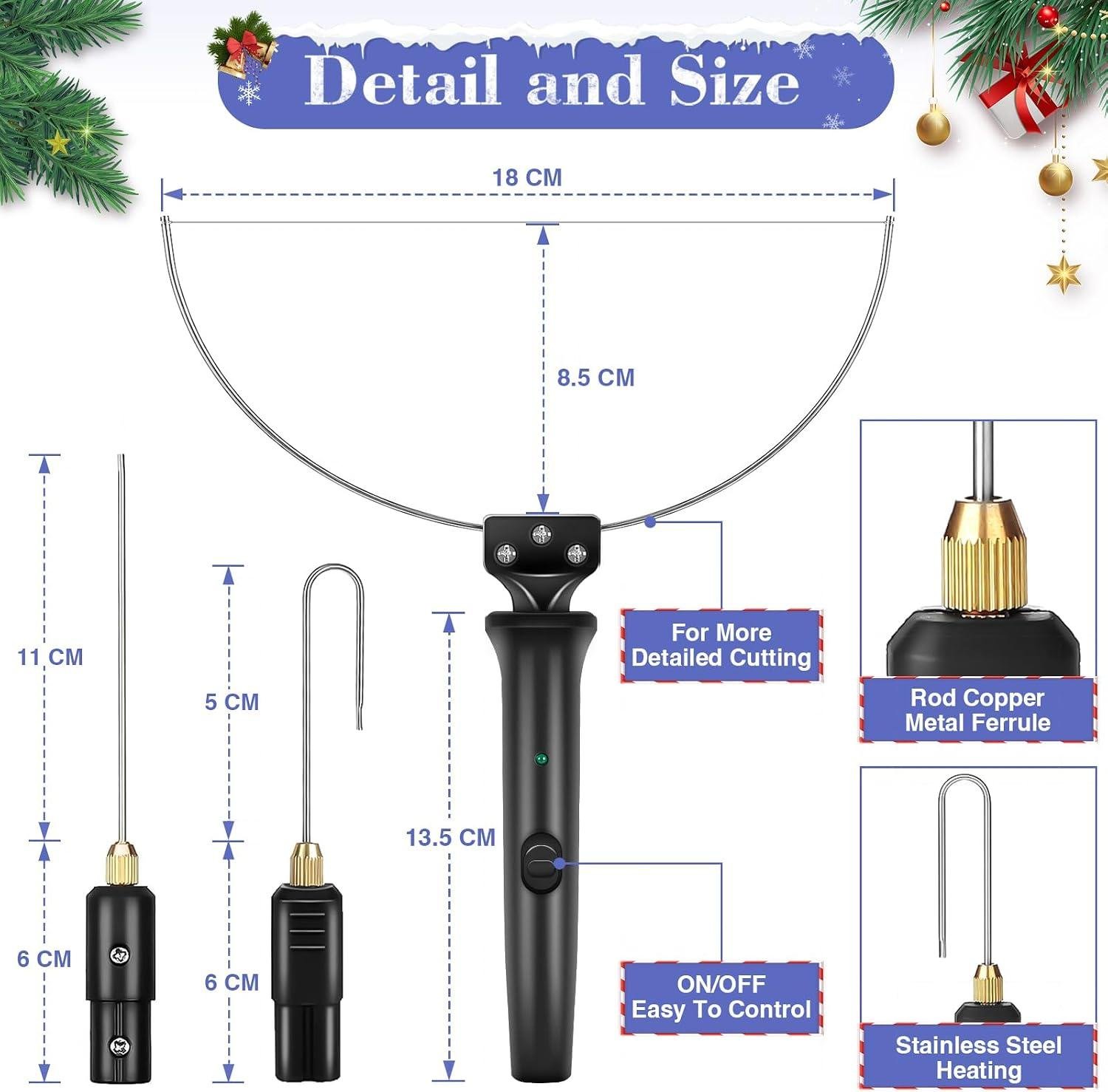
In real pattern work, we’ve found the GOCHANGE kit behaves less like a “foam saw” and more like a controllable heat source that *melts a kerf* through low-density stock—useful when we’re laying out foam templates for routing, building quick inlay mockups, or shaping cauls, spacing blocks, and protective packing forms that need repeatable geometry. The tool is rated at 18W and runs off 100–240V AC through an included adapter that outputs 7.5V/2.5A DC,and that modest power is exactly why it shines on smaller,controlled cuts rather than production ripping. The spec that matters most for template makers is reach: the 11cm heating needle gives us enough depth for carving registration notches and inside corners, while the 18cm bow is better for long, sweeping profiles. it’s also fast to get going—per the listing it hits 160°C in ~5 seconds (and reviewers commonly echo “heats up quickly” and “cuts smoothly”). For accuracy, our biggest lesson is technique: once the wire/needle is fully hot, we keep the feed rate steady and keep the tip moving so it “seals” the edge instead of lingering and widening the cut.
Where the kit draws a clear line is material density and duty cycle,and customer feedback tracks that reality: multiple reviewers praise clean,precise cuts on softer foams (EPS/Styrofoam,sponge,EPP/KT-type boards),while others report frustration when trying to force it through denser foams (like XPS) or pushing too hard and bending/overheating the element. The product guidance is also worth respecting in a woodworking shop: don’t run it continuously for more than 30 minutes, expect a small amount of smoke, and work with ventilation—we treat it like using any heat tool near finishes and sawdust. For inlay and pattern layout,we’ve learned to cut foam slightly proud,then “sneak up” on the line with lighter passes; it’s closer to paring with a chisel than sawing lumber. And as this is a foam tool—not a wood tool—we keep it in the template drawer rather than the bench line-up: it won’t replace a bandsaw for MDF patterns, but it can save time when we want a fast, forgiving prototype before committing to hardwood or plywood.
- Included accessories: 11cm heating needle (2.0mm stainless), 18cm bow hot wire cutter (0.25mm wire), 5cm bending-style hot knife, 10m replacement wire, power adapter/transformer (100–240V AC to 7.5V/2.5A DC)
- Compatible attachments/accessories: replacement 0.25mm hot wire (cut-to-length), spare heating needles (same diameter/fit), small stand/clamp to hold the hot pen safely between cuts
- Ideal project types: routing template prototypes, inlay layout mockups, foam packaging inserts for jigs/fixtures, curved pattern blanks for tracing, lightweight forms/cauls
- Wood types tested by customers: N/A (review themes focus on foam materials like EPS/Styrofoam, KT board, sponge/EPP; this is not a wood-cutting tool)
| Spec | GOCHANGE 3-in-1 Foam Cutter (from listing) | What it means for template/inlay work |
|---|---|---|
| Power | 18W | Best for controlled shaping and fine detail; not for forcing thick, dense foam cuts |
| Power input/output | 100–240V AC in; 7.5V/2.5A DC out | Portable for most shops; adapter is part of the system—protect it like any small-tool PSU |
| Heat-up | 160°C ~5 sec (5cm & 11cm tools) | quick start supports “cut,check fit,adjust” iteration during pattern development |
| Max temperature (listed) | 11cm tool up to 350°C; 5cm up to 280°C; bow stable 200°C | Higher temp helps glide—steady motion reduces kerf widening and melted buildup |
| Reach | 11cm needle; 18cm bow; 5cm bending knife | Pick the head based on inside corners (needle) vs long curves (bow) vs shallow trimming (knife) |
| Accessory / Bit / Blade | Included? | Best use in a woodworking template workflow |
|---|---|---|
| 11cm heating needle (2.0mm) | Yes | Notches, inside corners, scribe lines, pocketing for registration blocks |
| 18cm bow hot wire (0.25mm) | Yes | Long curves, fairing template edges, quick outline cuts |
| 5cm bending-style hot knife | Yes | Flush trimming, shallow bevels, shaving foam proud of a line |
| Replacement wire (10m) | Yes | Consumable for keeping the bow cutting cleanly when wire stretches/oxidizes |
| Capacity topic | Recommended (from listing) | Actual expectation in the shop |
|---|---|---|
| Foam density | Low-density foams (EPS/Styrofoam, KT board, sponge/EPP) | Matches most “fast prototype” template needs; dense XPS may cut slowly or poorly |
| Thickness (by head) | Bow: not for >8cm; Straight: not for >11cm; 5cm knife: not for >4cm | Thin-to-medium foam boards are the sweet spot; for thicker blocks, plan multiple passes |
| Duty cycle | Don’t run continuously >30 min | Works well for iterative fitting; not ideal for long continuous production runs |
See Full Specifications & Customer Photos
key Features Woodworkers Will Appreciate in a Versatile Hot Cutting Kit
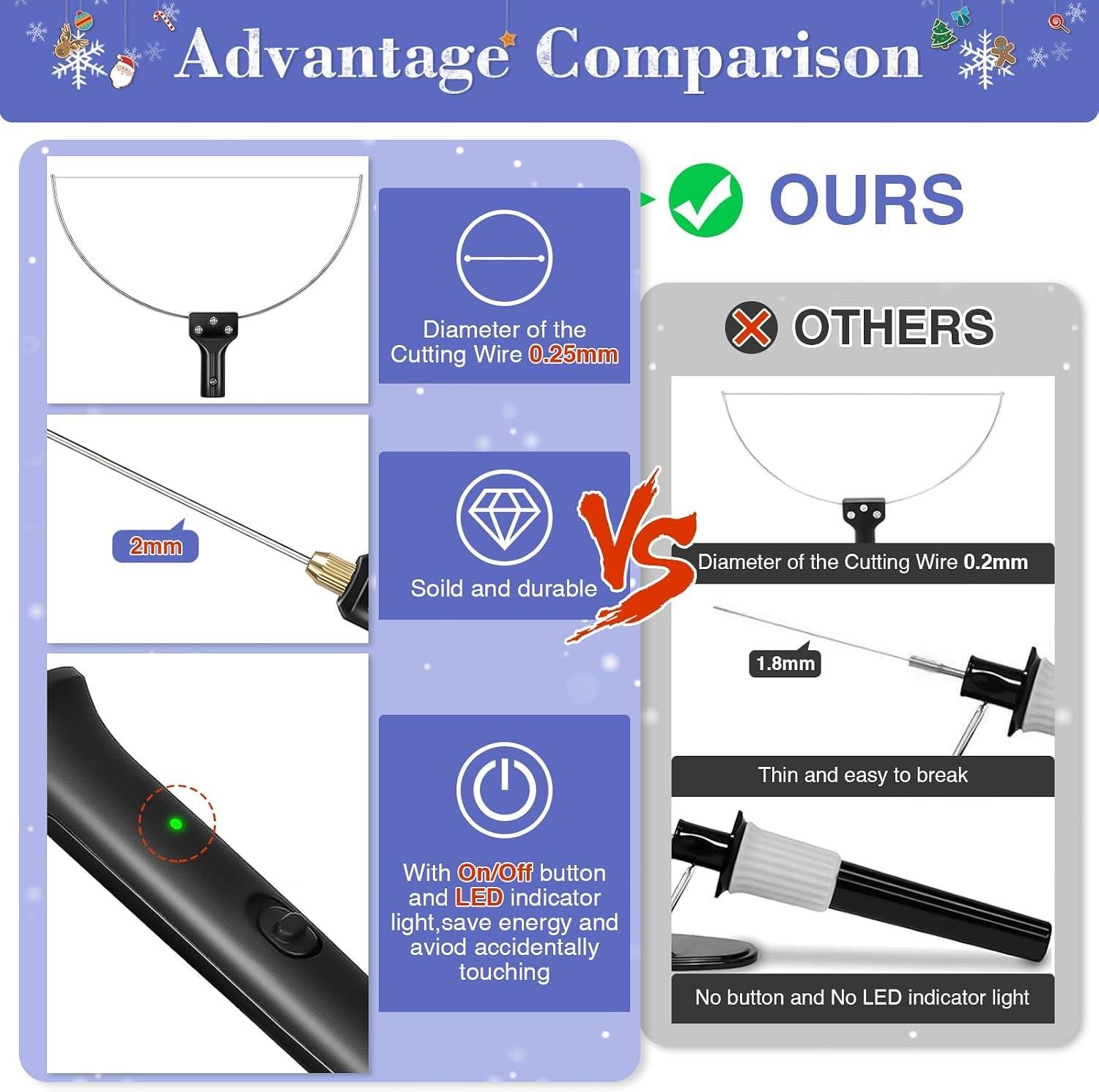
In a woodworking shop, a hot cutter like this GOCHANGE kit earns its keep when we’re shaping foam for templates, cauls, packing inserts, and mock-ups—jobs where a utility knife leaves ragged crumbs that end up everywhere. The standout “versatile” feature is the 3-in-1 cutting head options paired with an 18W heat system and a wide-ranging 100–240V AC input supply (adapter outputs 7.5V / 2.5A DC). According to the product specs, the 5cm and 11cm tips can reach 160°C in ~5 seconds, which matches common customer themes about fast heat-up and cleaner cuts that “seal the edges” compared to slicing foam cold. Where we need to stay realistic is material choice: the manufacturer explicitly notes it’s for low-density foams (EPS, EPP, sponge, KT board, pearl cotton) and not for tighter, high-density sheets like XPS/extruded board; reviews often echo that it’s great on softer foam but struggles or cuts slower on denser boards. For woodworkers, that distinction matters—this is a layout-and-shaping helper, not a replacement for saws, rasps, or pattern bits on actual wood.
From a technique and safety standpoint, the features we appreciate are the practical ones: a handle designed to be light with an anti-skid grip for controlled angle cuts, an On/Off safety button, and a straightforward setup that reviewers commonly describe as easy to get running quickly. because hot-wire cutting “melts” rather than slices, we get best results when we keep the tool moving (don’t dwell in one spot) and let temperature do the work—exactly as the instructions warn—while working in good ventilation since a small amount of smoke is normal. capacity-wise, the limits are clear and useful for planning: the bow is 8.5cm high and not intended for foam thicker than ~8cm, the straight needle is 11cm (not for foam thicker than ~11cm), and the bending hot knife is 5cm (best under ~4cm thickness). We also like that maintenance is simple: after cooling, wipe the heating needle to reduce oxide buildup—reviewers frequently mention performance is best when the tip is kept clean. In short, it’s a handy add-on for woodworking workflows that involve foam patterns and packaging—provided we respect the 30-minute continuous-use guidance and stay within the foam density and thickness ranges.
- Included accessories
- Bow hot wire tool (18cm bow length; 0.25mm wire)
- Straight heating needle tool (11cm; pen heating tube diameter 2mm)
- Bending style hot knife (5cm)
- Replacement wire (10m)
- Power adapter (Input 100–240V AC / Output 7.5V 2.5A DC)
- Power cord (1.2m)
- compatible attachments/accessories (practical add-ons woodworkers often use)
- Extra 0.25mm hot-wire spools (for faster replacement)
- Small silicone mat or metal stand (safe hot-tip rest)
- Fume extraction (bench-top fan + carbon filter, or shop ventilation)
- Fine sanding block for final foam tuning after hot cuts
- Ideal project types
- Foam routing templates and mock-ups before committing to hardwood
- Custom packing inserts for jigs, planes, and delicate parts
- Curved cauls and glue-up supports (foam-only, not structural)
- Sign/layout prototypes and pattern spacing checks
- Wood types tested by customers
- Not applicable—this tool is for foam; customer feedback is about EPS/KT board/EPP/sponge, not wood species.
| spec / Feature | What the Kit Provides (from specs) | Why We Care in a Wood Shop |
|---|---|---|
| Power | 18W | Enough heat for clean foam shaping; not intended for wood cutting. |
| Power Requirements | 100–240V AC in; 7.5V/2.5A DC out | Easy to run in most shops; keep the adapter seated (manual notes indicator light). |
| Heat-Up | 160°C in ~5s (5cm & 11cm tips) | supports quick iterative fitting for templates and inserts. |
| Max temps (stated) | 11cm tip: up to 350°C; 5cm tip: up to 280°C; bow: ~200°C | Helps choose the right head for speed vs.control on soft foams. |
| Cord Length | 1.2m | Works fine at a dedicated bench; may need closer outlet placement. |
| Accessory / Bit / Blade | Included? | Use Case |
|---|---|---|
| Straight heating needle (11cm) | Yes | Longer straight cuts, trenching, and controlled line work in low-density foam. |
| Bending hot knife (5cm) | Yes | Detail handling, small notches, and shallow shaping. |
| Bow hot wire (18cm bow; 0.25mm wire) | Yes | Sweeping cuts and shaping contours with less drag. |
| Replacement wire (10m) | Yes | Consumable for re-stringing the bow when wire fatigues or breaks. |
| Cutting Head | Recommended Capacity (from manufacturer) | Actual Capacity We Should Plan For |
|---|---|---|
| Bow hot wire (8.5cm high) | Not for low-density foam thicker than ~8cm | Plan on ≤ 8cm thick soft foam for predictable control. |
| Straight hot wire/needle (11cm) | Not for low-density foam thicker than ~11cm | Plan on ≤ 11cm thick soft foam; slower on denser foam per review themes. |
| Bending hot knife (5cm) | Not for low-density foam thicker than ~4cm | Best for ≤ 4cm detail cuts and trimming. |
See Full Specifications & Customer Photos
Ease of Use and Control for Beginners and Experienced Makers
For beginners in our shop, the GOCHANGE 3-in-1 kit feels approachable as it behaves more like a plug-in “hot pen” than a fussy bench machine: it runs on 100–240V AC through the included transformer/adaptor (output 7.5V / 2.5A DC) and is rated at 18W, so there’s no confusing motor specs or speed dials to set. Control starts with the On/Off safety button, and the fast warm-up is a real confidence booster—per the description, the 5cm and 11cm heated tools reach roughly 160°C in ~5 seconds, which matches the common customer theme of “heats up quickly” and “cuts smoothly once hot.” In practical woodworking terms, we’d treat this as a layout-and-fitting helper for foam: dialing in case padding, shaping router/jig cradles, or carving packing inserts for delicate assemblies (like a finished drawer front) where a clean edge matters more than brute force. Several reviewers also echo the “clean and precise cuts” claim—hot cutting seals the edges and avoids the bead mess we get from sawing foam—though we still need to coach new users to keep the tip moving so it melts rather than burns a trench.
For experienced makers,the real “control” advantage is having three cutting geometries ready to swap depending on the kind of accuracy we’re chasing: the 11cm heating needle (with a 2.0mm stainless tube) for line work, the 5cm bending-style hot knife for localized shaping, and the 18cm bow with 0.25mm hot wire for longer, straighter slices.That said, we have to work within its stated capacity limits—this kit is intended for low-density foams (EPS, EPP, sponge, KT board, pearl cotton), and it’s specifically called out as not suitable for high-density foams like XPS/extruded board or plastic board; that aligns with review themes where people like it on “Styrofoam-like” materials but get frustrated when trying denser insulation foam. In our workflow, experienced hands will appreciate that the pen-style body can be guided like a marking knife along a straightedge, but the tool also demands seasoned safety habits: it can produce some smoke (ventilation is non-negotiable), and the manufacturer cautions against running it continuously for more than 30 minutes—so we plan cuts, work in passes, and let it cool. Maintenance is simple but important: after cooling, wipe the heated needle with a damp sponge to reduce oxide buildup, which customers often mention as key to keeping performance consistent.
- Included accessories
- 11cm heating needle
- 5cm bending-style hot knife
- Bow hot wire (bow length 18cm,wire radius 0.25mm)
- Replacement wire (listed as 10m)
- Power adaptor/transformer (input 100–240V AC, output 7.5V/2.5A DC)
- Compatible attachments/accessories
- Replacement bow wire (10m spools or equivalent)
- Foam-safe straightedge or metal ruler for guided cuts
- Bench holder/stand (useful for safe cooldown and tip protection)
- Ventilation aid (shop fan or fume extractor for smoke control)
- Ideal project types
- Tool case and Systainer-style foam inserts
- Jig and fixture padding (clamping cauls, cradle blocks)
- Template mockups and layout models before committing to hardwood
- protective packaging for finished parts during delivery/transport
- Wood types tested by customers
- Not applicable—this tool is designed for foam, not wood (reviews focus on EPS/Styrofoam-type materials).
| Spec / Feature | What It Means in the Shop |
|---|---|
| Power: 18W | Fast heating for small-scale foam shaping; not a “muscle” tool for dense insulation boards. |
| Input: 100–240V AC | Works on standard shop power worldwide with the included adaptor. |
| Output: 7.5V / 2.5A DC | Low-voltage hand tool operation; keep connections tight so heat stays consistent. |
| Heat-up: ~160°C in 5 seconds (5cm & 11cm tools) | Less waiting between cuts; beginners can practice short passes without long delays. |
| Max temps (listed): 11cm up to 350°C, 5cm up to 280°C, bow stable at 200°C | Hot enough to seal foam edges; requires ventilation and motion to prevent scorching. |
| accessory / Bit / Blade | Included? | Best Use |
|---|---|---|
| 11cm heating needle (2.0mm tube) | yes | Controlled line cuts, grooves, and detail trimming. |
| 5cm bending-style hot knife | Yes | spot shaping,pockets,and relieving tight corners. |
| 18cm bow hot wire (0.25mm) | Yes | Longer straight cuts and slicing foam to thickness (within limits). |
| Replacement wire (10m) | Yes | Consumable for the bow when wire dulls/breaks from use. |
| Tool Head | Recommended Capacity (per description) | Practical Expectation for Control |
|---|---|---|
| Bow hot wire (8.5cm high) | Not suitable for low-density foam thicker than 8cm | Best for thinner stock where a guided, sweeping cut stays square. |
| Straight hot wire / needle (11cm) | not suitable for low-density foam thicker than 11cm | Good reach for deeper pockets,but precision improves with multiple light passes. |
| 5cm bending-style hot knife | Not suitable for low-density foam thicker than 4cm | Most controllable for detail work; ideal for shallow recesses and trimming. |
See Full Specifications & Customer Photos
Customer Reviews Analysis

What Woodworkers are Saying
1. Overall sentiment from woodworking customers
sentiment from woodworking-minded reviewers trends cautiously positive—especially among DIYers and shop builders who use foam for templates, mockups, jigs, props, packaging, and layout models rather than expecting it to behave like a traditional wood-cutting tool. Common praise includes how quickly it cuts foam and how clean the edges can look when settings are dialed in. At the same time, some users reported challenges with consistency and durability, especially when pushing it beyond light-detail work.
2. Performance feedback (accuracy, power, results)
Several woodworkers mentioned that the cutter performs best when treated like a hot-knife/detail tool—slow, steady passes produce the cleanest results.
- Cut quality & results: Multiple reviews highlight smooth, sealed-looking edges on foam (a benefit for mockups and pattern work).Some reviewers note that going too fast can cause rough edges,drag marks,or uneven kerfs.
- Power under load: With an 18W rating, the feedback tends to suggest “good enough” for common foam densities, but some users reported the tool can struggle or bog down if they attempt thicker foam, dense foam, or long continuous cuts.
- Precision: Reviewers who do detailed layout work often point out that the pen-style form factor helps for tight curves, recesses, and small openings (useful when shaping negatives for forms or quick prototype parts). Accuracy seems to depend heavily on cut speed and temperature/voltage choice.
3. Build quality and durability observations
Multiple reviews highlight that the kit feels aimed at light-to-medium duty use.
- Tool longevity: Several users indicate it holds up fine for occasional projects, while some users reported challenges with tips/wires wearing out or heating elements becoming less consistent over time.
- Components & fit/finish: The voltage transformer/adapter is commonly described as functional, but not “premium.” A few reviewers imply that careful handling and proper cooldown/storage matter to avoid shortening the tool’s life.
4. Ease of use for different skill levels
- Beginners appreciated the straightforward setup (plug in, select the appropriate tip, start cutting).
- Some DIYers found the learning curve steep around controlling heat and speed—too much heat can melt wider than intended; too little heat can snag and tear foam.
- Experienced woodworkers noted that results improve when you approach it like a finishing-sensitive operation: consistent hand speed, light pressure, and planning cut sequence to minimize visible seams.
5.Common project types and success stories
Because this is a foam cutter, woodworking reviews tend to revolve around supporting tasks around the shop, not cutting wood itself.
Customers successfully used this for:
- Workshop templates and layout patterns (foam mockups before committing to hardwood/ply)
- Modeling and prototyping for furniture shapes, curves, and stepped profiles
- Packaging inserts and tool drawer association (cutting cavities for tools)
- Props, cosplay, and decorative elements that overlap with woodworking finishing/paint workflows
- Form-making for epoxy pours or shaping foam blocks used in composite-style builds
A recurring theme is that reviewers like being able to create repeatable shapes and quick “test parts” before moving to the table saw/router.
6. Issues or limitations reported
Some users reported challenges with:
- Heat control/consistency: Occasional comments about needing to experiment to avoid over-melting or under-cutting.
- Thick/dense foam limitations: Performance can drop on thicker stock or denser foam, requiring slower passes or multiple cuts.
- Tip wear and maintenance: Tips can degrade, and users mention needing replacements sooner than expected if used heavily.
- Not a wood tool: A point that comes up indirectly—this is best viewed as a foam-only specialty cutter for woodworking-adjacent tasks (templates, mockups, packaging), not a substitute for scroll saw, jigsaw, or router work.
| Aspect | Common Feedback |
|---|---|
| Overall Sentiment | generally positive for foam-based shop tasks; mixed for heavy-duty expectations |
| performance | Clean cuts on foam with steady technique; can struggle on thick/dense foam |
| Precision | Good for detail work and curves; depends on heat and hand speed |
| Build Quality | Serviceable for occasional use; some concerns about tip/heater longevity |
| Ease of Use | Beginner-friendly basics; technique takes experimentation for best finish |
| Versatility | Useful for templates, mockups, inserts, props; not intended for wood cutting |
| Value | Often viewed as a practical budget kit if used within its limits |
Pros & Cons

Pros & Cons
In our shop, a foam cutter pen is either a calm, obedient tool—or a tiny dragon with a power cord. The GOCHANGE 3-in-1 kit mostly lands on the “obedient” side, with a few “dragon rules” we had to respect.
Pros
- Three heads, one handle. We like having the 11cm heating needle, 5cm bending hot knife, and bow hot wire in a single kit—handy when we bounce between long cuts, detail work, and curved shaping.
- Fast heat-up for quick workflow. The cutting tips reach working temp fast (the listing claims ~160℃ in about 5 seconds),which helps us move from “idea” to “cut” without waiting around.
- Clean edges with less mess. It melts as it cuts, so we get sealed edges and minimal crumbling—especially helpful for lettering, props, models, and clean-looking bevels.
- Agreeable grip for angle work. The anti-skid, lightweight handle makes it easier for us to rotate the tool and cut from odd angles without fighting our wrist.
- Wide voltage support. The included adaptor (100–240V) makes it easier for us to use it across different workspaces without worrying about regional voltage.
- Extra wire included. Spare wire (notably for the bow) is a practical touch—consumables are inevitable with hot-wire tools.
Cons
- Material limitations are real. This is best for low-density foams (EPS/Styrofoam, pearl cotton, sponge, etc.). If our project involves high-density boards (like XPS), we can’t count on it performing well.
- Thickness limits per head. The bow and wands have practical “max thickness” guidance (e.g., bow ~8cm, straight needle ~11cm, bending knife ~4cm for low-density foam). For thicker builds, we need a different approach (or multiple passes).
- Ventilation isn’t optional. It can produce smoke while cutting. In our space, that means a fan, open window, or fume extraction—every time.
- Not a marathon tool. The guidance to avoid continuous use beyond ~30 minutes (and to take breaks sooner in hot conditions) can slow us down on big production days.
- Maintenance adds a step. If we don’t wipe the heated needle after it cools (to reduce oxidation buildup), performance and cleanliness can degrade over time.
- “Small-scale” is the sweet spot. For occasional projects, signs, cosplay bits, or prototyping, it fits. For daily heavy-duty shop output,we’d likely want a more robust,higher-end system.
| Feature | What It Means in Our Shop |
|---|---|
| 18W power | Quick heat-up, but we still pace long sessions to avoid overheating. |
| 3-in-1 tips | One kit covers long cuts,tight details,and gentle curves. |
| Best on low-density foam | Great for EPS props/letters; not our frist pick for dense insulation boards. |
| Sealed cut edges | Cleaner presentation—less sanding and fewer foam “snowdrifts” on the bench. |
| Ventilation required | We plan airflow before we plug it in. |
Q&A
Can this cut wood, plywood, or veneer (like a scroll saw or carving tool)?
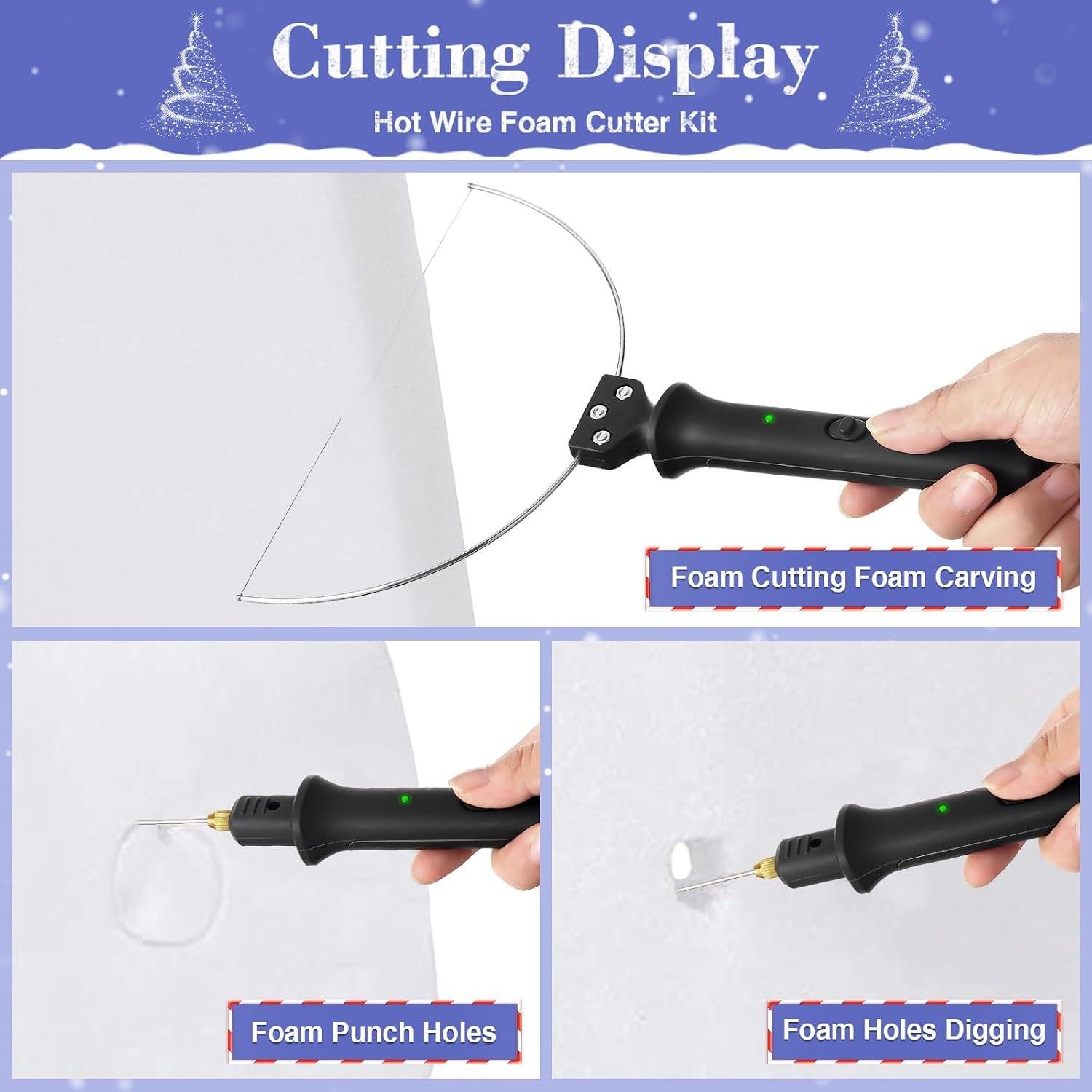
No—this is a hot-wire/hot-knife foam cutter, not a woodworking cutter.It’s designed to melt and slice low-density foams (EPS/Styrofoam, pearl cotton, sponge, EPP, KT board, etc.). It will not cut hardwoods (oak/maple), softwoods, plywood, MDF, or veneer because it doesn’t use a toothed blade and it isn’t built for wood chip removal. For wood templates and joinery layout, it’s best viewed as a foam-shaping specialty tool, not a substitute for a saw, router, or knife.
What foam types does it handle well—and what materials should I avoid?
It performs best on low-density, softer foams where a heated tip can glide and “seal” the edge as it cuts, leaving minimal debris. The product notes it’s not suitable for high-density/tight foams like XPS (extruded foam boards), “extruded boards,” or plastic boards—those materials tend to resist the wire, drag, or burn unpredictably. If you mostly work with rigid insulation foam (XPS), a higher-power/temperature-controlled foam cutter or a purpose-built hot wire table is usually a better fit.
Is the 18W heater powerful enough for thicker foam, and what are the thickness limits?
For light fabrication and detailed shaping, yes—this kit heats quickly (the 5cm and 11cm tools reach about 160°C in ~5 seconds, with stated maximums up to 350°C for the 11cm tool). but it’s still an 18W handheld tool, so it’s geared toward small-scale foam cutting, not thick, high-throughput work. The listing also calls out practical thickness limits: the 8.5cm bow isn’t for low-density foam thicker than 8cm, the 11cm straight needle isn’t for thicker than 11cm, and the 5cm bending knife isn’t for thicker than 4cm. for best results, let it fully heat up and keep the cut moving—don’t park the tip in one spot.
How arduous is setup, and what “adjustments” do I actually have?
Setup is straightforward: plug in the 100–240V AC adapter, confirm the power indicator, and install the tip you want (straight heating needle, bow hot wire, or bending hot knife). There isn’t a full variable temperature dial called out in the specs; rather, you control cut quality mostly by tip choice, allowing proper warm-up, and your feed speed/pressure.Woodworkers usually get cleaner edges by using a light touch and letting heat do the work rather than forcing it like a saw.
Does it work with standard foam-cutter accessories, and how easy are tip/wire changes?
It’s a kit-style tool with its own matched components: stainless heating needle (listed as 2.0mm), bow hot wire (listed as 0.25mm), and included 10m replacement wire for the bow. That’s great for ongoing use, but it also means you should assume brand-/kit-specific replacements rather than global scroll-saw-style blades. Tip and wire changes are typically quick, but plan on doing them only after the unit is unplugged and fully cooled—the biggest “gotcha” for new users is trying to swap parts while they’re still hot.
What does it need in a woodworking shop—bench space, mounting, and dust collection?
This is very easy to integrate in a small shop because it’s handheld and uses a compact power adapter (output listed as 7.5V/2.5A DC).There’s no sawdust to collect, so it doesn’t need a dust collector—but it can produce a small amount of smoke/fumes during normal use. The manufacturer specifically recommends a well-ventilated area. Many woodworkers treat it like soldering: use it near an open door/window or add a small fume fan, and keep it away from flammable piles of shavings/finishing rags.
Is it beginner-friendly, and what’s the learning curve for clean cuts?
It’s generally beginner-friendly because there’s no blade tracking or complex alignment—heat up and cut. The learning curve is mostly about technique: waiting for full heat, using steady motion, and choosing the right head (bow wire for longer cuts, straight needle for lines/detail, bending knife for shaping). A common beginner mistake is pushing too hard (which causes dragging, uneven edges, and extra smoke). If you’ve ever learned to “let the tool do the work” with a router bit, the same mindset applies here.
Can it handle production work, and what maintenance/duty-cycle limits should I plan for?
It’s best for hobby, prototyping, and small-batch work rather than continuous production. The listing warns not to run it continuously for more than 30 minutes to prevent overheating (and suggests even shorter breaks in hot conditions). Maintenance is simple but critically important: after it cools, wipe the heating needle with a damp sponge to reduce oxidation buildup/blackening, and always unplug when not in use. If your workflow involves all-day foam cutting (sign work, packaging, stage props), you’ll likely want a heavier-duty, temperature-controlled system.
Unlock Your Potential
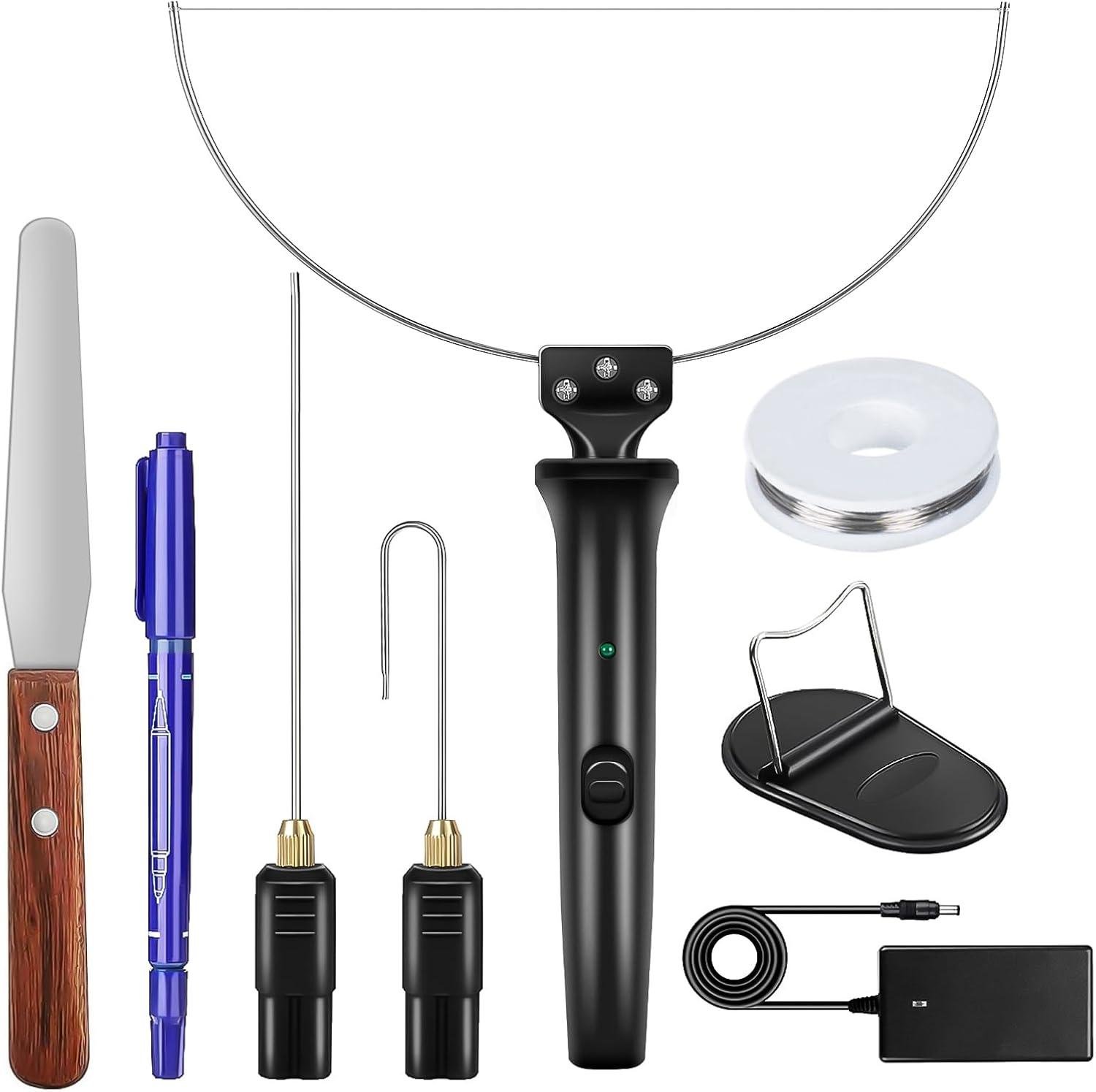
the GOCHANGE 3-in-1 Foam cutter is an 18W, 100–240V hot-knife kit with a voltage adaptor and three cutting heads (including 5cm and 11cm wands plus a bow wire). It heats fast—about 160°C in ~5 seconds—and is designed to make clean, sealed-edge cuts with minimal debris.Customer feedback commonly highlights the quick warm-up and detailed shaping ability, while the main limitations are ventilation needs (light smoke), a 30-minute continuous-use cap, and best results on low-density foams rather than tougher materials.
Best for: hobby woodworkers making foam templates, routing patterns, packaging inserts, mock-ups, and signage, plus cabinet makers needing precision layout aids.
Consider alternatives if: you need production-duty runtime, regularly cut high-density XPS/plastics, or want a tool primarily for wood.
Final assessment: a solid, small-project foam cutter that performs well when used within its material and duty-cycle limits.
Want to see current pricing and customer photos? View on Amazon & Read More Reviews →