

Blog
My Take on the Porch Shield 108×60 Table Cover

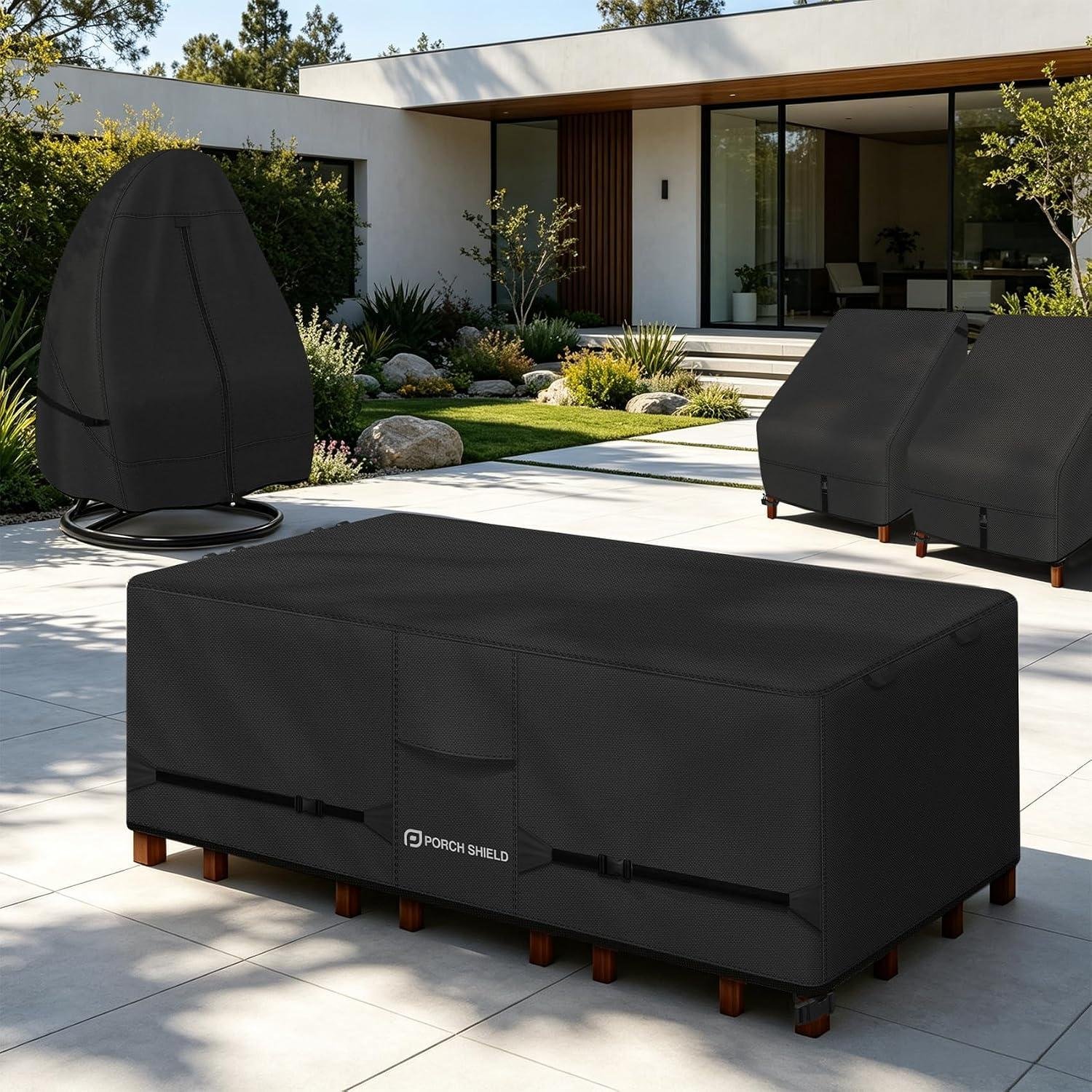
A good patio set is a lot like a well-built cabinet: the details matter. Tight joints, steady stance, a finish that can take a beating—and materials that look better with age instead of falling apart after a season.On my own patio, I’ve put real time (and real sweat) into keeping my outdoor table and chairs in shape, from sanding out raised grain to refreshing the topcoat when the sun starts winning. But there’s one simple truth I’ve learned the hard way: even the best woodworking and finishing work won’t last long if it lives uncovered through rain, UV, pollen, and wind-driven grit.
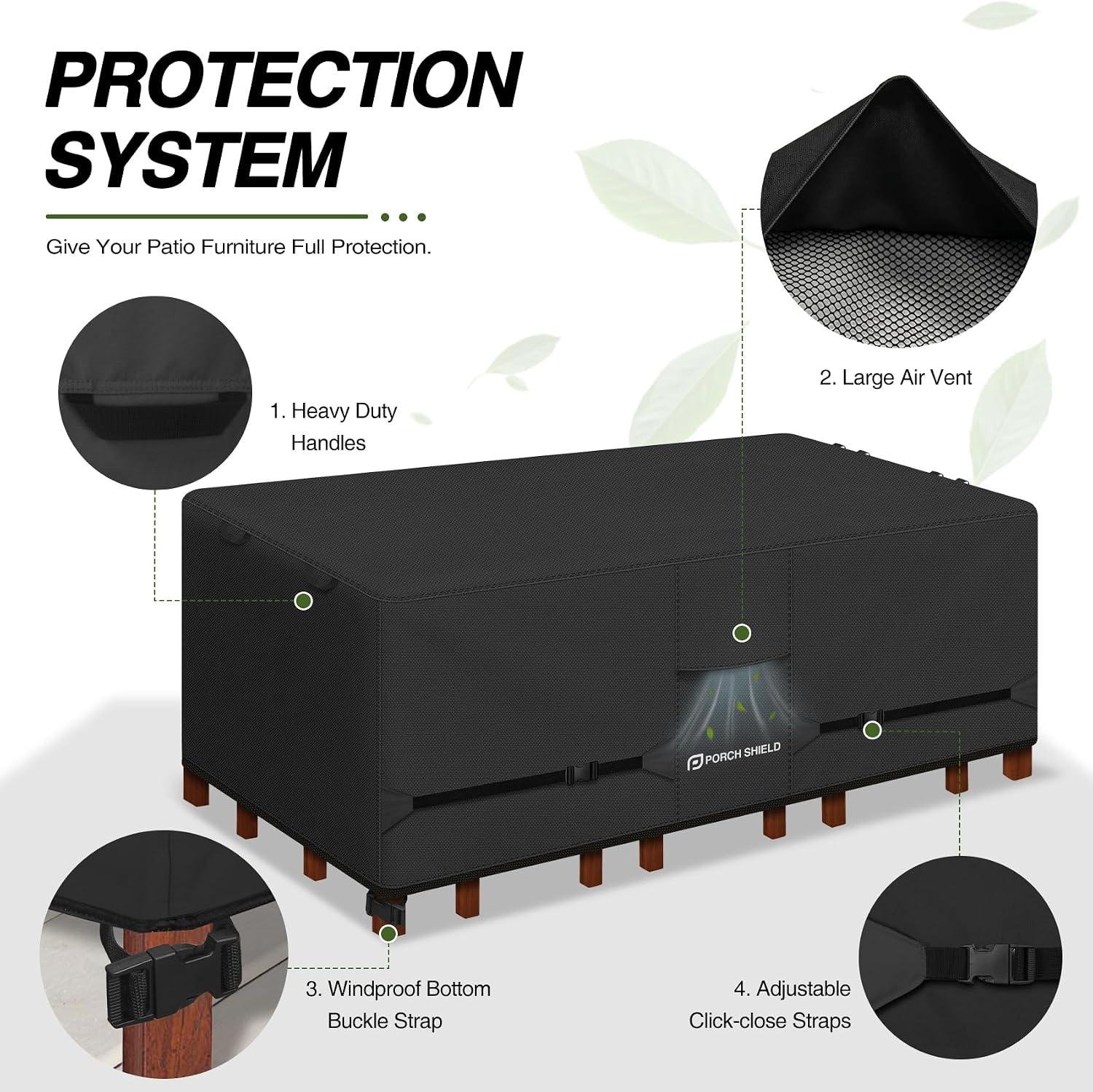
That’s what pushed me to try the porch Shield Patio Table Cover (Rectangular, 108 x 60 inch, Black). On paper, it checks the boxes I look for with a craftsperson’s eye—600D polyester, a waterproof undercoating, double-stitched and sealed seams, and practical build features like click-close straps, buckles, and air vents to keep condensation from turning into that musty, mildew-prone microclimate. Simply put, it’s not just a loose tarp—it’s a purpose-built “protective shell” meant to guard the work you’ve already put into the furniture underneath.
In this review on CraftedByGrain.com, I’ll walk through my hands-on experience actually fitting it over my dining table and chairs, how it handles wind and rain on a real backyard setup, and what I noticed right away about the material weight, stitching quality, hardware, and finish—including the two big questions most outdoor folks care about: does it truly keep water out, and does that black fabric hold its color in the sun over time.
How the Porch Shield Cover Looks and Feels on My Patio Set
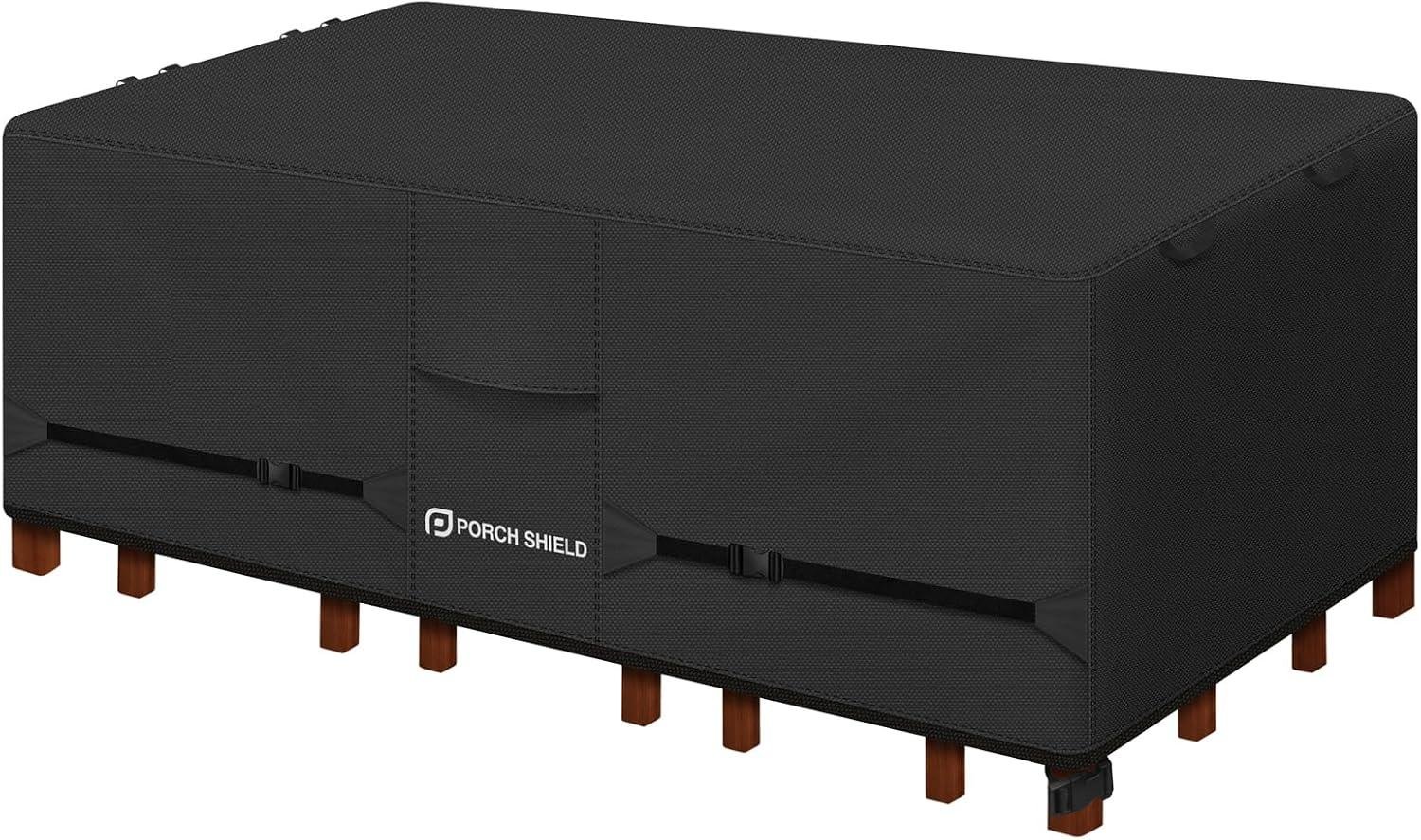
On my patio set, the cover reads clean and workmanlike—more “shop apron” than “shiny tarp,” which I appreciate. The black fabric has a reassuring heft, and the hand-feel reminds me of a tough canvas jacket: considerable, slightly textured, and not flimsy. Once it’s on, it drapes with enough structure to avoid that ballooning look, and the ribbon-woven handles make it genuinely easy to pull into position without scraping knuckles on chair backs. I’m protective of my wood top—tight grain and a smooth outdoor finish—so I like that the cover settles without feeling abrasive. With the click-close straps cinched down around the legs, it sits snug and tidy, the way a well-fit clamping caul sits during glue-up.
| What I Notice | How It Plays on a Wood Patio Set |
|---|---|
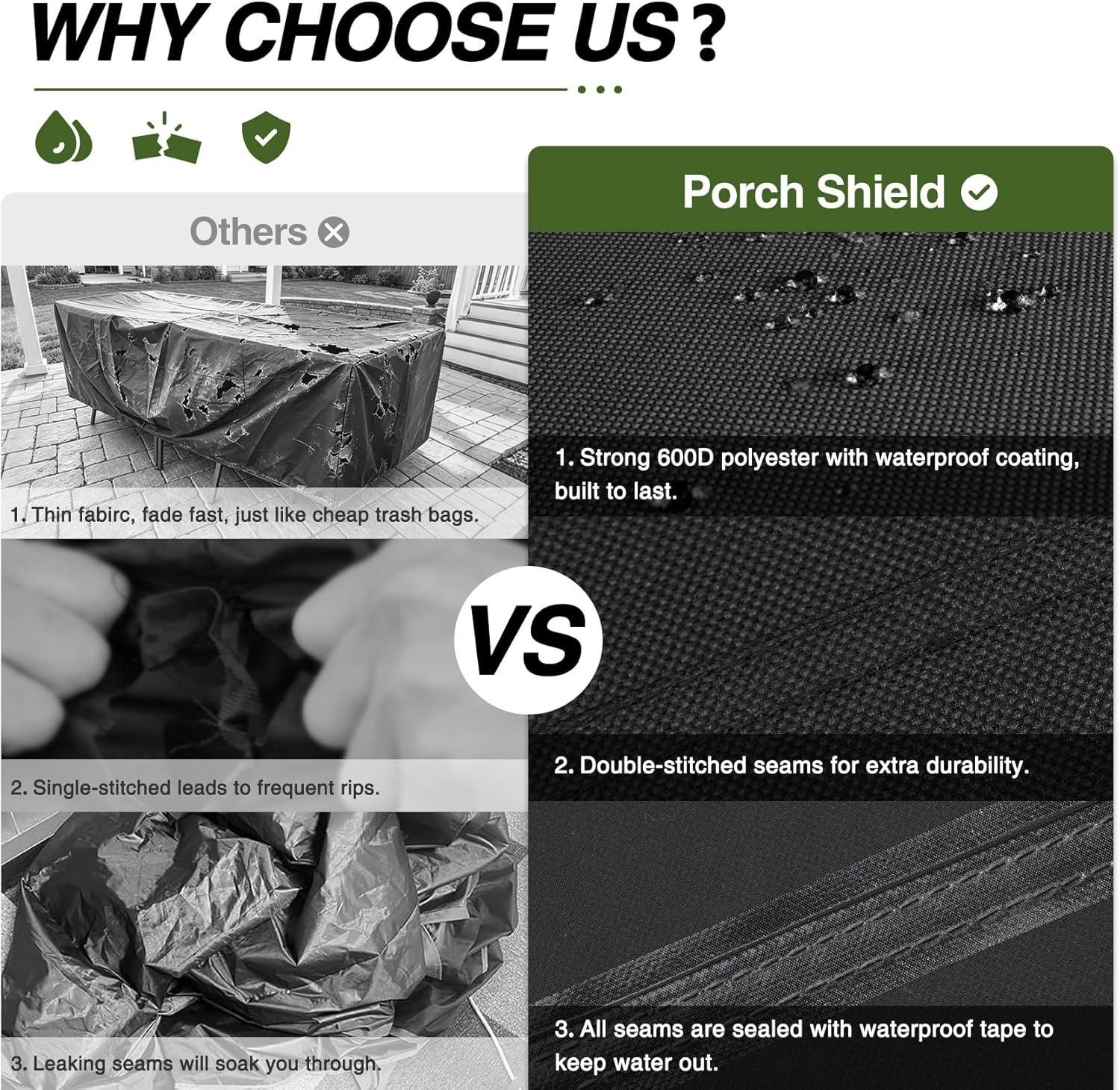
| 600D polyester with waterproof undercoating | Helps keep rain and splash-off from soaking into end grain and chair seat joints—where swelling and finish failure usually start. |
| Double-stitched + sealed seams | Feels “built,” like decent joinery—less worry about seams becoming the first weak point during storms. |
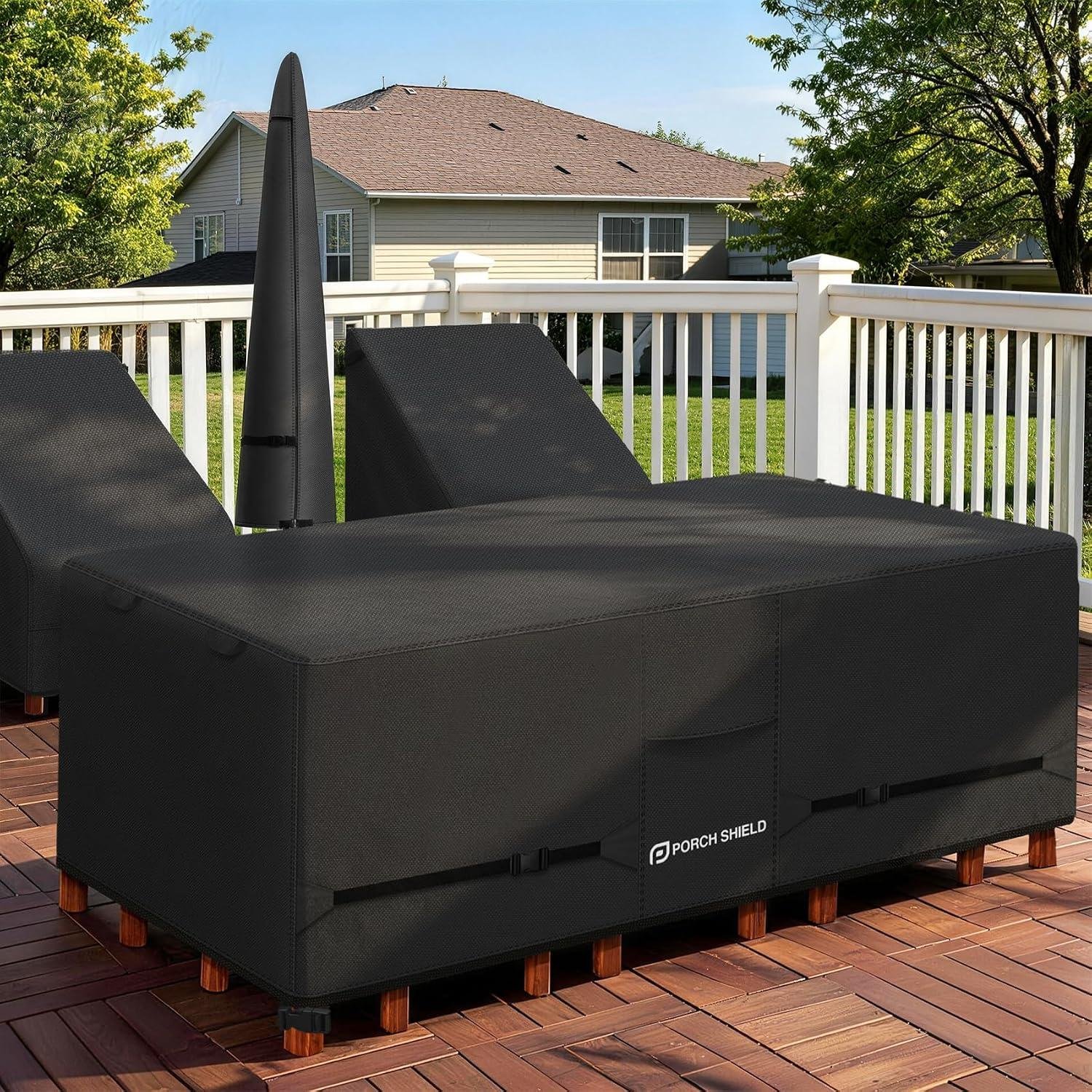
| Bottom buckle straps | Stops wind from lifting the cover and sandblasting your tabletop finish with debris. |
| Air vents | Vital for wood: reduces trapped moisture that can haze a film finish or encourage mildew on textured grain. |
| Color/UV reality check | It looks sharp in black,but some owners report fading to grey; if your set lives in full sun,plan for that cosmetic shift. |
- Best “look & feel” detail: the material thickness—more substantial than manny bargain covers.
- Most practical detail: handles + straps make it swift to cover up after dinner,even with chairs tucked in.
- Woodworker note: I still keep a little airflow under the cover (chairs not packed too tight) to help finishes cure and breathe between wet/dry cycles.
Check current price and availability on Amazon
My Take on Waterproofing Wind Protection and Year Round Weather Resistance
From a woodworker’s point of view,a cover like this is basically a sacrificial topcoat for your whole outdoor setup—especially if you’ve got a real-wood table (teak,acacia,or even a well-finished cedar) where the grain deserves better than constant UV and standing water. The fabric is a 600D polyester with a waterproof undercoating, and the build feels more like heavy canvas than the thin, crinkly covers that shred at the first cold snap. In use, it does a solid job shedding rain and blocking sun, which matters because UV is what turns crisp grain contrast flat and chalky and starts breaking down film finishes over time. That said, I’ve seen enough mixed reports to treat it as highly water-resistant in the real world rather than “guaranteed dry forever”—if water pools, any cover can eventually seep at stress points. The double-stitched, sealed seams are a good sign (similar to what I look for in exterior joinery: reinforced, not just “good enough”), and the air vents are important for keeping condensation from turning your tabletop into a mildew experiment.
| Weather Factor | What This Cover Does | Why It Matters for Wood Furniture |
|---|---|---|
| Rain & runoff | Waterproof-backed fabric; sealed seams help; sheds water best when pitched | Reduces end-grain wetting on legs and stretchers (where rot likes to start) |
| Wind | Click-close straps and bottom buckle straps wrap down tight | Prevents cover “sawing” against edges,which can scuff a varnish or oil finish |
| Sun / UV | UV-resistant treatment,but user feedback notes fading from black to gray | Protects color in woods like acacia/teak and slows finish breakdown |
| Winter & condensation | Air vents to reduce trapped moisture | helps limit mildew on slats and around tight joinery (mortise/tenon corners) |
Wind protection is where this cover earns its keep: the straps that cinch around table legs and the buckles at the bottom keep it from ballooning,and that’s the difference between “protected” and “flapping sandpaper.” I also like the ribbon-style handles for getting it on and off without yanking seams—think of them like proper clamping pads: they reduce stress where you don’t want it. For year-round resistance, my biggest watch-outs are the common long-term issues people report: fading (more cosmetic than structural) and durability that varies—some users get years, others see rips or brittleness around the one-year mark. If your furniture is something like teak with tight grain and solid joinery, I’d still rather have this on top than leave it exposed; just do the smart craftsman thing and avoid water pooling, keep the cover snug, and let the vents do their job.
- Best practice: add a small center support (even a flipped plastic bin) so water sheds rather of puddling.
- For stained or painted pieces: the UV blocking is a big win; for oiled hardwoods, it helps keep color even.
- If you’re in harsh sun: expect the black to fade—function first, aesthetics second.
Check current price and availability
Everyday Usability From Putting It On to Keeping It Clean
In day-to-day use, this cover feels more like a well-made shop apron than a flimsy tarp—thick 600D polyester with a coated backing that gives it some real “hand” when you’re pulling it over a table and chair set.The ribbon-style handles are a small detail, but they matter: I can lift and position the cover without it twisting up, even when I’m working around chair backs or a longer rectangular table. The click-close straps and buckles are the equivalent of good mechanical fasteners in furniture joinery—simple,repeatable,and they keep the “assembly” tight when the wind kicks up. For folks protecting real wood outdoor pieces (teak slats, acacia tops, even painted pine sets), a secure fit helps prevent the cover from scuffing corners and abrading the finish the way a loose cover can.
| Usability Feature | What I Noticed | Why It Matters for Wood Furniture |
|---|---|---|
| Click-close straps + bottom buckles | Snugs down around legs and resists billowing | Less rubbing on edges helps protect film finishes and softer species |
| air vents | Designed to reduce trapped moisture/condensation | Helps keep humidity from lingering on end grain and in chair joinery corners |
| Double-stitched, sealed seams | Reinforced construction where covers usually fail first | Better chance of keeping rain off tabletops where water loves to sit |
Keeping it clean is mostly a “hose-off and move on” situation, which is exactly what I want—especially if I’m trying to keep pollen and dust from settling into open-pore woods like teak and white oak. That said, real-world feedback is mixed on true waterproofing and long-term durability: some folks report everything staying dry with water beading and rolling off, while others mention seepage, ripping within a year, or the black fabric fading toward gray under hard sun. If your furniture is a nice build—tight mortise-and-tenon joints, clean grain match, and a surface finish you actually care about—I’d treat this as a strong first line of defense, but still avoid trapping moisture underneath (don’t drape it over damp cushions, and let things air out after storms).
- Best everyday habit: pull the cover tight and keep the vents unobstructed.
- Finish-friendly tip: if you’ve got an oiled teak top, check it occasionally—covers help, but UV and humidity still do their slow work.
If you want to see current sizing/pricing and grab it while you’re tuning up your outdoor setup, Check it out on Amazon.
Is It Worth the Money for a Handcrafted Outdoor Living Look
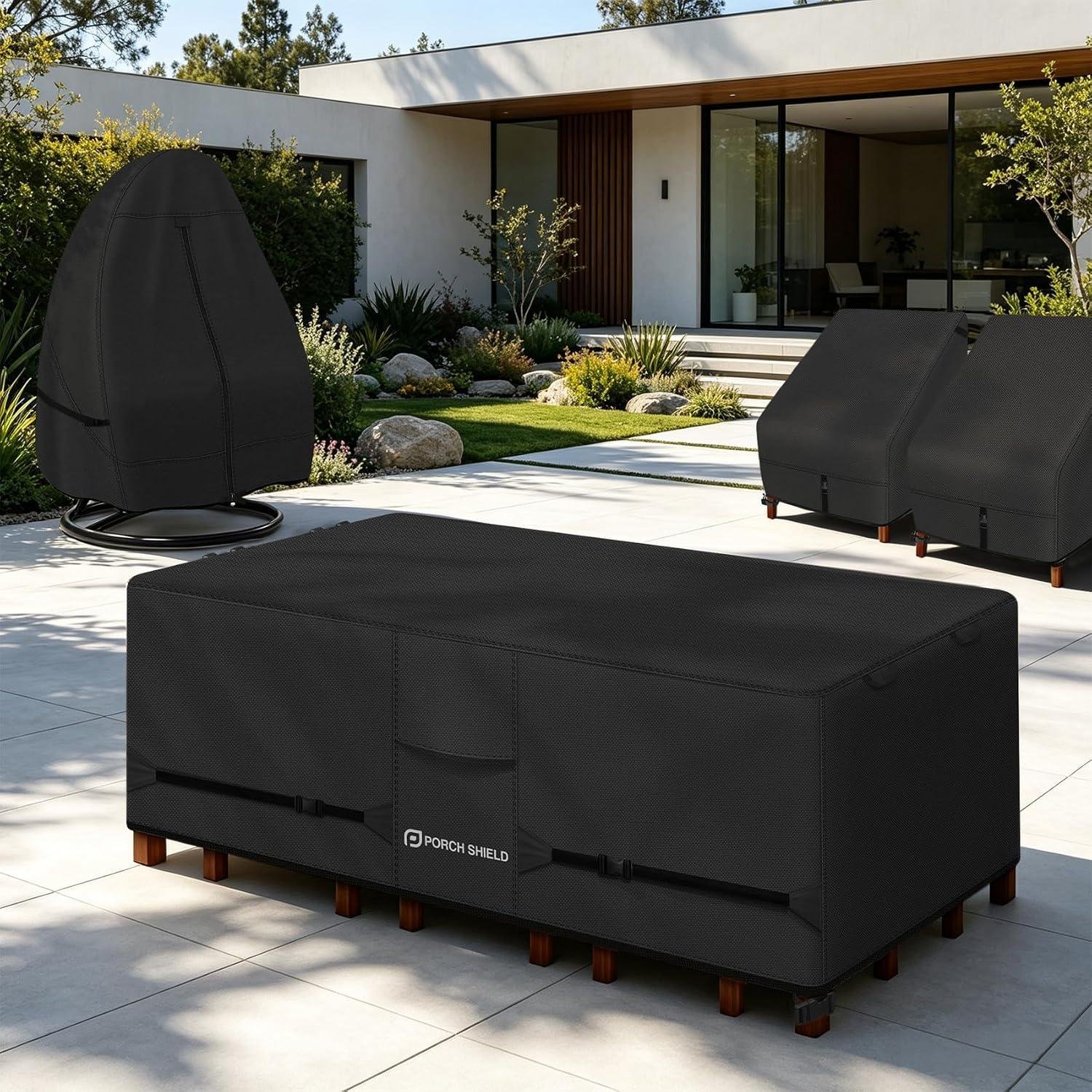
For the money, this cover earns its keep if you’re trying to maintain that handcrafted outdoor living look—the kind where the table top still shows crisp figure and the chair frames don’t start looking fuzzy or chalky after a season. I’m picky about protecting wood as most outdoor failures I see aren’t “bad wood,” they’re moisture cycles wrecking the surface finish and stressing the joinery. Even a well-built set—whether it’s teak with tight, oily grain or acacia/eucalyptus with more open pores—will suffer when sun bakes the finish and rain drives water into end grain and screw pockets. This cover’s 600D polyester with a waterproof undercoating, paired with double-stitched/sealed seams, is a sensible “shop apron” for your furniture: it’s heavy enough to drape cleanly, it helps keep UV off your topcoat, and it reduces the wet/dry swings that loosen joints over time.
| Feature at a glance | Why it matters for wood furniture | Value verdict |
|---|---|---|
| 600D fabric + waterproof undercoating | Helps prevent finish breakdown and water sitting on flatter surfaces (tabletops, seat rails) | Strong value at this price point |
| Click-close/buckle straps | Keeps the cover from “sailing” in wind—less abrasion that can scuff edges and corners | Worth paying for if you get gusts |
| Air vents | Reduces trapped humidity that can haze finishes or invite mildew around joinery | Big plus (but still allow airflow underneath) |
| Handles | Encourages consistent use—if it’s annoying to handle, people stop covering furniture | Practical, well thought-out |
| Fade resistance | Mostly cosmetic, but fading can hint at UV exposure that may shorten fabric life | Mixed reports—expect some fading in full sun |
That said, “worth it” depends on your expectations: customer feedback is split on true waterproofing and long-term durability (some report ripping or brittleness within a year, plus black fading toward gray). I treat it like I treat exterior finishes—good materials still need smart setup. I’d use it for everyday protection, but if you’re covering premium wood (teak, ipe, mahogany) or cushions you can’t risk soaking, I’d still lift cushions off the deck, keep a little air gap, and avoid letting water pool anywhere.A few quick, craftsman-style takeaways:
- Best value use: shielding tabletops/arm rails from UV and keeping dust/pollen off so your finish lasts longer.
- Windy yards: the straps are the make-or-break—tighten them so the fabric doesn’t chafe your edges.
- Humid climates: the vents help, but don’t “seal” wet furniture—let it dry first to prevent mildew spotting.
Check current price and sizing on Amazon
Customer Reviews Analysis
Pros & Cons
Pros & Cons
As a woodworker, I look at a “simple” table cover the same way I’d look at a shop apron or a tool bag: material choice, stitch work, stress points, and whether the design actually respects how outdoor furniture lives and moves. The Porch shield 108×60 cover does a lot right—just with a couple real-world caveats.
| Pros | Cons |
|---|---|
|
Solid “build quality” for the money |
Waterproof performance can be inconsistent |
|
Good seam work and reinforcement (craftsmanship matters) |
Durability reports are mixed long-term |
|
Secure fit system that actually helps in wind The click-close/buckle straps are the equivalent of a good clamp-up—less shifting means less abrasion on your wood furniture finish. |
Straps may not play nicely with chunky legs If your set has thick square posts (common on beefy teak or “farm table” bases), the tie-down geometry can be awkward and may need improvising. |
|
Air vents are a smart touch for protecting wood |
Potential for mildew/spotting if it stays damp Even with vents, covers can develop spotting if they sit on wet cushions or in humid shade—worth checking and drying things out periodically. |
|
easy on/off with big handles Handles sound minor until you’ve wrestled a cover around six chairs—this makes it a quicker “end of day” habit. |
Color fade is a common complaint (black to gray) |
|
Outdoor suitability for most standard patio sets |
Fit is only as good as your furniture profile |
|
Good value, plus warranty experiences sound promising Several buyers feel it beats more expensive covers, and at least some report helpful warranty replacement when a tear develops. |
Not a “set it and forget it” solution for fine wood |
My bottom line: I like the design choices—thicker fabric,decent “stitch-and-seam” workmanship,vents,and real tie-downs. just go in knowing the two big long-term knocks are fading and variable waterproof/durability. If you treat it like any other outdoor protective layer (strap it tight, avoid sharp edges, and air things out), it’s a practical cover that can definitely help preserve the finish on your outdoor wood furniture.
Q&A
Q&A: Porch Shield Patio Table Cover (108″ x 60″, Black)
1) Will this cover actually fit a full dining set (table + chairs), or is it just for the tabletop?
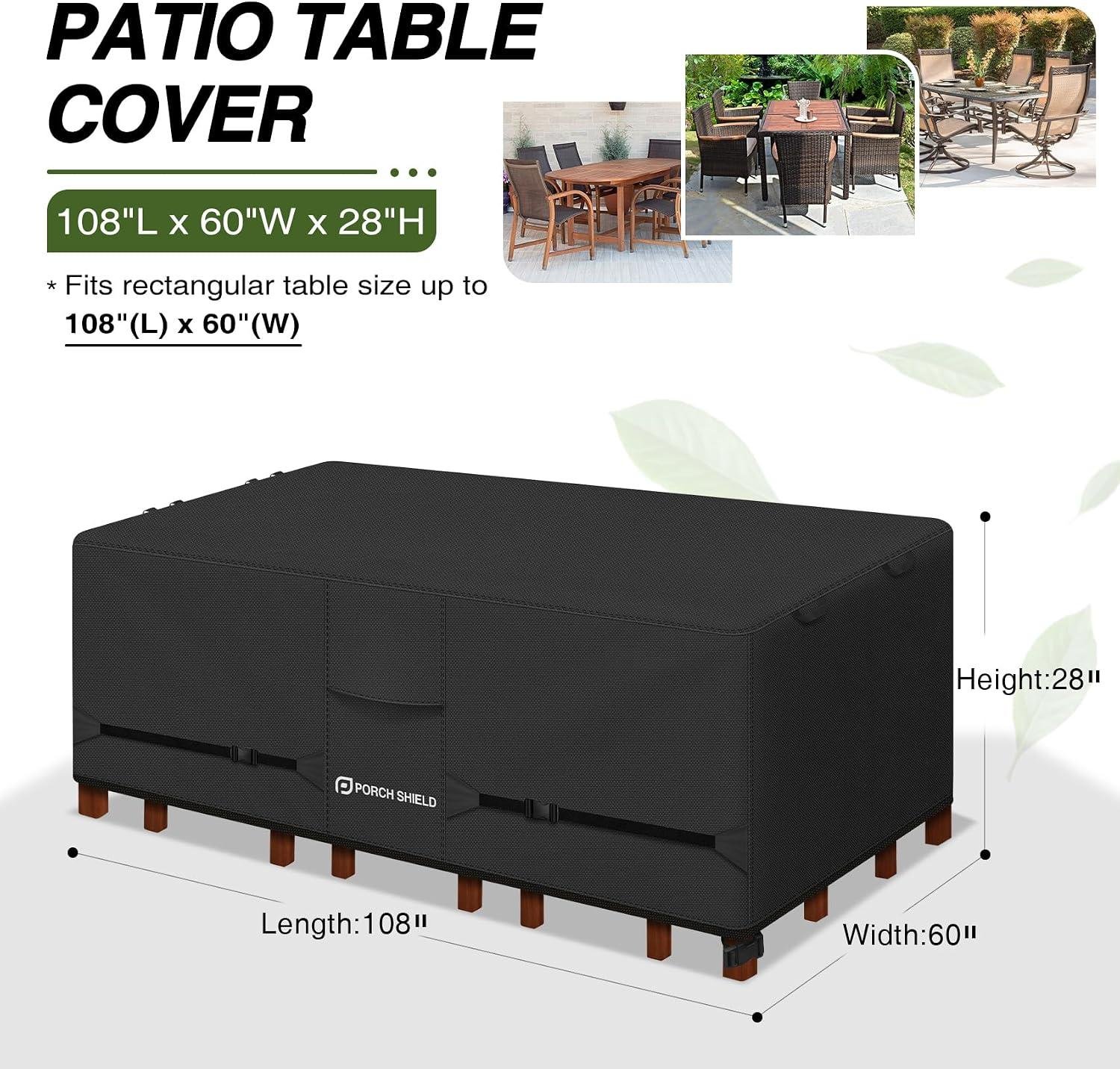
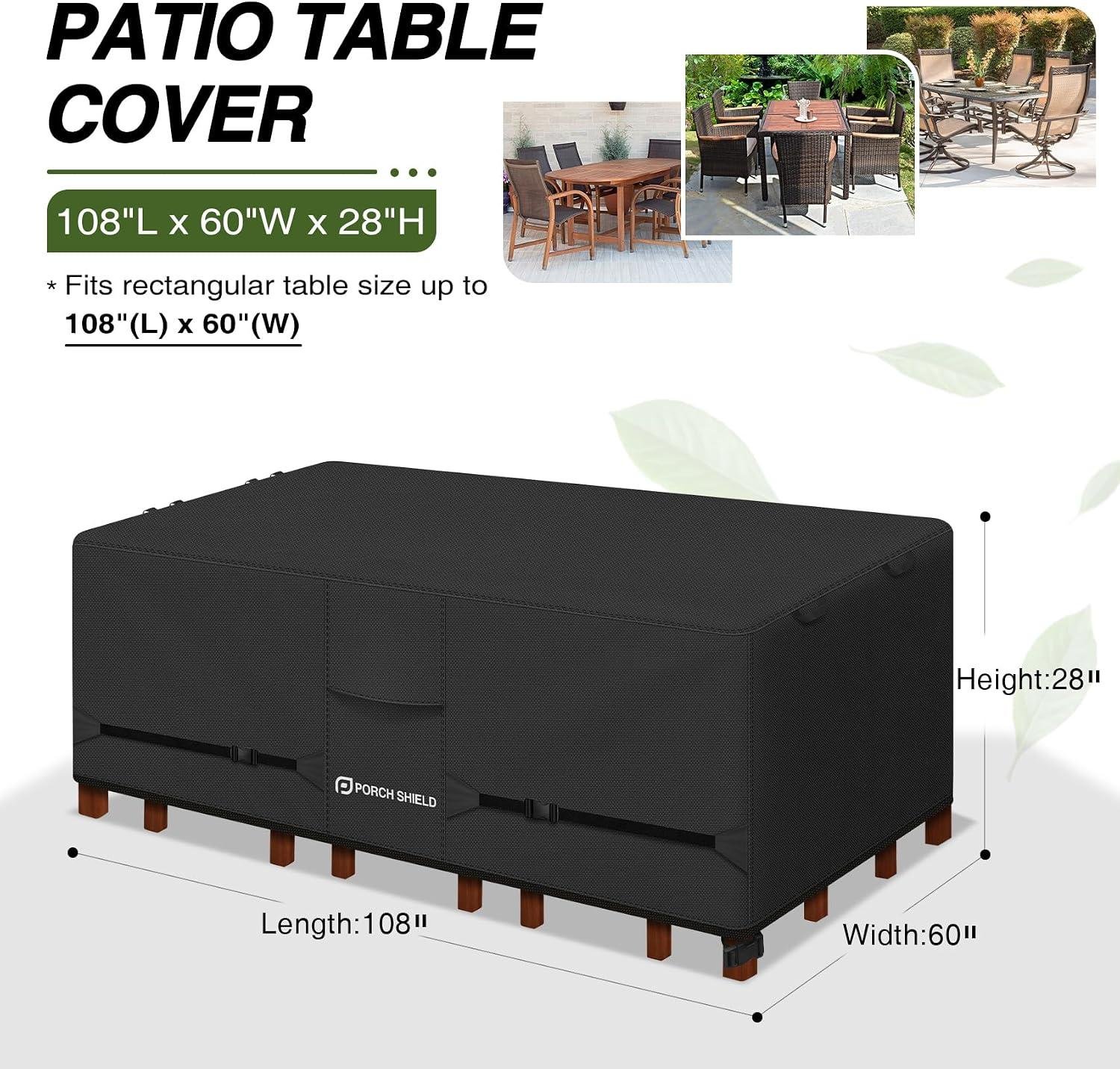
In my experience, it’s sized to cover the whole setup—rectangular table plus the chairs tucked in.The 108″ x 60″ footprint is generous, and the listed 28″ height helps it drop down far enough that wind doesn’t immediately get underneath. I still recommend pushing chairs in tight and, if your chair backs are tall, measuring from the ground to the highest point to make sure you’re not “tenting” the cover.
2) How “waterproof” is it in real outdoor weather?
It behaves more like “serious water-resistant” than “dry-as-a-drum guaranteed forever.” The fabric is 600D polyester with an undercoating, and in normal rain I’ve found it sheds water well. But I’ve also seen enough reports of moisture getting through over time (especially in pooling situations) that I wouldn’t treat it like a marine-grade tarp. My rule: avoid puddles—if your table shape creates low spots, add something under the cover (a ball, a bucket, a small riser) so water runs off.
3) Does it protect wood furniture the way a good outdoor finish would—UV, rain, and seasonal swings?
It helps a lot, especially with UV and direct wetting. As a woodworker, I look at it as a “second line of defense” that reduces sun bleaching and slows down finish breakdown. That said, covers can also trap humidity if they don’t breathe well—Porch Shield includes air vents, which is exactly what I want to see to reduce condensation and mildew risk.
4) Is the construction solid—stitching, seams, stress points?
the build feels more “heavy-duty” than the cheap covers that shred at the corners. The product calls out double stitching and sealed seams, and the handles are a practical touch (you actually use them more than you think). Where any cover typically fails is at corners and strap attachment points—so I check those first and avoid yanking it off like I’m pulling a canvas drop cloth.
5) Will the straps actually keep it from becoming a sail in high winds?
The strap system is one of the better parts. It uses click-close/buckle straps that wrap down around legs to keep the cover planted.In windy areas, that’s huge. The only caveat: strap reach depends on your furniture. If you’ve got chunky square legs or a wide,boxed base,the straps may not wrap perfectly—when that happens,I improvise by buckling to something nearby (like a lower stretcher) or adding a small bungee as a helper.
6) Does it scuff or damage finished wood (teak, painted surfaces, stained tops)?
If your table has a delicate finish, any cover can cause abrasion if it flaps. The trick is getting it snug and preventing wind movement. I also like to make sure the surface is clean before covering—fine dust plus motion equals micro-scratches over time. If you baby your finish, laying a soft, breathable sheet over the tabletop under the cover is a simple extra buffer.
7) Is condensation/mold a concern—especially for cushions stored underneath?
It can be. Even with vents, a cover over an enclosed “cave” of furniture can trap moisture—particularly in humid climates or shaded patios. If you’re storing cushions underneath, I suggest two things I do myself:
- Don’t pack everything airtight—leave some airflow gaps.
- On dry days, pull the cover off for an hour to let everything breathe.
Some buyers have reported mildew spotting on the cover fabric after a season, so ventilation and occasional airing-out really matter.
8) Will the black color stay black in full sun?
This is the weak point. The product claims UV resistance, but black covers often fade fast, and customer feedback backs that up—black can shift to a charcoal/gray relatively quickly. Functionally it may still protect fine, but if you care about your patio looking sharp, expect fading if it lives in direct sun all day.
9) Is it tough enough to last multiple seasons, or is this a “replace every year” cover?
Mixed bag. Some folks get multiple years, others see tearing within a year—usually from wind stress, sharp corners, or brittle fabric after lots of UV exposure. I treat longevity like this:
- Best case: multi-season cover if it’s strapped tightly, kept from flapping, and not left holding ponded water.
- Worst case: corner tear or seam stress if it’s loose, constantly whipped by wind, or dragged across rough edges.
10) What size should I buy if my table is close to 108″ x 60″?
If your tabletop is right at 108″ x 60″, I’d still look at the overall footprint with chairs in. Covers fit best when you’re not maxing out the seams. If you’re exactly on the edge, I lean slightly bigger—tight is good for wind, but “strained tight” is how stitches and seams get stressed. Measure your setup how you’ll actually store it (chairs in,maybe slightly angled),then choose.
11) Is it easy to take on and off without snagging on chair arms?
the built-in handles help a lot. I can pull it up and over without doing the awkward patio dance too much.Snagging usually happens when chair backs or armrests poke into the fabric—if that’s your set, take 10 seconds to align chairs and keep the cover from dragging across corners.
12) If something goes wrong,is there any warranty or support worth relying on?
Porch Shield lists a 3-year warranty,and there are real reviews mentioning responsive replacement service when a tear showed up under warranty. That’s meaningful—covers are consumables, and good support can be the difference between “annoying” and “worth it.”
If you want,tell me your table material (teak,cedar,painted,polywood,etc.), whether it sits in full sun, and how windy your patio gets—I’ll recommend sizing strategy and a couple of simple tricks to prevent pooling and flapping.
Achieve New Heights
Wrapping up my take on the Porch Shield 108×60 Table Cover, I’d say it lands in a spot I appreciate as a woodworking enthusiast: it’s a practical “shop apron” for your outdoor setup. When you’ve put real money (or real hours) into a solid dining table and chairs—whether it’s teak, powder-coated steel, or something you’ve restored yourself—protecting that investment matters. This cover gets a lot right with its thick 600D fabric, easy-on handles, and the strap-and-buckle setup that helps it stay put when the weather gets unpredictable.
Having mentioned that, I don’t want to gloss over the real-world feedback: some folks report leaking, ripping over time, and noticeable fading from black to gray. Outdoor exposure is relentless—UV, wind flap, pooled water, freeze-thaw cycles—so I treat any cover like a wear item, not a forever item.The good news is the fit and tie-down system seem to be consistent wins, and if you’re the type (like me) who checks corners, keeps things from ballooning in wind, and gives it a quick clean now and then, you’ll likely get better mileage out of it.
At the end of the day, I’m always chasing that “crafted retreat” feeling outside—the same satisfaction I get from a clean joinery line or a well-fitted panel.Quality outdoor pieces built to last can turn a plain backyard into a place you actually want to linger, and the right cover helps keep that space ready: less scrambling before company comes over, less weathering between weekend meals, and more time enjoying what you’ve built (or chosen) with care.