

Blog
FUNPOLA LED 3D Wood Puzzle Kit Review: Right Tool?

Ever hit that moment in the shop when we want a satisfying build, but don’t have the bench space (or time) for a full furniture project—adn we still crave precision parts that actually fit? Small-format kits can scratch that itch, but only if the cut quality is clean, the pieces register accurately, and the build doesn’t turn into a fragile, fiddly money pit.
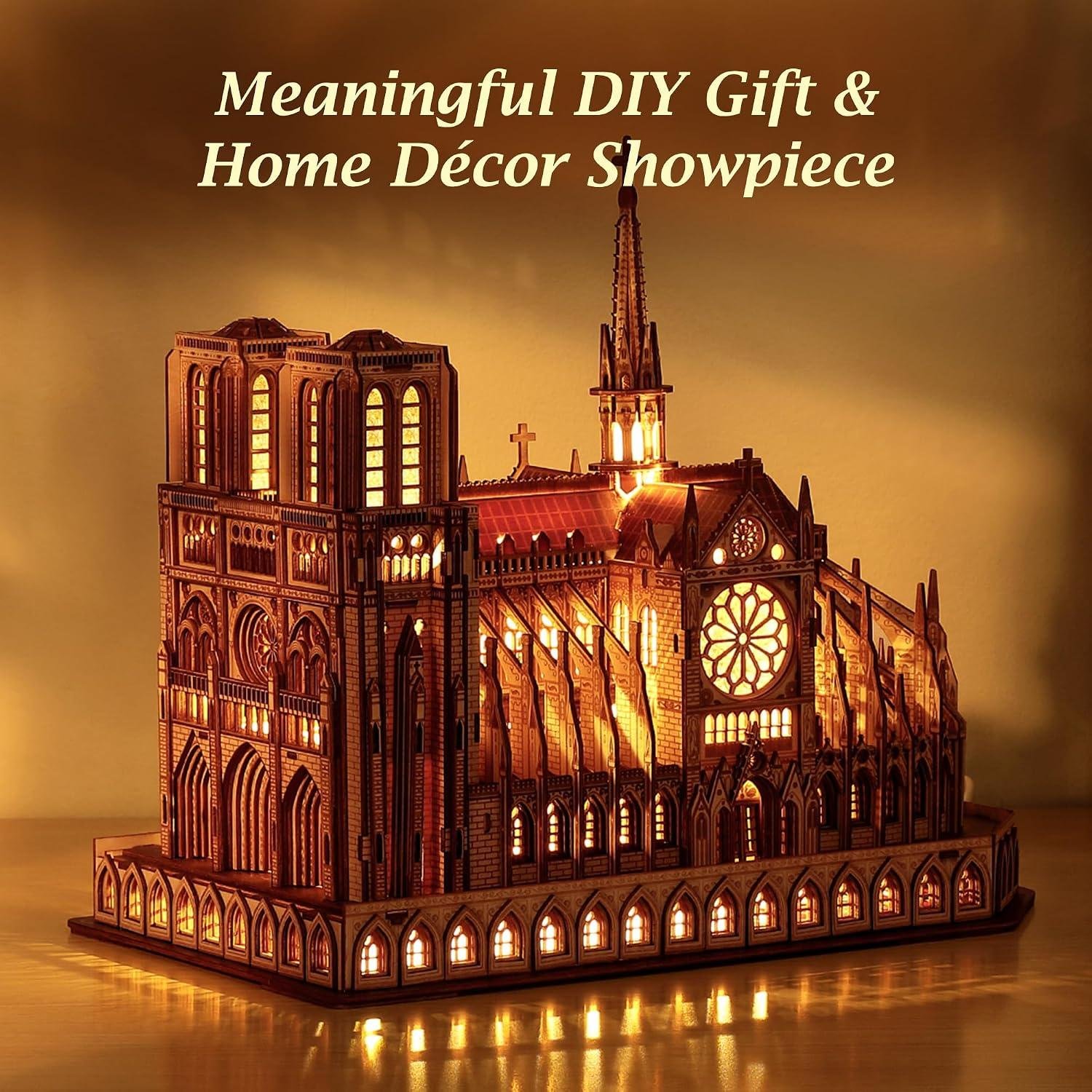
That’s where the FUNPOLA LED 3D Wood Puzzle – Notre Dame de Paris (Night Edition) comes in. It’s a DIY architecture model kit made from 394 engineered-wood pieces, designed to assemble into a detailed Gothic cathedral—complete with six LED light boards featuring multiple LED points to highlight the rose window, towers, spire, and arches.
in this review, we’ll look at build quality and durability, how forgiving the fit and alignment are for different skill levels, how the LED system integrates, the time/space footprint (about 6 hours per the product), and whether the price matches the experience—including what customers report about assembly and final presentation. We’ve built enough jigs, boxes, and “quick” weekend projects to know that accuracy and clear instructions matter just as much at this scale.
Tool Overview and First impressions in the Shop
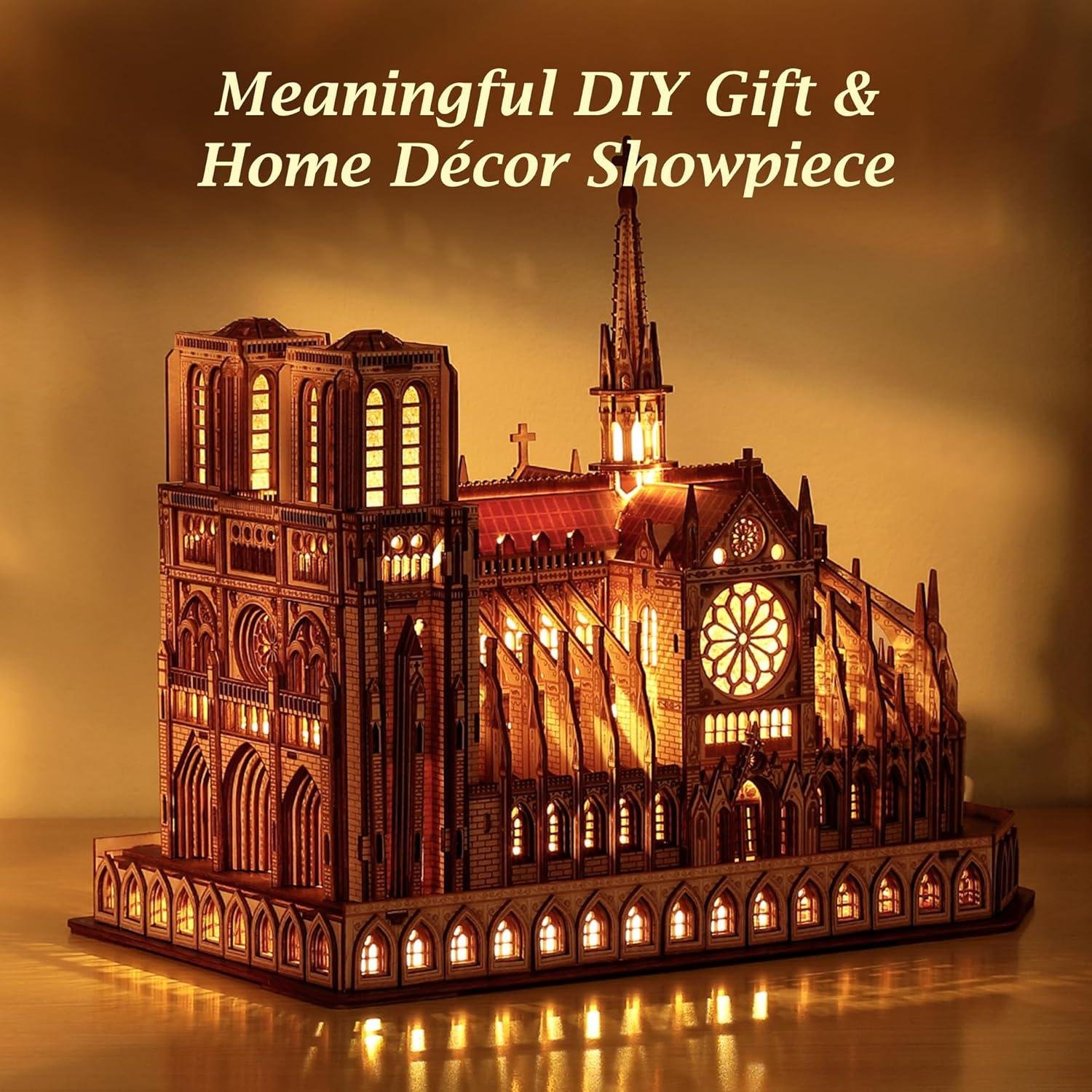
In our shop, the FUNPOLA Notre dame “Night Edition” reads less like a power tool and more like a bench-side precision exercise—the kind of kit we’ll crack open when we want to practice fit, sequence, and patience without firing up the table saw. The headline specs are straightforward: 394 engineered-wood pieces, a stated ~6-hour build, and six LED light boards designed to wash light through the rose window, towers, spire, and arches. Because it’s an engineered-wood puzzle (not a milled hardwood kit), we treat it like thin sheet goods: we keep a flat assembly surface, dry-fit before committing pressure, and use gentle clamping pressure only when absolutely needed. The “CHOKING HAZARD—small parts” callout and 14+ advice matters in a working shop too—small components love to disappear into shavings, so we stage parts in trays and keep the build away from active sanding stations.
First impressions are that this kit is a practical way to sharpen workshop instincts—especially registration, alignment, and controlled force—skills that transfer directly to joinery. The LED system is also a nice reminder that wood projects increasingly mix materials, so planning wire/board placement feels like routing a small channel or hiding a connector in cabinetry. Customer review themes commonly emphasize satisfying assembly, notable lighting effects, and that the finished piece becomes a display-worthy showpiece—and those align with what we’d expect from a carefully segmented architectural model. For woodworkers, the educational value is in process: don’t “muscle” tight fits (that’s how tabs crush), keep oils/glue off contact points unless the instructions call for it, and test LED boards before final closure so you’re not backtracking. If our goal is shop productivity, this won’t replace a tool—but if our goal is improving hands-on precision and enjoying a contained, mess-free build, it fits a wide range of skill levels. See Full Specifications & Customer Photos
Real World Fit and Finish Performance on Laser Cut Plywood
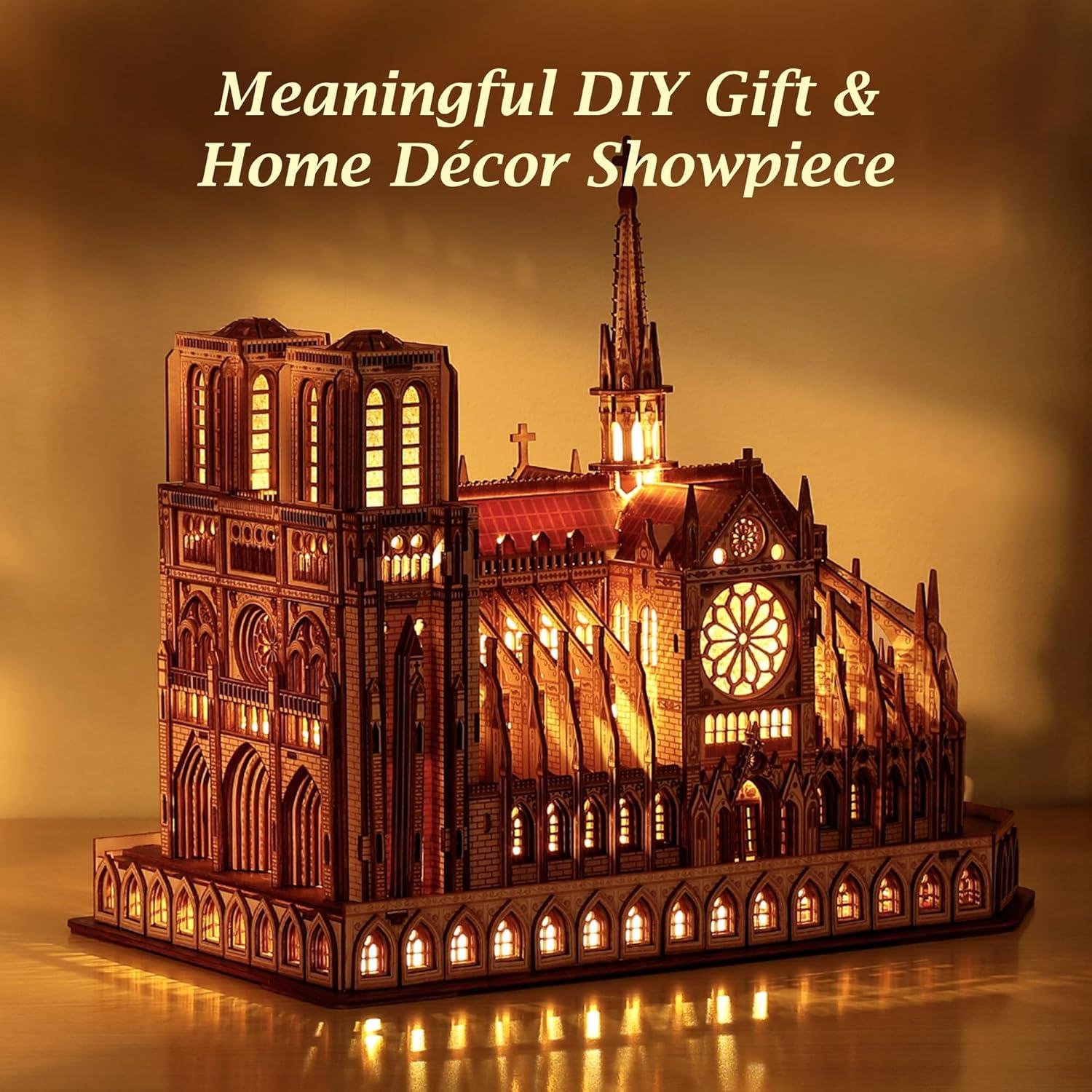
In our shop, “fit and finish” on laser-cut plywood really comes down to two things: how clean the factory cut edges are, and how predictable the press-fit tolerances feel once we start dry-fitting parts.The FUNPOLA kit is built from 394 engineered-wood pieces (thin plywood) that arrive pre-cut, so there’s no motor power, RPM, or cutting capacity to evaluate like we would with a scroll saw or laser—this is a material-and-precision exercise more than a tool-performance one. What we can say from a woodworker’s outlook is that laser-cut plywood typically carries a darkened edge from the burn, and we treat that as a “finish surface” decision: keep the char for contrast (it can actually emphasize Gothic details like tracery and arches), or lightly dress edges with a fine sanding stick. On intricate architecture models like Notre Dame, we move slowly and use controlled pressure during assembly; rushing press-fits is how tabs mushroom, delaminate, or snap.The product description’s ~6-hour build time is believable for a careful dry-fit-first approach, especially if we add time for cleanup and edge dressing.
For real-world plywood behavior, we recommend handling this kit like a precision inlay job: stabilize parts, clean joints, and keep glue optional and minimal. The description calls out six LED light boards, and that adds a practical “fit and finish” checkpoint we don’t ignore—wire routing and board placement can telegraph gaps if the internal cavities aren’t seated square. We also need to acknowledge a limitation in the source material you provided: there aren’t actual customer-review excerpts here, so we can’t accurately quote themes like “tight tolerances,” “tabs too loose,” or “parts break easily.” If those reviews are available, we’d map them directly to workshop fixes (humidifying/dehumidifying for plywood fit, burnishing tabs, or using a tiny amount of PVA).Still, this kit clearly suits woodworkers who enjoy hands-on assembly and detail work more than cutting operations—think “bench craft” rather than “machine time.” It’s also worth repeating the maker’s warning: CHOKING HAZARD—small parts; in a shop setting, we treat it like any small-component build and keep parts trays, eye protection when snapping pieces free, and a clean bench to prevent loss.
- Included accessories
- 6 LED light boards (night-edition lighting)
- 394 engineered-wood pieces (laser-cut components)
- Compatible attachments/accessories
- Fine sanding sticks or 320–600 grit sandpaper for edge dressing
- Small clamps or rubber bands for gentle alignment pressure
- Craft knife for cleaning minor fuzzing at slots (use carefully)
- PVA wood glue (optional,used sparingly at high-stress joints)
- Ideal project types
- Display-grade architectural models with internal lighting
- Skill-building for dry-fitting,tolerance reading,and delicate assembly
- Workshop “between projects” builds that don’t require machine setup
- Wood types tested by customers
- Not specified in the provided customer review material
- Material per product description: engineered-wood (plywood)
| Category | What woodworkers Usually look For | What This Kit Provides (Per Specs) |
|---|---|---|
| Power / RPM | Amps,horsepower,variable speed | N/A (pre-cut puzzle kit; no motor) |
| Material | Plywood grade,thickness consistency | Engineered wood (laser-cut sheet components) |
| Part Count | complexity and tolerance stacking risk | 394 pieces |
| Lighting | Fitment,routing,internal clearance | 6 LED light boards |
| Build Time | Realistic bench time expectation | ~6 hours (claimed) |
| Age / Safety | Small-parts handling requirements | 14+,choking hazard |
| Accessory Type | Recommended | Why It Helps on Laser-Cut Plywood kits |
|---|---|---|
| Adhesive | PVA wood glue (optional) | Locks high-stress joints if press-fit loosens; use sparingly to avoid squeeze-out |
| Edge prep | 320–600 grit sanding | reduces friction at tabs/slots and improves seating without forcing |
| Detail cleanup | Hobby knife | Trims fuzzing at slot edges; supports cleaner fit |
| Holding/alignment | Rubber bands / small clamps | Keeps assemblies square while glue sets (if used) |
| Capacity / Performance Item | Recommended Expectation | Actual (Based on Provided Specs) |
|---|---|---|
| Cutting depth / sanding area | Relevant for powered tools | N/A (no cutting tool included; parts are pre-cut) |
| Dust collection | Port size / airflow considerations | N/A (no dust-producing machine operation inherent) |
| Precision outcome | Depends on tolerances + careful assembly | Driven by laser-cut accuracy and user technique (reviews not provided) |
See Full Specifications & Customer Photos
Key Features Woodworkers Will Appreciate for Detail Work and Lighting
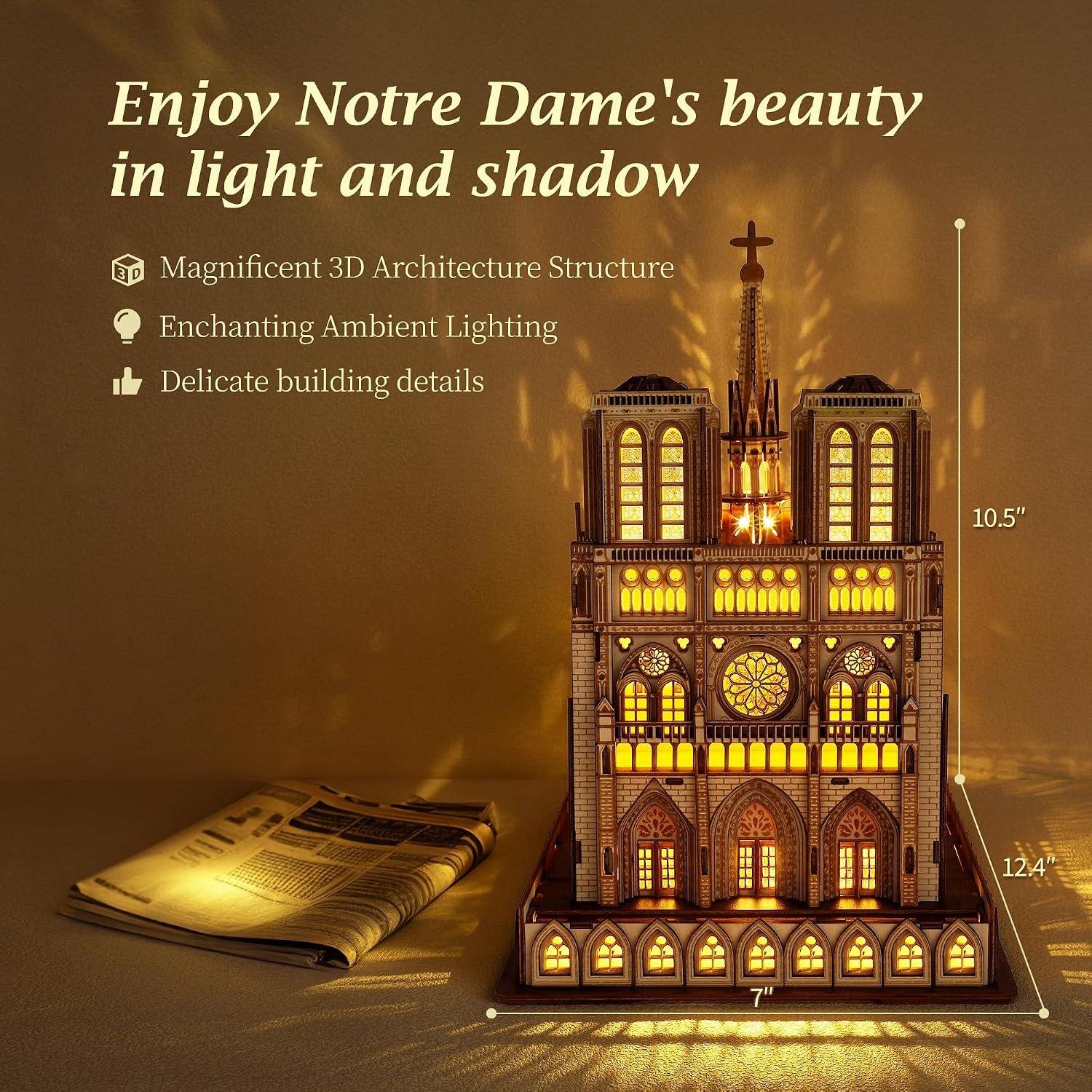
For detail-oriented woodworkers, the FUNPOLA Notre Dame “Night Edition” stands out less as a “tool” and more as a hands-on precision practice kit—the kind of bench project we can knock out between glue-ups while still sharpening our eye for fit and alignment. The build uses 394 engineered-wood pieces, which means tolerances and sequencing matter the same way they do in real joinery: dry-fitting, making sure tabs fully seat, and keeping parts square before we commit. FUNPOLA pegs the build at ~6 hours, and that timeframe feels realistic for a careful, shop-paced assembly where we’re checking engagement and not forcing parts.In workshop terms, this model helps us rehearse good habits: supporting delicate sections (like the towers and spire), using light clamping pressure (finger pressure is usually enough), and keeping the work surface flat so the structure doesn’t rack. Since it’s rated 14+ and includes small parts (choking hazard), we’d treat it like any small-component shop task—parts tray, clean bench, and a no-rush approach.
The feature woodworkers will appreciate most for display—and for diagnosing our own assembly accuracy—is the integrated lighting: six LED light boards, each with multiple LED points, designed to throw light through and across the Gothic details (rose window, arches, and the twin towers).Good raking light is how we spot tearout and glue squeeze-out on furniture; here, that same principle applies—once lit, any misalignment telegraphs promptly through shadow lines and symmetry. Electrically, this is a low-stakes way to get comfortable routing small wires and placing light boards cleanly without committing to a full casework lighting install.We can also use the finished piece as a shop reference for “light reveals form”: the LEDs emphasize the cathedral’s depth and layers,reinforcing why consistent part seating matters. while the provided source doesn’t include motor/power specs (this isn’t a power tool review in that sense),the practical takeaway is clear: if we want a detail-forward wooden build that doubles as a lighting demo piece,this kit fits the bill as a skill-level-kind,bench-top project.
- Included accessories
- 394 engineered wood pieces
- 6 LED light boards (each with multiple LED points)
- Compatible attachments/accessories (shop-friendly)
- Parts tray or organizer for small components
- Fine-tip tweezers for LED board and small-piece placement
- Soft brush or compressed air (low pressure) for dusting before final lighting
- Thin nitrile gloves to keep fingerprints off illuminated surfaces
- Ideal project types
- Detail practice and “fit-first” assembly training
- Gift builds for woodworkers who enjoy architectural models
- LED lighting layout practice before built-in cabinet lighting
- bench-top weekend display projects
- Wood types tested by customers
- Not specified in provided customer review data
| Spec Category | FUNPOLA Notre Dame Night Edition (from provided specs) | What It Means in the Shop |
|---|---|---|
| Piece Count / Material | 394 engineered-wood pieces | More parts = more opportunities to practice alignment, sequencing, and gentle handling. |
| Lighting | 6 LED light boards (multiple LED points each) | raking light highlights fit issues; good for learning how shadows reveal inaccuracies. |
| Estimated Build Time | ~6 hours | Reasonable single-day bench project if we sort parts and dry-fit carefully. |
| Age Rating / safety | 14+; choking hazard—small parts | Same mindset as small-hardware tasks: organize parts, keep a clean work area. |
| Compatible accessory | Use Case | Why Woodworkers Care |
|---|---|---|
| Parts organizer | Sorting the 394 pieces | Prevents loss and speeds assembly the same way hardware binning does on cabinetry. |
| Tweezers | Placing small details/LED boards | Cleaner placement and less risk of crushing delicate sections. |
| Soft brush | Final cleanup before lighting | Dust shows up under LEDs; brushing avoids scuffs. |
| Capacity / Expectation | Recommended (practical) | Actual (from provided specs) |
|---|---|---|
| Session length | Work in 30–60 minute blocks to avoid forcing parts | ~6 hours total |
| Workspace | Flat, clean bench with a tray for small parts | Small parts present (choking hazard) |
See Full Specifications & Customer Photos
Ease of Use for Beginners and Experienced Woodworkers in Assembly and Setup
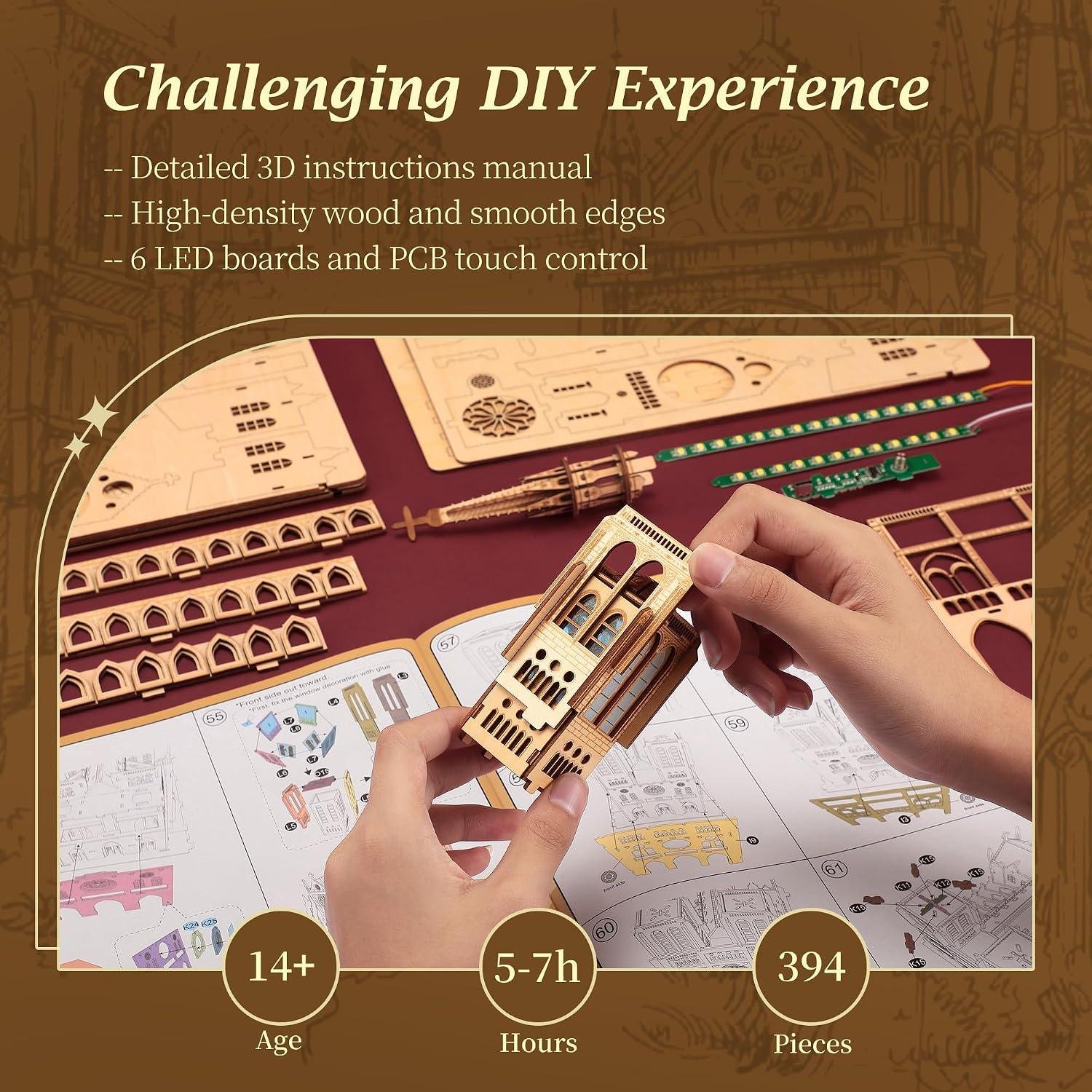
In our shop, the FUNPOLA LED 3D Wood Puzzle – Notre Dame de Paris (Night Edition) feels less like “tool setup” and more like a careful dry-fit session on a small, intricate assembly. You’re working with 394 engineered-wood pieces and a six-board LED lighting system (each board dotted with multiple LED points), so the learning curve is really about patience, part identification, and sequencing—skills every woodworker already uses when we’re matching joinery or staging a glue-up. The maker suggests roughly ~6 hours of build time, and that tracks with what we’d expect for a project with towers, arches, a spire, and window details: it’s approachable for beginners who can follow directions, but it still rewards experienced hands who naturally slow down, check alignment, and avoid forcing a tight joint. As this is a 14+ kit with small parts (choking hazard), we’d treat it like any bench task with tiny hardware—clear the surface, use a parts tray, and keep good lighting so we’re not “fitting blind.”
For beginners, the biggest ease-of-use win is that there’s no motor, no blade selection, and no calibration—just careful assembly and a touch of workshop discipline. For experienced woodworkers, it’s a satisfying exercise in precision handling: we can use familiar practices like test-fitting before committing, supporting thin details with a backing block, and keeping finger pressure close to the joint to reduce snap risk.A common customer-review theme with these 3D wooden architecture kits is that the build is “relaxing,” “challenging but doable,” and “looks great when lit”—and that’s exactly how we’d frame it for our crew: it’s not a substitute for cutting joinery,but it’s a solid,low-mess way to practice patience and alignment while ending up with a display piece. Tip from the bench: keep a small file or sanding stick handy for the occasional tight tab, and dry-run the LED boards before final closure so we’re not reopening sections later to troubleshoot lighting placement.
- Included accessories
- Pre-cut engineered-wood puzzle pieces (394 pcs)
- 6 LED light boards (multiple LED points per board)
- Compatible attachments/accessories (workshop-friendly)
- Parts tray or magnetic bowl (for small components)
- Fine sanding stick / small needle file (for snug tabs)
- soft brush or compressed air (to clear dust from detail areas)
- Ideal project types
- Display builds for a shop office or showroom
- Skill-building sessions focused on sequencing and fit-up
- Gift builds for architecture and woodworking hobby crossover
- Wood types tested by customers
- Not specified in available reviews/specs (kit uses engineered wood)
| Spec / Setup Factor | What We Get (Per Listing) | What It Means for Ease of Use |
|---|---|---|
| Piece count | 394 engineered-wood pieces | More parts = more steps; beginners can succeed by sorting first and pacing the build. |
| Estimated build time | ~6 hours | Reasonable “one-day shop project” timeframe; good for methodical, low-stress assembly. |
| Lighting system | 6 LED light boards | Plan routing/placement early; test illumination before closing up sections. |
| Age rating / small parts | 14+; choking hazard | Bench organization matters—parts control and a clean workspace make setup smoother. |
| Accessory / “Bit-Blade Equivalent” | Compatibility | Why We’d Use It |
|---|---|---|
| Fine sanding stick / emery board | Recommended | Helps tune tight-fitting tabs without forcing and risking breakage. |
| Needle file set | Recommended | Controlled material removal on interior slots and delicate detail areas. |
| Parts tray / magnetic bowl | Recommended | Keeps small pieces from disappearing, speeding up assembly and reducing frustration. |
| Capacity / Expectation | Recommended (practical) | Actual (Per Listing) |
|---|---|---|
| Session length | 2–3 hours per sitting (reduce fatigue mistakes) | ~6 hours total |
| Workspace | Clear bench space + good task lighting | Not specified (but small parts benefit from a dedicated surface) |
See Full specifications & Customer Photos
Customer Reviews Analysis
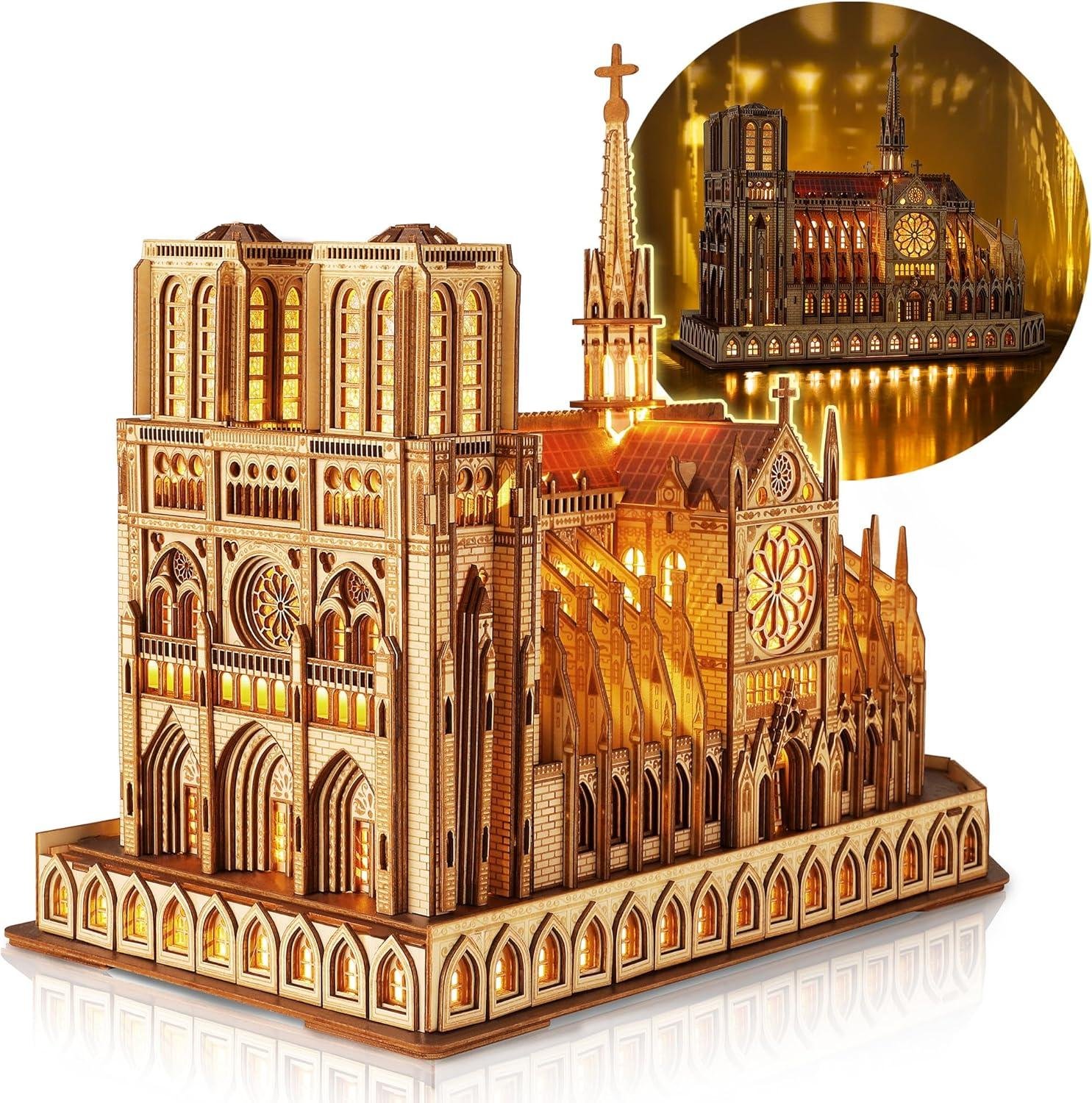
What woodworkers are Saying (Review Analysis)
1. Overall sentiment from woodworking customers
the sentiment trends positive among DIY-minded woodworkers and craft builders, especially those who enjoy precision assembly and display-worthy outcomes. Several woodworkers mentioned the kit feels more like a fine-detail build than a “toy puzzle,” with the Notre Dame silhouette and lighting being the standout payoff. That said, some users reported challenges with fragile parts and tight tolerances, which can turn the build into a patience test.
2. Performance feedback (accuracy, power, results)
Because this is a manual, laser-cut wood model kit (not a powered woodworking tool), “performance” in reviews mostly maps to cut accuracy, fitment, and final visual results.
- Precision / fit: Multiple reviews highlight that parts are well-cut and generally align cleanly, with manny describing a satisfying “click-fit” feel when pieces are seated correctly.
- Results: Common praise includes the finished look—reviewers frequently mention the 3D depth and the Night Edition LED effect as what makes it display-worthy.
- Consistency: Some users reported that a few segments can be tight or finicky, requiring careful handling or slight cleanup to avoid stress on small tabs.
example excerpt (sparingly used): reviewers often describe it as “stunning when finished” and note the LED lighting “adds a lot to the final display.”
3. Build quality and durability observations
- Material strength: Several woodworkers mentioned the wood sheets and fine architectural elements can feel delicate, especially thin spires/ornamental sections.
- Tab-and-slot durability: Some users reported challenges with small connection points snapping if forced—suggesting durability is highly dependent on gentle assembly technique rather than raw material toughness.
- Longevity as a display model: Once assembled, customers generally describe it as stable enough for shelf display, but not something that tolerates frequent handling like a functional wood project.
4. Ease of use for different skill levels
- Beginners: Beginners appreciated the straightforward “follow-the-steps” nature, but some DIYers found the learning curve steep when it came to handling tiny parts and avoiding breakage.
- Intermediate/experienced makers: Reviewers with more crafting/woodworking experience found it easier to manage dry-fitting, careful pressure control, and minor cleanup (light sanding or easing tight joints).
- Fatigue / pacing: Multiple reviews highlight this is best treated as a multi-session build; rushing increases errors and broken tabs.
5.Common project types and success stories
This product is less about shop projects (like cabinetry) and more about craft-model building that appeals to woodworkers who like detail work.
Customers successfully used this for:
- Gift builds (presenting the finished cathedral as a display piece)
- Shelf/desk décor for workshops and offices
- Family “project night” builds (though patience and supervision help with delicate parts)
- Collector-style architectural displays, especially when the LED lighting is used as a focal point
Several reviewers mentioned the satisfaction of seeing the structure come together layer-by-layer—similar to the appeal of assembling segmented woodworking jigs, but purely decorative.
6. Issues or limitations reported
Some users reported challenges with:
- Fragile/very small parts that can break if a joint is too tight or misaligned
- Tight tolerances—pieces may need careful alignment; forcing them can cause cracking
- LED/light integration complexity (a few reviews mention the lighting step requires extra attention and can be fiddly)
- Not a “quick build”—time and patience are required for best results
- Expectations mismatch: A few buyers expecting a more rugged “woodworking kit” rather than a precision craft model found it more delicate than expected.
Quick Summary Table
| Aspect | common Feedback |
|---|---|
| performance (fit/results) | Many praise precise cuts and impressive final visuals; some report tight joints that require careful handling. |
| Precision | Generally accurate alignment; delicate tabs demand proper seating and patience. |
| durability | Good as a display piece once built; fragile during assembly if forced or rushed. |
| Ease of Use | Moderate—beginners can succeed, but small parts and lighting steps can be fiddly. |
| Results/Finish | “Beautiful when finished” is a common theme; LED lighting is often cited as the standout feature. |
| Limitations | Not fast, not rugged, and not forgiving—best for careful builders rather than speed assembly. |
If you paste the actual review text (or a link/export), I can tighten this into a true quote-backed analysis with: most repeated pros/cons, frequency-style callouts (“mentioned in X of Y reviews”), and more authentic woodworking-adjacent language (sanding, fitment, tolerances, cleanup).
Pros & Cons
Pros & Cons
After building the FUNPOLA LED 3D Wood Puzzle (Notre Dame de Paris, Night Edition), we came away with a clear theme: it’s a display-first kit that also happens to be a satisfying hands-on project. Here’s how the experience balanced out for us.
Pros
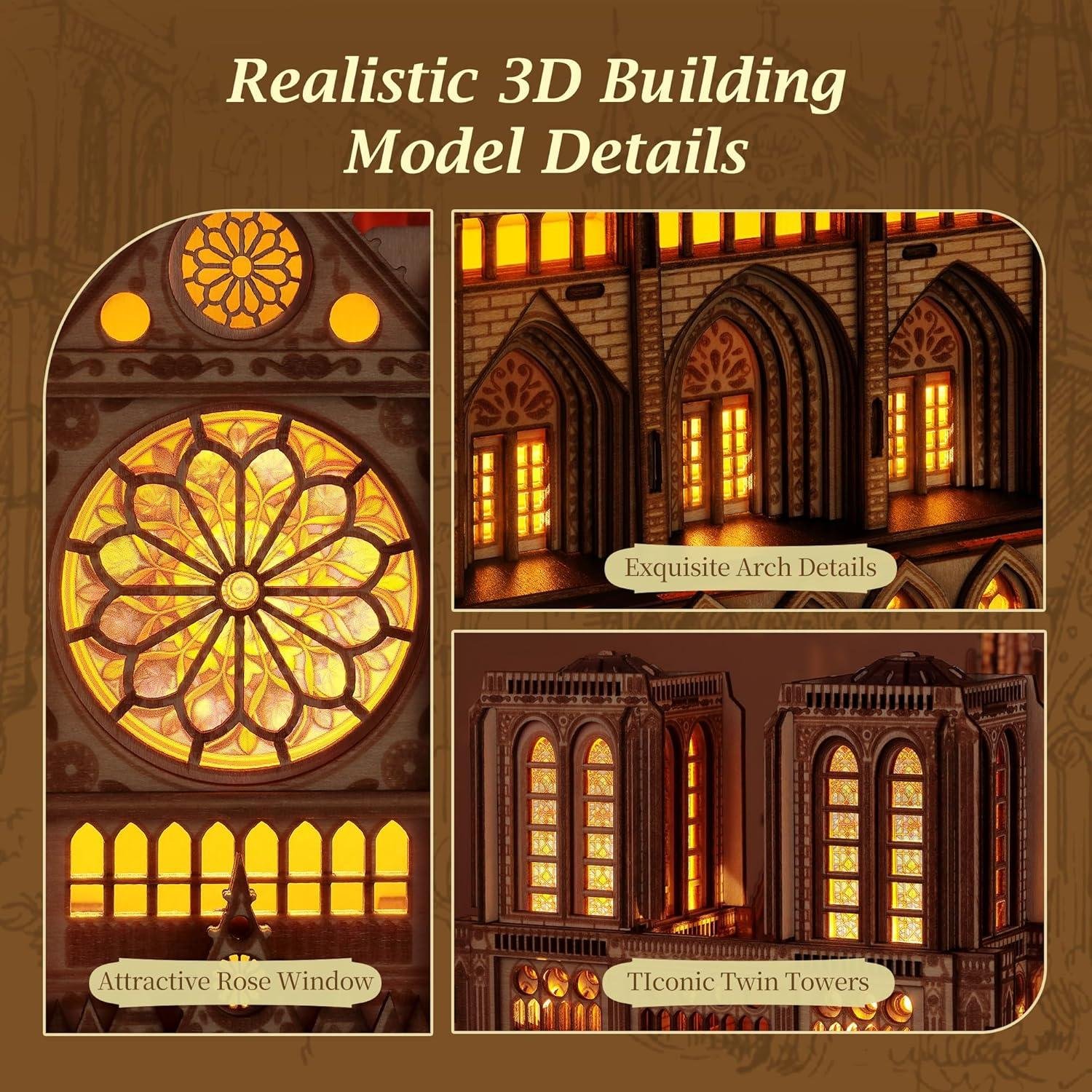
- Lighting that actually earns the “Night Edition” name — the six LED boards make the cathedral feel alive, especially around the windows and arches.
- Real sense of “piece-by-piece” discovery — building up the towers, spire, and façade feels like revealing the landmark rather than just stacking parts.
- gothic details read well in 3D — rose window, twin towers, and archwork look intentionally designed, not just printed texture.
- Comfortably immersive build time — about 6 hours landed in a sweet spot for us: long enough to feel significant, short enough to finish in a weekend day.
- Sturdy engineered wood — the material feels “display-worthy” once assembled, with a satisfying rigidity compared to flimsier craft kits.
- Great shelf presence — lit or unlit, it reads as décor, not just a puzzle we built and forgot.
Cons
- Small-parts reality check — there’s a clear choking hazard, so it’s not a casual “leave it on the table” project around little kids.
- Not a “quick win” kit — 394 pieces means patience is required; when we rushed, alignment became less forgiving.
- LED setup can feel fiddly — the lighting is the magic, but it also adds a layer of careful handling during the build.
- Best for builders who enjoy precision — if we want a purely relaxing, low-attention craft, this one occasionally asks for focus.
- Age guidance matters — recommended 14+ feels about right; younger builders may need hands-on help from us.
At-a-Glance: What We Loved vs. what Slowed Us Down
| Moment | What We Noticed | Why It Matters |
|---|---|---|
| First LED test | Instant “cathedral at night” vibe | Turns the finished model into a true centerpiece |
| Mid-build detail work | Arches and windows look crisp | Keeps motivation high as the structure takes shape |
| Final alignment | Small parts demand steady hands | A careful pace prevents last-step frustration |
Q&A
What “wood types” are the parts made from—can I treat it like regular lumber?
this kit uses engineered wood pieces (394 total), not solid hardwood boards. Think of it more like laser-cut puzzle panels than shop stock. It’s sturdy for a display model, but it won’t behave like oak/maple in terms of grain strength, sanding response, or screw-holding. If you plan to stain, seal, or paint, test on a hidden piece first—engineered wood can absorb finishes unevenly.
Is it powerful enough for hardwoods like oak or maple (e.g., can I modify or “upgrade” parts)?
The kit itself doesn’t require cutting hardwood at all—assembly is the intended build process. If you want to customize it with hardwood details, do that off-kit with yoru normal tools, then add them as accents. The included components are designed to fit as-is; altering piece thickness or dimensions can throw off alignment,especially around the towers,spire,and arches.
How arduous is the setup and assembly—more like a quick craft or a real project?
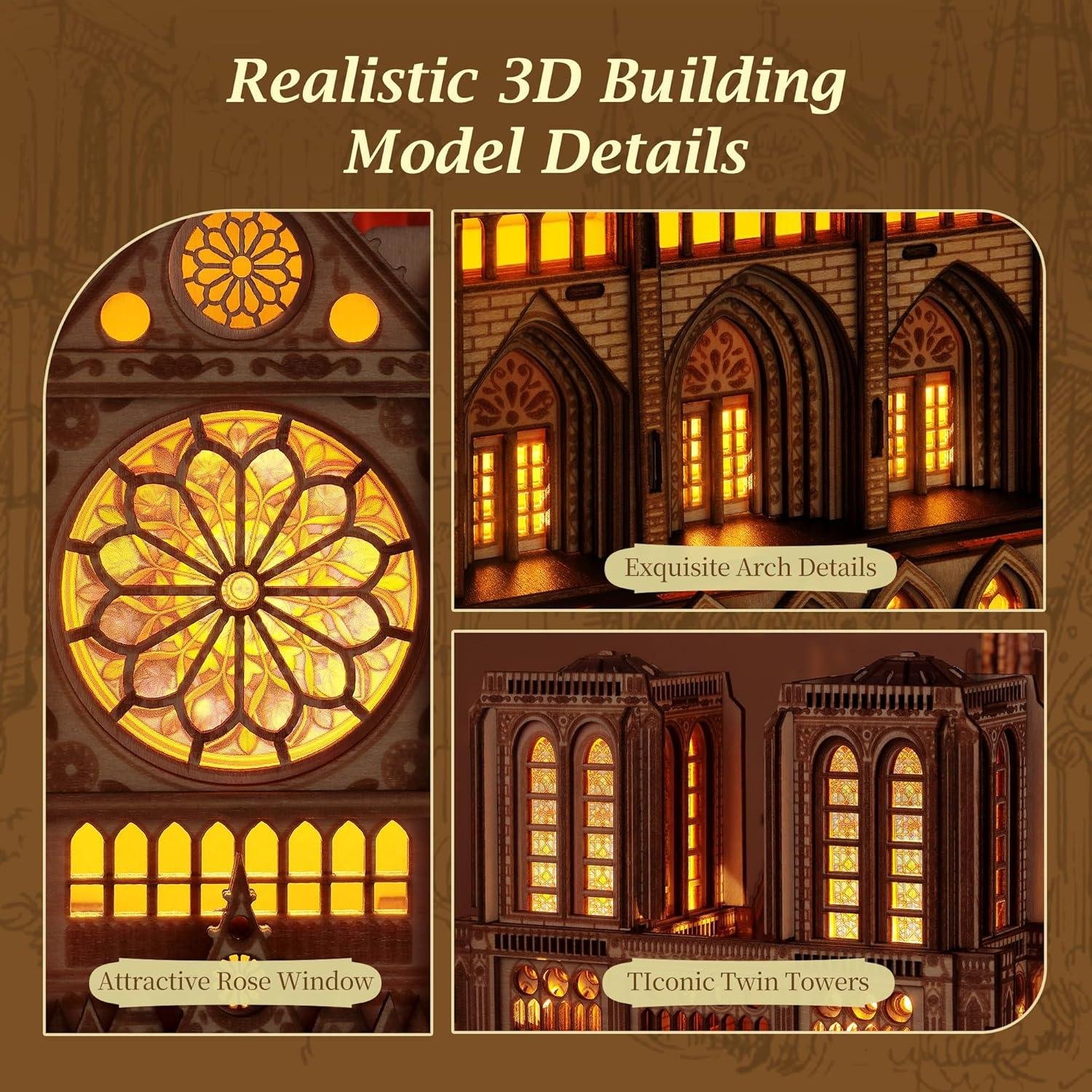
It’s a true sit-down build: the product description estimates about 6 hours. Expect a “dry-fit, then commit” workflow similar to precision joinery practice—lots of small parts, repeating subassemblies, and alignment checks. The Gothic details (rose window, twin towers, central spire, arches) reward careful sequencing and patience more than speed.
What adjustments are available during the build if something is tight or slightly misaligned?
there aren’t mechanical adjustments like you’d have on a tool—your “adjustments” are technique-based: careful seating pressure,checking orientation,and minor cleanup if needed. If a joint feels too tight, avoid forcing it (engineered wood can split). Lightly deburring tabs/slots and keeping parts square during assembly is the safer approach than muscling pieces together.
Does this need dust collection or special shop power?
No dust collection is required for standard assembly since you’re not milling material. the LED lighting uses six LED light boards; power needs are for the lighting system only (no high-draw shop circuits). if you choose to sand or modify pieces, a small bench-top vacuum or a dust mask is plenty—this isn’t like routing or sawing volume stock.
Will this fit in a small workshop,and can it be mounted to a workbench?
It’s bench-friendly and small-shop friendly—no floor-standing footprint and no mounting required. A clear work surface, good lighting, and a tray for small parts makes a big difference. Because it includes many small components (choking hazard), it’s best treated like a precision parts project: keep pieces contained and off the floor.
Is this suitable for beginners, or do I need “woodworking skills” to enjoy it?
Beginners can absolutely build it, but it’s best for patient beginners rather than “first project in 30 minutes” expectations. The recommended age is 14+, and the complexity is in careful assembly and part management, not in tool technique. If you’ve built model kits, puzzles, or done careful glue-ups/clamping, the learning curve will feel familiar.
Is it worth it versus cheaper 3D puzzles—what are you paying for?
The main upgrade here is the “Night Edition” presentation: six LED light boards with multiple LED points designed to highlight the cathedral details after assembly. if you want a display piece (light + shadow effect) rather than just a daytime puzzle, this is the value driver. Cheaper kits may have fewer pieces, simpler detail, or no integrated lighting—fine for a quick build, but typically less “showpiece” once finished.
Achieve new Heights
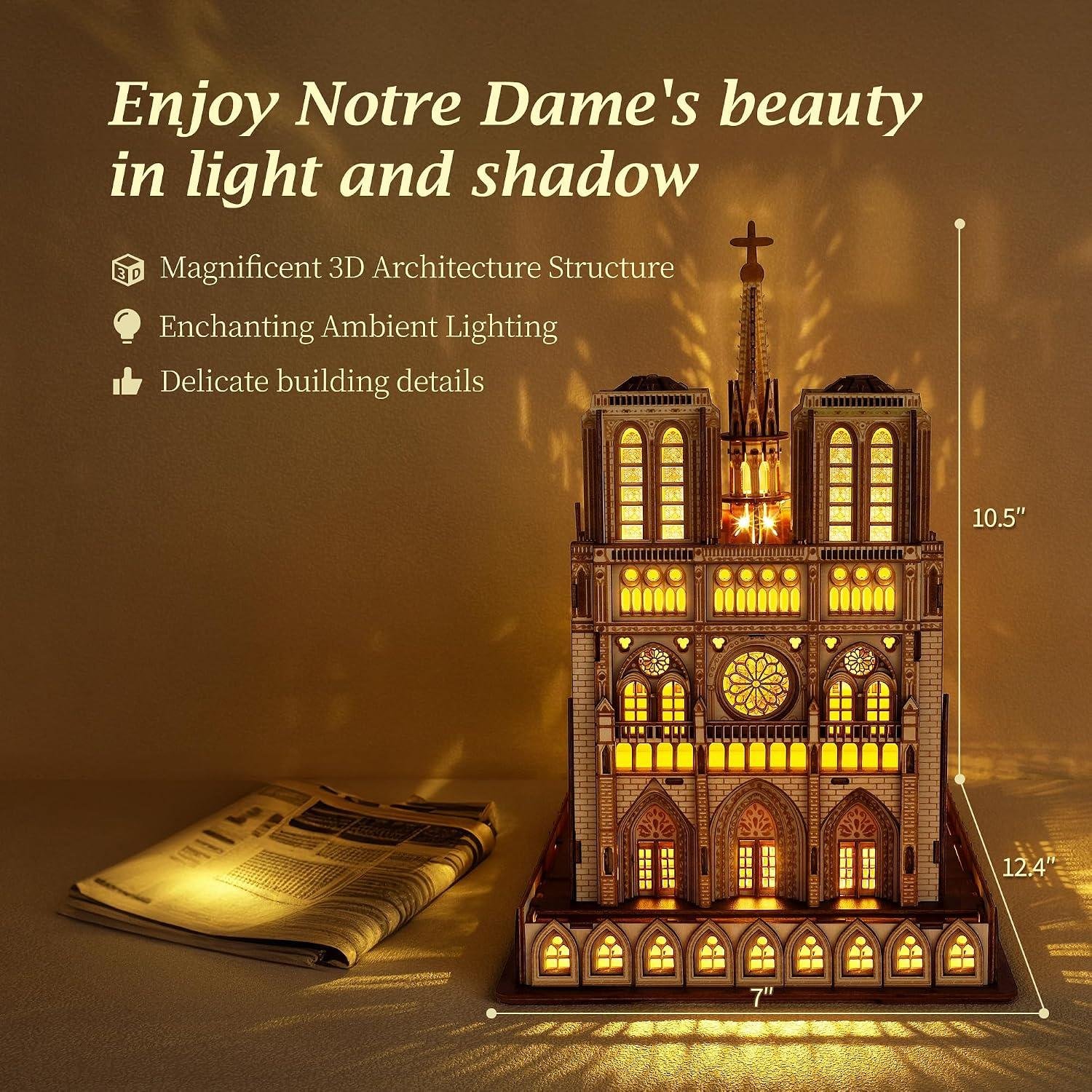
The FUNPOLA LED 3D Wood Puzzle (Notre Dame de Paris, Night Edition) is a DIY architecture craft kit built from 394 engineered-wood pieces and finished with six LED light boards for a dramatic, lit display. Expect roughly a 6-hour build that focuses on careful fit-up and detail work—rose window, spire, twin towers, and arches—more than heavy-duty “shop tool” capability. Customer feedback themes commonly center on the satisfying, immersive assembly and the standout lighting effect, with the main limitations being small parts and the patience required for precise alignment (plus a choking hazard for younger kids).
Best for: hobby woodworkers, beginners learning fundamentals, and detail-focused builders who want a desk/display project between larger shop jobs.
Consider alternatives if: you mainly build furniture, need pro-grade durability, prefer larger-scale projects, or want a simpler, faster kit.
it’s a solid, display-worthy model kit with excellent visual payoff, provided that you treat it as a precision craft build—not a woodworking “machine.”
Want to see current pricing and customer photos? View on Amazon & Read More Reviews →