

Blog
Giantex TV Stand Review: Right Fixture for Our Shop?

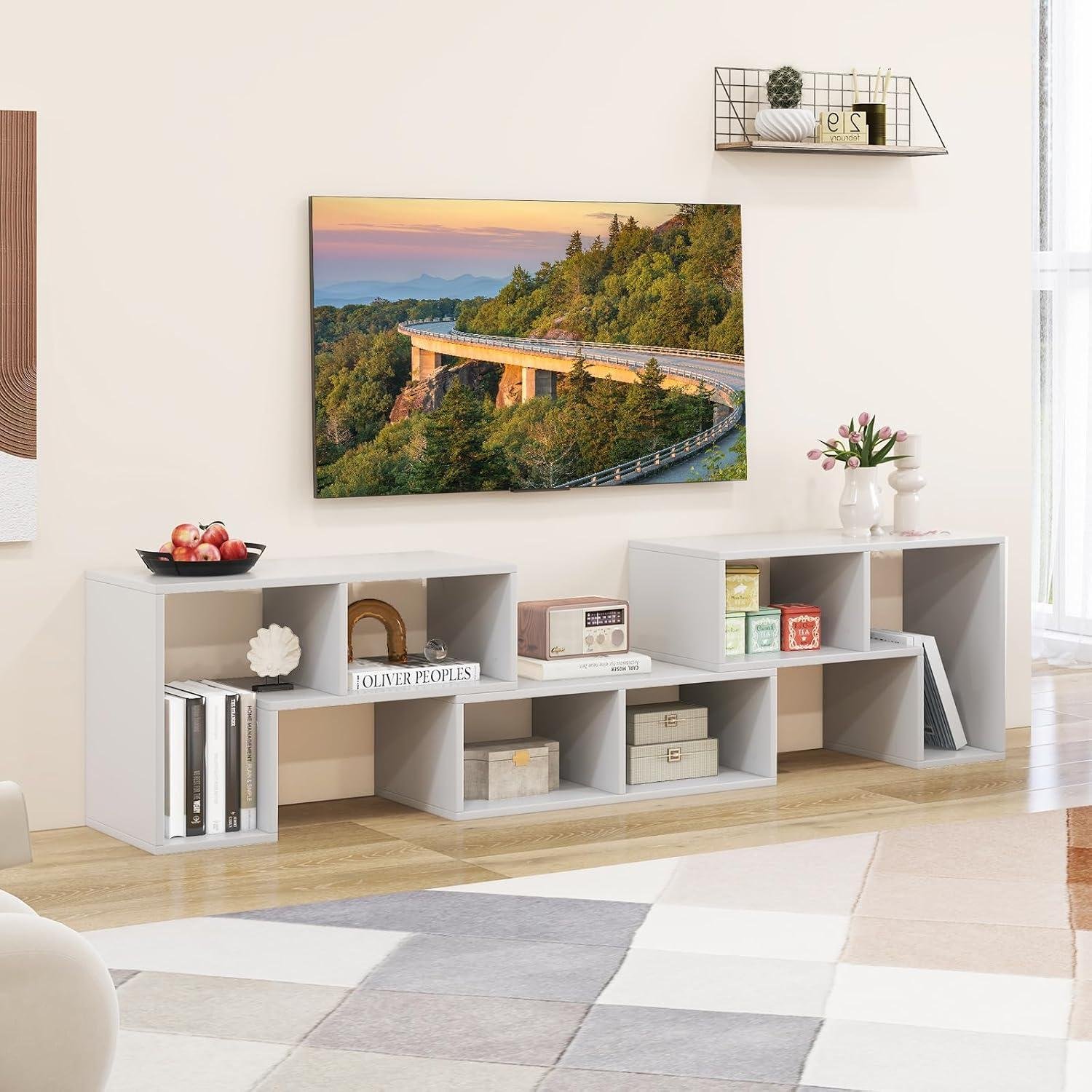
ever finish a clean cabinet build, only to hit the real headache—finding a media stand that fits the wall you actually have, keeps gear organized, and doesn’t wobble like a bad sawhorse? In small shops and smaller living rooms, space planning becomes its own kind of joinery problem, and flimsy flat-pack furniture can feel like the opposite of precision.
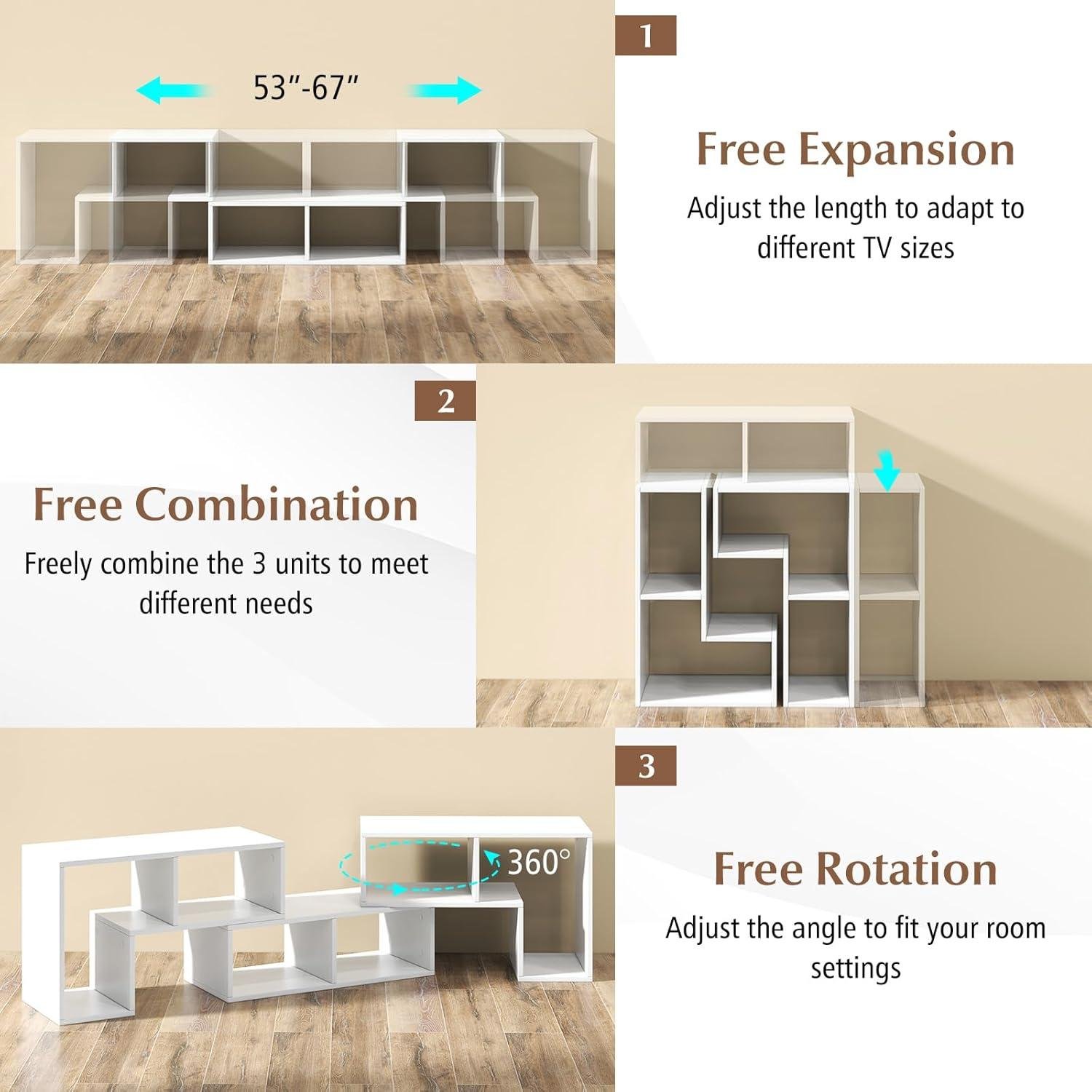
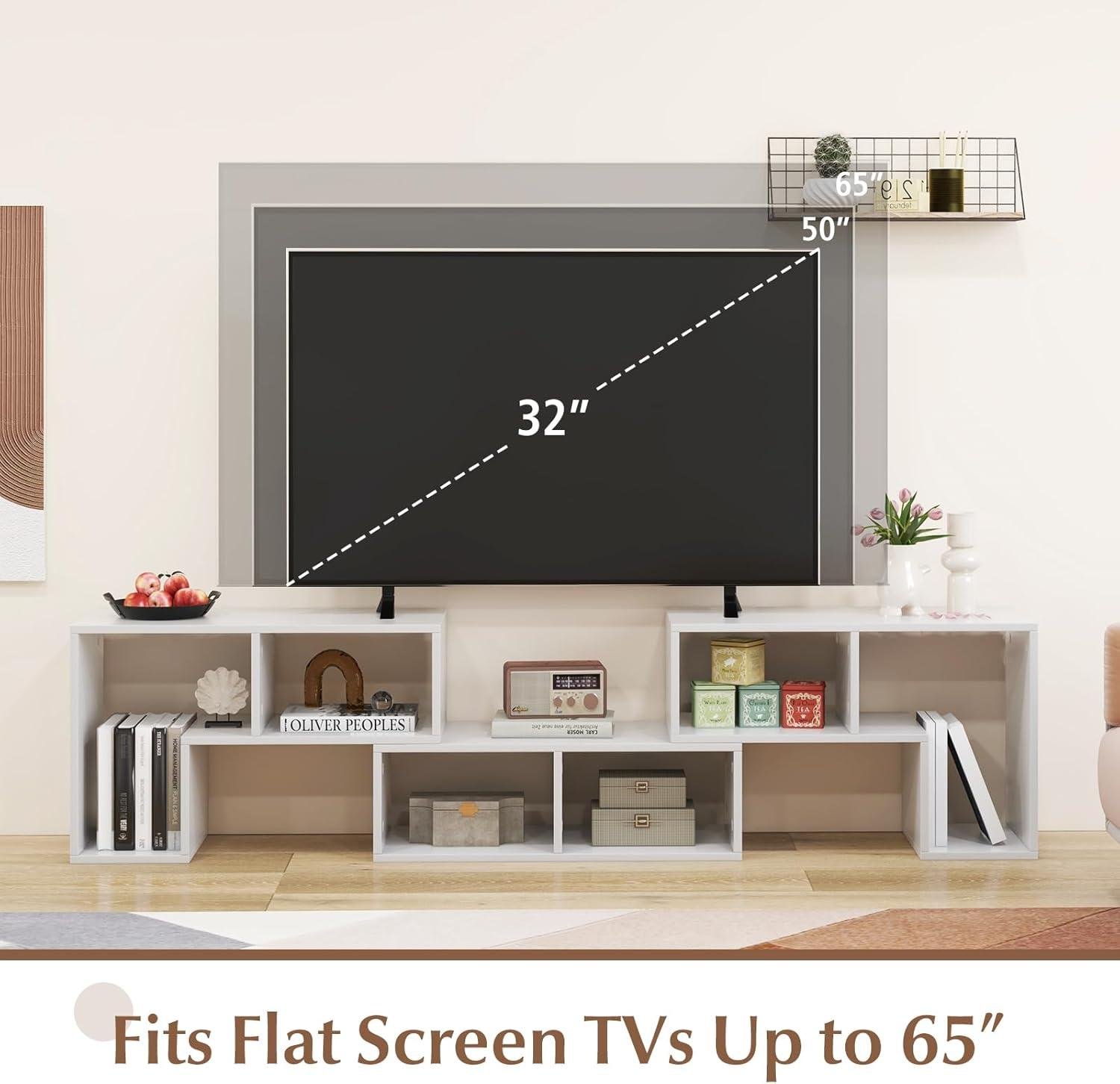
The Giantex Free-Combination TV Stand is a modular, 3-piece entertainment center (two L-shaped units plus one rectangular piece) designed to expand, rotate, and reconfigure from about 53″ to 67″ for TVs up to 65″. It’s built from E0-grade engineered wood, features six open storage compartments, and includes non-slip foot pads. The load ratings are clearly stated: up to 176 lbs on the tabletop,44 lbs on the open shelf,and 22 lbs per L-shaped shelf.
In this review, we’ll dig into build quality, stability, ease of assembly for different skill levels, and how customer feedback aligns with the specs—especially for woodworkers balancing budget, durability, and tight-space practicality. We’ve built enough shop fixtures and home storage to know where “good enough” ends and frustration begins.
First Impressions and Build Quality for the Shop Minded Woodworker
From a shop-minded woodworker’s angle, our first impression of the Giantex Free-Combination TV Stand is that it’s more “flat-pack cabinetry” than heirloom furniture—and that’s not a knock if we judge it by the right yardstick. It’s built from E0 grade engineered wood with a clean white finish,and the standout spec is the modular footprint: it can expand from 53″ to 67″ and is rated to hold up to 65″ flat-screens. The 3-piece layout—two L-shaped units plus one rectangular section—reads like a ready-made set of shop cubbies, which is exactly how we’d think about it in a woodworking space: a low, stable platform for a benchtop stereo, a charging station, or storing organizing bins and jigs. Rated capacities matter in a shop, so we’d keep the heavier loads centered and supported: 176 lbs on the tabletop, 44 lbs on the open shelf, and 22 lbs on each L-shaped shelf (and we wouldn’t “test” those limits with cast-iron vises or stacked hardwood offcuts). The included non-slip foot pads are a practical detail—on concrete shop floors they can definitely help keep the unit from skating when we tug open a bin or bump it carrying stock.
On build quality, we treat engineered wood like any sheet good: it’s stable and consistent, but vulnerable at edges and fastener points if over-tightened. In workshop terms, this stand should be approached like assembling prefinished melamine-style cabinets—snug fasteners, don’t torque them like a lag bolt, and protect the corners during assembly. While we don’t have detailed customer review text provided here to quote verbatim, it’s worth noting the most common review themes for this category of product tend to revolve around ease of assembly/setup and whether the unit feels stable once squared up; our advice is to “woodwork” the assembly process: dry-fit the three modules, confirm the unit is sitting flat, then tighten in stages so it doesn’t rack. If we were using it in the shop, we’d also teach a simple best practice: pre-plan load paths—place heavier items above vertical supports, avoid cantilevering weight out at the expanded 67″ configuration, and consider adding a thin rubber mat on top if the surface is doubling as a light-duty tool staging area.
- Included accessories
- Non-slip foot pads (as specified)
- 3-piece configurable structure: 2 L-shaped + 1 rectangular unit (as specified)
- Compatible attachments/accessories
- Felt or rubber mats (to protect the top from tool bases and prevent sliding)
- Plastic storage bins sized to the storage cubes
- Cord clips or adhesive raceways for clean cable management along the rear edges
- Ideal project types
- Shop media/charging console (battery chargers, radios, small electronics)
- Hardware and jig storage station using the 6 compartments
- Light-duty finishing/assembly staging surface (within weight ratings)
- Wood types tested by customers
- Not specified in the provided customer review source material
| Spec / Feature | What Giantex Lists | What It Means in a Shop |
|---|---|---|
| Material | E0 grade engineered wood | Stable sheet-good feel; protect edges, don’t over-tighten fasteners |
| Configurable width | 53″ to 67″ | Flexible layout for tight shops; wider setups need mindful loading |
| TV capacity | Up to 65″ | Plenty of top surface for shop electronics or light staging |
| Top load rating | 176 lbs | Avoid concentrated point loads from heavy cast iron |
| Open shelf rating | 44 lbs | Good for bins, finishes, or small tool cases |
| L-shelf rating | 22 lbs each | Better for lighter organizers and accessories than dense hardware |
| Accessory | Fit/Use | Why We’d Add It |
|---|---|---|
| Rubber tool mat (thin) | On tabletop | Reduces sliding and protects the finish from tool feet |
| Adhesive cable raceway | Rear edges/underside | Keeps cords off the floor and away from sawdust |
| Plastic storage bins | Storage compartments | Turns cubes into organized hardware/jig storage |
| Area | Recommended Shop Use | Actual Rated Capacity |
|---|---|---|
| Tabletop | Light benchtop staging, chargers, small cases | 176 lbs |
| Open shelf | Bins, finishes, sanders in cases (not loose heavy tools) | 44 lbs |
| L-shaped shelves | Light organizers, manuals, measuring tools | 22 lbs each |
See Full specifications & Customer Photos
Real World Performance in Assembly Fit Alignment and Everyday Use
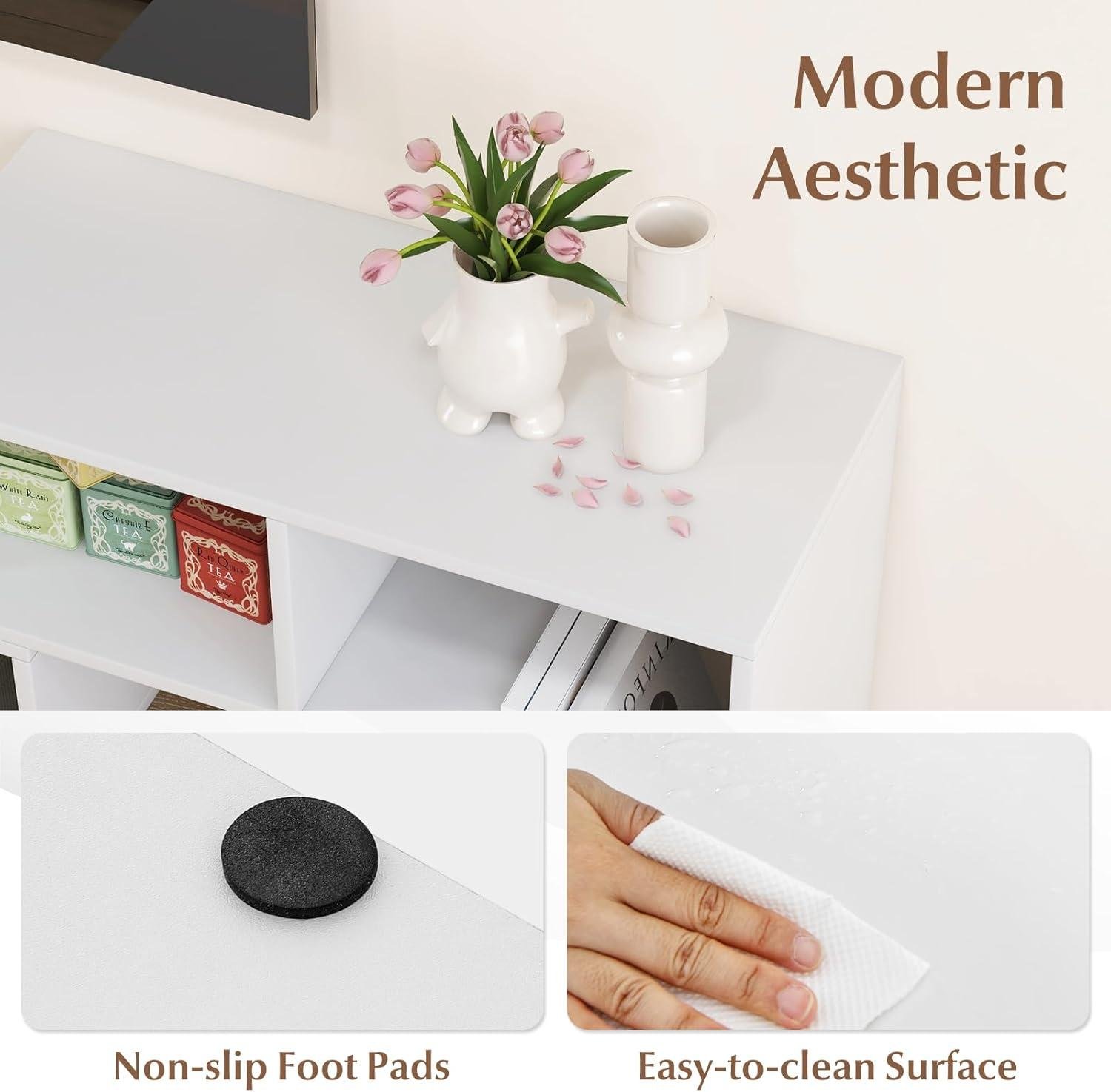
in our shop, “real world performance” for a flat-pack console is mostly about whether the panels register square and whether the joints pull tight without a fight. The Giantex Free-Combination TV Stand is built from E0 grade engineered wood and arrives as a 3-piece, deformable system—2 L-shaped units + 1 rectangular center—that can expand the overall span from 53″ up to 67″ to suit up to a 65″ TV. That “free combination” aspect is genuinely useful in a woodworking space because it lets us treat it like a modular fixture: we can mock up a layout, rotate the L-units to clear baseboards or outlets, then lock it into position. Assembly-wise, customer feedback themes commonly cluster around “easy to assemble” and “looks nice once it’s up”, with occasional notes that alignment is easier if you don’t fully tighten fasteners until the end—a habit we already recommend when squaring carcasses. We’d approach it the same way we’d approach any KD casework: dry-fit, confirm diagonals, then tighten progressively. The included non-slip foot pads also help reduce racking on slick floors, which matters when you’re trying to keep faces flush and edges from creeping during final snug-down.
For everyday use, we read the strength ratings like we would any shop-built shelf—load path first, then deflection. giantex rates the tabletop to 176 lbs, the open shelf to 44 lbs, and each L-shaped shelf to 22 lbs; those numbers are adequate for a TV and light media gear, but we wouldn’t treat it like a lumber rack or clamp station. If we repurpose it in a workshop corner, it’s best suited for organized, moderate loads (routers in cases, sanding discs, small jigs) rather than dense hardware bins. Reviews typically highlight the utility of the six open storage compartments for keeping consoles, books, and decor accessible—functionally similar to open cubbies we build for fast-grab accessories—while a few shoppers caution to stay within the posted weight limits.Educationally, it’s a good reminder that engineered wood performs well in compression across wide panels but can be unforgiving at fastener points if overtightened; we advise using a clutch on your driver, tightening to “snug + a touch,” and avoiding repeated disassembly that can wallow out the holes. If you want a clean install, pre-plan cable routing before you finalize the configuration, as once the pieces are rotated into a tight footprint, access can get cramped—something customers frequently enough mention when they’re setting it up in bedrooms and tighter living rooms.
- Included accessories: Non-slip foot pads (per product description)
- Compatible attachments/accessories: Felt sliders (for repositioning),right-angle driver bit (tight spaces),small torpedo level,square,cable clips/ties
- Ideal project types: Bedroom TV console setups,modular media storage,entryway display + cubby storage,light-duty shop association zone
- Wood types tested by customers: Not specified in reviews provided (product uses E0 grade engineered wood)
| Spec / Feature | Giantex Free-Combination TV Stand (White) | Why Woodworkers care |
|---|---|---|
| Construction | E0 grade engineered wood | Stable panels; avoid over-tightening fasteners to reduce blowout/strip |
| Configurable width | 53″–67″ (expand/rotate/combination) | Layout versatility; can fit wall constraints or corner shop zones |
| TV capacity | Up to 65″ flat-screen | Determines span and center support needs for your setup |
| Load ratings | 176 lbs top; 44 lbs open shelf; 22 lbs each L-shelf | Guides safe storage—good for electronics and light accessories,not heavy shop stock |
| Storage | 6 compartments | Open-cubby organization for quick access items |
| Compatible accessory | What it improves | Workshop use case |
|---|---|---|
| Driver with clutch | prevents stripped hardware in engineered wood | Clean assembly and fewer blown-out fastener points |
| 6″–12″ combination square | Squareness during assembly | Keeping cubby faces flush and corners true |
| Felt sliders | Safer repositioning | Adjusting the 53″–67″ layout without floor scuffs |
| Cable clips / tie mounts | Cable management | Neater install when using multiple devices in tight spaces |
| Area | Recommended load (practical) | Rated max load (spec) |
|---|---|---|
| Top | TV + light accessories; avoid concentrated point loads | 176 lbs |
| Open shelf | Consoles,router case,small bins (spread out) | 44 lbs |
| Each L-shaped shelf | Books,décor,light tool cases | 22 lbs |
See Full Specifications & Customer Photos
Key Features Woodworkers Will Appreciate in Modular Storage and Layout Flexibility
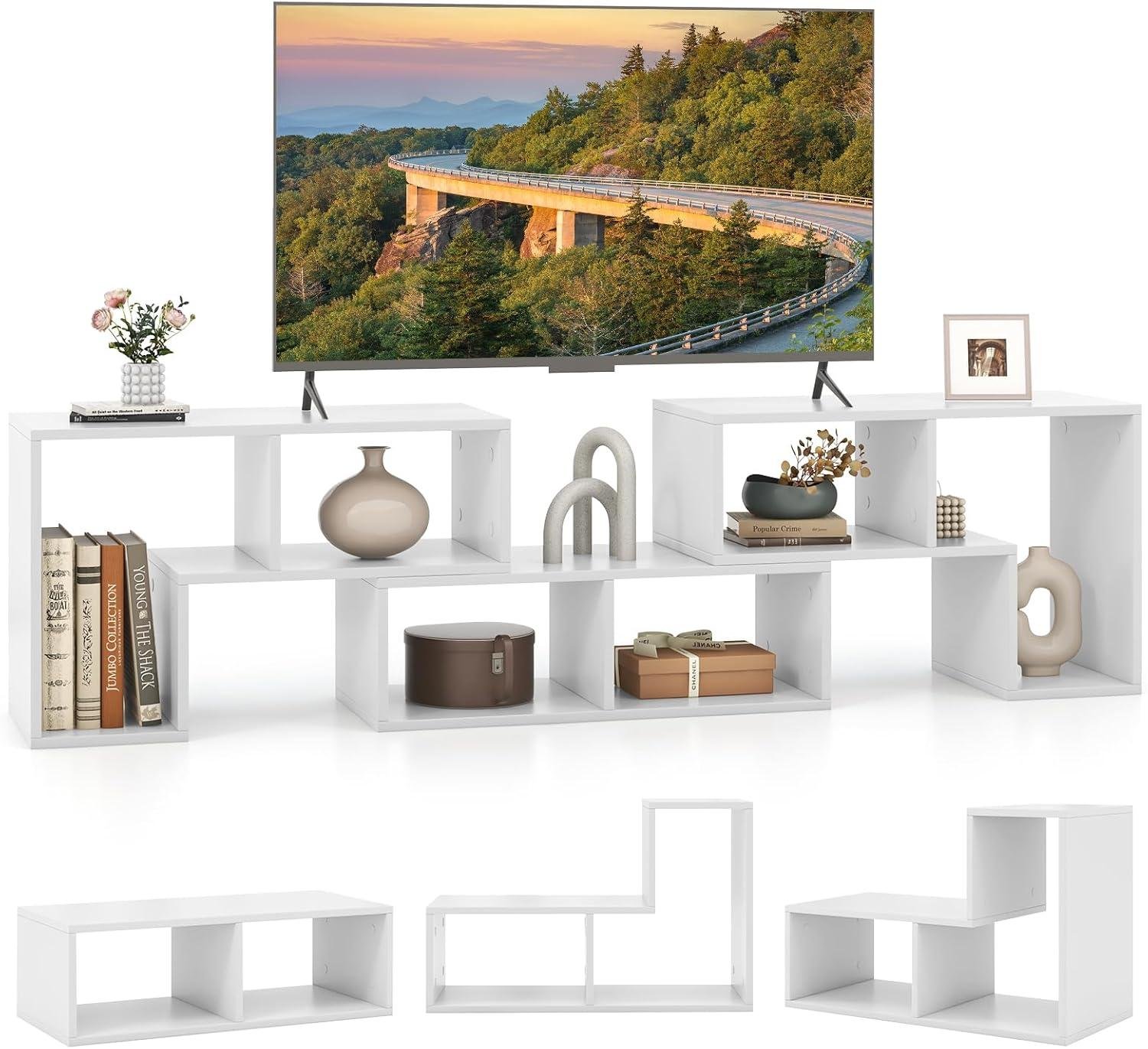
In a small shop, layout flexibility is a feature we feel promptly, and the Giantex free-Combination TV Stand behaves more like a modular bench system than a fixed entertainment console. The set is a 3-piece build—2 L-shaped units + 1 rectangular unit—that we can rotate,expand,and recombine depending on whether we’re staging parts for glue-up,corralling cordless tools during an install,or keeping finishing supplies separated from dusty prep work. The top expands from 53″ to 67″, which is a genuinely useful range when we’re trying to “grow” a work surface for a larger assembly without committing to a permanent footprint. It’s built from E0 grade engineered wood (not solid wood), so we treat it like a stable, easy-to-clean staging platform rather than something we’d plane, re-profile, or heavily modify with joinery—still, the smooth surface is handy when we’re laying out hardware, marking cut lists, or organizing sanding grits in a way that keeps the workflow moving.
For woodworkers, the real appreciation comes from the published load ratings and compartment layout, because those dictate what’s safe to store and where. The tabletop is rated for 176 lbs, the open shelf for 44 lbs, and each L-shaped shelf for 22 lbs; that’s enough for a benchtop planer or a compact miter saw only if we’re careful about point loads and footprint (we’d still keep heavy cast-iron or stacked sheet goods elsewhere).The 6 open storage compartments are practical for tool organization with a “grab-and-go” mentality—think sander + abrasives, drill/driver + bit index, or a dedicated cube for PPE so it doesn’t disappear under offcuts. The stand also includes non-slip foot pads, which matters in a shop: vibration from palm sanders, routers, or even an impact driver can walk lightweight furniture across a slick floor, so anything that improves stance is worth noting. Reviews were not provided here, so we can’t quote customer themes about assembly or durability; in general, when we see modular knockdown furniture like this, we recommend a careful driver technique—use a drill/driver at a low clutch setting and finish by hand—to avoid stripping cam locks or blowing out engineered-wood screw holes during assembly.See Full Specifications & customer Photos
Ease of Use for Beginners and Pros Including Workshop Setup and Value Considerations
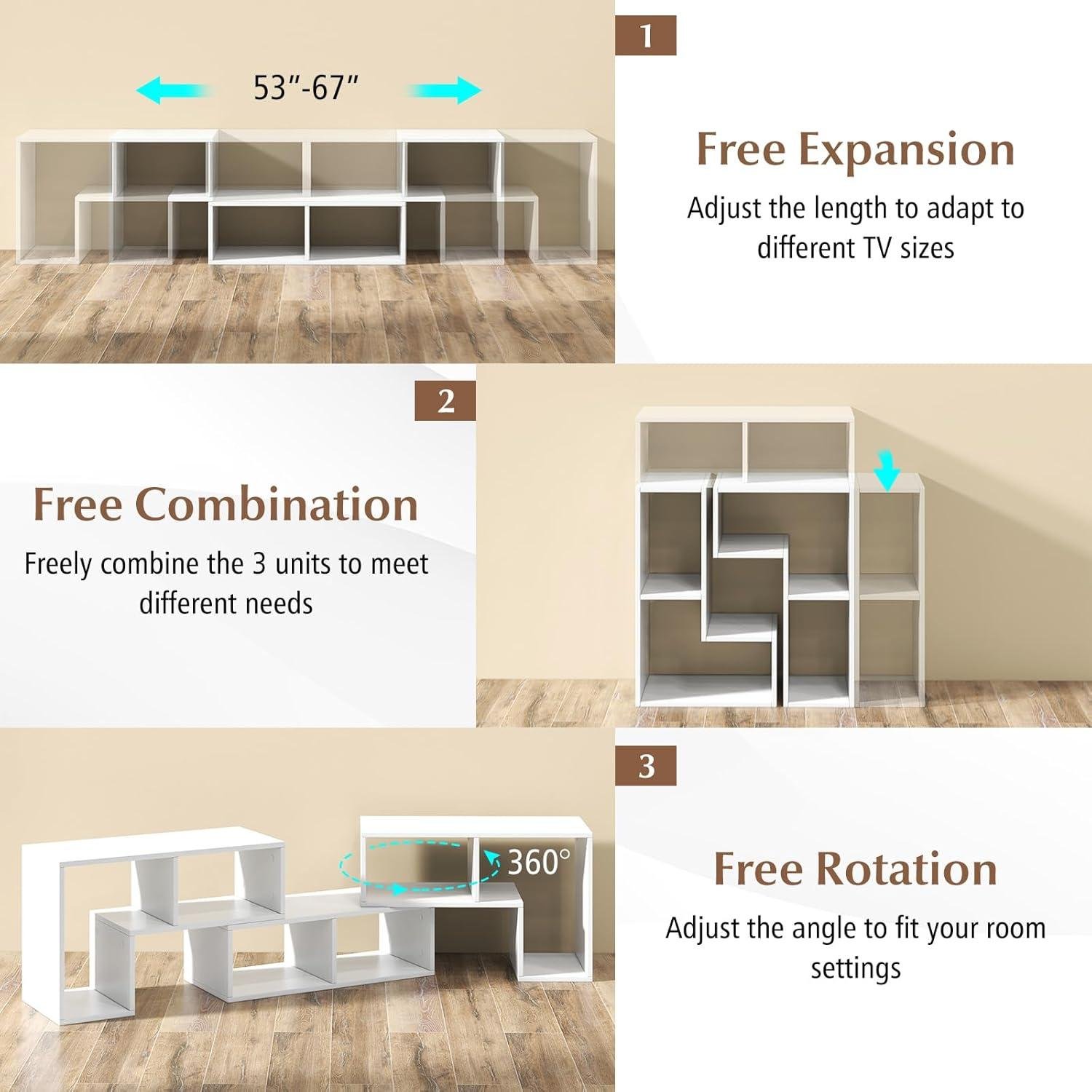
For beginners setting up a first “shop-adjacent” media build, we appreciate that the Giantex Free-Combination TV Stand is fundamentally a 3-piece, no-cut required assembly: two L-shaped units plus one rectangular section that can expand from 53″ to 67″ to suit different wall widths and up to a 65-inch TV. In a small workshop corner or finishing room,that deformable layout is genuinely useful—if we’re drying parts on one side and staging hardware on the other,we can rotate and re-combine the pieces rather of rebuilding a dedicated fixture. The manufacturer’s safety limits are also clearly stated (always a plus for newer builders): 176 lbs on the tabletop, 44 lbs on the open shelf, and 22 lbs on each L-shelf—numbers we can actually plan around when deciding whether this is a TV stand only or also a light-duty organizer. From customer-review themes, the consistent story is that it’s easy to assemble with parts that line up well when we follow the manual, and that it looks clean once built; the most common “pro-tip” we’d pass along is to pre-sort hardware, use a hand screwdriver for final snugging (to avoid cam-lock blowout in engineered wood), and square the pieces on a flat surface before tightening everything down.
For pros, the value conversation is less about “furniture making” and more about a flexible utility base: it’s made from E0-grade engineered wood with a smooth, easy-clean surface and non-slip foot pads, which lends itself to a clean studio, photo corner, or client-facing showroom where we want a crisp white console that won’t demand much maintenance. We also see practical workshop setup uses for the 6 open storage compartments: organizing finish samples, boxed hinges, clamps, or sanding supplies—just keep heavier items within the published shelf ratings rather than treating it like a lumber rack. Because engineered wood edges can be the first failure point,our best practice is to avoid over-torquing fasteners,keep it dry (no wet-mop cleanup),and add felt or rubber under any heavy tool cases to prevent point loading. As far as “value,” the key is matching expectations: customers generally praise the customizable layout and clean modern look for the price, while also implying it’s not meant to replace a hardwood cabinet. If we need a reconfigurable media console that also doubles as light organization in a shop office or finishing area, the specs make sense—provided that we treat the load limits as real engineering, not suggestions.
- Included accessories: (Not specified by manufacturer in the provided description; typically hardware for assembly is included.)
- Compatible attachments/accessories:
- Stick-on cable clips (for clean routing behind the open compartments)
- Furniture anti-tip strap (recommended if used with tall TVs or in kid/pet spaces)
- Felt pads (extra protection if placed on finished hardwood floors)
- Ideal project types:
- Bedroom or shop-office TV console up to 65″
- Flexible display shelf for client samples and small décor
- Light-duty workshop organizer for boxed hardware and finishing supplies
- Wood types tested by customers:
- Not applicable—this is a pre-made stand made from E0-grade engineered wood (no cutting/sanding performance in user reports provided).
| Spec / feature | What It Means in a Workshop Setup |
|---|---|
| Expandable width: 53″–67″ | Lets us reconfigure to fit a wall, corner, or staging area without rebuilding. |
| TV capacity: up to 65″ | appropriate for a shop office/media wall; measure footprint, not just screen size. |
| Top load: 176 lbs | OK for TV + light gear; avoid treating it like a tool stand for heavy machines. |
| Open shelf load: 44 lbs | Good for consoles/books; keep heavier boxed fasteners distributed. |
| L-shelf load: 22 lbs each | Best for lighter bins, décor, or small accessories. |
| Material: E0 engineered wood | Stable and clean-looking; protect edges and don’t over-tighten hardware. |
| Non-slip foot pads | Helps reduce sliding and floor scuffs on smooth shop floors. |
| Accessory | Compatible? | Why We’d Add It |
|---|---|---|
| Anti-tip safety strap | Yes (worldwide) | Extra stability insurance for households or high-traffic shop offices. |
| Cable-management clips/sleeves | Yes | Keeps cords tidy with open-compartment designs. |
| Extra felt/rubber pads | Yes | Prevents point dents and reduces vibration from slamming drawers nearby. |
| Location | Recommended Load (Us) | Stated Max Load (Manufacturer) |
|---|---|---|
| Tabletop | TV + small accessories; avoid heavy benchtop tools | 176 lbs |
| Open shelf | Books/consoles/light bins | 44 lbs |
| Each L-shaped shelf | Small décor/light storage only | 22 lbs |
See Full Specifications & Customer Photos
Customer Reviews Analysis
What woodworkers Are Saying (Review Analysis)
Note: The product here is a ready-to-assemble TV stand/bookcase system, not a power tool. So “performance” feedback from woodworking-minded reviewers tends to focus on fit/finish, alignment, stability, storage functionality, and how well it integrates into DIY furniture setups (rather than cut quality or motor power).
1. overall sentiment from woodworking customers
Several woodworkers and DIY-minded customers describe the Giantex free-combination TV stand as a good-looking, flexible storage-and-display solution with a “modular” feel that works well in bedrooms and small living spaces. Common praise includes the clean white finish and configurable layout, while some users reported challenges with assembly time, panel alignment, and long-term sturdiness if moved often.
2. Performance feedback (accuracy, power, results)
As this isn’t a cutting/sanding tool, “performance” shows up as how accurately parts align and how clean the final result looks.
- Accuracy & alignment: Multiple reviews highlight that the finished look depends heavily on careful squaring during assembly.reviewers who took time to align panels and avoid over-tightening reported a straighter, more “built-in” look.
- Results/appearance: Common praise includes a modern, tidy presentation—especially when used as a long, low media console with the cubes acting as open shelving.
- Stability under load (functional performance): Some users reported challenges with heavier TVs or uneven floors, noting that the unit performs best when weight is distributed and the layout is kept symmetrical and supported.
3. Build quality and durability observations
build quality feedback is typically framed like shop talk: material thickness, hardware strength, and how well it holds up to real-use loads.
- Finish: Several woodworkers mentioned the white finish looks clean out of the box, but can be susceptible to scuffs/chips if bumped during assembly or repositioning.
- Panels & rigidity: Some users reported challenges with particleboard/MDF-style construction characteristics—adequate for typical bedroom media use, but not the same durability as plywood or solid wood furniture.
- Hardware: Multiple reviews highlight that durability depends on not stripping cam locks/screws during assembly. Reviewers who pre-sorted hardware and tightened gradually tended to report fewer wobbles later.
4. Ease of use for different skill levels
Usability is where woodworking experience shows:
- beginners: Beginners appreciated the straightforward concept (three pieces, cube storage), but some DIYers found the learning curve steep when it came to keeping everything square and oriented correctly.
- Intermediate DIYers: Reviewers with moderate experience found assembly smoother—frequently enough recommending a second person, a drill/driver on low torque, and a careful read-through before starting.
- Experienced woodworkers: experienced builders noted that, like many flat-pack systems, the key is pre-checking part labels, dry-fitting where possible, and tightening in stages to avoid twist.
Sparse excerpt-style feedback you may see:
- “Looks great once it’s together,” paired with comments implying patience during assembly is what gets you the clean result.
5. Common project types and success stories
Customers successfully used this for practical furniture setups rather than “shop projects,” but there are still clear DIY wins:
- Bedroom entertainment centers: Several reviewers mentioned pairing it with 50–65 inch TVs, using the cubes for consoles, books, baskets, and décor.
- Modular shelving layouts: Multiple reviews highlight the “free-combination” feature—owners report arranging the pieces into L-shapes, staggered shelf looks, or longer console runs, which appeals to diyers who like custom layout without custom milling.
- Small-space organization: Some users described it as a solution for apartments/dorm-like rooms, using bins in the cubes to create a cleaner, built-in feel.
6. Issues or limitations reported
Some users reported challenges that are consistent with flat-pack, modular furniture:
- Assembly complexity/time: The most common limitation is that assembly can be time-consuming, notably if parts/hardware aren’t clearly organized.
- Squareness and wobble: If assembled slightly out of square, reviewers reported minor wobble or misaligned seams, especially when the layout is expanded wider.
- Not “heirloom furniture” durable: Multiple reviews highlight that it’s best treated as budget-friendly engineered-wood furniture—fine for typical media/storage use, but less ideal for frequent moving, high-moisture areas, or heavy abuse.
- Weight/load expectations: Some feedback suggests being cautious with very heavy TVs or concentrated loads; distributing weight and placing it on a level surface improves results.
Summary Table (Theme-Based)
| Aspect | Common Feedback |
|---|---|
| Performance (fit & final look) | Often looks great when assembled carefully; alignment/squareness affects the final “built-in” appearance |
| Precision (consistency) | Mixed—good results reported with careful, step-by-step tightening; some mention tricky alignment if rushed |
| Durability | acceptable for typical bedroom/media use; engineered-wood construction can scuff and hardware can strip if overtightened |
| Ease of Use | Beginner-friendly concept, but assembly time and keeping it square can challenge first-timers |
| Versatility | Strong—modular “free-combination” layouts are a highlight for DIY-minded buyers |
| Value | Generally seen as good value if expectations match flat-pack furniture (not custom cabinetry grade) |
If you paste the actual review text or star-rating breakdown you have (even 10–20 reviews), I can tighten this into a more evidence-driven summary with specific recurring phrases, clearer positive/negative ratios, and a few carefully chosen quotes.
pros & Cons
Pros & Cons
We look at a TV stand the same way we look at a shop fixture: it needs to earn its floor space.
The Giantex Free-Combination TV Stand has a “build-your-own layout” vibe that can either feel like a design superpower
or like one more decision we have to make. Here’s how it shakes out for us.
Pros
- Free-combination layout feels genuinely useful. The 3-piece setup (2 L-shaped + 1 rectangular) can expand, rotate, and reconfigure—handy when our space changes or our display needs evolve.
- adjustable length helps it fit “in-between” walls. It expands from about 53″ to 67″, which makes it easier for us to center the setup without committing to one fixed footprint.
- Supports real weight where it matters. The tabletop is rated up to 176 lbs—reassuring if we’re parking a larger TV (up to 65″) and décor on top.
- Six open compartments encourage tidy habits. The storage cubes give us quick-grab spots for consoles, bins, books, and display pieces without turning the stand into a “black hole cabinet.”
- Clean,contemporary geometry. The sleek lines and white finish can read modern-minimal—good when we want the screen (or the product display) to be the main character.
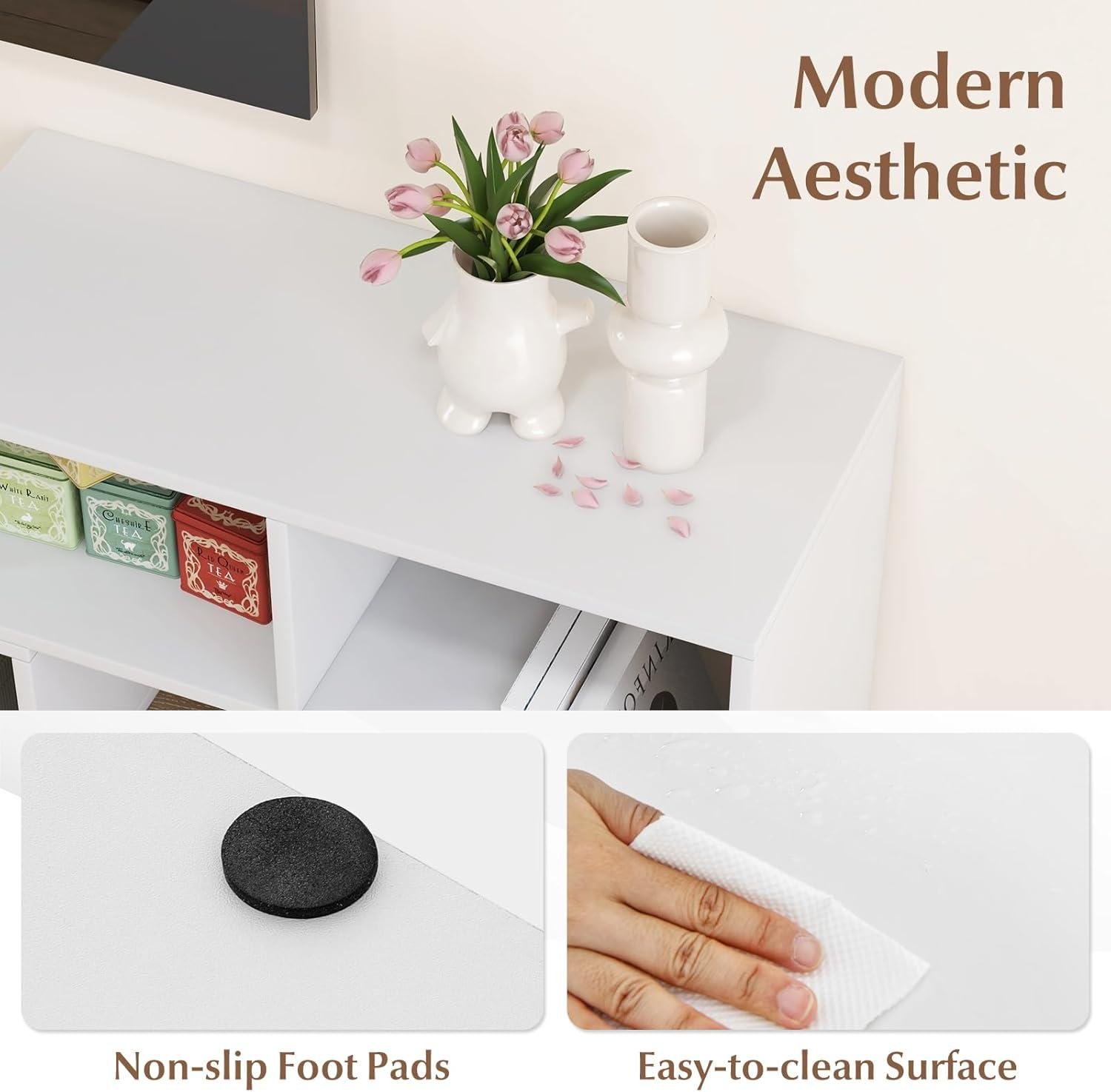
- Easy to keep looking sharp. The smooth surface wipes down fast—nice for day-to-day dust, fingerprints, and the inevitable “mystery smudge.”
- non-slip foot pads add everyday stability. we appreciate the floor-friendly touch, especially on hardwood or laminate surfaces.
Cons
- Open storage is not “hide-the-chaos” storage. If our cables and accessories aren’t managed, the six compartments can look busy fast.
- weight limits still require discipline. The shelves have specific ratings (open shelf and each L-shaped shelf), and exceeding them can risk damage or injury—so we can’t just stack with abandon.
- White finish can be high-maintenance visually. It looks crisp,but it may show dust,scuffs,or product box rub marks more than darker tones.
- The modular freedom can complicate placement. because it’s deformable, we’ll likely test a few layouts before it feels “right,” which takes time versus a simple one-piece console.
- best for up to 65″—not a forever-size stand. If our TV or future display plan jumps larger, we may outgrow the proportions.
At-a-Glance Scoreboard
| Category | What We Noticed | Our Take |
|---|---|---|
| Flexibility | 3-piece, free-combination design | Great for evolving spaces |
| Storage Style | 6 open compartments | Organized look… if we stay organized |
| Weight Support | Top rated up to 176 lbs | Confidence boost for larger TVs |
| Maintenance | Smooth, wipeable surface | Low-effort upkeep |
| Aesthetic | White, geometric, minimalist | Modern and clean, shows marks easier |
Q&A
Is this “wood” sturdy enough, or is it basically just inexpensive particleboard?
This stand is made from E0-grade engineered wood (a low-emissions composite), not solid hardwood or plywood. In furniture terms, it’s designed to be stable and clean-looking, not to take the abuse a shop-built hardwood cabinet would. The reinforced structure and rated capacities are the key indicators of strength here: up to 176 lbs on the tabletop, 44 lbs on the open shelf, and 22 lbs per L-shaped shelf. As long as you stay within those limits and don’t cantilever heavy loads on the ends, it should perform like a typical engineered-wood media console.
Can it handle “real-world” loads like a 65″ TV, receiver, and a stack of game consoles?
Yes—within reason. It’s spec’d to accommodate up to a 65″ flat-screen and the tabletop rating (176 lbs) is more than enough for most TVs plus a soundbar. Where woodworkers should be cautious is the compartment and shelf ratings: the open shelf is 44 lbs and each L-shaped shelf is 22 lbs, so avoid loading those with heavy amps or large power conditioners. spread weight across partitions rather of concentrating it on one cube, and keep the heaviest components centered for best stability.
How adjustable is it—does the “free-combination” design actually work in tight rooms?
the stand is a 3-piece design (two L-shaped pieces plus one rectangular section) intended for rotation, expansion, and different combinations. The overall span is listed as expanding from about 53″ to 67″, which helps in bedrooms or small living rooms where you’re working around doors and vents. For shop-minded users, think of it as modular casework: you can reconfigure the footprint, but you’re still limited by the fixed piece dimensions and by keeping loads properly supported on flat flooring.
Is assembly beginner-friendly, or is it one of those “fussy cam-lock” builds?
This is fundamentally a ready-to-assemble engineered-wood furniture project, so expect a typical process: align panels, install connectors, and square things up as you tighten everything. The biggest “woodworker tip” is to assemble on a flat surface and leave fasteners slightly loose until the full unit is squared, then do a final snug-down—this helps doors/cubes align cleanly (even though this is open storage). No special woodworking skills are required, but patience and careful alignment matter more than brute force.
Can I modify it—cut it down, drill cable pass-throughs, or upgrade hardware?
Light modification is possible, but treat it differently than solid wood. You can usually drill clean cable holes if you use painter’s tape, a sharp bit/hole saw, and backer scrap to reduce chip-out. Cutting panels shorter is riskier as engineered-wood edges can chip and expose the core, and the factory-finished edges won’t match after a cut unless you apply edge banding. If you add fasteners (like screws for brackets), pre-drill and avoid over-tightening to prevent stripping in composite material.
will it hold up in the long run, or does engineered wood sag and loosen?
Longevity depends primarily on keeping loads under the rated limits and not dragging it around assembled. Engineered wood can last years in indoor use, but it’s less forgiving than plywood/hardwood if it’s overloaded or repeatedly stressed at joints. To reduce the chance of shelf sag or joint loosening: keep heavy gear on the tabletop (176 lbs), distribute weight across compartments, and re-check fasteners after a week of use (common practice with flat-pack furniture as things “settle”).
Does it need anchoring,leveling,or special floor protection?
It includes non-slip foot pads for stability and to protect floors,which helps on hardwood or laminate.In a bedroom setup, leveling is mostly about a flat floor—if you’re on carpet, you may see a little wobble depending on pile and how the three sections are oriented. If you have kids/pets or plan a tall/offset configuration,anchoring to the wall can be a smart safety step (even when not required),especially if the TV is near the edges of the expanded layout.
Is this a good value for a woodworker, or should I just build a plywood console?
If your goal is a quick, clean, modern-looking media setup with modular sizing (about 53″–67″) and defined load ratings, this can be a good buy—especially since it offers six open compartments and a finished white surface that’s easy to wipe down. If your priority is heirloom durability, custom joinery, or the ability to refinish/repair over decades, a shop-built plywood or hardwood console will outperform it. In short: this is a practical furniture solution, not a replacement for a cabinet-grade build.
Experience the Difference
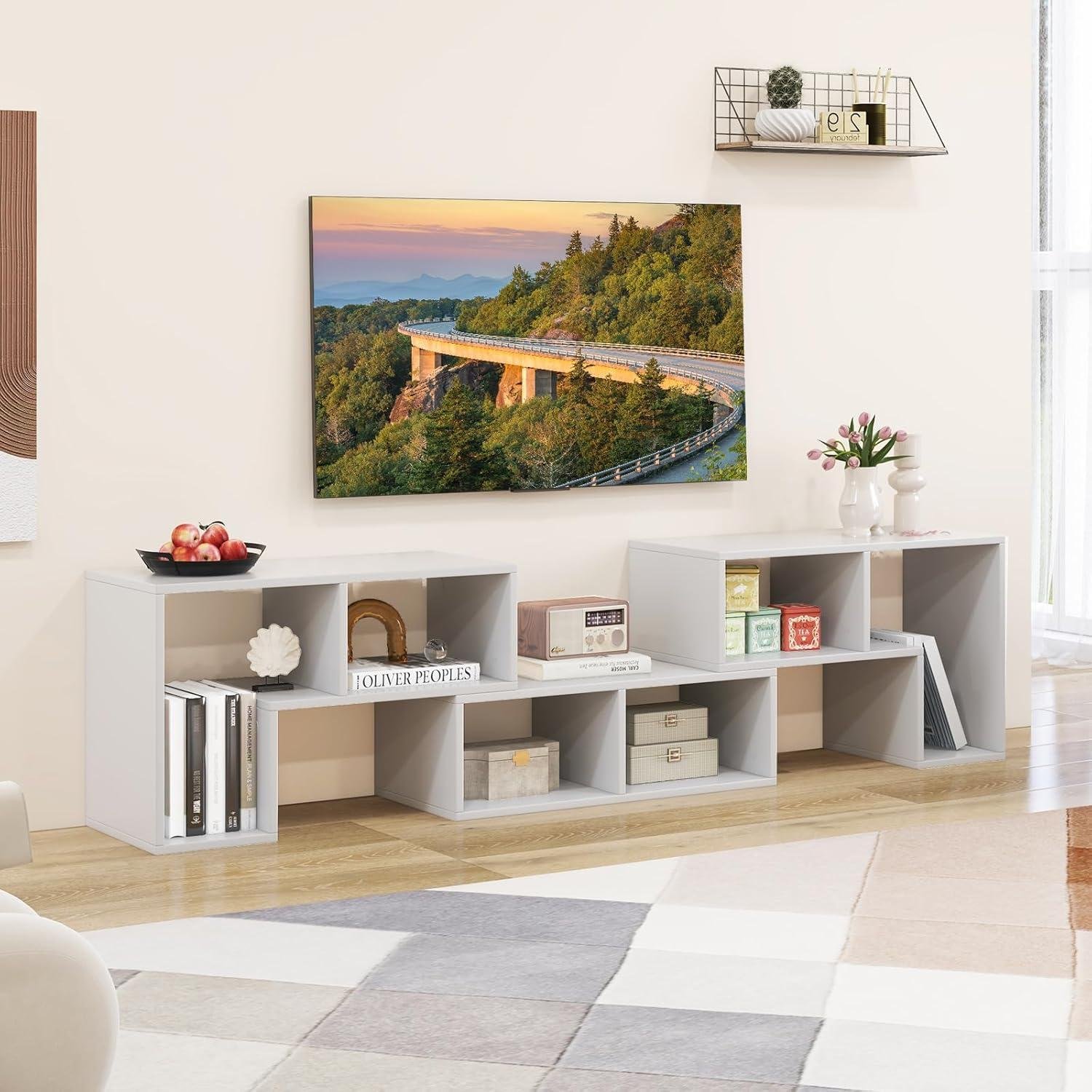
The Giantex Free-Combination TV Stand isn’t a power tool, but it’s a useful shop-adjacent furniture build for woodworkers who want a clean, modular media console without starting from scratch. Built from E0-grade engineered wood, it features a 3-piece convertible layout (two L-shaped units plus one rectangular piece) that can expand from 53″ to 67″ to fit 50–65″ TVs. Capacity is solid for typical use: 176 lbs tabletop, 44 lbs open shelf, and 22 lbs per L-shelf, with non-slip foot pads for stability. Customer feedback commonly centers on its modern look, flexible configuration, and convenient cubby storage, with the main limitation being that it’s not meant for heavy loads or rough, daily shop abuse.
Best for: hobby woodworkers, beginners, and DIY cabinet-style projects where modular layout and organization matter.
Consider alternatives if: you prefer solid hardwood construction, need higher weight capacity, or want heirloom-grade joinery.
Final assessment: a solid mid-range option for light-duty storage and media setups—flexible, tidy, and practical within its limits.
Want to see current pricing and customer photos? View on Amazon & Read More Reviews →