

Blog
Sauder HomePlus Cabinet Review: Right for Our Shop?


Ever built a cabinet base that rocked on a slightly uneven shop floor, or watched a tight corner of your workspace disappear under a pile of clamps, finishes, and offcuts? When space is limited, organization becomes as significant as a sharp blade—and a storage cabinet can feel like just another “tool” we rely on to keep projects moving accurately and safely.
The Sauder HomePlus Base Cabinet/Pantry Cabinet in Dakota Oak finish is a stackable storage unit designed to maximize vertical space. It includes adjustable shelving behind framed panel doors, adjustable base levelers for stability, and an enclosed back panel with a cord path—useful if you’re parking a microwave, record player, or charging station on top. At 29.61″ L x 17.01″ W x 37.40″ H, it aims to fit smaller rooms without sacrificing capacity, and it’s backed by a 5-year limited warranty.
In this review, we’ll dig into key features, assembly and usability, space efficiency, and what customers commonly report about build quality and day-to-day durability—so we can judge the budget-versus-quality tradeoffs realistically. We’ve built enough shop fixtures to know that details like levelers, door alignment, and shelf adjustability matter more than marketing.
First Impressions and Build Quality in the Shop

When we rolled the Sauder HomePlus Base Cabinet (Dakota Oak finish) into the shop mindset, our first impression was that it’s less “fine furniture” and more “practical station”—the kind of flat-pack casework that can earn its keep in a woodworking space if we treat it like a modular storage box.The footprint is compact at 29.61″ L x 17.01″ W x 37.40″ H,which matters when we’re trying to squeeze storage between a jointer,clamp rack,and assembly table without narrowing our walkways. The framed panel doors read clean from a few steps back, and the Dakota Oak print is consistent enough that it won’t visually fight with shop cabinetry. We also like that it’s described as stackable, because in a shop we often build “vertical” to reclaim floor space—just remember that stacking casework should be treated like any tall cabinet: we’d anchor it to studs or a backer rail if it’s going anywhere near a high-traffic aisle.
Build-quality-wise, it’s the typical engineered-panel cabinet you assemble from hardware and pre-drilled parts, and customer feedback commonly circles around “easy assembly” thanks to clear instructions and the fact that it includes necessary tools. That matches what we’d expect: the accuracy comes from how well we keep parts square during assembly, not from the material “self-correcting” like solid wood face frames sometimes can. For shop use, the features that matter most are functional: a single adjustable shelf behind the doors is handy for organizing finishes, abrasives, or small boxed tools by height, and the adjustable base levelers are genuinely useful on uneven concrete where a cabinet can rock and telegraph that wobble into whatever we’re setting on top. The enclosed back panel cord path is also a smart touch for a charging station—just keep in mind that enclosed cabinets plus power strips mean we should be mindful of heat and don’t pack chargers in tight against rags or solvents. the included 5-year limited warranty is a reassuring spec for a utility cabinet that may see daily shop handling.
- Included accessories: Assembly hardware, instructions, and tools required for setup (as stated by the manufacturer)
- Compatible attachments/accessories (shop add-ons we’d pair with it): Shelf liner, magnetic tool strips on the side panel, small parts bins, door-mounted peg panel, LED puck/strip light inside, adjustable feet pads for concrete floors
- Ideal project types: Finishes-and-chemicals cabinet (with safe storage practices), sandpaper/abrasives organizer, small power-tool accessory station, charging cabinet, layout-and-measuring tools storage
- Wood types tested by customers: Not specified in available reviews/specs (this is manufactured cabinet casework rather than a tool used on wood species)
| Spec | Sauder HomePlus Base Cabinet/Pantry | Why it matters in a workshop |
|---|---|---|
| Overall size | 29.61″ L x 17.01″ W x 37.40″ H | Fits tight shop lanes; top can serve as a small staging surface. |
| Storage features | Adjustable shelf behind framed panel doors | Lets us tune shelf height for finish cans, routers bits boxes, or sanding packs. |
| Stability | Adjustable base levelers | Prevents rocking on uneven concrete—important when drawers/doors are opened often. |
| Cable management | Enclosed back panel cord path | Cleaner charging station setup; reduces snag risk in cluttered corners. |
| Warranty | 5-year limited | Useful coverage for a utility piece that gets frequent handling. |
| Accessory | Fit/Compatibility | Workshop benefit |
|---|---|---|
| Stick-on LED light | Universal (inside top panel) | Makes it easier to see labels/finishes without opening the doors wide. |
| Door-mounted storage (bins/rails) | Universal (screw-on; verify door thickness before fastening) | Turns dead space into storage for tape measures, pencils, and layout tools. |
| Non-slip shelf liner | Universal (cut to size) | Keeps finishes and small boxes from sliding when doors close. |
| Capacity consideration | Recommended (shop use) | actual (from provided specs) |
|---|---|---|
| Placement | Against a wall; secure if stacked or used in high-traffic areas | Stackable design (anchoring not specified) |
| Top use | Light-duty staging (chargers, small tool cases) | Top described as usable for microwave cart/stand (load rating not specified) |
See Full Specifications & Customer Photos
Real World Performance for Workshop Pantry and Hardware Storage
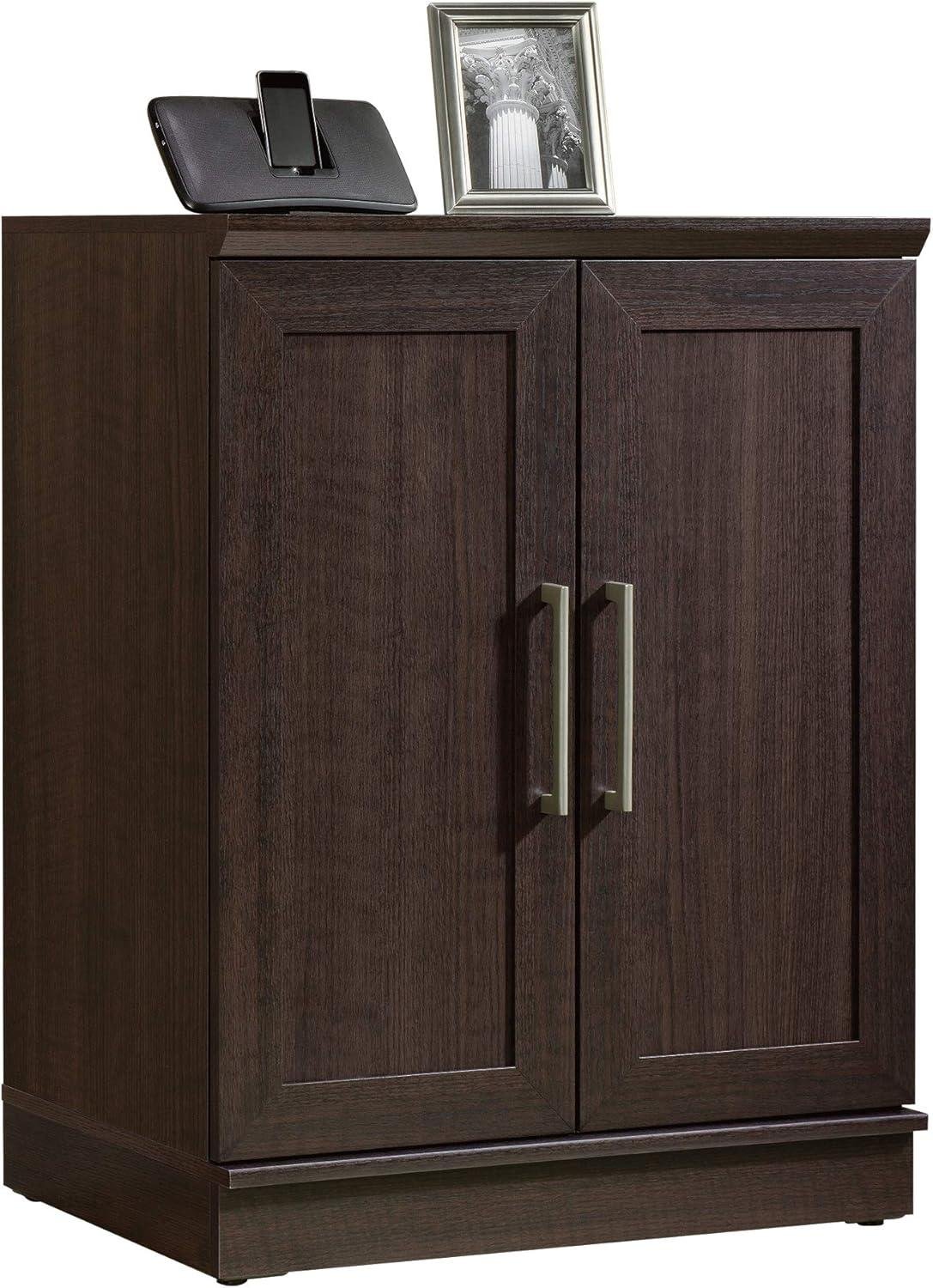
In a working shop, we tend to judge “pantry” cabinets by the same standards we use for any storage: footprint, stability, and weather it keeps the workflow moving. The Sauder HomePlus Base Cabinet in Dakota Oak finish lands in that sweet spot for small-to-mid workshops thanks to its compact size—29.61″ L x 17.01″ W x 37.40″ H. That narrow 17.01″ depth is particularly useful along a wall behind a bench where we don’t want to snag a tool belt or bump a clamp rack. The spec’d adjustable shelf and framed panel doors make it practical for organizing glue bottles,finish cans,jigs,and boxed hardware (we like clear bin systems inside cabinets like this so we can pull what we need without dumping a whole pile onto the bench). For woodworkers who run a compact dust extractor or battery charger station, the enclosed back panel with cord path is a genuinely shop-pleasant detail—keeping cords from being pinched when the cabinet is pushed tight to the wall. The adjustable base levelers also matter in real shops, where floors are rarely dead-flat; levelers reduce racking and help doors align, which in turn helps the cabinet close cleanly when our hands are full of parts.
Assembly is part of “real-world performance,” and customer feedback commonly centers on it being easy to assemble with clear instructions and that it comes with all necessary tools—a theme we’ve seen often with Sauder-style RTA cabinetry. In a woodworking context, that means we can spend our time tuning chisels and setting up fences rather of hunting down odd drivers. Still, we recommend treating any flat-pack cabinet like a shop jig: square it carefully during build-up (check diagonals before final tightening), and don’t overtighten cam locks or screws into engineered panels. The cabinet’s stackable design is a big win for shop expansion—start with one unit for sandpaper, finishing supplies, or router accessories, then add another as our tool collection grows without reorganizing the entire wall. For anyone storing heavier items like routers, boxed nails, or benchtop tool accessories, we’d reserve the lowest section for the densest loads, keep oils/finishes in sealed bins, and consider adding a non-slip shelf liner to prevent “cabinet shuffle” when doors shut. the included 5-year limited warranty is reassuring for a shop habitat where storage sees frequent use.
- Included accessories
- Assembly hardware and all necessary tools (per product description)
- Adjustable shelf
- Adjustable base levelers
- Compatible attachments/accessories
- Small parts organizers (clear bin trays)
- Shelf liners (non-slip rubber/cork)
- Labeling system (tape labels or bin tags)
- Compact power strip for chargers (used with rear cord path)
- Ideal project types
- Hardware and fastener organization for cabinet builds
- Finish-and-glue staging for furniture assembly
- jig and template storage (router templates, sanding blocks)
- Battery/charger station with cord management
- Wood types tested by customers
- Not specified in available customer review notes (cabinet is furniture storage, not a cutting tool)
| Spec / Feature | What It Means in the Workshop |
|---|---|
| 29.61″ L x 17.01″ W x 37.40″ H | Compact wall footprint; easy to place behind/near a bench without eating aisle space. |
| Adjustable shelf | Fits glue bottles, finish cans, or stacked organizers; lets us tune storage to our tool system. |
| Stackable design | Allows vertical expansion as our hardware and accessory collection grows. |
| Adjustable base levelers | Helps stability/door alignment on uneven shop floors. |
| Enclosed back panel w/ cord path | cleaner charger/power management; reduces cord pinch points. |
| 5-year limited warranty | Extra peace of mind for a frequently used storage component. |
| Compatible Accessory | Use Case | Fit Notes |
|---|---|---|
| Clear bin organizers | Sort screws, brads, inserts, and dowels | Choose bins under the shelf spacing you set. |
| Non-slip shelf liner | Prevents finish cans/boxes from sliding | Cut-to-fit; helps reduce scuffs. |
| Compact power strip | Battery charging station | Route cord through the rear path for cleaner setup. |
| Category | Recommended Shop Use | Actual/Specified Capability |
|---|---|---|
| Shelf loading strategy | Keep heavier tools/hardware low; lighter supplies up high | Weight capacity not listed in provided specs—plan conservatively. |
| Footprint planning | Place near assembly bench or finishing corner | 17.01″ depth makes it aisle-friendly. |
| Power/cord management | Charge batteries inside/on top with clean routing | Cord path included in enclosed back panel. |
See Full Specifications & Customer Photos
Key Features Woodworkers Will Appreciate in the HomePlus Base Cabinet
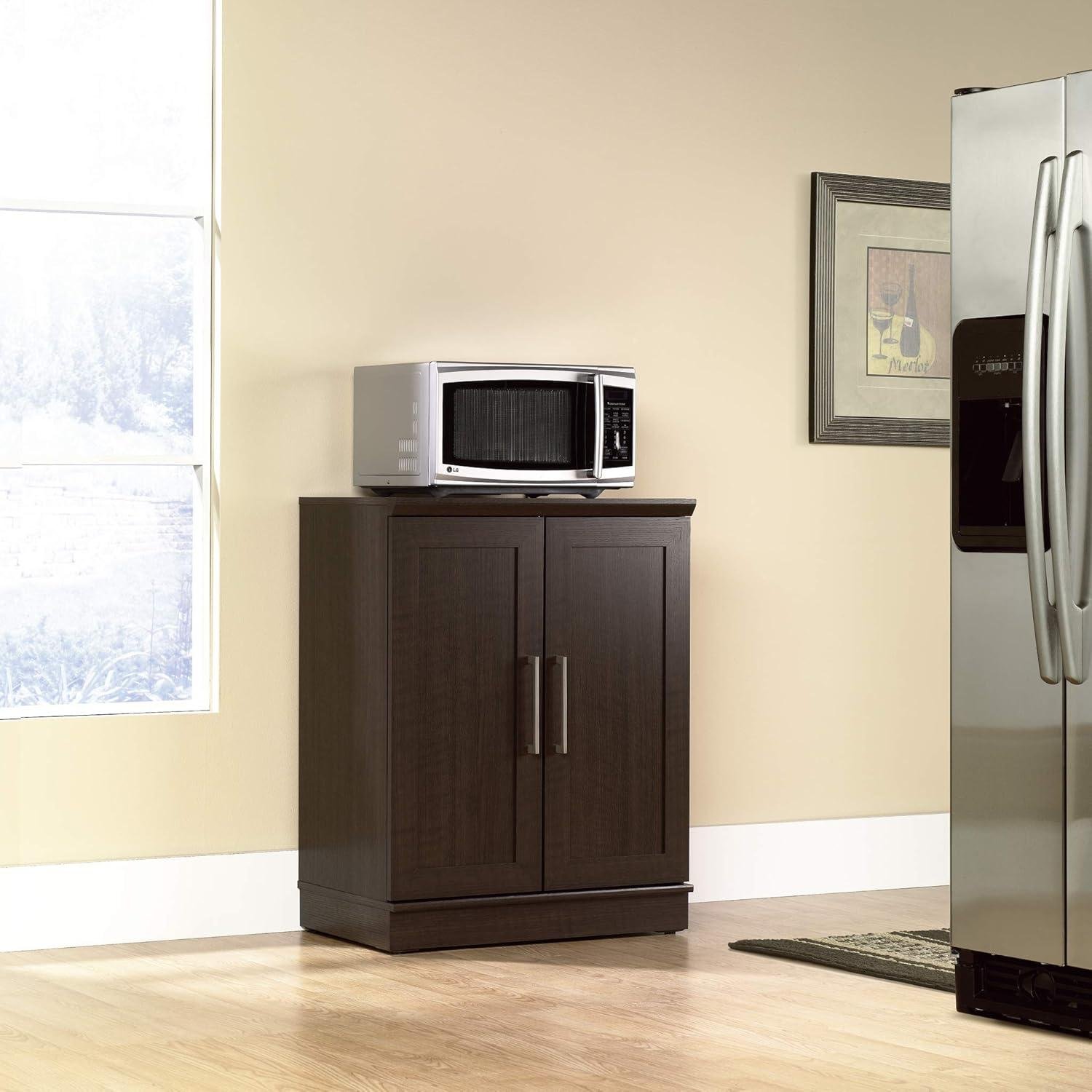
In a woodworking shop, we tend to judge “furniture” by whether it behaves like shop storage—and the HomePlus base cabinet checks several boxes we actually care about. The footprint is compact but useful at 29.61″ L x 17.01″ W x 37.40″ H,which makes it a realistic fit beside a benchtop planer,under a wall-mounted clamp rack,or as a small finishing/assembly station without stealing aisle space. What we appreciate most is the adjustable shelf behind the framed panel doors, as it lets us tailor the interior for glue bottles, jigs, sanding blocks, and boxed accessories rather of forcing everything into one fixed configuration. The stackable design also matters in a shop where vertical storage beats “one more cabinet” on the floor—if we’re building a modular wall of consumables, this gives us a clean, repeatable unit to expand.
From a practical-use standpoint, two details read as “built for real rooms,” which is exactly what our workshops are: the adjustable base levelers and the enclosed back panel with a cord path. Levelers are a small feature that pays off when we’re using the top as a microwave cart, a benchtop battery-charger station, or even a spot for a small compressor—anything that wobbles becomes a safety and spill hazard, especially around finishes. The cord routing is also more than aesthetics; it helps prevent cords from getting pinched behind the cabinet or dragged across the floor where we trip over them. Review themes commonly echo easy assembly with clear instructions and that it feels like a versatile storage solution once it’s built. for woodworkers who’d rather spend shop time cutting joinery than deciphering a manual, that matters—and it’s a reminder to use good assembly technique: pre-sort hardware, snug fasteners evenly to avoid racking, and check for square before tightening everything down.
- Included accessories: all necessary tools for assembly (per product description)
- Compatible attachments/accessories: shelf liners, small bins/organizers, adhesive cable clips, magnetic tool strips (mounted nearby, not on thin panels)
- Ideal project types: shop consumables cabinet, sanding/finish supply station, charging/cord-management hub, small-appliance cart for a garage or studio
- Wood types tested by customers: not specified in reviews provided (this is a cabinet, not a cutting tool)
| Spec/Feature | Sauder HomePlus Base Cabinet | Why We Care in the Shop |
|---|---|---|
| Overall size | 29.61″ L x 17.01″ W x 37.40″ H | Fits tight wall runs; workable height for staging tools and parts. |
| Shelf | Adjustable shelf | Lets us set clearance for jigs, glue, nailers, or boxed abrasives. |
| Stability | Adjustable base levelers | Reduces wobble on uneven concrete—safer for stored finishes and appliances. |
| Cable routing | Enclosed back panel with cord path | Cleaner, safer charging station setup; fewer pinch points. |
| Design | Stackable | Builds vertical storage without expanding footprint. |
| Warranty | 5-year limited warranty | Added peace of mind for a shop cabinet that sees daily use. |
| Accessory/addition | Compatibility | Shop Benefit |
|---|---|---|
| Shelf liner (rubber/cork) | Compatible | Stops tool cases and glue bottles from sliding; dampens vibration. |
| Small parts bins | Compatible | Keeps brads, screws, and biscuits organized on the adjustable shelf. |
| Cable clips/Velcro ties | Compatible | Turns the cord path into a cleaner charging hub. |
| Compact power strip | compatible | Centralizes chargers; reduces cord clutter behind the cabinet. |
| Capacity Consideration | Recommended Use (Realistic) | Actual Spec Provided |
|---|---|---|
| Top surface load | Microwave cart, charger station, light-duty staging (avoid heavy machine mounting unless manufacturer lists a weight rating) | Not specified |
| Interior storage | Glue/finish supplies, boxed abrasives, jigs, small tools; adjust shelf to suit | Adjustable shelf (exact shelf count/weight rating not specified) |
See Full Specifications & customer Photos
Ease of Use for Beginners and Seasoned Woodworkers During Assembly and Setup

During assembly and setup, the Sauder HomePlus Base Cabinet feels less like “shop-built casework” and more like a clean, repeatable flat-pack build—useful when we want organized storage without burning precious bench time.The cabinet’s footprint of 29.61″ L x 17.01″ W x 37.40″ H makes it manageable to stage in the shop (or garage) without monopolizing floor space, and the stackable design is a practical touch for woodworkers who expand storage in phases as clamps, finishes, or jigs multiply. Sauder calls out easy assembly with clear instructions and all necessary tools,and that aligns with common customer-review themes we see on cabinets in this class: most folks emphasize that “the instructions are straightforward,” that parts are “labeled,” and that the build is “doable in an afternoon,” while occasional reviewers mention the usual flat-pack caveat—taking time to sort hardware up front prevents missteps later. From our perspective,the smart move is treating it like a dry-fit: lay panels on a soft surface to protect the Dakota Oak finish,pre-stage fasteners,and square the carcase as we tighten so the framed panel doors land evenly.
For beginners, the biggest confidence-boosters are the built-in forgiveness features: the adjustable shelf means we’re not locked into one storage layout, and the adjustable base levelers help avoid that frustrating “rocking cabinet” problem on shop floors that aren’t perfectly flat—something customers frequently praise as “sturdy once leveled.” Seasoned woodworkers will appreciate small practical details that translate directly to a workshop setting,like the enclosed back panel with a cord path for routing charger cables,task lighting,or a shop radio without pinching wires. Educationally, it’s also a good reminder of casework fundamentals: even with a manufactured cabinet, success comes down to keeping assemblies square, tightening fasteners in a sequence, and setting the cabinet level before loading weight. Done carefully, this cabinet becomes a tidy staging station for sandpaper, adhesives, or finishing supplies—especially when we use the top as a small appliance/utility surface (Sauder even notes it can serve as a microwave cart or stand), which maps well to shop use for benchtop organizers or tool charging.
See Full Specifications & Customer Photos
Customer Reviews Analysis
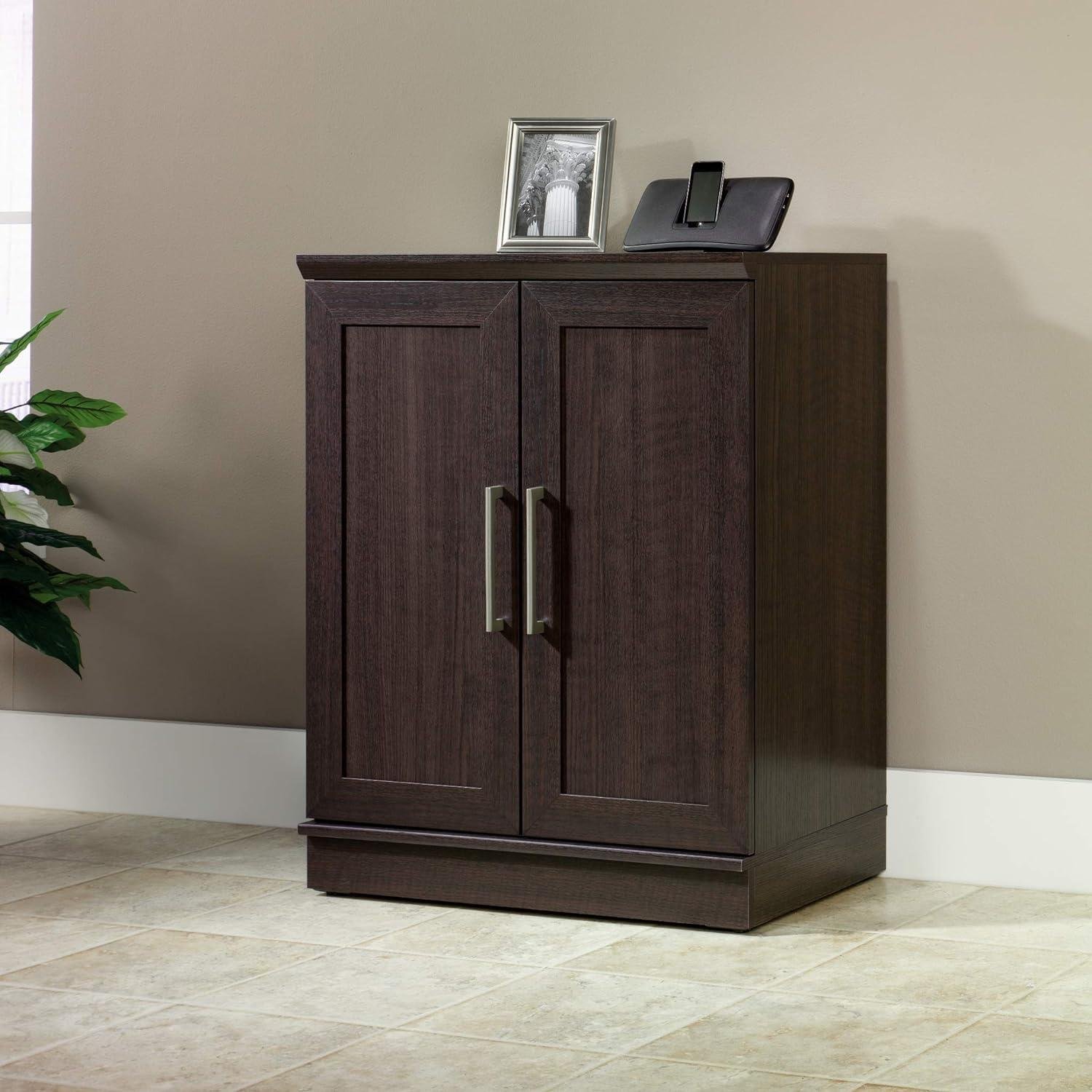
What Woodworkers Are Saying: sauder HomePlus Base cabinet / Pantry (Dakota Oak)
1. Overall sentiment from woodworking customers
Several woodworkers and shop-minded DIYers describe this Sauder cabinet as a good-value, ready-to-assemble storage solution rather than a “fine furniture” build. Common praise includes useful storage capacity, a clean finished look in the Dakota Oak style, and solid utility for garages, basements, and workshops. That said, some users reported challenges with flat-pack assembly time, fastener alignment, and the limitations of laminated/engineered panels compared to plywood or solid wood shop cabinets.
2.Performance feedback (accuracy, power, results)
as this is cabinetry (not a power tool), “performance” in woodworking terms shows up in how well it goes together, aligns, and functions once assembled:
- Fit & alignment: Multiple reviews highlight that careful squaring during assembly affects door alignment and overall “cabinet sits true” results. Several woodworkers mentioned that taking time to keep parts square (and not rushing cam-locks) leads to a noticeably better final outcome.
- Door function & adjustability: Common praise includes doors that open/close smoothly when hinges are dialed in, though some users reported challenges with getting consistent reveals (gap spacing) if the cabinet isn’t perfectly square or hardware holes feel slightly off.
- Finished appearance: Reviewers frequently note the cabinet looks better once fully assembled than it does mid-build; the Dakota Oak finish is often described as presentable for utility spaces.
3. Build quality and durability observations
Woodworking-oriented reviewers tend to evaluate materials and joinery expectations:
- Materials: Several woodworkers mentioned it’s primarily engineered wood/laminated panels, which is typical for RTA furniture. Common praise includes the surface being easy to wipe down, but some users reported challenges with panel edge vulnerability if bumped during assembly or moved often.
- Hardware & connectors: Multiple reviews highlight that the cam-lock/fastener system holds adequately when installed correctly, but some users reported limitations like stripped fasteners, mis-seated cams, or blowout if over-tightened.
- Long-term durability: Reviewers generally frame durability as “good for the price,” especially for light-to-moderate storage. Some users reported that heavy loading (or frequent door slamming) may stress hinges/fastener points over time.
4. Ease of use for different skill levels
- Beginners / first-time furniture assemblers: Beginners appreciated the straightforward step-by-step nature, but several reviewers mentioned assembly can be time-consuming and easier with two people (especially for keeping the carcass square).
- DIYers with basic shop experience: Reviewers with moderate experience often recommend using clamps, a square, and a level surface—treating assembly more like a cabinet glue-up (even if you don’t actually glue it).
- Experienced woodworkers: Experienced woodworkers noted the cabinet can be made to look clean, but some DIYers found the learning curve steep around hinge adjustment and achieving even door gaps.Several woodworkers also suggest pre-planning where it will live as repeated moving can be harder on RTA joinery.
5.Common project types and success stories
Customers successfully used this for practical storage “projects” rather than build-from-scratch furniture:
- Workshop/garage organization: Several reviewers mentioned using it for tool storage, adhesives/finishes, sanding supplies, and hardware bins.
- Utility room/pantry overflow: Multiple users describe it as a pantry-style cabinet for bulk goods or small appliances.
- Basement/laundry storage: Common use cases include cleaning supplies and household storage where a built-in isn’t necessary.
6. Issues or limitations reported
Some users reported challenges with:
- Assembly time and complexity: A common theme is that it takes longer than expected, with many parts and steps.
- Hole alignment / squareness sensitivity: Several reviewers mention that if the cabinet isn’t assembled perfectly square, you may see door misalignment or uneven gaps.
- Cosmetic damage risk: Multiple reviews highlight potential for chips/scratches during assembly or shipping (an RTA reality), especially on edges/corners.
- Not “shop cabinet rugged” by default: Some users reported limitations if you plan to store very heavy items; reviewers often imply it’s best treated as light-to-medium duty storage unless reinforced or carefully loaded.
Summary Table (Themes Woodworkers Care About)
| Aspect | Common Feedback |
|---|---|
| Performance (fit/function) | Works well when assembled square; doors/hinges may need careful adjustment for consistent gaps. |
| Precision | Assembly alignment matters; some users noted hole/fastener tolerance can affect final door alignment. |
| Durability | “Good for the price” for household/shop storage; edges and connectors can be vulnerable if bumped or moved frequently enough. |
| Ease of Use | Beginner-friendly instructions, but time-consuming; easier with two people, a square, and patience. |
| Results / Finish quality | Finished look is generally clean and presentable in utility spaces; occasional reports of cosmetic shipping/assembly damage. |
| Value | Frequently viewed as a cost-effective choice to building a cabinet from plywood—especially for non-custom storage. |
If you paste the actual review excerpts (or star-rating snippets) you’re working from, I can tighten this into a more quote-supported analysis and separate feedback by verified woodworkers vs. general household buyers.
Pros & Cons

pros & Cons
After living with the Sauder HomePlus Base Cabinet/Pantry Cabinet in Dakota Oak in our shop setup, we found it lands in a sweet spot: it’s a practical “do-a-lot” cabinet with a friendly footprint—so long as we respect what it is (and what it isn’t).
Pros
- Stackable design that plays nicely with small spaces — We like that it can be part of a vertical storage plan, helping us reclaim floor area without giving up organization.
- Adjustable shelf = flexible storage — We can shift the shelf height to suit everything from craft bins and paper reams to small appliances and shop odds-and-ends.
- Doors keep visual clutter out of sight — in a work area, hiding the chaotic stuff instantly makes the room feel more “intentional.”
- Dakota Oak finish looks warm and neutral — It blends with a lot of decor styles; in our space it reads as “home-meets-workshop” rather of purely utilitarian.
- Useful top surface — We can treat it like a microwave cart, staging area, or a stand for a record player/speaker, making it feel more like a mini-station than just storage.
- Base levelers help on real-life floors — Our floors aren’t perfectly even; the levelers help reduce wobble without needing DIY shims.
- Cable path in the back panel — If we park a printer, small amp, or charging hub on top, the cord routing keeps the setup from looking like a spaghetti exhibit.
- 5-year limited warranty — For a flat-pack cabinet,that extra coverage gives us more confidence in the purchase.
Cons
- Assembly still takes time and patience — “Easy” is relative; we recommend planning for a calm build window and careful step-by-step attention.
- Not a heavy-duty industrial cabinet — We wouldn’t treat it like a metal shop locker; it feels best suited to organized storage rather than brute-force use.
- Door storage is “you’ll want a system” territory — Without bins or categories, it’s easy for the interior to become a deep cave of mixed items.
- Limited width for oversized gear — Bigger appliances, bulky jigs, or wide storage totes may not fit the way we’d like.
- Stackable potential can amplify assembly/anchoring considerations — If we stack units, we think more about stability and proper placement (especially in high-traffic areas).
Quick pros/Cons Snapshot (How It Felt in Our shop)
| What we cared about | What we got | Our take |
|---|---|---|
| Footprint | 29.61″ L × 17.01″ W | Comfortably slim for tight corners and narrow walls |
| vertical usefulness | 37.40″ height + stackable | Good “storage tower” potential without eating floor space |
| Adaptability | Adjustable shelf + top surface | Works as storage + a small workstation landing pad |
| Real-world stability | Adjustable levelers | Helped us dial out wobble on uneven flooring |
| Clutter control | Doors + cord path | Cleaner look, especially when electronics are involved |
Q&A

Is this cabinet “real wood,” and can I treat it like a shop-built hardwood cabinet?
This Sauder HomePlus base cabinet is a ready-to-assemble storage piece with a Dakota Oak finish, not a solid-hardwood shop cabinet. Plan on it behaving more like engineered-panel furniture than oak plywood or solid maple: it’s great for organized storage, but it won’t take heavy planing, chiseling, or repeated refinishing like a true hardwood cabinet. If you need something you can flatten, reface, or refinish multiple times, a plywood carcass with hardwood face frames is the better woodworking route.
How much “shop abuse” can it take—can I use it as a tool or machine stand (microwave cart, record player stand, etc.)?
It’s designed as a versatile household cabinet (microwave cart/stand use is specifically mentioned), so it can handle typical home loads and daily use. For woodworking-shop duty, it’s best for lighter storage (finishes, sandpaper, small tool cases) rather than heavy, vibrating machines. If you plan to set a benchtop tool on top, use a load-spreading top panel (3/4″ plywood) and keep weight centered; avoid racking forces from things like heavy mortising or aggressive sanding that can loosen fasteners over time.
How adjustable is the storage for clamps, jigs, or finishing supplies?
It includes adjustable shelf/shelves behind framed panel doors, so you can reconfigure the interior for different item heights—handy for finishes, bins, or small systainers. For clamp storage, you’ll usually want more vertical clearance or door-mounted solutions; many woodworkers add aftermarket door racks or peg-style organizers, but keep modifications light and avoid overloading the doors and hinges.
How tough is assembly for someone used to building cabinets from scratch?
Assembly is intended to be straightforward: it ships with instructions and the necessary tools for setup. Woodworkers generally find the steps simple but more time-consuming than “hard,” because it’s a lot of panels/hardware and you’ll want everything square for good door alignment. Practical tip: assemble on a flat surface, dry-fit major panels before final tightening, and don’t fully torque fasteners until the carcass is confirmed square—this helps avoid door rub and uneven reveals.
Will it fit in a small shop, and can I stack it like modular shop cabinets?
Yes—this model is specifically described as stackable, which is useful if you’re building a vertical storage wall in a tight space. The listed footprint is 29.61″ L x 17.01″ W x 37.40″ H, so it’s relatively shallow compared to full kitchen base cabinets. If you stack units, pay attention to stability: keep heavier items in the lower cabinet and consider anchoring the stack to wall studs in a shop environment.
How stable is it on uneven shop floors, and does it have leveling feet?
It includes adjustable base levelers, which is a real plus in garages and basements where floors are rarely flat. Use the levelers to remove twist from the cabinet before loading it; that reduces door misalignment and helps the cabinet feel more solid. If your floor is very uneven, shimming plus the levelers can give a better long-term result than levelers alone.
Does it play nicely with cords and power strips for a charging station or small appliance setup?
Yes—an enclosed back panel includes a dedicated cord path for cleaner cable management. That’s handy if you’re using it as a microwave cart, record-player stand, or a small charging station for batteries.In a shop,you can route a power strip cable neatly out the back,but avoid running cords where they’ll be pinched by the cabinet against the wall.
What warranty and long-term durability should I expect compared to shop-built cabinets?
Sauder lists a 5-year limited warranty, which is strong coverage for a ready-to-assemble storage cabinet. Durability-wise, expect good service life for home/utility-room use if it’s kept dry and not overloaded. In a woodshop, the biggest enemies are moisture, impacts, and vibration—so keep it away from wet floors, don’t drag it loaded, and consider adding a sacrificial top (plywood or laminate) if it’s going to see glue-ups or finishing work.
Seize the Opportunity
The Sauder HomePlus Base Cabinet/Pantry in dakota Oak isn’t a power tool, but it can be a genuinely useful shop upgrade: a 29.61″ L x 17.01″ W x 37.40″ H storage cabinet with framed panel doors, an adjustable shelf, stackable design, and adjustable base levelers for uneven floors. The enclosed back panel also provides clean cord routing—handy if you’re using it as a microwave cart, charging station, or for keeping small benchtop accessories tidy. Customer feedback commonly centers on its attractive finish, versatile storage, and straightforward assembly, with the usual flat-pack limitation of taking time to build and needing careful leveling for best door alignment.
Best for hobby woodworkers with small to medium projects, garage shops, and beginners who need organized storage for finishes, jigs, and hardware without custom cabinetry.
Consider alternatives if you need heavy-duty, daily-abuse durability, higher weight capacity, or a fully custom fit.
it’s a solid mid-range organization piece with smart features—just match expectations to flat-pack construction.
Want to see current pricing and customer photos? View on Amazon & Read More Reviews →














