

Blog
Montessori Bookshelf Review: Right for Our Home Shop?

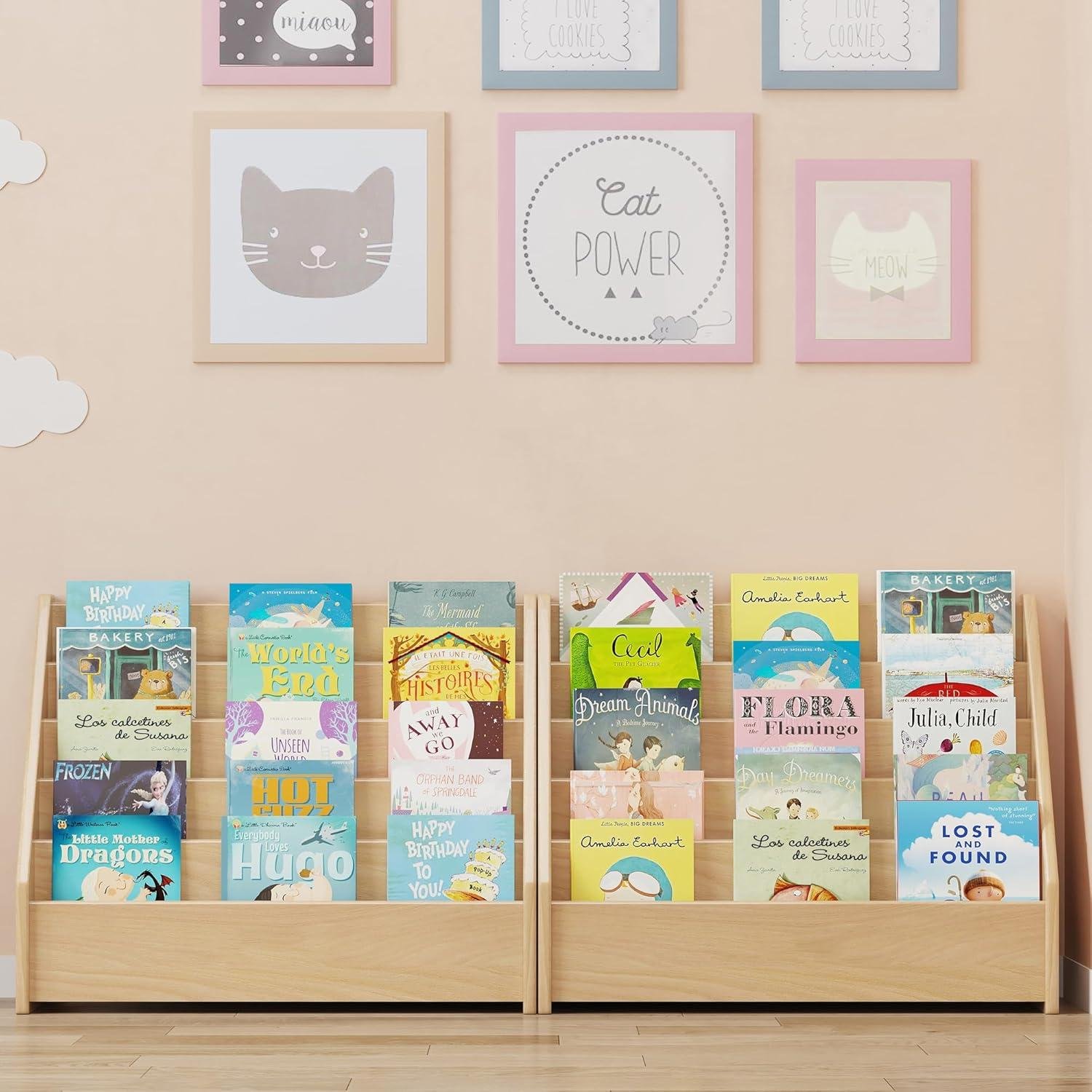
Ever try to build a kid-sized bookshelf in a cramped shop—only to realize the real challenge isn’t the joinery, it’s getting a sturdy, tip-resistant piece that’s smooth to the touch, safe on corners, and still worth the materials bill? That’s where a ready-made option like the Front-Facing Montessori Bookshelf (5-tier book display shelf) can make sense for woodworkers who’d rather spend their weekend on the next cabinet door or jig than on another “quick” organizer build.
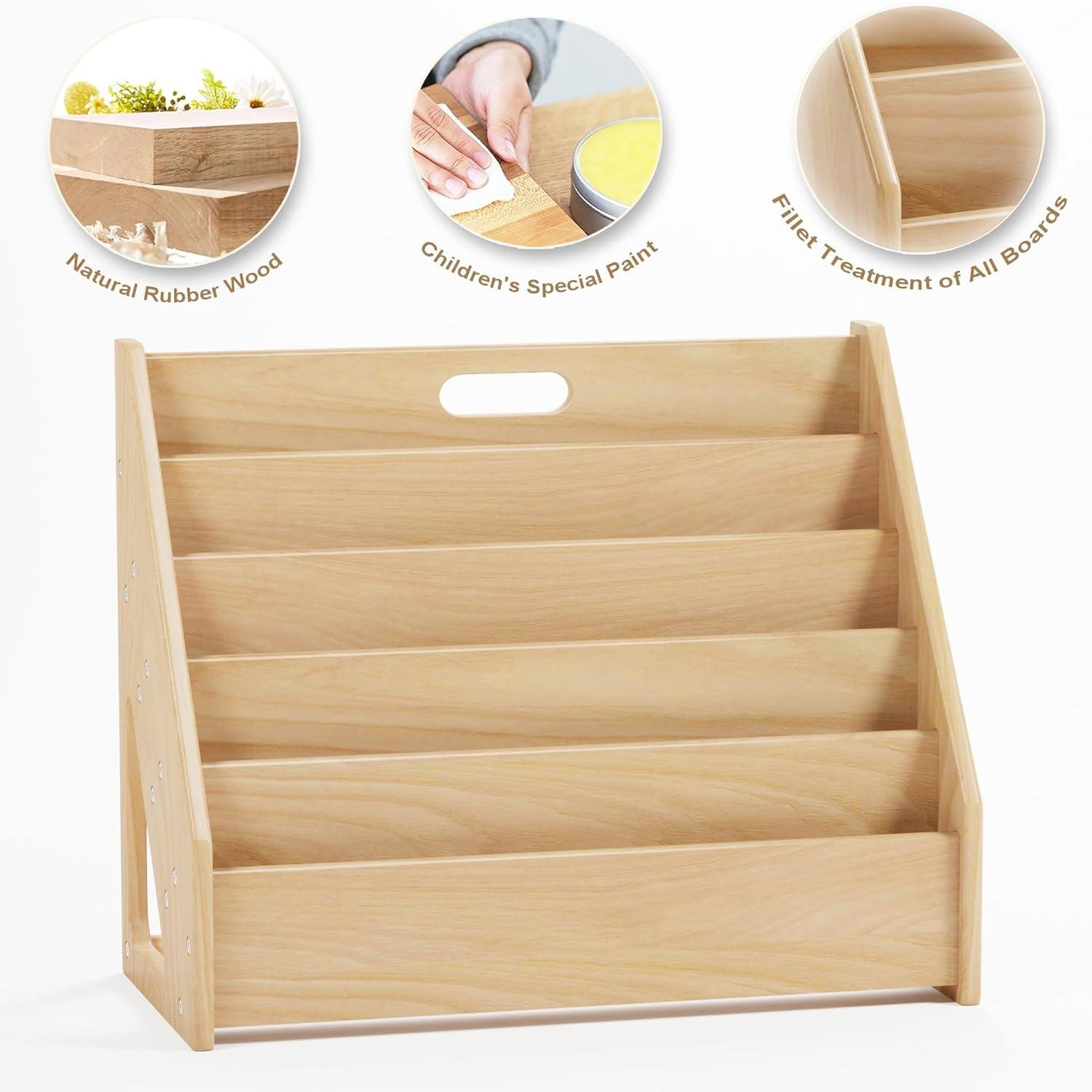
This solid-wood,child-height bookcase is designed to display covers forward across five compartments,using interlocking-joint construction and an arc/no-sharp-angle profile aimed at kid safety. In this review, we’ll look at build quality and durability, assembly and learning curve, space footprint, and whether the price-to-quality tradeoff holds up—plus who it fits best (toddlers, classrooms, tight playrooms).
We’re coming at this from a practical woodworking lens: we care about straight parts,decent hardware,and predictable fit. Customer reviews frequently praise sturdiness, capacity, and smooth surfaces, while noting mixed assembly experiences, size surprises, and occasional missing screws.
First Impressions and Build Quality in Solid Wood
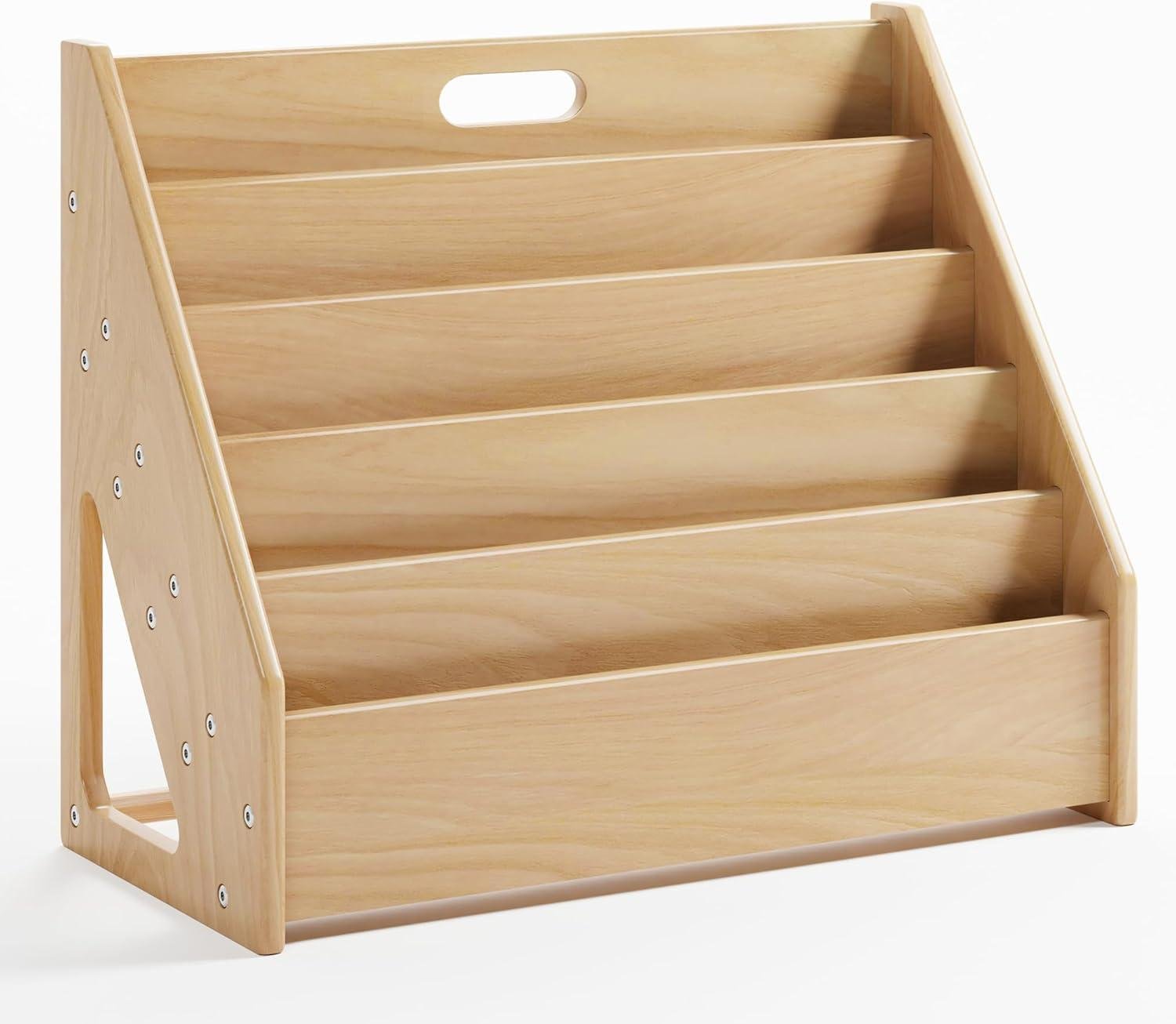
Out of the box, this front-facing Montessori bookshelf reads more like a small furniture kit than a “tool,” but we still judge it the same way we’d judge any shop-made organizer: material honesty, joinery logic, and surface prep. the listing leans hard on solid wood and interlocking joints, plus an arc/no-angular edge profile aimed at kid safety. In customer review themes,we repeatedly see “great quality,” “solid and sturdy,” and “smooth wood surface,” with at least one reviewer calling out that it’s “made of Oak” and can be sanded and stained—a detail that matters to us as it means we can tune the finish in the shop (light scuff-sand,tack cloth,then a wipe-on waterborne or hardwax oil) to match other nursery furniture. At the same time, we have to acknowledge the conflicting reports: a few customers felt it was “not made out of solid wood” or noted boards arriving with a crack/dentation. For woodworkers, that’s our cue to inspect panels and joints before assembly—especially around pre-drilled holes where hardwood can split if the fasteners bite too aggressively.
Build quality in use is closely tied to assembly accuracy, and reviews are mixed: many report it’s easy to assemble in about 20–30 minutes, while others say it’s tricky to figure out and sometimes easier with two people. We also see a consistent red flag: missing screws/parts (one mentions needing 24 screws per unit), which is a practical workshop consideration—most of us can substitute properly sized wood screws, but we’ll want to match gauge and length to avoid blow-through and splitting.From a technique standpoint, we’d treat it like assembling a small cabinet carcass: dry-fit the interlocking joints, square it up on a flat bench, and only then snug fasteners gradually while checking for racking. A few reviewers mention it’s smaller/shorter than expected but “toddler perfect,” and one even notes thay “need to attach it to the wall.” That’s good practice for any tall-ish, front-loaded rack—if we’re placing it on slick flooring or in a high-traffic playroom, adding a simple anti-tip strap is a sensible safety upgrade.
- Included accessories (as reported by customers/product text):
- Assembly tool (some reviews mention it comes with a tool)
- Instructions (product text claims detailed instructions)
- Extra hardware (one review mentions two extra bolts)
- Compatible attachments/accessories (shop-friendly add-ons):
- Anti-tip wall strap/anchoring kit (recommended by user practice)
- Felt pads or rubber feet for hard floors
- Sandpaper: 180–220 grit for de-nibbing before a topcoat
- Child-safe finish (waterborne poly, shellac-based sealer, or hardwax oil)
- Spare metric/imperial screws (in case of missing screws)
- Ideal project types (where this fits in a woodworker’s workflow):
- Quick nursery/playroom organization builds
- Finish-matching practice (scuff, stain test, clear coat)
- Small-space storage setups where child-size height is the goal
- classroom reading corner furniture
- Wood types tested by customers (as stated in reviews):
- Oak (explicitly mentioned by at least one reviewer)
- Unspecified “solid wood” (commonly referenced, but disputed by a minority)
| Spec / Attribute | What the listing/reviews indicate | Why it matters in the shop |
|---|---|---|
| configuration | 5 tier, front-facing display | Front-facing racks load weight forward—square assembly and optional anchoring help stability. |
| Joinery | Interlocking joints (listing) | Dry-fit first; interlocking parts can bind if finish is thick or tolerances are tight. |
| Edges | Arc/no-angular design (listing) | Less touch-up needed for kid safety, but we still check for sharp spots and ease them with 220 grit. |
| Material | Claimed solid wood; one reviewer says Oak; some dispute “solid wood” | Determine sanding/finishing approach—hardwood vs softer stock changes screw-holding and dent resistance. |
| Assembly | mixed: “easy in 20–30 min” vs “tricky” | If you’ve built cabinets, it’s straightforward; newer DIYers may want a second set of hands. |
| Hardware completeness | Multiple mentions of missing screws/parts | Keep common screw sizes on hand; pre-drill to prevent splitting, especially near panel edges. |
| Accessory / Consumable | Recommended | Notes |
|---|---|---|
| anti-tip strap kit | Yes | One reviewer planned to attach to the wall; good practice for kids’ furniture. |
| Sandpaper (180/220) | Yes | Light scuff-sand before a clear coat; don’t round over edges excessively. |
| Child-safe clear finish | Optional | Use low-VOC finishes; allow full cure before use. |
| Spare screws | Smart backup | Reviews mention missing screws; match length to avoid piercing through panels. |
| Capacity Topic | recommended expectation | What customers report |
|---|---|---|
| Book capacity | Plan for board books + a mix of thin picture books | Reports include holding 20 books and even 29 baby books; another details per-shelf fit of 2 large / 3 medium / 5 small. |
| Overall size | Verify dimensions before buying | Common theme: toddler perfect but smaller/shorter than expected for some spaces. |
See Full Specifications & Customer Photos
Real World Performance Under Daily Book loading and Kid Proof Use
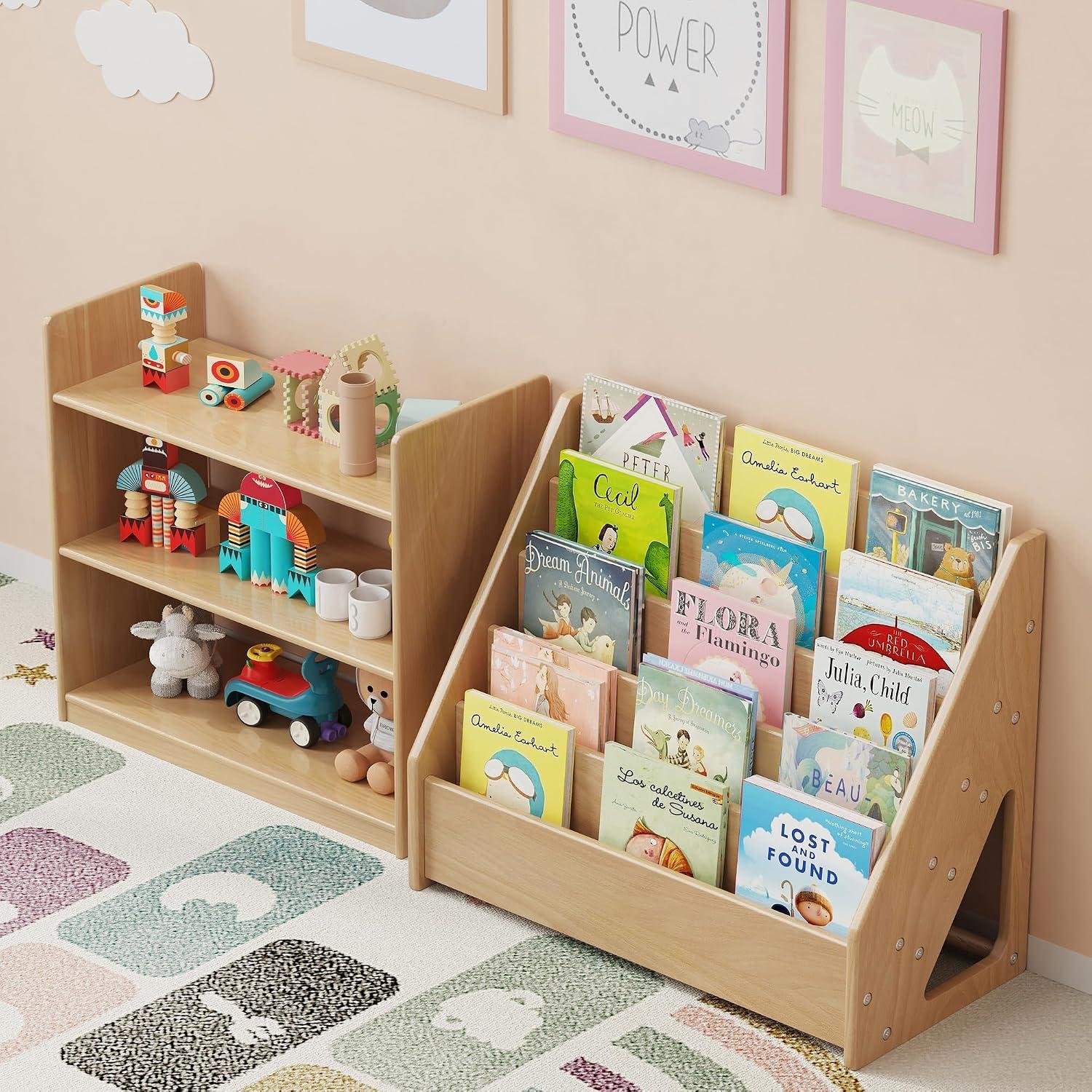
In day-to-day use, we look at a front-facing Montessori shelf the same way we’d evaluate a small shop rack: repeated loading, uneven weight distribution, and constant “grab-and-go” handling. This unit’s 5-tier, front-facing display does a good job of keeping book spines from becoming the only accessible target—reviews repeatedly mention it “holds a surprising amount of books,” with one customer reporting it’s “holding 29 baby books,” and another saying they fit “around 20 books.” The claimed solid wood construction (several reviewers specifically call out oak) matters here because edge durability and fastener bite are what fail first under daily loading; customers often describe it as “very sturdy and heavy” and “smooth wood surface.” That said, we also need to temper expectations: multiple reviewers warn it’s “very short” / “smaller than expected,” so if we’re expecting it to behave like a full-height library shelf under heavier textbooks, that’s not the design intent—this is geared toward toddler-height reach and lighter-to-medium book weights.
For kid-proof use, the real-world test is racking (side-to-side twist), climbing attempts, and impacts. One review specifically notes their “1 year old son has climbed on it a few times and it has held up great,” which is encouraging, but we also see durability flags: a reviewer noticed a crack and dentation during assembly and questioned longevity, and several mention the wood being “on the soft side,” recommending we “avoid banging it.” From a woodworker’s perspective, that tells us two practical things: (1) treat the shelf like a pre-finished hardwood project—use felt pads, avoid dragging it across concrete or shop floors, and consider a paste wax or clear topcoat if it lives in a high-abuse area; (2) inspect joinery and rails before loading—any cracked board will propagate under repeated flex. Assembly feedback is mixed—some say 20–30 minutes and straightforward, others say it’s “tricky to figure out,” plus there’s a recurring theme of missing screws.In our shop, we’d pre-sort hardware, dry-fit, and keep a small #2 driver and wood glue on hand; and if it’s going against a wall where kids can pull upward, we agree with the reviewer who said “Now I need to attach it to the wall”—anchoring is the simplest safety upgrade we can make.
See Full Specifications & Customer Photos
Key Features Woodworkers Will Appreciate in Joinery Finish and Shelf Geometry
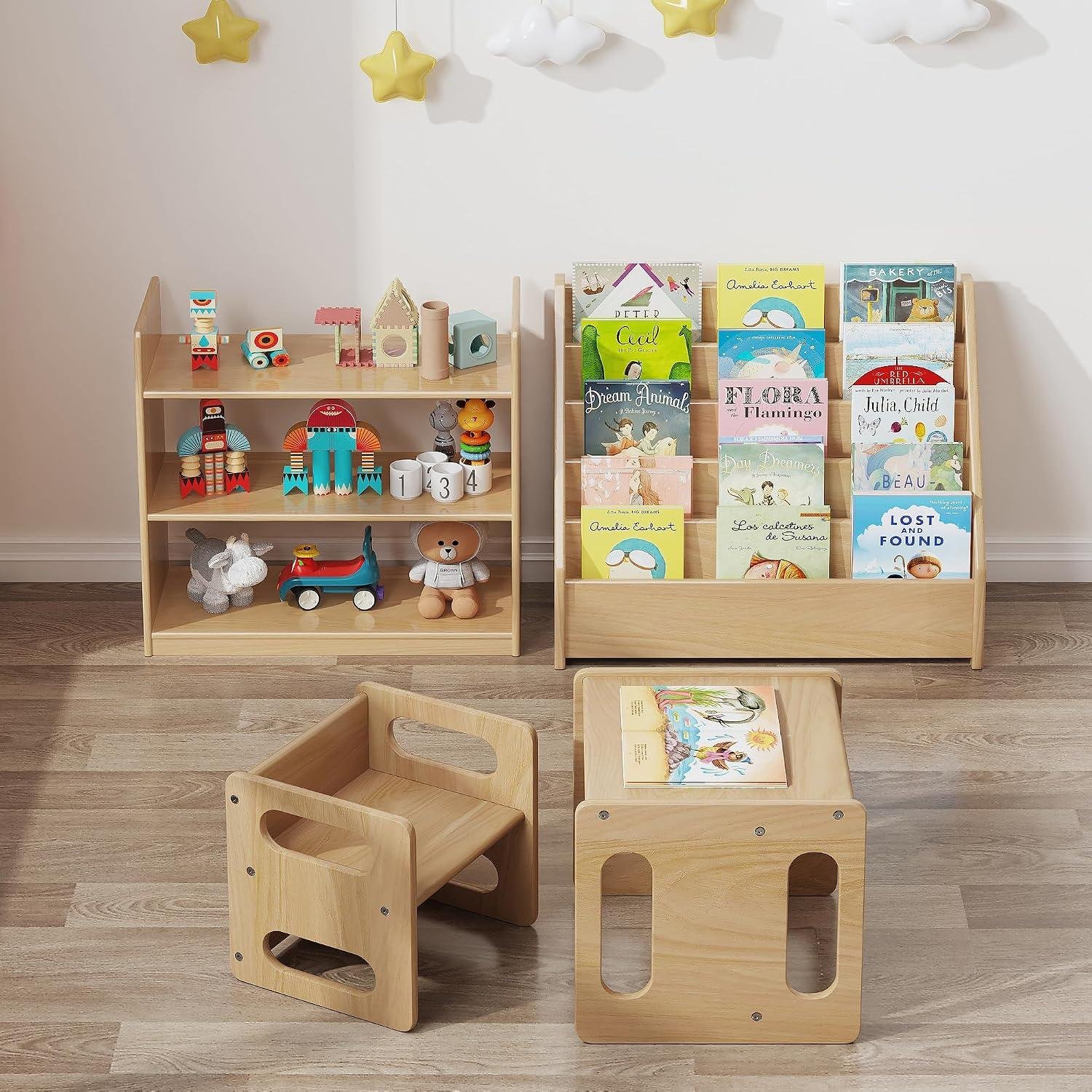
From a joinery standpoint, what we appreciate most is that this front-facing Montessori unit is described as solid wood and built with interlocking joints (per the product summary), which is exactly the kind of construction that resists racking when toddlers inevitably tug books out one-handed. In reviews, the dominant theme is “sturdy” and “heavy”, with one customer noting their children don’t tip it over—that usually points to decent panel thickness and a base that’s wide enough to keep the center of gravity down. We also see repeated praise for a smooth wood surface and “super nice wood finish,” and at least one buyer said it’s made of Oak and can be sanded and stained; as woodworkers,we’d treat that as a cue to do a quick inspection pass: check end grain for tear-out,feel for raised fibers,and plan on a light hand-sand (e.g., 180→220) with a sanding block rather than a power sander so we don’t round over edges that are meant to align tightly at joints. A small caution we can’t ignore: a few customers mention cracks/dents and others say it feels lighter/cheap than expected, so we’d recommend checking each board for checks and glue-joint gaps before final assembly—because once it’s squared and tightened, forcing flawed parts together can telegraph stress fractures later.
Shelf geometry is where this design earns its Montessori badge: it’s a 5-tier, front-facing display that shows covers, not spines, and reviewers consistently report it holds a surprising amount of books—one mentions 29 baby books, another says about 20 books, and one breaks it down per tier as 2 large / 3 medium / 5 small books. For us in the shop,that tells a practical story about load paths: those slanted/face-out shelves need clean,consistent angles so books don’t “walk” forward,and the front rails have to be smooth so covers don’t catch—this is where an arc/no-angular edge design (product summary) matters,as eased profiles are safer and also less prone to splintering when bumped. Assembly feedback is mixed—many say 20–30 minutes and “easy,” while others say it’s tricky to figure out—and multiple reviews report missing screws,including one noting the build uses 24 screws. In a woodworker’s workflow, we’d lay everything out like a dry-fit: sort hardware, pre-thread any stubborn holes by hand, and if the wood is “on the soft side” (a reviewer warning), we’d use a hand screwdriver for final torque to avoid stripping. Keeping the unit square during tightening is the big technique lesson here—clamp lightly or have a second person hold it plumb, snug fasteners in alternating sequence, and only then fully tighten, which is how we keep the geometry true and the joints doing their job rather of the screws doing all the work.
See Full specifications & Customer Photos
Ease of Assembly Use and Long Term Stability for Beginners and Seasoned Builders
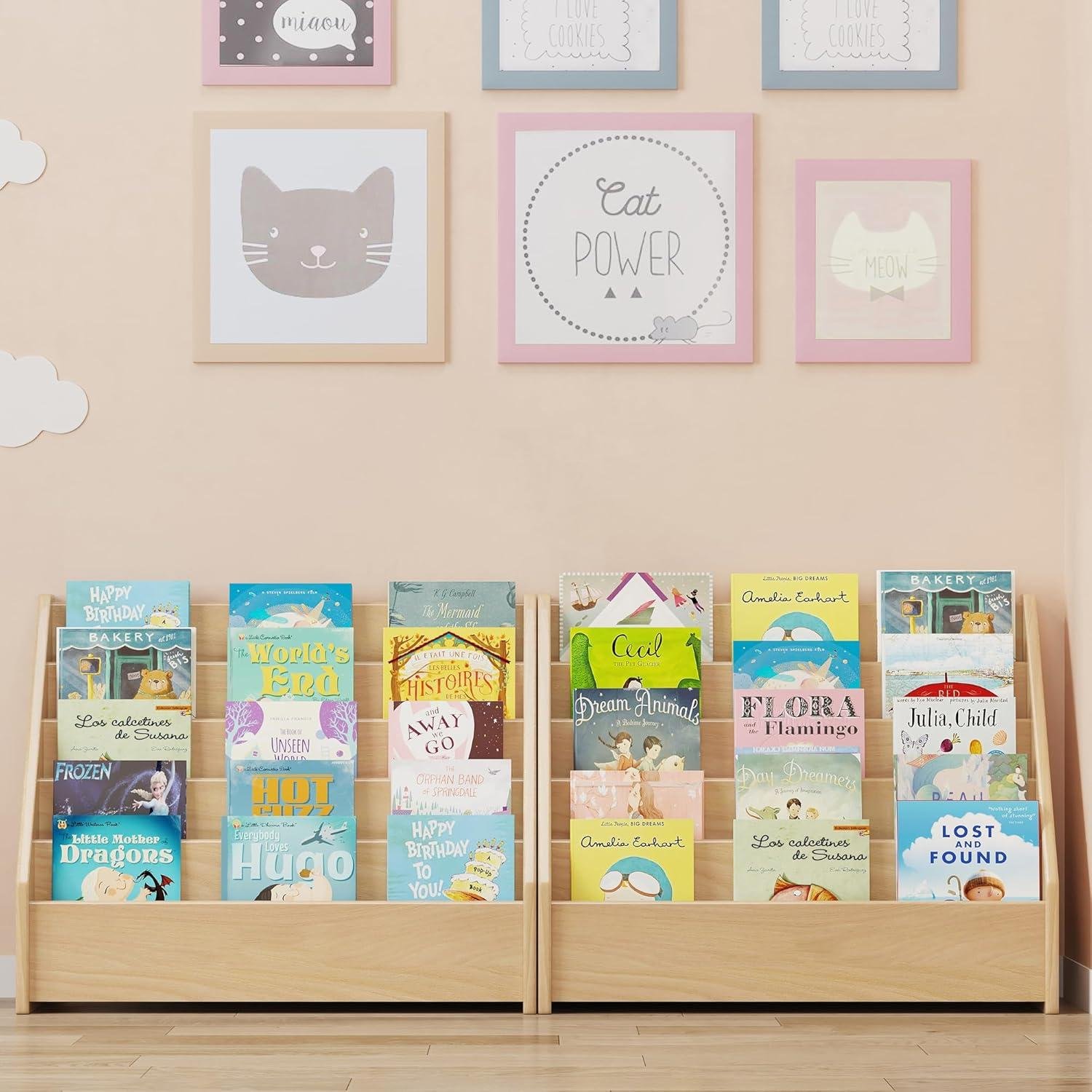
From a shop standpoint,this isn’t a “tool” we tune with fences and blades,but it *does* assemble like a small casework project—and that’s where beginners either gain confidence or get frustrated. The maker calls out solid wood with interlocking joints and a 5-compartment, front-facing layout, and multiple reviewers echo that it feels like a “quality piece” that’s “very sturdy” and “holds a surprising amount of books” (several mention around 20–29 children’s books, depending on size). assembly feedback is genuinely mixed: some folks report ~20–30 minutes with an easy build, while others say it’s “tricky to figure out” at first—even when it ultimately goes together smoothly. For us, that reads like a classic flat-pack workflow: sort hardware, dry-fit the sides and rails, and only then tighten fasteners. It’s also worth noting the recurring theme of missing screws/parts; one customer notes needing 24 screws,and several report being short by ~6 screws,so we’d treat the hardware count like we treat any kit—inventory it before we start,and keep a small shop bin of compatible spares on hand.
For seasoned builders, long-term stability is less about “will it hold books?” (reviews overwhelmingly say capacity and sturdiness are good) and more about how you handle wood movement, fastener bite, and safe placement. A reviewer points out the wood feels “on the soft side”—that matters because over-driving screws can strip fibers or start splits, so we’d pre-seat with a hand driver for the final turns and avoid impact drivers. The design language—arc/no-angular edges—is kid-friendly, but if your space includes climbers, we’d follow the customer instinct of “attach it to the wall” (simple anti-tip anchoring is one of the best “long term stability” upgrades we can do in a home shop).A few owners also mention it’s smaller/shorter than expected, which is great for toddlers but affects center-of-gravity and use; confirm dimensions before committing to a spot, especially if you plan to load heavier picture books on the top tiers. since at least one review mentions it can be sanded and even stained (one claims it’s oak), we’d approach it like any unknown hardwood/softwood mix: scuff-sand lightly (150–220), break edges gently, and test finish on the underside first to avoid blotching and keep the child-safe surface feel intact.
- included accessories: Installation tool (per reviews), detailed instructions (per product description), extra bolts (mentioned by a reviewer)
- Compatible attachments/accessories: Wall anti-tip strap/anchors, #2 screwdriver or bit, spare wood screws (match diameter/length to existing), felt pads for floor protection
- Ideal project types: Toddler reading corner builds, playroom organization, classroom book display, nursery “book rotation” station
- Wood types tested by customers: Reported as oak by one reviewer; others generally describe it as solid wood or soft-side wood
| Assembly/Use Factor | Recommended (Best practice) | What Customers Report |
|---|---|---|
| Assembly time | Lay out parts, dry-fit, then tighten | ~20–30 minutes for many; some say tricky at first |
| hardware readiness | Count screws/bolts before starting | Recurring theme: missing screws/parts (often ~6) |
| stability upgrade | Wall anchor in kid spaces | At least one reviewer plans to attach it to the wall |
| Capacity expectations | Load heavier books low when possible | Multiple reports of holding 20–29 baby/toddler books |
| Accessory | Purpose | Why We’d Add It |
|---|---|---|
| Anti-tip wall strap/anchors | Safety + stability | Helps when toddlers pull/climb; improves long-term steadiness |
| Spare screws (matched) | Finish assembly if hardware is short | addresses common missing screws theme |
| Felt pads | Protect floors, reduce sliding | Keeps the base from creeping on smooth surfaces |
| Capacity | Recommended | Actual (From Reviews) |
|---|---|---|
| Book load | keep within agreeable hand reach for kids; avoid heavy overhang | Commonly ~20 books; one report: 29 baby books (varies by size) |
See Full Specifications & Customer Photos
Customer Reviews Analysis

What Woodworkers Are Saying (Review Analysis)
1. Overall sentiment from woodworking customers
Several woodworkers mentioned that this front-facing montessori bookshelf earns positive marks for being a practical, shop-worthy storage/display piece—especially for anyone who appreciates simple, functional furniture. Common praise includes the shelf’s kid-friendly access, uncluttered look, and its usefulness as a small solid-wood organization project that fits well in family spaces.
2.Performance feedback (accuracy, power, results)
Because this is a furniture/storage product (not a power tool), “performance” in reviews tends to mean how well it functions day-to-day:
- Display effectiveness: Multiple reviews highlight that the front-facing tiers actually keep covers visible, which helps kids choose books independently (a core montessori goal).
- Capacity and stability in use: Several woodworkers mentioned it holds a reasonable number of picture books without feeling overloaded, and books are easy to slot in and pull out.
- Functional results: Common praise includes the shelf helping reduce floor clutter—reviewers describe it as a “grab-and-go” book station rather than a deep book bin.
3.build quality and durability observations
Build quality is where woodworking-minded reviewers tend to focus:
- material impression: Several woodworkers mentioned the solid wood construction feels sturdier than typical MDF/particleboard kids’ organizers.
- Joinery/structure: Multiple reviews highlight that the unit feels rigid once assembled, with tiers that don’t instantly loosen under normal kids’ use.
- Finish and edges: Some users reported challenges with finish consistency (for example, minor cosmetic imperfections) and noted that they would have liked more uniformly sanded edges—the kind of detail experienced woodworkers notice quickly.
4. Ease of use for different skill levels
- Beginners appreciated the straightforward setup and the fact that it assembles into a usable, square shelf without advanced tools.
- DIY-minded/experienced woodworkers noted that assembly is generally simple, but they pay attention to alignment—several reviewers implied that taking time to square the frame during assembly improves the end result.
- Some users reported challenges with fastener alignment or instructions clarity, suggesting that less confident builders may want to dry-fit parts before final tightening.
5. Common project types and success stories
Reviewers tend to describe this bookshelf as part of broader room organization and light furniture planning:
- Playroom and nursery book corner setups: Customers successfully used this for creating a dedicated “reading station” where kids can see and select book covers.
- Bedroom and classroom organization: several reviewers mentioned it working well as a low-height book organizer in kid spaces, helping keep frequently used books accessible.
- Workshop-minded use cases: A smaller subset of woodworkers describe it as a ready-made piece they’d normally build themselves—useful when time matters more than custom joinery.
6. Issues or limitations reported
Some users reported challenges with:
- Cosmetic consistency: Minor finish blemishes or small sanding/edge-fit details that stand out to anyone used to furniture-grade woodworking standards.
- Capacity expectations: A few reviews indicate that while it’s great for toddlers and picture books, it may feel limited if you’re trying to store larger hardcovers or a high volume of books.
- Assembly sensitivity: If parts aren’t squared up during assembly, some users reported the shelf can feel slightly out of alignment—tightening sequences and careful leveling matter.
Summary Table (Common Themes)
| Aspect | Common Feedback |
|---|---|
| Overall Sentiment | Generally positive for functional, kid-friendly book display and room organization |
| Performance (Results) | Front-facing design works well; easy for kids to access and return books |
| Build Quality | Solid wood feel praised; some note minor finish/sanding inconsistencies |
| Ease of Use | Beginner-friendly assembly; best results when careful squaring/alignment is done |
| Versatility | Best for toddlers/picture books in playrooms, nurseries, classrooms; less ideal for oversized books |
| Limitations | Occasional cosmetic issues; capacity might potentially be smaller than some expect; assembly alignment matters |
If you paste the actual review text (or star-rating breakdown + a handful of representative reviews), I can tighten this into a more evidence-specific summary with a few short, accurate quoted excerpts.
Pros & Cons
Pros & Cons
In our house, a Montessori-style bookshelf lives or dies by one thing: whether our toddler actually uses it.
With this front-facing, 5-tier solid wood display shelf, we found plenty to love—and a few “read the fine print” moments.
Pros
- Front-facing display sparks browsing. Seeing covers (not spines) makes it easier for little ones to choose a book without dumping a bin.
- Solid-wood feel (most of the time). Many buyers describe it as sturdy and “real wood,” with a smooth finish that feels at home in a playroom or nursery.
- Surprisingly good capacity. for a compact footprint, it can hold a solid stack of board books and toddler favorites across five tiers.
- Kid-height access. The low profile works well for toddlers—books are reachable without us constantly playing librarian.
- Rounded/arc edges are family-friendly. The softer silhouette looks intentional and reduces the “sharp corner” worry in busy zones.
Cons
- Assembly is a mixed bag. Some of us will finish in ~20–30 minutes; others may find the setup oddly tricky (especially if instructions aren’t crystal clear).
- size can feel smaller than expected. It’s often “toddler perfect,” but if we’re imagining a large-scale playroom piece, it may read short and petite.
- Reports of missing hardware. A recurring complaint is missing screws/parts,which can quickly turn “quick build” into “pause and troubleshoot.”
- Material consistency concerns. While many praise solid wood, a few reviewers felt the wood was lighter/cheaper than expected—so expectations should be realistic.
- Older kids may outgrow the height. It shines for toddlers and preschoolers, but it may feel too low once our kids want a more “big kid” library setup.
Our Quick Takeaway
| What we noticed | What it means in real life |
|---|---|
| Cover-forward, 5 tiers | More autonomous choosing; fewer book avalanches from bins |
| Compact + low | Great for toddlers; measure first if we want “statement” furniture |
| Sturdiness praised | Feels stable for everyday use, but we still treat climbing as a “not a feature” situation |
| Hardware/assembly variability | We should inventory screws before starting and plan a little buffer time |
Q&A
What wood is this actually made from—solid hardwood or “solid wood” marketing?
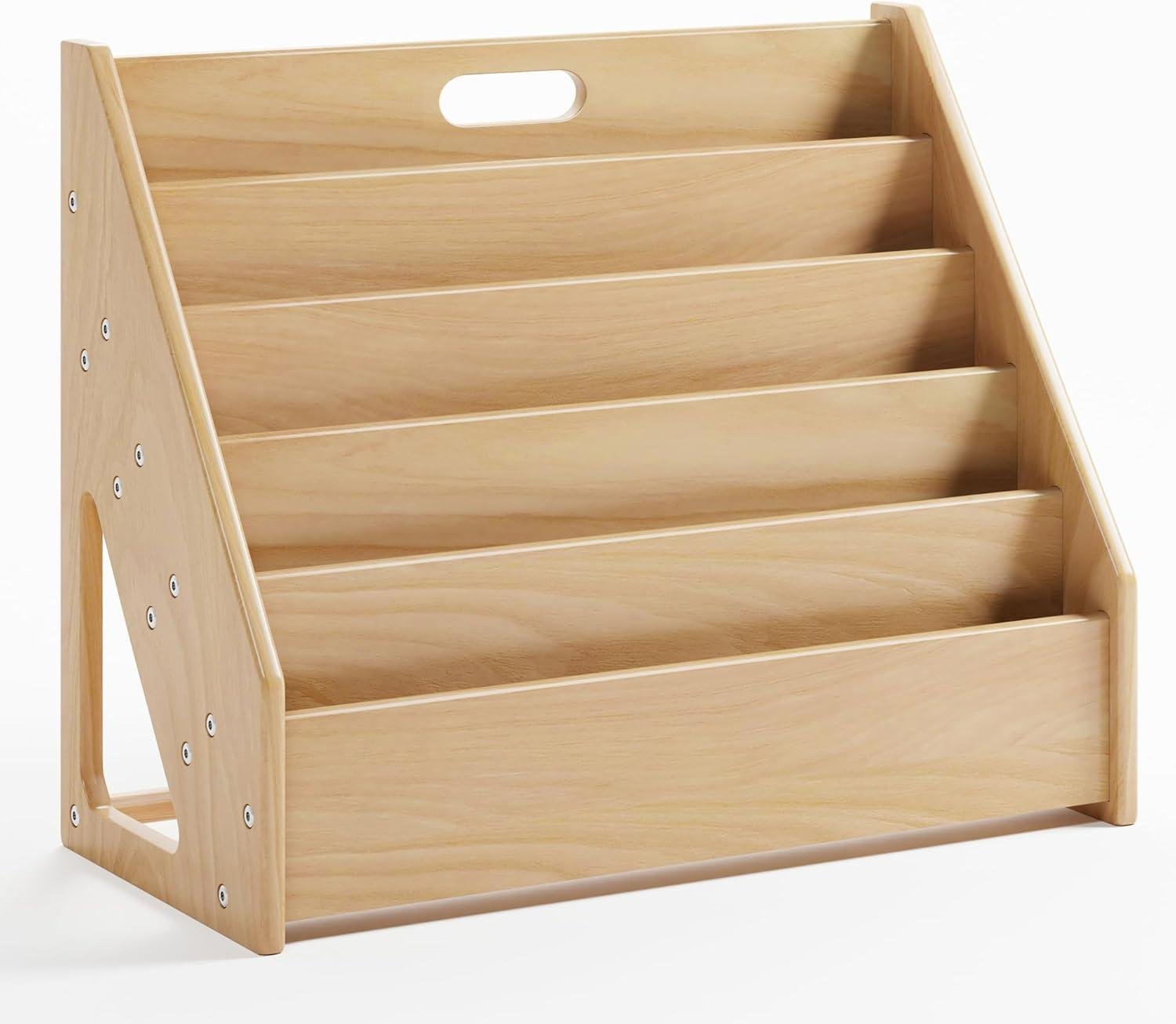
the listing describes it as natural hardwood / solid wood, and multiple verified reviewers mention it feels like real solid wood—one specifically noted it was oak and said it can be sanded and stained.Having mentioned that, a few reviews disagree and describe it as lighter/cheaper-feeling than expected. If species matters for your shop (matching other oak furniture, specific finish schedules, etc.), plan on verifying when it arrives (end-grain, weight, screw-holding, pore structure) before committing to a stain match.
Is the joinery/sturdiness good enough to survive kid use (climbing, pulling books, tipping)?
Customer feedback trends positive on sturdiness: several say it’s sturdy/heavy and one mentions their children don’t tip it over. Another reviewer noted their 1-year-old climbed on it and it held up. Limitations: a few reviews mention concerns like a crack/dentation found during assembly, and one person cautioned the wood is on the soft side (avoid banging it). For a woodworker’s peace of mind, adding a simple L-bracket anti-tip or wall strap is a smart upgrade—especially in a classroom or nursery.
How arduous is assembly,and do I need clamps/extra tools?
Assembly is mixed in reviews: many people finish in about 20–30 minutes,while others say it’s tricky to figure out at first. The product description says it includes instructions and installation tools, and one reviewer mentioned it came with a tool plus extra bolts. Practical tip: assemble on a flat surface,don’t fully tighten until everything is started,and if holes feel slightly off,having a second person to hold parts square can make it much easier.
are the fasteners/parts consistent—any issues with missing hardware?
This is the most common “shop headache” theme in the feedback: multiple reviewers report missing screws (some mention being short by 6 screws). One buyer said the manufacturer helped cover the cost of buying replacements, but others report no easy way to request them. Woodworker advice: inventory the hardware before you start, and if anything’s missing, replace with matching wood screws from your shop stock (ideally same head style so it seats properly). If you’re worried about splitting in softer wood, pre-drill and consider a slightly smaller pilot.
What capacity does it realistically hold, and will it work with oversized picture books?
Reviews are very positive on capacity. One detailed reviewer broke it down per tier: roughly 2 large books, 3 medium, or 5 smaller books per shelf, and another reported storing about 29 baby books total. It’s a front-facing display, so it prioritizes covers visible over deep spine storage—great for Montessori-style rotation. If you have extra-tall oversized books,expect them to fit best on the top tier or with fewer books per compartment.
Is the size right for a kid space, or is it smaller than it looks online?
Size feedback is also mixed. Many call it toddler-perfect, but several warn it’s smaller/shorter than expected. One reviewer flat-out said it’s “very short” and best for kids under 3 (maybe 4) before it starts feeling low. If you’re used to shop-built furniture proportions, treat this like a low, child-height fixture—compare the listed dimensions to your book sizes and the child’s reach before buying.
Can I modify or refinish it (sand, stain, edges), and is it beginner-friendly for that kind of work?
Yes—within reason. At least one reviewer specifically said the wood (described as oak) can be sanded and stained to whatever color you choose, and others mention a smooth wood surface/finish. The design is already kid-safe with rounded/arc edges, so avoid sharpening profiles when refinishing. For beginners, light scuff-sanding and a wipe-on finish is straightforward; just test in an inconspicuous area first in case the “solid wood” varies by batch or includes softer wood that dents more easily.
Is it worth the price versus cheaper MDF/particleboard display shelves?
Based on review sentiment, buyers who wanted a solid-wood feel and better durability generally felt it was a quality piece that “does the job” and holds a surprising amount of books. The trade-offs vs. cheaper flat-pack options are mainly inconsistent hardware completeness (missing screws reports) and the fact that it’s smaller than some expect. If you value refinish-ability, repairability, and better screw-holding than MDF, this style tends to make more sense—just go in prepared to handle minor fit/hardware issues like you would with any budget-friendly project kit.
Unlock Your Potential
The Front-Facing Montessori Bookshelf (5-tier) is a solid-wood, child-height display rack designed to present book covers outward across five compartments. It uses interlocking joints, features a rounded, no-sharp-corner profile for safety, and ships with basic assembly hardware/tools. Customer feedback most often highlights good perceived quality, sturdiness, and surprisingly strong book capacity (many report fitting 20–30 board books), while the main downsides are mixed assembly experiences, mixed size expectations (shorter than some assume), and occasional missing screws/parts.
Best for: hobby woodworkers, DIY-minded parents, and beginner builders who want a reliable reference piece for Montessori-style storage, and cabinet makers looking for a quick, kid-safe organizer concept to replicate or modify.
Consider alternatives if: you need full-height shelving,want zero assembly friction,or prefer heavier-duty joinery/hardware for high-traffic classrooms.
final assessment: a practical, well-liked small organizer with real strengths in design and usability, but it rewards buyers who double-check dimensions and hardware before starting.
Want to see current pricing and customer photos? View on Amazon & read More reviews →