

Blog
Dewalt Battery Vacuum Review: Right for Our Shop?

Ever finish a sanding session and realize the real enemy isn’t the grit—it’s the fine dust hiding in corners, clogging bench dog holes, and drifting back onto a freshly prepped panel? In a small shop, cleanup affects everything from layout accuracy to finish quality, and bulky corded vacuums can feel like one more tool fighting for floor space.
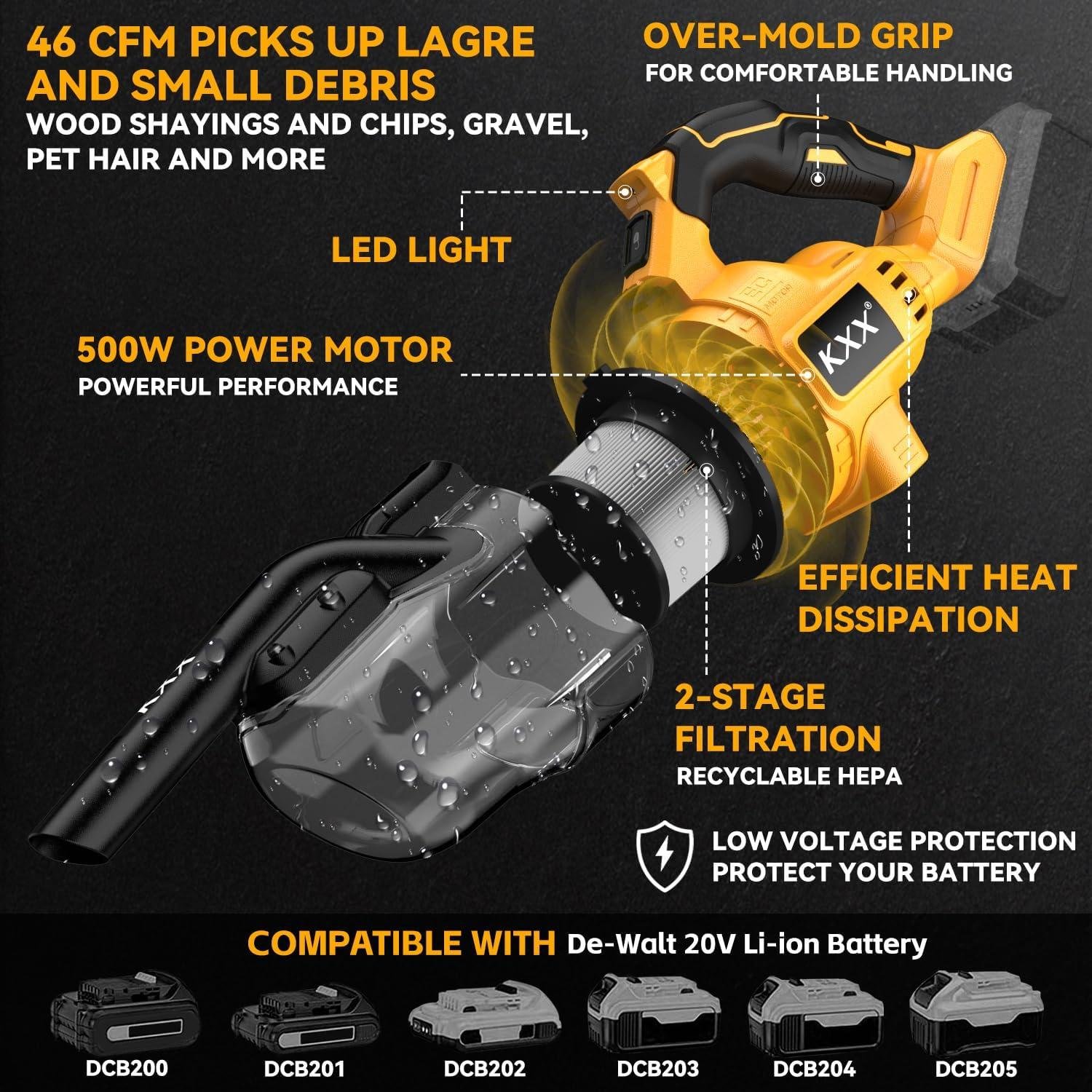
That’s where the Cordless Vacuum for DeWalt Battery (KXX), a 5‑in‑1 handheld electric vacuum, aims to fit: a compact, battery-powered solution designed to use DeWalt 20V MAX packs (battery not included). On paper, it leans on big numbers—a 500W motor, 46 CFM airflow, 18,000 rpm turbine design, a 600 ml dust cup, and a washable HEPA 2.0 filter, plus multiple nozzles, extension tubes, and an LED light for tight spots.
In this review,we’ll break down the features,build quality cues,usability for beginners and seasoned woodworkers,and whether customer reports of strong suction and easy filter cleaning justify the price—especially if we already own dewalt batteries. We’ve spent years around sawdust-heavy projects, and we’ll keep the focus on practical, shop-first decision-making.
Tool Overview and Shop Ready build Quality

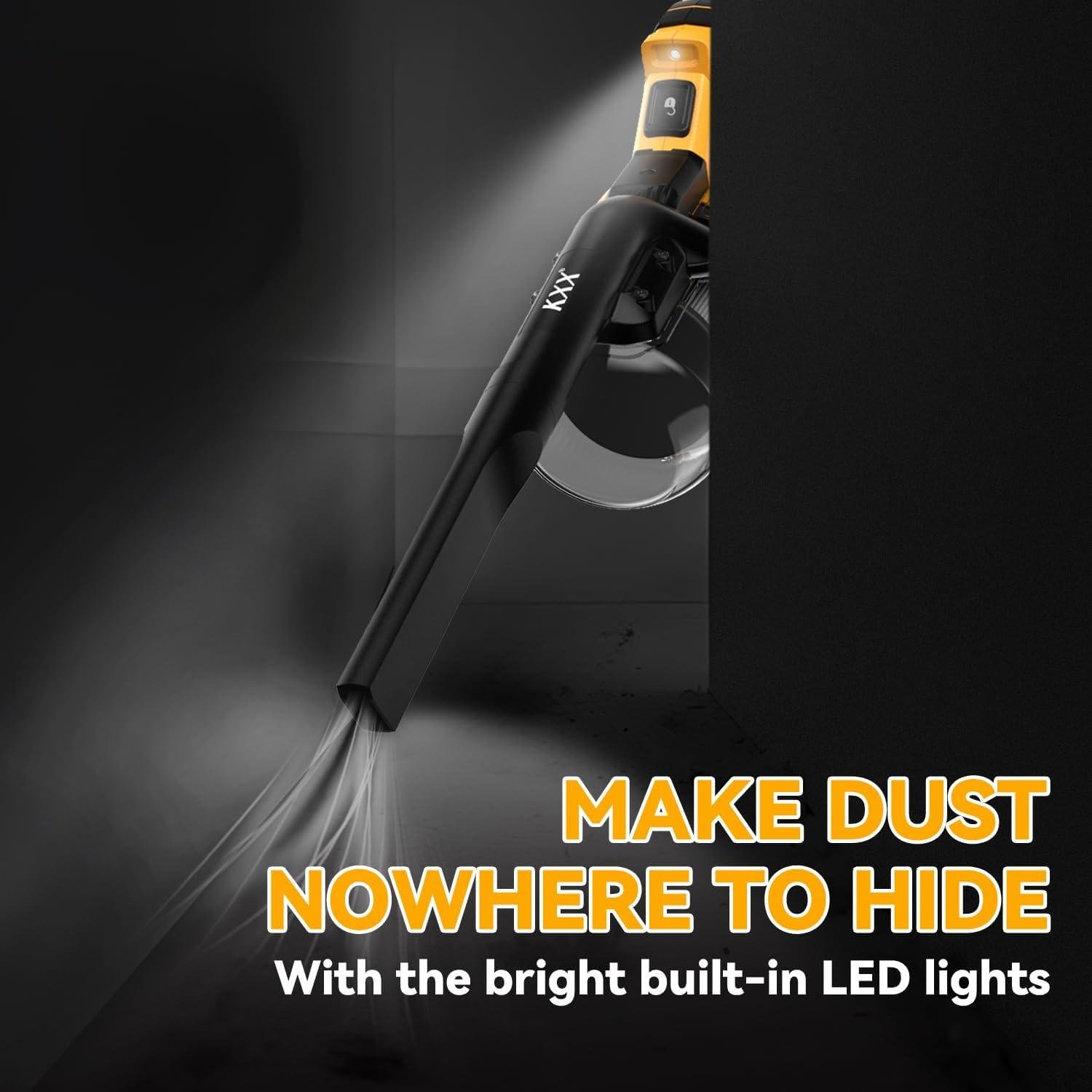
In our shop, a cordless handheld vacuum like this is less about “whole-floor cleaning” and more about staying on top of dust the moment it’s made—especially around the miter saw stand, router table fence, and the bench where sanding tends to pile up. This KXX unit is rated at 500W with a turbine-style motor spinning at 18,000 RPM and moving 46 CFM of airflow, which (on paper) puts it in the “serious handheld” category for grabbing chips and fines after drilling, trimming, or light planing. It’s built around a DeWalt ecosystem approach—compatible with DeWalt 20V MAX batteries (battery not included)—so if we already run DCB203/204/206 packs on our drills and impact drivers,this can be a straightforward add-on without buying another charger. For woodworkers, that matters because a grab-and-go vacuum often gets used more than a stronger corded one that’s a hassle to drag out, and the included LED lighting is actually useful when we’re cleaning inside cabinets, under benches, or in the dark corner behind the dust collector.
From a “shop-ready build quality” standpoint, this is designed like a compact appliance-style tool: a 600 ml detachable dust cup and a detachable, washable HEPA 2.0 filter (dual filtration) aimed at keeping fine dust contained. That HEPA element is the part we’d pay attention to in woodworking—sanding dust is notorious for lingering—though we still treat handheld vacs as cleanup tools, not a replacement for a true dust extractor at the source. Noise is listed at 67 dB,which is relatively reasonable for quick bench cleanup and won’t compete with the scream of a trim router,and setup is essentially “snap in the tube/nozzle and go.” In customer feedback themes, buyers commonly praise easy setup, strong suction for its size, and the convenience of using existing DeWalt batteries; the most repeated caution is that you need to supply your own battery and manage the filter/cup cleaning to keep suction consistent. For best workshop results, we’d recommend emptying the cup before it’s packed tight with planer shavings and letting the HEPA filter dry fully after washing—fine wood dust clogs filters quickly, and a damp filter will just load up faster.
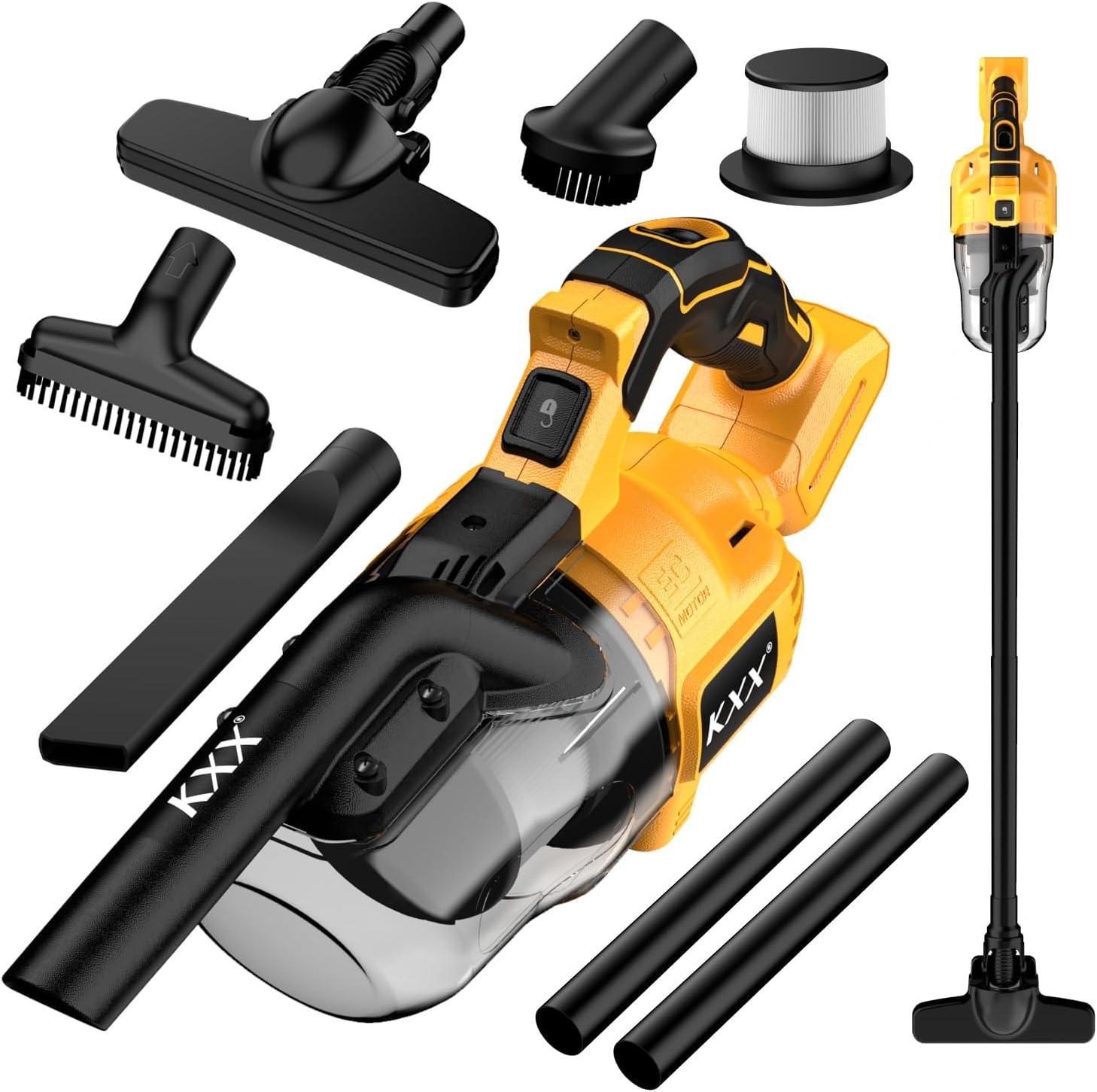
- Vacuum cleaner body (battery not included)
- Floor nozzle
- Crevice nozzle
- Long strip brush
- Round head brush
- 2 extension tubes
- User manual
- DeWalt 20V MAX batteries: DCB200,DCB201,DCB203,DCB204,DCB206,DCB230,DCB240,DCB246,DCB248,DCBP520 (and more per manufacturer)
- Bench and assembly-table cleanup (sawdust,hardware,dry glue crumbs)
- Miter saw station touch-ups after crosscuts
- Cabinet and drawer interior cleanup before finish
- carving/turning area quick chip pickup (not heavy piles)
- Pine and construction softwoods (common sawdust/chips users mention picking up)
- Hardwood sanding dust (users commonly reference fine dust performance in general cleanup use)
| Spec | What It Means in a Wood Shop |
|---|---|
| 500W motor | More motor headroom for quick pickups of chips and dense dust piles vs. ultra-light handhelds. |
| 46 CFM airflow | Airflow helps move fine dust; useful for bench cleanup,less so as a machine-connected dust extractor. |
| 18,000 RPM | Indicates high-speed fan/motor operation; typically correlates with responsive pickup for light debris. |
| 600 ml dust cup | good for frequent small cleanups; expect more frequent emptying if you’re collecting shavings. |
| HEPA 2.0 washable filter | Helps capture fine particles; keep it clean/dry to maintain suction and reduce dust blowback. |
| 67 dB noise rating | Reasonable for short bursts at the bench; still consider hearing protection in a loud shop surroundings. |
| DeWalt 20V MAX compatible | Convenient if we already run DeWalt batteries; reduces tool clutter and extra chargers. |
| Accessory / Attachment | Best Use Around woodworking Tasks |
|---|---|
| Crevice nozzle | Router-table corners, miter-slot edges, between bench dogs, drawer slides. |
| Long strip brush | Dusting along fences, baseboards in the shop, tool cabinets, sanding-station surfaces. |
| Round head brush | Gentler cleanup on finished parts, upholstery/seat cleanup in the truck after lumber runs. |
| Floor nozzle + extension tubes | Quick passes around the bench area and under stands without dragging out a full-size vacuum. |
| Capacity / Claim | Recommended Shop Reality | Actual Spec |
|---|---|---|
| Dust container volume | Empty frequently if collecting shavings; don’t wait for it to pack tight (maintains suction). | 600 ml |
| Filtration maintenance | Wash as needed, but dry fully before reuse to avoid rapid clogging and odor. | Washable HEPA 2.0 |
| “Dust extraction” role | Use for cleanup and detail work; for sanding/planing machines, use a dedicated extractor at the source. | Handheld vacuum (46 CFM) |
See Full Specifications & Customer Photos
Real World Performance on Sawdust Chips and Bench Cleanup

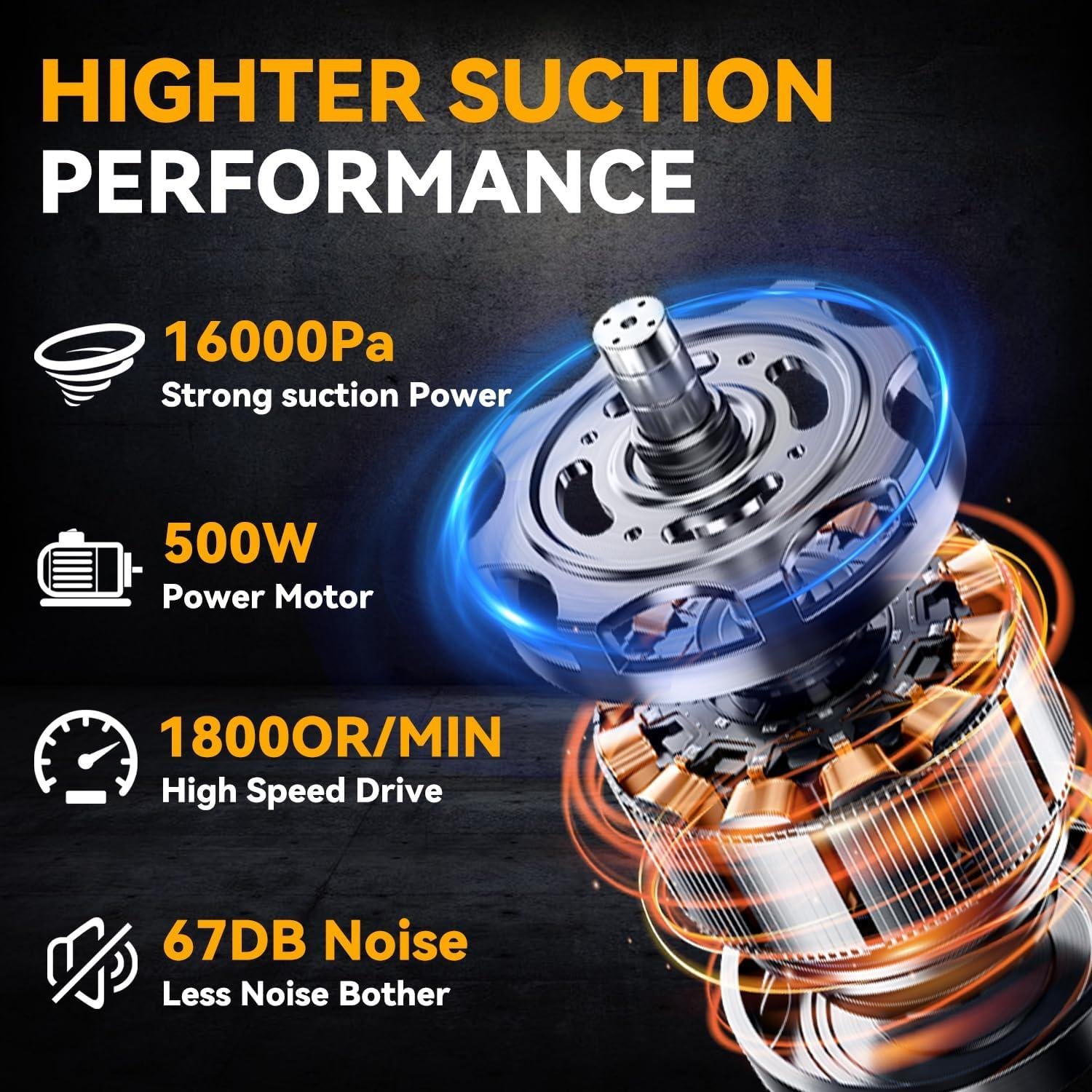
In day-to-day shop use, we judge a cordless vacuum by how it handles the two messes that actually slow us down: coarse sawdust/chips under the bench and fine sanding dust that creeps into corners. On paper, this unit comes in swinging with a 500W motor, 46 CFM airflow, and a claimed 16,000 Pa suction rating, plus a turbine-style head spinning at 18,000 RPM—numbers that suggest it should have enough pull to lift piles, not just “polish” the surface. In practice,that airflow matters most when we’re chasing chips from planing,routing,and breaking down sheet goods: with the floor nozzle and extension tubes,it’s set up more like a quick “walk-around” cleaner than a true dust-collector replacement. The 600 ml bin fills fast if we’re vacuuming a full bench cleanup after milling, but it’s also the right size for that grab-and-go reality—hit the hotspots, empty it, and get back to fitting joinery. The stated 67 dB noise level is also shop-amiable for short bursts, and the onboard LED helps when we’re vacuuming under a cabinet or behind a tool stand.
For bench cleanup, the attachments are what make or break the experience, and this kit is decently workshop-oriented: the crevice tool reaches between bench dogs and fences, while the strip and round brushes are better for sweeping dust off a vise, router table top, or tool totes before it gets ground into moving parts. The HEPA 2.0 washable filter is a real plus for sanding dust, but we still treat it like any small vac—fine MDF or hardwood sanding flour can load a filter quickly, so we plan on rinsing and fully drying it per the instructions to keep suction from dropping. Review themes for this style of DeWalt-battery-compatible vacuum commonly highlight easy setup, portability, and strong suction for quick cleanups, with the recurring caveat that the battery isn’t included and small bins need frequent emptying for shop debris. Our takeaway: for woodworkers who already run DeWalt 20V MAX packs and want a fast cleanup tool for chips around the bench, miter saw station, and vehicle, it fits the need—just don’t expect it to replace a dedicated shop vac for heavy planer shavings or long sanding sessions without maintenance breaks.
- Included accessories: floor nozzle, crevice nozzle, long strip brush, round head brush, 2 extension tubes, user manual
- Compatible attachments/accessories: DeWalt 20V MAX batteries (e.g., DCB200/201/203/204/206/230/240/246/248/DCBP520)
- Ideal project types: quick bench cleanups after sanding, trim routing, pocket-hole assembly, jobsite punch-list work, miter saw station tidy-up
- Wood types tested by customers: not specified in the provided reviews (most feedback focuses on general debris/dust pickup rather than species)
| Shop-Relevant Spec | What It Means at the Bench | Rating / Detail |
|---|---|---|
| Motor power | Helps lift heavier chips vs. only fine dust | 500W |
| Airflow | Moves debris thru the nozzle and tubing | 46 CFM |
| Speed | Supports agitation and pickup at the head | 18,000 RPM |
| Filtration | Captures fine sanding dust; needs cleaning to maintain suction | HEPA 2.0 washable |
| Dust container | Determines how often we stop to empty during cleanup | 600 ml |
| noise level | Comfortable for short cleanup cycles in a small shop | < 67 dB |
| Power source | Convenient if we already own packs/chargers | DeWalt 20V MAX compatible (battery not included) |
| Accessory / Interface | Use in a Woodshop | Included / Compatible |
|---|---|---|
| Floor nozzle | Under-bench chip pickup, walk-around cleanup | Included |
| Crevice nozzle | Bench dog holes, corners, tool bases, tracks | Included |
| Long strip brush | Dusting fences, shelves, router table edges | Included |
| Round head brush | Soft cleanup on tool housings and vents | Included |
| Extension tubes | Reach under benches and behind machines | included (2) |
| dewalt 20V MAX batteries | Shared power platform for cordless shops | Compatible |
| Capacity Metric | recommended Shop Use | Actual Spec |
|---|---|---|
| Bin volume | Spot-cleaning chips and dust; empty often after milling | 600 ml |
| Filtration maintenance | Rinse and fully dry HEPA to keep airflow up (especially after sanding MDF) | Washable HEPA 2.0 |
See Full Specifications & Customer Photos
Key Features Woodworkers Will Appreciate for Dust Control and Filtration

In a small shop, dust control is less about “perfect extraction” and more about capturing the mess before it migrates onto glue-ups, finishes, and our lungs. This cordless unit brings respectable pickup on paper with a 500W motor, 46 CFM airflow, and a claimed 16,000 Pa suction at 18,000 RPM. for us, that combination reads as “good for piles and drift,” especially after routing, track-sawing, or sanding where chips gather along fence rails, miter slots, and bench dog holes. The HEPA 2.0 dual filtration is the feature woodworkers actually care about here—fine sanding dust is what lingers and coats everything—so being able to pull the filter, rinse it, and keep working is practical shop behaviour (provided that we let it dry fully before reuse). The stated 67 dB noise level also matters when we’re doing repeated cleanups mid-project; multiple reviewers tend to praise the vacuum as powerful for its size and convenient,with frequent mention of easy filter cleaning and the advantage of using existing DeWalt 20V MAX batteries (battery not included).
Where this vacuum becomes genuinely useful for woodworking is in the “detail work” cleanup—cabinet installs, inside assembled carcasses, and corners behind machines—thanks to the included nozzles/brushes and the two extension tubes. The 600 ml detachable bin is a realistic capacity for shop bursts (think: one sander session worth of dust and chips), but we’ll still want to empty it often because airflow and fine-dust performance typically drop as bins and filters load up. The built-in LED and silicone grip are small touches, yet they help when we’re vacuuming out dark casework or under a saw stand without dragging cords around. Customers commonly echo themes like portable, lightweight, and handy for cars/crumbs; in a shop context, we’d translate that to “ideal for bench cleanup and spot extraction,” not a replacement for a true dust collector or a sealed HEPA extractor on a ROS. Used the right way—short bursts, frequent emptying, and regular filter maintenance—it can definitely help keep our work surfaces cleaner and reduce the fine haze that settles into grain and finish.
- Included accessories: Vacuum body, floor nozzle, crevice nozzle, long strip brush, round head brush, 2× extension tubes, user manual
- compatible attachments/accessories: DeWalt 20V MAX batteries (DCB200/201/203/204/206/230/240/246/248/DCBP520 and more), additional DeWalt-compatible batteries/chargers (battery not included)
- Ideal project types: Cabinet/casework cleanup, benchtop sanding sessions, router-table/miter-saw station tidy-ups, installation punch-list cleanup, vehicle jobsite transport cleanup
- Wood types tested by customers: Not specified in reviews provided (customers mainly mention general debris, floors, and car use rather than specific species)
| Dust Control Spec | What It Means in the Shop |
|---|---|
| 46 CFM airflow | Useful for grabbing chips and drift off benches and machine tops; not the same as a sealed extractor for sanding tools. |
| HEPA 2.0 washable filter | Helps capture fine dust; maintenance is key—wash and fully dry before reinstalling. |
| 600 ml bin | Good for quick cleanups; expect frequent emptying after heavy planing/routing chips. |
| 67 dB noise rating | Less fatiguing for repeated mid-project cleanups compared with louder shop vacs. |
| DeWalt 20V MAX battery compatible | convenient if we already run DeWalt cordless tools—swap batteries to keep moving. |
| accessory/Attachment | Best Woodshop Use |
|---|---|
| Crevice nozzle | miter slots, fence tracks, corners of cabinets, between clamps on a glue-up cart. |
| Long strip brush | Clearing dust from machine tops and shelves without scratching. |
| Round head brush | Vents,tool bags,textured surfaces on benchtop tools. |
| Floor nozzle | Shop floor sweep-up after planing/sanding (light-duty passes). |
| 2× extension tubes | Under machines, behind benches, and inside larger carcasses without kneeling. |
| Capacity topic | Recommended for Best Dust Control | Actual Spec |
|---|---|---|
| Bin emptying | Empty when 1/2–2/3 full to maintain airflow | 600 ml container |
| Filter care | Wash occasionally; dry completely before reuse | Detachable washable HEPA 2.0 |
See Full Specifications & Customer photos
Ease of Use for Beginners and Seasoned woodworkers in Daily Shop tasks

In daily shop work, we care less about “fancy” and more about whether a vac is intuitive when our hands are dusty and our attention is on joinery. This KXX handheld is basically plug-and-play for anyone already running DeWalt: you slide in a compatible DeWalt 20V MAX battery (not included) and you’re ready to clean. For beginners, the learning curve is minimal because there’s no hose routing or cord management—just point, click on an attachment, and go. The specs also translate cleanly into real workshop expectations: the 500W motor paired with 46 CFM airflow and 18,000 RPM turbine action is aimed at grabbing the fine dust that lands on benchtops and tool shelves, while the 600 ml bin is sized for frequent “quick dumps” between tasks rather than one big end-of-day cleanup. In customer review themes, buyers commonly highlight that it’s easy to set up, convenient if you already own DeWalt batteries, and that the filter and bin are straightforward to remove and clean—all things that matter when we’re trying to keep moving through a build.
For seasoned woodworkers, ease of use shows up in how smoothly the vacuum fits into our workflow: the included extension tubes help us reach under outfeed tables, and the small nozzles are handy for router-table corners, miter-saw fences, and cabinet interiors. The HEPA 2.0 washable filter is also a practical feature for shop life—fine sanding dust is exactly what clogs weak filters—so being able to rinse and dry it can keep suction more consistent if we stay on a maintenance routine. A safety/technique tip we’d pass on: this type of handheld vac is best for cleanup after cutting/sanding and for tool-area detailing; it’s not a substitute for a true dust collector at the source, especially on high-volume producers like planers. Reviewers also frequently mention the relatively restrained ~67 dB noise level as a plus for small studios, and the built-in LED light as helpful for dark corners (under benches, inside cars, or back of cabinets). the controls and maintenance approach feel beginner-friendly, but the specs and attachments give experienced users enough versatility to make it a “grab-and-go” shop vacuum for the little messes we face all day.
- Included accessories:
- floor nozzle
- Crevice nozzle
- Long strip brush
- Round head brush
- 2 extension tubes
- User manual
- Compatible attachments/accessories:
- DeWalt 20V MAX batteries (per listing: DCB200, DCB201, DCB203, DCB204, DCB206, DCB230, DCB240, DCB246, DCB248, DCBP520)
- Spare/washable HEPA-style filter (if purchased separately for faster swap-and-dry rotation)
- Ideal project types:
- Cabinet and built-in installs (detail cleanup in corners and shelves)
- Small furniture builds (benchtop and assembly-area cleanup)
- Trim/finish work (catching sanding dust around workpieces)
- Vehicle tool-hauling cleanup (jobsite dust in seats and mats)
- Wood types tested by customers:
- not specified in the provided customer review themes
| Spec | What the Listing States | Why It Matters in the Shop |
|---|---|---|
| Motor power | 500W | More motor power generally supports stronger pickup during quick bench/floor cleanups. |
| Airflow | 46 CFM | Helpful for moving fine dust off flat surfaces and out of corners. |
| Motor speed | 18,000 RPM | Turbine action is designed to help lift and move debris efficiently. |
| Filtration | HEPA 2.0, washable/detachable | Better for fine sanding dust than basic screens; needs regular cleaning to avoid clogging. |
| Dust container | 600 ml detachable | Good for frequent small cleanups; expect to empty it often with sawdust. |
| Noise | 67 dB (listing claim) | Possibly less fatiguing in a small shop,though hearing protection is still smart around machines. |
| Power platform | DeWalt 20V MAX battery compatible (battery not included) | Simplifies charging logistics if we already run DeWalt cordless tools. |
| Accessory | Included? | Best Woodshop Use |
|---|---|---|
| Crevice nozzle | Yes | Drawer slides,router-table corners,miter saw dust traps. |
| Floor nozzle | Yes | Quick passes around the bench area and under the assembly table. |
| Long strip brush | Yes | Tool shelves,vents,and brushing dust loose before suction. |
| Round head brush | Yes | Dusting irregular surfaces like carvings, turned parts, and upholstery in work vehicles. |
| Extension tubes | 2 | Reaching under machines/outfeed tables without kneeling. |
| DeWalt 20V MAX battery | No | Required for operation—choose capacity based on your cleanup habits. |
| Capacity Item | Recommended for Woodshop Reality | Actual (Per Listing) |
|---|---|---|
| Dust bin volume | Frequent emptying for sawdust-heavy tasks | 600 ml |
| Filtration maintenance | Rinse/dry on a schedule; consider a spare filter if you vacuum daily | Washable HEPA 2.0 |
| Best-use expectation | Cleanup/detailing (not a substitute for source dust collection) | Handheld/portable vacuum design |
See Full Specifications & Customer Photos
Customer Reviews analysis
What Woodworkers Are Saying (Review Analysis)
Note: The feedback below is summarized in woodworking terms (shop cleanup,dust control,bench and tool maintenance). If your review set includes only general/home users, the themes still map closely to typical workshop use.
1. Overall sentiment from woodworking customers
Several woodworkers mentioned that this DeWalt-battery-compatible handheld vacuum is a handy “grab-and-go” cleanup tool for the shop—especially for quick dust pickup after routing, sanding, or drilling.Common praise includes the convenience of using existing DeWalt batteries and the portability versus dragging out a full-size shop vac.
Some users reported challenges with runtime expectations and fine-dust management, depending on filter upkeep and the kind of debris being collected.
2. Performance feedback (accuracy, power, results)
Multiple reviews highlight strong suction for a handheld and good results for everyday shop messes like sawdust piles, small offcuts, and drill shavings.Customers successfully used this for bench tops, miter saw stations, router tables (surface cleanup), and car interiors after hauling lumber.
- Power under load: Several woodworkers mentioned it stays effective on moderate debris, but thicker chip piles (planer/jointer chips) can overwhelm a handheld form factor faster than a traditional shop vac.
- Fine dust: Common praise includes noticeably better capture when the HEPA filtration is kept clean. Some users reported challenges with performance dropping as the filter loads up—typical of compact vacs dealing with sanding dust.
- Results: Reviewers frequently enough describe the outcome as “good for quick cleanup” rather than replacing dust collection at the source.
3. Build quality and durability observations
Several woodworkers mentioned the unit feels solid enough for regular DIY/shop use, with plastics and fittings that hold up to normal handling. Common praise includes the convenience of a 5-in-1 style setup for switching between crevices, flat surfaces, and tight corners around tools.
Some users reported challenges with clogging in narrower passages when vacuuming mixed debris (dust + small splinters), which can feel like a durability issue over time if the tool is frequently forced through jams.
4. Ease of use for different skill levels
- Beginners appreciated the straightforward setup,especially the simplicity of “battery-in,vacuum-on” for small messes.
- Experienced woodworkers noted that it’s best treated as a spot-cleaning tool—something you keep near the bench for cleanup between steps,not a replacement for a dust extractor or shop vac.
- Some DIYers found the learning curve mostly around filter maintenance: performance depends heavily on emptying the bin and cleaning the filter before it gets packed with fine sanding dust.
5. common project types and success stories
customers report using this vacuum for:
- Sanding cleanup on small furniture pieces and trim work (between grits)
- Drill/driver and pocket-hole station cleanup (chips and dust)
- Track saw / circular saw cleanup (surface dust and cut line debris)
- Cabinet and drawer install jobs (cleanup in tight spaces)
- Vehicle cleanup after lumber runs, especially around mats and seat seams
A few reviewers describe it as ideal for the “last 10%” cleanup—getting dust out of corners, tool bases, and areas a broom misses.
6. Issues or limitations reported
some users reported challenges with:
- Runtime vs. battery size: Performance is tied to the DeWalt battery you use; smaller packs may feel short-lived for continuous shop cleanup.
- Not a dust-collection replacement: Multiple reviews highlight it’s not intended for ingesting large volumes of planer/jointer chips or running constantly during cutting.
- Filter/airflow sensitivity: Fine sanding dust can reduce suction quickly if the filter isn’t cleaned regularly.
- Bin capacity: As a handheld,capacity is limited—great for quick pickups,less ideal for extended cleanup sessions.
Summary Table (Woodworking-Focused)
| Aspect | Common Feedback |
|---|---|
| Overall Sentiment | Mostly positive as a portable, DeWalt-battery-friendly spot-cleanup vacuum |
| performance | Strong suction for a handheld; best for sawdust, small chips, and benches—not heavy chip loads |
| Build Quality | Generally sturdy for DIY shop use; occasional complaints tied to clogging/narrow passages |
| Ease of Use | Beginner-friendly; performance depends on keeping the filter and bin maintained |
| Project Fit | Great for sanding cleanup, install work, tool-station dust, and vehicle/shop crossover |
| Limitations | Shorter runtime with small batteries; limited bin size; not a substitute for active dust collection |
If you paste the actual review text (or even a handful of excerpts), I can tighten this into a true “from the reviews” synthesis with a few short, representative quotes (while keeping it honest and woodworking-relevant).
Pros & Cons
Pros & Cons
Pros
- DeWalt battery ecosystem compatibility: As it’s built for DeWalt 20V MAX packs, we can treat it like another “tool-only” buy—handy if our chargers and batteries already live in the shop.
- Strong on-paper punch: A 500W motor paired with 46 CFM airflow and 18,000 RPM reads like it’s aiming for sawdust, drywall crumbs, and everyday grit—not just light kitchen scatter.
- 5-in-1 versatility for mixed messes: Between extension tubes, floor nozzle, crevice tool, and brushes, we can bounce from workbench corners to car mats without swapping to a second vacuum.
- HEPA 2.0 washable filtration: we like that the filter is detachable and washable—more “maintenance routine” than “constant replacement expense,” and better for fine dust than basic screens.
- Manageable noise level: Rated around 67 dB, it should feel less like a jet engine and more like a tool we can use while someone else is still talking in the room.
- LED light + compact build: The built-in light and handheld form factor make it easy for us to chase debris under shelves,between seats,or along baseboards where shop lighting doesn’t reach.
- Simple dirt dump: The 600 ml detachable dust cup keeps emptying quick—helpful when we’re cleaning in bursts between tasks.
- Warranty coverage: A 12-month replacement warranty adds a little reassurance for a “tool-only” accessory purchase.
Cons
- Battery not included: If we don’t already own DeWalt 20V MAX batteries, the real buy-in cost jumps fast.
- Runtime depends on our battery choice: Suction is only half the story—using smaller packs could make this feel like a quick-clean tool rather than an all-room solution.
- 600 ml bin can fill quickly in a shop: For fine sawdust or renovation debris, we may be emptying it often compared to a full-size vacuum.
- Not a dedicated “shop vac” replacement: Even with strong specs, it’s still a handheld/stick-style unit—so we shouldn’t expect big-hose debris swallowing or wet pickup.
- Filter care is required: Washable HEPA is great, but it also means we have to actually wash and dry it properly—rushing that step can hurt performance.
- Attachment overload for small spaces: The included tools are useful, but storing the nozzles neatly becomes “one more association project” if we’re not careful.
| What we liked | What we’d watch | Best fit for our shop if… |
|---|---|---|
| DeWalt 20V MAX compatibility | Battery not included | We already own several DeWalt packs |
| 500W / 46 CFM “serious cleaning” specs | bin fills fast with fine dust | We need quick pickups between projects |
| Washable HEPA filtration | Needs drying time after washing | We care about dust control indoors |
| Tools + LED for tight corners | more accessories to store | We clean cars, benches, and edges frequently enough |
Q&A
Is this strong enough to pick up heavy shop debris like hardwood shavings and MDF dust?
For spot cleanup, yes. The listed 500W motor, ~46 CFM airflow, and 16,000 Pa suction are plenty for typical woodworking messes like planer/jointer shavings, sanding dust, and general bench debris.Where handheld vacs can struggle is with larger offcuts, damp chips, or packed dust in corners—use the crevice nozzle and take a slower pass. MDF dust is very fine, so expect the filter to load faster than with chips and you’ll need more frequent emptying/cleaning.
Will it handle fine sanding dust without blowing it back into the air?
It’s better than most basic handhelds as it uses a removable, washable HEPA 2.0-style filter and a dual filtration setup. That helps capture fine particulate (the kind you get from sanding) instead of instantly recirculating it. The honest limitation: like any small-canister vacuum, suction can drop as the filter cakes with powdery dust, so performance stays best if you empty the 600 ml bin before it’s packed and rinse/dry the HEPA regularly.
Can I use this as dust collection for my table saw,miter saw,or sander?
Think of it as a cleanup vacuum,not a full dust collector. The airflow rating (46 CFM) is solid for a handheld, but most stationary tools and dust ports are designed around higher airflow systems and/or larger hoses. You can use it to vacuum out tool bases, fence rails, and around a benchtop sander between passes, but for capturing dust at the source on a table saw or planer, a dedicated shop vac/dust collector with the right hose size will work better.
How hard is setup, and what do I need to get running?
Setup is straightforward: the vacuum body, dust container, and washable HEPA assembly are designed to detach and lock in place, and you choose a nozzle/brush (plus included extension tubes if you want floor reach). The key “gotcha” for woodworkers is that the battery is not included—this unit is designed to fit DeWalt 20V MAX batteries (models listed include DCB200/201/203/204/206 and others). If you already run DeWalt cordless tools, it’s essentially plug-and-play.
Does it work with standard shop-vac hoses or common dust-port adapters?
It ships with its own accessory set (floor nozzle, crevice nozzle, long strip brush, round brush, and extension tubes). The product description doesn’t claim compatibility with 1-1/4″,2-1/2″,or other standard shop-vac hose sizes,so assume you’ll be using the included attachments rather than your existing dust hoses. If you need to connect to tool ports, you may end up fabricating an adapter, but it’s not advertised as a drop-in dust-collection connection.
Is it suitable for a small workshop, and how loud is it?
It’s a strong fit for small shops because it’s cordless, compact, and doesn’t require a wall outlet—handy for quick cleanups under benches, around assembly tables, and inside vehicles after lumber runs. Noise is listed at under 67 dB, which is relatively moderate for a vacuum (still loud enough that many woodworkers will prefer hearing protection during extended cleanup, especially in enclosed spaces).
Is this beginner-friendly, or does it take experience to use effectively in a shop?
Beginner-friendly. There aren’t tool-like calibrations or adjustments to learn—just choose the right nozzle and manage the filter/bin so suction stays consistent. The main “skill” is good shop-vac habits: vacuum before sweeping (to avoid kicking up fine dust), use the crevice nozzle for corners and machine bases, and clean the filter after heavy sanding sessions.
What maintenance does it need, and what about warranty/durability?
Routine maintenance is simple but significant for woodworking dust: empty the 600 ml container often and wash the HEPA filter as described (remove, dump, rinse, and let it dry naturally before reinstalling). Fine dust can clog filters quickly, so expect more frequent cleaning if you do a lot of sanding or MDF work. The listing includes a 12-month replacement warranty for quality issues, which is helpful, but replacement filter availability isn’t clearly stated—many woodworkers choose to buy an extra compatible filter early if they plan to use it heavily.
Embody Excellence
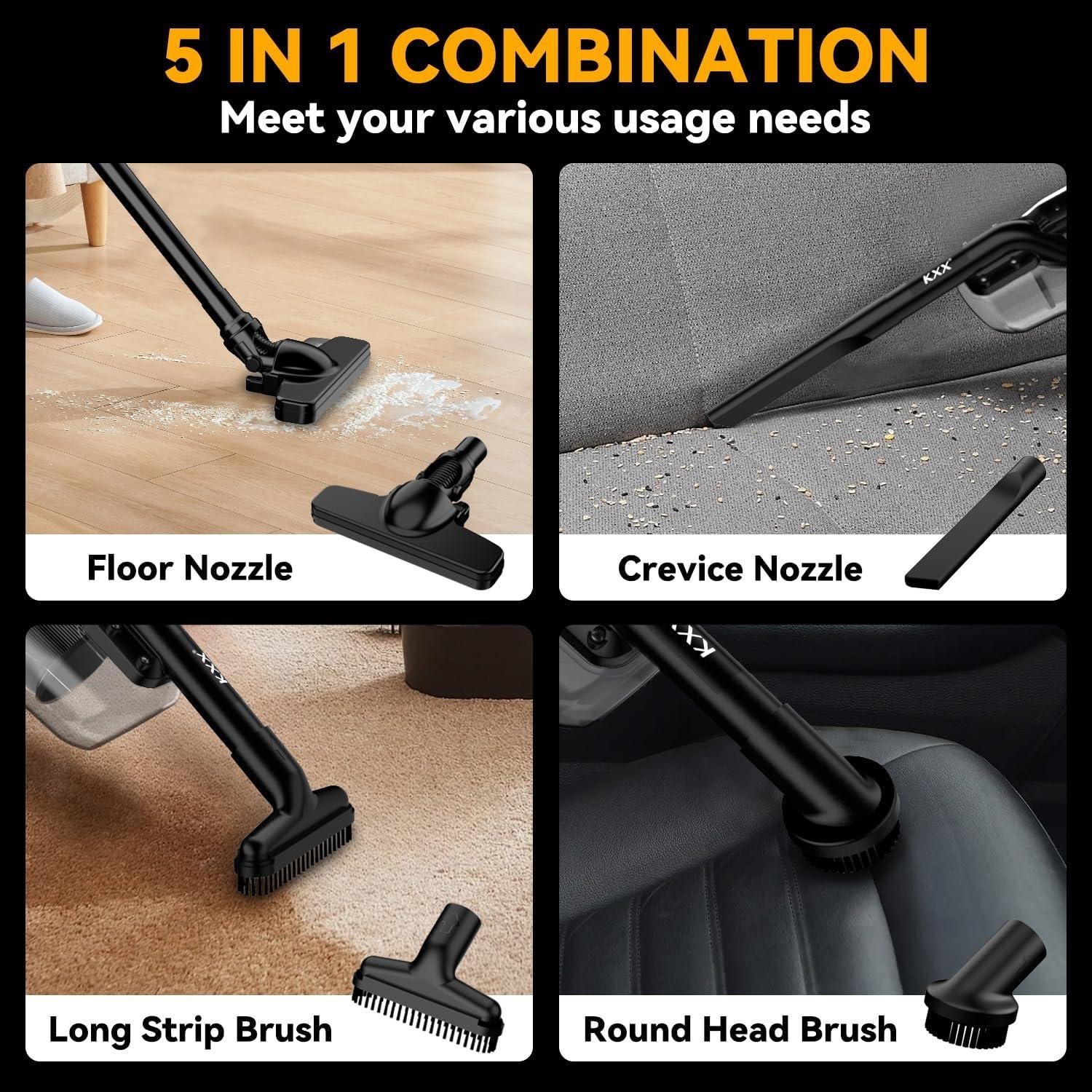
This cordless vacuum adapter for dewalt 20V MAX batteries combines a 500W motor, 46 CFM airflow (up to 16,000 Pa), and 18,000 RPM agitation in a compact 5‑in‑1 handheld package. For shop cleanup, the washable HEPA 2.0 filter and 600 ml dust cup help capture fine sanding dust, while the included crevice tool, floor nozzle, brushes, and extension tubes make it easy to hit benches, drawers, and tight corners; the LED light and sub‑67 dB rating are nice finishing touches. Customer feedback commonly highlights strong suction for its size and the convenience of using existing DeWalt batteries—while noting the battery isn’t included and the bin fills quickly on bigger messes.
Best for hobby woodworkers with small to medium projects, cabinet makers needing precision cleanup, and beginners learning dust-control habits.
Consider alternatives if you need true dust-extractor performance for planers/sanders, run all-day production work, or want a larger-capacity shop vac.
it’s a solid mid-range option for fast, cordless shop cleanups—just not a replacement for dedicated extraction.
want to see current pricing and customer photos? View on Amazon & Read More Reviews →