
Blog
Callie Engraved Cutting Board Review: Shop-Worthy?

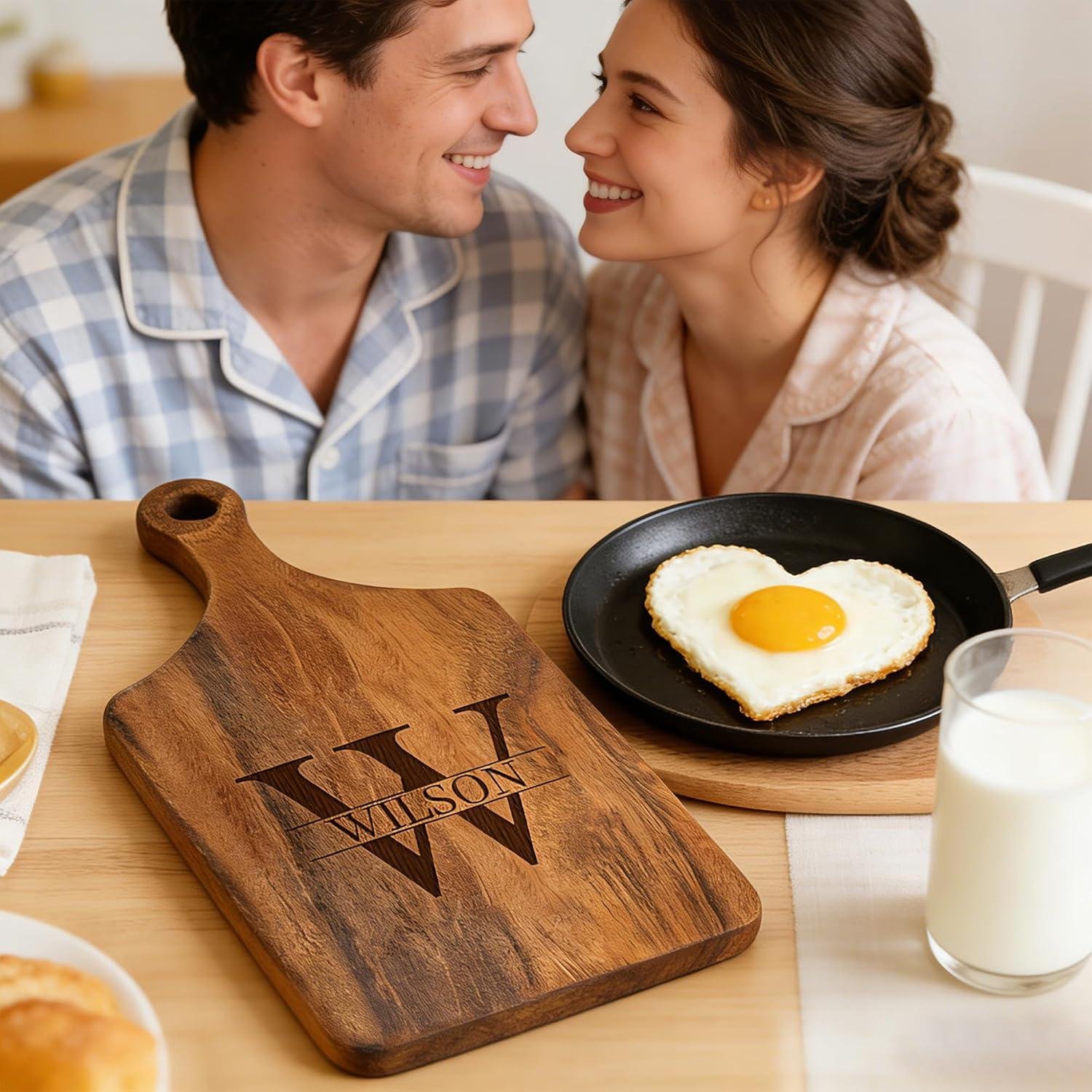
ever tried to make a “fast” gift in a cramped shop—only to watch a board wander under the knife, a handle feel clunky in the hand, or an engraving turn out to light to read? for woodworkers, a cutting board isn’t just kitchenware; it’s a test of flatness, finish quality, and the kind of durability that survives daily use.
The callie Personalized Cutting Board Gifts for Wedding aims to solve that with a reversible board and built-in handle, offered in S (7″×13″×0.6″), M (8″×15″×0.6″), and L (10.5″×16″×0.8″), and made from bamboo, cherry, walnut, or gaboon mahogany. It’s designed as a cutting surface, serving tray, or presentation piece, with custom name/monogram/date engraving.
in this review, we’ll look at the materials, sizing, handle practicality, personalization clarity, and value—especially for different skill levels and budgets. We’ll also weigh what customers report: many praise the “great quality” and fast shipping, while a few mention faded or hard-to-see lettering.
We’ve built and finished enough boards to know the details—grain, sealing, and machining—are what separate “nice” from truly usable.
First Impressions and Build Quality in the Shop
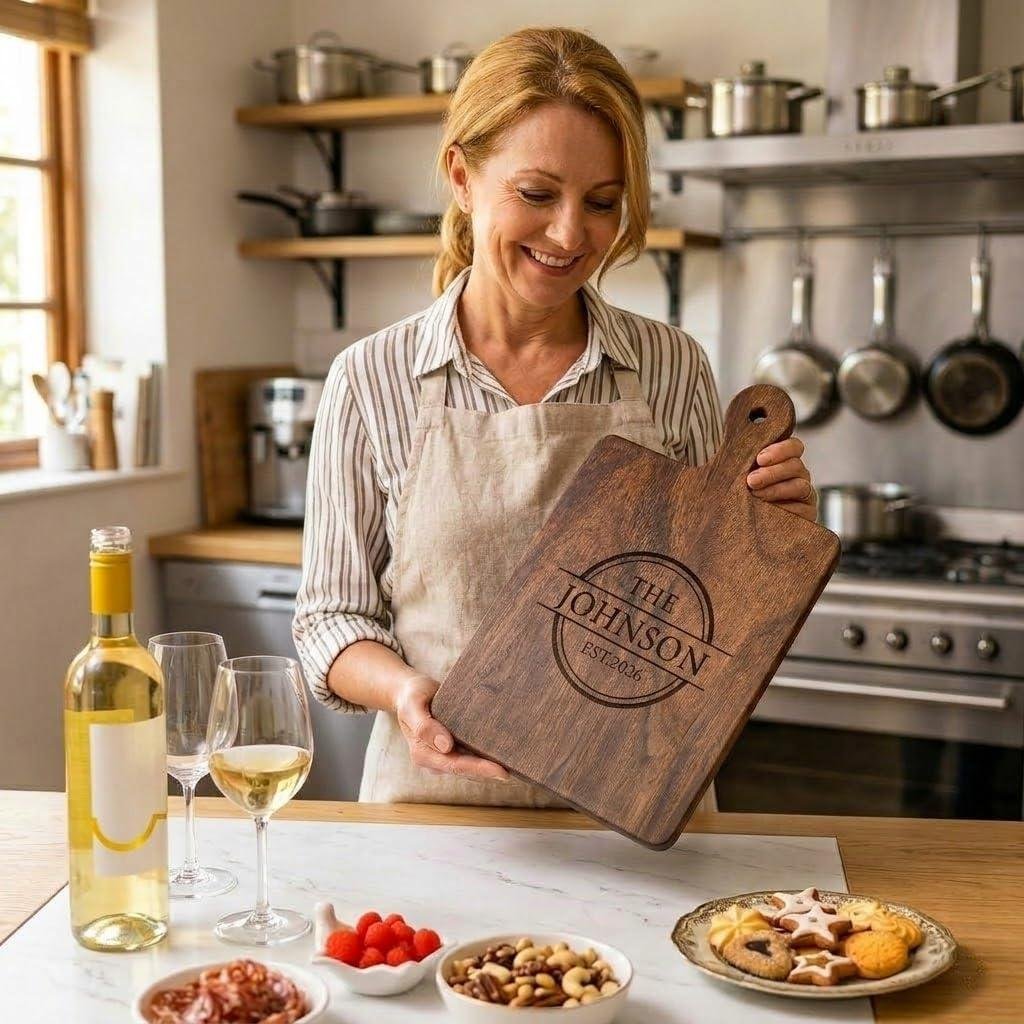
When we brought the callie personalized cutting board into the shop, our first impression was that it’s positioned more like a gift-grade, engraved workpiece than a “beat-it-up” production board. The maker advertises a reversible wooden cutting board with grip/handle, offered in S: 7″ × 13″ × 0.6″,M: 8″ × 15″ × 0.6″,and L: 10.5″ × 16″ × 0.8″. Those dimensions matter in a woodworking context: at 0.6″ thickness (S/M), expect more potential for seasonal movement and slight cupping if one face lives wet and the other stays dry—something we’d call out to any client if we were delivering a finished board. The product description lists multiple species options—bamboo, cherry, walnut, and gaboon mahogany—which also telegraph different shop expectations: bamboo tends to be harder on edges and more “ingredient-board practical,” while cherry and walnut are classic presentation woods that we’d be gentler with on the bench.
Build-quality feedback from customers lines up with what we typically see on personalized pieces: many reviewers call it “absolutely beautiful,” “great quality,” and “amazing for the value,” and several highlight that it “shipped quickly” and “turned out better than I thought” as a gift. But a recurring caution is the engraving contrast—some report “lettering hard to see” and one buyer described the name as “so faded it is indeed hardly visible,” while another found the wood quality disappointing for the price. From a woodworker’s angle, that’s a practical note: engraved visibility depends on species colour/porosity, burn depth, and finish choice; a light engraving on a darker wood (or under a heavy oiling) can look washed out. In our shop, we’d treat this as a “finish-care and use-case” board—great for serving, display, and light prep—then we’d advise keeping the engraved face drier and refreshing with a food-safe oil/wax to avoid uneven swelling at the handle transition and to preserve contrast in the monogram over time.
See Full specifications & Customer Photos
Real World Performance for Prep Work and Light Bench Tasks
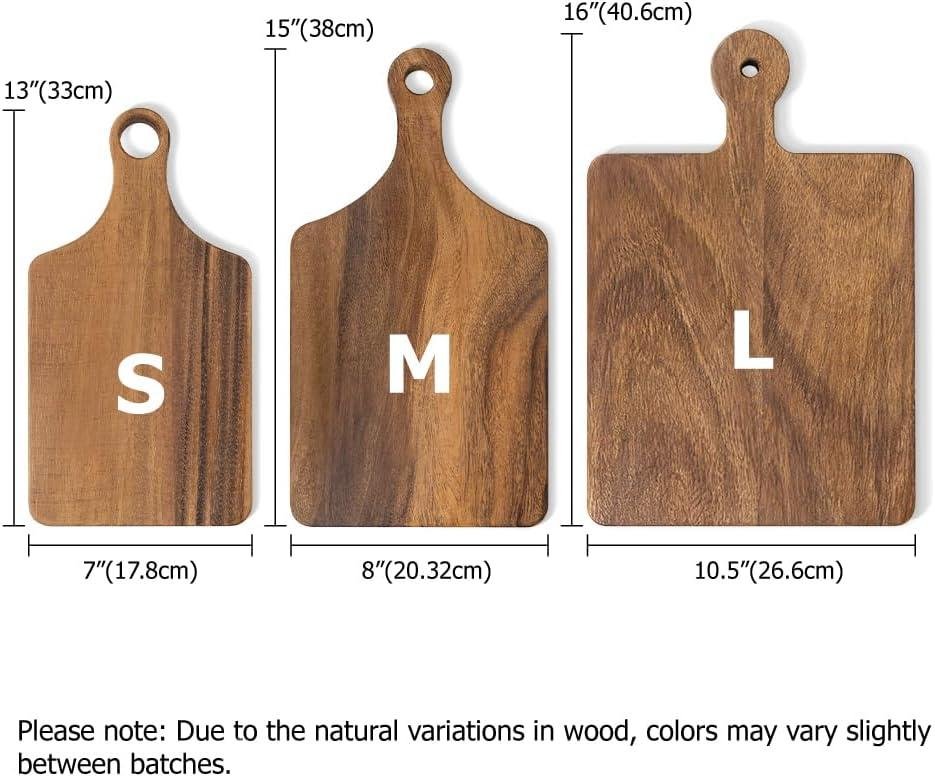
in our shop, a small handled board like this becomes a handy “bench-side helper” for quick prep work—mixing epoxy, staging hardware, or acting as a clean surface for laying out finish samples—more than it becomes a primary cutting surface. The Callie board sizes are practical for that: S: 7″ × 13″ × 0.6″, M: 8″ × 15″ × 0.6″, and L: 10.5″ × 16″ × 0.8″. the extra thickness on the L size can matter when we want a board that doesn’t flex much under light clamping pressure or while scoring layout lines.Since it’s a reversible cutting board with a handle, we can keep one face “pretty” for serving/gifting and use the other face for light shop tasks—just remember it’s still a finished, engraved gift item, not a sacrificial assembly board.
For light bench tasks, the real-world experience is going to hinge on material choice and engraving contrast. The listing notes it’s crafted from bamboo / cherry / walnut / gaboon mahogany, and customers consistently praise the look and gift-readiness—themes like “absolutely beautiful,” “great quality,” and “quality is amazing for the value,” plus fast shipping. Having mentioned that, multiple reviewers also flag the personalization as inconsistent: “the name is so faded it is indeed hardly visible,” and “some lettering hard to see,” with a few calling out disappointing wood quality for the price. From a woodworker’s standpoint, that translates to: if we’re buying this for shop use, we’d treat it as a light-duty, nice-to-have surface; if we’re buying it as a gift, we’d pick a darker species (frequently enough walnut) for better engraving contrast and keep it out of the “hard knocks” zones—no router tear-out, no chisel chopping, and no glue scraping.Maintenance is the same as any wooden board: wipe clean, dry promptly, and periodically refresh with a food-safe board oil; avoid soaking, which can swell fibers and make engravings look even softer over time.
- Included accessories: None listed (no feet,no oil,no scraper).
- Compatible attachments/accessories: Food-safe cutting board oil/wax, non-slip mat/bench mat, silicone feet (aftermarket), painter’s tape (to mask engraving during shop use).
- Ideal project types: Finish sample staging, small hardware/parts tray, epoxy mix board (with a disposable barrier), light layout surface, gift/serving presentation.
- Wood types tested by customers: Not specified in reviews (listing offers bamboo, cherry, walnut, gaboon mahogany).
| Size | Stated Dimensions | Best “Light Bench Task” fit | Notes for Woodworkers |
|---|---|---|---|
| S | 7″ × 13″ × 0.6″ | Small parts + quick wipe-down tasks | Compact; more prone to sliding—use a non-slip mat. |
| M | 8″ × 15″ × 0.6″ | General staging and light layout | Good balance of footprint and portability. |
| L | 10.5″ × 16″ × 0.8″ | Most stable option for bench-side use | Thicker stock feels more rigid for light clamping/staging. |
| Recommended “Capacity” (Shop Use) | Actual Practical limit | Why |
|---|---|---|
| Light-duty staging, gentle prep, wipe-clean work | not for chopping, prying, scraping glue, or clamp-down pressure | Engraving and finish can degrade; wood movement risk increases with soaking/chemicals. |
| Accessory | Works Well With This Board? | How We’d Use It |
|---|---|---|
| Non-slip bench mat | Yes | Prevents sliding during light layout or ingredient prep. |
| Food-safe board oil/wax | Yes | Maintains surface and reduces moisture uptake. |
| silicone feet (aftermarket) | Maybe | Add stability, but changes the “gift” look and may snag on washing. |
| Glue/epoxy barrier (freezer paper, tape) | Yes | keeps finish/engraving from getting gummed up in the shop. |
See Full Specifications & Customer Photos
Key Features Woodworkers Will Appreciate in the Engraving and Handle Design
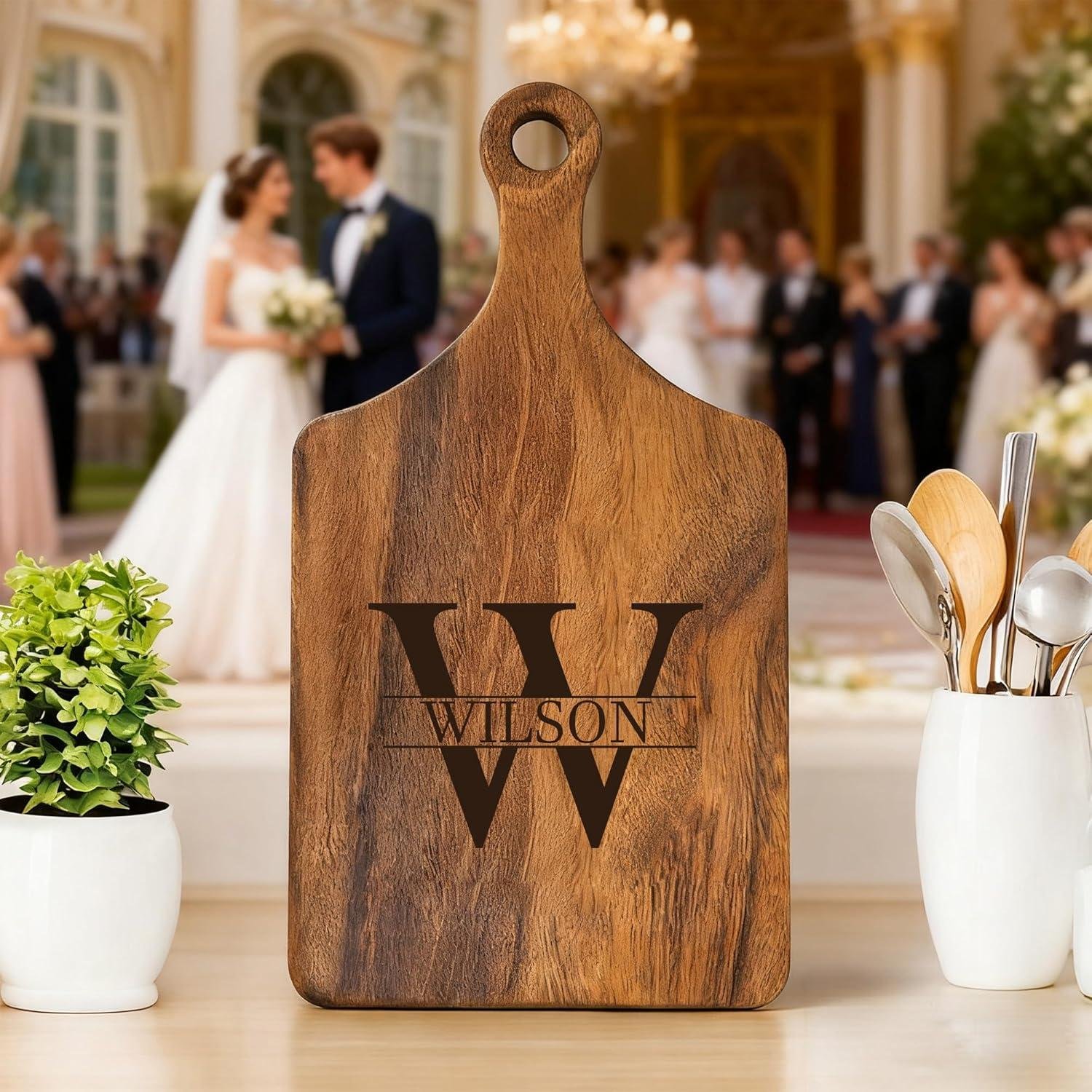
From a shop viewpoint, the engraving on the callie board is the feature we’d scrutinize first because it tells us how well the maker controls contrast, depth, and layout on real wood—not just on a product mockup. These boards come in three sizes—S: 7″ × 13″ × 0.6″, M: 8″ × 15″ × 0.6″,and L: 10.5″ × 16″ × 0.8″—so there’s enough face area for a readable monogram/name without cramming the design into the knife path. The species options matter, too: bamboo, cherry, walnut, and gaboon mahogany all engrave differently, and that’s something we can apply directly in our own laser/CNC work (lighter woods like bamboo and cherry often show darker burn/contrast; darker woods like walnut can make fine lettering look “quieter” unless the engraving is deep or the lighting is right). That matches what customers report: several call the boards “absolutely beautiful,” “great quality,” and “amazing for the value,” but a recurring critique is that some lettering can be “faded” or “hard to see”—exactly what we’d expect when shallow engraving meets a low-contrast grain pattern or darker stock. In practical terms, if we’re buying this primarily for display, we’d lean toward a lighter species option and a bolder font/layout; if we’re gifting, we’d also inspect the engraving immediately on arrival so any legibility issues can be addressed before presentation.
The handle design is another detail woodworkers appreciate as it’s a real-world stress point: it changes how the board is carried, stored, and even clamped at the bench. Callie describes it as a reversible wooden cutting board with grip, and we like that the handle gives us a natural “no-cut zone” for hanging, staging ingredients, or setting up a board as a quick serving tray without grabbing the working surface. In the workshop, a handled board can be easier to stabilize for oiling and finishing—our tip is to treat it like any food-contact surface: keep finishes food-safe, refresh with mineral oil/wax as needed, and avoid soaking (especially critically important for bamboo, which is durable but can check if abused). Customers repeatedly frame these as gift boards—“great gift,” “shipped quickly,” “turned out better than I thought”—but we also see a few remarks about disappointing wood quality, so we’d treat these as a solid personalized accessory for light-to-moderate kitchen use rather than assuming it’s a thick, end-grain butcher block built for daily heavy chopping. The good news is the listed thicknesses—0.6″ on S/M and 0.8″ on L—are enough to feel substantial in-hand, and the handle improves control when moving between sink, counter, and table, which is where most “real use” wear happens.
See Full Specifications & Customer Photos
Ease of Use for Beginners and Experienced Woodworkers in Daily Projects
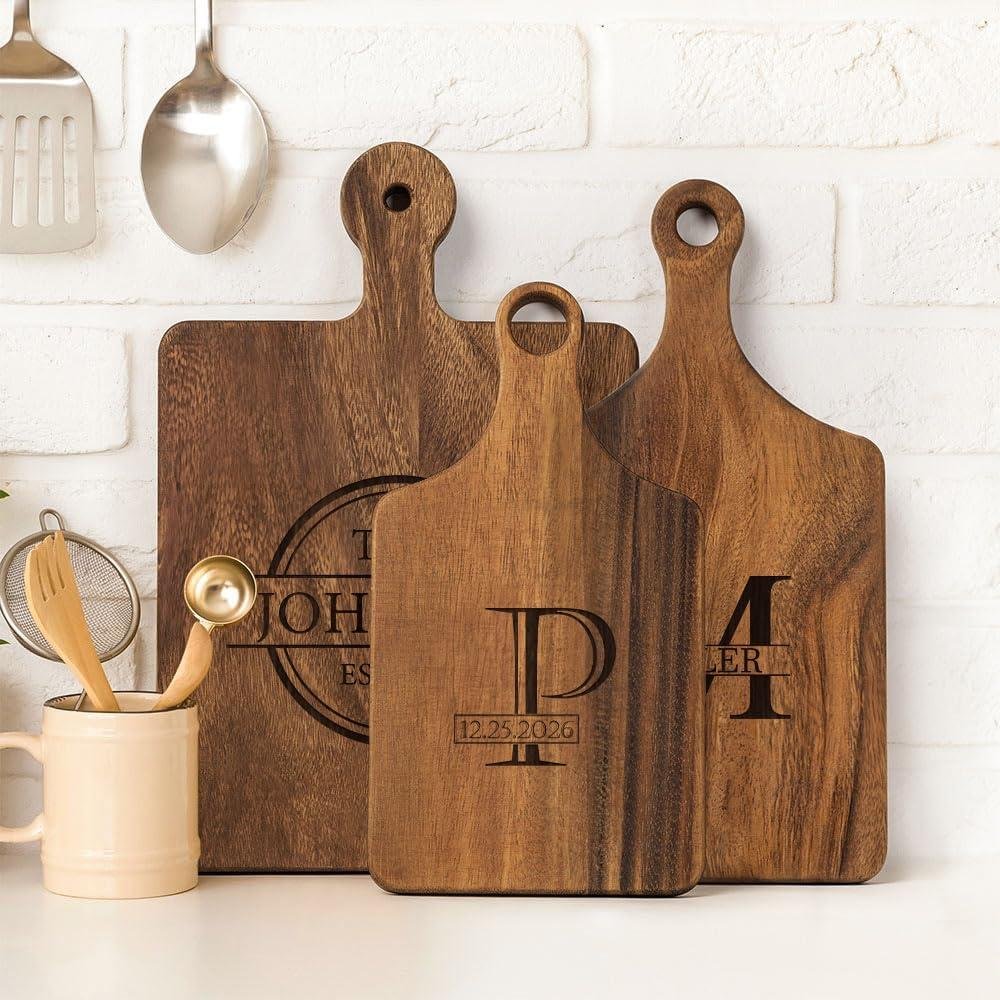
In day-to-day shop life, we treat the callie Personalized Cutting board less like a “tool” and more like a ready-made blank that removes several beginner pain points at once: stock selection, milling, and shaping. The three size choices—S: 7″ × 13″ × 0.6″, M: 8″ × 15″ × 0.6″, and L: 10.5″ × 16″ × 0.8″—make it easy for newcomers to pick an appropriate footprint without guessing thickness-to-stability ratios. The built-in handle is also beginner-amiable as it functions like a natural “safe zone” when carrying, oiling, or buffing—less fumbling, fewer drops.From the materials list (bamboo, cherry, walnut, gaboon mahogany), we can also teach good habits early: bamboo tends to be harder on edges, while walnut and cherry are traditionally kinder to knives and more forgiving during refinishing. Review themes lean strongly toward gift-use simplicity—customers repeatedly call it “absolutely beautiful,” “great quality,” and note it “shipped quickly”—which matters if we’re trying to complete a present on a deadline without turning the shop into a full production run.
For experienced woodworkers, the “ease of use” is really about how quickly we can integrate it into routine workflows like final finishing, personalization evaluation, and touch-up before delivery. Because these are described as carefully polished and treated to ensure a smooth and durable surface, our main shop task becomes inspection and spot-correction: scuff-sand lightly with a fine grit and re-oil if needed, keeping clear of the engraving so we don’t soften the contrast.That said, customer feedback gives us a real caution flag on consistency—multiple reviews mention lettering that’s “so faded it is hardly visible” or “a little hard to see”, and one buyer was “disappointed with the quality of the wood”. In practical terms, that means pros should plan for a quick receiving check under raking light, and if the engraving is too light, we may prefer to treat it as a display/serving board rather than a hard-use cutting surface (or be ready to contact customer service / reorder). Educationally,it’s a good reminder that engraved boards are easiest to maintain when we use gentle cleaning (no soaking),keep them flat while drying,and refresh with food-safe oil—especially around the handle transition where moisture and stress frequently enough concentrate.
- Included accessories: None listed (board arrives as a finished, personalized piece)
- Compatible attachments/accessories (workshop-friendly add-ons): food-safe mineral oil or board butter, non-slip mat/pad, fine sanding pads (high grit) for scuff-sanding, microfiber cloths for buffing
- Ideal project types: last-minute personalized gifts, serving-board builds, kitchen décor pieces, “quick-finish” client add-ons, housewarming/wedding presentation projects
- Wood types tested by customers: Not clearly specified in reviews (product options list bamboo/cherry/walnut/gaboon mahogany)
| Size | Dimensions (in) | Thickness | Best Fit in Daily Use |
|---|---|---|---|
| S | 7 × 13 | 0.6 | Personalized gift, small prep/serving, quick shop turnaround |
| M | 8 × 15 | 0.6 | General-purpose serving board; good balance of size and storage |
| L | 10.5 × 16 | 0.8 | More stable for frequent handling; better presence for gifting/display |
| Accessory | Purpose | Beginner-Friendly? |
|---|---|---|
| Food-safe mineral oil / board butter | Maintenance and water resistance | Yes |
| Non-slip pad | Keeps board stable during use/finishing | Yes |
| High-grit sanding pads | Light scuff-sand before re-oiling; de-nibbing | Yes (use gently near engraving) |
| Category | Recommended Expectation | Actual from Listings/Reviews |
|---|---|---|
| Engraving visibility | Crisp, legible contrast at arm’s length | Mixed—some say “beautiful”; others report faded/hard to see |
| Out-of-box readiness | Ready to gift and light-use immediately | Often positive—“great quality”, “shipped quickly”; inspect on arrival recommended |
See Full Specifications & Customer Photos
Customer Reviews Analysis
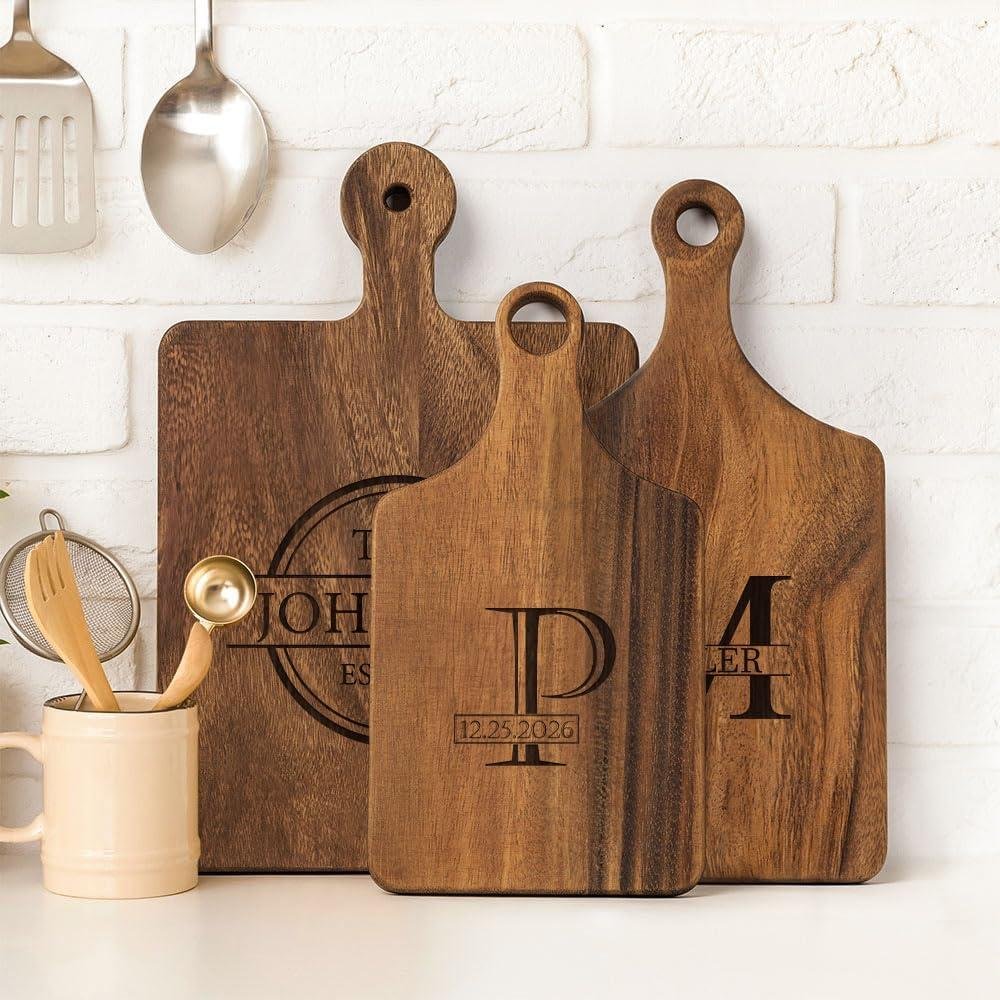
What Woodworkers Are Saying (Review Analysis)
1. Overall sentiment from woodworking customers
overall sentiment is mostly positive,with many reviewers calling the board “beautiful,” “amazing quality,” and a strong value for the price,especially as a personalized gift. That said, a noticeable minority were disappointed, primarily due to faint engraving/lettering and, in a couple cases, wood quality not matching expectations.
2. Performance feedback (accuracy, power, results)
As this is a finished cutting board (not a power tool), “performance” feedback centers on engraving visibility and end results rather than cutting power.
- Common praise includes the board looking better than expected and producing gift-worthy results (“turned out better than I thought,” “absolutely beautiful”).
- Some users reported challenges with the accuracy/contrast of the engraving, describing lettering that was “faded,” “hard to see,” or not consistently visible across the board.
Takeaway for makers: The core “result” people care about here is the clarity and contrast of the monogram/name engraving—and reviews suggest that’s the most variable outcome.
3. Build quality and durability observations
Build quality comments are mixed:
- Several woodworkers mentioned the overall quality feels high for the value, implying the board looks and feels well-made when it arrives.
- Multiple reviews highlight concerns about wood quality for the price, with one customer saying the “quality of the wood was disappointing.”
- There’s no long-term durability data in the provided reviews (no mentions of warping, cracking, delamination, or finish wear), so reported durability is mostly based on initial impressions.
4. Ease of use for different skill levels
most feedback frames this as a ready-to-gift item rather than a tool requiring technique:
- Beginners/DIY gift buyers seem most satisfied—several comments focus on it being a simple, reliable gift option.
- There are no operational learning-curve notes (e.g.,oiling regimen,care instructions,dishwasher mistakes),but the key “ease of use” factor is confidence that the personalization will be clearly visible when gifted.
5. Common project types and success stories
Reviews overwhelmingly position this board as a personalized gifting project:
- Customers successfully used this for birthday gifts and wedding/family gifts (including for a daughter-in-law).
- Multiple comments suggest the board functions well as a keepsake/serving display piece due to the emphasis on appearance (“absolutely beautiful,” “makes a good gift”).
Success story pattern: Fast arrival + attractive look + personalization that reads clearly = highly satisfied recipients.
6. Issues or limitations reported
The main limitations reported are consistent and important for anyone picky about craftsmanship:
- Engraving/lettering visibility: Several reviewers noted the name/lettering was faded or hard to see, with one calling it “so poor I can’t give it.”
- Inconsistent engraving contrast across the board: One reviewer said the lettering was only hard to see on part of the board, suggesting uneven burn/engrave depth or wood tone variation.
- Wood quality vs. price: A couple buyers expected a higher-grade board and were disappointed in the wood itself.
Category Summary Table
| Aspect | Common Feedback |
|---|---|
| Performance / Results | most praised the finished look as “beautiful,” but multiple reviews report faint or uneven lettering. |
| Precision | Mixed—some outcomes look crisp, others show low-contrast personalization that’s hard to read. |
| Build Quality | Frequently enough described as great quality for the value; a few felt the wood quality didn’t justify the price. |
| ease of Use | Easy “gift-ready” experience; risk is mainly whether the engraving is visible enough on arrival. |
| Versatility | Primarily used as a personalized gift/keepsake rather than a heavy-use shop/kitchen work board. |
| Value | Many say it’s a great buy; disappointed buyers cite engraving/wood quality as not worth it. |
Representative excerpts (used sparingly):
- Positive: “Absolutely beautiful.” / “Quality is amazing for the value!”
- Negative: “The name is so faded it is hardly visible.” / “The quality of the wood was disappointing.”
Pros & Cons
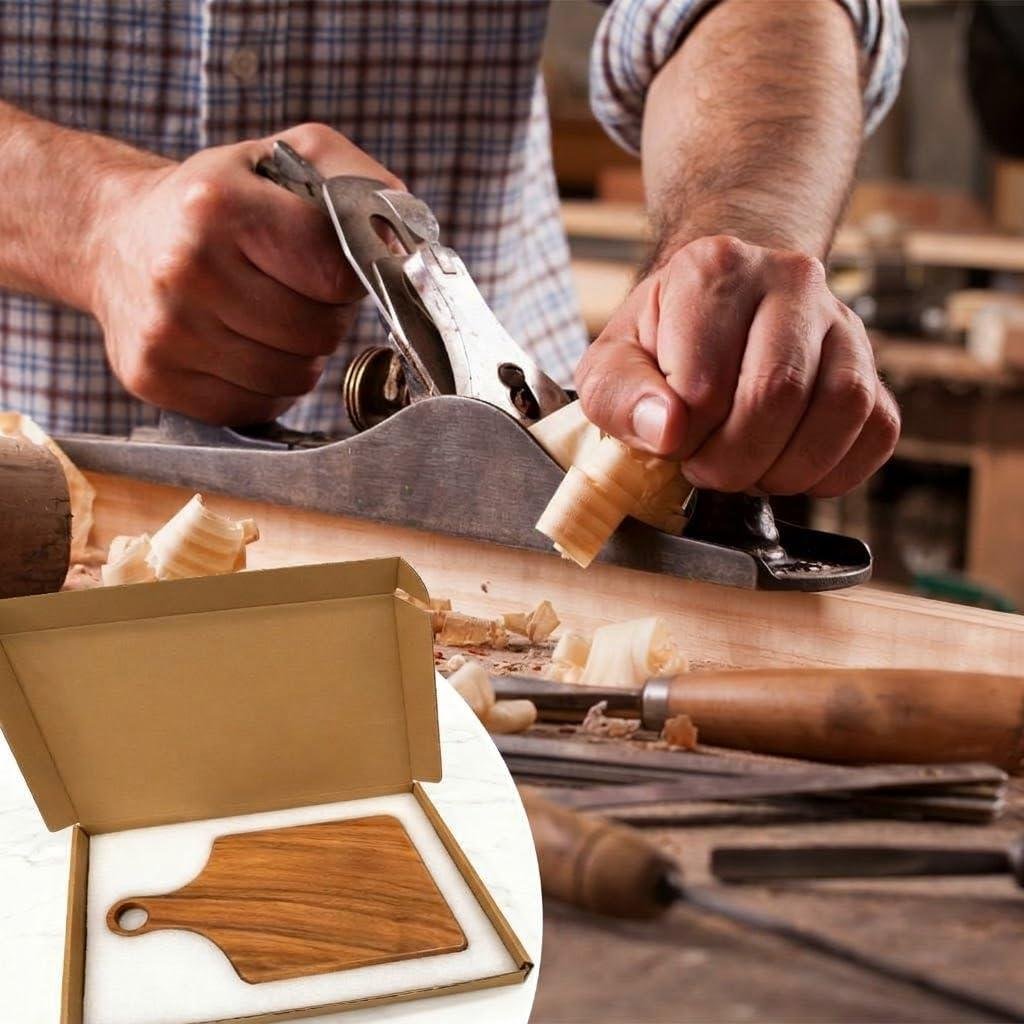
Pros & Cons
After digging into what this Callie personalized cutting board is (and how people actually feel about it once it arrives), we came away with a pretty balanced picture: it can be genuinely gift-worthy, but the engraving consistency seems to be the swing factor.
Pros
- Personalization that feels special: The monogram/name/date options turn a basic kitchen tool into a “keep it forever” kind of wedding or housewarming gift.
- Handle + reversible design adds versatility: We like that it’s not only for chopping—this is easy to carry, present, and use as a casual serving board.
- multiple size choices (S,M,L): We can match the board to the moment—small for cheese-and-crackers,large for prep or charcuterie.
- Material options sound premium on paper: Bamboo/cherry/walnut/gaboon mahogany gives us a more “boutique gift shop” vibe than one-wood-fits-all.
- Often praised as a gift: Several reviewers call it “beautiful,” “great quality,” and a strong value—especially for celebrations.
- Well-suited for display: We can see it living on a counter as décor, not just hiding in a cabinet.
Cons
- Engraving visibility can be hit-or-miss: We saw multiple mentions of lettering that’s faded or hard to see, which is a big deal for a personalized item.
- Wood quality may not match expectations every time: A few buyers felt the finished wood wasn’t worth the price—especially when buying specifically for gifting.
- gift timing risk: Because personalization is the point, a disappointing engraving can create last-minute “we need a backup gift” stress.
- Details depend on the specific design: Intricate styles (family tree, longer names, certain fonts) may be more likely to lose contrast.
- Care expectations for wood boards still apply: We’ll need to treat it like a real wooden board (hand-wash, oil occasionally) if we want it to stay photo-ready.
At-a-Glance: What We Think It’s Best For
| Use Case | Fit | Why |
|---|---|---|
| Wedding / Engagement Gift | High | The personalization makes it feel intentionally chosen, not generic. |
| Charcuterie Night / Hosting | High | Handle + presentation-friendly look works well on the table. |
| Daily Heavy Chopping | Medium | Works, but we’d rather not “battle test” the engraved side. |
| Last-Minute Gift | Low–Medium | Personalization is great, but any engraving inconsistency is riskier under a deadline. |
Our takeaway: If we’re buying this for the “wow, it’s custom!” moment, we’d prioritize a design with strong readability (shorter names/clear monograms) and plan a little buffer time—just in case the engraving arrives lighter than expected.
Q&A
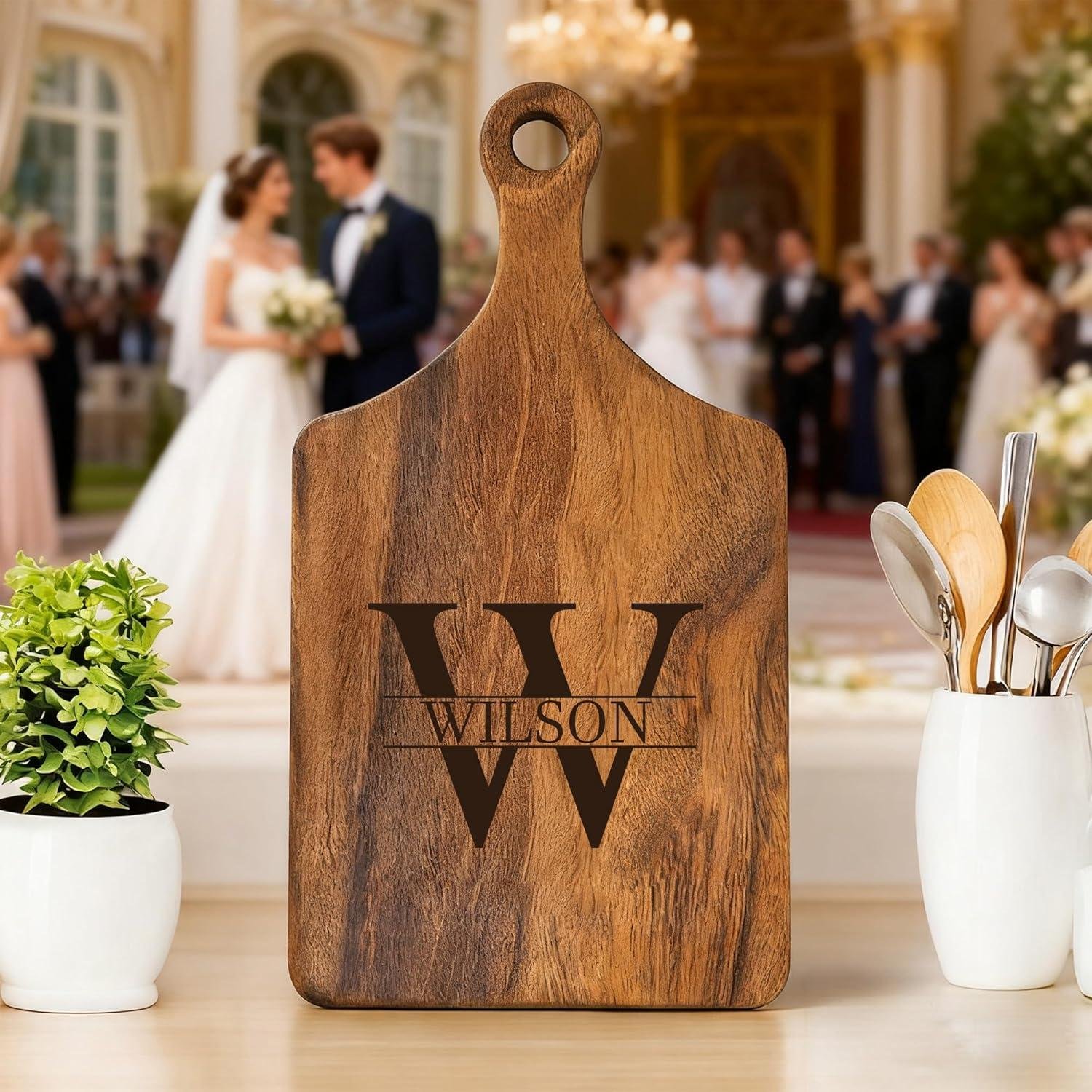
What wood types are these boards made from, and how do thay behave in use?
Per the product details, you can choose from bamboo, cherry, walnut, or gaboon mahogany. From a woodworker’s standpoint: bamboo is hard and fairly stable but can be tougher on knife edges; cherry is a bit softer and “forgiving” (will show marks sooner but is kinder to knives); walnut is a classic cutting-board choice with a good balance of hardness and stability; gaboon mahogany is generally stable and smooth. All options are described as polished and treated for a smooth, durable surface.
Is the engraving deep and durable enough for daily kitchen use, or is it more of a display piece?
Mixed results in reviews. Several buyers call the board “beautiful,” “great quality,” and “amazing for the value,” which suggests the engraving and finish often meet gift expectations. however, multiple reviews mention the lettering being “faded” or “hard to see,” and one specifically calls out “poor quality letter.” For heavy daily use (washing, oils, repeated abrasion), a shallow or lightly burned engraving can lose contrast faster. If you want it to stay crisp-looking long term, treat it like a serving/charcuterie board or use the reverse side for chopping (it’s listed as reversible).
Which size (S, M, L) makes the most sense in a real kitchen workflow?
The listed sizes are: S 7″ × 13″ × 0.6″, M 8″ × 15″ × 0.6″, and L 10.5″ × 16″ × 0.8″. For actual prep space and stability, the L is the most “work board” like (more mass, thicker at 0.8″ so it’s less skittery). The S and M are easier to store and are great for light prep or serving, but at 0.6″ thick they’ll feel more like a tray/utility board than a heavy butcher-block style board. If the gift recipient truly cooks a lot, L is usually the safer pick.
How flat and stable are these—will they warp, rock, or twist like some thin boards?
They’re described as “carefully polished” and “treated,” which helps, but the thinner S/M (0.6″) are inherently more susceptible to movement if they’re saturated,left in a puddle,or dried unevenly. The L at 0.8″ will generally resist cup/twist better. Practical shop/kitchen advice: keep it out of the dishwasher, don’t soak it, dry it upright after wiping, and re-oil as needed. Using one side for display/serving and the other side for cutting also helps preserve the “show face.”
Do the handle and reversible design actually help, or are they just decorative?
The handle is useful for carrying and for using the board as a serving tray—exactly what the listing emphasizes (“portability” and “temporary tray”). For woodworkers thinking about function: a handle also reduces “usable cutting rectangle” and can complicate storage in tight slots.The reversible aspect is genuinely practical: you can keep the engraved side nicer for presentation and do your knife work on the plain side to reduce wear on the personalization.
Is this “beginner-friendly” as a gift—i.e., will a non-woodworker know how to care for it?
Yes, provided that you include basic care expectations.This is a handmade, personalized wooden board, so it needs simple maintenance: hand wash only, avoid soaking, dry promptly, and apply food-safe mineral oil (or a board cream) periodically. Reviews show many recipients are delighted (“great gift,” “beautiful”), but the complaints tend to be about final appearance/engraving visibility—so it’s worth telling the recipient to oil lightly (oil can deepen grain contrast) while avoiding heavy oiling directly on the engraving if they want it to remain high-contrast and not look “muddy.”
What should I check or specify during customization to avoid “faded” or hard-to-read lettering?
Based on reviewer complaints about faded/hard-to-see names, prioritize contrast and readability: choose a simpler font, avoid ultra-thin script, and consider shorter names/initials if possible. If the product page allows choosing design styles (Name/Monogram/Date/Initial), monograms and bolder layouts typically read better on varied grain. Also note that different species show engraving contrast differently—tight, darker grain (often walnut/mahogany) can sometimes make burn marks look less distinct than on lighter, more uniform woods (often bamboo/cherry), depending on how the engraving was done.
Is this worth it versus buying a blank board and engraving it yourself?
For many buyers, yes—reviews frequently mention it’s a “great buy,” “great quality,” and “shipped quickly,” which is the main value proposition for a gift. If you’re a woodworker with a laser/CNC/branding setup and you care about guaranteed engraving depth and finish schedule, a DIY blank board can yield more consistent results. The tradeoff is time: sourcing flat stock,sanding,finishing,engraving tests for contrast,and cure time. If you need a ready-to-gift option fast,this product aligns well—just be aware a minority of customers report cosmetic/engraving dissatisfaction.
Transform Your World
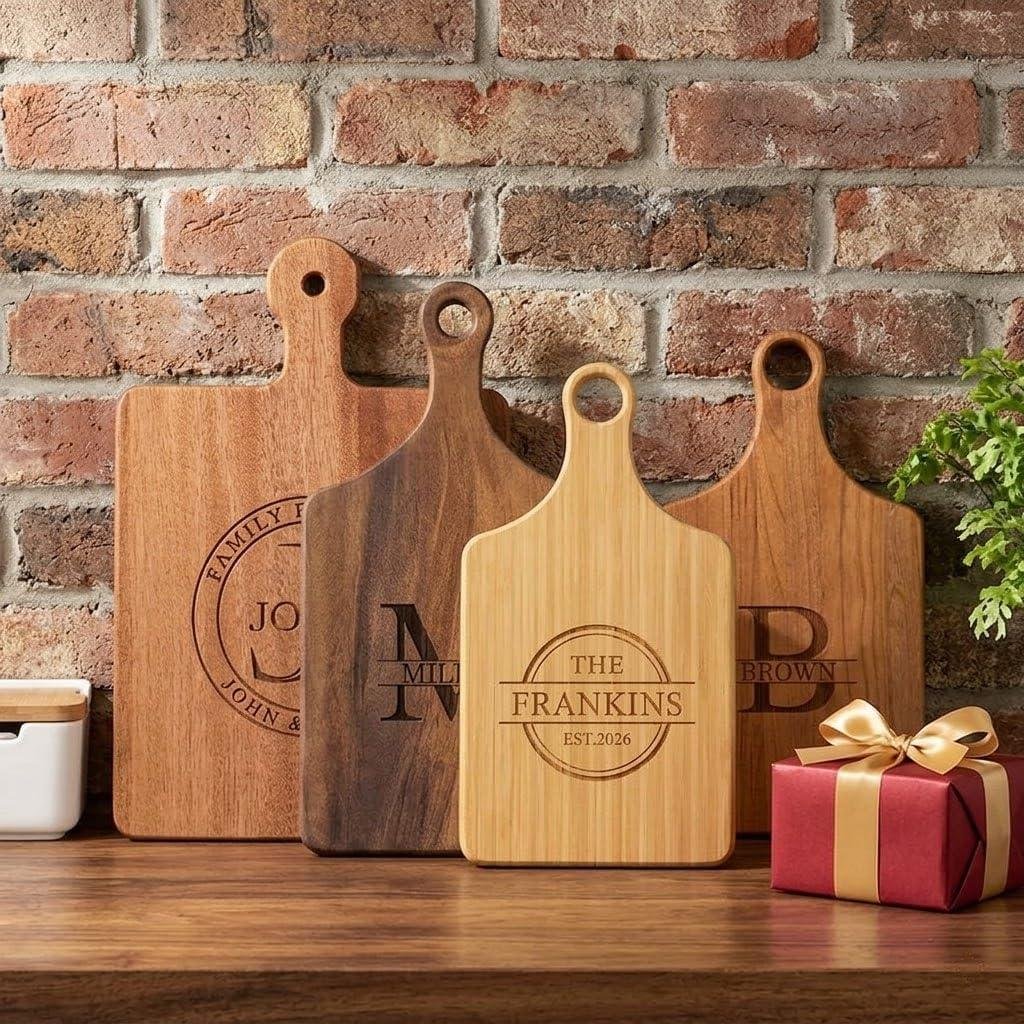
The Callie Personalized Cutting Board is a reversible, handled wooden board offered in S (7″×13″×0.6″), M (8″×15″×0.6″), and L (10.5″×16″×0.8″), made from options like bamboo, cherry, walnut, or gaboon mahogany with custom engraving (name/monogram/date).Customer feedback trends positive on gift appeal, “beautiful” presentation, and fast shipping, but a few reviews flag faded or hard-to-see lettering and occasional disappointment with wood/finish quality.
Best for: hobby woodworkers and DIY gift-makers who want a ready-made, personalized centerpiece for weddings, housewarmings, and serving-board style projects.
Consider alternatives if: you need deep, high-contrast engraving, strict grain/board selection, or heavy daily kitchen durability—a local maker or premium end-grain board may be a better fit.
Final assessment: A solid personalized gifting option with strong presentation, but engraving consistency is the main risk to weigh.
Want to see current pricing and customer photos? View on Amazon & Read More Reviews →