
Blog
NEIKO 02256A Come-Along Winch Review: Shop Fit?

Ever tried to pull a bowed panel flat for glue-up, square a stubborn cabinet carcass, or coax a heavy slab onto sawhorses—only to realize your clamps don’t have teh reach, and muscling it risks losing precision? In a small shop, control and accuracy frequently enough come down to having the right pulling tool, not just more force.
That’s where the NEIKO 02256A Come Along Winch comes in: a heavy-duty, manual cable puller rated for 5 tons (10,000 lbs) horizontal pulling capacity, with a 10-foot, 6mm cable, dual-gear design, and three safety-latched hooks. NEIKO also lists a 4,000-lb max vertical load, which matters if you’re thinking beyond straight pulls.
In this review,we’ll break down its build quality (steel construction with zinc-plated hooks/gears),ease of use (one-handed ratcheting and long PVC-grip handle),space-and-budget practicality,and what customers report about real-world durability and smooth operation.
We’re woodworkers who lean on proven mechanics and careful setup—as clean joinery starts with controlled, repeatable pressure.
Tool Overview and Build Quality Inside the Shop

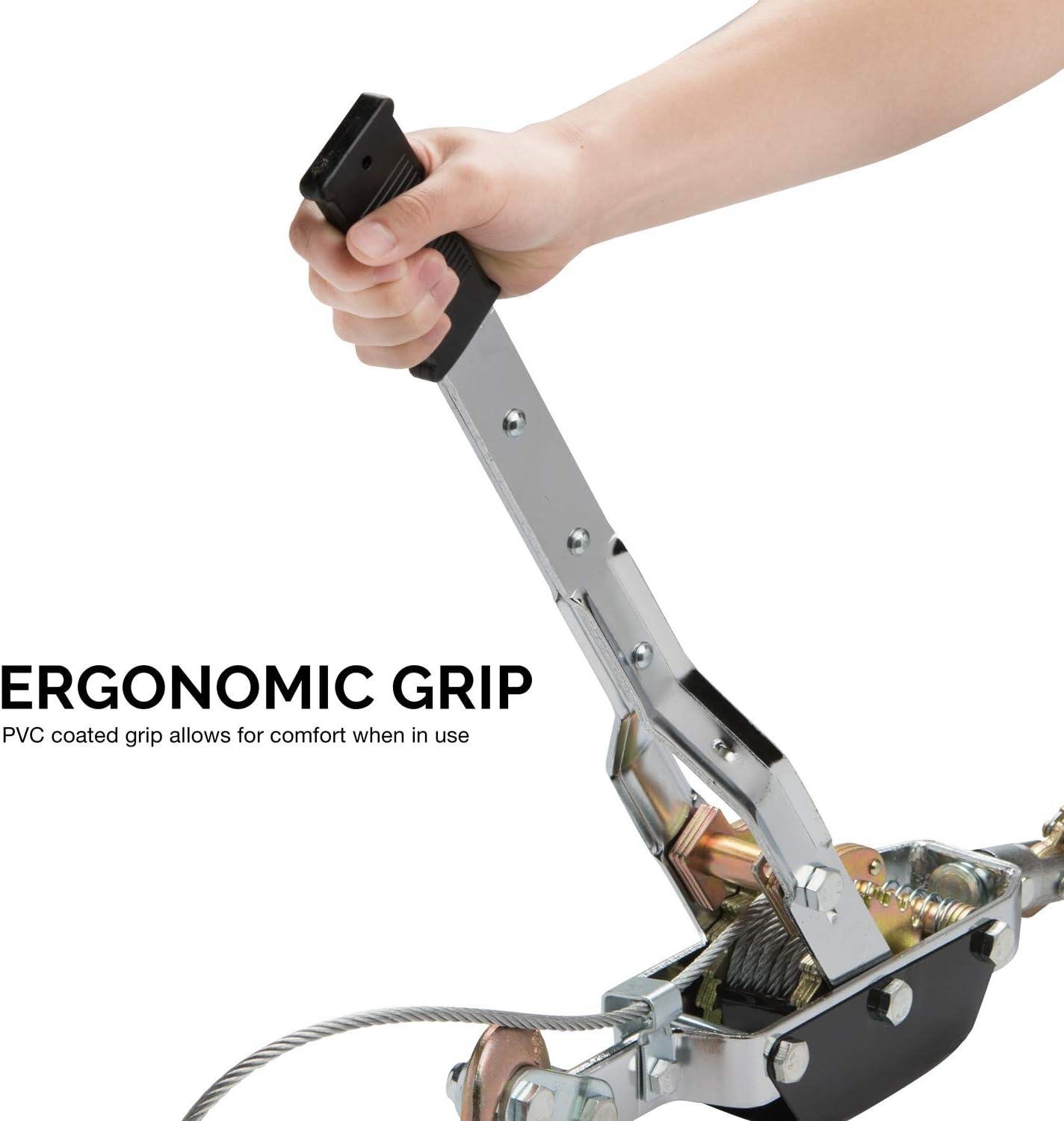
In our shop, the NEIKO 02256A reads less like an “automotive recovery” gadget and more like a serious layout-and-alignment helper for heavy assemblies. It’s a manual, dual-gear ratcheting come-along rated for 5-ton (10,000 lb) horizontal pulling with a 10 ft (3.2 m) long, 6 mm steel cable, and it arrives with three latching hooks and a long lever handle with a PVC-coated grip. That spec set matters for woodworking because it enables controlled, incremental movement—exactly what we want when we’re persuading a stubborn glued-up base into square, pulling a face frame tight to a carcass (with proper sacrificial blocking), or “walking” a heavy machine a few inches during a shop re-layout. Multiple customers echo the same first impression: “well built,” “heavy duty,” and “heavy product”, which tracks with one review noting these units weigh about 18 lb—not featherweight, but still portable enough to hang on a wall peg and grab when a clamp rack runs out of reach.
Build quality,however,is where we need to be both practical and cautious. review themes show a clear split: many users report it works like a charm and pulls hard, while others point out small hardware details that deserve inspection before we put it under tension. One long-term reviewer specifically warns about the retainer clips/pins at the hook-and-pulley connection and suggests upgrading retention hardware for safety; another notes the hook spring clips can bend and get finicky. Several users also mention the freewheel/cable release is unintuitive until you learn the “trick,” which is important in a woodworking context because we often need to back off tension slowly to avoid spring-back in bowed parts. Educationally, the key is remembering what the ratings actually mean: the listing calls out 10,000 lb horizontal pull, but only 2-ton (4,000 lb) vertical lifting, so we treat it as a puller/positioner—not a hoist for overhead lifting—and we keep our line-of-fire clear, use redundant support, and inspect cable, latches, and fasteners every session.See Full specifications & Customer Photos
Real World Pulling Performance for Lumber Straightening and Shop Moves
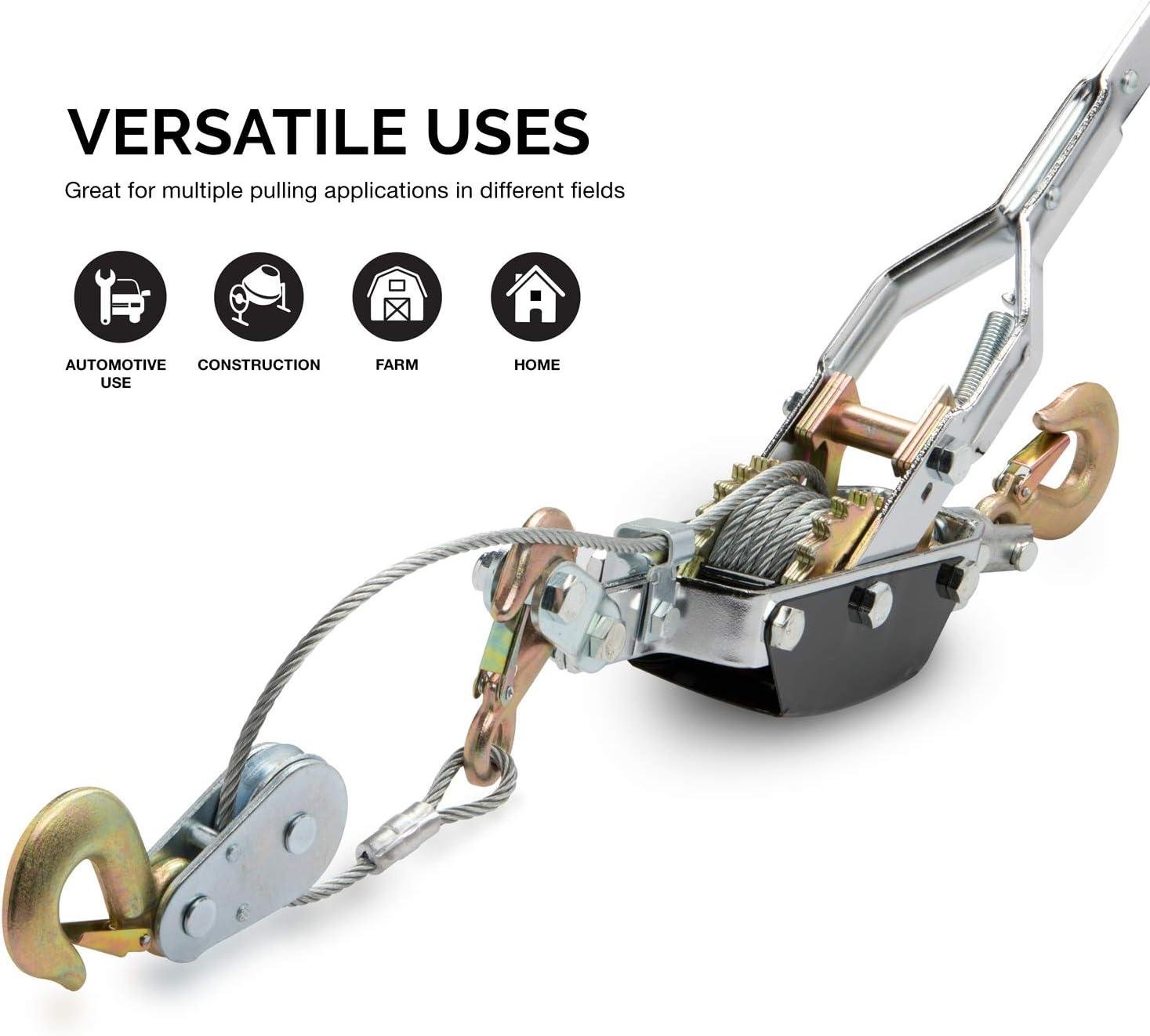
In our shop, a come-along like the NEIKO 02256A earns its keep anytime we need controlled force without firing up a forklift. With a 5-ton (10,000 lb) horizontal pull rating and a 10 ft (3.2 m) long, 6 mm steel cable, it’s a practical way to “persuade” a stubborn stack of lumber back into line—think pulling a bowed beam tight against a straight caul or drawing a twist out while we re-sticker and strap. The dual-gear mechanism gives a notched, incremental feel that’s handy when we’re trying to move a heavy cabinet base a fraction of an inch at a time, or when we’re easing a machine onto a mobile base. Multiple reviewers call it “strong,” “well built,” and “heavy product”, and that tracks with what we’d expect from a unit that’s substantial enough to carry real load—though that weight also means we plan its storage spot so it’s actually convenient to grab during shop rearrangements.
Where the NEIKO tends to separate “works great” from “works safely” is technique and setup. customer feedback repeatedly mentions the cable tension release being unintuitive at first, so we’d treat this as a tool that rewards a dry run—practice releasing under light tension before we ever load it for real. Reviews also highlight practical tinkering: some users replaced the stock slip hooks with higher-quality ones, and one long-time owner issued a serious warning about retainer clips at the hook/pulley pins possibly dislodging if bumped—our takeaway is to inspect pins, clips, latches, and cable strands before every pull, keep bystanders out of the line of fire, and consider upgrades if we’re depending on it for critical pulls. We also keep in mind the spec split: 4,000 lb max vertical (2-ton) lifting capacity is very different from the 10,000 lb horizontal pulling capacity—for woodworking, we mostly live in controlled horizontal pulls for shop moves and lumber straightening, not overhead lifting.
| Use Case | Relevant NEIKO Spec | Why it Matters in a Wood Shop |
|---|---|---|
| Lumber straightening / pulling joints together | 10,000 lb horizontal pull, dual gears | Slow, controllable tension helps avoid sudden slips and over-bending. |
| machine/cabinet shifting & positioning | 10 ft cable, ratcheting lever | Enough travel for short pulls; predictable “click-by-click” alignment. |
| Any lift (use caution) | 4,000 lb max vertical | Vertical loads demand extra safety margins and proper rigging. |
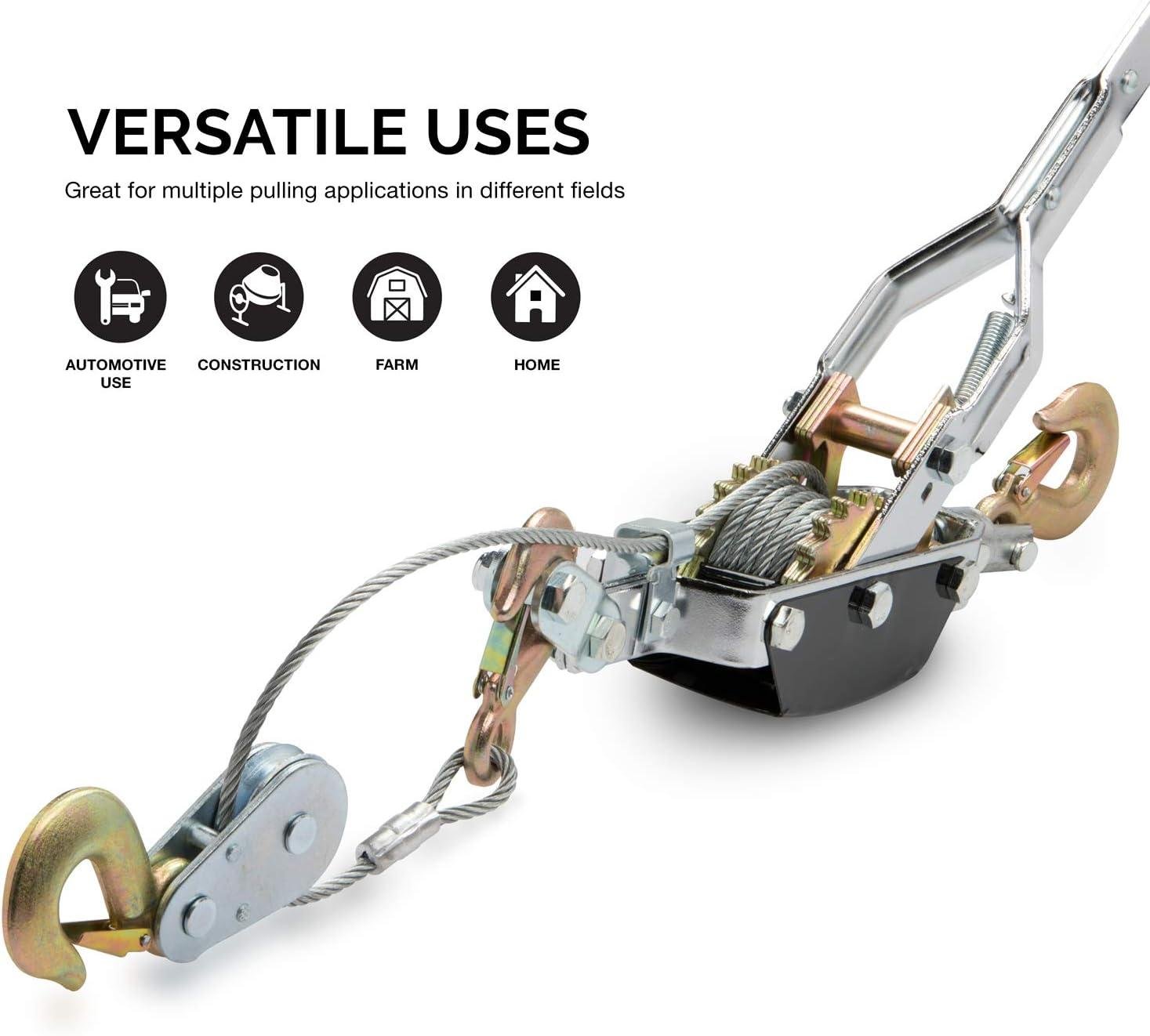
- Included accessories: Long ratcheting lever handle with PVC grip, 10 ft steel cable (6 mm), 3 latching hooks (including the hook on the doubling pulley)
| Compatible Attachments/Accessories | Why We’d use It | Notes |
|---|---|---|
| Rated shackles (bow/anchor shackles) | Cleaner, more secure connection to eye bolts or chain | Match working load limits to the pull and rigging plan |
| Log chain / rated chain slings | Anchoring to posts, beams, or equipment frames | Reviews mention anchoring with chain in outdoor pulls; use rated chain |
| Tree-saver/anchor straps | Non-marring anchor around posts or structural members | Helps protect shop posts and reduces slip risk |
| Upgraded hooks | Improved latch feel and confidence | Some reviewers replaced the stock hooks as a quality upgrade |
| Rating Type | NEIKO Published Capacity | Recommended “Real-World” Approach in the Shop |
|---|---|---|
| Horizontal pulling | 10,000 lb (5 ton) | Use controlled pulls, keep angles straight, and avoid shock loads; don’t stand in line with the cable |
| Vertical lifting | 4,000 lb (2 ton) | Only lift if you have proper rigging knowledge; default to jacks/lifts for machines when possible |
- Ideal project types: Straightening bowed stock with cauls, drawing large glue-ups/joints together, shifting a shed or workbench during a shop move, controlled pulling for equipment alignment
- Wood types tested by customers: not species-specific in reviews; users more frequently enough cite heavy pulling tasks (trees/logs) rather than woodworking species
See Full specifications & Customer Photos
Key Features Woodworkers Will Appreciate for Clamping Rigging and Recovery
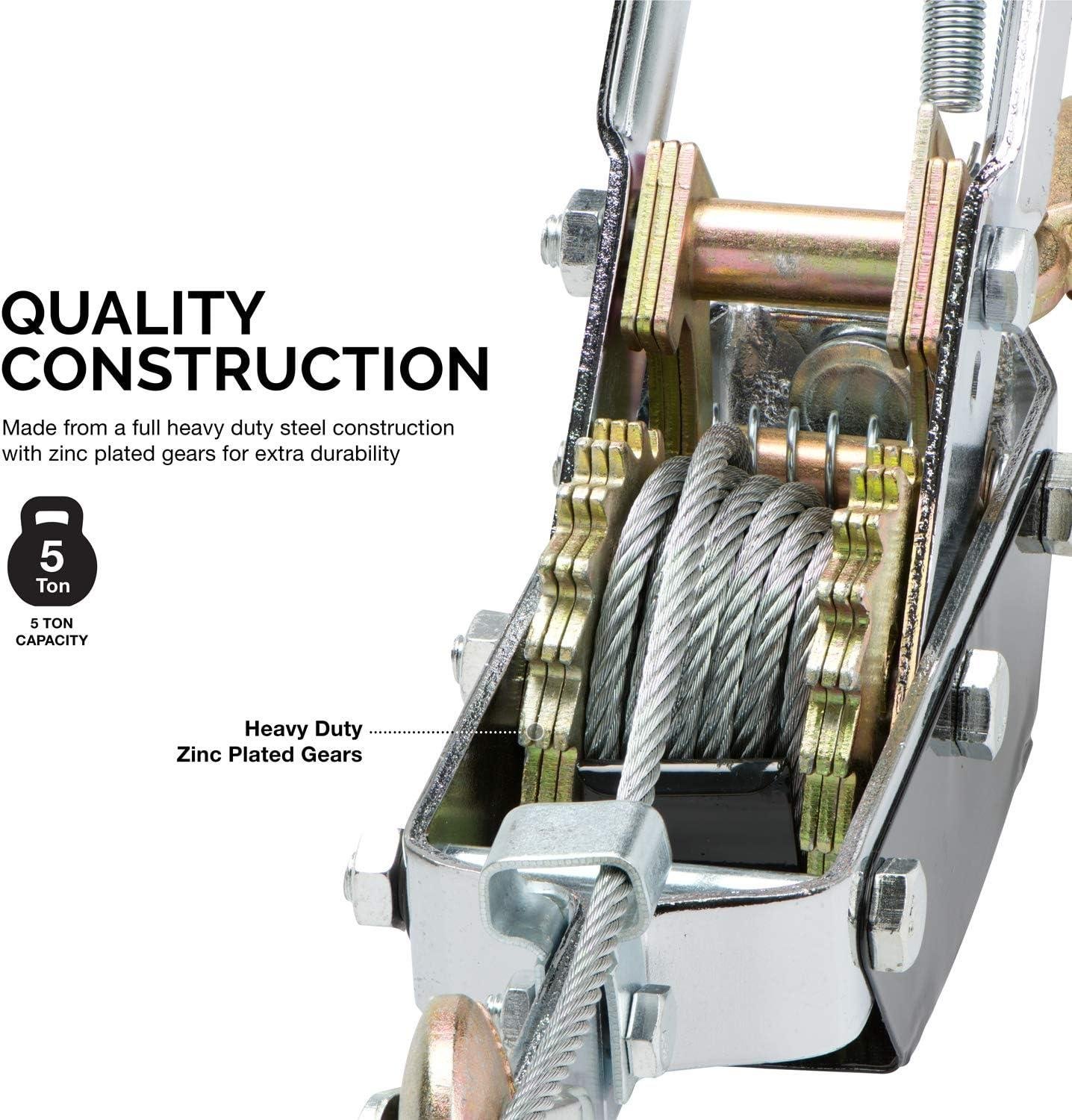
In our shop, the NEIKO 02256A stands out as a hand-powered rigging tool that feels surprisingly relevant to woodworking—especially when we’re trying to “clamp” something that regular bar clamps simply can’t reach.With a 10,000 lb (5-ton) max horizontal pull and a 10 ft (3.2 m) cable that’s 6 mm thick,it gives us a controlled way to draw stubborn assemblies together,tug a workbench or cabinet carcass into position,or even coax a bowed panel flatter while we add temporary bracing. The dual-gear mechanism creates that notched, incremental pull that customers frequently enough describe as “smooth” and “works like a charm,” which matters when we’re easing pressure onto joinery rather than shocking it. It’s also worth noting the spec nuance for shop use: 4,000 lb (2-ton) max vertical lifting is listed separately, so we treat this as a pulling/positioning tool first—and plan lifts with conservative margins, proper slings, and redundant safety support.
Where woodworkers will truly appreciate it is indeed in setup versatility and recovery-style problem solving—think pulling a heavy machine base back onto mobile casters, repositioning a shed-style outbuilding that’s become a “storage annex,” or tensioning line for straightening tasks. NEIKO includes three latching hooks and a long ratchet lever with PVC grip, and reviewers repeatedly mention the ratchet is simple once you read the instructions—but also warn the freewheel/cable release can be unintuitive until you’ve practiced it (we’d agree: this is the sort of mechanism you want to rehearse under no load).Customer feedback also carries two important shop lessons: first, some users swapped the stock slip hooks for higher-quality hooks; second, at least one long-term reviewer flagged a potential safety concern with retainer clips/pins and strongly recommended inspection and upgrades—so we consider pre-use checks non-negotiable (look for bent latches, distorted clips, cable kinks, and any odd gear engagement). The tool is described as heavy—one reviewer cited 18 lb—which is actually reassuring for anchoring stability, but it reinforces the need for safe anchor points (rated straps/chain around posts or structural members, never a flimsy bench leg). Used with the right respect, it’s more “precision pulling clamp” than brute-force winch, and it can fill a real gap for woodworkers comfortable with basic rigging practices.
- Included accessories
- 10 ft (3.2 m) steel cable (6 mm thick)
- 3 latching hooks (safety latches)
- Doubling pulley/hook assembly (for mechanical advantage)
- Long ratcheting hand lever with PVC-coated grip
- Compatible attachments/accessories
- Rated shackles (D-ring/bow shackles matched to expected loads)
- Tree saver / anchor straps for non-marring anchor points
- Log chains or rated rigging slings (for shop-safe anchoring)
- Replacement hooks (several reviewers upgraded the stock hooks)
- Replacement wire rope (if cable becomes kinked/frayed or is damaged)
- Ideal project types
- Repositioning stationary tools (planer,jointer,bandsaw) onto bases
- “Rigging clamp” pulls for large glue-ups and carcass alignment
- Straightening and holding heavy panels while adding braces/fasteners
- Shop recovery tasks: moving a shed/outbuilding,freeing stuck loads
- Wood types tested by customers
- Hardwoods (reviewers mention pulling/tensioning around large hardwood trees)
- Pines (reviewers mention hung-up pines)
| Spec / Feature | NEIKO 02256A (from listing) | Why we care in a wood shop |
|---|---|---|
| Max horizontal pulling capacity | 10,000 lb (5 ton) | Controlled pulling for positioning machines,tensioning,and “long-reach clamping.” |
| Max vertical load capacity | 4,000 lb (2 ton) | Important distinction—treat as pull/position tool first; don’t assume lifting = pulling rating. |
| Cable length / thickness | 10 ft (3.2 m) / 6 mm | Determines reach and durability; inspect for kinks and broken strands before every use. |
| Gear design | Dual gears | Reviewers often mention smooth, consistent ratcheting—helpful for controlled joinery pressure. |
| Accessory | Compatibility | What it improves |
|---|---|---|
| Rated shackle (e.g., 3/8″–1/2″ as needed) | Use with the tool’s hooks/anchor points | Safer connections than “hook-on-hook,” better load alignment. |
| anchor strap / tree saver | Wrap around posts/beams | Non-marring anchors; distributes load on structural members. |
| Replacement hooks | Match hook throat size & rating | Addresses common reviewer preference for higher-quality hooks. |
| Replacement wire rope | Match 6 mm diameter and proper termination | Restores safety if cable is damaged; reviewers note cable can be the failure point under abuse. |
| Use Case | Rated Capacity (spec) | What we recommend in practice |
|---|---|---|
| Pulling/dragging in-line | 10,000 lb | Stay well below rating; use solid anchors, keep bystanders clear, and avoid shock loading. |
| Vertical lifting | 4,000 lb | Use conservative loads, redundant support (cribbing/stands), and never work under suspended loads. |
See Full Specifications & Customer Photos
Ease of Use and Safe Control for beginners and Seasoned Woodworkers
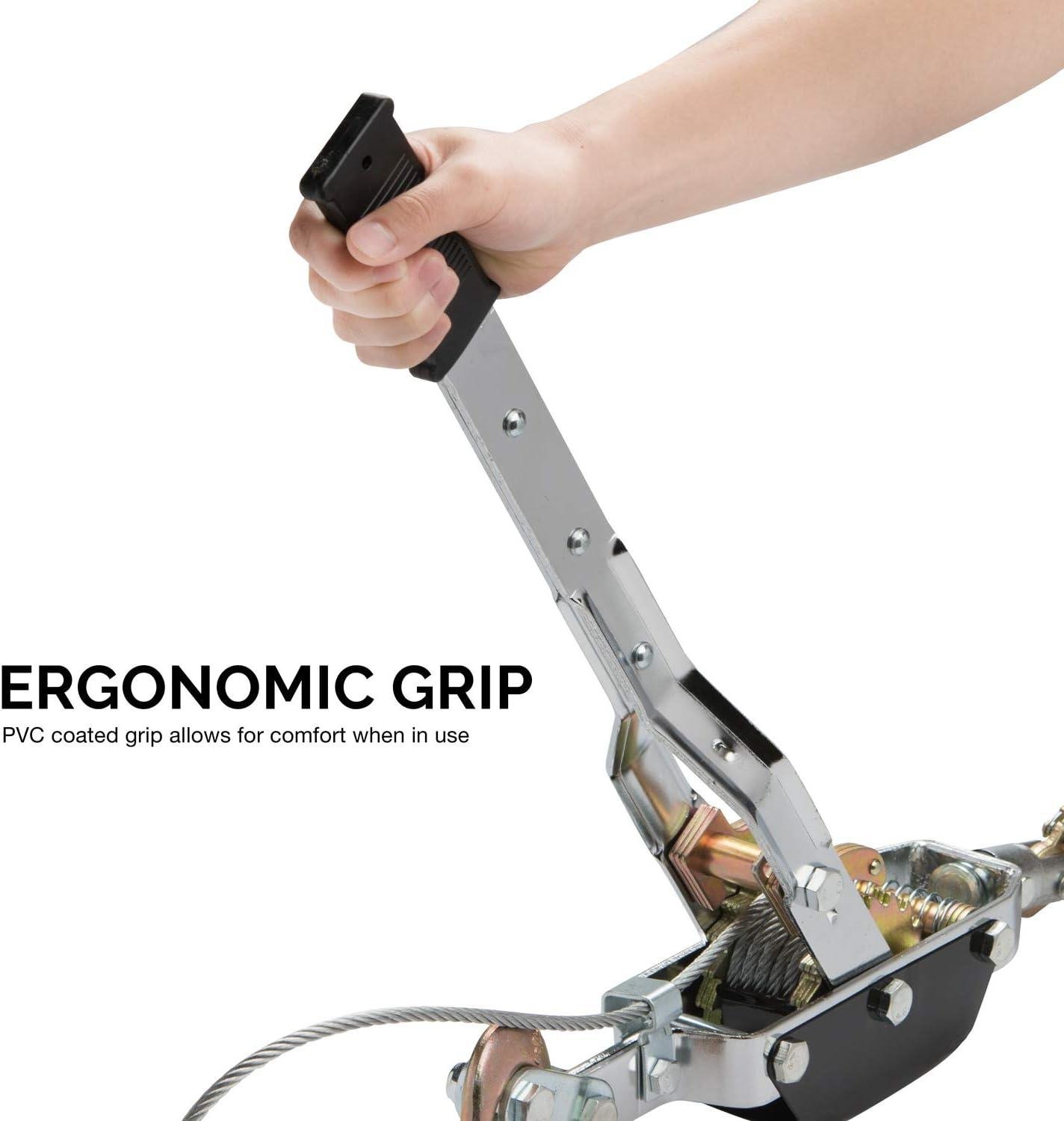
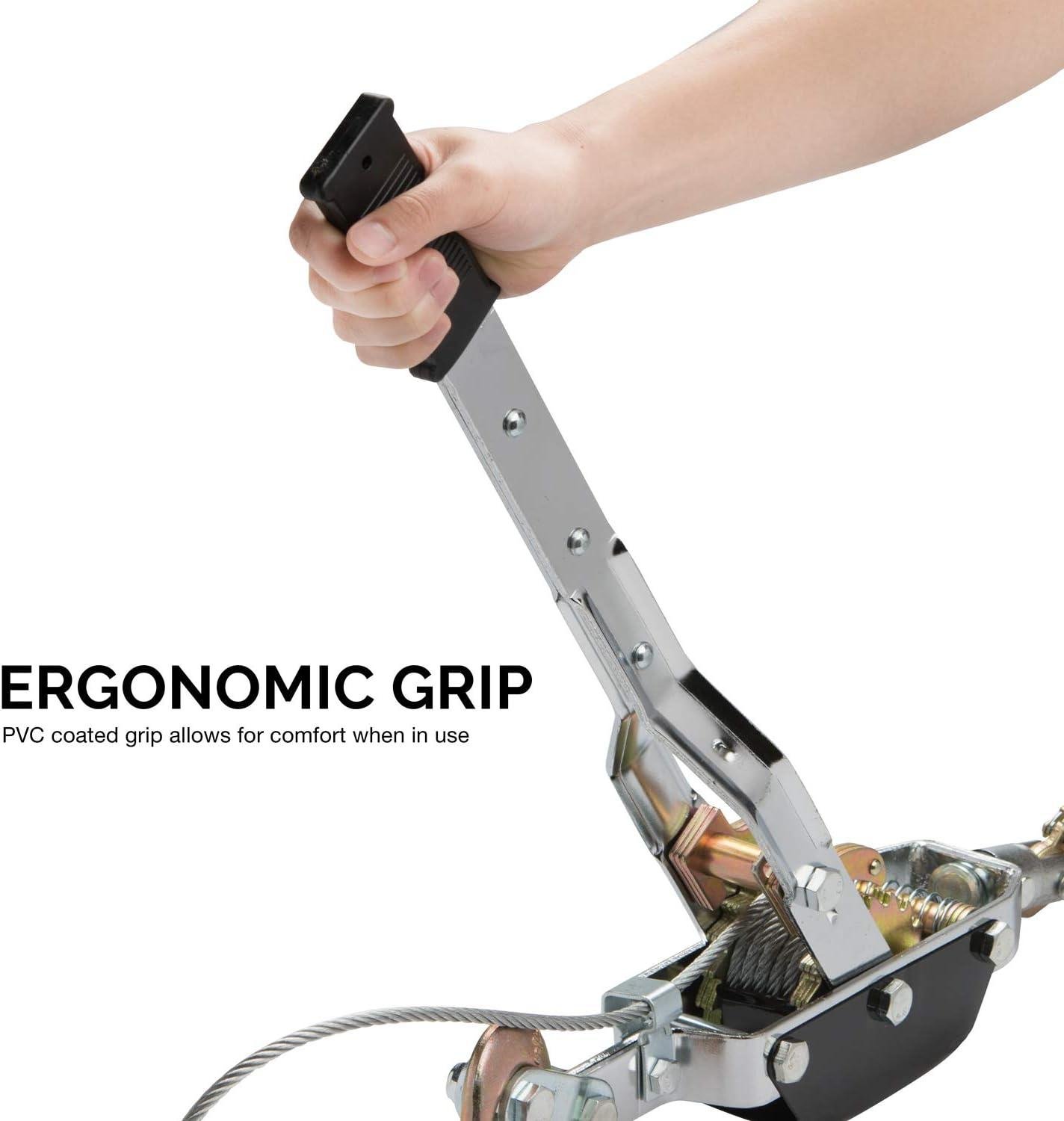
In the shop, a come-along like the NEIKO 02256A is one of those “quiet power” tools—no motor, no cords, just leverage and control. The learning curve is friendly for beginners because the ratcheting action gives us bite-sized movement instead of one big, risky pull, and the dual-gear design helps distribute force evenly so the pull feels predictable. On paper it’s rated for 5-ton (10,000 lbs) horizontal pulling with a 10 ft (3.2 m) long, 6 mm thick wire cable, and it includes a long ratchet handle with a PVC grip that makes it easier to “feel” tension building—useful when we’re coaxing a stubborn glue-up closed, drawing a bowed assembly straight, or staging heavy benches and machinery without resorting to a forklift. Reviewers often echo that it’s “well built” and “heavy duty”, and more than one mentions it can be used one-handed once we get the rythm, which matters when we’re bracing a workpiece with the other hand (at a safe distance).
Where we need to be honest—especially with beginners—is that “easy to pull” doesn’t automatically mean “easy to release.” Multiple customer reviews say the cable tension release can be unintuitive, with one reviewer recommending watching a swift video on releasing tension for similar come-along designs as it becomes second nature after that “oh, duh” moment.For safe control, we’d treat this like a high-energy clamping system: stay out of the line of pull, keep bystanders clear, and protect ourselves from snap-back with gloves and eye protection. A serious safety theme in reviews is the hardware at the hook/pulley connection—one long-term user warned that retainer clips can dislodge and recommended upgrading to more secure fasteners—so we should make pre-use inspection part of our routine (pins/clips seated, latches closing, cable not frayed/kinked). Also remember the spec distinction: NEIKO lists 4,000 lbs max vertical load (2 tons), so lifting/hoisting heavy parts overhead is a different risk profile than horizontal pulling; in woodworking terms, it’s better suited to pulling jigs into alignment, drawing assemblies together, or shifting heavy shop items than “hanging” loads above us. See Full Specifications & Customer Photos
Customer Reviews Analysis
What Woodworkers Are saying (Review Analysis)
1. Overall sentiment from woodworking customers
Several woodworkers and shop-minded DIYers describe the NEIKO 02256A as strong, heavy-duty, and “well built,” with the general feeling that it delivers a lot of pulling force for the money. Common praise includes its power under load and usefulness as a “problem-solver” tool for moving or tensioning heavy items.
That said,multiple reviews highlight important safety and usability caveats—especially around retainer clips/pins and releasing tension—that woodworkers would want to understand before relying on it in a shop setting.
2. Performance feedback (accuracy, power, results)
Multiple reviews highlight extraordinary pulling power—often beyond what the average DIY user expects. Customers successfully used this for heavy pulls where controlled movement matters, and one reviewer noted it could pull so hard they had to stop to avoid uprooting an anchor point.
- Power under load: Several users reported it pulling extremely hard, including a case where it was pulling a truck backward with the parking brake set (until the user overloaded it and snapped the cable).
- Control/results: Reviewers describe it as working “like a charm” for hard, controlled pulls (the kind that—translated to woodworking—would apply to straightening, tensioning cables/straps, shifting heavy shop fixtures, or pulling assemblies into position).
- Dual-line vs single-line versatility: One reviewer liked that you can switch from double-line to single-line, trading capacity for more working length and faster pull—useful when you need reach more than maximum force.
3. Build quality and durability observations
common praise includes the unit being heavy and solid-feeling,and several reviews explicitly call it “top quality” or “well built.” Though, durability feedback is mixed due to a few specific weak points:
- Hardware/retainer clip safety concern: One long-term user issued a major warning about the U-shaped retainer clips holding key pins/bolts, stating a clip can dislodge if bumped, potentially releasing the load suddenly. They recommended swapping to hardened bolts + lock nuts/retention for safer use.
- Cable as a failure point (when abused): One reviewer overloaded the tool and reported the wire rope snapped (not the gears).They took it as evidence the mechanism was tough, but it’s still a real limitation to note for anyone using it near maximum loads.
- Rust potential: Some users reported it may rust quickly if not kept clean and dry, suggesting woodworkers store it properly (especially in humid garages/shops).
4. Ease of use for different skill levels
Reviewers with mixed experience levels found it generally straightforward once understood, but not “idiot-proof.”
- beginners/first-timers: Several users reported the ratchet action is simple if you read the instructions first.
- Common learning curve: Some users reported challenges with the freewheel release / tension release, calling it “not so intuitive.” One reviewer suggested watching a quick video on releasing tension, noting it becomes second nature after a little practice.
- ergonomics/handling: The tool is repeatedly described as heavy (around 18 lb mentioned), which can mean more fatigue or awkwardness when repositioning—relevant for solo shop work.
5. Common project types and success stories
While the reviews skew toward outdoor and equipment recovery uses, the successes map well to woodworking-adjacent tasks where controlled pulling and repositioning matters.
Customers successfully used this for:
- Moving structures: “Shifted my shed single handed approx 20m without a problem.”
- Tree and rigging work: Multiple reviewers used it to pull down hung-up trees (including “over 10 hung up trees” and 12–14″ pines).While not woodworking, this closely resembles the kind of rigging mindset woodworkers use for log handling, yard milling setups, or shop/yard staging of heavy stock.
- General heavy pulling/recovery: Several simply summarized it as “Strong” and “Work perfectly,” indicating consistent real-world capability.
6. issues or limitations reported
Several reviewers mentioned concerns that woodworkers should treat seriously—especially if using a come-along around valuable workpieces, heavy assemblies, or in confined shop spaces.
- Safety hardware concern (serious): A long-time owner reported a failure involving retainer clips/pins that could cause sudden load release. This is the most critical negative point in the dataset.
- Unintuitive tension release: Multiple reviews highlight that releasing cable tension can be confusing until you learn the “trick.”
- Hook quality / small parts: Some users found the slip hooks “adequate, but not great” and replaced them. Another reviewer received a unit missing a hook on arrival (later resolved by the manufacturer sending a replacement).
- Corrosion risk: Needs cleaning/drying to reduce rust.
- Not for true commercial overhead-lift compliance: One reviewer cautioned that for commercial/OSHA-type needs they’d choose a higher-rated, approved device (critically important if a woodworker is tempted to use it for lifting rather than pulling).
Summary Table (Common Themes)
| Aspect | Common Feedback |
|---|---|
| Performance | Multiple reviews highlight very strong pulling power and controlled pulling results; double/single line option adds flexibility. |
| Durability | Generally “well built” and heavy, but cable can fail under misuse; can rust if stored wet/dirty. |
| Ease of Use | Ratchet action is straightforward; releasing tension/freewheel is commonly reported as unintuitive until learned. |
| Safety/Hardware | One major warning about retainer clips/pins potentially dislodging and releasing load; some users upgrade hooks/hardware. |
| Value | Often described as impressive capability for the price; some users still recommend higher-rated solutions for commercial compliance. |
Pros & Cons

Pros & Cons
After putting the NEIKO 02256A Come-Along Winch in our “real-world shop” mindset—where tools get used, tossed in trunks, and asked to do odd jobs on short notice—here’s what stood out to us.
| What We Looked At | Why It Matters in the Shop / Field | NEIKO 02256A Snapshot |
|---|---|---|
| Horizontal pulling power | Recovery pulls, dragging equipment, nudging vehicles | Up to 5 tons (10,000 lbs) |
| Vertical lifting rating | Hoisting is a different stress case than pulling | Up to 2 tons (4,000 lbs) |
| Reach | More cable = fewer resets and re-hooks | 10 ft cable (6mm thick) |
| Control | Smoother ratcheting helps prevent “jolt” moments | Dual-gear design + notched action |
| hooking options | Angles and anchor points aren’t always convenient | 3 latching hooks |
Pros
- Serious pulling muscle for a manual tool: The 10,000 lb horizontal rating makes it feel like a compact “problem-solver” for recovery, dragging, and stubborn shop moves.
- Dual-gear setup feels deliberate: We like the way the gearing helps distribute force and makes the pull feel more controlled and predictable, especially when we’re inching something into place.
- One-handed ratcheting is genuinely useful: When the other hand is stabilizing a load, guiding a chain, or keeping a line clean, being able to operate the lever without a full-body wrestling match is a win.
- Hook versatility: The three safety-latch hooks give us more ways to rig it—handy for awkward anchor points, fence stretching, or odd-shaped loads.
- Built for rough storage: Steel construction with zinc-plated hooks/gears looks geared toward surviving the “garage ecosystem” of dust, damp, and neglect between uses.
- Portable by design: It’s positioned as trunk-friendly and grab-and-go, which matters if we’re treating it as backup recovery gear rather than a permanently mounted winch.
cons
- 10 ft cable can feel short in open areas: For some recoveries or long pulls, we may need extensions or a different rigging plan (and more re-positioning).
- Vertical capacity is much lower than pulling capacity: the 4,000 lb vertical rating is a big reminder that “pulling” and “lifting” aren’t interchangeable—our use cases need to respect that difference.
- Manual effort is still manual effort: The leverage helps, but on heavy loads it’s time-and-sweat work. If we’re doing frequent pulls, an electric option may save our shoulders.
- Cable management takes attention: Like most cable come-alongs,we’ll want to keep an eye on neat spooling and line angle to avoid kinks and rough feeding over time.
- Not a precision tool for delicate jobs: It’s great for controlled force, but if we’re aligning something fragile or finished, we’ll likely want padding, soft shackles/straps, and extra caution.
Our takeaway: if we need a portable, heavy-duty manual puller that can step into recovery, farm, or occasional shop-duty roles, the NEIKO 02256A checks many boxes—so long as we’re honest about cable length, manual workload, and the lift-vs-pull ratings.
Q&A
Is this “powerful enough” for woodworking tasks like pulling warped slabs flat or drawing big glue-ups together?
For pulling and tensioning tasks, yes—often with power to spare. The NEIKO 02256A is rated for 5-ton (10,000 lb) horizontal pulling and up to 2-ton (4,000 lb) vertical load (per the listing).Woodworkers commonly use come-alongs to pull twisted frames into square,straighten heavy panels,tension fence wire,or move a machine base. Reviews mention successfully pulling down hung-up trees and shifting heavy structures, which suggests it can generate serious force. The limitation isn’t “wood type” (it doesn’t cut wood), it’s anchoring and safety: you must have solid anchor points and keep loads controlled so you don’t over-stress clamps, fixtures, or your work.
Can it handle “production work,” like repeated clamp-ups or daily shop jigs, or is it more of an occasional-use tool?
It’s best thought of as a heavy-duty occasional or jobsite-style puller, not a precision daily production clamp. The steel body, zinc-plated hooks/gears, and dual-gear design are aimed at durability and controlled pulling, and several reviewers describe it as strong and well built. That said, repeated high-cycle use will require more frequent inspection, cleaning, and lubrication, and some users report smaller hardware (like clips/springs) can be a weak point over time.For production environments where people are pulling near-rated loads daily, many shops prefer higher-end, OSHA/industrial-rated hoists and standardized rigging procedures.
How difficult is the initial setup—can I just hook it up and start pulling?
Basic setup is straightforward: you’re working with a manual ratchet lever, a 10 ft (3.2 m), 6 mm cable, and three latching hooks. Where people tend to struggle is the cable tension release/freewheel. Multiple reviews mention releasing tension can feel unintuitive until you learn the “trick.” Practical shop advice: practice the release mechanism with little or no load before using it on a real glue-up, machine move, or panel straightening job.
what adjustments are available—can I change speed vs. pulling power?
You don’t have a dial or motor speed control (it’s manual), but you can change how it behaves by using the double-line (with the pulley) vs. single-line arrangement.A reviewer notes you can detach and switch configurations: using it in a way that doubles pulling length/speed but reduces capacity (single-line), or using the pulley for more force and control (double-line) at the expense of travel. This is useful in a woodshop when you want either fine, controlled pressure (flattening/straightening) or more travel without re-rigging.
Will this fit and work in a small workshop, and can it be mounted to a bench?
It’s generally small-shop friendly because it’s manual, doesn’t need power, and is described as portable and light enough to carry with one hand (the review text also mentions about 18 lb for similar units). You typically don’t “mount” a come-along like a vise—you rig it between two strong points.In a shop, that might mean a wall anchor/structural post and a work cart or a heavy assembly. If you do create a semi-permanent station, make sure your anchors are into structure (studs/posts/steel), not just plywood or a benchtop, and keep the pull in-line to avoid side loading.
Do I need special accessories (shackles, straps, chains), and does it work with standard rigging?
It comes with latching hooks, but many woodworkers end up adding standard rigging to protect workpieces and improve safety—things like rated tree straps, soft shackles / bow shackles, edge protection, and short lengths of chain. Reviews mention some users replaced the stock hooks with higher-quality ones, which is common when you want better fit, smoother latches, or more confidence in hardware.The key is to use rated rigging sized appropriately for the forces you might generate—this tool can apply enough force to break rope or damage anchor points if you’re not careful.
Is it beginner-friendly, or do I need special skills?
Beginners can use it, but it’s not “plug-and-play” like a clamp. The learning curve is mostly about rigging and safe load handling: correct anchor selection, keeping your body out of the line of pull, and learning the tension release. several reviewers note that once you learn the release method,it becomes second nature—some even recommend looking up a quick video on releasing tension on similar come-alongs. If you’re new, start with light pulls and treat it like a serious piece of shop equipment rather than a casual hand tool.
What maintenance does it need, and are there durability concerns I should know about?
Plan on regular inspection and cleaning. Reviews specifically warn to keep it clean and dry or it may rust quickly, and to inspect details before heavy pulls. Some user feedback highlights potential weak points such as spring clips/retainers and mentions a serious failure scenario where a retaining clip could dislodge—so it’s smart to check all pins/clips/hooks before every use, especially in woodworking setups where you may be moving around cables, ropes, and straps. Also note that one reviewer snapped the cable under extreme misuse; cables are wear items—inspect for kinks, broken strands, and crushing and replace if damaged. Warranty coverage and parts availability can vary by seller,but at least one reviewer reported the manufacturer replaced the unit when contacted.
Embody Excellence
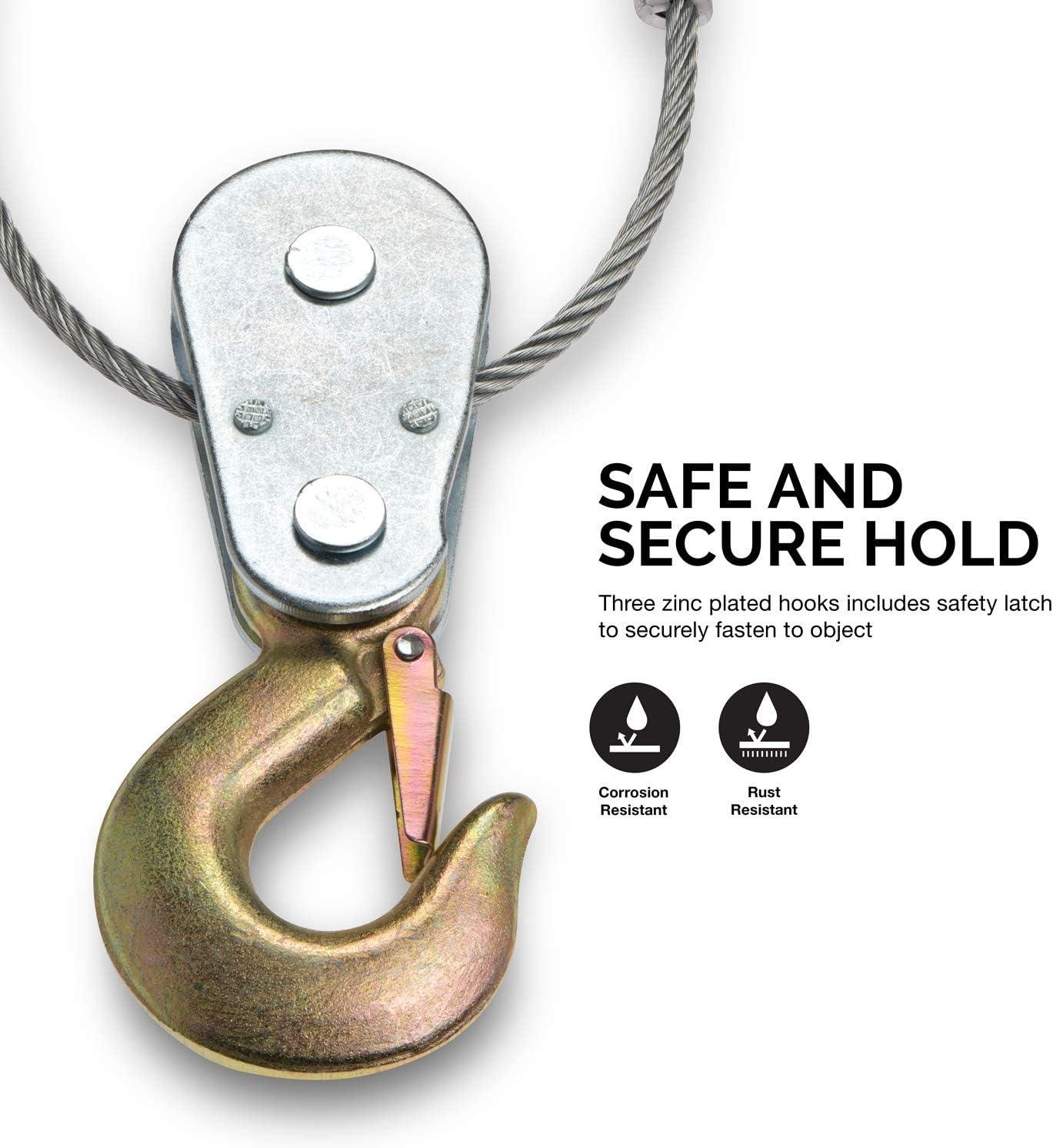
The NEIKO 02256A Come Along Winch is a heavy-duty, manual ratcheting puller built around a 5-ton (10,000 lb) horizontal pulling capacity, 10 ft (3.2 m) of 6 mm cable, dual gears, a long lever handle with PVC grip, and three safety-latched hooks. Customer feedback commonly praises its strong pulling power,smooth notched action,and value,while noting a learning curve for tension release,potential rust if stored wet,and occasional concerns about hook clips/hardware that deserve careful inspection.
Best for: hobby woodworkers moving heavy machines, straightening large panels, pulling assemblies tight, positioning timbers, or handling logs/stumps around the shop—especially small to medium projects where controlled pulling matters.
Consider alternatives if: you need OSHA-rated gear for commercial lifting, want a lighter/more compact unit, or prefer a powered winch for frequent use.
Final assessment: a solid, high-capacity manual puller when used thoughtfully, inspected regularly, and maintained.
Want to see current pricing and customer photos? View on Amazon & Read more Reviews →