

Blog
3D Wooden Puzzle Kit Review: Right Hobby Tool for Us?

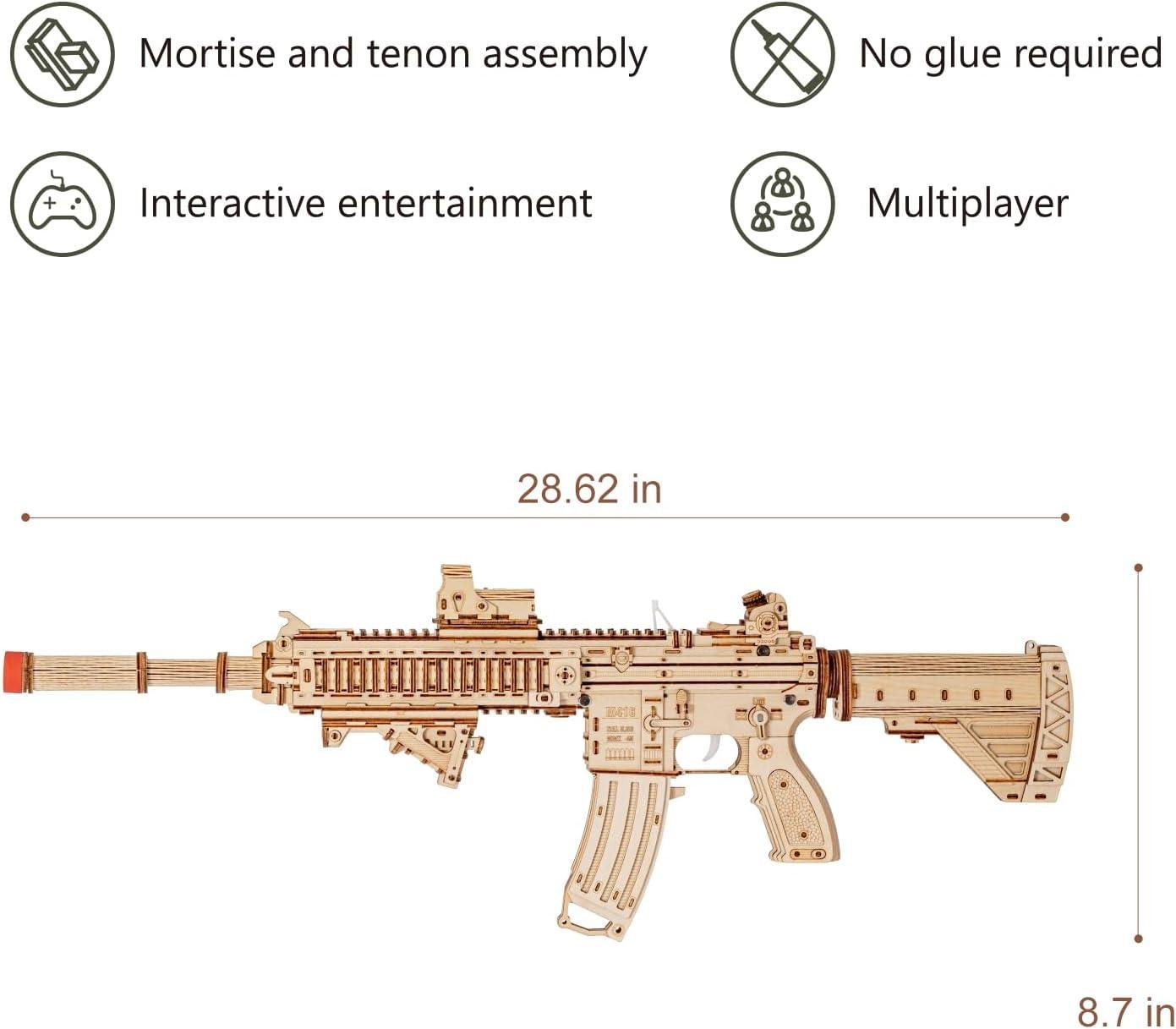
Ever hit that point in the shop where you want somthing satisfying to build—but you don’t have the bench space (or patience) for another full-size project that demands dead-on precision? we’ve all been there: a tight corner of the garage, a limited budget for new tools, and the itch to make something that still rewards careful fitting and clean workmanship.
That’s where “3D Wooden Puzzles for Adults” comes in—a 632-piece DIY linden-wood model kit that assembles into a rubber-band “gun” puzzle with single-shot and continuous-fire modes. It’s built around laser-cut parts (advertised accuracy up to 1/5000 inch) and a mortise-and-tenon structure, so it’s designed to fit together without glue. The box also includes wax, sandpaper, basic tools, labeled parts, video instructions, and spare components, which can ease the learning curve for newer builders.
In this review, we’ll cover fit and finish expectations, build quality, assembly friendliness, space needs, and value—plus what customers commonly mention about the experience. As hobby woodworkers,we’ll speak from general joinery and kit-building no-how,not from claiming results we can’t verify.
Tool Overview and First Impressions of the Laser Cut Wood Kit
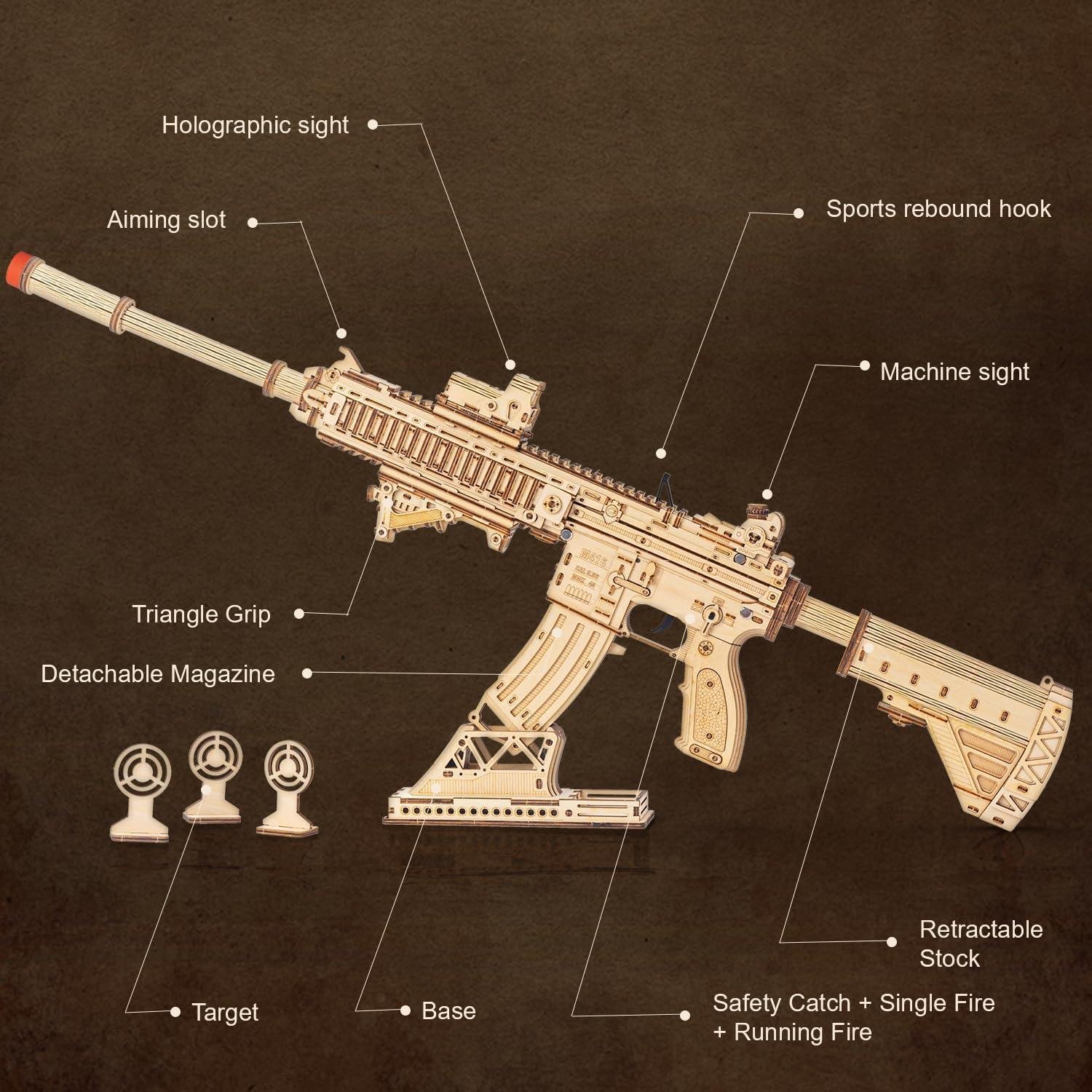
From a woodworking standpoint, our first look at this kit felt less like opening a “toy” and more like unboxing a small, pre-machined joinery lesson. The model is built from high-quality linden wood (a fine-grained, cooperative species that behaves a lot like basswood in the shop), and it arrives as 632 laser-cut parts with a stated cutting accuracy of up to 1/5000 inch. The design relies on a conventional mortise-and-tenon structure and is intended to assemble without glue, which immediately tells us the maker is depending on tight tolerances and clean tabs—exactly where a laser-cut kit either shines or frustrates.Customer feedback lines up with that expectation: multiple reviewers talk about the precision of the cuts and pieces that fit together snugly,while also warning that it’s intricate and “not for beginners,” with some parts being “harder to pop out than others.” In our shop, that means we’d treat it like delicate fretwork: use a flat bench surface, good lighting, and patience—as forcing tight parts is how thin linden fibers tear and edges mushroom.
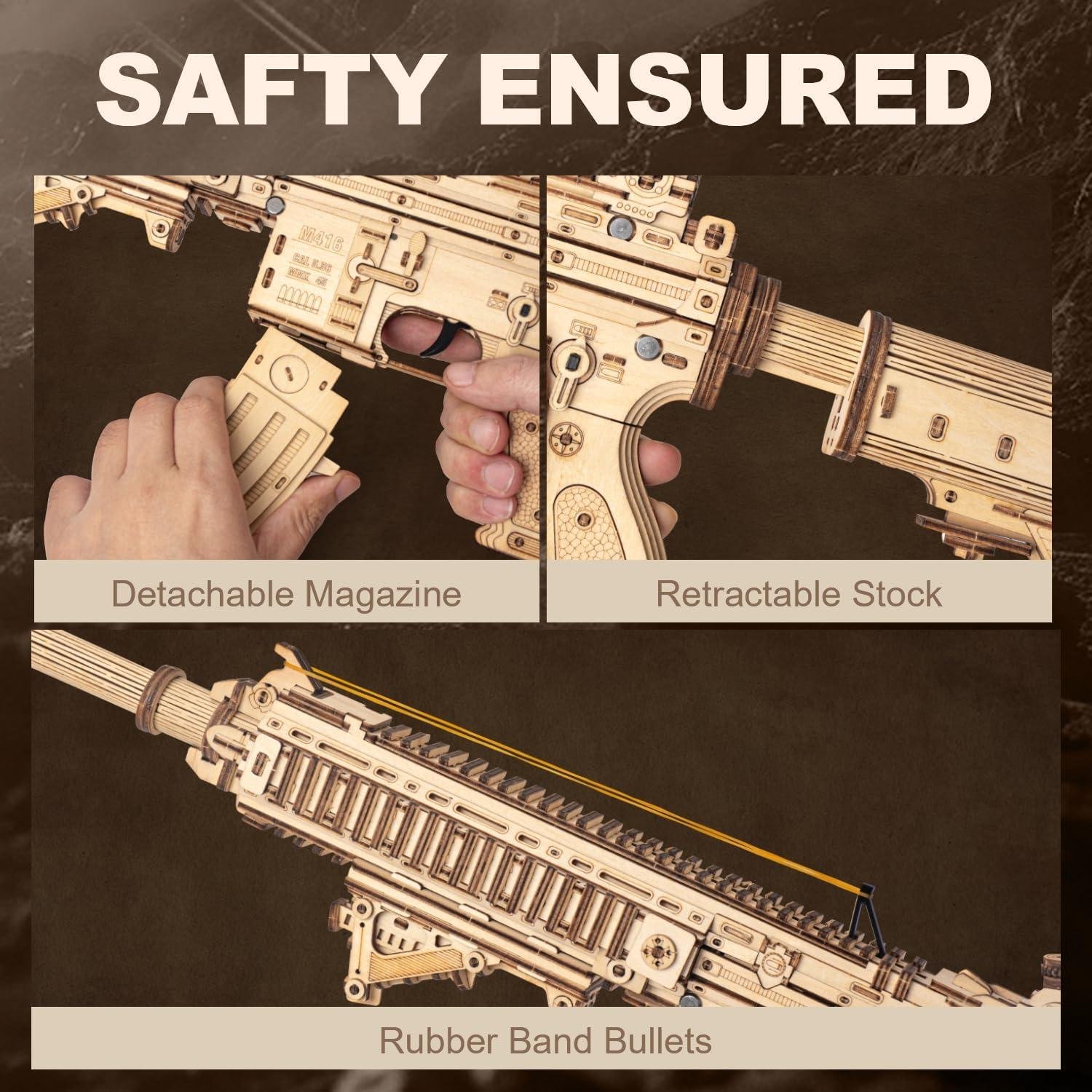
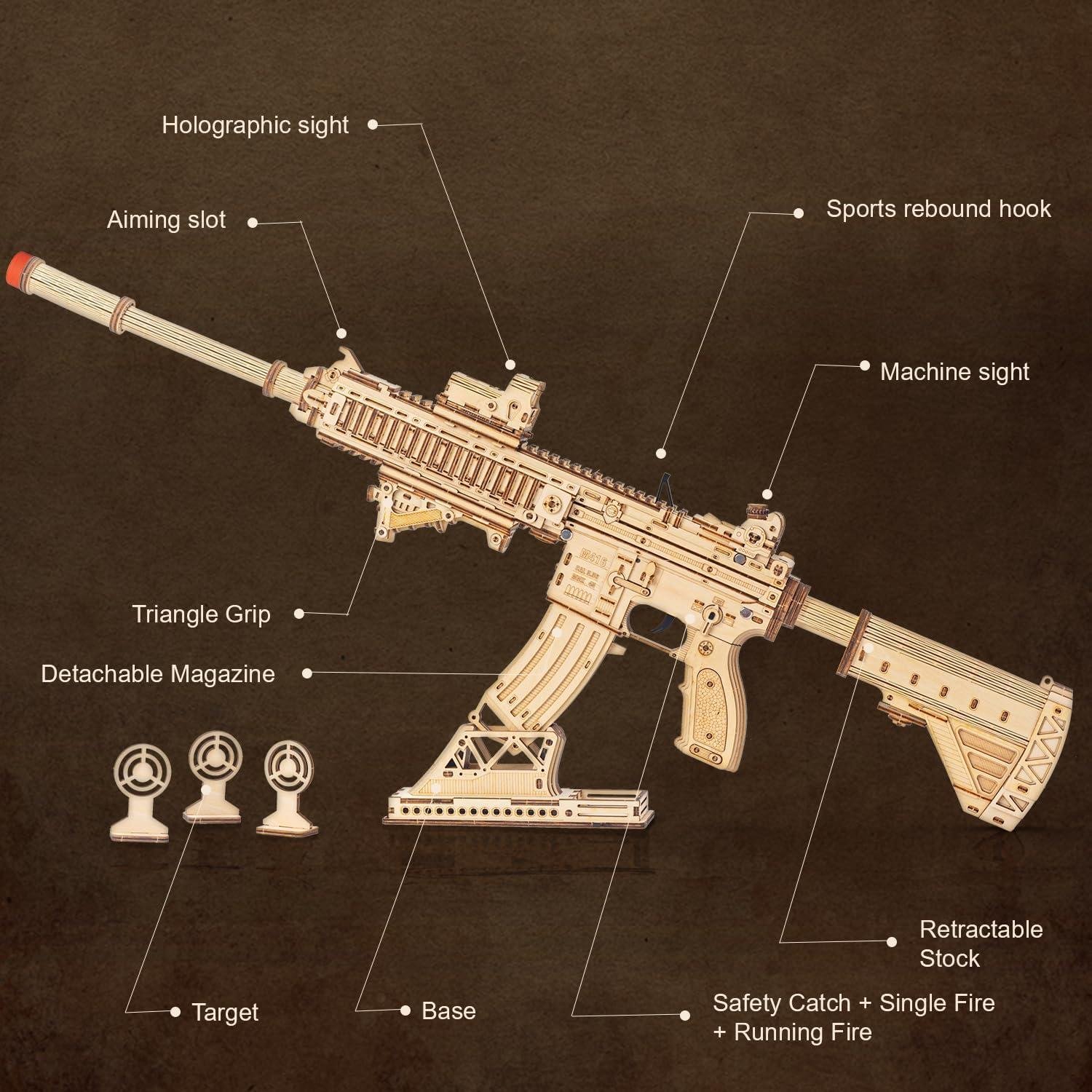
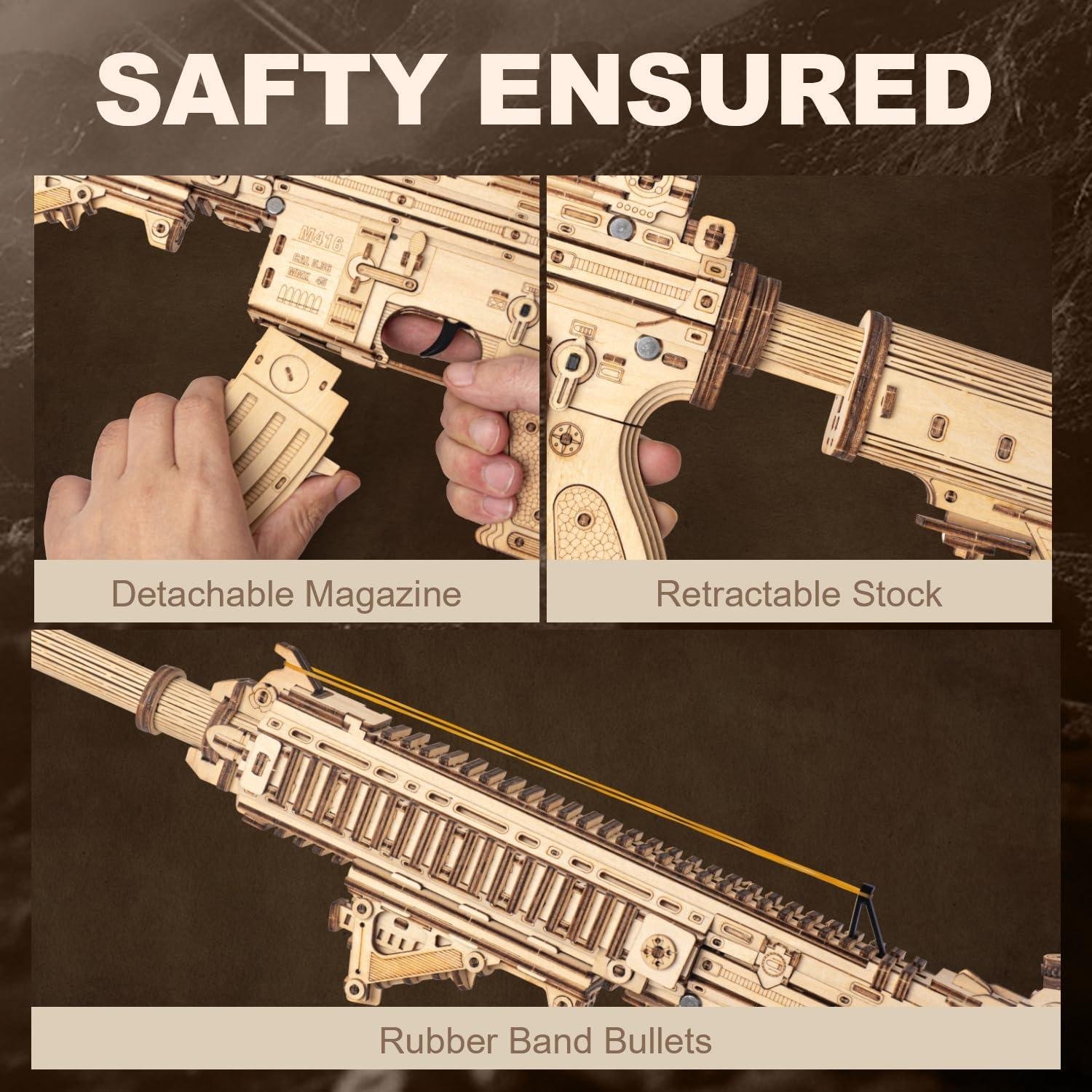
As a “tool-adjacent” kit, it’s actually useful for woodworkers who want a low-mess precision project that still teaches real skills: dry-fitting, sequence planning, and controlled sanding.The box includes tools, wax, and sandpaper, plus spare components and detailed video instructions, which is practical for a bench session when we don’t want to set up machines. Review themes also highlight the experience: “wonderful sense of accomplishment,” “very clear and highly detailed” instructions,and smooth-feeling wood with minimal splinter risk—though at least one buyer reported a missing bag/part (specifically the lead block and rubber band),so we’d inventory everything before committing hours to assembly. Once built, it functions as a rubber-band model with single-shot and continuous-fire modes and includes up to 50 soft rubber bands; from a workshop safety angle, we’d treat it like any spring-powered launcher and follow the manufacturer’s guidance to avoid faces, pets, and fragile items.
- Included accessories: assembly tools, wax, sandpaper, spare components, video instructions, up to 50 soft rubber bands
- Compatible attachments/accessories: fine needle files, hobby knife, small clamps or painter’s tape for staging sub-assemblies, tweezers, sanding sticks (aftermarket)
- Ideal project types: rainy-day bench builds, skill-building for dry-fit joinery, display models for office/shop, collaborative family builds (older teens/adults)
- Wood types tested by customers: linden wood (as supplied in the kit)
| Spec Category | What the Listing States | What It Means in the Shop |
|---|---|---|
| Material | Linden wood | Carves/sands easily; handle tabs gently to prevent tear-out |
| Part count | 632 pieces | Plan for multi-session assembly; organize parts by number/step |
| Joinery | Mortise & tenon, no glue required | Fit and alignment matter; wax can reduce friction on tight joints |
| Cut accuracy (claimed) | Up to 1/5000 inch | explains snug fits; still expect occasional tight breakouts from sheets |
| Function | Single-shot + continuous fire | Mechanical sub-assemblies benefit from careful sanding and waxing |
| Accessory/Tool | Purpose | When We’d Use it |
|---|---|---|
| Wax (included) | Reduces friction in sliding/tight joints | Before pressing delicate tabs; on moving mechanisms |
| Sandpaper (included) | Refines edges and fit | after test-fitting, not before (avoid over-loosening) |
| sanding sticks (aftermarket) | Precision control on small edges | For tight internal corners and small tabs |
| Needle files (aftermarket) | Micro-fit adjustments | If a joint binds after waxing and light sanding |
| Capacity/Expectation | Recommended (From Reviews/Specs) | Reality Check for Woodworkers |
|---|---|---|
| Skill level | Not for beginners / “requires adult or near adult skills” | Comfortable if we’ve built at least one model kit or do fine joinery work |
| Time commitment | Multi-hour, multi-day build implied by 632 parts | Best approached like a segmented glue-up: slow, staged, organized |
| Parts completeness | Spare components included + support available | Still inventory first—one reviewer reported missing a critical bag |
See Full Specifications & Customer Photos
Real World Assembly Performance and Mechanism Reliability
In our shop, the “real world” performance of this kit starts with how well the parts come off the sheets and register into the joinery. On paper, it’s a complex build—632 laser-cut linden-wood parts with a stated cutting accuracy of up to 1/5000 inch, using a mortise-and-tenon structure that’s designed to go together with no glue. That spec matches what customers keep repeating: the pieces are “cut accurately,” “fit together snugly,” and the “precision…is amazing.” We also see consistent feedback that it’s not a beginner project: reviewers call it “very intricate,” “not for beginners,” and something that “requires adult or near adult skills.” From a woodworker’s perspective, we’d treat it like assembly practice for tight joinery—keep a small block plane or sanding stick handy for any tabs that don’t release cleanly, and use light pressure when “popping” parts out (several customers note some pieces are harder to remove). The included consumables help—wax reduces friction on sliding wood-on-wood interfaces, and sandpaper is useful for de-fuzzing laser char on edges so tenons seat without forcing.
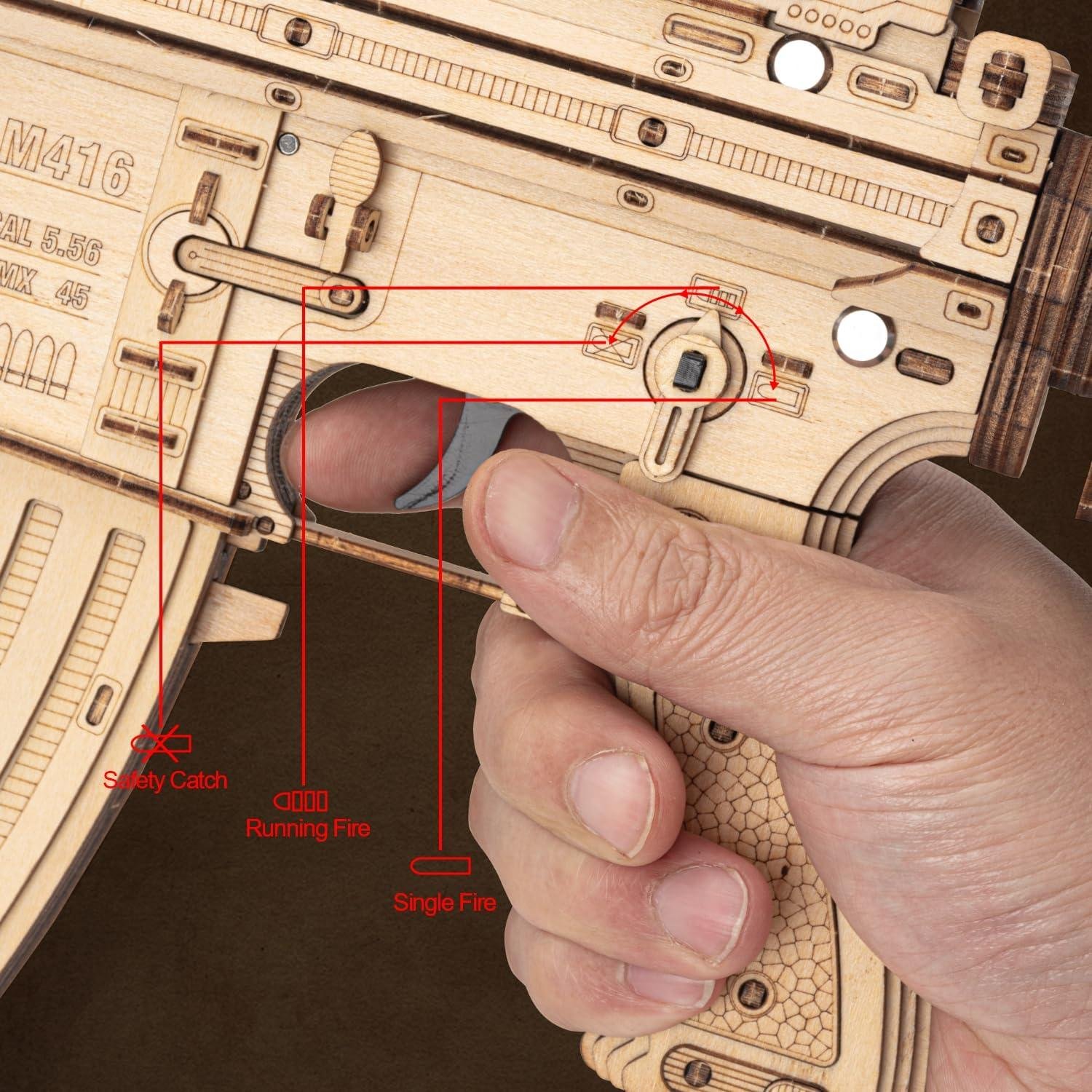
Mechanism reliability is where workshop habits matter most, as this is a functional rubber-band “gun” with two firing modes (single-shot and continuous) and it ships with up to 50 soft rubber bands. Reviews often praise the “fully functional” switches, the “working mechanisms,” and even mention “extraordinary” shot range—but reliability hinges on consistent friction control and correct weight/balance in the internal action. That’s why one critical theme we can’t ignore is parts completeness: one reviewer received the kit missing a bag that should have included the lead block and rubber band, and they could not finish the mechanism because they couldn’t match “equal weight and size.” In practical terms, we’d dry-fit each subassembly before moving on, inventory the bags early, and reserve wax for high-wear contact points (like sliders and sears) rather than coating everything. Safety-wise,treat it like any spring/elastic-powered mechanism at the bench: keep hands clear during tensioning and follow the product warning to avoid aiming at faces,pets,or fragile items—rubber bands are “generally harmless,” but eye protection in the shop is still a smart default when testing moving parts.
See Full Specifications & Customer Photos
Key Features Woodworkers Will Appreciate in Fit Finish and Design
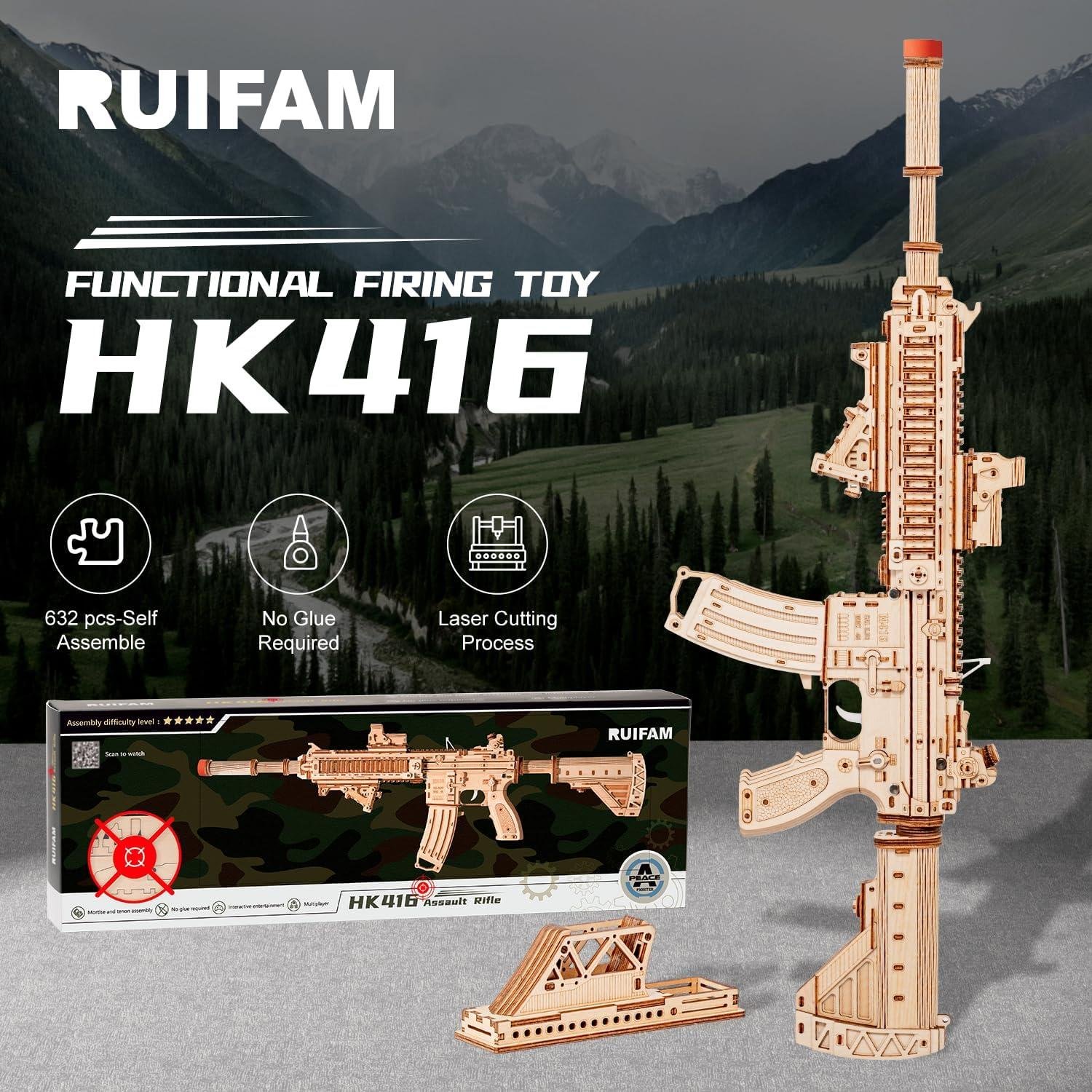
From a fit-and-finish standpoint, this kit looks like it was designed by someone who understands what woodworkers obsess over: repeatable joinery and clean edges. The build uses high-quality linden wood—a friendly species for detailed laser work as it’s typically light, stable, and less prone to tearing than more brittle hardwoods. The big story here is the cutting tolerance: the parts are laser-cut to an advertised accuracy of up to 1/5000 inch,and multiple buyers echo that theme,saying the “precision…is amazing” and that “everything went together fantastic” with pieces that “fit together snugly.” For us in the shop, the educational takeaway is how this model demonstrates proper mechanical fit: the traditional mortise-and-tenon structure means the assembly is meant to lock together without glue, which is a useful reminder that good joinery relies on consistent part thickness, clean shoulders, and controlled friction—not just adhesive. If a piece feels too tight, the included sandpaper can be used like we’d tune a tenon cheek: take light, even passes and test-fit frequently enough so we don’t oversize the joint and lose strength.
In terms of design features we’ll appreciate, the kit is unapologetically complex: 632 pieces with clearly labeled parts and detailed video instructions, and reviewers repeatedly point out it’s “not for beginners” and requires adult or near-adult skills (patience and good hands matter here). That maps well to workshop reality—this is less “toy” and more a bench project for practicing controlled assembly, sequencing, and delicate part handling (think model-making skills that carry over to small jigs, mechanisms, and inlay-style work).The included finishing consumables—wax and sandpaper—also teach a practical lesson: waxed sliding surfaces reduce friction in moving mechanisms, the same way we’ll wax wooden runners or a shooting board. Reviewers do flag a real-world QC concern: at least one customer reported a missing bag/part (specifically mentioning a lead block and rubber band), so we’d reccommend inventorying bags before we start, just like we’d count hardware before assembling cabinetry.With up to 50 soft rubber bands and two shooting modes (continuous and single), the finished mechanism is more interactive than most wooden puzzles, but we should still treat it like any shop-built launcher: follow the maker’s safety note and avoid aiming at faces, animals, or fragile objects.
- Included accessories: tools, wax, sandpaper, spare components (per product description)
- Compatible attachments/accessories: none specified (uses included tools/consumables; rubber bands are standard-size replacements if needed)
- Ideal project types: mechanism-focused model builds, rainy-day bench projects, skill-building for precise dry-fit joinery, gift/display builds
- Wood types tested by customers: linden wood (kit material; customer feedback centers on clean cut quality and snug fit)
| Spec Area | What’s Stated for This Kit | What It Means in Our Shop |
|---|---|---|
| Piece count | 632 parts | Longer build time; higher chance of a tight-fit spot—plan for careful sanding and dry-fitting. |
| Material | Linden wood | Good for laser detail; generally cooperative for light tuning without splintering. |
| Joinery | Mortise & tenon, no glue | great practice for precision assembly; avoid over-sanding to keep joints strong. |
| Cutting tolerance | Up to 1/5000 inch (advertised) | Explains why reviewers mention “amazing” precision; also means small debris can affect fit—keep parts clean. |
| Accessory / Consumable | Included? | Notes for Woodworkers |
|---|---|---|
| Wax | Yes | Use sparingly on sliding/friction points; wipe excess to avoid attracting dust. |
| Sandpaper | Yes | Best for tuning tabs/tenons; take minimal passes and test-fit often. |
| Spare components | Yes | Helpful given the part count; still worth inventorying before starting. |
| Rubber bands | Up to 50 | Wear item—store away from heat/UV; replace with similar size/tension if needed. |
| Capacity / Requirement | Recommended | Actual (Per Provided Info) |
|---|---|---|
| Skill level | Intermediate+ | Reviews say “not for beginners”; adult/near-adult skills suggested. |
| Assembly aids | Clear labeling + visual guidance | Labeled parts + video instructions noted in description; reviewers call instructions clear. |
| Completeness check | Verify all bags/parts first | One reviewer reports missing bag/part; others report everything provided. |
See Full Specifications & Customer Photos
Ease of Use for Beginners and experienced woodworkers in Our Shop
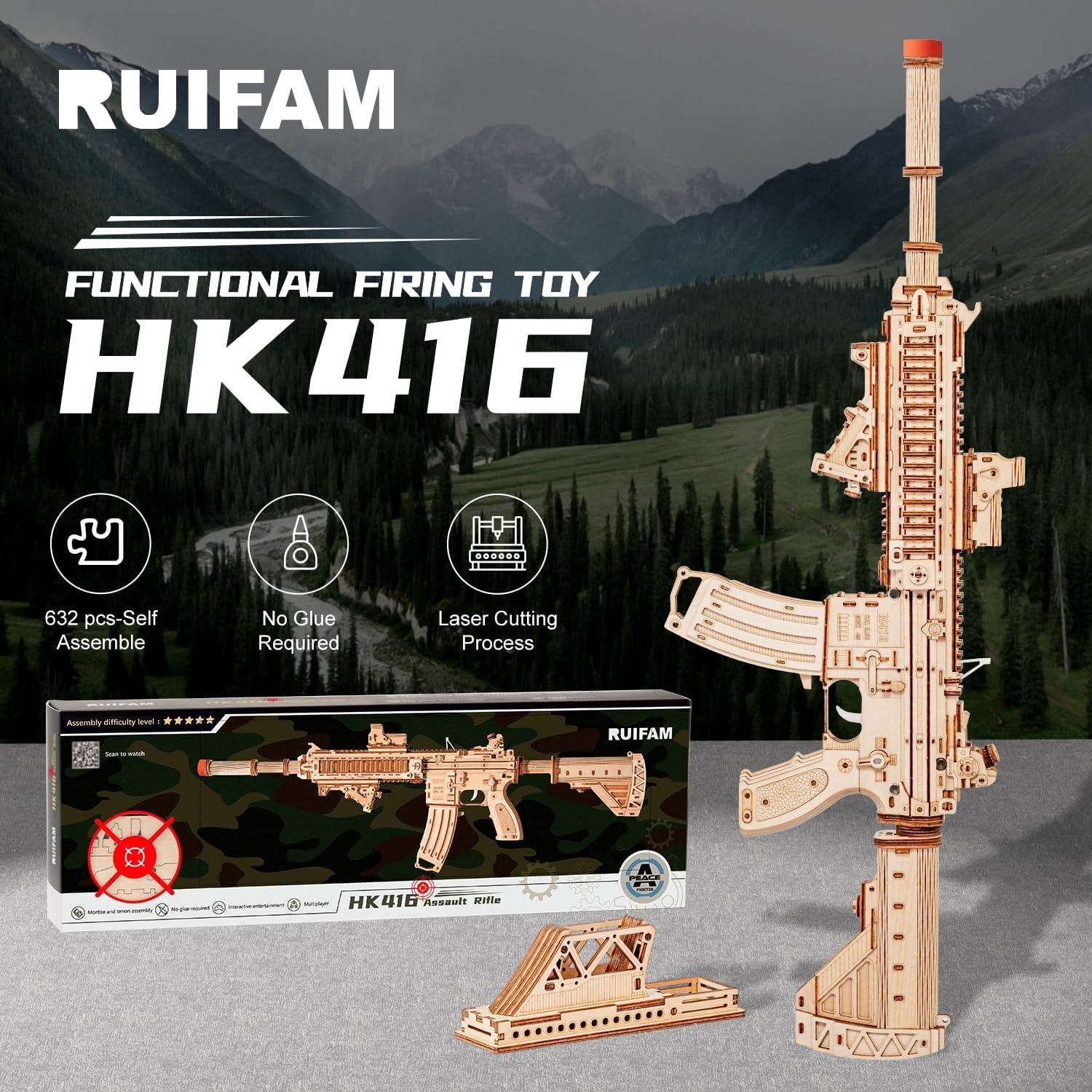
In our shop, the biggest “ease-of-use” factor is that this kit behaves more like a precision joinery practice project than a toy you toss together in an hour. You’re dealing with 632 laser-cut linden-wood parts built around a no-glue mortise-and-tenon structure, and that means beginners can succeed—but only if they’re patient. The manufacturer leans into that with clearly labeled parts and detailed video instructions, plus reviewers commonly echo themes like “instructions were very clear and highly detailed” and “everything went together fantastic”. In practice, we treat it like a bench-top “fit and finish” lesson: we dry-fit first, use the included wax sparingly on tight joints, and keep the included sandpaper for easing tabs rather than reshaping parts. That approach aligns with what customers report—many call it “intricate and detailed”, and more than one review warns it’s “not for beginners” unless you’ve built a model kit before or have “good hands.”
For experienced woodworkers, it’s easy to appreciate why customers praise the cut quality—laser accuracy is stated as up to 1/5000 inch, and multiple reviews highlight “amazing precision” and snug fits. The workflow feels familiar: organize parts by step, keep a clean assembly tray, and expect occasional tear-out when “popping” pieces free (a common review theme is that some parts are harder to pop out). We also like that it ships with safety and usability in mind—up to 50 soft rubber bands and a clear warning to avoid aiming at faces/animals/fragile objects—so it can live in a woodworking space without encouraging reckless shop behavior. One real-world caveat from reviews: there are occasional reports of missing components (one reviewer couldn’t complete theirs due to a missing bag/weight), so we recommend inventorying bags before committing shop time to the build.it’s a solid rainy-day bench project for skill-building in sequencing and precision fit-up, and it can double as a display piece once complete.
- Included accessories
- Assembly tools (as provided in the kit)
- Wax (for easing friction in moving joints)
- Sandpaper (for light fit adjustment)
- Spare components (for damaged parts)
- Up to 50 soft rubber bands
- Compatible attachments/accessories (shop-friendly)
- Fine tweezers or hemostats (handling small parts)
- Hobby knife (light tab cleanup—use carefully)
- Small needle files (micro fit-up)
- Bench mat/sorting trays (part institution)
- Ideal project types
- Joinery fit-practice (mortise-and-tenon concept)
- indoor “bench session” builds on bad-weather days
- Gift builds for puzzle/model enthusiasts
- Display-worthy mechanical model projects
- Wood types tested by customers
- Linden wood (as specified by the manufacturer and referenced in reviews as smooth/splinter-free)
| Spec / Feature | what It Means in Our Shop |
|---|---|
| Parts count: 632 | Higher complexity; better for patient beginners and most comfortable for experienced builders. |
| Wood: Linden | Typically easy to work and less splinter-prone; supports snug friction fits when sanded lightly. |
| Laser-cut accuracy: up to 1/5000 inch | Explains the “snug fit” feedback; also means small misalignments during assembly matter. |
| No glue; mortise-and-tenon structure | Teaches controlled assembly pressure; ideal for learning dry-fit discipline and sequencing. |
| Two firing modes: continuous + single | More moving parts and tuning points; check friction, wax sparingly, and follow safety guidance. |
| Accessory (Optional) | Use Case | Why It Helps |
|---|---|---|
| Tweezers/hemostats | Small-part placement | Reduces crushed edges and improves alignment. |
| needle files | Tight-fit tuning | More controlled than aggressive sanding on tabs/slots. |
| Sorting trays | Workflow organization | Keeps labeled parts from mixing across steps. |
| Capacity / Difficulty | Recommended (Based on Reviews) | Actual Expectation in Our Shop |
|---|---|---|
| beginner friendliness | better after you’ve built at least one simpler kit | Doable if you’re methodical; plan extra time and expect a learning curve. |
| Assembly speed | “Slow going” for many users | We treat it as a multi-session bench project, not a one-night build. |
| Fit/precision demands | High (snug joins, intricate mechanisms) | Dry-fit often, sand minimally, wax lightly, and avoid forcing parts. |
See Full Specifications & Customer Photos
Customer Reviews Analysis
What Woodworkers Are Saying
| Aspect | Common Feedback |
|---|---|
| Overall Sentiment | Strongly positive on design, precision-cut parts, and satisfaction after completion; a few warnings about complexity and missing parts |
| performance | Rubber-band “shot” action and mechanisms impressed many; good range reported when assembled correctly |
| Precision / Fit | Multiple reviews highlight accurate cutting and snug-fitting joints; some noted occasional tight breakouts |
| Build Quality | Generally praised wood selection, clean laser markings, and thoughtful numbering; one report of missing components affecting completion |
| Ease of Use | Intermediate-friendly; beginners can finish but should expect a learning curve and several hours/days of build time |
| Value | Frequently enough described as a satisfying, not-overly-expensive gift with many designs to choose from |
1. Overall sentiment from woodworking customers
several woodworkers mentioned this kit delivers a “sense of accomplishment” and feels like a genuinely well-thought-out build—not just a novelty toy. Common praise includes the intricacy of the model, the precision of the cuts, and how rewarding it is once finished. A smaller set of reviews cautions that it’s not ideal as a first wooden model if you’re new to assembly-style kits.
2. Performance feedback (accuracy, power, results)
Multiple reviews highlight the finished mechanism performing well when built as intended. Customers successfully used this as an interactive desktop model/toy, with one reviewer noting “the range of the shots is really impressive.” Others emphasized the final result as more than a toy—also a display piece once completed.
Where performance concerns do come up, they’re tied to missing components (not tuning or weak design). One user reported they couldn’t complete the build because a required weight (lead block) and a rubber band were missing, preventing the mechanism from working properly.
3. Build quality and durability observations
Common praise includes clean, accurate laser cutting and a quality feel to the wood. One detailed review noted the wood “is not too hard” and reported no splinter issues, suggesting decent surface quality out of the box.Several reviewers also mentioned strong fit-up: parts “fit together snugly,” with clear numbering/markings contributing to a more “purpose-built” feel.
Having mentioned that, some users reported challenges with part removal—“harder to pop out than others”—which can increase the risk of breaking thin tabs if rushed. The biggest durability/quality risk mentioned wasn’t fragile wood, but rather kit completeness (missing bag/components).
4. Ease of use for different skill levels
Reviewers with experience level “have done many of these models” felt this one “went together fantastic,” but they also framed it as not for beginners due to intricacy and the number of pieces.
Beginners and families still reported success, but with caveats:
- One first-timer said it took “several hours” and suggested starting with a simpler model first.
- A family build with a nine-year-old progressed slowly and required older siblings/adult help, reinforcing that the skill level leans toward patient teens/adults.
Instruction quality is a shining spot—multiple reviews highlight clear, detailed instructions and well-marked sections.
5. Common project types and success stories
Customers successfully used this for:
- Interactive build-and-display projects (a detailed “model gun” build that becomes a shelf/display piece)
- Gift builds—several reviewers mentioned it as a Christmas gift that was well received, especially for people “who have most everything”
- Team/family builds, where older kids and adults assemble together over multiple sessions
several reviewers described the build as a “fun project for days when you don’t want to be outside,” aligning with workshop-style hobby time rather than a quick craft.
6.Issues or limitations reported
Some users reported challenges with:
- Missing parts: One reviewer received a kit missing the bag containing the lead block and rubber band, making it impossible to finish the functional build. This was described as a “risk” despite otherwise loving the product.
- Part punch-out difficulty: A few pieces can be harder to remove from the sheets, which may slow the build and requires careful handling.
- complexity/time: This is frequently described as intricate and not beginner-oriented; patience and steady hands are recurring requirements (“not for beginners,” “slow going,” “several hours”).
Quoted sparingly, the recurring themes are best captured by comments like: “The precision… the pieces are cut is amazing” and “It is indeed not for beginners… but… a wonderful sense of accomplishment when finished.”
pros & Cons
Pros & Cons
| What We Liked | What We’d Watch Out For |
|---|---|
| 632-piece build feels like a “real project,” not a quick craft. | It’s a time commitment—expect multiple sessions, not a single evening. |
| Laser-cut linden wood fits cleanly; the model looks polished when finished. | Small parts can be easy to misplace if our workspace gets messy. |
| No glue required thanks to mortise-and-tenon style assembly—satisfying and tidy. | Snug joints can require patience and gentle pressure; rushing can cause snapping. |
| Thoughtful kit extras (wax, sandpaper, tools) make the experience smoother. | Even with guides, “easy assembly” still means careful step-by-step attention. |
| Video instructions and labeled parts reduce the guesswork for us. | We’ll want a device nearby while building; not everyone loves screen-assisted crafting. |
| Two shooting modes (single + continuous) add playful “functionality” after the build. | Rubber band play demands common-sense safety—no faces, pets, or fragile decor nearby. |
| Includes plenty of soft rubber bands (up to 50),so the fun doesn’t stall. | It’s still a “toy gun” aesthetic, which won’t fit every home or gifting situation. |
| Spare parts and support options help if something arrives damaged. | If we break a component mid-build, the fix may slow momentum until we troubleshoot. |
| Finished model doubles as desk/study decor—conversation-starter energy. | Once assembled, it’s more display piece than everyday toy for many of us. |
Pros
- Deeply engaging build: With 632 pieces, we get a hands-on hobby challenge that feels legitimately rewarding.
- Quality materials and precision cuts: The linden wood and laser-cut accuracy make the assembly feel refined and intentional.
- No-glue construction: The mortise-and-tenon approach keeps things clean, satisfying, and more “model-kit” than “craft mess.”
- Builder-friendly extras: Wax, sandpaper, and included tools reduce friction and help our finished model look sharper.
- Clear guidance: Labeled parts plus video instructions keep us moving forward with fewer wrong turns.
- Play value after completion: Single-shot and continuous modes give us something to do beyond admiring it on a shelf.
- Gift-worthy presentation: It fits well for ages 14+ and works as a creative gift for makers, hobbyists, and “I-build-things” personalities.
Cons
- Not a quick win: This is a multi-session build, especially if we like to sand, wax, and refine along the way.
- Patience required: Tight-fitting parts are great for stability, but we have to resist forcing anything.
- Workspace matters: The smaller pieces practically demand a tidy table, good lighting, and a sorting system.
- Screen dependence (optional, but likely): If we rely on video instructions, we’ll want a phone/tablet nearby throughout.
- Theme sensitivity: The rubber-band “gun” style is fun for some of us, but it may be a no-go for certain households or recipients.
- Safety considerations: The soft rubber bands help, but we still need rules—no aiming at faces, pets, or anything breakable.
Q&A

What wood types can this handle effectively (hardwood vs.softwood vs. plywood)?
This kit is designed around the included, laser-cut linden wood sheets (a stable, fine-grained wood that’s easy to sand and pleasant to work). It’s not meant to be a “universal” woodworking project where you swap in oak, maple, or plywood—the tolerances are cut for the provided material (listed precision up to 1/5000 inch), so changing wood species/thickness can cause tight joints, misalignment, or weak mechanisms. If you want to customize later, plan on careful test-fitting and potentially re-cutting parts rather than forcing them.
Is this “powerful enough for hardwoods like oak or maple” if I want to modify it?
As a building kit, there’s no motor/power question—the limitation is fit and mechanism performance. The model uses a mortise-and-tenon style structure and moving parts; hardwoods like oak/maple typically don’t “give” the way linden does, so press-fit areas can split parts or bind the action. A few builders mention pieces fitting snugly (in a good way), but also note some parts are harder to pop out—hardwood substitutions would amplify that. if you’re an experienced woodworker and want a hardwood look, a safer approach is to finish/paint/stain the included wood rather than changing species.
How difficult is the initial setup and assembly—do I need glue, clamps, or special jigs?
Setup is mostly “bench ready.” The design is specifically no-glue (traditional joinery concept), and the package includes the basics like tools, wax, and sandpaper. Parts are labeled, and there are detailed video instructions—reviewers frequently call out clear instructions and accurate cutting. Expect a longer, more involved build (632 parts), so you’ll want a clean table, good lighting, and time to work in stages rather than a single sitting.
What adjustments are available if parts fit too tight, and how do I avoid breakage?
Think of “adjustments” as fit-and-finish tuning: light sanding on tabs/tenons, using the included wax on sliding/friction points, and careful dry-fitting before final assembly. Customer feedback suggests most parts fit “snugly,” but some pieces can be harder to remove from the sheets—go slowly and support the surrounding area while freeing them. Avoid forcing joints; with tight tolerance laser cuts, a few swipes of sandpaper is frequently enough all it takes to get smooth action without stressing thin features.
Will this fit in a small workshop, and does it need dust collection or power?
It’s very small-shop friendly: no outlet required and no dust collector necessary. The mess is mainly small sanding dust and punch-out chaff from the laser-cut sheets. Practical tip: a small tray for parts, a soft brush/vacuum for dust, and a labeled organizer (or muffin tin) helps a lot on a 600+ piece build so you don’t lose components mid-step.
is this suitable for beginners, or is the learning curve steep?
Beginner-friendly in terms of instructions and included supplies, but not “easy.” Reviews are mixed: several builders say it’s intricate and “not for beginners,” recommending having done at least one similar model first. others report it was their first kit and they still enjoyed it—just expect several hours (or days) and careful hands. The product listing notes ages 14+, and real-world feedback suggests adult or near-adult patience/skill is helpful for the moving mechanisms and fine parts.
How durable is it once built, and what maintenance does the mechanism need?
Built durability is good for a display model and light handling, especially because the parts are precision laser-cut and designed to fit cleanly. Like many wooden mechanisms, it benefits from periodic re-waxing of contact points if the action starts to feel dry or grabby. It’s a rubber-band powered toy (up to ~50 soft rubber bands included), so wear items are the bands themselves—plan on occasional replacements if you use it often.
Are replacement parts available, and what if something is missing or damaged?
The kit includes spare components in the packaging, and the manufacturer states customer support can assist with issues. That said, at least one customer review mentions a missing bag (including a weight/“lead block” and rubber band) that prevented completion. Practical advice: inventory the bags and key components when you open the box (before you’re halfway through the build), and contact support right away if anything is missing so you don’t lose momentum.
Embrace a New Era
This 3D Wooden Puzzle Rubber Bands Gun kit is less a “power tool” and more a precision woodworking project: 632 laser-cut linden-wood parts (claimed accuracy up to 1/5000″), mortise-and-tenon joinery, and a no-glue build supported by labeled pieces, video instructions, plus included wax and sandpaper.Once assembled,it functions with single-shot and continuous-fire modes and comes with up to 50 soft rubber bands. Customer feedback commonly praises the crisp cutting and snug fit, clear instructions, and the satisfying, display-worthy finish—while a recurring caution is that it’s intricate, time-consuming, and occasional missing parts can halt progress despite included spares/support.
Best for hobby woodworkers, model builders, and beginners-to-intermediate makers wanting a small-to-medium bench project that teaches fit-up, patience, and mechanism assembly.
Consider alternatives if you prefer practical shop tools, need kid-friendly simplicity, or want zero risk of missing components.
it’s a solid craft build with high perceived quality, but it demands careful hands and time.
Want to see current pricing and customer photos? view on Amazon & Read More Reviews →














