

Blog
Bosch PS31 12V Drill/Driver Review: Our Shop Fit?


Ever tried driving a pocket screw inside a cabinet carcass and found your full-size drill bumping the face frame, wobbling the bit, and chewing up the screw head? In tight shops and tighter joinery, precision and control matter as much as raw power—and a bulky tool can turn a clean assembly into a frustrating redo.
That’s the promise behind the BOSCH PS31-2A 12V Max 3/8 in. Drill/driver Kit: a compact, lightweight drill/driver built for everyday woodworking and install tasks where maneuverability counts. On paper, it brings 265 in.-lbs. of max torque, a 7-inch head length, two speed ranges (0–350 / 0–1,300 RPM), and 20+1 clutch settings for dialing in torque and reducing fastener damage. The kit also includes two 2.0Ah batteries, a charger, an LED light, a fuel gauge, and a 3/8-inch single-sleeve three-jaw chuck.
In this review, we’ll break down key features, what customers commonly report about durability and ease of use, and who this compact 12V system fits best—based on the practical trade-offs we’ve learned from years around benches, jigs, and real-world builds.
Tool Overview and Build quality on the Bench
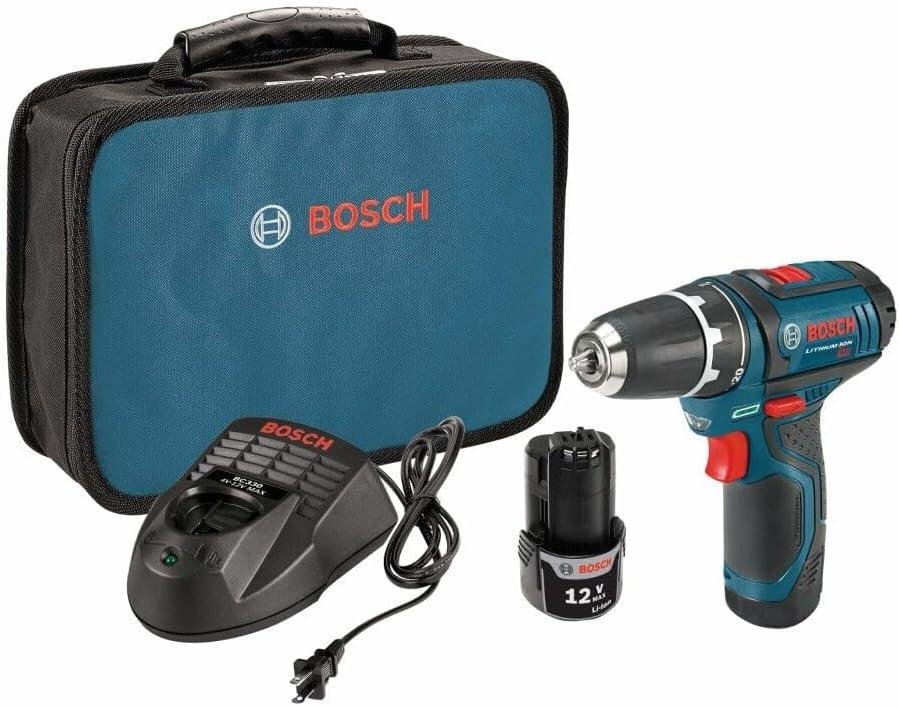
On our bench, the BOSCH PS31-2A presents itself as a compact, jobsite-style drill/driver that still feels at home in a woodworking shop. The body is notably short at a 7-inch head length,which matters when we’re drilling pocket holes inside cabinet carcasses or driving screws between closely spaced rails where a larger drill fights for clearance. Bosch lists it at about 1.80 lbs (tool only),and multiple customer themes echo that it’s lightweight,pleasant in the hand,and well balanced—all practical advantages when we’re doing repetitive hinge installs or working overhead on French cleats. The spec-side story is straightforward: 265 in-lbs max torque, two-speed gearbox (0–350 / 0–1,300 RPM), and 20+1 clutch settings. In woodworking terms, that clutch range helps us “sneak up” on screw depth in softwoods and plywood without stripping, then switch to drill mode for clean pilot holes—especially useful when we’re trying to avoid splitting near edges.Build-quality impressions from customers largely center on “solid” and “well made,” with the 3/8-inch single-sleeve three-jaw chuck called out as secure in typical driving and light drilling. A few reviewers do mention issues—most notably a report of a chuck separating/breaking—so we’d treat it like a compact precision driver/drill rather than a pry bar or heavy-mixing tool. The onboard LED light and fuel gauge are small touches that make a real difference at the bench: we can see screw heads in shadowed corners, and we get warning before the battery falls off a cliff mid-install. Reviewers also frequently praise fast charging (often quoted around 30–45 minutes from low to full), tho one significant “shop reality” note shows up in feedback: verify what batteries are actually in the box, because some buyers reported confusion between BAT411 (1.34Ah) and the 2.0Ah BAT414 packs depending on seller/returns. if we’re outside the U.S., we need to confirm charger input voltage—one customer noted the included charger was 110V only, which matters for any shop running 240V mains.
- Included accessories: Drill/driver, charger, (2) batteries, carrying case
- Compatible attachments/accessories: 3/8-inch shank drill bits, driver bits, countersink bits, twist bits for metal, pocket-hole driver bits, right-angle drill attachment (useful for tight cabinetry)
- Ideal project types: Cabinet hardware installs, shop jigs, pocket-hole assembly, hinge mounting, drawer slide installation, furniture knock-down fittings, light-duty site installs
- Wood types tested by customers: Softwoods (general shop use), “hardwood” mentioned cautiously by customers (with limitations noted for very large bits)
| Spec | BOSCH PS31-2A (from listing/manufacturer info) | What it means on the bench |
|---|---|---|
| Max torque | 265 in-lbs | plenty for driving wood screws into studs/plywood; use clutch to prevent overdriving in hardwood face frames. |
| Speed range | 0–350 / 0–1,300 RPM | Low gear for controlled driving; high gear for pilot holes and small-to-medium drilling. |
| Clutch | 20+1 settings | Helps dial screw depth and reduce cam-out/stripping—useful for repeatable cabinet work. |
| Chuck | 3/8″ single-sleeve, three-jaw | Quick bit changes with one hand; suitable for common woodworking bits and drivers. |
| head length | 7 inches | fits inside carcasses and between framing members more easily than full-size drills. |
| Tool weight | ~1.80 lbs (tool only) | Less fatigue during repetitive installs; easier to control for delicate hardware work. |
| Accessory / Bit Type | Fits 3/8″ Chuck? | Woodworking Use |
|---|---|---|
| Driver bits (Phillips/Torx/Square) | Yes | Hinges, pulls, drawer slides, pocket-hole screws. |
| Brad-point bits | Yes | Cleaner entry in hardwood/plywood for dowels and pilot holes. |
| Countersink bits | Yes | Flush screw heads; reduces splitting near edges. |
| Small hole saws / self-feed (size-limited) | Often | Use caution—compact 12V drills can stall with larger cutters in dense stock. |
| Right-angle attachment | Yes | Back corners of cabinets, tight interior carcass work. |
| Task | Recommended Use | Realistic Expectation (based on specs + reviews) |
|---|---|---|
| Driving cabinet screws | Clutch settings 8–16 (adjust to material) | Strong control; reviewers consistently praise ease of use and power for typical tasks. |
| Drilling pilot holes (1/16″–1/8″) | High gear, steady feed | Comfortable, precise; compact size helps keep alignment in tight spots. |
| Large-bore drilling in thick hardwood | Consider stepping up to higher-voltage drill | One reviewer specifically cautions about 3/4″ auger bits in thick hardwood. |
See Full Specifications & Customer Photos
real World Drilling and Driving Performance in Common Shop Tasks

In everyday shop work—cabinet hardware,hinge screws,pocket-hole assembly,and jig building—we found the BOSCH PS31-2A’s compact format is the real story. With a 7-inch head length and a tool weight around 1.80 lbs, it’s easy to keep the bit square when we’re working inside carcasses or reaching behind face frames where a bigger drill just feels clumsy.For drilling, the two-speed gearbox—0–350 RPM for controlled starts and 0–1,300 RPM for faster boring—lets us match speed to the task: slower for clean pilot holes and countersinks, faster for small twist bits in plywood and softwoods. The drill’s 265 in-lbs of max torque and 20+1 clutch settings also help prevent stripping screws or snapping small drivers, which matters when we’re driving into hardwood edging or running a lot of #6 and #8 screws. Several customers echo what we noticed on handling: lightweight, easy to use, and well balanced, with the integrated LED being genuinely helpful when we’re lining up screws in shadowed corners of a cabinet or under a bench.
For driving performance, the clutch gives useful “feel” for repeatable results—especially when we’re setting hardware screws flush without crushing plywood veneers. Reviewers repeatedly describe it as “small and powerful,” “packs a punch,” and a strong choice for small to medium jobs, while also pointing out practical omissions like no magnetic bit holder and some wishing for a belt clip. One theme worth taking seriously for woodworkers is the battery/kit clarity: multiple buyers mention confusion around whether the kit includes 2.0Ah packs; some received BAT411 (1.34Ah) instead of BAT414 (2.0Ah), particularly on used/open-box purchases—so we’d check the battery label when it arrives. Technique-wise, this size drill is best when we let the bit do the cutting: use sharp brad-points for clean entry, back out to clear chips in deeper holes, and consider stepping up in diameters rather than forcing a big bit. A reviewer even notes it might not be the first pick for a 3/4″ auger bit thru thick hardwood, which aligns with how we’d position it: an excellent carry-around drill/driver for most woodworking fastening and pilot-hole work, with limits once you get into large-diameter boring or heavy continuous drilling.
- Included accessories: Drill/driver, charger, (2) batteries (capacity can vary by seller), carrying case
- Compatible attachments/accessories: 3/8″ round-shank drill bits, brad-point bits, countersinks, driver bits, small Forstner bits (within reason), bit extenders, right-angle adapter (helpful in cabinets)
- Ideal project types: cabinet hardware installs, flat-pack and shop furniture assembly, pocket-hole joinery, jig building, shelf installation, light-duty site punch-list work
- Wood types tested by customers: Softwoods and plywood (common “around the house” use); some driving into framing lumber/2x material is mentioned
| Spec | BOSCH PS31-2A (From Listing) | Why It Matters in the Shop |
|---|---|---|
| Max torque | 265 in-lbs | More controlled driving of wood screws; less stalling in small/medium fastening |
| Speed ranges | 0–350 / 0–1,300 RPM | Low for pilots/countersinks; high for faster drilling with smaller bits |
| Clutch | 20+1 settings | Helps prevent stripping hardware screws and overdriving into plywood |
| Chuck | 3/8″ single-sleeve, three-jaw | Quick one-handed bit changes; grips common woodworking bit shanks |
| Size/weight | 7″ head length, ~1.80 lbs | Easier to maneuver inside cabinets and reduces fatigue during repetitive driving |
| Accessory Type | Recommended Pairing | Notes |
|---|---|---|
| Drill bits | Brad-point for clean holes in wood | Cleaner entry/exit than standard twist bits in plywood and hardwood |
| Driving | #2 Phillips / Torx bits | Torx often reduces cam-out for cabinet and construction screws |
| Cabinet interiors | Right-angle adapter | Helps exploit the short head length in tight corners |
| Clean starts | Countersink + pilot bit set | reduces splitting and keeps screw heads flush in hardwoods |
| Task Capacity | Recommended | Real-World Expectation (Based on Specs/Reviews) |
|---|---|---|
| Pilot holes & small drilling | Frequent use | Comfortable and capable; reviewers call it strong for its size |
| Driving wood screws | Frequent use | Clutch control + torque works well; watch for dropped screws without a magnetic holder |
| Large auger bits in thick hardwood | occasional / not ideal | Even reviewers flag this as a possible limitation; step-drill or use a larger drill when needed |
See Full Specifications & Customer Photos
Key Features Woodworkers Will Appreciate for Joinery and Assembly
For joinery and assembly,what we appreciate most about the BOSCH PS31-2A is how its compact specs translate into real control at the bench. With a 7-inch head length and a tool weight around 1.8–2.0 lbs (bare tool,per Bosch),it’s easy for us to slip the drill between cabinet sides,inside carcasses,or behind face frames without resorting to awkward angles that can walk a bit off-center. The 265 in-lbs of max torque is plenty for driving confirmat screws in ply, setting pocket-hole screws in hardwood edging, or running hinge screws without cam-out—especially when we pair it with the 20+1 clutch settings to avoid stripping threads or snapping small screws. The two-speed gearbox—0–350 RPM for controlled driving and 0–1,300 RPM for drilling pilots—lets us teach good technique in the shop: drill clean pilots at the higher range, then drop to low speed with the clutch engaged to seat fasteners gently. The 3/8-inch single-sleeve three-jaw chuck is also practical for assembly work as we can swap bits one-handed while holding a case side or clamp with the other.
Customer review themes line up with what we look for in an assembly drill: many call it “lightweight,” “easy to use,” and surprisingly strong for its size, and several mention the LED light being genuinely helpful when driving screws inside cabinets or under benchtop overhangs. We did notice repeated “wish list” items—reviewers commonly wish it had a magnetic bit holder and some want a belt clip; we agree those would be handy when moving between clamps, glue, and fasteners. Battery talk is mostly positive (people frequently enough say the runtime feels long and the charger is quick), but we also saw an critically important caution: some buyers reported confusion about the kit’s battery capacity, with mentions of BAT411 (1.3Ah) versus BAT414 (2.0Ah), especially on used/open-box purchases—so for shop planning, we’d verify what arrives and keep the return window in mind. One reviewer notes a chuck failure on an earlier unit, while others describe the drill as well made; that mix suggests we should treat the chuck with respect—avoid side-loading (like using the drill to lever parts into alignment), keep bits seated properly, and periodically check for wobble if precision dowel work matters to us.
- Included accessories (kit)
- PS31 12V Max 3/8″ Drill/Driver
- (2) 12V batteries (capacity can vary by seller/kit—confirm at delivery)
- Battery charger
- Carrying case (reviewers note extra room for small hand tools and bits)
- Compatible attachments/accessories (shop-useful)
- 1/4″ hex impact-style bits (used with a 1/4″ hex-to-round adapter)
- Bradle-point bits for clean pilots in hardwood and plywood
- Countersink bits for flush screw heads in face frames and jigs
- Pocket-hole driving bits (square/Robertson depending on your screws)
- Small Forstner bits (within reasonable size for a 12V drill—see table)
- Right-angle drill adapter for inside-cabinet hardware installs
- Magnetic bit holder or magnetic screw guide sleeve (common reviewer request)
- Ideal project types
- Cabinet and built-in assembly (hinges, slides, face frames)
- Furniture assembly and repairs (pilot holes + controlled driving)
- Shop jigs and fixtures (countersunk screws, pocket-hole joinery)
- Hardware installs (knobs/pulls, brackets, hinge plates)
- Wood types tested by customers (as mentioned in reviews)
- Softwoods / construction lumber (e.g., 2x material—one reviewer used 3″ screws)
- Studs/wood framing (general install tasks)
- Note: reviewers also mention drywall and occasional metal use; hardwood/large auger-bit drilling is cited as a possible limit.
| Joinery/Assembly-Relevant Spec | BOSCH PS31-2A (from listing/specs) | Why We Care in the Woodshop |
|---|---|---|
| Max torque | 265 in-lbs | Helps drive screws confidently without stalling; still use clutch to prevent stripped holes. |
| Speed ranges | 0–350 / 0–1,300 RPM | Low speed for controlled driving; high speed for pilot holes and light drilling. |
| Clutch | 20+1 settings | Critical for repeatable cabinet/hardware work and reducing fastener damage. |
| Chuck | 3/8″ single-sleeve, three-jaw | One-handed tightening is convenient during assembly; check periodically for wobble if doing precision drilling. |
| Head length | 7 inches | Better access inside cabinet boxes and tight corners. |
| Weight | ~1.8 lbs (tool only) | Less fatigue when installing hardware or doing overhead/drill-at-angle work. |
| accessory / Bit Type | Works Well for Joinery & Assembly? | Usage Notes |
|---|---|---|
| Bradle-point pilot bits | Yes | Cleaner starts in hardwood/ply; reduces wandering on face frames. |
| Countersink bits | Yes | Pair with higher speed for drilling; then reduce speed/clutch to drive screws. |
| Pocket-hole driver bits | Yes | Use low gear + clutch to avoid overdriving and splitting. |
| Right-angle adapter | Yes | Helpful in cabinet corners where even a short 7″ head can’t line up straight. |
| Large auger bits (e.g., 3/4″) | Sometimes / limited | A reviewer flagged thick hardwood + large auger bits as a potential edge case—pre-drill or step up tool size if that’s routine. |
| Task Capacity | Recommended (Best practice for This 12V Class) | What Reviews Suggest in real Use |
|---|---|---|
| Driving cabinet/wood screws | Excellent fit | Many reviewers describe it as strong, easy to handle, and great for small-to-medium jobs. |
| Precise hardware installation | Excellent fit | LED and light weight are commonly praised; clutch helps avoid stripping small screws. |
| heavy boring in thick hardwood (large bits) | Not ideal as a primary tool | At least one reviewer doubts it for thick hardwood with a 3/4″ auger bit; plan a corded drill or higher-voltage drill if that’s frequent. |
See Full Specifications & Customer Photos
Ease of Use for Beginners and Control for Experienced Woodworkers

For beginners in the shop, we found the BOSCH PS31-2A is the kind of drill/driver that encourages good habits instead of punishing mistakes.the combination of low weight (about 1.8 lbs),a compact 7-inch head length,and a simple two-speed gearbox (0–350 / 0–1,300 RPM) makes it feel manageable when we’re learning to drive screws straight or drill clean pilot holes without wobble. several customer reviews echo that it’s a “first drill/driver” that’s “easy to use” and “lightweight,” which matches how approachable it feels on common woodworking tasks like assembling cabinet boxes, installing hardware, and building jigs. The 20+1 clutch settings are especially helpful for beginners—set a lower number when driving into softwoods to avoid stripping screw heads or snapping small screws, then bump it up as needed. The integrated LED light and fuel gauge also support newer users: we can see our layout marks and keep an eye on battery status instead of having the tool “just stop” mid-task,a point multiple reviewers specifically appreciated.
At the same time, experienced woodworkers still get real control where it matters: torque management and access in tight spots. On paper it’s rated at 265 in-lbs max torque,and in practice that’s enough for most shop assembly and installation work—think pre-drilling and driving in face frames,shop fixtures,and knobs/pulls—without hauling out a heavier 18V tool. The 3/8-inch single-sleeve three-jaw chuck makes one-handed bit changes realistic when we’re bouncing between a brad-point bit, a countersink, and a driver bit. Reviewers consistently describe it as “small but very strong,” “well balanced,” and able to “get the job done” for home and small-to-medium jobs, while also noting reasonable limits—one reviewer pointed out that pushing a 3/4-inch auger bit through thick hardwood is where a compact 12V drill may start to feel outgunned. we also want to flag a real-world nuance from customer feedback: battery details can be confusing on some listings, with a few reviewers reporting they received 1.34Ah (BAT411) packs instead of 2.0Ah (BAT414)—so we’d verify the included batteries on arrival if runtime is a priority. for woodworkers outside the U.S., one review warns the included charger may be 110V-only (not dual-voltage), which matters if our shop power is 220–240V.
- BOSCH PS31-2A drill/driver (12V Max, 3/8″ chuck)
- (2) batteries (capacity may vary by kit/version—verify labeling)
- Charger (check voltage compatibility for your region)
- Carrying case (reviewers mention extra room for bits and small hand tools)
- Brad-point drill bits (cleaner entry holes for hardwoods/plywood)
- Countersink bits (reduce tear-out and improve screw seating)
- Driver bits (Phillips, Torx, square—choose to match your screws)
- Magnetic bit holder (common “wish list” item since the drill doesn’t include a magnetic tip)
- right-angle attachment (helps when clearance is even tighter than the 7″ head allows)
- Cabinet hardware installs (hinges, pulls/knobs, shelf pins)
- Shop jigs and fixtures (fence adjustments, stop blocks, templates)
- Furniture assembly (pilot holes + controlled driving)
- On-site installs (lightweight overhead drilling/driving per intended use)
- Softwoods (pine, SPF): reviewers report easy driving with clutch control
- stud lumber: commonly mentioned for around-the-house fastening
- Drywall/wardrobe shelving contexts (installation work noted by customers)
- Light metal: a few reviewers mention occasional success (use proper bits and slower speed)
| Feature | What It Means in the Woodshop | why It Helps Beginners vs. Pros |
|---|---|---|
| Two speeds: 0–350 / 0–1,300 RPM | Low speed for controlled driving; high speed for drilling small/medium holes | Beginners avoid cam-out; pros match speed to bit size/material |
| 20+1 clutch settings | Limits torque to reduce stripped screws and crushed fibers | Beginner-amiable guardrails; pros fine-tune for repeatable installs |
| Max torque: 265 in-lbs | Enough for most pilot-hole + screw work, light drilling | Solid performance without stepping up to heavier 18V tools |
| Weight: ~1.8 lbs / Head length: 7″ | Comfort and access in cabinets, between clamps, and inside carcasses | Less fatigue for new users; faster positioning for experienced hands |
| Accessory Type | Typical Size/Spec | Fit/Notes with PS31 (3/8″ Chuck) |
|---|---|---|
| Twist/Brad-point bits | 1/16″–3/8″ | Direct fit; use higher speed for small bits, lighter feed pressure in hardwood |
| Countersink bits | 1/4″ hex or round shank | Both styles work; hex is fastest for bit swaps |
| Driver bits | 1/4″ hex | Use a bit holder for reach and better screw control |
| Hole saws | small diameters | Possible for light work; start slow (0–350 RPM) and avoid aggressive sizes in dense hardwood |
| Task | Recommended Approach | realistic Expectation (Based on Specs/Reviews) |
|---|---|---|
| Driving screws in softwood | Use clutch settings; pre-drill near edges | Very strong for its size; reviewers mention plenty of power |
| Drilling in hardwood | Brad-point bits, steady feed, back out to clear chips | Fine for common diameters; very large bits in thick hardwood can be borderline |
| Tight-space assembly | Short bits/bit holder; keep wrist aligned | 7″ head length is a major advantage; commonly praised |
See Full Specifications & Customer Photos
Customer reviews Analysis

What Woodworkers Are Saying: BOSCH PS31-2A 12V Max 3/8″ Drill/Driver Kit
1. Overall sentiment from woodworking customers
Overall sentiment skews strongly positive for woodworking-style tasks and shop/house projects. Several woodworkers and DIYers described it as a “terrific little drill” that feels more capable than its compact size suggests, with common praise focused on balance, battery life, and day-to-day usefulness. Value is also a recurring theme—multiple reviews highlight getting a drill, charger, and two batteries for less than many competing kits with only one battery.
2. Performance feedback (accuracy, power, results)
multiple reviews highlight surprisingly strong driving power for a 12V tool, especially for typical woodworking fastening (screws into studs/2x lumber, hardware installation, and general assembly).
- Power under load: Several woodworkers mentioned it “packs a punch for its size,” and one user noted that if you “crank up the torque setting you better hold on,” implying it can drive aggressively enough to twist a workpiece or strain your wrist if not braced.
- practical results: Customers successfully used this for driving 3″ screws and even pulling warped material into alignment (one reviewer described straightening a warped 2×4 with 3″ screws).
- Limits in thicker stock: Some users reported challenges with more demanding drilling—one reviewer specifically called out that drilling through thick hardwood with a 3/4″ auger bit may be outside its comfort zone (or at least unproven).
Occasional excerpt (sparingly): One user said it “absolutely SMOKES” an older 18V Ryobi in battery life, handling, and perceived power—suggesting real-world performance can outperform expectations for this voltage class.
3. build quality and durability observations
Common praise includes a solid feel and good longevity expectations—reviewers repeatedly call it “well made” and “feels solid,” with comments about tight-sounding components.
That said, some users reported challenges with durability of the chuck:
- One reviewer noted the 3/8″ chuck broke and separated from the body on their first unit (they bought another to replace it).
- On the positive side, a long-term bosch user reported an earlier model lasting for decades, and another reviewer mentioned a Bosch drill lasting 10+ years before breaking after a significant drop (30’+ onto concrete), implying the brand/tool line has a reputation for toughness.
4. Ease of use for different skill levels
Ease of use is a standout theme.
- Beginners appreciated the straightforward setup: One reviewer said it was their first drill/driver experience and found it “amazing,” “easy to use,” and lightweight.
- Comfort and fatigue: Multiple reviews highlight the compact size, light weight, and good balance—critically important for reducing fatigue during repetitive driving (hinges, pulls, cabinet hardware, assembly).
- Helpful features: Several woodworkers mentioned the LED light for visibility and the battery status indicator (less guesswork than tools that simply die suddenly).
5. Common project types and success stories
While not all reviews are strictly “woodshop furniture builds,” many reported projects that overlap strongly with woodworking and installation tasks:
- Cabinet and hardware work: Customers report using this for attaching kitchen cabinet handles.
- Shelving and built-ins: Several reviewers mentioned installing shelves (wardrobe/closet-style) and general apartment upgrades.
- Deck and outdoor wood repairs: one reviewer described remodeling a deck and driving long screws effectively.
- General assembly: Multiple users used it for flat-pack furniture and household fastening jobs where control, size, and repeatability matter.
- Tight-space access: Several woodworkers mentioned the small body fits places larger drills can’t—useful around cabinet interiors, between studs, or inside assembled frames.
6. issues or limitations reported
Some users reported challenges with a few practical or purchasing-related drawbacks:
- Missing convenience features:
- Several reviewers wished for a belt clip.
- one beginner noted they keep dropping screws and wished for a magnetic tip/bit retention (note: that’s frequently enough solved with a magnetic bit holder accessory, but the complaint reflects real use).
- Chuck durability (isolated but notable): One review reported a chuck failure (separation from body).
- Battery confusion / listing accuracy: A detailed review warned the “2A” in PS31-2A can be misleading—some kits may ship with 1.3Ah batteries (BAT411) rather than 2.0Ah (BAT414) depending on seller/condition (and the reviewer suspected a “used” return may have been swapped). This is less a tool performance issue and more a “verify what’s in the box” warning.
- charger voltage limitation (international buyers): One customer in Australia reported the charger was 110V only (not dual voltage), making it incompatible with 240V without a proper solution—important for woodworkers outside North America.
- Not ideal for heavy-duty drilling: Reviewers generally positioned it as excellent for small-to-medium work, but possibly not the best pick for continuous contractor-grade duty or very large auger bits in hardwood.
| Aspect | Common Feedback |
|---|---|
| Performance | Strong driving power for its size; great for screws, light-to-medium drilling; may struggle with very large bits in thick hardwood |
| Precision / Control | Compact, balanced feel helps controlled driving; LED light improves placement visibility |
| Durability | Often described as solid/well-made; one report of chuck failure; long-term Bosch users cite years of service |
| Ease of Use | Beginner-friendly; lightweight reduces fatigue; battery gauge appreciated |
| Versatility | Commonly used for cabinet hardware, shelves, deck screw driving, furniture assembly, and tight spaces |
| Issues / Limitations | No belt clip for some kits; screw dropping without magnetic holder; battery Ah confusion by seller; 110V-only charger for some regions |
Pros & Cons
Pros & Cons
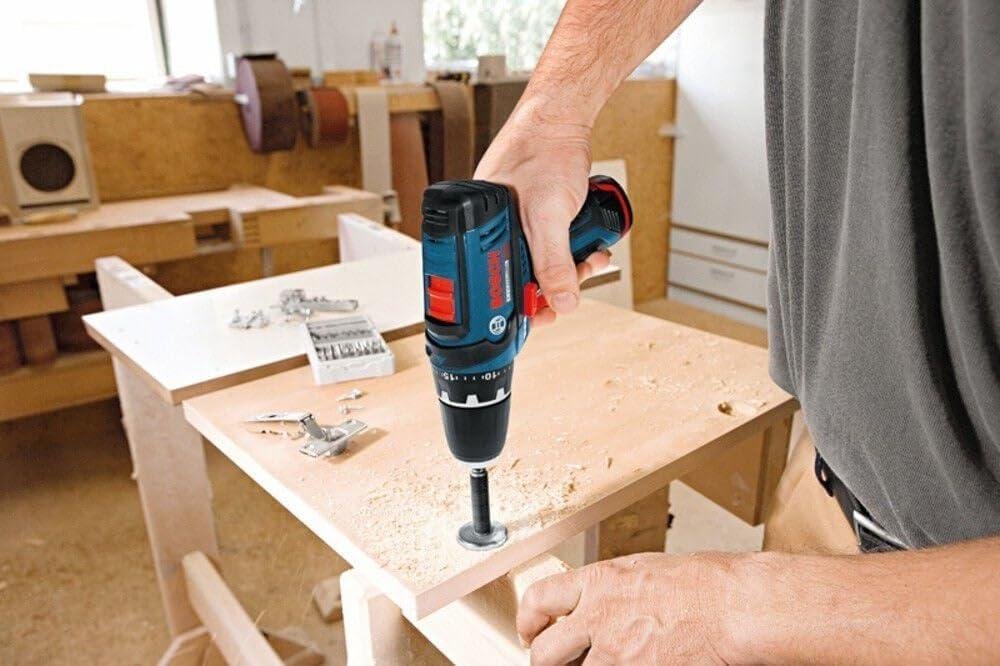
After putting the Bosch PS31-2A through the kinds of “real shop” jobs we actually reach for a 12V drill for—hardware installs, cabinet tweaks, quick electrical work, and overhead fastening—here’s where it shines and where it shows its limits.
Pros
- Featherweight feel, serious control. At roughly 2 lbs (about 1.8 lbs bare), it’s a drill we can keep on a ladder or over our head without paying for it the next day.
- Compact where it matters. The short, ~7-inch head length makes it a “get in, get out” tool for tight cabinets, stud bays, and cramped corners.
- Torque that covers most daily tasks. the 265 in-lbs max torque is plenty for the 90% work—driving screws, drilling pilot holes, and light-to-medium fastening without drama.
- Two-speed gearbox hits a practical sweet spot. Low (0–350 RPM) for controlled driving; high (0–1,300 RPM) for drilling. We don’t have to fight the trigger to stay in the lane.
- 20+1 clutch settings help avoid “oops” moments. Great for delicate hardware and preventing stripped screw heads or chewed-up cabinet faces.
- Single-sleeve 3/8″ chuck is quick in the hand. Bit swaps are straightforward, and the three-jaw design holds on reliably for typical shop bits.
- Built-in LED + fuel gauge = less guesswork. The light helps in shadowy corners, and the battery indicator saves us from the classic “it died mid-screw” surprise.
- Two 2Ah batteries included. With a pack on deck, we can rotate and keep moving—especially on install days.
Cons
- Not a replacement for a 18V/20V workhorse. For bigger hole saws, heavy spade bits, long deck screws, or constant drilling in dense material, we still reach for a higher-voltage drill.
- 3/8″ chuck can be limiting. It’s perfect for common bits, but it’s not as versatile as a 1/2″ chuck when we want to run larger-diameter accessories.
- Top speed is modest compared to some competitors. 1,300 RPM is fine for most pilot and twist-bit work,but if we’re chasing faster drilling in softer materials,it won’t feel “zippy.”
- Compact grip may not fit every hand perfectly. We like the maneuverability, but those of us with larger hands may want a beefier handle for extended sessions.
- Best for finesse, not brute force. The clutch and light weight encourage precision—great for installs—but it’s not the tool we’d pick to muscle through stubborn jobs all day.
| Shop Moment | How the PS31-2A Feels |
|---|---|
| overhead fastening | Comfortable and steady; less wrist fatigue |
| Tight cabinet corners | Fits where bulkier drills refuse to |
| delicate hardware installs | Clutch settings help us avoid stripping |
| “Big bite” drilling (large bits/hole saws) | Doable in moderation; not its main lane |
Q&A

Is this powerful enough for hardwoods like oak or maple?
For most drilling and driving in hardwoods,yes—within the limits of a compact 12V tool. The PS31 delivers up to 265 in-lbs of torque with two speed ranges (0–350 and 0–1,300 RPM), which is plenty for driving cabinet screws, pocket-hole screws, and drilling typical pilot holes in oak/maple. Where it can bog down is heavy, continuous boring (for example, a large 3/4″ auger bit through thick hardwood). In dense wood,use the low gear (0–350 RPM),drill pilot holes,and let the bit cut—don’t force it.
How does it perform on plywood, veneer, and cabinet work?
It’s well-suited to plywood and shop assembly because it’s light (about 1.8–2 lbs) and compact (7″ head length), so you can work inside cabinets and tight corners without fighting the tool. the 20+1 clutch settings are helpful for avoiding overdriving screws and “puckering” veneers or stripping melamine/particleboard. For clean holes in veneer/plywood, use sharp brad-point bits and moderate speed to reduce tear-out.
Can it handle production work, or is it mainly for hobby projects?
It can handle a lot of daily shop use—many owners describe it as “small but very strong” and note excellent battery life, especially with the two-battery kit. That said, if your “production” means repetitive large-diameter drilling, long structural screws all day, or constant hole-saw work, a higher-voltage drill/driver (18V class) is the better primary tool. As a compact second drill for assembly, installs, and overhead work, this one is a strong fit.
Is the initial setup and operation beginner-friendly?
Yes. The basic workflow is straightforward: charge the batteries, insert a bit into the 3/8″ single-sleeve chuck, choose speed (low for driving/control, high for drilling), and set the clutch to prevent stripping. Several reviewers specifically mention it being their first drill/driver and finding it easy to use and lightweight. The built-in LED and fuel gauge also help beginners work accurately and avoid surprise battery cutoffs mid-task.
What adjustments are available for fine woodworking (clutch, speed, control)?
You get two mechanical speeds (0–350 / 0–1,300 RPM) plus 20+1 clutch settings, which is exactly what woodworkers want for repeatable screw depth—especially in plywood and cabinet hardware installs.Use low gear plus a lower clutch number to avoid snapping small screws; switch to drill mode (+1) when boring holes. The variable-speed trigger gives additional control for starting small bits without wandering.
Does it work with standard woodworking drill/driver accessories?
Yes—its 3/8″ three-jaw chuck accepts standard round- and hex-shank bits, brad-point bits, countersinks, step bits (within reason), and most small hole saw arbors. For a typical woodworking setup, pairing it with a drill/driver bit set, brad-points, and a countersink kit covers most tasks.One customer wished it had a magnetic bit holder; you can add a magnetic bit holder or a locking bit extension to help with dropped screws.
Will it fit in a small workshop, and can it be bench-mounted?
This is a good small-shop drill as it’s compact and cordless—no dedicated floor space, no cord management, and it’s easy to store in the included case (reviewers mention extra room in the case for bits and small hand tools).Like most handheld drills, it’s not meant to be permanently bench-mounted like a drill press, but it works well with portable drill guides or jigs (hinge jigs, shelf-pin jigs, pocket-hole jigs) when you need repeatable holes.
What maintenance and durability issues should woodworkers know about (and what about the charger voltage)?
Maintenance is minimal: keep the chuck clean, avoid storing batteries fully dead for long periods, and don’t overload the drill with oversized bits that stall the motor repeatedly. Durability feedback is largely positive (“feels solid,” long service life), but at least one owner reported a chuck failure (separating from the body), so inspect the chuck for wobble and stop using it if anything loosens. Also note charger power: at least one buyer reported receiving a 110V-only charger that was incompatible with 240V regions—so if you’re outside North America, confirm the charger voltage before ordering.Battery capacity can vary by seller/kit; some users noted confusion between ~1.3Ah batteries (e.g., BAT411) and 2.0Ah packs (e.g., BAT414), so verify what’s included when it arrives.
Elevate Your Lifestyle

The BOSCH PS31-2A 12V Max 3/8″ drill/Driver Kit pairs a compact 7″ head and ~2 lb class weight with 265 in-lbs of torque, two speeds (0–350 / 0–1,300 RPM), and 20+1 clutch settings for controlled drilling and driving in wood. The 3/8″ single-sleeve chuck, LED light, and fuel gauge round out a very user-friendly package. Customer feedback commonly praises its balance, surprisingly strong performance for a 12V tool, quick charging, and the convenience of two batteries—while a few note wish-list items like a belt clip/magnetic bit holder, occasional chuck concerns, and the need to verify battery/charger details (especially voltage outside the U.S.).
Best for: hobby woodworkers with small to medium projects, cabinet installers needing precision, and beginners learning clean driving without stripping.
Consider alternatives if: you regularly bore thick hardwood with large auger bits,need all-day contractor-duty power,or require 240V charging.
it’s a solid compact driver that excels where control and access matter most.
Want to see current pricing and customer photos? View on Amazon & Read More Reviews →