

Blog
CUTEBEE Dollhouse Kit Review: Our Scroll Saw-Ready?

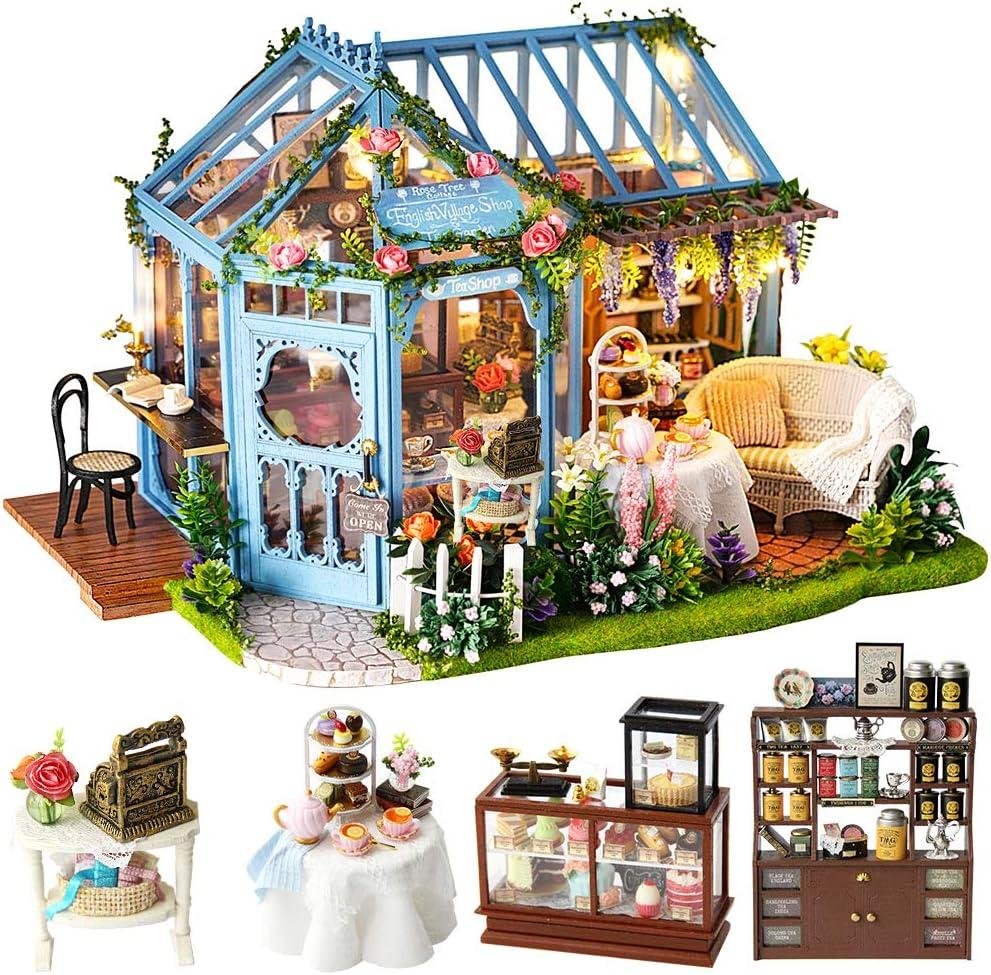
Ever tried dialing in a perfect fit on tiny parts, only to realize your usual shop habits—heavy clamping, aggressive sanding, “close enough” cuts—don’t scale down? Miniature builds expose every gap, fuzzy edge, and misaligned corner, and they demand the same thing we chase on full-size furniture: precision, clean assembly, and reliable materials—just in a fraction of the space.
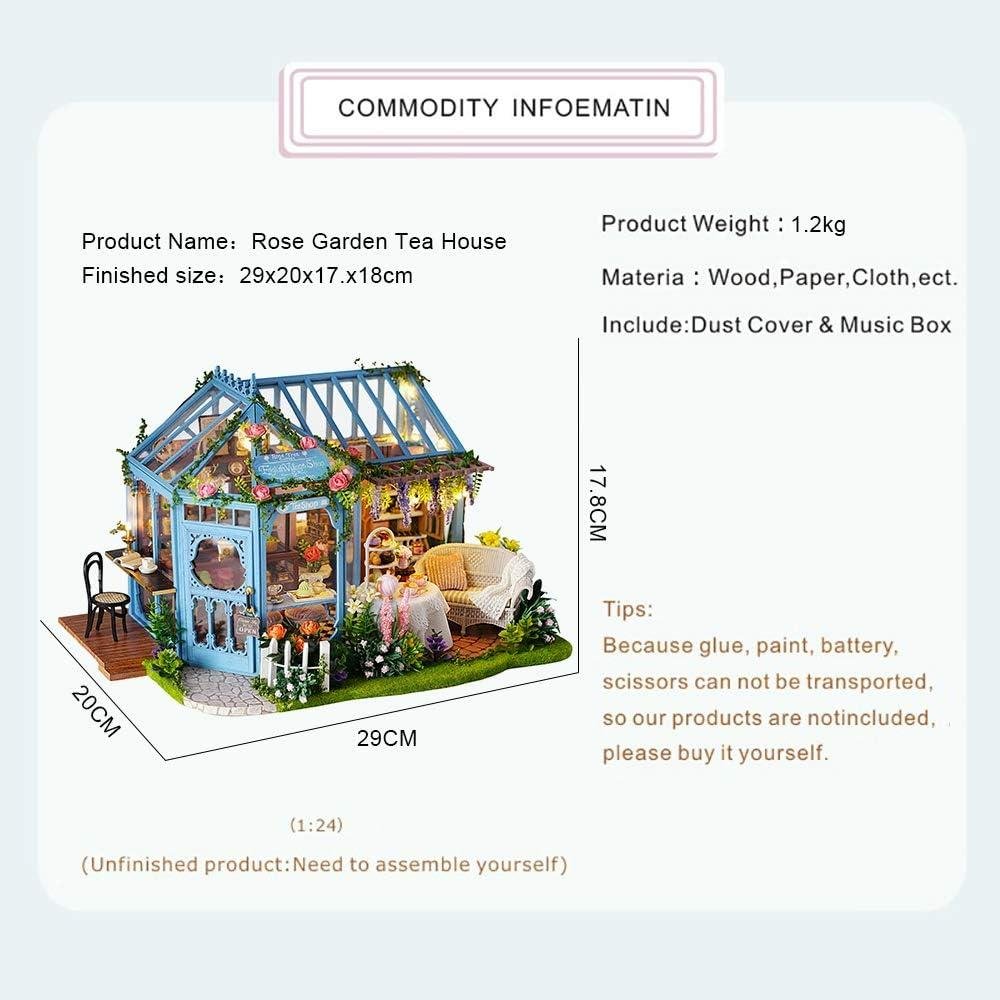
That’s where the CUTEBEE Dollhouse Miniature House with Furniture (rose Garden Tea House), 1:24 scale comes in. This isn’t a power tool, but it is a woodworking-adjacent kit designed for detailed, small-part construction, featuring precisely cut wooden pieces, dust-proof cover, LED lighting, and a music movement.It’s intended as a collectible display, not a toy.
In this review, we’ll cover what you get, how the instructions and learning curve feel, build-quality expectations, and whether the price matches the craftsmanship. We’ll also weigh common customer feedback—many reviewers highlight the realistic details and fit, while noting patience (and extra supplies like silicone glue and two AAA batteries) is required.
As woodworkers, we’ve learned that accuracy and clear instructions matter as much on the bench as they do at the table saw—and this kit puts that to the test.
Tool Overview and Miniature Build Quality

In our shop, we treat the CUTEBEE Rose Garden Tea house less like a “toy” and more like a micro-scale joinery and fabrication exercise: it’s a 1:24 scale DIY miniature with laser-cut/precisely cut wood parts, paper goods, plastics, and an integrated dust-proof cover plus a music movement. CUTEBEE notes it’s intended as a collectible display rather than something to be played with, and that matches what we’d expect from the delicate, thin stock used for the furniture and architectural panels. reviewers repeatedly describe it as “very detailed,” “rewarding,” and “more involved than snap-together kits,” with typical build times reported around ~100 hours for experienced miniature builders—useful context for woodworkers wondering whether this is a quick weekend diversion or a longer bench project. In practical terms, this kit rewards the same habits we use for tight cabinetry work: test-fitting, labeling parts, controlling glue squeeze-out, and working to a sequence so we don’t paint ourselves into a corner (literally, in a closed-up room box).
- Included accessories (per product description): pre-cut wood pieces, miniature furniture/ornaments, LED lighting elements, plants/decor parts, English instructions with step-by-step photos, dust-proof components, music movement
Miniature build quality is generally reported as solid for the price—customers often say the wood pieces are “precisely cut so that they fit together correctly”—but the real-world fit-and-finish still depends on our technique and a willingness to shim, clamp, and modify. Multiple reviews mention challenges like warped wood,parts that can splinter when removed,occasional scratched window film,and at least one report of a missing wall panel discovered late in the build. There are also repeated warnings that no glue/tools are included (one reviewer called “no tools” a major setback), which matters in a woodworking context: we’ll want a scalpel-style knife, tweezers, small squares/rulers, and light clamping pressure (binder clips are a common solution) to keep assemblies aligned while adhesive cures. It’s also worth taking the “dust-proof” claim seriously—thin clear panels can attract dust and scratch—so gentle cleaning methods matter (one reviewer even blew out a window with compressed air). As a skill-builder, this kit is great practise for precision handling and sequencing, but it’s not forgiving like full-size pine; a small cutting or gluing error can cost a part, so we should approach it the way we approach brittle veneer work: sharp blades, light passes, and dry-fit everything.
- Compatible attachments/accessories (shop add-ons customers use): silicone liquid glue / B-7000 style craft glue, CA (super glue), scalpel/X-Acto knife, tweezers, magnifier, ruler/small square, binder clips (mini “clamps”), edge touch-up markers/paint, replacement openness film, replacement fairy lights
- Ideal project types: micro-furniture layout practice, diorama/display builds, fine-motor-skills “precision joinery” training, gift builds for craft-focused families
- Wood types tested by customers: not specified in reviews (parts appear to be light, thin craft wood typical of laser-cut kits)
| Spec / Build Factor | what We Know (Specs + Review Themes) | What It Means in the Woodshop |
|---|---|---|
| Scale | 1:24 | Expect very small tolerances; small alignment errors show up fast. |
| Dust Protection | Dust-proof cover included | Helpful for display longevity; handle clear panels like acrylic—avoid scratches and harsh cleaning. |
| Lighting / Electronics | LED components; reviews mention occasional broken lights and a warning about incorrect power mods | test lights early before final closure; follow voltage guidance to avoid burning LEDs. |
| Assembly Difficulty | Common themes: patience required, intricate paper crafting, “more involved than snap kits” | Best for careful builders; treat like marquetry/veneer work—slow cuts, clean glue control. |
| Fit & Part Quality | Often “precisely cut,” but some report roof gaps/warping/splintering | Dry-fit and clamp; be ready to shim, re-square, or camouflage gaps with decorative elements. |
| Accessory | Included? | Why We’d Use It |
|---|---|---|
| Silicone liquid glue (e.g., B-7000) | No (per product note) | Gives working time for alignment; dries flexible and clear for many craft materials. |
| CA glue | No | Spot tacking warped parts or fast fixes—use sparingly to avoid frosting clear plastics. |
| Scalpel/X-Acto + fresh blades | No | Prevents splintering when freeing parts; cleaner edges on paper/plastic templates. |
| Binder clips / mini clamps | No | acts like clamping cauls at miniature scale to close gaps and maintain squareness. |
| Magnifier + tweezers | No | Essential for placing tiny parts accurately without crushing delicate pieces. |
| Capacity / Expectation | Recommended Approach | Reality From Reviews |
|---|---|---|
| Time commitment | Plan staged sub-assemblies; don’t rush glue-ups | Commonly reported at weeks of work; one builder cites ~100 hours |
| Fit tolerance | Dry-fit, square, clamp, than glue | Some report roof gaps or shelf height issues requiring resets/mods |
| Part handling | Knife-assisted part removal, light sanding if needed | Reports of splintering and snapped small pieces during assembly |
See Full Specifications & Customer Photos
Real World Performance in Precision Assembly and fine Detail work

In our shop, the CUTEBEE Rose Garden Tea House behaves less like a “tool” and more like a precision assembly exercise—and that’s exactly where woodworkers can learn a lot about fine-detail workflow. This is a 1:24 scale miniature that multiple customers say is “not to much bigger than my hand” (some estimate roughly 10–12 cm),which means every glue joint and alignment decision happens in the realm where we’d normally reach for bench chisels,marking knives,and small clamps. Reviewers consistently praise that the wooden pieces are precisely cut and “fit together correctly,” and we found that aligns with the kind of tolerances we expect from laser-cut craft stock—good enough for clean dry-fits, but still requiring technique. A recurring theme is that it’s “much more involved than a typical snap-together” kit and can take around 100 hours for experienced builders; that time isn’t as the parts are mysterious, but because the paper crafting is intricate, and “one small mistake in cutting or gluing can cost you the piece.” From a woodworking perspective, it’s a practical lesson in staging: dry-fit, label parts, and only commit adhesive when the subassembly is square and supported.
Real-world precision performance hinges on our process more than the kit’s materials. Customers report occasional fit challenges—most notably roof gaps (“about an inch wide” in one case), warped wood pieces, and fragile parts that can snap during glue-up—but another reviewer notes roof issues are often “easily rectifiable” with the right glue and pressure to line them up. That maps directly to workshop fundamentals: use controlled clamping (even improvised), choose an adhesive with working time for alignment, and reinforce delicate joints before handling. The kit includes features like dust proofing, LED lighting, and a music movement, but reviews stress you’ll need to supply basics (notably silicone liquid glue and 2× AAA batteries per the product notes). For detail work, several reviewers emphasize the need for external tools—scalpel/X-Acto, tweezers, ruler, magnifier, binder clips—and we agree: those are the difference between clean, repeatable results and frustration. One important caution surfaced in reviews: attempting to change the power source to USB 6V burned out LEDs—so we recommend sticking to the specified battery setup and treating the electrics like any delicate shop accessory: verify polarity, avoid over-voltage, and test before final enclosure.
- Included accessories (per listing/review themes): Pre-cut wooden pieces, mini furniture/ornaments, LED light components, dust-proof cover/panels, music movement, paper details/templates (glue/batteries not included)
- Compatible attachments/accessories (shop add-ons customers commonly use): silicone craft glue (or B-7000), CA/super glue (spot tacking), scalpel/X-Acto blades, tweezers, small ruler/square, magnifier, binder clips/micro clamps, fine-tip paintbrush, edge-touchup markers
- Ideal project types (woodworker crossover): miniature cabinetry and shelving practice, glue-up and clamping control drills, layout/dry-fit discipline, finishing tiny edges, enclosed “shadowbox” display builds, LED/detail integration practice
- Wood/materials tested by customers: laser-cut craft wood sheets (kit parts), printed paper/cardstock details, clear window film/plastic (some replaced with transparency film), faux grass material, gold-colored wire
| Spec / Requirement | What we Can Confirm | Why It Matters for Precision Work |
|---|---|---|
| Scale | 1:24 | Small errors are amplified; demands careful trimming, dry-fit, and controlled glue lines. |
| Size (review theme) | Frequently described as “not much bigger than my hand” / about 10–12 cm | Requires micro-clamping and fine-point tools rather than standard shop clamps. |
| Power | 2× AAA batteries required; caution from reviews about USB 6V causing LED failure | Electrical components should be tested early and kept within rated voltage. |
| Dust control | Dust proof feature in product title/description | Helps preserve tiny interiors; still requires gentle cleaning methods. |
| Accessory | Used For | Notes from Customer Themes |
|---|---|---|
| Scalpel/X-Acto | Clean part release,trimming paper/wood tabs | Reviewers mention splintering without careful cutting. |
| Tweezers | Placement of tiny parts | Commonly recommended due to the scale. |
| Binder clips / micro clamps | Holding glue joints under light pressure | Multiple builders used clips for alignment and gap control. |
| Silicone liquid glue / B-7000 | Main assembly adhesive | Product note says glue is required; reviewers prefer flexible craft glues for working time. |
| Area | Recommended “Capacity” (What We’d Plan For) | Actual Experience Reported by Customers |
|---|---|---|
| Time investment | plan for 40–100+ hours depending on experience | Several reviews cite ~100 hours or 2–3 weeks of steady work. |
| Precision tolerance | Dry-fit every subassembly; expect occasional adjustment | Roof gaps/warping sometimes require modifications and added pressure/clamping. |
| Tooling | Micro cutting and clamping tools on hand | “No tools is a major setback” is a repeated complaint; builders list knives/tweezers/magnifiers. |
See Full Specifications & Customer Photos
Key Features Woodworkers Will Appreciate in This DIY Dollhouse Kit
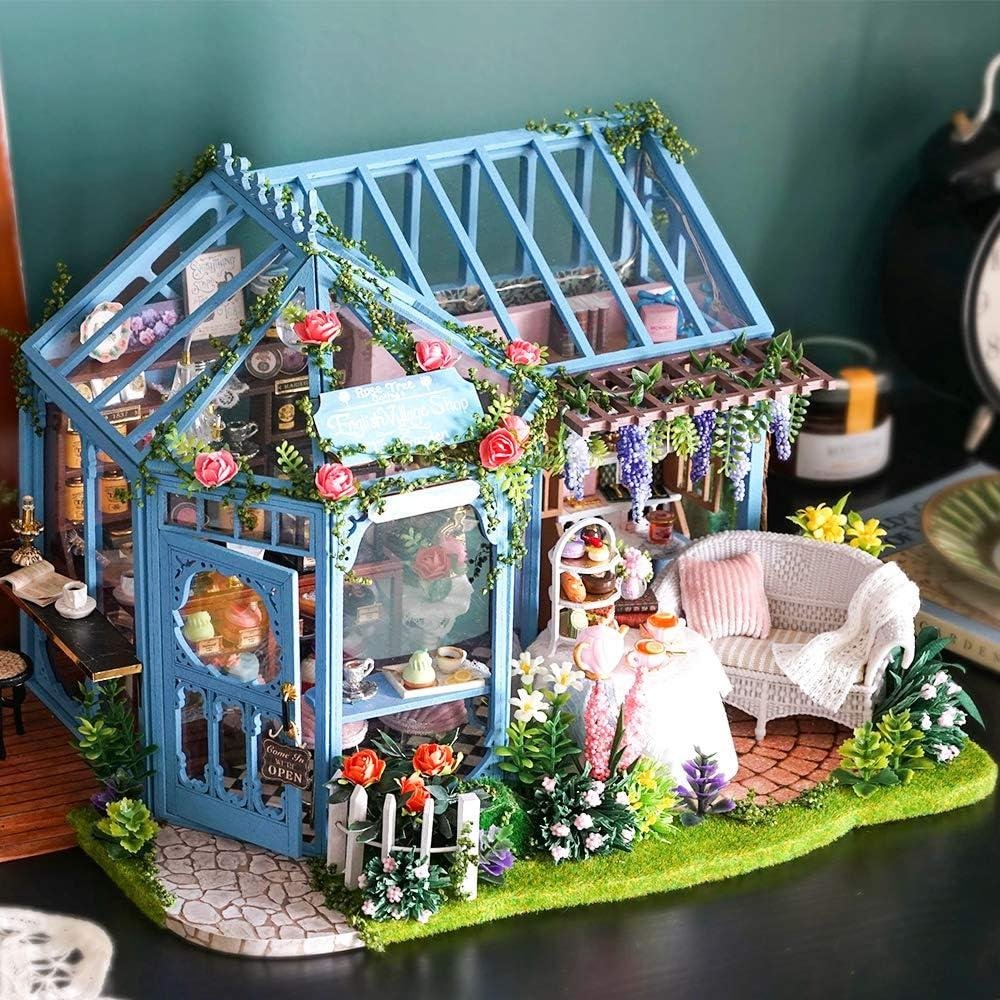
As woodworkers, what we appreciate most in the CUTEBEE 1:24 scale Rose Garden Tea House kit is that it behaves like a true micro joinery project: the kit’s pre-cut wooden parts reward clean layout, dry-fitting, and careful clamping—skills we already use at the bench. Multiple reviewers echo that the pieces are “precisely cut” and that the finished build is “beautiful,” with the English instructions and step-by-step photos doing a lot of the heavy lifting—especially if we’re used to reading exploded diagrams.That said, customer feedback also warns us to treat it like thin stock: some builders reported warped or fragile pieces and even a roof section leaving an open gap unless we adjust alignment and apply pressure while the glue sets. In workshop terms, this is a great reminder that “dimensioned” doesn’t always mean “perfectly square,” so we’ll get better results by using a small engineer’s square, sanding sticks for edge tuning, and light clamping (binder clips work well) rather than muscling parts into place.
The features woodworkers tend to value—repeatability, dust control, and clean detail work—show up here in miniature form: the kit includes dust-proof enclosure parts and a music movement, and the brand notes we must supply silicone liquid glue plus 2× AAA batteries. reviews underline the practical reality: there are no tools included and “no glue was provided,” so we’ll want to treat this as a small-scale tooling exercise. A sharp hobby knife (or scalpel-style knife) is essential for preventing splinter-out when freeing delicate parts, and several customers mention relying on tweezers, ruler, and binder clips for micro “clamping.” It’s also worth learning from a caution in the reviews—one builder tried a USB 6V power swap and burned out LEDs—so we should stick to the intended battery setup and test lights early like we would test-fit hardware before final glue-up. For woodworkers who enjoy precision, this kit fits best as a patient, detail-heavy project rather than a quick “snap-together” build, and reviewers commonly peg the effort at weeks of evenings or roughly ~100 hours depending on pace and modifications.
- Included accessories
- Pre-cut wooden miniature parts (structure + furniture components)
- Dust-proof enclosure components
- Music movement module
- Decor elements (LED lighting components, plants/ornaments per product description)
- English manual with colored, step-by-step pictures
- compatible attachments/accessories (shop-supplied)
- Silicone liquid glue (required; not included)
- Sharp hobby knife / scalpel-style craft knife + spare blades
- Tweezers and/or small needle-nose pliers for tiny parts
- Small square and steel ruler for alignment
- Binder clips / mini clamps for glue-ups
- Sandpaper strips or sanding sticks (220–600 grit) for edge tuning
- 2× AAA batteries (required; not included)
- Ideal project types
- Micro “cabinet-making” practice: tiny shelves, frames, and box assemblies
- Detail cutting/gluing practice for veneer-thin parts and paper templates
- Gift builds where presentation matters more than play durability (collectible display)
- Wood types tested by customers
- Not specified in reviews (customers generally describe it as thin pre-cut wood pieces)
| Spec / Feature | What the listing states | What it means in a wood shop |
|---|---|---|
| Scale | 1:24 | Expect jewelry-box tolerances; small misalignments show immediately. |
| Dust protection | Dust Proof | Helps keep a display model clean; still plan gentle cleaning (compressed air can be risky). |
| Power | 2× AAA batteries required (user-supplied) | Test electronics before closing the structure; avoid unapproved power mods (LED damage reported). |
| Skill level | Age 14+; patience required | Closer to fine model-making than basic assembly; good for meticulous shop workers. |
| accessory Category | Recommended | Notes from review themes |
|---|---|---|
| Cutting | Hobby knife/scalpel | Reviewers mention needing an X-Acto/scalpel to avoid splintering and to trim parts cleanly. |
| Clamping | Binder clips / mini clamps | Several builders used clips to hold glue joints while setting. |
| Adhesive | Silicone liquid glue + CA glue (optional) | No glue included; some used super glue for warped parts, flexible glue for most assemblies. |
| Handling small parts | Tweezers, magnifier | Common theme: very small components; steady hands and magnification help. |
| Build Area | Recommended “capacity” (best practice) | What customers actually report |
|---|---|---|
| Time investment | Plan for multi-session builds | Frequently reported at weeks of work; one reviewer cited ~100 hours. |
| Fit-up tolerance | Dry-fit every subassembly | Some report great fit; others note roof gaps or warped pieces requiring adjustment. |
| Tooling needs | Have basic model-making tools ready | “No tools is a major setback” is a recurring complaint—plan accordingly. |
See Full Specifications & Customer Photos
Ease of Use for Beginners and Experienced Woodworkers

From a woodworking standpoint, the CUTEBEE Rose Garden Tea House is less a “tool” and more a precision 1:24-scale wooden assembly project—and that distinction matters for ease of use. This kit is famously small (several reviewers note it’s “not too much bigger than my hand” and roughly 10–12 cm in overall size), so beginners who are used to forgiving tolerances in full-size joinery may feel surprised by how quickly a tiny mis-cut or glue squeeze-out becomes visible.The good news is that multiple customers describe the instructions as clear with helpful pictures, and the brand also points builders toward an English manual plus YouTube assembly guidance. In practical shop terms,we treat it like model-making: dry-fit everything,stage parts in trays,and plan glue-ups in subassemblies—because,as one reviewer put it,it’s “much more involved than a typical snap together” kit and can take around ~100 hours depending on our pace and experience.
For experienced woodworkers, the learning curve isn’t about cutting power or motor specs (there are no amps/RPM/cutting-depth specs because no powered tool is included); it’s about precision handling, sequence planning, and adhesive technique.Reviewers repeatedly mention themes we recognise from fine joinery: “be open to making modifications”, expect intricate paper crafting, and anticipate occasional fit issues like roof gaps that can be improved with better clamping and alignment pressure—one customer even argued it’s rectifiable with the right glue and pressure. the biggest beginner pitfall is assuming it’s turnkey: reviews warn “no tools is [a] major setback” and no glue was provided,plus the kit may require careful part removal to avoid splintering (one builder used an X-Acto on every piece). There are also quality-control risks—broken lights or even a missing wall in a rare case—so we’d inventory parts before committing hours, and we’d test the lighting circuit early. If we approach it like delicate marquetry rather than rough carpentry,the kit becomes a surprisingly educational exercise in small-scale accuracy and controlled assembly.
- Included accessories (per listing/theme in reviews): pre-cut wooden pieces, miniature furniture/ornaments, LED lighting, dust-proof enclosure components, music movement components, printed instruction manual
- Not included (called out by customers): glue (many used B-7000 or super glue), common hand tools, sometimes paint (review mentions a brush but missing paint)
- Compatible attachments/accessories (shop tools we’ll want): scalpel/X-Acto knife, fine tweezers, small ruler/square, binder clips/mini clamps, magnifier lamp, fine sanding sticks, edge touch-up markers, compressed air (gentle use)
- Ideal project types: practice for precision glue-ups, miniature cabinetry/shelving layout, detail finishing, patience-building “bench time” projects, gift builds
- Wood types tested by customers: not consistently specified in reviews; parts are described broadly as pre-cut wood with occasional reports of warping and splintering during removal
| Ease-of-Use Factor | What We See in This Kit | What Reviews Commonly Say |
|---|---|---|
| Instructions & guidance | English manual + photo steps; brand mentions video guidance | “instructions were clear”; pictures helpful; occasional “alternate angles may have helped” |
| Complexity | Many micro-subassemblies; small tolerances at 1:24 scale | “much more involved” than snap kits; can take ~100 hours |
| Beginner friendliness | Doable with patience, but requires careful handling and planning | “Not notably easy but… doable”; “might be challenging for a first time builder” |
| Prep/tools needed | No powered tool specs; relies on hand-tool precision | No tools and no glue provided noted as major drawbacks |
| Accessory / Tool | Recommended use | Why It Matters for Ease of Use |
|---|---|---|
| B-7000 / craft glue | General assembly | Longer open time helps alignment on tiny parts |
| CA (super glue) | Warped parts / quick tacks | Reviewers used it when wood was warped or needed instant hold |
| Scalpel/X-Acto | Part cleanup and precise trimming | Helps avoid splintering when removing delicate parts |
| Binder clips / mini clamps | Clamping during glue cure | Prevents gaps and improves alignment (noted for roof/shelves) |
| Build area | Recommended “Capacity” (Our Practical Limit) | What Reviews Suggest Actually Happens |
|---|---|---|
| Subassemblies (cabinets, shelves) | Dry-fit + glue in stages; clamp where possible | Some builders had to remove/reset shelving even when following measurements |
| Roof alignment | Test-fit, then glue with pressure and coverage material ready | Some report gaps; others say it’s fixable with right glue/pressure |
| Lighting | Test before install; stick to specified power setup | Reports of broken lights; warning that switching to higher power can burn out LEDs |
See Full Specifications & Customer Photos
Customer Reviews Analysis
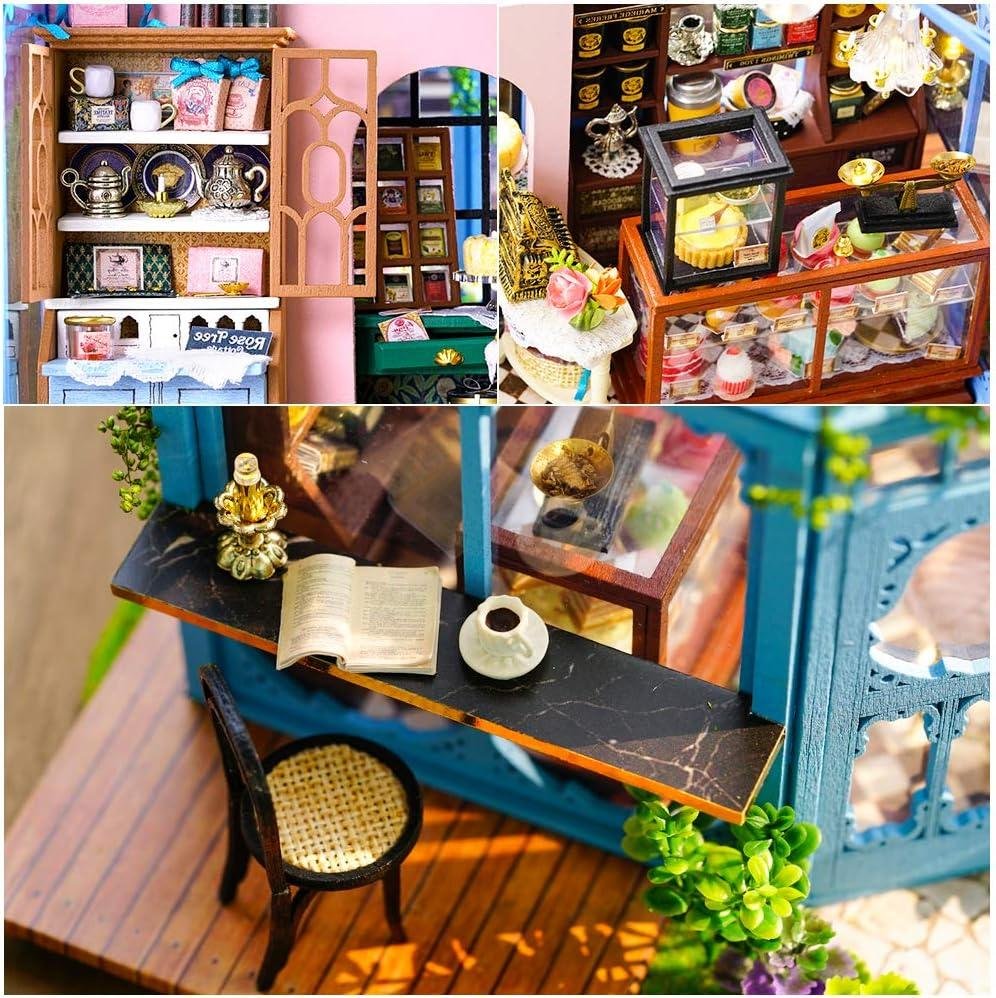
What Woodworkers Are Saying (Review Analysis)
Miniature kits like the CUTEBEE Rose Garden Tea House aren’t power tools, but woodworking-minded buyers evaluate them the same way they’d assess a precision craft project: fitment, material behavior, repeatability, and the quality of the finished “build.” Across reviews,the theme is consistent: highly rewarding results,but small parts,careful cutting/gluing,and occasional QC issues make it better for patient builders than casual crafters.
| Aspect | Common Feedback |
|---|---|
| Overall Sentiment | Mostly positive on design/detail and finished look; negative reviews center on missing/broken parts. |
| Performance / Results | Very detailed, “3D” look; rewarding final display piece; time-intensive (often ~100 hours). |
| Build Quality | Generally good fit, but thin wood can snap; some warped pieces; occasional roof gap reports. |
| Ease of Use | Not beginner-friendly for everyone; requires patience, precise cutting, and clamping/pressure while gluing. |
| Included Items / value | No glue/tools included; occasional missing paint; some buyers surprised by very small size. |
| Issues | Missing major parts (rare but severe), broken lights, scratched window film, splintering on removal. |
1. Overall sentiment from woodworking customers
Several woodworkers/craft-builders mentioned the kit delivers a beautiful, display-worthy miniature and a strong sense of accomplishment. Common praise includes the thoughtful design and the amount of detail packed into a very small footprint.
At the same time, some users reported challenges that feel familiar to shop projects: material brittleness, fit-up tolerances, and QC variability (missing parts, damaged components).
2. Performance feedback (accuracy, power, results)
While there’s no “power,” reviewers consistently frame performance as how accurately pieces fit, how cleanly parts can be cut/handled, and the quality of the final result.
- Results: Multiple reviews highlight a rewarding finished build—often described as “beautiful,” “very satisfying,” and highly detailed (one builder noted it’s “crammed full of tiny objects”).
- Accuracy / fit-up: Some builders said parts fit together well with careful gluing. One reviewer suggested roof gaps can be “easily rectifiable” with better glue technique and applying pressure to align parts.
- Precision work: The “performance” bottleneck is fine cutting and placement. Intricate paper crafting and tiny assemblies mean “one small mistake…can cost you the piece.”
3.Build quality and durability observations
Common praise includes the kit’s excellent make and well-thought-out structure, but multiple reviews highlight fragility typical of thin craft wood:
- Thin wood can snap: One builder reported a small wooden cabinet piece “snapped into several smaller pieces,” forcing an improvised redesign.
- Warping / splintering: Some users said wood pieces were warped and that parts were hard to remove without splintering, requiring an X-Acto/scalpel on “every wood piece.”
- Fit issues reported: A roof-gap complaint appears in reviews; another reviewer countered that alignment and glue technique can mitigate it.
- Window materials: One user received window film that was “scratched and smudged,” while another noted clear film can attract dust and is easy to dislodge if blasted with compressed air.
4. Ease of use for different skill levels
Reviewers with more experience in mini builds found the process straightforward, while newer builders may find it demanding.
- Beginners / casual hobbyists: Some DIYers found the tiny scale surprising and the lack of tools/glue a “major setback.”
- Experienced builders: Reviewers with multiple builds “under [their] belt” said the instructions were clear and the project is enjoyable if you’re meticulous and patient. One experienced reviewer summarized it as better “for those with more experience.”
- Learning curve details: Success depends on having the right “shop-adjacent” tools: sharp knife, tweezers, ruler, magnifier, clamps/binder clips, plus selecting the right glue(s).
5. Common project types and success stories
Customers successfully used this for:
- gift builds: One reviewer built it for a sister’s birthday, investing roughly 100 hours and calling it a beautiful result.
- Book nook / miniature crossover projects: Several reviewers compared it to book nooks but “much more involved,” appreciating that it’s more freeform and deeply detailed rather than snap-together.
- Creative problem-solving/modding: Multiple builders described modifications as part of the process—covering roof gaps with vines, turning a broken cabinet into a pastry table, or substituting materials (e.g., replacing scratched film, improvising décor when fabric/glue didn’t cooperate).
6. Issues or limitations reported
Some users reported challenges with the kit that woodworkers will care about because they affect repeatability and finish quality:
- Missing parts (major): One 1-star review cited a missing wall,discovered late,making the kit effectively unusable without replacement—especially problematic for non‑US buyers.
- No tools / glue included: Multiple reviews note you must supply your own adhesives and precision tools.
- Component defects: Reports include broken fairy lights, missing paint, and scratched window film.
- material handling: Warped wood, splintering when removing pieces, delicate wire with finish flaking (gold wire), and tricky “fake grass” that’s hard to cut cleanly.
- Electrical caution: One reviewer burned out LEDs by changing the power source to USB—good reminder that the lighting is not tolerant of improvised power mods.
Bottom line from reviewers: If you approach it like a precision craft build—test-fit, control glue squeeze-out, clamp/hold alignment, and expect occasional improvisation—the kit can produce an notable miniature. If you want plug-and-play or don’t have fine-detail tools, the small scale and occasional QC issues can turn it into a frustrating project.
Pros & Cons
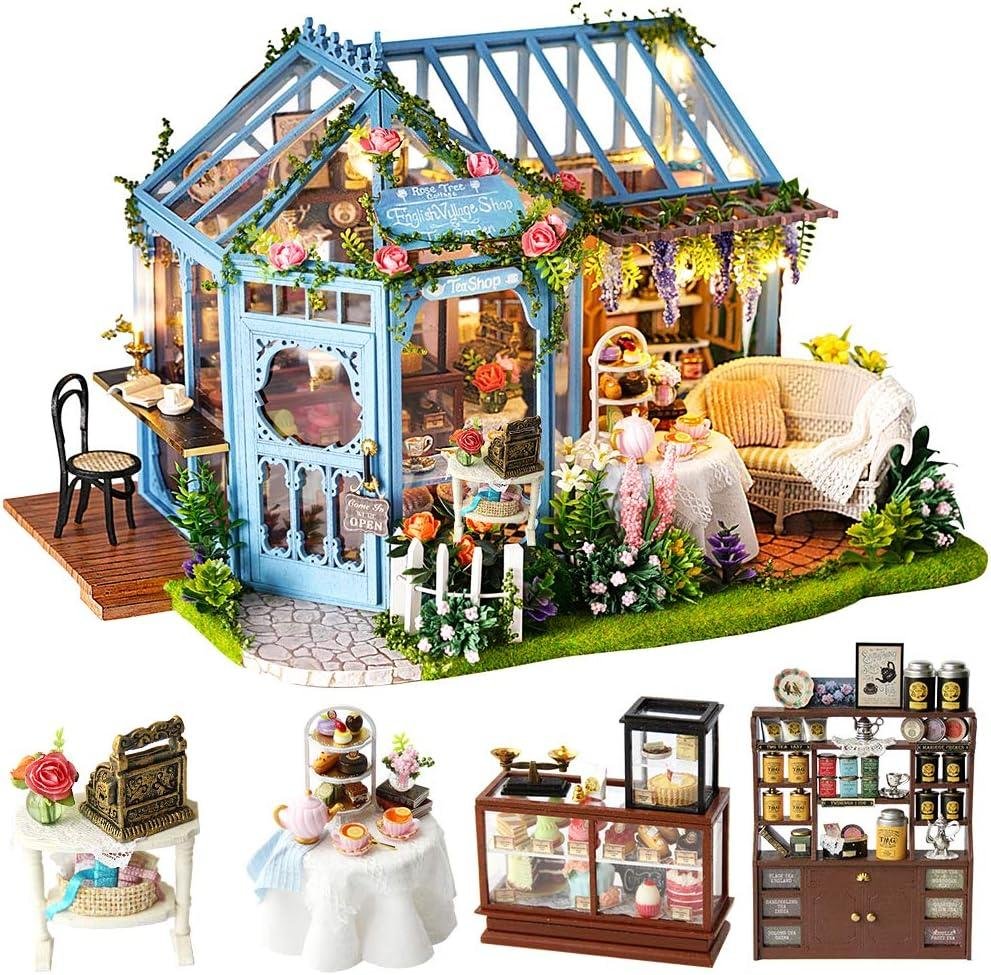
Pros & Cons
As we built the CUTEBEE Rose Garden Tea House, it felt less like “just a kit” and more like a tiny set we were directing—lights, décor, and all. Here’s what stood out to us (the delightful bits and the parts that asked for extra patience).
Pros
- Premium, satisfying fit: The wooden pieces are precisely cut, so when we aligned parts correctly, they tended to seat nicely and feel “meant to be together.”
- Realistic mini details: The furniture and ornaments look intentionally designed, not like filler—perfect for a display-ready finished piece.
- Atmosphere included: The LED lighting adds instant charm, and the music movement feature gives the build a storybook vibe once it’s done.
- Dust-proof cover helps it stay display-worthy: We liked that the kit aims to protect the finished scene from the slow creep of shelf-dust.
- Clear English instructions: The color, step-by-step manual makes it easier to pace ourselves (and we appreciate when a kit doesn’t require guesswork).
- Giftable presentation: The packaging looks like a proper gift box—helpful if we’re giving it to family or building it for someone.
- Made for older teens and adults: It’s a solid weekend(s) project for shared crafting time rather than a quick toy build.
Cons
- Not a “play” dollhouse: We see it as a collectible miniature and décor piece,not something meant for frequent hands-on play.
- beginner challenge is real: Even with good instructions, the tiny scale demands steady hands, careful gluing, and time.
- Extra supplies required: We have to bring our own silicone liquid glue and two AAA batteries, which can delay the fun if we’re not prepared.
- Time commitment: This isn’t “one evening and done”—we needed multiple sessions to keep the build neat.
- Small parts, big patience: The more detailed the miniature looks, the more we found ourselves slowing down to avoid misalignment or messy adhesive.
| What We Noticed | Our Take |
|---|---|
| Precision-cut wood | Feels “scroll saw-ready” in the sense that parts fit cleanly—if we take our time. |
| LED + music movement | Turns a miniature room into a miniature moment. |
| Dust-proof cover | Great for long-term display—less maintenance, more enjoyment. |
| Extra supplies needed | Worth prepping glue + AAA batteries before we start building. |
Q&A
What “wood types” can this kit handle—can I use my own hardwoods or plywood parts?
This is a 1:24-scale DIY miniature house kit,not a power tool,so it doesn’t “cut” wood in the woodworking sense. The included wood parts are thin, precision-cut craft pieces designed to be glued and assembled (reviews frequently mention the pieces fit well when handled carefully). You can substitute your own wood (basswood, thin birch ply, veneer scraps) for custom details, but keep it to thin stock—think hobby-knife/small saw territory, not furniture-grade joinery.
Is it “powerful enough” for hardwoods like oak or maple?
Out of the box, there’s no cutting power involved—assembly is primarily gluing, paper crafting, and fitting small parts. If you plan to modify the kit with your own hardwood accents, hardwoods like oak/maple will be workable only at miniature thicknesses and with the right approach (sharp knife, micro saw, sanding sticks). Several builders recommend being willing to “make modifications when necessary,” which is exactly how woodworkers tend to succeed with these kits.
How does this do with plywood, veneers, or “shop scraps” for customization?
It’s very friendly to veneers and thin plywood as add-ons. The model itself is small (multiple reviewers noted it’s “not big like the picture” and roughly hand-sized), so veneer is often a better scale match than thick solid wood.Practical tip: seal or pre-finish any scrap wood before installation to avoid glue squeeze-out staining and to keep tiny parts from warping.
How tough is the initial setup and assembly—are there adjustments like a woodworking jig?
Setup is mostly organizing parts, verifying the inventory, and reading the English instructions with colored pictures. Reviews suggest the instructions are generally clear, but the build is intricate and time-consuming (multiple builders report ~2–3 weeks or around 100 hours depending on experience).The “adjustments” are more like model-making techniques: dry-fitting, sanding tiny edges, clamping/holding pieces while glue cures, and occasionally re-aligning assemblies (shelves/roof alignment are common areas where people rework positioning).
Does it work with standard workshop accessories—what tools and glue should a woodworker plan on using?
No tools or glue are included, and reviewers call that out as a drawback. Expect to supply your own: hobby knife/X-Acto or scalpel,tweezers,small ruler/square,sanding sticks,and small clamps/binder clips for “clamping” miniature assemblies.The brand notes you’ll need silicone liquid glue, and experienced builders frequently enough use craft glues like B-7000 plus small amounts of CA for problem joints or slightly warped pieces.If you’re used to wood glue: it can work on wood-to-wood, but many parts involve paper/plastic, so a multipurpose craft adhesive is usually easier.
Will this fit in a small workshop, and does it need dust collection?
It’s extremely small-footprint—more of a benchtop corner project than a shop machine. No dust collection is required for the kit itself, but if you sand or cut your own add-on pieces, a small bench vacuum or a quick wipe-down helps. The “dust proof” cover is meant to protect the finished display from household dust; one reviewer noted transparent films can attract dust and used compressed air carefully (too much pressure can dislodge interior parts).
What power does it need for the lights/music—can I run it off a bench power supply or USB?
The kit uses batteries for the lighting/music movement (brand notes you need two AAA batteries for this model). Stick to the specified battery setup—one reviewer tried converting a similar kit to USB power and burned out the LEDs, so avoid “shop hacking” the electronics unless you’re confident matching voltage/current correctly and protecting the circuit.
Is this suitable for beginners, and would it satisfy a professional woodworker?
Beginner-friendly in concept (step-by-step English manual with photos), but not “easy.” The kit is recommended for ages 14+ and multiple reviews emphasize patience, steady hands, and careful cutting/gluing—paper crafting can be unforgiving and a small mistake may cost a piece. For experienced woodworkers, it can be a satisfying precision/assembly challenge rather than a woodworking challenge: think miniature layout, sequencing, and tiny “clamping” strategy. If you enjoy detailed build processes and improvising fixes (roof gaps, shelf alignment, fragile pieces), it’s rewarding; if you want true joinery and milling, it won’t scratch that itch.
Elevate Your Lifestyle
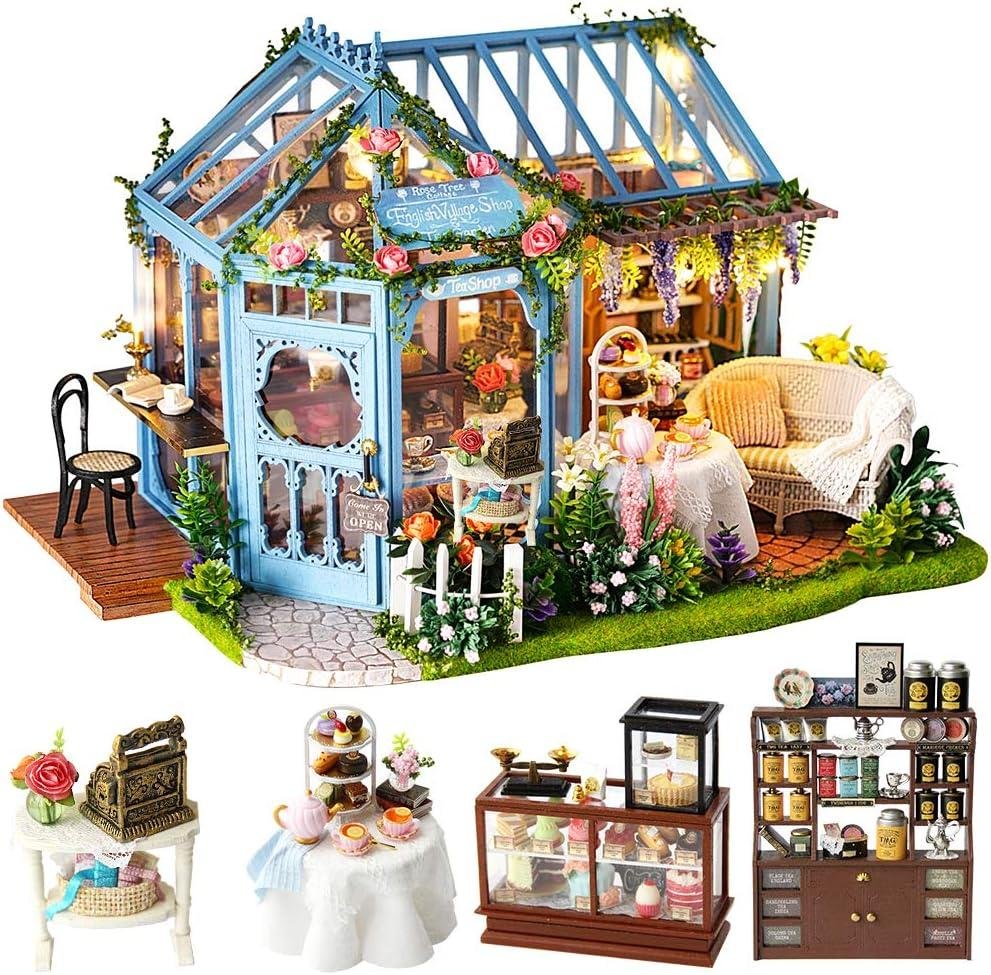
The CUTEBEE Rose Garden tea House isn’t a power tool, but it is a precision-focused 1:24-scale DIY wooden miniature kit with pre-cut wood parts, realistic furniture/ornaments, dust-proof enclosure, and LED lighting with a music movement (you’ll supply silicone glue and 2 AAA batteries). Customer feedback consistently highlights the high detail and satisfying finished display, along with clear picture-based English instructions—but also notes the kit is smaller than expected, can take 80–100+ hours, and may involve fragile parts, occasional fit gaps/warped pieces, or missing/broken components.
Best for: hobby woodworkers who enjoy fine-detail assembly,practicing cleanup,fitting,and careful gluing on small-to-medium “bench craft” projects,and gift builds.
Consider alternatives if: you want a playable dollhouse, need tools/glue included, prefer quick builds, or aren’t comfortable improvising fixes.
it’s a solid craft-forward kit for patient makers, with standout realism—just plan for meticulous work and occasional corrections.
Want to see current pricing and customer photos? View on Amazon & Read More Reviews →