

Blog
Milwaukee M18 FUEL Belt Sander Review: Our Shop Fit?

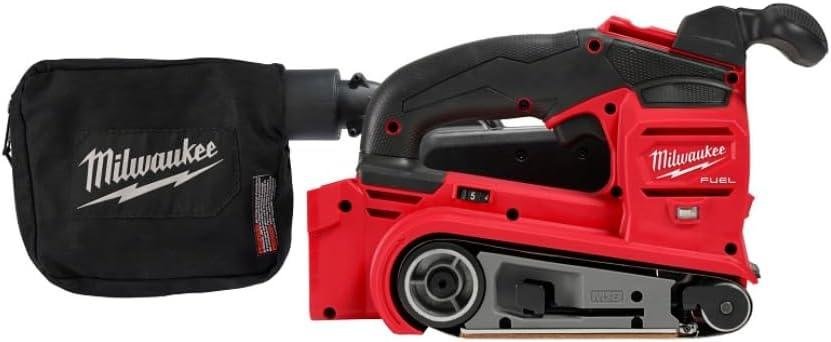
Ever tried flattening a glued-up tabletop or cleaning up a door edge, only to watch the sander wander, gouge, or leave you chasing swirl marks while dust piles up around the bench? In many shops, we’re balancing precision with speed—and doing it in tight spaces where cords, vac hoses, and cleanup time can become their own project.
That’s where the Milwaukee Electric Tool M18 FUEL 3″ x 18″ Belt Sander aims to fit: a cordless belt sander built for pros who want jobsite portability without giving up corded-style muscle. Milwaukee rates it at the power and torque of an 8A corded sander, with a POWERSTATE brushless motor, REDLINK PLUS intelligence, and belt speed up to 1350 SFM, plus a variable speed dial (750–1350 SFM) for better control across materials.
In this review, we’ll break down key features—dust collection (over 85% claimed), tracking, belt changes, ergonomics, storage footprint, and value—alongside what customers commonly report about build quality and ease of use. As fellow woodworkers, we’ll keep it practical: what matters on real projects, and who this tool makes the most sense for.
Tool Overview and Build Quality in the Shop
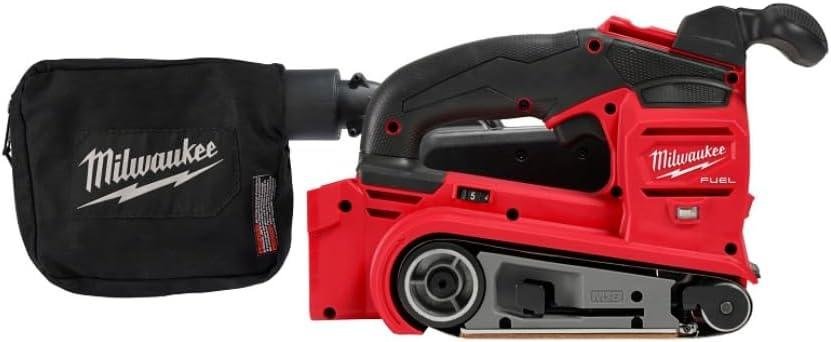
In our shop, the Milwaukee M18 FUEL 3″ x 18″ Belt Sander presents itself as a jobsite-ready cordless belt sander with specs that matter at the bench: a 3″ x 18″ belt footprint (a common belt size that’s easy to source), a POWERSTATE brushless motor tuned to deliver the power and torque of an 8A corded belt sander, and a variable belt speed of 750–1350 SFM for controlling cut rate across different woods and glue-ups. we appreciate the practical build details that translate into daily use—like the tool-free belt change lever and automatic belt tracking with a tool-free tracking knob—because belt sanders only behave when the belt stays centered and the swap takes seconds, not minutes. The adjustable, tool-free pommel is also a smart touch for woodworking: when we’re trying to feather an edge or get close to a vertical surface, having that front grip shift out of the way enables more controlled, flush approach work without fighting the tool’s housing.Customer feedback lines up with what we’d expect from a cordless sander built to remove material fast: many reviewers describe it as “very aggressive” and say it “works like a charm”, but several also call out that it’s a “power hog”—with repeated advice to run M18 high Output batteries for acceptable runtime. In practical terms, that means this is a grate fit for medium bursts of shaping, leveling, and prep work (especially if we’re already invested in M18 packs), but we should be realistic about long, continuous sanding sessions; one reviewer even returned it in favor of corded after finding battery drain too fast for larger surface areas. On build quality and handling, themes are mixed but useful: customers commonly note it feels “well built”, yet a few mention it can feel not well balanced and wider than expected, which matters when we’re trying to get between chair parts or work inside a cabinet carcass. As with any belt sander, we’ll get the best results by using a light, steady touch, keeping the platen moving to avoid dips, and matching speed to the task—slower for softwoods or veneer-safe finesse, faster when we’re flattening proud joints (while staying mindful that belt sanders can remove “too much, too fast” if we linger).
- Durable dust bag
- universal hose adapter (for shop-vac connection)
- M18 REDLITHIUM High Output (HO) batteries (recommended by reviewers for runtime)
- 3″ x 18″ sanding belts (various grits for leveling vs.finishing)
- Shop-vac + hose (pairs with the included universal adapter)
- Leveling glued-up panels and tabletops (spot work before ROS sanding)
- Deck and exterior prep (customers report success prepping for stain/seal)
- Trimming and flushing proud joints (with careful technique)
- Shaping and removing finish quickly on flat stock
- Pine / SPF (common in deck and construction sanding use cases)
- Typical hardwood furniture stock (customers reference “furniture projects,” tho species are not always specified)
| Spec / Feature | Milwaukee M18 FUEL 3″ x 18″ Belt Sander | Why It Matters in a Wood Shop |
|---|---|---|
| Belt Size | 3″ x 18″ | standard belt availability; good balance of control and removal rate. |
| Belt Speed | 750–1350 SFM (variable) | Dial down to reduce gouging; dial up to level joints faster. |
| Motor / Power Claim | Power & torque comparable to an 8A corded (per specs) | Helps maintain cut rate under load; still limited by battery capacity. |
| Dust Collection | Collects over 85% of dust (per specs) | Less cleanup; better visibility at the belt; shop-vac hookup helps. |
| Controls & Adjustments | Automatic tracking + tool-free tracking knob, tool-free pommel | Faster setup, fewer belt-walk interruptions, better edge/flush approach. |
| Accessory / Consumable | Compatibility | Notes for Woodworkers |
|---|---|---|
| 3″ x 18″ sanding belts | Yes | Keep multiple grits on hand; coarse for leveling, finer before ROS. |
| Shop-vac connection | Yes (universal hose adapter) | Helpful on resinous softwoods and finish removal where dust loads fast. |
| M18 batteries | Yes (battery not included) | Reviewers strongly recommend High Output packs for runtime. |
| workload Category | Recommended Fit (what It’s Best At) | Real-World Notes from Reviews |
|---|---|---|
| Small-to-medium sanding sessions | Recommended | Often described as aggressive and effective; battery choice matters. |
| Large continuous surface-area sanding | Approach with caution | Multiple reviewers cite heavy battery draw; some prefer corded for big areas. |
| Tight spaces / detail sanding | Not ideal | Customers note it’s wider/larger than expected for confined areas. |
Check Current Price & Woodworker Reviews on Amazon
Real World Sanding Performance on Hardwoods Softwoods and Edge Work
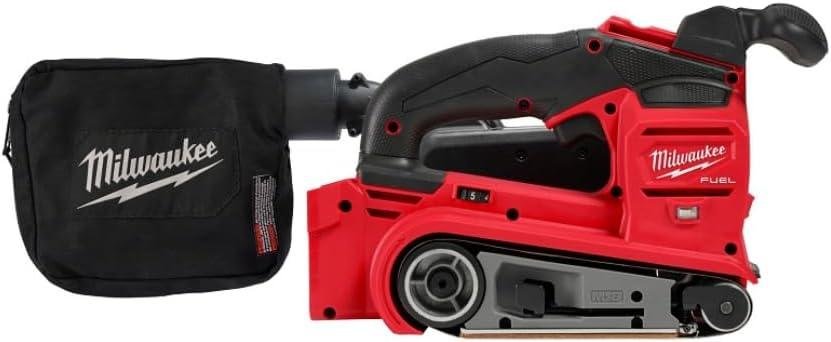
In real shop use, the Milwaukee M18 FUEL 3″ x 18″ Belt Sander behaves like the specs promise: it’s tuned for fast stock removal, with a 3″ x 18″ belt and a best-in-class belt speed up to 1350 SFM (dialing down to 750 SFM when we want more control).On hardwoods, that top speed and torque can remove milling marks quickly—but it also demands restraint. We found it’s easiest to let the weight of the tool do the work, keep the platen flat, and keep moving to avoid dips and heat checks, especially on blotch-prone species. Customer feedback lines up with that “get-it-done” personality: multiple reviewers call it “very aggressive” and say it “does the job”, while others note it “works like a charm” and is “much easier and faster than manually sanding.” For softwoods, we’d treat the higher speeds as a roughing pass only and finish with lighter pressure and a finer grit; pine and cedar can fuzz quickly if we linger. The upside is cordless freedom—no cord snagging on sawhorses—but several buyers also report it’s a “power hog” and recommend running High Output batteries; a few even mention battery heat and short sessions if we’re trying to sand beyond small project scope.
Edge work is where technique matters most with a belt sander, and Milwaukee includes a couple of features that help us stay in control: automatic belt tracking plus a tool-free tracking knob to keep the belt centered, and a tool-free adjustable pommel meant for flush sanding right up against the front of the tool. That said, reviewers are honest that it can feel “not well balanced” and “wider than I thought… too large for tight areas,” so we wouldn’t choose it as our go-to for delicate edge easing or inside corners.Where it does shine is long, straight edges—leveling proud glue lines on panel glue-ups, trimming a door edge before final fitting, or flattening an outdoor surface like deck boards (one reviewer said it made “short works” of deck prep). dust control is also more than an afterthought for a cordless belt sander: Milwaukee claims it collects over 85% of dust when paired with the included bag or a vac via the universal hose adapter. In practice, belt sanding still makes a mess, but hooking to a shop vac and running the speed dial a notch lower can reduce airborne fines and keep the belt cutting cleaner for longer.
- Included accessories
- Durable dust bag (“dust sock” in some reviews)
- Universal hose adapter for shop-vac connection
- Compatible attachments/accessories
- 3″ x 18″ sanding belts (various grits for hardwood/softwood)
- M18 REDLITHIUM High Output batteries (HO recommended by reviewers)
- Shop-vac hose (via included universal adapter)
- Ideal project types
- Door and tabletop edge fitting (final sneak-up before finer sanding)
- Panel glue-up cleanup (flattening glue lines carefully)
- Deck and outdoor wood prep (pre-stain flattening)
- rapid leveling of sawmill/milling marks before ROS finishing passes
- Wood types tested by customers
- Deck boards (species not specified)
- General “boards” for shop projects (species not specified)
| Spec / Feature | What It Means in the Shop |
|---|---|
| Equivalent power: “power and torque of an 8A corded belt sander” | Fast removal on hardwoods, but higher risk of gouging if we tip the nose or pause. |
| belt size: 3″ x 18″ | Standard footprint for speedy flattening and edge leveling; less nimble in tight spaces. |
| Variable speed: 750–1350 SFM | Lower speed for softwoods/edge control; higher speed for rough stock removal. |
| Dust collection: 85%+ claimed with bag/adapter | Best used with a shop-vac for extended sanding; helps reduce cleanup and belt loading. |
| Tracking & changes: automatic tracking, tool-free tracking knob, tool-free belt change lever | Faster setup and fewer interruptions—customers repeatedly note belt changes/adjustments are easy. |
| Accessory | Purpose | Notes Based on Reviews/Specs |
|---|---|---|
| 3″ x 18″ sanding belts | Material removal to finish prep | Match grit to task; aggressive cutting is a common review theme. |
| M18 High Output battery (HO) | Power delivery and runtime | Several reviewers recommend HO; multiple mention high draw and battery heat. |
| Shop-vac + hose | dust extraction | Pairs with universal hose adapter; one customer called dust collection “a breeze.” |
| Use Case | Recommended (Practical) | What Reviews Suggest in Reality |
|---|---|---|
| Continuous sanding session | Plan around battery swaps; keep an HO pack charging | “Power hog” and “drains the battery quickly” are recurring; some returned it for corded for large areas. |
| Large surface area (multiple boards / big panels) | Consider corded if sanding is nonstop | One reviewer warns that beyond “9 square ft” they’d prefer corded. |
| Detail/tight spaces | use a smaller sander or hand tools | “Too large for tight areas” comes up in buyer feedback. |
See full Specifications & Customer Photos
Key Features Woodworkers Will Appreciate including dust Management and Belt tracking
For day-to-day shop use, the two features we keep circling back to are dust management and belt tracking—because those are the details that decide whether a belt sander feels like a controlled surfacing tool or a messy, wandering material hog. Milwaukee claims the M18 FUEL 3″ x 18″ collects over 85% of dust, and in practice that lines up with what we’re seeing echoed in customer themes like “dust collection is a breeze” and “works great… with the included dust sock and the hose attachment for a shop-vac.” Between the durable dust bag and universal hose adapter, we can choose quick, cordless cleanup for small sanding jobs or hook to a vac when we’re leveling panels and don’t want grit settling back onto freshly-prepped surfaces. The educational takeaway for us is simple: belt sanders create heavy, fast-moving dust (especially on softwoods and MDF), so keeping airflow moving—emptying the bag often, using a high-CFM shop vac when possible, and avoiding clogged ports—matters as much as grit choice for clean results and safer air.
On the control side,the M18 FUEL runs a standard 3″ x 18″ belt and is rated at 1350 SFM max with a variable-speed range of 750–1350 SFM,which helps us slow down for better control on hardwood edges and speed up when we’re stripping finish or flattening glued-up assemblies. What makes that usable—especially for less experienced belt-sander users—is the combination of automatic belt tracking plus a tool-free belt tracking knob. reviewers consistently mention it’s “easy to change and adjust the belt,” and that’s vital because tracking is what prevents the belt from chewing into the sander’s frame or scarring your workpiece edge. Our best shop technique reminder: start the sander off the work, bring it down flat, keep it moving, and let the belt do the work—tracking and speed control can’t fully save us if we tip onto a corner or pause in one spot. Also, multiple reviews flag it as a “power hog,” so for longer sessions we’ll want a high-output pack (many recommend High Output batteries) and we’ll plan sanding passes accordingly rather than expecting corded, nonstop runtime.
- Included accessories
- Durable dust bag (“dust sock”)
- Universal hose adapter for shop-vac connection
- Compatible attachments/accessories
- Shop-vac hose (via the included universal hose adapter)
- 3″ x 18″ sanding belts (assorted grits, third-party compatible)
- M18 batteries (reviewers commonly recommend High Output packs for runtime)
- Ideal project types
- Panel and tabletop flattening (careful, moving passes)
- Deck/fence prep before staining (customers report success here)
- Rapid stock removal on glued-up seams and proud joints
- Finish removal where a random-orbit sander would be too slow
- Wood types tested by customers
- Softwood decking (customers mention deck sanding and prep)
- general “boards” and construction lumber (implied in user reports)
| Spec / Feature | Milwaukee M18 FUEL 3″ x 18″ Belt Sander | Why Woodworkers Care |
|---|---|---|
| Belt size | 3″ x 18″ | common size; easy to source belts in multiple grits. |
| Belt speed | 750–1350 SFM (variable) | Lower speeds help control on hardwoods; higher speeds remove material fast. |
| Dust collection | >85% claimed with bag or hose adapter | Cleaner shop, clearer sightline, less grit contamination on fresh surfaces. |
| Belt tracking | Automatic + tool-free tracking knob | Reduces edge damage and keeps the belt centered during longer passes. |
| Accessory | Compatibility | Notes from Shop Use / Reviews |
|---|---|---|
| Dust bag | Included | Good for quick jobs; empty frequently to maintain airflow. |
| Universal hose adapter | Included | Reviewers highlight easy cleanup when connected to a shop-vac. |
| 3″ x 18″ sanding belts | Standard size | Keep multiple grits; coarse belts can get aggressive fast at 1350 SFM. |
| Use Case | Recommended Capacity (Practical) | Actual Capacity (What Reviews Suggest) |
|---|---|---|
| Continuous sanding without interruption | Short-to-medium sessions with battery swaps | Several reviewers call it a “power hog”; some suggest corded for larger areas. |
| Large surface prep (e.g., big decks/panels) | Plan vacuum hookup + High output batteries | Mixed: one reviewer prepped a deck successfully; others report needing frequent charging. |
See Full Specifications & Customer Photos
Ease of Use for Beginners and Pros Plus Workshop Setup and storage
For beginners, the Milwaukee M18 FUEL 3″ x 18″ Belt Sander feels familiar the moment we set it on the bench as the 3″ x 18″ belt format behaves like a standard shop belt sander—just without the cord tugging at our wrist. Setup is straightforward: customers commonly say it’s “easy to change and adjust the belt”, and we appreciate that Milwaukee kept it simple with tool-free belt changes, an automatic belt tracking system, and a tool-free tracking knob to fine-tune the belt if it starts wandering. The learning curve is mostly about control rather than assembly—this is a genuinely aggressive sander with belt speed up to 1350 SFM (dialing down to 750 SFM helps when we’re trying not to gouge softer woods). Multiple reviewers describe it as “very aggressive” and able to “do the job” quickly, which is exactly why we recommend practicing on scrap first, keeping the platen flat, and letting the weight of the tool do the work—belt sanders remove mistakes as fast as they remove wood. The dual-LED lights are also more helpful than expected for spotting cross-grain scratches before we move on to a finish sander.
For pros—or any of us who run production-like sanding sessions—the real “ease of use” question becomes work flow: batteries, dust, and where the tool lives between tasks. Milwaukee claims it delivers the power/torque of an 8A corded belt sander with a POWERSTATE brushless motor and REDLINK PLUS intelligence, and customers generally echo that it’s well built and “works like a charm,” but they also repeatedly call out that it’s a “power hog”. Review themes are consistent: it “works great” with an M18 5.0Ah but drains packs quickly, many recommend a High Output battery, and some mention batteries can overheat during longer runs—one reviewer even returned it for corded use after finding it better suited to smaller sanding areas. On the workshop side, dust management is a strong point: Milwaukee states it collects over 85% of dust, and users report dust collection is “a breeze” with the included bag and a shop-vac hookup. For storage, the tool-free adjustable pommel is a smart touch as it can tuck in for a more compact footprint (and it also enables flush sanding at the front), which helps us fit it on a shelf or in a jobsite tote without snagging handles.
- Included accessories
- Durable dust bag (“dust sock” per customer wording)
- Universal hose adapter for shop-vac connection
- compatible attachments/accessories
- M18 REDLITHIUM battery packs (customers frequently recommend High Output sizes for longer sanding sessions)
- 3″ x 18″ sanding belts in assorted grits (coarse for leveling; finer grits for refining before random-orbit sanding)
- Shop-vac / dust extractor hoses via the included universal adapter
- Ideal project types
- Flattening and leveling glued panels before final sanding
- Quick stock removal on tabletops,benches,and outdoor builds (customers mention deck prep)
- Easing edges and leveling proud joints where a planer or jointer won’t fit
- Jobsite trim and fitting tasks where cord management slows us down
- Wood types tested by customers
- Not specified in reviews (customers report success on general “boards” and deck surfaces without naming species)
| Ease-of-Use Spec | What We Notice in the Shop | Why It Matters |
|---|---|---|
| Belt size: 3″ x 18″ | Standard handling feel; wide enough for fast leveling | Easy belt sourcing; predictable control for beginners |
| Variable speed: 750–1350 SFM | We can slow down for softer woods and edge work | Lower speed reduces “oops” moments and burn risk |
| Dust collection: >85% (claimed) | Bag for quick jobs,hose adapter for the shop-vac | Less cleanup; clearer sightline to the work |
| Tool-free belt change + tracking | Quick swap between grits; easy tracking tweaks | Encourages proper grit progression instead of “making do” |
| Accessory | Fits/Works With | Notes from Use/Reviews |
|---|---|---|
| Universal hose adapter | Most shop-vac hoses | Customers report dust collection is “a breeze” when vacuumed |
| Dust bag | on-tool collection | Good for quick sanding where a vac isn’t convenient |
| M18 batteries (High Output recommended) | M18 platform | Reviewers call it a “power hog”; bigger packs = longer practical run time |
| Capacity / Expectation | Recommended for Best Experience | What Reviews Suggest in Practice |
|---|---|---|
| Continuous sanding time | Have multiple charged packs (ideally High Output) ready | Some users report fast battery drain and occasional overheating on longer sessions |
| Work area access | Open surfaces and edges | Reviewers note it’s “wider than expected” and not ideal for tight spaces |
See Full Specifications & Customer Photos
Customer Reviews Analysis
What Woodworkers Are Saying: Milwaukee Electric Tool M18 FUEL 3″ x 18″ Belt Sander
1. Overall sentiment from woodworking customers
Overall feedback from woodworking-style reviewers trends positive on capability and build, with the biggest caveat being battery demand. Several woodworkers mentioned it “works like a charm” and is “much easier and faster than manually sanding,” but multiple reviews highlight that it’s a power hog—great if you’re already invested in M18 batteries (especially High Output), less ideal for long, continuous sanding sessions.
2. Performance feedback (accuracy,power,results)
Power & speed under load: Common praise includes strong,aggressive stock removal—one reviewer called it “very aggressive and does the job.” Customers successfully used this for larger surface prep where speed matters (like deck boards), and several users reported it performs like a “standard belt sander,” just cordless.
Results / finish quality: Reviewers generally focused more on material removal and productivity than fine finishing, but the tone suggests it leaves consistent results when paired with appropriate belts. One concise excerpt sums up the performance sentiment: “Works great…”.
Battery-related performance limits: Some users reported challenges maintaining performance for extended sanding without stepping up to larger packs. A recurring point is that it “drains the battery quickly” on smaller packs, and batteries can “overheat” during heavier use—an issue that directly affects sustained performance.
3. Build quality and durability observations
Multiple reviews highlight solid construction—phrases like “built well” and “good quality” show up repeatedly. One user noted it “seems to be of good build quality,” though they’d only owned it a couple months, so long-term durability is more inferred than proven in this dataset. No reviewers described broken parts or failures; the durability concerns were more about battery heat and runtime than tool fragility.
4. Ease of use for different skill levels
Setup and adjustments: Several woodworkers mentioned straightforward belt servicing—“easy to change and adjust the belt”—which is a usability win for beginners and experienced users alike.
Handling & comfort: Feedback is mixed.Some users reported it’s “not well balanced,” and one noted it’s “wider than I thought” and “too large for tight areas,” which can increase fatigue or make detailed work harder. On the positive side, one reviewer praised the “adjustable handles” and said it’s “very cozy to use even overhead,” suggesting ergonomics can work well depending on the task and stance.
5. Common project types and success stories
- Deck refinishing / prep: One woodworker described using it to sand a deck they built previously to prep for stain/seal, saying it made “short works” of the job.
- Board-by-board sanding: Another reviewer framed it in practical throughput terms, reporting they could “only sand one board before” needing to recharge—useful context for anyone planning batch sanding.
- General surface sanding: Several reviewers imply broader shop use (flattening/cleanup,removing material quickly),especially where cord-free mobility helps.
6. Issues or limitations reported
Commonly reported limitations centre on runtime, battery cost, and size:
- High power draw / short runtime: Multiple reviews highlight that it takes notable power; some users felt cordless convenience didn’t outweigh frequent recharging for larger projects.
- Battery requirements & cost: Several woodworkers mentioned needing a large battery (often High Output) for acceptable runtime; one noted it “takes a $200 battery to last.”
- Heat management: A few users reported batteries can overheat during use.
- Bulk and access: Some found it too wide/large for tight areas.
- Balance: “Not well balanced” came up—suggesting it may feel front-heavy or tiring in certain positions.
- Cordless vs corded tradeoff: One reviewer ultimately returned it and bought corded, recommending this model mainly for small projects or for users already invested in the M18 ecosystem.
| Aspect | Common Feedback |
|---|---|
| Overall Sentiment | Strong performance and build, tempered by heavy battery demand |
| Performance | Aggressive sanding and fast material removal; “works great” under load |
| Precision / Control | Adjustments are easy, but balance and size can reduce finesse in tight areas |
| Build Quality | Frequently described as “built well” / “good quality” |
| Ease of Use | Easy belt changes; comfort praised with adjustable handles, but some find it bulky |
| Best-Fit Projects | Deck prep, larger flat surfaces, quick stock removal where cords are inconvenient |
| Limitations | Short runtime on smaller batteries, possible overheating, large battery cost |
Pros & cons
Pros & Cons
| What We Loved | What We Didn’t |
|---|---|
| Corded-like muscle: feels comparable to an 8A belt sander, especially when we lean into hardwood. | Battery not included—budgeting for an HO pack is basically part of the purchase. |
| Fast stock removal: 1350 SFM top speed makes quick work of leveling edges and knocking down glue lines. | High-speed sanding can chew through belts faster if we’re not mindful of pressure and grit choice. |
| Variable speed (750–1350 SFM): we can slow it down for finesse work and crank it up for demolition-mode. | Dialing in the “perfect” speed takes a few passes—especially when we switch materials mid-project. |
| Dust control that actually matters: rated to collect over 85% of dust, and in our shop it noticeably cuts cleanup time. | The dust bag is handy, but for maximum collection we still prefer running a hose—one more thing to manage. |
| Smart features feel jobsite-ready: REDLINK PLUS protection helps prevent overload/overheat surprises. | Like most serious sanders, it’s not whisper-quiet—hearing protection stays in our routine. |
| Automatic belt tracking + tool-free adjustments: fewer “why is it wandering?” moments, more sanding. | Tracking is good, but belt quality still matters; cheap belts can drift no matter how smart the tool is. |
| Dual LED lights: we didn’t think we’d care, then we used it under cabinets and along shadowy trim. | LEDs help visibility, but they don’t replace good dust extraction when the air gets hazy. |
| Tool-free belt changes + lock-on button: we can swap grits quickly and run longer passes without finger fatigue. | Lock-on is great for long runs, but it demands attention—this tool removes material fast if we linger. |
| Adjustable pommel for flush sanding: lets us get closer to walls/edges and store it more compactly. | Flush sanding is improved, but tight corners still call for a different tool (we reach for a detail sander). |
- best for: carpenters, remodelers, and contractors who want corded performance without dragging an extension cord through the jobsite.
- Think twice if: we’re mostly doing delicate finishing work—belt sanders are inherently aggressive, even with speed control.
Q&A
Is this powerful enough for hardwoods like oak or maple?
Yes—Milwaukee rates it at the power and torque of an 8A corded belt sander, and the POWERSTATE brushless motor is designed to hold belt speed with less bog down under load. for dense hardwoods (oak/maple), woodworkers generally get the best results by dialing the speed down (it’s variable from 750–1350 SFM), using sharp/appropriate grit belts, and letting the sander do the work rather of pushing hard (to avoid gouges and excessive battery drain).
How does it perform on plywood and veneers—will it damage thin material?
It can work on plywood, but it’s an aggressive 3″ x 18″ belt sander meant for fast removal, so veneers and thin face plies are the danger zone. The lower end of the speed range (750 SFM) helps,but for cabinetry-grade plywood or veneer work you’ll still want light pressure,higher grits,and careful,continuous movement. Several users describe it as “very aggressive,” which is great for flattening and stripping, but it’s not the first choice for final surfacing on delicate sheets.
Can this handle production work, or is it better for hobby projects?
Capability-wise it’s built for jobsite productivity—Milwaukee positions it for pros and it’s optimized for faster material removal. The limiting factor is runtime: multiple reviewers call it a “power hog” and mention it can drain packs quickly, with some noting batteries can overheat during extended sanding. For frequent, all-day sanding (deck prep, large panels, repeated flattening), many woodworkers still prefer a corded belt sander; for punch-list tasks, installs, on-site fitting, or short production bursts, it’s very effective—especially with high Output (HO) batteries.
How hard is setup, tracking, and belt changes?
Setup is straightforward if you’ve used a belt sander before. It includes automatic belt tracking plus a tool-free belt tracking knob for quick fine-tuning, and a tool-free belt change lever for fast belt swaps. Customer feedback commonly mentions it’s easy to change and adjust the belt.Like most belt sanders, tracking may take a minute the first time you switch belt brands or grits, but the controls are designed to be quick and tool-less.
Does it work with standard accessories and dust collection?
Yes. It ships with a durable dust bag and also includes a universal hose adapter to connect to a shop-vac. Milwaukee claims it collects over 85% of dust generated when used with its dust collection setup. In real workshop use, a vac connection is the best move for extended sanding—both for air quality and to keep the belt cutting efficiently.
Will it fit in a small shop, and how is the balance/handling?
It’s portable (cordless) and stores easily thanks to the tool-free, adjustable pommel that can be positioned for a more compact footprint. Having mentioned that, several users mention it feels “wider than I thought” and too large for tight areas, and at least one reviewer noted it’s not well balanced. The adjustable front pommel helps you find a comfortable grip, and the dual LED lights are handy in dim corners, but for cramped work you may still reach for a smaller sander.
What battery should I plan on using, and what outlet does it need?
It’s an M18 cordless tool, so it needs no outlet—but battery choice matters a lot.Milwaukee specifically calls out the M18 REDLITHIUM High Output HO6.0 (not included) for “all-day run-time,” and user reviews repeatedly recommend High Output packs for decent runtime.Multiple customers report it can drain smaller packs quickly, and some experienced heat-related pauses on extended sanding. If you’ll sand large surfaces regularly,budget for larger HO packs (and ideally a spare).
Is it beginner-friendly, and would a pro woodworker be satisfied?
Beginners can use it, but it’s not a “forgiving” tool—belt sanders remove material fast, and this model is designed to be aggressive with up to 1350 SFM belt speed. New users should practice on scrap, start near the low-speed range, and avoid tipping the tool at the start/stop of a pass (common cause of divots). Pros and serious DIYers tend to like it for jobsite trimming, flattening, and prep because it performs like an 8A corded unit while staying cordless—just with the tradeoff that heavy continuous sanding can require multiple large batteries or a corded option.
Transform Your World
The Milwaukee Electric Tool M18 FUEL 3″ x 18″ Belt Sander pairs a POWERSTATE brushless motor and REDLINK PLUS intelligence to deliver corded-like performance (rated comparable to an 8A corded sander), with variable speed from 750–1350 SFM, automatic belt tracking, tool-free belt changes, dual LEDs, and a dust system that claims over 85% collection. Customer feedback commonly praises its aggressive material removal, solid build quality, and easy belt adjustment, while noting it’s wide for tight areas and can be a “power hog” that benefits from high-output batteries.
it’s best for hobby woodworkers with small to medium projects, cabinet makers needing controlled speed, and pros already invested in the M18 platform for jobsite portability.
Consider alternatives if you sand large surfaces daily, need maximum runtime on thick hardwoods, or want a lighter, better-balanced tool—corded models may be more practical.
it’s a durable, capable cordless belt sander, with battery demand as the main trade-off.
Want to see current pricing and customer photos? View on Amazon & Read More Reviews →