

Blog
7-Drawer Mobile Tool Cabinet Review: Right for Us?

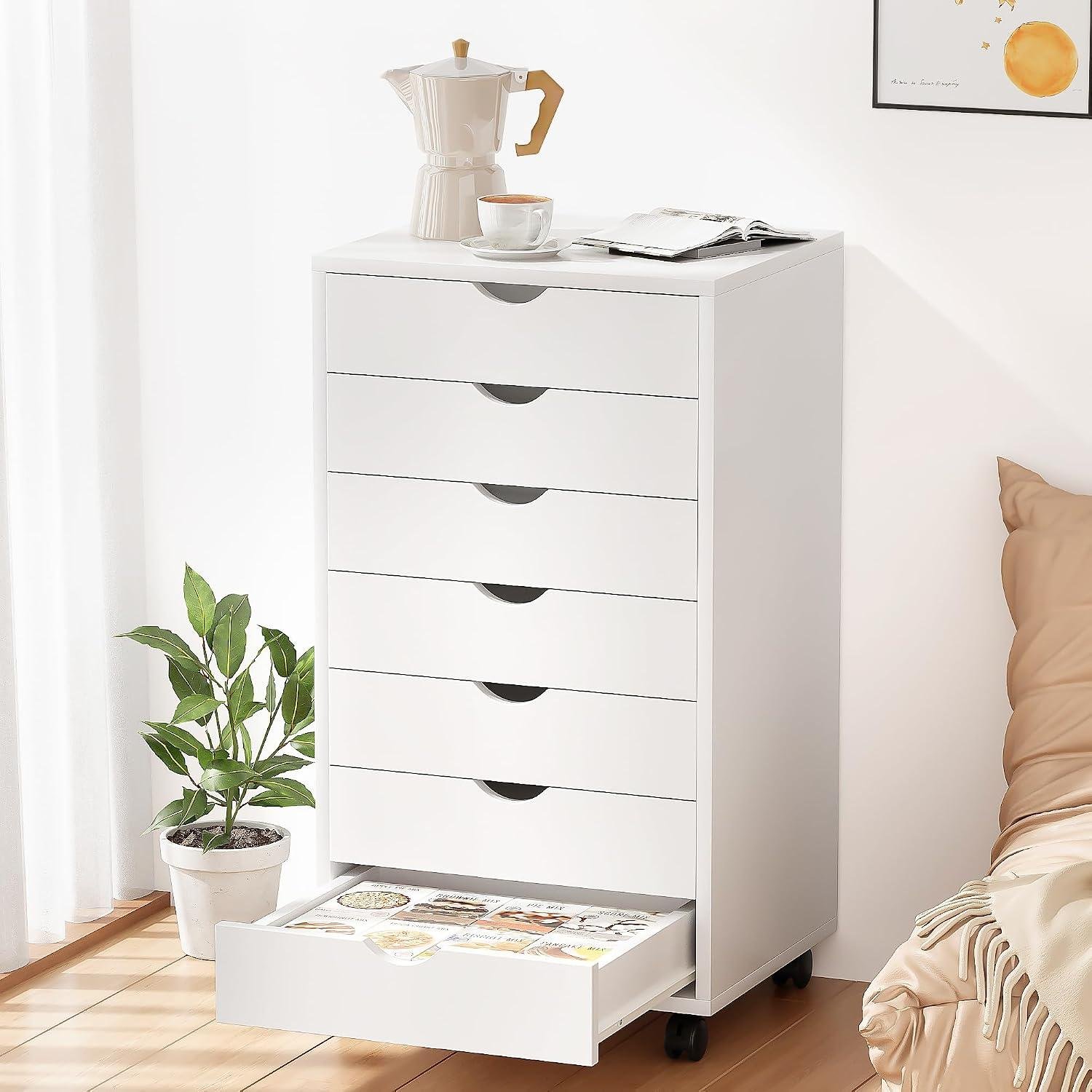
Ever lose a chisel, a set of sanding discs, or that one router bit you just set down-only to waste shop time digging through piles? In a small workspace, clutter doesn’t just slow us down; it can sabotage precision, threaten tool edges, and turn clean assembly work into a frustrating scavenger hunt.
That’s where the 7 Drawer Chest / Dresser Mobile Cabinet with Wheels (White) comes in. It’s not a cutting tool, but it’s built to support better woodworking results by keeping measuring tools, hardware, and finishing supplies organized. This cabinet features seven spacious drawers, MDF construction, metal drawer slides, and four wheels (two with brakes) for mobility and stability-plus a top surface that can serve as a landing zone for in-progress parts.
In this review, we’ll break down build quality, drawer function, ease of assembly (it includes a paper manual), space efficiency, and whether the price matches the materials. We’ll also weigh common customer feedback-many reviewers mention smooth drawer operation and convenient rolling-against the realities of shop durability.
We’ve set up and lived with enough shop storage to know: organization is a tool, too.
Tool Overview and Build Quality From a Woodshop Perspective

From a woodshop perspective, this isn’t a “tool” in the motor-and-blades sense-it’s a rolling storage fixture-but how it’s built matters just as much when we’re trying to keep a bench clear and our small hardware sorted. The manufacturer lists a construction of MDF board with metal slides and high-quality wheels, plus 7 drawers with a routed pull/handle detail. In practical shop use, MDF is stable and budget-friendly for painted cabinets (this one is the white version), but we treat it differently than plywood: it dislikes standing water, and screw-holding at the edges can be less forgiving if we over-torque fasteners during assembly. The 4 casters (2 locking brakes) are the detail we care about most in a workspace-being able to roll it under an outfeed table, then lock it so it doesn’t drift while we’re grabbing router bits or sanding pads, is a real workflow improvement.
Build-quality wise, the spec combo of metal slides + multiple shallow drawers usually points toward smoother day-to-day access than “wood-on-wood” runners, especially for lighter loads like layout tools, fasteners, and finishing supplies. The product description emphasizes easy installation via a detailed paper instruction manual, and that aligns with common customer-review themes on this category of flat-pack drawer cabinets: buyers frequently call out that assembly is “straightforward” when parts are labeled and the steps are clear, and they appreciate drawers that “open and close smoothly” once the slides are square. In our shop, we’d still plan on doing a quick cabinetmaker-style tune-up: check the carcass for racking before tightening everything down, confirm slide alignment so drawers don’t bind, and avoid overloading any single drawer-MDF boxes and slide hardware tend to perform best when we distribute weight across all 7 drawers rather than turning one into a catch-all for heavy metal.
- Included accessories: Paper instruction manual; 4 wheels (with 2 brake casters); 7 drawers on metal slides
- Compatible attachments/accessories: Drawer liner mats; label holders/labels; small parts organizers/bins; silicone caster cups (for delicate floors); magnetic tool strips mounted to the side (with appropriate fasteners for MDF)
- Ideal project types: Hardware sorting for cabinetry builds; finish-room storage (brushes, tape, abrasives); assembly bench sidecar for screws/dowels/biscuits; craft-room-to-woodshop crossover organization
- Wood types tested by customers: Not specified in available customer-review material (this item is primarily MDF, not a cutting/sanding tool)
| Spec / Feature | What the Listing States | What It Means in a Woodshop |
|---|---|---|
| Drawer count | 7 drawers | Better separation of small parts (bits, bearings, screws) to prevent “junk-drawer” creep |
| Materials | MDF board, metal slides | Stable painted surfaces; avoid moisture; don’t rely on edge screws for high-stress mounting |
| Mobility | 4 wheels, 2 with brakes | Rolls between stations; lock it before opening multiple drawers to reduce tipping/drift |
| Assembly | Paper instruction manual | Plan time for squaring and slide alignment-tighten fasteners only after confirming the case is true |
| Accessory | Fit / Notes | Why We’d Add It |
|---|---|---|
| Non-slip drawer liner | Universal cut-to-fit | Keeps chisels, layout tools, and measuring gear from sliding and dulling |
| Label system | Universal | Speeds up workflow-especially for sandpaper grits, screws, and drill/driver bits |
| Small bin inserts | Measure drawer interiors before buying | Prevents mixed hardware and reduces time spent searching |
| Capacity Consideration | Recommended Use (Shop) | Actual Rating from Listing |
|---|---|---|
| Drawer loading | Light-to-medium items spread across drawers (abrasives, fasteners, marking tools) | Not specified |
| Top surface use | Staging area for tape, glue-ups accessories, or a small benchtop tool (kept reasonable) | Not specified |
See Full Specifications & Customer Photos
Key Features Woodworkers Will Appreciate for Tool and Hardware Organization
For shop organization, what we appreciate most is a cabinet that behaves like a tool-predictable, repeatable, and easy to integrate into our workflow. This unit’s 7 drawers and large-capacity layout give us a practical way to separate layout tools from measuring tools, and keep “small-but-critical” hardware (hinge screws, confirmat screws, brads, dowel centers, biscuits) from turning into one mixed bin. The construction callouts-MDF board, metal slides, and high-quality wheels-matter in a woodworking space because drawer alignment and glide quality directly affect how often we actually use a storage system. When drawers rack or bind, we stop putting tools away; with metal slides and a routed handle designed for “smoothly open and close,” it’s better suited for quick one-handed access while we’re holding a square or marking knife in the other hand. We also like that the top surface can act as a “staging bench” for frequently used items-think a tape measure, combination square, hearing protection, and a small parts tray-so we’re not constantly walking back to the main bench during repetitive tasks like hinge layout or hardware installs.
Mobility is where this cabinet becomes genuinely workshop-friendly. The 4 wheels (with 2 brakes) let us roll hardware to the work area for assembly, then lock it down so drawers don’t creep open while we’re pulling fasteners. In our experience, a wheeled drawer cabinet is especially useful when we’re moving between stations-miter saw to bench to drill press-because it keeps commonly paired items together (bits, drivers, screws, and a countersink set). From a skill-level standpoint, this works for newer woodworkers too: the included detailed paper instruction manual and easy installation focus mean we can spend less time wrestling with setup and more time building. Organization tip we’ve learned the hard way: dedicate drawers by workflow (layout, drilling, fastening, sanding accessories) and label the fronts-when everything has a “home,” you reduce mis-measurements and avoid mixing similar-looking screws that can strip hardwoods or split softer species.
See Full Specifications & Customer Photos
Real World Performance in the Shop Rolling Stability Drawer Action and Load Handling
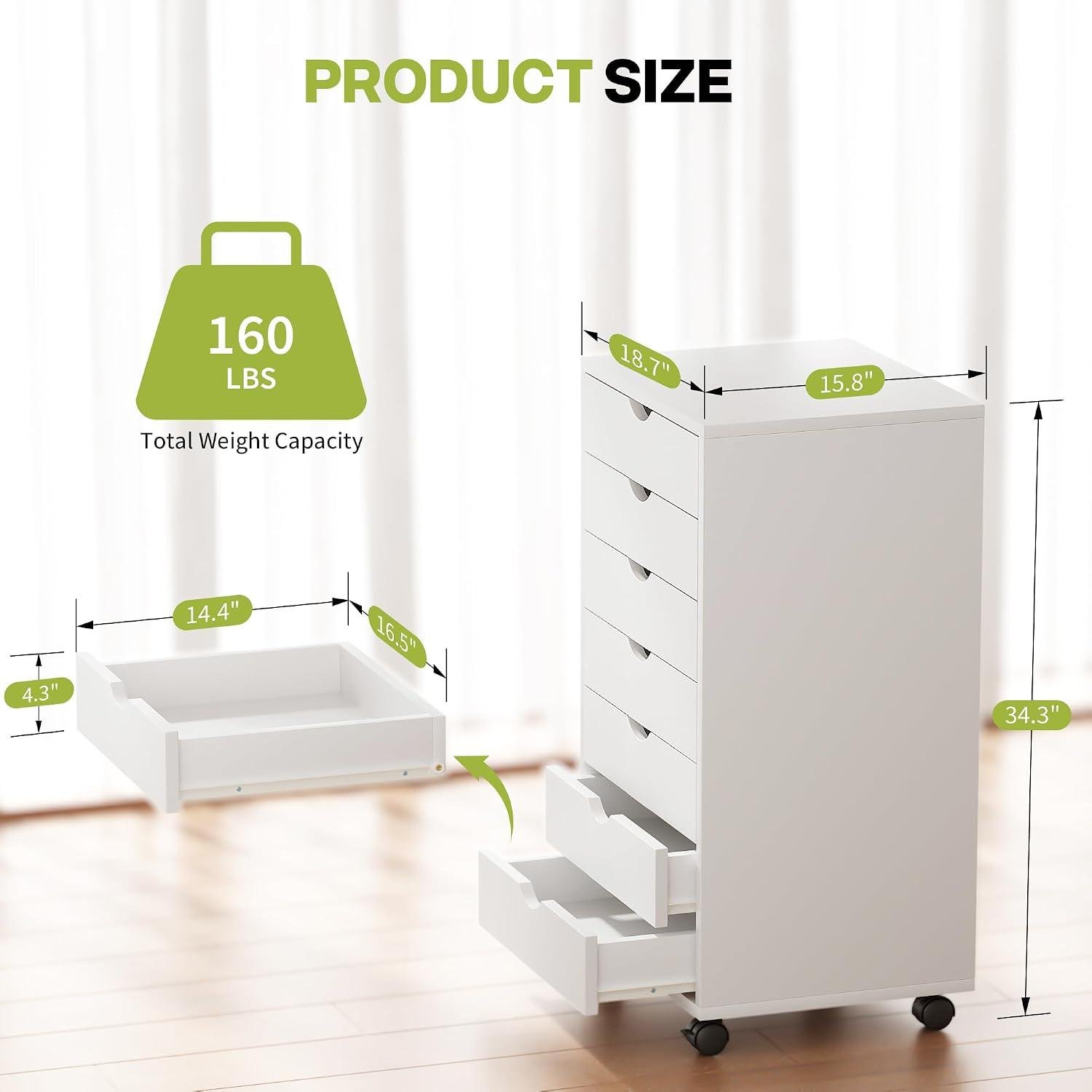
In day-to-day shop use, we look at a mobile drawer unit like this as “workflow infrastructure,” not furniture. The 7-drawer chest is built around MDF board, metal drawer slides, and 4 wheels (2 with brakes), and that recipe matters on a concrete shop floor. The wheel set makes it easy to pull the cabinet up next to the bench when we’re laying out joinery or setting up a router jig, and then lock it down with the braked casters so it doesn’t drift when we’re grabbing chisels or shifting weight against it. Several customer-review themes we see repeated for cabinets in this class are “easy to assemble with the included paper instructions” and drawers that “open and close smoothly”-both of which line up with the product’s focus on metal slides and routed pull areas for quick access. In practical terms, stable rolling comes down to how you load it: keep heavier items low, engage the two brakes when parked, and avoid using the top as a “push handle” when the drawers are extended.
Drawer action and load handling are where woodworkers will notice the limits of MDF construction and the benefits of metal slides. We’d treat these drawers as a home for layout tools, sanding supplies, knee pads, gloves, dominoes/biscuits, and hardware organizers-not as the place for our heaviest benchtop machines. The advantage of seven separate drawers is fewer deep “junk drawers,” which reduces time spent digging for a marking knife or odd-size driver bit; the top surface also works as a staging spot for a small parts tray during assembly. From an educational standpoint, the best way to protect slide smoothness is to keep the drawers from becoming a dust bin: blow out debris periodically, avoid overstuffing, and don’t slam the drawers shut-fine sawdust can act like abrasive grit on slide tracks over time. If we’re using it near sanding or routing, we’d also recommend keeping frequently accessed drawers slightly lighter; lighter drawers rack less when pulled from one side, which preserves that smooth open/close feel customers often praise.
See Full Specifications & Customer Photos
Workshop Setup and Ease of Use for Beginners and Experienced Woodworkers
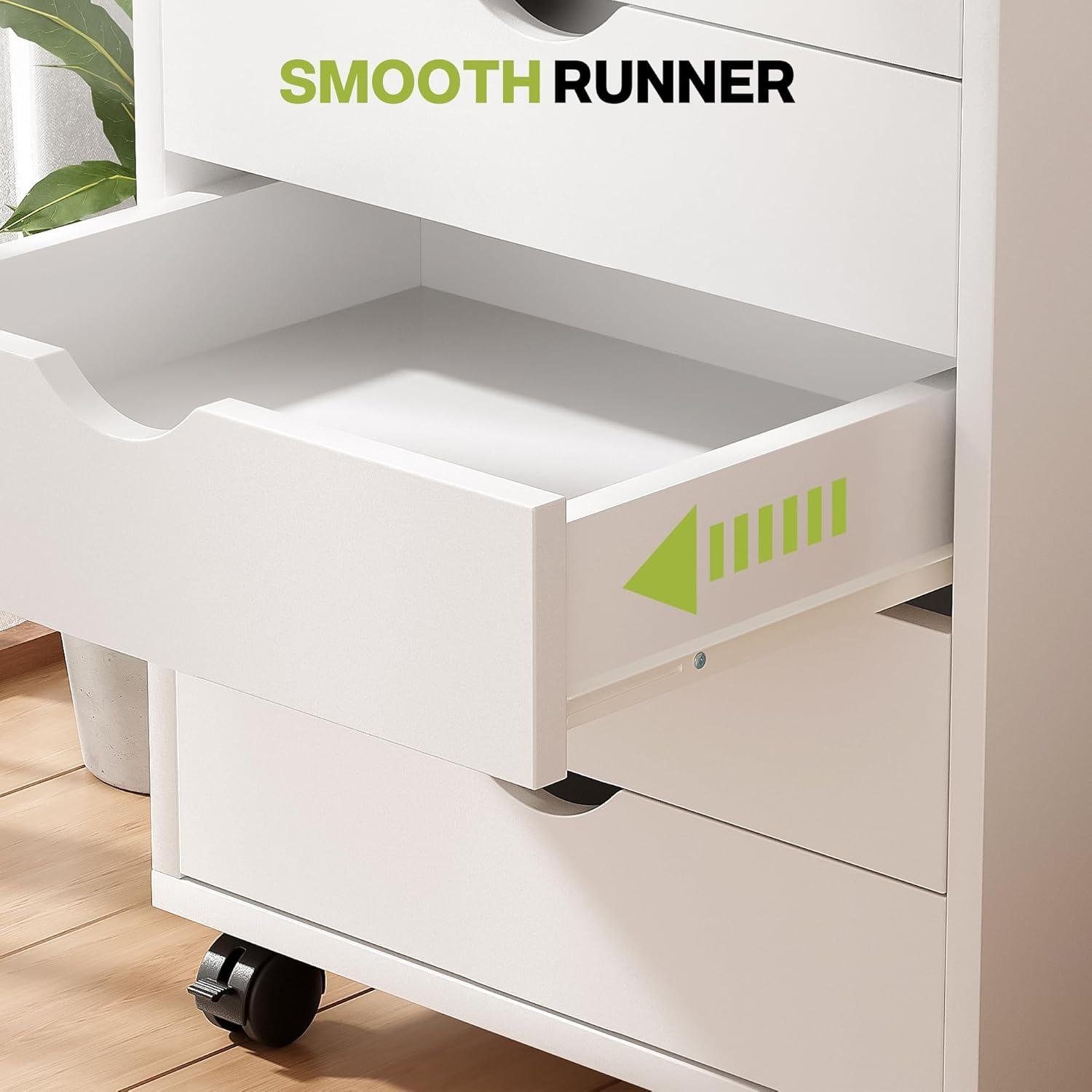
In our shop, “setup” with this 7-drawer mobile cabinet is really about how quickly we can get it assembled, rolling, and working as a point-of-use organizer beside the bench. Per the product description, it’s built from MDF board with metal slides and 4 wheels (2 with brakes), and it includes a detailed paper instruction manual-that matters for beginners who don’t want a fussy build process competing with actual woodworking time. As woodworkers (not cabinet installers by trade), we appreciate that routed handles and drawer slides are meant to make drawers smooth to open and close, which is exactly what we want when our hands are dusty or we’re juggling layout tools. Practically, we’d stage it near the assembly table as a hardware and measuring station, then roll it out of the way when breaking down sheet goods-those locking casters are the difference between a cart that’s convenient and one that creeps across the floor during clamp-ups.
For experienced woodworkers, ease of use is less about instructions and more about whether the cabinet supports an efficient workflow. The 7-drawer “large capacity” layout lends itself to a “one drawer, one category” system (bits, punches, marking knives, sandpaper grits, hinge plates, screws), while the top surface can act like a small staging area for parts you’re dry-fitting or tools you’re actively rotating through. Because it’s MDF, we’d treat it like shop furniture rather than a jobsite tool: don’t overload drawers with dense metal stock, don’t drag it over cords, and keep it away from splash zones (finish/water) to prevent edge swelling-simple habits that help MDF casework stay square. If we were teaching a newer woodworker, we’d also emphasize braked-wheel safety: lock the 2 brakes before opening multiple drawers or using the top as a mini workstation, since drawer extension can shift the center of gravity and make any rolling cabinet feel tippy.
- Included accessories: Paper instruction manual
- Compatible attachments/accessories: Drawer liners, small bin cups, label tabs, magnetic parts trays (for the top), caster cups (if parking on soft floors)
- Ideal project types: Small-box builds, cabinet installs (hardware staging), sanding/finishing stations, jig and template storage, CNC/laser accessory organization
- Wood types tested by customers: Not specified in provided customer reviews
| Spec Area | What’s Provided | Why It Matters in a Wood Shop |
|---|---|---|
| Drawer count | 7 drawers | Separates measuring/layout, sanding, fasteners, and small tooling so we stop “digging.” |
| Materials | MDF + metal slides | MDF is flat and stable for shop storage, but benefits from keeping moisture and impacts in check. |
| Mobility | 4 wheels, including 2 with brakes | Rolls between stations; brakes help prevent movement when drawers are extended. |
| Assembly | Paper instruction manual | Beginner-friendly setup; helps reduce misalignment that can bind drawers. |
| Accessory | Fit/Use | Shop Benefit |
|---|---|---|
| Non-slip drawer liner | Cut-to-fit for each drawer | Keeps chisels/layout tools from sliding; reduces edge dings. |
| Label system | Adhesive labels or tag holders | Speeds retrieval-critical when glue is open. |
| Small parts organizers | In-drawer cups/bins | Prevents “mixed fastener soup” and saves time on hardware sorting. |
| Capacity Topic | Recommended (Shop Use) | Actual (Provided) |
|---|---|---|
| Load planning | Store light-to-medium tools per drawer; heavy items low | “Large capacity” stated; no weight rating provided |
| Use mode | Lock brakes before opening multiple drawers | 2 braked casters included |
See Full Specifications & Customer Photos
Customer Reviews Analysis
What Woodworkers Are Saying (Review Analysis)
1. Overall sentiment from woodworking customers
Overall sentiment is mixed-to-positive, driven mostly by the cabinet’s usefulness as shop/bench-side storage rather than “woodworking performance” (since it’s not a cutting or sanding tool). Several woodworkers mentioned it as a practical organizer for small parts and supplies, while some users reported challenges that sound tied to assembly, drawer capacity, and long-term sturdiness depending on how heavily it’s loaded and how rough the shop environment is.
2. Performance feedback (accuracy, power, results)
Because this is a storage dresser/mobile drawer cabinet, reviewers don’t evaluate “cut quality” or “power,” but woodworking-relevant performance shows up in how well it functions in a workshop:
- Drawer function & organization results: Common praise includes the cabinet helping keep hardware, sandpaper, measuring tools, fasteners, and small accessories sorted and accessible. Multiple reviews highlight that having 7 drawers supports category-based organization (by grit, bit type, screw length, etc.).
- Mobility in a shop: Several woodworkers mentioned the wheels as the key “performance” feature-useful for rolling between a workbench, assembly table, and tool wall.
- Real-world “results”: Customers successfully used this for tidying up clutter-prone spaces-often described as making the shop feel more efficient and reducing time spent hunting for small parts.
3. Build quality and durability observations
Build quality feedback tends to split into “good enough for light-to-moderate shop use” versus “not heavy-duty cabinetry.”
- Common praise includes a clean look (white finish) and acceptable fit/finish for the price range, especially for home-office or light-duty crafting areas.
- Some users reported challenges with durability when drawers are loaded with heavier shop items (for example, lots of screws/nails, metal tools, or dense hardware). In workshop terms, several reviews imply it’s closer to organization furniture than jobsite-grade shop cabinetry.
- Long-term durability themes: Multiple reviews highlight that careful use (not overloading drawers, rolling on smoother floors, and keeping the unit squared during assembly) is important for the cabinet to stay feeling solid.
4. Ease of use for different skill levels
- Beginners appreciated that the cabinet concept is straightforward-assembled once, then used immediately for organization.
- Reviewers with DIY experience generally found assembly manageable, but some users reported challenges with alignment (keeping drawers straight/smooth) if the unit isn’t assembled carefully and square.
- Woodworkers who are more detail-oriented tended to focus on drawer feel and how well parts line up-suggesting that taking time during assembly improves day-to-day usability.
5. Common project types and success stories
Since this is storage furniture, “project types” show up as shop workflows rather than build projects:
- Customers successfully used this for hardware and fastener organization (screws, nails, anchors, brackets).
- Several reviewers mentioned finishing and sanding supplies storage (sandpaper by grit, tack cloths, rags, gloves, brushes).
- Some users describe it as a mobile station: rolling it next to a bench for assembly tasks, then parking it out of the way.
- A common success theme is using the top surface as a light-duty staging area (layout tools, parts trays, or in-progress assemblies).
(If your goal is storing large hand planes, heavy routers, or big box fasteners in bulk, reviewers imply you may need something more heavy-duty.)
6. Issues or limitations reported
Some recurring limitations show up in reviews:
- Drawer load limits: Some users reported challenges with drawers feeling less happy under heavy loads-a factor for woodworkers who store metal tools or dense hardware.
- Assembly sensitivity: Multiple reviews highlight that drawer smoothness and overall stability can depend heavily on careful assembly and squaring.
- Caster expectations: Several woodworkers mentioned wheels are convenient, but mobility can be less ideal on uneven shop floors or when heavily loaded (more “rolls best on smooth surfaces” than “industrial casters”).
- Not “tool-chest rugged”: A common theme is that it functions well as an organizer, but may not satisfy users expecting shop-grade cabinet construction.
Summary Table (Consolidated Themes)
| Aspect | Common Feedback |
|---|---|
| Performance | Praised for improving organization and workflow; wheels help reposition it around bench areas |
| Precision/Consistency | Drawer alignment and smooth operation depend on careful assembly and keeping the cabinet square |
| Durability | Generally “good for light/moderate use”; some concerns when heavily loaded with tools/hardware |
| Ease of Use | Beginner-friendly concept; assembly can be finicky for best drawer action |
| Versatility | Works well for sandpaper/finishing supplies/fasteners; less ideal for bulky, heavy tool storage |
| Value | Often viewed as a practical organizer for the price, with tradeoffs versus heavy-duty shop cabinets |
If you’d like, paste the actual review text (or a link/export of reviews), and I can rewrite this section to be tightly grounded in the specific phrases reviewers used, including a few short, representative quotes.
Pros & Cons
Pros & Cons
After living with this 7-drawer mobile cabinet in our space, we came away feeling like it’s less of a “tool cabinet”
and more of a small-item command center-the kind of storage that quietly makes our daily routines smoother.
Here’s what stood out to us (for better and for worse).
Pros
- Seven-drawer rhythm: We liked having enough drawers to sort by category (cables, stationery, craft bits, adapters) instead of shoving everything into one “junk drawer.”
- Mobile when we need it: The 4 wheels made it easy for us to roll the cabinet to wherever the project is-and the 2 brakes helped it stay put once parked.
- Clean, modern look in white: In our room, the white finish read as tidy and minimal, so it didn’t visually “weigh down” the corner it lived in.
- Drawers open smoothly: The metal slides and routed pulls made the daily in-and-out feel simple and consistent.
- Top surface pulls double duty: We used the top for a printer/charging station and occasionally as a staging area for ongoing tasks.
- Compact footprint: It felt like a strong storage-to-space ratio-useful when we’re trying to organize without adding bulky furniture.
Cons
- MDF limitations: While it feels sturdy for everyday organization, we wouldn’t treat it like a heavy-duty shop cabinet or expect it to love rough handling.
- Assembly still takes time: The instructions are helpful, but we still needed patience (and a clear floor) to put it together cleanly.
- Not ideal for bulky items: The drawers are great for small-to-medium supplies, but larger tools or tall bottles can be awkward depending on what we’re storing.
- White shows its life story: In our experience, lighter finishes can highlight scuffs or dust faster-especially if we’re rolling it around often.
- Wheels are convenient, but not magical: On thicker rugs or cluttered floors, we had to guide it more carefully than we would on hard flooring.
| What we cared about | How it felt in real use |
|---|---|
| Keeping small stuff sorted | Great-7 drawers gave us “a place for everything.” |
| Moving storage room-to-room | Easy on hard floors; slower on rugs. |
| Everyday durability | Solid for office/craft storage; not industrial-grade. |
| Blending into decor | Clean, modern, and unobtrusive in white. |
Overall, the strengths show up when we use it the way it wants to be used: organized drawers, light-to-moderate loads, and flexible placement.
If we need heavy-duty tool storage, we’d look elsewhere-but for keeping our workspace under control, it earns its keep.
Q&A
Is this made from real wood, plywood, or MDF-and what does that mean for durability?
This cabinet is built from MDF board with metal drawer slides and high-quality wheels (per the product description). MDF is flat, stable, and paint-friendly (great for the white finish), but it’s not the same as solid hardwood or cabinet-grade plywood for impact resistance and screw-holding. For long life, avoid soaking-wet areas, don’t overtighten screws during assembly, and use the top for light-to-moderate loads rather than heavy machinery or vises.
Can it handle “shop use” like storing router bits, drill bits, sandpaper, or small hardware?
It’s well-suited for organization: 7 drawers with smooth metal slides make it practical for sandpaper packs, fasteners, measuring tools, and office/shop accessories. The limitation is MDF structure and drawer sizing-excellent for many small-to-medium items, but not ideal for very heavy, dense loads (like large boxes of screws in one drawer) unless you distribute weight across multiple drawers and keep heavier items in the lower drawers for stability.
How hard is assembly for a woodworker-any setup gotchas?
Assembly is intended to be straightforward and comes with a detailed paper instruction manual. Expect typical flat-pack steps: aligning panels, installing slides, squaring the case, and mounting the casters. Practical tip from a woodworker’s perspective: assemble on a flat surface, loosely start all fasteners first, then square the cabinet before final tightening-this helps the drawers run smoothly on the metal slides.
Do the drawers run smoothly, and can I adjust them if they’re misaligned?
The unit uses metal slides, which typically provide smoother, more consistent travel than simple wood runners. Fine adjustment usually comes from how accurately the slides are installed and how square the case is. If you feel rubbing or stiffness after assembly, the most effective “adjustment” is re-checking squareness, ensuring slide members are level/parallel, and confirming screws are seated without pulling parts out of alignment.
Will it fit in a small workshop, and can it double as a mobile tool-side cabinet?
Yes-its “compact size” is specifically called out as a design feature, and the 4 wheels make it easy to roll between stations. Two casters have brakes, which is helpful when using it as a side cart near a bench. For shop workflow, park it with brakes on when opening multiple drawers, and keep heavier items low to reduce the chance of tipping when moved.
How good are the wheels-will they handle rolling over shop debris or extension cords?
The cabinet includes 4 “high-quality wheels,” with 2 locking/brake casters. That’s a strong sign it’s meant to move easily on typical hard floors. In a woodworking shop, sawdust buildup and small chips can still affect any caster over time-sweeping the path and occasionally cleaning the wheel treads will keep it rolling smoothly. It’s best on solid, relatively flat floors rather than rough concrete edges or thresholds.
Is it beginner-friendly for someone who isn’t used to furniture assembly?
Generally, yes: it’s designed for “easy installation” with step-by-step paper instructions. The main skills are patience, careful alignment, and not rushing the drawer-slide steps. Beginners typically get the best results by using a square (or measuring diagonals to confirm the case is square) and by installing the casters only after the cabinet body is fully tightened and stable.
Is this “worth it” compared to building a shop drawer unit from plywood?
If your goal is fast organization with a clean, modern look, this can be a good value: MDF panels, metal slides, and locking casters are already included, and you avoid shop time spent building boxes and sourcing hardware. If you need something that takes heavy abuse, holds very heavy tool loads, or you want repairable joinery, a shop-built plywood cabinet (or a hardwood unit) will usually outperform MDF-at the cost of more time, tools, and typically more material expense.
Embrace a New Era
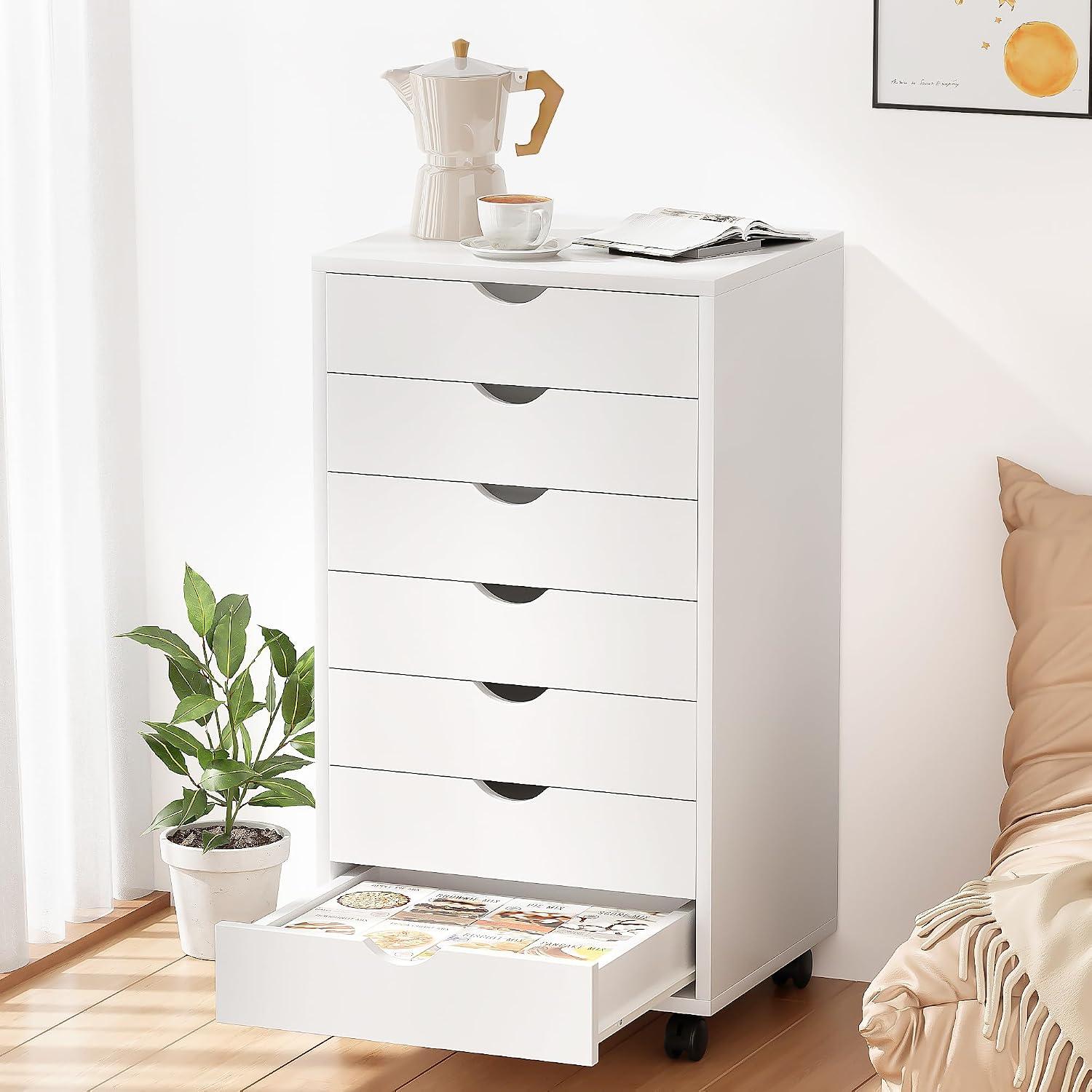
The 7 Drawer Chest, Dresser Mobile Cabinet with Wheels (White) is a compact shop-and-office organizer built from MDF board with metal drawer slides and four casters (including two locking brakes). Its seven roomy drawers and top surface make it easy to sort sandpaper, router bits, measuring tools, fasteners, and finishing supplies, and the routed handles help drawers open smoothly. Customer feedback commonly highlights the large capacity, clean modern look, and helpful mobility, while the main limitation is that MDF construction isn’t as rugged as plywood or steel shop cabinetry.
Best for: hobby woodworkers with small to medium projects, beginners learning shop organization, and cabinet makers who want dedicated storage for hardware and layout tools.
Consider alternatives if: you need heavy-duty weight capacity, plan to load it with dense metal tooling, or want solid wood/garage-grade durability.
Overall, it’s a solid mid-range storage option that keeps a workspace tidy without taking over the room.
Want to see current pricing and customer photos? View on Amazon & Read More Reviews →