

Blog
TOYQI Book Nook Kit Review: Right DIY Kit for Us?


Ever find yourself wanting a satisfying, precise build—but without firing up teh table saw, filling the shop with dust, or dedicating a full bench to a week-long project? When space is tight and time is tighter, even experienced woodworkers start looking for kits that still scratch the accuracy-and-fit itch we love.
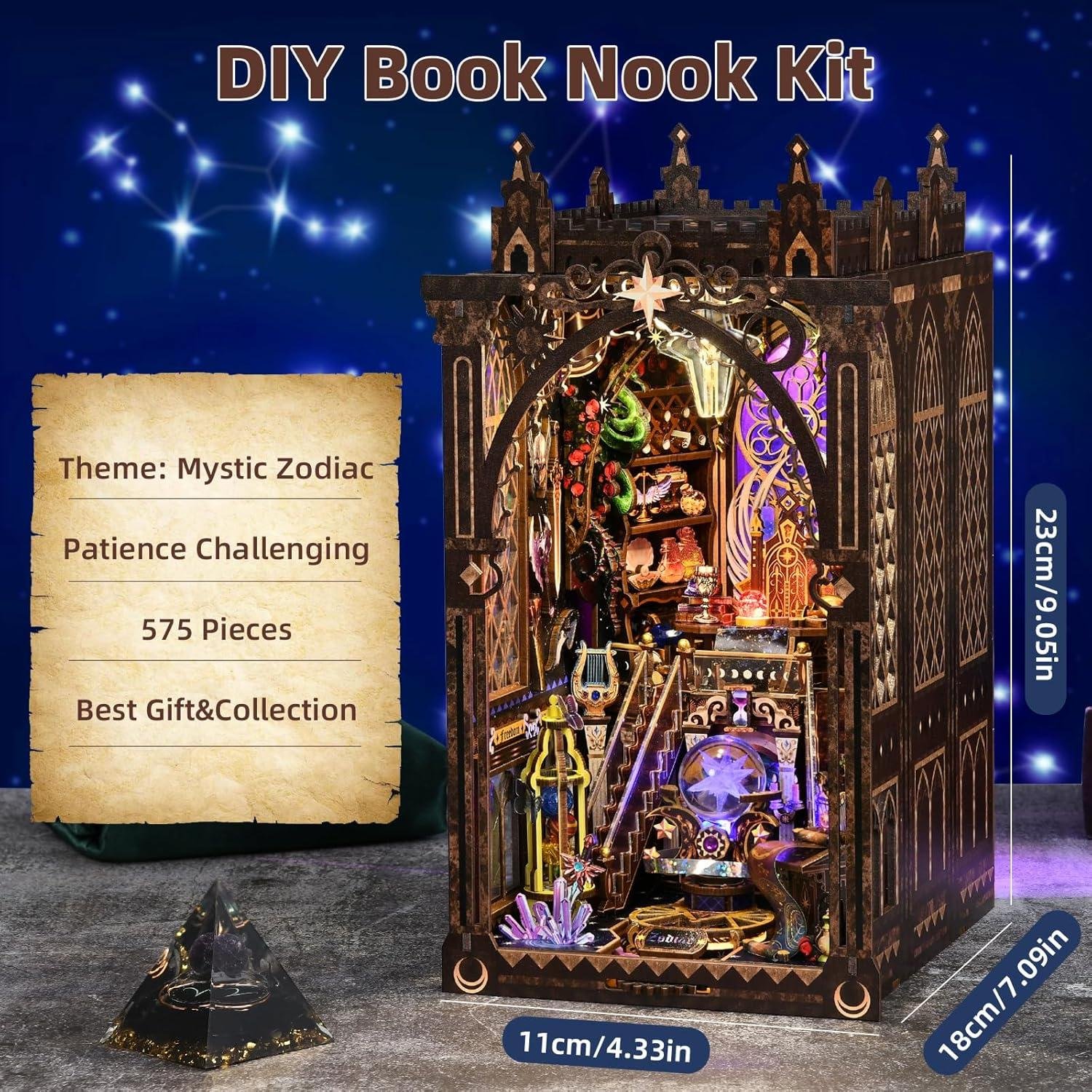
The TOYQI Book Nook Kit is a DIY 3D wooden puzzle bookend aimed at adults who want a miniature “dollhouse-style” build, complete with zodiac-themed elements (Earth, Fire, Water, Air), a rotatable star chart, and a touch, color-changing LED light (you’ll need 3 AAA batteries, not included). It’s also worth noting it contains small parts and isn’t suitable for children under 3.
In this review,we’ll look at part precision,material durability,assembly clarity,lighting integration,and whether the experience feels like good value versus “cheap craft wood.” We’ll also summarize what customers report about completeness and support,since the brand states each kit is checked before shipping.
As woodworkers, we’re picky about fit, finish, and frustration—so we’ll approach this like any tool: does it earn its space on our bench?
Tool overview and First Impressions in the Shop
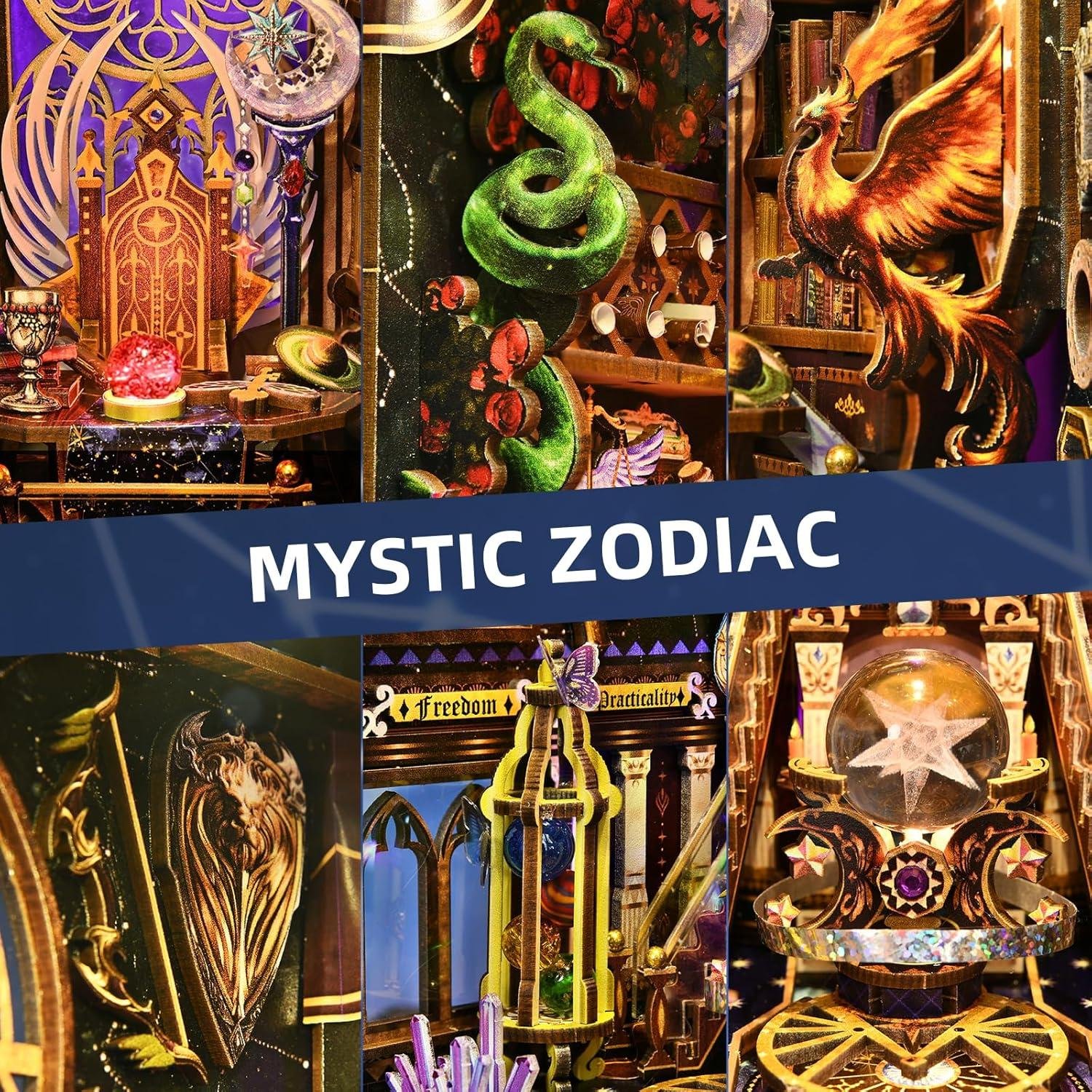
When we brought the TOYQI Book Nook Kit (Zodiac-themed) into the shop, our first reaction was that it’s less a “tool” and more a precision-fit, laser-cut wood assembly project—the kind of thing that scratches the same itch as dry-fitting a tricky casework joint. The kit’s structure is a 3D wooden puzzle bookend built around intricate small parts, plus a touch LED lighting system with a color-changing “crystal ball” affect; power is supplied by 3× AAA batteries (not included), so there’s no cord management or bench power to worry about. The standout shop takeaway is that this kit behaves like thin plywood components with tight tolerances: it rewards careful test-fitting, clean hands, and a dedicated tray system for parts, and it punishes rushing—several reviewers describe it as “complex, not for a first-timer” even when the end result is “outstanding” and “one you’ll be proud of.”
From a woodworker’s viewpoint, the “first impressions” are really about fit, finish, and workflow. Multiple customers note the wood feels “thicker… and more sturdy” than othre book nooks, but they also report that some parts can be to tight (needing gentle nudging/hammering) or too loose (requiring glue), and that they sometimes had to sand pieces down to make assemblies behave. Instruction quality is a recurring theme: some reviewers say the steps are “pretty straight forward” if followed exactly, while others call out diagrams that are “comically small” and lighting directions that need improvement—with some builders resorting to YouTube to confirm switch placement and wiring. In shop terms, we’d treat this like a miniature dry-assembly job: keep a fine sanding stick on hand, use a slower-setting adhesive when alignment matters, and stage the LED wiring early so you’re not retrofitting it after panels close up.
- Included accessories
- Laser-cut wooden parts for the 3D book nook structure
- Touch LED lighting set (color-changing lighting effect)
- Decor elements: four zodiac elements (Earth/Fire/Water/Air) + zodiac accessories
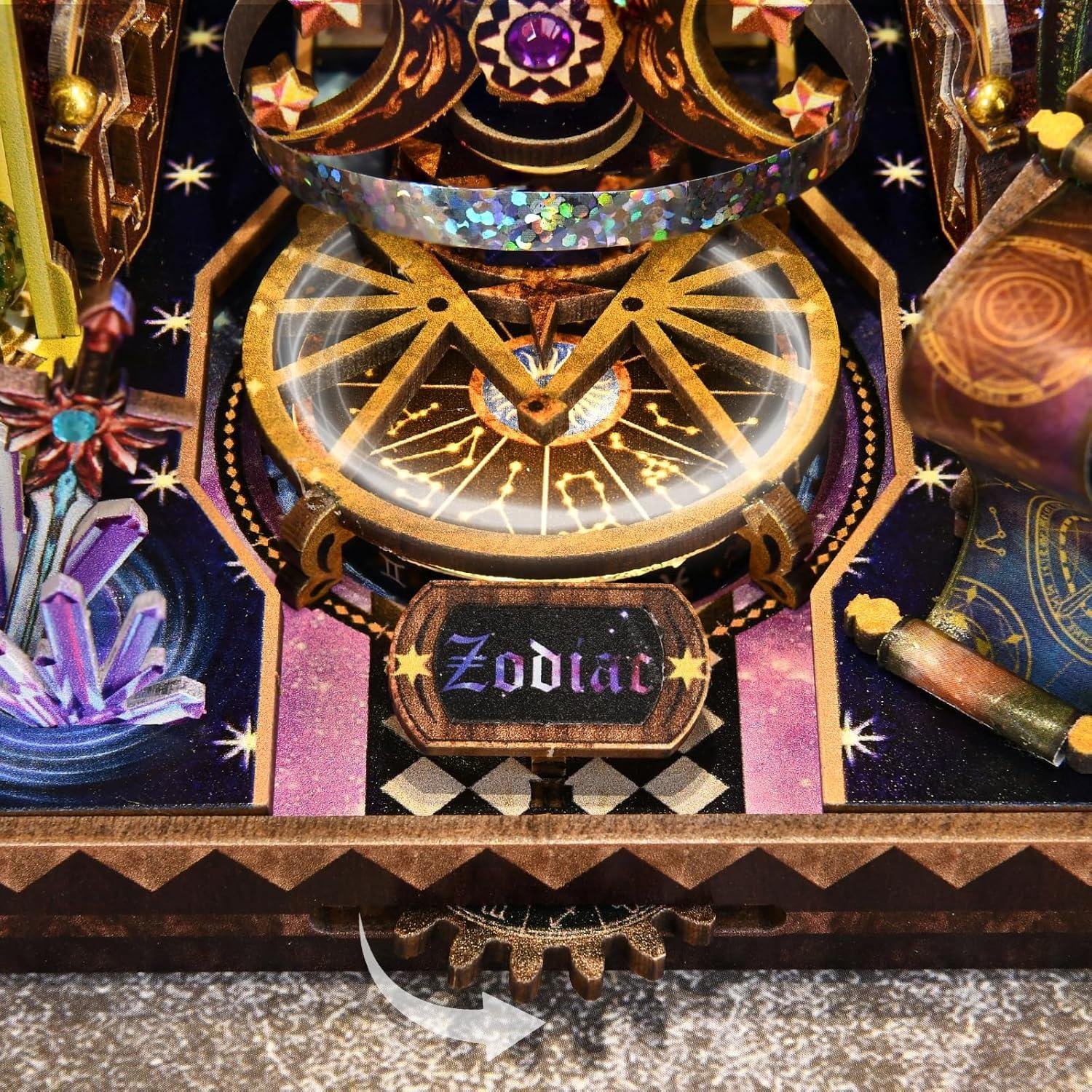
- Rotatable star chart component
- Craft glue (noted by reviewers; some still bought extra)
- Stickers/paper details (newsprint/envelopes/scrolls mentioned by customers)
- Compatible shop attachments/accessories (not included)
- fine sanding sticks / 220–400 grit sandpaper for edge tuning
- Small clamps or rubber bands for glue-ups
- Flush cutters / hobby knife for tabs and paper details
- Tweezers for tiny placement and wire routing
- Magnifier lamp (helpful given “miniature” diagram callouts)
- Ideal project types
- Detail-heavy display builds and bookshelf conversation pieces
- Low-dust bench sessions when we don’t want to fire up machines
- Skill-building practice for dry-fitting,sequencing,and micro-sanding
- Collaborative builds (several reviews mention family building experiences)
- Wood types tested by customers (as reported)
- Not specified in reviews (customers describe it generally as “wooden pieces” / thicker wood)
| Spec / Feature | What We Can Confirm From Listing/Reviews | Why It Matters in the Shop |
|---|---|---|
| Power | 3× AAA batteries required (not included) | no bench outlets needed; plan batteries before final close-up. |
| Lighting | Touch LED + color-changing effect | Wire routing is part of the “assembly sequencing” challenge; reviewers praise wire management. |
| Assembly complexity | Ofen described as complex / challenging | Best for patient builders pleasant with dry-fitting and rework. |
| Fit & tolerance | Reports of tight/loose joints and need for sanding/glue | Expect minor “tune-up” work like we do on tight joinery. |
| Instructions | Mixed: clear if followed vs tiny/hard to follow, lighting steps criticized | Magnification and step-ahead planning reduce mistakes. |
| Accessory / Supply | Fits This Kit? | Use Case |
|---|---|---|
| AAA batteries | Yes (required) | LED power (not included in box). |
| PVA/wood glue (slow set) | Yes | More working time—one reviewer preferred slower drying glue for corrections. |
| CA glue (thin/medium) | Optional | spot-tacking tiny parts (use sparingly to avoid fogging near clear parts). |
| Fine sanding media | Yes | Dial in tight fits; reviewers mention sanding for parts that “don’t quite fit right.” |
| Capacity / Expectation | Recommended (Woodshop Reality) | Actual (Based on Reviews) |
|---|---|---|
| time investment | Plan for multiple sessions | Reports range from two days to around 30 hours depending on pace/experience. |
| Skill level | Comfortable with sequencing + small-part handling | manny call it challenging for a first try; others succeed by following steps strictly. |
| Shop support needed | light sanding + careful gluing | Some needed sanding, extra glue, and occasional “gentle nudging.” |
See Full Specifications & Customer Photos
Real World Build Performance and Fit Up Precision
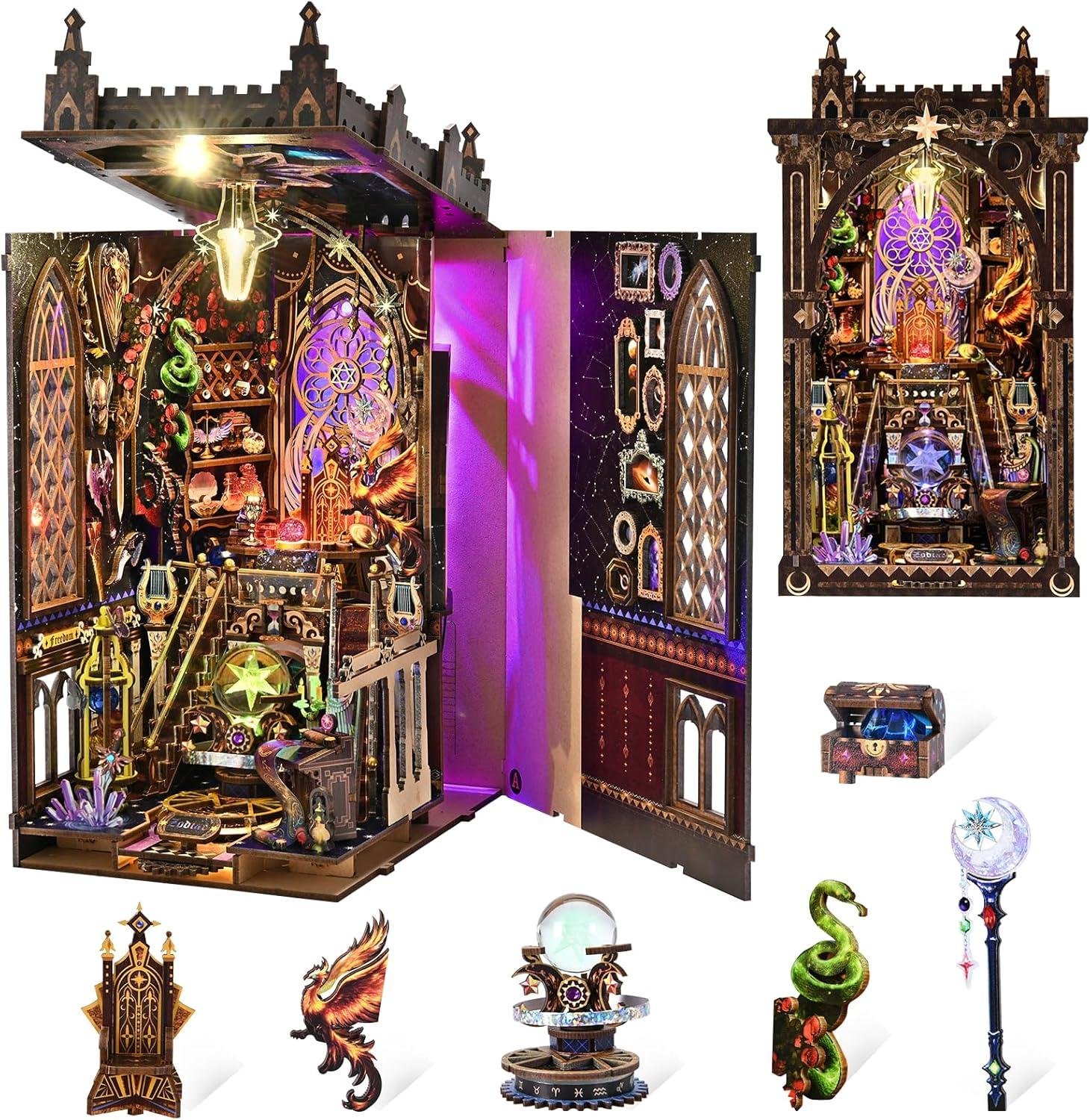
On the bench, the TOYQI Book Nook is less like a “toy” and more like a lightweight laser-cut wood assembly project that asks for real shop habits—dry-fitting, squaring, and controlled glue-ups.The kit is marketed as “crafted from durable wood materials” with an innovative 3D puzzle structure, and reviewers regularly echo that the results look “outstanding,” “gorgeous and enchanting,” and “fits nicely on the shelf.” We did notice the same split in feedback on fit-up: some builders say the wood is “thicker and overall more sturdy,” while others report “many of the wood parts don’t quite fit right,” with pins that are either too tight or too loose.In practical woodworking terms,expect occasional tolerance stacking—where a slightly fat tab multiplied over several assemblies pushes things out of alignment—and plan to treat this like fine model work rather than a snap-together puzzle.
For precision and build performance, our best advice is to approach it like cabinetmaking in miniature: dry-fit first, then glue only once the subassembly sits flush and square. Multiple reviewers mention needing to sand parts down or glue loose joints, and one described “gentle hammering/nudging with the back of a screwdriver” for overly tight fits—exactly where we’d substitute a small hardwood block to distribute force and avoid crushing an edge.Instruction quality is a recurring theme: the book is “printed in color” and “organized well,” but diagrams can be “comically small,” and lighting steps are easy to miss; we’d keep a magnifier lamp nearby and stage the electronics as a separate “dry run” before final glue. The lighting itself is a highlight—there’s touch LED lighting and a color-changing crystal-ball effect—but note the spec caveat: 3×AAA batteries required (not included). If your shop workflow already includes sanding sticks, fine files, tweezers, and slower-setting glue for alignment time, this kit fits a woodworker’s skill set well—just don’t expect every joint to press-fit perfectly without a little tuning.
See Full Specifications & Customer Photos
Key Features Woodworkers Will Appreciate in a Miniature Kit
From a woodworker’s standpoint, the TOYQI Book Nook is less a “tool” and more a precision dry-fit practice kit—the kind of small-scale build that rewards the same habits we use at the bench: test-fitting, sequencing, and careful cleanup. The kit is built as an innovative 3D puzzle structure using durable wood materials, and multiple reviewers echo that the wood feels “thicker and overall more sturdy” than other book nooks they’ve tried. That matters in the shop because thicker laser-cut parts generally tolerate light clamping pressure, repeated test-fits, and controlled sanding without turning to fuzz. We also appreciate that the design is highly detailed—reviewers frequently call the finished piece “gorgeous,” “enchanting,” and “an outstanding result”—as it pushes us into the same fine-motor discipline we need for inlay work, small jigs, and delicate trim. Just be aware: several customers describe it as “complex, not for a first-timer”, and one notes it took about 30 hours, so this is a better fit for woodworkers who enjoy patient, methodical assembly rather than “one-evening” projects.
Workshop-wise, the features we’ll most appreciate are the parts fit strategy and the built-in electronics integration. Reviewers report a mix of tolerances—some joints are too tight and need gentle nudging/hammering (one mentions using the back of a screwdriver), while others are too loose and benefit from glue—so this kit becomes a practical lesson in when to reach for sanding sticks/files versus when to use adhesive. Several customers specifically mention having to sand parts down for proper fit, which is a good reminder to remove material slowly and evenly (we prefer a couple passes, re-test, then repeat) and to keep edges square so the structure doesn’t rack. On the lighting side, this kit includes a touch LED lighting system with a color-changing light effect and a rotatable star chart; one reviewer praised the company’s wire management as excellent for routing and organizing the wires and LED lights. Power is simple but important: the kit requires 3× AAA batteries (not included), so we recommend doing a quick dry-run of the lighting before final glue-up—especially since multiple reviewers say the instructions are small/hard to follow in spots and that some lighting steps are easy to miss without looking ahead or using a video.
- Included accessories (per listing/review themes)
- Pre-cut wooden pieces (3D puzzle structure)
- Touch LED light set with color-changing effect
- Zodiac elements (Earth, Fire, Water, Air) and themed accessories
- Rotatable star chart
- Stickers/paper details (many reviewers note detailed stickers)
- Craft glue (reviewers mention glue is provided, though some bought extra)
- Compatible attachments/accessories (shop add-ons we’d realistically use)
- pin vise or micro drill bits (for clearing tight holes—by hand)
- Sanding sticks (180–400 grit) for dial-in fit
- Needle files for tabs/slots and inside corners
- Clamps or rubber bands for controlled glue pressure
- Wood glue / tacky craft glue (slower-drying helps alignment)
- Flush cutters (if the kit includes small ties/wire management pieces)
- Magnifier lamp (reviews mention “miniature” diagrams)
- Ideal project types (for woodworkers)
- Fine-fit practice (tabs/slots, squaring repeated assemblies)
- Glue discipline (minimal squeeze-out on visible details)
- Intro to miniature lighting integration (routing, staging, access planning)
- Relaxation builds between larger shop projects (reviewers found it relaxing)
- Wood types tested by customers
- Not specified in reviews (customers generally describe it as “wooden pieces” and “thicker wood,” but no species are named)
| Spec / Feature | what’s Confirmed | Why woodworkers care |
|---|---|---|
| Power requirement | 3× AAA batteries (not included) | Plan a lighting test before final glue-up; keep spare batteries on hand. |
| Lighting | Touch LED + color-changing effect | Electronics add sequencing complexity; dry-fit and stage wires like you would in a routed channel. |
| Assembly style | 3D wooden puzzle structure | Great for practicing tolerance tuning (sand vs. glue) and keeping assemblies square. |
| Theme mechanics | Rotatable star chart + zodiac elements | Moving parts reward clean sanding and accurate alignment to avoid binding. |
| Accessory / Tool | Compatibility | Use Case During Build |
|---|---|---|
| Sanding sticks (180–400 grit) | Recommended (global) | Corrects “too tight” fits without over-removing material. |
| Needle files | Recommended (universal) | Squares up slot corners and cleans laser-char for tighter glue bonds. |
| Slower-drying glue | Recommended (universal) | Reviewers mention using slower glue to fix mistakes and adjust alignment. |
| Magnifier lamp | Recommended | Helps with “comically small” diagrams and tiny placement indicators. |
| Capability Area | Recommended Expectation | What Reviews Suggest in Practice |
|---|---|---|
| Skill level | Intermediate (comfortable with sequencing + glue) | Often called “complex”; some first-timers succeeded but called it “very challenging”. |
| Fit & tolerance | expect minor tuning | Reports of tight pins/holes and loose fits requiring sanding or extra glue. |
| Instructions | Plan to cross-check steps | Printed in color and organized, but often described as small/hard to follow; some used YouTube. |
See Full Specifications & Customer Photos
Ease of Use for Beginners and Experienced Makers
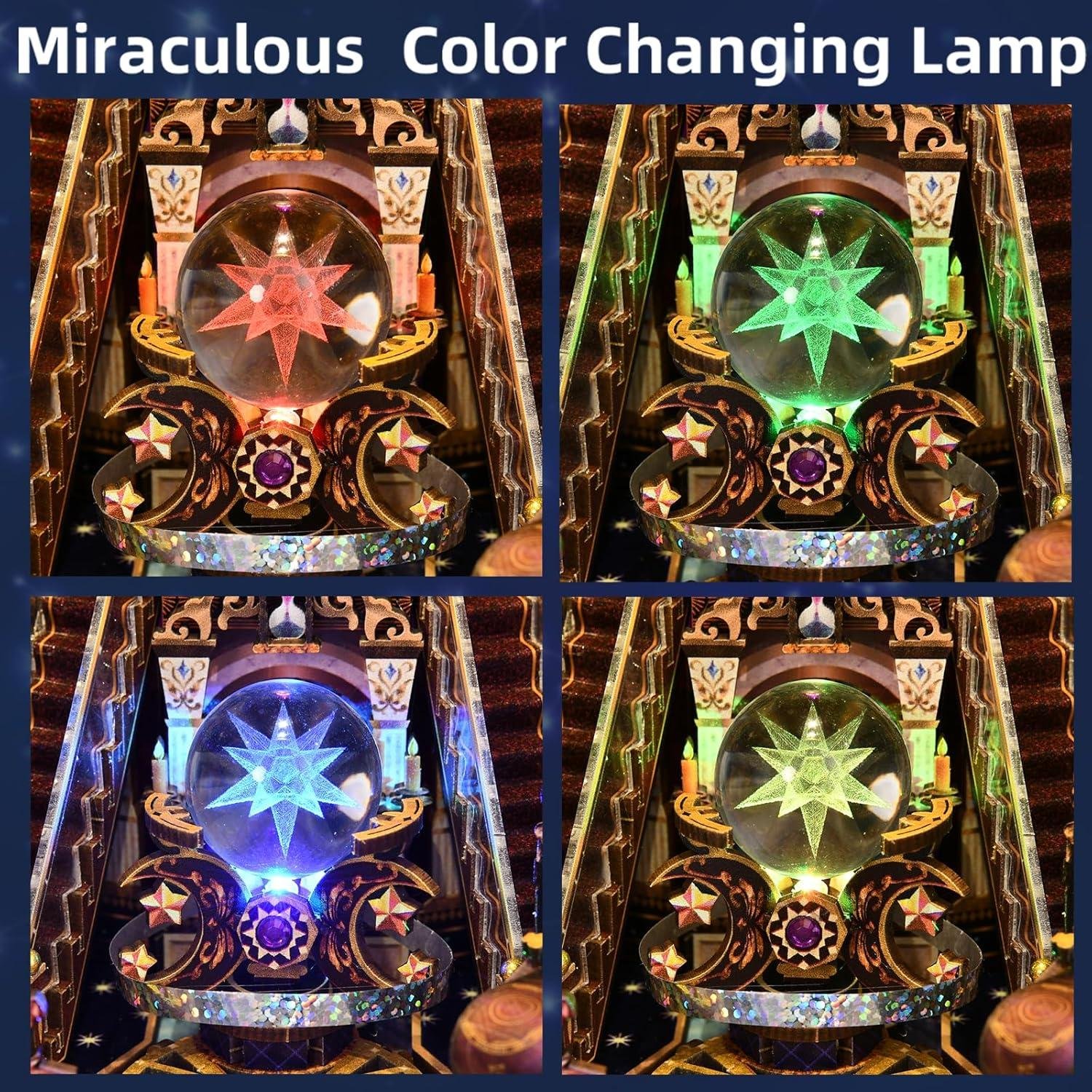
from a woodworking standpoint, the TOYQI Book Nook Kit isn’t a “power tool” project—it’s a precision, small-parts assembly that rewards the same habits we use at the bench: dry-fitting, careful sequencing, and controlled glue-ups.The kit leans heavily into a 3D wooden puzzle structure (one reviewer estimated “95%… were all wooden pieces”), with touch LED lighting and a color-changing crystal-ball effect plus a rotatable star chart to set any zodiac sign. For beginners, that means this is less about cutting stock and more about learning good shop fundamentals on a smaller scale—keeping parts organized, checking orientation twice, and not forcing joints. Reviewers repeatedly describe it as “complex,not for a first-timer” while also noting the instructions are “pretty straight forward” if followed “in absolute sequence”. In practice, we’d treat this like a fussy dry-fit glue-up: stage parts, read ahead, and expect a few backtracks.
For experienced makers, the value is in how often this kit asks us to apply real-world fit-and-finish skills—because tolerances aren’t always perfect. Multiple reviewers mention some parts being “too loosely fitted” (needing glue) while others were “too tight” (needing gentle nudging or light sanding).That’s familiar territory in the shop: a swipe of sandpaper beats splitting a thin component by brute force. the biggest “ease-of-use” hurdle is documentation—several customers call out tiny diagrams and lighting steps that are hard to follow, with some needing YouTube tutorials to clarify the LED/switch placement. Also, note the practical requirement: battery not included, and the kit needs 3×AAA batteries, so we’d set those aside before starting the electrical steps. If we approach it like a careful assembly jig job—label parts, test-fit, use slower-drying glue to allow corrections (a tip echoed in reviews), and do wire routing before final close-up—the build becomes much more predictable for both newer hobbyists and seasoned woodworkers.
See Full Specifications & Customer Photos
Customer Reviews analysis
What Woodworkers Are Saying (Review Analysis)
1. Overall sentiment from woodworking customers
Multiple reviews highlight a strong “worth it” payoff: the finished TOYQI book nook “looks great,” feels “gorgeous and enchanting,” and is the kind of build you’ll be “proud of.” Several woodworkers mentioned it’s complex and time-consuming, but the visual impact (especially the lighting) frequently enough justifies the effort. Sentiment trends positive on results, mixed on the build process.
2. Performance feedback (accuracy, power, results)
Since this is a DIY wooden assembly kit (not a powered tool), “performance” feedback centers on fitment accuracy and final presentation.
- Results / finish quality: Common praise includes “outstanding result,” “so much detail,” and a finished piece that’s “great” on the shelf. Reviewers repeatedly mention the lighting as a standout feature—especially the color-changing LED.
- Precision & fit: Some users reported challenges with parts fitting inconsistently—a classic woodworking pain point. A few mentioned needing sanding for tight joints and extra glue for loose ones, suggesting tolerances vary from batch to batch or across subassemblies.
- Build pacing: One reviewer reported ~30 hours for a first book nook due to rework and tiny diagrams; others completed it in two days or did it “a little at a time” as a relaxing project.
3. Build quality and durability observations
Several woodworkers mentioned the material quality positively:
- Thicker, sturdier wood: One reviewer noted this was their favourite kit so far because “the wood was thicker and overall more sturdy.”
- Breakage resistance (when handled carefully): One first-time builder reported “no issues with breakage,” especially when using a slower-drying glue to correct mistakes.
- packaging reliability is mixed: At least one user reported a broken glass component on arrival (“magic bead part… came broken”), requiring improvisation.
- Thoughtful spares: A family build mentioned duplicate parts for more fragile pieces and no missing parts, which woodworkers frequently enough appreciate when working with thin laser-cut components.
4. Ease of use for different skill levels
Ease of use is the most polarized theme.
- Beginners: Reviewers with beginner experience found the instructions “pretty straightforward” but also said it’s “very challenging for a first try” and that you must follow steps in “absolute sequence.” Several woodworkers mentioned needing to backtrack after wrong turns.
- Intermediate/experienced builders: More experienced users (e.g., those on their 3rd or 5th book nook) still reported instruction and fitment frustrations, but were more likely to push through via sanding, gluing, and referencing videos.
- Instruction readability is a recurring pain point: Multiple reviews highlight tiny diagrams, unclear glue points, and lighting steps that are easy to miss—leading to rebuilds or retrofits (like reinstalling LEDs later).
5. Common project types and success stories
Customers successfully used this kit for:
- Display book nooks/bookends for shelves, often describing the final display as “enchanting” and “fits nicely on the shelf.”
- Customization and light “shop-style” upgrades: Several reviewers mentioned adding personal touches—using hot glue and paint for a more 3D look, or improvising when a part arrived broken. Others appreciated that the project “leaves room for deviating” with placement of scrolls, envelopes, and books.
- Shared builds: One review described a parent/child build experience with “great memories made,” aligning with how many woodworkers treat intricate kits as a weekend bench project.
6. Issues or limitations reported
Some users reported challenges with:
- Inconsistent fitment: “Pins wouldn’t fit… other pins were too loose,” plus reports of wood parts that “don’t quite fit right,” requiring sanding, nudging/hammering, and additional glue.
- Instructions needing improvement (especially lighting): Multiple reviews highlight instructions that are hard to follow, poorly translated, too dark, or printed with comically small diagrams—forcing builders to “look ahead,” troubleshoot, or use YouTube tutorials.
- Extra supplies recommended: Several reviewers mentioned using more glue than provided, or buying additional glue to get clean, secure assemblies.
- fragile/packaging-related breakage: At least one report of a broken glass piece out of the box.
Summary Table (Themes Woodworkers Care About)
| Aspect | Common Feedback |
|---|---|
| Performance (Fit/Outcome) | outstanding final display and lighting; mixed fitment requiring sanding/glue |
| Precision | Some joints/pins inconsistent (too tight or too loose); occasional rework |
| Build Quality & Durability | Thicker, sturdier wood noted; some fragile components (e.g., glass) can arrive damaged |
| Ease of Use | Not ideal for first-timers; instructions are colorful but frequently enough tiny/unclear—lighting steps most criticized |
| Results / Finish | “Gorgeous,” “enchanting,” shelf-ready; high-detail aesthetic repeatedly praised |
| Value | High satisfaction when complete, but time/effort can be higher than expected |
If you want, I can rewrite this section in a tighter “product page” voice (shorter paragraphs, more skimmable bullet points) while keeping the same honest review signals.
Pros & Cons
Pros & Cons
| Pros | Cons |
|---|---|
| Zodiac theme feels personal — we can lean into our own sign with the included Earth/Fire/Water/Air element pieces and matching accessories. | Not for little hands — small parts mean this is a firm no for kids under 3 (and we’d also keep it away from curious pets). |
| Rotatable star chart — we like being able to “set” the display to any zodiac sign, which keeps it fun even after the build. | Batteries not included — we need to bring our own (3 AAA) to get the LED magic going. |
| Color-changing crystal ball effect — the shifting hues add that fortune-teller vibe and make it stand out on a shelf, especially at night. | Assembly requires patience — as a 3D wooden puzzle with intricate details, we should expect a slower, more careful build. |
| Wooden construction + 3D puzzle engineering — it scratches the “I built this” itch and doubles as practical bookend decor. | Best enjoyed as an adult hobby — if we want instant decor, this isn’t plug-and-play; the satisfaction comes after the work. |
| Touch LED lighting — a small feature, but it makes the finished nook feel interactive and stage-lit. | Lighting depends on setup — if we forget batteries or place it in a shining spot, the ambience won’t hit as hard. |
| Support promise — the brand says the kit is checked before shipping and encourages reaching out if we hit an assembly snag. | Parts management is on us — “complete” doesn’t mean “easy to sort,” so we’ll want a tidy workspace to avoid losing tiny bits. |
Our quick takeaway: if we want a book nook that feels like a miniature astrology lounge—complete with a customizable zodiac display and shifting, moody lighting—this TOYQI kit checks the vibe box. We just need to bring patience (and 3 AAA batteries) to the table.
Q&A

What “wood” is this kit made from—solid hardwood or plywood—and what does that mean for fit and finish?
This is a pre-cut DIY wooden puzzle/book nook kit, so expect laser-cut engineered wood (typically plywood/MDF-style pieces), not furniture-grade solid hardwood. Reviews consistently describe the panels as “thicker” and “more sturdy” than some other book nooks, but also note that some parts can be slightly too tight (needing gentle sanding) or too loose (needing glue). The finish quality is more like a model kit than a joinery project—precision cut parts, light hand-fitting, and cosmetic detailing (stickers/paper elements).
Is it “powerful enough for hardwoods like oak or maple,” or can I use it with shop tools?
This product isn’t a power tool and it’s not intended for cutting your own hardwood parts—pieces are already sized and cut for assembly. If you want to customize, you can absolutely use normal woodworking tools (knife, small files, sanding block, pin vise, tweezers). Power tools generally aren’t necessary and can remove too much material too fast on these thin,laser-cut parts.When you do need to adjust fit, most builders have better results with light sanding and test-fitting rather than “forcing” joints.
how difficult is the initial setup and assembly—what do woodworkers typically struggle with?
Assembly is more like a detailed model build than a quick craft. Multiple reviewers call it complex and time-consuming (one reported ~30 hours), and recommend following the instructions in strict sequence. The most common pain points are (1) tiny diagrams/printing that make placement and glue points hard to see, and (2) the lighting steps, which some people missed and had to redo. Practical tip: dry-fit major subassemblies, mark parts lightly in pencil, and read a few steps ahead before committing glue.
What adjustments are available if parts don’t fit—tight joints, loose joints, or warped pieces?
Expect occasional tolerance issues. Reviews mention pins that don’t fit, joints that are too loose, and parts that may need sanding. For tight fits,lightly sand tabs/tenons and clear any laser char on mating edges. For loose fits, use a slower-drying craft glue so you can square things up before it grabs (one reviewer specifically recommended slower drying glue to correct mistakes). If something is delicate,many kits include duplicate parts for fragile pieces,and the seller notes the kit is checked before delivery—contact them if something is missing or damaged.
Does it work with standard workshop accessories—clamps, CA glue, wood glue, sanding tools?
Yes, and many woodworkers will prefer their own supplies. The kit includes craft glue, but several builders ended up using additional glue.A small sanding block/emery board,tweezers,and a couple of small clamps or rubber bands help keep parts seated while glue cures. CA glue can be handy for quick tacks, but it can also frost clear parts and leave shiny spots—use it sparingly. Hot glue is useful for “prop” effects or reinforcement; one reviewer used hot glue and paint to add extra 3D flair.
What power does the LED system need—does it require a special outlet or transformer?
No outlet required. The kit uses a touch LED lighting system powered by batteries; the listing notes batteries are not included and you’ll need 3 AAA batteries. Several reviewers liked the lighting (including the color-changing crystal-ball effect), but also mentioned the light fixture instructions can be confusing—plan your wiring and placement early so you don’t have to reopen sections later.
Will this fit in a small workshop, and does it need dust collection?
It’s very small-workspace amiable: you’re assembling a bookend-sized model, not milling stock. No dust collection is required unless you’re doing a lot of sanding; even then, it’s light hand-sanding dust. A bench mat, good lighting, and a tray for tiny parts are more important than shop infrastructure.
Is this suitable for beginners, or would it satisfy an experienced woodworker?
It can work for beginners, but it’s not the easiest “first kit.” One reviewer called it “complex, not for a first-timer,” mainly due to intricate subassemblies and instruction readability. Having mentioned that, multiple first-timers still finished successfully by going slow, gluing as they went, and backtracking when needed. For experienced woodworkers, it’s not a joinery challenge—but it is a precision, patience, and detailing project with a display-worthy result (and customization potential with paint, texture, or added lighting).
Elevate Your Lifestyle

The TOYQI Book Nook Kit (Zodiac theme) is a DIY 3D wooden puzzle bookend built from durable wood parts,layered décor pieces,and touch-activated LED lighting with color-changing effects. It includes zodiac-element accessories plus a rotatable star chart for customizing the display. Customer feedback commonly highlights the sturdy,thicker wood,impressive detail,and a finished look that feels “collector-grade,” while also noting tight/loose-fitting joints,occasional need for sanding and extra glue,and small or hard-to-follow diagrams. Keep in mind 3 AAA batteries aren’t included,and it contains small parts.
Best for: hobby woodworkers and crafty builders who enjoy precision assembly, light fitting/sanding, and display projects—especially intermediate DIYers.
consider alternatives if: you want a true beginner kit, dislike fiddly instruction steps, or prefer zero rework and no extra adhesive.
Final assessment: a visually striking, well-made kit that rewards patience, but it’s not a quick, frustration-free build for everyone.
Want to see current pricing and customer photos? View on Amazon & Read More Reviews →