

Blog
MāKRS Stain Pad Review: Right Applicator for Our Shop?


Ever lay down a beautiful stain coat,step back,and spot the usual suspects—lap marks,drips on edges,or lint stuck in the finish right where the light hits? Finishing is where precision matters most,yet it’s also where our tools (and shop rags) can sabotage or else solid joinery and careful sanding—especially when we’re working in tight spaces or trying to stretch a budget.
That’s why the MāKRS Stain Pad is engaging: a cut-to-size, micro-brush applicator pad sold as a 3-pack, built around a foam core that’s meant to hold and release finish evenly for snag-, streak-, and drip-free coverage. The idea is simple—customize the pad to fit panels, edges, or small parts, apply consistently, then let it dry and toss it.
In this review, we’ll look at the design and features, practical use cases, and who this makes sense for—while also weighing customer feedback. Many reviewers praise the smooth, controlled request, but others report lint, trouble cutting cleanly, and even delamination with some oil/solvent-based finishes.
As woodworkers who’ve learned that finishing is its own discipline, we’ll keep the focus on informed, realistic expectations.
Tool Overview and First Impressions in the Finishing room
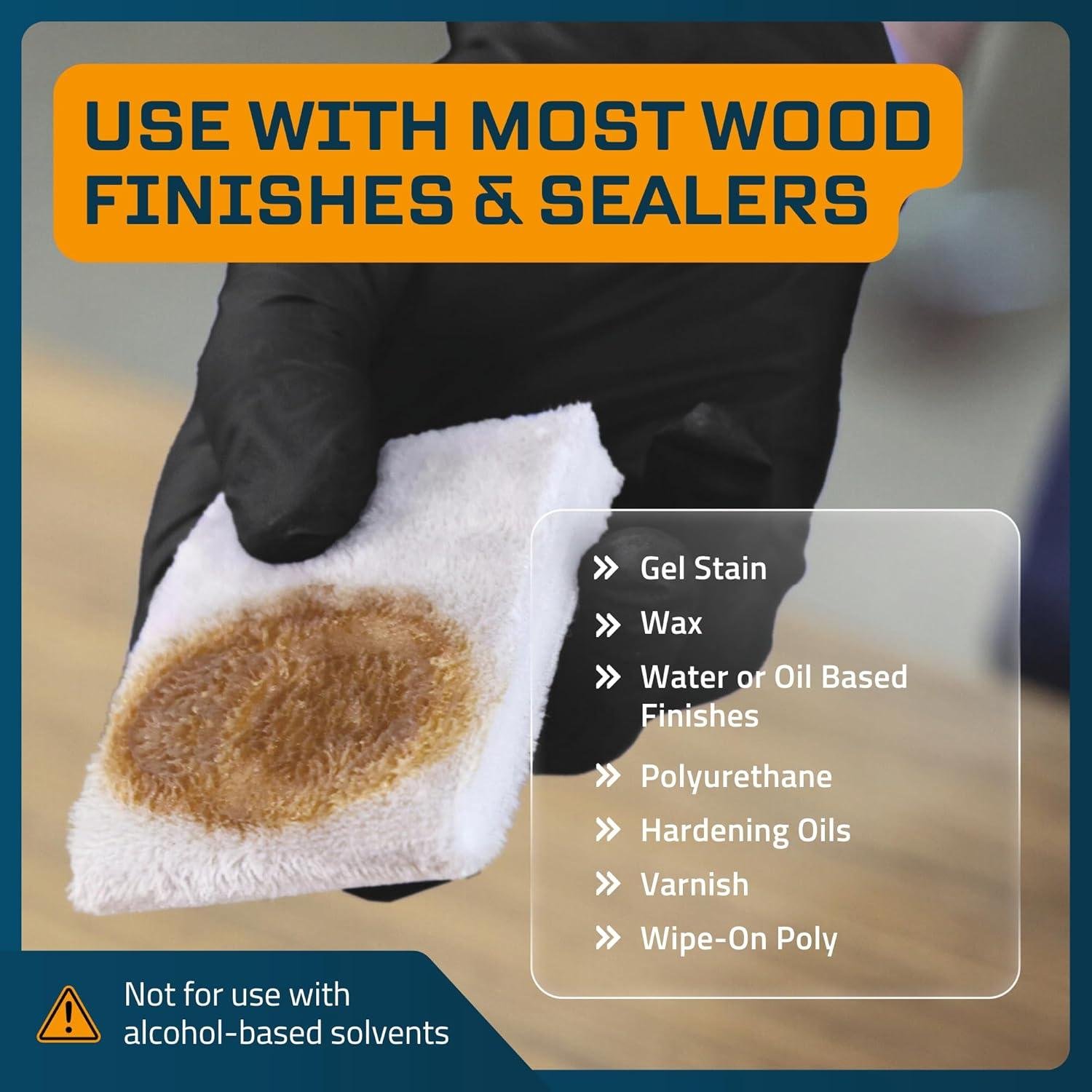
When the MāKRS Stain Pad, Cut-to-Size Staining Pads, 3-Pack landed in our finishing room, our first impression was that it’s trying to bridge the gap between a rag and a brush—without the fuzz and without brush marks. Each pad uses a micro brush material face over a foam core, and the whole point is customization: you can slice it down to whatever size fits your hand, a tight corner, or even the mouth of a finish container. In use, that design lines up with what customers keep saying: it’s easy to use, “much easier to manipulate than a brush,” and capable of consistent, streak-free wipe-on coverage—one reviewer even called it “perfect for wipe on finishes” when stacking water-based lacquer coats. For practical shop work, we like that it encourages long, controlled strokes and helps meter finish so we’re not flooding edges, especially on broad, flat panels where lap marks show up fast.
That said, our first impressions are tempered by the recurring review themes we can’t ignore: cutting can be finicky, and several users report the pad can shed lint—especially right after trimming—plus there are frequent complaints that it can delaminate or fall apart quickly with certain finishes. more than one customer flat-out warns it’s not suitable for non-water-based / solvent-heavy stains, with reports of petroleum-based products dissolving the foam core and leaving “sticky, stain-colored blobs,” and others saying it “falls apart instantly with oil based finishes.” Educationally, that tells us two things for shop technique: (1) after cutting, we should de-fuzz the edges (several reviewers mention wiping the cut edge with a glove or tape) before touching a prepped surface, and (2) we should test compatibility on scrap any time we’re using solventy oil stains, thinned varnishes, or strong cleaners like naphtha—because the pad’s adhesive/foam system may not be solvent-resistant. If our finishing workflow is mostly water-based wipe-on products, these pads look like a convenient, low-skill way to get even coats; if we live in oil-based stain and varnish territory, the reviews suggest we’ll want caution (or a different applicator) before trusting them on a “nice piece.”
See Full Specifications & customer Photos
Real World Performance Applying Stain and Oil Based Finishes Without Lint or Streaks

In day-to-day finishing, we like applicators that behave like a “controlled rag”—and the MāKRS pads are built for that job with their micro brush material wrapped over a foam core and an impermeable center meant to prevent over-saturation.In practice, that design shows up as longer, smoother wipe strokes with less dripping and fewer lap marks, especially on flat panels and broad faces. Multiple customer themes line up here: reviewers repeatedly call them easy to use, “much easier to manipulate than a brush,” and praise the consistent, streak-free results; one mentions they “work well for two coats of Varathane,” and another notes the microfiber “picked up enough stain for long strokes without drips or squeeze out.” where we see the most workshop value is when we cut the pad into smaller blocks (it’s a 3-pack and explicitly cut-to-size), then dedicate one piece per product—stain, sealer, wipe-on poly—so we can maintain a wet edge and keep application pressure consistent across a surface.That said, the “lint, snag, streak-free” claim is not universally echoed in reviews, and we’d treat it as finish-dependent and prep-dependent. A recurring customer warning is that cut edges can shed: several reviewers report “lots of lint” after trimming and recommend cleaning the edge (one rubbed it on a nitrile glove; others used painter’s tape) before touching a show surface. The bigger real-world limitation is with some oil/petroleum-based products and solvents—multiple reviewers say the pad can delaminate or the foam core dissolves, leaving “sticky, stain-colored blobs,” and one flatly reports it “falls apart instantly with oil based finishes.” For us, that means these pads make the most sense for woodworkers who want a simple, repeatable wipe-on workflow and are willing to test compatibility first (scrap board, 5–10 minutes of wiping), then treat the pad as a disposable applicator rather than something we’ll clean with strong solvents like naphtha or paint thinner.
See Full Specifications & Customer photos
Key Features Woodworkers Will Appreciate for Cut to Size Control and Consistent Coverage

When we’re trying to dial in cut-to-size control on real shop work—think inside faces of cabinet frames, stair balusters, or narrow edging—these MāKRS pads earn attention as they’re built to be customized. Each pack comes as a 3-pack of microfiber “micro brush” applicator sheets you can trim down to whatever footprint keeps your hand steady and your passes repeatable. The core design matters: the product description calls out a foam core that “holds and evenly releases” finish,plus an impermeable center meant to help prevent oversaturation. In practice,that translates to longer,more uniform strokes without the drip-prone loading we sometimes fight with rags or cheap foam brushes. Review themes back this up—multiple customers describe it as “much easier to manipulate than a brush” and praise smooth, streak-free application, including one noting it worked well for two coats of Varathane.
For consistent coverage,we like that the pad’s flat face encourages even pressure—especially helpful on broad panels like birch ply,where lap marks show quickly. Customers frequently mention controlling the amount of stain applied and getting consistent results across the board, and at least one reviewer leveraged it specifically for building up water-based clear coats (a wipe-on workflow that avoids repeated spray setup). Having mentioned that, for cut-to-size accuracy, we need to be honest about the tradeoffs: several reviewers report it can be difficult to cut cleanly, with lint/fuzz after trimming, and some recommend knocking down the cut-edge fibers (one used a nitrile glove, another mentions using tape) before touching a show surface. Durability and chemical compatibility also come up repeatedly—many reviewers report it can delaminate/fall apart quickly, and there are explicit warnings that some solvent/petroleum-based or oil-based finishes can dissolve the foam core, creating blobs and contamination. Our takeaway: these pads fit best when we want controllable, repeatable wipe-on coverage—especially with water-based finishes—and when we’re willing to prep the cut edges to keep the final film clean.
See Full Specifications & customer Photos
Ease of Use for beginners and Pros on Flat Panels Edges and Tight Spots

On flat panels, these cut-to-size staining pads (3-pack) are pretty beginner-pleasant because the micro brush material glides more like a controlled wipe than a bristly brush. In our shop, that matters on big faces like cabinet sides, doors, and plywood panels where lap marks show up fast. The brand claims smooth,drip-free coverage thanks to a foam core that “holds and evenly releases” finish,and customer themes back up the general idea: multiple reviewers call it “easy to use”, “much easier to manipulate than a brush,” and capable of consistent, streak-free results—one even mentions it working well for two coats of Varathane. For pros, the real productivity perk is rhythm: load, wipe long strokes, tip off lightly, and move on. One detailed reviewer even used it for a water-based lacquer process on guitars, emphasizing controlled, repeatable coats without setting up spray gear—good evidence that, on the right finish chemistry, the pad can support higher-end workflow.Edges and tight spots are where the “cut-to-fit” concept can shine—or frustrate. Being able to trim the pad into small squares or thin strips helps us get into inside corners, along face-frame edges, and around profiles without dragging a rag seam or flooding with a brush. Having mentioned that, customer feedback is mixed on cutability: some like that it “can be cut to any desired size,”difficult to cut cleanly, with lint and even the pad starting to come apart or delaminating. The most important skill-level note is finish compatibility—several reviewers warn it can fall apart with oil-based/petroleum/solvent-heavy products (one reported sticky blobs from the foam core dissolving), while water-based wipe-ons get much more praise. Our practical workaround for tight-spot success is: cut with sharp scissors/knife, then “de-fuzz” the edges (reviewers mention rubbing on a nitrile glove or using tape) before you touch a show surface, and test on scrap whenever you’re using an unfamiliar stain or sealer.
see Full Specifications & Customer Photos
Customer Reviews Analysis

What Woodworkers Are Saying (review Analysis)
| Aspect | Common Feedback |
|---|---|
| Overall Sentiment | Strong praise for smooth, even wipe-on results—tempered by recurring solvent-compatibility complaints with some oil/petroleum-based products. |
| Performance / Results | Multiple reviews highlight streak-free application, good “load” for long strokes, and consistent coverage—especially with water-based finishes. |
| Durability | Mixed. Several woodworkers report pads holding up well for extended use, while others say the pad delaminates or the foam core breaks down with certain solvents. |
| Ease of Use | Frequently described as simple, cozy to hold, and less snag-prone than rags/paper towels; cut-to-size design is a repeated plus. |
| Versatility | Works across different surfaces/projects for many users, but “not compatible with solvents” comes up in multiple critical reviews. |
1. Overall sentiment from woodworking customers
Common praise includes how cleanly these pads lay down finish and how they simplify wipe-on work compared to shop rags or paper towels. Several woodworkers said they’d buy again and one long-term reviewer noted it remained their “go to” even two years later.
Simultaneously occurring, some users reported serious compatibility problems when paired with certain oil-based/petroleum-based stains and finishes—enough that a few reviews describe the pad “falling apart instantly” or leaving residue behind.
2. Performance feedback (accuracy,power,results)
Because this is an applicator,“performance” is mostly about how evenly it transfers finish and how controllable it feels in the hand.
- even coverage & smooth results: Multiple reviews highlight consistent application with minimal streaks. One reviewer called out “professional-looking finish without streaks,” and another said the microfiber “picked up enough stain for long strokes without drips or squeeze out.”
- Finish quality for high-detail work: customers successfully used this for guitar finishing,including building up multiple clear coats. One woodworker described stacking water-based lacquer coats quickly without setting up spray equipment, emphasizing how evenly it applies per coat.
- Snag/streak reduction vs. rags: Several woodworkers mentioned fewer snags on edges and corners—particularly helpful on projects with lots of places a rag would catch.
Quoted sparingly, the thru-line is “even,” “consistent,” and “no streaks”—when the finish chemistry agrees with the pad.
3. Build quality and durability observations
Durability feedback splits into two clear camps:
- Positive durability (within certain finishes): One reviewer reports dropping it on the floor, brushing it off, and continuing—suggesting the microfiber face and general construction can handle normal shop handling. Another notes continued use over years.
- Solvent-driven failure modes: Multiple reviews highlight delamination or foam breakdown with petroleum/solvent exposure. One reviewer explicitly notes: the “glue used to bond the foam… is not highly solvent resistant,” and another describes the foam core dissolving into “sticky, stain-colored blobs” after ~10 minutes with a petroleum-based stain.
- Disposable reality: A German-language review notes the pad works extremely well for oiling floors/stairs, but also says it must be discarded after use as it becomes saturated and “washing doesn’t work.”
Net: build quality is praised when used in the right lane, but solvent resistance is the recurring durability weak point.
4. Ease of use for different skill levels
Several reviewers mentioned the straightforward workflow: cut a piece, load the pad, wipe on.
- Beginners / DIYers: DIYers appreciated the simplicity and that it “kept my simple project simple,” especially on plywood builds where rags can snag.
- Comfort and fatigue: Common praise includes the double thickness providing a more comfortable grip and reducing hand fatigue during longer sessions.
- Process control: Reviewers noted the pad makes it easy to control how much finish is applied, supporting more consistent coat-to-coat results.
5. Common project types and success stories
Reviews mention a few specific, very “real shop” use cases:
- Guitar building/finishing: Several reviewers mentioned guitars, using the pads for stain and also for clear coats (including water-based lacquer systems). One review explains completing multiple color and gloss coats using cut-to-size pieces from a pack.
- Plywood utility builds: One woodworker described staining/finishing a baltic birch plywood laundry cart, valuing the no-snag behavior on edges and corners.
- Doors & trim-style staining: One reviewer reported using it on a door with a classic penetrating stain (though this is also where compatibility problems surfaced).
- Floors/stairs oiling: A reviewer mentioned oiling 25 steps and a ~6m² hallway with a single piece, praising the lack of lint compared with cloths.
6. Issues or limitations reported
Some users reported challenges with:
- Oil/petroleum-based product compatibility: Multiple reviews indicate the foam core/adhesive can break down with certain oil-based finishes or petroleum-based stains (examples mentioned include Varathane Classic Penetrating Wood Stain and Arm-R-Seal thinned with paint thinner). Reported outcomes include delamination,dissolved foam,and residue left in the finish.
- Lint after cutting: A few reviewers mentioned minor lint at the cut edge. One said they had to rub the cut edge on a nitrile glove to remove fibers; after that, shedding stopped.
- Not truly washable/reusable: At least one reviewer emphasized it becomes saturated and can’t realistically be cleaned out, making it more of a “use it, then toss it” applicator for some finishing workflows.
- Marketing claim vs. real-world chemistry: Several reviews push back on “works with oil-based” claims, suggesting results vary considerably depending on the solvent system in the specific stain/finish.
Bottom line from reviewers: If you’re using water-based finishes (and some wipe-on applications), many woodworkers report exceptionally even, low-lint results. If you plan to use petroleum/solvent-heavy stains or thinned oil polys, multiple reviews suggest testing first—or choosing a solvent-safe applicator to avoid foam breakdown and finish contamination.
Pros & Cons

Pros & Cons
In our shop, an applicator has one job: make finishing feel boring (in the best way). The MāKRS stain pad gets us close—especially on wipe-on, water-based workflows—but it also brings a few “watch-outs” that can turn a smooth coat into an unexpected cleanup session.
| What We Liked | What We Didn’t |
|---|---|
| Consistent, smooth wipe-on results with less streaking | Multiple reports of lint/shedding—especially after cutting |
| Easy to control how much finish lands on the surface (less dripping) | Durability complaints: pad can delaminate or fall apart mid-project |
| Cut-to-size flexibility for small parts, edges, and tight areas | Cutting isn’t always clean; trimmed edges may fuzz or crumble |
| Comfortable feel vs. a brush for long, even strokes | Solvent/oil-based compatibility appears hit-or-miss for some users |
| Swift “cleanup” mindset: let it dry and toss it | Disposable nature may feel wasteful for frequent finishers |
Pros
- Even, streak-free application (when it behaves). We like how the pad lays product down in calm, uniform passes—more “polished wipe-on” than “rag roulette.”
- Good control over loading and release. The foam core tends to hold finish well for longer strokes, which helps us avoid puddles, drips, and surprise squeeze-out.
- cut-to-size is genuinely useful. Being able to slice off small pieces makes detail work easier—think trim, rails, cabinet parts, test boards, and touch-up zones.
- More maneuverable than many brushes. For flat panels and long grain runs, it can feel faster and less fussy than bristles (and without the stray brush hair problem).
- Fast, low-hassle end-of-job routine. If we’re doing multiple short sessions, not having to baby a brush between coats is a real quality-of-life perk.
Cons
- Lint and fuzz can crash the party. Despite “lint-free” expectations, a noticeable theme in feedback is shedding—especially right after cutting. For high-visibility projects, that’s a risk we have to plan around.
- Edge cutting can be messy. We love customizable tools, but if the cut edge frays, it defeats the purpose on fine furniture-grade surfaces.
- Reports of delamination/falling apart. Some users say the microfiber separates from the foam quickly, sometimes within minutes—exactly when we don’t want surprises.
- Potential solvent sensitivity. Several reviewers note problems with petroleum/oil-based stains or thinned finishes dissolving the core and leaving blobs. That makes material compatibility a must-test, not a nice-to-have.
- Disposable by design. “Let it dry and toss it” is convenient, but if we’re finishing daily, it can feel less economical (and less eco-friendly) than washable alternatives.
Our takeaway: if our workflow leans water-based wipe-on finishes and we don’t mind prepping cut edges (and inspecting for lint), these pads can be a smooth operator. If we’re using hotter solvents or oil-based stains regularly, we’d treat this as a “test-first” applicator—not an automatic shop staple.
Q&A

What wood types does the MāKRS Stain Pad work best on?
It performs best on common furniture and cabinet woods where you want a smooth wipe-on look—things like birch (a reviewer specifically called out a smooth result), pine/poplar, and many hardwoods when you’re applying thin, controlled coats. Customers frequently mention consistent, streak-free application, especially on flatter, sanded surfaces (one example: Baltic birch plywood sanded to 150 grit). As with any pad applicator, very open-pore woods (oak/ash) may still benefit from back-brushing or a second pass to even out absorption.
Is it “good enough” for hardwoods like oak or maple, or only softwoods?
Yes, it can work well on hardwoods because staining/oiling is more about controlled application than “power.” Reviewers used it successfully on hardwood-style projects (including guitars) and liked the even, long strokes without drips. The main variable is the finish chemistry: with water-based wipe-on finishes, many users report excellent, uniform coats; with some solvent-heavy oil-based products, multiple reviews report the pad delaminating or the foam core breaking down—which can ruin a hardwood project fast.
How does it do on plywood and veneers—will it snag edges or leave streaks?
Plywood is one of the better use cases. A customer specifically mentioned Baltic birch plywood and liked that it didn’t snag in corners/edges like rags can, and that it stayed smooth and easy to control. On thin veneers, use light pressure and keep the pad just damp (not soaked) to reduce the chance of glue-line telegraphing or blotchy spots. Several customers describe the finish as smooth and streak-free when used with controlled, wipe-on technique.
Can I use it with oil-based stains and polys (Arm-R-Seal, petroleum-based stains, naphtha cleanup)?
This is the biggest “read before you buy” point. While the product listing claims compatibility with oil-based finishes,multiple customer reviews report failures with solvent/petroleum-based products—pads “falling apart instantly,” foam dissolving into sticky blobs,or the fabric delaminating when using finishes like Arm-R-Seal thinned with mineral spirits/paint thinner or petroleum-based penetrating stains. Several users also note naphtha breaks down the glue/foam. If you mostly use water-based poly, water-based wipe-on products, or water-based lacquer systems, reviews are much more positive.
How hard is setup—what’s the best way to cut it to size without making a fuzzy mess?
There’s essentially no setup: you cut the sheet into the size/shape you want. Cutting is where experiences vary—some love the customize-to-fit idea, others say it’s difficult to cut cleanly and that trimming creates lose fibers. A practical shop trick mentioned in reviews is to de-fuzz the cut edges before touching your work (e.g.,rub the cut edge on a nitrile glove or use painter’s tape to lift fuzz). For cleaner cuts, a fresh razor/utility blade and a straightedge typically shed less than dull scissors.
Is this beginner-friendly compared to a brush or shop rag?
For beginners doing wipe-on, it’s generally easier than a brush because it naturally limits drips and helps you lay down even strokes—many customers call it easy to use and easier to manipulate than a brush. The main beginner pitfall is lint/edge fuzz after cutting; if you don’t remove it before the first coat, it can end up in your finish and force sanding/recoating. If you’re new to finishing, test on scrap first and inspect the pad edges closely.
Will it hold up for production work,or is it more of a hobby/one-off applicator?
Think “small-batch efficiency,” not a forever tool.The pad is designed to be used, dried, and tossed—several users like it for building multiple coats quickly without setting up spray gear, and one reviewer described stacking many thin water-based lacquer coats efficiently. But durability feedback is mixed: a significant number of reviewers report the pad starting to come apart quickly, especially with solvent/oil-based products. For production, it can be great in a water-based wipe-on workflow, but you’ll want backups on hand and a consistent cutting/de-linting routine.
is it worth it compared to rags, foam brushes, or “blue shop towels”?
when it effectively works with your finish, many customers feel it outperforms rags and paper towels by applying more evenly with fewer streaks and snags, and by holding enough finish for long strokes without squeeze-out. The value drops if you’re using solvent-heavy oil-based products, as delamination/lint can create rework (extra sanding/redoing) that costs more than the pad. If you’re mostly water-based, it’s a strong convenience upgrade; if you’re mostly oil/solvent-based, a stitched microfiber applicator or proven lint-free rags might potentially be the safer buy.
Unlock Your Potential
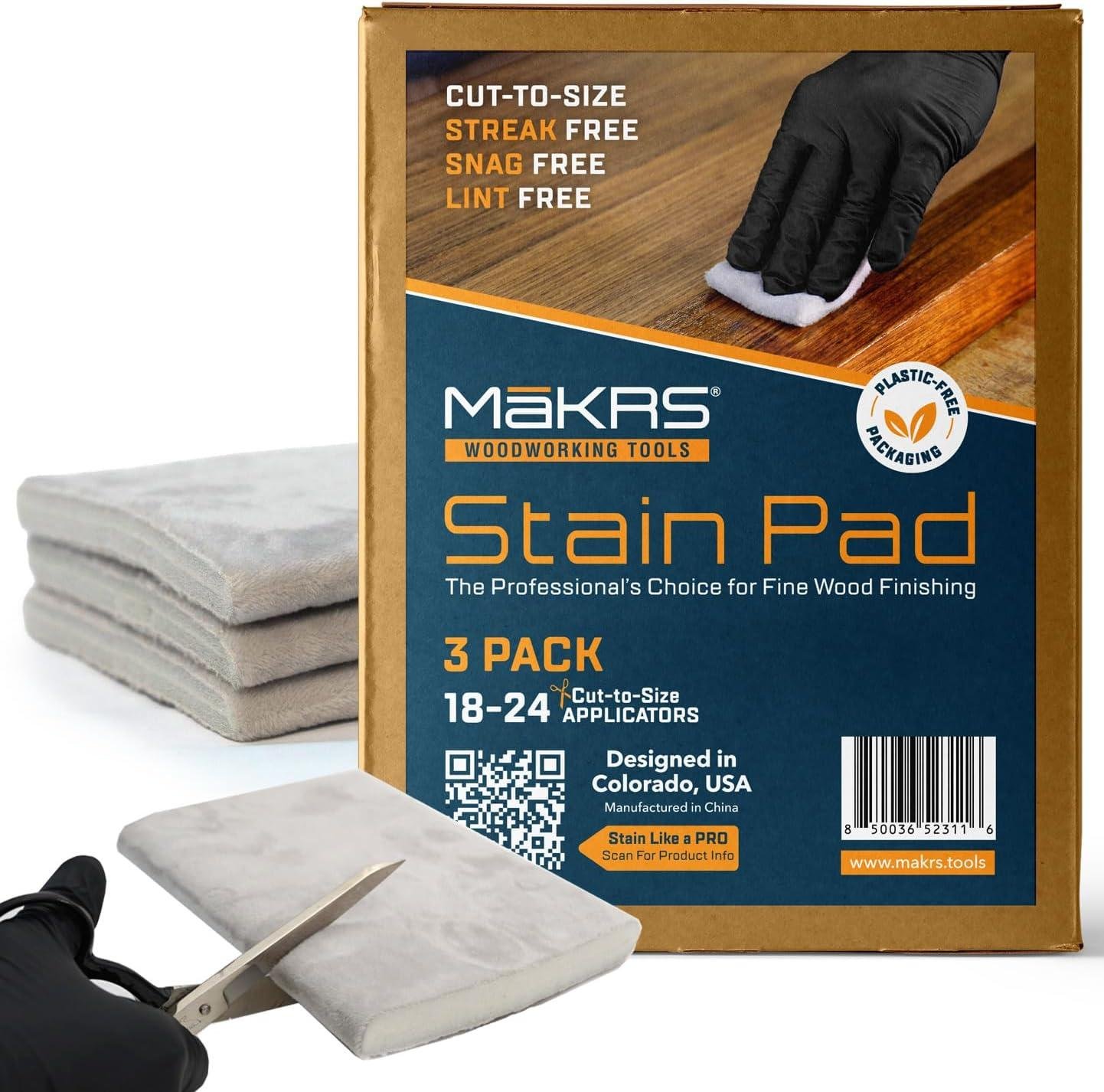
The MāKRS Stain Pad 3-pack is a cut-to-size microfiber “micro brush” applicator built around a foam core that holds finish for long, drip-controlled strokes. In use, customers commonly praise its ease of handling, smooth streak-free coverage, and the ability to customize pad size for test strips, corners, and tight profiles—often finding it more consistent than a rag or brush. The biggest limitations show up in reviews, too: cutting can leave fuzzy edges, some users report noticeable lint, and durability can be poor, with delamination or foam breakdown—especially when paired with solvent-heavy or petroleum-based/oil finishes.
Best for hobby woodworkers and cabinet/furniture builders doing small-to-medium projects with water-based finishes where control and clean lines matter. Good for beginners learning wipe-on technique.
Consider alternatives if you frequently use oil/solvent-based stains,need zero-lint results on high-end work,or want a reusable applicator.
it’s a handy, precise finisher—when matched to the right products and expectations.
Want to see current pricing and customer photos? View on Amazon & Read More Reviews →