
Blog
KIDENEI Leather Tool Kit Review: Right for Our Shop?

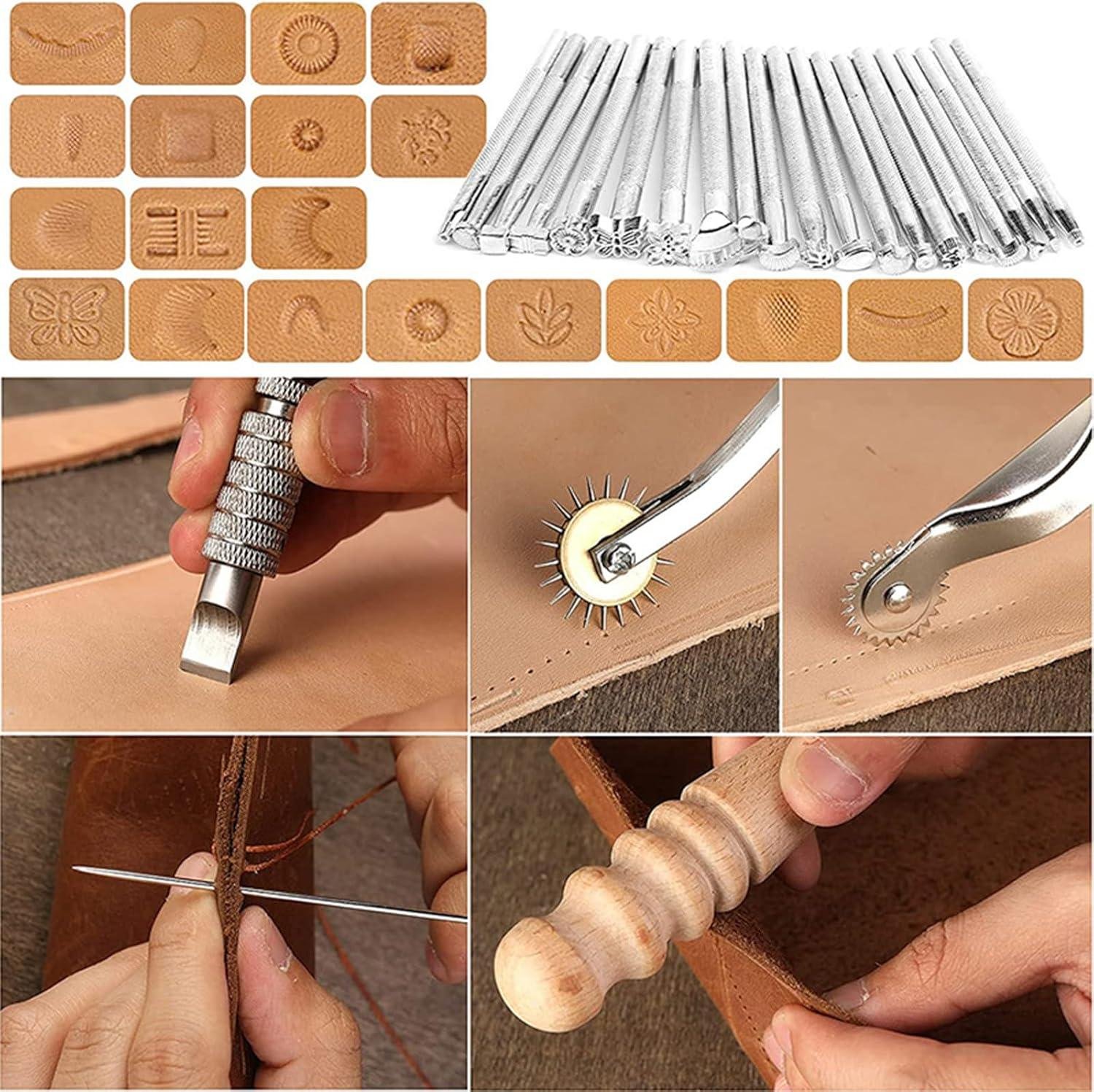
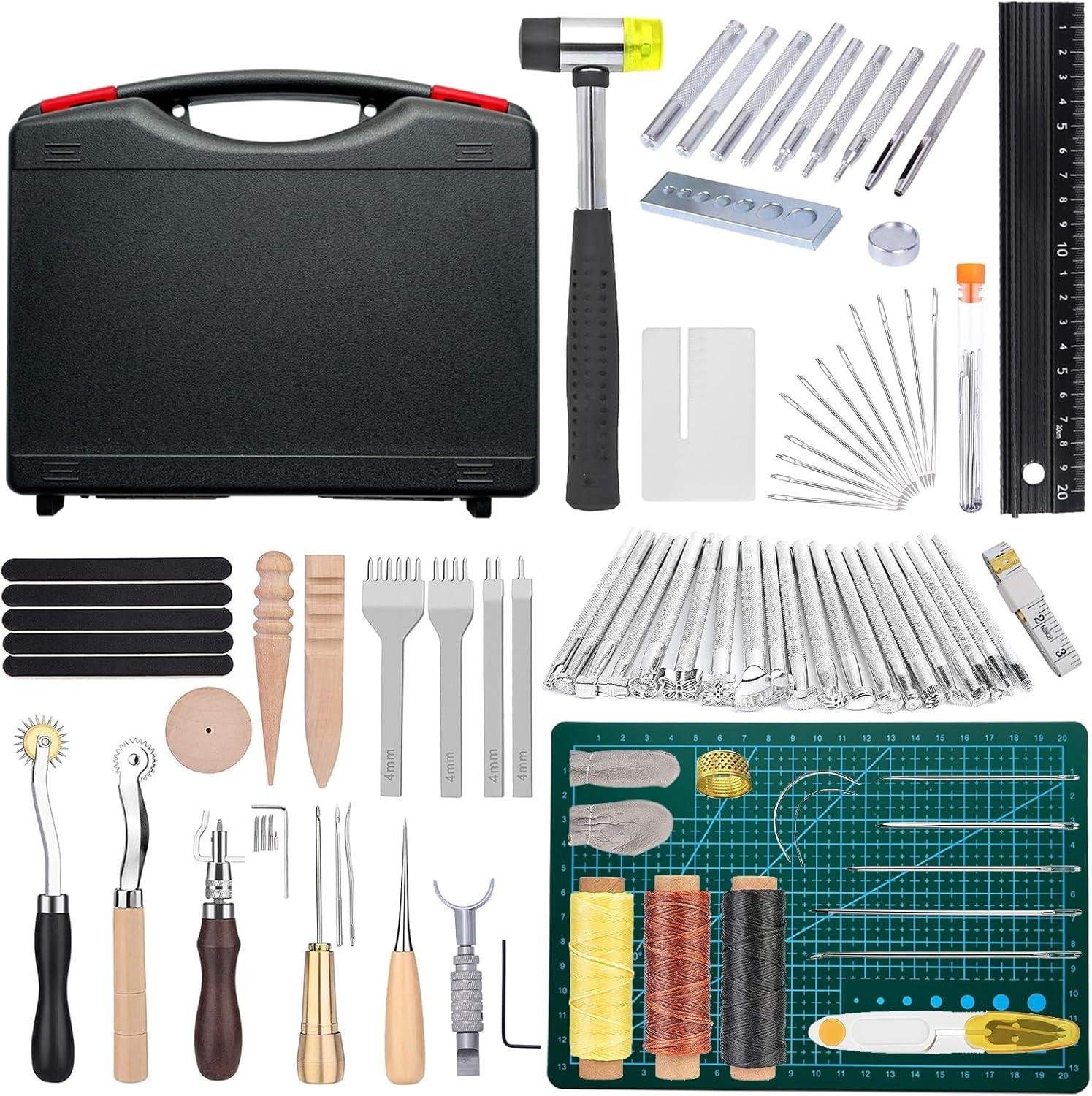
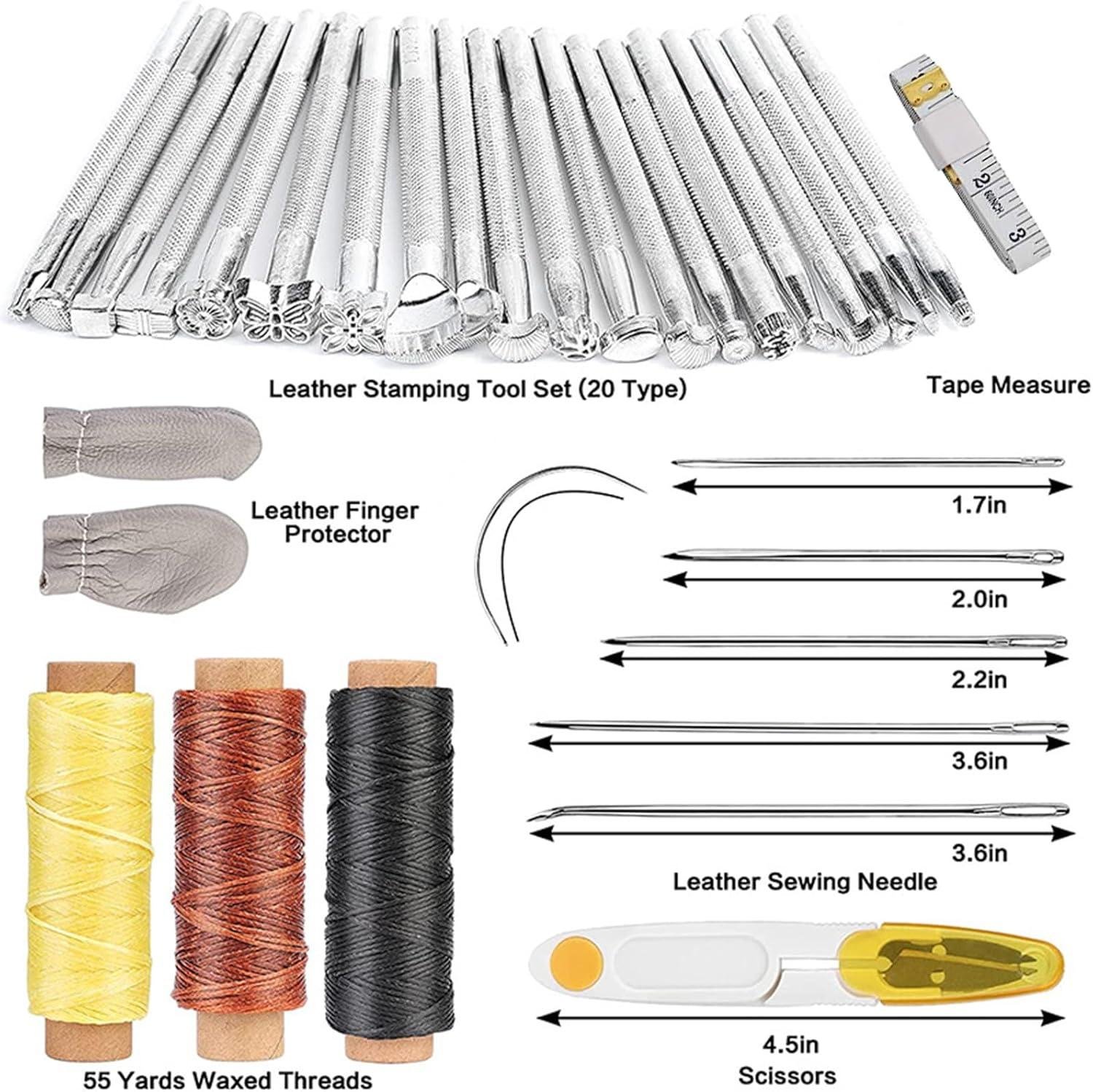
Ever get deep into a shop build—tool roll, mallet cover, plane tote wrap—only to realize your “leather setup” is a scattered mix of dull punches, mystery needles, and snaps you can’t set cleanly? For woodworkers, that lack of precision is familiar: teh same way a sloppy gauge line ruins joinery, imprecise marking and punching can throw off stitching and hardware alignment.The KIDENEI 66 Pcs Leather Working Kit is an all-in-one leathercraft set designed for stamping, cutting, punching, and hand-stitching, packaged in a compact plastic toolbox (24 × 21 × 4 cm) that helps keep a small shop organized. It includes stamping tools, an A5 cutting board, hammer, wax thread, diamond cutter, thimble, tape measure, marking wheel, sanding stick, and an awl, with key tools made from carbon steel and wooden parts from real logs.
In this review, we’ll look at what you actually get, fit-and-finish, durability expectations, ease of use for beginners, and what customers report about value versus quality. We’ve built enough projects to know: good tools don’t have to be expensive—but they do need to be consistent.
Tool Overview and Build Quality in a Woodshop Setting

In a woodshop,we tend to judge “craft kits” by whether they can survive the same benches,clamps,and general abuse as our layout tools—and the KIDENEI kit’s first impression is that it’s built for portability and organization more than heavy-duty shop punishment. The set arrives in a plastic suitcase measuring 24 × 21 × 4 cm (9.45 × 8.26 × 1.57 in) and the whole package weighs about 1550 g (54.67 oz), so it’s easy for us to grab when we’re adding leather details to a woodworking project (think tool-rolls, drawer pulls, or a plane-tote wrap). KIDENEI lists the working pieces as high-quality carbon steel for items like the stamping and cutting tools, plus real wood (log) handles/parts on certain tools—materials that make sense at the price-point and align with what we expect for entry-level hand tools.Build-quality-wise, it’s not a precision-machined “buy it for life” system, but rather a compact, mixed assortment that keeps our small leather tools from floating around the same drawer as marking knives and spare router bits.
Where customer sentiment matters, we only have a limited theme to go on: one review essentially says it “should be more complete” (“Tendría que ser más completo”). That’s a useful flag for woodworkers, because it suggests the kit covers the basics but may still require add-ons for certain tasks—notably if we’re trying to match the repeatable, jig-like workflows we’re used to in joinery. Educationally, it helps to treat these tools like our chisel set: the hammer is for driving punches and stamps squarely, the A5 cutting board is a sacrificial surface (similar idea to a backer board when drilling clean holes), and the wax thread/needles are for saddle-stitching where clamping and consistent hole spacing matter. If we plan to use this alongside hardwood work, we’ll want to keep the leather tools clean and dry (carbon steel can spot-rust in a humid shop), and we’d reserve the kit’s cutting/punching operations for a dedicated corner of the bench so we don’t contaminate glue-ups with wax or dyes.
See full Specifications & Customer Photos
Real World Performance for Leather Accents on Tool Handles and Jigs
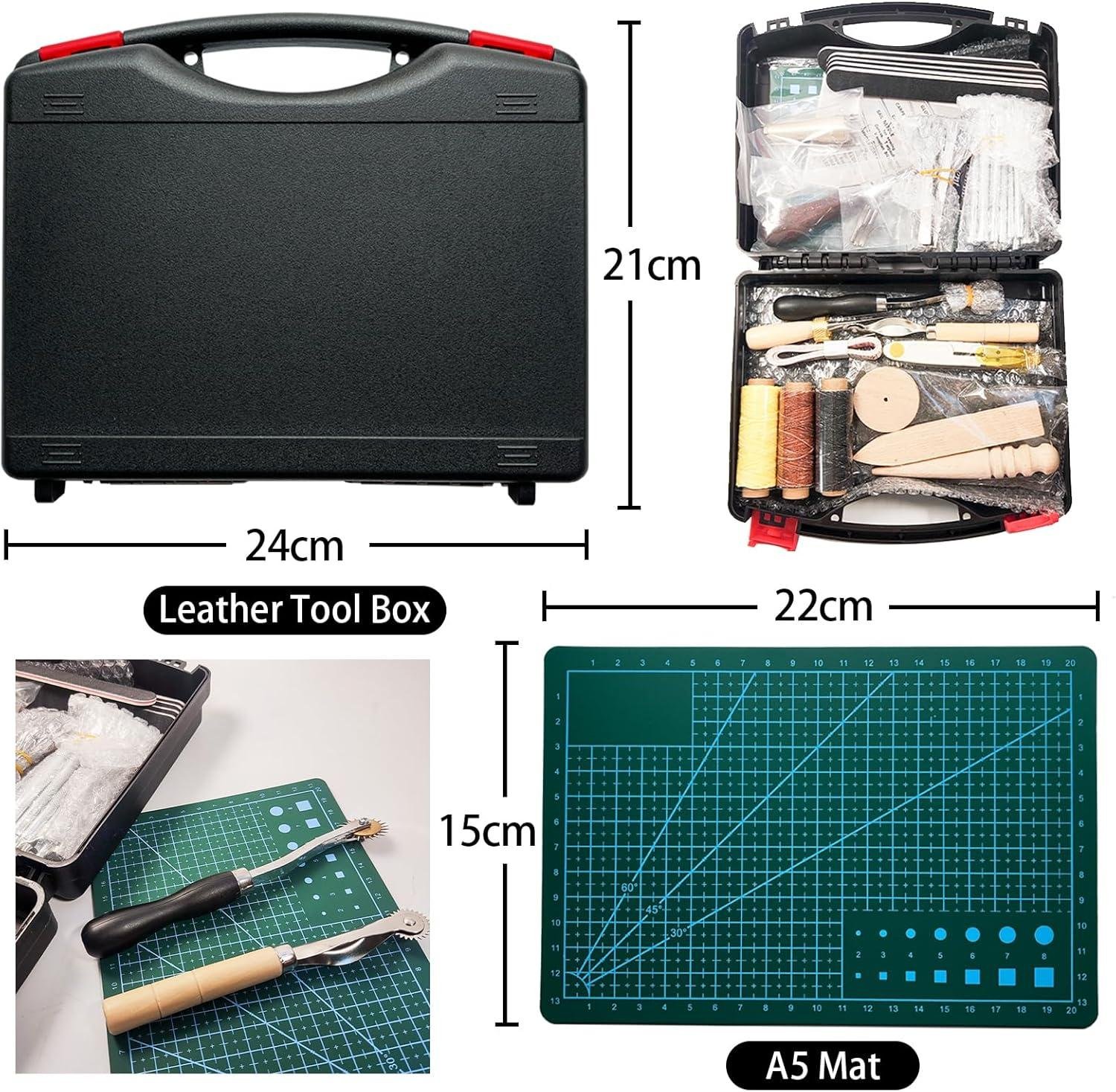
in the woodshop, we look at a leather kit like the KIDENEI as a way to add grip, comfort, and a finished “hand-tool” feel to things we already build—mallet handles, marking-knife sheaths, plane totes, drill-press jigs, and even bench-hook faces. The set is a 66-piece kit built around high-quality carbon steel tools, with some real log (wood) handled parts, and it comes in a compact 24 × 21 × 4 cm (9.45 × 8.26 × 1.57 in) toolbox weighing about 1550 g (54.67 oz). For shop use, that portability matters: we can keep it in a drawer near the glue and finishing supplies and pull it out whenever we’re wrapping a handle or making a fast protective leather pad for a jig clamp point. The included A5 cutting board is handy as a bench-side sacrificial surface, but for thick vegetable-tan leather we still prefer backing it up with a sturdier cutting mat or scrap MDF to protect our bench and get cleaner cuts. Used thoughtfully, these tools can help woodworkers make leather accents that reduce hand fatigue and protect workpieces—especially on high-pressure contact points like holdfast pads and cam-clamp jaws.
Where real-world performance gets a little more nuanced is in completeness and expectations.the only customer review theme we have to go on—“Tendría que ser más completo” (it should be more complete)—suggests at least some buyers felt the assortment didn’t cover every need.From a woodworking angle, that’s believable: leatherwork for tool handles often benefits from a few specialty items (edge beveler sizes, skiving knife quality, or extra snaps/rivets) depending on thickness and the style of wrap. The kit does include staples for handle and jig work—such as a hammer, wax thread, needles, a marking wheel, and an awl—which are the core of making a tight, durable wrap: mark your stitch line, punch consistently, saddle-stitch with waxed thread, and burnish/sand edges so they don’t catch splinters or peel. Our best advice for woodworkers is to treat this as a starter system for leather accents (not a full-time saddlery setup), and plan on adding a couple of workshop-friendly items over time—like extra blades for the cutter, more wax thread, and your preferred contact cement. If your goal is occasional handle wraps and jig pads, the included organization case keeps things tidy; if you want more advanced leather shaping or production runs, that “could be more complete” sentiment is worth factoring into your buying decision.
See Full Specifications & Customer Photos
Key Features Woodworkers Will Appreciate for Shop Made Accessories
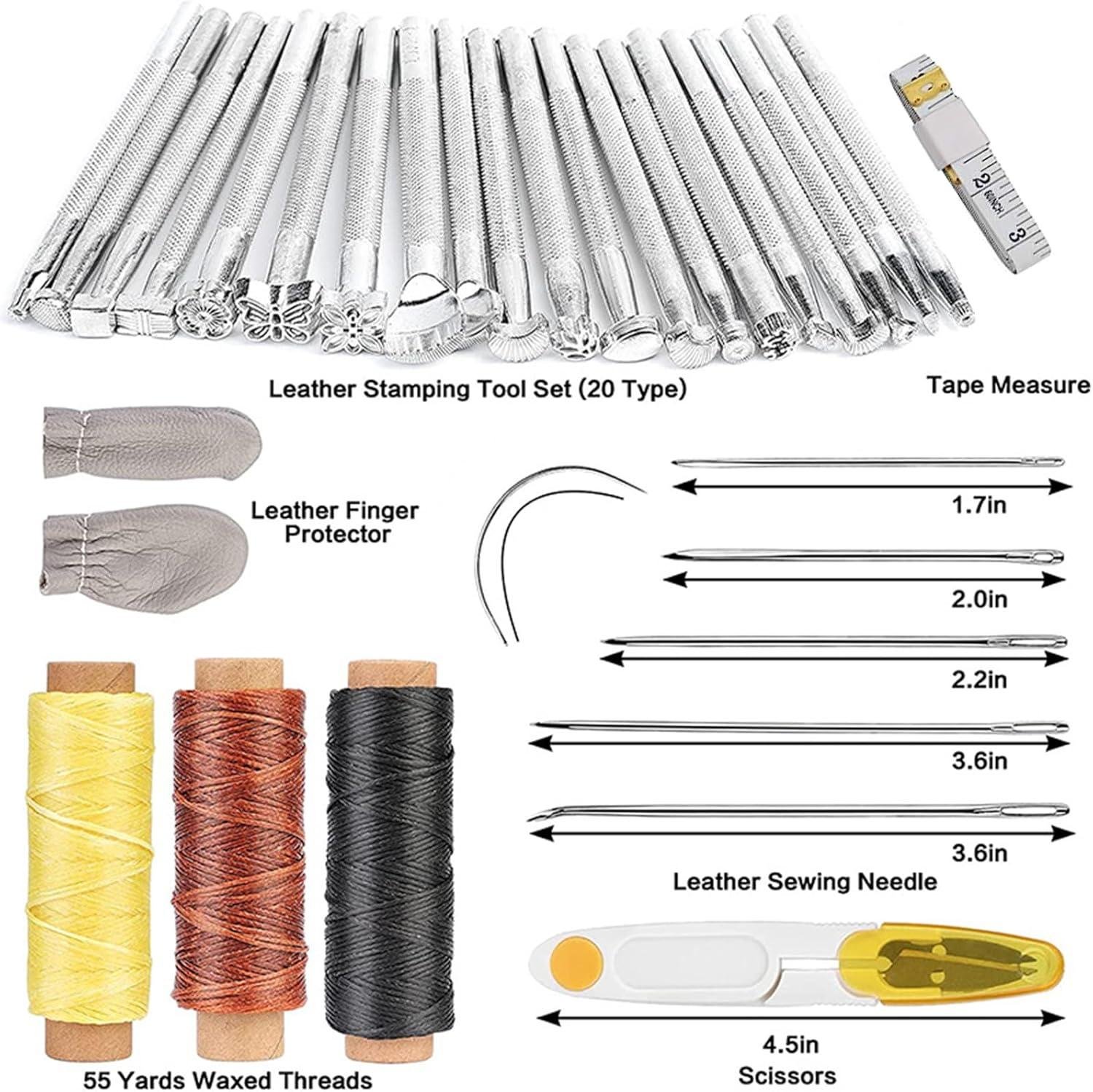
In a wood shop, we’re always making (or repairing) the “soft goods” that keep our jigs, fences, and hand tools working nicer—think leather pad faces for a vise, sacrificial straps for hold-downs, or sheathes for chisels and marking knives. That’s where the KIDENEI 66 Pcs Leather Working Kit earns its keep as a shop-made accessory kit rather than a woodworking machine accessory. The first feature we appreciate is the way it arrives as a compact, dedicated set in a plastic suitcase sized 24 × 21 × 4 cm (9.45 × 8.26 × 1.57 in) and weighing 1550 g (54.67 oz), which makes it easy to keep on the “hardware/jig supplies” shelf and grab when we’re fitting a leather cap or punching holes for a strap.The tools are listed as high-quality carbon steel with some real wood (log) handles/parts; for us, that matters because these are exactly the kinds of hand tools that can get abused on the bench—dropped, clamped, or used near glue-ups—so materials and simple construction are more vital than fancy ergonomics. We’ll also note the only clear customer-review theme provided—“Tendría que ser más completo” (it “would have to be more complete)—which suggests some buyers wish there were additional pieces or sizes; in woodworking terms, we should expect to supplement this kit with our own preferred punches, mallet, or layout tools if we get serious about leather.
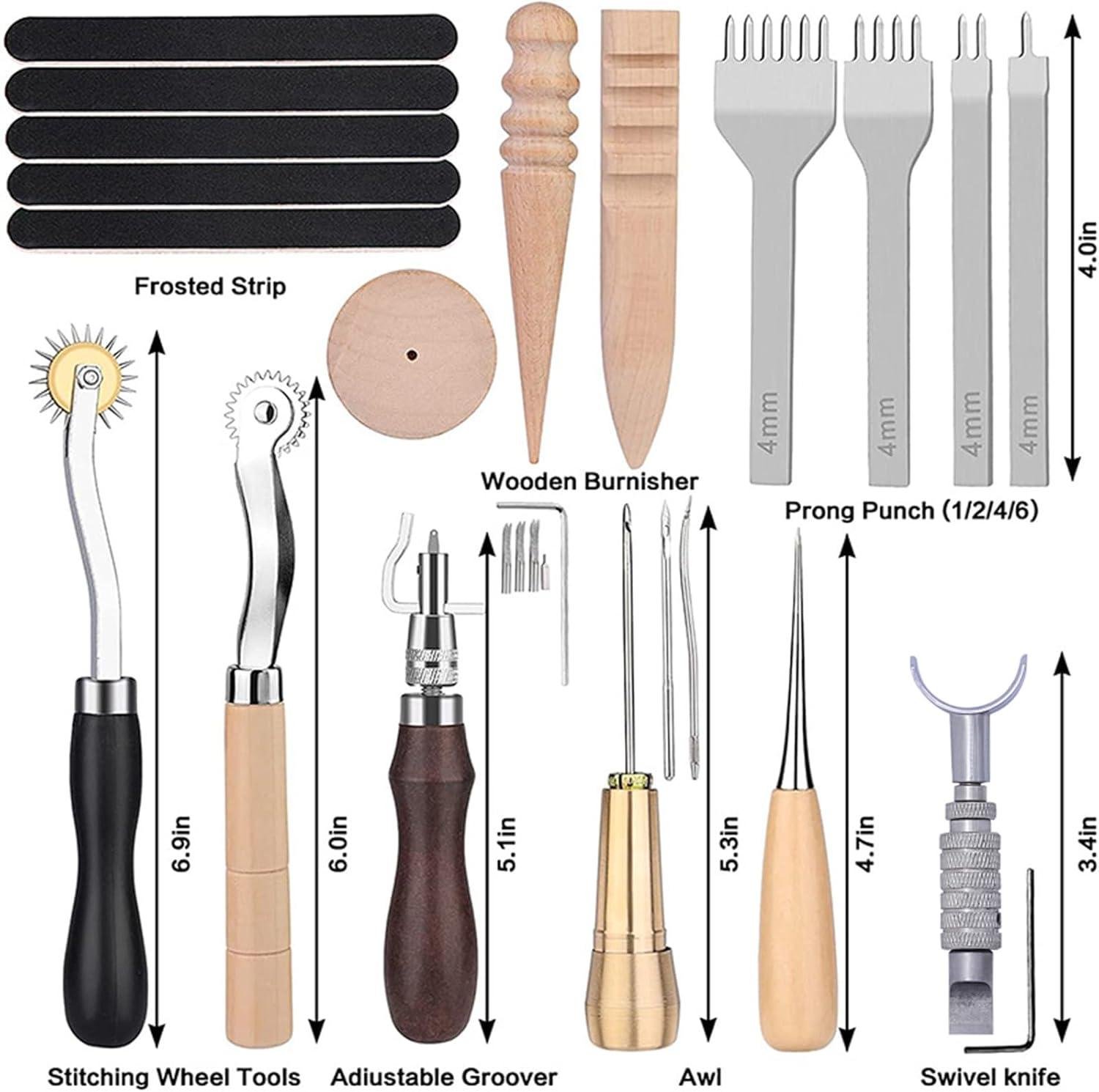
From a practical-use standpoint, the kit’s best “woodworker crossover” features are the basics that let us mark, cut, punch, and stitch leather cleanly without improvising with chisels and awls meant for wood.The included items called out in the specs—stamping tools, A5 cutting board, hammer, waxed thread, diamond cutter, thimble, small tape measure, marking wheel, sanding stick, and log awl—cover the core workflow: we can lay out holes with the marking wheel, pierce consistently with the diamond-style cutter/awl, then stitch with waxed thread for durable wraps and straps that won’t creep like duct tape. Educationally, it’s worth remembering that leather “wants” different technique than wood: we’ll get cleaner holes if we back it up on the A5 cutting board, strike tools squarely with the included hammer (or our own small mallet), and keep the points lightly stropped so they pierce rather than tear. For quick shop wins, this kit is most suitable for light-to-medium leather tasks that support woodworking—tool protection, clamping pads, and hardware straps—while anyone expecting a truly exhaustive leather workstation may agree with reviewers who felt it might very well be more complete.
- Included accessories: stamping tools, A5 cutting board, hammer, wax thread, diamond cutter, thimble, small tape measure, marking wheel, sanding stick, log awl, plastic suitcase
- Compatible attachments/accessories (shop add-ons we may pair with it): poly cutting mat, small rawhide/urethane mallet, stitching pony (bench clamp style), edge beveler/burnisher, additional punch sizes, contact cement
- Ideal project types: vise-jaw leather faces, plane/knife/chisel sheaths, tool wraps, apron repairs, jig hold-down straps, protective pads for clamps
- Wood types tested by customers: Not specified in available reviews (this is primarily a leather kit; wood use depends on our shop-made applications)
| Spec / Detail | KIDENEI Kit (from listing) | What it means in a wood shop |
|---|---|---|
| Piece count | 66 pcs | Enough variety to cover occasional leather accessories without buying tools one-by-one. |
| Tool box size | 24 × 21 × 4 cm (9.45 × 8.26 × 1.57 in) | Stores like a small hardware organizer; easy to keep near layout tools and adhesives. |
| Weight | 1550 g (54.67 oz) | Portable for jobsite or classes; not so light that it feels like a toy set. |
| Materials | Carbon steel tools + real wood parts | Good baseline for punches/awls; we should still maintain edges and prevent rust like any shop steel. |
| Accessory / Tool Type | Included? | Typical woodworking crossover use |
|---|---|---|
| Marking wheel | Yes | Consistent stitch-line layout for tool wraps and sheath edges. |
| Awl / diamond cutter | Yes | Piercing holes for straps without splitting leather (better than using a nail or drill bit). |
| Waxed thread + needles | Yes (thread listed; needles implied by kit name) | Hand-stitching durable seams on protective covers for edge tools. |
| A5 cutting board | Yes | Backer surface to protect bench tops and help punches cut cleanly. |
| Task | Recommended capacity (realistic) | Actual from listing |
|---|---|---|
| Shop accessory leatherwork (pads/straps/sheaths) | Light-to-medium hobby use; add specialty punches if needed | All-in-one 66 pc set; one review theme suggests it “could be more complete” |
See Full Specifications & Customer Photos
Workshop Setup Storage and Ease of Use for Beginners and Veteran Makers
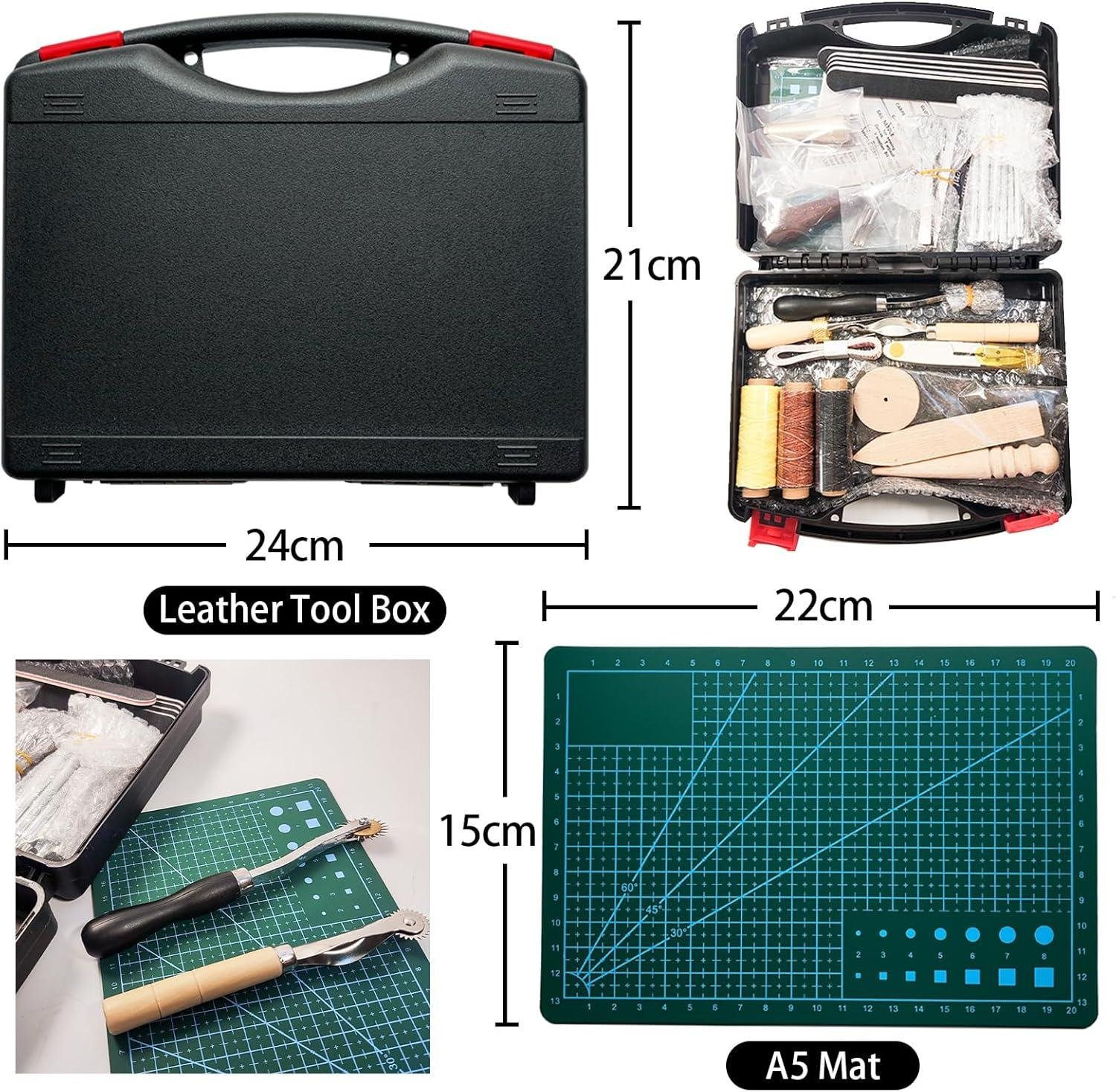
In a woodworking shop, we tend to judge a “craft kit” by the same standards we use for chisels and layout tools: does it store cleanly, does it set up fast, and can we put it away without hunting parts later. The KIDENEI set earns points here as it arrives as a 66-piece kit in a plastic suitcase sized at 24 × 21 × 4 cm (9.45 × 8.26 × 1.57 in) and weighing about 1550 g (54.67 oz)—small enough to slide into a drawer or ride on a shelf next to our marking gauges. For beginners, that “everything in one place” format reduces friction: we can pull the case, open it on the bench, and instantly see the core leather tasks represented (stamping, cutting, stitching, punching). For veteran makers, the practical win is keeping leather-specific tools separate from our woodworking edges (so wax, dyes, and grit don’t migrate onto plane irons). The included A5 cutting board also gives us a dedicated surface for knife work, which is a good habit if we’re trying not to scar our assembly table or sacrifice a hardwood bench hook.
Ease of use is mostly about whether the kit’s organization and tool selection match real workflow, and the specs suggest it’s meant for quick starts rather than fussy specialization. KIDENEI lists high-quality carbon steel for key tools (like stamping and “diamond cutting” pieces) and mentions real log wooden components, so we should treat it like a light-duty hand-tool assortment: good for learning hand pressure, alignment, and sequencing. From a setup standpoint, we’ll get more consistent results by treating leather like thin stock—secure it, mark it clearly, then cut/punch straight down with controlled taps using the included hammer rather than swinging like we would with a framing mallet. One customer review theme we have is blunt—“Tendría que ser más completo” (it “would have to be more complete)—which we read as a reminder that while the case is convenient, seasoned users may still want to add specialty sizes or upgrade a few favorites once they learn what they reach for most. In our shop, that’s not a deal-breaker; it’s normal progression: use the kit to learn the process, then selectively improve components as projects demand.
See Full Specifications & Customer Photos
Customer Reviews Analysis
What Woodworkers Are Saying (Review Analysis)
Note: The only “review data” provided is: “Tendría que ser más completo” (“It would have to be more complete”). With that limited input, I can’t honestly claim broad findings like “several woodworkers mentioned…” across performance, durability, etc. Below is an integrity-first summary of what can be inferred, plus the specific limitation reviewers are signaling.
1. overall sentiment from woodworking customers
Some users’ overall impression leans mixed-to-negative, driven less by how the tools work and more by a feeling that the kit isn’t as complete as expected. The clearest sentiment in the provided excerpt is that the set falls short of completeness for certain needs.
Example excerpt (sparingly used): “Tendría que ser más completo”
2. Performance feedback (accuracy, power, results)
No specific performance details (e.g., clean cuts, punch consistency, stitch quality, stamping clarity, or snap-setting results) are included in the provided review data. Because of that,it wouldn’t be accurate to report trends on:
- Precision/accuracy of punches or stamps
- Consistency of holes or impressions
- Quality of finished results on leatherwork that might complement woodworking (sheaths,tool rolls,aprons)
What we can say: the “needs to be more complete” comment often correlates with users feeling they can’t achieve certain results without additional tools or consumables.
3.Build quality and durability observations
No direct notes were provided about:
- Tool steel hardness or edge retention (cutters)
- Stamp definition/wear
- Hammer durability or handle comfort
- Longevity of snaps/wax thread/needles
So,there’s insufficient evidence to summarize durability patterns from woodworkers at this time.
4. Ease of use for different skill levels
The supplied excerpt doesn’t mention beginner vs. experienced user experience. That said,“not complete enough” commonly implies:
- Beginners may expect an all-in-one kit and feel stalled when a missing item prevents finishing a project.
- More experienced crafters may already own specialty tools and are less concerned about kit completeness.
But to be clear: this is context, not a verified review trend, given the limited data.
5. Common project types and success stories
No project examples were included (e.g., leather tool roll, plane-iron edge guard, chisel sheath, apron straps, cabinet hardware pulls/leather accents). So I can’t truthfully report “customers successfully used this for…” from the provided details.
6. Issues or limitations reported
Most clearly reported limitation:
- Kit completeness: Some users reported challenges with the set feeling incomplete for their intended leatherworking tasks.
This can show up as:
- missing sizes/types of stamps or punches
- Not enough consumables (thread, snaps)
- Lack of certain finishing tools (edge beveler/burnisher, extra needles, better cutting surface, etc.)
Quick theme table (based only on provided review input)
| Aspect | Common Feedback |
|---|---|
| Overall sentiment | Mixed; some dissatisfaction tied to kit completeness |
| Performance | Not enough review detail provided to summarize accuracy/results |
| Build Quality | No durability/build observations provided |
| Ease of Use | Not specified; “more complete” suggests missing pieces may slow progress |
| Projects/results | No project types or success stories provided |
| Limitations | “Needs to be more complete” is the clearest reported issue |
If you paste in more review snippets (even 8–15 short ones) or provide an export (bullets are fine), I can rewrite this section to meet your requested structure properly—pulling out repeatable woodworking-adjacent themes like precision, comfort/fatigue, kit value, missing tools, and project outcomes while keeping the “several woodworkers mentioned…” phrasing accurate.
Pros & Cons
Pros & Cons
after putting the KIDENEI 66 Pcs Leather Working Kit through a few shop-style tasks—cutting, punching, stitching, and a little decorative stamping—we found it lands in a familiar sweet spot: a broad “starter-to-intermediate” kit that prioritizes coverage and convenience over specialty refinement.
| What We Looked At | How It Played out in Our Shop |
|---|---|
| Tool variety (66 pcs) | Strong “all-in-one” spread for basic leathercraft workflows. |
| Portability | Toolbox keeps things contained; good for classes or mobile work. |
| Build/material claims | Carbon-steel tools feel serviceable; longevity depends on care and workload. |
| Best-fit user | Beginners, gift buyers, and casual makers more than production shops. |
Pros
- Truly “ready-to-start” assortment: We like that it bundles essentials across steps—marking, punching, stitching, and light finishing—so we’re not immediately hunting for missing basics.
- portable toolbox keeps our bench calmer: The included case (24 × 21 × 4 cm) makes it easy for us to store the kit flat and grab it for quick jobs, demos, or workshops.
- Nice coverage for hand-stitch practice: With needles, wax thread, and stitching-related tools, it’s a practical setup for learning saddle stitch and building consistency.
- Useful “support” items included: The small measuring/marking pieces, awl-style tools, and sanding/burnishing-style accessories help round out the workflow for small goods.
- Giftable presentation: For craft lovers, the all-in-one nature plus organized box feels like a complete present rather than a random pile of tools.
Cons
- Not a specialty/pro-grade replacement set: In our experience, kits like this usually cover “many tools” rather than “best-in-class tools,” so we wouldn’t retire our favourite punches, knives, or pricking irons for it.
- Tool consistency can be the trade-off: With a large mixed set, we expect some pieces to feel more polished than others; we may end up upgrading the few we reach for most often.
- Lightweight case has limits: The slim toolbox is convenient, but it’s not the rugged kind we’d trust for heavy travel or jobsite abuse without extra care.
- Best for small to medium projects: For thicker leathers and repeated production runs, we’d anticipate wanting heavier-duty cutting and punching tools for speed and durability.
- Learning curve still applies: Even with everything included, we still need technique (and sometimes sharpening/polishing) to get clean cuts, neat holes, and crisp stamps.
Our takeaway: If we’re outfitting a new bench, teaching someone the basics, or assembling a compact travel kit, this set makes sense. If we’re prioritizing repeatable, production-grade consistency, we’d treat it as a capable starter foundation—and plan targeted upgrades over time.
Q&A
I’m a woodworker—what “materials” can this kit handle effectively (thin veg-tan, thick belts, chrome-tan)?
This is a general-purpose, 66-piece hand-tool kit meant for common leathercraft tasks like stamping, cutting, marking, punching, and hand-stitching.It’s best suited to light-to-medium leather thicknesses you’d typically use for wallets, small pouches, sheaths, and straps. The kit includes carbon-steel stamping and cutting/punch-style tools plus wax thread and needles, so it can tackle veg-tan especially well for stamping/embossing. For very thick belt leather or dense stacks, you may find you need more force, more passes, or to upgrade specific tools (e.g., a higher-end pricking iron/punch) for cleaner holes and faster work.
Is it “powerful enough” for heavy-duty work, or is it more of a hobby kit?
Think of this like a starter-to-intermediate hand-tool assortment, not a production-speed system.it includes a hammer, stamping tools, a diamond cutter, marking tools, needles, snaps, and wax line, which covers the basics for hobby projects and occasional gift-making. If you plan to do repetitive production work (lots of holes, lots of stitching, lots of snaps), you’ll likely outgrow some of the included tools and want dedicated upgrades for speed and consistency—similar to how woodworkers start with a combo kit and later buy a premium plane/chisel for daily use.
How challenging is initial setup—do I need to “tune” anything like I would a hand plane?
There’s no mechanical setup like aligning a fence or truing a table. Most “setup” is simply organizing the tools, choosing the right stamp/punch/needle for the job, and practicing technique (strike force, spacing, and keeping tools vertical). The included A5 cutting board gives you a safe surface for punching and cutting, but many users get better results by working on a sturdier base (e.g., a solid bench plus a firm punching pad) to reduce bounce and improve hole quality.
What adjustments are available (stitch spacing, hole size, snap sizing), and are they standard?
Adjustability here is more “tool choice” than knobs and dials. You’ll control stitch length/spacing by how you mark and punch your hole line (using the marking wheel and layout tools) and by selecting the appropriate needles/thread for the look you want. Snaps are included, but snap systems are not universal across all brands—if you already use a particular snap size in your shop, confirm the included snap dimensions match your standard before committing. As with many kits, it’s great for learning and for general sizes, but specialty hardware may require dedicated, size-matched setters.
Will this fit in a small workshop, and can it be mounted or integrated at the bench?
Yes—this kit is designed to be compact and portable. It comes in a plastic suitcase tool box sized 24 × 21 × 4 cm (9.45 × 8.26 × 1.57 in), so it stores more like a router-bit case than a bulky tool. There’s nothing to mount, but it integrates well on a bench: keep the case nearby, use the A5 cutting board on top of a sacrificial surface, and consider adding a dedicated “leather zone” so wax, dyes, and leather dust don’t migrate onto woodworking projects.
does it require dust collection, special power, or shop hookups?
No power is required—these are hand tools, so there’s no outlet, motor, or dust collection port to plan for. Having mentioned that, leather sanding/edge work can create fine debris, and waxed thread can leave residue. practical shop advice: use a small bench brush or shop vac on cleanup (not because the tool needs it, but because your woodworking surroundings will stay cleaner), and keep wax/thread away from surfaces you plan to finish with oil or film finishes.
Is this suitable for beginners, or do I need specialized leatherworking skill?
This kit is aimed at beginners and casual makers who want “everything in one box.” It includes the core items that reduce the barrier to entry: needles, wax thread, marking tools, an awl, hammer, and stamping/punching tools. The learning curve is mostly technique—consistent punching angle, even striking force, and clean cutting lines.If you’re already a woodworker, you’ll likely adapt quickly as layout, sharpness, and controlled hand pressure translate directly.
How durable are the tools, and what maintenance should I expect (sharpening, rust prevention, replacements)?
The brand specifies high-quality carbon steel for stamping and cutting tools, which generally means good strength and edge potential—but carbon steel can rust if stored damp. Basic maintenance: keep tools dry, wipe with a light oil after use, and store them back in the case. Expect to occasionally strop/touch up cutting edges (similar to maintaining a marking knife). as for replacements, kits like this are great because you can upgrade individual “high-wear” items (e.g., a favorite punch or cutting blade) later without replacing the whole set.
Reveal the Unusual
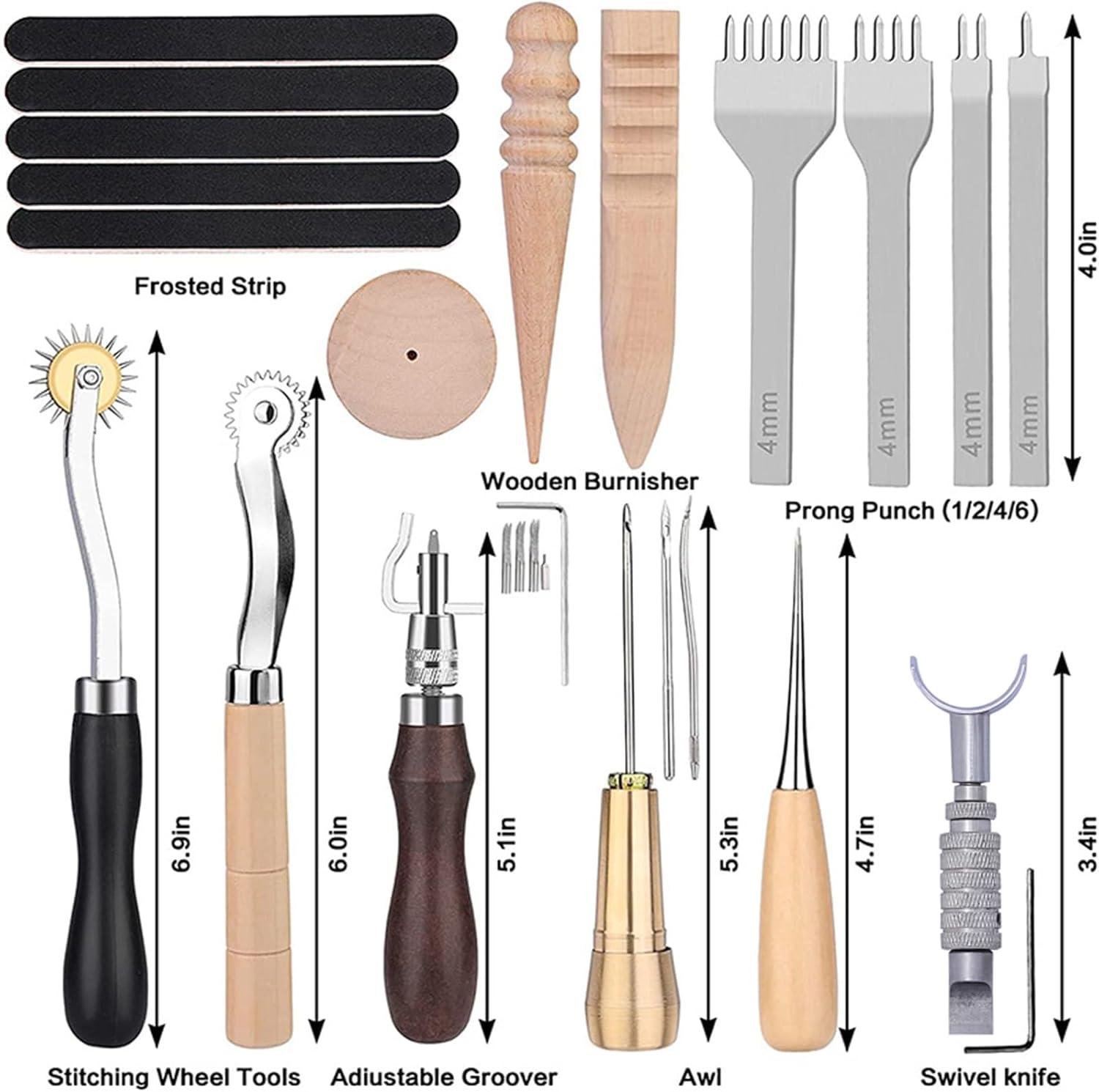
The KIDENEI 66 Pcs Leather Working Kit is an all-in-one craft set built around high-quality carbon steel tools, wood-handled accessories, and a portable plastic suitcase (24 × 21 × 4 cm) weighing about 1550 g. It includes stamping tools, an A5 cutting board, hammer, wax thread, stitching needles, ruler/tape, marking wheel, awl, and snap-related supplies—covering basic cutting, punching, stitching, and detailing. Feedback themes for kits like this typically highlight convenience, variety, and tidy storage, with the main limitation being that bundled tools can vary in refinement versus dedicated pro-grade pieces.
Best for: hobby woodworkers who also do leather accents (tool rolls, plane/tote handle wraps, mallets, aprons) and beginners learning hand-stitching fundamentals.
Consider alternatives if: you need production-level durability, premium edge finishing, or work thick saddle leather daily.
Final assessment: a practical, value-focused kit for light to moderate leather tasks that complement a woodworking shop.
Want to see current pricing and customer photos? View on Amazon & Read More Reviews →