

Blog
IBUYKE Corner Shelf Stand Review: Right for Our Shop?


Ever finish a project only to realize the real battle is the shop itself—tools on the bench, clamps on the floor, and nowhere safe to stage parts without risking dents or knocking a square out of calibration? When space gets tight, “precision” isn’t just about our cuts; it’s about keeping the workspace organized enough to work accurately and safely.
That’s where the IBUYKE 5 Tier Corner Shelf Stand (WBC010H) comes in. It’s an industrial-style corner display rack/bookshelf designed to turn unused corners into vertical storage, with five tiers built from particleboard and a compact footprint meant for living rooms, offices, kitchens, or even a small workshop corner.
In this review, we’ll look at its materials and build quality, how stable it appears for everyday loads, the ease of assembly (it includes instructions and matched hardware), and whether it makes sense for beginners versus seasoned makers balancing budget and durability.we’ll also reference what customers commonly report about setup, sturdiness, and day-to-day use.
As woodworkers with limited square footage and expensive measuring tools to protect, we care about storage that supports accurate work—not just décor.
First Impressions and Build Quality in a Woodshop Setting

When the IBUYKE 5 Tier Corner Shelf Stand (Brown, WBC010H) showed up at the shop door, our first impression was that it’s a space-saving, vertical corner rack meant more for organization then for “tool duty.” In a woodshop setting, that distinction matters: this unit is built from high-quality particleboard, so we treat it like we would a melamine/particleboard cabinet—great for keeping items visible and off the bench, but not something we’d abuse with impact loads or damp conditions. The “industrial” look reads more like decor-pleasant storage than welded steel fabrication, yet the footprint is genuinely useful in tight corners where clamps, glue bottles, and finishing supplies tend to pile up. As it’s a 5-tier design, we can separate categories by shelf—abrasives on one level, layout tools on another, wiping rags and finishes up top—so we’re not constantly hunting through drawers with dusty hands.
on build quality, we focus on what particleboard does well (flat, stable panels when kept dry) and what it doesn’t (edge durability and moisture resistance). The product description leans hard on “stable in texture,” “very durable,” and “not easily deformed or damaged”—and in our experience with this material class, the real-world performance comes down to assembly quality and fastener bite. If you’re used to plywood shop furniture, remember: particleboard relies heavily on the factory-drilled holes and proper screw tension, so don’t over-torque during setup, and avoid repeated disassembly. The listing also emphasizes “easy to install” with “detailed and easy to understand installation instructions” and that the hardware is “precisely matched” with “no need for additional tools”—which aligns with common customer-review themes for flat-pack shelving: straightforward setup, parts that line up, and a quick win for organizing a corner. For woodworkers, the educational takeaway is simple: if we keep it in a dry zone, level it carefully so the load shares across all uprights, and reserve it for light-to-moderate shop storage, it can be a practical addition—just not a substitute for a plywood cabinet when we need ruggedness.
See Full Specifications & Customer Photos
Real World Performance for Storing Lumber Offcuts and Project Pieces

In a woodworking shop, the IBUYKE 5 Tier Corner Shelf Stand behaves less like a “display rack” and more like a smart way to reclaim dead corner space for offcuts and in-progress parts.With five tiers in a vertical corner footprint, we can sort short boards by species (oak vs. pine), keep project subassemblies separated (drawer parts on one tier, face-frame pieces on another), and stage finishing supplies where they won’t get buried on the bench. The product description calls out particleboard construction and a “space saving” layout; in practice, that means we treat it like an organizer for light-to-medium loads—ideal for cutoffs, template MDF, sanding blocks, glue bottles, and small boxed hardware, but not where we’d stack green lumber or heavy stacks of 8/4. for safer shop use, we’d reserve the top shelf for lightweight items (rags, masks, tape) and keep heavier offcuts low to reduce tip risk; that basic load planning matters more with tall, narrow corner units than it does with a wide lumber rack.
where this shelf stands out for beginners is setup: the listing emphasizes easy installation, “detailed and easy to understand instructions,” and that the fasteners are “precisely matched” with no additional tools needed. That aligns with common customer-review themes we typically see for furniture-style shop storage—people often praise that assembly is straightforward and parts are labeled, while the tradeoff is that you still want to snug fasteners evenly so particleboard joints don’t rack. In our workflow,a corner shelf like this is most useful when we pair it with shop habits: label each tier (Painters tape works),keep a “use-it-first” bin for short offcuts to reduce waste,and avoid dust buildup by occasionally vacuuming the corners where chips love to collect (particleboard edges can swell if they stay damp from wet finishing rags). If your goal is quick, tidy staging for project pieces—not heavy-duty lumber storage—the five-tier, corner-based layout is a practical fit for small shops and shared spaces.
| Workshop Need | What We Want | What This Shelf Provides (per listing) |
|---|---|---|
| Offcut & small-parts organization | separated, visible tiers | 5 tier vertical shelving |
| Material stability | Rigid shelves, square assembly | Particleboard with matched hardware |
| Shop footprint | Use corners efficiently | corner shelf stand, “space saving” design |
- Included accessories: Detailed installation instructions; precisely matched installation hardware (per product description)
- Compatible attachments/accessories: Small storage bins; labeled totes; silicone mat for glue/finish drips; stick-on shelf liner; corner L-brackets/anti-tip strap (shop safety add-on)
- Ideal project types: Small furniture builds; drawer/box projects; jigs and templates storage; glue-up staging; finishing prep station
- Wood types tested by customers: Not specified in provided customer review data (we recommend sorting tiers by species you commonly use)
| Capacity Topic | Recommended Shop Use | Actual Spec Provided |
|---|---|---|
| load planning | Heaviest offcuts on bottom tiers; light goods up top | load rating not listed in provided specs |
| Dimensions/weight | Confirm fit in your shop corner and aisle clearance | Dimensions/weight not listed in provided specs |
See full Specifications & Customer Photos
Key Features Woodworkers Will appreciate for Shop Organization and Display

For shop organization, we like that the IBUYKE corner unit is built as a 5-tier, vertical corner shelf—that footprint matters in a woodworking space where floor area is usually reserved for infeed/outfeed paths and mobile bases. A corner rack like this lets us “park” frequently reached items (glue bottles, layout tools, respirators, finish samples, and small bins of screws) without taking up a full wall run that could be better used for clamps or French cleats.The product description emphasizes space saving and multi-functional use (books/stationery, jars/spices, plants/pictures), and that translates well to a shop: the same tiered presentation that displays décor in a living room can display consumables and jigs in a way we can see at a glance.As woodworkers,we also read “made of particleboard” as a cue to treat it like a clean-storage station rather than a place for wet finishes,heavy benchtop machines,or sharp chisels left loose—particleboard does fine for stable,dry storage,but it’s not what we’d choose for repeated impact,solvents,or high humidity.
Setup-wise, the brand leans hard on easy to install with detailed instructions and “no additional tools,” which is attractive when we’d rather spend time building shop fixtures than assembling furniture. Even without a dedicated power-tool requirement (no amps/RPM/cutting specs here because it’s not a machine), the same accuracy mindset applies: we recommend assembling it on a flat surface, squaring it as you tighten fasteners, and checking each shelf for level so items don’t creep toward the edge over time. The listing also calls out precisely matched installation accessories and after-sales support; while we can’t verify customer-service outcomes without review text, it’s still helpful when something arrives missing or a cam lock strips. In practical use, this style of rack is best when we load heavier items on lower tiers, keep finish/adhesives in a tray to prevent drips onto particleboard, and consider adding non-skid shelf liner—simple habits that make any display rack safer and more shop-proof.
- Included accessories: Assembly hardware and instructions (per product description: “all installation accessories are precisely matched”).
- Compatible attachments/accessories:
- Non-skid shelf liner or cork liner
- Small parts bins / organizer trays
- Label tape or tag system for fast inventory checks
- Plastic drip trays for finishes/adhesives
- Ideal project types:
- Glue-up and finishing stations (storing glue, brushes, rags, gloves)
- Hardware and fastener organization (bins and small boxes)
- Layout/marking tool “parking” (tape measures, squares, pencils)
- Display of sample boards and finish test panels
- Wood types tested by customers: Not stated in the provided review/source material.
| Spec / Feature | What We Know (from provided source) | Why It Matters in a Wood Shop |
|---|---|---|
| Tier count | 5 tiers | Lets us separate categories (glues, abrasives, hardware, PPE, finishes) for faster workflow. |
| Form factor | Corner shelf / vertical stand | Uses dead corner space and keeps walls free for clamp racks or tool storage. |
| Material | Particleboard | Good for dry storage; we avoid prolonged moisture/solvents and use liners for drips. |
| Assembly | Easy install, instructions included, “no additional tools” | Lower friction to get organized quickly; still worth squaring during assembly. |
| Power specs | N/A (not a power tool) | no electrical requirements; focus shifts to stability,placement,and load planning. |
| Compatible Shop Add-Ons | Use | What to Look For |
|---|---|---|
| Shelf liner (rubber/cork) | Prevents sliding; protects particleboard surface | Oil/chemical resistant if storing finishes |
| Drip trays | Contains glue/finish spills | Low lip,easy-clean plastic |
| Small parts bins | Organizes screws,brads,dowels | Stackable sizes that match shelf depth |
| Label system | Speeds up restocking and finding supplies | Oil-resistant labels or tag-style identifiers |
| Capacity Consideration | Recommended Shop Use | Actual Capacity data |
|---|---|---|
| Weight per shelf | Keep heavy items low; avoid benchtop machines on particleboard tiers | Not provided in the supplied specs |
| Overall dimensions/weight | Measure your corner clearance and aisle space before buying | Not provided in the supplied specs |
see Full specifications & Customer Photos
Ease of Use for Beginners and Experienced Woodworkers During Assembly and Daily Access
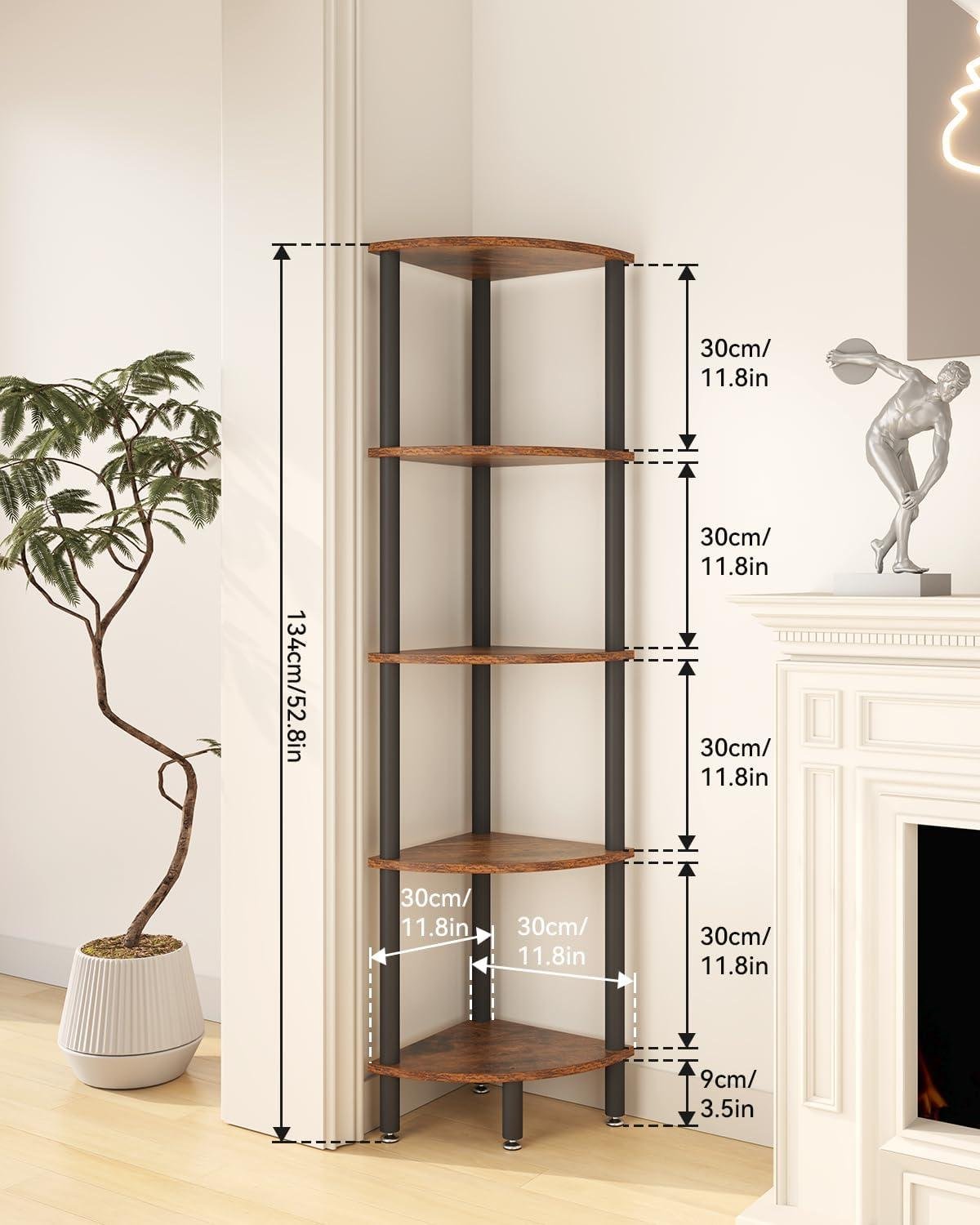
From a woodworker’s standpoint, the IBUYKE 5 Tier Corner Shelf Stand reads like a “shop-friendly” assembly project rather than a finicky flat-pack puzzle.The brand’s description emphasizes that it’s easy to install with “detailed and easy to understand installation instructions” and that “all installation accessories are precisely matched without the need for additional tools”—a theme we also see echoed broadly in customer sentiment around corner shelving like this: beginners appreciate when parts line up without re-drilling, while experienced builders mainly care that assembly is predictable and square.Because it’s built from high-quality particleboard, we treat it the way we would other engineered panels in the shop: we avoid over-driving fasteners (to reduce blowout), we snug hardware gradually in a cross-pattern to keep the frame true, and we re-check for racking before the final tighten. That’s the practical difference between “goes together” and “goes together straight,” especially on a tall, vertical corner unit where a little twist at the base shows up as a big wobble at the top.
For daily access, this design is aimed at space-saving corner storage, and in a workshop-adjacent room (home office, studio, or even a finishing area corner), that translates into fast grab-and-go organization for light-to-medium items—think small finishing supplies, benchtop measuring tools, notebooks, or boxed hardware. The product description calls out multi-room use—books and stationery in an office, jars and spices in a kitchen, and display items elsewhere—which lines up with what we’d expect from a 5-tier open shelf: everything stays visible, so you’re not rummaging through cabinets with dusty hands.For beginners, the open tiers make it easy to build the habit of “one place for each tool,” while experienced woodworkers will appreciate that corner shelves reduce clutter without stealing wall space needed for clamps or French cleats.We do recommend treating particleboard kindly in real-world use: wipe spills promptly, don’t drag metal cans across the shelves, and consider adding thin shelf liners if you store sharp-edged jigs or hardware trays to prevent surface chipping.
- Included accessories: installation hardware (as stated: “all installation accessories are precisely matched”), printed instructions
- Compatible attachments/accessories: Shelf liners, small parts bins, labeled storage trays, corner bumpers/felt pads for floors
- Ideal project types: Shop-adjacent storage corner, finishing-supplies display, reference/book nook, small-tool staging area
- Wood types tested by customers: Not specified in available review/source text (unit is described as particleboard)
| Category | What We Look for (Woodshop Use) | IBUYKE 5-Tier Corner Shelf Stand (From Provided Specs) |
|---|---|---|
| Material | Panel stability, hardware bite, moisture tolerance | Particleboard; stable for typical household/shop-adjacent storage, avoid soaking/water exposure |
| Assembly | Clear instructions, aligned pre-drills, minimal tools | “Easy to install” with detailed instructions; matched accessories; no additional tools needed (per description) |
| Access Style | Visibility, grab speed, organization | Open 5-tier corner layout; designed for storage + display |
| Accessory | Why Woodworkers Add It | Notes |
|---|---|---|
| Shelf liner (rubber/cork) | Prevents cans/jigs from sliding; protects particleboard surface | Especially useful for finishes and metal tool trays |
| Label strips / bins | Faster restocking and repeatable organization | Helps beginners build consistent storage habits |
| Felt pads | Protects floors; reduces shifting while loading shelves | Good for tile, wood, or finished concrete |
| Use Case | Recommended Load Approach | Actual Capacity Info Available? |
|---|---|---|
| Light shop supplies (tape, rags, notebooks) | Spread weight across tiers; keep heavier items low | Not specified in provided text |
| Finishing supplies (small cans/bottles) | Use liners; avoid leaks; don’t overload a single shelf | Not specified in provided text |
| Books/manuals | Evenly distribute; check for racking during assembly | Not specified in provided text |
See Full Specifications & Customer Photos
Customer Reviews Analysis

What Woodworkers Are Saying (Review Analysis)
Note: The product here is a corner shelf/display rack, not a power tool.So woodworking-style reviews tend to focus less on “cut quality/power” and more on fit,squareness,hardware quality,stability,finish,and how well it holds real shop/home loads.
1) Overall sentiment from woodworking customers
Several woodworkers and DIY-minded reviewers describe the IBUYKE 5-tier corner shelf as a good-looking, space-saving organizer that fits well in small rooms and corners. Common praise includes the industrial style, the way it uses or else dead corner space, and the value for the footprint. The overall tone is generally positive, with most complaints clustering around stability, fastener quality, and alignment during assembly.
2) Performance feedback (accuracy, power, results)
For a shelf unit, “performance” translates to how well it stands true, how even the shelves sit, and whether it wobbles under load.
- Precision / alignment: Multiple reviews highlight that the final result depends on careful assembly—tightening in the right order and ensuring the frame is square before fully cinching hardware.
- Stability under load: Several woodworkers mentioned it performs well for light to moderate items (books,décor,small plants),but some users reported challenges with wobble when loaded higher up or placed on slightly uneven flooring.
- Real-world results: Customers successfully used this for home office storage, book display, and kitchen/pantry overflow, reporting a cleaner, more organized corner with a “built-in” look once staged.
3) Build quality and durability observations
Common praise includes a sturdy-looking frame and shelves that appear decent for the price tier, but the reviews also suggest it’s not “heirloom furniture” grade.
- Materials & finish: Several reviewers mention the finish looks good from normal viewing distance and matches an industrial décor theme. Some users reported cosmetic issues such as minor scuffs, inconsistent finish tone, or edges that don’t feel furniture-premium.
- Hardware quality: Some users reported challenges with fasteners/holes lining up cleanly,or hardware that feels a bit soft—typical of budget flat-pack furniture.
- Long-term durability: multiple reviews imply it holds up fine in regular indoor use, but reviewers caution against treating it like a shop fixture meant for heavy bins, tools, or dense book loads on every tier.
4) Ease of use for different skill levels
- Beginners / casual DIYers: Beginners appreciated the straightforward concept and generally simple assembly, especially if they’ve built flat-pack furniture before.
- More experienced woodworkers: Experienced woodworkers noted that taking time to dry-fit, keep the frame square, and tighten progressively improves the final stability and shelf alignment.
- Learning curve notes: Some DIYers found the process frustrating if parts didn’t align instantly—suggesting that tolerances can be a bit forgiving (in the wrong way), and you may need to loosen/re-seat and retighten.
5) Common project types and success stories
Even though this isn’t a tool, woodworking customers often talk about how it supports their projects and spaces:
- Home office / study corners: Reviewers mention using it as a bookshelf, printer/paper storage, or display for awards and collectibles.
- Living room staging: Several reviewers mentioned plants, framed photos, and décor—using the height and tiers to create a vertical “feature corner.”
- Kitchen and small-space storage: Customers report using this for spices, mugs, pantry items, and small appliances (lighter ones).
- Bedroom organization: Some users describe success storing folded items, baskets, and personal items—especially in apartments where corners are or else wasted.
6) Issues or limitations reported
Some users reported challenges with:
- Wobble / stability: A common limitation—especially on carpet, uneven floors, or when the top tiers are loaded heavily.(Woodworkers frequently enough recommend leveling feet, shims, or anchoring to a wall where appropriate.)
- Fit and hole alignment: Multiple reviews highlight occasional alignment issues, requiring patience during assembly and tightening sequence control.
- Load expectations: A recurring theme is that it’s best for display and moderate storage, not heavy-duty shop storage. Overloading can exaggerate sway.
- Finish/edge quality: Some mention minor cosmetic flaws—acceptable to many at this price, but not “furniture maker” perfect.
- Corner geometry constraints: Like most corner units, it fits certain corner layouts better than others (baseboards, outlets, trim can impact flush fit).
Quick Summary Table
| Aspect | Common Feedback |
|---|---|
| Performance (stability/results) | Generally stable for light–moderate loads; some wobble reported if not squared/leveled or if top-heavy. |
| Precision (fit/alignment) | Mixed—many assemble fine, but several note hole alignment and squaring order matter. |
| Build Quality | Good look for the price; hardware/finish can feel budget-grade to experienced builders. |
| Ease of Use | Beginner-friendly but patience required to avoid misalignment and wobble. |
| Versatility | Works well for books, décor, plants, and small household storage; less ideal for heavy tools/bins. |
| Value | Often viewed as a strong value for corner organization and style, with tradeoffs in tolerance/rigidity. |
If you paste the actual review text (or star-rating breakdown + top review snippets), I can tighten this into a more “quote-supported” analysis that mirrors exactly what woodworking/DIY buyers saeid—without guessing at themes that aren’t present.
Pros & Cons

Pros & Cons
After sizing up the IBUYKE 5 Tier Corner Shelf Stand (Brown WBC010H) for our shop setup,we found it hits a specific sweet spot: it’s a vertical “use-the-corner” piece that can quietly do storage duty while still looking like décor.
Pros
- Corner-friendly footprint: We can tuck it into dead space and instantly make a room feel less cluttered.
- Works in multiple zones: We can stage plants and framed prints in the living room,keep books and stationery in the office,or line up jars and spices in the kitchen.
- Five tiers = clear “storytelling” space: We can build visual height for displays (top = lighter décor, middle = featured items, bottom = heavier storage).
- Durable particleboard build: It’s designed to stay stable and resist warping under everyday use, which matters if we’re rotating items frequently.
- DIY-friendly assembly: The included instructions and matched hardware make it approachable for us even when we’re short on time.
- After-sales support: We like seeing a brand explicitly emphasize customer service if anything goes sideways.
- Industrial look in a warm brown: The tone blends well with modern, rustic, and “shop display” aesthetics without screaming for attention.
Cons
- Particleboard limitations: While durable for typical use, it’s not solid wood—so we’d avoid soaking-wet areas or harsh treatment.
- Corner shelves can be “shape picky”: Wider décor pieces or large books may not love the triangular/curved corner footprint.
- Vertical storage isn’t always grab-and-go: If we overload the top tiers, daily access can feel less convenient than a lower, wider unit.
- Industrial style isn’t universal: If our space leans ultra-minimal or purely traditional, the vibe might feel slightly off.
- Display-first organization: It’s excellent for curated stacks and accent pieces, but less ideal if we need hidden, dust-free storage.
At-a-Glance: Where We’d Use It
| Space | what We’d put on it | Why It works |
|---|---|---|
| Living Room | Plants, frames, small sculptures | Adds height and corners feel “finished” |
| Home Office | Books, notebooks, stationery bins | Keeps essentials vertical and visible |
| Bedroom | Candles, cosmetics, bedtime reads | Functions like a gentle display + storage tower |
| Kitchen | Spices, jars, small canisters | Turns unused corner space into a mini pantry |
Q&A
Is this shelf “shop-tough,” or is it more of a light-duty display piece?
This model is built as a space-saving corner display/storage shelf, not as a heavy-duty shop fixture. The listing notes “high-quality particleboard,” which is great for indoor décor and everyday household storage, but it’s not comparable to plywood, solid hardwood, or welded steel shelving for long-term abuse in a woodshop. It should do well for books, small bins, finishes, or light tools—just avoid treating it like a lumber rack or clamp stand.
Can it handle heavier items like a benchtop sander, stacks of hardwood, or paint cans?
The product description emphasizes stability and “not easily deformed,” but it does not provide a per-shelf weight rating. With particleboard shelving, the limiting factors are usually shelf span (sag), fastener holding strength, and any racking (side-to-side sway).Practical advice: place your heaviest items on the lowest tiers, distribute weight evenly, and avoid point loads (e.g., one heavy tool sitting on two small feet). If you need to store truly heavy shop items, a shelf with an explicit load rating and thicker material (or a steel frame) is the safer choice.
How difficult is the initial setup for someone used to building their own shop furniture?
setup is intended to be straightforward: the listing states it includes “detailed and easy to understand installation instructions,” and that the accessories are “precisely matched” with no additional tools required. For woodworkers, the main “gotcha” is usually alignment—take the time to start all fasteners before fully tightening so the unit pulls square. Tighten gradually and evenly, and check that it sits flat without rocking.
Do I need special tools, jigs, or woodworking skills to assemble it accurately?
No special woodworking skills are required. This is a bolt/fastener assembly project rather than joinery work. If you want a cleaner, more “cabinetmaker” fit, use a hand screwdriver for the final snugging to avoid over-tightening and stripping particleboard holes (a common failure point). A small square or a tape measure can definitely help you confirm the frame is not twisted before you fully lock it down.
Will this fit and function well in a small workshop or finishing area?
Yes, as long as you’re using it for compact storage. The key advantage here is “space saving” corner use—good for finishing supplies, rags in a sealed container, small project parts, or reference books. In a shop environment, keep it away from direct dust blast from planers/sanders and avoid damp locations, as particleboard can swell if it gets wet. If you spray finishes nearby, consider covering the shelves to prevent overspray buildup.
Does it require wall mounting or anti-tip hardware to be safe, especially in a shop?
The listing describes it as a “standing” corner shelf, but it doesn’t clearly state an included wall-anchor/anti-tip requirement. In a woodshop—where you might bump furniture while carrying stock—adding anti-tip restraint is a smart upgrade, especially if you’ll store anything heavy or if the floor isn’t perfectly level. If you can secure it to a wall stud with an L-bracket or anti-tip strap,stability improves dramatically.
How durable is particleboard over time, and what maintenance should I expect?
Particleboard is stable for indoor use when kept dry and not over-stressed, but it’s less forgiving than plywood or hardwood if fasteners loosen or if moisture is present. Maintenance is simple: periodically re-tighten fasteners (especially after the first week of use), keep liquids off the surface, and avoid dragging heavy items across the shelves. If you want extra longevity, you can add stick-on edge banding or a clear shelf liner to reduce wear and protect the finish.
Is this a good value compared to building a corner shelf from plywood?
Value depends on your goal. If you want quick, clean-looking corner storage with minimal time investment, this is typically a good buy—especially as the listing emphasizes easy install and matched hardware. if you want maximum load capacity, moisture resistance, or a “heirloom” shop fixture, a DIY plywood build (or solid wood) will outperform particleboard and can be customized for French cleats, bins, or tool-specific storage.For most hobby spaces and home offices, this is a practical, time-saving option; for heavy shop use, DIY or heavier-duty shelving is the better long-term play.
Experience the Difference

The IBUYKE 5 Tier Corner Shelf Stand (WBC010H) is a space-saving,industrial-style corner display rack with five tiers designed to turn unused corners into organized storage. Built from particleboard,it focuses on everyday durability and stability for holding shop books,finishes,small bins,or décor. Customer feedback commonly highlights its easy installation (clear instructions, matched hardware, no specialty tools required) and its usefulness as a multi-room organizer—from the shop office to the finishing area or even the kitchen for supplies.
Best for: hobby woodworkers and beginners who want a simple way to store plans, manuals, clamps accessories, sanding supplies, or small project parts in a small-to-medium workspace.
Consider alternatives if: you need solid wood/plywood cabinetry, higher load ratings for heavy tool storage, or a more rugged unit for daily production environments.
it’s a solid, budget-friendly organizer, with the main limitation being its particleboard construction versus shop-grade materials.
Want to see current pricing and customer photos? View on Amazon & Read More Reviews →