

Blog
Hizmivos Wire Stripper Tool Review: Right for Our Shop?

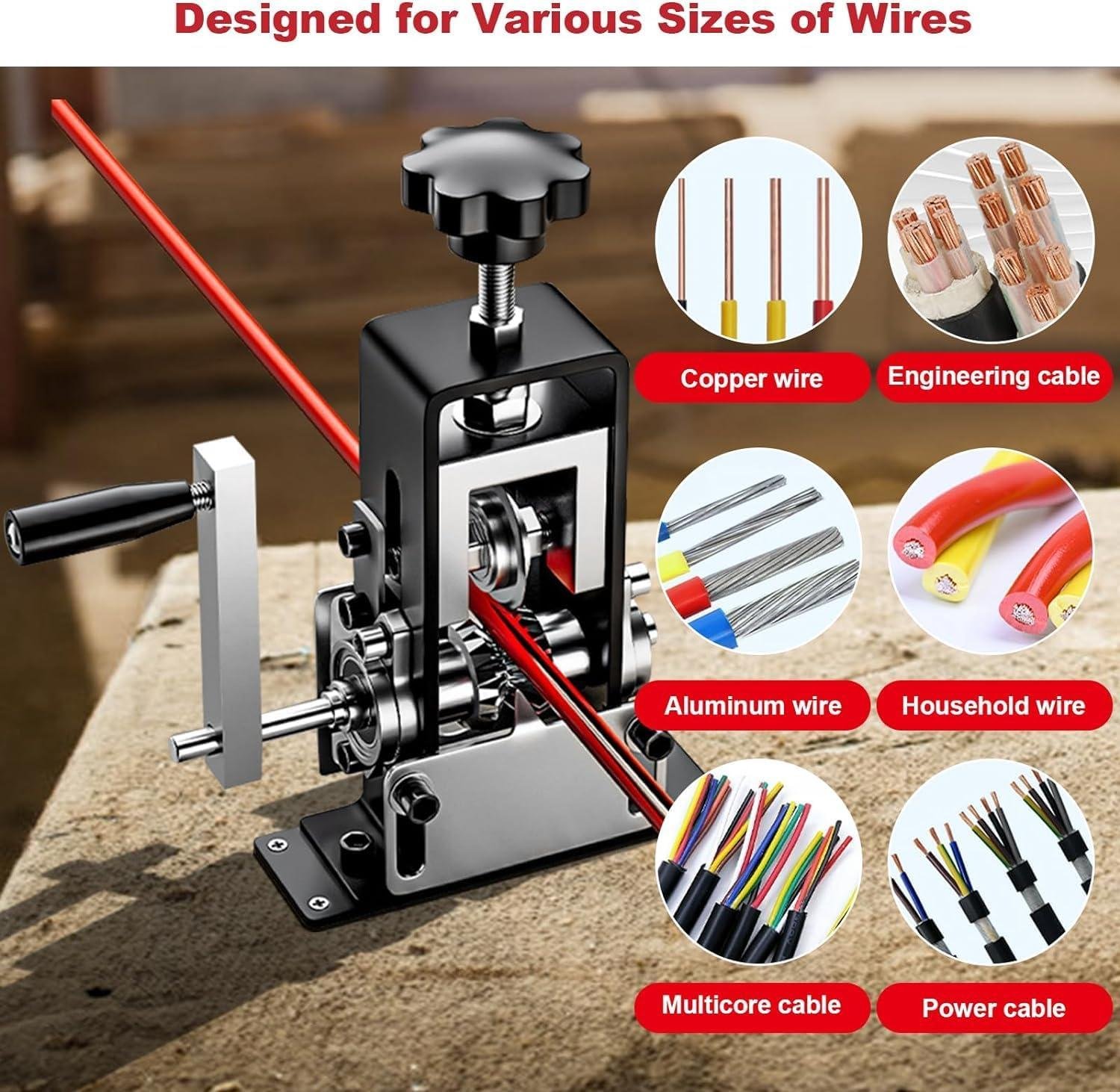
Ever finish a shop upgrade—new dust collection, better lighting, maybe a rebuilt miter station—only to end up wiht a messy coil of leftover electrical wire begging to be dealt with? In a small woodworking shop, clutter kills accuracy, and nothing wastes time (or fingertips) like trying to strip scrap copper with a utility knife when we’d rather be fitting joints and dialing in cuts.
that’s where teh Hizmivos manual Wire Stripping Machine comes in. It’s a compact wire-peeling tool designed for scrap copper recycling, handling wire diameters from 0.06″ to 1″, with an adjustable blade controlled by a regulating nut. It can be run by hand crank or drill-powered via a connector—useful when we’re balancing speed, control, and budget.
In this review, we’ll cover the key features, setup and learning curve, space and mounting considerations, and what customer feedback says—many reviewers call it a time-saver and easy to use, while others mention mixed build quality and inconsistent cutting performance.
We’ve spent years around tools where alignment, durability, and repeatability matter, and we’ll evaluate this one with that same shop mindset.
tool Overview and Build Quality in Our Shop

In our shop, this manual wire stripping machine feels more like a small, purpose-built “prep station” than a traditional woodworking tool—but it fits right in with how we manage offcuts, demo leftovers, and jobsite salvage. The big headline spec is its claimed wire range of 0.06″–1″ diameter, and the tool’s core feature is the dual-drive setup: we can run it by hand crank when we’re doing a few short pieces, or power it with a drill via the connector when we’re processing longer runs. That drill-powered option is what many owners echo in reviews—themes like “easy to assemble,” “works great with a drill,” and “time-saver” show up repeatedly, including claims that it can speed the workflow up 10x–20x compared to a utility knife.From a woodworker’s angle, we appreciate that it’s described as compact and bench-friendly—several reviewers like that it “fits on the table,” and one noted the base can feel small but is easily fixed by mounting it to “any board…laying around,” which is exactly the kind of shop solution we’d reach for.
Build quality is where expectations should be calibrated. Reviews are mixed: plenty of buyers call it “well made” or “built strong,” while others report poor construction or frustration with stability and alignment. A common educational takeaway is that this style of stripper is sensitive to setup—its cut quality depends on blade depth and how straight the wire feeds through the rollers. Users specifically mention needing to tweak the settings and even adjust the cover plates/guide to get consistent stripping, and there are warnings about blades: some found the supplied blade dulls sooner than expected or can get damaged if the depth is set aggressively. For our shop use, we’d treat it like a jig: bolt it down solidly, run the drill at a medium-slow speed (a reviewer noted high speed can “miss spots”), and keep basic maintenance tools nearby to clear debris from the wheels. Also, it’s not a dust-collecting tool—expect insulation scraps and gunk around the rollers—so gloves, eye protection, and the usual “keep fingers out of feed paths” rule matter here more than most woodshop fixtures.
See Full Specifications & Customer Photos
Real World Performance for Salvaging Copper Wiring from Shop Tools and Jigs
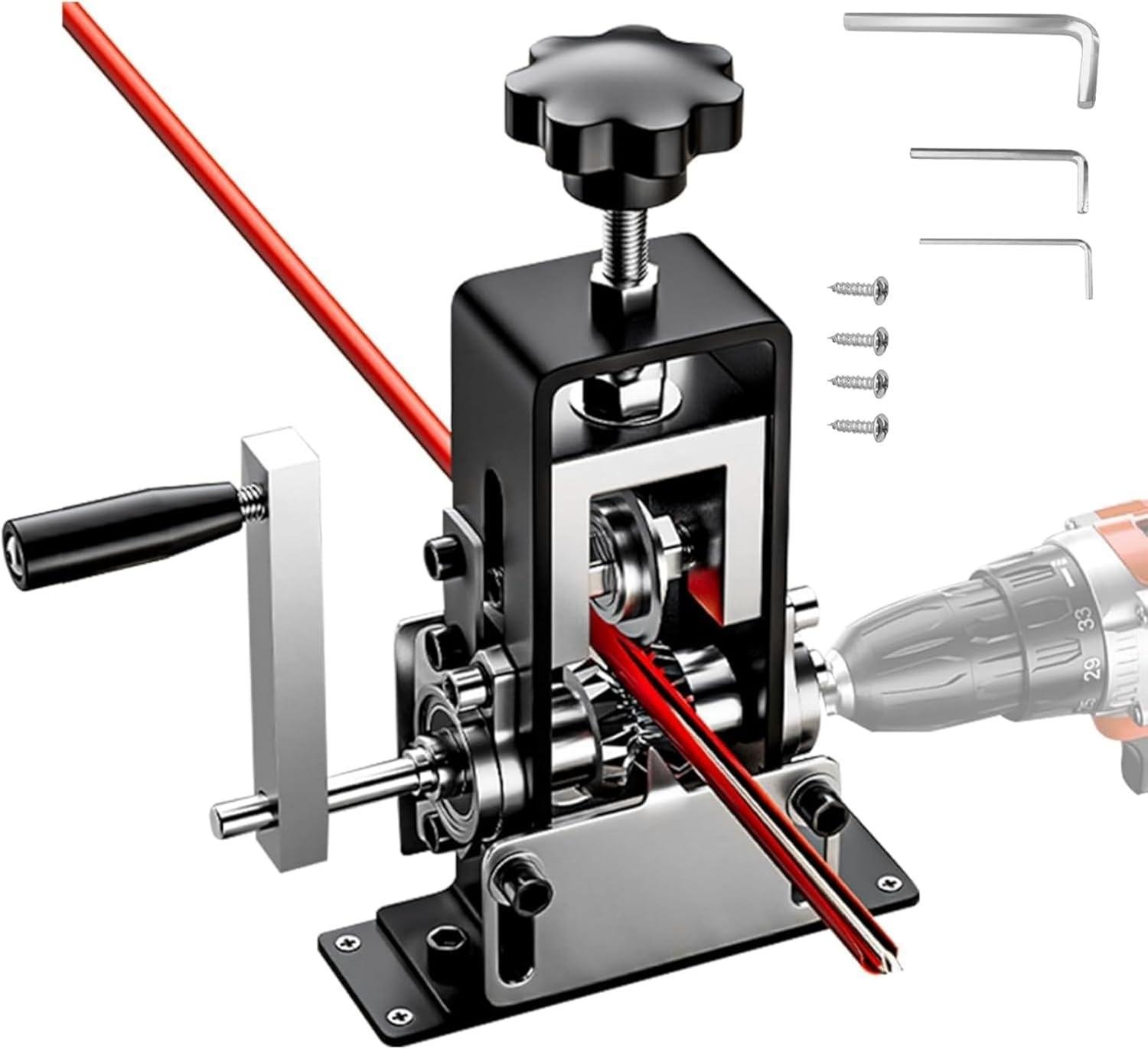
In a woodworking shop, copper scrap usually shows up in the unglamorous places—dead corded drills, worn-out routers, busted shop vacs, and the “mystery bin” of extension cords and old jigs with switches. For that kind of steady trickle of salvage, this stripper’s 0.06″–1″ wire-diameter range (per the specs) is the main reason it earns a spot near our sharpening station instead of out in the garage. We like that it’s a dual-operation unit: we can hand-crank a short piece when we’re already at the bench, or snap on a drill via the connector for bigger batches—something multiple reviewers call out as making stripping “very easy” and a real time-saver (with a few users saying it speeds the process up dramatically). In woodworking terms, that’s the difference between “we’ll do it later” and actually processing a pile of cords after a tool tune-up day. Setup sounds approachable for most shops, too—customer feedback repeatedly mentions easy assembly and simple adjustment, though we’d still plan on mounting it to a scrap board or bench as one theme is that compact machines can be hard to keep steady unless they’re secured.
Performance-wise, the real-world lesson is that this style of stripper rewards patient dialing-in more than brute speed. The machine adjusts cut depth by twisting the regulating nut (blade up/down), and reviews suggest the “sweet spot” matters—some users report mixed cut quality, including blades that dull sooner than expected or off-center cutting that can miss spots. Our takeaway for woodworkers is to treat it like setting a hand plane iron: sneak up on depth, test on a short offcut of cable, and then run production. Reviewers also note technique tips that translate well to shop practice—straighten wire first, consider a medium-slow drill speed (high speed can miss cuts on kinked runs), and keep a pick handy to clean gunk from the drive wheels if you’re stripping dirty or cloth-jacketed wire. Safety belongs in the same sentence,too: at least one reviewer learned the hard way that it “works as described,” so we keep gloves on,feed from the side,and never test with fingers.One important expectation-setting point from reviews: while it’s advertised up to 1″,at least one user reports it may not actually open that far,estimating practical max closer to ~350 MCM—still plenty for typical shop cords,but worth knowing if we’re processing truly massive cable.
- Included accessories: Hand crank (manual operation), drill connector/drive (for drill-powered stripping)
- Compatible attachments/accessories: Corded drill or strong cordless drill, mounting board/bench screws, pick for wheel cleaning, cable cutter, utility knife (for occasional touch-ups), spare replacement blades (recommended by multiple reviewers)
- ideal project types: Salvaging copper from failed corded shop tools, stripping extension cords, processing remodel/drop-cord leftovers, reclaiming wiring from homemade jigs and fixtures
- Wood types tested by customers: Not applicable (this tool is for wire, not wood)
| Spec / Feature | What it Means in the Wood Shop | Notes from Customer Themes |
|---|---|---|
| Wire diameter capacity: 0.06″–1″ | Covers most shop cords and many multi-conductor cables | Some report it may not truly reach 1″; one estimates ~350 MCM |
| Dual operation: hand crank + drill-powered | Manual for short runs; drill for batch processing | Many call drill use “very easy” and a big time-saver |
| Blade adjustment via regulating nut | Fine-tunes depth like setting a cutter—key for clean copper | Cut quality is mixed; several mention “dial it in” / “tweak settings” |
| Accessory | Compatible? | Why We’d Use It |
|---|---|---|
| Corded drill | yes | better sustained power; one reviewer notes smaller cordless drills can overheat in long sessions |
| Spare blades | Yes (recommended) | Some reviewers report blades dulling; others pre-buy extras “just in case” |
| Mounting board / bench hardware | Yes | Improves stability; reviewers mention small base/steadying issues |
| Capacity Claim | Recommended Expectation (shop Reality) | Why |
|---|---|---|
| Up to 1″ diameter | Plan for up to typical shop cords; verify before buying for very large cable | At least one user reports it doesn’t open fully to 1″ |
| Strips various wire sizes | best results on straighter, solid/standard jacketed wire | Stranded and cloth-jacketed wires may require more tuning/cleaning |
See Full Specifications & Customer Photos
Key Features We Appreciate for Efficient Scrap Prep and Cleaner Recycling Bins

In a woodworking shop, scrap prep is really about keeping our workflow clean and our offcuts/salvage streams sorted—and this Hizmivos stripper earns its keep by turning “mystery wire piles” from remodels into tidy copper and insulation fast. We appreciate the dual-operation design (hand crank or drill-driven via the connector) because it lets us strip a little at the bench without setting up anything fancy, then scale up when we’ve got a 5‑gallon bucket’s worth to process. The headline spec is a 0.06″–1″ wire diameter range with multiple feeding holes,and in practice the educational takeaway is simple: we choose the hole that supports the jacket snugly,then use the regulating nut to lower the blade until it scores insulation—not copper. That “dial it in” step is echoed in customer themes: several reviewers say it “moves right along once you have it dialed in,” and another cautions to “tweak the settings…don’t give up on it” after early frustration. From a shop-safety standpoint, we treat it like any cutter—keep hands off the feed path (one reviewer learned the hard way), wear gloves for stranded wire, and slow the drill down if the cut starts to wander or shred strands.
We also like the way its compact, portable form factor fits a crowded woodworking bench—reviewers repeatedly call it “small,” “handy,” and “fits on the table”—which matters when our outfeed tables are already doing double duty. For cleaner recycling bins, the practical win is consistency: the machine’s adjustable blade height and guided feed help us separate jackets from conductors with fewer partial cuts, which means less “fuzzy” insulation stuck to copper when it hits the scrap bucket. Customer feedback supports that time-saving angle strongly: multiple reviews call it a “time saver”, with one saying it “speeds up the process 10x,” and another reporting stripping “about 1000 feet…in less than an hour” when powered by a drill. That said, reviews are mixed on durability and cut quality—some call it “well made,” others mention poor build quality or blades dulling—so for woodworkers, we’d plan on periodic cleaning (insulation grit can pack into the drive area) and keep expectations realistic: it’s ideal for shop salvage and casual-to-light scrap runs, not a production-line machine.
- included accessories
- Hand crank handle (manual operation)
- Drill connector (for drill-powered operation)
- Compatible attachments/accessories
- Corded drill (recommended by reviewers for long sessions)
- Cordless drill (works for short runs; some reports of overheating on lighter drills)
- Extra replacement blades (several buyers ordered spares in case the blade dulls)
- Mounting board (reviewers note the base can feel small; screwing it to a board steadies it)
- Pick/awl for cleaning clogged drive wheels (a common reviewer tip)
- Ideal project types
- Shop cleanouts after remodel wiring (romex, mixed scrap)
- Salvage prep from used tools/appliances for cleaner scrap sorting
- Small-batch recycling where hand stripping would cause hand fatigue
- Holiday/seasonal scrap runs when you want a speedy bin of clean copper
- Wood types tested by customers
- Not applicable — this is a wire-stripping tool; customer reports cover wire types, not wood species.
| Feature | What the Specs Say | What Reviews Commonly Indicate | What It Means in a Wood Shop |
|---|---|---|---|
| Wire size capacity | 0.06″–1″ | Some say it may not truly open to 1″ (one estimate: ~350 MCM) | Great for common shop/remodel scrap; verify fit on very large cable before buying |
| Drive method | Hand crank or drill-powered | Drill power is repeatedly called “easy” and a major speed boost | Use manual for small batches; drill for big bins without hand cramps |
| Adjustability | Blade adjusts up/down via regulating nut | “Dial it in” is a common success theme; strand shredding happens if set too tight | Teaches good cutting discipline: score insulation,don’t bite into copper |
| build/portability | Compact & lightweight (no exact weight listed) | Often described as “small,” “fits on the table”; some mention stability issues unless mounted | Mount to a board/bench for safer feeding and more consistent cuts |
| Accessory/Attachment | Purpose | Why Woodworkers Might Care |
|---|---|---|
| Corded drill | Continuous power for long stripping sessions | Less chance of overheating when processing big scrap batches |
| Replacement blades | Restores clean scoring when the edge dulls | Cleaner copper = cleaner bins; dull blades can tear jackets and slow you down |
| Mounting board | Stability and better control | Prevents chasing the tool around the bench while feeding wire |
| Pick/awl + brush | Clean drive wheels/rollers of insulation buildup | Basic maintenance keeps feed consistent—same logic as pitch cleanup on saw blades |
| Capacity Claim | Rated (Specs) | Reality Check (Review Themes) | how We’d use It |
|---|---|---|---|
| Maximum wire diameter | Up to 1″ | At least one reviewer doubts full 1″ capacity; works across “various wire sizes” for most users | Plan on common remodel/shop wire,and confirm very large cable needs before purchase |
| Speed/output | Depends on drill RPM (not specified) | “10x faster” and even “1000 feet in under an hour” claims appear in reviews | Batch your wire by size and run mid-speed for steadier cuts |
See Full Specifications & Customer Photos
Ease of Use for Beginners and Experienced Woodworkers in Daily Workshop Routines

In our daily shop routines, we treat a wire stripper like this as more of a “support tool” than a centerpiece machine—something we grab when we’re breaking down old extension cords, salvaging copper from a remodel, or cleaning up offcuts and electrical scrap that otherwise piles up near the outfeed table. The big beginner-friendly win is that it’s built around simple, repeatable adjustments: it accepts wire diameters from 0.06″ to 1″ (per the listing),and the blade height is controlled by a regulating nut you twist to dial in cut depth. Several customer themes match that learning curve: people repeatedly call it “easy to use,” “easy to assemble,” and a genuine time-saver—with one reviewer saying it “speeds up the process 10x” and others noting it’s “quick and simple” once set. In practice, that means beginners can start by using a sacrificial piece of wire to set blade pressure (aim for slicing insulation without nicking copper), while experienced woodworkers will appreciate how fast it integrates into workflow when paired with a drill—reviews commonly mention that drill-powered operation makes stripping very easy, and one even said they “never installed the handle” as the drill drive did the heavy lifting.
For experienced hands, the “ease” comes less from instructions and more from how well it tolerates real-world shop material: mixed wire types, kinks, and odd jackets. Reviews say it handles various wire sizes effectively, but they also warn that results can depend on setup—cut quality feedback is mixed, with some users reporting weak/dulling blades or a blade not tracking perfectly, while others emphasize, “tweak the settings… don’t give up on it.” That’s a very woodshop-style truth: like setting a hand plane, the outcome is in the adjustment. We also appreciate that it’s described as compact and “fits on the table,” but multiple reviewers recommend stabilizing it—one noted the base is too small and suggested screwing it to a bench or mounting it to a board, which is exactly how we’d make it behave around busy workholding and clamps. Safety-wise, treat it like a small thickness planer feed: keep fingers well away from the inlet (a customer admitted they tested it and got a cut), run a medium-slow drill speed if you’re getting missed spots, and keep the rollers clean—several users mention buildup/clogging with certain jackets and the need for quick cleanup between runs.
See Full Specifications & Customer Photos
Customer Reviews Analysis

What Woodworkers Are Saying (Review Analysis)
1. Overall sentiment from woodworking customers
Several woodworkers and shop-minded DIYers describe this wire stripping machine as a high-value, time-saving tool—especially compared to hand-stripping with a utility knife. Common praise includes “works great,” “money maker,” and “great bang for your buck,” with multiple reviews noting that once it’s set up correctly, it can process large amounts of wire quickly.
that said, some users reported challenges with initial setup, occasional slipping/misalignment, and blade damage, making the experience feel “dial-it-in” rather than plug-and-play.
2. Performance feedback (accuracy, power, results)
Performance comments read a lot like tool feedback woodworkers give on planers/sanders: when tuned correctly, it feeds consistently and produces clean results, but setup matters.
- Speed & output: multiple reviews highlight fast throughput—one user reported running “about 1000 feet of cable in less than an hour.” Another mentioned “hundreds of feet” over months with consistent use.
- Power under load: Several woodworkers mentioned that a drill makes the tool shine, especially a corded, higher-torque drill. One user noted a smaller cordless drill overheating (“burning hot”), suggesting this tool can push a drill hard during long runs.
- Accuracy/adjustments: Users repeatedly point out that you must dial in cut depth and sometimes tweak plates/settings to stop missed cuts or insulation tearing.One reviewer said it went poorly after a “big pull” on 10 AWG, but later adjustments made it “a blast” again.
Woodshop-style takeaway: Expect a tuning phase similar to setting a fence or blade height—once set, it “moves right along.”
3. Build quality and durability observations
Build quality impressions are mostly positive, with a few durability caveats:
- Materials & sturdiness: Reviewers describe it as “compact and solid aluminum” and “built strong enough” for heavy stripping sessions.
- Blade life: Mixed but generally acceptable. One user expected quick wear and bought extra blades “in case they go dull,” while another reported the blade held up better than expected over months.
However, one reviewer reported the blade got badly mangled on its second use, showing that misfeeds or incorrect setup can damage the cutting edge quickly.
- Component issues: Some users reported challenges with drive wheel alignment, specifically the wheel slipping sideways on the shaft, requiring re-positioning and re-tightening of the set screw.
4.Ease of use for different skill levels
Ease of use depends heavily on experience and patience with adjustments.
- Beginners/DIYers: Several users liked that it’s easy to assemble and can work “even the manual way” with low effort. But beginners may need time to learn how to straighten wire and set the cut depth.
- Experienced tinkerers: Multiple reviews highlight that users who are comfortable tweaking hardware had better outcomes—adjusting cover plates, feed plates, and cut depth to suit wire type.
- Ergonomics & workflow: A cordless drill setup reduces fatigue substantially versus hand stripping, but a few users still kept a razor blade and cutter nearby to clean up occasional missed cuts—similar to keeping a chisel handy when a power tool leaves a corner unfinished.
5. Common project types and success stories
While not woodworking-project-specific, reviewers describe “shop productivity” use cases that fit many maker/garage workflows:
- Scrap copper recycling and cleanup jobs: Customers successfully used this for stripping large batches for scrap value, with one calling it a “no-brainer” when scrap prices differ by about $3/lb.
- Material versatility: Reviewers mentioned success with solid wire, stranded wire, aluminum wire, Romex, automotive battery cable, and multi-conductor wire.
- Workflow wins: One reviewer said it saved them “about a week worth of stripping by hand with a razor blade.” Another shared they were able to strip copper “right near Christmas time,” implying it helped finish a time-sensitive cleanup/recycling push.
6. Issues or limitations reported
Some users reported challenges with fit-and-finish expectations and real-world limitations:
- Advertised capacity vs reality: One reviewer noted it does not open to 1” wire as stated, estimating practical max closer to 350mcm.
- No spare blade included (expectation gap): One user chose this model expecting a spare blade (pictured/claimed) but reported it did not include one, creating early dissatisfaction.
- Clogging with certain jackets: wire with braided cloth-like jackets can clog the wheels, requiring frequent cleaning (a pick was mentioned).
- Setup sensitivity: Some users reported “disaster” results until settings were corrected—especially on stranded wire, which can get messy and benefit from gloves.
- Hardware convenience: A reviewer suggested the machine should use thumb screws instead of bolts for faster feed-plate changes, since swapping sizes is common.
Summary Table (Theme Snapshot)
| Aspect | Common Feedback |
|---|---|
| Overall Sentiment | Mostly positive; seen as a time-saver and good value, but not flawless out of the box |
| Performance | Fast with a drill; best results after dialing in cut depth and feed settings |
| Precision | Consistent once tuned; stranded wire requires more adjustment and attention |
| Durability | Solid aluminum body praised; some reports of blade damage and drive wheel slipping |
| Ease of Use | Assembly is easy; learning curve around setup, wire straightening, and plate changes |
| Limitations | Max capacity claims questioned; cloth-braided jackets can clog; convenience hardware could be improved |
If you want, I can rewrite this section in a more “woodworking blog” voice (more shop analogies—fence alignment, blade set, feed rate) or tighten it for an ecommerce product page.
Pros & Cons

Pros & Cons: Hizmivos Wire Stripper Tool (In Our Shop)
After putting the Hizmivos manual/drill-powered wire stripping machine in the “real world” of our shop workflow, it became clear that it’s a classic scrap-tool trade: a big jump in speed and comfort, with a learning curve and a few build-related “keep an eye on it” moments.
pros
- Drill-powered speed is the headline feature. Once we had the blade depth dialed in, it chewed through wire runs far faster than the utility-knife routine—exactly the kind of “why didn’t we do this sooner?” upgrade.
- Two ways to run it (hand crank or drill). We like having a manual option for quick one-offs and a drill option for marathon stripping sessions.
- Wide size range on paper (0.06″–1″). The multiple feed holes make it feel adaptable, especially when we’re bouncing between smaller shop wire and bigger scrap cable.
- compact footprint. It doesn’t demand floor space or a dedicated stand—useful when our benches are already crowded with “temporary” projects.
- generally easy to assemble and start. It’s not a intricate machine,and most of the setup is straightforward even if we’re not in the mood for a long manual.
- Strong value proposition for scrap copper. If your scrap yard pays a meaningful premium for stripped copper, the math can work out quickly—especially when we’re processing buckets instead of handfuls.
- 3-year warranty is reassuring. For a budget-friendly tool category where some models feel disposable,warranty coverage helps us feel better about the gamble.
Cons
- Dial-in time is real. We can’t just “set it and forget it.” Blade depth and guide alignment matter, and the sweet spot changes as wire types change (solid vs. stranded vs.jacketed).
- Mixed reports on build consistency. Some units seem steady and durable; others sound like they arrive needing extra tightening, tuning, or patience. We’d treat it like a tool that benefits from a quick inspection before each session.
- Cut quality can be hit-or-miss. At the wrong drill speed or blade setting, we’ve seen reports of missed spots, tearing, or unsatisfying cuts—especially on stranded or odd-jacket wire.
- Blade wear is a consideration. Several users mention blades dulling sooner than hoped or getting mangled if settings are off. We’d plan on spare blades if we’re stripping regularly.
- Stability depends on mounting. If it’s not secured well (bench/board), it can feel fussy. For us, “portable” is nice—but a solid mount is nicer.
- Big-wire claims may vary in practice. While it advertises up to 1″, some feedback suggests it may top out lower depending on cable type and jacket thickness.
- Can clog or need cleaning with certain jackets. Older cloth-like or gummy insulation can load up rollers/wheels, meaning we should expect occasional clean-outs mid-batch.
Quick Reality Check (How It Felt in Use)
| Category | Our Take | What We’d Do |
|---|---|---|
| Speed (with drill) | Fast enough to change our habits | Use medium drill speed; don’t force it |
| Ease of setup | Simple, but not “mindless” | Mark common settings for repeat wire sizes |
| Cut consistency | Depends on wire type and tuning | Test 12″ first before feeding a whole coil |
| Best for | Scrap copper batches | Pair with gloves + cutters for cleanup |
Our bottom-line vibe: when we’re stripping enough copper to justify a tool, the Hizmivos can feel like a productivity cheat code—provided we accept that it’s a “tinker and tighten” machine, not a plug-and-play industrial unit.
Q&A

I’m a woodworker—what “materials” can this actually handle?
This isn’t for wood at all—it’s a wire-stripping tool for recycling copper/aluminum cable. In terms woodworkers might relate to: it handles a wide “stock range” of wire sizes via multiple feed holes, listed at about 0.06″ up to 1″ diameter. Reviews back up that it works well across common shop/electrical scrap like solid copper, stranded wire, Romex, automotive/battery cable, and multi-conductor cable. One reviewer noted cloth/braided jacket “old style” wire can clog the drive wheels and needs frequent cleaning, so that’s a known limitation.
Is it “powerful enough,” or is it just a light-duty hobby gadget?
It has two drive options: hand crank or drill-powered. Customer feedback is that drill-power is the real productivity mode—several users call it a major time-saver (one mentioned ~10x faster; another stripped around 1000 ft in under an hour). The main “power” limiter is your drill: one reviewer said a small cordless drill overheated during long runs and recommended a stronger corded drill. For occasional batches (post-remodel scrap, small shop cleanouts), it’s commonly described as more than adequate; for continuous, all-day production, you’ll want to pace it and use a robust drill to avoid overheating tools.
How hard is the initial setup—am I going to be fiddling with it like a finicky fence?
Setup is generally described as straightforward—many reviews mention easy assembly and picture-based instructions.The “dial-in” step is blade depth: you adjust the blade up/down with the regulating nut until it cuts the insulation without nicking the conductor (similar to setting cutter height on a woodworking jig). Expect some trial-and-error, especially on stranded wire and odd jacket types. One reviewer who initially struggled reported success after tweaking the settings and the cover plates near the blade—so it’s not always perfect out of the box, but it’s usually fixable with adjustment.
What adjustments are available, and how precise is the cut?
You’ve got two key controls: selecting the correct feed hole for the wire diameter and adjusting cutting depth with the regulating nut.Cut quality is mixed in reviews: many users get clean stripping once “dialed in,” but others report the blade can dull sooner than expected or that cuts can be inconsistent—especially at high speed or with kinked wire. Practical tip from reviews: run the drill at a medium-slow speed for more consistent cuts, and straighten wire before feeding for smoother results.
Will this fit in a small workshop, and can I mount it like a benchtop tool?
Yes—this style of stripper is compact and frequently described as small enough to sit on a table/bench. Multiple reviews mention screwing it to a workbench for stability, and at least one user noted the base is a bit small but easy to improve by fastening it to a scrap board (very “woodworker fix”). Mounting it solidly helps feeding consistency and reduces the tendency for the tool to wobble during drill-powered use.
Does it need dust collection or special shop hookups?
No dust collection is required—there’s no sawdust, but you will generate insulation strips and occasional “gunk” buildup in the drive wheels (especially with cloth-like jackets). Several users keep a pick or small tool nearby to clean the wheels, plus a cable cutter and razor/utility knife for occasional touch-ups on missed cuts. Power-wise, the machine itself doesn’t plug in; the “powered” mode comes from whatever drill you attach.
is this beginner-friendly, or do I need experience to get good results?
Beginner-friendly with one caveat: the learning curve is mostly in blade-depth adjustment. Many customers say it’s easy to use and a big betterment over stripping with a razor knife (less hand fatigue, faster throughput).But if you switch wire types frequently (solid vs stranded vs jacketed), you’ll be making more adjustments. Safety note echoed by a reviewer: treat it like any cutting tool—keep fingers away from the feed path, especially when drill-powered.
How durable is it,are parts like blades easy to deal with,and what about warranty?
Durability feedback is mixed: plenty of users call it well-made for the price,while some report poor build quality or issues like blades dulling or getting damaged if set too aggressively. A common strategy in reviews is to buy extra blades up front “just in case.” The listing states a 3-year warranty, and it also notes a protective oil coating from the factory (so light oil residue or minor transport scuffs aren’t necessarily defects). For longevity, keep bolts/set screws tight, don’t over-tighten the blade into the conductor, and periodically clean debris from the rollers.
achieve New Heights

The Hizmivos Manual wire Stripping Machine (0.06″–1″) is a compact, bench-mount wire peeler designed for scrap-copper recycling, with dual operation via hand crank or drill-powered drive. It uses multiple feed holes and an adjustable blade depth (regulating nut) to handle a range of cable sizes. Customer feedback consistently highlights that it works well, is easy to assemble/use, and is a major time-saver, especially when paired with a strong corded drill. The main cautions are mixed build quality reports and inconsistent cut performance on some cables (stranded, jacketed, or very large diameters), sometimes requiring tuning, cleaning, or spare blades.
Best for: hobby woodworkers and remodelers who accumulate small-to-medium wire scrap, cabinet shops doing occasional electrical tear-outs, and beginners who want a straightforward, budget-friendly process.
Consider alternatives if: you’re stripping wire daily in production volumes, need guaranteed heavy-duty durability, or regularly work with thick/odd jackets where precision is critical.
Final assessment: a solid value option that performs best once dialed in, but it’s not a “set-it-and-forget-it” production machine.
Want to see current pricing and customer photos? View on Amazon & Read More Reviews →