

Blog
HAOYOO Wire Stripper Machine Review: Right for Our Shop?

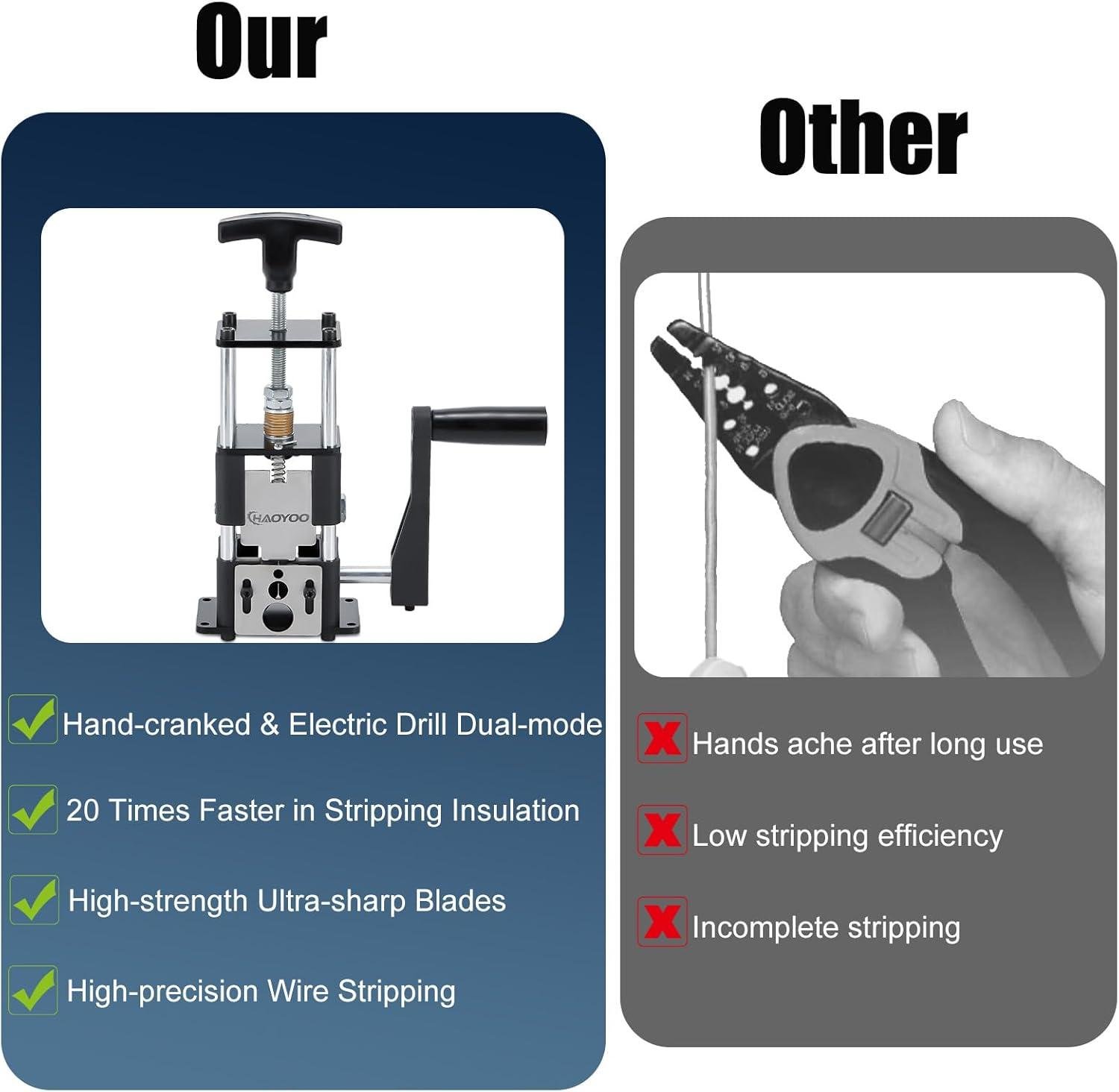
Ever found your shop workflow derailed by a “speedy” task—like stripping scrap cable for a dust-collection upgrade, lighting run, or a jig build—only to end up with nicked copper, inconsistent cuts, and a pile of wasted time? In a woodworking space were precision matters, even wire prep has to be repeatable, clean, and safe.The HAOYOO Wire Stripper Machine is a drill-powered/manual two-in-one stripper designed for scrap wire from 0.06″ to 1″ (1.5–25 mm), covering everything from smaller #18 up to heavy cable. It’s built around a knob-adjusted blade height, multiple feed holes, and an alloy steel blade housed in an aluminum body that weighs about 6 lbs—plus a two-year after-sales support claim.
In this review, we’ll focus on adjustability and accuracy, durability and blade longevity, how approachable it is for beginners, and whether it earns bench space in a tight shop. We’ll also weigh customer feedback: many report major time savings and easy setup, while others mention mixed build quality and blade sharpness over time. As woodworkers, we’ve learned that “value” only counts when a tool stays dialed-in.
Tool Overview and build Quality at the Bench

At our woodworking bench,a wire stripper machine isn’t a daily-driver like a block plane—but it’s the kind of specialty tool that earns its keep when we’re breaking down salvaged cordage from jobsite lights,old extension cords,or scrap cable pulled out of a remodel. This HAOYOO unit is a two-in-one design (drill-powered or hand-crank), rated to handle wire diameters from 0.06″–1″ (1.5–25 mm)—a surprisingly broad range that covers everything from smaller shop leads up through thick battery-style cable. The body is listed as aluminum and the tool weighs about 6 lb, which feels “benchtop portable” rather than floor-station heavy; in practice, that means we’d treat it like a benchtop mortiser or small grinder: capable, but happiest when it’s secured. That matches what customers keep repeating—several mention it’s “compact” and “extremely sturdy,” but also that you’ll likely need to mount it to a board because it “doesn’t have the weight to hold it down.”
Build quality is where the review themes split, and we think woodworkers should read that as: this is a tool that rewards careful setup, but may not tolerate abuse. On the plus side, the blade is specified as an alloy steel blade, and many reviewers call it “very sharp” and a “time saver,” especially when run with a drill (one user noted it performs well even with a cordless drill). On the caution side, multiple customers report plastic parts snapping, a flimsy or bending blade, or the blade dulling quickly; another common note is that it can cut the jacket but not always separate the insulation cleanly. For us, that puts it in the same category as budget benchtop accessories: we can work with it, but we’ll plan to go slow at first, dial in the blade height carefully, and keep a screwdriver handy for adjustments. Educationally, the key is understanding the mechanism: the feed rollers pull the wire through while the blade depth is set to score the insulation—so if the blade is set too deep, it nicks copper; too shallow, it rides the jacket and you end up forcing separation after the cut. Either way, clamping/mounting is a safety must so the tool can’t twist as the drill spins.
- Included accessories
- Hand crank (manual drive)
- drill-drive interface (for drill-powered operation)
- Alloy steel cutting blade (installed)
- Compatible attachments/accessories
- Cordless drill or corded drill (use moderate speed and steady feed)
- Bench mounting board (plywood/MDF) for clamping to our bench
- Bench clamps or lag screws for semi-permanent mounting
- Dry lubricant/light machine oil for smoother adjustments (customers mention rough depth control)
- Ideal project types
- Breaking down scrap wire after shop lighting/electrical upgrades
- Copper recovery for hobby metalwork, inlay experiments, or shop recycling bins
- Batch stripping medium-to-large gauge insulated wire where hand stripping is hard on fingers
- wood types tested by customers
- Not applicable (this is a wire-stripping tool; customers discuss wire gauges and insulation types, not wood species)
| Spec / Attribute | What the Product Lists | What It Means at the Bench (woodworker View) |
|---|---|---|
| Drive type | Manual crank + drill-powered | Manual for careful dialing-in; drill mode for batch work and less hand fatigue. |
| Wire size capacity | 0.06″–1″ (1.5–25 mm) | Covers many shop cords and heavier cable; reviews suggest thin/small wire can be fussier. |
| Claimed wire range (by gauge) | #18 to 250 MCM | Broad claim; expect best results on standard round wire and medium/large gauges per review themes. |
| Weight | ~6 lb | Portable, but light enough that mounting/clamping is crucial for safe drill use. |
| Main material | Aluminum body | Typically resists rust and feels rigid; reviewers are mixed due to some plastic parts. |
| Blade material | Alloy steel blade | Can score insulation cleanly when adjusted right; some reviewers report dulling or bending. |
| Accessory / Add-on | Compatible? | Why We’d Use It |
|---|---|---|
| 3/8″ cordless drill | Yes | Most reviewers say drill power is the real time-saver for long batches. |
| Mounting board (3/4″ plywood) | Yes | Lets us clamp the whole unit in a vise or with F-clamps—stability improves consistency. |
| Bench vise / clamps | yes | Prevents twisting and keeps hands away from the feed path. |
| Light machine oil / dry lube | Likely | Helpful if adjustments feel rough; one review notes depth control “needs to be lubricated.” |
| Capacity Category | Recommended (Realistic Use) | Advertised / Stated |
|---|---|---|
| Best-performing wire type | Standard round insulated wire (medium & larger gauges per reviews) | 0.06″–1″ diameter; #18–250 MCM |
| Challenging material | Very thin wire,unusual coatings,and flat wire (customers report issues) | Not specifically excluded in specs |
| Throughput expectation | Higher with drill drive; manual for short runs | Two-in-one drill/manual |
See Full Specifications & Customer Photos
Real world Performance Stripping Scrap Wire for Shop Wiring and Salvage Projects
In the woodshop, scrap wire stripping shows up more often than we’d like to admit—salvaging extension cords with damaged jackets, reclaiming copper from old tool leads, or prepping shop rewires where we’re sorting a bin of mixed gauges. This HAOYOO machine is built around a simple feed-and-slit design: we guide the cable through one of the openings, set the blade height with the top knob, then drive the rollers via the hand crank or a drill. On paper it’s a broad-range tool, rated for 0.06″–1″ (1.5–25 mm) wire and described as suitable from #18 up to 250 MCM. In practice, that wide range matters because shop scrap tends to be inconsistent—THHN offcuts one day, thicker jacketed cable the next. Customer feedback lines up with what we’d expect from the design: many people call it “efficient,” “easy to use,” and a “time saver,” especially once the adjustment is dialed in, and multiple reviewers note it performs well even with a cordless drill. For woodworking folks who already think in terms of “set the fence once, then batch out parts,” the workflow feels familiar—set tension and blade depth once, then feed cable at a steady pace.
Where real-world performance gets nuanced is in the setup discipline and material variability. The unit is listed at 6 lb and made of aluminum,and more than one reviewer points out it needs to be mounted to a board as it doesn’t have enough mass to stay planted on the bench—something we can solve easily with a scrap plywood base and clamps. Reviews also consistently mention that adjustment is key: several users say the tool works great after they “take the time to look it over” and tweak multiple adjustable points, while negative reviews frequently enough sound like it was expected to work perfectly right out of the box on every cable type.Blade feedback is mixed—some praise a very sharp alloy steel blade, others report dulling, misalignment, or plastic parts snapping, and one common gripe is that it cuts the jacket but doesn’t always separate plastic from copper, meaning we may still need to peel by hand for clean recovery. it also has an important limitation for shop wiring salvage: at least one reviewer states it cannot strip flat wire. For us, that translates to a realistic skill fit: if we’re cozy making small, careful adjustments (like tuning a planer’s infeed/outfeed or setting a bandsaw guide), this tool can be a fast helper; if we wont “no-fuss” performance on every oddball cable, we should expect a learning curve and occasional manual finishing.
- Included accessories: Hand crank (manual drive), drill-drive capability (two-in-one operation)
- Compatible attachments/accessories: Cordless drill (for drill-powered operation), clamps + plywood mounting base (recommended)
- Ideal project types: Reclaiming copper from shop scrap, processing THHN/round cable batches, prep for electrical salvage and recycling runs, sorting mixed-gauge wire bins
- Wood types tested by customers: Not specified in customer reviews (this is a wire tool; we’d mount it to plywood/MDF shop fixtures as needed)
| Spec / Feature | What It Means in the Shop |
|---|---|
| Wire capacity: 0.06″–1″ (1.5–25 mm) | Covers common round shop scrap from smaller cords up through thicker cable; best results depend on careful blade depth setting. |
| Range claim: #18 to 250 MCM | Broad stated range; reviewers commonly report strong performance on medium/large gauge wire. |
| Weight: 6 lb | Portable, but often requires mounting/clamping for stable feed—similar to how we fixture small benchtop jigs. |
| Drive: manual crank or drill-powered | Manual for control and short runs; drill-powered is repeatedly described as the real time-saver for batches. |
| Blade: alloy steel (per description) | Sharpness reports are mixed; maintain expectations and be ready to re-tune if cuts get inconsistent. |
| Recommended vs Actual Capacity | What We’d Plan For |
|---|---|
| Recommended: Round wire/cable within 0.06″–1″ | Best match for typical round cords and standard building wire; batch runs benefit most from drill drive. |
| reported limits: Flat wire not supported (reviewed) | Plan a different method for flat cable; don’t buy this expecting it to handle that format. |
| Reported variability: Very thin/non-standard coatings may struggle | Expect more tuning and occasional hand-peeling; treat it like a jig that needs dialing-in. |
| Accessory | Why We’d Use It | Notes |
|---|---|---|
| Cordless drill | Higher throughput for batches | Multiple reviewers say it’s faster and works well with a drill. |
| Plywood mounting base | Improves stability and safety | Common theme: mount it to something so it doesn’t walk on the bench. |
| Bench clamps / screws | Quick, repeatable setup | Helps keep both hands free to guide wire and manage the take-up end. |
See Full Specifications & Customer Photos
Key Features Woodworkers Will Appreciate for DIY jigs and Reclaimed Materials
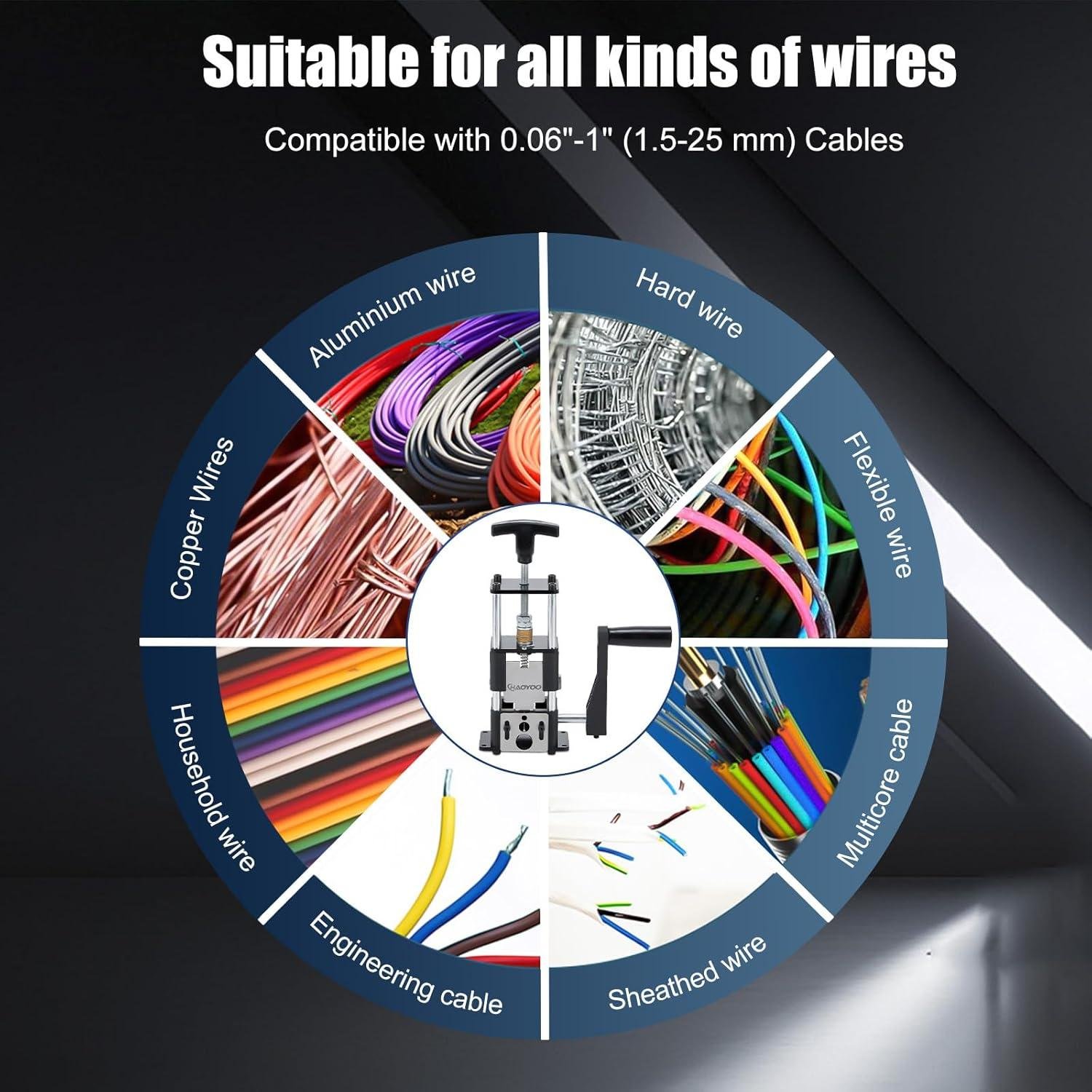
When we’re building shop jigs or experimenting with reclaimed-material projects, a steady supply of usable copper is surprisingly handy—think custom grounding leads for CNC add-ons, DIY battery/charging carts, shop-made lighting, or even copper accents in mixed-media builds. This HAOYOO unit earns points for versatility: it’s a two-in-one design we can run by hand crank for controlled, one-off stripping, or drive with a cordless drill when we’re processing a bucket of scrap. The published size range—0.06″ to 1″ (1.5–25 mm), roughly #18 wire to 250 MCM—covers most of the “found wire” we run into from old tools, appliances, and jobsite leftovers. Customers consistently describe it as efficient, easy to use, and a time saver once it’s dialed in, and we appreciate that the adjustment approach is straightforward: you turn the knob to set blade height, feed through the correct port, and strip with crank or drill.
From a woodworker’s viewpoint, the feature that really matters is how well the machine “behaves” on a bench: at about 6 lb with an aluminum body, multiple reviewers point out it needs to be mounted to a board as it doesn’t always have the mass to stay put—good news for us, because screwing it to a shop-made base is just another quick jig. Review themes are mixed on durability: some call it solidly built with a very sharp alloy-steel blade, while others report plastic parts snapping, a blade that dulls quickly, or alignment/depth adjustments that feel rough. the educational takeaway for our shop is to treat setup like tuning a new jig: start with shallow blade depth, run a short test piece, then sneak up on the cut so we score insulation without nicking copper (nicked copper breaks easier—especially in tight bends). Also note a clear limitation from customers: it can’t strip flat wire, and several reviews mention it performs best on standard round jacketed wire and medium-to-larger gauges. If we’re comfortable making a mounting base and taking a few minutes to “dial it in,” this tool can fit well into a reclaimed-material workflow; if we want plug-and-play perfection or we mostly deal with odd jackets and thin wire, reviews suggest we may hit frustration sooner.
- Included accessories
- Hand crank (manual drive)
- Alloy steel cutting blade (installed per listing)
- Compatible attachments/accessories (shop-supplied)
- Cordless drill (for faster stripping; reviewers note it works well drill-driven)
- Plywood mounting base (simple shop jig for stability)
- Bench clamps or screws (to secure the mounting base)
- Dry lubricant / light oil (helps if blade depth control feels rough, per review themes)
- Ideal project types (woodshop-amiable uses)
- Reclaiming copper from scrap wire for shop wiring repairs and upgrades
- DIY jigs with electrics (switch boxes, E-stop leads, small tool mods)
- Shop fixtures (task lights, charging stations, cord management rebuilds)
- Mixed-media accents (copper inlays/embellishments—after cleaning and flattening)
- Wood types tested by customers
- Not applicable (customers discuss wire types/gauges rather than wood species)
| Spec / Feature | What the listing says | Why woodworkers care |
|---|---|---|
| Wire size capacity | 0.06″–1″ (1.5–25 mm); #18 to 250 MCM | Covers most “reclaimed” round wire from tools/appliances; thin/odd jacket wire may be trickier per reviews. |
| Drive method | Manual crank + drill-powered | hand crank for careful setup; drill mode for batch work—reviewers call drill use a major time saver. |
| Weight / build | 6 lb, aluminum body | Light enough to move around, but many reviewers recommend mounting to a board for stability. |
| Blade material | Alloy steel blade | Sharp when tuned, but reviews are mixed on blade longevity and depth-control feel. |
| Support | 2-year after-sales support (per listing) | Helpful if parts arrive scratched/dull or if adjustments won’t hold—issues some reviewers mention. |
| Accessory / Attachment | Compatible? | Notes from a woodshop workflow |
|---|---|---|
| Cordless drill | Yes | Multiple reviewers say it runs well with a drill and speeds up production. |
| Bench-mounted plywood base | Yes | Recommended by reviewers for stability; easy DIY jig to prevent sliding and twisting. |
| Clamps / screws | Yes | Clamp the base for temporary use, screw it down for dedicated reclaimed-material batches. |
| flat wire guides | No (practical limitation) | Customer review theme: cannot strip flat wire. |
| Capacity claim | Recommended (real-world expectation) | Actual (customer review themes) |
|---|---|---|
| 0.06″–1″ / #18–250 MCM | Plan on best results with round, standard jacketed wire; test cuts and tune depth before long runs. | Many report it’s fast and effective on medium/large gauges; some report it’s poor on very thin/non-standard wire and won’t do flat wire. |
See Full Specifications & Customer Photos
Ease of Use for beginners and Experienced Woodworkers in Daily Shop Use
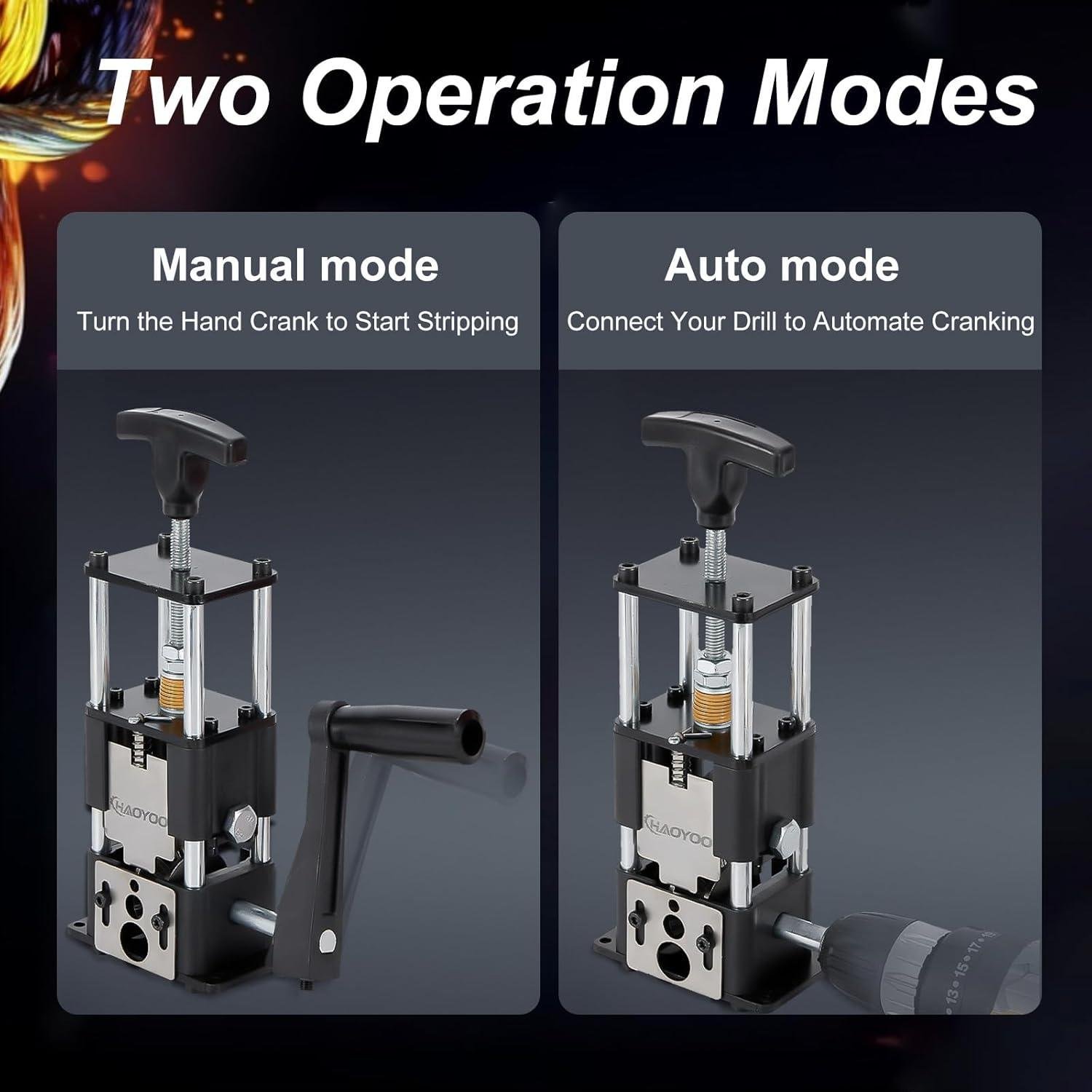
In daily shop use, we found the learning curve on this two-in-one design is mostly about dialing in the feed path and blade height—not “figuring out what it is.” The machine is rated for a wide range of scrap cable,from 0.06″–1″ (1.5–25 mm) and roughly #18 to 250 MCM, which is plenty for the heavier cords and jobsite offcuts that tend to pile up in a woodworking shop (extension cords, tool leads, and thicker stranded wire). For beginners, the most approachable entry point is the manual hand-crank mode, because you can feel when the insulation starts to split and back off before you nick copper—similar to how we’d “sneak up” on a final dimension at the jointer. Customer review themes line up with that: multiple buyers call it “easy to use” and mention a simple/quick assembly with an intuitive size adjustment mechanism. The only beginner caution we’d echo is guidance—several reviews mention the instructions are thin (“Chinglish,” limited diagrams, or no clear photos), so we’d plan on a short test session with scrap pieces before running a whole bucket of wire.
For experienced woodworkers who already live by jigs and repeatable setups, the big advantage is how quickly it can turn into a production-style station once it’s mounted and adjusted. The tool weighs about 6 lb (aluminum body) and reviewers repeatedly note you’ll want to mount it to a board/bench for stability; that’s a familiar move for us—just screw it to a plywood base like we would a benchtop mortiser, then clamp it wherever we’re working. In drill-powered mode, customers report it’s “faster when driven by an electric drill” and a “time saver,” but there’s also a consistent theme that performance depends on adjustment: one electrician-style reviewer said the “bad reviews…don’t know to adjust things and dial it in correctly,” while others report issues such as plastic parts snapping or the blade dulling/bending—so it rewards careful setup and occasional tuning. Practically, we’d treat it like any cutting tool in the shop: set blade depth to score the jacket (not the conductor), feed straight with steady tension, and keep the blade area clean and lightly lubricated if adjustment feels rough. Also worth noting from reviews: it doesn’t handle flat wire well,so it’s best suited to round cable—more like a dedicated jig than a universal solution.
See Full Specifications & Customer Photos
Customer Reviews Analysis

What Woodworkers Are Saying
1. Overall sentiment from woodworking customers
Overall sentiment leans positive, especially from DIY-minded woodworkers and shop folks who value tools that “pay for themselves” and can be mounted to a board/bench. Several woodworkers mentioned it’s a strong value buy for reclaiming copper quickly, with most praise centered on speed and adjustability. That said, some users reported challenges with instructions and dialing it in, and a smaller group felt it struggled with certain wire types or smaller diameters.
2. Performance feedback (accuracy, power, results)
Common praise includes fast stripping and clean cuts once the tool is adjusted correctly. Multiple reviews highlight that even in manual crank mode it “goes through so quick,” with drill power viewed as the best option for bigger batches.
- Cut/strip results: Reviewers frequently described the cut as “good” or “clean,” and one stated it “did do the job right.”
- Throughput under load: One high-volume user reported stripping “5000’ of 10 gauge THHN” and said it’s “still going strong,” noting occasional quick adjustments were required to keep performance consistent.
- Material limitations: Some users reported challenges with flat wire and with very thin or non-standard coatings. One review also noted it “doesn’t separate wire from plastic,” suggesting it may slit the jacket well but still require a second step to peel/remove insulation on some cables.
- Power/drive feedback: Several woodworkers mentioned manual cranking can be tiring for large runs, implying drill power is close to mandatory for extended use.
sparse excerpt: “cuts are good, but doesn’t separate wire from plastic.”
3. Build quality and durability observations
Multiple reviews highlight a sturdy, “solidly built” feel, and some users reported it held up well during heavy use. Durability feedback is generally favorable (especially considering price), with reviewers calling it a “great investment” and saying it has “paid for itself” multiple times.
However, a negative durability/precision note appears in one complaint: “blade doesn’t stay aligned.” That suggests some units may need more frequent re-alignment or may have tolerance issues depending on setup and wire size.
4. Ease of use for different skill levels
Ease of use is mixed, largely depending on whether the user is comfortable tuning adjustments.
- Beginners / casual DIYers: Beginners appreciated the concept and time savings, but some DIYers found the learning curve steeper due to unclear setup guidance. A reviewer specifically noted a lack of instructions and uncertainty about feed direction.
- Experienced / mechanically confident users: Experienced users (or those willing to “dial it in”) emphasized adjustability and considered negative reviews to be user-setup related, saying you may need to shift the wheel or raise the feed plate to keep it tracking correctly.
- Setup stability: Several users mentioned it needs to be mounted to a board for stability—something woodworkers typically do easily in-shop,but it’s an extra step.
5.Common project types and success stories
Customers successfully used this for scrap wire processing, copper recovery, and craft material prep rather than traditional woodworking operations (it’s not a wood-cutting tool, but it fits the “shop productivity” mindset).
Reported use cases include:
- Large-volume scrap wire stripping (example: 10-gauge THHN in long runs)
- Copper collecting and reclaiming material value (“paid for itself,” “got my money’s worth”)
- Craft-oriented reuse: one reviewer described gathering copper wire to use for artisanat/crafts, upgrading from razor-blade stripping to save time (even though they struggled with setup)
6. Issues or limitations reported
Some users reported challenges with a few consistent themes:
- Wire compatibility limits: “Cannot strip the flat wire,” plus noted struggles with very thin wires or unusual coatings.
- Manual operation fatigue: Manual cranking can be tiring for volume work; drill power is preferred for long sessions.
- Instruction gaps: Multiple reviews highlight insufficient documentation (including one saying no manual was included), leading to confusion about feed direction and technique.
- Stability needs: Needs to be fixed to a board/bench; one reviewer suggested it’s easier with two people (one feeding/controlling wire, one cranking/pulling).
- Alignment/power complaints: A minority view described it as “under powered” for small wires and said the blade won’t stay aligned, which can affect consistency and increase fiddling.
| aspect | Common Feedback |
|---|---|
| Performance | most praised fast stripping and clean cuts after dialing in; drill mode is a major time-saver for big batches |
| Precision/Adjustments | Adjustable and tunable,but some users needed frequent small tweaks; one report of blade alignment not holding |
| Build Quality | Often described as solid/sturdy for the price; one negative report suggests potential unit-to-unit consistency issues |
| Ease of Use | Mixed—many found setup straightforward,others cited poor instructions and a learning curve |
| Versatility | Works well on common round wire (e.g., 16 gauge and up, THHN); struggles reported with flat wire and some thin/non-standard jackets |
| Value | Strong value sentiment—several users said it “paid for itself” quickly through copper recovery/time savings |
Pros & Cons
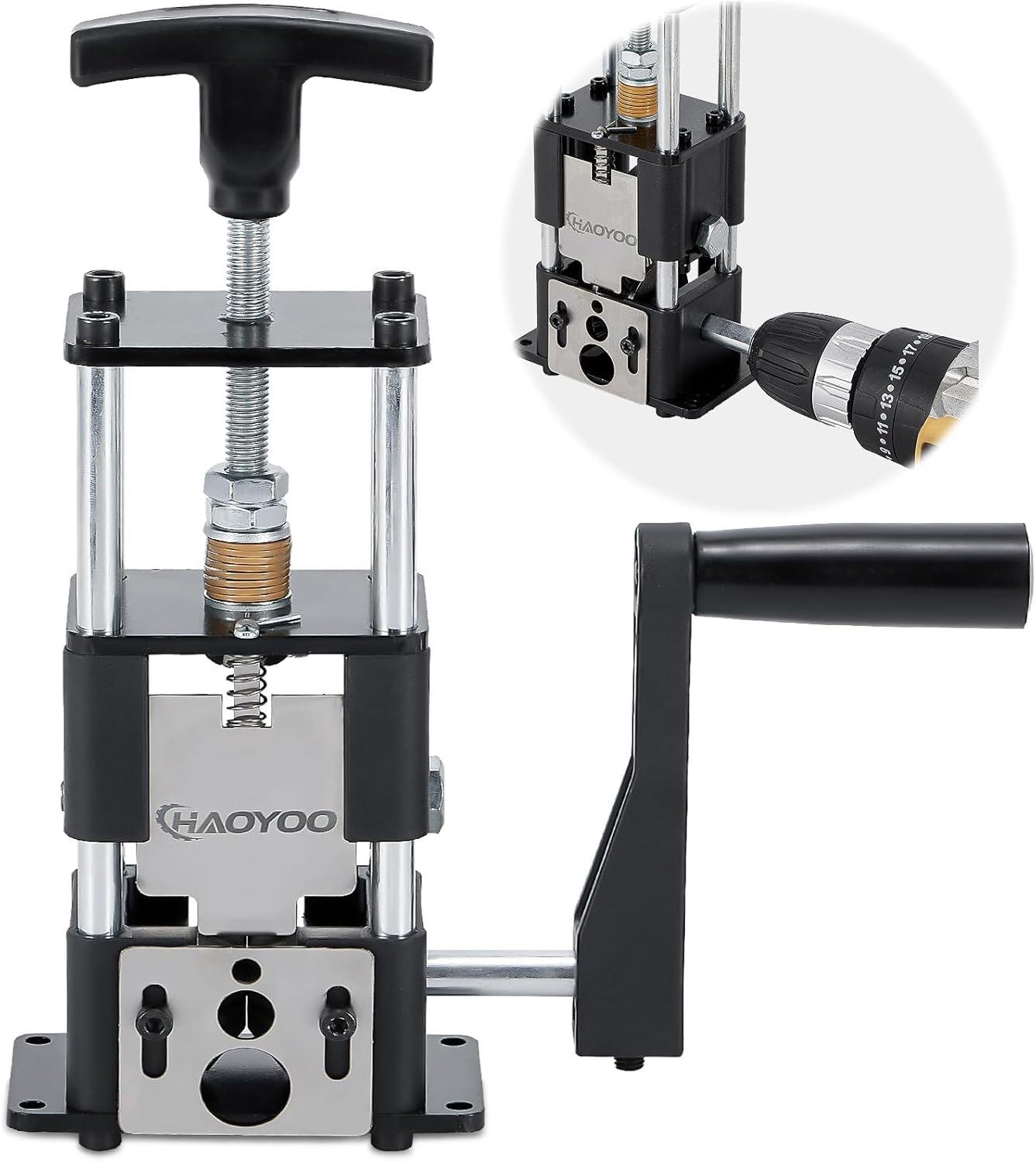
Pros & Cons
| What we liked | What we didn’t |
|---|---|
| Two-in-one operation (hand crank or drill-powered) gives us flexibility depending on the job. | Manual cranking gets old fast on big batches—using a drill feels almost mandatory for volume. |
| Big size range (about 1.5–25 mm / 0.06″–1″) covers a lot of common scrap wire we see. | Small/finicky wire can be hit-or-miss; some users report it’s not great on very thin gauges. |
| adjustment is generally intuitive once we “dial it in,” and it can be quick to re-tune between wire types. | Out-of-the-box setup can feel like a puzzle—documentation is often described as light (and not very visual). |
| Time-saver for medium-to-larger gauges; drill mode can turn stripping into a feed-and-go routine. | It may cut the jacket without always separating it cleanly, so we sometimes still have a peel step. |
| Good value for money for a shop that strips regularly and wants to reclaim copper quickly. | Build quality seems inconsistent: some report solid durability, others mention plastic parts snapping. |
| When the blade is good, it bites cleanly and moves fast through insulation. | Blade sharpness/edge life is mixed—some blades arrive dull, chip, or dull quickly under heavier use. |
| Aluminum body and ~6 lb weight make it feel more “tool-like” than ultra-light hobby units. | still light enough that we’ll want to mount it to a board/bench for stability and smoother feeding. |
| Two-year after-sales support is reassuring if we end up with a lemon. | Non-standard cables (like some flat wire) may simply not be a good match. |
Pros
- Drill-powered or manual: we can go slow for “one-off” pieces or fast when we’re processing a pile.
- Wide stripping range: covers lots of the shop’s typical scrap wire sizes without swapping machines.
- Legit time savings: customers consistently call it a game-changer for throughput—especially with a cordless drill.
- Adjustable and tunable: once we understand the feed and blade depth, it can run very smoothly.
- strong value: for the price, it can pay itself back quickly if we strip copper regularly.
Cons
- Some learning curve: we’ll likely spend a few minutes calibrating before it feels “automatic.”
- Mixed durability reports: we’ve seen feedback ranging from “sturdy” to “parts snapping,” so QC may vary.
- Blade performance isn’t uniform: some users love the sharpness; others report dulling, bending, or uneven cuts.
- Not ideal for every cable type: flat wire and odd jackets can be problematic.
- Mounting recommended: without anchoring it, we may fight slipping and inconsistent feeding.
Our takeaway: When it’s tuned and paired with a drill, the HAOYOO can feel like a small “production assist” tool for scrap processing. The trade-off is variability—between setup, blade quality, and reports of weaker parts—so we’d plan to mount it securely and test it on our most common wire types before counting on it for daily abuse.
Q&A

Can this handle “shop scrap” wire from jobsite tear-outs (THHN/romex/battery cable), or is it just for light hobby wire?
It’s designed for scrap/recovery work, not just small hobby leads. The stated capacity is 0.06″–1″ (1.5–25 mm), roughly #18 up to very large cable (listed as up to 250 MCM). Reviewers report good results on medium-to-larger gauge wire, and one electrician said they stripped about 5000′ of 10-gauge THHN with periodic re-adjustments. The main limitation is small/odd wire: several customers mention it’s less consistent on very thin wire or non-standard insulation, where a hand stripper or razor-style method can still be faster.
Is it powerful enough for “tough insulation” (like thick jacketed cable), or will it bog down?
In drill-powered mode, most users find it fast and efficient—several reviews specifically say it’s noticeably faster with an electric/cordless drill. that said, the tool’s effectiveness depends heavily on blade depth and feed tension: if the blade is set too shallow it won’t cut; too deep and it can bind, chatter, or damage the conductor. A few reviewers also report the cutting wheels/blade dulling or deforming after heavier runs (one mentioned the round cutting blades “folded” after about 20 feet of battery cable), so for very thick or abrasive jackets you may need to go slower, use a steadier drill, and expect more frequent blade attention.
How challenging is initial setup—am I going to be “fiddling with it” like a finicky fence or jig?
Setup is generally straightforward, but it’s not totally plug-and-play. customers frequently mention an intuitive size adjustment knob and that “there are several parts that can be adjusted,” which is good for dialing in different cable sizes. The most common pain point is instructions: multiple reviews note the manual is brief (“Chinglish”) and lacks photos/diagrams, so expect a short learning curve to find the correct feed hole and blade depth for each wire type. Once dialed in, many users say it becomes a major time-saver.
What adjustments are available, and what do they actually change in real use?
This style of stripper typically gives you (1) blade height/depth adjustment and (2) wire size/feed path selection via different holes/guides, plus minor alignment tweaks. In reviews, users mention needing to adjust the wheel left/right and raise the feed-in plate to keep the cut consistent—similar to tuning a woodworking jig so the “workpiece” tracks straight. Practically: blade depth controls whether you score only the insulation (ideal) or bite into copper (bad); feed alignment controls whether the wire walks, slips, or cuts unevenly.
Will this fit in a small woodworking shop, and can I mount it to a bench like a vise accessory?
Yes—this is a compact, bench-friendly tool, and mounting is strongly recommended. Even though it weighs about 6 lb (aluminum body), multiple reviewers note it doesn’t have enough mass to stay put when you’re feeding cable, especially with a drill driving it. Best practice is to screw/bolt it to a board (like a “bench hook”), then clamp that board in your vise or to your workbench so you can remove it when you need the space back.
Do I need special “shop infrastructure” (power outlet, dust collection), or is it simple?
No dust collection is required—there’s no sawdust, just insulation pieces. Power depends on your drill: the tool itself is manual crank or drill-driven, so it doesn’t plug into the wall unless your drill charger does. In a woodworking shop, treat it like any other benchtop operation: set up a catch tray/bucket for stripped insulation, keep the area swept (small plastic bits get everywhere), and avoid running it near finishing stations where debris could contaminate a surface.
Is it beginner-friendly, or do I need “operator skill” like tuning a hand plane?
Beginner-friendly once you understand the adjustments. Reviews skew positive on ease of use (quick assembly and intuitive adjustment), but the same reviews also suggest you’ll learn by trial: blade depth and wire positioning matter a lot, and a few users blamed poor results on the tool “not working” when others said it simply wasn’t dialed in. If you’re comfortable setting a router bit height or tuning a fence, you’ll be fine; if not, plan to practice on a few scrap pieces before processing a big batch.
How durable is it—will the blade and parts hold up to production-style stripping?
Durability is mixed in customer feedback. The product claims an alloy steel blade and an aluminum body, and many users describe it as sturdy; there are also real-world reports of long runs (thousands of feet) with only occasional adjustments.On the other hand, some reviewers report plastic parts snapping, threads stripping, and blades arriving dull or dulling quickly. If you’re planning “production” stripping, expect to (1) mount it securely, (2) keep the blade mechanism clean and lightly lubricated if it feels rough, and (3) monitor blade condition—as blade sharpness/build quality appears inconsistent across units.
Is it worth the price compared to cheaper manual strippers or just using a knife?
If you process quantity, most reviewers call it excellent value as it’s dramatically faster and easier on your hands—especially when drill-driven. If you only strip occasional short lengths,a quality hand stripper or careful knife method can be “good enough” with less setup and fewer moving parts. Also note a frequent comment: it may cut the jacket but not always fully separate the insulation from the copper, so you may still do a quick pull-off step by hand depending on wire type.
Ignite Your Passion
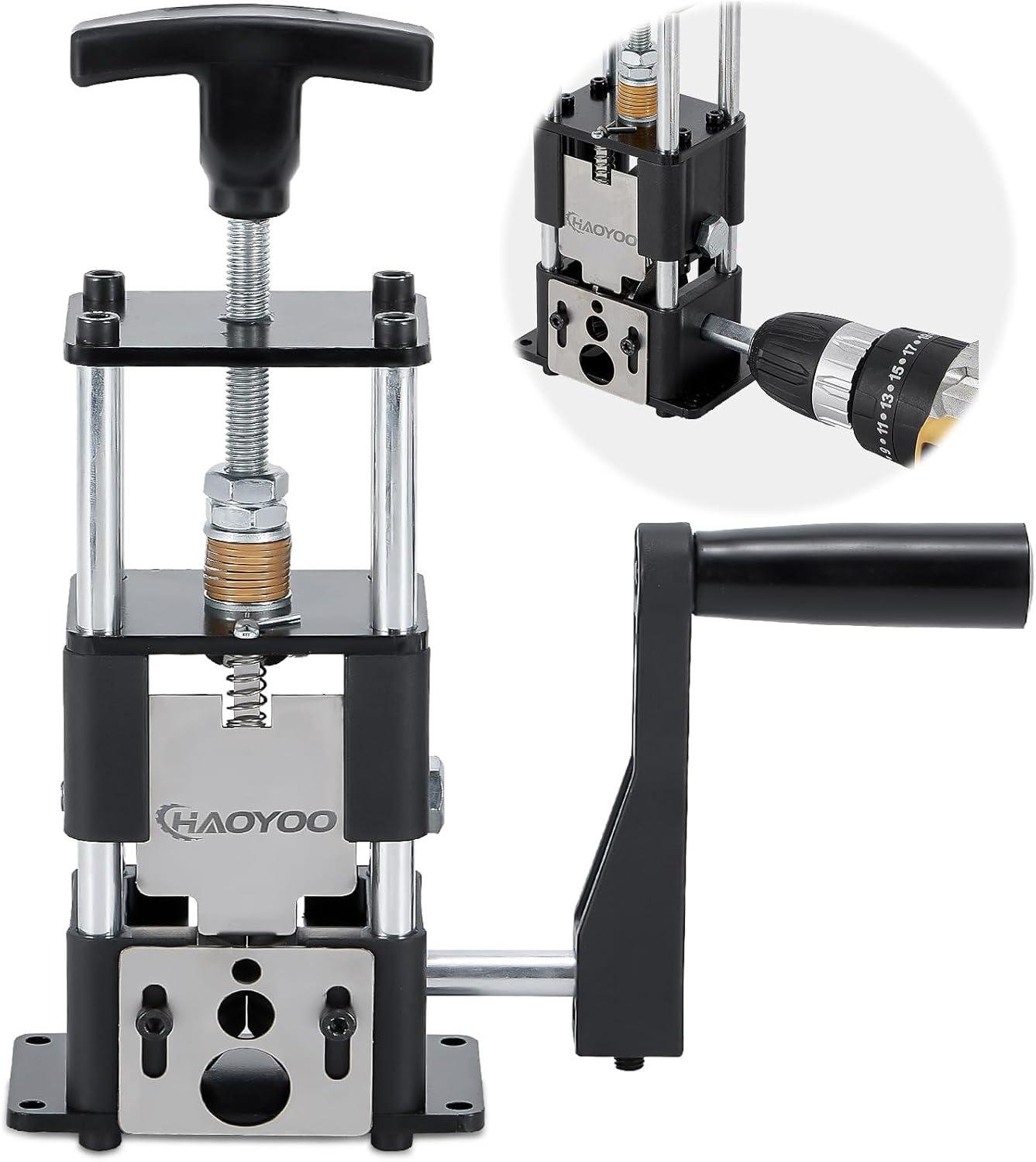
The HAOYOO Wire Stripper Machine (Black) is a drill-powered or hand-crank two-in-one stripper designed for reclaiming copper from 0.06″–1″ (1.5–25 mm) scrap wire (roughly #18 to 250 MCM). It’s a compact, 6 lb aluminum-bodied unit with an alloy steel blade and a simple height/size adjustment knob—though it needs to be mounted for stability. Customer feedback most frequently enough highlights fast throughput and good value, especially when paired with a cordless drill, while reviews are mixed on blade longevity and some plastic parts holding up over time.
Best for: hobby woodworkers and DIY shop tinkerers doing small-to-medium wire stripping for jigs, shop wiring cleanup, or scrap copper recovery.
Consider alternatives if: you need reliable performance on very thin/oddly coated/flat wire, or you run high-volume production where durability is non-negotiable.
Final assessment: a solid mid-range option that rewards careful adjustment, but quality consistency can vary.
Want to see current pricing and customer photos? View on Amazon & Read More Reviews →