

Blog
GOXAWEE Rotary Tool Review: Right for Our Home Shop?

ever tried cleaning up a tight inside corner, easing a sharp edge, or sanding a small inlay—only to realize your full-size sander or router simply can’t reach without risking a slip? In a crowded shop, precision work often comes down to having a compact tool that’s controllable, accurate, and quick to set up.
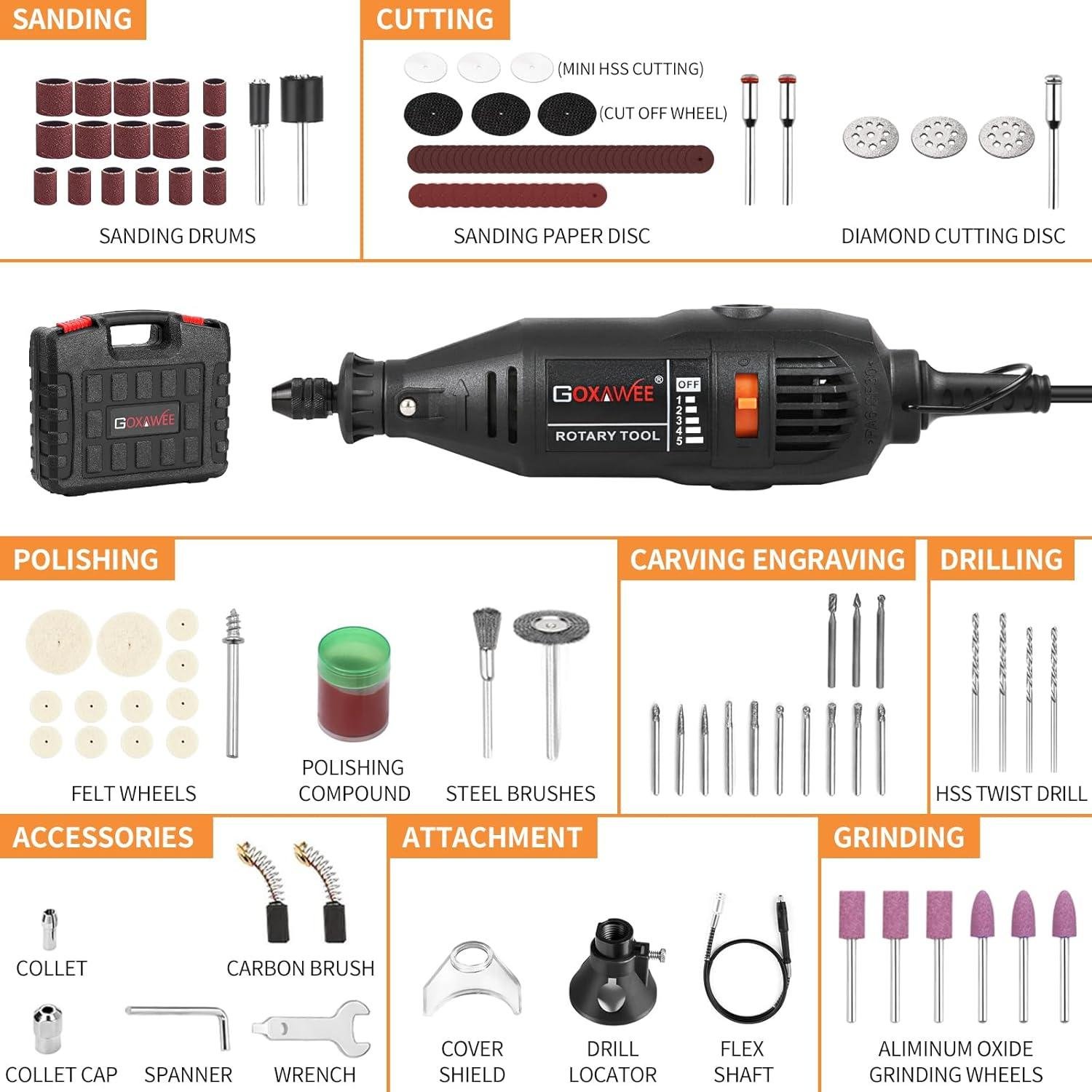
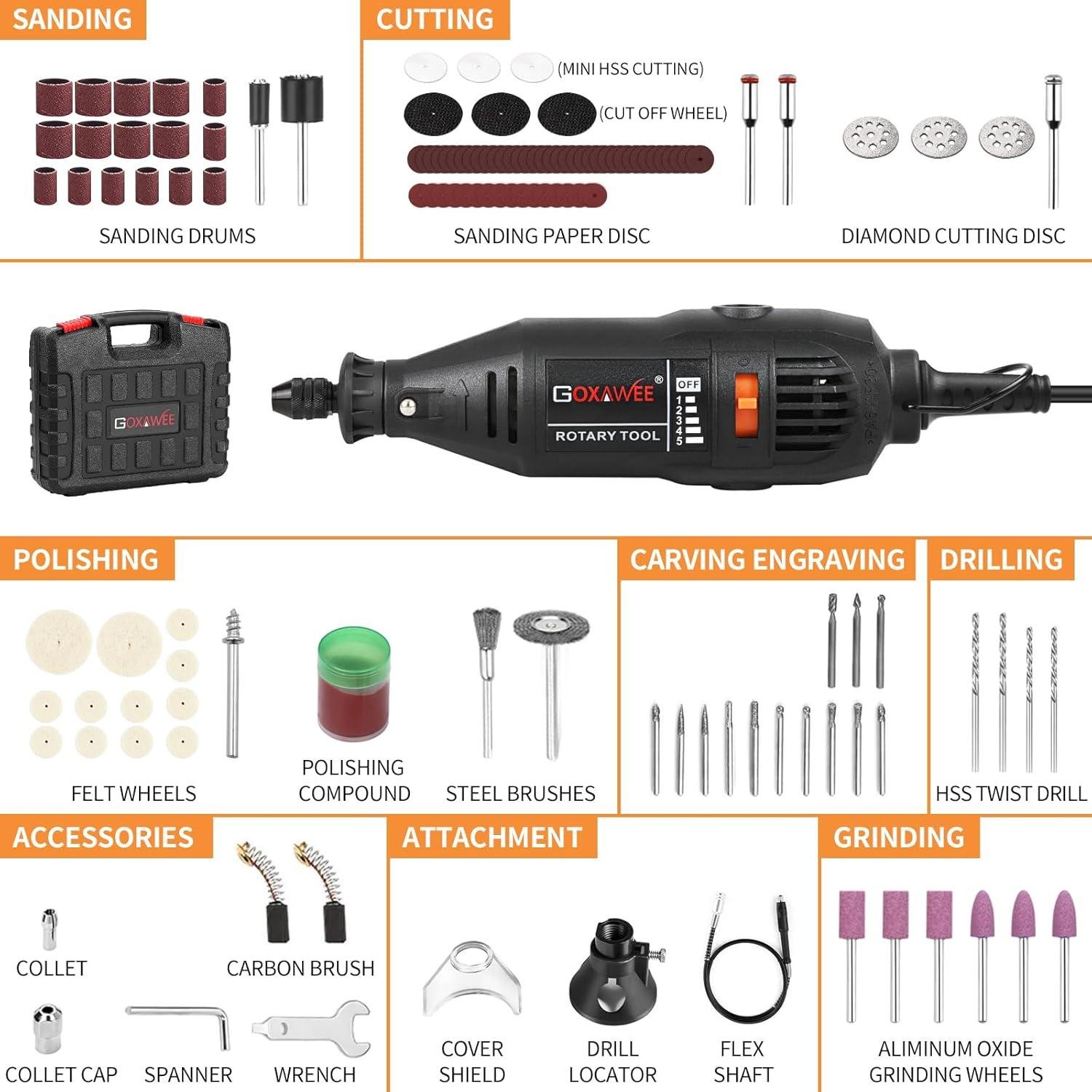
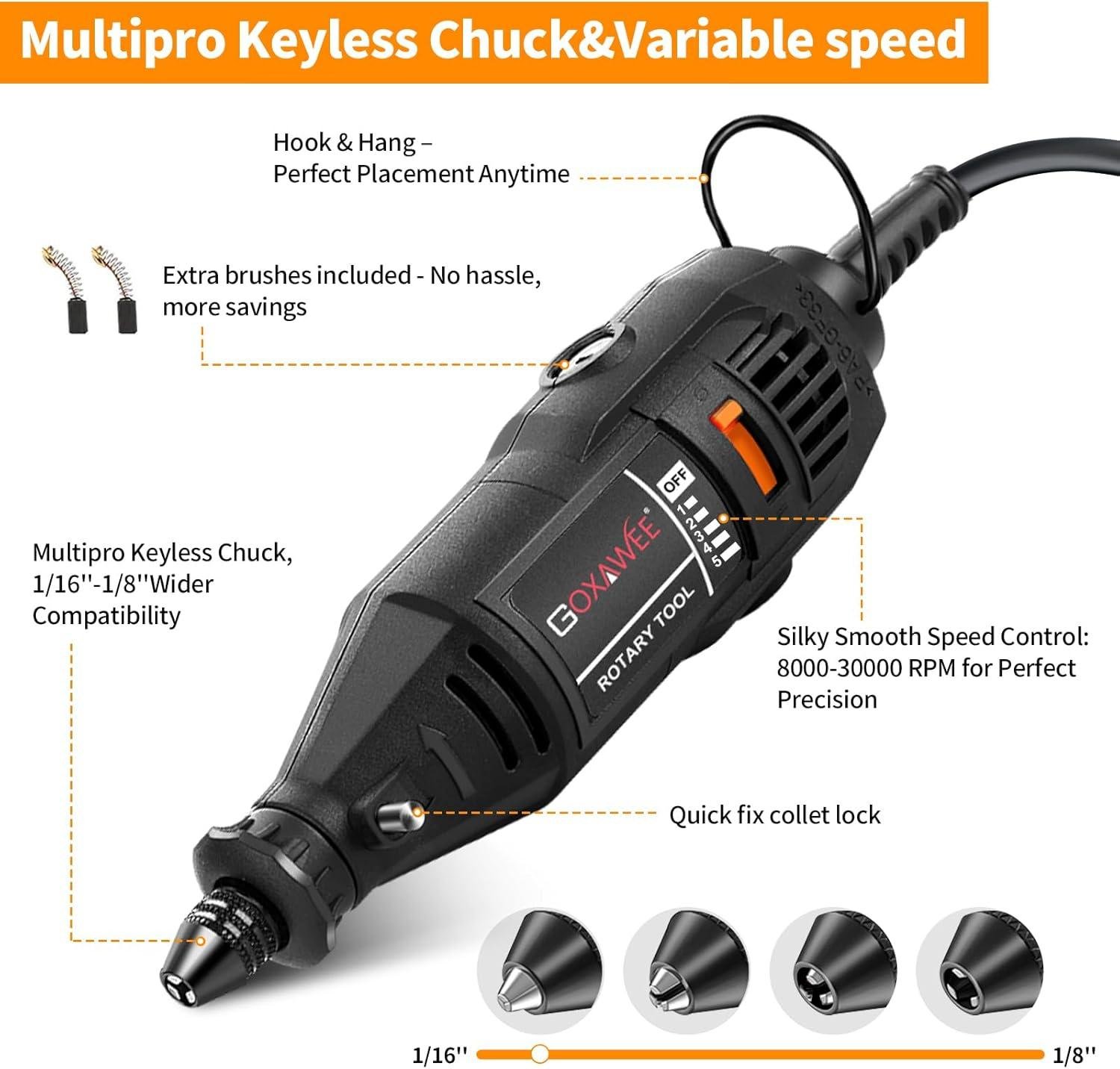
That’s where the GOXAWEE Rotary Tool Kit comes in: a variable-speed, handheld rotary tool built for detail sanding, carving, trimming, polishing, grinding, and light drilling—backed by 140 accessories, a flex shaft that holds like a pen, and a MultiPro-style 3-jaw keyless chuck that accepts 1/64″ to 1/8″ shanks (note: GOXAWEE advises tightening with a spanner). It also offers 5 speed steps from 8,000–30,000 RPM and comes organized in a solid carrying case.
In this review, we’ll break down features, ease of use for beginners vs. experienced woodworkers, accessory value, space-saving practicality, and what customers report about control, noise, and durability—so we can judge the budget-vs.-quality balance realistically. We’ve spent years building furniture and shop jigs, and we certainly know small tools can make—or mar—fine details.
Tool Overview and Build quality for Shop Use
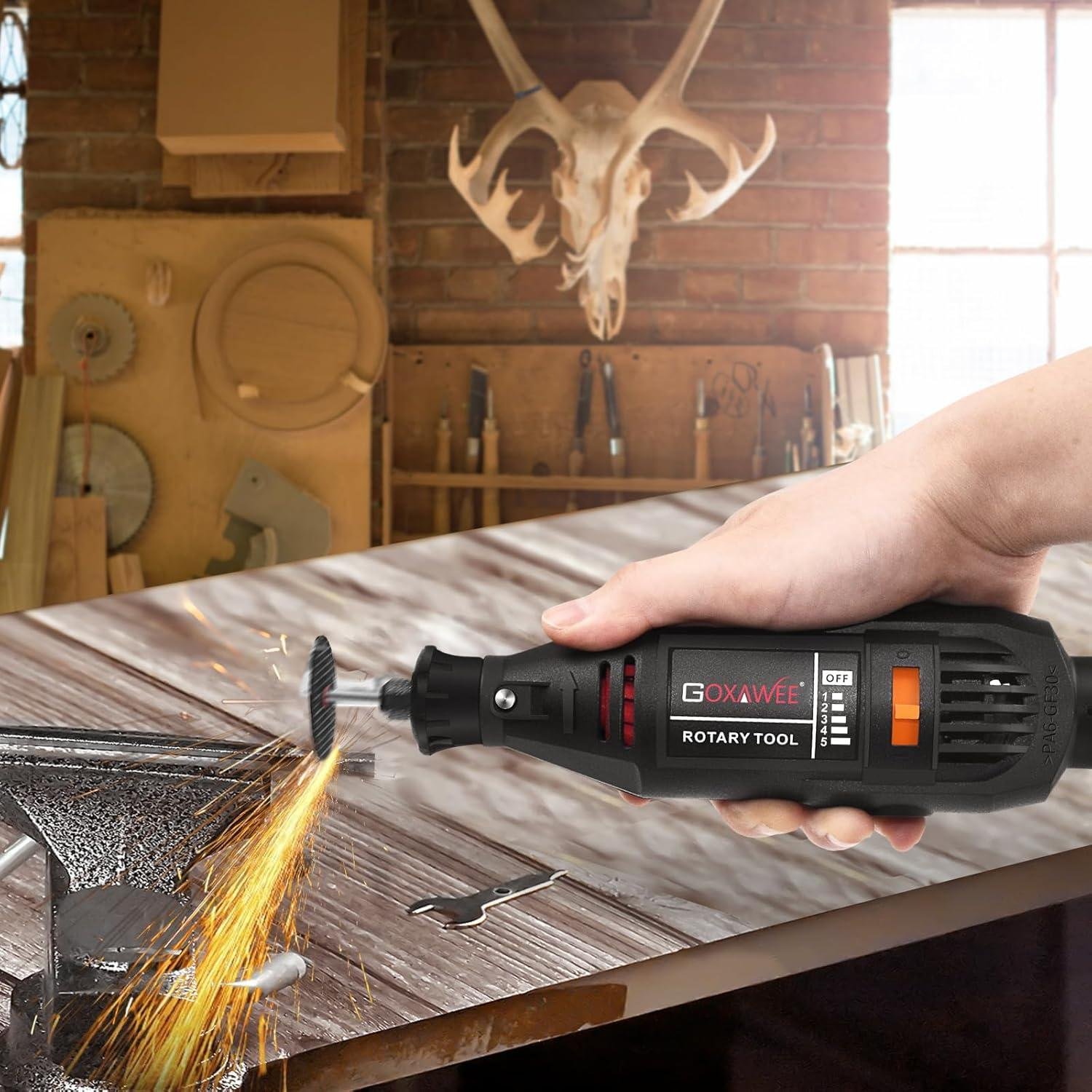
In our shop, the GOXAWEE rotary kit reads like a classic “bench-side problem solver” rather than a replacement for dedicated machines: a compact corded rotary tool with a 5-step variable-speed dial rated from 8,000–30,000 RPM, paired with a MultiPro 3‑jaw keyless chuck that accepts 1/64″–1/8″ shanks. That shank range matters in woodworking as it lets us bounce between tiny engraving cutters, small sanding drums, and micro drill bits without hunting for collets—though the brand notes (and we agree) that the “keyless” chuck still may need to be snugged with the included spanner for best grip. The overall build and handling are frequently described by customers as “lightweight,” “cozy to hold,” and “solid”, and multiple reviewers praise the flex shaft for pen-like control when we’re doing close-in work such as easing a tight inlay corner, cleaning up a hinge mortise, or carving a small chamfer on a profile where a full-size router would be risky. Ther’s also consistent feedback that the kit is good value for the money and easy to set up, which lines up with what we wont from a grab-and-go rotary tool living in a drawer near the bench.For durability and shop suitability, customer themes are mixed in a useful way: many report “no wobble,” “power is solid,” and that it’s not overly loud, while others plainly note it can be loud under load and that some included consumables (like small filing/abrasive bits) can be weak and deform easily—a common reality with big accessory assortments. One caution we have to take seriously from reviews is chuck reliability: a few users mention the chuck sticking or failing over time, so for woodworking we’d recommend treating the chuck like a wear item—keep threads clean, avoid over-tightening, and consider upgrading burrs/sanding drums to name-brand bits if we’re doing hardwood shaping regularly. This tool class works by spinning small cutters at high RPM; for clean results in wood,we typically start slower for plastics/softwoods and go faster for light routing/engraving passes,always keeping the bit moving to prevent burn marks—especially in resinous species like pine or in dense hardwoods where heat builds quickly. It’s also worth noting there’s no dust collection system specified, so in a woodshop we’ll want eye protection, a mask, and a small vac nozzle parked nearby—rotary tools make surprisingly fine dust when sanding end grain or carving grooves.
- Included accessories (highlights from specs): 140-piece accessory set, flex shaft, MultiPro 3‑jaw keyless chuck (1/64″–1/8″), cover shield, drill locator, diamond cutting wheel, extra carbon brushes, hard carrying case
- Compatible attachments/accessories: 1/64″–1/8″ shank rotary bits (sanding drums, engraving cutters, micro drill bits), common third-party abrasives and small burrs (many customers mention using accessories they already own)
- Ideal project types: hinge/lockset touch-ups, sign making details, small carvings, inlay and marquetry cleanup, sanding inside corners, trimming small parts, deburring hardware holes in jigs
- wood types tested by customers (as reported): not consistently specified in reviews; customers broadly cite use on “wood” for sanding and engraving (we recommend test cuts on scrap for any hardwood)
| Spec / feature | What GOXAWEE Lists | Why It Matters in a Wood Shop |
|---|---|---|
| Speed range | 8,000–30,000 RPM (5 steps) | Dialing down helps avoid burning; higher RPM helps light carving/engraving and small-diameter sanding. |
| Chuck capacity | 1/64″–1/8″ shanks | Quick swaps between small bits without collet changes—handy for detail work and jig tuning. |
| Precision handling | Flex shaft included | Better control in tight areas than holding the full motor body; reduces fatigue on fine tasks. |
| Dust collection | Not specified | Plan on PPE and a vac—rotary sanding makes fine dust fast. |
| Accessory / Bit Type | Fits via MultiPro Chuck? | Best Use in Woodworking |
|---|---|---|
| Engraving/carving burrs (1/8″) | Yes | Lettering, small relief carving, chamfering tiny edges. |
| Sanding drums (commonly 1/8″) | Yes | Smoothing inside curves, shaping small parts, easing sharp corners. |
| micro drill bits (down to 1/64″) | Yes | Pilot holes in delicate parts, jewelry boxes, model work. |
| Cutoff wheels | typically (mandrel shank) | Trimming small hardware,cutting pins/screws (use shield and eye protection). |
| Task Capacity | Recommended Expectation (Shop Reality) | What Reviews Suggest |
|---|---|---|
| Detail sanding/engraving | Excellent for light passes and tight access | Customers frequently report it handles sanding to engraving with ease and appreciate variable speed. |
| Heavy grinding/shaping | Limited—use small bites and patience | Some users note weaker performance on harder materials and that some bits wear quickly. |
| Everyday pro-duty use | occasional-to-regular hobby shop use is the safe expectation | One theme: great for the price, but “if you plan to use it everyday probably not the ideal tool.” |
See Full Specifications & Customer Photos
Real World Performance in wood Carving Shaping and detail Sanding
In real shop use,we see the GOXAWEE kit as a practical “bench-side” rotary setup for wood carving touch-ups,light shaping,and the kind of detail sanding that’s hard to reach with full-size sanders. The tool’s 5-step variable speed range (8,000–30,000 RPM) is the key spec here: we can slow it down for more control when feathering edges on softwoods or easing into end grain, then bump it up when we want faster stock removal with drums or flap wheels—always remembering that higher RPM on resinous woods can scorch if we linger. The included flex shaft “pen grip” is the attachment we reach for most in carving workflows, as it helps us steer small abrasives into tight inside curves, around relief-carving corners, and along chamfers without fighting the bulk of the motor housing. Multiple reviewers echo this, praising the flex shaft/extension handle and variable speeds for fine detail work, and we agree that those two features matter more than raw power when we’re blending tool marks or cleaning up small profiles.
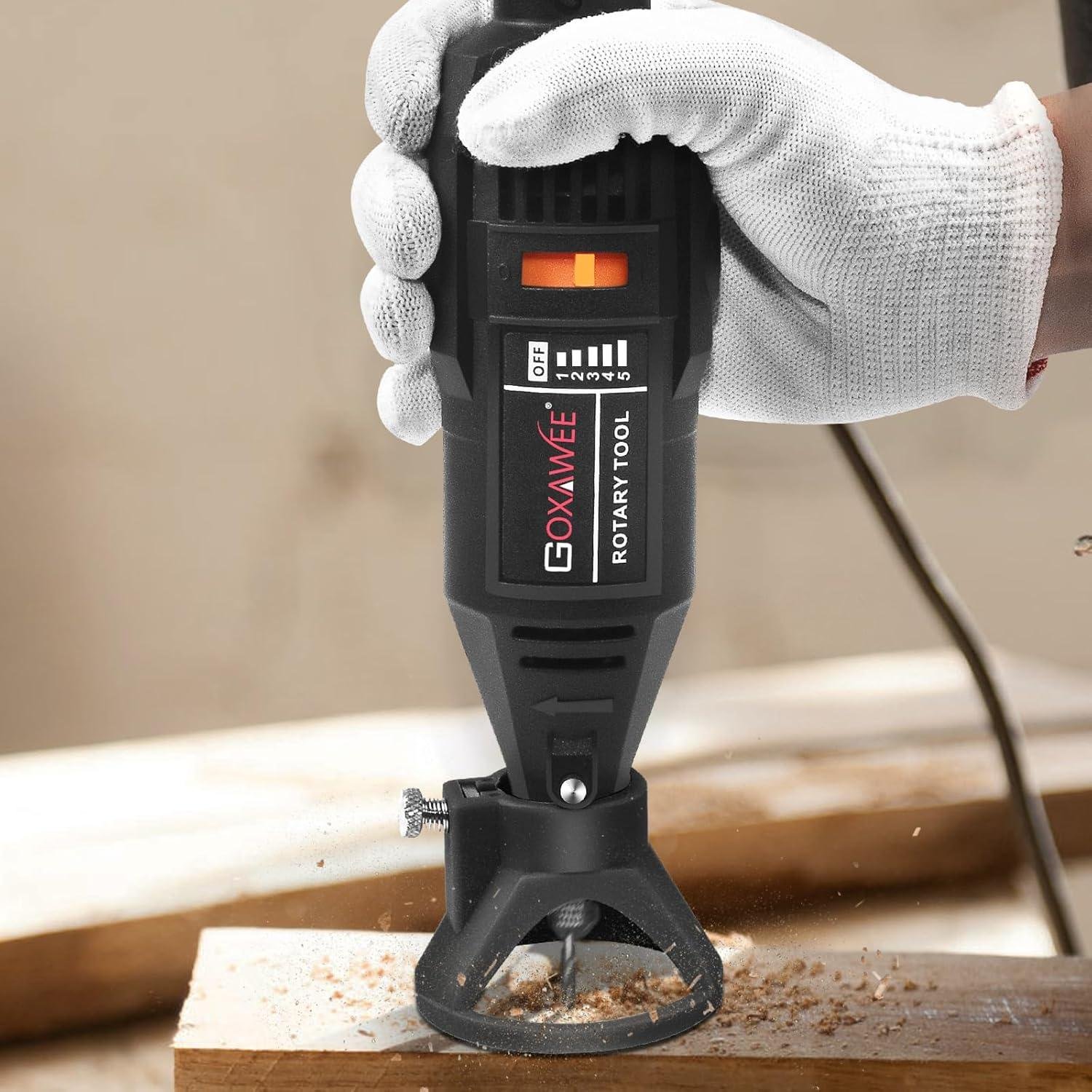
For shaping and sanding, the standout workshop advantage is the MultiPro 3-jaw “keyless” chuck that accepts 1/64″ to 1/8″ shanks, letting us swap between sanding drums, burrs, and small cutters without hunting for collets—though GOXAWEE does note the chuck may need to be tightened with a spanner for security. Review themes are consistent: many users report the chuck holds securely with “no wobble” and that the kit is a great value, but a minority mention chuck issues (sticking closed or breaking after light use). That’s worth factoring in if our woodworking involves frequent bit changes or daily production work. Noise and vibration feedback is mixed—several customers call it not overly loud while others say it’s loud—so we treat hearing protection as standard and avoid pushing too hard (pressure causes chatter,burns,and premature abrasive wear). Educationally, our best results come from letting RPM do the work, using light passes, and “sneaking up” on fit—especially on hardwoods where a rotary tool can remove more than expected in a heartbeat.
- Included accessories (highlights)
- Rotary tool + flex shaft (pen-like control for detail sanding)
- MultiPro 3-jaw global chuck (fits 1/64″–1/8″ shanks)
- Cover shield (added protection while cutting/grinding)
- Drill locator (helps guide small, precise holes)
- Diamond cutting wheel (more for tile/glass/ceramic than wood, but included)
- Extra carbon brushes (useful maintenance spare)
- Hard carrying case (organizes accessories)
- Compatible attachments/accessories (based on chuck range)
- Any standard rotary-tool accessory with 1/64″–1/8″ shank
- Aftermarket sanding drums, flap wheels, engraving cutters, and burrs (many reviewers mention using older accessories successfully)
- higher-quality replacement bits (reviewers note some included bits are “basic” and may wear faster)
- Ideal project types
- Relief carving clean-up and smoothing in corners
- Small roundovers/chamfers on craft parts
- Model making, signs/lettering touch-ups, inlay cavity tuning
- Finish prep in tight areas (inside curves, cutouts, profiles)
- Wood types tested by customers (as reported)
- Reviews discuss performance on wood generally (sanding/engraving/detail parts), without consistently naming specific species
| Spec / Feature | GOXAWEE Rotary Tool Kit (per listing) | What it means for wood carving & detail sanding |
|---|---|---|
| Speed range | 5 steps, 8,000–30,000 RPM | Lower speeds help control heat and burning; higher speeds speed up sanding and shaping but demand lighter pressure. |
| Chuck capacity | 1/64″–1/8″ shank | Reduces downtime swapping bits; supports many common rotary sanding drums and small burrs. |
| Precision handling | Flex shaft included | Improves control for inside curves, lettering, and delicate blending where the motor body feels bulky. |
| Accessory count | 140 pcs | Good starter variety; several reviewers suggest upgrading consumable bits for better longevity/performance. |
| Accessory / Bit Type | Works with the MultiPro Chuck? | Woodworking use |
|---|---|---|
| Sanding drums & sleeves (1/8″ shank) | Yes | Fast shaping, edge easing, smoothing concave areas. |
| small engraving cutters (1/8″ shank) | Yes | Detail carving, lettering, small recesses (use light passes). |
| Carbide burrs (1/8″ shank) | Yes | Controlled shaping; can grab grain—especially in softwoods—so keep RPM appropriate. |
| Micro bits (down to 1/64″ shank) | Yes | Fine detail work and tiny sanding points; avoid side-loading to prevent snapping. |
| Task Capacity | Recommended (Best Practise) | “Actual” per customer themes |
|---|---|---|
| Detail sanding | Light pressure, moderate RPM; use the flex shaft for control | Commonly reported as easy and comfortable; “handles sanding…with ease.” |
| Wood shaping | Small material removal only; take multiple passes | Generally positive value/power comments, but not positioned by reviewers as a heavy daily grinder. |
| Bit changes / chuck reliability | Tighten securely (spanner if needed); avoid over-tightening | Many report secure/no wobble,while some report sticking/broken chuck. |
See Full Specifications & Customer Photos
Key Features Woodworkers Will Appreciate from the Keyless Chuck Flex Shaft and Accessory Set
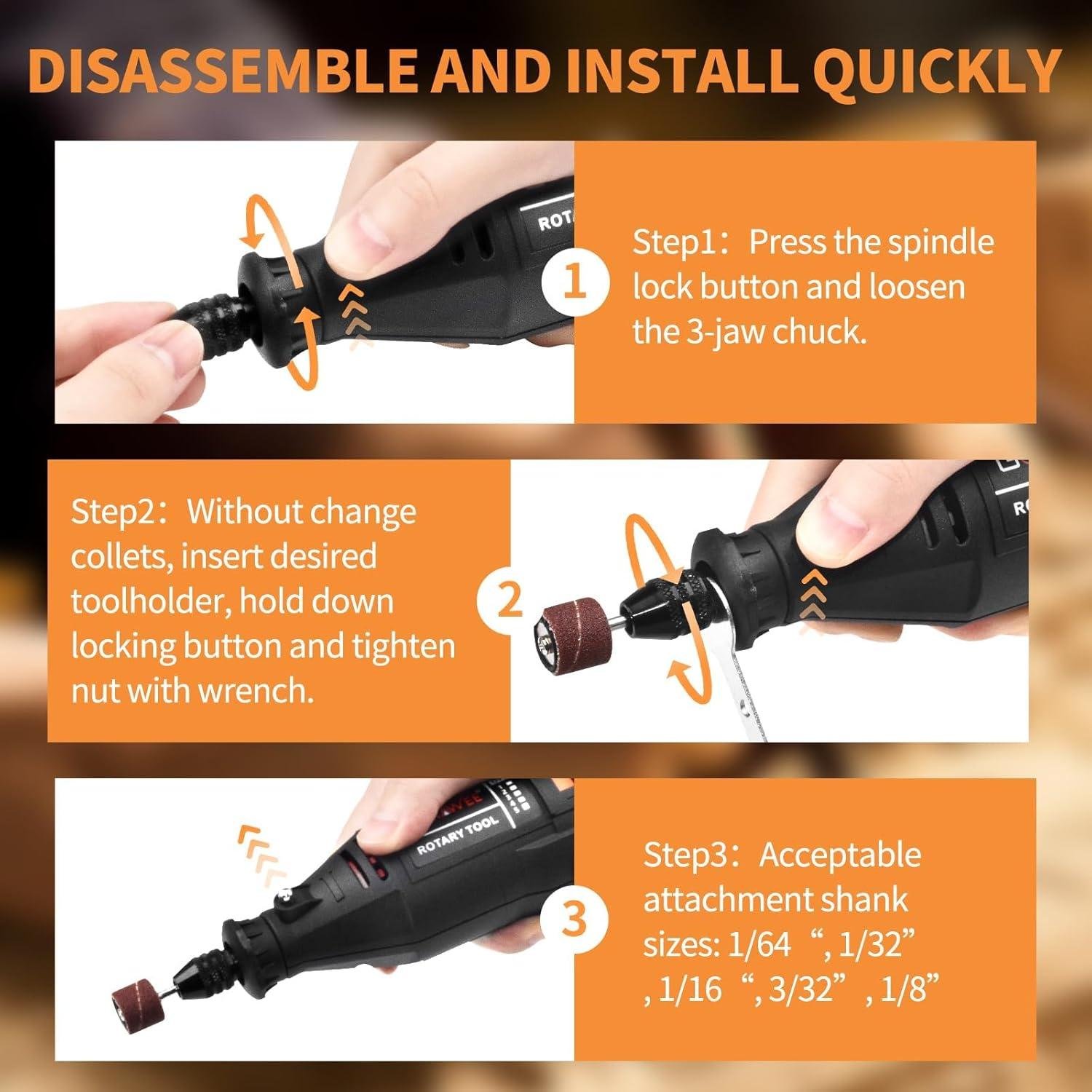
In our shop, the standout pairing is the MultiPro 3‑jaw keyless chuck and the flex shaft, because both directly translate into cleaner control on small woodworking tasks. The chuck is spec’d to accept 1/64″ to 1/8″ shanks,which matters when we’re bouncing between tiny drill bits for pilot holes in hardware installs and small burrs for touch-up carving—without hunting for collets. That said, GOXAWEE notes the chuck may need to be tightened with a spanner, and review themes back up that it’s usually secure (“no wobble” and “holds attachments securely”), but not flawless—some owners report a chuck that sticks closed or even fails after light use. The educational takeaway for woodworkers: when we’re sanding or shaping, we should snug the chuck firmly (especially at higher speed), keep shanks clean of pitch and dust, and avoid over-torquing—then verify runout by spinning the bit up slowly before touching wood. The variable-speed dial’s 5 steps from 8,000–30,000 RPM also helps us stay out of trouble: lower RPM for sanding and control, higher RPM for light engraving or polishing, and always a test pass on scrap to prevent burning on resinous species.
The flex shaft is the feature we tend to reach for when the workpiece is awkward—or when our hands need “pen-like” finesse to detail inside corners, small relief carving, or cleaning up tight joinery. Multiple reviewers specifically praise the flex shaft/“extension handle” for fine detail work and comfort, and we agree that it can make the tool feel more like a micro-carver than a bulky rotary body. For practical woodworking, this set’s strength is in controlled, small-footprint operations: easing sharp edges after routing, sanding profiles with small drums, engraving layout marks, or trimming thin parts.It’s not a dust-collecting system (no dust port is specified), so safe use means we should treat it like a mini grinder: manage dust at the source with a shop vac nearby, wear eye and respiratory protection, and use the included cover shield when cutting or grinding. Also, reviewers commonly call it a great value with a large accessory set, but note some included bits can be “not that strong,” so for hardwoods we may want to upgrade consumables (sanding drums, burrs, cutting wheels) once we learn which profiles we actually use most.
- Included accessories (not exhaustive): flexible shaft, 3‑jaw keyless chuck, cover shield, drill locator, diamond cutting wheel, extra carbon brushes, hard carrying case, assorted sanding/grinding/cutting/polishing pieces (total 140 pcs)
- Compatible attachments/accessories: most rotary accessories with 1/64″–1/8″ shanks (many owners report it effectively works with accessories from older kits)
- Ideal project types: hinge/hardware mortise touch-ups, small engraving/signing, easing sharp edges, sanding inside corners, cleaning up joinery, detailed craft inlays, light trimming and shaping
- Wood types tested by customers: not consistently specified in reviews; most feedback centers on general “DIY/crafting,” sanding, and engraving rather than named species
| Spec / Feature | What GOXAWEE States | What It Means for Us in the Shop |
|---|---|---|
| Speed range | 8,000–30,000 RPM (5 steps) | Lower speeds help reduce scorching while sanding; higher speeds suit light engraving/polishing—test on scrap to avoid burn marks. |
| Chuck capacity | 1/64″–1/8″ shank | Quick swaps between common burrs, small drill bits, and sanding mandrels; helpful when bouncing between tasks. |
| Flex shaft | Included | Better control on tight details; reduces fatigue compared to gripping the full motor body. |
| Accessory / Bit Type | Works With | Woodworking Note |
|---|---|---|
| Rotary burrs & small carving bits | 1/64″–1/8″ shanks | Use light passes to prevent tear-out; stabilize the workpiece and approach end grain carefully. |
| Sanding drums/discs | 1/8″ shank mandrels (typical) | Keep RPM moderate to limit heat and gummy loading on softwoods; clean abrasive often. |
| Cut-off wheels | Rotary cut-off mandrels | Use the cover shield, score lightly first, and avoid side-loading the wheel. |
| Task Capacity | Recommended (Realistic) Use | Not ideal for |
|---|---|---|
| Sanding/Detail shaping | Small areas, edge easing, inside corners, fine detail cleanup | Large surface flattening (use ROS/belt sander instead) |
| cutting/Trimming | Light trimming, thin stock, small notches | Deep cuts or production cutting (use jigsaw/bandsaw/router) |
| Drilling | Tiny pilot holes, light-duty drilling with small bits | Large-diameter holes or heavy drilling (use drill/driver or drill press) |
See Full Specifications & Customer Photos
Ease of Use for Beginners and Experienced makers in Our Workshop
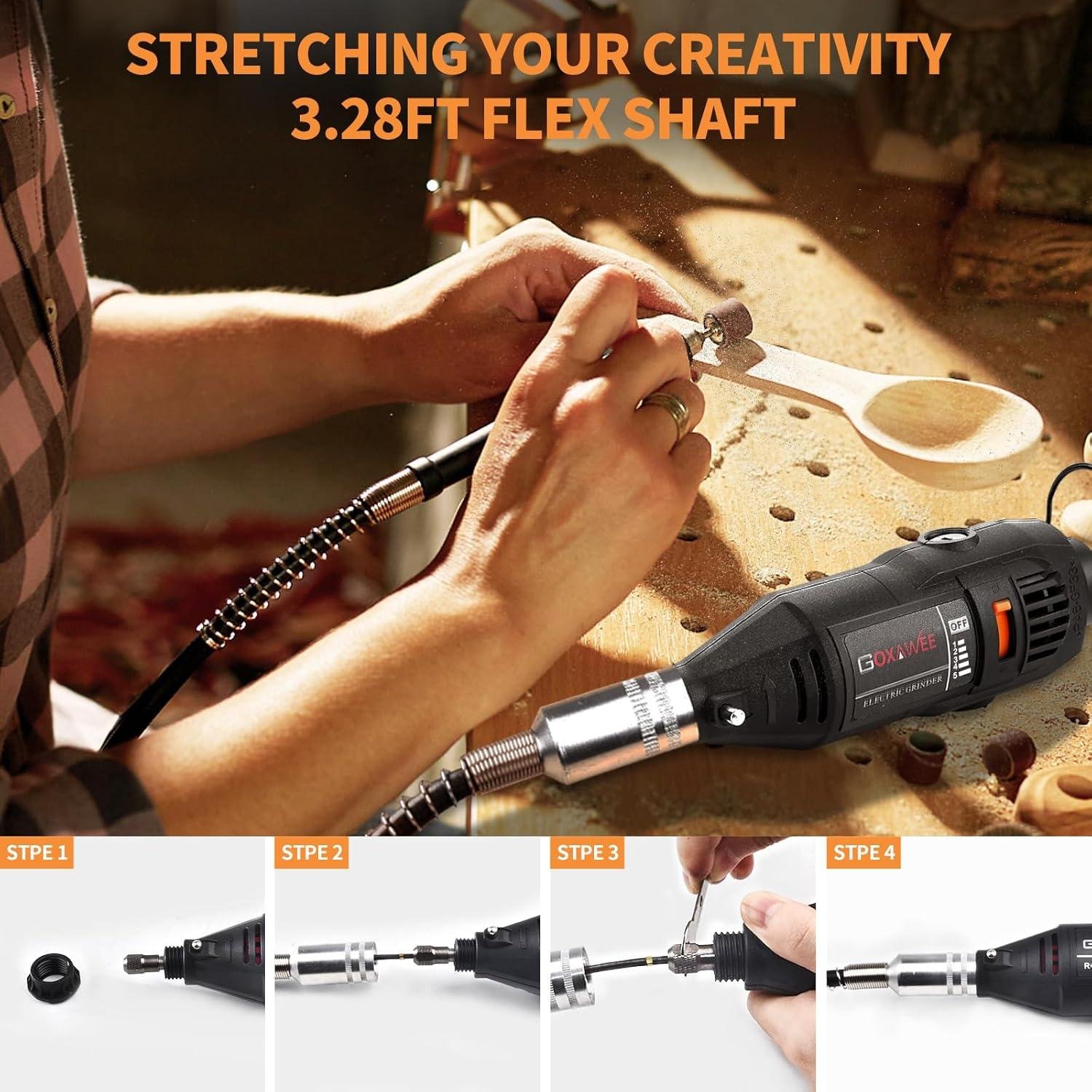
In our workshop,the GOXAWEE kit feels welcoming for first-timers because setup is straightforward and the controls are easy to understand. The 5-step variable-speed dial (rated 8,000–30,000 RPM) gives beginners a clear way to match speed to the task—slower for careful sanding and edge cleanup,faster for carving and routing tiny details—without guessing. The MultiPro 3-jaw “keyless” chuck is a big part of that beginner friendliness because it accepts a wide spread of shanks—1/64″ to 1/8″—so we can move between common sanding drums,burrs,and small drill bits without hunting for a specific collet. That said, GOXAWEE’s own note matters: the “keyless” chuck may still need to be tightened with the included spanner for a truly secure hold, and several customer themes support being gentle and methodical with it—most users praise the “great value,” “comfortable to hold,” and “easy-to-adjust speed,” while a few mention a chuck that can “get stuck” or even “break” over time. For safe, predictable woodworking, we teach new users to seat the bit fully, tighten snug (not over-tight), then do a quick low-speed spin-up before touching wood.
For experienced makers, the usability win is how quickly the tool transitions from “bench tool” to “detail pen” with the included flex shaft. When we’re doing inlay pockets, sign lettering, hinge-mortise touch-ups, or softening sharp corners on a small part, holding the flex shaft like a pencil makes control feel more like carving than grinding. Reviewers frequently enough echo that: they “love the flex shaft,” call it “more comfortable for precise work,” and note the kit “handles everything from sanding to engraving.” In practical terms, the learning curve is mostly about technique: we keep the tool moving, use light pressure (let RPM do the work), and step through grits rather than forcing a coarse drum to do finishing. Noise and accessory quality are the trade-offs to expect—some customers say it’s “not overly loud,” while others report it “is loud though,” and a few note the stock filing/grinding bits can wear quickly—so in our shop we treat the included set as a starter assortment and upgrade high-wear consumables as needed. Used that way, it’s an accessible rotary platform for both occasional hobby work and careful, repeatable woodworking detail tasks.
See Full Specifications & Customer Photos
Customer Reviews analysis
What Woodworkers Are Saying (Review Analysis)
1. Overall sentiment from woodworking customers
sentiment leans positive—especially around value, versatility, and comfort. multiple reviews highlight that it feels like a “great value for the money” and a practical option to pricier name-brand rotary tools for occasional shop use. That said, a smaller—but important—set of users reported chuck-related failures and weaker included bits, which tempers the long-term durability expectations.
2. Performance feedback (accuracy, power, results)
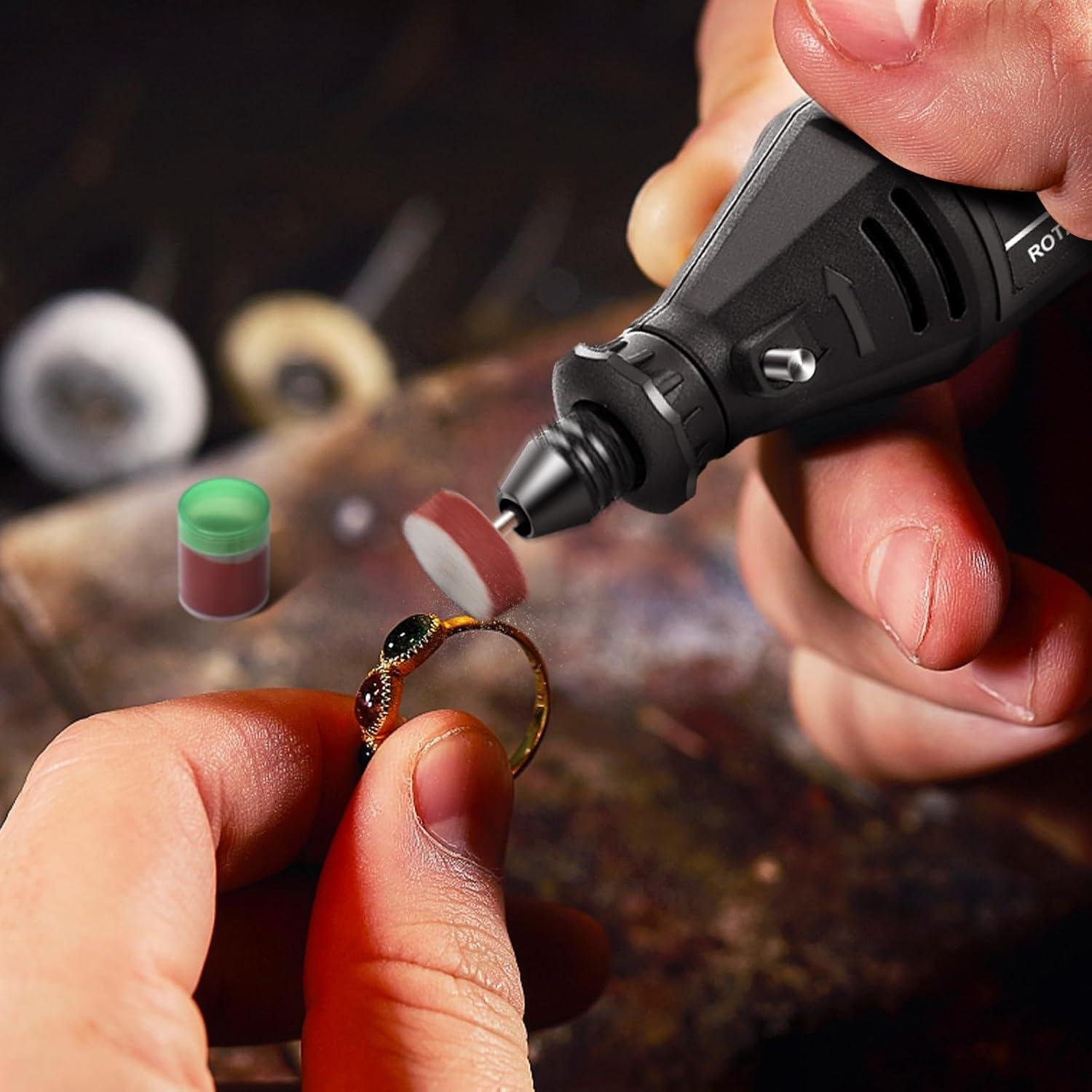
Several woodworkers mentioned strong day-to-day performance for typical rotary-tool woodworking tasks like sanding, light cutting, engraving, and detail shaping.
- Power & load handling: Common praise includes “solid power” and that it “gets the job done” for light-to-medium tasks. One reviewer specifically liked that it’s corded,noting no worries about losing power mid-project.
- Control & finish quality: Multiple reviews highlight the variable speed as a key strength for controlling burn risk and improving finish quality on detail work (one user called out “variable speeds for fine detail work”).
- precision: Some users reported no wobble during use, and reviewers noted the chuck “holds attachments securely,” both of which matter for cleaner lines and less chatter when sanding/engraving.
Quoted sparingly: one woodworking-adjacent reviewer noted “no wobble during use.”
3. Build quality and durability observations
Feedback trends split into two camps:
- positive build impressions: Several users described it as “super solid”, with a comfortable weight—“not too heavy,” and “solid build.” The included hard plastic case also gets mentioned as helpful for storage and institution.
- Durability concerns (keyless chuck): some users reported challenges with the keyless chuck. One user had a chuck “stuck in the closed position” early on. Another reported that after ~9 months of light use, the chuck broke and wouldn’t screw on/off, requiring pliers to free a bit. Those are notable red flags for woodworkers who frequently swap accessories mid-project.
4. Ease of use for different skill levels
Usability feedback is broadly favorable.
- Beginners / DIYers: Reviewers with less technical needs found it simple to assemble and use (one French-language review: “Simple à monter, et à utiliser”).
- Detail-focused users: Several woodworkers mentioned the flex shaft improves comfort and control during precision work—reducing hand fatigue compared to holding the main body for long sessions.
- Handling: Multiple reviews highlight it “fits well in the hand” and is lightweight/comfortable.
5. Common project types and success stories
While most reviews describe tasks broadly (DIY/crafting),the triumphant use cases align closely with common woodworking rotary-tool jobs:
- Sanding and finishing touch-ups: Customers successfully used this for sanding and finishing work where variable speed helps prevent overcutting or gouging.
- Engraving / detail work: Several reviewers mentioned engraving and “fine detail work,” suggesting good results for personalization, carving accents, and small refinements.
- Cutting and grinding (light-duty): Some users reported using it for cutting, grinding, and finishing materials, especially with the diamond cutting wheel mentioned as a useful included accessory.
A typical success pattern: using the tool as an all-in-one rotary kit for small repairs, shaping, and decorative details rather than heavy stock removal.
6. Issues or limitations reported
Common limitations match what many woodworkers watch for in budget rotary kits:
- Chuck problems: Multiple reviews highlight keyless chuck sticking/breaking, which can interrupt workflow and make bit changes frustrating.
- Accessory quality varies: Some users reported challenges with included “filing bits” being weak and deforming easily, recommending upgraded accessories (e.g., Dremel/DeWalt-quality bits) for better performance and longevity.
- Not ideal for daily pro use: Several woodworkers mentioned it’s best for occasional use, and “if you plan to use this everyday probably not the ideal tool.”
- Noise: Some users noted it’s loud, which may matter for long sanding sessions or indoor work.
- Heavier grinding limitations: One reviewer stated theirs struggled to “even lightly grind soft stones,” suggesting limitations under certain load types (not wood-specific, but relevant to expectations about torque).
| Aspect | Common Feedback |
|---|---|
| performance | Variable speed praised for control; solid power for light-to-medium sanding/engraving; some report no wobble |
| Precision | Flex shaft improves detail work comfort; chuck often holds bits securely, but reliability varies |
| Durability | Mixed—some call it solid after many hours; others report keyless chuck sticking or breaking |
| Ease of use | Generally easy to assemble/use; comfortable grip and weight; loud for some users |
| Versatility & Value | Large accessory set seen as strong value; some included bits considered low strength and worth upgrading |
Pros & cons
Pros & Cons
| What We Liked | What We Didn’t |
|---|---|
| MultiPro keyless chuck fits a wide range of shank sizes (1/64″–1/8″), so we can swap bits without hunting for the “right” collet. | The “keyless” chuck still needs a spanner to fully tighten,which slows down our quick-change rhythm. |
| 140-piece accessory bundle feels like a mini tool aisle in one case—good for experimenting across materials and tasks. | Not every included accessory is likely to become a staple in our shop; some pieces may feel more “nice-to-have” than “must-have.” |
| Flex shaft handles like a pen, giving us more control for engraving, light carving, and detail work. | The extra attachments can add setup time; for tiny jobs, we may be tempted to skip the flex shaft altogether. |
| Variable speed (5 steps, 8,000–30,000 RPM) helps us dial in gentler passes for delicate materials and higher speed for faster removal. | Five preset steps aren’t as granular as a continuous dial, so we sometimes have to “work around” the nearest setting. |
| Safety extras like the cover shield are a welcome nod toward cleaner, more confident cutting and grinding. | Shields and guides can feel a bit fiddly depending on the project angle and visibility we want. |
| Includes spare carbon brushes—small detail, but it saves us a future parts search when wear eventually happens. | Brush replacement is still maintenance we’ll need to remember, especially if we use it frequently. |
| Compact, handhold-kind design and generally not-too-loud operation make it easier to keep on the bench for quick fixes. | For heavy-duty grinding/cutting sessions, a compact rotary tool can still feel limited compared to larger dedicated tools. |
| Sturdy carrying case keeps our accessories organized and makes it easy to toss into a drawer or take to a friend’s garage. | A big kit also means more to sort—if we’re not disciplined, “organized” can turn into “where did that bit go?” |
Pros
- Wide compatibility chuck: We like that the 3-jaw chuck accepts 1/64″ to 1/8″ shanks, which reduces accessory friction during multi-step projects.
- Accessory variety for real-world DIY: With 140 pieces, we can bounce between sanding, polishing, cutting, trimming, engraving, and cleaning without a separate shopping trip.
- Flex shaft improves precision: For fine detailing, holding the shaft like a pen feels more natural than gripping the whole tool.
- useful speed range: The 8,000–30,000 RPM range gives us versatility for wood, plastic, metal touch-ups, and careful work on tile or glass with the right bit.
- Nice kit details: spare carbon brushes and a protective case make the set feel more complete for a home shop.
Cons
- “Keyless” asterisk: We still need a spanner to properly tighten the chuck, which can interrupt fast accessory swaps.
- Step-based speed control: The 5-step system is simple, but we don’t always land on the exact speed we want.
- Kit quantity vs. kit quality: We expect to use many accessories often, but a few will likely be occasional-use only.
- Not a replacement for dedicated heavy tools: It’s versatile, but for prolonged, high-load tasks we may still reach for bigger, purpose-built equipment.
| Best For (In Our shop) | We’d Think Twice For |
|---|---|
| Engraving nameplates,cleaning rust spots,polishing small parts,trimming plastics,light sanding. | Long, aggressive grinding sessions or jobs where we need ultra-fine speed increments. |
Q&A
What wood types can this handle effectively?
This GOXAWEE rotary kit is best for small-to-medium detail work on common shop woods: pine, poplar, cedar, birch, and most plywoods. With the 5-step variable speed range (8,000–30,000 RPM), it’s well-suited for engraving, light shaping, edge clean-up, small round-overs, sanding, and polishing. It can also do careful work on denser woods, but it’s not a replacement for a router or die grinder when you need heavy stock removal.
Is it powerful enough for hardwoods like oak or maple?
For hardwoods, it’s capable—but expectations matter. It can carve, engrave, and sand oak/maple effectively if you use sharp quality bits, lighter pressure, and let RPM do the work. several customers describe it as having “solid power” with “no wobble,” and the variable speed helps you control burning and chatter. Where it will struggle is aggressive grinding/cutting sessions (deep material removal, large burrs, long continuous runs). For that, a trim router or higher-duty rotary tool is the better fit.
how does this perform on plywood and veneers (without tear-out)?
It’s a good match for plywood and veneer trimming/sanding because you can downshift speed and use fine sanding drums or small cutters for controlled passes. Use light touch and take multiple shallow passes—especially on veneer edges—to avoid catching a ply and chipping. the included Cover Shield can help with control and protects you from debris during cutting/grinding, but it won’t replace careful technique and proper dust management.
Can it handle production work or is it mainly for hobby projects?
This kit is primarily a hobby/small-shop tool for intermittent use—sign making, inlay touch-ups, small joinery clean-up, carving details, and finishing. One review specifically noted it’s “probably not the ideal tool” for everyday use but “perfectly fine” for occasional projects. If you need daily, all-day duty cycles (production carving, constant sanding, repeated heavy cutting), a pro-grade rotary tool or dedicated woodworking machines will hold up better.
how difficult is the initial setup, and what adjustments are available?
Setup is straightforward: choose an accessory, insert it, and set the speed using the 5-step dial (8,000–30,000 RPM). The key adjustment is speed selection—slower for control and heat-sensitive work (fine sanding, polishing), faster for light cutting/engraving. Note an critically important detail from the product notice: the “keyless” MultiPro chuck still needs to be tightened with the included spanner for a secure hold. That’s not hard, but it’s different from truly tool-free chucks.
Does it work with standard rotary-tool accessories? How easy are bit changes?
Yes—this is one of its main convenience features. The 3-jaw universal chuck accepts shanks from 1/64” to 1/8”, which covers most common rotary-tool bits and many accessories woodworkers already own. Customers mentioned it working with accessories from older tools,which is a big plus. Bit changes are quicker than swapping collets, but plan on snugging the chuck with the spanner (per the brand note). If you do frequent accessory swaps (engraving to sanding to cutting), the universal chuck is a real time-saver.
Will this fit in a small workshop, and can it be mounted to a bench?
It’s a compact, hand-hold rotary tool that stores in a solid carrying case, so it effectively works well in tight shops and shared spaces. Most woodworkers use it handheld or with the included flex shaft “pen grip” for detail control. It’s not designed like a benchtop machine, so there’s no dedicated mounting base in the provided info—though, many users secure the body with a clamp or tool holder when running a flex shaft for steadier fine work.
What maintenance should I expect, and are there durability concerns?
Basic maintenance is typical for corded rotary tools: keep vents clear, avoid forcing the tool (heat kills small motors), and periodically check accessory tightness. This kit includes extra carbon brushes, which is a practical long-term perk. On durability, reviews are mixed: many describe it as “super solid” and “great value,” but a few mention chuck issues (one user reported the chuck failing and binding after limited use). To reduce the risk,avoid over-tightening,keep the chuck clean,and don’t use pliers on it unless absolutely necessary—if it starts to bind,address it early.
Elevate Your Lifestyle
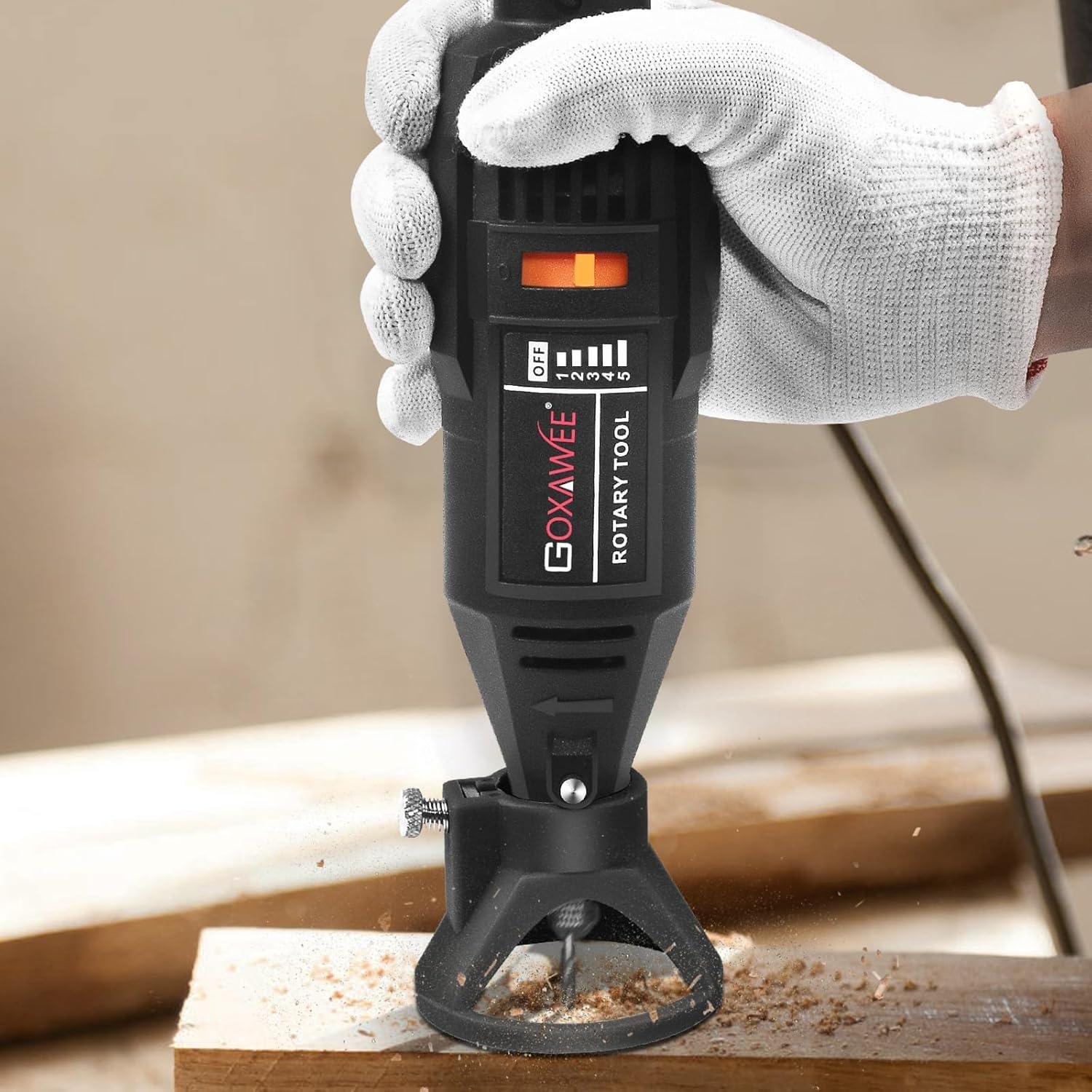
The GOXAWEE Rotary tool Kit (G4007) is a compact, corded rotary tool built for detail work, offering 5 variable-speed settings from 8,000–30,000 RPM, a MultiPro 3‑jaw “keyless” chuck that fits 1/64″ to 1/8″ shanks (note: it must be tightened with a spanner), plus a flex shaft and 140 accessories in a sturdy case. Customer feedback commonly praises the value, comfortable grip, speed control, and flex-shaft precision, while a few users report chuck issues and that some included bits wear quickly.
Best for: hobby woodworkers with small to medium projects, beginners learning carving/sanding fundamentals, and cabinet makers needing precise touch-ups, engraving, and edge cleanup.
Consider alternatives if: you routinely shape thick hardwood aggressively, need daily pro-level durability, or want premium accessories out of the box.
Final assessment: a solid value kit for fine woodworking tasks, with limitations in long-term chuck/accessory quality.
Want to see current pricing and customer photos? View on Amazon & Read More Reviews →