

Blog
Fanttik K2 Nano Hand Drill Review: Right for Our Shop?

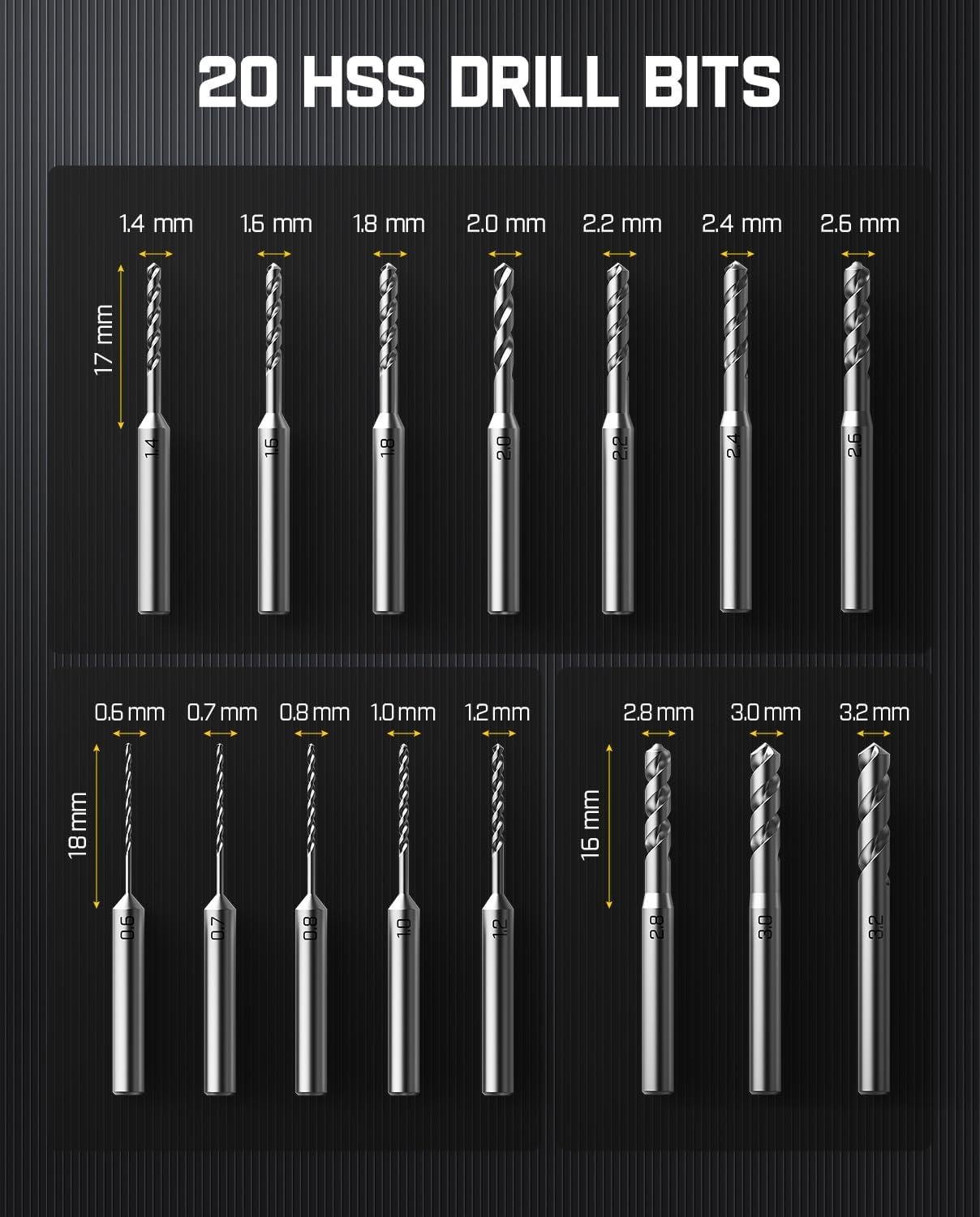
Ever tried drilling tiny pilot holes for hinge screws or hardware in a cramped corner of a cabinet, only to watch a full-size drill wander off-center adn chew up the edge? In small-scale woodworking, precision matters as much as power—and bulky tools don’t always fit the job.That’s where the Fanttik K2 Nano Power Drill comes in: a pen-style, rechargeable micro drill kit built for controlled drilling and light-duty tasks. It runs on an 800mAh battery with USB‑C charging, includes 20 HSS bits (0.6–3.2mm), and offers a dual-speed setup—250 RPM high-torque and up to 1300 RPM for faster work—managed by a knob with LED feedback.In this review, we’ll look at the features that matter in a wood shop, what customer feedback says about build quality, battery life, and ease of use, and where mixed reports of bit wobble could affect accuracy.We’ve outfitted enough jigs, fixtures, and shop projects over the years to know when a “small” tool is a big upgrade—and when it’s a compromise.
Tool Overview and First Impressions in the Shop

in our shop,the Fanttik K2 Nano comes across less like a “drill” in the customary woodworking sense and more like a precision handpiece—something we’d grab when a full-size cordless driver feels clumsy around delicate parts. The pen-style grip is promptly familiar for detail work, and the spec sheet backs up that intent: a compact, rechargeable tool with an 800mAh battery, Type-C charging, and a dual-speed drivetrain that runs at 250 RPM (high-torque) or 1300 RPM (high-speed). For woodworkers, those lower RPM numbers are a feature, not a limitation; they’re exactly what helps prevent tiny bits from skittering across a finished surface when we’re drilling pilot holes for small hardware, hinge screws in soft stock, or stringing picture wire into frames. Customer themes line up with that first impression—reviewers frequently call it “solid,” “easy to hold,” and surprisingly “powerful for how small it is”, with plenty of praise for adjustable speeds, battery life, and the overall value for money.
Unboxing and setup are part of the experience here,and multiple reviewers point out the well-packaged case and the magnetized bit storage—a small detail that genuinely matters when we’re trying not to lose micro-bits under the bench. Fanttik includes 20 HSS drill bits from 0.6mm to 3.2mm, wich covers the most common “shop fiddly work” sizes (think brad holes for pins, tiny pilots for brass screws, and clearance holes in thin stock). That said, customer feedback is also honest about the tool’s limits: stability/runout is mixed—some users report no wobble, while others say it wobbles quite a lot, especially with smaller bits. In practical woodworking terms, that means we’d treat it like a precision aid for light drilling and careful layout work—not a replacement for a drill press when hole placement must be dead-nuts accurate. Technique helps: we get the cleanest starts by using an awl mark,keeping the bit short in the collet,starting at low speed,and letting the tool cut without side pressure (side-load is what snaps micro-bits and exaggerates any runout). Also worth noting for the shop: the collet-style socket system opens the door to more than drilling, but any sanding or brushing accessories should be used gently to avoid stressing alignment over time, just as at least one reviewer cautioned.
- Included accessories
- 20× HSS drill bits (0.6mm–3.2mm)
- Angled storage case with magnetic bit slots
- USB Type-C charging capability (port on tool; case allows charging while stored per reviews)
- Compatible attachments/accessories (via collet/shank system)
- Micro drill bits within the supported shank/collet fit
- Light-duty polishing tips (small shank)
- Small wire brushes (light pressure)
- light grinding/sanding points for plastics/PCB-style materials (use cautiously for precision longevity)
- Ideal project types
- hardware pilot holes for small hinges and brass screws
- Picture frames (e.g., hanging wire hardware—also noted by customers)
- Template or jig work where we need controlled, low-speed drilling
- Shop jigs, small repairs, and tight-access drilling where a standard drill won’t fit
- Wood types tested by customers
- Soft woods (noted in product positioning; reviewers mention “small wood-working projects”)
- Not specified beyond general “wood” in review themes (we didn’t see species-level callouts)
| Spec | Fanttik K2 Nano (from product specs) | What it means in a woodworking shop |
|---|---|---|
| Speed modes | 250 RPM (torque mode) / 1300 RPM (speed mode) | Better control for tiny pilots vs high-RPM rotary tools; not meant for large spade/Forstner work |
| Max torque | 0.6 N·m | Useful for small bits and light-duty drilling; still avoid forcing larger diameters in hardwood |
| Battery | 800mAh rechargeable, Type-C | Grab-and-go convenience for bench work; reviewers often say battery life is “more than sufficient” |
| Included bits | 20 HSS bits, 0.6–3.2mm | Great for micro pilots and small hardware holes; limited for common woodworking sizes (1/8″, 3/16″, etc.) |
| Precision/runout | mixed (review-dependent) | Fine for general micro drilling; if your work demands ultra-true holes,verify your unit before critical tasks |
| Accessory/Bit Type | Fit/Compatibility | Shop Use Notes |
|---|---|---|
| HSS micro drill bits (0.6–3.2mm) | Included | Ideal for pilots; use an awl mark and light feed to prevent bit wander |
| Polishing tips (small shank) | Compatible via collet/shank system (per reviewers) | keep pressure light; side-load can amplify wobble and reduce precision over time |
| Wire brush (micro) | Compatible via collet/shank system (per reviewers) | Good for cleaning tiny metal parts; mask up—fine dust is still a concern |
| Light grinding/sanding points | Compatible via collet/shank system (per reviewers) | Useful for plastics; for wood, it’s more “touch-up” than shaping |
| Capability | Recommended (realistic for woodworkers) | Advertised/Included |
|---|---|---|
| Bit diameter for consistent control | 0.6–3.2mm micro drilling and pilots | 0.6–3.2mm (20 included bits) |
| Material thickness expectation | Thin stock, small parts, and hardware pilots (avoid forcing deep/large holes in hardwood) | Positioned for soft woods, plastics, thin metals; torque mode for tougher materials |
| Precision expectation | Good for layout/pilot work; confirm runout before critical joinery drilling | Reviews report both “no wobble” and “wobbles” depending on unit/version |
See Full Specifications & Customer Photos
real World Performance for Pilot Holes Hardware and light Drilling

In our shop, the Fanttik K2 Nano behaves less like a “mini drill” gimmick and more like a purpose-built pilot-hole helper for tight, fussy woodworking spots—think hinge screws, small hardware, and anywhere a full-size drill feels clumsy. The dual-speed gearbox is the spec that matters here: 250 RPM (high-torque) is slow enough to start cleanly without skating across a finish, while 1300 RPM (high-speed) is better for fast pilot holes in softer stock and plywood when we’re using the larger included bits. Fanttik rates it at 0.6 N·m max torque with an 800mAh rechargeable battery (USB-C), and that lines up with what customers keep repeating—“surprisingly powerful for how small it is,” “easy to hold like a fat pen,” and “two speeds are perfect for precise drilling.” For woodworking, the included HSS bit range (0.6–3.2mm) is clearly aimed at micro and small pilots, not larger joinery holes, but that’s exactly the sweet spot for preventing split-out on delicate parts and reducing snapped brass screws.
Where we’d caution fellow woodworkers is precision expectations at the smallest diameters. Several review themes praise smooth drilling, yet stability feedback is mixed: some report “no wobble at all” (including notes that newer versions improved runout), while others say the tip “wobbles quite a lot,” especially with very small bits—an issue that can enlarge a pilot hole or break tiny bits if we push to hard. Our best practice with tools in this class is to center-punch with an awl, start at 250 RPM, keep the bit short in the collet, and let the tool feed gently—especially in harder woods where micro-bits heat quickly. It’s also handy that the kit is organized for bench work: customers like the magnetized bit storage, the quick bit changes, and the LED indicator/light for aiming into cabinets and corners. Bottom line: for light drilling and pilot holes for hardware, it fits beginners and experienced woodworkers alike—as long as we treat it as a precision pilot tool, not a substitute for a brad-point set and a full-size drill/driver.
- Fanttik K2 nano drill (dual-speed: 250 / 1300 RPM)
- 20 HSS drill bits (0.6mm–3.2mm)
- Angled storage case with magnetized bit slots
- USB-C (Type-C) charging support
- Collet-compatible shank accessories (per customer reports): polishing tips, wire brushes, light grinding points
- Micro drill bits in the included size range (0.6–3.2mm)
- Pilot holes for small screws (hinges, pulls, catches)
- Picture frame hardware and close-quarters drilling
- Jigs and templates with small indexing holes
- Light drilling in thin stock and small parts
- Softwoods (pine, spruce) — commonly implied by “soft woods” use cases
- Plywood/veneered panels — typical pilot-hole application with micro bits
- Hardwoods (light duty) — feasible with careful feed at 250 RPM
| Feature | Fanttik K2 Nano (spec) | What it means for pilot holes |
|---|---|---|
| Speed modes | 250 RPM / 1300 RPM | Slow mode helps prevent skating; fast mode speeds up pilots in softer stock |
| Max torque | 0.6 N·m | Enough for small-bit pilots; not meant for larger diameter drilling |
| Battery | 800mAh rechargeable (USB-C) | Convenient for quick bench tasks; reviewers often note good battery life |
| Included bit sizes | 0.6–3.2mm (HSS) | Great for hardware pilots; limited for woodworking holes above ~1/8″ |
| Accessory Type | Compatible? | Best Use in a Wood Shop |
|---|---|---|
| Included HSS micro bits (0.6–3.2mm) | Yes | Pilot holes for small screws, delicate parts, tight locations |
| Polishing/wire brush tips (shank-style, per reviews) | Often yes (collet system) | light cleanup on small hardware; avoid heavy pressure to preserve precision |
| Standard 1/4″ hex driver bits | Not guaranteed | May not fit—this tool is centered on micro drilling rather than driving |
| Task | Recommended (realistic) | Not Recommended |
|---|---|---|
| Pilot holes for #2–#6 screws (varies by wood) | Yes, match bit to root diameter; start at 250 RPM | — |
| Deep drilling in hardwood with tiny bits | Limited; peck drill, clear chips often | Aggressive plunging (increases breakage risk if runout exists) |
| Larger woodworking holes (e.g., 1/4″+) | — | No; outside included bit range and typical use case |
See Full Specifications & Customer Photos
Key Features Woodworkers Will Appreciate for Small Scale Precision Work

For small-scale woodworking where a full-size drill feels like overkill, the Fanttik K2 Nano’s control is what stands out in the shop. The dual-speed setup (250 RPM high-torque / 1300 RPM high-speed) is a practical match for precision tasks: we can start a tiny pilot hole slowly to keep a brad-point from skating, then move up in speed for clean entry on softer stock. On paper, the max torque of 0.6 N·m and the pen-like form factor are aimed at “micro” work—and customer reviews echo that reality with themes like “marker size,” “easy to hold,” and “much more controllable for drilling with small bits.” That lower RPM range also addresses a common woodworker gripe with rotary tools—one reviewer specifically noted that “5000 or so RPM of a Dremel… is just far too fast,” while this drill’s two speeds felt “just perfect” for delicate drilling, light grinding, and sanding. For us, that means it’s best treated like a precision pin drill with power—great for hinge-screw pilots, small hardware holes, and tight spaces—rather than a substitute for a 12V/18V drill/driver.
The kit approach is also workshop-friendly: it ships with 20 HSS bits from 0.6 mm to 3.2 mm and an angled case that multiple customers call out as “amazing for visibility and convenience,” with magnetic storage slots that keep tiny bits from disappearing under the bench. Power is handled by an 800mAh rechargeable battery with USB‑C charging, and reviewers commonly mention good battery life and that it charges quickly—useful when we’re bouncing between install work and bench work.The one precision caveat worth knowing: review themes on stability are mixed. Some users report “no wobble at all” (including comments that newer versions improved runout), while others say it “wobbles quite a lot,” especially with very small bits—exactly the scenario where runout can snap a micro-bit or oval out a hole. our best practice with a tool like this is to let the bit cut (don’t force it), back out frequently to clear chips—especially in resinous softwoods—and use a light center-punch/awl dimple before drilling to reduce walking and side-load on those delicate diameters.
See Full Specifications & Customer Photos
Ease of Use for Beginners and Experienced Woodworkers in Tight Spaces
In a cramped shop—or when we’re leaning into a cabinet, jig, or assembled carcass—what makes the Fanttik K2 Nano feel beginner-friendly is how immediately “non-intimidating” it is to handle. The pen-like grip and simple controls keep the learning curve low, and the dual-speed switch (250 RPM high-torque / 1300 RPM high-speed) is easier to understand than a full-size drill’s trigger finesse: we can start slow for control, then step up when the bit is tracking true.For woodworkers, that slower 250 RPM mode is the one we’d reach for when drilling tiny pilot holes for brads, hinge screws, or hardware where tear-out and wandering matter more than raw speed; multiple reviewers echo that the speeds are “perfect for precise drilling” and “much more controllable” than higher-RPM rotary tools. The 800mAh rechargeable battery and USB-C charging also suit tight-space work because we’re not dragging a cord around clamps and bench dogs, and several customers mention “sufficient battery life,” “holds charge well,” and that it “charges quickly”—all practical wins when we’re bouncing between small tasks rather than running long drilling sessions.
For experienced hands, ease-of-use in tight spaces is really about precision and repeatability, and this is where we should be honest about what reviews report: stability is mixed. Some customers say there’s “no wobble at all,” while others report the bit “wobbles quite a lot, especially with smaller bits,” which can make micro-drilling tougher and increase the chance of snapping a bit if we push or angle it. In woodworking terms, we’d treat the K2 Nano as a careful, lightweight detail tool—best when we center-punch/awl our mark, keep the workpiece supported, and let the bit cut without side pressure. The included 20 HSS bits (0.6mm–3.2mm) cover most small pilot-hole needs, and the “magnetized” case/bit slots that reviewers praise are genuinely helpful when we’re working in a cluttered corner and don’t wont tiny bits disappearing into shavings.We also appreciate that it uses a collet-style shank system (per customer notes) for light accessories, but we’d keep “side-load” tasks (aggressive sanding/grinding) modest as anything that stresses alignment can undermine the very precision we want for fine woodworking layout and hardware work.
- 20 HSS drill bits (0.6mm–3.2mm)
- Angled storage box/case with magnetic bit storage (per review themes)
- USB-C (Type-C) charging support
See Full Specifications & customer Photos
Customer Reviews Analysis

What Woodworkers Are Saying (Fanttik K2 Nano Power Drill)
1. Overall sentiment from woodworking customers
woodworking-leaning reviewers sound strongly positive about the K2 Nano as a small, controlled drill for fine work and tight spaces. Common praise includes surprising power for the size, smart storage/case design, and marker-like comfort. A smaller set of comments flags precision concerns (minor vibration/runout) on some units, though multiple reviews also claim wobble has been solved on newer versions.
2. Performance feedback (accuracy, power, results)
Several woodworkers mentioned the tool being powerful enough for small drilling tasks where a full-size drill is awkward, with one calling it “powerful” and “worth every penny” for “small wood-working projects.”
Power under load / results
- Multiple reviews highlight surprising “durchzugsstark” (pulling power) given the compact body.
- Users report it “has not had any difficulties with power needed to finish a job” for micro drilling and hobby tasks.
Accuracy / control
- Common praise includes a smooth drilling action and good control at lower speeds—especially compared with high-RPM rotary tools (“5000 rpm of a Dremel… is far too fast”).
- Precision feedback is mixed: some users reported challenges with minor vibrations and lateral movement (“not as precise as I was hoping… minor vibrations, wables”).
- Simultaneously occurring, multiple reviews highlight little to no runout on their unit (“Mine has no wobble at all”).
3. Build quality and durability observations
Build quality is a frequent highlight.Reviewers describe it as solid and well-finished, including comments like “excellent quality… nice heavy (solid)” and “extremely high” build quality.
Durability
- several reviewers mentioned the included bits being decent quality and not breaking immediately, which matters for fine drilling where small bits often snap.
- Longevity is less documented: one reviewer explicitly noted they haven’t owned it long enough to judge durability over time (“can’t say anything serious yet”), though early impressions are “solid, nothing wobbles.”
- One technically minded review cautions that using non-drilling attachments (polishing/brush/grinding) could affect precision over time, which is a helpful long-term consideration if woodworkers plan to use it like a mini rotary tool.
4. Ease of use for different skill levels
Ease-of-use feedback is consistently positive, especially for light-duty, detail-oriented work.
- Beginners and DIYers appreciated the safer, less intimidating feel compared to a big drill (“much easier and safer to use than the large drill”).
- Reviewers commonly mention the comfortable grip—“like holding a fat pen/marker”—which reduces awkward handling in detail work.
- Bit changes and charging are often described as straightforward: “changing drill bits is quick and easy,” and the case allows charging while stored, which users found convenient.
5. Common project types and success stories
Customers successfully used this for small-scale tasks that overlap with woodworking and shop finishing/detail work:
- Frames & small fixtures: one reviewer used it for “putting picture-hanging wire on frames.”
- Small woodworking projects: multiple users referenced fine, precise work where a normal drill is “too unwieldy.”
- Model making / micro drilling: several reviewers mentioned fine model work and micro-bits “ab 0,2mm,” which translates well to delicate shop tasks like tiny pilot holes, hardware alignment, or crafts.
- Sanding/grinding (light duty): some users liked the lower, more controllable speed for “grinding and sanding,” particularly when a high-speed rotary tool feels too aggressive.
6. Issues or limitations reported
Some users reported challenges with the following:
- Precision consistency (runout/vibration): a minority noted wobble/vibration that reduces micro-accuracy. This appears unit-dependent, as other reviews explicitly say wobble is gone.
- Not a replacement for full-size drills: while reviewers praise its “surprising” strength, the use-cases described are still micro drilling, detail work, and tight-space access, not heavy boring or large bits.
- Potential precision drift if used as a grinder/polisher: one reviewer warns that using different tips (wire brush, polishing, light grinding) may impact drill-head precision over time—worth noting for woodworkers who want it to serve double-duty.
| Aspect | Common Feedback |
|---|---|
| Performance | Surprisingly strong for its size; lower speeds feel more controllable than high-RPM rotary tools; some report minor vibration/runout. |
| Precision | Mixed—many say smooth/no wobble, a few note lateral movement that affects micro accuracy. |
| Build Quality | Frequently described as solid,well-finished,“nice heavy”; bits viewed as decent and less prone to immediate breakage. |
| Ease of Use | Pen-like grip, quick bit changes, convenient charging/case design; approachable for diyers. |
| Versatility | Works for micro drilling and light sanding/grinding; non-drilling use may affect long-term precision (per one reviewer). |
| Value | Generally seen as worth the price for detail work; a few note it costs slightly more than some alternatives but is more convenient. |
Pros & cons

Pros & Cons
In our shop, the Fanttik K2 Nano feels like a “fine-point marker” that just happens to drill. It’s designed for the small, fiddly jobs—where a full-size drill or high-RPM rotary tool can be overkill—and it mostly delivers on that promise. Here’s what stood out to us after looking at the feature set and the patterns in customer feedback.
Pros
- Micro-work friendly power: For a tiny hand drill, it’s described as surprisingly punchy—especially in the 250 RPM high-torque mode for tougher, grabby materials like resin, clay, shells, and jewelry.
- Two-speed setup makes practical sense: The jump to 1300 RPM covers faster drilling in softer materials (plastics, thin wood, 3D prints) without feeling like a runaway Dremel.
- Comfortable “pen-like” handling: Multiple users call out the grip and control—exactly what we want when we’re lining up tiny holes in PCB or fragile parts.
- Rechargeable via USB-C: The 800mAh battery gets consistent praise for lasting long enough for hobby sessions, with the convenience of modern charging.
- Bit kit feels thoughtfully chosen: The included 20 HSS bits (0.6mm–3.2mm) cover the common “small hole” universe we run into.
- Storage case is more than packaging: The angled case and magnetic bit slots are frequently mentioned as a genuinely useful organizational detail.
- Helpful status feedback: The LED light bar/indicators add a “tool with a dashboard” vibe—small quality-of-life wins when we’re bouncing between tasks.
Cons
- Wobble/runout can still be a thing: Stability is the most mixed topic—some report no wobble, others say it’s noticeable, especially with smaller bits where precision matters most.
- Precision varies by unit/version: A few reviews imply earlier/other versions had more runout, while some claim it’s “solved” now. For us, that means QC risk if we’re buying for consistent shop results.
- Not a replacement for a rotary tool: Even with 1300 RPM, it’s still a nano drill—great for drilling and light tasks, but not a full-on grinding/sanding powerhouse.
- Controls may feel “ambiguous” to some users: At least one detailed review mentions the gear/speed switching feeling less snappy and placed where they naturally want to grip.
- Value depends on expectations: Many call it worth the price,but a few “expensive junk” reactions exist—frequently enough tied to defects or out-of-box issues.
at-a-Glance (What We’d Use It For)
| shop Task | How the K2 Nano Fits | Our Watch-Out |
|---|---|---|
| PCB drilling & repair holes | Great size, controllable speeds | Runout matters most at tiny bit sizes |
| Jewelry, resin, shells | Low-speed torque is the headline feature | Go slow—tiny bits can snap if it wobbles |
| Plastic enclosures & 3D prints | Fast, neat holes without “tool drama” | still not meant for heavy-duty drilling |
| Light sanding/finishing (occasional) | Possible with collet-style tip options | May affect long-term precision if abused |
Our bottom line on Pros & Cons: The Fanttik K2 Nano reads like a smart, modern micro-drill kit—powerful for its size, comfortable, and well-packaged. The main “but” is precision consistency: if we get a wobble-free unit, it’s a shop-friendly little specialist; if not, the smallest, most demanding jobs become frustrating fast.
Q&A

What wood types can the Fanttik K2 Nano handle effectively?
This drill is best for softwoods and small-scale drilling tasks in most woods—think pine, poplar, cedar, and small pilot holes in hardwoods. Specs list a 1300 RPM high-speed mode for soft woods and a 250 RPM high-torque mode for tougher materials, and reviews back it up as “perfect for small projects” and tight, hard-to-reach spots (picture-frame hardware, small woodworking tasks). Where it’s not ideal is larger diameter holes, deep holes, or repetitive drilling that a full-size drill/driver is built for.
Is it powerful enough for hardwoods like oak or maple?
For hardwoods, it’s “yes—with limits.” The K2 Nano is surprisingly strong for its size (rated up to 0.6 N·m torque), and the 250 RPM mode is designed for higher torque and control. That said, it’s still a micro drill: use sharp bits, drill pilot holes, keep bit sizes small, and feed slowly. Several buyers describe it as “ultra-powerful for such a small tool,” but it’s not a substitute for a 12V/18V drill when you’re driving larger bits, drilling many holes, or working in thick stock.
How does it perform on plywood and veneers without tear-out?
It can do very well on plywood and veneers because its lower speeds are more controllable than high-RPM rotary tools (one reviewer specifically noted Dremel-like tools can be “far too fast,” while the K2’s two speeds are “just perfect”). For the cleanest results: use a backer board, tape the surface for veneers, start with light pressure, and consider brad-point micro bits if you have them. If your unit has noticeable runout (wobble), take extra care—wobble can cause wandering and chipped veneer edges.
Can it handle production work or is it just for hobby projects?
This is primarily a hobby/bench accessory drill for precision and convenience, not a production tool. The 800mAh battery is praised in reviews for lasting longer than expected and being “more than sufficient for daily use” in light applications, and Type‑C charging is convenient. But for production-style woodworking (hundreds of holes,larger bits,thick hardwood): you’ll be faster and more consistent with a drill press or a standard cordless drill/driver.
How difficult is the initial setup, and what adjustments do I get?
setup is straightforward: charge via USB‑C, select low (250 RPM) or high (1300 RPM), then use the mechanical knob for finer speed control (with LED feedback). Reviews consistently call it easy to hold and operate—“like holding a fat pen”—and mention quick charging and simple controls.It’s a tool you can pick up and start using quickly, especially for pilot holes and layout-driven tasks (hinges, small hardware, jig holes, etc.).
Does it work with standard drill bits and accessories? How easy are bit changes?
It includes 20 HSS drill bits from 0.6mm to 3.2mm, which covers most woodworking “micro-hole” needs (pilot holes for small screws, hardware, template pins, etc.). Bit changes are generally described as quick and easy in reviews. The tool uses a collet-style system, and at least one reviewer notes it can accept other small shank accessories (polishing/wire brushing/light grinding), but using non-drilling accessories may affect long-term precision if you rely on it for very accurate micro drilling.
Will it fit in a small workshop, and does it need special dust collection or power?
It’s very small-workshop friendly: handheld, stored in its included case, and battery-powered—so no dedicated outlet is required while working. Charging is via USB‑C (easy to plug into a phone charger, power strip, or bench USB supply). There’s no dust port; for wood dust, treat it like any hand drilling task—vacuum nearby, drill over a scrap tray, and wear eye protection, especially with tiny bits that can snap.
Is it beginner-friendly, and what about wobble/runout for precision woodworking?
Most feedback suggests it’s beginner-friendly—easy to grip, simple controls, and safer-feeling than a full-size drill for delicate work. The main “woodworker concern” is runout (wobble): stability reviews are mixed. Some customers report “no wobble at all,” while others say it “wobbles quite a lot,” especially on very small bits, which can make holes wander and can break micro bits more easily. If precision is critical (tiny dowel holes, inlay pin holes, PCB-style accuracy in jigs), test your unit on scrap first and exchange if runout is unacceptable; some reviewers also mention the manufacturer addressed issues promptly.
Seize the Opportunity
The Fanttik K2 Nano Power Drill is a pen-style micro drill built for precision work, combining a Neopulse motor with dual speeds (250 RPM high-torque / 1300 RPM high-speed), up to 0.6 N·m torque, an 800mAh rechargeable battery (USB‑C), and 20 HSS bits (0.6–3.2mm) in a smart, magnetized storage case. Customer feedback consistently highlights solid build quality, strong power for its size, good battery life, easy bit changes, and controllable speeds—with mixed reports on runout/wobble, especially on tiny bits (though some note newer versions improved).
best for: hobby woodworkers with small to medium projects, cabinet makers needing precision for pilot holes, and beginners learning clean, controlled drilling in thin stock and hardware.
Consider alternatives if: you routinely drill thick hardwoods, need production-grade daily durability, or require guaranteed ultra-low runout for micro bits.
Final assessment: a solid precision companion tool—excellent control and convenience, but not a replacement for a full-size drill.
Want to see current pricing and customer photos? View on Amazon & Read More Reviews →