

Blog
Cordless Mini Angle Grinder Review: Right for Our Shop?

Ever tried trimming a stubborn door edge, knocking down a proud glue line, or cutting a bolt for a jig—only to realize yoru full-size grinder is overkill, your shop is cramped, and the cord is always in the way? In small woodworking spaces, we often need a compact cutter/grinder that feels precise in the hand, not a tool that wants to run away from the work.
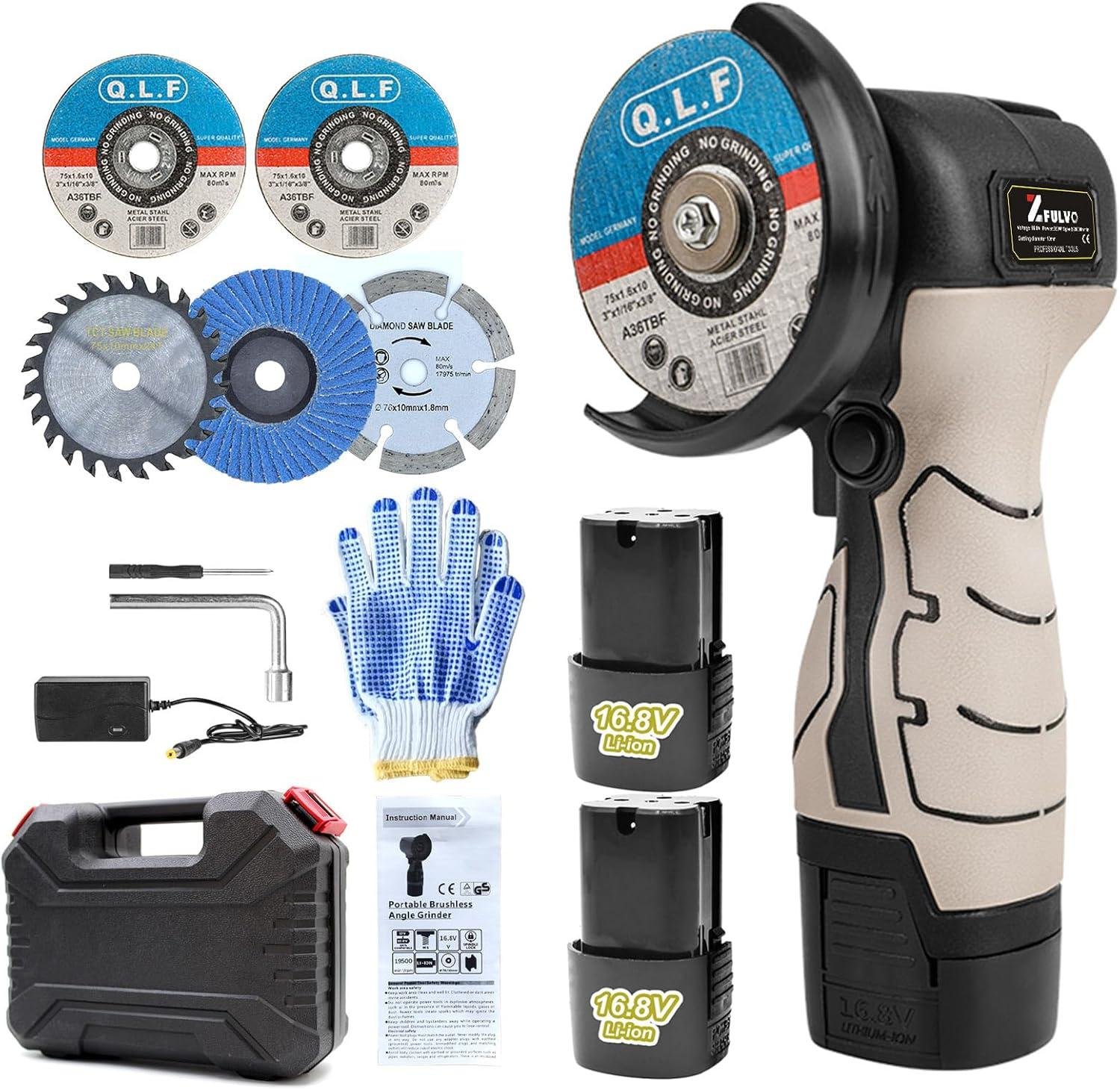
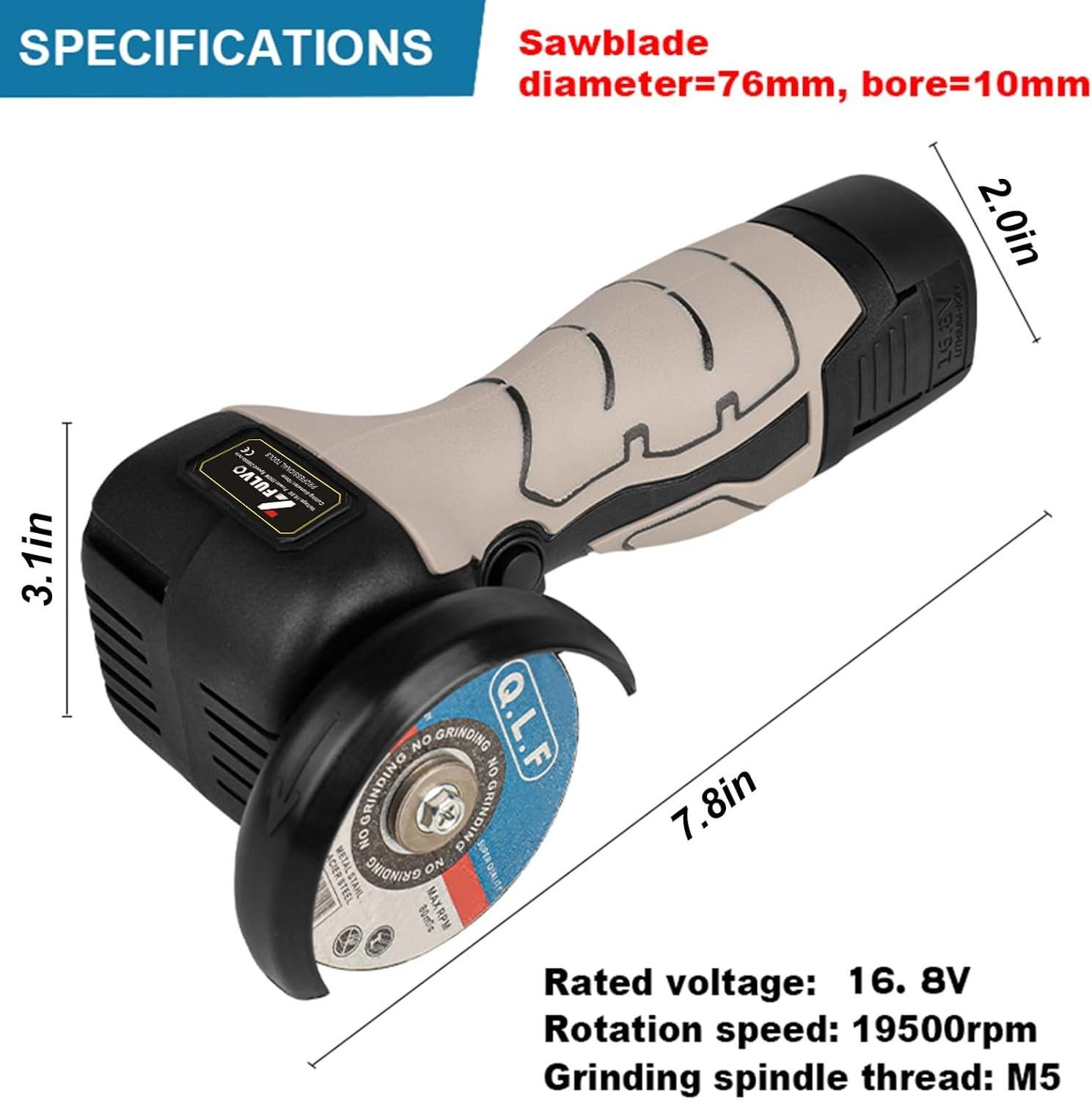
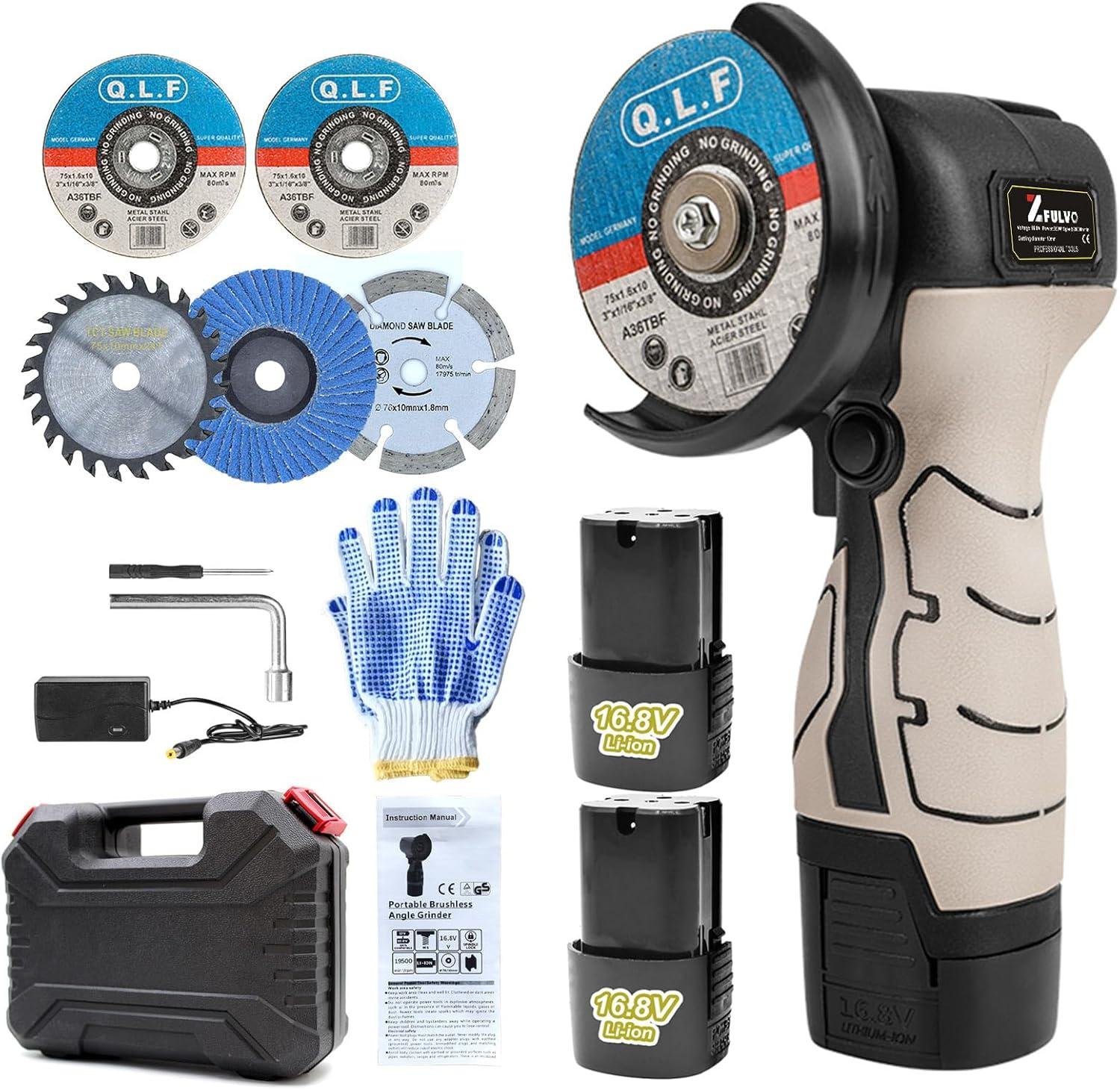
That’s where this cordless Brush Angle Grinder Kit comes in: a mini handheld angle grinder rated at 19,500 RPM, powered by two 16.8V 2000mAh batteries, and bundled with cutting discs, wrenches, a guard/baffle, and a case—aimed at quick cutting, light grinding, sanding, and cleanup on metal and wood.
In this review, we’ll break down the key features, ergonomics, build choices (spindle lock, guard, ventilation, switch design), and what customer reviews suggest about cutting ability, ease of use, value, and the mixed reports on battery life and long-term durability—plus who this tool makes sense for and who should pass.
We’ve spent years around sawdust and sharp edges, and we certainly know new tools should earn their spot on the bench.
Tool Overview and First Impressions in the Shop

In our shop, this mini cordless angle grinder lands in the “grab-it-first” category for quick trimming and cleanup—especially when we don’t want to drag out a corded grinder or a larger 4-1/2″ unit. The kit is built around a 16.8V platform with two 2000mAh batteries and a quoted top speed of 19,500 RPM, which is the spec that tells us it’s aimed more at fast, light-duty cutting and edge work then slow, torque-heavy grinding. Out of the case, it feels compact and easy to index in one hand, and that matches what many customers emphasize: “light weight,” “easy to handle,” and handy for small jobs around the shop. For woodworking, we treat a tool like this as a support player—think trimming protruding screws or nails, cutting down small brackets, cleaning up hardware, or sanding a stubborn door edge—rather than a primary surface-prep tool for fine joinery.
Setup is straightforward: charge a battery, mount a disc, and go. The grinder includes a spindle lock for disc changes, though at least one reviewer noted the arbor lock pin doesn’t always fully stop the spindle, making swaps more fiddly than expected (gloves and careful hand-braking were their workaround). Review themes also line up with what we’d expect at this size—customers praise that it cuts well (one even said it cuts 3/8″ bolts “like butter”) and call it good value, but battery feedback is mixed: some report the packs hold a good charge while others say a battery won’t take/hold a charge or runtime is short.from a woodworking education standpoint,the big takeaway is technique: at 19,500 RPM,we let the disc do the work with a light touch—especially on wood—as pressure increases heat,can scorch fibers,and can make the tool feel “underpowered” (another customer theme: it can bog down if you lean on it). We also recommend full eye/face protection and keeping the guard installed whenever possible; compact grinders are convenient, but they still throw grit, sparks (on metal), and abrasive dust fast.
Real World Performance for Wood Cutting and Light Grinding Tasks
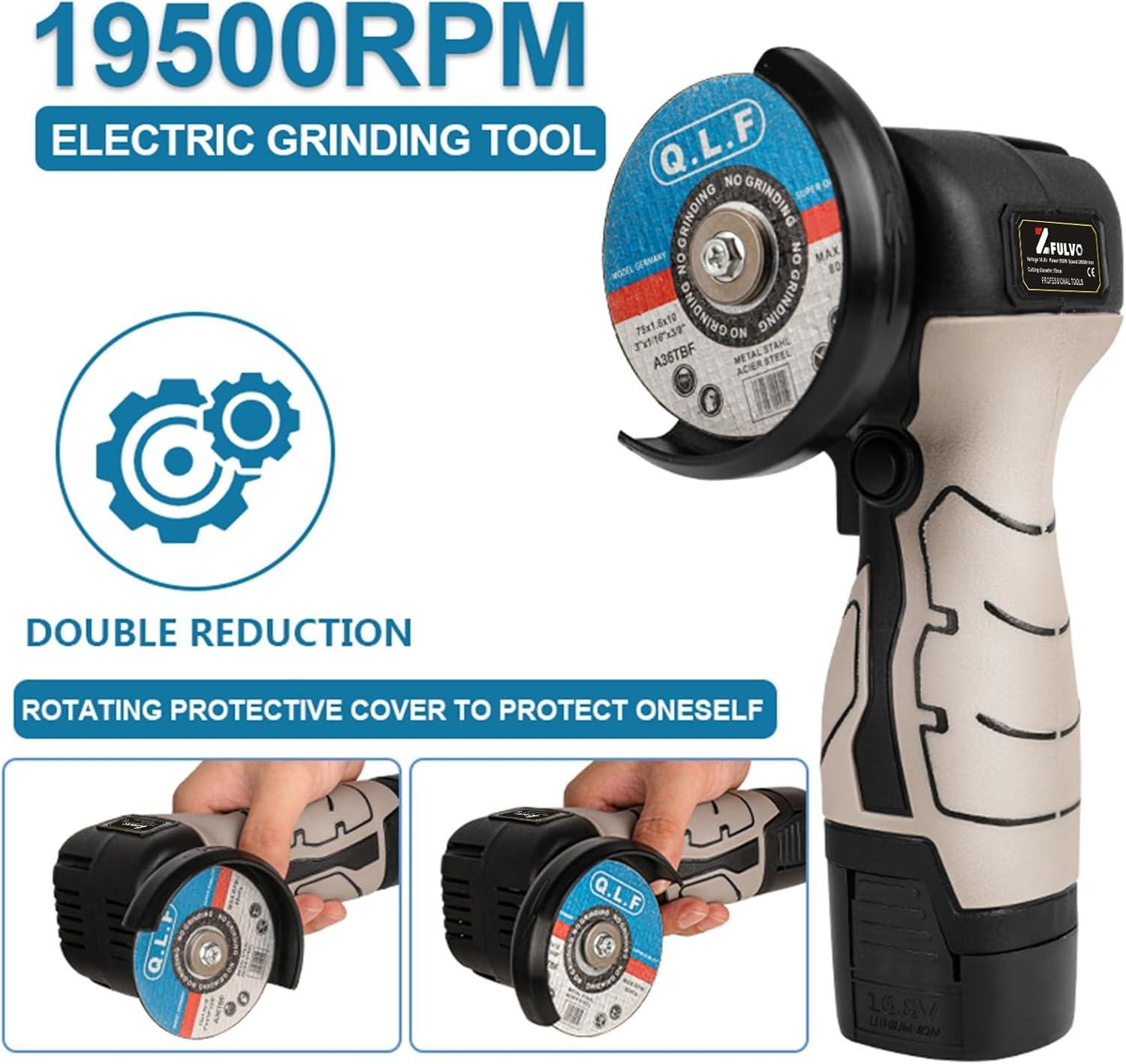
in real shop use, we’d treat this mini angle grinder as a “grab-and-go” cutter and edge-cleanup tool, not a replacement for a full-size 4-1/2″ grinder or our track saw. On paper it’s built for quick bursts: a 19500 RPM motor paired with two 16.8V 2000mAh batteries, and a compact body that’s listed at 1100g (about 2.4 lb). That high RPM is exactly why it can be handy for woodworking-adjacent cutting—think trimming protruding screw tips,cutting off small nails or staples in reclaimed boards,and making relief cuts in thin stock where a saw won’t fit. Reviewers consistently echo that it “works great” and is “notably useful for small jobs around the shop,” with several praising how it “cuts well” and feels lightweight. For wood specifically, this kind of grinder is best approached as a controlled, shallow-cut tool: let the disc do the work, keep the guard on, and avoid burying the wheel—wood can grab unexpectedly at grinder speeds.
For light grinding and sanding tasks, we see the most value in quick touch-ups: knocking down a proud edge on a door or frame, blending a patch, or cleaning up epoxy squeeze-out where a chisel would risk tearout. One customer described sanding a binding door and frame with the included sanding wheel and learning that “less pressure is the way to go,” which matches how grinders behave on wood—too much pressure builds heat,loads the abrasive,and can dish the surface fast. The big limitation is finesse: like that same reviewer noted, it “won’t sand into a 90-degree corner,” so we’d still reach for an oscillating tool or detail sander when accuracy matters.battery feedback is mixed—some say the packs “retain a good charge,” while others report batteries that “don’t hold a charge”—so we’d plan around short sessions and keep the spare battery topped up. A few reviews also mention the arbor/spindle lock being finicky, so disc changes may take more patience (gloves help), which matters in a workflow where we swap from a cutting disc to a sanding disc often.
- Cordless mini angle grinder
- 2× 16.8V 2000mAh batteries
- Charger
- Cutting wheels/discs (kit listing indicates 5; product description also notes 6)
- Wrenches
- Gloves
- Storage case (noted by reviewers)
- 3-inch cut-off wheels (common for mini grinders; verify arbor size before buying)
- Flap sanding discs (light shaping and blending on wood—use gentle pressure)
- Fiber sanding discs (fast stock removal; easy to gouge—practice on scrap)
- Door/face-frame rubbing fixes (controlled sanding, edge easing)
- Reclaimed lumber prep (cutting nails/staples and fast cleanup)
- Hardware trimming (bolts, screws, brackets during jig-making)
- Small detail grinding where a bigger grinder won’t fit
- Softwoods (pine, fir) — best for light sanding/touch-ups due to easy material removal
- Hardwoods (oak/maple) — use sharp abrasives and minimal pressure to avoid burnishing
- Painted/primed trim — reviewers report success sanding door/frame areas; dust control is on us
| Spec / Feature | What It Is (This Kit) | What It Means in a Wood Shop |
|---|---|---|
| No-load speed | 19500 RPM | Very fast cutting/sanding; easy to remove too much wood—use a light touch. |
| Battery | 16.8V, 2000mAh (2 packs) | Convenient for quick tasks; expect runtime to vary—reviews are mixed. |
| Weight | 1100g | More controllable one-handed for small adjustments and overhead/awkward spots. |
| Dust collection | None listed | We need PPE and cleanup planning; sanding wood makes fine dust quickly. |
| Accessory Type | Typical Use | Fit Notes |
|---|---|---|
| Cut-off wheel | Trimming metal fasteners in wood, small cuts in thin material | Confirm wheel diameter/arbor size matched to this mini grinder before purchase. |
| Sanding/flap disc | Edge easing, blending, quick leveling | Use light pressure; keep moving to avoid gouges and heat marks. |
| Grinding disc | Metal shaping, deburring | Not ideal for wood; can burn/scorch and grab. |
| Task | Recommended Capacity (Realistic) | What Reviews Suggest |
|---|---|---|
| Wood edge sanding | Short, careful passes; “sneak up” on fit | A customer successfully sanded a door/frame and emphasized light pressure. |
| Light grinding | Deburring and quick touch-ups, not sustained grinding | Multiple reviewers say it’s not made for heavy grinding, but great for small jobs. |
| Battery runtime | Plan for intermittent use; keep the second pack charging | Mixed: some report good charge retention, others report packs that won’t hold a charge. |
See Full Specifications & Customer Photos
Key Features Woodworkers Will Appreciate for Control Comfort and Battery Runtime
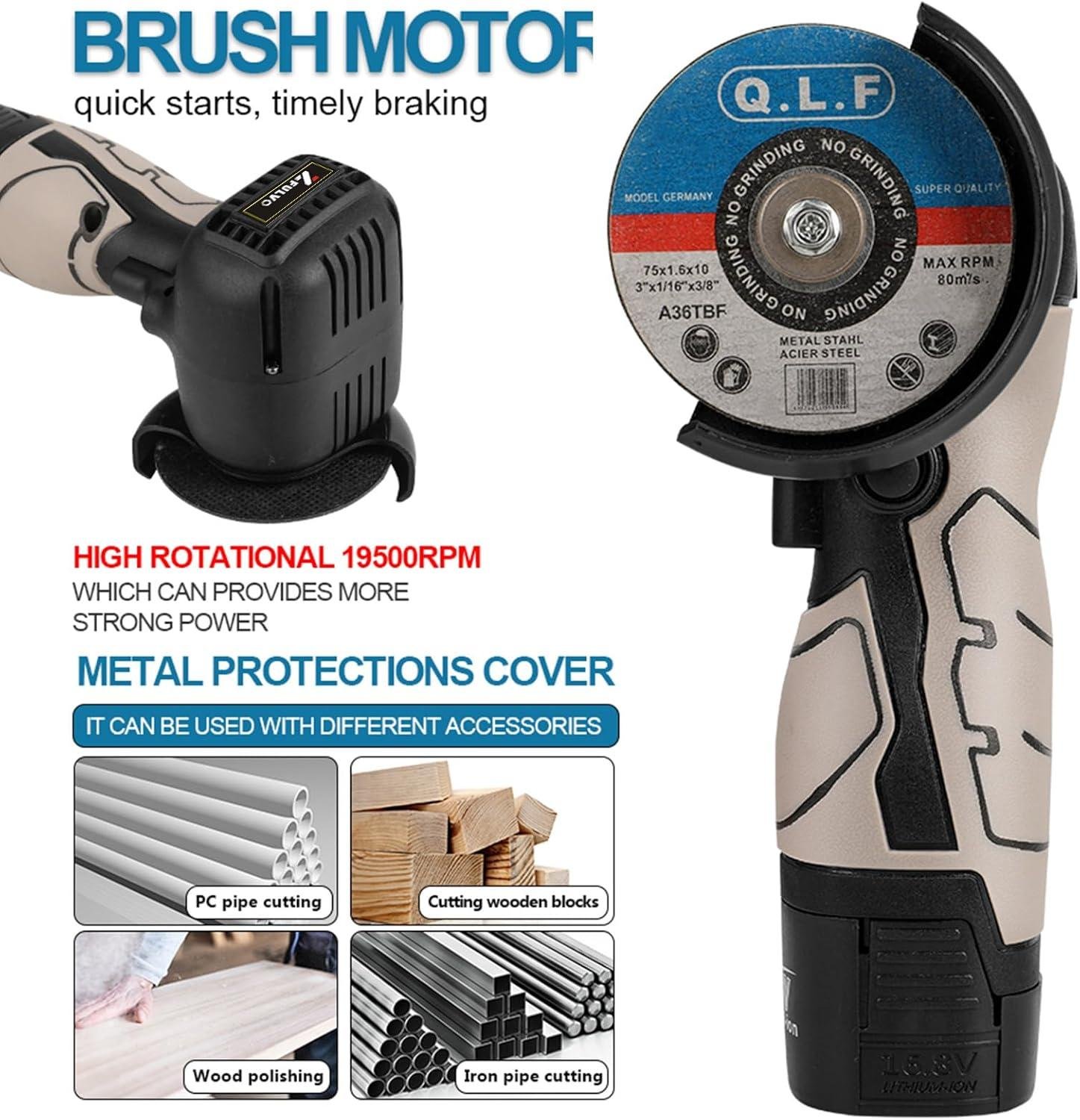
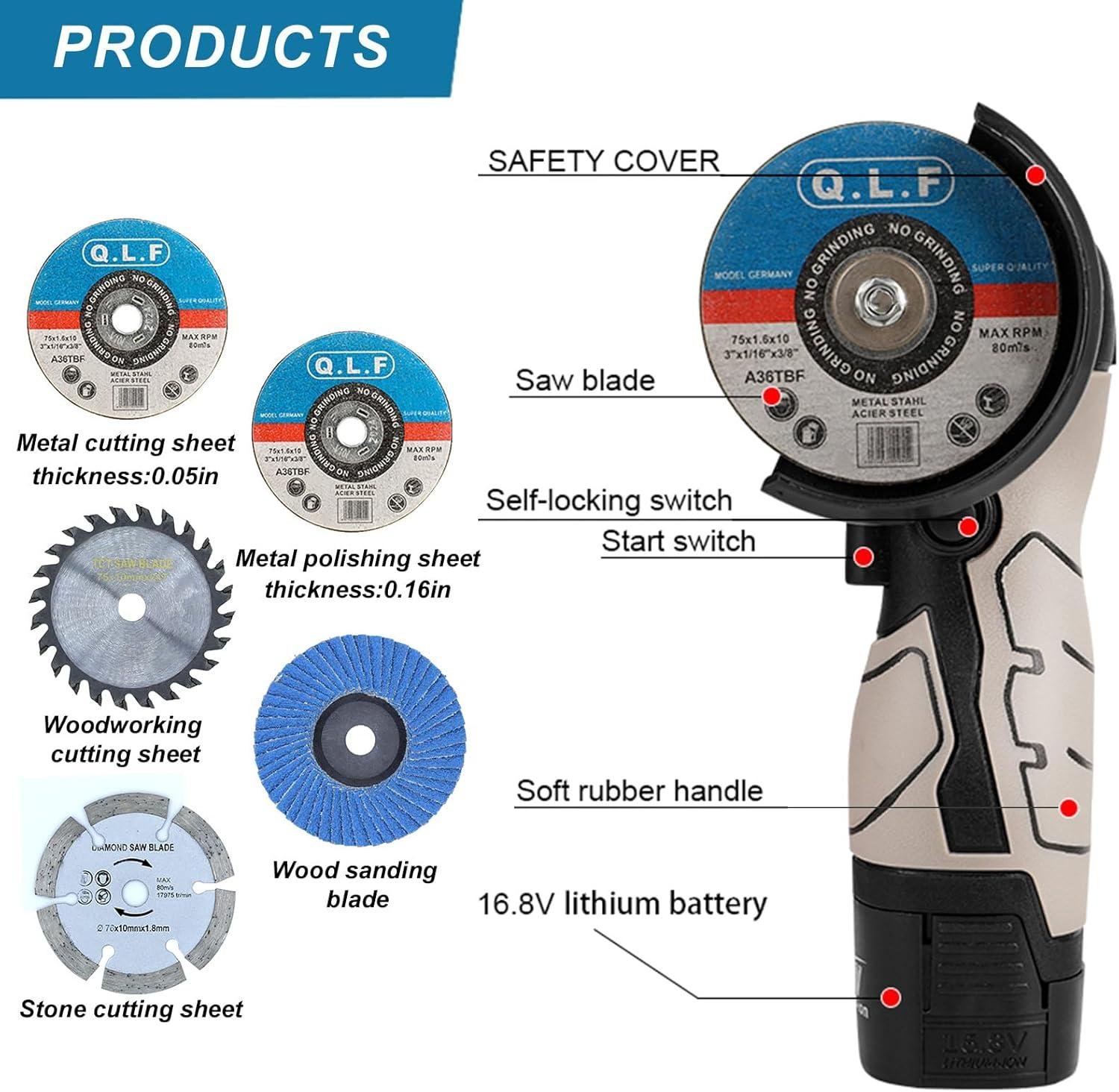
For shop control and comfort, we like that this mini grinder is built around a high-speed 19,500 RPM motor and a compact body that’s listed at 1100g (about 2.4 lb). In woodworking terms, that speed is what makes it feel more like a “precision cutoff and cleanup tool” than a slow, torque-heavy grinder—handy for trimming small screws, cutting off protruding brads, or knocking down sharp edges on hardware without hauling out a corded tool. the maker calls out a rubberized, non-slip handle and a side toggle switch with self-locking start; in practice, customers frequently describe it as “light weight,” “easy to handle,” and even “minimal vibration”, which matters when we’re trying to sneak up on a fit (like easing a door or frame) rather than hog off material. One reviewer specifically mentioned sanding a door and door frame and learning that “less pressure is the way to go”—and that’s good woodworking advice: let the RPM do the work, keep the tool moving, and avoid digging a divot you can’t erase. We also appreciate the safety-minded touches like the thickened anti-splash guard and ventilation holes for heat management, but we still need to treat this like any cutoff tool around wood dust: wear eye protection, keep sparks away from dust piles, and don’t count on it to reach into a true 90° corner.
Battery runtime is where this kit can be either a convenience win or a limitation, depending on our expectations. On paper it’s powered by two 16.8V 2000mAh lithium-ion packs, and the biggest practical advantage is simply having two batteries so we can keep one charging while the other’s in use—several reviewers call the tool “great for small jobs around the shop” and like that it’s cordless. Real-world feedback is mixed, though: some customers say the batteries “retain a good charge” or offer “good work life,” while others report they “don’t hold a charge” or feel short-lived, especially if we lean into heavy pressure. that mixed theme lines up with how these small grinders behave: high RPM plus aggressive feed rate will drain compact packs quickly, and one Canadian reviewer warned it can feel “underpowered” and may stop when pressure is applied—so our technique matters (lighter passes, sharper discs, and letting speed do the cutting). Disc changes should be straightforward thanks to the spindle lock, but one verified buyer noted the arbor locking pin “doesn’t hardly work” on their unit, so we’d be prepared to hold the arbor carefully (with gloves) while tightening. Bottom line: for trim-level sanding, quick hardware cutoffs, and one-off adjustments where a cord is annoying, the two-battery setup is the feature woodworkers will notice most—just don’t buy it expecting all-day grinding or heavy stock removal.
- Cordless mini angle grinder (rated 19,500 RPM)
- 2× 16.8V 2000mAh lithium batteries
- 6× cutting wheels (per package contents)
- 1× charger
- 2× wrenches
- Gloves
- 3-inch cutting discs (customers mention using different brands/blades)
- Sanding wheel/disc (customers report door/frame sanding)
- Grinding wheel (light cleanup and edge dressing)
- Door and jamb easing (binding/rubbing fixes)
- Flush-cutting small fasteners (bolts/screws/hardware trim)
- Shop jigs & fixtures cleanup (deburring plates, trimming brackets)
- On-site touchups where cords get in the way
- Softwoods (general sanding/edge easing—use light pressure)
- Hardwoods (customers didn’t specify species; we recommend extra caution due to burn/gouge risk at 19,500 RPM)
- Painted wood surfaces (door/frame sanding reported)
| Spec / Feature | What We Get (Per Listing/Reviews) | What It Means in the Wood Shop |
|---|---|---|
| No-load speed | 19,500 RPM | Fast cutting/sanding, but easier to gouge wood—use light passes. |
| Battery system | 16.8V 2000mAh, 2 batteries | Good for small jobs; runtime varies by pressure and material. |
| Weight | 1100g | More one-handed control for quick adjustments and overhead work. |
| Controls | Side toggle with self-locking start | Convenient, but we should still practice safe grip/stance before locking it on. |
| Cooling & guarding | Ventilation holes, anti-splash baffle | Helps with heat and debris; still not a dust-collection tool. |
| Attachment Type | Compatible Use | Woodworking Note |
|---|---|---|
| 3″ cutting discs | Cutting small metal, fastener trim | Keep sparks away from sawdust; clamp work securely. |
| Sanding disc/wheel | Edge easing, door/frame fitting | Feather pressure; keep moving to avoid dips/burn. |
| Grinding disc | Deburring hardware, light shaping | Not ideal for heavy stock removal on wood—use for hardware and small fixes. |
| Capacity Topic | Recommended Expectation | What Reviews suggest |
|---|---|---|
| Job size | Short bursts, detail work, quick cutoffs | Common theme: “perfect for small jobs”; not for heavy grinding. |
| Battery runtime | Plan around swapping batteries | Mixed: some report good charge, others say weak/doesn’t hold. |
| pressure tolerance | Light pressure, let RPM work | Some users say it can stop when pushed hard. |
Check Current Price & reviews on Amazon
Ease of Use and Safety for Beginners and Experienced Woodworkers
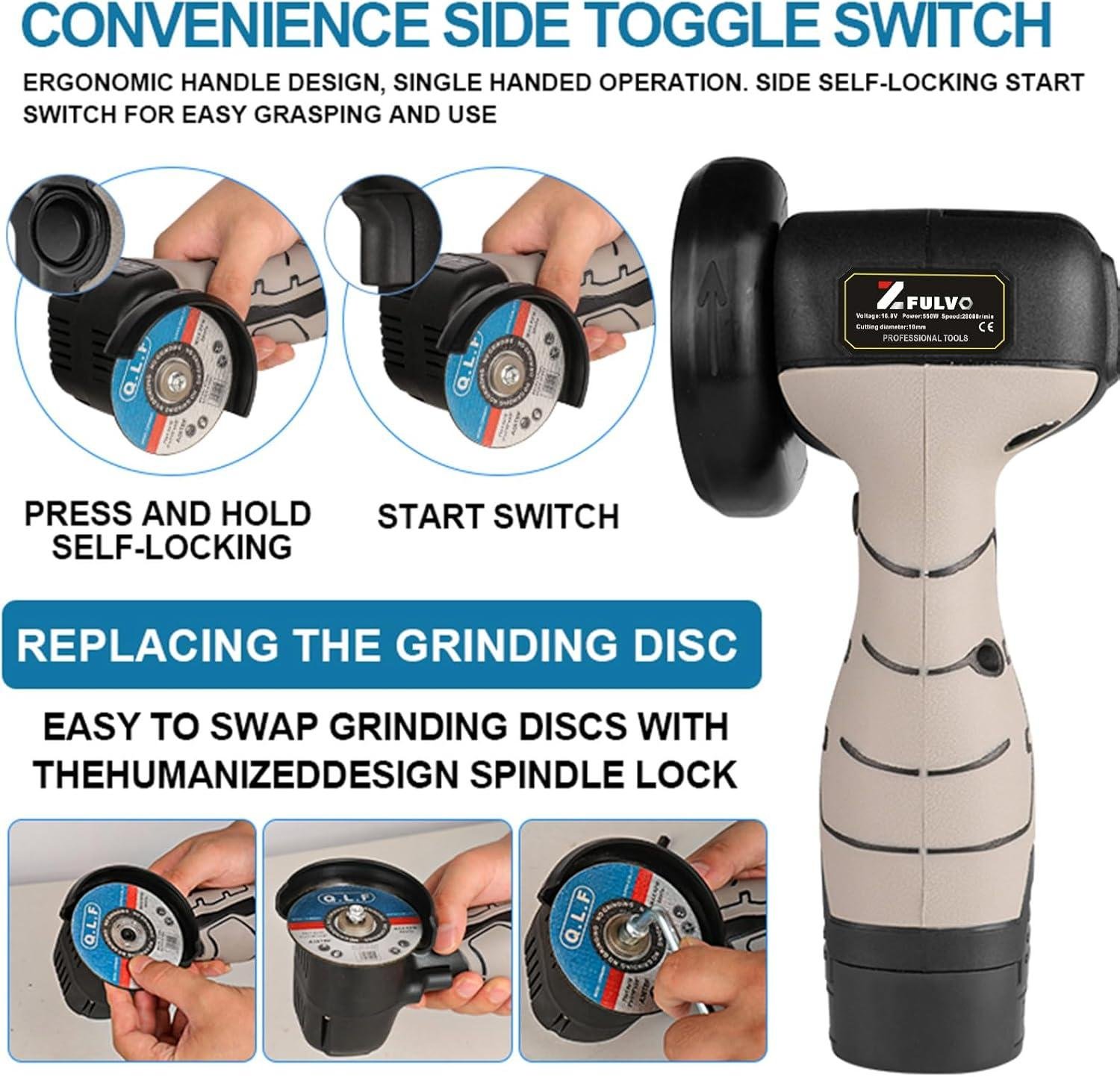
In day-to-day shop use,this mini grinder feels aimed at quick,controlled work rather than long,aggressive stock removal—which is exactly why it can be approachable for beginners and still handy for experienced woodworkers. The tool is rated at 19,500 RPM and runs on two 16.8V 2000mAh batteries, and multiple reviewers repeatedly describe it as “light weight,” “easy to handle,” and comfortable for one-hand operation. That compact feel matters when we’re doing woodworking-adjacent tasks like trimming a proud screw, cleaning up a stubborn staple, or lightly sanding a door edge that’s binding.One customer specifically mentioned using the included sanding wheel to fix a rubbing door/frame and learning that “less pressure is the way to go”—a great lesson for new users,as at this speed the tool will remove material quickly,and it’s easy to go too far before we realize it.
Safety-wise, we’d treat this like any angle grinder: high RPM, small wheel, and real consequence if technique slips. The kit includes a thickened baffle/guard intended to reduce splash/debris, and the body has ventilation holes for cooling, but we still need disciplined habits—eye protection, hearing protection, gloves that won’t snag, and a firm stance with the work clamped (no “handheld sanding” on small parts). Review themes also point to a couple of beginner pitfalls: some users note the guard can take getting used to, and one verified buyer reported the arbor lock pin “doesn’t hardly work,” making disc changes trickier—meaning we should unplug the battery during swaps and use the included wrenches patiently rather than forcing anything. battery feedback is mixed: some say it holds charge well while others report batteries that don’t hold a charge, so for safety and workflow we’d plan short bursts, keep the second pack topped off, and avoid pushing hard—because if a grinder “stops suddenly when any pressure” is applied (as one reviewer complained), that’s often our cue to lighten the cut, let the RPM do the work, and choose the right disc for the material.
See Full Specifications & Customer Photos
Customer Reviews Analysis
What Woodworkers Are Saying (Review Analysis)
Below is a woodworking-focused summary of real customer reviews for the cordless brush Angle grinder Kit,19500rpm Mini Electric angle Grinding Tool (16.8V, 2×2000mAh batteries, 5 cutting discs)—highlighting where it shines for shop and DIY use, and where it falls short.
| Aspect | Common Feedback |
|---|---|
| Overall Sentiment | Mostly positive for light-duty cutting/sanding and portability; mixed when pushed hard |
| Performance | praised for speed and convenience on small jobs; some report stalling under pressure |
| Build Quality | Often described as decent and “smooth”; one complaint about spindle/arbor lock usability |
| Ease of Use | Generally easy to handle, low vibration; control technique matters (light pressure) |
| Versatility | Good for trimming, sanding, quick fixes; limited for corners and heavy grinding |
| Value | Frequently called a good deal for a cordless kit with case + two batteries |
1. Overall sentiment from woodworking customers
Multiple reviews highlight that this mini cordless grinder is a solid pick for small, practical shop and home tasks, especially where portability matters. Common praise includes it being lightweight, compact, and convenient, with several people describing it as “works great” and “does the job” for typical DIY-type workloads.
That said,some users reported challenges with power under load,especially if treated like a full-size angle grinder.
2. Performance feedback (accuracy, power, results)
Several woodworkers mentioned that performance is best when used with a light touch rather than forcing the tool.
- Sanding/stock removal: One reviewer successfully used this to sand a door and door frame that had been rubbing for years,noting the sanding disc “did a great job” once they learned control—specifically that “less pressure is the way to go.” They also reported smooth handling and a satisfying finished result after repainting.
- Cutting speed (light duty): Common praise includes that it “cuts through whatever you need fast” and works well for small cuts.
- Power and runtime vs smaller-voltage minis: One detailed review contrasts it favorably against “12V mini angle grinders,” calling those “under powered,” and saying the 16.8V version made “all the difference… way more powerful and way longer work times.”
- Stalling under pressure: At least one customer reported the opposite experience: “Very underpowered, stops suddenly when any pressure put on work piece,” suggesting the tool can bog down if you lean on it.
3. Build quality and durability observations
Reviewers generally describe the tool as decent quality for the price, with positive mentions of a sturdy blow-molded storage case and a kit that feels complete for basic use.
However, one of the most specific durability/engineering complaints was about the spindle/arbor lock:
- A user said the lock pin “doesn’t hardly work” and feels “too short,” making disc changes harder because it may not stop the arbor from rotating. They could still change discs by hand (with gloves), but it’s a clear usability/build detail some buyers noticed.
4. Ease of use for different skill levels
- Beginners/DIYers: Beginners appreciated the straightforward setup and portability. One reviewer described a short learning curve with sanding control and emphasized technique—go easy, don’t gouge the work, because “you can’t put it back once taken off.”
- Comfort/fatigue: Multiple reviews highlight it being lightweight,“easy to handle,” and having minimal vibration,which helps for one-handed use and reduces fatigue on quick tasks.
- Two-hand precision: One user specifically noted you can use it one-handed for convenience or two-handed for greater precision, which is helpful when trying to keep a sanding pass even.
5. Common project types and success stories
Customers successfully used this for:
- door/door frame sanding and fitment fixes (removing binding/rubbing and improving function)
- General home/shop DIY tasks where bringing a corded grinder is inconvenient
- Light cutting tasks (one reviewer used it to cut seals off trailer loads—more of a utility use, but it speaks to quick trimming work)
Woodworking takeaway: reviews suggest it’s useful for fit-and-finish adjustments (like easing edges, shaving high spots, quick surface sanding) more than serious material removal.
6. Issues or limitations reported
Some users reported challenges with:
- Not suited for heavy grinding/cutting: One reviewer put it plainly—“not made for heavy grinding or cutting… great for small projects.”
- Power under load: A negative review cites stalling when pressure is applied, which matches the broader theme that this tool rewards a lighter hand and smaller bite.
- Corner access: One triumphant sanding review notes it won’t sand into a true 90° corner, though it can get close. (Woodworkers may still need a detail sander, chisel, file, or hand sanding block for tight corners.)
- Disc changes/spindle lock: The reported lock pin/spindle lock issue can make accessory changes more fiddly on some units.
- Battery/charging notes: One user reported battery life isn’t very long, though they also note it includes two batteries (so you can rotate). Another review mentioned the kit didn’t include a british charger, which can be a purchase/compatibility annoyance depending on region.
woodworking reviewers tend to like it most as a portable, light-duty cutter/sander that speeds up small jobs—just not as a replacement for a full-size grinder or dedicated woodworking sanders where precision corners and sustained torque matter.
Pros & Cons
Pros & Cons
After putting this cordless mini angle grinder in our mental “grab-it-first” tools pile, we’re convinced it shines in a very specific lane: quick, small-to-medium cuts and cleanups where dragging out a full-size grinder (and cord) feels like overkill. here’s where it impressed us—and where it reminded us it’s still a compact,budget-friendly kit.
Pros
- Compact, shop-friendly size: The mini format is genuinely handy for tight spaces and “one quick cut” moments.
- Fast cutting for its class: Plenty of users report it slices through bolts and light steel cleanly (think “like butter” on smaller hardware), and our expectation matches that use case.
- Great convenience factor: cordless means we’re not unspooling extension cords or relocating projects just to reach an outlet.
- Two batteries included: Even with mixed battery-life feedback, having a spare battery in the case reduces downtime.
- Easy to handle: The lightweight body and rubberized grip make it feel more like a “precision grinder/cutter” than a bulky demolition tool.
- Good value kit vibe: Case + discs + gloves + charger makes it feel ready-to-work out of the box for small jobs around our shop.
Cons
- Battery life is inconsistent: Reviews are split—some batteries hold a charge well, others reportedly don’t, which is a big deal on cordless tools.
- Not for heavy grinding: This isn’t the tool we’d choose for sustained material removal, aggressive grinding, or pushing hard into thick stock.
- Potential durability variability: A few reviewers mention early failures or issues after light use, suggesting quality control may be hit-or-miss.
- Under load, it can bog down: Some users report it stalls with pressure—so we need to let the disc do the work and keep expectations realistic.
- Disc-change quirks can happen: At least one reviewer noted the arbor lock didn’t reliably hold, making swaps more fiddly than they should be.
- Mini discs = mini reach: The small cutting wheel size is great for control, but it limits depth of cut compared to standard grinders.
Our Quick Take (Who It’s for)
| Job Type | How It Feels in Our Shop |
|---|---|
| Quick bolt/conduit cuts | Strong match—fast setup, fast results |
| Tight-space trimming | Where the mini size actually wins |
| All-day grinding sessions | Wrong tool—better to step up to a full-size grinder |
| Occasional DIY + shop touch-ups | Good fit, especially with the two-battery bundle |
Q&A
What wood types can this handle effectively (softwood vs. hardwood)?
This mini cordless grinder is best on softwoods (pine, fir, cedar) and for light-touch work on hardwoods (oak, maple, walnut) when you’re using the right accessory (sanding/flap disc) and letting the 19,500 RPM speed do the work. In reviews, users consistently describe it as “perfect for small jobs” and handy around the shop, but also note it’s not meant for heavy material removal. For dense hardwoods, plan on lighter passes to avoid bogging down and to keep from overheating the wood or glazing the abrasive.
Is it powerful enough for hardwoods like oak or maple?
For spot sanding, edge easing, trimming a proud joint, or quick shaping, it can be “powerful enough,” but it’s not a replacement for a full-size 4-1/2″ grinder, belt sander, or router. Customer feedback on power is generally positive for the size (some mention it has enough power to avoid bogging on tougher cuts), but there are also comments that it can feel underpowered if you lean into the work. Best practice on hardwood: use fresh abrasives, keep pressure light, and work in short bursts so you don’t scorch the surface.
How does it perform on plywood and veneers—will it splinter or burn?
At 19,500 RPM, this tool can remove material very quickly, which is great for flush-up work on plywood edges, but it also increases the risk of burning glue lines and tearing veneer if you stay in one spot. Reviews specifically mention learning control and using “less pressure,” which is exactly the right approach for plywood/veneers. Use a sanding disc (not a cutting disc), keep the tool moving, and avoid digging an edge into the face veneer.
Can this handle production work, or is it more of a hobby/DIY tool?
It’s primarily a DIY and light shop-support tool—great for quick trim/sand/cut tasks without dragging cords, but not ideal for day-in, day-out production grinding. Multiple reviewers praise it for small jobs and convenience, while others caution it’s “not made for heavy grinding or cutting.” Battery feedback is mixed (some say the batteries retain a good charge; others report weak runtime or a battery that won’t take a charge), which is another reason it’s better suited to intermittent use rather than continuous production.
How difficult is the initial setup, and what adjustments are available?
setup is straightforward: charge the 16.8V batteries,install the guard,and mount the disc using the included wrenches/spindle lock. The tool is designed for one-hand use (about 1100g), with a side toggle switch and guard for splash/debris protection.One practical note from reviewers: the guard/side protection can take a little getting used to during installation, but most users find the tool easy to handle once set up.
Does it work with standard accessories, and how easy are disc changes?
It’s designed around mini (about 3″) cutting/sanding/grinding discs like the included set (listing notes multiple 3″ wheels). Disc swaps are generally quick thanks to the spindle lock design, but at least one verified review mentions the arbor/spindle lock pin may not fully stop rotation on their unit, making changes a bit fiddly. Workaround: wear gloves, hold the wheel carefully, and use the included wrenches—just be sure the battery is removed before changing discs.
Will this fit in a small workshop, and does it need dust collection?
Yes—this is exactly the kind of tool that shines in a small shop: compact, cordless, and easy to stash in the included case. It does not connect to typical woodworking dust collection, so plan on controlling dust the old-fashioned way: wear a respirator, use a fan/air cleaner, and do sanding/grinding near an open door or over a bench that’s easy to vacuum. For wood sanding,the fine dust can be significant because the tool spins fast.
Is it beginner-friendly—and would a professional woodworker be satisfied?
Beginners can use it safely and effectively, but it rewards a light touch. reviews repeatedly mention it’s easy to use, yet also highlight that control matters—one user said “less pressure is the way to go,” especially for sanding. For professionals, it’s best viewed as a secondary/detail tool for quick trims, tight-space work, or jobsite convenience.If you need all-day reliability, heavy stock removal, or consistent battery performance under load, a pro-grade cordless platform (with higher-capacity packs and broader accessory support) is still the safer bet.
Embrace a New Era
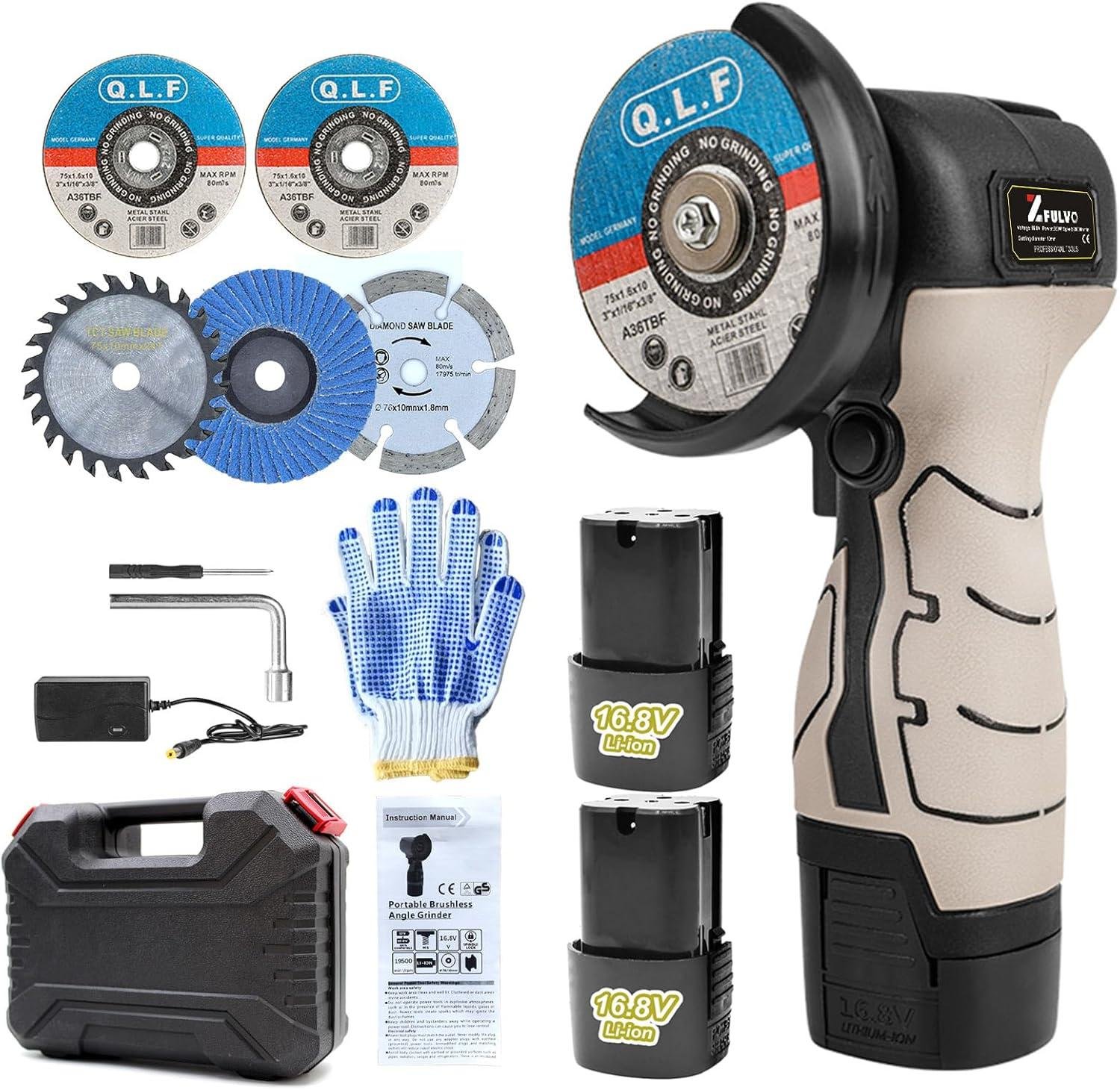
The Cordless Brush Angle Grinder Kit (19500 RPM) is a compact, handheld cutter/grinder powered by two 16.8V 2000mAh batteries, and it ships with multiple cutting discs plus a case—making it a convenient grab-and-go option for quick shop tasks. Customer feedback commonly praises its useful size, cutting ability, ease of use, and overall value, while the most frequent downside is mixed battery life (some packs hold up well, others fade sooner) and occasional durability/lock-pin complaints.
Best for: ideal for hobby woodworkers with small to medium projects, beginners doing trim tweaks, and cabinet/installation work where you need light sanding, quick cuts, or access in tight spots.
Consider alternatives if: you primarily work with thick hardwoods, need all-day durability for production use, or want consistently long runtime.
Final assessment: this mini grinder delivers solid performance for light-duty woodworking and mixed-material jobs, but it’s not built for heavy, continuous grinding.
Want to see current pricing and customer photos? View on Amazon & Read More Reviews →