

Blog
ALVIN GM0668 Cutting Mat Review: Right for Our Shop?

Ever tried trimming veneer, laying out inlay banding, or slicing sandpaper strips on the bench—only to watch the workpiece skate, the blade dig into your tabletop, and your lines drift just enough to ruin the fit? In a small shop, precision often comes down to having a reliable “mini work surface” that protects the bench while keeping cuts square and repeatable.
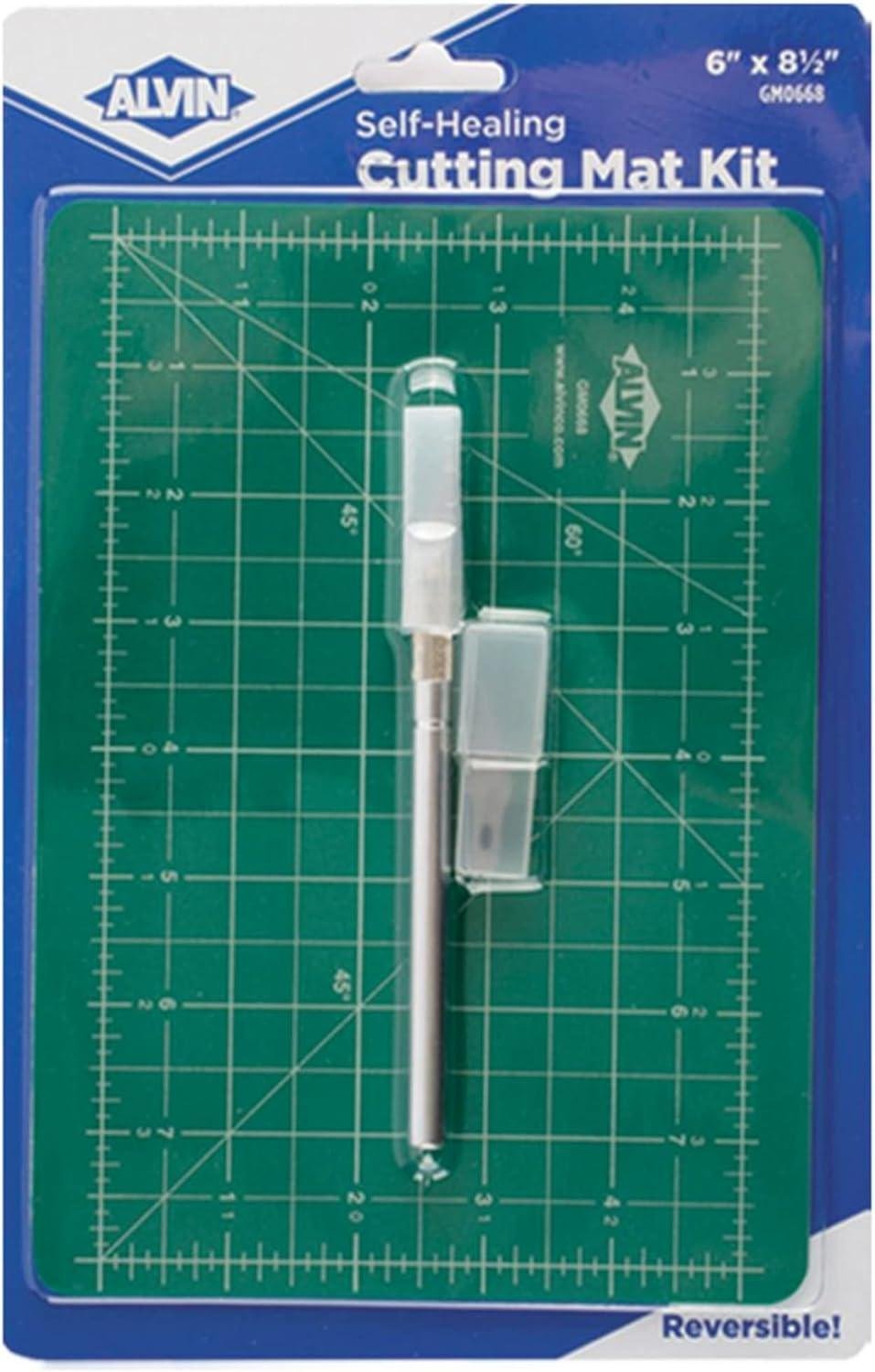
That’s where the ALVIN Self-Healing Cutting Mat Kit (6″ x 8.5″, Model GM0668) comes in. It’s a 3mm-thick,double-sided,reversible mat—green on one side,black on the other—both printed with a 0.5″ grid, 45°/60° angle guides, and numbered, graduated edges with 0.125″ hash marks. The kit also includes an art knife for light craft and layout trimming.
In this review, we’ll look at the mat’s accuracy cues, durability claims, space-friendly footprint, and overall value, plus what customers report about self-healing performance and everyday usability. We’re longtime woodworkers who sweat the small layout steps—because clean joinery starts long before the saw turns on.
Tool Overview and build Quality for Bench and bench Top Use
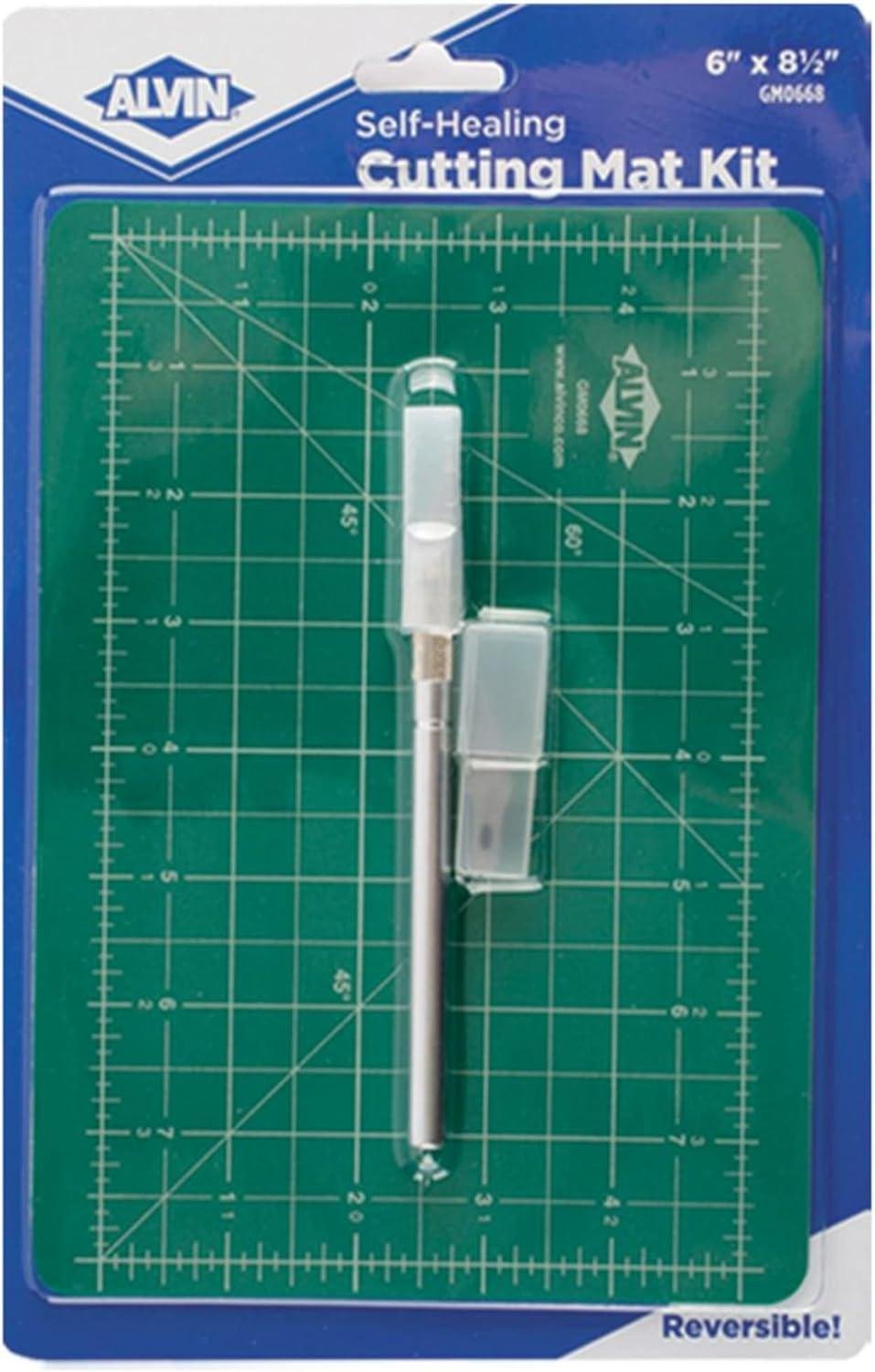
On a crowded bench, the ALVIN GBM Series Self-Healing Cutting Mat Kit (Model GM0668) feels like a “grab-and-go” surface for the small, fussy trimming tasks we do between bigger machining steps. The mat measures 6″ x 8.5″ and is 3 mm thick, which puts it in the sweet spot for protecting a benchtop without feeling spongy under a knife. It’s also double-sided—green on one side and black on the other—with grid lines on both, so we can dedicate one face to cleaner layout work and the other to rougher utility cuts. The printed layout is more helpful than it looks at first glance: 0.5″ grid lines, 45° and 60° angle guidelines, and 0.125″ graduated hash marks around the edges give us swift reference points when we’re trimming veneer tape, cleaning up sandpaper sheets, cutting shims, or squaring up template paper before transferring shapes to wood. Several customers echo the same bench-minded takeaway: the small footprint “fits the bill” when you don’t have space for a big mat, and it’s “quite handy and not cumbersome”—one even compared it to about the size of a Kindle, which is a fair mental picture for how little real estate it takes.
Build quality is what we expect from a mat marketed as “professional” drafting gear: the surface is meant to self-heal (closing up light knife marks over time), and reviewers generally say it “takes the cuts just as well as any other.” For woodworking, the key is technique—use a sharp blade, make multiple light passes instead of one deep cut, and keep the work flat so the knife doesn’t wander along grain-like fibers in paper or thin plastic.The kit aspect is practical for our tool drawer as it includes the basics, though we still treat the included knife like an entry-level shop knife rather than a replacement for a robust utility knife. Where this mat is less universal is under heavy compression in machines: one review specifically warns it’s “too thick” for some die-cutting setups, while another says it worked well in their Big Shot—so for us, that translates to “excellent for bench-top hand cutting and layout, but don’t assume it’s a perfect sacrificial plate in every press or jig without checking clearances.”
- Included accessories: GBM double-sided self-healing mat (6″ x 8.5″, 3 mm)
- Included accessories: Art knife (X-Acto-style)
- included accessories: Spare blades (per customer review theme)
- Compatible attachments/accessories: Replacement hobby-knife blades (X-Acto-style)
- Compatible attachments/accessories: Rotary cutter (the mat is marketed as a “rotary cutting board”)
- Compatible attachments/accessories: Straightedge (metal ruler) for safer, straighter cuts
- Ideal project types: Veneer/tape trimming at the bench
- Ideal project types: Template and pattern paper cutting for jigs
- Ideal project types: Sandpaper sheet trimming and abrasive association
- Ideal project types: Shim and gasket material rough cutting (thin sheet goods)
- Wood types tested by customers: Not specified in reviews (reviews focus on crafts/leather/jewelry rather than wood)
| Spec / feature | What ALVIN GM0668 Provides | what It Means on a Woodworking Bench |
|---|---|---|
| Mat size | 6″ x 8.5″ | Best for small parts, trimming, and portable kits; not wide enough for full-size plans |
| Thickness | 3 mm | Good benchtop protection for knives; might potentially be too thick for some machines (as one reviewer noted) |
| Surface | Self-healing, reversible | Helps the mat stay flatter/cleaner over time with light-to-moderate knife work |
| grid | 0.5″ grid, 45°/60°, 0.125″ edge marks | Faster layout checks and repeatable trimming without constantly reaching for a tape |
| Accessory | Compatible? | Notes for Woodworkers |
|---|---|---|
| Hobby knife (X-Acto-style) | Yes | Use sharp blades and light passes for clean edges on templates and tape |
| Rotary cutter | Yes | better for fabric/leather; still useful for thin flexible shop materials |
| Metal ruler / straightedge | Yes | Improves safety and accuracy; avoid wooden rulers that can get sliced |
| Capacity Area | Recommended Use | Actual/Observed from Reviews |
|---|---|---|
| Hand cutting | Paper, thin plastics, tape, light craft materials | Reviewers report it “worked well” for collage/pictures and “takes the cuts” well |
| Machine sacrificial plate | Only if clearance allows | Mixed: one reviewer says it worked; another says it’s too thick for their die cutter |
See Full Specifications & Customer Photos
Real World Performance for Knife Work Veneer Trimming and Template Cutting
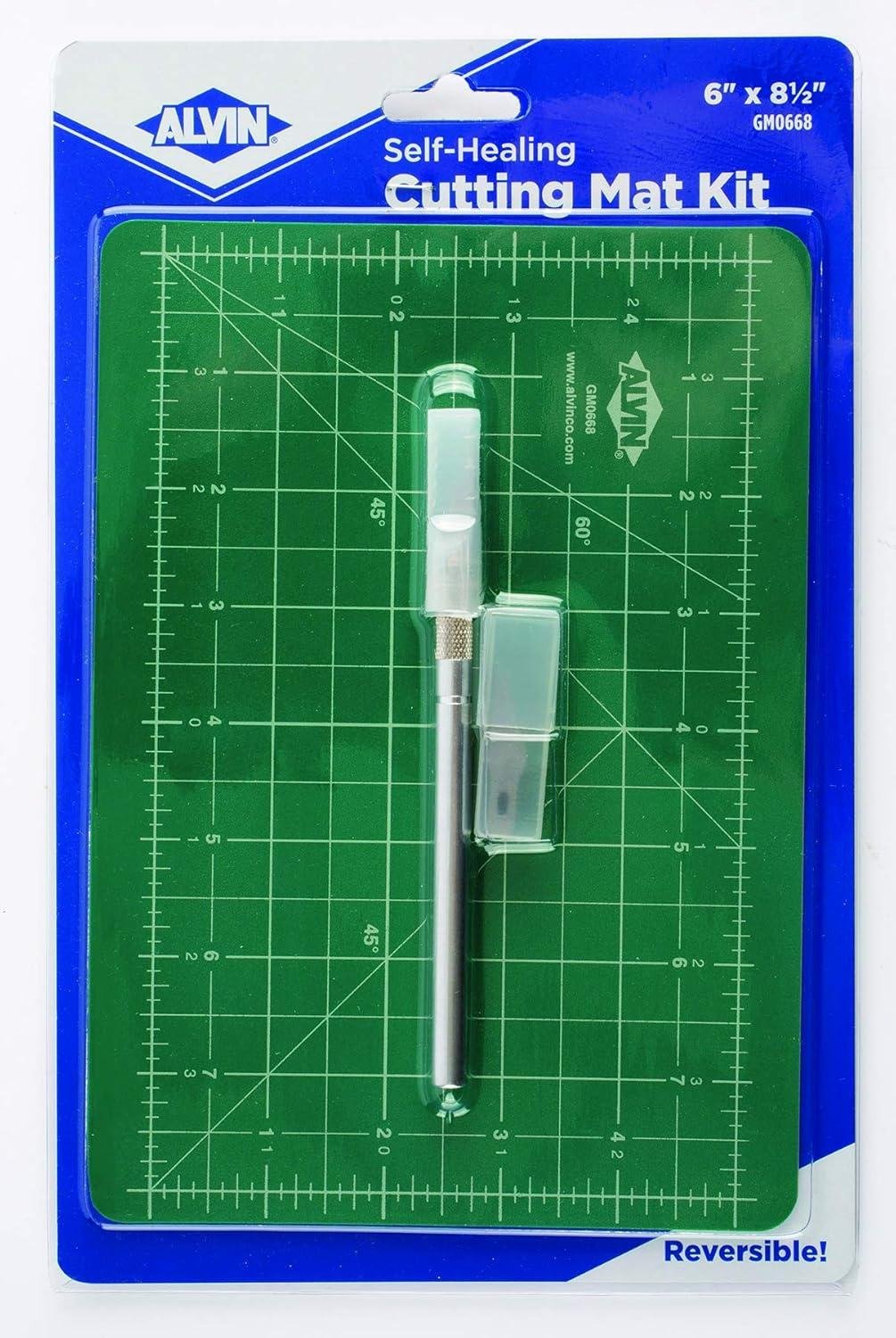
For veneer trimming and template cutting, this ALVIN kit behaves more like a “bench-side precision pad” than a full-size shop mat—and that matters. The mat is only 6″ x 8.5″ but it’s also 3mm thick, double-sided (green grid on one face, black grid on the other), and clearly laid out with 0.5″ grid lines, 45°/60° angle guides, and 0.125″ hash marks around all four edges. In our workflow, that’s perfectly sized for trimming edge-banding and small veneer patches with a light, controlled pull cut using the included art knife—especially when we’re cleaning up a paper or thin-cardboard pattern before committing it to MDF or acrylic.Reviewers consistently praise the compact “portable” size (“about as much room as a Kindle”), and we agree: when we’re working at a crowded assembly table or doing detail layout at the bench, this little mat stays out of the way while still giving us reliable reference lines for squaring up small parts.
Where the mat shines in real woodworking is repeatable knife work on thin stock—blue tape pattern layouts,shop-made router template drafts,and quick veneer scribing—because the self-healing surface supports the blade without feeling spongy. Customers often echo that it “takes the cuts just as well as any other” and that it’s handy and not cumbersome, and that matches what we’d expect from a quality self-healing mat in this thickness. The main limitation is capacity: at 6″ x 8.5″ we wouldn’t choose it for long straight veneer seams or full template tracing for furniture parts; you’ll still want a larger mat or a sacrificial backer board for that. One useful caution pulled from reviews: a few buyers tried using it as a plate substitute in die-cutting setups and found it “too thick” for certain machines—good reminder that 3mm thickness is excellent for knife control but won’t fit every “workholding hack.” For best results in the shop, we recommend shallow passes (several light cuts rather of one deep cut), keeping a fresh blade (dull blades wander and tear veneer), and using the grid to check your knife angle before you start—those small habits are what keep veneer edges crisp and templates true.
- Included accessories
- GBM series self-healing cutting mat (double-sided gridded)
- Art knife (customers mention it comes with an extra blade)
- Compatible attachments/accessories
- Replacement craft/utility knife blades (matching the included art knife style)
- Steel ruler/straightedge for guided veneer trimming
- Low-tack tape (blue tape) for holding veneer patches and pattern paper flat
- Ideal project types
- Small veneer patches and edge-banding clean-up
- Router-template drafts (paper/cardstock mockups before transferring to MDF)
- Inlay and marquetry paper patterns (small-format)
- Shop labels, sanding guides, and layout stencils
- Wood types tested by customers
- Not specified in customer reviews (reviews focus on crafts/leather/jewelry rather than wood species)
| Spec / Feature | ALVIN GM0668 (This Kit) | What It Means for Woodworkers |
|---|---|---|
| Mat size | 6″ x 8.5″ | Great for bench detail work; too small for long veneer seams or large templates |
| Thickness | 3mm | Supports controlled knife cuts; adds height that may interfere with some machine “plate” uses |
| Sides | Double-sided (green/black grids) | Flip to spread wear and keep a clean reference surface |
| grid/angles | 0.5″ grid,45°/60° guides,0.125″ edge hash marks | Helpful for squaring small patterns and maintaining consistent knife angles |
| Accessory Type | Compatible? | Notes for shop Use |
|---|---|---|
| Craft knife replacement blades | Yes | Keep spares; veneer trimming improves dramatically with fresh blades |
| rotary cutter | Typically yes | this is sold as a gridded cutting board for crafts/sewing; for woodworking, knife work is the main value |
| Metal straightedge | Yes | Use with light passes to avoid slipping and to protect fingers |
| Task | Recommended Capacity | Actual Practical Capacity (Based on Size) |
|---|---|---|
| Veneer trimming (long seams) | 12″ x 18″ mat or larger | Short trims only; long cuts will overhang the mat |
| Small veneer patches / edge-banding touch-ups | 6″ x 8.5″ or larger | Well-suited for controlled, close-in knife work |
| Template drafting (furniture-scale) | 18″ x 24″ or larger | Not ideal; best for small parts, not full patterns |
see Full Specifications & Customer Photos
Key Features Woodworkers Will Appreciate Including Grid Accuracy and Self Healing Surface
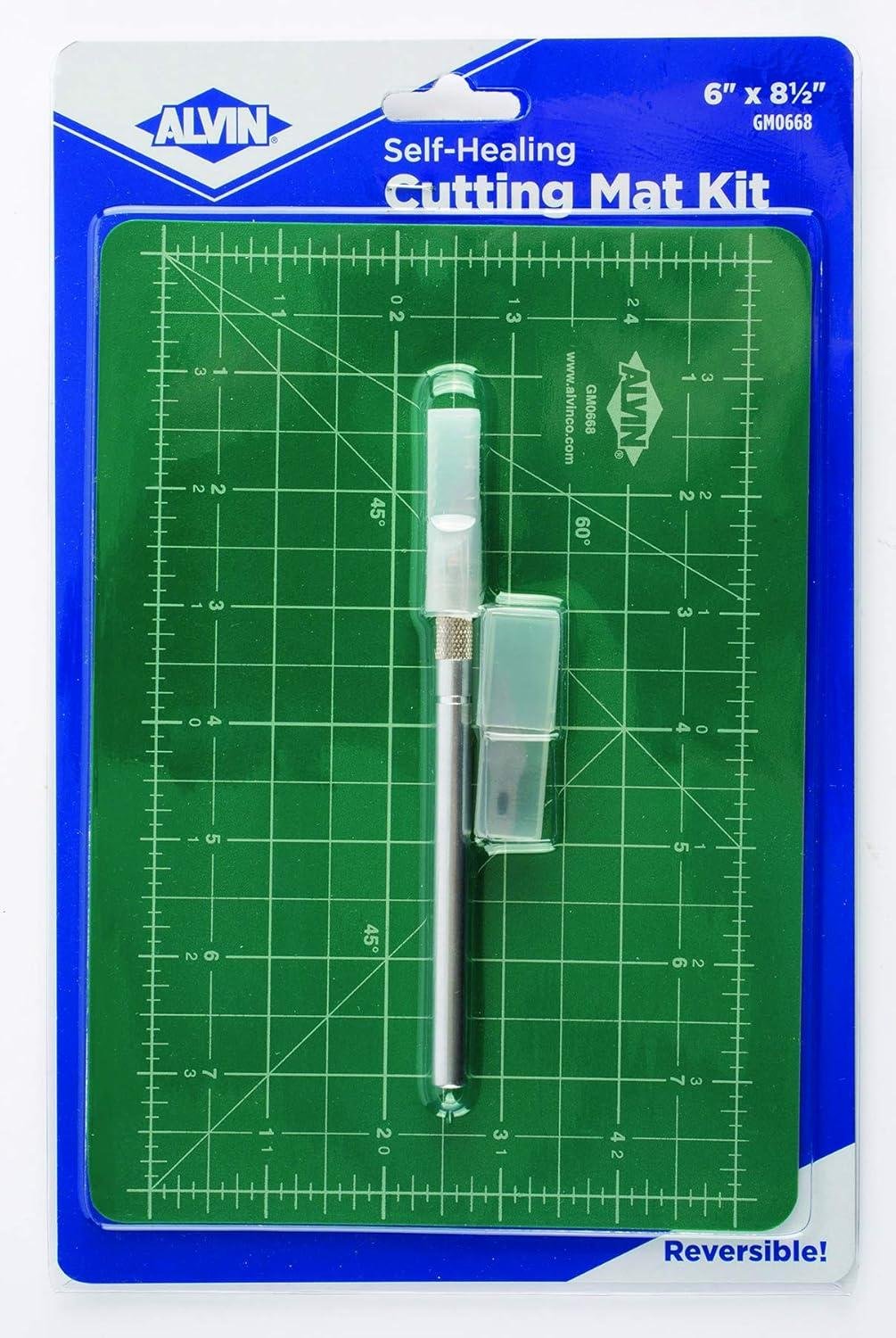
In a wood shop, we tend to judge a “small” surface by whether it earns its footprint, and the ALVIN GM0668 does exactly that. At 6″ x 8.5″ and 3 mm thick, it’s compact enough to live on a crowded bench (more than one customer notes it’s about the size of a Kindle) but still stiff and stable when we’re trimming sandpaper sheets, slicing veneer tape, or cutting layout templates from cardstock and thin plastics. The double-sided, reversible design—green on one side and black on the other, both with grid lines—is practical when we want contrast depending on the material (light paper on black, darker stock on green). More importantly for layout-minded woodworkers, the printed grid isn’t just decoration: it includes 0.5″ grid lines, 45° and 60° angle guides, and fully numbered edges with 0.125″ hash marks that extend past the zero baseline. That combination makes it easier for us to square up small parts, repeat cut lengths, and quickly align a knife cut with common shop angles without dragging out a bevel gauge for every little task.
The feature we appreciate most is the self-healing surface, because it supports cleaner knife work and helps avoid grooves that can steer subsequent cuts—especially when we’re doing multiple passes on thin stock (the safer way to cut) instead of forcing a blade through in one go. Customers consistently praise the handy small size, the fact that it’s portable, and that it’s a good deal because it includes a knife and spare blades; however, there’s also an important limitation worth learning from: one reviewer cautions that while it can work in some die-cut setups, it may be “too thick” for certain machines, so we’d treat it primarily as a bench-top cutting and layout mat rather than a universal machine accessory.For safe, accurate shop use, we’ll still recommend the basics: cut away from our hands, use light pressure with multiple passes, and reserve the mat for knife work (not as a glue-up pad or finishing surface). The kit’s included knife is a nice bonus for template and trim work, but we’ll get the best results by keeping blades sharp and swapping early—especially when we move from paper to tougher pattern materials.
- included accessories
- 1x ALVIN GBM Series self-healing cutting mat (Model GM0668, 6″ x 8.5″,double-sided)
- 1x Art knife
- Spare blade(s) (per customer feedback referencing “extra blade”)
- Compatible attachments/accessories
- Hobby knife / craft knife blades (X-Acto-style replacements)
- Metal straightedge or small machinist rule (for safer,straighter cuts)
- Veneer tape,masking tape,and template materials (cardstock,mylar)
- Ideal project types
- Small woodworking templates (hardware layouts,hinge leaf patterns)
- Veneer and inlay pattern prep (paper/plastic patterns)
- Trimming sandpaper,cork,leather,or gasket material for shop jigs
- Quick layout and trimming tasks at the bench when space is tight
- Wood types tested by customers
- Not specified in customer reviews (most references are crafts/leather/jewelry); we’d treat this as a template and knife-work surface rather than a wood-cutting tool.
| Spec | ALVIN GM0668 (This Kit) | Why It Matters in the Shop |
|---|---|---|
| Mat size | 6″ x 8.5″ | fits tight benches; good for small templates and trim work, not full sheet layout. |
| Thickness | 3 mm | Stable under the knife; one reviewer notes it can be too thick for some die-cut machines. |
| surface | Self-healing, reversible | Reduces cutting grooves that can pull a blade off-line over time. |
| Grid | 0.5″ grid, 45°/60° guides, 0.125″ hash marks | Speeds repeatable trimming and quick angle alignment for small parts and patterns. |
| Accessory Type | compatibility | Notes |
|---|---|---|
| Art/craft knife | Included | Handy for templates and trimming; change blades often for clean cuts. |
| Replacement blades | Yes | Customer reviews reference an extra blade; keep spares for tougher stock. |
| Rotary cutter | Likely | Mat is described as a gridded rotary cutting board; use light pressure to preserve the surface. |
| Use Case | Recommended Capacity | Actual Capacity (Based on Specs/Reviews) |
|---|---|---|
| Small template cutting | Best for patterns under the mat footprint | Excellent (customers repeatedly praise the ideal small size and portability) |
| Full-size layout work | Needs larger mat (12″ x 18″+) | Limited by 6″ x 8.5″ size |
| Die-cut machine plate substitute | Only if thickness matches your machine’s spec | Mixed—one user says it “works great,” another says “too thick” |
See Full Specifications & Customer photos
Ease of Use for Beginners and Experienced Builders in Daily Shop Tasks
For daily shop tasks, this ALVIN kit is about as beginner-friendly as it gets as there’s no assembly and no learning curve beyond “cut on the mat, not on our bench.” The 6″ x 8.5″ footprint is genuinely convenient when we’re short on space—several customers echo that it’s “perfect” as a portable craft kit and “not cumbersome,” and one even compares the size to “about as much room as a Kindle.” In a woodworking context, that translates well to trimming sandpaper sheets, cutting blue tape for layout, slicing veneer banding samples, shaping cardboard templates, or protecting a finished tabletop while we mark small hardware. The mat is double-sided (green on one side, black on the other), and both sides carry a printed grid with 0.5″ grid lines, 45° and 60° guidelines, plus numbered edges with 0.125″ hash marks—features that help beginners build good habits around squaring up work, repeating measurements, and making reliable angle cuts without guessing.
For experienced builders, the real value is speed and consistency: the mat is 3 mm thick, self-healing, and works as a small “precision cutting station” for tasks we don’t want to do over a steel rule on bare plywood. Reviews generally describe it as taking cuts “just as well as any other,” which aligns with what we want from a sacrificial surface—clean knife travel without chewing up our benchtop or dulling blades prematurely.The included knife (often described by customers as an “Exacto knife”) is a practical bonus for shop-only kits, though we’ll still treat it like any other razor tool: use multiple light passes, keep fingers out of the cut line, and swap blades early to prevent tear-out on thin veneer or paper patterns.One caution we can borrow from reviews is that while some users report success using it as a plate in die-cutting systems, at least one reviewer warns it’s “too thick” for that application—so in our shop we’d keep it focused on hand-cutting, layout protection, and small part prep rather than trying to force-fit it into machines it wasn’t sized for.
See Full Specifications & Customer Photos
Customer Reviews Analysis
What Woodworkers Are Saying (Review Analysis)
Even though most reviewers are using this ALVIN self-healing mat kit for crafting, leatherwork, and die-cutting—not conventional shop woodworking—the feedback still maps well to what woodworkers care about: clean cutting, layout accuracy, durability, and bench-space efficiency.
| Aspect | Common Feedback |
|---|---|
| Overall Sentiment | Mostly positive for small-workspace cutting, portability, and value (mat + knife + blades). |
| Performance / Cut quality | Reviews emphasize clean cutting performance and a surface that “takes the cuts” well. |
| Build / Durability | Early impressions suggest solid durability, but some users hadn’t used it long enough to confirm. |
| Ease of Use | Generally straightforward—helpful as a compact, grab-and-go cutting station. |
| Limitations | One common mismatch: too thick for certain die-cutting machines (fit/compatibility issue). |
1. Overall sentiment from woodworking customers
Multiple reviews highlight strong satisfaction with the compact size, especially for makers with limited bench space. Several users described it as a “perfect” small mat for a portable kit, and one reviewer specifically liked that it’s double-sided (green grid on one side, black grid on the other). Overall sentiment trends positive, centered on practicality rather than heavy-duty shop use.
2.Performance feedback (accuracy, power, results)
Common praise includes good cutting performance for knife-based work. One reviewer noted the mat “takes the cuts just and also any other,” which aligns with what woodworkers expect from a sacrificial cutting surface when trimming veneer, gasket material, sandpaper sheets, templates, or marking/layout pieces.
In terms of precision, several reviews implicitly point to useful grid markings for alignment and repeatability—helpful for straight trimming and consistent sizing (similar to how woodworkers use layout lines for templates and jigs).
3. Build quality and durability observations
Durability feedback is mostly early-stage. One user said they didn’t rate longevity yet but “suspect it will hold up well.” No reviews described the mat failing, warping, or delaminating, but there also isn’t long-term wear data in the provided comments.
The included knife and spare blade were repeatedly mentioned as part of the perceived quality/value package.
4.Ease of use for different skill levels
Reviewers with DIY/craft use-cases found it instantly usable—no setup, no learning curve beyond standard knife safety and cutting technique. Beginners and casual users seemed to appreciate that it’s small, not cumbersome, and easy to keep in a kit.For woodworkers, this translates to a handy bench accessory for detail work without dedicating a big footprint.
5. Common project types and success stories
Customers successfully used this for:
- Leatherwork in tight workspaces (the small footprint was a major win)
- Collage and magazine/photo cutting (precision trimming tasks)
- Portable craft kits (grab-and-go convenience)
- Jewelry-making classes (did “what it states it will do”)
- Photography closeups (used as a background/prop surface)
- Die-cutting machine use (Big Shot) — one reviewer said it worked great in place of a cutting plate
While not woodworking projects like cabinet doors or furniture builds, these are still precision knife-work scenarios similar to how woodworkers handle templates, masking, inlay prep, or small parts.
6. issues or limitations reported
Some users reported challenges with machine compatibility, not cutting performance. One reviewer bought it specifically to prevent die-cutting plates from bending, but reported it was too thick for their die-cutting machine, saying it’s “a good product for other uses BUT NOT for using in your die cutting machines.”
For woodworkers, the practical takeaway is: it looks well-suited for hand-cutting on the bench, but if you’re trying to integrate it into a press, cutter, or tight-clearance tool setup, thickness may be a constraint.
Pros & Cons
Pros & Cons
In our shop, the ALVIN GM0668 Self-Healing Cutting Mat Kit (6″ x 8.5″) feels like a “small tool with big intentions.” It’s sized for quick cuts and tight workspaces, and the included knife makes it a ready-to-go kit. That said, its compact footprint can either be a superpower or a limitation—depending on what we’re making.
Pros
- Truly desk-friendly size (6″ x 8.5″) for our small bench work, travel kits, and grab-and-go projects.
- Self-healing surface (3mm thick) that’s built to take repeated cuts without instantly looking “chewed up.”
- Double-sided (green/black),so we can flip it based on visibility,mess level,or photo/video needs.
- Grid + angle guides (0.5″ grid lines with 45°/60° guides) that help us align trims, corners, and templates more confidently.
- Numbered, graduated edges with 0.125″ hash marks—handy when we’re doing fast measuring without reaching for a ruler.
- Zero-centering lines make finding the middle of a small piece surprisingly painless.
- Comes as a kit with an art knife, which is convenient if we’re setting up a new station or gift bundle.
- Multi-purpose: we’ve used mats like this as a blotter, glue/craft buffer, and general “protect the table” layer.
Cons
- small cutting area: for quilting/fabric cutting or long straight cuts, we’ll outgrow 6″ x 8.5″ quickly.
- Not a rotary-cutter playground—the mat works,but the size limits using large rulers and long rotary passes.
- Grid increments may be too coarse for ultra-precise layout (0.5″ grid is great for many crafts, less ideal for micro work).
- Knife quality is “included” quality: fine for light craft cuts, but we may still prefer our shop’s go-to precision knife for heavy use.
- Wear will still show over time (especially on the high-contrast black side), even with self-healing materials.
- Best as a secondary mat in our workflow—amazing for quick tasks, less so as the only cutting surface.
At-a-Glance: What Worked Best for Us
| Task in Our Shop | How the GM0668 Handles It | Verdict |
|---|---|---|
| Sticker sheets / paper trimming | Grid + edge marks make quick alignment easy | Strong fit |
| Small model/craft cuts | self-healing surface keeps the workspace tidy | Strong fit |
| Fabric strips / quilting | Area is too small for cozy long cuts | Not ideal |
| Desk protection (glue/paint buffer) | Reversible mat works as a durable work layer | Good bonus use |
Q&A
What “wood types” can I cut on this mat—hardwoods, plywood, veneer?
This is a self-healing cutting surface (ALVIN GBM series, 3 mm thick) meant for knives/razor-style cutting, not sawing or routing.It works well for thin wood materials woodworkers often use at the bench: veneer, edge banding, thin craft wood sheets, balsa/basswood, templates in thin ply, gasket/cork, and paper/plastic laminates. For thicker hardwood stock (oak/maple boards),you generally wouldn’t “cut it” on a mat with an art knife—use a saw/knife on a proper bench setup instead. The mat’s main job is to protect your bench and help you make clean, controlled knife cuts in thin materials.
Is this “powerful enough” for hardwoods like oak or maple?
There’s no motor—this kit is a 6″ x 8.5″ double-sided gridded mat plus an art (X-Acto-style) knife. For hardwoods, the limitation is the hand knife technique, not the mat. You can score/cut thin hardwood veneer and some thin sheet goods with repeated light passes,but you shouldn’t expect it to slice through solid oak/maple like a powered tool. If you do use it for veneer work, take multiple shallow passes and use a straightedge to avoid tear-out and wandering cuts.
How does it perform on plywood and veneers for joinery layouts and templates?
For woodworkers, this shines in layout and template tasks: trimming veneers, cutting thin template stock, cleaning up masking/tape, and making quick shop labels or finish-test cards. The printed grid includes 0.5″ grid lines, 45° and 60° guidelines, plus zero centering lines, which helps with repeatable, square cuts. All four edges are numbered/graduated with 0.125″ hash marks that extend beyond the zero line—handy when you’re indexing small parts.
How difficult is setup—do I need to do anything before using it?
Setup is essentially none: place it on a stable surface and start cutting. Because it’s reversible (green side / black side, both gridded), many users treat it like a small “bench station”—one side for clean work (layout, paper, decals) and the other side for heavier cutting. Practical tip: keep it out of heat and direct sun; self-healing mats stay flatter and last longer when stored flat.
What adjustments are available, and does it work with standard woodworking/craft accessories?
The mat itself doesn’t have adjustments, but it functions well with common shop accessories: metal straightedges, small squares, and clamps (light pressure). The included knife is in the standard hobby-knife style, so you can typically use common replacement blades that match that pattern.Since this is a 6″ x 8.5″ mat, it’s best paired with smaller rulers (6″ or 12″) for control.
How easy are blade changes on the included art knife?
it’s the usual hobby-knife approach: loosen the collet/chuck, swap the blade, and retighten (simple and quick). Several buyers mention it’s a good value because you get the knife plus spare blade(s) with the board. Woodshop tip: change blades more often than you think—dull blades cause tear-out on veneer and make you push harder, which increases slip risk.
Will this fit in a small workshop, and can it be mounted to a bench?
Yes—its main advantage is footprint. At 6″ x 8.5″, reviewers like it for tight workspaces and portable kits (“about as much room as a Kindle”). It’s not designed for permanent mounting, but you can keep it from sliding with a non-skid shelf liner or a thin rubber pad under it. As it’s small, it’s ideal as a dedicated station for marking/cutting small parts, veneer patches, tape, and shims.
How durable is it,and what maintenance does a self-healing mat need?
The GBM mat is 3 mm thick and intended for professional craft/shop use. “Self-healing” means light cuts tend to close up,but deep repeated cuts in the same line will eventually groove any mat. Maintenance is straightforward: rotate your cutting areas,use light passes instead of one heavy pass,and store it flat. For longevity, avoid cutting with excessive pressure and avoid heat exposure. ALVIN has a long history (as 1950) in drafting tools, and these mats are positioned as a quality, professional-grade accessory rather than a disposable surface.
Is it worth it compared to cheaper cutting mats—and should a pro woodworker consider it?
If you want a small, accurate, gridded surface that’s double-sided and includes a knife, the value is strong—multiple reviewers call out the convenience/price of the knife + mat bundle and the handy small size for portability. The limitation is scale: at 6″ x 8.5″, it’s not a replacement for a full-size bench mat for large veneer panels or long straight cuts.Many pros still keep a small mat like this for detail work (veneers, inlay paper templates, finish-test labels) and use a larger mat or dedicated cutting station for bigger layout and production tasks.
Achieve New Heights
The ALVIN Self-Healing Cutting Mat Kit (GM0668) pairs a compact 6″ x 8.5″, 3mm-thick, double-sided (green/black) self-healing mat with an included art knife and spare blade. The gridded surface features 0.5″ grid lines, 45°/60° guides, and numbered edges with 0.125″ hash marks,making it handy for layout and repeatable trimming. Customer feedback consistently highlights the portable size,convenience for small workspaces,and good value as a mat-and-knife bundle,with a recurring note that the mat can be too thick for some die-cutting machine setups.
Best for: hobby woodworkers and beginners doing small to medium projects,especially inlay veneer trimming,template work,sandpaper cutting,and careful knife work at the bench.
Consider alternatives if: you routinely break down large sheet goods, need a bigger mat for full-scale layouts, or want a heavier-duty shop mat for daily production abuse.
Final assessment: It’s a solid, precise, space-saving cutting surface that earns its place in a small shop—just don’t expect large-format capacity.
Want to see current pricing and customer photos? View on Amazon & Read More Reviews →