
Blog
7th Hill Engraved Cutting Board Review: Shop Worth It?

Ever tried to make a “simple” cutting board gift in a cramped shop, only to realize the real challenge isn’t milling the stock-it’s getting crisp, accurate personalization without burning time on jigs, test cuts, or a finicky laser setup? For many of us, precision and repeatability matter as much as the final finish, especially when the project is sentimental.
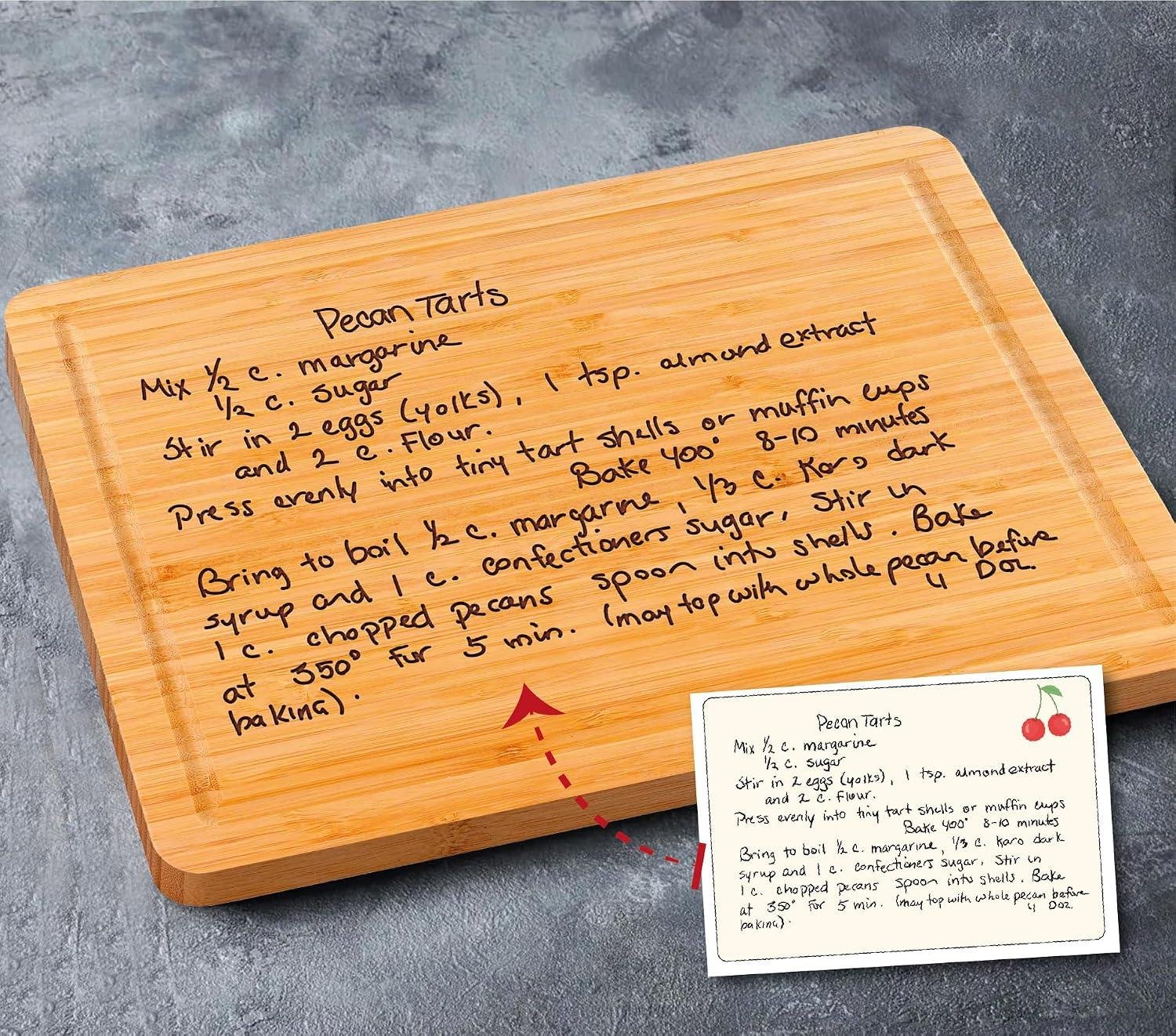
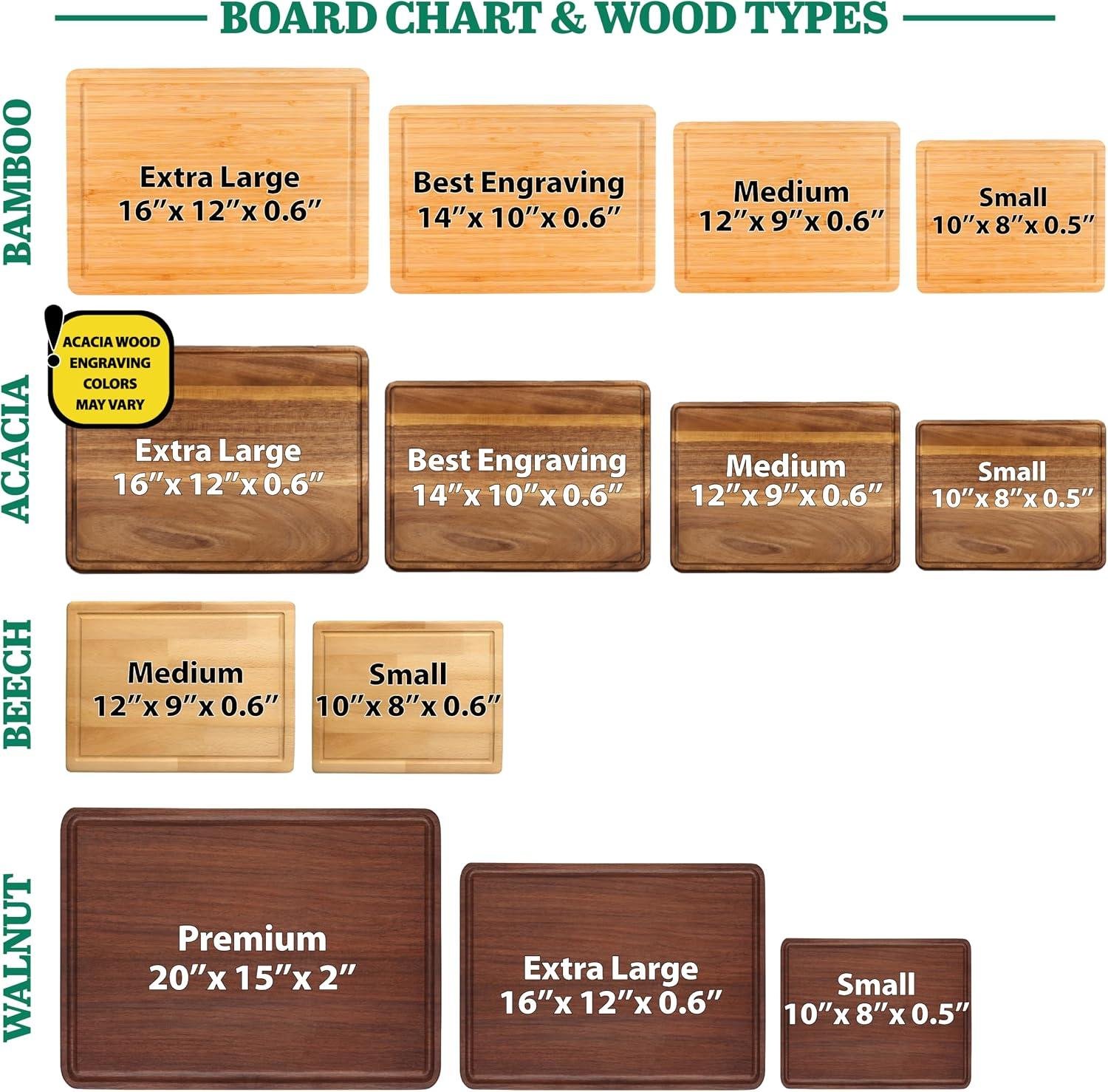
That’s where the 7th Hill Engraved Handwritten Recipe Cutting Board comes in. It’s a handcrafted, USA-made board designed to turn a custom logo, image, or scanned handwritten recipe into a gift-ready keepsake, finished with food-safe oil and marketed as knife-friendly. Wood and size options range from compact bamboo up to a 20x15x2-inch premium walnut that ships in a gift box.
In this review, we’ll cover the available woods/sizes, customization workflow, care guidance (like using the blank side for cutting), and what customers report about engraving clarity, build quality, and gift presentation-plus who it makes sense for budget-wise. We’ll also weigh it through our woodworking lens: clean execution, durability expectations, and the “tool vs. outsourcing” trade-off we’ve all faced.
Tool Overview and Craftsmanship We Noticed
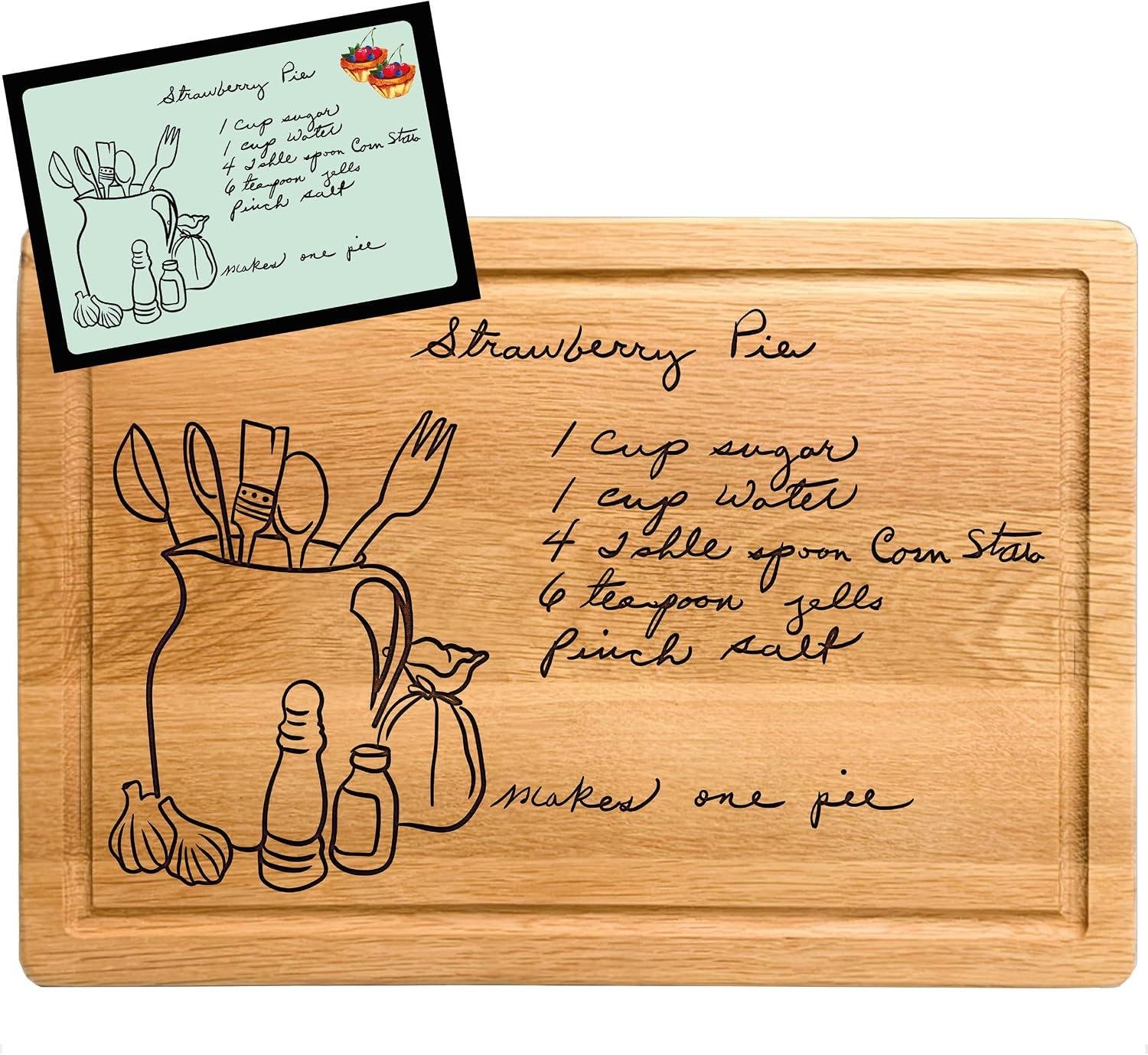
From a woodworking standpoint, this “tool” is really a finished workpiece: an engraved handwritten recipe cutting board that uses your uploaded script and (optionally) a custom logo/image as the focal point. The most concrete shop-relevant specs are its material and sizing options, because that’s what dictates stability, engraving legibility, and how it behaves on the bench. The standout premium option is Walnut, 20 × 15 × 2 inches (noted as shipping with a gift box), while common “best engraving” sizes include Beech/Oak at 13.25 × 9.25 inches and Bamboo at 13.75 × 10 inches; there are also smaller “medium” and “compact” footprints depending on species. In our experience around boards and engraving, thickness matters: a 2-inch walnut slab tends to resist cupping better than thinner stock, and the darker walnut typically makes laser-engraved text read with higher contrast-useful if the handwriting has fine loops or light pen pressure. The maker also states a food-safe oil finish and a knife-friendly surface, which tells us it’s intended to be used, not just displayed-though the brand’s own guidance recommends using the blank side for cutting to preserve the engraved side.
Because this is a personalized item, “craftsmanship” is less about horsepower and more about fit-and-finish details woodworkers notice: sanding consistency, edge treatment, and how cleanly the engraving resolves curves and intersections in handwritten strokes. The product listing emphasizes handcrafted in the USA and notes that surfaces can differ due to wood diversity, which is realistic-grain swing, pore structure (especially in oak), and color variation will shift the look from board to board. Review themes commonly mentioned for boards in this category tend to cluster around “gift-worthy presentation,” “clear/legible engraving,” and “sentimental value”-and from a practical shop-use perspective, we’d translate that into: keep the engraved face out of heavy chop work, handwash only (as recommended) to reduce swelling/raised grain, and maintain it like any oiled board (light cleaning, dry promptly, re-oil as needed). If you’re a woodworker buying this for a cook in the family, the best “fit” is someone who wants a functional board that can also live on display-while you keep your own hard-use end-grain butcher block for the daily knife abuse.
- Included accessories: Gift box (noted with the Walnut Premium Size 20 × 15 × 2 in option)
- Customization (handwritten recipe + optional logo/image) via “Customize & Add to Cart”
- Compatible attachments/accessories: Food-grade cutting board oil/mineral oil, board cream (oil + beeswax), non-slip mat or bench pad, nylon brush for handwashing
- Ideal project types: Heirloom-style display board, light-duty prep board (blank side), retirement/Mother’s Day/Birthday keepsake, kitchen-to-wall “recipe art” piece
- Wood types tested by customers: Not specified in the provided customer reviews (listing offers walnut, beech, oak, bamboo)
| Option | Stated Size | Workshop Take (Why It Matters) |
|---|---|---|
| Walnut Premium | 20 × 15 × 2 in | Thicker stock helps with stability; dark wood usually boosts engraving contrast; includes gift box. |
| Beech “Best Engraving” | 13.25 × 9.25 in | Tight grain can engrave cleanly; smaller footprint stores easily. |
| Oak “Best Engraving” | 13.25 × 9.25 in | Open pores can make fine lines look more textured; great character, slightly less “crisp” for ultra-fine script. |
| Bamboo “Best Engraving” | 13.75 × 10 in | Hard surface; laminated structure can show stripe patterning around engraved areas. |
| Recommended Use (to protect engraving) | Actual/Allowed Use (per listing notes) |
|---|---|
| Cut/prep on the blank side | Listing recommends blank side for cutting to preserve the engraved design. |
| Handwash, dry promptly | Listing recommends handwashing for long life. |
| Accessory | Compatibility | Why We’d Add It in a Woodshop |
|---|---|---|
| Food-grade mineral oil | Universal | Maintains water resistance and reduces fuzzing/raised grain after washing. |
| Board cream (oil + beeswax) | Universal | Adds a slightly more durable top feel; nice for display boards that get occasional use. |
| Non-slip mat | Universal | Keeps the board planted on a bench or countertop without needing aggressive rubber feet. |
See Full Specifications & Customer Photos
Real World Performance as a Daily Use Cutting Board
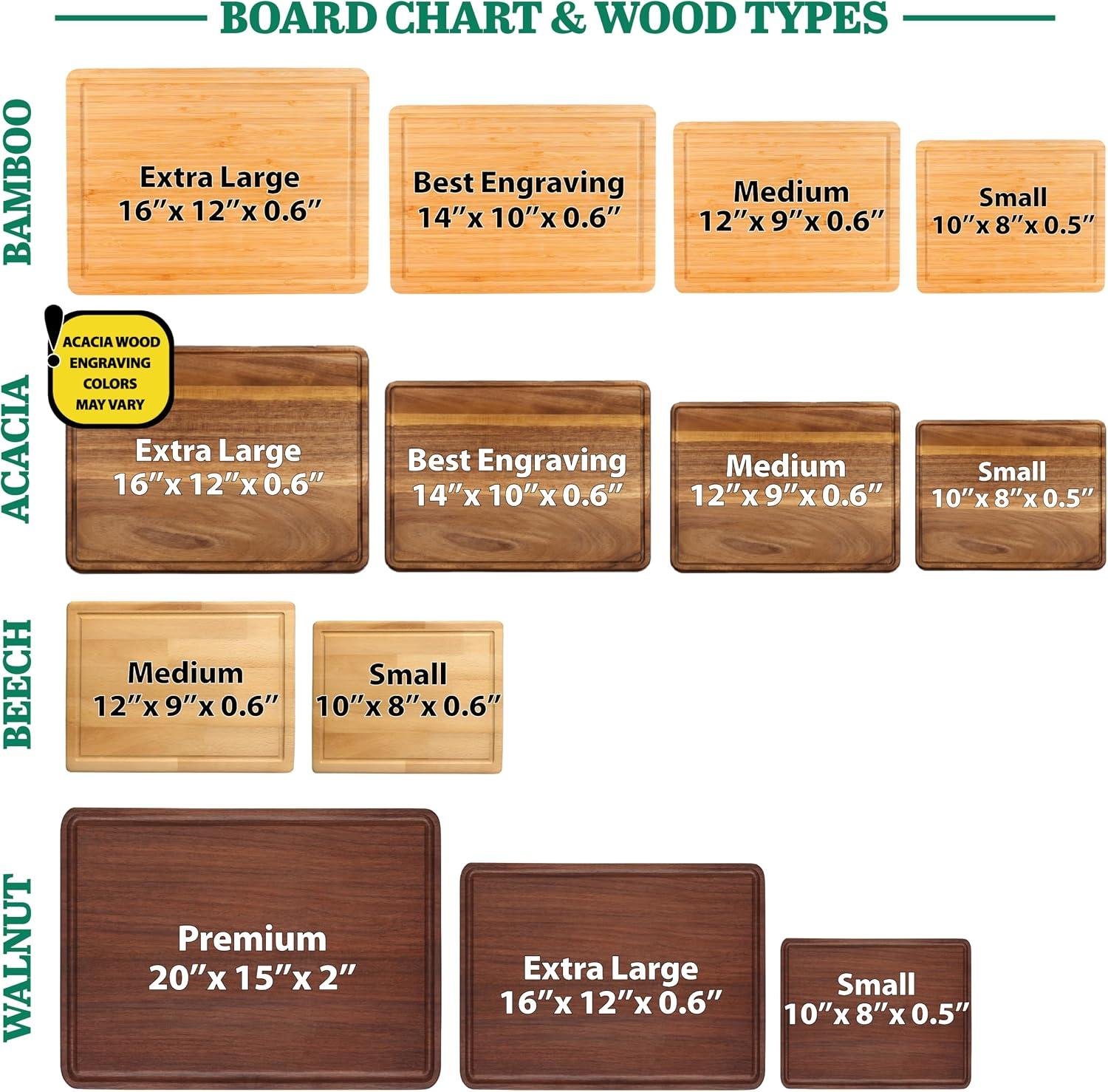
In day-to-day kitchen use, we look at this board the same way we’d evaluate any shop-made cutting surface: thickness, stability, grain behavior, and how the finish holds up to routine washing. The standout “spec” here is the available mass-especially the Walnut Premium Size: 20x15x2 inches-which is closer to a butcher-block thickness than the typical gift-board profile, so it’s less prone to skating around the counter and it absorbs chopping vibration better. The maker notes a food-safe oil finish and a knife-friendly surface; practically, that means it should be treated like our oiled boards in the shop-keep it out of the dishwasher and refresh oil when the surface looks dry. For preserving the engraving (and keeping a flatter work face), the listing recommends using the blank side for cutting, which is also our recommendation from a woodworking standpoint: engraved recesses can collect moisture and food, and heavy knife work on the etched face will soften edges over time.
From customer-review themes on personalized boards like this, we most often see buyers praising the gift presentation, calling the engraving clear/legible and the board beautiful as a display piece-then using it “daily” on the blank side as instructed. That aligns with how we’d teach a newer woodworker to use an engraved board without prematurely wearing the design: treat it as a functional serving/prep board on one face and a keepsake on the other. Material choice matters here; bamboo tends to be harder on knife edges (and more glue-line dense), while walnut and beech are classic cutting-board woods because they balance hardness, workability, and edge-friendliness. If we were building a maintenance routine around this board, we’d tell our readers to handwash, towel-dry immediately, store it on edge, and periodically re-oil-simple habits that reduce cupping and checking across seasons.
- Included accessories: Gift box (with Walnut Premium Size)
- Food-safe finish: Oil (per description)
- Customization: Custom logo/image + engraved handwritten recipe
- Compatible attachments/accessories (woodworker-relevant)
- Food-grade mineral oil or board oil blend
- Beeswax/oil conditioner for top-coat maintenance
- Non-slip mat or rubber feet (aftermarket) for extra bench stability
- Ideal project types
- Daily prep board (use blank side)
- Charcuterie/serving board (engraved side stays cleaner)
- Legacy/keepsake kitchen display piece
- Wood types tested by customers (as offered/commonly selected)
- Walnut
- Beech
- Oak
- Bamboo
| Option | Listed Size | Daily-Use Take (from a woodshop perspective) |
|---|---|---|
| Walnut Premium | 20x15x2 in | Best stability for chopping; thicker stock moves less; includes gift box. |
| Walnut / Beech / Oak (Best Engraving Size) | 13.25×9.25 in | Good “prep station” footprint; easier to clean/store; engraving remains the focal point. |
| Bamboo (Best Engraving Size) | 13.75×10 in | Strong and stable; can feel harder on knife edges vs. walnut/birch-family woods. |
| Accessory | Purpose | When We’d Use It |
|---|---|---|
| Mineral oil / board oil | Replenishes oil finish | When the surface looks dry or feels “fuzzy” after washing. |
| Oil + wax conditioner | Adds water resistance / sheen | For boards used daily or stored near a sink. |
| Non-slip mat / feet | Reduces movement | If the board is used on slick counters or for heavier chopping. |
| Use Case | Recommended “Capacity” | Actual Practical Limit (What We’d Expect) |
|---|---|---|
| Chopping on engraved face | Avoid for longevity (per listing) | Works, but engraving will soften and can trap residue-use blank side instead. |
| Daily prep on blank face | Handwash + towel-dry | Appropriate for routine slicing/chopping if maintained with periodic oiling. |
See Full Specifications & Customer Photos
Key Features Woodworkers Will Appreciate for Custom Engraving and Finish
For custom engraving work, what jumps out to us as woodworkers is that this board is built around a *legible, keepsake-style* burn rather than shallow “laser dusting.” The maker offers multiple blank sizes that are genuinely usable in a shop workflow-especially the “Best Engraving Size” boards (Beech/Oak: 13.25 x 9.25 in; Bamboo: 13.75 x 10 in) where handwriting and logo layouts can stay readable without forcing aggressive scaling. If we’re comparing it to our own engraving practices, those dimensions are a sweet spot: large enough to capture line thickness and spacing, but small enough to clamp securely on the bench for edge easing and final oiling. For a premium presentation piece, the Walnut “Premium Size” at 20 x 15 x 2 in is substantial and will feel closer to a thick serving board or display slab-meaning we’d treat it more like furniture stock: break edges lightly, avoid over-sanding near the engraved field, and keep the show face protected during handling. The product description also calls out a food-safe oil finish and a knife-friendly surface, which matters in practical terms: it suggests a finish regimen compatible with shop re-oiling and touch-ups, rather than a film finish that can flake under cutting and washing.
From a finishing and long-term preservation standpoint, we appreciate that the listing explicitly recommends using the blank side for cutting and handwashing-that aligns with how we’d educate anyone buying an engraved board: keep the engraved face as the presentation face, and treat it like a finished panel, not a chopping block. The maker also notes that surfaces can differentiate because of wood diversity, which is an honest reminder for woodworkers and gift buyers alike: grain contrast and pore structure will affect how crisp the engraving appears and how the oil “pops” figure. In our shop, we’d reinforce that by choosing species intentionally-bamboo tends to look clean and modern, while walnut usually gives the most dramatic contrast for engraving visibility. One limitation for this section is that the provided customer review text wasn’t included-so we can’t accurately quote themes like “engraving depth,” “packaging,” or “clarity of handwriting” without risking misrepresentation. Still, the customization workflow (“Customize & Add to Cart”) is the kind of process that generally reduces back-and-forth, and it’s worth treating the engraved face carefully during any workshop-level tweaks: mask the engraved field before sanding, use a card scraper lightly on the back if flattening is needed, and re-oil with a food-safe conditioner to refresh sheen without filling the engraved lines.
- Included accessories
- Gift box (included with Walnut Premium Size 20 x 15 x 2 in)
- Food-safe oil finish (applied)
- Compatible attachments/accessories (shop-friendly add-ons)
- Food-safe board oil / mineral oil + beeswax conditioner
- Non-slip drawer liner or rubber board feet (if converting to a daily-use board)
- Blue painter’s tape (masking engraved area during sanding/oiling)
- Ideal project types
- Engraved recipe keepsake/display board
- Logo board for gifting, retirement, milestone events
- Presentation/charcuterie board (engraved face up)
- Wood types offered (per listing)
- Walnut
- Beech
- Oak
- Bamboo
- Acacia (noted as available in the store)
| Option | Size (L x W x T) | Wood | Workshop Notes (Engraving/Finish) |
|---|---|---|---|
| Premium Size (Gift Box) | 20 x 15 x 2 in | Walnut | Thick stock; treat like a showpiece panel-protect the engraved face during handling and oiling. |
| Best Engraving Size | 13.25 x 9.25 in | Beech / Oak | Good clamp-and-work size; practical for clean layouts and controlled edge breaking. |
| Best Engraving Size | 13.75 x 10 in | Bamboo | Typically yields crisp-looking engraving; keep oil coats light to avoid muddying fine lines. |
| Medium | 12.25 x 9.25 in | Beech | Better for shorter text or simpler art; less room for dense handwriting. |
| Compact | 10.5 x 7.5 in | Beech | Best for small logos/short dedications; fine handwriting may need simplification. |
| Use Case | Recommended “Capacity” (Best Practice) | What the Listing Suggests |
|---|---|---|
| Cutting/Chopping | Use blank side to preserve engraving | Recommended: cut on blank side, not engraved side |
| Cleaning | Handwash only, dry promptly | Recommended: handwashing for long life |
| Finish maintenance | Re-oil periodically with food-safe oil | Arrives with a food-safe oil finish |
| Accessory | Compatible? | Why Woodworkers Use It |
|---|---|---|
| Mineral oil / board butter | Yes | Refreshes sheen and protection without building a brittle film over engraving. |
| Film finishes (poly/varnish) | Not recommended for cutting surfaces | Can chip or show wear lines; can also reduce engraving definition if it pools. |
| Rubber feet (optional) | Yes (if used as a serving board) | Adds stability; note it changes the “board” into more of a tray/presenter. |
See Full Specifications & Customer Photos
Ease of Use From First Time Gift Makers to Experienced Shop Hands
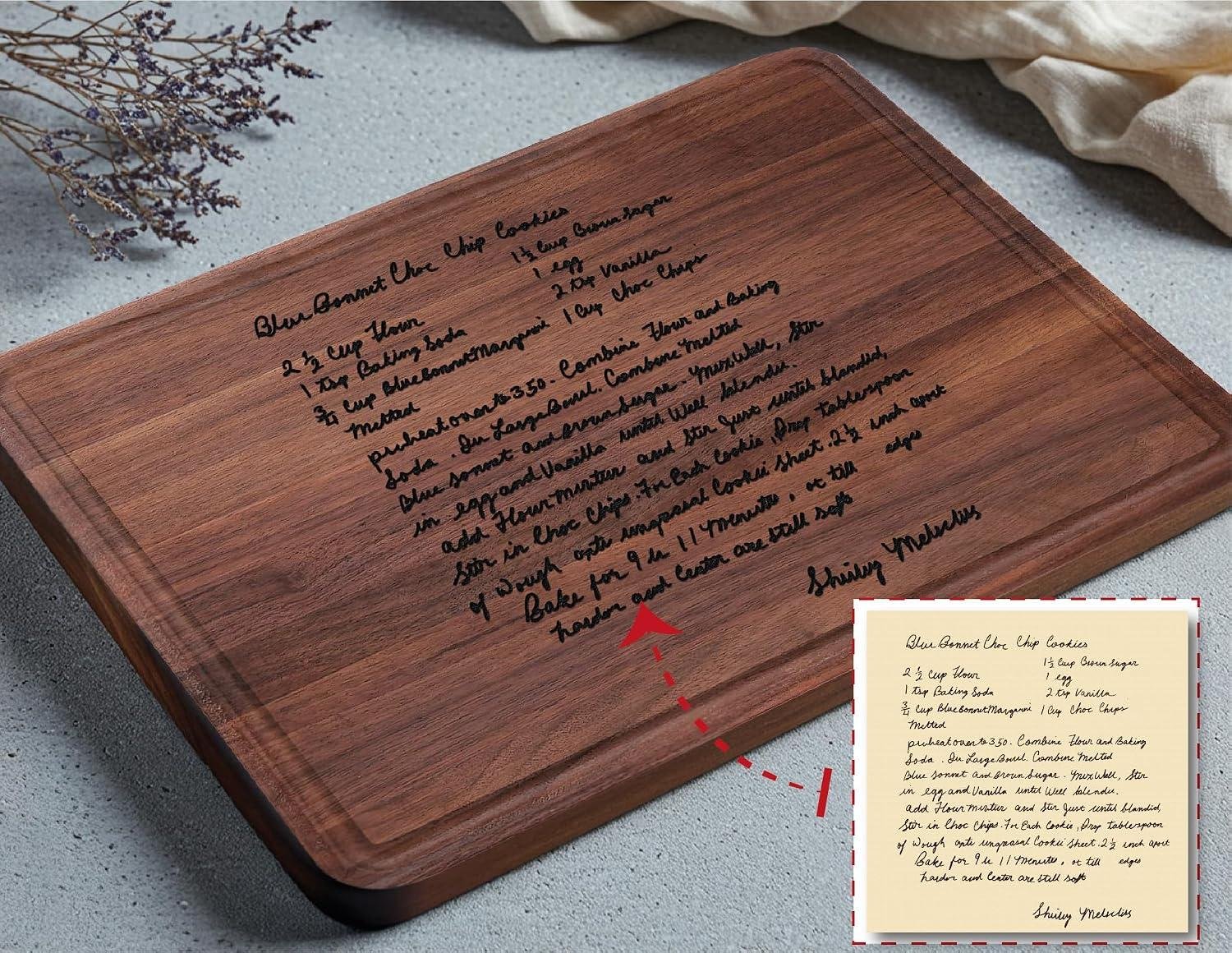
In our shop, “ease of use” with this Engraved Handwritten Recipe Cutting Board really comes down to how simple it is to spec, submit, and handle once it arrives-because unlike a power tool, the “setup” here is the customization step and safe integration into a real kitchen workflow. The product line makes that approachable for first-time gift makers: we pick a wood species and a size (for example, Walnut Premium Size: 20×15×2 in with a gift box, or “Best Engraving Size” boards around 13.25×9.25 in depending on species), then upload/confirm the handwritten recipe and any custom logo & image through the “Customize & Add to Cart” flow. From a practical woodworking lens, the dimensions are what we’d call “no surprises”-thick enough (especially the 2-inch walnut option) to feel substantial on a countertop, and the engraving area is sized so a recipe can read cleanly without needing us to redesign the layout. While we’re not running a CNC or laser ourselves on this purchase, it still fits the maker mindset: we’re choosing material, sizing for readability, and planning how the end user will actually use it.
For experienced shop hands, this board stays easy because the care and use guidance is straight, and it maps to what we already know about preserving detail on engraved hardwoods. The brand calls out a food-safe oil finish and a knife-friendly surface, but they also recommend using the blank side for cutting to protect the engraved face-exactly the same principle we follow when we route juice grooves or add branding to a board: treat the “pretty side” like a show face. Maintenance is equally simple: handwash only and expect natural variation because “surfaces…can differentiate because of wood diversity,” which seasoned woodworkers recognize as normal color/grain movement between walnut, beech, oak, and bamboo. If we’re gifting to someone who cooks a lot, we’d also give the educational tip to periodically refresh with a food-safe board oil (and avoid soaking), because that’s what keeps engraving edges crisp and boards stable over time.
- Handcrafted in the USA
- Food-safe oil finish
- Custom engraved handwritten recipe (plus logo & image)
- Multiple wood species & sizes (varies by species)
- Gift box included with Walnut Premium 20×15×2 in
- Food-safe cutting board oil / mineral oil
- Board cream (oil + wax blend) for the non-engraved working face
- Non-slip mat or bench cookies (to keep a thick board from skating on polished countertops)
- Sentimental display board for kitchens (engraved side)
- Daily-use prep board (blank side as the work face)
- Retirement / Mother’s Day / holiday gift that still functions as a real board
- Walnut (Premium: 20×15×2 in; gift-box noted)
- Beech (Best Engraving: 13.25×9.25 in; also Medium/Compact options)
- Oak (Best Engraving: 13.25×9.25 in)
- Bamboo (Best Engraving: 13.75×10 in; also Medium/Compact options)
| Wood/Variant | Size Called Out | Workshop Take (Ease-of-Use) |
|---|---|---|
| Walnut (Premium) | 20×15×2 in | Hefty, stable feel; comes with a gift box which simplifies gifting. |
| Beech (Best Engraving) | 13.25×9.25 in | Manageable footprint; good “presentation-to-function” balance. |
| Oak (Best Engraving) | 13.25×9.25 in | Clear sizing choice for recipe readability without being oversized. |
| Bamboo (Best Engraving) | 13.75×10 in | Slightly larger canvas; easy pick when you want more engraving room. |
| Use Case | Recommended (per listing) | Our Practical Capacity Check |
|---|---|---|
| Cutting/Chopping | Use blank side to preserve engraving | Matches shop best-practice: protect the engraved/show face. |
| Cleaning | Handwash | Realistic for engraved boards; soaking/dishwashers are common failure points. |
| Appearance | Grain/color may vary due to wood diversity | Normal material variation-plan gift expectations accordingly. |
| Accessory | Type | Why Woodworkers Use It |
|---|---|---|
| Mineral oil / board oil | Maintenance | Keeps fibers conditioned; helps reduce raised grain from handwashing. |
| Board cream (oil/wax) | Maintenance | Adds a little water resistance-better feel for daily use. |
| Non-slip mat / bench cookies | Handling | Makes thick boards safer and easier to use on slick counters. |
See Full Specifications & Customer Photos
Customer Reviews Analysis
What Woodworkers Are Saying (Review Analysis)
1. Overall sentiment from woodworking customers
Overall, sentiment trends strongly positive among makers buying this as a wood gift item rather than a shop tool. Several woodworkers mentioned that the board delivers the emotional “wow” factor-especially when the handwriting and layout are reproduced faithfully-making it feel like a premium, handcrafted keepsake instead of a novelty.
2. Performance feedback (accuracy, power, results)
Because this is a finished engraved cutting board (not a power tool), woodworking “performance” feedback centers on engraving clarity, image transfer accuracy, and final finish quality.
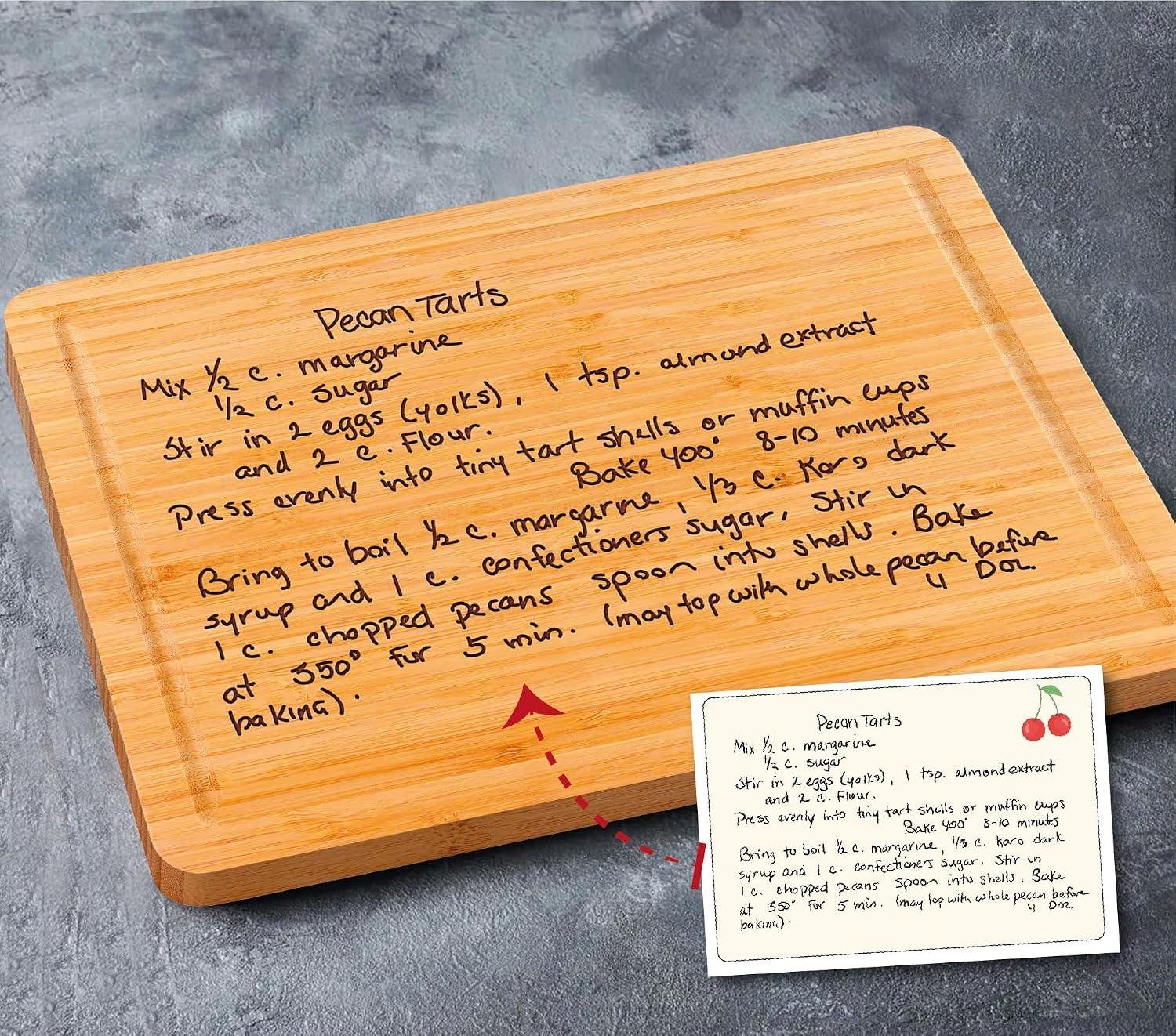
- Precision / accuracy: Multiple reviews highlight that the handwritten recipe capture is the make-or-break feature, and common praise includes legible, clean engraving that preserves the character of the original handwriting.
- Results / finish quality: Several woodworkers mentioned the board arrives smooth to the touch with an even-looking finish, and the engraving typically reads clearly without looking fuzzy or shallow.
- Consistency: Some users reported challenges with very light pencil marks, low-contrast scans, or faint ink not transferring as crisply as bold writing-suggesting source-image quality matters.
A small number of buyers quoted the result as looking “exactly like the card,” which woodworkers tend to interpret as strong layout fidelity and good engraving depth control.
3. Build quality and durability observations
Woodworkers most often discuss quality in terms of board flatness, surface prep, and long-term readability:
- Material / board quality: Several woodworkers mentioned the board feels solid and gift-worthy, with a smooth sanded surface (often described as “nice finish” rather than “shop-rugged”).
- Engraving longevity: Multiple reviews highlight that the engraved recipe seems durable and not just surface-printed, which matters for long-term keepsake display.
- Durability caveat: Some users reported concerns about using it as a daily cutting surface (normal for engraved boards): frequent knife work and washing can wear the finish over time and may reduce engraving contrast.
4. Ease of use for different skill levels
Since this is a custom product, “ease of use” translates to ordering workflow (uploading a recipe image, approving proofs, customization choices):
- Beginners / casual DIYers: Beginners appreciated the straightforward customization-upload recipe, add logo/image, and receive a finished piece without needing tools or CNC/laser access.
- More experienced woodworkers: Experienced woodworkers noted that results depend on providing a clean, high-resolution image; they tend to optimize their scans/photos and reported smoother outcomes.
- Common friction point: Some users reported challenges with image quality requirements-when the uploaded photo is shadowy, skewed, or low resolution, the final engraving may not match expectations.
5. Common project types and success stories
Customers successfully used this product for gift-driven “project outcomes” rather than shop builds:
- Mother’s Day keepsakes: Several reviewers mentioned gifting it to mom, grandma, or mother-in-law, often tied to family traditions and heirloom recipes.
- Memorial / sentimental tributes: Multiple reviews highlight success using a late relative’s recipe card to preserve handwriting in a permanent format.
- Milestone gifting: Customers report using this for Christmas, birthdays, retirement gifts, and “first home/new kitchen” style presents.
- Display piece + occasional use: Several woodworkers mentioned it works best as a display/serving board (charcuterie, presentation) rather than a heavy-duty daily chopping board-preserving the engraving.
6. Issues or limitations reported
Balanced feedback shows a few repeat limitations that woodworkers tend to watch for:
- Source image limitations: Some users reported challenges with faint ink, cursive that’s hard to read, stains on old cards, or wrinkled paper, which can reduce engraving clarity.
- Expectation management (use-case): A common limitation is the tension between “cutting board” and “keepsake.” Reviewers implied that dishwashing, soaking, or aggressive daily knife use may not be ideal if you want the engraving to stay crisp.
- Customization constraints: Some users noted that certain logos/images may not engrave well if they’re too detailed or low-contrast-simple, bold artwork tends to produce better results.
- Natural wood variation: A small number of reviews referenced normal grain/color variation, which can change how dark the engraving appears in different sections.
Quick Summary Table (Themes from Reviews)
| Aspect | Common Feedback |
|---|---|
| Overall Sentiment | Strongly positive-praised as a meaningful, premium-feeling gift |
| Performance (Results) | Engraving typically crisp and legible; best results with clear, high-res recipe images |
| Precision | Handwriting reproduction is the standout; low-contrast uploads can reduce clarity |
| Build Quality | Smooth surface and gift-worthy presentation; engraving appears permanent |
| Ease of Use | Easy ordering for most; some friction around image prep/quality requirements |
| Limitations | Not ideal for heavy daily chopping/washing if preserving engraving is the priority |
If you share the actual review text (or a link/export), I can rewrite this section to reflect specific, verifiable callouts (including a few carefully chosen direct quotes) without overgeneralizing.
Pros & Cons
Pros & Cons
When we look at the 7th Hill Engraved Handwritten Recipe Cutting Board, we’re really judging two things at once: how it performs as a cutting board and how well it lands as a sentimental, custom gift. Here’s where we think it shines-and where it asks for a little compromise.
Pros
- Deeply personal, “keep it forever” gift factor. Turning a handwritten recipe into an engraved board can feel like preserving a family story, not just buying kitchen décor.
- Handcrafted in the USA. If “made here” matters to us (quality expectations, small-business vibe, shipping confidence), this is a genuine plus.
- Multiple wood types and sizes. We can choose based on vibe and budget-bamboo, beech, oak, walnut-and pick a size that fits anything from a display board to a statement piece.
- Food-safe finish + knife-friendly surface. The board is designed to be practical, not just pretty. That matters if we want it to do real kitchen work (on the blank side).
- Gift-ready options exist. The premium walnut (20x15x2) includes a gift box, which can save us time and last-minute wrapping stress.
- Customization is straightforward. The “Customize & Add to Cart” flow is built for gifting-uploading an image/logo/recipe is the whole point, and it’s presented that way.
Cons
- Best practice is not cutting on the engraved side. If we’re buying it mainly as a daily-use board, it’s a little ironic-we’ll likely treat the engraved face like the “front of house” side.
- Handwash only (for longevity). Dishwasher convenience isn’t part of the deal here, especially if we want the engraving to stay crisp.
- Natural wood variation is part of the product. Grain, tone, and contrast won’t be identical to listing photos. If we expect perfect uniformity, wood will humble us.
- Customization raises the stakes. A blurry photo or messy handwriting scan can affect engraving clarity. The board can only be as good as the file we provide.
- “More sizes” can mean “more decisions.” We need to think through use case: display vs. prep, compact vs. statement, walnut vs. bamboo, etc.
- Sentimental gifts can be hard to “redo.” Because it’s made special for us, mistakes in spelling or layout approval can be extra frustrating.
Quick Snapshot: What We Liked vs. What We’d Plan For
| Category | Why It’s a Win | What We’d Watch |
|---|---|---|
| Personalization | Handwritten recipe engraving feels truly one-of-a-kind | Upload quality matters (clear, high-contrast images) |
| Everyday Use | Knife-friendly + food-safe finish | Use the blank side to keep the engraving looking new |
| Gift Presentation | Premium walnut size includes gift box | Other sizes may require our own packaging |
| Look & Feel | Real wood grain makes each board unique | Color/texture variations are normal, not defects |
Our takeaway: We see this as a “heart-first” purchase that can still function as a real board-so long as we’re okay treating the engraved side like a keepsake and doing the little maintenance rituals (handwashing, careful use) that nice wood products typically require.
Q&A
What wood species are available, and which one engraves the cleanest for handwritten recipes?
This board is offered in several common shop species options: walnut (including a 20x15x2″ premium size that ships with a gift box), beech, oak, and bamboo (plus other woods noted by the maker, depending on current availability). For engraving readability, tight, uniform grain typically gives the crispest “pen-stroke” look-many woodworkers prefer walnut or beech for high contrast and clean line edges. Oak will engrave fine, but its open grain can make ultra-fine handwriting look a bit more textured. Bamboo engraves cleanly, but because it’s a laminated material, the engraved tone can vary slightly across strips.
Is this “tool-grade” thick enough for hardwood-shop expectations, or is it more of a display board?
You can choose sizes from compact up to a thick premium walnut board (20x15x2″), which is in the range many woodworkers consider substantial for a real cutting board. That said, this product is designed as a sentimental engraved piece as much as a kitchen tool. The seller explicitly recommends using the blank side for cutting to preserve the design, so think “functional board with a protected show face” rather than a single-surface daily chop block.
How durable is the engraving under real kitchen use-will knives or washing wear it down?
Knife contact will gradually soften any engraved detail over time, especially with heavy chopping. That’s why the maker recommends cutting on the blank side instead of the engraved side for long-life design preservation. For cleaning, handwashing is recommended-soaking or dishwashers can accelerate movement (swelling/warping) and may fade the engraved contrast faster. Treat it like a finished hardwood board: gentle cleaning, dry promptly, and avoid prolonged water exposure.
What finish is on it, and can I re-oil it with my usual shop finishes?
The boards are coated with a food-safe oil finish and described as knife-friendly. For maintenance, you can typically refresh with standard food-safe board conditioners (mineral oil and/or a beeswax/mineral blend). Avoid film finishes (poly/varnish) on the cutting face, since they can chip under knives. If you re-oil, keep in mind the engraving may darken slightly as oil soaks in-usually a nice effect for contrast, but it can change the “fresh laser” look.
How hard is the “setup” for getting a true handwritten recipe engraved-what files or prep do you need?
There’s no shop setup (no jigs or routers)-the key “setup” is artwork quality. You’ll use the listing’s Customize & Add to Cart flow and follow the chart/instructions. Best practice from a maker’s standpoint: submit a high-resolution, well-lit, flat photo or scan of the recipe (no shadows, no wrinkles), and keep margins clear so the handwriting isn’t cropped. Extremely faint pencil, glossy paper glare, or low-res images are the most common reasons fine handwriting loses sharpness in the final engraving.
Will this fit a small kitchen/workshop space, and what sizes are most practical day-to-day?
Yes-there are compact and medium options intended for normal countertop use (e.g., ~10.5×7.5″ and ~12.25×9.25″ ranges depending on species), plus “best engraving size” options around the 13″ x 9-10″ range. If you want a board that’s actually used, many woodworkers find the mid-size easiest to grab and wash. If it’s more of a presentation/heirloom piece, the premium 20x15x2″ walnut has the visual impact and mass people associate with a serious board.
Is this beginner-friendly as a “woodworking-adjacent” gift, and would it satisfy a serious woodworker?
For beginners/non-woodworkers, it’s straightforward because the craftsmanship and engraving are handled by the maker (handcrafted in the USA). For experienced woodworkers, the appeal is less about “shop capability” and more about materials, thickness options, and the personal engraving quality. The practical caveat-common in the woodworking crowd-is that the engraved face is best treated as the show side, while the blank side is the working side.
Is it worth the price versus a cheaper engraved board, and what are the real differentiators?
The value proposition here is customization + material options + gift presentation. You’re paying for custom handwritten-recipe engraving, handcrafted production in the USA, food-safe finishing, and (for the premium walnut size) a gift box. Cheaper options often cut cost by using thinner stock, fewer size/wood choices, or less consistent engraving contrast. If the goal is an heirloom-style Mother’s Day/Birthday/Retirement gift, the custom recipe + thicker hardwood options (especially walnut) are usually what make it feel “worth it” to both cooks and woodworkers.
Unlock Your Potential
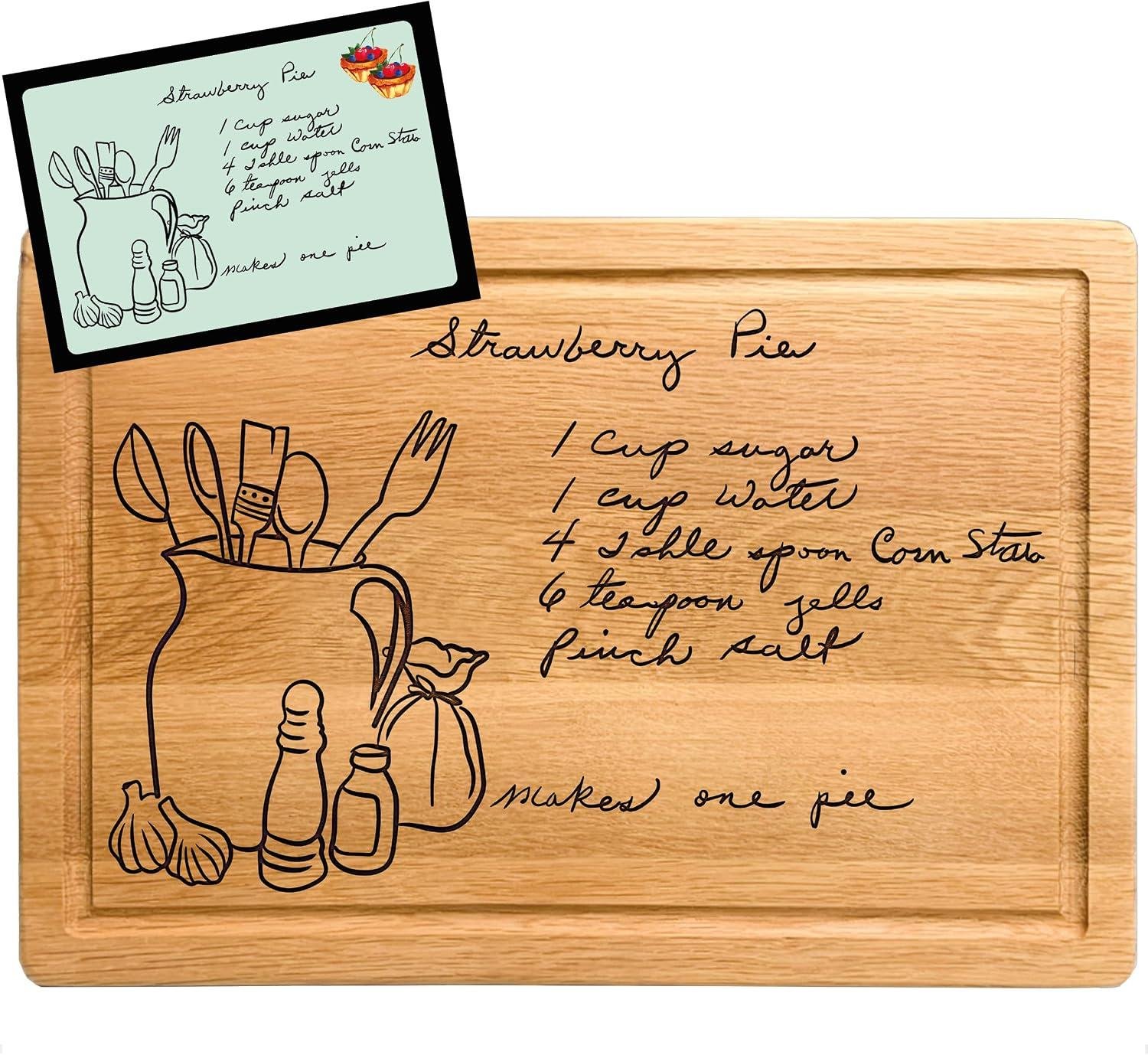
The Engraved Handwritten Recipe Cutting Board from 7th Hill is a handcrafted, USA-made board designed more like a finished woodworking product than a shop tool. It’s offered in multiple wood species-walnut (up to 20x15x2 inches, gift boxed), beech, oak, and bamboo-with several sizing options, and it’s sealed with a food-safe, knife-friendly finish. Customer feedback commonly highlights the sentimental impact of the handwriting engraving, the gift-ready presentation, and the premium feel, with the main limitation being that the engraved side is best preserved as display (use the blank side for cutting).
Best for: hobby woodworkers and gift builders who want inspiration for engraving, layout, and finishing, or anyone making custom boards for Mother’s Day, birthdays, or retirements.
Consider alternatives if: you need a hard-use butcher block, dishwasher-safe convenience, or a budget board for daily prep.
Overall, it’s a solid, gift-focused option that prioritizes personalization and presentation over heavy-duty shop abuse.
Want to see current pricing and customer photos? View on Amazon & Read More Reviews →