

Blog
I Tried Amopatio Stackable Patio Chairs (Set of 4)

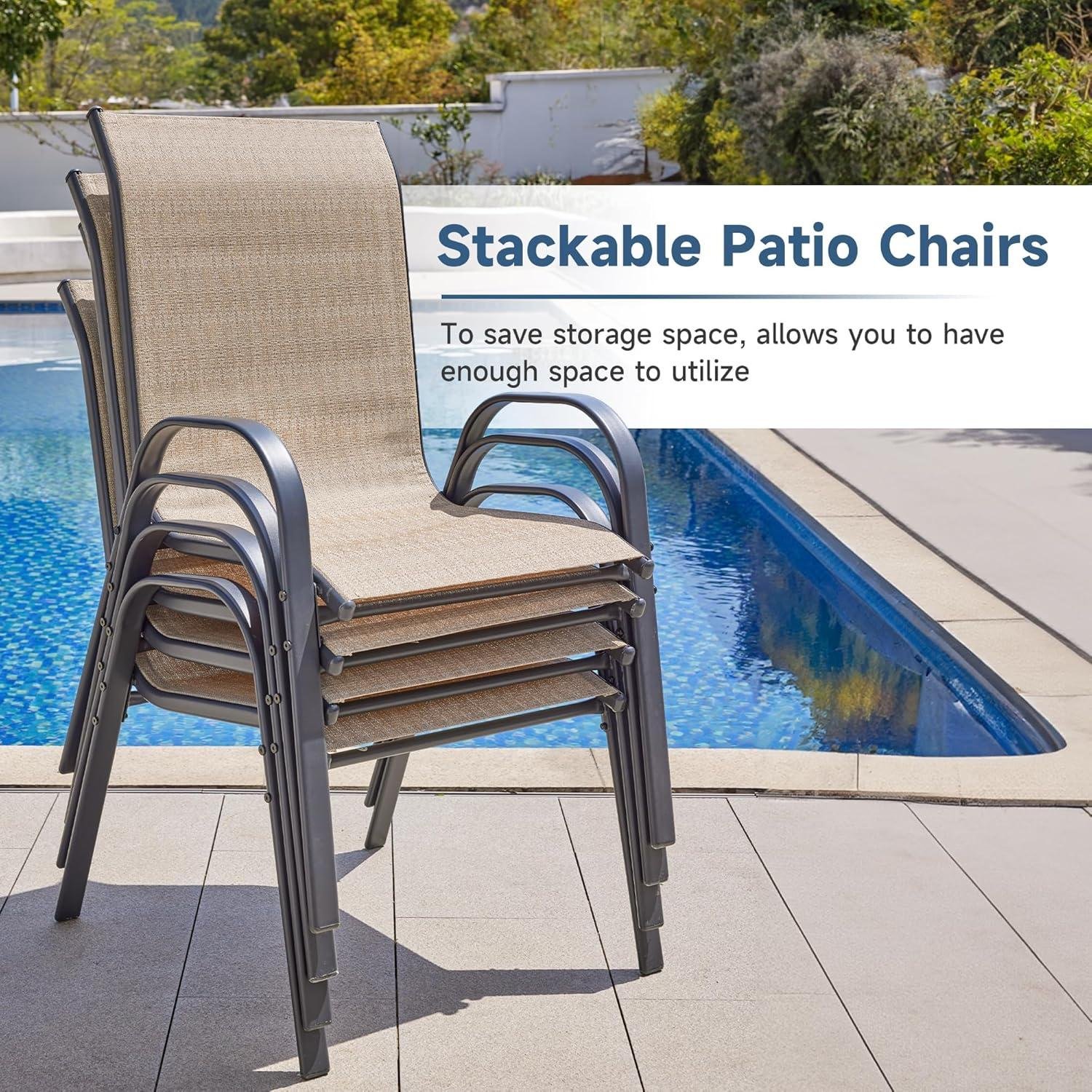
On CraftedByGrain.com we spend a lot of time talking about hardwoods, grain direction, tight joinery, and finishes that can take a beating outdoors. But the truth is, most patios are a mix of hand-built pieces and practical, store-bought workhorses that have to live through sun, rain, and the occasional dragged-across-the-deck dinner party. That’s exactly the lane I hoped the Amopatio Patio Chairs Set of 4 (Brown) would fill: an affordable, no-fuss set that still feels thoughtfully made when you look at it wiht a craftsperson’s eye.
What drew me to these chairs wasn’t “wood grain” in the literal sense—these are steel-frame sling chairs with breathable textilene mesh, not timber seating—but the same principles apply. I wanted to see if the frame welds and bends looked clean, if the powder-coated finish felt even and durable, and whether the seating material was properly tensioned and neatly fitted (the factory equivalent of good upholstery work). I also liked the idea of stackability for a small patio: if a chair can tuck away without scuffing itself to death, that’s good design—whether it’s oak or steel.
I assembled all four on my own patio and then lived with them the way outdoor furniture actually gets used: speedy breakfasts in the sun, longer evening meals, and plenty of sitting with a book while the weather changes its mind. In this review, I’ll walk you through how the hardware and alignment behaved during assembly, what I noticed about sturdiness and comfort after real use, and how the finish and fabric seem poised to handle an all-weather season—plus a few practical tips I wish every manufacturer included in the box.
Craftsmanship and Finish Up Close What the Brown Look Really Feels Like in My Space
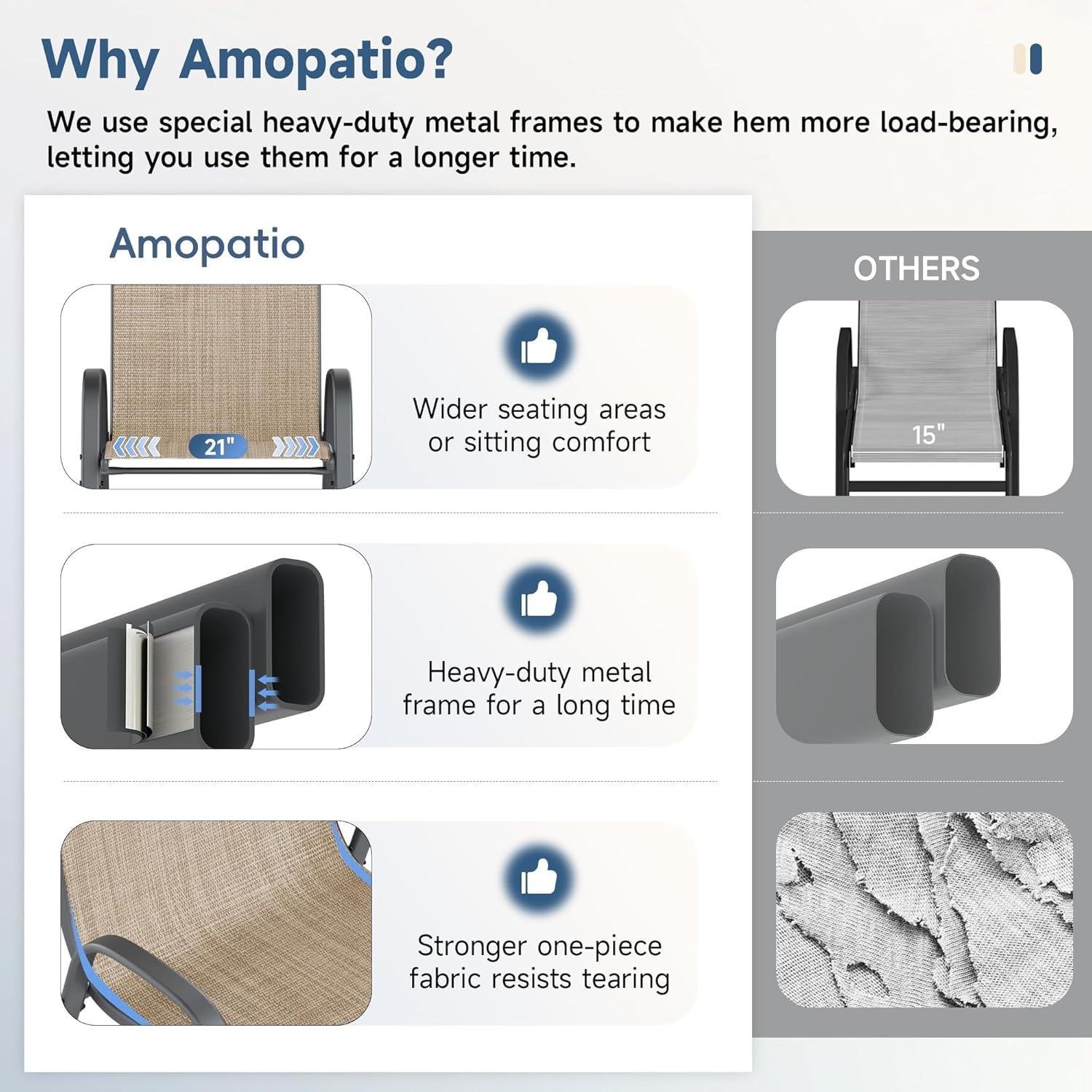
Up close, the brown finish reads more like a practical, powder-coated “wood tone” than anything trying to mimic real grain—and I mean that as a compliment for outdoor duty. As a woodworker, I’m always looking for telltale signs: chatoyance, pore structure, end-grain darkening… none of that exists here as there’s no wood involved. Rather, what you feel is a consistent, slightly textured coating over a steel frame—more like a fine sanded cast finish than glossy paint. In my space (a sun-baked deck that’s rough on furniture),that subtle texture actually helps: it hides fingerprints,doesn’t look plasticky,and it doesn’t heat up the way darker smooth coatings frequently enough do. The seat/back sling is the bigger “finish” story—breathable textilene that feels taut and well-stretched, with a dry hand that doesn’t get sticky in humidity.
| What I noticed | Why it matters outdoors | Craftsman’s take |
|---|---|---|
| Powder-coated steel feel (even, lightly textured) | Better chip/abrasion forgiveness than slick paint | Think of it like a tough topcoat—less “show finish,” more “work finish.” |
| Breathable textilene sling | Quick-drying, stays comfortable in heat | Similar logic to a good outdoor oil finish: it manages moisture instead of trapping it. |
| Bolt-up construction (no welded joinery at the user level) | Serviceable if something loosens over time | I hand-started all fasteners before tightening—alignment improved a lot. |
| stackable design | Less scuffing and easier storage in bad weather | Just inspect edges for shipping rubs; a few reviewers mentioned scratches out of the box. |
- Finish consistency: Color looked even across frames; any flaws I’ve seen reported tend to be shipping/packing related rather than uneven coating.
- “Joinery” check: Once fully tightened, the chairs feel stable—more like a well-squared face frame than a racked cabinet.
- Weather mindset: Rust/weather-resistant frame + fade-resistant sling is the right combo for leave-it-out seasons; if you get a scuff,touch-up paint is an easy maintenance move.
If you want a brown set that feels more like durable shop-grade finishing than delicate patio décor—and you like the idea of a breathable seat that stays cooler—these hit the practical sweet spot for the price of four chairs. Check current price and availability
Built for Real Weather How These Chairs Held Up Through Sun Wind and Rain

These chairs aren’t a wood build, so there’s no teak grain to admire or mortise-and-tenon joinery to evaluate—but as a woodworker, I still judge outdoor seating the same way I judge a good exterior project: materials, connections, and finish. The rust- and weather-resistant steel frame is doing the heavy lifting here, and the breathable textilene sling behaves a lot like the “outdoor-rated fabric” we spec for porch swings and bench cushions—quick to shed water and not prone to staying swampy after a rain. In direct sun, the mesh stays noticeably cooler than solid surfaces, which matters on a deck where a dark-stained wood chair can practically brand you in midsummer. Wind hasn’t been an issue either; once assembled and sitting square, they feel stable and don’t have that light, skittery “patio special” vibe—even though they’re easy enough to move and stack when weather rolls in.
| weather Stress | What I Look For (Craftsman’s lens) | How These Perform |
|---|---|---|
| Sun / Heat | Color stability,surface that won’t get scorching | Fade-resistant mesh; stays cooler than solid seats |
| Rain / Humidity | Dry-out time,corrosion resistance at fasteners | Quick-drying sling + weather-resistant frame; hardware is the watch-point |
| Wind / Movement | racking resistance,“square” stance | Feels sturdy once tightened; stackable for storms |
| Season-to-season wear | Finish durability and touch-up ability | Coated frame holds up well; occasional shipping/assembly scratches may need touch-up |
- build note: treat bolt tightening like clamp-up on a frame—start all fasteners loose,align,then snug down evenly to keep the chair from twisting.
- Finish note: if you get a scratch in the coating, seal it early (same beliefs as sealing a nick in exterior paint on cedar trim).
- Care tip: rinse grit off the mesh now and then; abrasive dust is the slow sandpaper of outdoor furniture.
Check current price and availability
From Unboxing to Stacking My Assembly and Everyday Use Experience
Unboxing felt more like opening a well-organized hardware kit than a piece of wood furniture—which, to be clear, it is.There’s no wood species or grain to judge here (these are a steel-frame and sling-mesh build), but I still look at outdoor seating through a woodworker’s lens: alignment, fastener quality, finish consistency, and how the “joinery” equivalent is handled. Packaging and protection matter for any finished surface, and I can see why some folks mention scuffs/scratches on arrival—powder-coated steel can show shipping rub marks if the padding is light. Assembly is very doable, but I’d echo the common advice: the included Allen key can be soft, so I used my own tools. The best trick was to start every bolt by hand, leave everything slightly loose until the frame squares up, then snug it down—same principle as pulling a cabinet carcass into square before final tightening.
| Stage | What I Noticed | My Craftsman Take |
|---|---|---|
| Unboxing | Occasional finish rubs reported; parts generally complete | Check powder coat edges and corners first; touch-up paint can be handy |
| Assembly | Mixed ease—some fly together, others need patience | use your own hex keys/driver; hand-thread bolts to avoid cross-threading |
| Stacking | Stackable and fairly light to move | Great for shop-like storage habits—keeps the deck flexible for gatherings |
| daily Use | Comfortable, stable, and “doesn’t get hot” like some solid materials | The breathable textilene behaves like a functional outdoor “panel”—supportive and forgiving |
Once built, stacking my set was straightforward, and the chairs tuck away neatly when I’m clearing space for grilling or sweeping the deck. In everyday use, the breathable, quick-drying mesh is the star: it stays comfortable through warm days and doesn’t hold moisture like cushions, which is a big deal for weather swings. The rust- and weather-resistant steel frame plus fade-resistant textilene should handle season-after-season exposure better than many stained wooden patio chairs that need yearly sanding and re-coating—though I still recommend treating them like any good exterior piece: rinse off grit, avoid dragging on rough concrete, and address any chips in the coating before rust can get a foothold. If you want an affordable, practical set that behaves more like “tool-ready outdoor gear” than fussy furniture, you can check the current price and details here.
- Comfort: supportive sling feel with a cooler sit in direct sun
- Durability factors: powder-coated steel + fade-resistant textilene
- Best ownership habit: keep bolts snug and seal any coating nicks early
Comfort and Value for Money Why This Set Works for My Handcrafted Outdoor Living Style
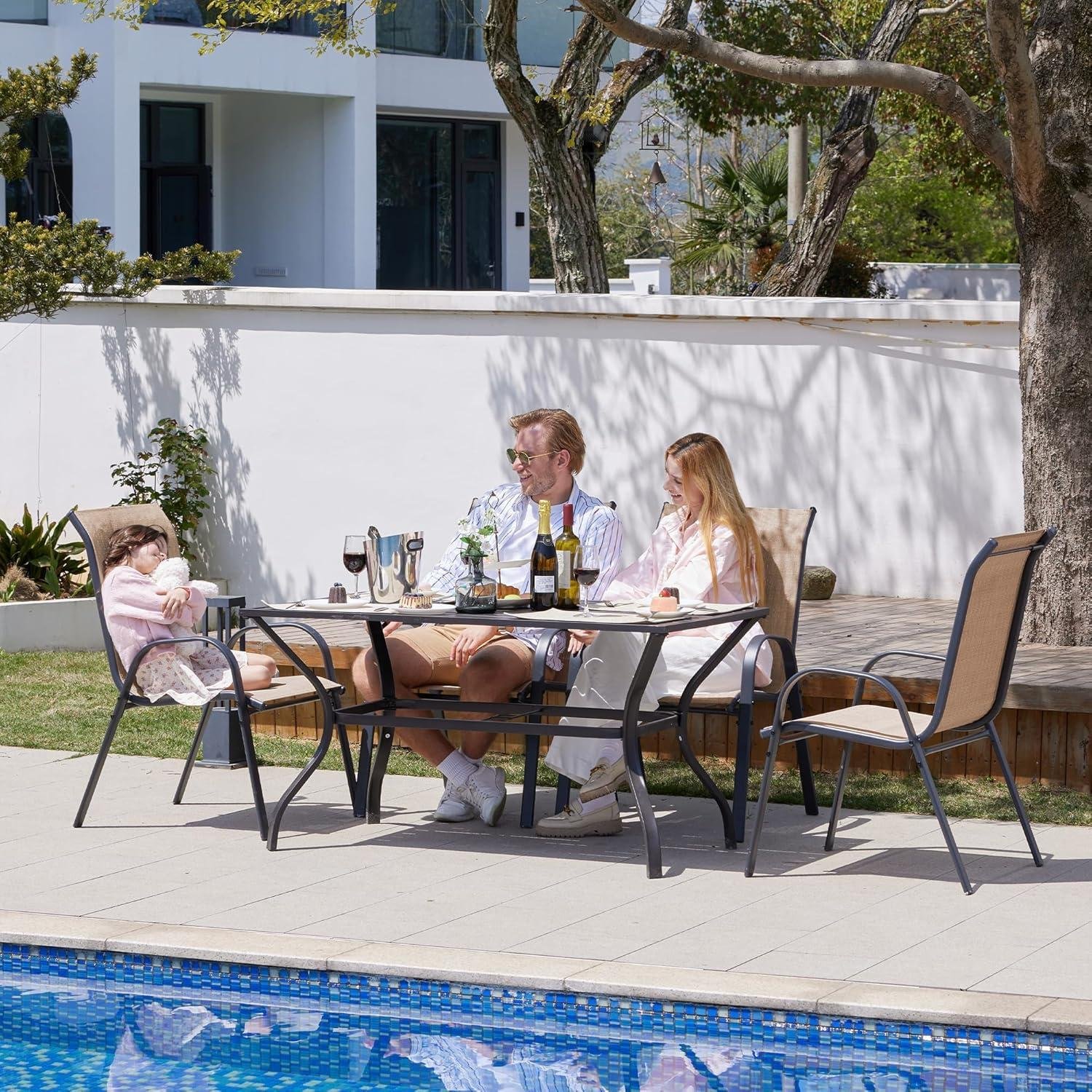
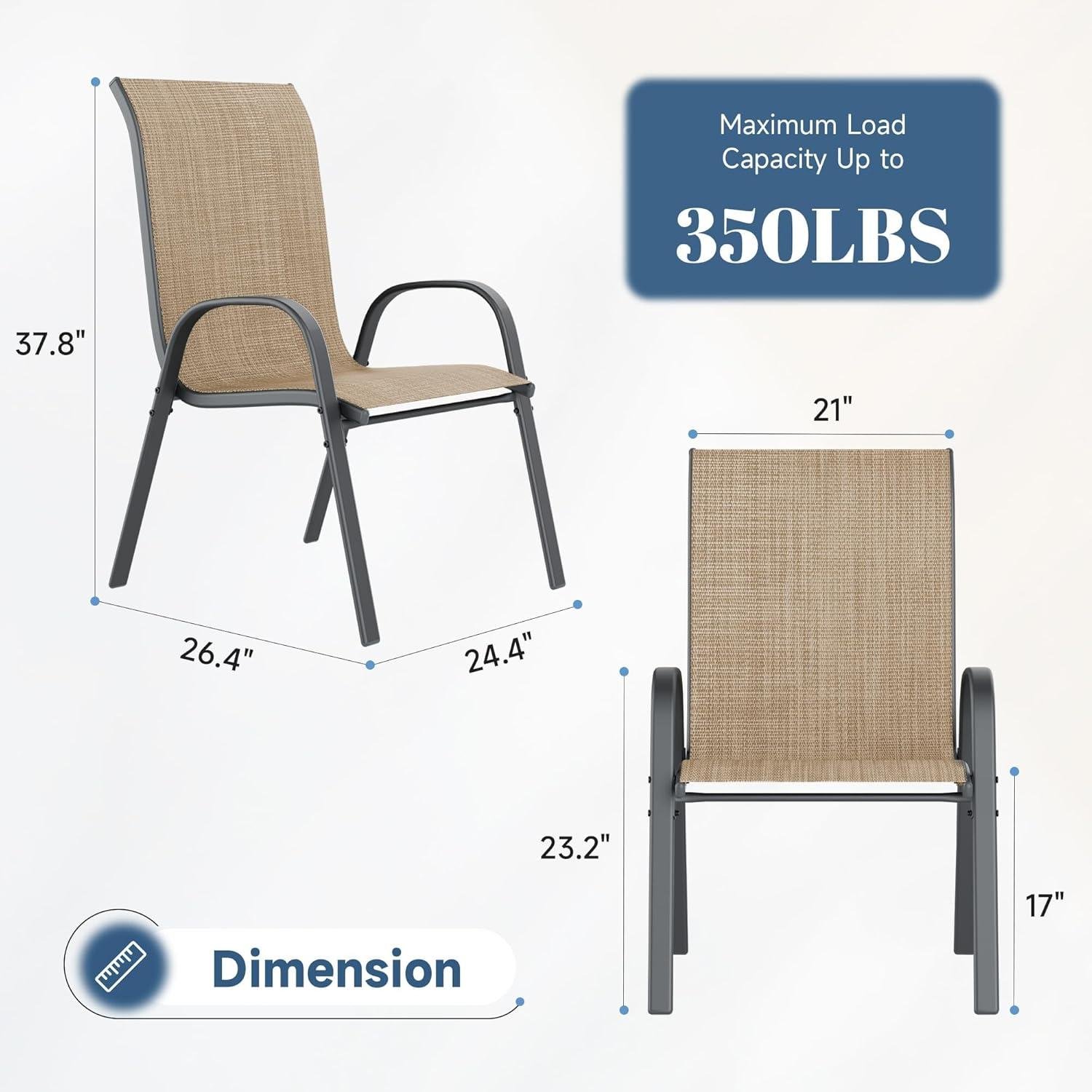
For my handcrafted outdoor living setup, comfort has to feel “earned” the same way a good chair in the shop does—support in the right places, no fussy cushions to baby, and materials that won’t complain when the weather turns. These sling-style seats do that well. The breathable textilene sits cooler than I expected in direct sun and dries fast after a sprinkle, which keeps the whole patio area feeling low-maintenance and ready-to-use. From a woodworker’s lens, it’s also nice not having to obsess over matching wood species, grain orientation, or seasonal movement—there’s no grain to cup, no joinery to loosen, and no film finish to refinish every year. Instead of mortise-and-tenon elegance,you get a straight-shooting,practical build: a steel frame that aims for stability,and a fabric seat that stays comfortable across spring through fall.
| Why it fits my “crafted” outdoor style | What it means day-to-day |
|---|---|
| rust & weather-resistant steel frame | Less worry than outdoor wood about swelling, checking, and finish failure in rain/sun cycles |
| Fade-resistant textilene sling | Breathable comfort that doesn’t get as hot, plus quick drying after storms |
| Stackable + lighter feel | Easier seasonal storage—frees up space for my wood piles and project staging |
| Value in a set of four | Outfitting a deck table costs less than most hardwood builds (even before finish and hardware) |
Value-wise, I look at outdoor seating the same way I price a small batch woodworking run: materials, time, and the headaches you avoid. A four-pack at this price is a solid trade-off versus building four dining chairs from, say, white oak or teak—by the time you’ve milled stock, cut joinery, bought exterior-grade fasteners, and laid down a UV-tough finish, you’re deep into both time and money. Assembly is the only “joinery moment” here, and I’d treat it like dry-fitting a frame: use your own tools, start all bolts loose, then snug everything down at the end so alignment behaves. Mine felt sturdy once tightened, and I appreciate that extra hardware is included—very much the equivalent of throwing a few spare dowels in the box.
- Comfort: supportive sling feel with a generous seat width for relaxed dinners and long conversations
- Durability mindset: more “hose it off and move on” than “sand and recoat every season”
- Best practice: check fasteners after a week of use (like you would with any bolted outdoor frame)
Check current price and availability
Customer Reviews Analysis
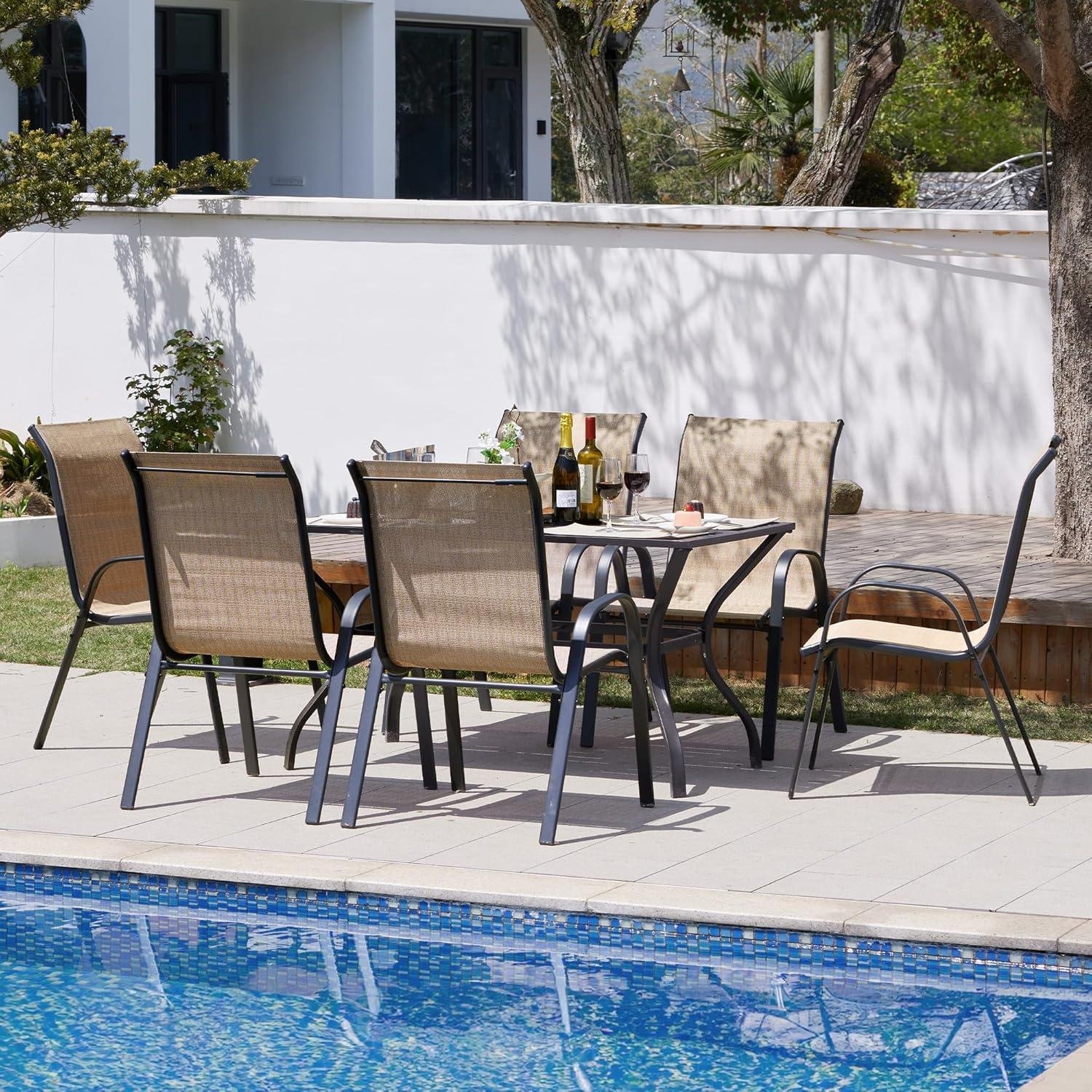
What Real Buyers Are Saying
I went through a handful of buyer reviews to see what kept coming up—especially the stuff I care about as a
woodworking nut: how the “wood look” holds up, whether the finish takes a beating, and if assembly is actually
reasonable without a shop full of tricks. Here’s what stood out.
| Theme | What buyers reported most frequently enough | Overall sentiment |
|---|---|---|
| Overall quality for the price | “Pretty good quality,” “well made,” “highest quality,” good value for four chairs | mostly positive |
| Assembly experience | Ranges from “easy” to “unachievable,” but several notes that technique/tools matter a lot | mixed |
| Finish & cosmetic durability | Some reports of scratches/chipped paint out of the box; touch-up paint mentioned | Mixed |
| Comfort & stability | “Very comfortable and stable,” breathable feel gets implied approval | Positive |
| Shipping/packaging damage | At least one report of a beat-up box and bent parts leading to poor alignment | Negative (when it happens) |
| Outdoor longevity (time will tell) | Multiple “so far so good / we’ll see how they hold up” comments | cautiously optimistic |
Quality & “wood” observations (and what I think they mean)
These are metal-frame, fabric-sling style outdoor dining chairs—not solid wood chairs—so reviewers aren’t judging
grain, joinery, or hardwood selection the way we would with a true timber build. Having mentioned that, several people still
described them as “nice looking and well made” and even “highest quality.” In my read, that’s mostly
about how the frames feel once assembled (no wobble) and how clean the overall presentation is in the yard.
Finish durability: where the real “shop guy” red flags show up
The most useful detail I found was from a buyer who received parts with scratches and paint rubbed off.They ended up buying touch-up paint, but also noted the seller made it right with customer service.
that tells me the finish can be vulnerable during shipping/handling—especially if the box gets roughed up.
- What I’d do on arrival: inspect the frame rails and leg edges instantly (those are the first places coatings get nicked).
- Why it matters outdoors: even a small scratch can become the starting point for corrosion over time if moisture gets under the coating.
Assembly: “easy” for some, “impossible” for others (here’s the pattern)
Assembly feedback was all over the map. One buyer said it was “pretty easy to put together if you use your own tools”
and called out that the included tool isn’t much. Another person said the first chair took about 2 hours,
but once they got the rhythm, the next three took about 10 minutes each. That’s a very real DIY pattern:
chair #1 is the learning curve, chair #2–#4 are the payoff.
The most practical tip (and I 100% agree with this approach from a furniture-build mindset) was:
hand-tighten every bolt first, keep everything loose, then square it up and tighten at the end.
That’s how you avoid fighting misalignment when tolerances are tight.
On the flip side, a couple of reviewers ran into what sounds like legitimate factory/QC or labeling problems:
fabric installed backwards, “front” stickers on the wrong side, and parts scratched. Another buyer received a damaged
shipment with bent components where “nothing aligned.” That kind of issue can make any assembly feel impossible,
as you can’t “technique” your way out of a bent frame.
Comfort & outdoor use over time
comfort is one of the clearest wins in the reviews I read—multiple people called them comfortable, and one
specifically said “very comfortable and stable.” The breathable sling style is typically a good match for patios
because it dries faster than cushions and doesn’t trap heat the same way.
As for true long-term outdoor durability, most comments were essentially: “We’ll see how they hold up but so far so good.”
That tells me buyers are optimistic, but many haven’t lived with them through a full season yet.
If you’re planning to leave them out year-round, I’d treat the finish inspection as step one and consider storing them
stacked under cover during harsh weather—simple habits that add years to any outdoor set.
My takeaway from the review pile
If you get a clean shipment, buyers generally seem happy: good looks, comfortable sit, and solid stability for the price.
The main “watch-outs” are shipping damage and occasional factory/labeling hiccups that can turn assembly into a headache.
If you’re comfortable doing a quick pre-assembly inspection (and you own a real hex key/driver), you’ll likely have a much better experience.
Pros & Cons

Pros & Cons
Since this is CraftedByGrain, I can’t help but judge outdoor furniture the same way I’d judge a shop build:
how the “joinery” is handled (here it’s bolts and brackets, not mortise-and-tenon), how consistent the finish is,
and whether the materials make sense for living outside. These Amopatio chairs aren’t wood, but the craftsmanship
tells a similar story—good design choices in the right places, and a few quality-control hiccups that can make or break the experience.
| Pros | Cons |
|---|---|
|
Comfortable, breathable sling seating
|
Assembly can be finicky (alignment/QC varies)
Several buyers report holes not lining up well,mislabeled parts,or even fabric installed backwards. that’s the “factory joinery” equivalent of a jig being out of square. |
|
Good value for a set of four
|
Included tools are weak
The bundled Allen key is a common complaint. In my shop, I’d call this a simple fix: use your own hex keys/driver and you’ll save a lot of frustration (and stripped heads). |
|
Steel frame makes sense outdoors (on paper)
|
Scratches/finish blemishes can show up out of the box
some reports mention scuffs and paint rubbed through from shipping. Finish consistency is one place these can feel more “mass produced” than “dialed in.” |
|
Stackable and lightweight
|
Not a “heirloom” build
|
|
Once tightened properly, they feel stable
|
Outdoor longevity depends on your environment
In humid/coastal areas,powder coat damage (even small chips) can invite rust over time. If you live near salt air, I’d plan on touch-up paint and occasional inspections. |
|
Low-maintenance compared to wood
|
No wood-species advantages
|
My bottom line: I like the design and comfort a lot for the money, and the materials are sensible for everyday outdoor use.
The biggest drawback is that quality control and assembly experience can swing from “quick build” to “why won’t this hole line up?”
If you’re even mildly handy and you bring your own tools,the odds tilt strongly in your favor.
Q&A

Q&A: amopatio Stackable Patio Chairs (Set of 4)
what type of wood is used—and how does it handle humidity?
There’s no wood in this set. These chairs are built around a powder-coated steel frame with a textilene mesh sling for the seat/back. from an outdoor-longevity standpoint, that’s actually a smart combo for humidity: the mesh doesn’t soak up water like cushions do, and it dries fast, so you’re not trapping moisture against a wooden frame.
Is the joinery strong enough for long-term outdoor use?
As this isn’t traditional joinery (mortise-and-tenon, dowels, etc.), the “joinery” here is really bolted steel connections. Once I got everything aligned and tightened properly, the chairs felt solid and stable, not wobbly. My biggest tip: start every bolt by hand and leave them slightly loose until the whole chair is assembled, then snug everything down at the end. That one habit solves most “holes don’t line up” frustration on furniture like this.
Does the finish protect against UV and rain?
The frame is advertised as rust/weather-resistant, and the sling is described as fade-resistant textilene. In practical terms: rain isn’t a big deal for the mesh (it sheds and dries quickly), and the frame’s powder coat is your main defence against rust.Where I’d be cautious is chips or scratches from shipping/assembly—if bare metal is exposed, rust can start there over time. If you get a nick, I recommend dabbing it with a little rust-inhibiting touch-up paint right away.
Do they actually stay cool in the sun?
Yes—more than most solid chairs. The breathable mesh is the whole story here.It doesn’t hold heat the way darker metal or thick cushions can, and airflow through the sling helps on hot days. I’d still expect any dark frame to warm up in direct sun, but the “sit surface” stays comfortable.
How comfortable are they for real meals—and not just a quick sit?
For a sling-style dining chair,I found them surprisingly comfortable. The mesh has a bit of give, so it’s not a hard perch. If you like a very upright, firm dining posture, sling chairs can feel a touch “relaxed,” but for patio dinners, reading, or lounging with a drink, I think they hit a nice balance.
Are these truly all-weather, or “all-weather if you baby them”?
I’d call them realistic all-weather: they can live outside through normal seasons, especially as the sling dries fast and the frame is coated. That said, if you want them to look new for years, I’d still do the common-sense stuff: avoid leaving them sitting in standing water, and consider stacking/storing them under cover in extreme weather or off-season.
How well do they stack—and will stacking damage the finish?
They’re designed to be stackable, and they do stack neatly, which is great if you’re tight on deck space. Any stacked metal furniture can scuff if grit gets between contact points, so I like to wipe them down before stacking and avoid dragging one chair off another.
Is assembly straightforward for a DIY-minded buyer?
Mostly, but it can be tedious the first time. My experience matched what a lot of buyers report: first chair takes the longest, then the rest go quickly once you learn the sequence.Two practical notes:
- Use your own hex keys/allen wrenches if you have them—the included tools are often soft and can strip.
- If something “won’t fit,” back up and check alignment; forcing bolts is how threads get damaged.
What should I check for right out of the box?
Before you build all four, I’d inspect each chair’s parts for:
- Scratches/chipped coating (touch up if needed)
- Bent frame pieces (usually a shipping/handling issue)
- Correct orientation of the sling piece (a few sets arrive with fabric installed backward, and that makes assembly feel impossible)
Catching those early saves a lot of headache.
Are they a good value compared to wood patio chairs?
If you’re comparing to wood as a woodworker: wood chairs can be beautiful and repairable, but they demand finish upkeep, and joints can loosen with seasonal movement if they aren’t built extremely well.These Amopatio chairs win on low maintenance, fast drying, and easy storage. For the price of four chairs,I consider them a strong value—especially if you want functional outdoor seating without committing to yearly sanding/recoating.
Who are these chairs best for—and who should skip them?
Best for: people who want comfortable, breathable, stackable dining chairs that can handle day-to-day outdoor life with minimal fuss.
Skip them if: you hate assembly, you want heirloom-grade furniture, or you’re expecting the fit-and-finish of high-end welded aluminum sets. These are practical chairs—good-looking, sturdy once built, but not boutique furniture.
Any maintenance tips to make them last longer?
A few easy habits go a long way:
- Tighten bolts once after the first couple weeks of use (things settle).
- Rinse off pollen/salt if you’re near trees or the coast.
- Touch up chips to protect the steel.
- Stack/store under cover if you’re heading into a rough winter.
If you want, I can add a short “assembly cheat sheet” section (tool recommendations + bolt-tightening sequence) to match the rest of your blog post style on CraftedByGrain.com.
Experience Innovation
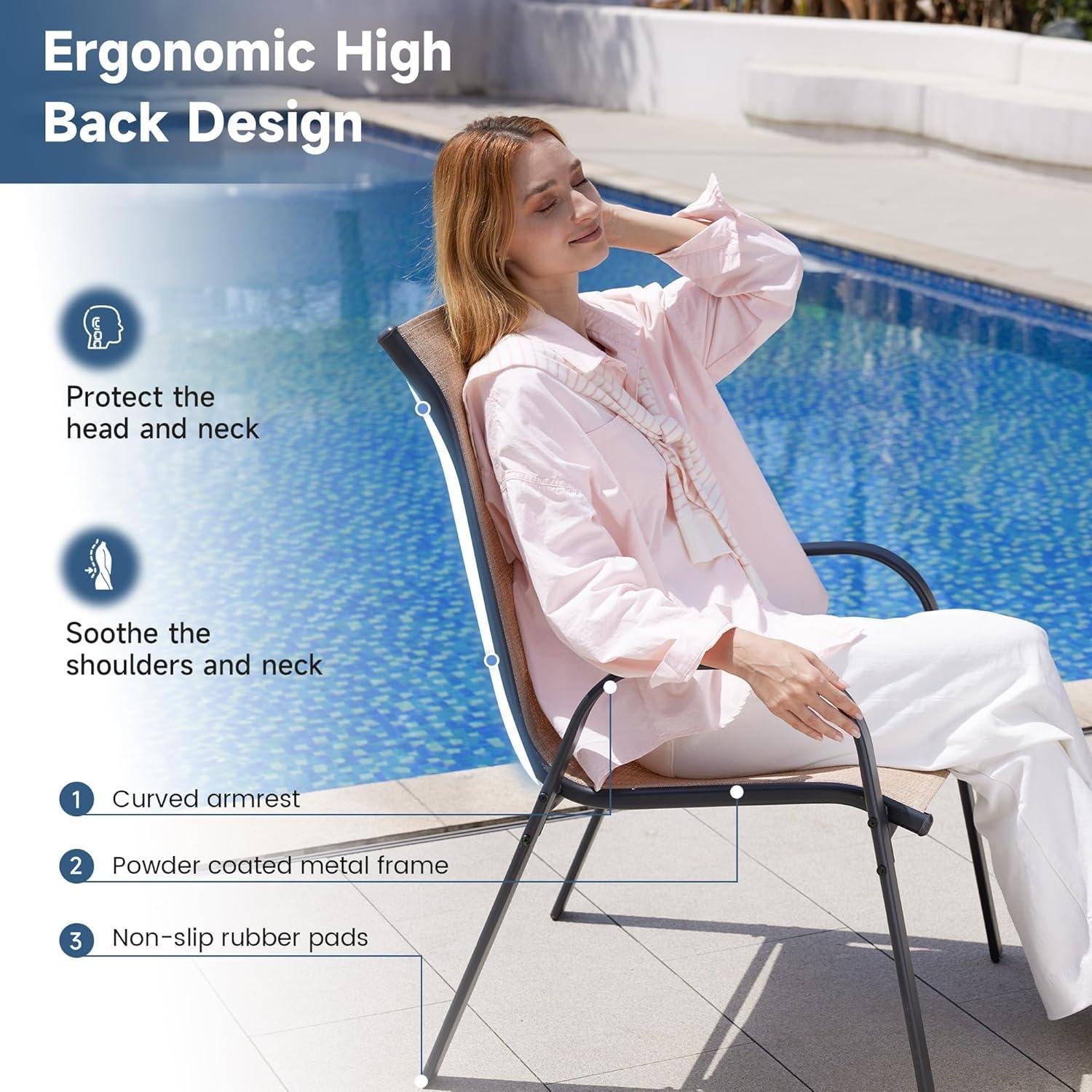
After spending time with the Amopatio Stackable Patio Chairs (Set of 4), I walk away with the same takeaway I get from a well-built shop project: good outdoor pieces don’t just “look nice” for a weekend—they earn their place season after season. These chairs hit a lot of the practical notes I care about for everyday backyard use: they’re comfortable, supportive, breathable in warm weather, and easy to live with thanks to the stackable design. And for a set of four, the value feels real—especially once they’re in place around a table and the space starts to feel intentional.
That said,I also want to be honest about the part that matters to anyone who appreciates build quality: assembly can be a mixed bag. Some folks breeze through it, others wrestle with alignment, hardware, or packaging scuffs. My best advice (the same way I approach any finicky glue-up) is to take your time, dry-fit mentally, and use your own tools if you’ve got them—hand-tighten everything first, then snug it down once it’s all lined up.
as a woodworking enthusiast, I’m always thinking about what makes a space feel “crafted.” It’s rarely one big centerpiece—it’s the sum of solid,reliable pieces that invite you outside more frequently enough. The right chairs turn a plain deck into a place you actually want to linger: morning coffee,a family meal,a late-night conversation when the air cools down. If you’re trying to build a backyard that feels like a handcrafted retreat—welcoming, functional, and built to last—this set is a worthy contender to help you get there.
Check today’s price and availability for the Amopatio Stackable Patio Chairs (Set of 4) on Amazon