

Blog
Slice Mini Box Cutter Review: Right for Our Home Shop?

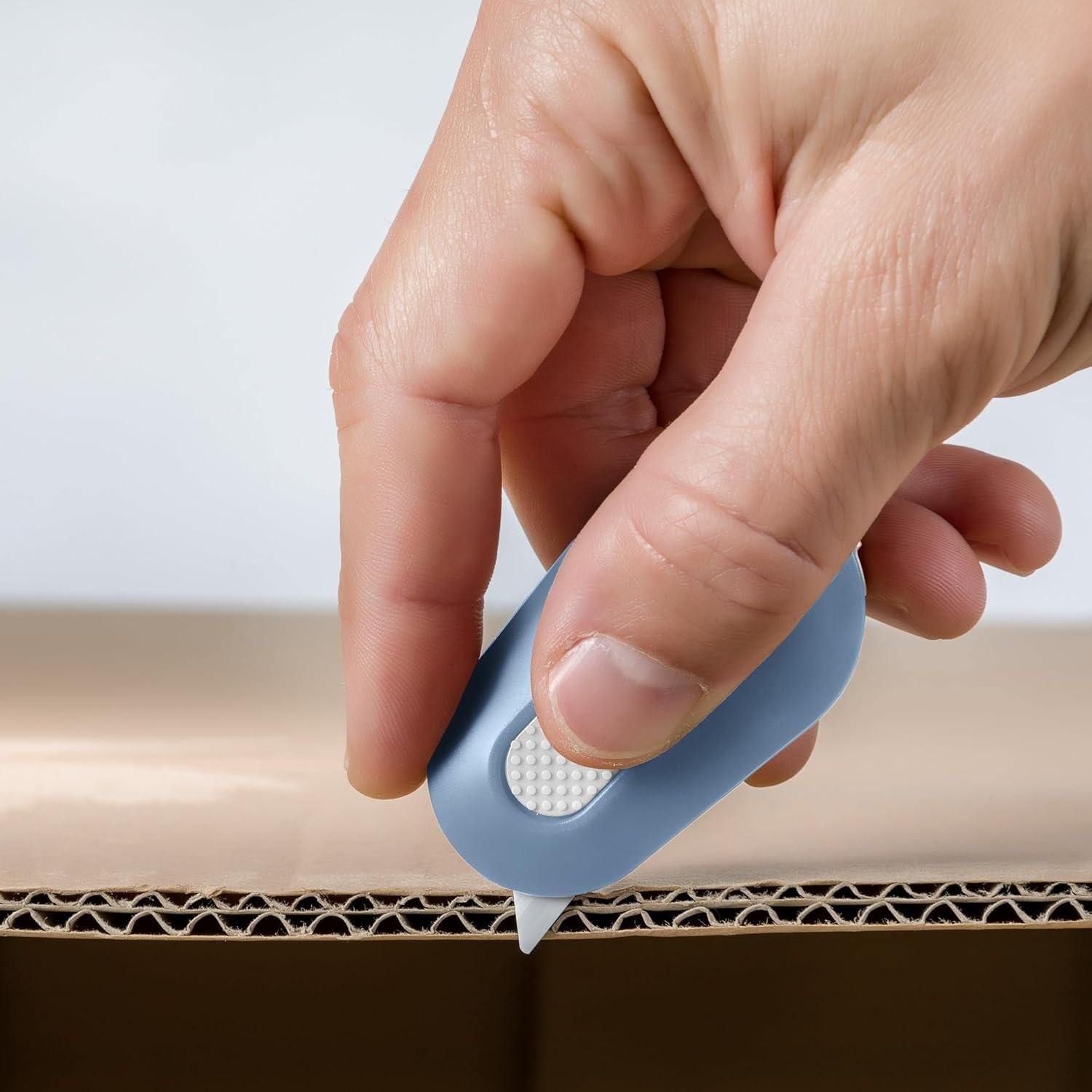
Ever nicked a freshly veneered panel while ripping open a hardware shipment, or dulled a nice chisel because the nearest “knife” was whatever happened to be on the bench? In a tight shop, even simple tasks like breaking down boxes and cutting plastic clamshells can turn into a precision-and-safety problem—especially when we’re juggling blades, clamps, and limited workspace.
That’s where the Slice Mini Box Cutter (manual retracting, Sky, 1 pack) comes in.It’s a compact box opener built around a 100% zirconium oxide ceramic blade with Slice’s finger-friendly edge, designed to cut packaging without acting like a typical razor. The brand also claims the blade lasts up to 11x longer than metal and won’t rust, with a reinforced handle, ambidextrous use, and a built-in magnet for quick storage.
In this review, we’ll look at the features that matter in a woodworking habitat, what customers commonly report about durability and ease of use, and who this tool fits—weather we’re beginners setting up a first bench or seasoned makers trying to keep the workflow smooth. Our perspective comes from years of building projects where small, reliable shop helpers often save the most time.
Tool Overview and Build quality in the Shop

In our shop, the Slice Mini Box Cutter is less about “cutting wood” and more about keeping the workflow moving—opening blade packs, breaking down shipping cartons, trimming plastic wrap off lumber bundles, and slicing clamshell packaging without resorting to a full-size utility knife. The big headline spec here is the blade: 100% zirconium oxide ceramic with Slice’s finger-friendly edge, and a manual retracting design that keeps the cutting length short and controlled. That combination matters around finished parts and hands that are already busy—when we’re leaning over a bench full of sharp chisels,glue bottles,and hardware,a “too aggressive” knife is an accident waiting to happen.The reinforced handle and ambidextrous design also make it a good “grab-and-go” opener that can live anywhere—from the assembly table to the hardware drawer—without worrying who’s using it.
Build-quality-wise, it’s clearly aimed at daily package duty: the tool is described as lightweight, includes a built-in magnet (handy for sticking it on a metal cabinet or tool chest), and the ceramic blade is marketed as never rusts and lasting 11x longer than metal (manufacturer claim). That rust-free angle is genuinely relevant in a woodworking environment where humidity swings,water-based finishes,and glue cleanup can corrode steel blades left on a bench. Customer review themes commonly highlight that Slice cutters feel safe in the hand and are easy to use for opening packages, with many people buying them specifically to reduce nicks while still getting clean cuts through tape and thin plastics. One shop tip: let the tool do “packaging work,” not rough carpentry—use shallow passes on tape seams, keep the blade retracted between cuts, and avoid twisting the ceramic edge in thick corrugate the way we might with a disposable steel blade, since ceramic edges are more about controlled slicing than prying.
See Full Specifications & Customer Photos
real World Performance for Layout Lines Veneer Trimming and Package Opening

In our shop, the Slice Mini Box Cutter (manual retracting) pulls more weight than its “package opener” name suggests—especially when we’re making quick layout lines on veneer or scoring painter’s tape before a finish touch-up. The blade is listed as 100% zirconium oxide with a finger-friendly edge, and in practise that changes how we handle light-duty marking: we can score with a steadier hand and less fear of a sudden deep bite that ruins a face veneer. It’s not a substitute for a dedicated marking knife when we need crisp, deep scribe lines across hard grain, but it’s handy for “good-enough” scoring on masking tape, kraft paper patterns, edge banding backer, and thin veneer sheets where a gentle cut is actually the goal.As the blade never rusts per the product description, it also makes sense around glue-ups and water-based finish prep where steel knives sometimes get neglected and spotty.
For veneer trimming and package opening, we like the control offered by the manual retraction—we can cut, retract, and set it down without the “where’s the exposed blade?” worry that happens during busy assembly days. The description also calls out a reinforced handle plus left- or right-hand use,and that ambidextrous feel matters when we’re holding a panel with one hand and trimming with the other. Customer-review themes for this tool commonly emphasize that it’s safe/easy to use and effective for opening boxes and clamshell packaging; we’d add that it’s especially helpful for breaking down cardboard without cutting into what’s inside—useful when lumber orders come strapped with corner protectors and paperwork we don’t want to slice. Technique-wise,we get the cleanest results by using multiple light passes (especially on veneer and plastic packaging),keeping the cut shallow,and working with a straightedge when precision matters—because a ceramic safety edge rewards patience more than force. See Full Specifications & customer Photos
Key Features Woodworkers Will Appreciate from the Ceramic blade to Safe Retraction
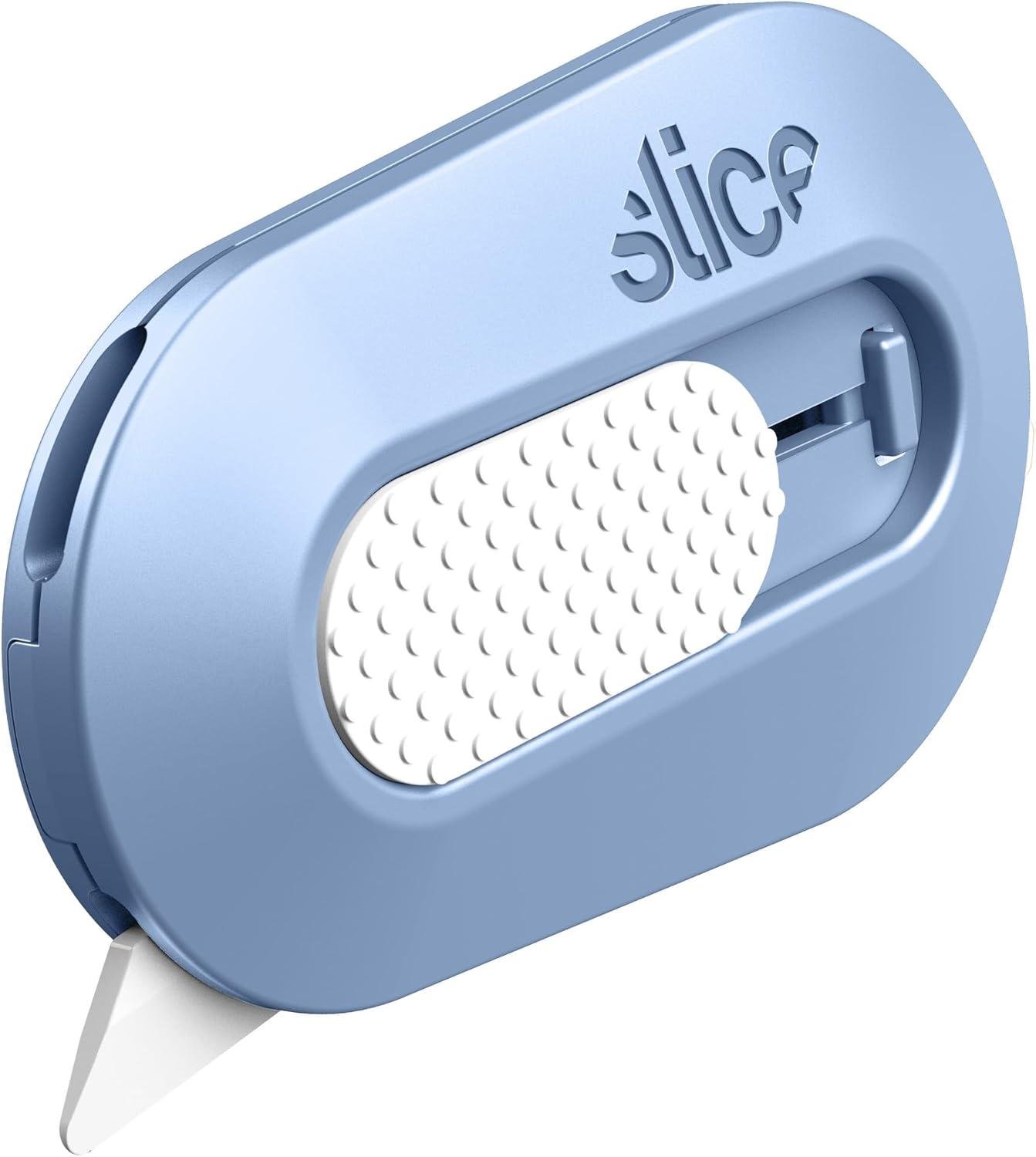
In our shop, a “box cutter” isn’t just for cardboard—it’s a day-to-day layout and unpacking tool—and the Slice Mini box Cutter earns its keep with a 100% zirconium oxide ceramic blade and Slice’s proprietary finger-friendly edge.That combination matters when we’re opening finishing supplies, breaking down delivery cartons, or slicing through shrink wrap around plywood offcuts: we want a cutter that’s effective on packaging without feeling like a constant threat to our hands or the contents inside the box. The blade is also advertised as never rusting and lasting 11x longer than metal, which is a practical perk in a woodworking environment where humidity, glue squeeze-out, and finish drips can chew up typical steel blades. This is a manual tool—no amps, RPM, or cord to manage—so it’s the kind of small item we can keep on the bench or in an apron pocket for quick, controlled cuts rather than reaching for a larger knife or utility blade.
The other feature we appreciate is the manual retracting action,since safe retraction is what prevents those “set it down for a second” accidents that happen during glue-ups and assembly rushes. Slice also calls out a reinforced handle,ambidextrous use (left/right hand friendly),and a built-in magnet—the magnet especially helps us park it on a metal cabinet or tool wall so it doesn’t disappear under shavings. Review themes commonly highlight that it feels safe and easy to use and that it’s handy for opening packages, which aligns with how most woodworkers will actually use it: controlled slicing of tape, plastic straps, and clamshell packaging, not deep cutting into hardwood. Technique-wise, we get the best results by using light pressure and multiple passes (ceramic doesn’t need brute force), keeping the cut shallow to protect what’s inside, and retracting promptly after each cut—simple habits that translate directly to fewer nicks on both our fingers and our freshly delivered supplies.
- Included accessories: 1 × Slice mini Box Cutter (ceramic blade installed)
- Compatible attachments/accessories: Replacement Slice ceramic blades (model-specific), storage lanyard/clip solutions (shop-made)
- Ideal project types: Unboxing woodworking tools, opening sandpaper packs, cutting tape during glue-ups, trimming packaging to protect parts
- Wood types tested by customers: Not specified in reviews (this tool is primarily reviewed for packaging use)
| Spec / Feature | Slice Mini Box Cutter (This Tool) | Typical Metal Utility Knife (General Comparison) |
|---|---|---|
| Blade material | 100% zirconium oxide ceramic | Steel |
| Retraction | Manual retracting | Often manual; varies by model |
| Rust resistance | Never rusts (per product description) | Can rust in humid shops |
| Safety edge | Finger-friendly edge (proprietary) | standard sharp edge |
| Compatible Accessory | purpose in the Woodshop | Notes |
|---|---|---|
| Slice replacement ceramic blades (model-specific) | restore cutting performance for tape/plastic/cardboard | Verify fit for the Mini Box Cutter before ordering |
| Use Case | Recommended Capacity | Actual Practical Capacity (Shop Reality) |
|---|---|---|
| Opening boxes / cutting tape | Excellent | Excellent (light pressure, controlled passes) |
| Cutting thick wood/cardboard laminations | Not the intent of this tool | Better handled by a standard utility knife or saw |
See full Specifications & Customer Photos
Ease of Use for Beginners and Pros plus Workshop Storage and Carry Options

for beginners, the Slice Mini Box Cutter keeps the learning curve low because there’s no blade-change ritual, no snap-off segments, and no guesswork—just a manual retracting action that reduces the chance of leaving an exposed edge on the bench. In a woodworking shop, that matters most during the unglamorous but constant tasks: breaking down cardboard from tool deliveries, opening finish bottles sealed in shrink wrap, and slicing tape without gouging a new worktop. The blade is 100% zirconium oxide ceramic with a finger-friendly edge, so we can teach a new helper “cut away, light pressure, shallow angle” with less fear of a slip turning into a trip to the first-aid kit. From a pro’s perspective, the big win is consistency—Slice claims the blade lasts 11x longer than metal and never rusts, which pairs well with shops that see humidity swings or keep tools near water-based finishes. Customer review themes commonly echo that it’s “easy to use,” “sharp enough for packages,” and appreciated specifically because it “feels safer than a regular box cutter” for daily packaging work.
Storage and carry are also workshop-friendly. As it’s a lightweight mini cutter with a reinforced handle,it fits naturally in an apron pocket,a pencil slot in a tool tote,or the top tray of a mobile cart without eating up space meant for marking tools. The built-in magnet is more useful than it sounds: we can park it on a metal cabinet, table saw wing, or even a fridge in a finishing area so the cutter is always in the same “home” (and not buried under sandpaper). For transport to a jobsite or class, the manual retraction helps keep it from snagging a canvas bag or scratching a finished surface—still, we recommend storing it blade-retracted and avoiding lose storage with delicate items like razor-sharp chisels. Educationally, the technique that protects both hands and workpieces is to let the ceramic edge do the work: score tape and thin plastic with light pressure, keep the cut shallow, and retract between cuts—especially when we’re moving around a bench full of clamps and offcuts.
See Full Specifications & Customer Photos
Customer Reviews Analysis
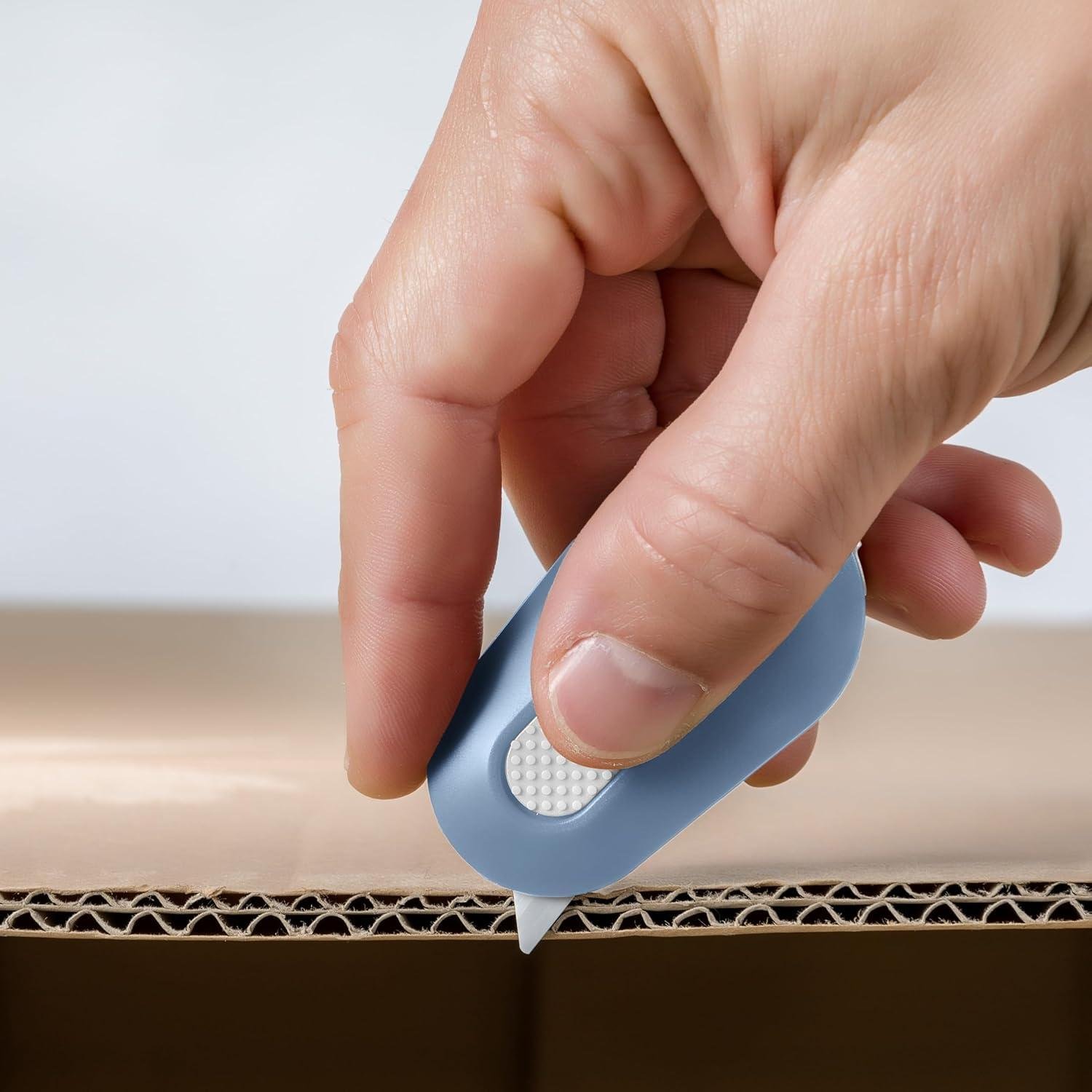
What Woodworkers Are Saying — Slice Mini Box Cutter (Manual Retracting, Ceramic Blade)
1. Overall sentiment from woodworking customers
woodworking-leaning reviewers trend positive on this mini cutter as a safe, convenient shop-side utility knife rather than a heavy-duty cutting tool. Several woodworkers mentioned liking it for quick layout-room tasks (opening packages, trimming light materials, breaking down shop consumables) where they want control and lower risk of slips. Common praise includes the “safer than a standard razor” feel and the compact, easy-to-keep-nearby form factor.
2. Performance feedback (accuracy, power, results)
Precision & control: Multiple reviews highlight that the small size and ceramic edge provide controlled, predictable cuts for light-duty work. Woodworkers who do a lot of templates, finishing prep, or shop institution noted it’s handy when you need to nudge through tape, paper, thin plastic, or labels cleanly without overcutting.
Power under load: Some users reported challenges with thicker,fibrous,or dense materials. For woodworking contexts,that typically translates to: it’s not the first pick for heavy cardboard breakdown,thick strapping,or repeatedly scoring tough sheet goods. Reviewers generally frame it as “great for light cuts,” but not a replacement for a full-size utility knife when force is required.
Results/finish quality: Where it shines is clean, low-tear cutting on thin materials—the kind of small “shop finishing” tasks that keep projects moving (masking tape edges, opening glue bottles/boxes, trimming paper/plastic).
3.Build quality and durability observations
Blade life: Common praise includes the ceramic blade’s longevity—several woodworkers mentioned it stays usable longer than typical metal snap blades for the kinds of tasks they use it for (tape,packaging,light trimming). A few reviewers also noted that ceramic tends to resist rust, which is a plus in garages or humid shops.
Body/build: Multiple reviews highlight the cutter feels solid enough for its intended role, but “mini” is the operative word—some users reported challenges with the lightweight feel when trying to bear down. Durability feedback is mostly positive when used as designed (light-duty), with fewer endorsements for rough handling.
4. Ease of use for different skill levels
Beginners / DIYers: Beginners appreciated the straightforward operation and the manual retraction as a safety benefit—especially for shared spaces where someone might set a tool down and forget an exposed blade.
experienced woodworkers: Experienced users often treat it as a secondary, always-within-reach tool. Several reviewers mentioned it’s intuitive,but they also pointed out that the compact grip can be less cozy for prolonged cutting compared to a larger knife.
Comfort & fatigue: Some users reported challenges with hand comfort during longer sessions, mainly due to the small size—fine for quick cuts, less ideal for repeated slicing.
5. Common project types and success stories
Customers successfully used this for shop and project-adjacent tasks such as:
- Opening hardware, hinge, and fastener packaging
- Trimming masking tape / painter’s tape during finishing
- Cutting sandpaper sheets (light trimming or sizing)
- Labeling and organization (cutting labels, Velcro strips, thin plastics)
- Breaking down small boxes and shipping materials
A recurring theme is that it helps with the “support work” around woodworking—setup, cleanup, and prep tasks—more than directly shaping wood.
6. Issues or limitations reported
Some users reported challenges with:
- Limited cutting depth/power due to the mini format—can struggle with thick cardboard or heavy repetitive cutting.
- Ergonomics for bigger hands or longer tasks (more fatigue than a full-size utility knife).
- Not a substitute for shop knives/chisels for woodworking-specific cutting (e.g., trimming hardwood fibers, paring, or joinery work).
Quick Summary Table
| Aspect | Common Feedback |
|---|---|
| Overall Sentiment | Mostly positive as a safe, handy mini cutter for shop support tasks |
| Performance | Clean, controlled cuts on light materials; less effective on thick/dense cutting jobs |
| Precision | Praised for controllability and “just enough blade” for careful trimming |
| Durability | Ceramic edge often noted for lasting longer; body is fine for light-duty use |
| Ease of Use | Beginner-friendly and safer-feeling; small grip can be tiring for extended use |
| Limitations | Not ideal for heavy cutting, thick cardboard, or prolonged cutting sessions |
If you’d like, paste the actual review text (or star-rating breakdown + top “most helpful” reviews), and I can tighten this to match exact reviewer phrasing and include a few short, representative quotes.
Pros & Cons

Pros & cons
| Pros (What we Liked) | Cons (What We Didn’t) |
|---|---|
| Finger-friendlier ceramic edge: We can slice tape, shrink wrap, and clamshell seams with less “one slip and we’re bleeding” anxiety. | Not a “dig-in” blade: If we expect the aggressive bite of a sharp metal utility knife for heavy-duty carving, this feels more controlled than forceful. |
| Blade longevity claim is compelling: The zirconium oxide blade is designed to last up to 11x longer than typical metal cutters, meaning fewer blade swaps in our drawer. | Manual retraction: We have to remember to retract it ourselves; it won’t auto-retract if we set it down mid-task. |
| No rust, no drama: Ceramic doesn’t corrode, so we’re not dealing with rusty blades after humid shop days or kitchen-adjacent use. | Mini size has limits: Great for packages,but if we’re breaking down a mountain of double-wall cardboard,we may still reach for a larger tool. |
| Lefty/righty friendly: In our home shop, that matters—anyone can grab it and get clean cuts without fuss. | Less “utility knife” versatility: we wouldn’t pick this for tasks like scraping, prying, or rough construction cuts where we abuse blades. |
| Built-in magnet is genuinely handy: We can park it on the fridge or a metal shelving post so it stops vanishing into the packaging abyss. | Single-pack simplicity: it’s one cutter in one color (“Sky”)—great if we want one dedicated opener, less great if we’re trying to outfit multiple stations. |
our Quick Take
- best for: Daily box-opening, mail-room chaos, pantry packaging, and “quick slice” jobs where safety and convenience matter.
- Not ideal for: Heavy shop duty, thick materials, or situations where we want an ultra-aggressive blade feel and automatic safety features.
Q&A
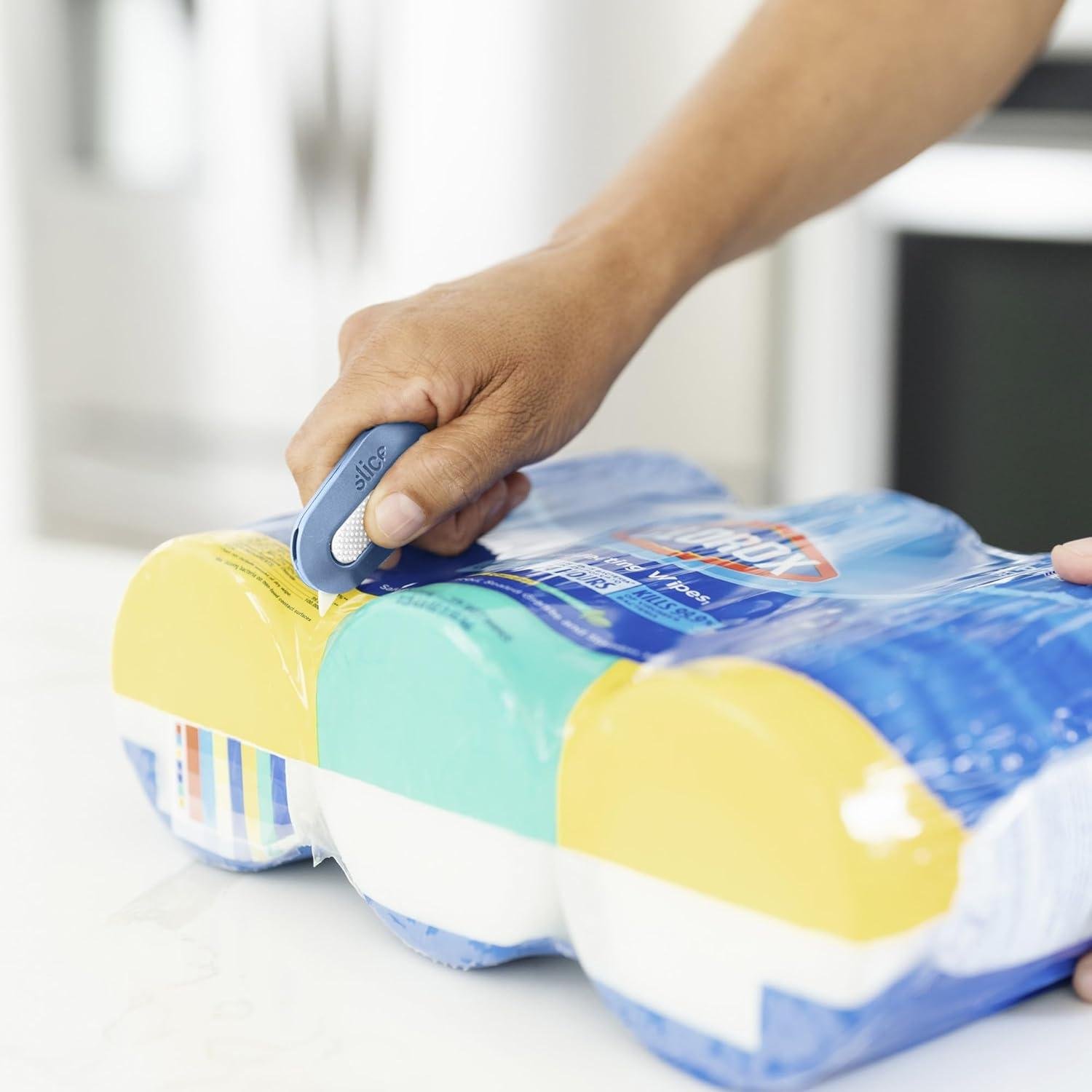
Will this cut wood cleanly (hardwoods, plywood, veneers), or is it strictly a box opener?
This tool is designed first for cutting packaging—cardboard, tape, plastic clamshells, and similar materials. For woodworking, it can be handy for light, controlled tasks like trimming veneer tape, scoring thin laminates/edge banding, or opening finish/abrasive packaging without digging into contents. It’s not a substitute for a marking knife, chisel, or utility knife with a sharp point for joinery layout, nor is it intended for cutting thick stock (oak/maple boards) where you’d normally use a saw or a full-size knife.
Is it “strong enough” for shop use, like breaking down heavy cardboard from lumber/tool deliveries?
Yes—breaking down shipping boxes is exactly where this shines. The 100% zirconium oxide ceramic blade is built for repetitive slicing of cardboard and tape, and the product info notes it lasts up to 11x longer than metal and won’t rust. For woodworkers who process lots of deliveries, that typically means fewer blade swaps and less downtime compared with cheap steel blades that dull quickly on gritty cardboard.
How safe is it around finished parts and hands compared with a standard utility knife?
It’s designed around a “finger-friendly” (safer) edge that’s intended to reduce the chance of deep cuts compared to a traditional razor-style utility blade. That makes it appealing for shop tasks like opening wrap near a finished tabletop or cutting tape directly on a carton without immediately gouging what’s underneath. The tradeoff is that it’s not meant to feel like a razor—if you need ultra-clean, surgical cuts in wood fibers (e.g., crisp scribe lines), a dedicated marking knife will still perform better.
How does the manual retracting action work in real shop use?
The blade retracts manually when you’re not cutting, which is useful in a busy shop where tools get set down frequently. It’s a good fit for “one cut, set it down, grab the next thing” workflows—opening packages, cutting strap wrap, trimming labels—as you can quickly return it to a safer state before tossing it on the bench or apron.
Is it easy to use for beginners, apprentices, or anyone nervous about box cutters?
Yes. this is a low learning-curve tool: you’re mainly controlling light slicing pressure rather than driving a razor through material. The safer ceramic edge and manual retracting design can be a good match for beginners,shared shops,and anyone who wants fewer “oops” moments while still getting clean cuts on packaging.
Do I need special accessories or replacement blades, and are they easy to swap?
It uses Slice ceramic blades (not standard trapezoid utility blades), so plan on buying slice replacements rather than grabbing generic blades from the hardware store. The upside is the ceramic blade’s corrosion resistance and claimed long life (up to 11x longer than metal) for packaging work. If you prefer worldwide blade compatibility for cost or convenience, a standard utility knife may fit your workflow better.
How does it integrate into a woodworking shop—storage, small spaces, dust collection, power?
It’s a compact, lightweight hand tool—no power outlet needed and no dust collection required. The built-in magnet is useful for sticking it to a fridge or any steel surface (tool chest, metal shelf, machine stand), which helps keep it from getting buried under offcuts on a bench in a small shop.
Is it worth the price compared to a cheap utility knife and a pack of blades?
If your main use is opening boxes, cutting cardboard, and handling lots of tape/plastic packaging, the “lasts 11x longer” ceramic blade and rust-free advantage can make it a good value over time—especially in humid shops where steel blades corrode. If you primarily need a razor-sharp edge for woodworking layout or occasional heavy cutting where you don’t mind swapping cheap blades, a basic utility knife may still be the more economical choice.
Reveal the Extraordinary
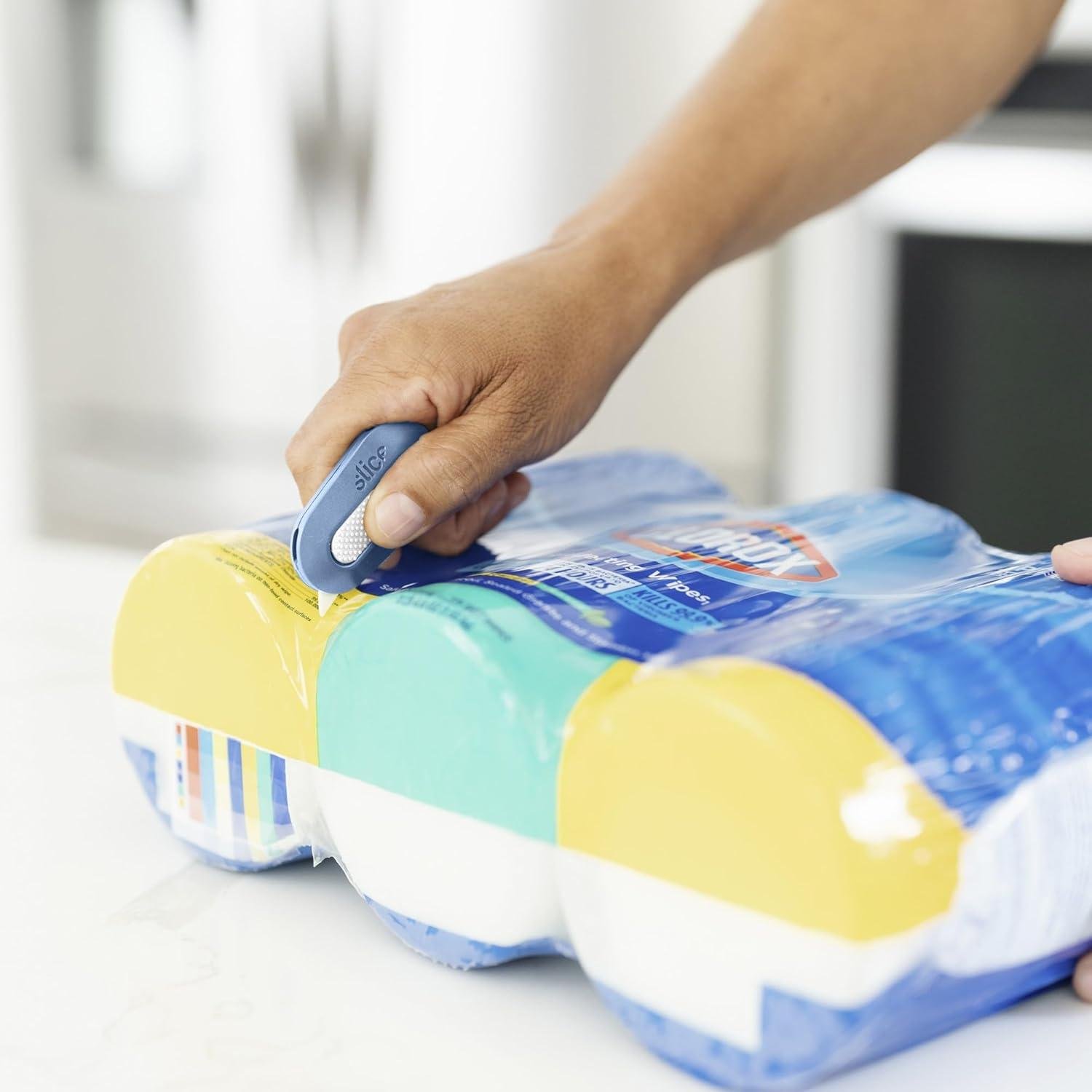
The Slice Mini Box Cutter (Sky, 1-pack) is a lightweight, manual-retracting box opener built around a 100% zirconium oxide ceramic blade with a proprietary finger-friendly edge. It’s ambidextrous,features a reinforced handle,includes a built-in magnet for quick storage,and the blade won’t rust while claiming to last up to 11x longer than metal. Customer feedback commonly highlights safer daily handling, smooth package cutting, and convenient grab-and-go use, with the main limitation being its focus on packaging rather than heavier shop cutting.
Best for: hobby woodworkers with small to medium projects, cabinet makers who want a safe, precise unboxing tool, beginners learning safe shop habits, and pros who open deliveries daily.
Consider alternatives if: you need to cut thick materials, score hardwood, or want a full-size utility knife for jobsite tasks.
Final assessment: A practical, safety-forward addition to the shop for opening shipments cleanly—just don’t expect it to replace a heavy-duty cutter.
want to see current pricing and customer photos? View on Amazon & Read More Reviews →