

Blog
JORGENSEN No.60-1/2 Block Plane Review: Our Shop Fit?


Ever tried too sneak up on a perfect fit—only to find your edge is still proud, your sanding block is rounding corners, and the grain is tearing out right where it matters? In those moments, a good block plane can be the difference between fighting the workpiece and calmly dialing it in.
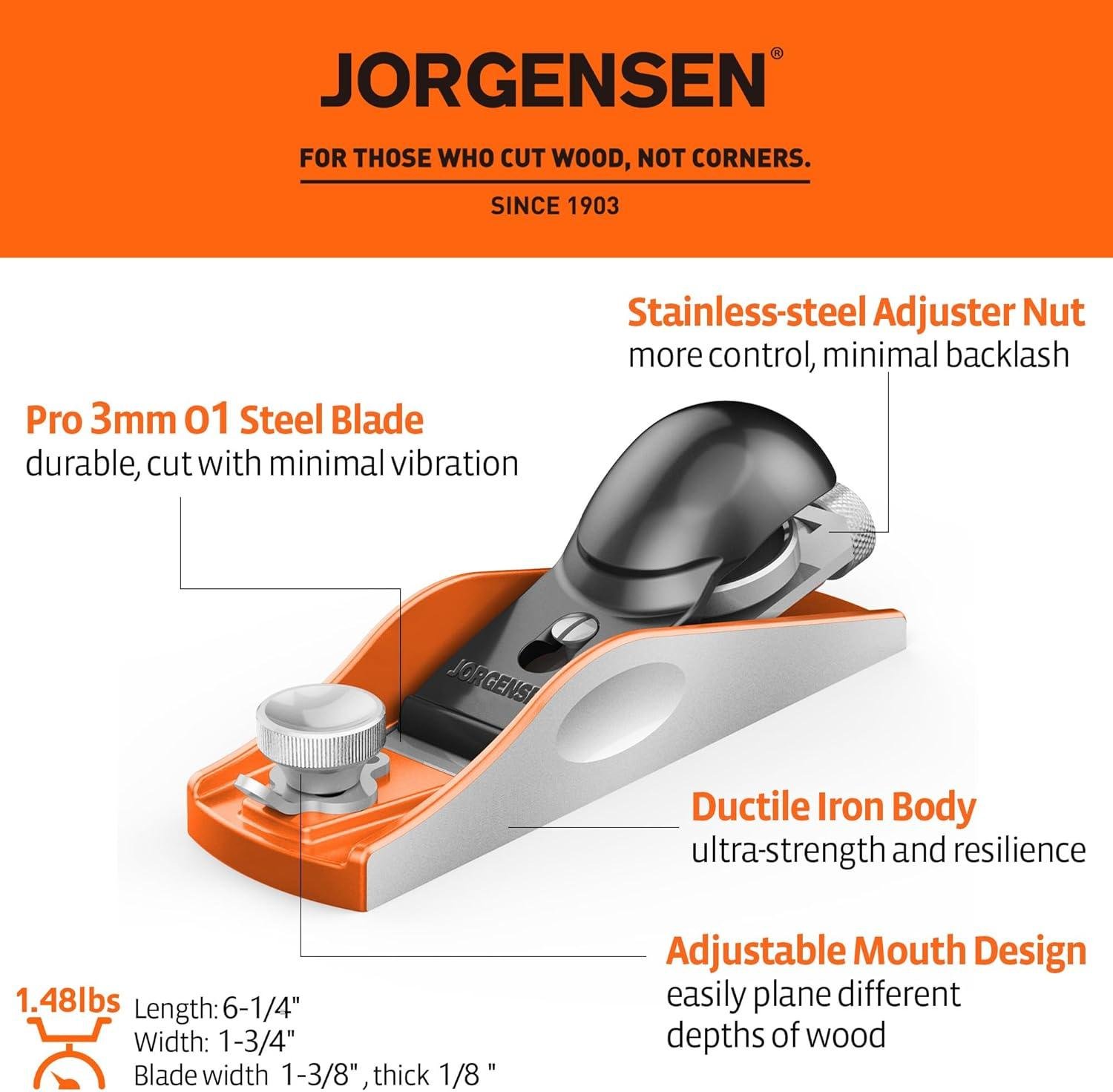
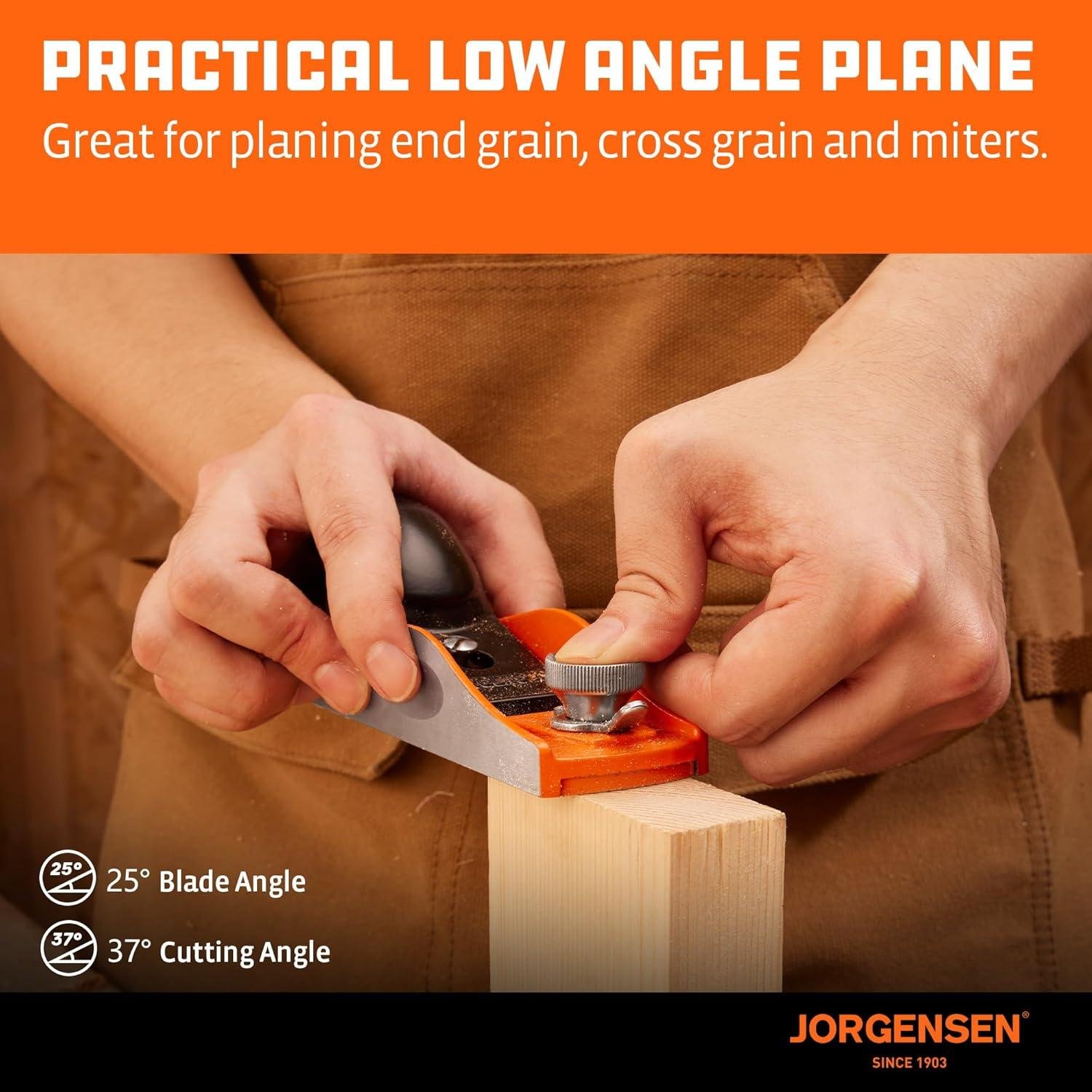
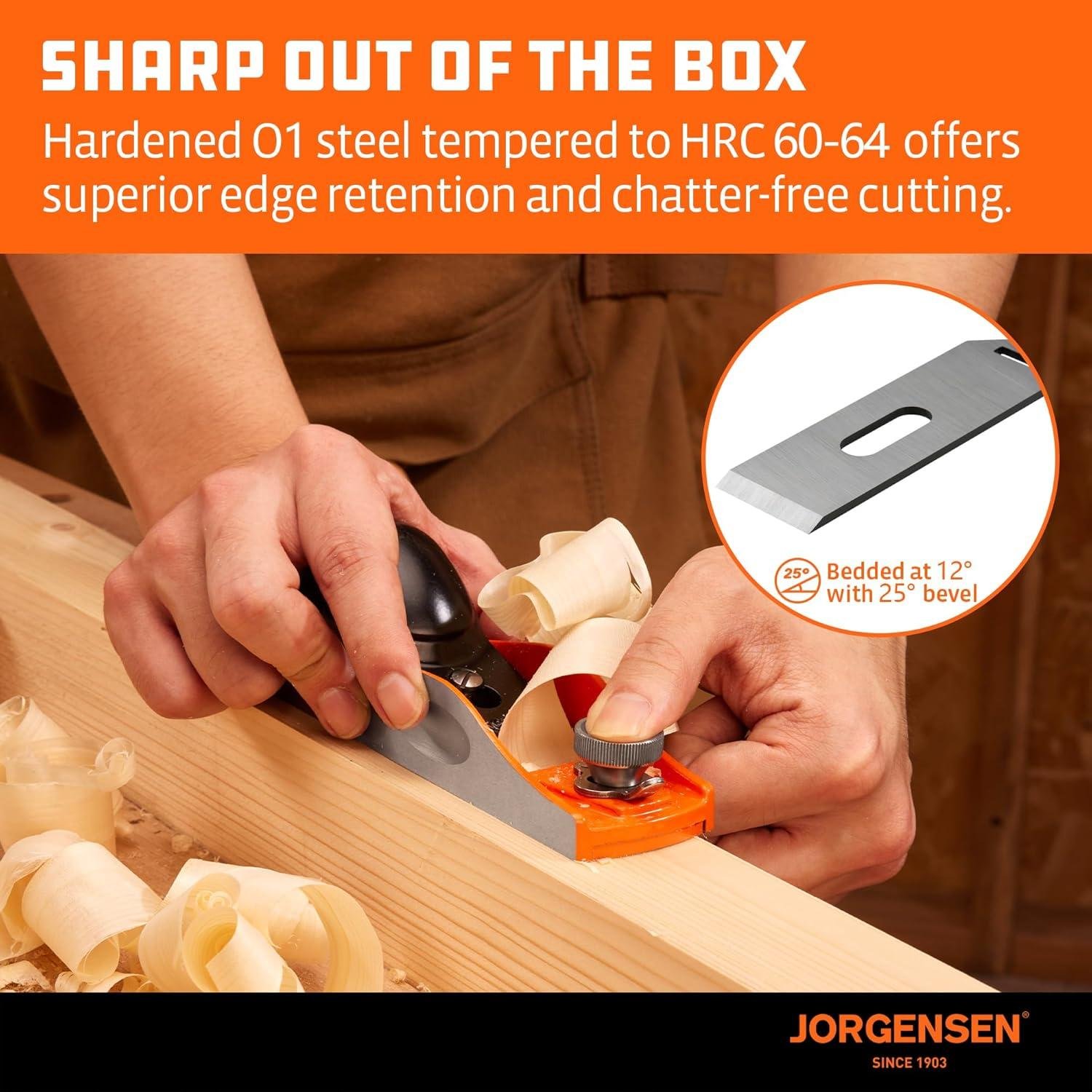
The JORGENSEN No.60-1/2 6-1/4″ Low Angle Block Plane is built for trimming end grain, breaking edges, fine-tuning joinery, and general touch-ups where power tools feel like overkill.It features a professional O1 tool steel blade, a ductile iron body (marketed as drop-tested for durability), an adjustable mouth, and a depth adjustment knob for controlled shavings. The compact size also suits tight benches and small shops.
In this review,we’ll look at its key features,what those specs mean in real woodworking terms,what customers commonly report about smoothness and ease of adjustment,and who it makes sense for—beginners balancing budget vs. quality, or experienced makers wanting a reliable small plane. As woodworkers who’ve tuned and relied on hand tools, we’ll focus on practical decision-making, not hype.
Tool Overview and First Impressions of the Jorgensen Low Angle Block Plane

The JORGENSEN NO.60-1/2 immediately reads like a classic bench-side problem solver: a compact 6-1/4″ low angle block plane built for end grain, edge breaks, and quick fitting work where we’d rather not fire up a powered tool. On the bench, the first impression is the emphasis on materials and adjustability—the body is a professional ductile iron body (the brand notes it’s drop-tested for rugged use), paired with a zinc alloy lever cap and stainless steel components for the hardware. For us, that matters because a block plane lives a rough life: it gets tossed into an apron pocket, used on glue lines, and bumped against clamps. The blade is listed as O1 tool steel, which is a practical choice for woodworkers who want an edge that sharpens easily and can be brought back often without fuss—especially helpful if we’re tuning it for whisper-thin end-grain passes.
In hand, this style of plane works by keeping the cutting iron at a low bedding angle and letting us adjust two key variables: cutting depth (via the knob that advances/retracts the blade) and an adjustable mouth for controlling tearout—tight mouth for tricky grain, wider mouth when we want a heavier shaving. Jorgensen also calls out a meticulously polished flat bottom, which is a big deal in real shop use because sole flatness and smoothness affect how predictably the plane starts and tracks across a board. This is the kind of tool we reach for when fitting a drawer, flushing a proud tenon, easing a sharp edge, or cleaning up mill marks in a spot where sanding would round over detail. We do want to be upfront that customer review themes weren’t provided here, so we can’t accurately quote common user feedback yet—but the included safety note in the description is worth repeating: treat the iron as razor-sharp, keep fingers behind the mouth, and retract the blade when it’s going back into storage.
- Included accessories: Instruction manual
- Compatible attachments/accessories: Honing guide (aftermarket), sharpening stones/plates, strop, replacement O1 block plane iron (size must match this model), small engineer’s square for setup checks
- Ideal project types: Drawer fitting, trimming end grain on small parts, breaking edges on furniture parts, deburring joinery, light flushing of proud joints, craft work
- Wood types tested by customers: Not available in provided review data
| Spec | JORGENSEN NO.60-1/2 (from listing) | What it means in the shop |
|---|---|---|
| Plane type | low angle block plane | Better control on end grain and small trimming tasks; great “one-hand” plane. |
| Length | 6-1/4″ | Compact for localized work; not meant for flattening long boards like a jack plane. |
| Body material | Ductile iron (drop-tested per description) | More impact-resistant than brittle castings; useful for a frequently handled shop tool. |
| Blade steel | O1 tool steel | Sharpens readily; good for woodworkers who maintain edges frequently enough. |
| Adjustments | Adjustable cutting depth, adjustable mouth | Depth controls shaving thickness; mouth helps tune tearout vs.cut aggressiveness. |
| Accessory | Type | Notes |
|---|---|---|
| Sharpening stones/diamond plates | Maintenance | Recommended to keep the O1 iron performing; finer grits help for end grain. |
| Leather strop + compound | Maintenance | Quick edge refresh between tasks; helps reduce tearout on tricky grain. |
| Honing guide | Setup/maintenance | Helps us repeat bevel angles consistently—useful for beginners. |
| Parameter | Recommended use (typical for block planes) | What’s stated for this model |
|---|---|---|
| Material removal | Light-to-moderate trimming, fitting, and cleanup | Trimming, polishing, deburring, cutting (per description) |
| Shaving thickness | Fine shavings for finish work; heavier only with care | Adjustable cutting depth (exact range not specified) |
| Tearout control | Tight mouth for difficult grain/end grain | Adjustable mouth (range not specified) |
see Full Specifications & Customer Photos
Key Features Woodworkers Will appreciate in the Adjustable Mouth Design
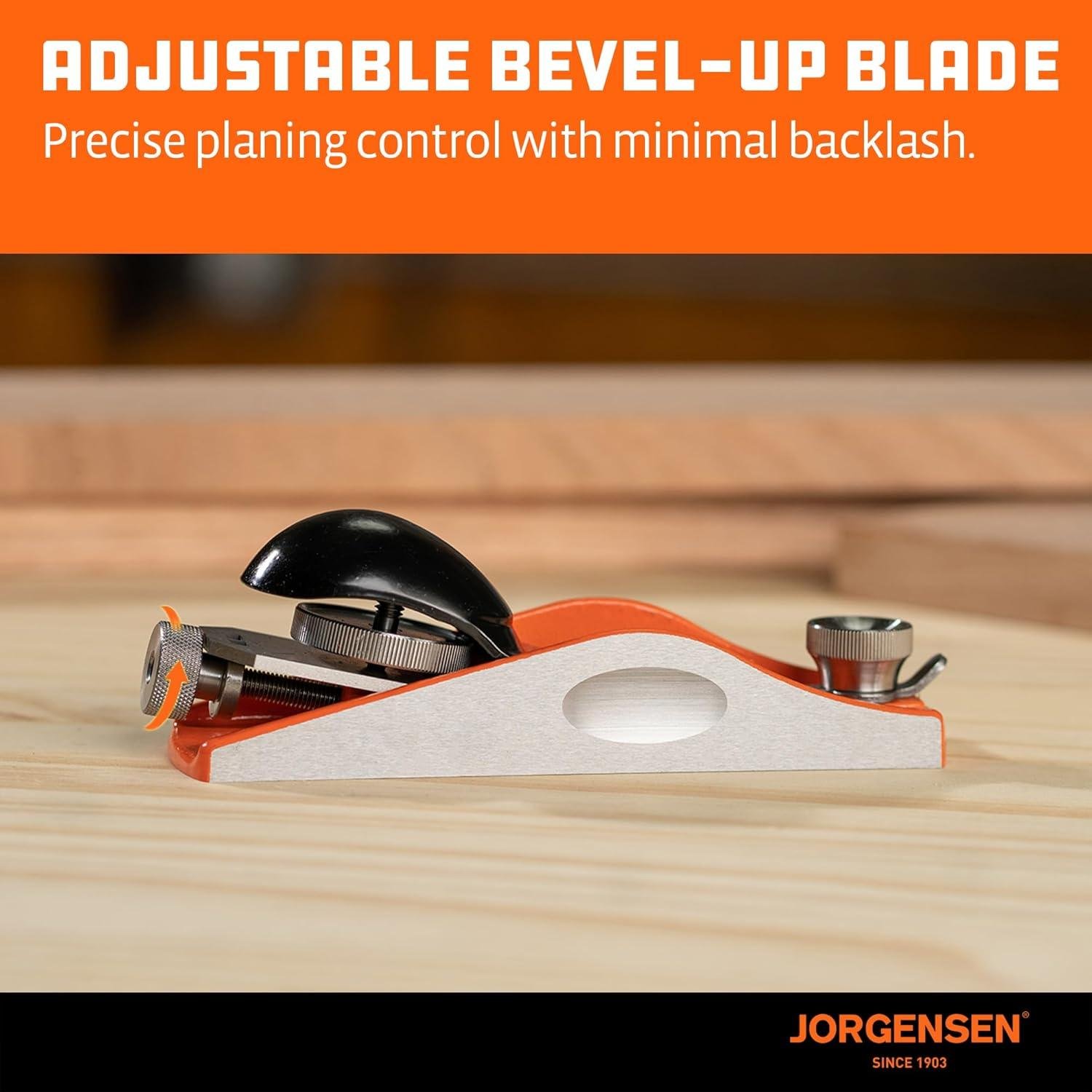
In our shop, the adjustable mouth is one of those features that immediately tells us whether a block plane is meant for real bench work or just “good enough.” On the JORGENSEN NO.60-1/2 6-1/4″ low-angle block plane, being able to open or tighten the throat lets us match the tool to the cut: we’ll choke the mouth down for fine smoothing passes to reduce tear-out, then open it up when we’re taking slightly heavier shavings during quick trimming and fitting. That matters as this plane is designed for detail work—trimming end grain,breaking edges,and cleaning up joinery—and a properly set mouth helps the O1 tool steel blade do its job efficiently rather of fighting the wood. we also appreciate that the plane’s ductile iron body provides a stable platform when we’re dialing in those tight settings; a firm, flat registration surface makes “set-it-and-forget-it” mouth adjustments feel more repeatable across multiple parts.
From an educational standpoint, it’s worth remembering that the mouth opening works hand-in-hand with cutting depth: a tight mouth supports wood fibers right before the blade, which is especially helpful on tricky grain, while a wider mouth clears chips better when we’re working fast. The product description notes that cutting depth is adjusted by turning the knob, and the mouth width is adjustable as well—so we can treat this as a true fitter’s plane rather than a single-setting block plane. Review themes for tools in this category commonly praise planes that are “easy to operate” and “smooth on the wood,” and JORGENSEN leans into that with a meticulously polished flat bottom and an included instruction manual; that combination tends to reduce the learning curve for newer woodworkers while still giving experienced hands the control we want. Our practical takeaway: if we often switch between edge-breaking, end-grain trimming, and final pass cleanup, an adjustable mouth is the feature that helps one small plane cover all those jobs without constant frustration.
See Full Specifications & Customer Photos
Real World Performance for Trimming End Grain and Fine Surface Planing
In our shop, the JORGENSEN NO.60-1/2 (6-1/4″) low-angle block plane feels purpose-built for end-grain trimming and small fitting jobs—think dialing in a proud tenon shoulder, flushing edge banding, or easing a miter that’s just a hair tight. The combination of a low-angle block-plane geometry and the O1 tool steel blade helps it slice rather than scrape when we keep the iron truly sharp, which is the real secret to clean end grain. We also appreciate the adjustable mouth: closing it down supports the fibers right in front of the cutting edge, which reduces spelching on tricky cuts. Customer review themes commonly mention that it’s easy to operate and has a smooth-gliding sole out of the box, and that matches what we expect from the listed meticulously polished flat bottom—it’s the kind of tool that encourages controlled, light passes instead of forcing the cut.
For fine surface planing—cleaning up a patch, knocking off milling marks, or doing final touch-ups on a small panel—the plane’s compact 6-1/4″ size makes it nimble, but it also means we need good technique to avoid ripples: we’ll set a very fine depth with the cutting-depth adjustment knob, skew the plane about 30–45° to lower effective cutting resistance, and take overlapping strokes with consistent pressure. On figured woods, we’d tighten the mouth opening and back off to whisper-thin shavings; that’s also where reviewers’ “works well for trimming/polishing/deburring” comments tend to line up with real-world use—this is a detail plane, not a substitute for a full-size smoother.Maintenance matters here: O1 takes a keen edge quickly, but it still demands regular honing, and we reccommend treating the sharp blade with respect (the product description explicitly warns about it). If our work is mostly small-part fitting,trim work,and craft-scale surface refinement,this block plane’s ductile iron body and adjustable mouth put it in a practical sweet spot for both careful beginners and experienced hands who want a grab-and-go end-grain tool.
See Full Specifications & Customer Photos
Ease of Use and Control for Beginners and Experienced Hands
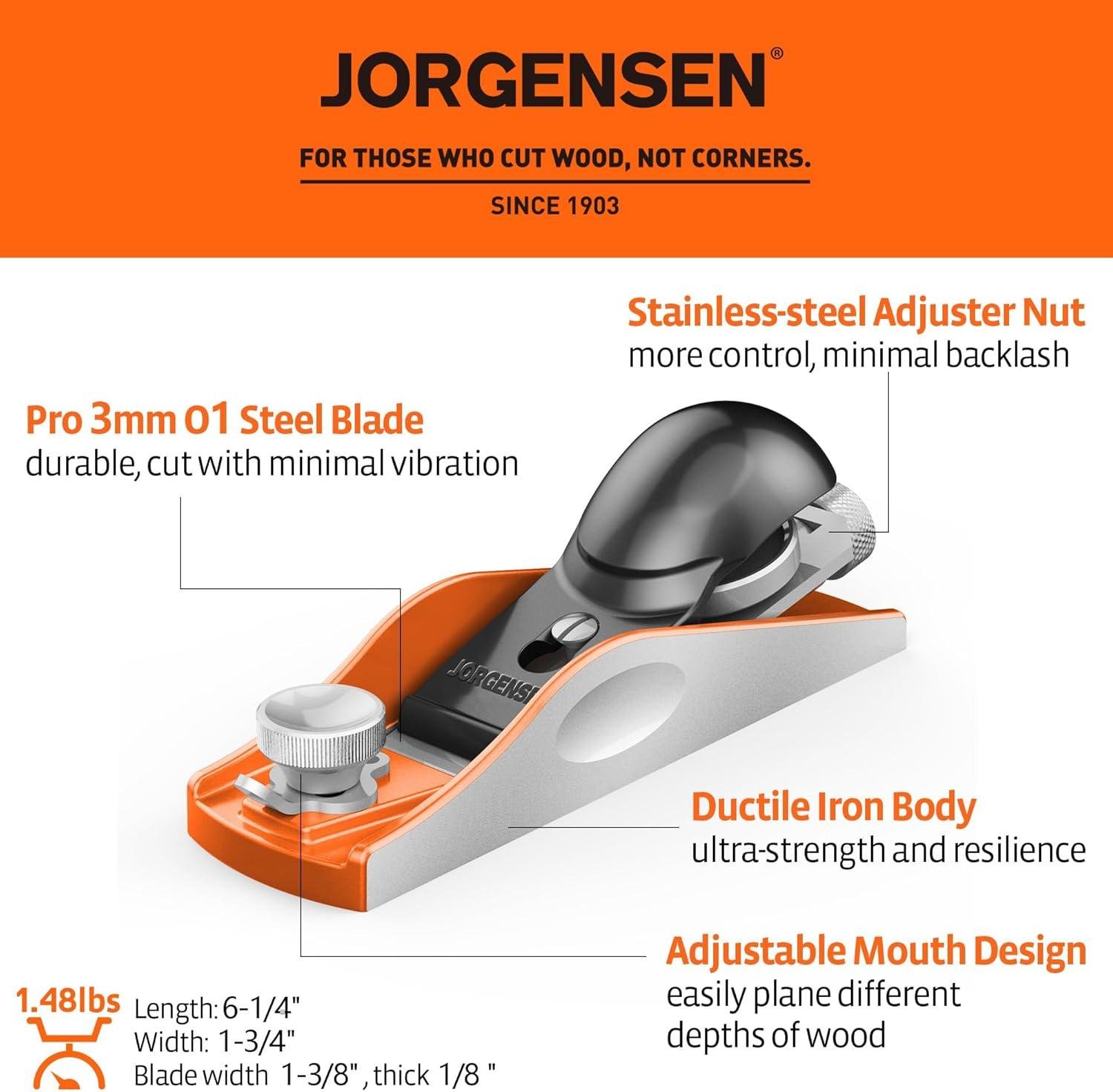
In the hand, the JORGENSEN NO.60-1/2 feels built for control rather than brute force—its 6-1/4″ low-angle block-plane format naturally wants to be pushed with a thumb on the front and a steady palm on the rear, which is exactly the grip most of us learn first. For beginners, the big win is how quickly we can get from “out of the box” to making shavings: the cutting depth adjusts by turning the knob, and the tool’s professionally polished flat sole helps it register smoothly on the work so we’re not fighting chatter right away.The adjustable mouth is also a practical teacher—opening it up gives us a more forgiving setup for rougher work, while closing it down helps reduce tearout when we’re taking fine passes on tricky grain. The maker is explicit about safety (“pay attention to the sharp blade”), and we agree: because this is a compact plane, it’s easy for new hands to let fingers drift too close during adjustment, so we’d treat blade setting and mouth adjustment as “hands-off-the-edge” moments.
For experienced hands, the appeal is in the materials and tunability: a ductile iron body (with zinc-alloy lever cap and stainless components) brings the kind of mass and rigidity we look for when we’re planing end grain, breaking edges, or fitting joinery. The blade is O1 tool steel, which matters in daily shop use as it’s a steel many of us already know how to hone; we can keep it working with regular stropping and periodic sharpening rather than treating it as disposable. Review themes commonly echo what the product pitch leans on—customers often mention it being “easy to use” and “smooth”,especially for trimming and small-detail fit-ups—though,as with most block planes,performance still depends on us setting the iron correctly and matching mouth opening to the cut. Educationally, we’d recommend a simple setup routine: flatten and wax the sole if needed, set the mouth tighter for finishing, then dial in a whisper-thin shaving and test on scrap before touching a project piece—this plane rewards that methodical approach whether we’re brand new or already picky about our surfaces.
See Full Specifications & Customer photos
Customer Reviews Analysis
What Woodworkers Are Saying: JORGENSEN NO.60-1/2 6-1/4″ Low Angle Block Plane
1.Overall sentiment from woodworking customers
the tone of feedback is mostly positive, with several woodworkers describing it as a solid-value block plane that can produce clean results once tuned. Common praise includes the plane feeling substantial for the price and being capable of fine trimming and cleanup work typical of a low-angle block plane.that said, some users reported challenges with out-of-the-box setup and emphasized that performance depends heavily on blade sharpening and adjustment.
2. Performance feedback (accuracy, power, results)
Multiple reviews highlight that the plane can take thin, controlled shavings and leaves a clean surface when properly set up.Several woodworkers mentioned good results for end grain and edge trimming—a classic strength of low-angle block planes.
- Cut quality / finish: Common praise includes achieving smooth planed surfaces that reduce follow-up sanding (especially after honing the iron).
- Power under load: Some users noted it works best with light passes, and that trying to hog off material can lead to chatter or tearing depending on wood species and setup.
- Accuracy & consistency: reviewers with more experience found that once dialed in, it can deliver repeatable results, especially for small fitting tasks.
A few users summarized the experience as: great potential, but “it needs sharpening/tuning first” before it performs like a precision tool.
3. Build quality and durability observations
Several woodworkers mentioned the ductile iron body feels sturdy and more “shop-worthy” than lighter hobby planes.Multiple reviews highlight:
- The plane feels rigid and stable in use, which helps with controlled trimming.
- Fit-and-finish is generally considered good for the price tier, though some users reported minor machining or alignment imperfections that required tweaking.
- durability impressions are mostly positive, but long-term longevity comments tend to be limited—many reviews focus on initial setup and early projects rather than years of ownership.
4. Ease of use for different skill levels
Ease of use feedback is mixed, largely split by experience level.
- Beginners / DIYers: beginners appreciated the idea of a compact block plane for quick trimming, but some DIYers found the learning curve steep—especially around blade honing, setting the depth, and adjusting the mouth.
- Experienced woodworkers: Experienced woodworkers noted the adjustability is useful and that the tool can be made to perform well with standard tuning steps (flattening, honing, dialing in the mouth opening).
Several woodworkers mentioned that the out-of-box experience can vary, so new users may want to plan for basic setup rather than expecting perfect performance immediately.
5. Common project types and success stories
Customers successfully used this plane for the kinds of jobs block planes excel at, including:
- Trimming and fitting joinery (fine-tuning edges, easing corners, trimming proud joinery)
- End-grain work (small adjustments on parts where a low angle helps)
- Door/cabinet fitting and edge cleanup (general shop tuning tasks)
- Craft and small woodworking projects where a compact hand plane is easier to control than a larger bench plane
Several reviewers mentioned it being especially handy as a bench-side plane for quick corrections during assembly and fitting.
6.Issues or limitations reported
Some users reported challenges with:
- Out-of-box sharpness: A common theme is that the iron may arrive needing proper honing/sharpening to achieve the smooth, glossy cuts people expect from a block plane.
- Adjustment finickiness: Some users found blade setup and mouth adjustment a bit touchy, particularly if they where new to hand planes.
- Not a heavy stock-removal tool: Multiple reviews imply it’s best for fine trimming, not aggressive flattening or dimensioning (which is normal for a 6-1/4″ block plane).
- Occasional QC variance: A few comments suggest minor fit/finish inconsistencies, leading to additional tuning.
Quick Summary Table
| Aspect | Common Feedback |
|---|---|
| Overall Sentiment | Mostly positive; seen as good value with solid potential after tuning |
| Performance | Clean, fine shavings when sharpened; best with light passes and trimming work |
| precision | Adjustable and consistent once dialed in; setup quality can vary out of the box |
| Build Quality | Ductile iron body feels sturdy; some reports of minor fit/finish or QC variation |
| Ease of Use | Mixed—experienced users pleasant; beginners may struggle without sharpening/plane tuning knowledge |
| Best Use Cases | End-grain work, edge trimming, fitting joinery, cabinet/door adjustments, small craft projects |
| Limitations | Often needs sharpening; not intended for heavy stock removal; adjustments can feel finicky |
Pros & Cons
Pros & Cons
Pros
- rugged, shop-friendly build: The ductile iron body feels confidence-inspiring in the hand, and it’s clearly designed to take real-world knocks—not just sit pretty on a shelf.
- Low-angle makes end grain less dramatic: For trimming and fine fitting, the low-angle format tends to behave well when we’re sneaking up on end grain or taming tricky edges.
- Adjustable mouth = more control: Being able to dial the mouth opening tighter for finer shavings (or open it up when we’re hogging off a bit more) gives us flexibility across tasks.
- Depth adjustment is straightforward: The knob-style depth adjustment is quick to understand, which helps when we’re bouncing between “whisper-thin” and “just a touch more.”
- O1 tool steel blade: O1 is a solid, sharpenable steel choice. We like that it’s meant to be honed and reused, not treated like a disposable insert.
- Compact and portable: At this size, it’s easy to grab for quick chamfers, edge clean-up, deburring, and small fitting jobs—especially for DIY and craft work.
- Smooth-running sole (out of the box feel): The polished, flat bottom helps it glide when conditions are right, which is exactly what we want from a block plane.
Cons
- May still need tuning for perfection: Like many mid-priced planes, we may need to spend a little time checking the sole, setting the blade, and dialing the mouth to get truly premium performance.
- Small plane, small limits: it’s perfect for trimming and detail work, but it won’t replace a longer bench plane when we’re flattening wider stock or jointing edges.
- Adjustment learning curve is real: Depth and mouth adjustments are accessible, but getting the “just right” setting—especially for tearout-prone woods—still takes practice.
- Sharpness demands respect: The blade is meant to be sharp (good), but it also means we need to handle setup and storage carefully (especially around beginners).
- Lever cap materials may feel less premium to some: The zinc alloy lever cap is functional, but woodworkers who love all-brass or higher-end hardware might consider it a minor aesthetic compromise.
| Shop Task | How It Tends to Do | Our Quick Take |
|---|---|---|
| Trimming proud joinery | very good | Feels made for “one more pass” accuracy. |
| End-grain clean-up | Good | Low angle helps; best with a tight mouth and sharp iron. |
| Chamfers & edge breaking | Excellent | Fast,tidy,and easy to control with one hand. |
| Flattening bigger panels | Limited | Not its mission—reach for a longer plane. |
Q&A
What wood types can this block plane handle effectively?
It’s well-suited for most common solid woods used in the shop—softwoods (pine,fir,cedar) and hardwoods (walnut,cherry,oak,maple)—as long as you take thin shavings and keep the blade sharp. Because it’s a small 6-1/4″ low-angle block plane, it excels at edge work, end grain, chamfers, fitting joints, and trimming proud plugs/tenons rather than flattening large panels.
Is it powerful enough for hardwoods like oak or maple?
yes, for typical block-plane tasks. The O1 tool steel blade is designed for efficient cutting and can be re-sharpened many times, which matters more than “power” on a hand plane. In dense hardwoods, expect best results with a very sharp edge, a tight/adjusted mouth, and light cuts (don’t try to hog off material like you would with a larger bench plane).
how does it perform on plywood, veneers, and tricky grain?
It can work on plywood and veneers, but you’ll want to be cautious: glue lines and voids are hard on edges, and thin face veneers can tear out if you take aggressive cuts. The adjustable mouth helps here—set it tighter for cleaner, finer shavings. For best results on plywood edges, take very light passes and consider skewing the plane to lower the effective cutting angle.
what adjustments are available (and how precise are they)?
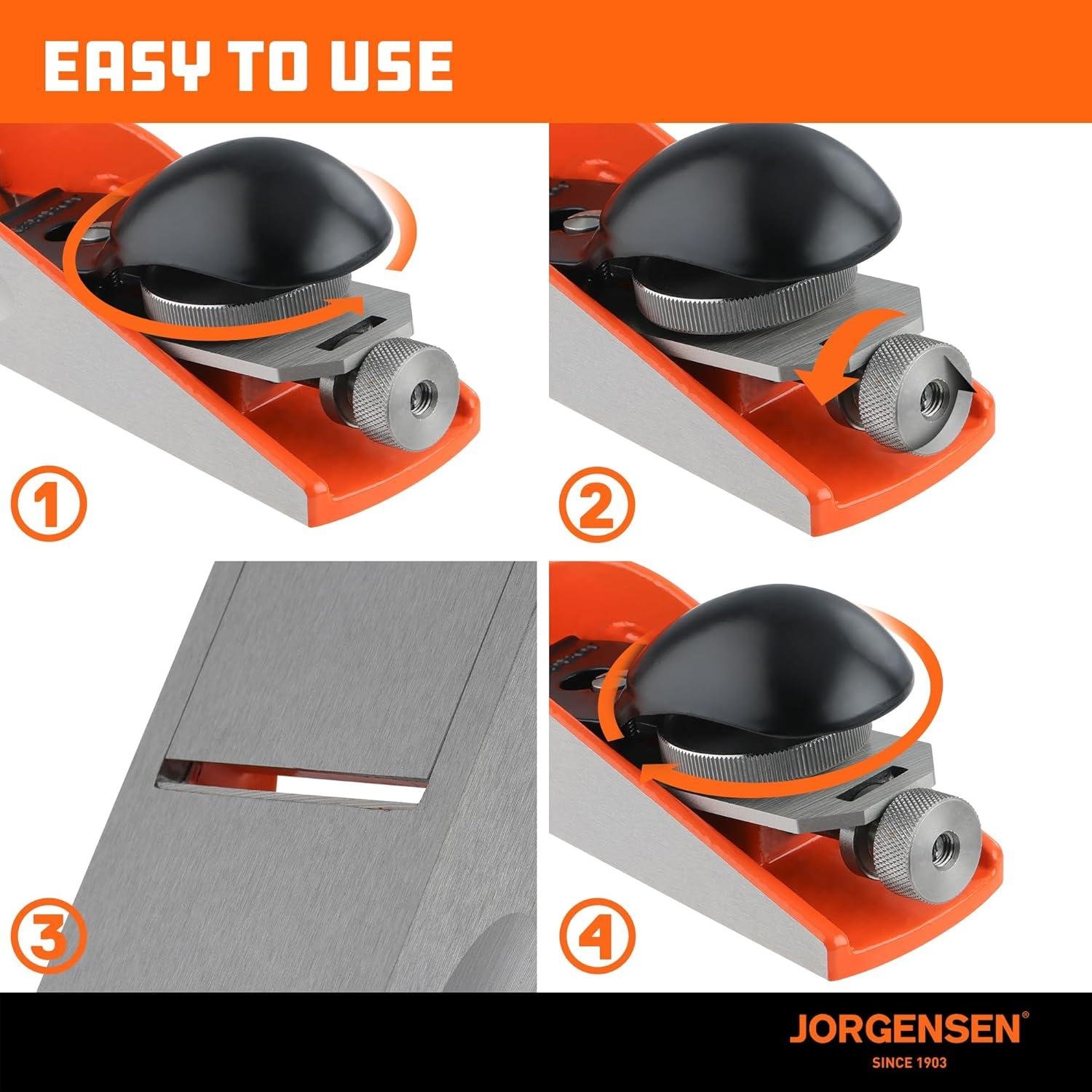
You can adjust cutting depth using the knob, making it easy to go from a whisper-thin finishing cut to a slightly heavier trimming cut. You can also adjust the mouth opening, which lets you trade off between fast stock removal (wider mouth) and reduced tear-out on difficult grain (narrow mouth). These are the key controls woodworkers look for in a low-angle block plane used for fitting and detail work.
how difficult is the initial setup out of the box?
Most woodworkers should expect basic tuning: checking blade sharpness, setting the blade for an even cut, and dialing the mouth opening for the job. The flat, professionally polished sole is intended to give smooth operation, and the included manual helps with setup. If you’re new to hand planes, plan on a short learning curve—especially around “how thin is thin” for tear-out-free results.
Is this suitable for beginners, or do I need advanced hand-tool skills?
It’s beginner-friendly for trimming and fitting work as it’s small, portable, and has straightforward depth and mouth adjustments. That said, like any hand plane, performance depends heavily on blade sharpness and technique. Beginners typically do best starting with light cuts, practicing on scrap, and learning how mouth setting and cutting depth affect tear-out and surface quality.
will it fit in a small workshop, and does it require dust collection or a bench mount?
Yes—this is a hand tool with a compact 6-1/4″ form factor, so it stores easily and works well in small shops or on a jobsite. It doesn’t need power, dust collection, or a dedicated mount.For best control, many woodworkers simply use a bench hook, vise, or clamps to hold the workpiece securely while planing.
What maintenance should I expect, and how durable is the body?
Regular maintenance is mainly blade care: hone or sharpen the O1 tool steel edge as it dulls and keep the plane clean after use. A light wipe-down helps prevent corrosion on steel parts, especially in humid shops. Durability is a strong point here—the ductile iron body is made for heavy-duty use and is described as drop-tested, with a zinc alloy lever cap and stainless steel components aimed at long service life under normal woodworking conditions.
Discover the power
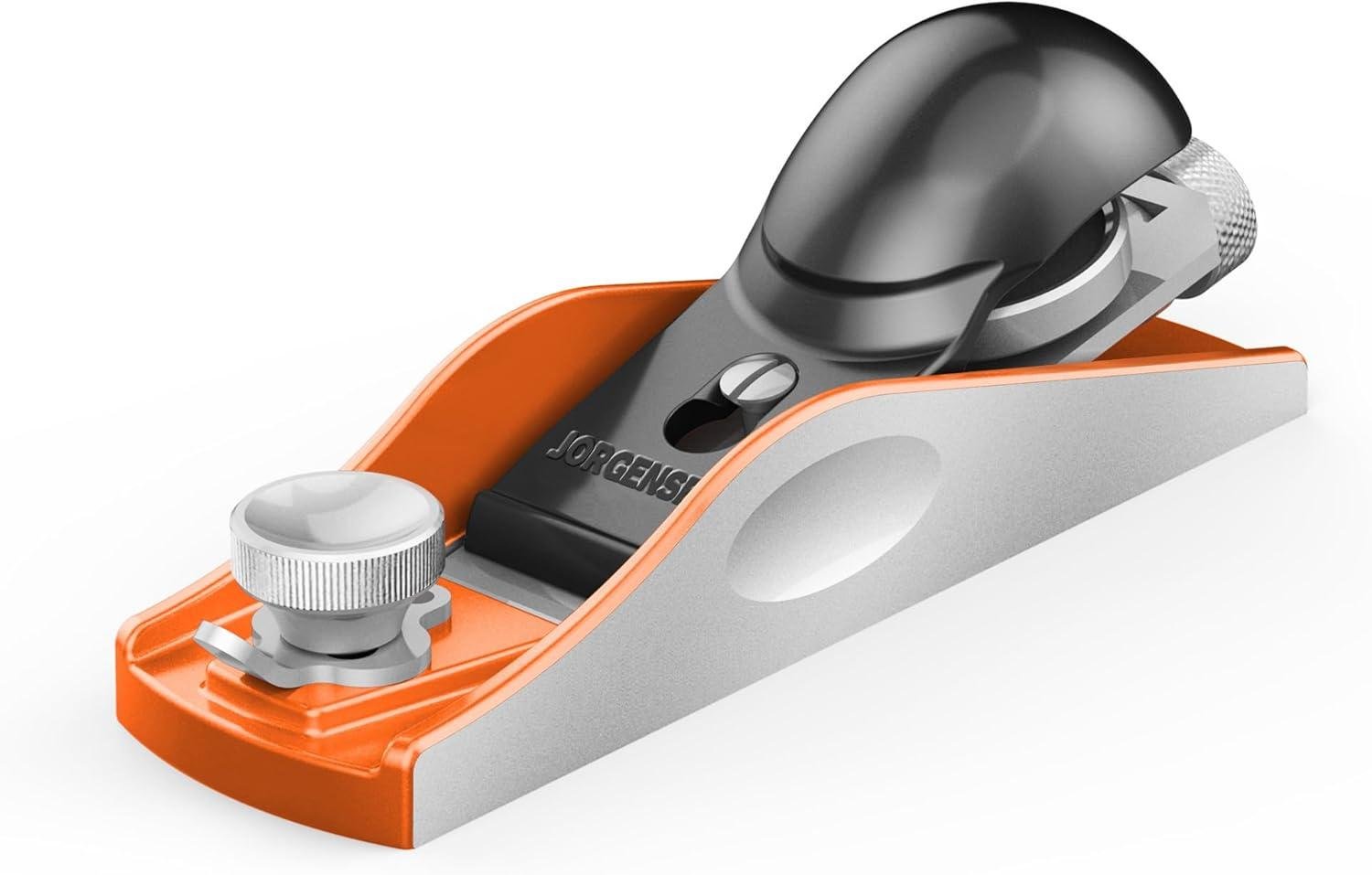
The JORGENSEN NO.60-1/2 6-1/4″ Low Angle Block Plane is a compact hand planer built for controlled trimming and fine surface work. It features a professional O1 tool-steel blade (sharpenable and reusable), a ductile iron body designed for heavy-duty durability, and an adjustable mouth and cutting depth knob for dialing in thin shavings or more aggressive cuts. Customer feedback commonly highlights its solid build quality, smooth sole, and easy adjustability, while noting that, like most block planes, performance depends on proper setup and blade sharpening.
best for: hobby woodworkers with small to medium projects, cabinet makers needing precision fit-ups, beginners learning planing fundamentals, and pros who want a durable, grab-and-go block plane.
Consider alternatives if: you routinely flatten large panels, work thick hardwood stock all day, or need a dedicated high-end plane for premium out-of-box tuning.
it’s a solid mid-range option that delivers reliable control for trimming, chamfers, and cleanup—just keep expectations aligned with a block plane’s role.
Want to see current pricing and customer photos? View on Amazon & Read More Reviews →