

Blog
Dragon Clock 3D Puzzle Kit Review: Right for Our Shop?


Ever had a “quick shop break” turn into a frustrating hour of fiddly parts, vague instructions, and pieces that don’t quite line up? When our benches are crowded and our time is limited, we want a build that feels precise—clean edges, tight fits, and a finished piece that looks intentional, not improvised.
That’s were the 3D Puzzle Dragon clock Kit (with Pendulum) comes in. It’s a laser-cut linden wood model designed to assemble into a dragon-themed wall clock with Roman numeral dial, removable pendulum, and moving hands (it requires 1 AA battery, not included). The brand highlights smooth-edged, precisely laser-cut pieces and vivid HD-printed details, aiming for a display-worthy result without needing a full tool setup.
In this review, we’ll cover the kit’s build quality, precision of fit, instructions, time/space demands (rated around 1.5 hours), and value, plus what customers commonly report about ease of assembly and finish. As woodworkers who care about accuracy and durability, we’ll look at whether this “small project” actually respects our standards—and who it’s best for, from beginners to detail-obsessed hobbyists.
Tool Overview and Build Quality in the Box

In the box, this “tool” is really a small-scale woodworking experience: a laser-cut linden wood 3D Dragon Clock kit with a removable pendulum and roman numeral dial layers that stack to create the dragon relief. From a shop perspective, we like that the parts arrive as precisely cut sheets with smooth edges and HD-printed faces, which lets us focus on fit, alignment, and clamping technique rather than milling stock. There are no motor specs here—no amps, RPM, or dust port—as it’s a battery-powered quartz clock mechanism that requires 1 AA battery (not included). The manufacturer calls out an ~1.5-hour assembly time, and customer themes generally support that: multiple reviewers describe it as “very easy to put together” and “easy to build”, while a few note it can be “a little tricky” in spots until you understand how the layers and tabs register.
Build quality is where this kit intersects with practical woodworking skills: tolerances,grain direction in thin stock,and how we handle press-fit joints. Reviewers commonly mention the pieces being “very sturdy” with a great fit, and several report that most joints hold tightly without glue—but it’s equally common to see notes like “needed to glue a couple of the connections” or “use glue in 2 major places”, especially if a tab feels loose. As woodworkers, we’d treat that as normal variability in die-cut/laser-cut fiber structure: dry-fit first, then use minimal adhesive only where needed, and consider the customer tip to “shimmy the pieces back and forth rather of pushing them in” to avoid snapping delicate tabs.One important expectation-setting point from reviews: the dragon “3D” look is created by layered images stacked, not deep carving—so it’s more like a clean, decorative lamination project than a sculpted relief.
- Included accessories: Laser-cut linden wood pieces; printed dial/dragon layers; pendulum and hands; instruction booklet; complete accessory kit for assembly
- Compatible attachments/accessories: AA battery (required,not included); wood glue (optional); fine sandpaper/emery board; small clamps or painter’s tape for hold-down during glue cure
- Ideal project types: Layered wall decor; gift builds; “shop night” assembly projects; beginner-friendly fit-and-finish practice
- wood types tested by customers: Linden wood (per product description); one reviewer references a similar kit in basswood—useful as a comparison,but this dragon clock is specified as linden
| Category | What We Get (Per Listing/Reviews) | What It Means in the Shop |
|---|---|---|
| Power | 1× AA battery (not included) | No cord management; focus is precision assembly,not cutting performance |
| Material | Eco-friendly linden wood,laser cut | Expect clean edges; light sanding can refine press fits and remove fuzz |
| Assembly | ~1.5 hours; “easy to put together,” some “tricky” areas | Good skill-builder for dry-fitting, sequencing, and gentle joinery technique |
| Fit & durability | Mostly tight; some users glued a few joints | Keep glue ready, but treat it like a controlled fix—not a requirement everywhere |
| Accessory / Supply | Required? | Why We’d Use It |
|---|---|---|
| AA battery | Yes | Powers the clock mechanism |
| PVA wood glue | No (but helpful) | Locks down any loose tabs; several reviewers mention gluing a couple connections |
| 220–320 grit sandpaper | No | Deburrs laser fuzz and fine-tunes overly tight press fits |
| Painter’s tape / small clamps | No | Holds layered sections flat if glue is used in “major places” |
| Capacity | Recommended (Realistic Use) | Actual (Based on Listing/Reviews) |
|---|---|---|
| Assembly session length | Plan 1–2 hours with careful dry-fitting | ~1.5 hours stated; reviewers range from quick builds to a few tricky steps |
| Adhesive need | Have glue available for contingency | Many say no glue needed; others used glue in a couple/major joints |
See Full Specifications & Customer Photos
Real World Performance for Precision Fit and Smooth Motion
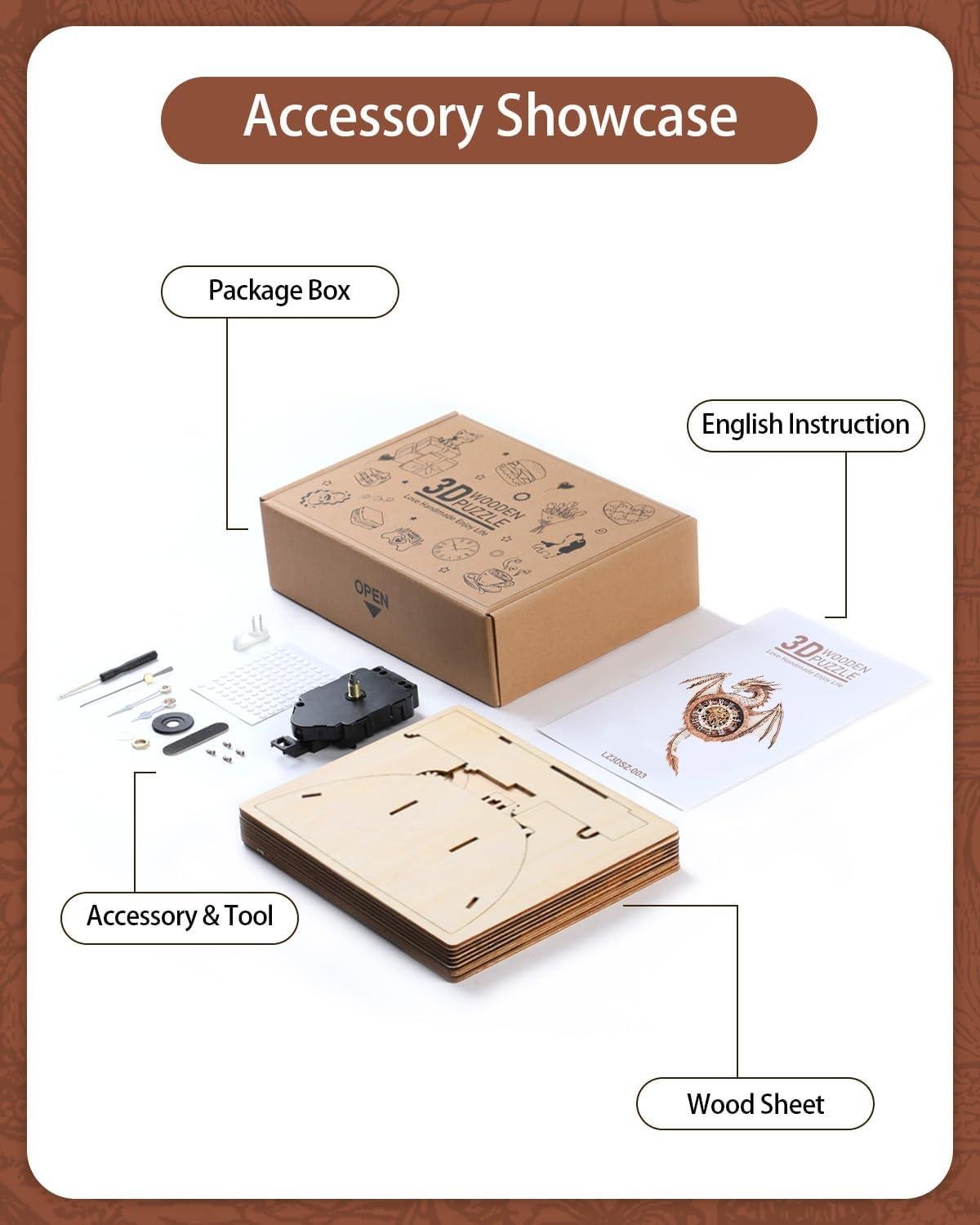
In real-shop terms, this Dragon Clock kit behaves less like a “toy puzzle” and more like a light-duty laser-cut joinery fit test in linden/basswood-style stock. the maker claims eco‑friendly linden wood with precisely laser-cut parts and “smooth edges,” and that tracks with what many buyers emphasize: “fit was great,” “pieces being very sturdy,” and “pieces held tightly” when the tabs and slots are started square. For us as woodworkers, that precision matters because it’s the same concept as dialing in a dado or tenon shoulder—if we force a dry-fit, we’ll crush fibers and widen the joint, but if we “walk” the part in evenly, the layers register cleaner and the clock face stays truer. Multiple reviews also call out “easy to put together” and “clear instructions,” with an expected ~1.5-hour assembly time, so it’s approachable for a careful beginner, yet still engaging for experienced hands who enjoy clean mechanical alignment.
For smooth motion, the practical takeaway is that the movement is only as good as the stack-up and friction points we create during assembly. This kit uses a simple clock mechanism powered by 1× AA battery (not included) and features a removable pendulum plus layered, Roman-numeral styling; reviewers consistently report it “works great,” “keeps perfect time,” and that seller support was responsive when one clock “wasn’t keeping track of time” (they “helped me with the problem”). We also see the realistic workshop caveat: a few builders mention it can be “a little tricky” in spots, and some chose to glue a couple of connections if a tab felt loose—one buyer even advises to “shimmy the pieces back and forth” instead of pushing straight in, which is essentially a hand-fit technique to reduce tearout and keep the layers from racking. If we treat it like a precision dry-assembly—light pressure, square starts, and optional spot-glue only where needed—we can keep the pendulum area moving freely and avoid the binding that comes from misalignment.
- Included accessories: laser-cut wooden sheets (linden wood per description), printed dial/graphics, clock components, instruction booklet
- Compatible attachments/accessories: 1× AA battery (required, not included), PVA wood glue (optional), fine needle file or 220–320 grit sandpaper (optional for tight tabs)
- Ideal project types: shop-friendly dry-fit practice, parent–child build, gift build, small wall decor clock, laser-cut assembly skill building
- Wood types tested by customers: “basswood” is mentioned in reviews; product description specifies linden wood (similar working characteristics)
| Spec / Feature | What’s Stated | Why It Matters in the Shop |
|---|---|---|
| material | Linden wood (eco-friendly, laser cut) | Soft, clean-fitting stock; avoid forcing tabs to prevent fiber crush and sloppy joints |
| Assembly time | ~1.5 hours (description) | Good “bench session” project; manageable for beginners with careful fitting |
| Power | 1× AA battery (not included) | Low-maintenance; movement performance depends more on alignment than “motor strength” |
| Motion feature | Removable pendulum | Highlights the need for square layer stack-up and low-friction clearances |
| Accessory | Purpose | Notes for Woodworkers |
|---|---|---|
| PVA wood glue | Stabilize a loose joint | Several reviewers used glue “in a few areas”; apply sparingly to avoid squeeze-out into moving parts |
| 220–320 grit sandpaper / needle file | Ease an overly tight tab | Take one or two passes only—laser-cut fits can go from tight to sloppy fast |
| AA battery | Powers the clock | Not included; keep one in the shop drawer so the build can be tested promptly |
| Capacity / Expectation | Recommended (Realistic) | “Actual” per Reviews |
|---|---|---|
| Glue requirement | Plan for optional spot-glue only | Many report no glue needed; others glued “a couple connections” or “2 major places” |
| Difficulty | Beginner-friendly with patience | Often described as easy, though a few steps are tricky |
| Timekeeping | test and adjust after assembly | Multiple reports of works great/keeps perfect time; one reported an issue resolved via support |
See Full Specifications & Customer Photos
Key Features Woodworkers Will Appreciate in a Functional Wall Clock Build

For a functional wall-clock build, the feature we appreciate most is that this kit behaves like a small laser-cut joinery dry-fit exercise more than a flimsy “craft” puzzle. The maker calls out eco-friendly linden wood with precisely laser-cut parts and smooth edges, and that aligns with what reviewers keep repeating—“fit was great,” “pieces being very sturdy,” and “pieces held tightly” in most builds. In the shop, that means we can treat it like a controlled practice run for alignment, clamping habits, and patience: rather of forcing tabs (which can crush fibers), reviewers recommend “shimmy the pieces back and forth, rather than pushing them in,” which is the same technique we use on tight tenons or press-fit jigs.assembly is advertised at about 1.5 hours, and customers commonly echo “very easy to put together” and “easy to build,” though a few note it can be “a little tricky” in spots—so it fits beginners who are willing to slow down and follow sequence, and it still scratches the itch for experienced woodworkers who enjoy dialed-in fit-up. The clock mechanism runs on 1 AA battery (not included), and multiple reviewers report it “works great” and “keeps perfect time,” plus there’s a notable customer-service theme: when one buyer said the clock “wasn’t keeping track of time,” support “contacted…right away and helped”—a practical reassurance if we’re gifting it or mounting it in a client-facing space.
From a tool-usage standpoint, this kit is refreshingly light on power-tool demands, but it rewards having a few bench basics ready—especially because several reviewers mention glue as either unnecessary or helpful depending on fit (“no need for glue” vs. “did need to glue a couple of the connections” and “use glue in 2 major places”). In our workflow, that translates to keeping PVA or thin CA, a couple of small spring clamps, and a fine sanding stick or needle file nearby for edge fuzz or paint/print thickness that tightens a joint. We also like that the design includes a removable pendulum and hour hand and a Roman numeral dial—it’s a neat way to teach layout awareness, layer registration, and “stack-up tolerance” without firing up a saw. One review does temper expectations: the artwork reads as dimensional, but it’s “layered images stacked on top of each othre,” so we should view it as a decorative layered build rather than carved relief. For woodworkers, it’s a good fit for gift builds, quick weekend bench projects, and teaching younger shop helpers how to read instructions and assemble without brute force.
- Laser-cut linden wood parts with smooth edges (per product description)
- Instruction booklet designed for quick assembly (about 1.5 hours)
- Clock mechanism powered by 1 AA battery (battery not included)
- Removable pendulum and hands for functional wall-clock display
- Wood glue (PVA) or thin CA glue (helpful where a few users reported loose joints)
- Spring clamps or small bar clamps for holding glued layers square
- Sanding sticks / fine files for minor tight-fit tuning
- Flush cutters (optional) for nib cleanup if a tab leaves a tiny hanger
- Giftable functional decor builds (office, shop, game room)
- Skill-building practice for press-fit technique and layered alignment
- Parent-child shop-time project (reviewers mention it effectively works for teens and adults)
- Linden wood (per product description)
- Basswood (mentioned by a reviewer on a similar pendulum kit; expect comparable softness/behavior)
| Build/Function Spec | What’s Stated | What Woodworkers Should Take From It |
|---|---|---|
| Material | linden wood, laser cut | Softwood behavior—avoid forcing joints; tune with light sanding if needed |
| Assembly time | ~1.5 hours (claimed) | Good “one-session” bench project; allocate extra time if you choose to glue/clamp |
| Power requirement | 1 AA battery (not included) | No corded power tools needed; verify movement operation before final wall mounting |
| Movement | Pendulum,removable components | check clearance and level when hanging—pendulums can bind if out of plumb |
| Accessory/Tool | Compatible? | Use Case During build |
|---|---|---|
| PVA wood glue | yes (optional) | Locking in joints where reviewers noted a couple loose connections |
| Thin CA glue | Yes (optional) | Quick tack on small tabs (use sparingly to avoid squeeze-out on printed faces) |
| Sanding stick / file | Yes | Micro-fit adjustments; better than forcing laser-cut tabs |
| Small clamps | Yes | Holding layered sections flat while glue cures |
| Capacity/Expectation | Recommended in Workshop Use | Actual Reported by Customers |
|---|---|---|
| Glue-free assembly | Plan for optional glue on stress points | Some say “no need for glue”; others needed glue in “a couple of connections” or “2 major places” |
| Difficulty | Beginner-friendly with patience | Frequently enough “very easy”,occasionally “a little tricky” |
| 3D appearance | Expect layered depth,not carved relief | Noted as “layered images stacked” rather than fully sculpted |
See Full Specifications & Customer Photos
Ease of Use for Beginners and Experienced Shop Hands
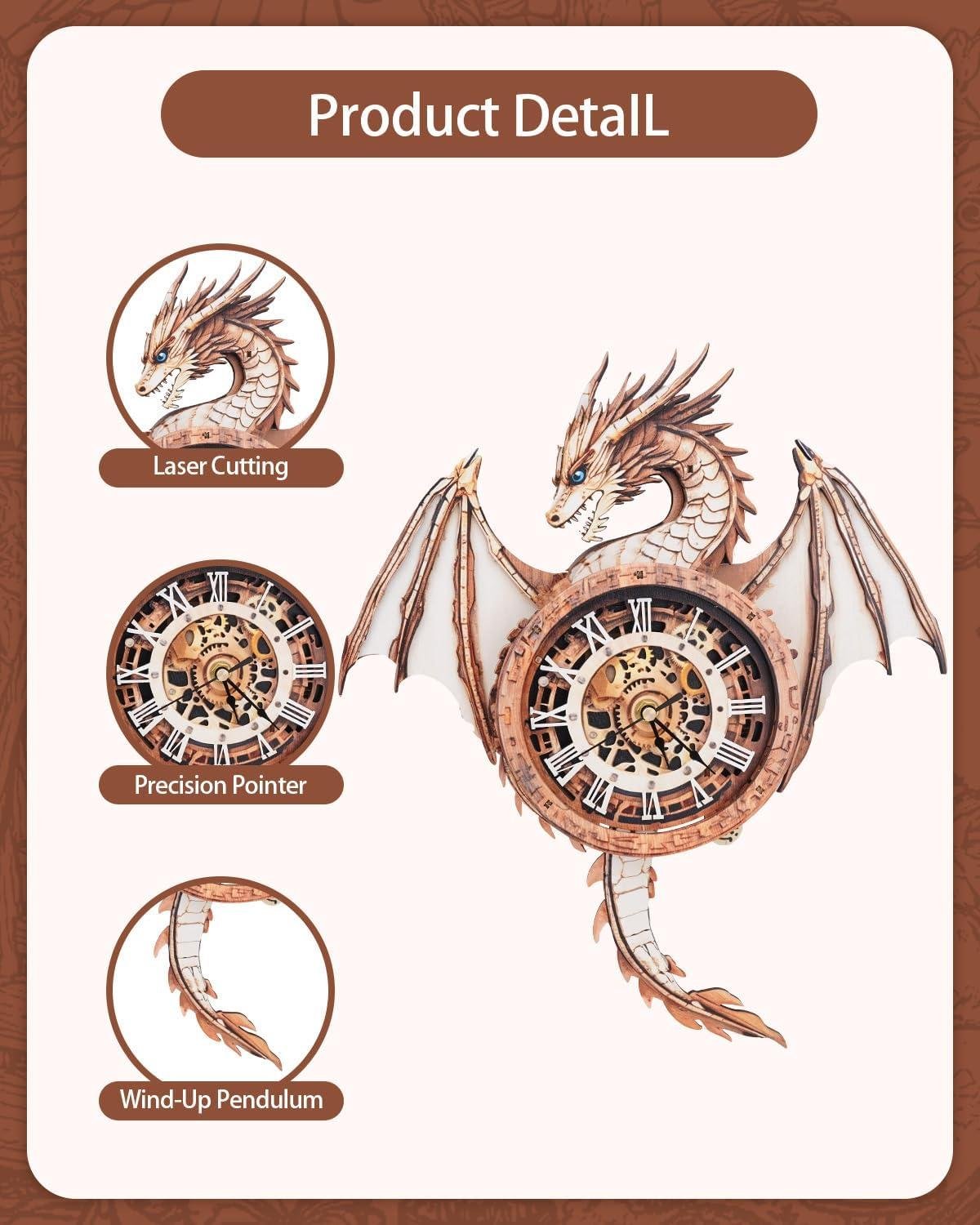
For beginners in the shop, this 3D Dragon Clock kit feels more like a well-made dry-fit joinery exercise than a “puzzle,” and that’s a good thing. The pieces are precisely laser-cut from eco-friendly linden wood and arrive with a clear, easy-to-understand instruction booklet; the maker estimates about ~1.5 hours of assembly time, which lines up with customer themes like “very easy to put together” and “easy to build and works great.” In practical woodworking terms, it teaches newer hands how to read an assembly sequence, keep parts indexed, and control insertion force—multiple reviewers note that fit is generally tight and “sturdy,” and one helpful tip was to “shimmy the pieces back and forth, instead of pushing them in” to avoid snapping tabs or delaminating fibers. we also appreciate that it’s powered by a simple 1× AA battery (not included), so there’s no tool-side electrical learning curve—just careful handling of the clock movement and alignment of the removable pendulum and hands.
For experienced shop hands, the ease-of-use comes from knowing when to treat this like a no-glue knockdown build and when to reinforce it like a light-duty assembly. Reviews are consistent that many builds go together with no glue, but a few users report needing glue in a couple connections due to occasional loose fit—one even said the directions were clear to use glue in 2 major places. That’s not a defect so much as a reminder that laser-cut puzzles behave like thin joinery: humidity,part orientation,and how aggressively we seat joints matters. We’d keep a small bottle of PVA or thin CA nearby, plus a piece of scrap wood to use as a press pad so we’re not bruising the printed faces while seating layers (the clock’s “3D” look is achieved through layered images stacked, as one reviewer pointed out). Once assembled, most feedback is that it “works well” and “keeps perfect time”; and when a customer reported timekeeping issues, they also noted the seller responded right away and helped, which matters when we’re buying kits as gifts or quick bench projects between larger builds.
- Included accessories
- Complete accessory kit (per product description)
- Instruction booklet
- Laser-cut linden wood components with HD printing
- Clock elements including pendulum and hands (removable)
- Compatible attachments/accessories
- 1× AA battery (required, not included)
- PVA wood glue or thin CA glue (optional, recommended for any loose joints)
- Small sanding sponge/emery board (optional for tight tabs—use lightly)
- Clamp pad/scrap wood block (optional for pressing parts without marring print)
- Ideal project types
- Quick bench builds to practice sequencing and gentle press-fit technique
- Gift builds and holiday shop projects (Christmas is commonly mentioned)
- Wall décor / display builds with mechanical alignment (pendulum + hands)
- Wood types tested by customers
- Linden wood (from product specs)
- Basswood is mentioned in a customer review of a similar pendulum clock kit (woodworkers should note wood species may vary by kit/listing)
| Spec / Requirement | What We know (from listing/reviews) | Why It Matters on the Bench |
|---|---|---|
| Assembly time | ~1.5 hours (stated) | Good “between projects” build; manageable for beginners without shop fatigue |
| Power requirement | 1× AA battery (not included) | No corded tools needed; focus stays on fit/handling and alignment |
| Primary material | Linden wood, laser-cut | Press-fit tabs behave like delicate joinery—insert technique matters |
| fit/assembly feedback | Common themes: easy to assemble, sturdy, occasional needs glue | Plan for optional reinforcement; don’t force tight joints—work them in gradually |
| Accessory | Included? | use Case |
|---|---|---|
| AA battery | No | Powers the clock movement after assembly |
| PVA / CA glue | No | Reinforces any loose joints noted by some customers |
| Sanding sponge / emery board | No | Micro-fit adjustment on overly tight tabs (use sparingly) |
| Capacity / Expectation | Recommended | Actual (based on reviews) |
|---|---|---|
| Glue use | have glue ready, but aim for press-fit first | Many report no glue needed; some report gluing a couple spots |
| Difficulty level | Beginner-friendly with patience | Often easy, occasionally a little tricky in spots |
See Full Specifications & Customer Photos
Customer Reviews Analysis
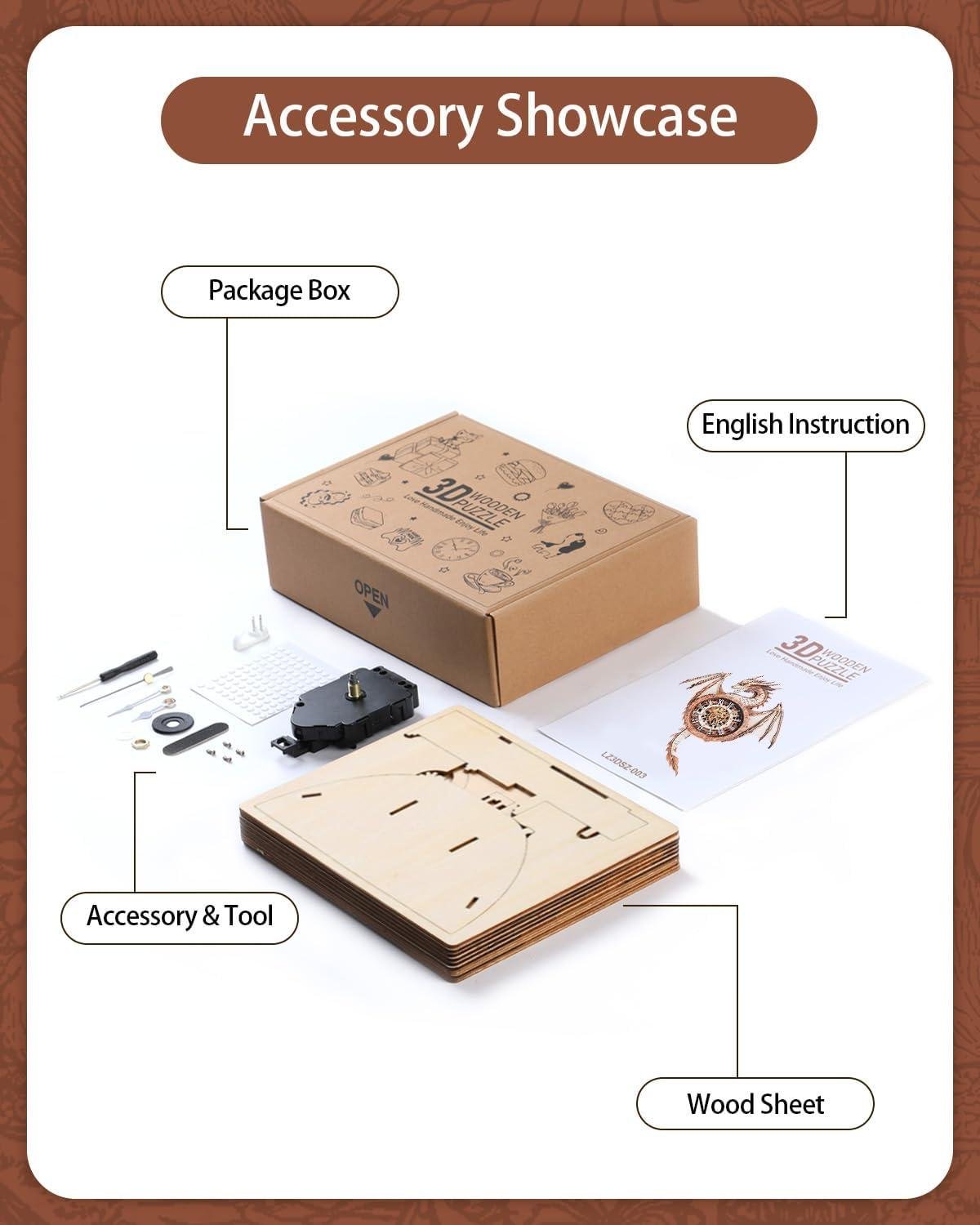
What Woodworkers Are Saying
1. overall sentiment from woodworking customers
Several woodworkers and DIY-minded buyers describe this as a satisfying build that looks remarkable on the wall and generally delivers a “gift-worthy” result. Common praise includes attractive design, sturdy-feeling wood pieces, and responsive customer support when the clock didn’t keep time. Sentiment is mostly positive, with a smaller set of reviews noting occasional fit issues (needing glue) and one report of a unit failing quickly—suggesting seller/source consistency matters.
2. Performance feedback (accuracy, power, results)
Multiple reviews highlight that, once assembled correctly, the clock runs well and keeps time.
- Timekeeping/results: Several woodworkers mentioned it “works great,” “works well,” and “keeps perfect time.”
- Support helped performance: One customer reported the clock wasn’t keeping time initially, but support “helped me with the problem” quickly.
- End result: Reviewers repeatedly emphasize the finished clock “looks great,” “looks really cool,” and is a strong display piece.
3. Build quality and durability observations
Feedback trends positive on material feel and part strength,with a few durability caveats.
- material/strength: Multiple reviews highlight “very sturdy” pieces and “solid material.” One review (for a similar pendulum kit) specifically mentions .8 inch thick basswood and “excellent quality.”
- Fit and joinery: Common praise includes “fit together perfectly” or “pieces held tightly” (frequently enough without glue).
- Durability concerns: Some users reported challenges with loose connections that required glue.One reviewer said a first purchased unit “fell apart just looking at it” after 8 hours, while a replacement from a different seller was “perfect,” implying quality control can vary by source.
4. Ease of use for different skill levels
This kit is widely described as beginner-friendly, with a few “fiddly” spots.
- Beginner/DIY friendly: Reviewers commonly say it’s “very easy to put together” and “easy to build.”
- learning curve: Some users reported it was “a little tricky,” but less difficult than expected after reading the instructions.
- Practical assembly tips from reviewers: One builder recommended “shimmy the pieces back and forth instead of pushing them in,” which reads like classic woodcraft advice for tight friction-fit parts.
- Skill level range: One reviewer framed it as a “good project for an early teen or old guy,” suggesting broad accessibility.
5. Common project types and success stories
Most buyers treat this as a display build and gift project rather than a workshop utility item.
- gift builds: Customers successfully used this for Christmas gifts (dad, husband), with recipients assembling quickly and enjoying the process.
- Home decor outcomes: Multiple reviews highlight it as attractive wall decor,with strong reactions like “everyone loves the clock.”
- Fast wins: One success story notes it was assembled “the next day” and looked “awesome,” reinforcing that this can be a high-impact,moderate-time project.
6. Issues or limitations reported
A handful of consistent limitations show up across reviews:
- Occasional need for glue: Some users reported challenges with loose-fit joints, choosing to glue “a couple of connections” or being advised to use glue at “2 major places.”
- Perception vs. expectation (3D effect): One reviewer noted the “3D” look is achieved via layered stacked images, not fully sculpted 3D carving—“not what we were expecting.”
- Quality consistency by seller: One report suggests a big difference between two purchases—first one failed quickly, second one assembled well and performed—indicating that where you buy it (seller/source) may affect results.
| Aspect | Common Feedback |
|---|---|
| Performance | Multiple reviews highlight accurate timekeeping once assembled; support helped resolve one timing issue. |
| Precision / Fit | Frequently enough tight and clean-fitting; a few users needed glue for loose connections; technique matters (shimmy vs. push). |
| Durability | Generally described as sturdy/solid; one report of an early failure,with replacement performing well. |
| Ease of Use | Mostly easy for beginners/DIYers; some tricky steps but manageable with clear instructions. |
| Results / Finish | Consistently praised as great-looking wall decor and a accomplished gift build. |
| Limitations | “3D” is layered construction; occasional glue required; quality may vary by seller. |
Pros & cons

Pros & Cons
for our shop, this Dragon Clock 3D Puzzle Kit lands somewhere between “craft night centerpiece” and “quirky shelf hero.” Here’s what we’d happily highlight—and what we’d want to clarify before recommending it to every customer who walks in.
Pros
- instant visual hook: The Dragon King theme with Roman numerals feels theatrical in the best way—more “fantasy décor” than “toy puzzle.”
- eco-friendly wood with clean cuts: Linden wood and laser-cut pieces with smooth edges make it feel more premium than flimsy paper-based kits.
- Color and detail show well on display: The vivid printing and layered 3D build give it a “look twice” presence on a wall or shelf.
- Manageable build time: The stated ~1.5 hours makes it approachable for casual puzzlers, weekend crafters, and gift recipients who don’t want a multi-day project.
- Includes an accessory kit + instructions: A clear booklet and complete kit lowers the friction for first-time builders (critically important for gift purchases).
- Stress-relief / shared activity angle: It’s easy to position as a mindful build for adults or a parent-child “hands-on” session.
- Functional twist: The moving clock element (pendulum + hands) gives it more purpose than a purely decorative 3D puzzle.
- Gift-ready concept: It naturally fits holidays—especially Christmas—plus birthdays for dragon fans, puzzle lovers, and “hard to shop for” coworkers.
Cons
- Battery not included: It requires 1 AA battery, so it’s not fully “open and go” out of the box.
- Clock expectations may vary: It’s primarily a craft kit with a clock feature—customers wanting a high-precision timepiece might potentially be underwhelmed.
- Dragon aesthetic is specific: Bold fantasy décor is a plus for fans, but it won’t suit minimalist or conventional rooms.
- Small-piece patience required: Even with smooth edges, 3D wooden assembly can challenge anyone who dislikes fiddly alignment.
- “About 1.5 hours” can be optimistic: First-timers (or those building with kids) may take longer—worth setting expectations.
- Display placement matters: As wall décor, it needs a spot where the details can be appreciated; or else it can read as “busy” from a distance.
| Shop Fit Check | What We’d Say on the Shelf Tag |
|---|---|
| Best for | Dragon fans, puzzle lovers, gift shoppers who want “wow” décor |
| Time to build | ~1.5 hours (longer if you like taking it slow) |
| Skill vibe | Beginner-friendly, but expect some careful fitting |
| display payoff | High—bold colors + 3D relief + pendulum movement |
| One thing to note | Needs 1 AA battery (not included) |
Q&A
What wood types is this kit made from—and how does it behave during assembly?
This 3D Dragon Clock puzzle is made from eco-friendly linden wood (often similar in working characteristics to basswood): it’s lightweight, relatively soft, and designed to “press-fit” without splitting. The pieces are laser cut with smooth edges, so you’re not fighting fuzzed-up fibers like you can with cheap die-cut boards.Having mentioned that, it’s still wood—if you force tight joints straight in, you can bruise edges. A few reviewers had better results “shimmying” tabs in gradually rather of pushing hard.
Is it strong enough to feel like a real wood project, or is it flimsy like cardstock puzzles?
It’s wood (not paper), and multiple customers described the pieces as “sturdy” with a “great fit.” The clock is built as stacked/layered sections for the 3D effect, so the finished piece feels more like a lightweight wooden assembly than a flat puzzle. However, fit consistency can vary: at least a couple of buyers mentioned needing glue in a few spots due to slightly loose joints, while others reported no glue necessary. Treat it like a model kit—sturdy when assembled correctly, but not meant to be handled like furniture joinery.
How difficult is setup/assembly for someone used to woodworking tools?
For most people it’s a straightforward “dry-fit” style build with clear instructions and a complete accessory kit. The listed assembly time is about 1.5 hours, and several reviewers said it was “very easy to put together.” A few did call it “a little tricky” in small areas—usually where tiny alignment pieces lock layers together.Practical tip from customer experience: wiggle/shimmy small connectors in rather than forcing them; that reduces the chance of cracking tabs and keeps layers aligned.
Do I need glue, clamps, or special tools—and does it work with standard shop supplies?
It’s designed as a press-fit puzzle, so you typically don’t need clamps or specialty tools. Still, a small bottle of wood glue or CA glue can be helpful for insurance on any loose-fitting joints—some customers used glue “in a couple of connections” or in “2 major places,” while others said the fit was perfect without glue. If you want a cleaner build, common shop items help: a sanding stick/emery board for a too-tight tab, tweezers for small parts, and a small square to keep layers visually true.
Will it fit in a small workshop, and does it require dust collection or power tools?
Yes—this is bench-top friendly and apartment-friendly. The parts are laser cut and punch out; you’re not cutting lumber or generating sawdust the way a scroll saw project would. Any dust is minimal (mostly from light sanding if you choose to tune the fit), so no dust collector is required. It’s a good “shop downtime” build that doesn’t need machines.
What power does the clock need—battery, outlet, or winding—and how reliable is timekeeping?
The clock runs on 1 AA battery (not included). There’s a removable pendulum for the look/motion, but it’s still a battery-powered wall clock rather than a mechanical escapement you’ll tune like a true woodworking clock build. Reliability feedback is generally positive (“works great,” “keeps perfect time”), and at least one customer who had a timekeeping issue reported the seller responded quickly and helped resolve it.
Is this beginner-friendly, and would it still be enjoyable for an experienced woodworker?
It’s suitable for beginners as it’s guided, pre-cut, and includes an easy-to-understand instruction booklet.It’s also commonly bought as a gift and as a parent-child project, which usually means the learning curve is manageable. For experienced woodworkers, it’s less about “skill challenge” and more about build satisfaction and display value—the Dragon King theme, roman numeral dial, layered depth, and pendulum make it a fun décor build rather than a precision joinery exercise.
Is the “3D” effect true carving/relief, and is it worth the price compared to cheaper kits?
The 3D look comes primarily from stacked, layered printed/wood sections—not from deep carving. One reviewer specifically noted it’s “layered images stacked on top of each other” and recommended setting expectations accordingly.Value-wise, buyers tend to highlight the clean laser cutting, vivid printing, sturdy feel, and the fact it becomes functional wall décor (a working clock) instead of just a shelf model. If you want a true woodcraft challenge, you’d get more from a mechanical wooden clock kit; if you want a good-looking build that assembles quickly and displays well, this style tends to be a strong “giftable” value.
Experience the Difference
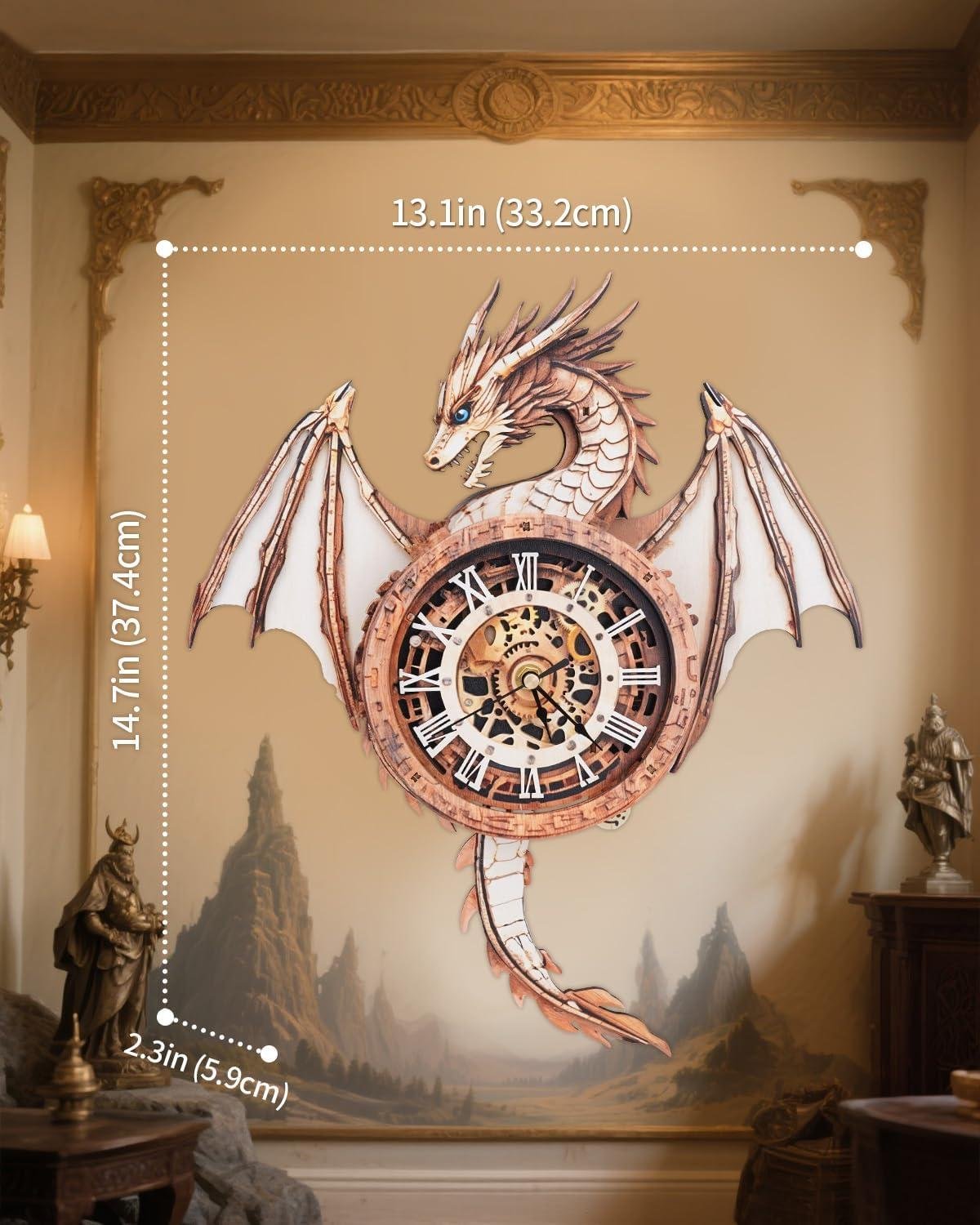
This 3D Puzzle Dragon Clock Kit is less a “tool” and more a precision craft project: eco-friendly linden wood pieces are laser-cut with smooth edges, vivid HD printing, and a complete accessory kit plus clear instructions. Assembly is typically around 1.5 hours, and the finished clock features Roman numerals, a removable pendulum, and runs on 1 AA battery (not included). Customer feedback commonly praises the sturdy fit, attractive finished look, and responsive seller support, while noting occasional spots where a dab of glue helps and that the 3D effect is layered rather than fully sculpted.
It’s ideal for hobby woodworkers with small to medium projects, beginners learning fundamentals of fit-up, and anyone who enjoys decorative builds or giftable shop-adjacent projects.
Consider alternatives if you want a true carved/architectural 3D build, dislike printed finishes, or expect heirloom-grade joinery without any glue.
it’s a solid, low-commitment build that delivers satisfying results—provided your expectations match its layered-puzzle construction.
Want to see current pricing and customer photos? View on Amazon & Read More Reviews →