

Blog
Wood Trick Puzzle Box Kit Review: Right for Our Shop?

Ever finished a project and then wondered where to stash a spare key, a thumb drive of plans, or that set of tiny layout tools—without adding another bulky metal box to an already crowded shop? We’re always balancing precision, durability, and space, and sometimes teh “tool” we need most is a cleverly built object that teaches us something along the way.
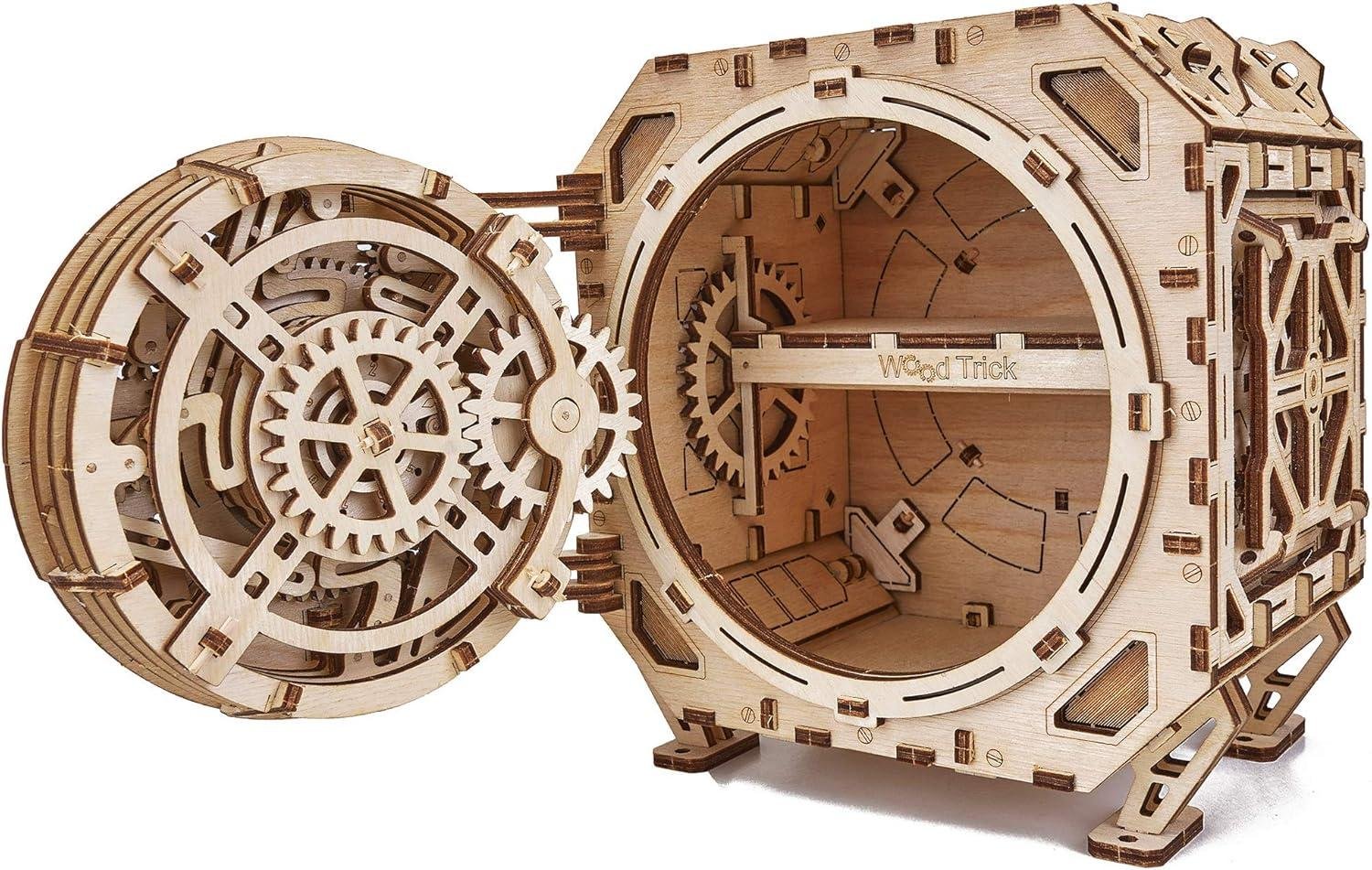
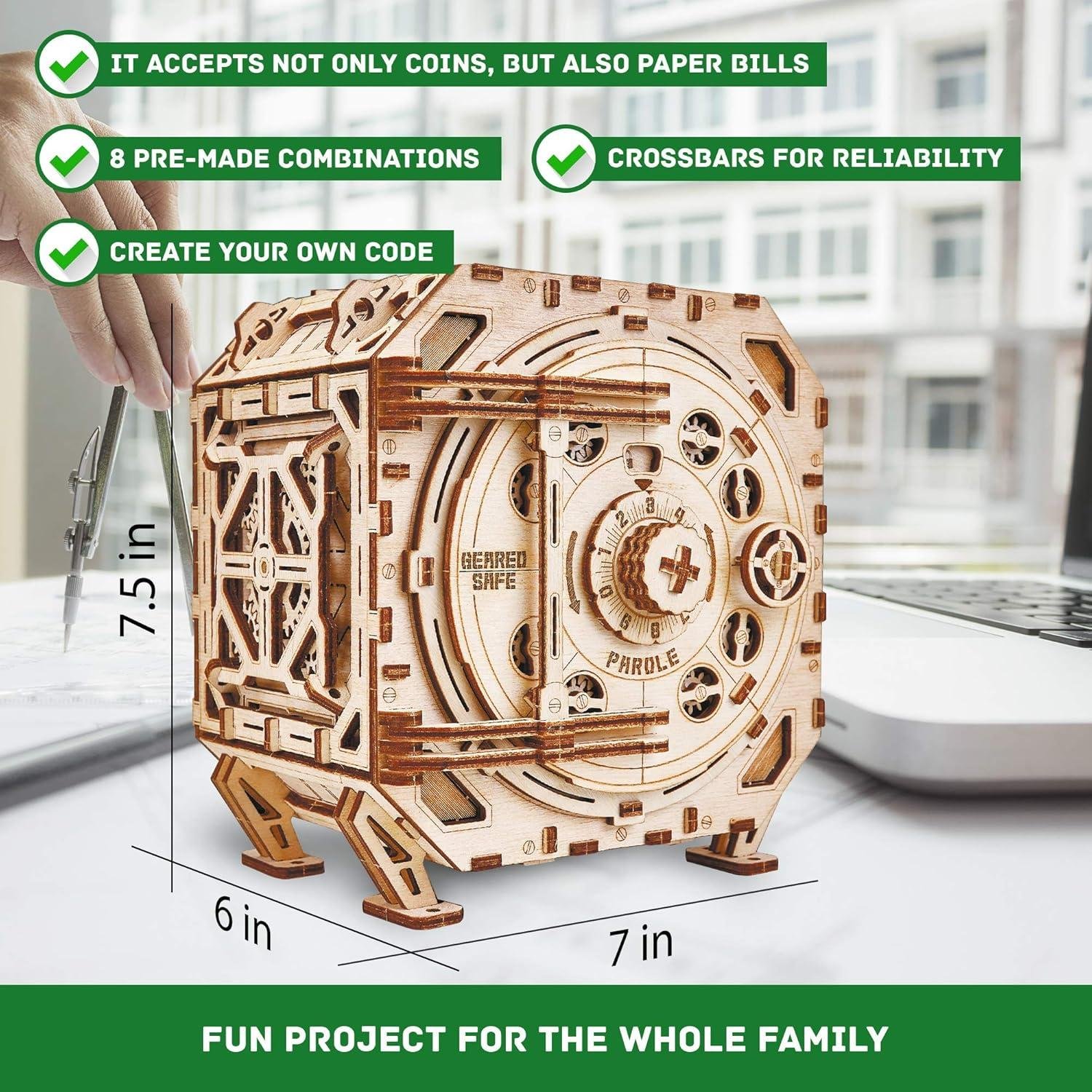
The Wood Trick Safe Wooden Model Kit is a DIY mechanical locker-style puzzle box made entirely from natural wood. It’s a 259-piece, glue-free build that uses a gear mechanism and a configurable 4-digit combination lock, sized at roughly 6.1 × 7.2 × 7.4 inches—compact enough for a bench corner or shelf.
In this review, we’ll look at build quality, fit and accuracy of the parts, clarity of the manual, the learning curve for different skill levels, and whether the heavy-duty design customers talk about matches the expectations set by the specs.We’ll also weigh cost versus craftsmanship and who this high-complexity, 6–8 hour build is best for.
As woodworkers,we’ve learned that good engineering shows up in tight tolerances,repeatable motion,and parts that don’t feel disposable—especially in anything with moving mechanisms.
Tool Overview and build Quality in Our Hands
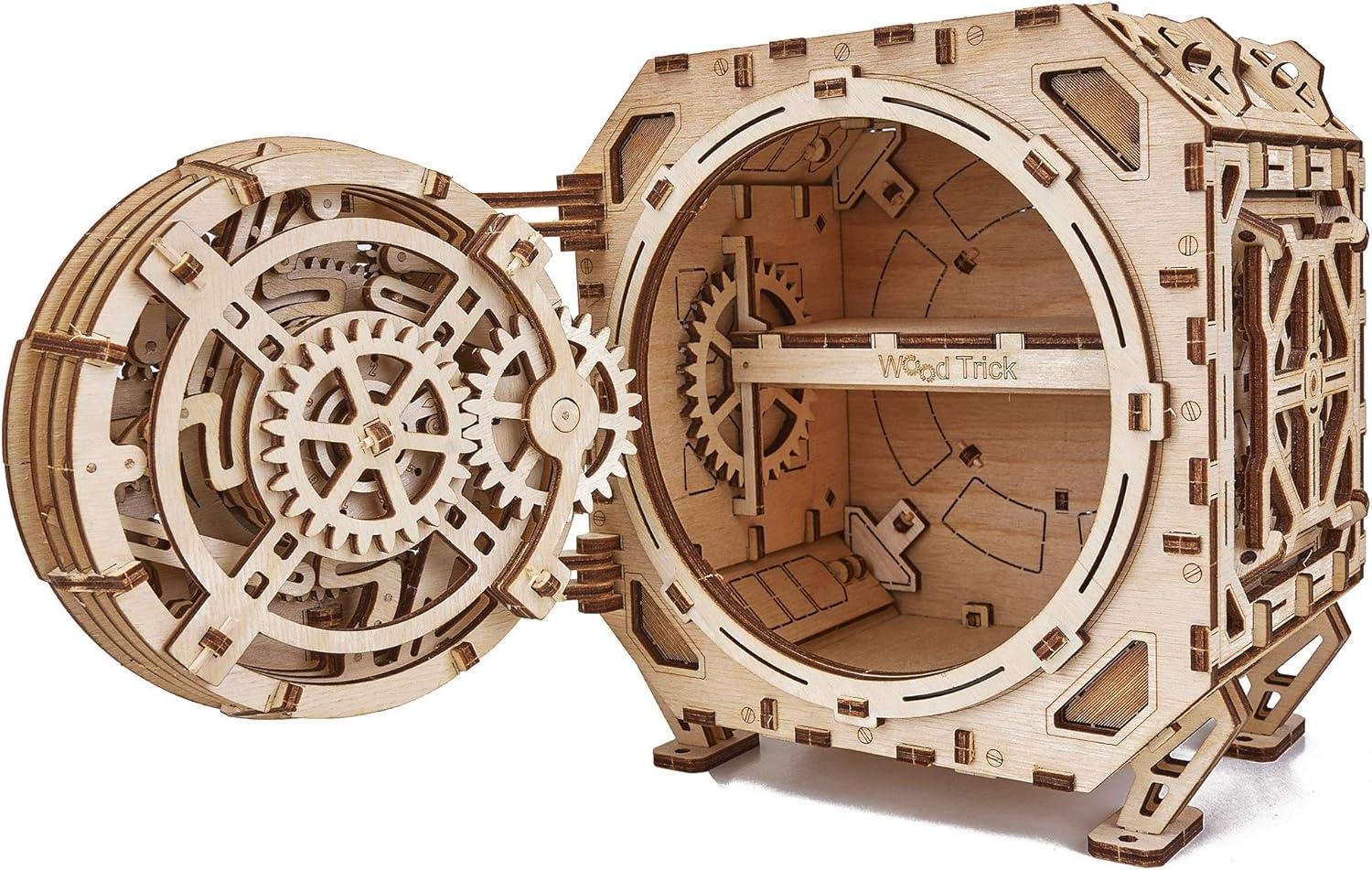
In our hands,the Wood Trick Safe is less “tool” and more a mechanical woodworking kit that still rewards good shop habits. The box builds into a mini safe-style puzzle with a gear-driven combination lock and a 4-digit code system, and the scale is practical for a bench project at 6.1 × 7.2 × 7.4 in. The kit uses 259 wooden pieces and is designed to assemble with no glue and no special tools—which matches the overall “clean assembly” intent we look for in precision fit-up work. Reviewers repeatedly describe it as high complexity and a 6–8 hour build, with the most common praise being good, consistent material quality, well-written (picture-only) instructions, and a finished model that feels surprisingly solid for a complex mechanical assembly. From a woodworker’s viewpoint, the build quality largely comes down to fit and friction: several customers mention that some joints need a bit of “encouragement,” and that the lock can fail to function if parts aren’t fully seated or if the mechanism binds—so this isn’t the kit we’d hand to someone who gets frustrated by tight tolerances or rework.
What makes it relevant in a woodworking shop is that it teaches (and demands) the same fundamentals we rely on when fitting drawers, building jigs, or troubleshooting a sticky cabinet door: alignment, controlled pressure, and dealing with wood-to-wood friction. Multiple reviewers recommend having needle-nose pliers, an X-Acto knife, and a small metal file/sandpaper on hand, plus using the included wax generously—especially on gears and sliding bars—because even slight fuzz or a proud tab can translate into a lock that “won’t catch.” A recurring theme in reviews is that users think the combo “doesn’t work,” but later discover it’s an operational detail: you often have to rotate a digit more turns than expected to engage the next wheel, and free-spinning doesn’t count until gears mesh.We also see mixed durability/precision feedback: many report everything lines up and works “like a real safe,” while a minority report the door lock never worked even after lubrication—so planning to test the combination before final door installation (as the instructions advise) is critical, just like dry-fitting hardware before committing screws in furniture work.
- included accessories: pre-cut wooden sheets/parts for 259 pieces, toothpicks/dowels (reviewers note “plenty”), illustrated manual (picture-only), access to an assembly video (per reviews)
- Compatible attachments/accessories: needle-nose pliers (help seat small parts), X-Acto/utility knife (trim toothpicks, clean tabs), small metal file or fine sandpaper (de-fuzz sliding surfaces), paste wax/candle wax (lubricate gears and lock bars), small clamps (optional for gentle persuasion)
- Ideal project types: skill-building “mechanical joinery” practice, gift builds for patient DIYers, desktop lockbox/piggy bank-style keepsake, workshop conversation piece that demonstrates gears and latching
- Wood types tested by customers: not specified in reviews (customers generally describe it as “natural wood” with consistent quality)
| Spec / Feature | What It Is | Why It Matters in the shop |
|---|---|---|
| Piece count | 259 pieces | High part count means more opportunities for misalignment; expect careful dry-fitting and cleanup. |
| Finished size | 6.1 × 7.2 × 7.4 in. | Benchtop-kind; small enough to build in short sessions without tying up shop space. |
| Lock mechanism | gear mechanism + combination dial | Teaches friction management and precision seating—similar troubleshooting to sticky drawers/hardware. |
| Assembly method | No glue, no special tools (per description) | Relies on fit and alignment; your “tools” are technique (cleaning tabs, light sanding, waxing). |
| Build time | ~6–8 hours (recommended for experienced DIYers) | Best approached like a careful jig build—slow, methodical, and with functional testing throughout. |
| Accessory / Tool | Required? | Common Use During Build |
|---|---|---|
| X-Acto / utility knife | Optional (common) | Trim toothpicks/dowels; clean up tight tabs or minor tear-out. |
| Needle-nose pliers | Optional (common) | Seat small parts and pins without crushing edges. |
| Small file / fine sandpaper | Optional (helpful) | Reduce friction on sliding parts/gears; remove fuzz for smoother action. |
| Wax (paste/candle) | strongly recommended | Lubricate gears and lock bars; reduces binding that can cause combo issues. |
| Capacity / Expectation | Recommended (From Specs/Reviews) | What users Report in Practice |
|---|---|---|
| Skill level | Experienced DIY; “high complexity” | Many enjoy the challenge; some struggle specifically with the lock timing/engagement. |
| Lock reliability | Test combo before final door install (per guidance) | Often works when gears are seated and waxed; a minority report the door never locks properly. |
| Assembly fit | Press-fit style, no glue | Most say parts align well; some joints need “encouragement,” and spares help if a piece breaks. |
See Full Specifications & Customer Photos
Real World Assembly Performance and Puzzle Mechanism Reliability
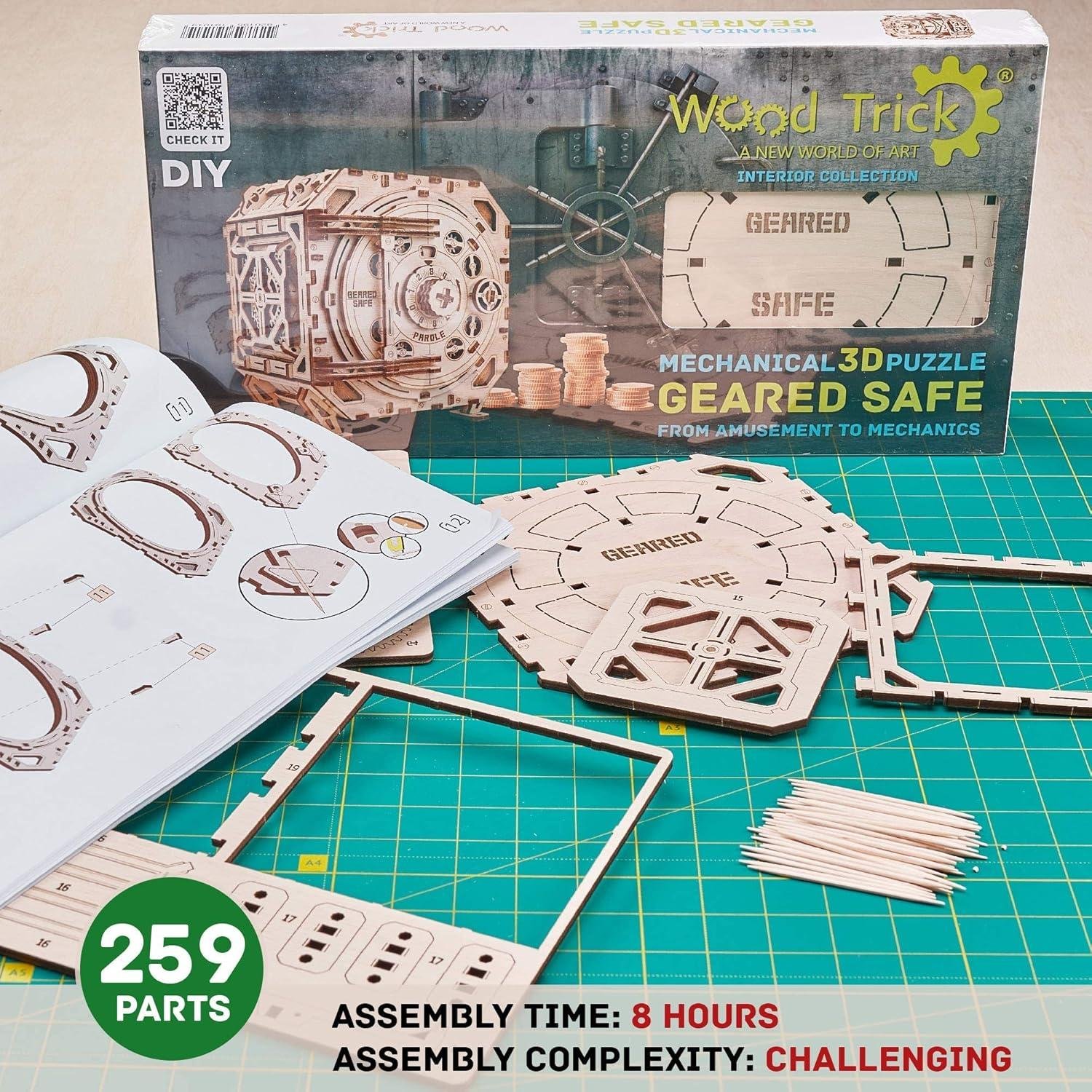
In our shop,the “real world” performance of this kit comes down to how accurately those 259 wood pieces interlock and whether the miniature mechanism behaves like a real dial safe once the tolerances stack up.The manufacturer sets expectations correctly: it’s high complexity and typically takes 6–8 hours, and we see that echoed in reviews (“It’s not easy to build!… but that’s good—it’s not supposed to be.”). The build is advertised as requiring no glue and “no special tools,” but from a woodworker’s perspective we treat that as “no power tools required.” Several customers recommend exactly what we’d pull from our bench for fussy joinery: needle-nose pliers, an X-Acto knife, and a metal file—all useful for cleaning tabs, easing tight mortises, and de-fuzzing laser-cut edges so parts seat fully. Reviews also note the manual is pictures-only, and that similar-looking parts can be mixed up; that’s classic model-grade assembly, where dry-fitting and part labeling (painter’s tape flags work well) is as important as any “tool” you’ll use.
Puzzle reliability is where the kit earns both praise and criticism. on the positive side,multiple reviewers say the finished safe is “surprisingly sturdy” and that the mechanics are “really cool,” with some reporting it “works like a real safe” once assembled carefully. But the lock can be unforgiving: a common theme is that a “non-working combo” is often user technique or seating depth—one reviewer explains you may need multiple turns to engage the next wheel, and another stresses that “free spinning doesn’t count once the gears engage.” On the downside, a smaller but important set of reviews report the door lock never worked correctly even after “lubricating every moving part,” and others say they tried assembling the door multiple times without success. In practical shop terms, this mechanism is a good lesson in friction management (light sanding of sliding faces, wax on gear teeth, and making sure every post is fully seated before blaming the design). We also like that the instructions recommend testing the combination before installing the door—woodworkers will recognize that as the same “test your sub-assembly before glue-up” discipline we use in casework.
See Full Specifications & Customer Photos
Key Features Woodworkers Will Appreciate in a Secure DIY Locker Box

In our shop, the standout “secure locker” feature is the functional 4‑digit combination lock driven by a gear-and-bar mechanism—it’s not just decorative, it’s a genuine mechanical lesson in alignment, friction, and timing. From the specs, we’re working with 259 wooden pieces that assemble into a compact safe measuring 6.1 × 7.2 × 7.4 in, which makes it practical as a benchtop “drop box” for small valuables like spare keys, gift cards, or even a few precision layout items we don’t want wandering off. Multiple reviewers echo that it’s “not easy to build… but that’s good” and praise the well-written picture instructions; simultaneously occurring, some mention the lock can feel finicky until we learn the mechanism’s “rules” (one reviewer noted the second digit may require multiple turns to engage the wheel). For woodworkers, that’s a familiar takeaway: when a moving wooden mechanism binds, it’s usually a seating issue, burnished edges, or insufficient lubrication—not a reason to force parts and split tabs.We also appreciate that it’s all wood and designed to assemble with no glue and no special tools, so it fits nicely into a low-mess evening build—yet customer themes suggest having a few hand tools nearby makes the experience more “workshop-friendly.” Several reviews recommend needle-nose pliers, an X‑Acto knife, a small metal file, and wax to ease tight joints and reduce gear friction; that’s an educational win because it reinforces good habits: dry-fit, pare fuzz and laser char lightly, wax sliding faces, and test the lock repeatedly before final door assembly. Reviewers also highlight spare parts included (helpful when a tab breaks), and at least one notes responsive customer service when a piece was missing. As a skill-level fit, we’d call this a satisfying “mechanical woodworking” project for patient builders—rated in reviews as intricate, typically taking 6–8 hours—and best approached like a tune-up on a wooden jig: slow, methodical, and always prioritizing smooth motion over brute force.
- Included accessories: Pre-cut wooden parts (259 pcs),spare parts board (noted by reviewers),printed manual (picture-based),access to an assembly video (noted by reviewers),toothpicks/dowels (noted by reviewers)
- Compatible attachments/accessories (shop add-ons): paste wax or beeswax for gears/slides,needle-nose pliers,hobby knife (X‑Acto),small file,fine sandpaper (320–600 grit),small clamp or bench block for controlled pressing
- Ideal project types: benchtop “shop safe” for small items,gift build for mechanically-minded teens/adults,skills practice for gear trains and tolerance-fitting
- Wood types tested by customers: not specified in reviews (kit ships as natural wood)
| Spec / Feature | What we Get (From Listing/Reviews) | Why Woodworkers Care |
|---|---|---|
| Piece count | 259 pieces | More parts means more tolerance stacking—good practice for careful fitting and sequencing. |
| Overall size | 6.1 × 7.2 × 7.4 in | small enough for a bench/shelf; useful as a compact lockbox or “challenge display” in the shop. |
| Lock type | 4‑digit combo with gear mechanism | Teaches how dial indexing and engagement works; highlights importance of burnishing and lubrication. |
| Build time / difficulty | 6–8 hours, high complexity | Best for patient builders; a realistic “weeknight increments” project rather than a quick make. |
| Accessory / Tool | Needed? | What It Helps With |
|---|---|---|
| Wax (paste wax/beeswax) | Strongly recommended (per reviews) | Smoother gear motion, less binding on sliding lock bars. |
| X‑Acto / hobby knife | Recommended (per reviews) | Trimming tabs/toothpicks, removing fuzz, correcting slight fit issues safely. |
| Needle-nose pliers | Recommended (per reviews) | Controlled seating of small parts and dowels without crushing edges. |
| Small file / fine sandpaper | Optional but helpful (per reviews) | Deburring/burnishing contact points to reduce friction in wooden mechanisms. |
| Capacity Area | Recommended Expectation | Actual (Based on Specs/Reviews) |
|---|---|---|
| Security | Novelty lockbox for light-duty storage | Works “like a real safe” for many reviewers, but some report the door/lock never fully engaged if assembly or seating is off. |
| Sturdiness | Expect “model sturdy,” not jobsite rugged | Often described as surprisingly sturdy, though at least one review stops short of calling it 5-star rugged. |
See Full Specifications & Customer Photos
Ease of Use for Beginners and Experienced Makers in the Shop

In the shop, we found the Wood Trick Safe is approachable on the tooling side but demanding on the attention-to-detail side. The kit’s 259 wooden pieces press together so it requires no glue and no special tools, which means beginners aren’t blocked by clamps, adhesives, or jigs—just patience and a clean bench. That said, it’s clearly built as a higher-complexity mechanical assembly: Wood Trick calls it “high complexity” and pegs assembly at about 6–8 hours, which matches the customer theme of “it’s not easy to build!, but that’s good.” For experienced makers, the learning curve feels familiar: it’s like tuning a wooden mechanism—small seating errors compound into binding. The picture-only manual gets repeated praise as “well written instructions,” but we still need to slow down and dry-fit, because reviewers also note “similar looking parts have a different place/purpose.” In practical shop terms, this is less like building a box and more like assembling a wooden lockset—our best results come when we treat it like precision joinery and test the mechanism frequently before closing things up.
Where beginners can stumble is during the combination/gear-timing steps, as “works like a real safe” also means it behaves like one: several reviewers mention the combo “doesn’t work” until you understand the engagement—one specifically notes you may need “like 3 turns to set the second digit” and that “free spinning doesn’t count once the gears engage.” We also see a split in outcomes: many call the finished model “surprisingly sturdy” and “pretty solid,” while a few report the door lock never worked correctly even after lubrication—usually pointing back to parts not fully seated or friction in sliding bars. From a woodworking education standpoint, we should approach it the way we’d approach a sticky drawer: lightly wax bearing surfaces, ease any fuzz with a knife or fine file, and never force a bound gear—binding is typically a misalignment, not a “tight tolerance.” the finished safe’s footprint is compact at 6.1 × 7.2 × 7.4 inches, making it an easy weekend bench project, and a good skill-builder for anyone who wants hands-on practice with fit, friction, and mechanical sequencing.
- Included accessories: illustrated instruction book (picture-based); toothpicks/dowels (reviewers note “plenty of toothpicks”); access to an assembly video (per reviews)
- Compatible shop helpers (not required, but commonly recommended by reviewers): needle-nose pliers; X-Acto/utility knife; small metal file or fine sandpaper; paste wax/paraffin for lubrication
- Ideal project types: mechanical display builds; desk/office “conversation piece” storage; gift builds; parent–kid shop sessions; skill practice for careful assembly and mechanism tuning
- Wood types tested by customers: not specified in reviews (kit supplied as pre-cut natural wood)
| Spec / Feature | What It Means in the Shop |
|---|---|
| 259 pieces | Expect lots of repetition and sequencing—label parts, keep subassemblies organized, and work on a tray to avoid losing small components. |
| Assembly time: ~6–8 hours | Realistically a few focused sessions; good for makers who enjoy process and tuning, not a quick one-hour build. |
| Dimensions: 6.1 × 7.2 × 7.4 in | Small bench footprint; easy to rotate and inspect gear mesh and lock bar alignment as we go. |
| No glue / no special tools | beginner-friendly entry point; “precision” comes from fit and lubrication rather than clamping strategy. |
| Accessory / Aid | Use Case | When We’d Use It |
|---|---|---|
| Paste wax / paraffin | Reduces friction on gears and sliding lock parts | Any time the dial feels tight or the lock bars hesitate |
| X-Acto/utility knife | Trims fuzz, cleans tab shoulders, tidies toothpick ends | When parts won’t seat flush or pegs bottom out early |
| Needle-nose pliers | Helps place small parts and pull/seat dowels carefully | Tight spots where fingers can’t apply straight pressure |
| Small file / fine sandpaper | Micro-adjusts contact points for smoother motion | If gears bind after confirming alignment |
| Capacity / Expectation | Recommended (to avoid frustration) | Actual (per specs/review themes) |
|---|---|---|
| Build difficulty | Intermediate+ (comfortable following sequences and troubleshooting fit) | high complexity; many succeed, but several report combo/lock troubleshooting |
| Mechanism reliability | Plan to test the combination repeatedly before final assembly | Often “works like a real safe,” but some report lock not working if parts aren’t seated/lubed |
See Full Specifications & Customer Photos
Customer Reviews Analysis
What Woodworkers Are Saying (Review Analysis)
1. Overall sentiment from woodworking customers
Multiple reviews highlight strong overall satisfaction—especially from makers who enjoy mechanical builds and don’t mind a challenge. Several woodworkers mentioned the kit feels like a “real” combination safe once dialed in,and common praise includes the enjoyment factor (often as a parent/child project) paired with surprisingly solid results for an all-wood mechanism. Sentiment turns mixed when the lock/door mechanism won’t function after assembly, which a few users reported as a dealbreaker.
2. Performance feedback (accuracy, power, results)
Mechanical performance (dial/lock action) is the biggest talking point.
- Several woodworkers mentioned the combo can work reliably, but only if you follow the turning/engagement behavior correctly—one reviewer noted you may need “like 3 turns to set the second digit” as free-spinning doesn’t count until gears engage.
- Common praise includes realistic operation (“Works like a real safe”) and satisfying gear mechanics once friction points are addressed.
- Some users reported challenges with binding/gears feeling tight, with reviewers attributing it to parts not being fully seated or insufficient sanding/waxing.
- Results-wise, when tuned, reviewers describe the finished model as visually impressive and “intricate but well designed,” frequently enough left on display and handled by visitors.
3.Build quality and durability observations
build quality feedback trends positive, with multiple reviews highlighting consistent materials and good fit overall.
- Several woodworkers mentioned the finished safe is “pretty solid” or “surprisingly sturdy” for a complex wooden mechanical model, though a 5/5 “heavy duty” expectation may not match reality for everyone.
- Some users reported brittle parts during assembly—one noted needing spares due to parts breaking,but also said the kit included a spare-parts board (which helped recovery).
- One reviewer reported a missing piece, but customer service was “quick to respond and replace the item,” which strengthened perceived reliability of the brand.
4. Ease of use for different skill levels
This kit skews toward intermediate patience, even if the steps are accessible.
- Beginners appreciated the clear instructions when they paid close attention, but multiple reviews highlight that it’s not “easy to build” and that similar-looking parts can be easy to confuse.
- Reviewers with previous 3D puzzle experience found it easier to “fill in confusing bits,” and one suggested doing a simpler brand/kit first if you’re new to mechanical wooden models.
- Multiple reviews highlight the importance of prep work (light sanding/filing + waxing) to reduce friction and improve consistency. A Japanese review specifically said careful sanding and waxing of gears/sliding parts produced “light and reliable” dial action.
- While the manual is picture-based, several users praised the instruction quality, and multiple reviews highlight that a video is available (helpful when a step feels ambiguous).
5. Common project types and success stories
This product is mainly used as a display piece + functional stash box/piggy bank,and as a bonding build rather than a shop tool.
- Customers successfully used this for a parent/child build, with one describing it as a “great project” for an 11-year-old (with increasing independence on a second build).
- Several reviewers mentioned using it as a “really cool piggy bank” and leaving it in a living room/visible area as it’s interactive and attracts attention.
- Gift success is common: “Well received birthday gift,” with the caveat that it’s best for someone who genuinely enjoys intricate model kits.
6. Issues or limitations reported
The most repeated limitation is lock reliability depending on assembly precision and friction management.
- Some users reported challenges with the door/lock never working correctly—even after lubrication—resulting in an always-unlocked door.
- A few reviewers said they rebuilt the door multiple times and still couldn’t get the combo to work, leading to returns or deciding to try a different company next time.
- Several reviews imply the instructions can be misread at the combination stage (what counts as a “turn,” how gear engagement works, how to interpret the combination chart), which can make the mechanism seem broken when it’s actually mis-set.
- Tool expectations: while marketed as no-glue, some builders recommend having small “maker tools” handy (e.g., needle-nose pliers, an X-Acto knife, a metal file/sandpaper).waxing is repeatedly mentioned as critically important—don’t skip it.
Summary Table (Common Review Themes)
| aspect | Common Feedback |
|---|---|
| Performance | Often works smoothly and “like a real safe” after proper gear engagement + waxing; some report the combo/door never functions. |
| Precision | Fit is generally good, but similar-looking parts and seating depth matter; small alignment errors can cause binding. |
| Durability | Finished model is surprisingly sturdy for a wood mechanism; occasional part breakage reported (spares helped some). |
| Ease of Use | Challenging but doable; picture-only manual requires attention; video support helps; best for patient builders. |
| Results / Finish | Visually impressive,fun to display and handle; can double as a piggy bank or keepsake safe. |
| Value | High enjoyment and gift value when it works; perceived value drops sharply if the lock won’t function. |
Bottom line: Several woodworkers mentioned this is a rewarding, well-engineered build when you treat it like a precision wooden mechanism (prep, seating, wax, gentle tuning). The main risk is that a small misalignment—or confusion during the combination steps—can lead to a lock that doesn’t operate, which a minority of reviewers found too frustrating to justify the time.
Pros & Cons

Pros & Cons
When we look at the Wood Trick Safe Wooden Model Kit for our shop, we’re really evaluating two products in one: a high-complexity build experience and a functional(ish) mini safe with a mechanical combination lock. Here’s how it shakes out for us.
Pros
- Genuinely mechanical “wow” factor: The gear-driven combination lock feels like a tiny engineering exhibit—customers can see the mechanism logic, not just the final box.
- Strong gift positioning: It naturally fits Father’s Day, holidays, and “for the tinkerer” gifting without us having to work too hard to explain it.
- No glue, no special tools: The all-wood, friction-fit assembly is a clean selling point for desktop builders (and for us, fewer “what else do I need?” questions).
- Display-ready design: It reads like a miniature real safe, so it can live on a desk or shelf even after the build.
- Good challenge premium: With ~259 pieces and a 6–8 hour build,it justifies a “serious kit” reputation and attracts experienced hobbyists.
- Interactive end result: Setting a 4-digit code makes the finished model feel like a device, not just décor.
Cons
- Not beginner-friendly: The “high complexity” label is real—this can frustrate casual crafters and impulse buyers if expectations aren’t managed.
- Time commitment is mandatory: 6–8 hours is fun for builders, but it’s a barrier for customers who want immediate gratification.
- Wood tolerances can be picky: Like many no-glue wooden puzzles,fit can depend on careful handling—rushing steps can lead to stiff motion or misalignment.
- “Safe” is more playful than secure: It’s great for notes, trinkets, gift cash, or desk valuables, but we wouldn’t market it as true theft-resistant storage.
- Limited internal capacity: At roughly 6.1 × 7.2 × 7.4 inches it’s compact—customers expecting larger storage might potentially be surprised.
- Resetting/using the code requires patience: The combination mechanism is part of the fun, but it’s also one more system that can confuse users if they skim the manual.
| What We’d Call It in the Shop | What It Delivers | Best For |
|---|---|---|
| “Buildable Desk Safe” | Mechanical lock + display piece | Gift buyers & desk décor fans |
| “weekend Engineering Puzzle” | 259-piece, 6–8 hour build | Experienced DIY hobbyists |
| “Secret Stash Box” | Fun concealment, not high security | Notes, cash gifts, small valuables |
Our takeaway: If our shop audience enjoys intricate builds and mechanical novelty, this kit is a strong fit—provided we clearly label it as an advanced, time-intensive project and a “puzzle safe,” not a real-world security device.
Q&A
What “wood types” is this kit made for—can I build it from hardwood or plywood instead?
This is a pre-cut,all-wood model kit (259 pieces) designed to be assembled as-is,not a set of plans meant for swapping materials. The parts are sized and toleranced for the included wood, with friction-fit joints and moving gear/lock components. You could remake parts in hardwood or ply, but you’d be essentially re-engineering the kit: thickness, pin/tolerance fit, and gear mesh would need to be recalculated, and the lock may bind if your material is even slightly off or more prone to swelling.
Is the mechanism “strong enough” to feel like a real safe, or is it more of a display puzzle?
Expect it to function like a mechanical puzzle box/mini safe rather than a true security safe.Reviews commonly describe it as “surprisingly sturdy” once assembled,with a gear-driven combination lock and locking bars that keep the door closed. That said,it’s still wood with small mechanical clearances—several builders noted that if parts aren’t fully seated or lubricated,the lock can feel tight,and a few reported the door staying unlocked after assembly. It’s best viewed as a functional model for storing small valuables (cash, keepsakes) rather than theft-resistant storage.
How difficult is the initial setup—what should I expect on a 6–8 hour build?
This is labeled “high complexity” and is generally better for experienced DIY/model builders (or beginners with patience). assembly typically takes about 6–8 hours depending on how carefully you prep parts. The manual is largely picture-based,and multiple reviewers mention that similar-looking parts can be easy to mix up—so dry-fit and double-check orientation before pushing parts home. There are also build videos available, and some customers found those helpful for the combination/door steps.
Do I need special tools or glue? What “workshop accessories” actually help?
No glue or special tools are required per the kit design (it’s primarily press-fit with included toothpicks). In real-world builds, woodworkers commonly recommend a few basic helpers: needle-nose pliers for small parts, a hobby knife/X-Acto for trimming and cleanup, and a small file or sandpaper for smoothing tabs and reducing friction on moving parts. Wax/lubrication is frequently mentioned—don’t skimp on it—because the lock and sliding bars work best with reduced wood-on-wood drag.
Any tips to get the combination lock working reliably (and avoid the “doesn’t lock” complaint)?
Two themes show up in reviews: (1) the dial/number sequence can require more rotation than expected to engage the next wheel (one builder said it felt like multiple turns for the second digit), and (2) binding usually traces back to a part not fully seated or a little fuzz on a sliding/gear surface. Practical approach: lightly sand/file contact points, wax the gears and the locking bars, and test the combination several times before final door installation (the manual also advises this). If something binds, stop and find the exact interference—forcing it can snap small wood features.
Will this fit in a small shop,and does it need dust collection or a specific power outlet?
It’s a compact bench project: finished size is about 6.1 × 7.2 × 7.4 inches, so it stores easily on a shelf and builds comfortably at a small workbench or kitchen table. There’s no power requirement at all (no motor, no outlet), and dust collection isn’t necessary—at most you’ll create a little sanding dust if you tune parts for smoother action.
Is this suitable for beginners, or will a professional woodworker still enjoy it?
Beginners can complete it, but it’s not a “first-ever” easy kit—this one rewards careful reading of the diagrams, patient fitting, and methodical testing. Several buyers enjoyed building it with kids/teens as a guided project, while also noting it “isn’t easy,” which is part of the fun. For experienced woodworkers, the appeal is the mechanical design: gears, sliding lock bars, tolerances, and the satisfaction of tuning wood movement with light sanding and wax.
What maintenance does it need, and how durable is it long-term?
Maintenance is simple: keep the moving parts clean and occasionally re-wax/lubricate the gear train and locking slides if the action starts to feel dry or tight. Because it’s wood, changes in humidity can affect friction and fit—if the dial gets stiff, gentle re-waxing and checking for slight swelling or mis-seated parts usually helps. durability feedback is generally positive (“pretty solid/surprisingly sturdy”), but it’s still a precision wooden mechanism—treat it like a model, not a toolbox latch.
Seize the opportunity
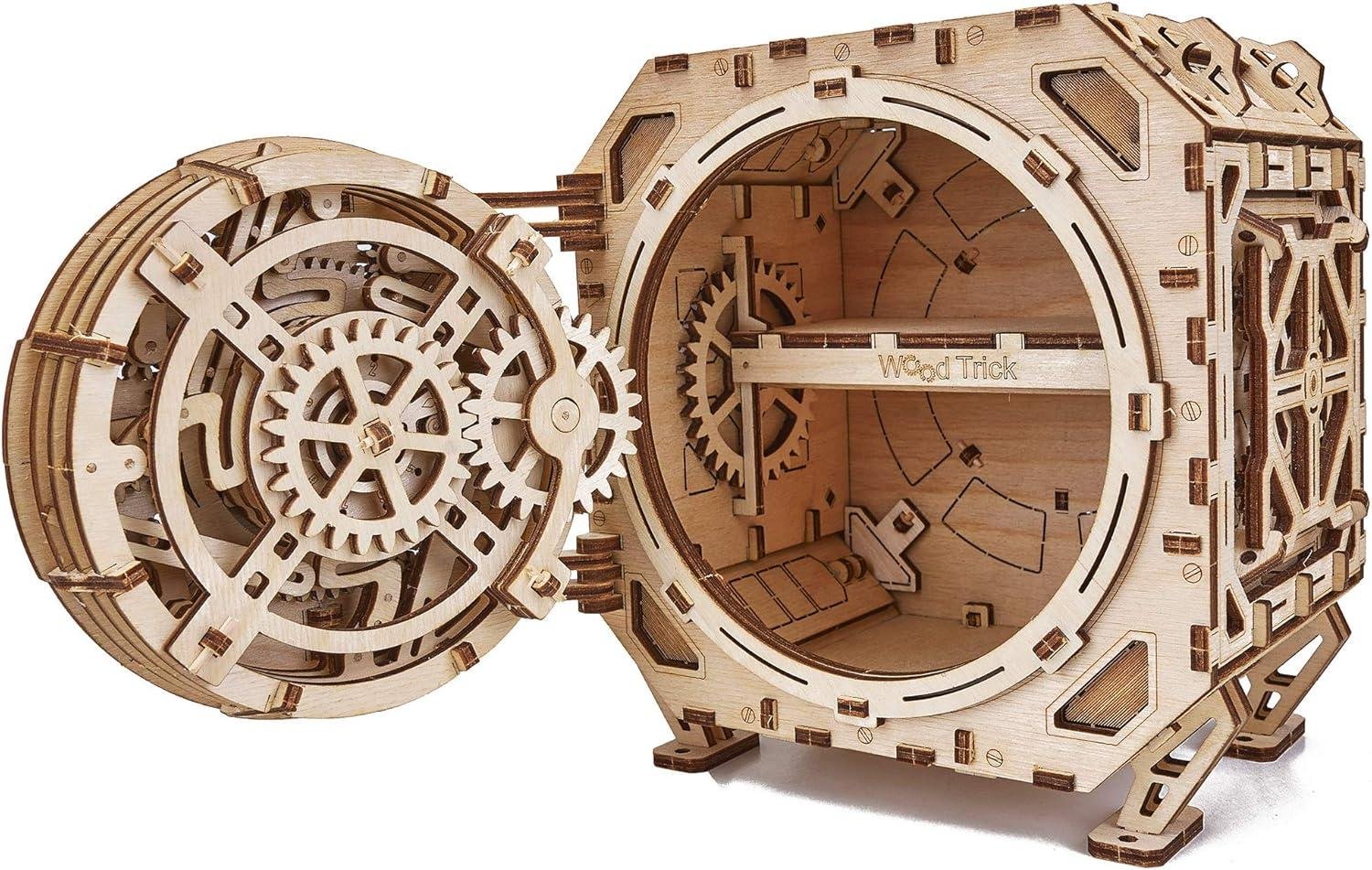
The Wood Trick Safe Wooden Model Kit is a 259-piece, all-wood mechanical build that assembles without glue or special tools into a mini safe (6.1″ x 7.2″ x 7.4″) featuring a gear-driven, 4-digit combination-style lock. Customer feedback consistently highlights good material quality, clear picture-based instructions (plus video/PDF support), and a satisfying “real mechanism” feel—while noting high complexity (about 6–8 hours), occasional tight fits or broken parts, and mixed results if the lock isn’t seated and lubricated correctly.
Best for: hobby woodworkers and hands-on DIYers who enjoy small mechanical projects, puzzle-box builds, and skill-building sessions with older kids/teens (with supervision).
Consider alternatives if: you want a quick, beginner-friendly kit, dislike fiddly tuning (wax/sanding), or need guaranteed lock reliability right out of the box.
Final assessment: It’s a well-designed, challenging wooden model with standout mechanical interest, but precision assembly is essential for consistent lock function.
Want to see current pricing and customer photos? View on amazon & Read More Reviews →