

Blog
Universal Socket Adapter Review: Right for Our Shop?


ever been midway through a cabinet build when a hinge screw strips, the stand hardware is some odd size, and the right socket is—of course—buried in a drawer you don’t have space to dig through? In a woodworking shop, accuracy matters, but so does speed: the less time we spend hunting tools, the more time we spend fitting joinery and dialing in alignment.
That’s where the Global Socket (self-adjusting 1/4″–3/4″ and 7mm–19mm) aims to help. It’s designed to conform to a range of fasteners and can be driven with a wrench/ratchet, or paired with an adapter for use on a power drill—handy when we’re doing quick installs, jigs, benches, or knock-down shop fixtures.
In this review,we’ll look at its key features,how practical it is for real-world shop tasks,and who it’s best for—especially balancing budget convenience against build-quality concerns. Customers often praise its versatility and value, while durability and slipping get mixed feedback.We’ve built enough projects (and fixed enough shop mishaps) to know when “universal” is a lifesaver—and when a dedicated socket still wins.
Tool Overview and Build Quality in a Woodshop Setting
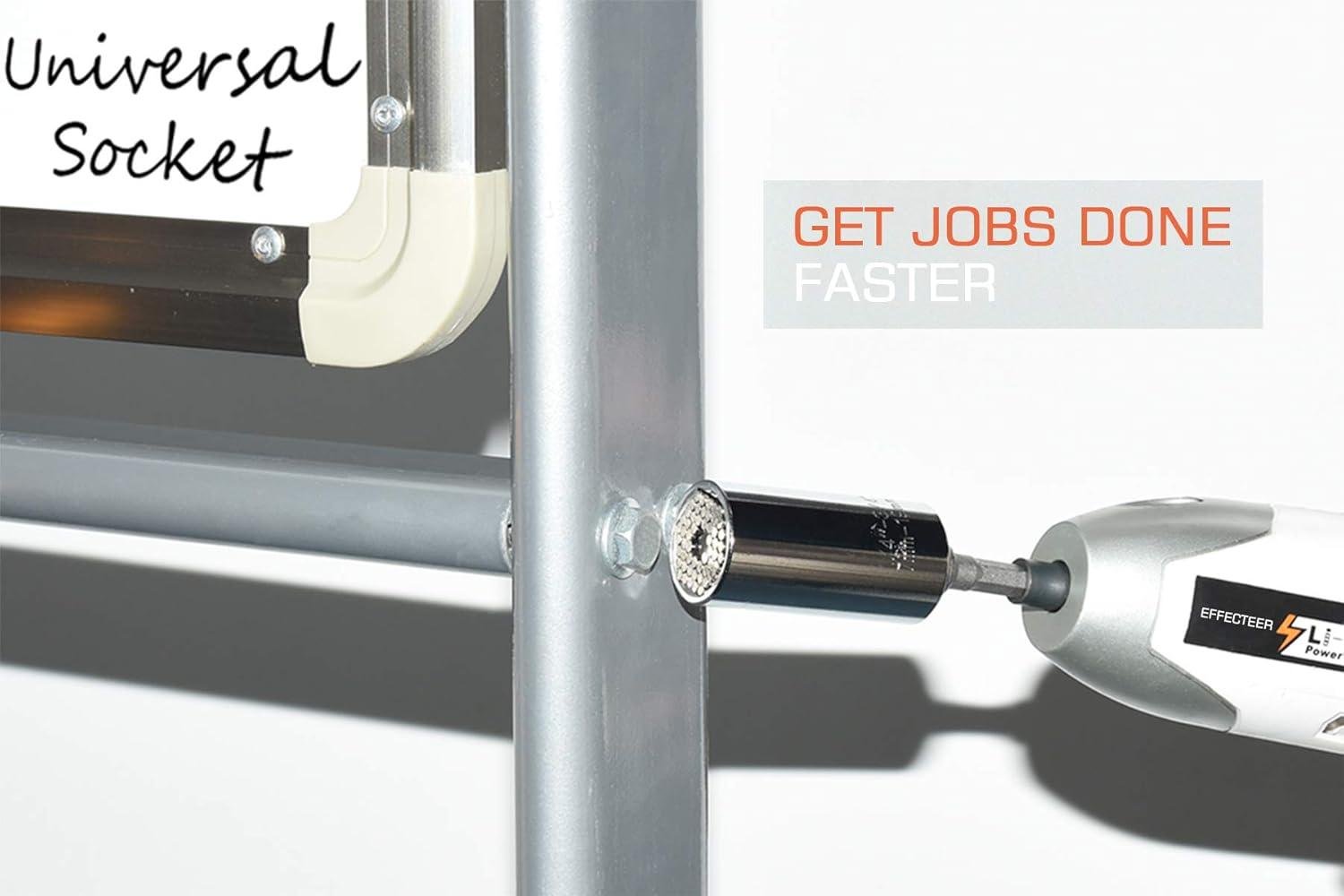
In our woodshop, we look at the “universal socket” category as a grab-and-go fastener tool—not a precision joinery tool—and this one fits that role well on paper. The big headline spec is its self-adjusting range: SAE 1/4″–3/4″ and metric 7mm–19mm, which covers a lot of the bolts we run into on benches, jigs, shop carts, clamp racks, and many common machine stands. The body is noticeably bulkier than a single standard socket (a theme echoed in reviews like “it’s a little too big…might not fit in tight spots”), so we’d treat it as a “front-of-the-cabinet” tool for open-access hardware rather than something we expect to snake behind a motor housing or into a cramped corner of a tool base.customers frequently describe it as compact and a great addition to tool collections, with multiple mentions that it “takes the place of multiple sockets” for quick fixes—exactly the kind of convenience that’s handy when we’re mid-glue-up and just need to snug a bolt without hunting for the perfect size.
Build quality feedback is where we’d set expectations for woodworkers: reviews consistently praise quality and value, but report mixed durability—some call it “very sturdy,” while others say it broke on first use—and there’s also mixed feedback on grip, with several users noting it can slip off bolts if you don’t keep steady pressure.In practical shop terms, that means we’d reserve it for light- to medium-duty tightening (leveling feet, knobs, hex-head lag screws that aren’t over-torqued) and avoid relying on it for stubborn, corroded fasteners or high-torque removal where rounding corners becomes a risk (one reviewer even recommends going straight to bolt extractors for hard-to-remove hardware). The socket’s pin-style self-adjusting design is inherently a tradeoff: it’s versatile, but it needs a clean bite and straight alignment—so in our workflow we’d use it with controlled hand pressure on a ratchet, and be extra cautious when driving with a drill to prevent cam-out and slipping. See Full Specifications & Customer Photos
Key Features Woodworkers Will Appreciate for Fastener and Jig Adjustments
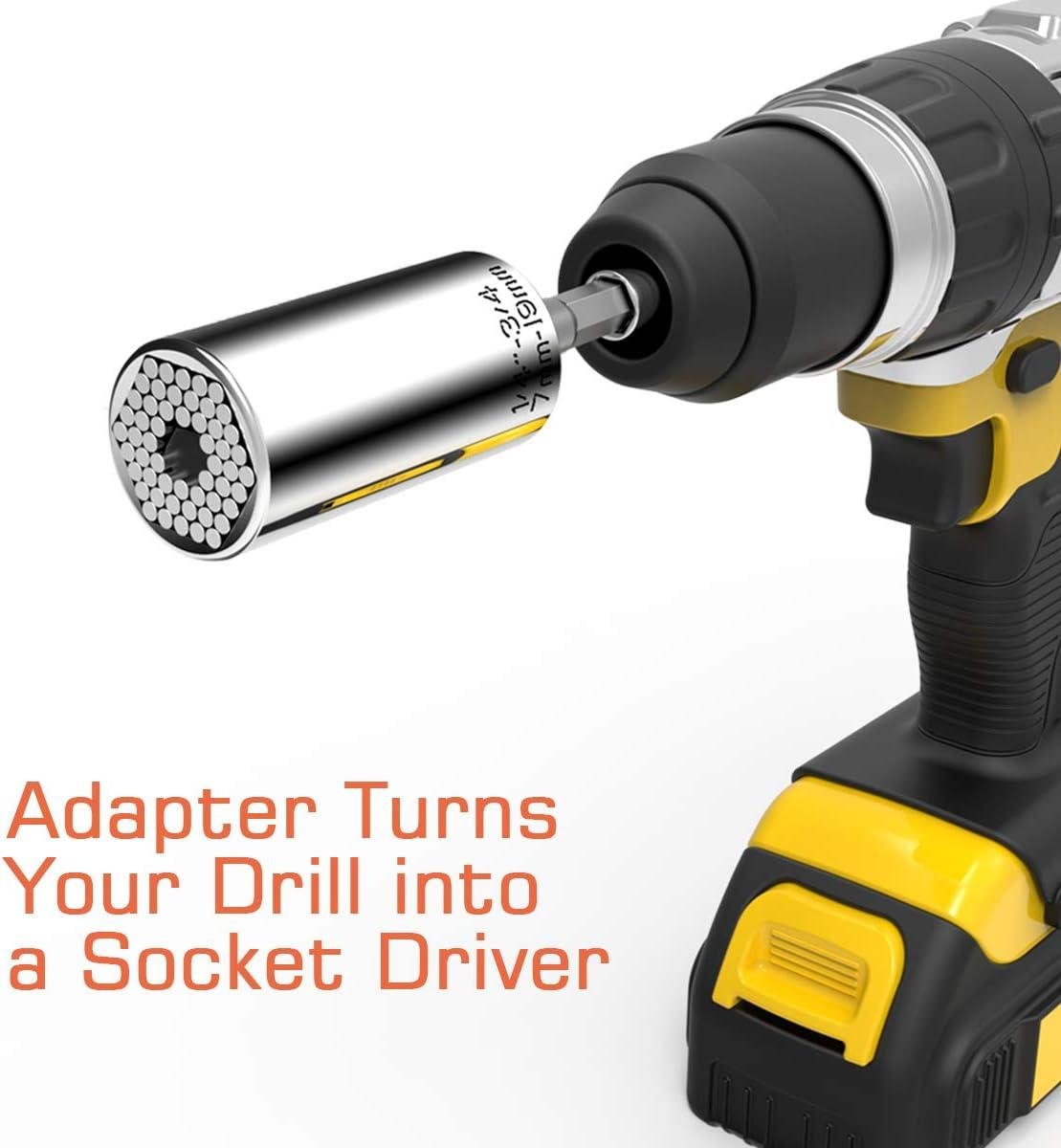
In a woodworking shop,we’re constantly bouncing between hardware sizes—bench bolts,router-table fence knobs,band saw trunnion nuts,and the random hex heads that show up on aftermarket jigs. The appeal of this universal socket is its self-adjusting range of 1/4″–3/4″ (SAE) and 7mm–19mm (metric), which covers a lot of the “in-between” fasteners we run into when we’re mid-setup and don’t want to stop and hunt for the right socket. it’s also designed to grab more than just standard hex heads—per the listing it can handle hex nuts,bolt heads,screw eyes,hooks,and tension screws—which is genuinely handy when we’re tightening oddball shop fixtures (like an eye bolt on a clamp rack) where a normal socket won’t even start. Reviewers repeatedly echo the same theme: it “works well on various bolts,” “takes the guesswork” out of sizing,and is “compact” enough to replace multiple sockets for quick fixes,which lines up with how we’d keep it: as a grab-and-go adjustment tool near the assembly bench,not as our primary precision socket set.
That said, for woodworking jigs and machine adjustments, technique matters with this style of pin-grip socket. Multiple reviewers mention that it can slip off bolts or not grip and also expected, and durability feedback is mixed (some call it “very sturdy,” others report it breaking early). In practical shop terms, we’d treat it as a light-to-medium duty helper: keep firm, straight pressure on the fastener, avoid cocking it at an angle (that’s when pin sockets tend to cam-out), and don’t reach for it first when a nut is over-torqued or partially rounded—one reviewer noted it rounded corners on a stubborn bolt and recommended bolt extractors for tough cases. we also need to remember it’s a bit bulky; at least one customer warns it can be too wide for tight spots, which is a real limitation around confined machine cabinets or inside router tables. Used with a ratchet (and with sensible expectations), it can speed up those frequent, small adjustments that keep our jigs and fences running true—just not replace a full socket set when tolerances and access get finicky.
See full Specifications & Customer Photos
Real World Performance on Shop Hardware Assembly and Tool Setup

In our shop, the “assembly” part is refreshingly simple because this is essentially a single self-adjusting universal socket with a working range of standard 1/4″–3/4″ and metric 7mm–19mm. For woodworking hardware assembly, that range covers a lot of the odd nuts and bolt heads we bump into on jigs, knock-down bench bases, shop carts, vise mounts, and aftermarket fence accessories—especially when we’re mid-build and don’t want to stop to hunt the exact size. Setup is mostly about choosing the right driver: we can run it on a ratchet/wrench for controlled torque or chuck it into a drill for speed, but it’s worth noting the listing/reviews mention drill use while also implying adapter needs may vary (“works on a power drill”), so we treat the included adapter as a “check what you got” item before assuming it fits every drill/driver. Customer feedback lines up with what we expect from this category: many describe it as “easy to use”, a “great solution to lost sockets”, and a compact tool that can “take the place of multiple sockets” for quick fixes—exactly the situations that come up during shop hardware assembly.
Where real-world performance gets nuanced is the grip under load and in tight cabinetry-style clearances. Multiple review themes mention mixed durability (some call it “very sturdy,” others report it breaking on first use) and mixed ease of removal as it can slip off bolts or bind—one reviewer even warns that on a stubborn fastener it can round corners, recommending bolt extractors for hard-to-remove hardware. In woodworking terms, we see this as a light-to-medium duty socket that shines during tool setup tasks like leveling stands, snugging nuts on mobile bases, and tightening hex heads on jigs—jobs where we can maintain steady pressure, keep the socket square, and avoid over-torquing. Technique matters: we get better results when we keep the socket straight,apply firm forward pressure so the pins bite,and switch to a dedicated socket (or a wrench) for final tightening—especially on harder steel hardware or anything recessed where the socket’s width can be an issue (one reviewer notes it’s “a little too big” for tight spots).
- Included accessories: Universal self-adjusting socket; adapter (commonly mentioned by customers—confirm fit with your tools)
- Compatible attachments/accessories: Ratchet handles; wrench/ratchet adapters; drill chucks (verify adapter size); extension bars for reach (helpful around benches and stands)
- Ideal project types: Shop jigs and fixtures; workbench/base assembly; mobile cart hardware; tool stand leveling; fence and accessory installs; quick in-shop repairs
- Wood types tested by customers: Not specified in reviews (this tool interfaces with hardware, not wood fibers—results depend more on fastener type/torque than species)
| Spec / Feature | What It Means in the Shop | Notes from Customer Review Themes |
|---|---|---|
| Self-adjusting range: 1/4″–3/4″ | Covers many common nuts/bolt heads used on shop gear and jigs | Praised for versatility and reducing socket swapping |
| Metric range: 7mm–19mm | Handy for imported tools, hardware kits, and mixed fastener bins | Often described as working “as described” for general bolts |
| Use with ratchet or drill | ratchet for control; drill for speed on repetitive nuts | Some report slipping/binding—especially on high-torque fasteners |
| Accessory | Why Woodworkers Use It | Fit/Use Tip |
|---|---|---|
| Ratchet handle | Best control for tightening tool bases and bench hardware | Keep socket square and apply steady pressure to reduce slip |
| Drill/driver + adapter | Fast run-down of nuts during assembly | Avoid impact-level torque; stop and finish by hand |
| Extension bar | Reaches recessed nuts under tops and inside stands | Helps in tight spots where socket width is limiting |
| capacity Area | Recommended Use | Where Users Report Issues |
|---|---|---|
| Light/medium torque fasteners | Shop assembly, adjustments, quick fixes | Generally positive: “handy,” “easy to use,” good value |
| High-torque / seized fasteners | Use dedicated sockets/extractors instead | Mixed/negative: slipping, rounding, and some breakage reports |
See Full Specifications & Customer Photos
Ease of Use for Beginners and Experienced Woodworkers

From a beginner’s standpoint, this self-adjusting universal socket is about as low-friction as hardware gets: it covers SAE 1/4″–3/4″ and metric 7mm–19mm, so we don’t have to stop mid-build to hunt for the “right” socket when we’re assembling a bench, tightening stand hardware, or installing shop jigs. In our woodworking world, that matters most during setup—leveling machine bases, driving hex-head lag screws into a base, or snugging nuts on knockdown worktables—where speed is more valuable than perfect fit. Customer review themes line up with that use case: many call it “easy to use,” “very versatile,” and a “great solution to lost sockets,” and several mention it “takes the place of multiple sockets” for quick fixes.Technique-wise, we get the best beginner-friendly results by pushing the socket straight onto the fastener (no angle), keeping steady forward pressure, and starting slow—especially if we’re using a drill/driver with a square-drive adapter—so the internal pins can seat before applying real torque.
For experienced woodworkers, this tool fits best as a convenience piece, not a precision replacement for a full socket set. Reviews repeatedly note mixed outcomes on “grab” and removal—some praise a secure hold, while others report slipping off bolts, pins binding/jamming, or even breaking under stress—so in our shop we’d reserve it for light-duty fastening rather than stubborn, over-tightened nuts or critical hardware where rounding a head would ruin our day.It’s also worth recognizing the physical reality of universal sockets: they can be a bit bulky, and at least one reviewer points out it may not fit well in tight spots, which matters when we’re working inside cabinet carcasses or behind dust-collection brackets. Educationally, the takeaway is simple: use it where speed and range matter (odd sizes, quick adjustments), but switch to a correctly sized deep socket, standard socket, or even extractors when torque is high, access is limited, or the fastener is already compromised.
See Full Specifications & Customer Photos
Customer Reviews Analysis

What Woodworkers Are Saying (Review Analysis)
1. Overall sentiment from woodworking customers
Overall sentiment skews positive, with common praise including convenience and versatility—especially as a “one-socket-replaces-many” solution for shop and household tasks. That said, several woodworkers-like DIY reviewers also flag clear limits: it’s not the best choice for high-torque, stuck fasteners, and the head size can be a dealbreaker in tight spaces.
2. performance feedback (accuracy, power, results)
multiple reviews highlight that the self-adjusting mechanism works as intended across a wide range of nut/bolt sizes, and that it can speed up “quick fixes” by reducing socket changes.
- Accuracy/fit: Several users said it “adjusts perfectly” and “works well as described,” suggesting reliable centering and engagement on typical hex nuts/bolts.
- Power under load: Some users reported challenges with high-torque situations. One reviewer noted that on a bolt that “wouldn’t even budge with an impact driver,” the socket rounded the corners, recommending bolt extractors instead.
- End results: for light-to-moderate fastening tasks, reviewers describe solid results and time savings (“saving me time and hassle”).
3. Build quality and durability observations
Durability feedback is mostly favorable in general use:
- Common praise includes “sturdy,” “well-made,” and “excellent for the price.”
- Users also liked the secure hold/lockability, with comments that it “grips tightly without slipping.”
However, under extreme load (stuck bolt + impact force), at least one review suggests performance can shift from “durable” to damaging the fastener (rounding), which woodworkers will recognize as a practical durability/utility limit for heavy-duty situations.
4. Ease of use for different skill levels
Ease of use appears to be a strong point, especially for casual users:
- Beginners and DIY-oriented buyers seem to appreciate the straightforward concept: it’s compact, replaces multiple sockets, and helps when sockets are misplaced (“Great solution to lost sockets.”).
- More experienced users (or those attempting tougher fixes) were more critical about the tool not being a “winner-takes-all innovation,” meaning it’s easy to use—but doesn’t replace specialty tools for seized fasteners.
5.Common project types and success stories
The reviews don’t mention detailed woodworking builds (like cabinet doors or furniture joinery), but they do suggest the kinds of scenarios woodworkers often run into around the shop:
- Customers successfully used this for general “quick fixes and projects,” especially where you want to grab one tool and move fast.
- It’s positioned as a toolbox space-saver, helpful for jobsite/garage/shop maintenance tasks (hardware adjustments, assembly, and miscellaneous repairs).
- One reviewer planned to put it to use later (“come spring”), implying seasonal/maintenance work rather than fine woodworking operations.
6. Issues or limitations reported
Some users reported challenges with:
- Tight spaces: Several reviewers mentioned it’s “a bit too big” / “too wide,” meaning it may not fit into recessed hardware areas or cramped assemblies.
- Grip strength on tough fasteners: A few comments point to grip not meeting expectations (“didnt grip as well as exp”), and one detailed report says it rounded a stubborn bolt, with advice to use bolt extractors for seized hardware.
- Not a universal replacement: While it covers many sizes, reviewers caution it’s best for low-stress applications, not heavy-duty “stuck bolt” situations.
Quick Summary Table
| Aspect | Common Feedback |
|---|---|
| performance | Works as advertised for general fastening; struggles on seized bolts/high torque (rounding reported) |
| Precision / Fit | Several users said it adjusts well across sizes and holds securely in typical use |
| Durability | Feels sturdy and well-made for the price, but not ideal for extreme force applications |
| Ease of Use | Beginner-friendly convenience; experienced users caution it won’t replace specialty extractors |
| Versatility / Value | Praised for replacing multiple sockets and saving space; value seen as strong |
| Limitations | Head size can be too bulky for tight spots; grip may disappoint on stubborn fasteners |
Pros & Cons

Pros & Cons
| What We liked | What We Didn’t | Best Use In Our Shop |
|---|---|---|
| One socket covers a surprising range (1/4″–3/4″ / 7–19mm) | Grip can be inconsistent on stubborn, rounded, or thin-head fasteners | Quick fixes, “what size is this?” moments |
| Works with a ratchet or drill via adapter | Can slip or pop off if we don’t keep steady pressure | Light-duty assembly, household hardware |
| Compact: earns its keep in a drawer, glove box, or go-bag | Bulkier than a single dedicated socket—tight clearances can be a problem | Mobile kit, trailer/camper “just-in-case” toolkit |
| Good value when we need versatility more than perfection | Durability feedback is mixed; some units reportedly fail early under load | Backup tool, not our primary “daily driver” socket |
Pros
- Real “grab-and-go” convenience. When we’re bouncing between sizes (or the right socket is mysteriously missing), this self-adjusting design saves time and keeps the job moving.
- Covers common sizes in one tool. The 7mm–19mm (1/4″–3/4″) range hits a lot of everyday fasteners we see in household and light shop tasks.
- Versatile with different drivers. We can run it on a ratchet for control or on a drill/driver (with an adapter) for speed—handy for repetitive, low-resistance work.
- Nice “utility gift” factor. It’s the kind of tool peopel don’t think to buy, but once it’s in the box, it gets used—especially for quick fixes.
- Great as a backup. We like it as a safety net in a mobile kit, especially for trailers, bikes, or general hardware where we don’t want to carry a full socket set.
cons
- Not a replacement for a proper socket set. For precision fit and maximum torque transfer, dedicated sockets still win—especially in our shop where fasteners can be tight, rusty, or over-torqued.
- Mixed durability reputation. Some users call it sturdy; others report breakage on first use. That tells us it’s best treated as light-to-medium duty, not a breaker-bar hero.
- Can slip on certain fasteners. If we’re working with shallow heads, slick surfaces, or awkward angles, the pins may not bite consistently, and the socket can skate or pop off.
- Tight spaces can be a dealbreaker. The universal mechanism adds width,so it may not fit where a slim,dedicated socket would.
- Not ideal for “stuck fastener” situations. When we’re dealing with seized bolts or already-rounded corners, bolt extractors (or the correct 6-point socket) are still the smarter play.
Q&A
Will this work on woodworking hardware like lag screws, hex-head bolts, and threaded inserts?
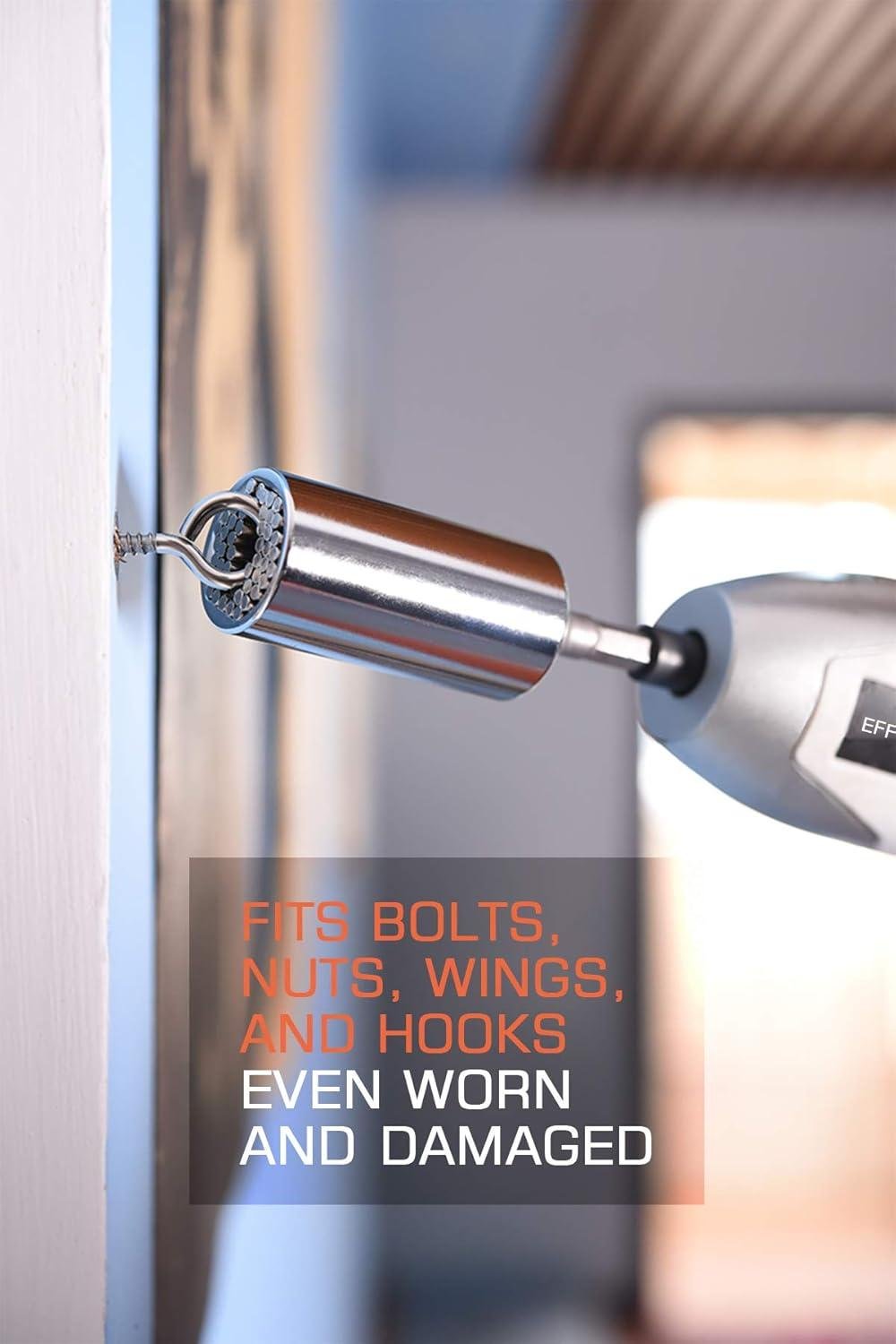
Yes—within its size range (standard 1/4″–3/4″ and metric 7mm–19mm), it’s designed to self-adjust to common hex nuts/bolt heads and similar fasteners.in a woodshop, that covers a lot of tasks like tightening bench hardware, shop stands, fence bolts, lag screws with hex heads, and assembly bolts on jigs. The maker also notes it can grip items like screw eyes and hooks, which can be handy for shop fixtures. Where it’s less reliable is on very thin heads, partially rounded fasteners, or hardware that’s deeply recessed—several customers mention slipping/jamming or needing to switch back to a dedicated socket.
Is it “strong enough” for tough fasteners, or is it mainly for quick shop fixes?
Think of it as a convenience tool rather than a heavy-torque solution.Customer feedback is consistent: it’s great for household/light-duty use and “quick fixes,” but durability is mixed and some users report breakage on first use. One reviewer noted it rounded corners when used on a stubborn bolt that wouldn’t budge (and recommended bolt extractors for seized fasteners). For woodworking, it’s best for normal tightening/loosening tasks—not for frozen carriage bolts, over-torqued lag screws, or high-torque impact work.
Can I use it with my drill/driver or impact driver for faster assembly?
It’s commonly used with power tools via an adapter,and customers specifically mention putting it in a drill for fast work. Having mentioned that, the listing notes it “works on a power drill (adapter not included),” so verify what adapter you’re getting (many kits include a drill-to-square adapter, but don’t assume). For woodworking assembly, a drill/driver on a lower clutch setting is the safer choice. With impact drivers,the sudden torque can increase the chance of slipping,pin jamming,or breakage—especially on stubborn fasteners.
How “set-and-go” is it—any adjustments or setup steps?
There’s essentially no setup: it self-adjusts by using spring-loaded pins that conform around the fastener head. The main “adjustment” is technique—keep firm, straight pressure so the pins seat evenly. Multiple reviewers noted that if you don’t maintain pressure, it can pop off or slip. A practical shop tip: start by hand to confirm it’s seated, then drive slowly rather than hammering it at full speed.
Will it fit in tight spots around cabinets, machinery, and bench frames?
Sometimes, but not always. A recurring complaint is bulk: at least one customer said it’s “too big” and may not fit in tight spots because it’s wide. Unlike a deep socket set (or a box-end wrench), the universal pin design adds diameter, and it may struggle with recessed nuts/bolts or closely spaced hardware (common around table saw stands, jointer bases, and cabinet installs). If you routinely work in confined spaces, keep a slim socket set or combination wrenches handy.
Does it replace a full socket set for woodworking projects?
It can replace “the one socket you can’t find” in many cases, but it won’t truly replace a proper socket set. Reviews reflect this well: customers love it as a versatile addition, but some explicitly say an actual set is still superior.Dedicated sockets grip better, reach deeper, and are more consistent on repeated on/off cycles—important for shop maintenance, machine setup, and any fasteners you don’t want to risk rounding.
Is it beginner-friendly, or do I need experience to avoid stripping hardware?
Beginner-friendly for basic tasks, with a caveat. Many customers describe it as easy to use and time-saving, especially for quick fixes and odd sizes. The learning curve is mostly about keeping the tool aligned and applying steady pressure so it doesn’t slip. If you’re working on critical woodworking hardware (like vise mounts, saw alignment bolts, or expensive cabinetry fasteners), go slow and switch to a correctly sized socket if you feel any slipping.
What maintenance should a woodworker expect—will sawdust affect it?
The self-adjusting mechanism relies on moving pins, so keeping it clean matters more than with a standard socket. In a woodshop, dust and pitch can work their way into the pin channels and contribute to sticking/jamming (which some customers reported). Practical care: blow it out with compressed air after dusty work, wipe it down, and avoid leaving it packed with fine sanding dust. if it starts binding, stop and clean it rather than forcing it under load.
Experience Innovation
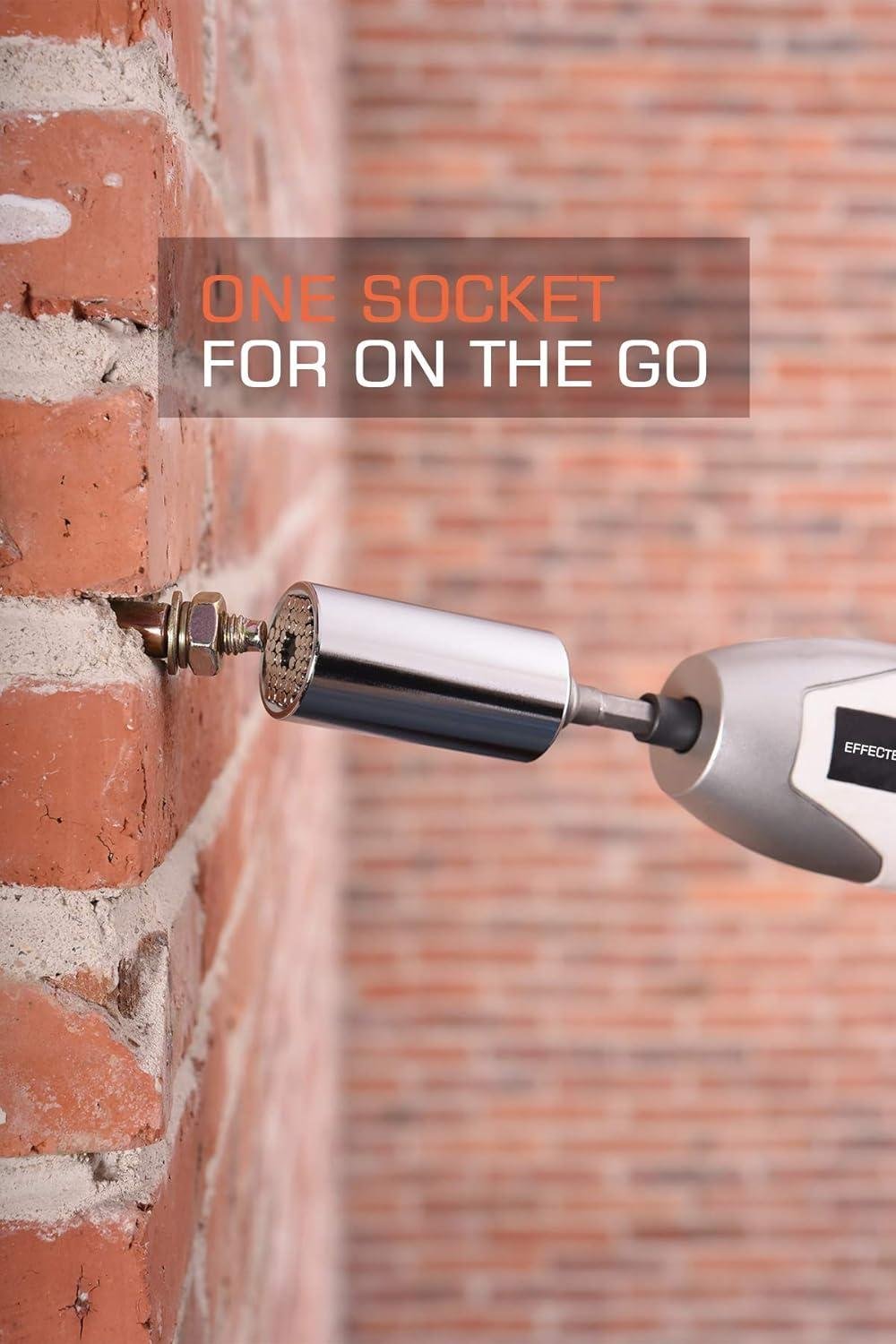
The Universal Self-Adjusting Socket is a compact, pin-style “one socket fits many” tool that covers SAE 1/4″–3/4″ and metric 7–19mm, and can be driven by a ratchet/wrench or a drill via adapter. In customer feedback, the strongest themes are convenience and versatility for quick fixes, plus good value. However, durability and grip are mixed—some users report it’s sturdy, while others mention slipping, jamming pins, or breakage, especially under higher torque or awkward fasteners.
Best for: hobby woodworkers and beginners who want a handy add-on for shop jigs, bench hardware, knockdown fittings, and occasional assembly where the exact socket size isn’t nearby.
Consider alternatives if: you frequently deal with tight fasteners, recessed nuts, heavy hardwood machinery hardware, or production-level use—a proper socket set or extractors will be more reliable.
final assessment: a solid convenience tool for light-duty shop tasks, but not a replacement for dedicated sockets when precision bite and durability matter.
Want to see current pricing and customer photos? View on Amazon & Read More Reviews →