

Blog
OKNIFE Otacle U1 Utility Knife Review: Our Shop Pick?

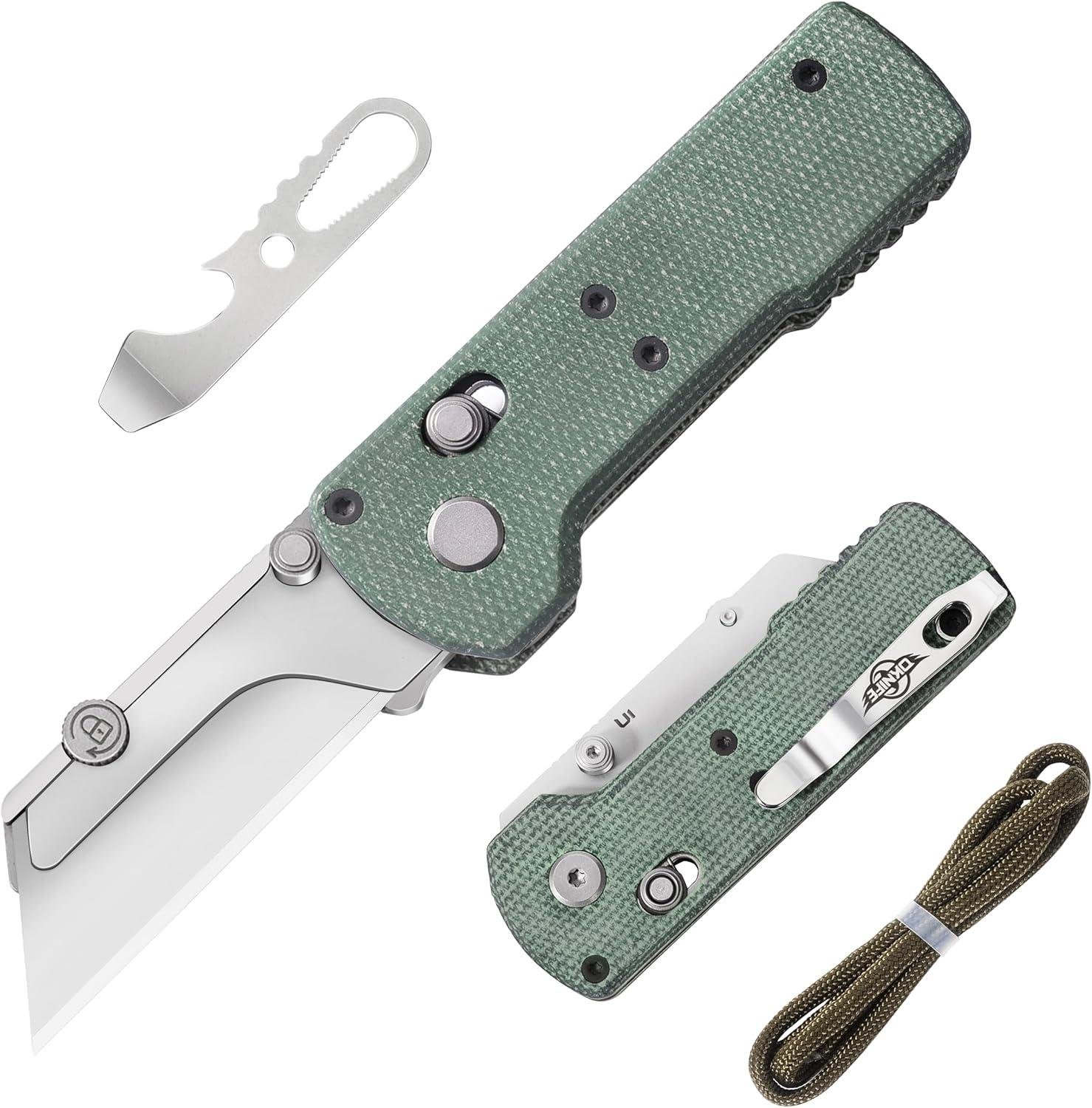
Ever fought wiht a dull box cutter halfway through trimming edge banding, scoring veneer, or breaking down plywood packaging—only to watch the blade wander and leave a ragged line? In a small shop, the humble utility knife ends up doing precision work far beyond “opening boxes,” so accuracy, safety, and a fast blade swap matter more then we like to admit.
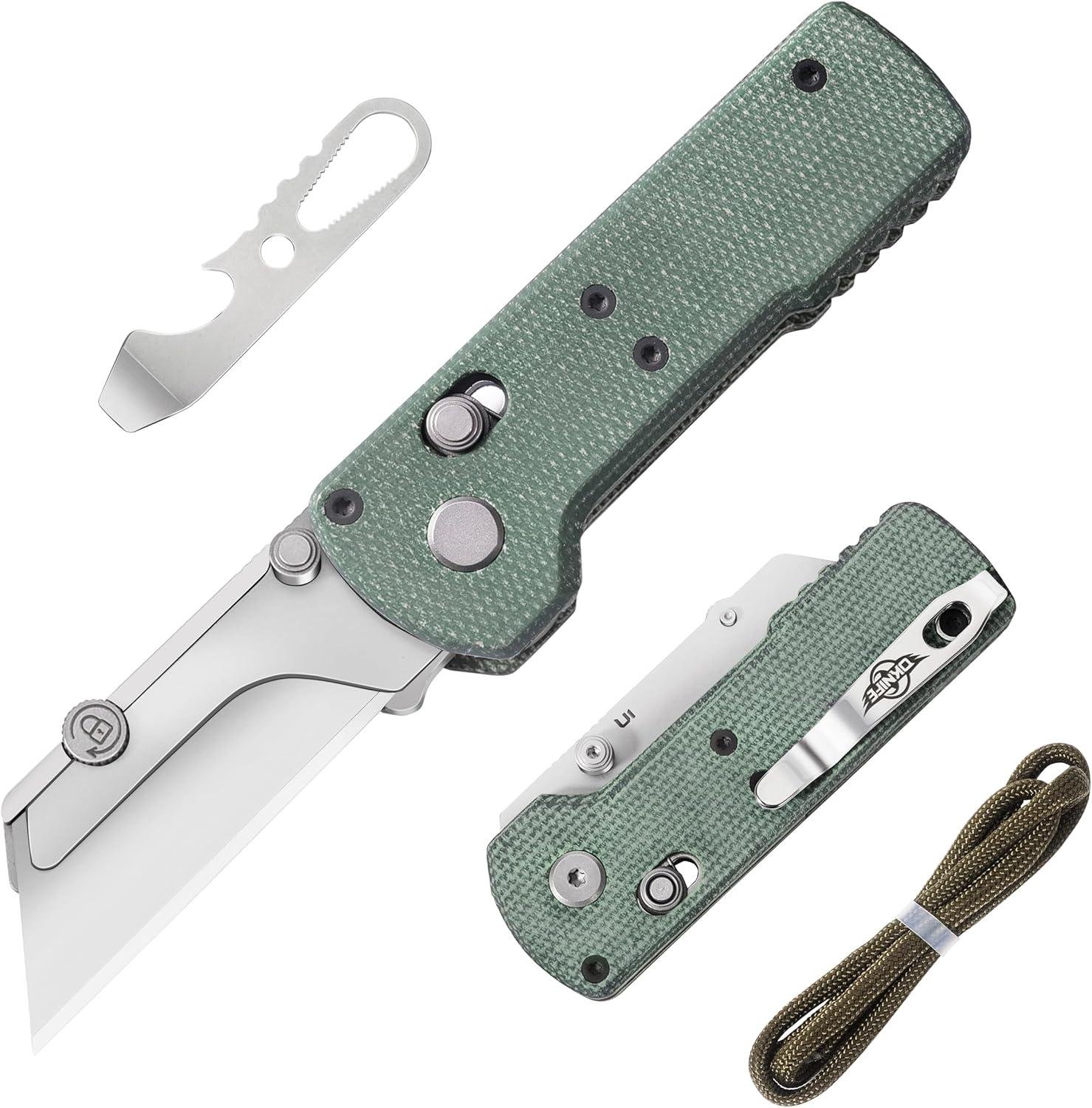
That’s where the OKNIFE Otacle U1 Folding utility Knife (Green Micarta) comes in: a compact EDC-style folding razor knife built around a rail-lock, quick-change system, a pocket clip, and a grippy Micarta handle, running standard 60×19×0.6mm utility blades. It’s designed to stay light (listed at 67g) while still feeling like a “real tool,” with a stainless blade holder and hardware aimed at durability.
In this review, we’ll look at the U1’s key features, how they translate to typical woodworking tasks, and where it may fall short—especially as some customers report the blade locks securely, but the knife may not lock closed reliably. We’ve spent years building furniture and jigs, and we know the best tools earn their keep by balancing price, precision, and ease of use.
First Impressions and Build Quality in the Shop
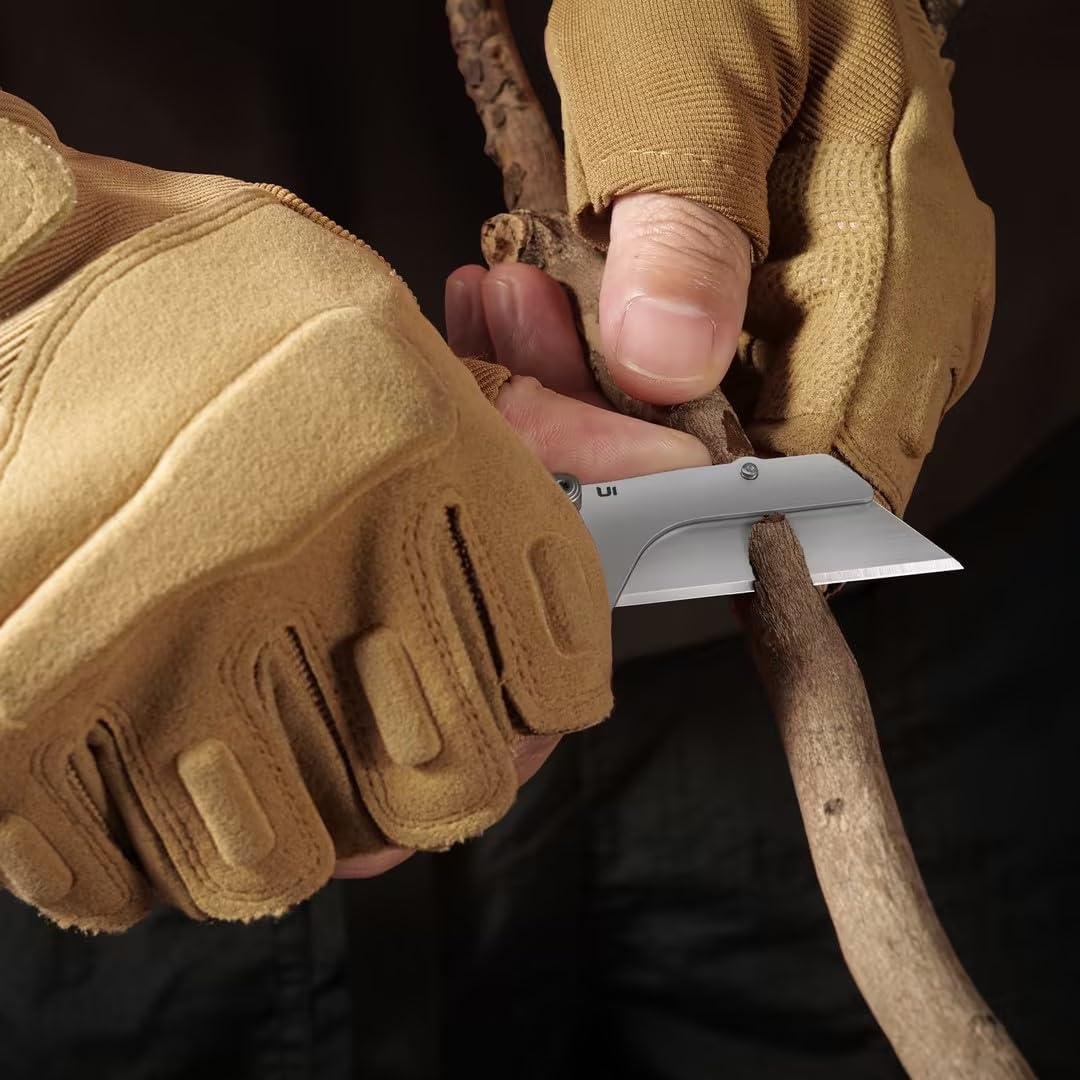
When we first put the OKNIFE Otacle U1 on the bench, it reads more like a “proper” shop-ready folding knife than a throwaway box cutter.The Green Micarta scales have that familiar, grippy fabric-resin feel we like for dusty hands, and the internals—stainless-steel blade holder, pivot pin, and liner lock bar—give it a stout, confidence-inspiring rigidity for day-to-day cutting around the shop. At 67 g, it’s light enough to live in a pocket without dragging our apron down, and reviewers repeatedly echo the same early reaction: “well built,” “solid,” “fit and finish is flawless,” and “compact size that suits medium to small hands.” That compactness is a real plus when we’re hopping between the bench, assembly table, and scrap cart—but it’s also why a few folks with bigger hands mention wishing for more handle length.
In use, the U1’s standout first impression is how “knife-like” the action feels while still taking standard 60 mm x 19 mm x 0.6 mm utility blades (hole-less or 4-hole),which matters for woodworkers as we can grab common SK5-style refills anywhere and keep a truly sharp edge for layout and trimming tasks. The rail lock and quick-swap approach are regularly praised as easy to open/close one-handed and no-tools blade replacement, although we should flag the recurring theme that the retention hardware can be finicky: some customers note a tiny screw and worry about stripping or losing it, and lock feedback is mixed—many say it’s secure, while others warn it “doesn’t lock closed properly.” In a woodworking context,that means we’d treat it like a precision shop cutter for controlled tasks (veneer,tape,shim stock,box breakdowns,trimming sandpaper sheets) rather than something to toss loose into a pocket with no attention to the closed position; as always,we recommend closing it deliberately and verifying lock engagement before stowing—especially when we’re moving around ladders,sheet goods,or clamps.
See Full Specifications & customer Photos
real World Performance for Layout Lines Veneer and Workshop Cutting Tasks
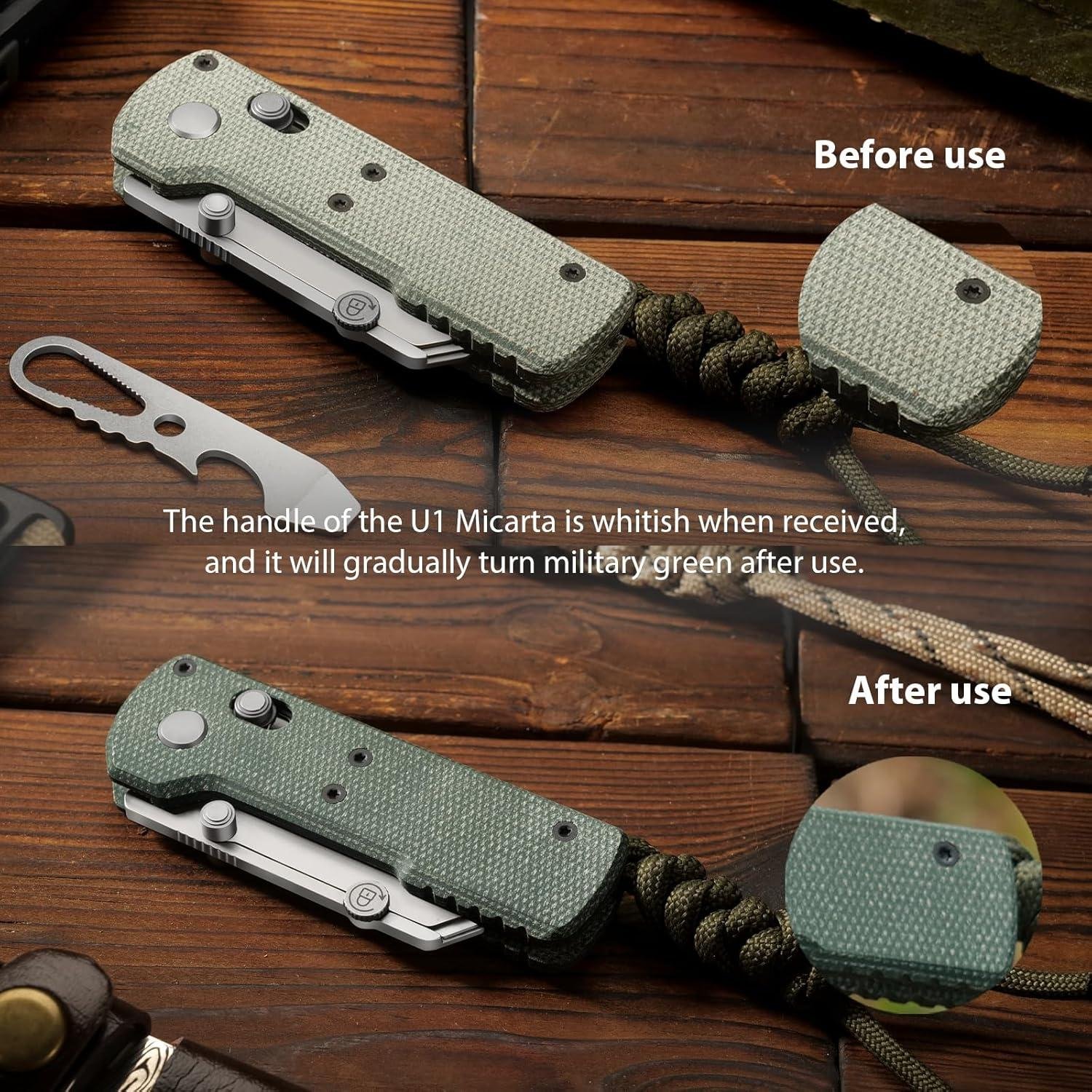
in our shop, the OKNIFE Otacle U1 reads more like an EDC-friendly utility knife than a traditional “jobsite box cutter,” but that doesn’t stop it from being genuinely useful for woodworking layout and veneer prep. The biggest practical advantage is how much edge you get: reviewers repeatedly mention “maximum blade exposure” and “more exposed blade than other razor knives,” which matters when we’re scoring along a straightedge for veneer, trimming blue tape at glue-ups, or slicing thin laminates without the body of the knife bumping the fence. The knife is 67 g and built around a Green Micarta handle, so it’s easy to keep in an apron or pants pocket for quick marking-line cleanup, and the Micarta gives us a confident grip even when our hands are a little dusty. It’s designed for standard 60mm x 19mm x 0.6mm utility blades (hole-less or 4-hole), so we can keep SK5 blades on hand and treat the edge like a consumable—an approach that’s especially smart when scoring curly veneer or cutting abrasive sheet goods where “just one more cut” ruins accuracy.
For workshop cutting tasks—cardboard patterns, sandpaper sheets, edge-banding flush trims, and breaking down shipping boxes—the U1’s rail lock and one-handed open/close get a lot of praise, with customers describing “butter smooth opening,” “smooth and sure operation,” and “very little to no blade play when locked.” That steadiness is exactly what we want when we’re cutting against a knife line rather than “hacking and hoping.” The main caveat we’d flag for woodworkers is lock behavior: review themes are mixed on lockability,and a few people warn the knife “doesn’t lock closed properly”—so we’d treat it like a razor tool,not something to toss loosely in a pocket with hardware. Also, while the brand markets it as a “quick change” system, multiple reviewers note the blade retention uses a small screw and may require the included tool or pliers to snug it properly; over-tightening is a real risk on tiny threads. In practice, that means we’d keep a spare blade and the little tool on a lanyard at the bench, and we’d teach newer users to make light scoring passes (especially on veneer) rather than pushing hard—letting a sharp blade do the work is both safer and far more accurate.
- Utility knife (OKNIFE Otacle U1, Green Micarta)
- small multi-tool (for blade changes, per customer reviews)
- Paracord (for lanyard, per customer reviews)
- Standard utility blades — 60mm x 19mm x 0.6mm (hole-less or 4-hole)
- Small pliers (helpful for snugging the blade screw, per reviews)
- Lanyard (to keep the tool/blade-change accessory from getting lost)
- Veneer and laminate scoring with a straightedge
- Template and pattern cutting (paper/cardstock/thin plastic)
- Sandpaper and abrasive sheet trimming
- Edge-banding and tape trimming during glue-ups
- Box breakdown and shop receiving (shipping cartons, strapping, etc.)
- not specified in reviews (customers focus on cardboard, paper, plastic, cloth; wood species aren’t commonly mentioned)
| Spec / Feature | OKNIFE Otacle U1 (Green Micarta) | What It Means in the Woodshop |
|---|---|---|
| Weight | 67 g | Easy to keep on-body; handy for frequent layout-line cleanup and quick trims. |
| Blade compatibility | 60mm x 19mm x 0.6mm utility blades (hole-less or 4-hole) | Simple blade sourcing; treat blades as consumables for clean veneer scoring. |
| Locking system | Rail lock (blade secure); mixed feedback on closed lock | Good for controlled cutting; use pocket clip and handle with care when folded. |
| Handle material | Micarta | Grippy feel for fine control; comfortable for repeated light scoring passes. |
| Accessory / Blade type | Compatibility | Notes for Woodworkers |
|---|---|---|
| Standard straight utility blades | Yes | Best all-around for veneer scoring, tape trimming, and sheet breakdown. |
| Hole-less utility blades | Yes | Fits per specs; handy if your shop stocks bulk contractor blades. |
| 4-hole utility blades | Yes | Fits per specs; common style in many utility blade assortments. |
| “unique” hook / specialty blades | Sometimes no (per reviews) | Some reviewers report the retention design may not accept certain specialty shapes. |
| Workshop Task | recommended Capacity / Use | Actual Practical Takeaway |
|---|---|---|
| Veneer scoring | Light, multiple passes with a straightedge | Works best when we let the sharp blade do the work; avoid heavy pressure. |
| Layout line trimming | Short controlled cuts | Compact 67 g body helps finesse; maintain a fresh blade for precision. |
| Box breakdown / shop receiving | General cutting; frequent blade swaps | Reviewers love it for boxes; keep the blade screw tool handy if you swap often. |
see Full Specifications & Customer Photos
Key Features Woodworkers Will Appreciate from the Rail Lock to Quick Blade Changes
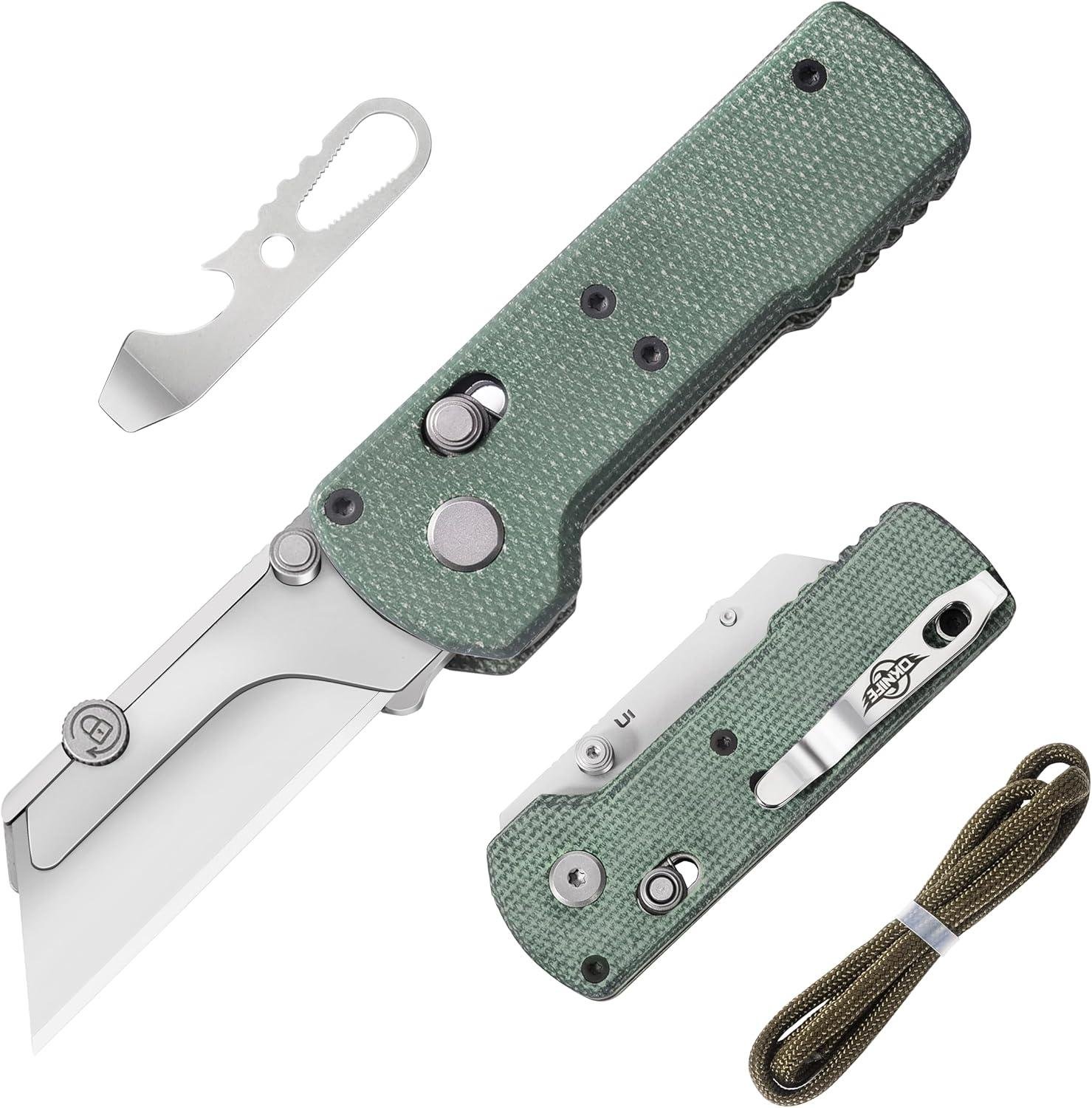
In our shop, a folding utility knife earns its keep on the “messy” tasks that we don’t want to hand to a bench chisel—trimming veneer tape, scoring laminate edges, cutting sandpaper sheets, and breaking down cardboard without dragging glue and staples toward our joinery tools. The OKNIFE Otacle U1 (Green Micarta) leans into that role with its rail lock and a blade format that exposes a generous amount of cutting edge, which many customers praise as “maximum blade length” and “more exposed blade than other razor knives.” On paper it’s also a smart carry-around-the-shop option: the knife weighs 67 g, and reviewers repeatedly call it “compact,” “lightweight,” and a good fit for medium to small hands—handy when we’re climbing a ladder to trim edge banding or walking from bench to assembly table. The Micarta handle matters in a woodworking context too: it’s naturally grippy compared to smoother plastics, and the maker highlights that it’s designed to be slip-resistant, which is exactly what we want when our fingers are dusty from sanding.
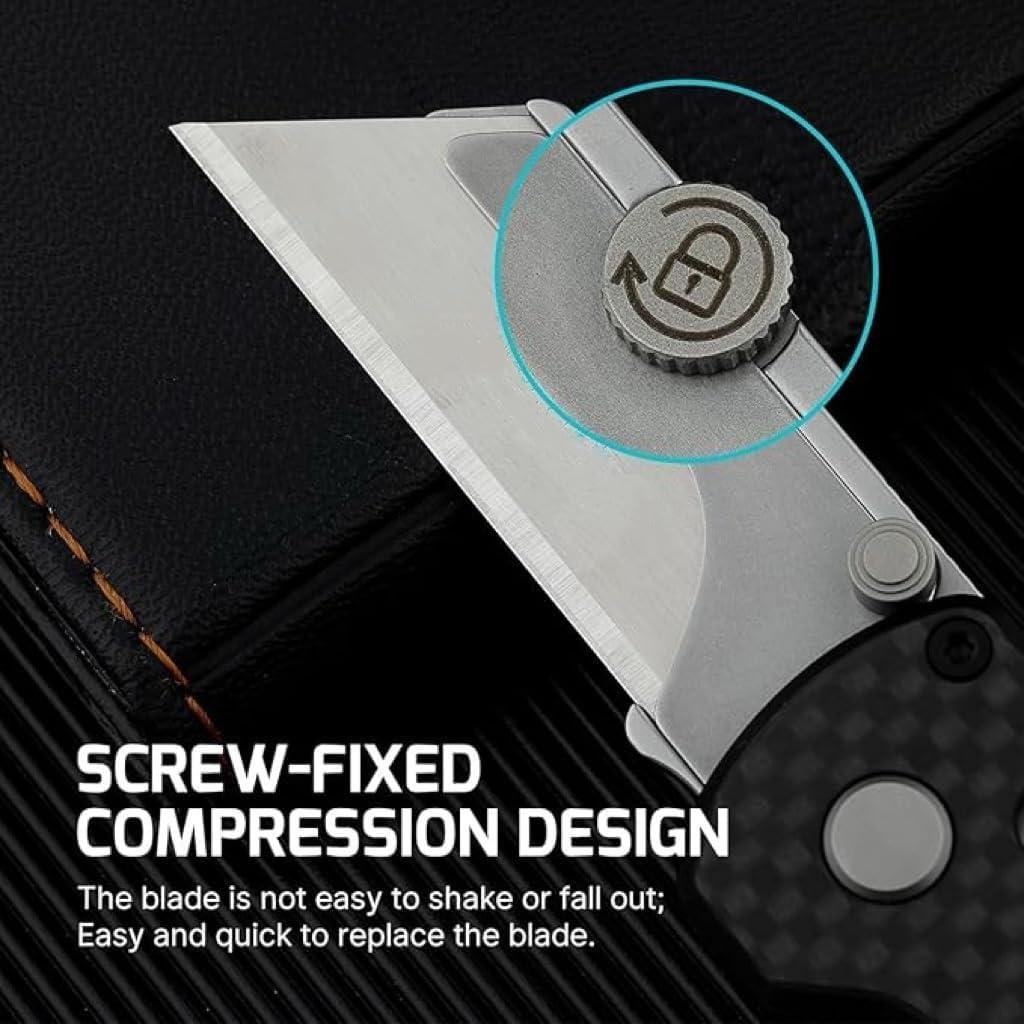
Where the U1 gets especially practical is blade management. It’s designed for standard 60 mm × 19 mm × 0.6 mm utility blades (hole-less or 4-hole), so we can keep a fresh edge on hand without sharpening—an advantage when we’re cutting abrasive materials like fiberglass-reinforced tape, cardboard templates, or shop-floor packaging straps. Customers commonly highlight the “quick-change blade system that requires no tools” and “easy one-handed open and close,” although a recurring theme is that the blade clamp relies on a small screw—some reviewers mention using pliers for extra torque and worry about stripping threads or losing the tiny hardware. From a technique standpoint, we’d treat this like any exposed-blade utility knife: let the blade do the work, take multiple light passes when scoring veneer/laminate to avoid tear-out, and cut on a sacrificial backer to protect our benchtop. One caution from customer feedback is worth taking seriously: while many say the rail lock keeps the blade secure, others report it “doesn’t lock closed properly,” so we’d be careful about pocket carry in the shop and store it closed in a dedicated spot—especially if we’re bending over a bench or reaching into a tool apron.
- Included accessories
- Small multi-tool (included per customer reviews)
- Paracord for lanyard (included per customer reviews)
- Compatible attachments/accessories
- Utility blades: standard 60 mm × 19 mm × 0.6 mm (hole-less or 4-hole)
- Lanyard: any small cord via the lanyard hole
- Ideal project types
- Breaking down cardboard and trimming packaging (shop receiving days)
- Scoring veneer tape and laminate edges before final trimming
- Cutting sandpaper sheets and PSA-backed abrasives
- Layout/templating work: trimming paper,plastic sheet patterns,and masking tape
- Wood types tested by customers
- Not specified in customer reviews provided
| Spec / Feature | OKNIFE Otacle U1 (Green Micarta) | What it means in a wood shop |
|---|---|---|
| Weight | 67 g | Easy to keep in a pocket/apron without feeling bulky during glue-ups and assembly. |
| Blade compatibility | 60 × 19 × 0.6 mm standard utility blades | Simple resupply; fast swap to stay sharp when cutting abrasive materials. |
| Lock system | Rail lock (customer feedback: secure blade,mixed closed-lock) | Good for controlled cutting; be cautious if you rely on a firm “closed” lock for pocket carry. |
| Handle material | Green Micarta | Grippier feel with dusty hands than slick handles; comfortable for repeated scoring cuts. |
| Compatible blades/accessories | Fit | Notes |
|---|---|---|
| Standard utility blades (60 × 19 × 0.6 mm) | Yes | Supports hole-less and 4-hole blades per product specs. |
| “unique” specialty blades (e.g., twin seatbelt-cutter style, longer hook blades) | Sometimes / No | Some reviewers note the retention design may not accept certain specialty shapes. |
| Lanyard cord | Yes | Lanyard hole is useful for shop carry; reduces chances of misplacing a small knife. |
| Workshop “capacity” | Recommended use | Real-world notes from reviews |
|---|---|---|
| Duty level | Light-to-medium shop utility tasks | One reviewer notes it’s “not designed to replace regular box cutters in a work environment,” but great for everyday chores. |
| Blade security | Snug fit with lock engaged | Many report solid lockup and minimal play; a few mention lock/retention concerns. |
See full Specifications & Customer Photos
Ease of Use for Beginners and Pros plus Workshop storage and Carry options
For beginners in the shop, the OKNIFE Otacle U1 feels approachable as it behaves like a small folding knife but uses standard 60mm x 19mm x 0.6mm utility blades—so we’re not learning sharpening,we’re learning safe handling. At 67 g with a grippy Green Micarta handle, it’s light enough to keep on us without turning into “one more heavy thing on the belt,” and the compact size is a frequent customer praise point (many say it fits medium to small hands and even a jeans change/watch pocket). In woodworking terms,that makes it handy for controlled tasks like trimming edge banding flush, scoring veneer lines before a chisel pare, cutting sandpaper sheets to size, opening finish containers, and breaking down cardboard to keep the shop clean. Review themes also consistently mention one-handed opening/closing with “smooth action,” plus the rail lock holding the blade with minimal wobble and maximum blade exposure—useful when we’re slicing deeper material like dense carton or leather apron straps. That said, we do need to highlight the mixed feedback: some customers report the knife doesn’t lock closed properly, so for shop safety we’d treat it like a blade-first tool—keep it clipped securely, consider using the lanyard hole, and avoid tossing it loose into an apron pocket where it could potentially open against a hand.
For pros, the U1’s biggest advantage is workflow: the “quick change” concept is there, but in practice many reviewers note the blade clamp uses a tiny screw that may require the included tool (and some people resort to small pliers) to get the tension they want. That’s not a deal-breaker in a woodworking shop, but it does mean we should set a habit: snug the screw firmly (without over-torquing to avoid stripping), then do a quick test cut on scrap before moving to a layout-critical slice. Storage and carry are where this tool really behaves like an EDC: the pocket clip makes it easy to keep on us during assembly days, and the lanyard hole plus the included paracord gives us an option to hang it on a tool wall peg, apron loop, or rolling cart handle. Customers repeatedly call it “compact” and “lightweight,” with one common con being it’s “so small it’s easy to misplace,” which is a real workshop issue—so we’d recommend giving it a dedicated home (magnetic strip, small bin by the bench, or clipped to the same pocket every time) rather than letting it roam.
- included accessories
- Utility blade (SK5 steel per product summary)
- Small multi tool (for blade/fastener per customer reviews)
- Paracord (for lanyard per customer reviews)
- Compatible attachments/accessories
- Standard 60mm x 19mm x 0.6mm utility blades (hole-less or 4-hole)
- Aftermarket pocket lanyards or bead pulls (to reduce drop/misplace risk)
- Small needle-nose pliers (helpful if you prefer extra torque on the clamp screw)
- Ideal project types
- Cabinet and furniture assembly (box opening, packaging breakdown)
- Edge banding trimming and laminate scoring (light duty, controlled cuts)
- Template and pattern work (clean scoring before routing or chiseling)
- Shop maintenance tasks (label trimming, tape removal, sanding sheet prep)
- Wood types tested by customers
- Not specified in customer reviews (most feedback centers on cardboard, packages, and general daily cutting)
| Spec / Feature | OKNIFE Otacle U1 (Green Micarta) | Why it matters in a woodworking shop |
|---|---|---|
| Weight | 67 g | Easy to keep clipped on us during glue-ups and assembly without fatigue. |
| Blade compatibility | 60mm x 19mm x 0.6mm utility blades | Simple resupply; we can keep a blade dispenser in the drawer and swap as soon as cuts start tearing fibers. |
| Handle material | Micarta (Green) | More secure grip with dusty hands than slick metals; good for controlled trim cuts. |
| Lock system | Rail lock (blade retention) | Helps reduce blade play for precise scoring; still requires safe handling due to mixed “locks closed” feedback. |
| Compatible blades/accessories | Works with U1? | Notes for woodworkers |
|---|---|---|
| Standard utility blades (60x19x0.6mm, hole-less) | Yes | Great for quick swaps when cutting cardboard or trimming tapes/films. |
| Standard utility blades (60x19x0.6mm, 4-hole) | Yes | Common in shop blade packs; easy to stock in bulk. |
| “Unique” specialty blades (some hook/twin cutter styles) | Sometimes | One reviewer notes the retention design may not accept certain specialty profiles. |
| Capacity topic | Recommended use | Actual use implied by reviews/specs |
|---|---|---|
| Shop workload | Light-to-medium duty cutting and trimming | customers often frame it as excellent for packages, boxes, and daily cutting, and “not designed to replace regular box cutters in a work environment.” |
| Precision trimming | Scoring and controlled slicing | Praised for minimal blade play and maximum blade exposure, which can definitely help controlled cuts—provided the screw is properly snugged. |
See Full Specifications & Customer Photos
Customer Reviews Analysis
What Woodworkers Are saying (Review Analysis)
1. Overall sentiment from woodworking customers
Several woodworkers and workshop-minded DIYers describe the OKNIFE Otacle U1 as a high-quality EDC utility knife that feels more like a “proper” folding knife than a disposable box cutter. Common praise includes its solid lockup, pocketable size, and smooth one-handed action—features that translate well to quick shop tasks like trimming, marking, and cleanup cuts. Overall sentiment trends strongly positive on fit/finish and daily usefulness, with a few recurring cautions about the tiny blade screw and the knife being easy to misplace due to its compact size.
2. Performance feedback (accuracy, power, results)
Cut quality & control
- Multiple reviews highlight minimal blade play when locked, which woodworkers typically associate with cleaner, more predictable cuts in thin materials (veneers, tape, kraft paper, cardboard templates). One reviewer emphasized it “holds the blade fully securely with no play.”
- Customers also liked that it exposes more of the blade edge than many utility holders. That can help for longer draw cuts (breaking down boxes,slicing sheet goods’ packaging,cutting protective films),though it can feel “a bit scary” at first.
Under-load behavior
- Some users reported the spine thickness can snag when cutting through sheets (one reviewer specifically mentions cardboard). In woodworking terms, that suggests it’s great for surface/through cuts in lighter stock, but may drag a bit in thicker, fibrous, or layered materials where clearance matters.
3. Build quality and durability observations
Fit/finish
- several woodworkers mentioned (and multiple reviews highlight) excellent materials and “flawless” fit and finish for the price, describing it as “well engineered and reliable” and “built so well.”
locking and pivot
- The action gets a lot of praise: “butter smooth opening and closing,” “snappy action,” and easy one-handed operation.
- One reviewer reported a more mixed experience: the pivot felt “simultaneously crunchy, and very free turning,” suggesting unit-to-unit feel may vary or may improve with break-in (another reviewer noted it got smoother with use).
Long-term durability concerns
- The most common durability worry is the tiny screw and threads on the blade clamp. Some users reported challenges with needing pliers to tighten it sufficiently and concern about stripping: “could be prone to over-tightening / stripping,” and “only time will tell if the threads hold up or it gets lost.”
4. Ease of use for different skill levels
Beginners / casual DIYers
- Beginners appreciated the straightforward, one-handed open/close and the general “grab-and-go” pocket clip convenience for household and light shop tasks.
Experienced users
- Reviewers with more EDC/tool experience liked the secure lockup and “knife-like” feel. Several comments praise the confidence of the lock and the controlled deployment.
Learning curve notes
- Blade changes are not fully tool-less in the way many quick-release utility knives are. The included tool helps, but some users still used pliers, and one noted concern about losing the small tool. That’s a small but real friction point for new users.
5. Common project types and success stories
While the reviews are not explicitly “fine woodworking project” heavy, customers successfully used this for tasks that commonly show up in woodshops and home buildouts:
- Breaking down boxes and packaging (very common): several reviewers mention daily use cutting and recycling cardboard—useful during tool deliveries, lumber orders, and hardware shipments.
- Move-in / home setup work: one user described using it constantly after moving into a new house and ordering lots of furnishings—exactly the kind of light-duty cutting woodworkers do while setting up a workshop space.
- General shop/EDC utility work: keeping “glue off your main blade,” opening materials, trimming odds and ends.
6. Issues or limitations reported
common negatives and constraints mentioned across reviews include:
- Blade clamp screw is small and can be fussy: some users reported challenges with tightening by hand, potential stripping if over-torqued, and needing the included tool or pliers.
- Small size: great for pocket carry, but:
- easier to misplace (“so small it’s easy to misplace”)
- some with large hands wanted a longer handle for comfort during extended use.
- Pivot feel inconsistency: at least one report of “crunchy” feel despite free movement.
- Material snags: thicker spine can catch when slicing through sheets (e.g., cardboard). In workshop use, this could show up when cutting thick template stock, roofing paper, or layered packaging.
- Blade compatibility limits: the retention system may not accept certain specialty blades (hook/twin “seatbelt cutter” styles, longer hook designs).
- Not a jobsite replacement: one reviewer explicitly noted it’s “not designed to replace regular box cutters in a work environment,” positioning it more as a premium EDC/shop companion than a heavy-abuse construction cutter.
Summary Table
| Aspect | Common Feedback |
|---|---|
| Performance | Secure blade with little/no play; more blade exposure helps longer cuts; spine can snag in sheet cuts |
| Precision | Lockup feels solid and consistent for controlled trimming; confidence higher than typical “rattly” box cutters |
| Durability | Excellent fit/finish; recurring concern about tiny blade screw threads and potential stripping/loss |
| Ease of Use | One-handed open/close praised; blade change requires tool/pliers for some users |
| Versatility | Great for packaging, shop chores, and quick cuts; limited compatibility with specialty blade shapes |
| Value | Frequently described as “no brainer” value for the build quality and action |
Pros & Cons
Pros & Cons
After carrying the OKNIFE Otacle U1 (Green Micarta) for the kind of everyday cutting that actually happens in real life—packages, cardboard breakdown, tape, plastic straps, and the occasional “who taped this like Fort Knox?” moment—here’s where it shines, and where we think it still has room to tighten up.
Pros
- Feels genuinely well-built for the price: fit, finish, and overall sturdiness come off more “EDC knife” than “disposable box cutter.”
- Compact,pocket-friendly footprint: the size disappears in a pocket,and it’s especially comfortable for medium to small hands.
- Lightweight carry (about 67g): the Micarta version stays easy on the pocket without feeling flimsy.
- One-handed open/close is realistically usable: the action is quick, and the rail/crossbar-style lock is intuitive onc we get the feel for it.
- Excellent blade exposure: we get more usable edge than many folding utility knives,which makes box breakdown faster and less fiddly.
- Uses standard utility blades: compatible with common 60mm utility blades (including hole-less and 4-hole styles), so replacements are cheap and easy to source.
- Micarta grip has a “work tool” vibe: it offers a confident hold and a warmer feel than slick metal when our hands are dry—or busy.
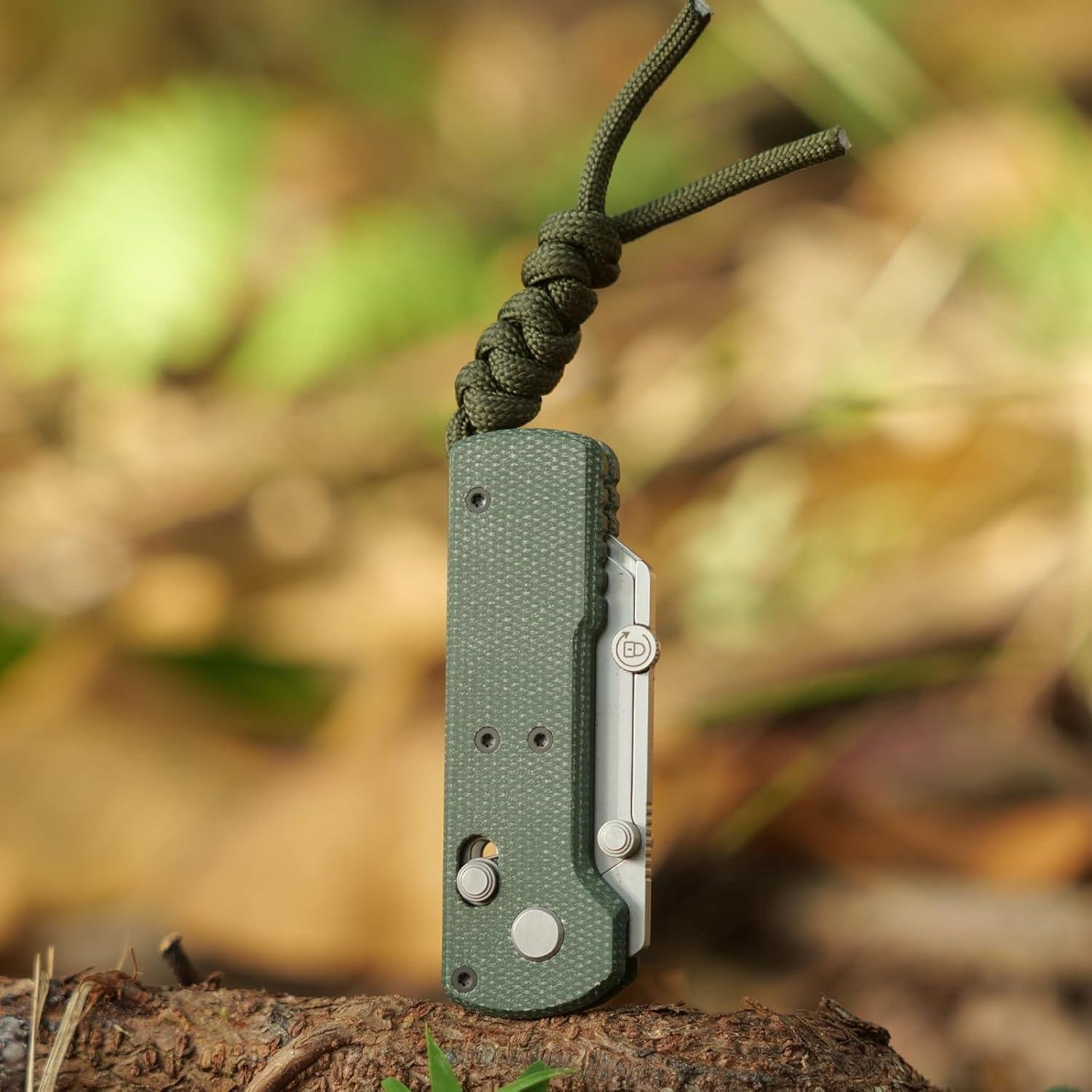
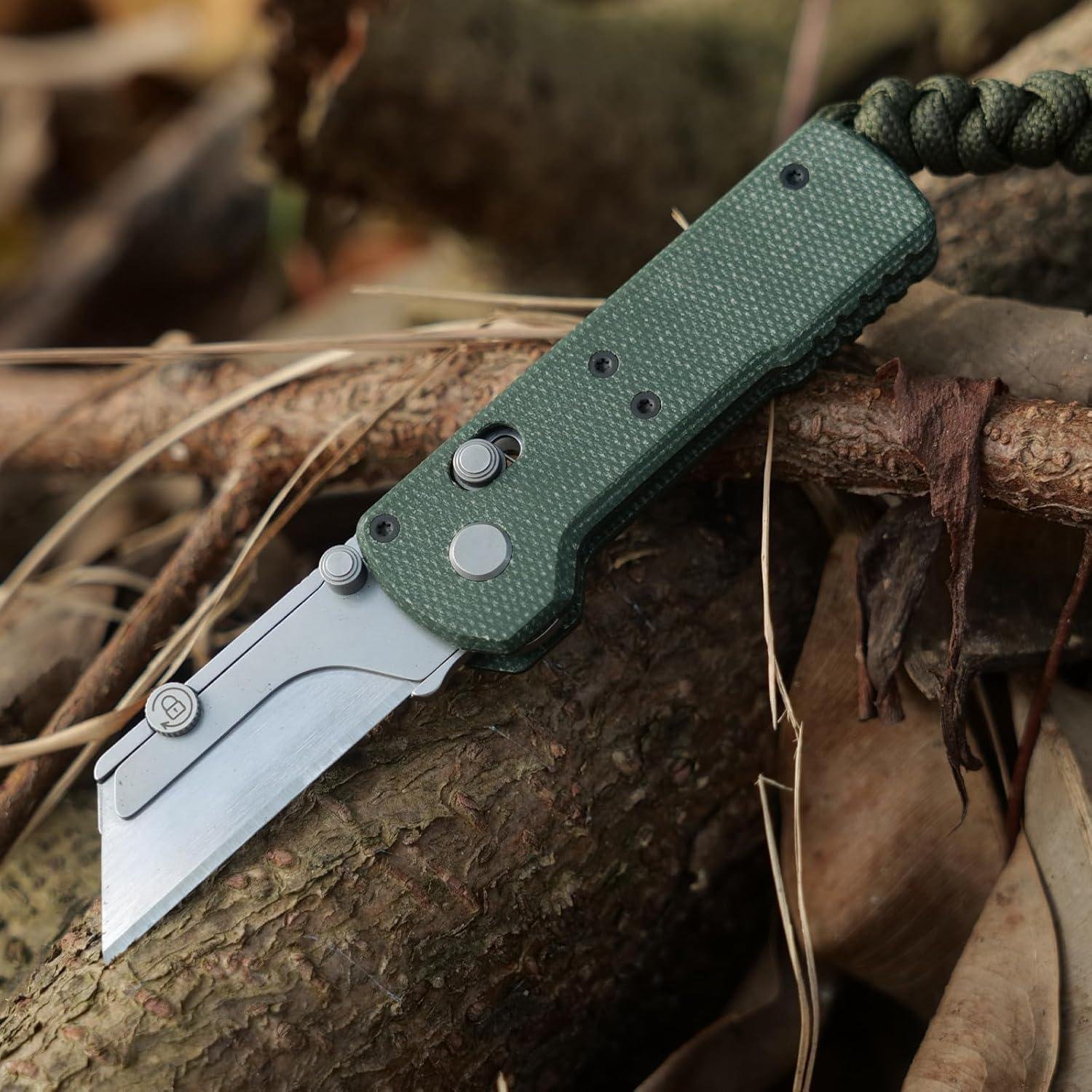
- EDC-ready details: pocket clip, lanyard hole, and “grab-and-go” ergonomics make it feel purpose-built, not improvised.
Cons
- Lock-closed confidence can be inconsistent: some users report it doesn’t reliably lock closed, which is a big deal for pocket carry.
- Blade retention relies on a small screw: it’s secure, but we can see long-term concerns—tiny hardware is easy to misplace, and overtightening threads is always a risk.
- Not truly “tool-less” for everyone: it’s quick-change compared to traditional designs, but it may still require the included tool (or pliers) to get the blade properly snug.
- Small handle isn’t ideal for big hands: the compact size is great… until we want more to hold onto for longer cutting sessions.
- Spine thickness can snag in some cuts: like many utility-blade holders, the thicker body behind the blade may drag through thinner sheet material.
- Easy to misplace: the same compact, lightweight “always carry” nature also makes it a “where did it go?” candidate.
| What We Noticed | What It means Day-to-Day |
|---|---|
| High blade exposure | Faster box breakdown, fewer awkward re-grips |
| Micarta scales + low weight | Comfortable carry; grippy “work tool” feel |
| Rail lock security (open) is solid | Confident cutting—once locked out |
| Lock-closed reports are mixed | We’d be cautious pocket-carrying unless ours locks closed reliably |
| Screw-based blade clamp | Secure retention, but adds tiny-hardware maintenance |
Our takeaway: the Otacle U1 feels like a “real” EDC knife that just happens to eat cheap utility blades—an appealing combo.The main caveat is lock-closed reliability and the small-screw blade clamp: if those don’t bother us (or our particular unit is solid), it’s an impressively capable pocket cutter.
Q&A
What wood types can this handle effectively?
This is a folding utility knife that uses standard replaceable utility blades (SK5 steel blade is listed), so it’s best for light-to-medium woodworking tasks: marking/cutting veneer edge banding, trimming shims, scribing, opening finish/adhesive containers, cutting sandpaper, and slicing thin stock like balsa or basswood. it can cut most woods (softwoods through hardwoods) in thin sections, but it’s not meant for deep carving, joinery cuts, or heavy whittling where a fixed blade or chisel is safer and more controllable.
Is it powerful enough for hardwoods like oak or maple?
For hardwoods,it’s “sharpness-dependent” rather than “power-dependent.” With a fresh utility blade, it will score and trim oak/maple just fine (think: scoring lines, trimming plugs, cleaning up squeeze-out, cutting veneer/laminate).Where it struggles is thick, forceful cuts—like trying to slice deeply across hardwood end grain or doing repeated heavy cuts—as utility blades are thin and can deflect. Several reviewers praise the solid lockup and minimal blade play,but you’ll still want light passes,a straightedge,and frequent blade changes when working dense species.
How does it perform on plywood, veneers, and edge banding?
This is one of the better use-cases for the U1 because it exposes a lot of blade edge and accepts standard 60mm x 19mm x 0.6mm blades. For plywood, it effectively works well for scoring cut lines to reduce tear-out before sawing, trimming thin ply, and breaking down sheet goods packaging. For veneers and edge banding, the max blade exposure can be an advantage for long, continuous trimming cuts, but go slow—too much exposed blade plus a slick surface can increase the chance of wandering or digging in. A few reviewers noted the “spine”/holder thickness can snag when cutting through sheet materials, so keep your angle shallow and use multiple light passes.
How easy are blade changes, and does it take standard blades?
It’s designed for quick blade swaps and is compatible with standard utility blades (including hole-less or 4-hole styles per the product info). Reviews frequently call out easy replacement and minimal wobble once secured. Having mentioned that, there’s a real-world caveat from multiple reviewers: the blade is clamped with a small screw/retention system, and some people find it hard to tighten enough by hand (a few mention using the included small tool or even small pliers). So it’s “quick” compared to many folding utility knives, but it isn’t as effortless as a true lever-style tool-free quick release.
Can it handle production work in a shop, or is it more of an EDC/hobby knife?
Most feedback points to “excellent EDC and shop support tool,” not a primary production box cutter. Reviewers love it for daily opening/breaking down boxes and general cutting, and it’s lightweight (listed 67g) with one-handed open/close. But at least one review explicitly notes it’s “not designed to replace regular box cutters in a work environment.” In a woodworking shop, think of it as a high-quality secondary knife you’ll actually keep on you—great for layout, trimming, and cleanup—while a fixed utility knife or dedicated shop cutter may still be better for repetitive, high-force cutting.
Is it beginner-friendly for woodworking tasks?
Generally yes, with two important safety notes. Beginners tend to appreciate the compact size,light weight,and straightforward one-handed operation that reviews mention. The rail/crossbar-style lock is also often described as secure when open. Though,lockability is “mixed” in reviews—some users report it doesn’t reliably lock closed. For a beginner, that means: don’t assume it’s safe loose in a pocket or apron unless you’ve personally verified the closed retention on your unit, and consider using the pocket clip + a dedicated pocket, or add a lanyard (the knife is lanyard-ready) to reduce drop risk. Also, because it exposes a lot of blade, take your time until your hand positioning is consistent.
Will this integrate well in a small workshop (dust collection, power, mounting)?
Yes—there’s essentially nothing to “integrate.” It needs no power outlet,no dust collection,and no mounting. In a small shop, it’s handy as an always-on-you cutter for sandpaper, tape, veneer, packaging, and quick trimming. Practical tip: keep a blade bank or magnetic parts tray nearby for safe blade disposal and a small container of spare standard blades in your apron or tool chest.
What maintenance should woodworkers expect, and how durable is the Micarta handle?
Routine maintenance is simple: keep the pivot/lock area free of sawdust and finish residue, wipe down after glue or solvent exposure, and replace blades instead of forcing dull ones. the Green Micarta scales are generally a good woodworking-friendly choice as Micarta offers a grippy feel even with dusty hands, and the stainless components listed (blade holder, pivot pin, lock bar) should hold up well to shop humidity. Long-term durability concerns from reviews focus less on the handle and more on the small blade-retention screw—avoid over-tightening to reduce thread wear, and store the included tool where you won’t lose it.
Elevate Your Lifestyle
TOOL SUMMARY: The OKNIFE Otacle U1 is a compact, 67g folding utility knife with a Green Micarta handle, pocket clip, and a rail-lock system that secures standard 60mm utility blades while exposing more cutting edge than many box cutters. Customer feedback consistently highlights solid build quality, smooth one-handed open/close, lightweight carry, and a blade swap that’s fast and convenient for an EDC-style tool. The main cautions are mixed reports on lockability (some say it doesn’t lock closed reliably) and a small blade-retention screw/tool that can be easy to lose or overtighten.
BEST FOR: Ideal for hobby woodworkers with small to medium projects, cabinet makers needing precision for veneer, tape, and layout cuts, and beginners learning safe, controlled trimming.
CONSIDER ALTERNATIVES IF: You want a knife that positively locks closed for pocket carry, need heavy-duty jobsite box-cutter toughness, or prefer a larger handle for big hands.
FINAL ASSESSMENT: The Otacle U1 offers solid performance for its price point,especially for precise shop tasks and daily carry—just verify the closed-lock and blade retention meet your safety expectations.
want to see current pricing and customer photos? View on Amazon & Read More Reviews →