

Blog
DeWalt 20V Impact Wrench Review: Right for Our Shop?

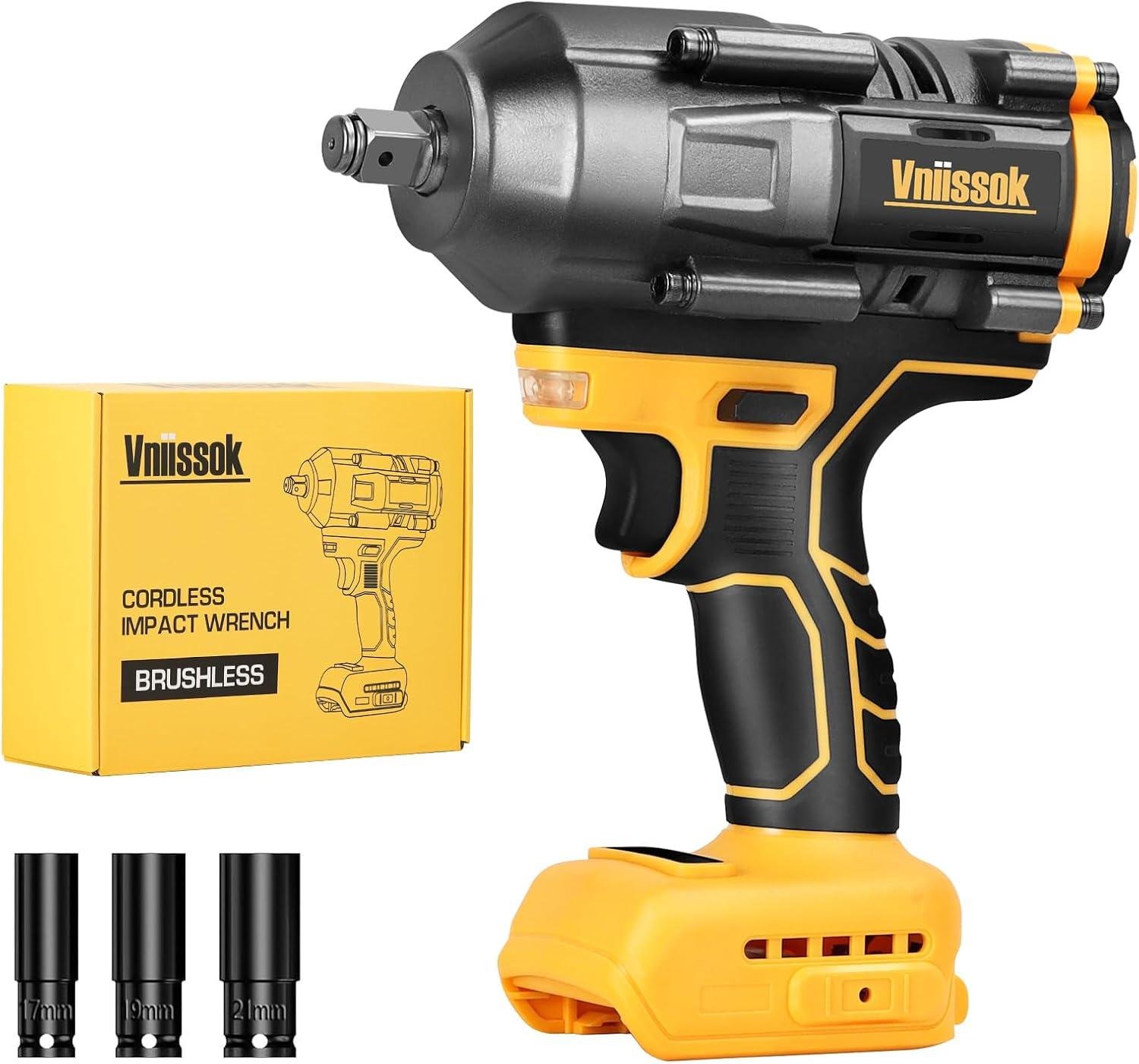
Ever had a project stall because you’re fighting stubborn hardware instead of fussing over joinery? In a packed shop, wrestling lag screws for a workbench build, tightening bench hardware, or breaking loose seized fasteners on a dust collector stand can feel like the opposite of precision—and one slip can chew up a bolt head or throw your alignment off.
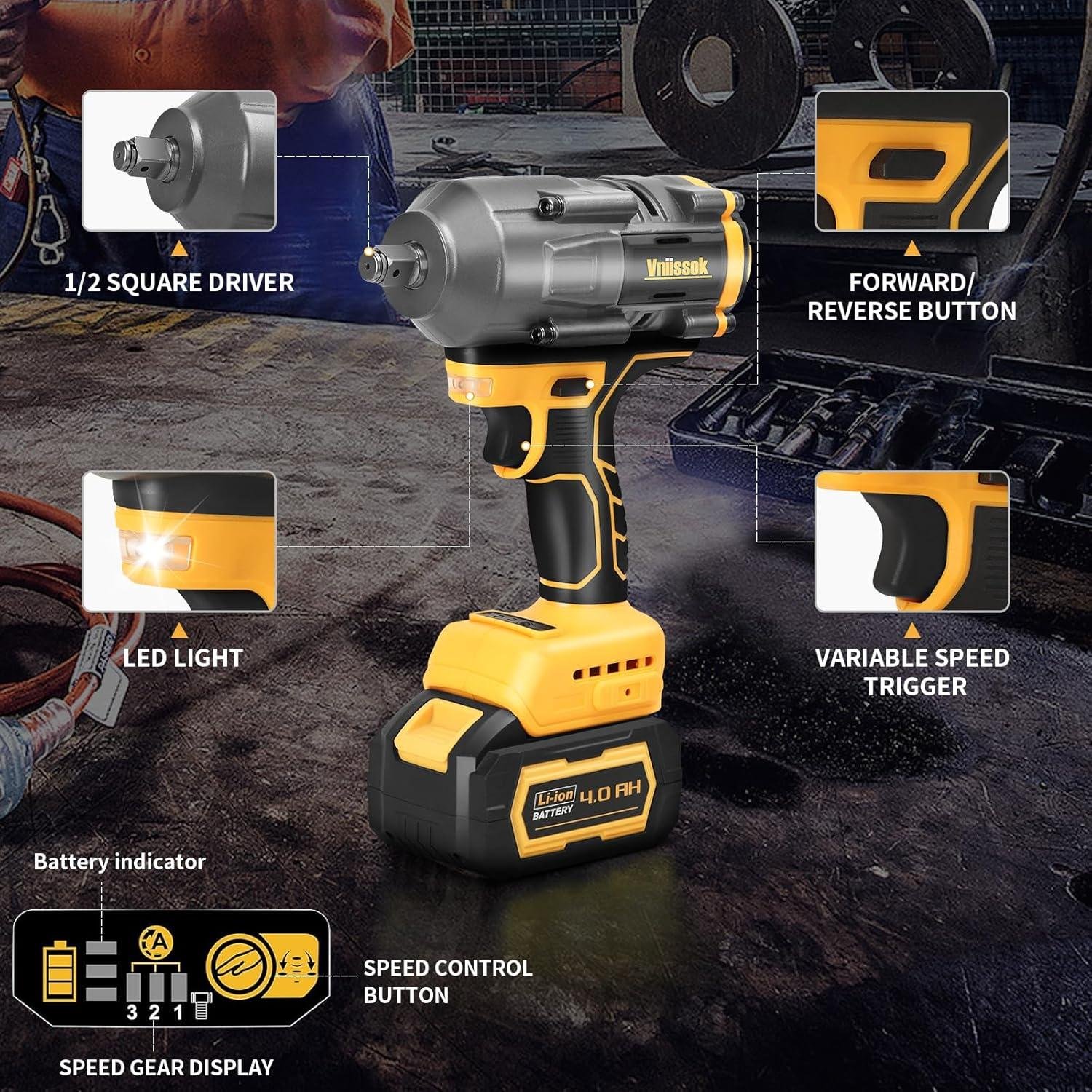
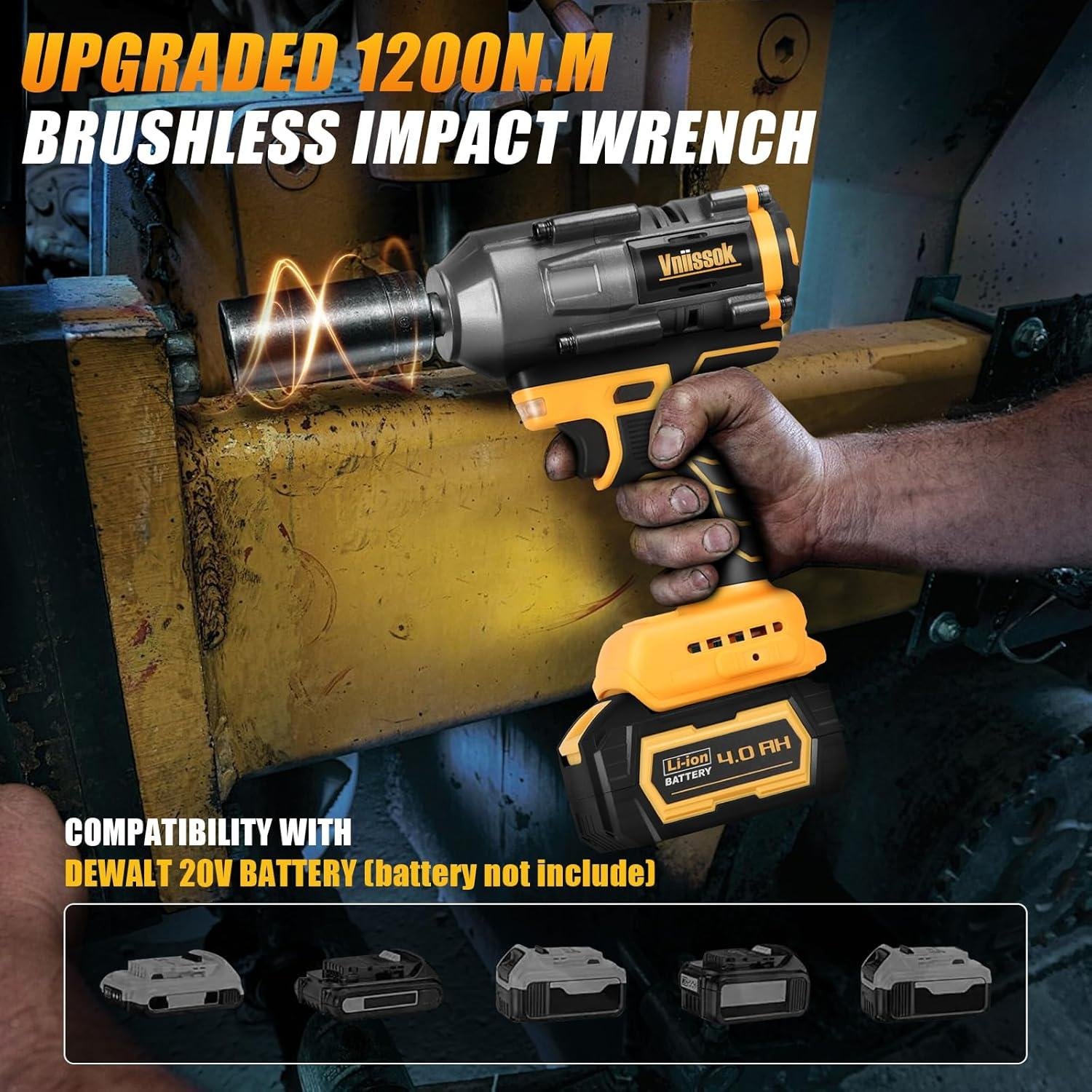
That’s where this 1/2-inch cordless impact wrench compatible with DeWalt 20V batteries aims to help. It’s a high-torque, brushless impact gun rated at 1000/1200 N·m (up to 900 ft-lbs), with three speed modes, a variable-speed trigger, LED work light, and a reverse auto-stop feature you can disable. (Battery and charger aren’t included, so it’s clearly targeting shops already invested in the DeWalt platform.)
In this review, we’ll look at its core features, control and ease-of-use for different skill levels, space-and-budget practicality, and what customers report—especially strong power and value, alongside mixed durability feedback. As woodworkers who’ve built enough jigs and benches to respect accuracy, we’ll focus on whether this tool belongs in a woodworking shop, not just a garage.
Tool Overview and First Impressions in the Shop
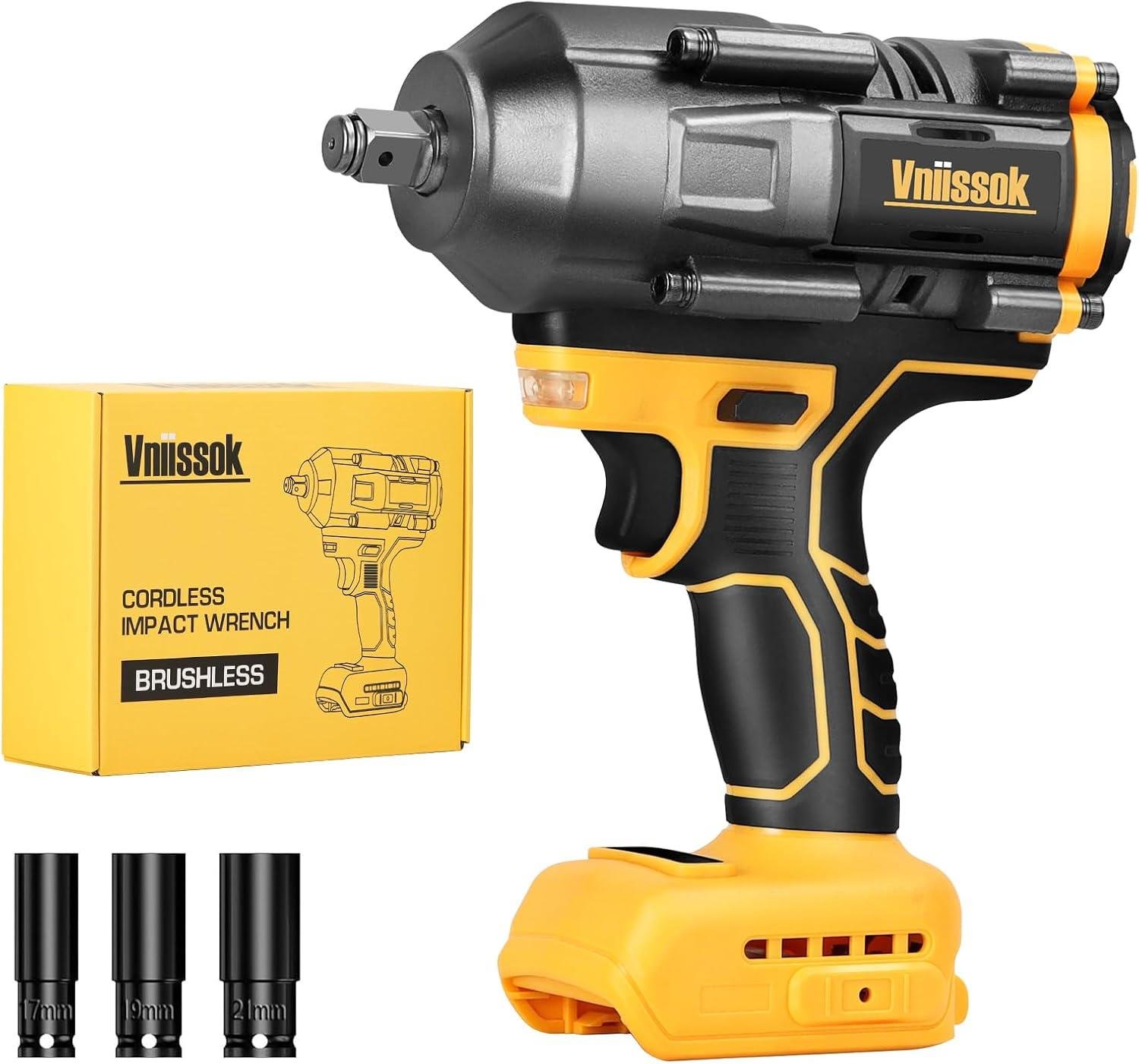
When we pulled the 1/2-inch cordless impact wrench into our woodworking shop, the first impression was that it’s more “mechanic’s gun” than delicate cabinet tool—and that’s not a bad thing when you’ve got shop jigs, knock-down bases, and heavy hardware that love to shake loose over time.This model is built around a brushless motor with 3 speed modes, a variable-speed trigger, and a published top speed of up to 2000 RPM, plus a built-in LED work light. It’s designed to run on DeWalt 20V batteries (tool-only), and multiple reviewers highlight that the battery fit is “perfect” or “a little snug at first”—good to know if we’re swapping packs between our drills, drivers, and this wrench. in hand, it feels like a high-torque tool should: substantial enough to inspire confidence, but several customers still describe it as “heft weight but not overly heavy”, which matters if we’re using it at awkward angles under benches or on mobile bases.
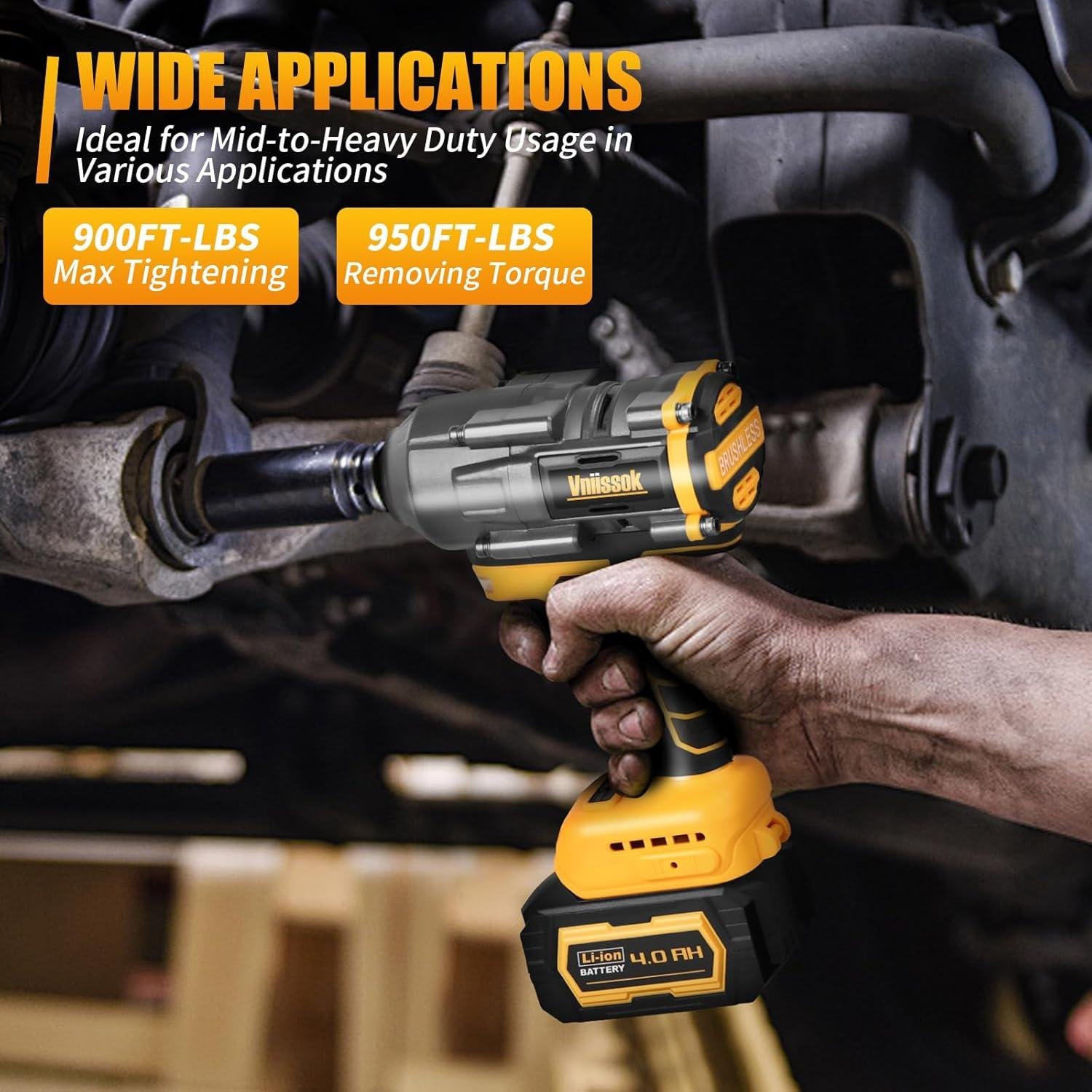
In practical shop terms, it helps to remember how an impact wrench behaves: it delivers torque in pulses, which is fantastic for breaking stubborn fasteners loose but can be rough on smaller screws and delicate hardware.With a rated maximum of 1000/1200 N·m (marketed as up to 900 ft-lbs / 1200 N·m),this is overkill for hinge screws—but it can be genuinely handy for tasks we do see in a wood shop: tightening lag bolts on workbench stretchers,spinning down carriage bolts on knockdown assemblies,assembling heavy-duty casters,or maintaining shop equipment carts. Customer feedback trends line up with that “power-first” identity: people repeatedly mention it being powerful, good value, and making “fast work of rusty bolts”; one also cautions it’s strong enough that “it will break a bolt off” if we’re not careful. Durability is the one mixed note—some call it heavy-duty, while others report it breaking with everyday use—so in our shop we’d treat it as a high-torque specialty tool, not a do-everything driver, and we’d pair it with proper impact-rated sockets and a restrained trigger finger when working around wood and finishes.
- Included accessories
- Tool only (no battery, no charger per listing)
- Built-in LED work light
- Compatible attachments/accessories
- 1/2-inch drive impact-rated sockets (standard + deep)
- Impact-rated socket adapters (1/2″ to 3/8″ or 1/4″ for lighter-duty use)
- Worldwide joint / wobble extensions (helpful in tight spots; reviewers mention needing a universal attachment due to tool size)
- DeWalt 20V batteries (tool is listed as compatible; battery not included)
- Ideal project types
- Workbench builds using lag bolts and heavy hex fasteners
- Mobile bases & tool stands (casters, brackets, long bolts)
- Knock-down shop furniture (bed bolts, connector bolts, threaded inserts)
- Shop maintenance (tightening hardware on carts, vises, clamps, and fixtures)
- Wood types tested by customers
- Not specified in reviews (most customer feedback focuses on automotive/lawn equipment fasteners)
| Category | Spec / observation | Why It Matters in a Wood Shop |
|---|---|---|
| Drive size | 1/2-inch | Best suited to bolts, nuts, and heavy hardware—less ideal for small screws. |
| Max torque (listed) | 1000/1200 N·m (up to 900 ft-lbs / 1200 N·m) | More than enough for shop bases and lag bolts; easy to overtighten smaller fasteners. |
| Speed control | 3 modes + variable-speed trigger | Helps us “feather” starts and avoid snapping hardware—still not a precision clutch like a drill/driver. |
| Motor | Brushless | Typically smoother and more efficient; review themes ofen describe it as “powerful” and “solid.” |
| Top speed (listed) | Up to 2000 RPM | Fast run-down on long bolts in jigs and bases; use restraint near wood fibers and inserts. |
| Battery platform | Compatible with DeWalt 20V (no battery/charger) | Convenient if we already own DeWalt packs; reviewers frequently praise the battery fit and value. |
| Accessory | Recommended Type | Shop Use Example |
|---|---|---|
| Sockets | Impact-rated 1/2″ drive | Hex nuts on mobile bases, bench hardware, machine mounting bolts. |
| Extensions | Impact-rated extensions | Reaching bolts inside cabinet stands or under saw wings. |
| Universal joint | Impact-rated U-joint / wobble | Angled access around dust shrouds, frames, and tight bench corners. |
| Adapters | Impact-rated reducers | Occasional use with smaller sockets (use carefully; reduces robustness). |
| Use Case | Recommended Capacity/Approach | What We’d Actually Do in the Shop |
|---|---|---|
| Lag bolts into hardwood | Pre-drill; start slow; stop short | Run bolts down with the impact, then finish with a hand tool for feel to avoid crushing fibers. |
| Threaded inserts & connector bolts | Low speed; avoid hammering at the end | Use brief trigger pulls; switch to a ratchet for final snug to prevent tear-out or stripped threads. |
| Small screws (hinges, pulls) | Not recommended | We’d use a drill/driver with a clutch instead—impact torque pulses can snap screws or mar hardware. |
See Full Specifications & Customer Photos
Real World performance for Lag Screws and Heavy Duty Joinery
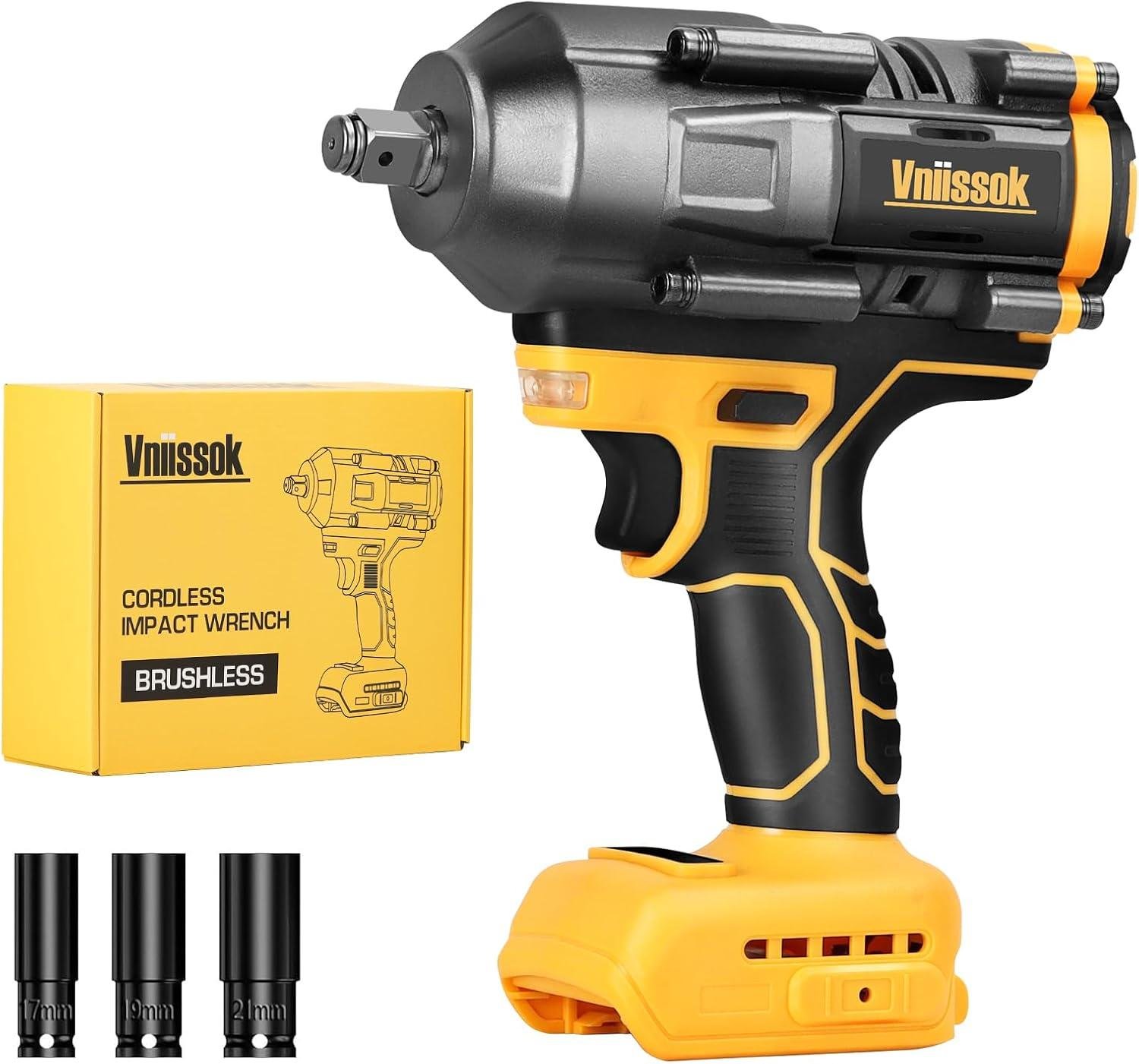
When we’re driving lag screws for deck-style jigs, bench builds, or heavy-duty shop fixtures, what matters isn’t “fast” so much as controlled power—and this cordless impact wrench is clearly spec’d for the heavy end of that spectrum. It’s rated up to 1200 N·m (900 ft-lbs) max tightening torque with a brushless motor,3 speed modes,and up to 2000 RPM,which is far beyond what most woodworking fasteners require. In practice, that means we’d treat it like a precision demolition tool: it can seat big structural screws quickly, but it can also snap hardware if we don’t step the speed down and feather the variable-speed trigger. Customer review themes line up with that idea—multiple buyers describe it as “very powerful,” making “fast work of rusty bolts,” and one warns that “it will break a bolt off” if you’re not careful. For woodworking joinery, we’d lean on technique: pre-drill proper pilot holes (especially in dense stock), add wax to long lags, and stop just shy of final torque so we can finish with a hand ratchet or torque wrench when crushing fibers would weaken the joint.
For real-world shop flow, we like that it’s compatible with DeWalt 20V batteries (battery not included), because many of us already have packs on the charger—and reviewers repeatedly mention the “perfect fit with DeWalt batteries” and the tool being a good value for the money. The built-in LED work light also helps when we’re under a bench, inside a cabinet carcass, or tightening hardware in a dim corner. Where woodworkers should be cautious is size and finesse: several reviews note it has heft, and one mentions needing a universal attachment because it’s a “big tool”—that tracks with what we’d expect of a high-torque 1/2-inch wrench in tight assemblies. Durability feedback is mixed (some call it heavy-duty, others report it breaking with everyday use), so we’d reserve it for tasks where its muscle actually matters: timber screws, heavy knock-down hardware, and lagged bases—rather than day-in/day-out cabinet assembly. If you’re newer to impacts, we’d recommend practicing on scrap first: start on the lowest speed, keep the socket square, and let the tool hammer rather than leaning into it.
- Included accessories: Impact wrench body,built-in LED (per listing) — Battery/charger not included
- Compatible attachments/accessories: 1/2″ drive impact-rated sockets,impact-rated adapters (use sparingly),universal joint adapters for tight access,DeWalt 20V battery packs
- Ideal project types: Workbench bases and frames,shop stands,wall-mounted lumber racks,timber-style jigs/fixtures,outdoor structures using lag hardware
- Wood types tested by customers: Not specified in reviews (most customer use is automotive/equipment); we recommend careful pilot drilling in hardwoods (oak/maple) and controlled seating in softwoods (pine) to prevent overdriving
| Spec / Feature | What It Means in Heavy Joinery |
|---|---|
| Max tightening torque: 1200 N·m (900 ft-lbs) | Enough for large lags/timber screws; easy to overdrive without pilot holes and speed control |
| 3 speed modes + variable-speed trigger | Lets us start slow to avoid stripping,then increase as needed for long fasteners |
| Up to 2000 RPM | Quick run-down on long screws; we still recommend finishing torque carefully |
| Brushless motor | Typically improves efficiency and run time; helpful when driving repeated large fasteners |
| Reverse autostop (toggleable) | Can help avoid flinging hardware when backing off; useful when removing bolts from jigs/fixtures |
| DeWalt 20V battery compatible (battery not included) | Good fit for shops already on that platform; reviewers repeatedly praise battery fit/value |
| accessory | Advice | Why It Matters for Woodworking |
|---|---|---|
| 1/2″ drive impact socket set | Recommended | Safer than chrome sockets; reduces risk of shattering under impact loads |
| Hex adapter (1/2″ to 1/4″ bit) | Use with caution | Convenient for structural screw bits,but adapters add wobble and can shear under shock |
| Universal joint / wobble extension | Recommended | Helpful in tight cabinet/bench corners where the tool body won’t line up straight |
| DeWalt 20V batteries (2Ah–9Ah) | Recommended | Reviewers report good performance even with smaller packs; larger packs help for repeated lag driving |
| task | Recommended Capacity (Woodworking Best Practice) | Tool’s Rated Output (Context) |
|---|---|---|
| Driving lag screws into studs/frames | Low speed + pilot hole + stop before crushing fibers | Up to 1200 N·m (more than enough; control is the limiter) |
| Timber screws for benches/frames | Impact-rated socket/bit,waxed threads,staged tightening | 3 speed modes help stage the drive |
| Furniture assembly fasteners | Generally use a drill/driver instead | This tool is likely overpowered for small hardware |
See Full Specifications & Customer Photos
Key Features woodworkers Will Appreciate on the Bench and Jobsite
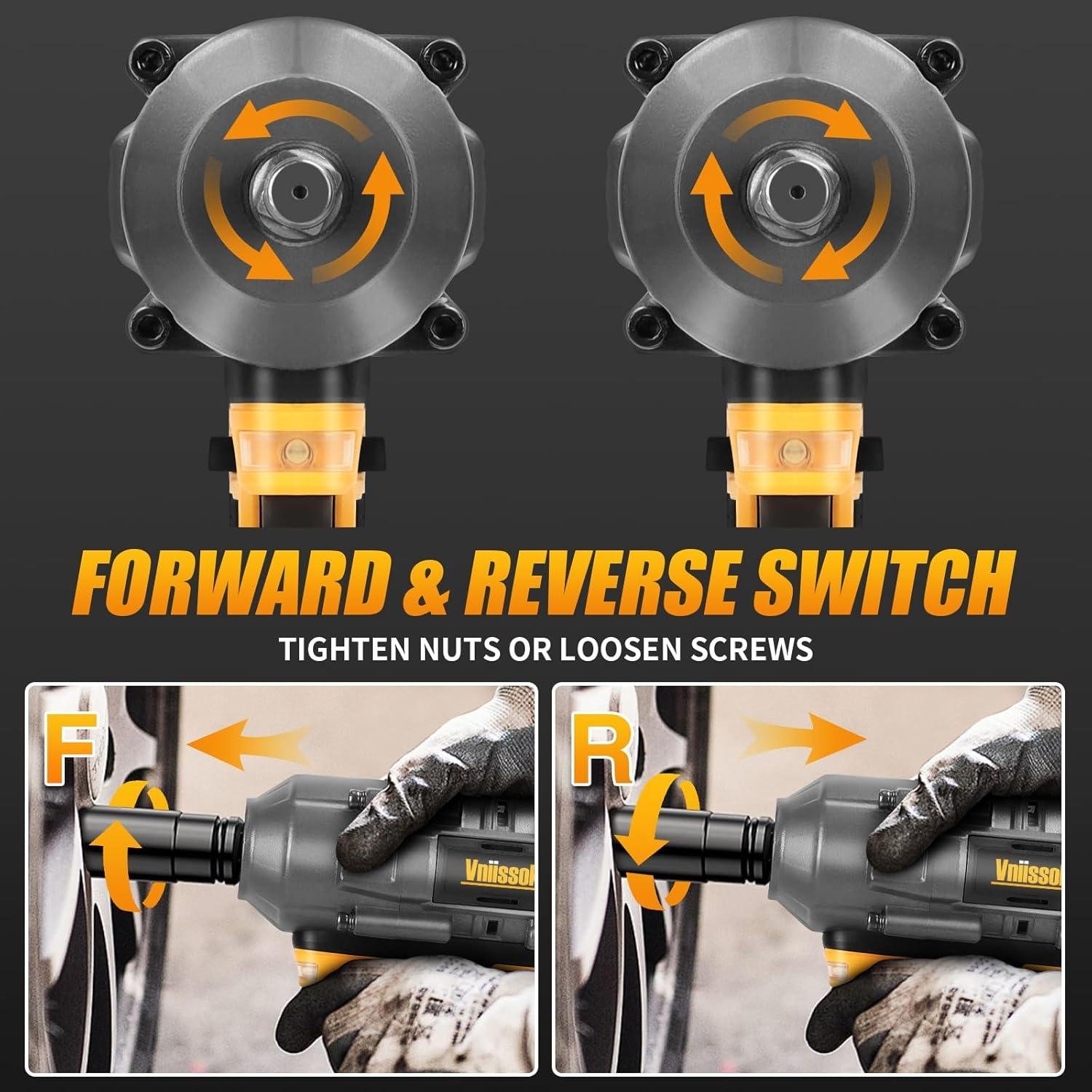
on the bench, what we appreciate most is that this impact wrench is built around a brushless motor with 3 speed modes, a variable-speed trigger, and up to 2000 RPM per the listing—features that translate well to woodworking hardware work where we want control, not just brute force. A 1/2-inch anvil and the advertised 1000/1200 N·m class torque (the description also notes 900 ft-lbs / 1200 N·m max tightening torque) is far beyond what we’d ever need for driving wood screws; rather, it shines for shop tasks like spinning down lag bolts on a workbench base, tightening heavy-duty bench vises or grinder stands, and breaking loose stubborn fasteners on shop machinery carts. Customer review themes line up with that: multiple buyers describe it as “powerful,” “lug-busting,” and “makes fast work of rusty bolts,” with several highlighting that it’s easy to use for tough removal jobs. The educational caveat we’d stress: in woodworking, impacts can snap bolts or crush fibers—one reviewer even warns to “be careful it will break a bolt off”—so we’d use the lower speed modes, start threads by hand, and finish to final torque with a hand wrench when the joint matters.
On the jobsite, the standout convenience is battery interoperability: it’s compatible with DeWalt 20V batteries (tool-only; no battery/charger included), which is a big deal for many of us already running 20V tools. Reviewers repeatedly mention the “perfect fit with DeWalt batteries” and strong value “for the price,” and one notes it works excellent even with a 2Ah pack—useful when we’re doing light site hardware swaps rather than running it all day. We also like the built-in LED work light for under-bench installs and dim mechanical rooms, plus the reverse auto-stop (with the option to disable it) for controlling runaway fasteners. Simultaneously occurring, we should set expectations honestly: durability feedback is mixed—some call it “heavy duty” and solid, while others report it breaking with everyday use—so for woodworkers, it makes the most sense as a high-torque “problem solver” for bolts, anchors, and equipment maintenance rather than a daily driver for fine assembly. If we do use it around finished work, we’ll protect surfaces, keep sockets/extensions seated, and wear eye/ear protection as at least one reviewer says it’s “louder than any one I’ve used.”
- Included accessories: Tool only (per listing: NO battery,NO charger)
- Compatible attachments/accessories: 1/2″ drive impact sockets,impact-rated extensions,universal joint adapters,DeWalt 20V batteries (various Ah)
- Ideal project types: Workbench bases with lag bolts,vise/stand installs,shop cart builds with heavy hardware,machinery maintenance,site anchors/bolted framing connections (where appropriate)
- Wood types tested by customers: Not specified in reviews (most feedback centers on bolts,lugs,mower blades,and equipment fasteners)
| Spec / Feature | What the Listing States | Why We Care in a Wood Shop |
|---|---|---|
| Drive size | 1/2 inch | Fits common impact sockets for bench/machinery bolts (not for typical wood-screw bits). |
| Motor | Brushless | Better efficiency and less maintenance than brushed for intermittent heavy fastening tasks. |
| Speed control | 3 speeds + variable-speed trigger | Helps avoid snapping hardware or overdriving when working near wood joinery. |
| Max speed | Up to 2000 RPM | Fast run-down on long bolts; still needs careful technique for final tightening. |
| Torque class | 1000/1200 N·m (also listed as 900 ft-lbs / 1200 N·m) | Overkill for woodworking screws; excellent for stubborn, rusty, or large fasteners. |
| Battery system | Compatible with DeWalt 20V (tool-only) | Smart buy if we already own DeWalt packs—reviewers repeatedly praise fit and value. |
| Lighting | LED work light | Useful for under-bench installs and dim corners of the shop. |
| Accessory Type | What to Use | Woodshop Notes |
|---|---|---|
| Sockets | Impact-rated 1/2″ drive sockets | Choose impact-rated to reduce shattering risk under high torque. |
| Extensions | Impact extensions (various lengths) | Helps reach bench stretchers and machine bases; adds wobble—hold steady. |
| Universal joint | Impact-rated U-joint adapter | Reviewers mention needing a universal attachment for tight access; use cautiously. |
| Batteries | DeWalt 20V packs (2Ah–9Ah mentioned in reviews) | higher Ah = longer run time; tool is sold without battery/charger. |
| Use Case | Recommended Approach | what This Tool Likely Does |
|---|---|---|
| Furniture assembly (bolts/connector hardware) | Hand-start, use low speed, finish by hand to snug | Plenty of power; risk of overtightening if we’re not careful. |
| Workbench lag bolts | Pre-drill properly; consider washers; stop short of crushing fibers | Should run lags quickly; use speed modes for control. |
| Shop machinery maintenance (rusty bolts) | Use impact sockets; eye/ear protection; controlled bursts | Matches review theme: “fast work of rusty bolts”. |
See Full Specifications & Customer Photos
Ease of Use for Beginners and Experienced Woodworkers
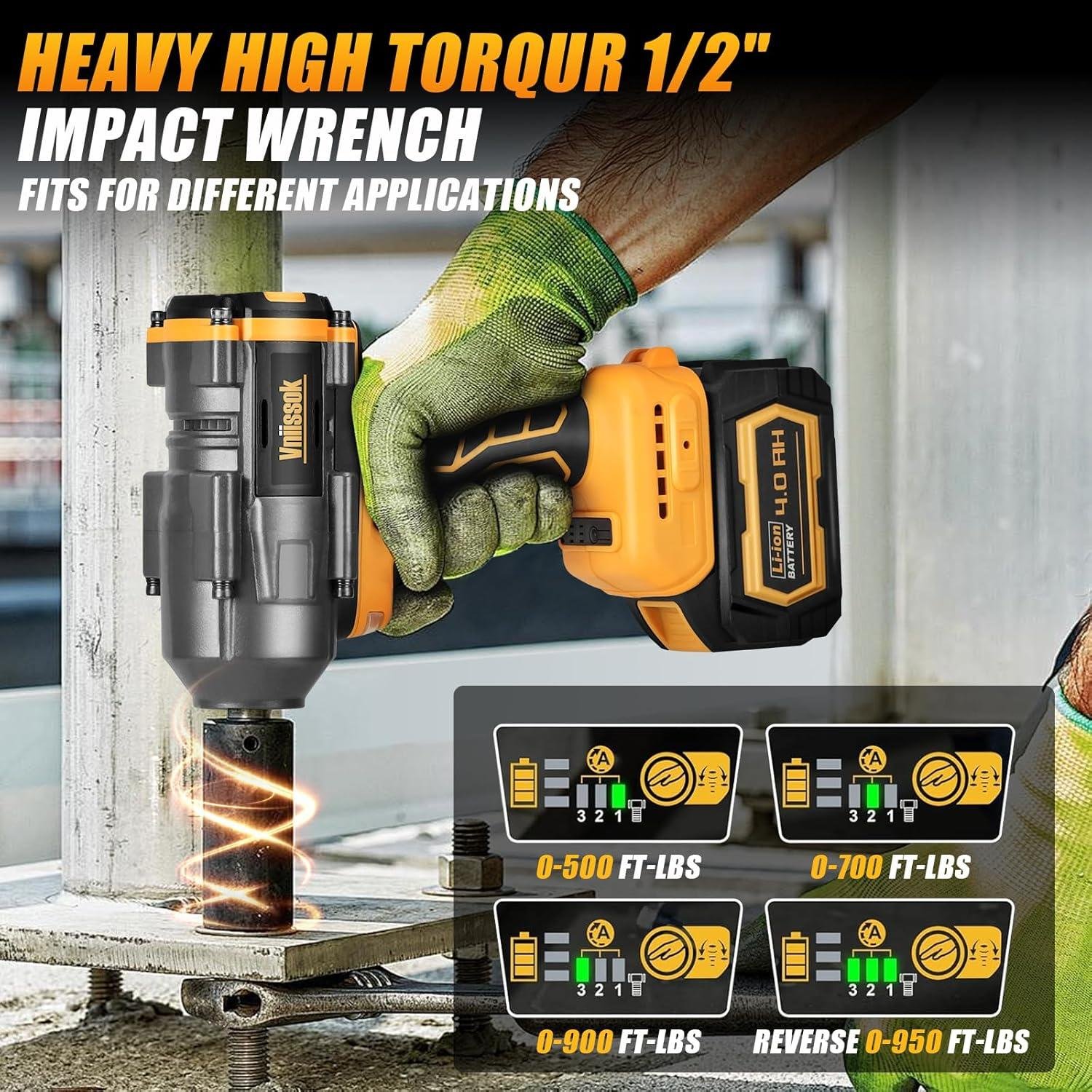
For beginners in our shop, this cordless impact wrench is fairly straightforward to get running because it’s built around a familiar platform: it’s compatible with DeWalt 20V batteries (tool-only, no battery/charger included). Pop in a pack, snap on a 1/2-inch drive socket adapter or impact-rated bit holder, and the basics are handled by the variable-speed trigger plus 3 speed modes (spec’d up to 2000 RPM). We also appreciate the built-in LED work light when we’re under a bench, inside a cabinet carcass, or doing quick shop maintenance where overhead light doesn’t reach.Customer feedback lines up with that learning curve: multiple reviewers call it “easy to use”, and several mention it effectively works well right away for tasks like changing tires and removing mower blades—good signs that setup and controls don’t require a long ramp-up. The main beginner caution is that torque is no joke here—rated up to 1200 N·m (900 ft-lbs)—so in woodworking we’d use it for hardware and shop fixtures, not delicate joinery, and we’d finish-critical tightening by hand to avoid crushing fibers or snapping fasteners.
For experienced woodworkers, the appeal is speed and repeatability on non-fussy tasks: this is the kind of impact we reach for when we’re running lots of structural screws into bench framing, assembling knock-down shop carts, driving lag bolts into a French cleat wall, or breaking loose stubborn fasteners on stationary-tool stands. The brushless motor and control options let us “feather” starts better than a single-speed brute, and the reverse autostop (which can be turned off) is a practical feature when we’re backing out bolts without letting them fling to the floor.Review themes back that up—customers repeatedly describe it as “powerful”,“makes fast work of rusty bolts,” and even “comparable to DeWalt,” with strong praise for value for money and how the battery fits perfectly (sometimes “a little snug at first”). The tradeoffs we’d flag for seasoned users are ergonomic and reliability-related: some reviewers call it “heft weight but not overly heavy,” one notes it’s louder than any one they’ve used, and durability is mixed—some say “heavy duty,” while others report it “breaking with everyday use.” In practice, we’d treat it as a high-torque convenience tool for the shop—not a precision driver—and we’d pair it with impact-rated accessories, hearing protection, and a final hand-torque step whenever the workpiece matters.
- Included accessories: Tool-only impact wrench; LED work light; no battery; no charger
- Compatible attachments/accessories: 1/2″ drive impact sockets, socket extensions, universal joints, 1/2″ to 1/4″ hex adapter (impact-rated), 1/2″ to 3/8″ drive adapter (impact-rated)
- Ideal project types: workbench framing, French cleat wall installs, shop carts and stands, tightening/loosening bolts on tool bases, outdoor shop structures (pergola-style framing), fixture and jig assembly (non-precision)
- Wood types tested by customers: Not specified in reviews (most reported automotive/lawn equipment use). in our shop, we’d treat dense hardwoods as higher-risk for overdriving and recommend pre-drilling/countersinking where appearance matters.
| Spec / feature | What It Means in the Wood Shop |
|---|---|
| Max torque: 1200 N·m (900 ft-lbs) | Excellent for lag bolts and shop hardware; to aggressive for fine cabinetry without careful trigger control and final hand-tightening. |
| 3 speed modes + variable-speed trigger | Helps beginners avoid instantly hammering a fastener; gives experienced users quicker pacing on repetitive builds. |
| Up to 2000 RPM | Higher RPM generally means faster run-down; still rely on controlled finishing to avoid crushing wood fibers. |
| Brushless motor | Typically smoother and more efficient; reviewers frequently praise solid feel and power. |
| DeWalt 20V battery compatibility (battery not included) | Easy adoption if we already own DeWalt packs; reviewers repeatedly highlight the “perfect fit” and savings from using existing batteries. |
| LED work light | Useful under benches, inside cabinets, and when driving fasteners in dim corners. |
| Accessory Type | Recommended | Why It Matters |
|---|---|---|
| Impact-rated sockets | Yes | Prevents cracking/failure under удар (impact) loads; safer at high torque. |
| Socket extension | Yes | Reaches recessed bolts on tool stands and jigs. |
| Universal joint | Optional | Helps in tight angles; one reviewer noted needing a universal attachment because the tool is “big.” |
| Torque wrench (hand tool) | Yes | For final tightening on critical assemblies to avoid overdriving and wood crush. |
| Use Case | recommended Approach | Why |
|---|---|---|
| Lag bolts into shop framing | Use speed 1–2 to start; finish carefully or by hand | High torque can snap bolts or strip holes if we hammer to the end. |
| Cabinet hangers / French cleats | Pre-drill; run fasteners down with light trigger; final snug by hand | Reduces tear-out and keeps alignment from shifting. |
| Machine stand bolts and rusted hardware | Use appropriate impact socket; consider reverse autostop | Reviewers frequently praise “fast work of rusty bolts.” |
See Full Specifications & Customer Photos
Customer Reviews Analysis
What Woodworkers Are Saying (Based on Review analysis)
While most reviews come from mechanical/automotive use (lug nuts, rusty bolts, farm equipment), the same traits woodworkers care about—controlled power, build quality, ergonomics, and reliability—show up clearly in the feedback.
| Aspect | Common feedback |
|---|---|
| Overall Sentiment | Strongly positive—praised as powerful, dependable, and good value for DeWalt 20V owners |
| Performance | High torque “breaks loose” stubborn fasteners quickly; rarely stalls |
| build Quality | Feels solid with good fit; “heft” noted but not described as unmanageable |
| Ease of Use | Generally straightforward; size can limit access in tight spaces |
| Versatility/Value | Good value if you already own DeWalt 20V batteries; performs near name-brand expectations |
| Limitations | Can snap bolts if you’re not careful; struggled once on very large, seized hardware |
1. Overall sentiment from woodworking customers
Several woodworkers and DIY-minded buyers described very high satisfaction, focusing on “powerful and dependable” performance and repeated reliability. Common praise includes strong value for the money—especially for anyone already invested in DeWalt 20V batteries. One reviewer summed it up as “use it all the time” and “performs reliably every time.”
2. Performance feedback (accuracy, power, results)
Multiple reviews highlight torque and real-world results under heavy load. Users repeatedly reported it “removes lug nuts quickly,” “makes fast work of rusty bolts,” and “has broken every bolt loose” they expected it to. For woodworkers, this translates well to tasks like driving large structural fasteners (ledger/deck screws, timber screws, lag bolts) where consistent torque matters more than finesse.
That saeid, this tool’s “results” are clearly skewed toward brute-force fastening/unfastening rather than fine precision. The only consistent “precision” theme is caution: it’s strong enough that control matters.
3. Build quality and durability observations
Common praise includes a solid, well-made feel. Reviewers mentioned “very good build quality” and a snug, secure fit on DeWalt 20V batteries (tight at first, but seen as a plus for stability). One longer-term user (about 6 months) reported it remained “extraordinary,” with only one exceptionally stubborn situation where it couldn’t break free very large rusty nuts—an encouraging durability signal for buyers who want a tool that keeps working beyond the first weekend.
4. Ease of use for different skill levels
Beginners and casual users seemed comfortable quickly, describing it as working “excellent” right away and being “not overly heavy.” Reviewers didn’t mention a steep learning curve, suggesting the basic operation is intuitive.
Though, some users reported practical handling constraints: it’s described as a “big tool,” and one reviewer needed a universal attachment to reach tight spots. For shop use, that implies it may be less comfortable in confined assemblies or inside cabinets compared to a smaller impact driver.
5. Common project types and success stories
Reviews most frequently enough referenced:
- Removing lug nuts and doing brake jobs on older vehicles (“coaxed all those lugs right off”)
- Busting loose rusty bolts
- Heavy agricultural equipment mechanic work (including one case involving 1 5/8″ rusty nuts)
Woodworkers can map these same success stories to high-demand fastening jobs—think deck framing, pergolas, trailer work for hauling lumber, or shop maintenance where corroded fasteners and high torque are common.
6. Issues or limitations reported
Some users reported challenges with:
- Overpowering fasteners: One reviewer warned to “be careful it will break a bolt off too.” For woodworking, that can mean snapped screws/lag bolts or crushed hardware if you don’t moderate trigger control or use appropriate settings.
- Tight-access limitations: Its larger size may require adapters/extensions in confined areas.
- Extreme hardware edge cases: One professional user noted it failed to break free very large seized nuts once—though they also noted a name-brand impact didn’t succeed either,and cutting/torch work was required.
reviewers portray this as a high-torque, budget-pleasant impact wrench that prioritizes power and reliability—excellent when you need muscle, but something to handle with care when your project demands finesse.
Pros & Cons
Pros & Cons
In our shop,an impact wrench earns its keep the moment it meets rusty lug nuts and doesn’t flinch. This 1/2-inch cordless impact (compatible with dewalt 20V batteries) has a lot going for it—especially if we’re already living in the yellow-and-black battery ecosystem—but it’s not a “no-thoughts, just-buy” tool either.
Pros
- Big torque attitude for the money: Customer feedback consistently calls it powerful, with multiple mentions of lug nuts and stubborn, rusty bolts coming off fast.
- Plays nice with our DeWalt 20V batteries: The fit is frequently described as “perfect” (sometimes snug at first), which is exactly what we want when we’re swapping packs mid-job.
- Brushless motor + 3 speed modes: We get a more modern motor design and speed steps for jumping between “careful” and “send it.”
- Variable-speed trigger + reverse auto-stop: Useful for control—especially when we’re trying not to launch hardware across the bay after it breaks free.
- LED work light is genuinely practical: Under fenders, under decks, under trailers—our favorite places to lose daylight.
- Versatile use cases: From trucks/rvs to mowers and general DIY fastening, it covers the “one tool, many jobs” vibe.
- Frequently enough reported as easy to use: Reviews mention tire rotations and lawn equipment work being straightforward—exactly what we want when time is tight.
Cons
- Battery and charger aren’t included: Great if we already have DeWalt packs; not great if we’re starting from zero.
- Durability is a mixed bag: Some owners call it heavy-duty,while others report it breaking with everyday use. That’s a real yellow flag for shop duty.
- It’s not a compact “tight-space” specialist: At least one reviewer noted needing an adapter/universal to reach certain bolts—suggesting it can feel bulky in cramped areas.
- Can be loud: One customer specifically called it louder than other impacts they’ve used—something we’ll notice on long days.
- controls may be easy to bump: A review mentions the direction switch being close to the trigger, making accidental reversing more likely during normal handling.
- Torque claims vary by listing (1000/1200 N·m): It’s marketed in more than one “power tier,” so we need to confirm which version we’re actually buying.
our quick Take (Shop Fit)
| Shop Question | How This Impact Answers |
|---|---|
| will it bust lug nuts without drama? | Usually yes, based on consistent “lug-nut” praise and torque-heavy feedback. |
| Does it save us money if we already run DeWalt 20V? | Yes—battery compatibility is a major value point (but no battery included). |
| Can we trust it for daily abuse? | Maybe—durability reviews are split,so we’d treat it as “promising,but not proven.” |
| Will it behave in tight areas? | Not always—expect occasional clearance issues on cramped assemblies. |
Q&A
Is this powerful enough for woodworking tasks like driving long structural screws into hardwoods (oak/maple) or thick plywood?
Yes—often too powerful. This is a 1/2-inch high-torque impact wrench rated around 1000–1200 N·m (about 900 ft-lbs max tightening), which is far beyond what most woodworking fasteners require.For hardwoods and plywood,it will drive large lag screws and structural screws quickly,but you’ll want to use the variable-speed trigger and one of the lower speed modes to avoid snapping fasteners,stripping heads,or over-driving into the wood. Several customers note it “makes fast work” of stubborn/rusty hardware and has “tons of torque,” which translates to very aggressive fastening if you don’t feather the trigger.
Can I use this like an impact driver for cabinet/furniture assembly?
It can turn fasteners, but it’s not ideal for typical cabinet screws or delicate joinery. This tool is built around a 1/2-inch square anvil for sockets, not a standard 1/4-inch hex quick-change collet. You can use socket adapters and hex-bit adapters, but control and runout won’t be as clean as a real impact driver or drill/driver—and the torque is high enough to easily overdrive screws in plywood/veneers. For furniture assembly, it’s better suited to occasional heavy hardware (bed bolts, workbench bolts, knock-down hardware with nuts/bolts) than day-to-day hinge and drawer-slide screws.
Does this work with standard woodworking accessories and bits?
Out of the box, it’s made for 1/2-inch drive impact sockets (the kind rated for impact use). Woodworkers can adapt it to other tasks, but you’ll need the right accessory: a 1/2″ drive to 1/4″ hex adapter for bits, or 1/2″ drive to other socket sizes as needed. Use impact-rated adapters to reduce breakage, and expect the tool to be bulkier than a drill when working inside cabinets. Customers consistently mention the DeWalt 20V battery fit being good (snug for some at first).
How hard is the initial setup, and what controls/adjustments does it have?
Setup is straightforward: slide in a compatible DeWalt 20V battery (battery/charger not included), snap on an impact socket, and you’re ready. It includes a 3-speed mode plus a variable-speed trigger for finer control. It also has reverse with auto-stop (and the option to turn that off), which can be useful when backing off nuts/bolts on jigs or machinery so hardware doesn’t drop once it breaks free. There’s also a built-in LED work light for under-bench or inside-cabinet visibility.
Will this fit in a small woodshop, and does it need dust collection or special power?
It’s cordless and runs on the DeWalt 20V battery platform, so no outlet requirement and no dust collection needed (it’s not a cutting tool). In a small shop, the main “fit” consideration is physical bulk: high-torque 1/2″ impacts are larger and heavier than compact drivers. Reviewers describe it as having “heft” but “not overly heavy.” It stores easily on a shelf or in a drawer, but it’s not something you’d typically mount to a bench like a stationary tool.
Is this beginner-friendly, or is there a learning curve?
beginners can use it, but it rewards restraint. The learning curve is mostly about controlling torque: start in the lowest speed mode, feather the trigger, and stop short—then finish by hand with a torque wrench or hand tool when precision matters (especially on jigs, fences, and anything you don’t want to crush or misalign).A few reviews mention a control quirk where the direction switch is close to the trigger, making accidental reversing possible with normal hand movement, so grip and hand placement matter.
Is it durable enough for production/shop use (workbenches, jigs, machinery bolts), or more of a hobby tool?
Functionally, many customers report it performs like more expensive “yellow brand” tools and has excellent power for the price. Having mentioned that, durability feedback is mixed: some call it “heavy duty” and have used it for months, while others report it breaking during everyday use (including reports of failure after a drop). For a professional shop depending on a tool daily, it may be best as a strong value/backup impact or a jobsite beater—while a name-brand premium model may offer more consistent long-term durability and service support.
Is this worth it compared to buying a dewalt-branded impact wrench?
If you already own DeWalt 20V batteries, many reviewers consider it a strong value: multiple customers say they can’t imagine a $200 DeWalt impact working better for their needs, and they like saving money by “supplying the batteries.” The tradeoff is the mixed durability reports and typically less established parts/service ecosystem versus major brands. If you use an impact occasionally for shop bolts, mower blades, trailer/workbench hardware, and machinery maintenance, it can be a cost-effective pick; if downtime is expensive, saving up for the dewalt equivalent might potentially be the safer long-term decision.
Ignite Your Passion
This 1/2-inch cordless impact wrench (compatible with DeWalt 20V batteries) pairs a brushless motor with up to 1000–1200 N·m of claimed torque, 3 speed modes, a variable-speed trigger, reverse autostop, and an LED work light. customer feedback consistently highlights strong “lug-busting” power, solid value, and a secure battery fit—while durability is mixed, with a few reports of failure under everyday use and some noting it’s a bit bulky for tight spaces.
Best for: hobby woodworkers tackling small to medium projects, beginners assembling benches or shop jigs, and cabinet makers who want a fast way to drive/loosen large lag bolts during installation (paired with proper bits and control).
consider alternatives if: you need compact access inside cabinets, demand pro-grade daily longevity, or want a lighter tool for overhead work.
Final assessment: a solid mid-range option for occasional high-torque fastening, but not the most refined choice for precision joinery or constant production use.
Want to see current pricing and customer photos? View on Amazon & Read More Reviews →