

Blog
FosPower Weather Radio Review: Right Shop Safety Tool?


Ever had a glue-up halfway clamped when the lights flicker, the shop fan dies, and your phone’s at 8%—right when a storm’s rolling in? In a workshop, precision isn’t only about joinery; it’s also about having reliable information and just enough power to keep plans, timers, and safety lights running when the grid doesn’t cooperate.
That’s where the FosPower NOAA Emergency Whether Radio D8 fits into a woodworker’s tool ecosystem. It’s not a cutting tool, but a 37000mWh (10000mAh) portable power bank paired with NOAA weather alerts, AM/FM, USB-C/solar/hand-crank charging, a flashlight + reading light, and an SOS alarm—all in a compact, high-visibility orange body.
In this review, we’ll look at the key features, practical shop and jobsite uses, durability cues, ease of operation, and the budget-to-utility balance—while also weighing what customers report, including strong “works out of the box” feedback alongside mixed notes on phone charging and sound quality.
We’re woodworkers who value dependable gear, tight workflows, and tools that earn their space.
Tool Overview and Build Quality for the Shop and Jobsite

In our shops,an emergency radio/power bank isn’t a “woodworking tool” in the traditional sense,but it becomes a jobsite essential the minute the lights flicker or we’re sanding in a detached garage with no outlets.The FosPower NOAA Emergency weather Radio D8 builds around three redundant power options—USB-C charging (fastest per the product description),solar panel,and a hand-crank lever—plus it also supports 3×AAA batteries (not included),which is a practical hedge when we haven’t kept it topped off.The headline spec is its integrated 37000mWh (10000mAh) power bank, which we can use to keep a phone alive for viewing cut lists, referencing plans, or calling in material orders during an outage. For awareness and safety, it covers NOAA weather channels along with AM/FM, and it adds a straightforward layer of emergency signaling with a loud SOS siren, plus a flashlight and reading light—useful when we’re packing up the shop, checking a breaker, or doing careful cleanup around blades and bits in low light.
Build-quality feedback in customer reviews leans positively,with many calling it compact,lightweight,and “works right out of the box,” and several describing it as “sturdy” or “well enough built” for the price. One reviewer even noted the mini carabiner clip felt heavy and good quality, which matters when we’re clipping it to a tool cart, nail apron loop, or a wall hook near the first-aid kit. Having mentioned that, review themes also flag QC and expectations: a few report reception issues (needing a “certain position” to maintain signal), mixed phone-charging performance, and mixed sound quality—with comments like “average, but clear in a quiet setting” and reminders not to expect “boom box” audio from a small speaker. Taken as a workshop accessory, we see it as best for woodworkers who want a simple, grab-and-go safety layer rather than hi-fi sound: keep it near finishing supplies and emergency gear, test the ALERT function on your local NOAA channel, and practice hitting SOS only when you meen it (reviewers mention that siren can be startling in close quarters).
See Full Specifications & Customer Photos
Real World Performance During Outages and Remote Builds

When the lights go out mid-glue-up or we’re trying to keep a small shop running during storm season, the FosPower NOAA Emergency Weather Radio D8 earns its keep less as a “tool” and more as a dependable shop companion. The big win is redundancy: we can top it off via USB-C (fastest option per the description),or keep it alive with solar and the hand crank when outlets aren’t an option. In a workshop context, that matters because our phones become the jobsite clock, camera, and notes app—so the built-in 37000mWh (10000mAh) power bank is practical for keeping a device limping along long enough to finish a safe shutdown.Customer feedback lines up with that “emergency kit” role: multiple reviewers say it “works well out of the box”,is compact,and is excellent for emergency kits. That said, we also note the consistent theme that the phone charging capability is mixed—some users report it can charge a phone, while others say it “doesn’t charge my phone”—so in our shop planning, we treat the USB output as a helpful backup rather than something we’d rely on as our only power source during a long outage.
For remote builds (cabins,outdoor installs,or even driveway assembly where extension cords feel like trip hazards),the radio side becomes the real-world value. It covers NOAA weather alerts plus AM/FM, and several reviewers highlight clarity—one even notes NOAA is clear and others mention better reception than another portable radio in remote areas—useful when we’re deciding whether to pause work due to wind gust warnings (a legitimate safety call when handling sheet goods or working off sawhorses). The ALERT feature that monitors NOAA and emits a siren for warnings is the kind of “set it and forget it” safeguard we like while sanding, routing, or running a noisy shop vac.Speaking of noise, sound quality feedback is mixed: customers often describe it as “average, but clear in a quiet setting” and remind us not to expect “boom box” audio from a small unit—so for an active shop, the included 3.5mm headphone jack can be the better way to catch weather updates without cranking volume. the flashlight + reading light are legitimately useful for finding a breaker panel or reading a tape when overheads are out, and reviewers regularly call the flashlight bright; just be careful testing the SOS alarm, because users consistently describe it as loud and attention-grabbing—grate in an emergency,less great next to a stack of clamps when you bump the button.
See full specifications & Customer Photos
Key Features Woodworkers Will Appreciate for Safety and Power Backup
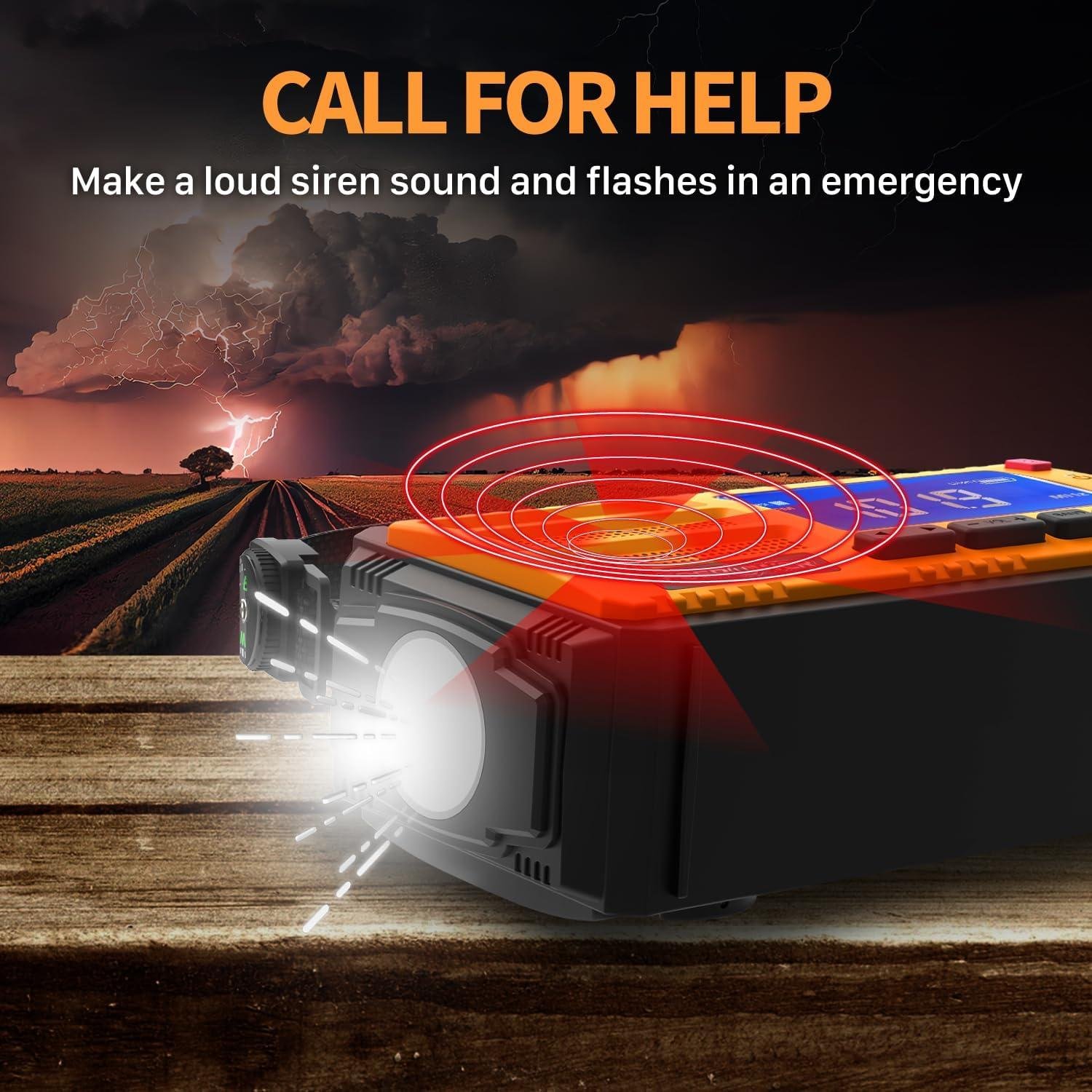
In a woodworking shop, safety isn’t just about guards and push sticks—it’s also about staying informed and keeping critical devices alive when the power goes out. The FosPower D8 pulls double duty here with NOAA emergency weather broadcast access plus AM/FM radio,so we can keep an ear on storm warnings while we’re deciding whether to shut the shop down or secure lumber and finishes. We also like that it’s built around practical, “grab-and-go” simplicity: reviewers repeatedly mention it “works right out of the box”, feels compact, and is easy to operate with simple dial knobs—exactly what we want when we’re wearing gloves or our hands are dusty. For hearing protection and courtesy in a shared workspace,the 3.5mm headphone jack is a quiet win, though it’s worth noting customer feedback on audio is mixed: many call it clear enough in a quiet setting, while others say sound quality is poor—so we’d treat it as a functional shop radio, not a “boom box.”
For backup power, the big woodworking-amiable spec is the built-in 37000mWh (10000mAh) power bank, which can top off a phone (for emergency calls, digital plans, or jobsite texts) and small USB gear during outages. The best education piece for shop use is understanding the three charging pathways: USB-C is the most efficient for normal prep, while solar and the hand crank are your contingency options when the lights are out—several reviewers praise the versatility (“solar panel and a crank… if one breaks, you’ve got the other”), but others report the phone charging capability is hit-or-miss and a few say solar hasn’t worked for them.Practically, we’d keep it charged via USB-C, then treat crank/solar as “better than nothing” insurance. And for immediate shop safety, the SOS alarm (loud siren + flashing light) and two light sources (flashlight + reading light) help us find exits, shutoffs, and first-aid supplies—just test that SOS button before you need it, as reviewers confirm it’s attention-grabbing.
See Full Specifications & Customer Photos
Workshop Setup Storage and Ease of Use for Every Skill Level

In a woodworking shop, setup time matters, and the FosPower unit is more “grab-and-go” than “bench-and-bolt.” Ther’s no assembly beyond getting power sorted: it can run off USB‑C charging, the built-in solar panel, or the hand crank, and it also accepts 3 × AAA batteries (not included).That adaptability is handy where we’re frequently enough juggling outlets between dust collection, chargers, and task lights. Reviewers repeatedly note it “works well out of the box” and is “very easy to operate” thanks to the simple dial knobs for volume and tuning, which makes it friendly for beginners in the shop (or anyone who doesn’t want to learn a menu system). The onboard NOAA weather channels plus AM/FM give us a way to monitor storm warnings while glue cures or finishes flash off—real value when power flickers mid-project and we want to know whether to pause a long rip-cut session or shut down for safety.
Storage is equally straightforward: customers frequently describe it as “compact” and “lightweight”, so it fits on a shelf near our first-aid kit, in a jobsite tote, or clipped to a pegboard hook without hogging space. the 37000mWh (10000mAh) power bank, plus the flashlight and reading light, make it a practical “shop redundancy” tool—enough light to safely find the breaker panel or finish covering a machine top before a storm hits. For skill levels, that matters: newer woodworkers benefit from simple, rapid-to-deploy emergency gear, while experienced folks appreciate having multiple power options if the shop charger is tied up. That said, review themes are mixed on the phone charging capability and sound quality—some report it can charge phones and the speaker is clear, while others say it doesn’t charge or sounds poor. Our best practice is to treat the power bank as a backup, test it before relying on it, and use the 3.5mm headphone jack if we need clearer audio while machines are off and we’re listening for alerts.
See Full Specifications & Customer Photos
Customer Reviews Analysis

What Woodworkers Are Saying (Review Analysis)
1. Overall sentiment from woodworking customers
Several woodworkers (and tool-and-shop-minded DIYers) described this FosPower NOAA emergency radio as a solid, “worth the money” preparedness add-on for the shop, truck, or go-bag—especially for anyone working in remote areas or dealing with frequent outages. Common praise includes versatile charging options, good reception for its size, and useful emergency extras (flashlight, SOS alarm). A smaller set of users reported quality-control issues (a damaged control/knob, bent cable) and one review noted a billing problem unrelated to product performance.
2. Performance feedback (accuracy, power, results)
Because this isn’t a woodworking machine, “performance” in reviews maps to signal reception, audio clarity/volume, charging, and emergency functions—the “results” being reliable information/lighting during outages or outdoor work.
- Reception / “accuracy” of tuning: Multiple reviews highlight surprisingly strong AM/FM reception, including in remote coastal areas, and a “wide range” in informal tests. NOAA/weather listening was mentioned as effective for monitoring forecasts.
- Audio output: Reviewers commonly describe sound as average/okay—clear in quiet settings, with good volume, but limited fidelity due to the small speaker (“don’t expect boom box sound quality”).
- Power/charging results: Several woodworkers mentioned liking the redundant charging methods (USB + solar + hand crank + AAA). One reviewer specifically mentioned using it cord-free while working outside and topping it up in the sun. A French review suggests phone charging may be limited (“50% max in 35 min”), implying the power bank function may not charge devices as fully/quickly as some expect.
3.Build quality and durability observations
- Positive durability impressions: Several reviewers said it seems well enough built and “meant to hold up in brutal conditions.” The hand crank was described as good quality,and a Turkish review praised material quality and the included strap/hook for hanging/carrying.
- Quality-control flags: Some users reported challenges with hardware arriving damaged, including a USB‑C cord bent in transit and one report (Turkish) claiming the radio didn’t work and a button/knob pushed inward, calling it “ultra” low quality.
4. Ease of use for different skill levels
- Beginner-friendly operation: Multiple reviews highlight simple dial knobs for volume/tuning and generally “easy to use,” which plays well for beginners who just want “grab-and-go” functionality in a shop emergency kit.
- Surprises in operation: The SOS button is clearly effective; one reviewer noted it triggered a very loud siren + flashing, suggesting the interface is simple—but also easy to activate unexpectedly if you’re not careful.
5. Common project types and success stories
Reviews didn’t mention specific woodworking projects (e.g., cabinet doors, furniture builds) directly, but woodworkers can relate the use cases to typical shop and jobsite scenarios:
- Outdoor work / yard tasks: Customers successfully used this while working in the yard, valuing cord-free use and easy recharge.
- Shop and storm preparedness: Several reviewers framed it as a must-have for outages, tornado prep, and emergency shelters, which aligns with keeping the shop functional/safe (light + weather alerts) when power drops.
- Remote-area reliability: One reviewer in a remote coastal area called out better reception than another brand, a common need for rural job sites and cabins.
6. Issues or limitations reported
Some users reported challenges with:
- Audio quality limitations: Small speaker = average fidelity, best in quiet conditions.
- No shortwave band: One review explicitly notes no shortwave, which may matter for those wanting broader emergency broadcast coverage.
- Accessory/packaging issues: A unit arrived with a USB‑C cord plugged in and bent during transit (the device still charged).
- Potential QC failure: One report of non-working radio + button/knob collapse.
- Phone charging expectations: At least one review suggests smartphone charging may be modest (not necessarily fast/full).
- Non-product issue: One 3-star review cites being double-charged (a transaction/support issue rather than tool performance).
At-a-glance category table
| Aspect | Common Feedback |
|---|---|
| Performance | Good reception for size; clear audio in quiet areas; flashlight/SOS work well |
| Precision | Simple tuning/volume dials; “wide range reception” reported in casual testing |
| Durability | Often described as well-built; a few QC/arrival damage complaints (bent cable, knob/button issue) |
| Ease of Use | Beginner-friendly controls; SOS alarm can be startling if triggered accidentally |
| Versatility | Multiple power options (USB/solar/hand crank/AAA) praised as redundancy for emergencies |
| Value | Frequently called a strong value at its price; “cheap but gets the job done” recurring theme |
Representative excerpts (sparingly):
- “very easy to operate with the simple dial knobs”
- “better reception than the other portable radio I have”
- “sound is average, but clear in a quiet setting”
- “cheap… but it will get the job done”
Pros & Cons

Pros & Cons
When we think of an emergency radio, we’re really shopping for calm—a small, grab-and-go object that keeps us informed, lit, and at least a little powered up when everything else goes dark. The FosPower NOAA Emergency Weather Radio D8 gets a lot right for that mission, with a few caveats worth knowing before we trust it as our “right shop safety tool.”
| What We Noticed | How It feels in Real Use |
|---|---|
| NOAA + AM/FM coverage | More “stay informed” than “entertainment,” but that’s the point. |
| 3 charging methods (USB-C / solar / hand crank) | Redundancy we can actually plan around. |
| SOS alarm + flashing light | Comforting on paper—startling when you test it. |
| 10,000mAh (37000mWh) power bank | enough to rescue a phone, not replace a wall outlet. |
Pros
-
Multiple ways to stay powered. USB-C is the most efficient, but having solar and a hand crank feels like genuine emergency redundancy—not just marketing.
-
NOAA weather access + alert monitoring. This is the core value: local hazard alerts and weather broadcasts when our phones are dead or towers are congested.
-
emergency lighting that’s actually useful. A bright flashlight plus a reading light makes it easier to handle “indoor blackout” and “outside looking-for-something” scenarios.
- SOS alarm adds a layer of visibility. Loud siren + flashing light can definitely help with signaling—especially if we’re stuck, lost, or trying to be found.
-
Compact, kit-friendly build. Reviewers consistently mention its small size; it’s the kind of device we can toss into a go-bag, glovebox, or camping bin without rearranging our lives.
-
Power bank for emergency phone top-ups. the 10,000mAh capacity is a meaningful buffer for urgent calls, texts, maps, or weather checks.
-
Simple controls. Straightforward tuning/volume knobs are a win when stress is high and patience is low.
-
Extra listening options. The 3.5mm headphone jack is a nice touch for privacy, nighttime use, or clearer audio in noisy environments.
-
Limited lifetime warranty. Warranty support matters more on “hope we never need it” gear that may sit stored for long stretches.
cons
- Phone charging reliability is mixed. Some users report accomplished charging, while others say it’s inconsistent or doesn’t work as expected—something we’d want to test before we rely on it.
- Sound quality isn’t universally praised. Many find it clear enough, but some report weak or poor audio—fine for alerts, less satisfying for casual listening.
- Reception can be finicky depending on location. Several reviewers love the signal strength, but others mention needing to position it “just right,” which isn’t ideal during fast-changing weather.
-
Not a “big speaker” radio. Even when it’s loud, it’s still a compact emergency device; we shouldn’t expect boom-box fullness or rich fidelity.
- Solar charging expectations need to be realistic. Solar is a great backup, but it’s slow by nature—and at least a few users report the panel not performing as they hoped.
-
AAA batteries not always included. Since backup batteries can matter in an emergency kit, we may need to supply and store our own.
-
Small build can mean small compromises. Compactness is a pro—until we want larger controls, bigger readouts, or a more ample antenna feel.
we see the FosPower D8 as a practical “preparedness multitool”: strongest as a weather-alert radio with layered power options, and slightly less certain as a dependable everyday phone-charging solution unless we test our specific setup ahead of time.
Q&A

Will this “handle hardwoods like oak or maple” (i.e., run power tools in my shop)?
Not really. Even though it’s listed as a 37000mWh (about 10,000mAh) power bank, this FosPower is designed for low-draw electronics (phone, headlamp, small USB fan), not high-wattage woodworking tools. It has USB output—so it won’t run corded saws, routers, dust collectors, or anything that needs 120V AC.Think of it as “keeps your phone and your weather alerts alive,” not “backup power for the shop.”
How does it perform on “plywood and veneers” — meaning, will it survive real shop use (dust, bumps, jobsite abuse)?
Customer feedback leans positive on overall build for the price (“compact,” “sturdy,” “good quality”), and several mention it working well out of the box. That said, there are also reports of minor damage in transit (like a bent USB-C cord) and occasional quality issues (broken battery door piece, or a radio knob failing in one review). In a woodworking context: keep it out of fine dust piles, don’t toss it in a drawer with sharp hardware, and store it in a small pouch/case if it’s living in a truck or tool bag.
How tough is the initial setup—do I have to “tune” it like an old tool to get it working?
Setup is generally simple. Reviews frequently mention it “works well out of the box,” and the controls are basic dial knobs for volume/tuning. Your “setup” is mostly charging it (USB-C is the most efficient per the product description), then selecting NOAA/AM/FM and tuning.A few customers note reception can be position-sensitive in certain locations, so if you’re in a metal shop building, you may need to move it closer to a window/door to improve signal.
What adjustments are available—can I monitor alerts without listening all day while I’m running machines?
Yes, the standout “adjustment” is the ALERT function: it can monitor your local NOAA channel and emit a siren when warning messages are broadcast (per the listing). That can be useful in a loud shop where you don’t want to keep the radio up all the time. just remember: if you’re wearing hearing protection or running a collector, you may not hear it clearly—so treat it as an added layer, not your only warning system.
Does it work with standard accessories—cords, headphones, batteries?
Mostly yes. Charging is via USB-C, and reviewers mention using their own USB-C cables when the included one arrived bent. It also includes a 3.5mm headphone jack, which is handy if the built-in speaker sounds thin (sound quality is mixed in reviews—some call it clear, others poor). It can also run on replaceable AAA batteries (3x AAA noted in reviews),which is a good “standardize your kit” option if you already stock AA/AAA for tools and lights.
Can it handle “production work” or is it just for hobby/emergency kits?
This is an emergency/preparedness tool rather than a production-work tool. Customers commonly describe it as ideal for emergency kits,hurricanes/power outages,vehicles,camping,and go-bags. For a professional shop, it’s best viewed as a safety and communications backup (NOAA alerts + flashlight + phone top-off), not a primary radio or a reliable daily-use speaker/power bank.
Is it suitable for beginners—like a first “shop emergency” device?
Yes. It’s generally beginner-friendly: simple knobs, multiple charging options (USB, solar, hand crank), and straightforward functions (flashlight/reading light/SOS). The most common beginner surprise is the SOS button—reviews mention it’s loud and attention-grabbing (as it should be). Practical tip: test all functions once when it arrives, then put it where you can find it fast (near the first-aid kit or fire extinguisher), and keep a set of AAA batteries with it since they’re often not included.
What regular maintainance is required, and how long will it last if it sits in a cabinet?
Maintenance is light: charge it periodically via USB-C (best efficiency per the listing), and if you store AAA batteries inside, check them occasionally to avoid leaks. Because phone charging reliability is mixed in reviews (some say it charges phones fine; others say it doesn’t), it’s smart to do a quarterly “shop drill”: confirm it powers on, receives NOAA/AM/FM, the lights work, and it will at least begin charging your phone. Warranty coverage is listed as a limited lifetime warranty backed by US-based customer service, which is a plus for long-term ownership.
Experience Innovation
The FosPower NOAA Emergency Weather Radio D8 pairs a 37,000mWh (10,000mAh) power bank with NOAA weather + AM/FM reception, an SOS siren/flasher, flashlight and reading light, plus USB‑C, solar, and hand-crank charging (and AAA backup). Customer feedback consistently praises its “works out of the box” functionality,compact size,and usefulness in emergency kits,while phone-charging performance and sound quality can be hit-or-miss.
Best for hobby woodworkers with small to medium projects, mobile builders working on job sites, and garage-shop makers who want dependable weather alerts and backup light/power during outages—especially when finishing schedules or glue-ups can’t wait.
Consider alternatives if you need guaranteed phone charging, louder/cleaner speaker output, or a more rugged, pro-grade unit for daily field use.
Final assessment: the FosPower D8 is a practical,solid mid-range emergency companion for the shop—great redundancy and features—just don’t buy it solely as a primary power bank or “big sound” radio.
Want to see current pricing and customer photos? View on Amazon & Read More Reviews →