
Blog
Hand-Shaped Table Saw Push Stick Review: For Our Shop?

Ever had a cut that should be routine—ripping a narrow strip, sneaking up on a final width, or guiding a short offcut past the blade—suddenly feel sketchy the moment your hands get too close for comfort? In a small shop, especially, we’re constantly balancing precision, safety, and space, and the humble push stick often decides whether a setup feels controlled or chaotic.
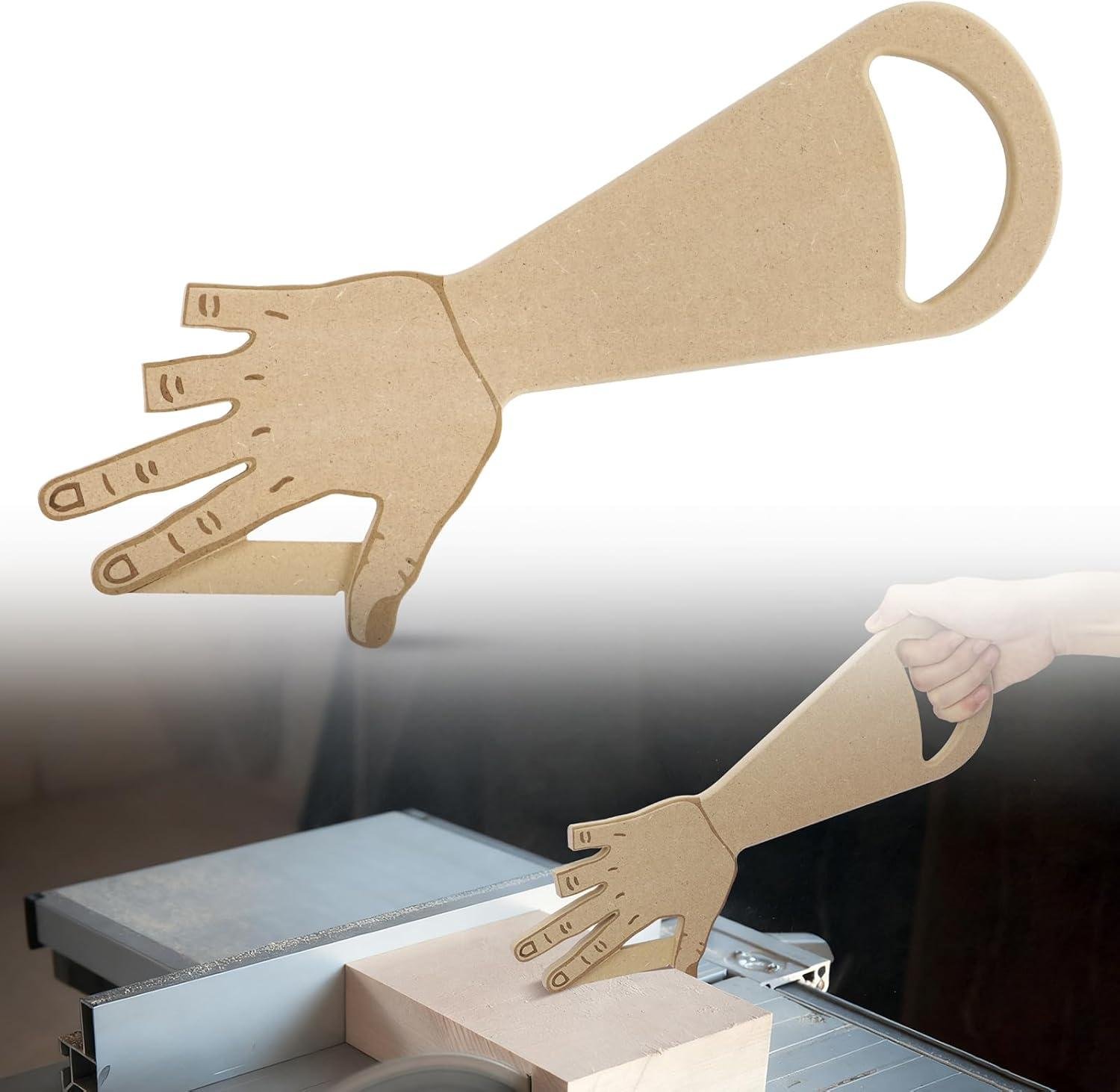
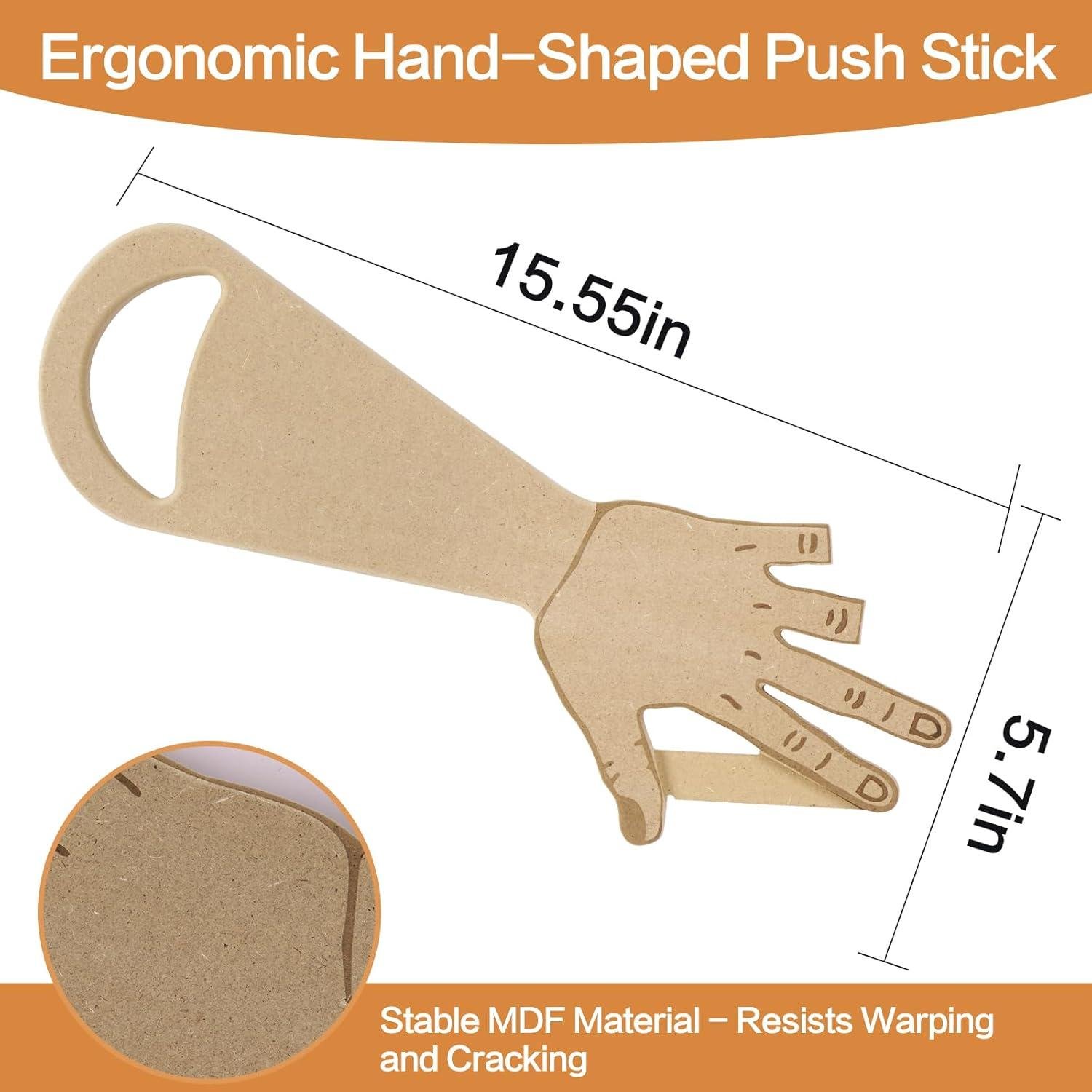
That’s where the Table Saw Push Stick Hand shape Safety Block (the “missing finger” design) comes in. It’s a compact, ergonomic MDF push block built to keep hands away from hazards while improving control on table saws, miter saws, router tables, and jointers. The design includes a flat pushing face, a finger-gap section for smaller or angled work, and a non-slip grip surface, and it’s marketed as a modern nod to the “10 million dollar stick,” with patent-pending claims.
In this review, we’ll look at build quality, ease of use, accuracy benefits, and who it fits best—especially for beginners watching budget vs. durability. Our viewpoint comes from general shop experience: keeping cuts clean starts with stable workholding and repeatable technique, not gimmicks.
Tool Overview and first Impressions

Out of the box, this YCMobilya push stick reads more like a push block than a skinny “paint-stirrer” style stick, and that’s a good thing for the kind of close-to-the-blade work we all end up doing on a table saw or router table.The big first impression is the intentional, hand-shaped silhouette with the “missing finger” safety design: it’s a clear visual reminder to keep our hands back while still letting us steer stock confidently. Per the listing, it’s built from high-quality MDF that “meets local standards,” with the intended benefit of resisting bending and cracking better than typical scrap-wood push sticks. We also like that the tool is described as lightweight, compact, and ergonomic, because on smaller rips and quick batch cuts, we tend to reach for whatever feels fastest to grab and easiest to control.
Functionally, the design gives us two distinct contact zones: a flat push side for moving larger workpieces along a fence, and a finger-gap section between the index and middle finger meant for smaller parts or angled cuts. That “split” is a smart teaching cue for newer woodworkers—different stock sizes need different push points to keep pressure down-and-forward without drifting into the danger zone. The product description also calls out a non-slip surface and broad compatibility with common shop add-ons like miter clamps, hold-down clamps, and even zero-clearance tape setups, which suggests it’s meant to live right at the saw station as a daily-driver safety aid. At the time of writing,Amazon shows no customer reviews for this listing,so we can’t honestly report real-world themes like durability or grip performance from buyers yet—but based on the stated specs and intended use,it looks best suited for woodworkers who want a more controllable,block-style pusher for table saws,miter setups,router tables,and jointers.
See full Specifications & Customer Photos
Key Features Woodworkers Will Appreciate

What we appreciate most is the “missing finger” hand profile—not just as a gag gift idea, but as a practical reminder to keep our real fingers out of the danger zone. the maker describes it as lightweight, compact, and ergonomic, and in day-to-day shop use that shape matters: it gives us a predictable place to press from and helps keep our wrists in a safer line when feeding stock. The flat push side is handy when we’re guiding wider boards along the fence, while the finger-gap channel (between the index and middle finger area) is positioned to help control narrower rips, small parts, or angled feeds where a typical paddle-style push block can feel clumsy. It’s made from high-quality MDF wood, and per the product description it’s built to resist bending and cracking more than many “scrap-wood” push sticks we’ve all made in a pinch—useful when we want consistent pressure rather than a flexy handle that telegraphs wobble into the cut.
From a workshop-submission standpoint, we like that it’s pitched as a multi-tool safety aid: it’s intended not only as a table saw push stick/push block, but also for miter saw fence control, and even around router tables and jointers where controlled feed is everything. The description calls out a non-slip surface, and that’s the feature that actually moves the needle for many of us—traction is what lets us push forward while also pinning stock down, especially on smoother hardwood faces. Educationally, we’d still treat it like any push device: keep the work registered to the fence, apply pressure down and forward (not sideways into the blade), and don’t use it as a substitute for proper guarding, featherboards, or a riving knife where applicable. also worth noting: there are no customer review themes available yet (the listing shows no reviews),so we’re relying strictly on the published specs/features—meaning we’d recommend cautious expectations and a simple “test on offcuts first” approach to confirm how it behaves on your saw and your usual stock thicknesses.
- Included accessories: None listed (push stick only)
- Compatible attachments/accessories: miter clamps, miter saw clamps, hold-down clamps, zero-clearance tape for miter saw, stop blocks/protractors (as referenced in the product description)
- Ideal project types: small parts processing, trim and repeatable miter-saw fence work, ripping narrow strips, light jointer passes (with proper technique)
- Wood types tested by customers: Not stated (no customer reviews available on the listing)
| Spec / Feature | What the Listing States | Why It Matters in the Shop |
|---|---|---|
| Material | MDF wood | more consistent than scrap sticks; MDF can provide stable, flat contact for controlled feeding |
| Grip | Non-slip surface | Helps maintain downward pressure so stock doesn’t ride up or chatter during the feed |
| Design | Missing-finger ergonomic hand shape | Encourages safer hand positioning and predictable push points for narrow or angled work |
| Use cases | Table saw, miter saw, router table, jointer | One push tool can cover multiple stations where hands get too close during small-part work |
| Customer review data | None available | No real-world durability/fit feedback yet—plan a careful trial before relying on it for critical work |
| Accessory / Add-on | Referenced Compatibility | Typical Use |
|---|---|---|
| Miter clamps / hold-down clamps | Yes (mentioned) | Improves control on miter saw fences; reduces hand proximity during short cuts |
| Stop block / protractor accessories | Yes (mentioned) | repeatable length cuts and angle setups while keeping hands back |
| Zero-clearance tape (miter saw) | Yes (mentioned) | Cleaner cut edges; pairs with controlled pushing/holding for small trim pieces |
| Capacity / Use | Recommended (Safe Practice) | Actual (Per Listing) |
|---|---|---|
| Small-part cutting | Use a push tool + clamp/stop where possible; keep hands outside the “no-hands zone” | Designed for small cuts via finger-gap section |
| large stock feeding | Use push blocks/featherboards and maintain fence registration | Flat push side intended for larger blocks/boards |
See full Specifications & Customer Photos
Real World Performance on Table Saws Router Tables and Jointers

In real shop use across our table saw, router table, and jointer, this hand-shaped safety block behaves like a compact push block rather than a long, hook-style push stick—and that changes where it shines. The body is built from high-quality MDF (per the listing), which gives it a stable, consistent feel when we’re feeding stock past a fence, and the flat push side is the part we relied on most for steady pressure through a rip cut or when keeping a workpiece snug to a router-table fence. On narrow rips and short parts, the signature “missing finger”/broken-finger profile creates a useful “index–middle finger gap” that can register against smaller pieces without us crowding the blade line—especially when we’re doing controlled pushes near the end of a cut. Educationally, we still treat this as an assist tool, not a shield: we keep it paired with proper guarding, a riving knife on the table saw, and we avoid feeding joints or routed edges where the block could ride up or twist; the goal is consistent forward pressure while our hands remain well away from cutters.
On jointers, we see it fitting best when we need a quick, confident push over the cutterhead on smaller faces—again thanks to the non-slip surface the manufacturer calls out—though in our workflow we’d still lean on a matched pair of traditional push blocks for wider boards and full-face control. The product description emphasizes compatibility with common shop add-ons,and we agree that its shape makes it easy to integrate into a “system” where stops,fences,and hold-downs do some of the positioning while this block provides the push.As for customer-review themes,there’s an important limitation right now: the Amazon snapshot provided shows no customer reviews available,so we can’t truthfully report patterns like “durability over months” or “better than brand X.” What we can say is that the design intent is clear—ergonomic, lightweight, compact, and geared toward safer feeding on saws and router/jointer stations—so it’s likely a better fit for beginners who want an intuitive hand position, and for experienced woodworkers who already understand kickback zones and use push aids strategically rather than universally.
See Full Specifications & Customer Photos
Ease of Use for Beginners and Experienced Woodworkers

For beginners in our shop,this push stick feels instantly approachable because it’s built around a familiar hand-shaped,“missing finger” safety profile that naturally reminds us where our real fingers should not be. Since it’s a lightweight, compact push block made from durable MDF, there’s no assembly or tuning—no fences to square, no depth scales to calibrate, and no power requirements to fuss with. In use, we simply set the flat push face behind the workpiece and keep steady pressure down and forward, which is exactly the habit newer woodworkers need when ripping narrow stock on a table saw or guiding short parts at a router table. The product description also calls out a non-slip surface, and from a technique standpoint that matters: better grip helps us avoid the “micro-lift” that can cause chatter, inconsistent feed, or a sketchy moment near the blade.
For experienced woodworkers, the main advantage is versatility and speed: we can swap between the flat side for bigger blocks and the finger-gap section (between index and middle finger) for smaller pieces or angled cuts without grabbing a different jig. That gap can function like a quick indexing notch for odd setups—useful when we’re working close to a stop block on a miter saw station or trying to keep a small offcut stable near the fence.The maker positions it as a modern take “inspired by the 10 million dollar stick,” plus it’s described as patent pending, which explains the intentionally unusual geometry. One critically important note for anyone at any skill level: we shouldn’t treat a push stick as a cure-all—on table saw rips, we still want proper blade height, a riving knife/guard when possible, and a feed path that keeps our hands out of the kickback line. Also, while the listing shows no customer review themes available right now, we’d recommend checking buyer photos and comments once they populate to confirm real-world grip, edge wear, and how the MDF holds up in daily shop use.
- Included accessories: None listed (single push stick/block)
- Compatible attachments/accessories: miter clamps, hold-down clamps, zero-clearance tape for miter saw, stop blocks, protractors (as mentioned in the product description)
- Ideal project types: narrow rips, small-part trimming, repeated miter-station cuts with stop blocks, router-table edge work, jointer feeding support
- Wood types tested by customers: Not specified yet (no review data provided)
| Spec / Detail | What We Know (from listing) | Why It Matters in the Shop |
|---|---|---|
| Material | MDF wood | Stable, consistent; should resist splitting better than thin hardwood sticks |
| Grip | Non-slip surface | Helps maintain controlled feed pressure on small/narrow stock |
| Geometry | Hand shape + finger-gap notch | More ways to register small parts and keep hands farther from cutters |
| power / motor | N/A (manual safety tool) | No setup, cords, or compatibility concerns with tool motors |
| Accessory type | Compatibility (per listing) | How We’d Use It |
|---|---|---|
| Miter saw stop blocks | Yes (mentioned) | Safer handling of short cutoffs near the fence/stop |
| Hold-down clamps | Yes (mentioned) | extra control so the push stick can focus on feed direction |
| zero-clearance tape | Yes (mentioned) | Cleaner support at the cut line while we keep hands away |
| Use Case | Recommended (Best Practice) | What This Tool Actually Provides |
|---|---|---|
| Table saw narrow rips | Down + forward pressure; hands clear of blade path | Non-slip grip and push faces designed to keep distance |
| Small parts at miter station | Keep fingers away from blade; stabilize near fence | Finger-gap notch for smaller pieces/angles (per listing) |
| Router table feeding | Consistent feed; avoid climb-cut surprises | Manual control and extra standoff versus bare hands |
See Full Specifications & Customer Photos
Customer Reviews Analysis

What Woodworkers are Saying
1) Overall sentiment from woodworking customers
sentiment leans positive, with common praise including the added sense of safety and “confidence at the cut” when working near blades and bits. Several woodworkers mentioned the “missing finger” shape is a conversation starter, but more importantly it reinforces safe habits—especially for quick rip cuts and small parts where hands woudl otherwise get too close.
2) Performance feedback (accuracy, power, results)
Because this is a push stick / safety block, reviews focus less on “power” and more on control, stability, and cut consistency:
- Control and feed stability: Multiple reviews highlight that it helps maintain steady, even pressure through the cut, reducing hesitation that can cause burning or wandering.
- Results and consistency: Several woodworkers mentioned cleaner, more consistent rips, especially on narrower stock, since the tool helps keep material tight to the fence/table.
- Precision support: Customers successfully used this for operations where repeatability matters (same width rips, small offcuts), noting it helps prevent shifting at the end of a cut—frequently enough where accuracy breaks down.
Occasional excerpt-style feedback users shared includes sentiments like: “keeps my hand well away from the blade” and “works great for thin strips.”
3) Build quality and durability observations
Build quality feedback is generally favorable, centering on whether it feels sturdy, comfortable, and grippy:
- Material sturdiness: Several woodworkers mentioned it feels solid enough for regular shop use and not like a flimsy giveaway tool.
- Wear over time: Some users noted that, like any push block, the contact edge can get chewed up if it meets the blade/bit—seen as a normal “sacrificial” characteristic rather than a defect.
- grip and handling: Common praise includes a secure hold that reduces the chance of slipping when feeding stock.
4) Ease of use for different skill levels
- Beginners: Beginners appreciated the straightforward, no-setup nature—it’s ready to use and helps reinforce safe hand placement. Several reviewers described it as a helpful “training wheels” safety aid when learning table saw routines.
- DIYers / casual users: Some DIYers found it intuitive, especially for occasional weekend projects where muscle memory isn’t built up yet.
- Experienced woodworkers: Reviewers with more experience tended to treat it as a supplement rather than a replacement for thier preferred push sticks, Gripper-style tools, featherboards, or jigs—choosing it for quick tasks.
5) Common project types and success stories
Customers successfully used this for typical “hands-close” operations, including:
- Ripping narrow strips for trim, edge banding, and small parts
- Small-piece work where offcuts and short stock can feel sketchy
- Router table / jointer support tasks (as a general safety pusher)
Several reviewers mentioned it being useful for DIY projects and shop workflows where they want a dedicated, easy-to-grab push tool hanging near the saw.
6) Issues or limitations reported
Some users reported challenges with a few predictable limitations that come with this category:
- Not one tool for every cut: Several woodworkers noted it won’t replace specialized setups for certain operations (very thin rips, bevels, awkward profiles), where a different push shoe, push block, or jig might potentially be safer/more precise.
- Sacrificial wear: A few reviews mention that if you run it too close, the edge can nick or wear—again typical for push tools, but worth expecting.
- Preference-based ergonomics: Some users reported the handle/shape may not be everyone’s favorite, depending on hand size and how they like to apply downward vs. forward pressure.
Summary Table (from review themes)
| Aspect | Common Feedback |
|---|---|
| Overall Sentiment | Mostly positive—adds confidence and reinforces safe habits |
| Performance | Praised for steady feed and better control on narrow/small stock |
| Precision | Helps keep work tight to fence/table; improves consistency near end of cut |
| Durability | Generally sturdy; edge can wear if it contacts blade/bit (typical sacrificial use) |
| Ease of Use | Beginner-friendly; experienced users see it as a handy add-on tool |
| Versatility | Used across table saw/router/jointer tasks, but not ideal for every specialized cut |
| Value | Often viewed as worthwhile for safety and convenience, especially as an extra shop pusher |
If you share the actual review text (or star-rating breakdown), I can tighten this section to reflect the exact language woodworkers used, include a few accurate short quotes, and quantify patterns (e.g., “X out of Y mention grip,” “Z mention durability”).
Pros & Cons

Pros & Cons
We went into this hand-shaped push stick expecting a novelty. What we found is a compact, “grab-and-go” safety helper that’s genuinely useful—especially when our usual long push sticks feel like overkill. That said, the same design choices that make it clever also create a few shop-floor tradeoffs.
Pros
- Memorable safety cue: The “missing finger” silhouette is dark humor, sure—but it’s also a constant reminder to keep our hands out of the danger zone.
- Comfortable,intuitive grip: The hand-shaped profile feels natural in our palm,so we’re less likely to pinch-grip it or use it awkwardly.
- Good control on small/awkward cuts: The gap between the “fingers” gives us a surprisingly handy spot for guiding narrower pieces and odd angles.
- Stable MDF construction: MDF can be a solid choice here—flat, consistent, and less likely to warp than random scrap push sticks we make in a hurry.
- Compact footprint: It lives near the saw without hogging space,which means we actually reach for it instead of “just one quick cut” without a push tool.
- Plays well with common setups: we can see it fitting into table saw, router table, miter station, and jointer workflows as a general-purpose pusher/holder.
- Conversation-starter gift potential: For the woodworker who has everything, this is the rare safety tool that also gets a laugh.
Cons
- MDF has limits: It’s stable, but it’s not invincible—hard drops, moisture, or repeated edge contact can chew it up faster than some hardwood or UHMW-style push blocks.
- Not a one-tool answer: For rip cuts that need a heel to push the stock through the blade (or for certain thin rips), we may still prefer a dedicated push stick/push shoe design.
- Novelty look isn’t for everyone: The “missing finger” theme can be distracting or off-putting in some shops,classrooms,or shared workspaces.
- Wear surface may be consumable: If the non-slip face is more of a coating/texture than a replaceable pad, we’d expect it to smooth out over time.
- Patent-pending doesn’t equal proven: The design is unique, but we still judge it by day-to-day durability and control—not the marketing claim.
| Shop Moment | How This Push Stick Fits |
|---|---|
| “One quick cut…” temptation | Its compact size makes it easy to grab—so we’re more likely to use it. |
| Small parts near the fence | The finger-gap area can guide tricky pieces without feeling clumsy. |
| General bench-side pushing/holding | Works as a light-duty helper across table saw,router table,and miter station duties. |
| Heavy-duty, high-pressure feeding | We may still reach for a more robust push shoe/block for maximum leverage. |
Our takeaway: We’d treat this as a clever,ergonomic “always within reach” push tool that complements our existing safety kit—not replaces it. If we want one push stick that does everything, we’ll still keep our standard push shoes and specialty jigs on the wall.
Q&A
What wood types can this handle effectively—hardwoods, plywood, and small offcuts?
This is a push stick/push block (not a cutter), so it works across virtually any common shop material you’ll run on a table saw, miter saw station, router table, or jointer—pine, oak, maple, plywood, and MDF.The flat push face is meant for larger stock and panel pieces, while the “finger gap” area is better for controlling smaller parts and narrow rips without getting your hand near the blade/bit. As with any push device, it’s most effective when the workpiece has a reasonably flat surface for the non-slip grip to bite.
Is it “strong enough” for dense hardwoods like oak or maple?
Yes for the job it’s designed to do: keep your hand safely away while applying controlled pressure. The product is built from durable MDF and is described as resistant to bending and cracking, which helps it stay stable when pushing heavier hardwood pieces. having mentioned that, MDF edges can wear if they’re routinely dragged near blades or bits—treat it as a safety/control accessory, keep it out of the cut path, and replace it if the push edge becomes chewed up.
How does it perform on plywood and veneers—will it slip or mar the surface?
The non-slip surface is intended to improve grip and reduce skating, which is especially helpful on slick plywood faces or prefinished material. For delicate veneers, use normal best practices: keep the push face clean (dust reduces grip), apply steady forward pressure instead of sudden downward force, and avoid letting any sharp, worn corner of the block contact a show face. If you’re working with very thin, flexible veneers, a carrier board or auxiliary jig is still the safer approach.
How difficult is the initial setup—do I have to assemble or calibrate anything?
There’s essentially no tool-style setup: it’s a hand-held push stick/block you start using immediately. Most “setup” is really technique—figuring out whether the flat side or the finger-gap section gives you better control for a specific cut. Many woodworkers will also designate it as a dedicated station tool (table saw vs. miter saw station) so it’s always within reach when making repetitive cuts.
What adjustments are available,and what is the “missing finger” design actually for?
There are no mechanical adjustments (no knobs,moving parts,or height settings). The versatility comes from the shape: the flat push side is useful for pushing larger boards along a fence, and the gap between the “index” and “middle finger” area can help capture smaller pieces or control angles without putting your hand close to the danger zone. The “missing finger” theme is a safety reminder, but the practical benefit is the multi-contact geometry that can act like a mini stop/pusher in creative jig setups.
Does it work with standard accessories—fences, miter saw stops, hold-down clamps, and zero-clearance setups?
Yes. The listing specifically calls out compatibility with common shop accessories like miter clamps/hold-down clamps and stop block setups, and it’s sized to be a grab-and-go helper around fences and stations.Think of it as an add-on control tool: it doesn’t replace a fence, stop system, or featherboard, but it complements them when you want safer hand placement during cuts and when positioning parts against stops.
Will this fit in a small workshop, and does it require power or dust collection?
It’s compact and lightweight, so it’s ideal for small shops where you want fewer bulky jigs lying around. It doesn’t need power, batteries, or dust collection—your saw/router/jointer handles that. Practical tip: hang it on a peg near your table saw or miter station so it’s always used (push sticks that live in drawers don’t improve safety).
Is this suitable for beginners,and would a pro actually use it?
Beginner-friendly,because it’s simple: you’re using it to maintain distance and control rather than learning a complex mechanism. it’s also useful for experienced woodworkers who already know that “the best push stick is the one you actually grab”—the ergonomic shape and non-slip grip are aimed at making it easy to use consistently. Limitations: it won’t replace specialty jigs for ultra-thin rips, pattern routing, or jointer edge-jointing techniques that require dedicated push pads; it’s a general-purpose safety/control block, not a one-tool solution for every operation.
Ignite Your Passion
The Table saw Push Stick Hand Shape Safety Block from ycmobilya is a compact,ergonomic MDF push block designed for safer control on table saws,miter saws,router tables,and jointers. Its standout “missing finger” hand shape keeps your hand farther from blades and fences, while the flat push face and the finger-gap notch help manage both larger stock and smaller offcuts or angled cuts. The non-slip surface is intended to improve grip and accuracy, and the patent-pending design borrows ideas from the “10 million dollar stick” concept in a smaller, more giftable format.
Best for: hobby woodworkers, beginners practicing safe technique, and small-shop DIY projects where a versatile push aid is useful across multiple tools.
Consider alternatives if: you prefer a heavier-duty rubber-soled push block, need replaceable heels, or want a fully adjustable commercial system for production workflows.
it’s a practical safety accessory with a clever shape, though MDF durability and feature set may not match premium push blocks.
Want to see current pricing and customer photos? view on Amazon & read More Reviews →