

Blog
8-in-1 Wire Stripper Pliers Review: For Our Shop?

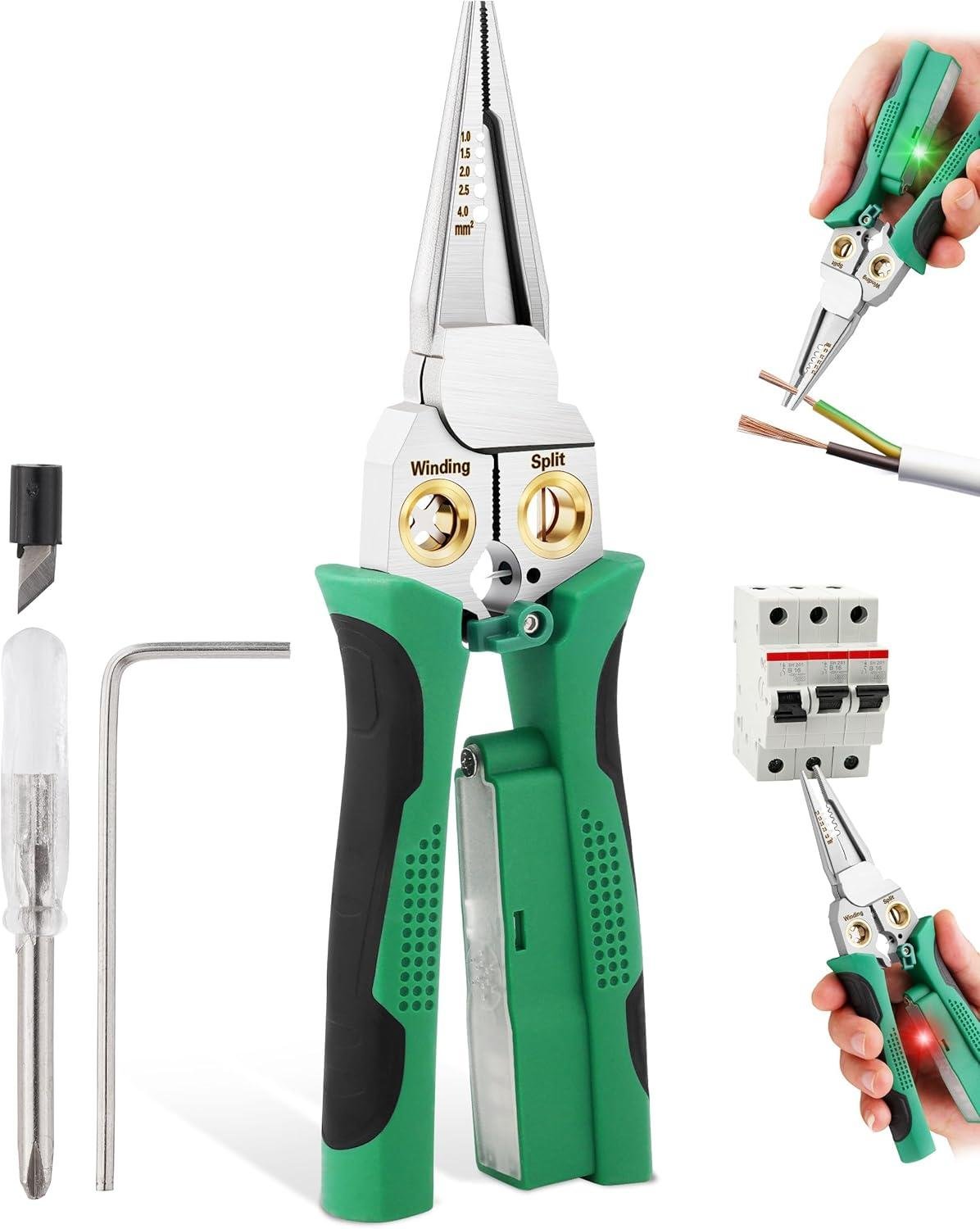
Ever been mid-build on a cabinet or workbench, only to realize the “woodworking” project suddenly needs clean wiring for task lights, a dust-collector switch, or a new outlet strip—and the tool you need is buried somewhere under clamps and offcuts? In a tight shop, precision matters as much with electrical work as it does with joinery: sloppy strips, nicked conductors, or crushed crimps can turn a quick upgrade into a frustrating do-over.
That’s where the FAITIO 8-in-1 Wire Stripper with Voltage Tester aims to earn a spot on our bench. It’s designed to combine stripping, cutting, crimping, splitting, and plier work in one compact tool, with a built-in 12V–250V voltage tester and support for common 10–18 AWG sizes (plus several mm² markings).
In this review, we’ll look at the feature set, build quality, ease of use, and whether the “all-in-one” approach actually saves space and money. We’ll also weigh customer feedback—many reviewers praise the quality and value, while others report the voltage tester can be intermittent and instructions might potentially be minimal.
As woodworkers who routinely add power and lighting to our shops, we focus on practical, reliable tools that don’t complicate the workflow.
Tool overview and Build Quality for the shop
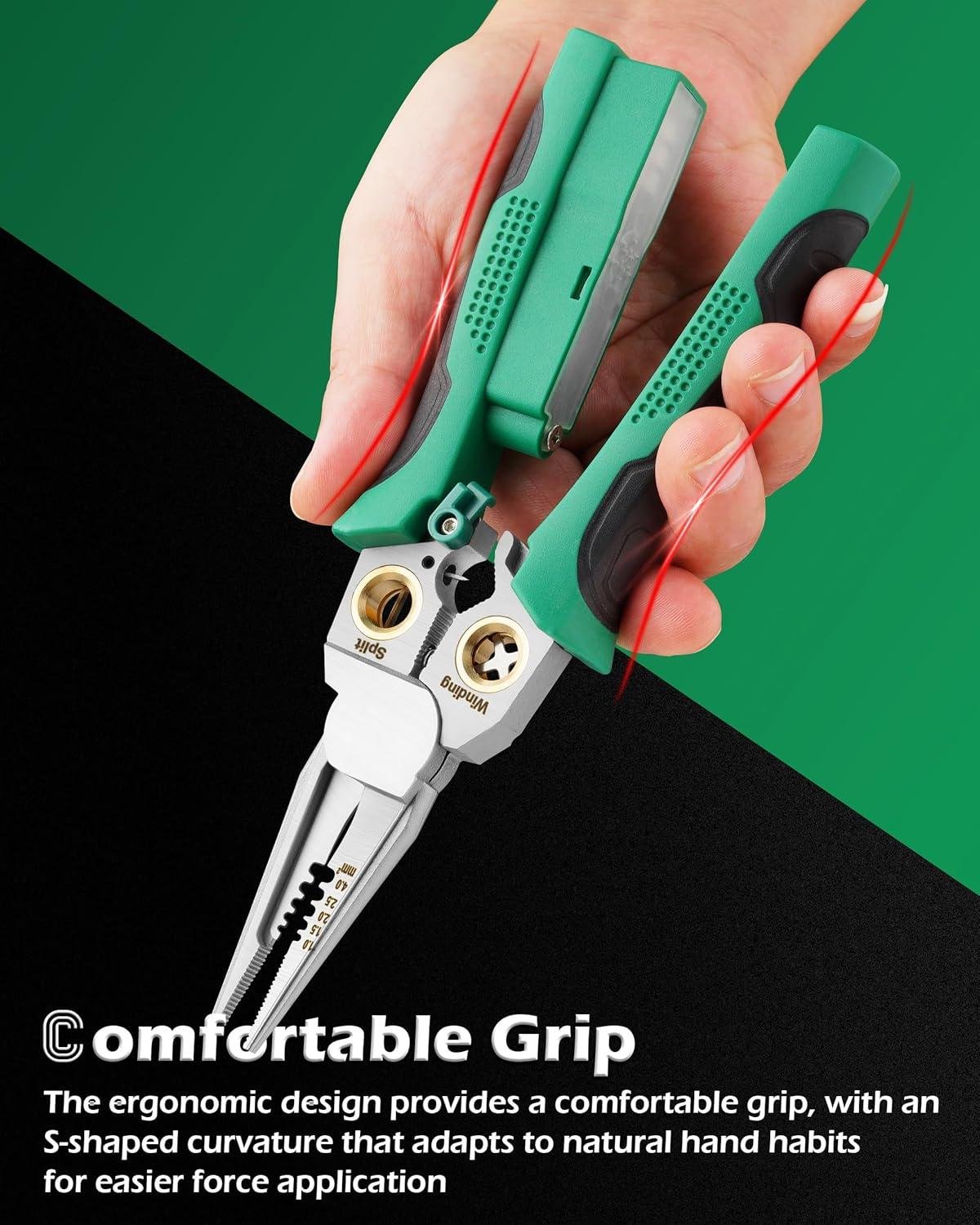
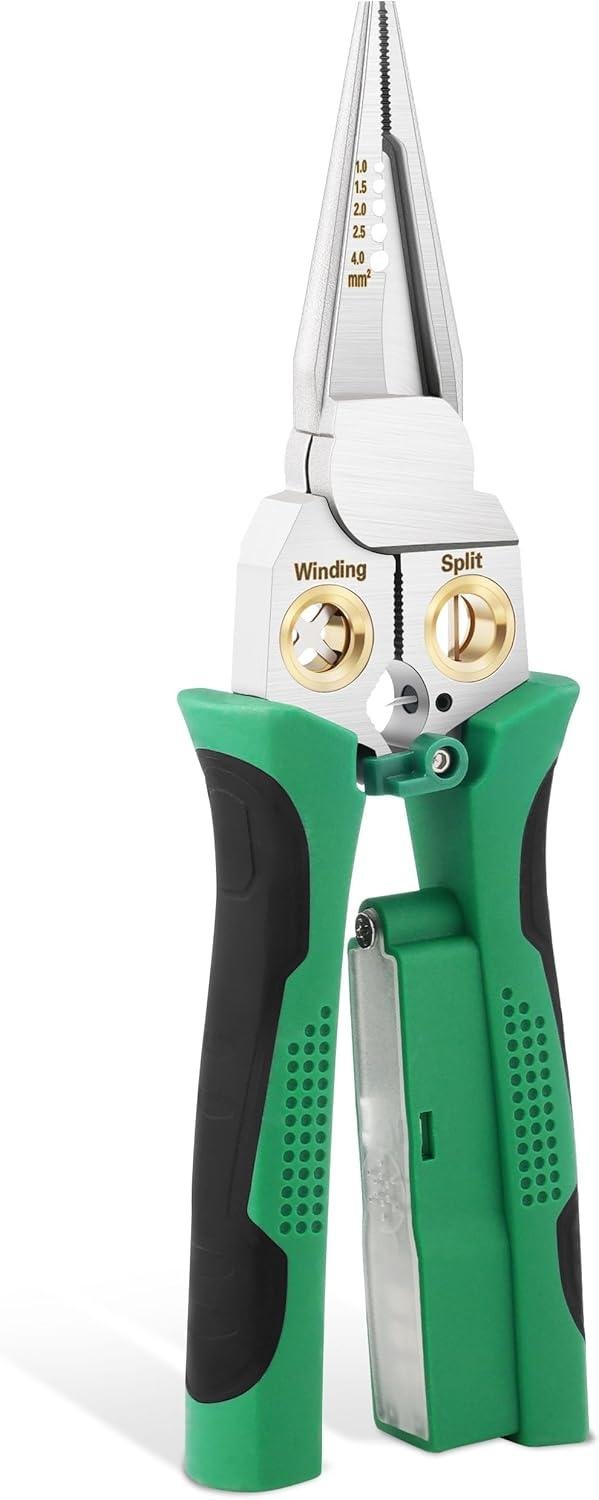
In a woodworking shop, an all-in-one electrical hand tool can be surprisingly useful, especially when we’re wiring dust-collection switches, swapping a motor plug, or adding task lighting under cabinets. This FAITIO tool is positioned as an 8‑in‑1 wire stripper/crimper/plier/cutter with a built-in voltage tester rated for 12V–250V, and it targets common shop wire sizes—its stripper slots cover 10–18 AWG (with additional metric markings like 1.0–4.0 mm² shown in the product description). In our hands as woodworkers (not full-time electricians), the compact “does-a-lot” format makes sense because it lives near the bench and reduces rummaging when a quick electrical fix pops up mid-build. Customer review themes line up with that: multiple buyers call it “well made”, a “handy tool”, and “a great addition to the toolbox,” with several noting it’s small/lightweight and convenient for everyday DIY tasks.
Build quality feedback is more split, and that matters in a dusty, hard-used shop habitat.While several reviewers describe it as “solidly constructed” and “good quality,” others say the materials feel “a bit flimsy” or that it’s “not made well,” and a recurring complaint is no enclosed instructions—especially around the tester. The tester itself gets the most caution flags: customers report it works intermittently, can flash when simply being held or moved, or doesn’t react to known live 120VAC; one review bluntly says it “cannot be trusted.” From a shop-safety standpoint,we’d treat the voltage feature as a quick “extra check,” not the deciding factor before touching wiring—use a known,reliable meter and follow lockout/unplug procedures. As an educational note, because this is a manual (not automatic) stripper, technique matters: match the AWG slot to the conductor, squeeze just enough to score the insulation (not the copper), then pull straight off; if we see nicked strands, we step up a gauge slot or lighten pressure to keep a strong, vibration-resistant connection on tools that shake (routers, sanders, dust collectors).
See Full Specifications & Customer Photos
Real World Performance on Bench Wiring and Tool Repairs
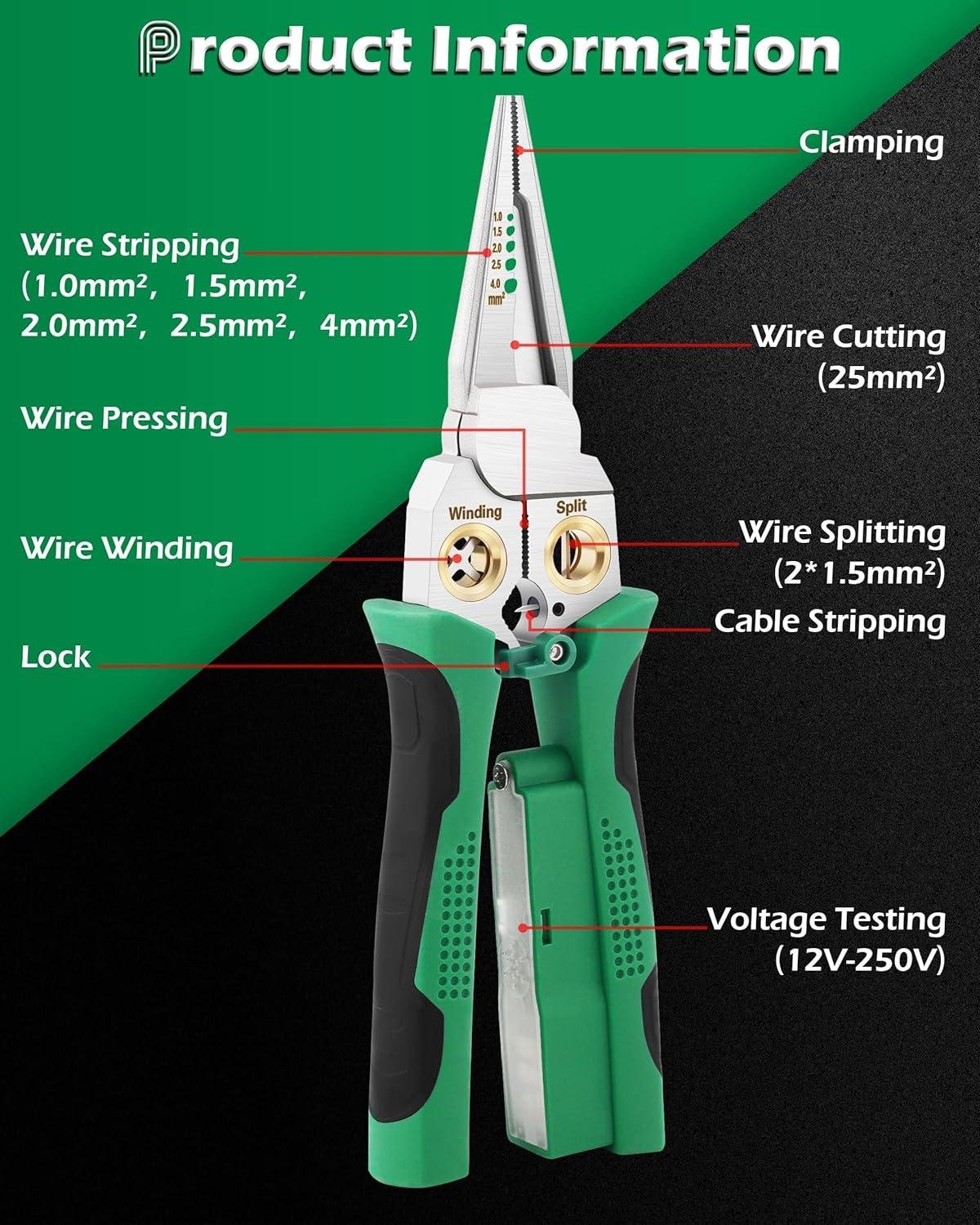
On our bench, the FAITIO 8‑in‑1 wire stripper/plier fits right into the kind of light electrical work that shows up in a woodworking shop—rewiring a dust collector remote, repairing a chewed cord on a sander, or tidying up a tangle of low‑voltage leads in a router table cabinet. The tool is rated for 10–18 AWG stripping, which lines up well with common shop cords and many tool pigtails, and we appreciate that it’s a manual (non‑automatic) stripper: we can “feel” the insulation bite before pulling, which helps avoid nicking strands when we’re working with finer conductors. In use,the integrated cutter and crimper make it a one‑grab solution when we’re standing at the assembly table and don’t want to hunt for three separate tools—echoing the review theme that it’s “handy,” “does a lot for such a small tool,” and a “great addition to the toolbox.” For woodworkers who only do occasional wiring—switch replacements, plug swaps, and quick repairs—this multi-function approach can keep workflow moving without breaking focus.
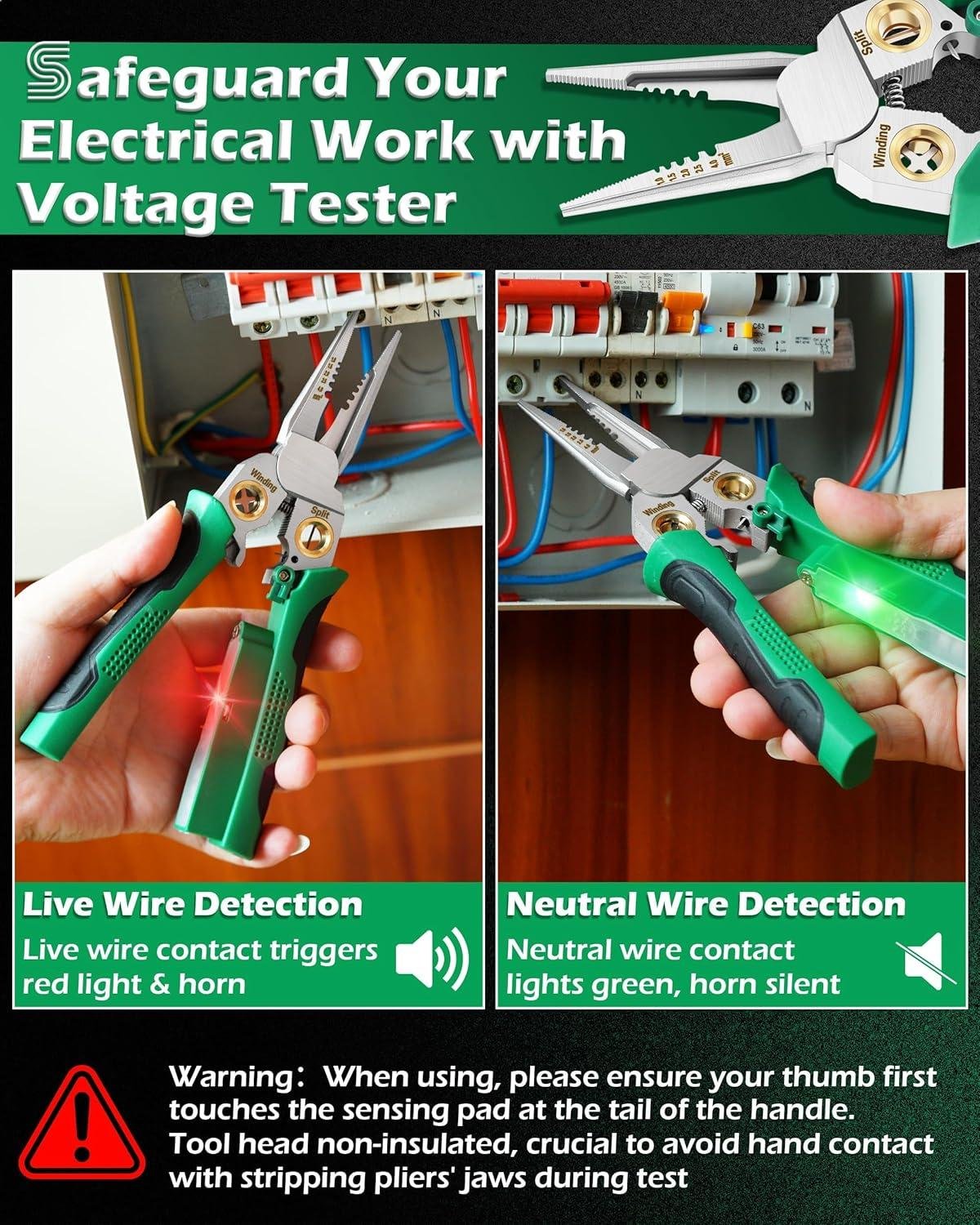
where we stay cautious is the built‑in 12V–250V voltage tester. Multiple reviewers praise it as a nice bonus, but just as many report it’s intermittent or unreliable (including comments like “don’t trust voltage tester,” “sensor not accurate,” and lights that trigger when simply holding the handles). In a woodworking setting—where we’re frequently enough around grounded machinery, dust, and long extension runs—we’d treat that tester as a quick “maybe” indicator, not a safety device; we still reach for a known-good meter or non-contact tester and follow lockout/unplug practices before opening tool housings. We also noticed the recurring customer complaint of no enclosed instructions, so if you’re newer to wiring, plan to learn the basics of matching the marked AWG stripping slots to your conductor size and practicing on scrap wire first (too small a slot can nick copper; too large won’t strip cleanly). Used with that mindset, it’s a practical bench companion for cord and connector repairs, while the tester feature remains a convenience—not the deciding factor.
See Full Specifications & Customer Photos
Key Features Woodworkers Will Appreciate for Clean Connections and Fast Diagnostics
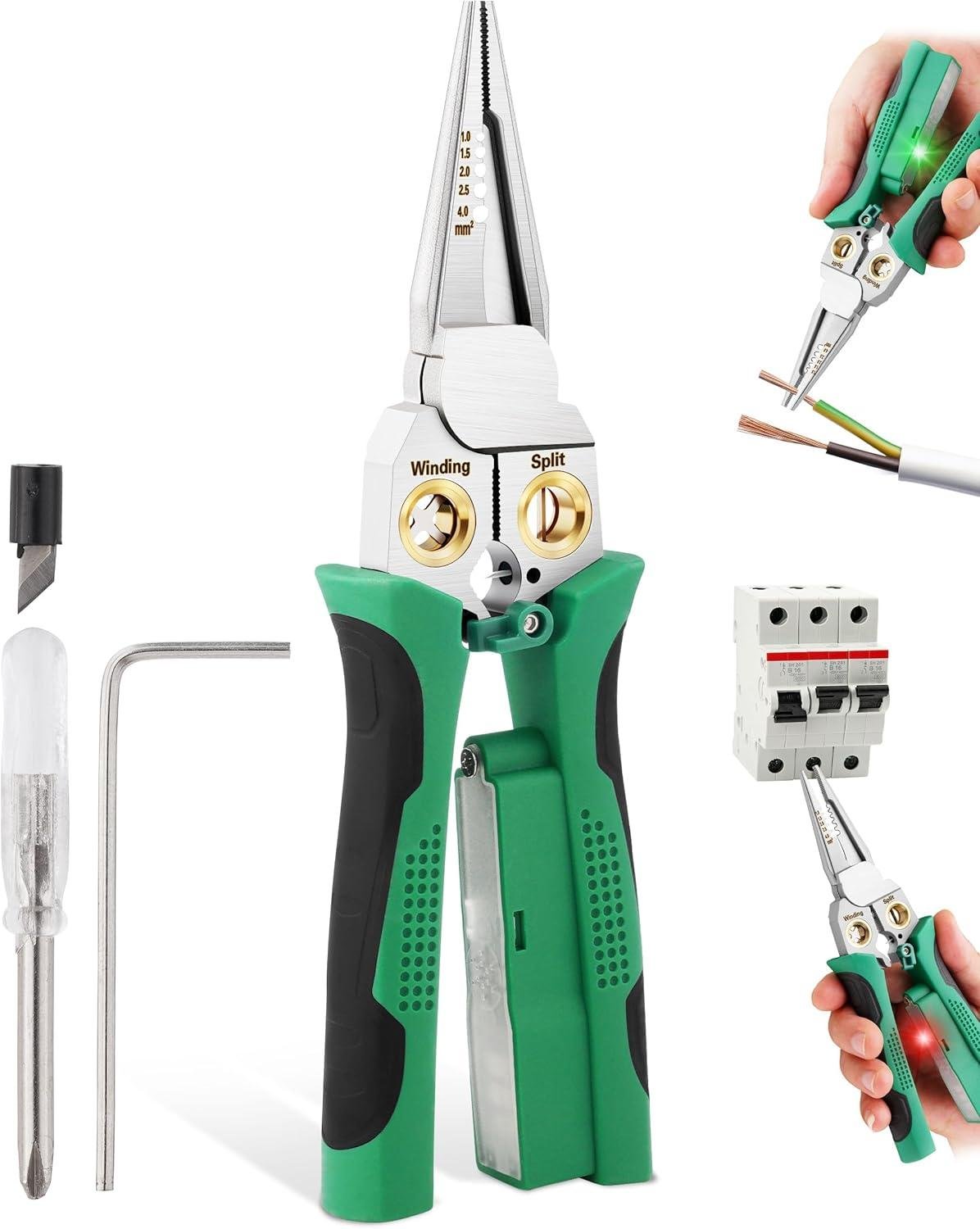
In our shop, clean connections matter just as much as clean joinery—especially when we’re adding LED task lighting, wiring a dust collector remote, or fixing a loose cord on a benchtop sander.The big appeal of this FAITIO tool is that it consolidates common electrical steps into one compact hand tool: it’s an “8-in-1” stripper/crimper/cutter/pliers combo with a built-in voltage test function rated for 12V–250V. For woodworking-adjacent wiring,the stated stripping range of 10–18 AWG lines up with the wire sizes we’re most likely to touch in a home shop (think 18 AWG fixture leads up through 10–12 AWG for heavier runs—though we still leave real panel work to qualified pros). Customer feedback frequently enough echoes what we’d want from a grab-and-go shop tool: themes like “handy tool,” “small tool,” “great addition to my toolbox,” and “does a lot for such a small tool” come up repeatedly. Function-wise, it’s not an automatic stripper—you’re selecting the right gauge opening and manually pulling insulation—so it rewards careful alignment to avoid nicking conductors, just like taking a light pass instead of hogging off material with a router.
For fast diagnostics, having a tester on the same tool sounds perfect when we’re troubleshooting why a light won’t turn on at the assembly table—but here we need to be realistic. Review themes on the voltage feature are mixed: some buyers call it a “nice bonus for quick checks” and mention the continuity tester, while others warn the tester “works intermittently and can not be trusted” or appears inconsistent around known live circuits.We’d treat the built-in sensor as a convenience check, not our single point of safety, and we’d still verify with a dedicated non-contact voltage tester or multimeter before touching anything. also worth noting from customer comments: several report no enclosed instructions and recommend watching the video to learn features—so if we’re training apprentices or just want repeatable shop procedures, we’ll need to standardize how we use it (bare-hand contact requirements and proper positioning can matter for these sensors). Used with that mindset, the real woodworker win is speed: stripping to the correct gauge, crimping connectors, and cutting wire cleanly—without digging through drawers—so our shop upgrades stay tidy and our troubleshooting stays efficient.
See Full Specifications & Customer Photos
Ease of Use for Beginners and Experienced Woodworkers
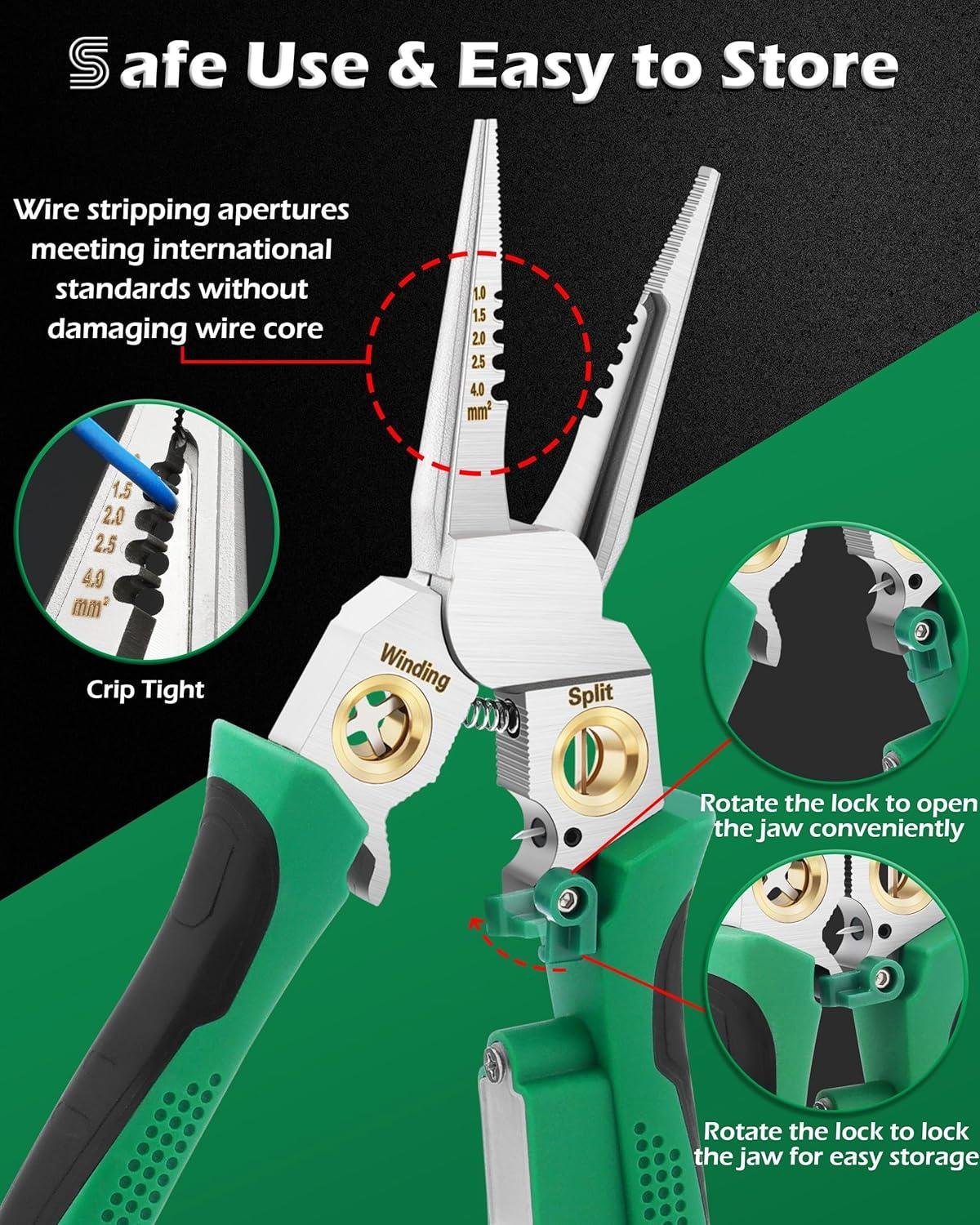
in a woodworking shop, we don’t live in conduit all day—but we still wire up dust collectors, swap out switch boxes, add LED task lights, and repair cords on sanders and routers.For those occasional electrical chores, this FAITIO multi-tool keeps the learning curve approachable because it bundles the common steps into one hand tool: stripping and cutting conductors in the 10–18 AWG range, plus crimping and plier work. The tool is not an automatic stripper, so beginners will need a little practice selecting the correct gauge hole, squeezing just enough to bite the insulation, then pulling the jacket cleanly—done right, it helps avoid nicking the copper (a theme echoed in reviews noting it “works great as described” and is “lightweight and easy to use”). We also noticed customer feedback that there may be no enclosed instructions, so first-timers should plan to reference the product video and do a few test strips on scrap wire before touching the wiring in a cabinet saw or a shop-made power strip.
For more experienced woodworkers who already keep a dedicated set of strippers and cutters, the appeal is speed and convenience: reviewers repeatedly call it “handy,” “compact,” and a tool that “does a lot for such a small tool”—useful when we’re ladder-hopping to install lights or doing quick maintenance away from the main bench. The built-in voltage tester is rated for 12V–250V, but review themes are consistent that it can be intermittent and “cannot be trusted,” with some reporting it lights up inconsistently or fails to detect known live outlets. In practical shop terms, we’d treat the tester as a rough indicator only and still verify with a known-good meter or a proven non-contact tester before working on any circuit. Used that way—wire work first, tester second—it can be a sensible grab-and-go tool for shop fixtures, jigs with simple wiring, and cord repairs where 10–18 AWG coverage fits the job.
See Full Specifications & Customer Photos on amazon
Customer Reviews Analysis
What Woodworkers Are Saying (Review Analysis)
Even though this is primarily an electrician-style hand tool, several woodworking-minded DIYers and shop owners picked it up for “do-it-all” convenience—especially when wiring shop lights, tools, dust collection switches, or project electronics.
| Aspect | Common Feedback |
|---|---|
| Overall Sentiment | mostly positive about versatility and basic stripping/cutting; clear concern about the voltage tester’s reliability. |
| Performance | Stripping and cutting work well when the correct gauge is selected; not an automatic stripper. |
| Build Quality | Often described as “well made,” “good pair of pliers,” and compact for the toolbox. |
| Ease of Use | Good for general DIY use; requires manual technique (cut/strip/pull) rather than self-adjusting action. |
| Best Uses | General electrical tasks around the shop and home; multi-function convenience (cut, strip, split, wind). |
| Issues | voltage tester reported as intermittent/false readings; a few “does not work” experiences; some say price feels steep. |
1. Overall sentiment from woodworking customers
Several woodworkers and DIYers described it as a handy,compact “all-in-one” addition to the toolbox—especially valued as a gift and as a general-purpose pliers/stripper for project wiring. Common praise includes “well made,” “works great as described,” and “does a lot for such a small tool.”
That said, multiple reviews highlight a split opinion because the voltage tester feature is frequently called unreliable, which drags down overall trust for safety-related use.
2. Performance feedback (accuracy, power, results)
Stripping/cutting performance:
- Reviewers generally found the stripper works “reasonably well” on thinner gauge wires, and one detailed review noted that when the correct gauge is selected, it “doesn’t nick or or else damage the conductor”—a precision point that matters when clean connections are critical (shop tool wiring, switch installs, LED drivers, etc.).
- Customers successfully used this for stripping rubber insulation and appreciated being able to cut wires directly.
What it’s not:
- Some users reported challenges if they expected an automatic/self-adjusting stripper. One reviewer pointed out it “isn’t the automatic type” and requires you to physically cut into the insulation and pull it off—fine for experienced hands, but slower for repetitive wiring tasks.
Voltage tester performance:
- Consistent theme: the tester is the weak link. Several woodworkers mentioned intermittent behavior and false positives—e.g., flashing when moved or when fingers touch it—and one review said it didn’t respond to a known live 120VAC line. The safe takeaway from reviewers: don’t rely on it as your primary safety check.
3. Build quality and durability observations
Common praise includes solid feel and “well made” construction for a multi-function hand tool. A few reviewers called it a “good pair of pliers,” suggesting the core mechanics (grip/cut/strip) feel acceptable for regular use.
Durability over time isn’t deeply documented in the review set, but the repeated “uses them all the time” type comments imply some owners are putting it into regular rotation without immediate failure—aside from the tester complaints.
4. Ease of use for different skill levels
- Beginners/DIYers: Several comments suggest it’s straightforward as a general-purpose electrical helper (“handy tool,” “great addition to my toolbox,” “all the functions in one tool”). Watching the included video was mentioned as helpful for getting started.
- More experienced users: Experienced reviewers focused less on learning curve and more on functional accuracy—especially selecting the correct gauge to avoid conductor damage.
- Comfort/handling: Not much direct discussion of fatigue or ergonomics, but repeated emphasis on “small” and “compact” suggests it stores and handles easily for quick shop jobs.
5. Common project types and success stories
While reviewers didn’t name woodworking projects like cabinet doors or furniture builds specifically,they repeatedly referenced “different projects” and “electrical work,” which aligns with common woodshop needs such as:
- wiring/rewiring shop equipment cords and plugs
- installing switches,outlets,or lighting in a workshop
- quick repairs on extension cords or tool wiring
One detailed success story praised its versatility—strip,cut,split,wire-winding holes—and liked the concept of a light-based safety indication (even though other reviewers dispute the reliability of that feature).
6. Issues or limitations reported
Some users reported challenges with reliability and trust,especially around safety features:
- Voltage tester can’t be trusted: Multiple reviews highlight false readings and intermittent behavior. Examples included flashing when moved or touched, and not detecting a live 120VAC wire. Reviewers explicitly warned it “should not be relied upon for safety.”
- Occasional outright failure: At least one reviewer said “Does not work … tried several things,” indicating possible QC variability.
- Not ideal for high-volume stripping: because it’s manual (not automatic), it may slow down repetitive tasks compared to dedicated strippers.
- Value concerns: Some users reported the price feels steep “for what it is,” especially considering the tester’s questionable execution.
Bottom line from reviewers: As a compact multi-function stripper/cutter/pliers tool, it earns solid marks for basic wiring tasks many woodworkers run into in the shop—but the voltage tester feature is widely viewed as unreliable, so owners recommend treating it as a convenience tool rather than a primary safety device.
Pros & Cons
Pros & Cons
When we look at an “8-in-1” tool, we’re really asking one question: does it replace clutter, or just add compromise? After digging through user feedback and sizing it up for shop-and-DIY reality, here’s where this wire stripper plier shines—and where we’d keep our guard up.
| What We Used It For | How It Felt in the Hand | Verdict |
|---|---|---|
| Quick strip & cut on common shop wiring | Compact,“grab-and-go” amiable | Strong |
| Light crimping tasks (basic terminals) | Convenient vs. switching tools | Solid for occasional use |
| Fast voltage presence check | Helpful idea, mixed reliability | Use cautiously |
| Toolbox simplification | 8 functions in one footprint | Big win |
Pros
- Legit space-saver: We get stripping, cutting, crimping, and general plier duty in one tool—handy when we’re bouncing between small tasks.
- Useful range for typical work: Designed around common wire sizes (roughly 10–18 AWG), which covers a lot of everyday shop/DDIY electrical jobs.
- “Nice bonus” voltage/continuity concept: In theory, having a built-in tester is a quick sanity check when we’re troubleshooting.
- Compact and easy to carry: Multiple reviewers mention the size being a sweet spot—small enough to live in a pouch without feeling like dead weight.
- good value when you actually use the modes: If we’ll use several of the functions, the cost makes more sense than buying separate budget tools.
Cons
- Voltage tester trust issues: The most consistent “uh-oh” theme is intermittent or inconsistent voltage detection. We wouldn’t rely on it as our only safety check.
- Mixed build-quality reports: Some folks call it well-made; others describe it as flimsy. That variability matters if we’re buying for daily professional abuse.
- Not everyone loves the plier strength: A few reviews suggest the plier function feels weak compared to dedicated linesman/combination pliers.
- instructions can be missing: Several customers mention no enclosed directions—fine for seasoned hands, annoying for anyone learning the tester or “extra” functions.
- Multi-tools can be “good at many, best at none”: We may still prefer dedicated strippers/crimpers for repetitive production work where speed and consistency matter.
Our takeaway: We’d treat this as a convenient all-in-one for light-to-moderate wiring tasks, but we’d keep a dedicated tester (and our usual safety workflow) in the loop—especially given the mixed feedback on the voltage detection.
Q&A
What “wood shop wiring” tasks is this stripper actually good at?
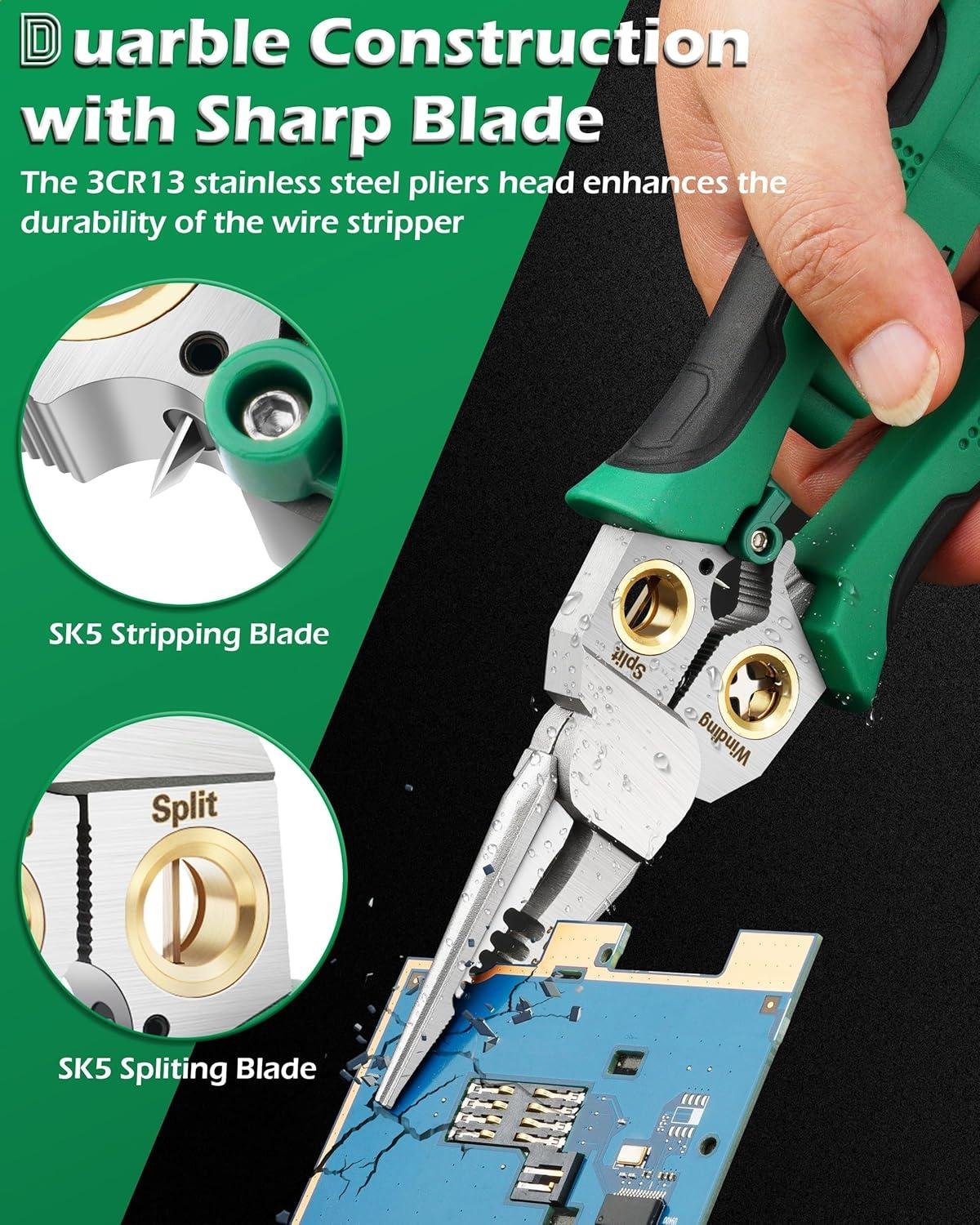
This tool is best for common shop electrical tasks like wiring dust-collector remotes, adding a switch, repairing a cord, wiring a bench light, or doing small outlet/plug projects. It’s an 8‑in‑1 hand tool (strip, cut, crimp, split jackets, etc.) designed for electrical wire—not woodworking materials—so think “shop infrastructure” rather than joinery.Reviews frequently call it a handy, compact all-in-one addition for light electrical work.
Is it powerful enough for thicker wire, like what I might use for a dust collector or table saw circuit?
For conductor stripping, the listed range is primarily 10–18 AWG, which covers a lot of typical shop runs (lighting, many outlets, and some tool cords). If you’re dealing with very heavy cable/jackets (or doing lots of large-gauge work), this may feel limiting—some product text mentions larger metric sizes and jacket work, but customer feedback centers more on standard small-to-mid wiring. For frequent heavy-duty panel work,many pros still prefer dedicated strippers and cutters.
How well does the voltage tester work for checking if a circuit is dead before I touch it?
Based on reviews, the voltage tester is the weak link. Multiple users report intermittent or inaccurate behavior (e.g., lighting when it shouldn’t, or not detecting voltage when it should). Treat it as a “quick indication” at best, not a safety device. For real shop safety, keep using a known-reliable non-contact voltage tester and/or a multimeter, and always verify on a known live source before and after testing.
Is this beginner-friendly for a woodworker doing occasional DIY electrical?
Mostly yes for basic stripping/cutting/crimping—several reviewers describe it as lightweight, easy to handle, and convenient because it combines multiple functions in one small tool. The learning curve is more about the “multi-tool” layout and the voltage-sensing feature. Reviews mention missing or unclear instructions, so beginners frequently enough do best by watching a product video and practicing on scrap wire before touching any real installation.
What adjustments or “setup” does it require? Do I need special accessories?
There’s no real setup like there would be with a woodworking machine. You simply select the correct stripping notch/gauge (10–18 AWG) and use the built-in cutters/crimper as needed. No special accessories are required, but it pairs well with common shop-electrical essentials: heat-shrink, proper terminals, a good non-contact voltage tester, and a multimeter. Since some buyers report no enclosed instructions, plan on referencing an online guide/video for the extra functions (jacket splitting, twisting/winding holes, tester behavior).
Will it fit in a small workshop or an apron pocket?
Yes. Customer feedback highlights the compact size and portability—several people mention it “does a lot for such a small tool.” it’s a good choice if you want one tool to keep in a toolbox drawer, on a pegboard, or in a small electrical kit dedicated to shop maintenance.
Is it durable enough for production use, or more of a DIY/shop-maintenance tool?
Reviews are mixed. Many say it feels well made and works great,but others describe the build as a bit flimsy or not something they’d expect to hold up under heavy professional use. If you’re a cabinet shop constantly doing electrical installs, you’ll likely want higher-end dedicated strippers/crimpers. For the average woodworker doing occasional wiring fixes and upgrades, it’s commonly viewed as a good-value, convenient multi-function tool.
Is it worth it versus cheaper strippers, or should I buy separate tools?
If you like the “one tool for many tasks” approach, reviews frequently enough praise it as a solid value and a convenient addition to the toolbox—especially for occasional electrical work in the shop. The tradeoff is that multi-tools can be “jack of all trades,” and in this case the voltage tester gets notably mixed feedback. If your priority is reliable voltage checking and heavy daily crimping,you’ll usually be happier with separate,purpose-built tools (dedicated strippers + quality crimper + trusted voltage tester).
Seize the Opportunity
The FAITIO 8-in-1 Wire Stripper with Voltage Tester packs wire stripping for 10–18 AWG, cutting, crimping, pliers, cable splitting, and a 12V–250V voltage/continuity test function into a compact, easy-to-store hand tool. Customer feedback commonly praises the handy all-in-one design, tool size, and value, with many calling it a solid addition to a DIY toolbox. The biggest limitation is consistency: multiple reviewers report the voltage tester can be intermittent and the tool may arrive with little to no instructions, so expect a learning curve (and don’t rely on the tester alone for safety).
Best for: hobby woodworkers and cabinet makers doing small-to-medium shop projects—like installing task lighting, switches, routers/table saw outlets, or repairing extension cords—where quick stripping and cutting matter.
Consider alternatives if: you need a trusted non-contact tester, strip a wider gauge range, or want heavy-duty daily durability.
Final assessment: a practical mid-range multitool for basic electrical tasks, but the tester feature shouldn’t be the deciding factor.
Want to see current pricing and customer photos? View on Amazon & Read More Reviews →