
Blog
6-Pc Hot Wire Foam Cutter Review: Right for Our Shop?


Ever tried mocking up a cabinet crown, routing template, or inlay layout in foam board—only to end up with ragged edges, snapped corners, and measurements that drift as the knife wanders? In a tight shop, those “rapid prototypes” can turn into wasted time and clutter fast, especially when precision matters and we don’t want to burn through expensive plywood just to test an idea.
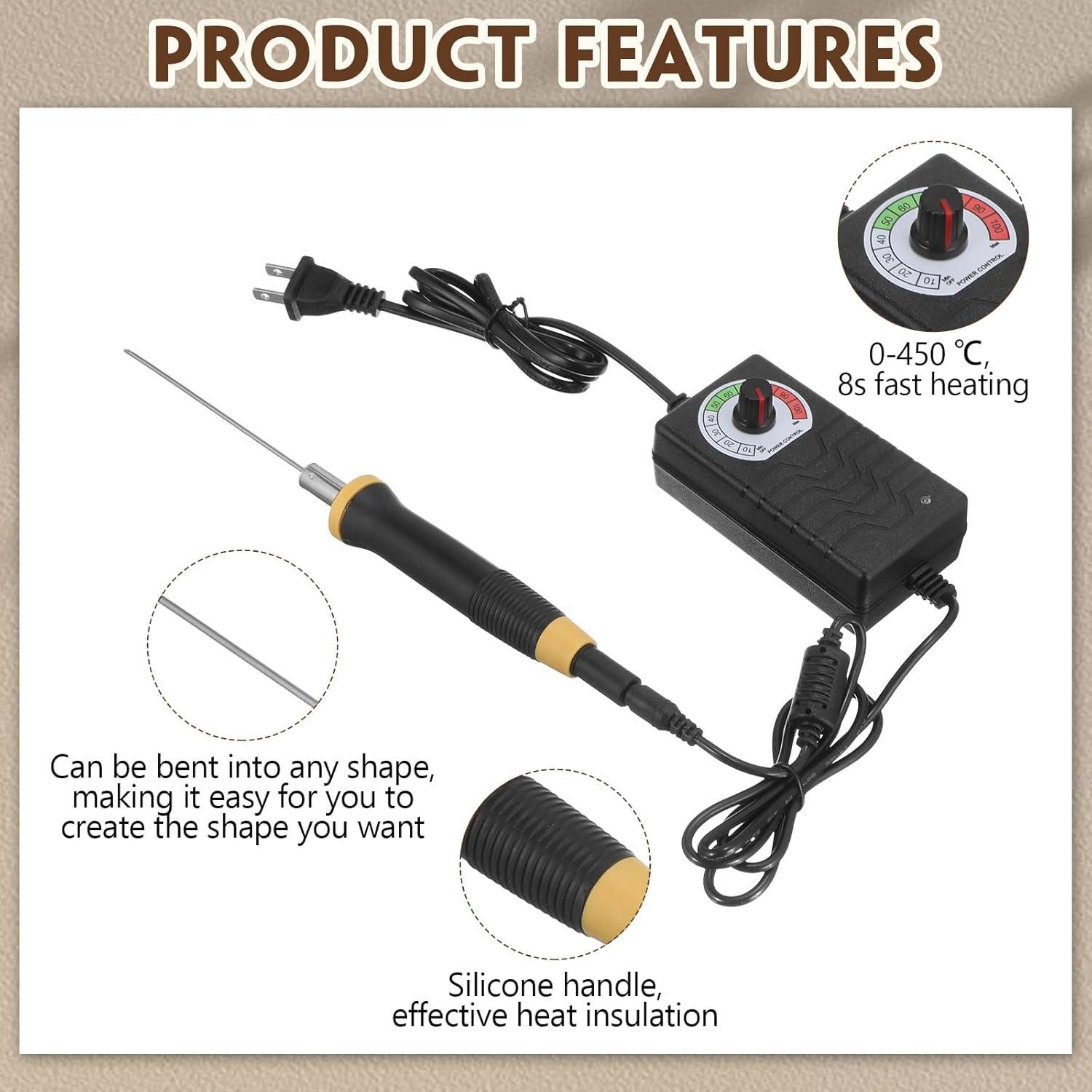
The 6 Pcs Foam Cutter Electric Hot Wire Cutter Pen Tools Kit is built for that kind of layout work: it’s an electric hot-wire foam cutter set with three pen-style cutters (4″, 6″, and 8″), a 36W, 110–220V digital voltage adapter, plus a stand/bracket and marker for marking and storage. The adjustable power is meant to help dial in smoother, cleaner passes on foam without the tearing we get from blades.
In this review, we’ll look at the features, build quality, ease of use for beginners, shop-space practicality, and what customers report about cut quality and value. As woodworkers who rely on accurate templates and repeatable layouts, we’ll keep the focus on whether this kit earns a spot on the bench without blowing the budget.
Tool Overview and Build Quality for Shop use

In a woodworking shop, we don’t reach for a hot-wire pen cutter to slice hardwood or sheet goods—it’s strictly a foam-and-plastics helper for things like case inserts, layout mockups, and packaging work. This kit is built around a 36W hot-wire system powered by a 110–220V adapter with digital voltage adjustment, and it includes three pen-style cutters sized 4″ (10 cm), 6″ (15 cm), and 8″ (20 cm). The handles are a mix of stainless steel/alloy steel and plastic, and the included stand is a welcome shop touch—hot-wire tools need a safe “parking spot” so we’re not laying a heated tip on a bench offcut or near sawdust. In use, this kind of cutter works by heating a wire element until it melts through foam rather than tearing it; when it’s dialed in, it can leave a sealed edge that doesn’t crumble the way utility knives can.
Build quality feedback is mixed, and that matters for shop use where we tend to work quickly and apply “real-world” pressure. Some customers describe “sturdy construction” with elements “mounted well into the handle,” while others report the elements feel flimsy and break easily—a theme we’d take seriously if we planned on frequent foam insert work. Several reviewers also mention limited instructions and a learning curve: a few couldn’t achieve a smooth cut “on any heat setting,” while others say it’s great for rough-ins and dramatically faster than X‑Acto/razor methods for organizing tool bags and dense foam. From a technique standpoint, we’d treat this like a finesse tool: let heat do the work, keep a steady feed rate, and use the voltage control to avoid dragging (too cool) or excessive melt-back (too hot). For woodworkers, it’s best viewed as a secondary shop tool—useful for foam-fit institution and templates—rather than a precision instrument for detailed, furniture-grade “finished edges” without cleanup.
- 3x hot wire foam cutting pens (4″, 6″, 8″)
- 110–220V / 36W digital voltage transformer adapter
- Metal stand / soldering iron bracket
- Marker pen
- Replacement hot-wire elements (if available from the seller/third-party)
- Metal straightedge for guided cuts on flat foam
- Shop respirator and ventilation (for fumes when melting foam/plastics)
- Fire-resistant silicone mat for a safer work surface
- Custom foam inserts for tool cases, drawer organizers, and systainer-style boxes
- Mockups/templates for routing patterns and jig planning (in foam board)
- protective packaging for shipping finished work
- Sign/model work (letters, carving forms) where “sealed” foam edges help
- Not applicable — customer reports focus on foam types (Styrofoam/insulation foam), not wood species
| Spec / Feature | What’s Included | What It Means in a Wood Shop |
|---|---|---|
| Power | 36W, AC via adapter | Enough for foam work; not a “muscle tool” for forcing cuts—feed rate and heat setting matter. |
| Voltage | 110–220V input, digital adjustable output | Dialing voltage helps match foam density/type (lower for clean edges, higher for faster rough shaping). |
| Cutter sizes | 4″ / 6″ / 8″ pens | Longer reach for deeper cavities; shorter is typically easier to control for tighter insert work. |
| Materials | Stainless/alloy steel + plastic | Handles should feel okay in hand; review themes suggest elements may vary in stiffness/durability. |
| Accessory / Add-on | Compatibility | Why We’d Use It |
|---|---|---|
| Replacement hot wire tips/elements | Depends on seller/standard sizes | Hot-wire elements are wear items; having spares reduces downtime during insert work. |
| Straightedge / guide | Worldwide | Improves straight cuts on foam board and reduces “wavy” edges. |
| Ventilation / fume control | Universal | Melted foam can off-gas; we treat this like finishing: move air and wear protection. |
| Capacity Question | Recommended Expectation | What Reviews Suggest in Practice |
|---|---|---|
| Cut finish quality | Expect clean, sealed foam edges with proper technique | Some users report smooth cuts on white Styrofoam; others report rough shaping only and needing cleanup. |
| Material range | Foam board, Styrofoam, craft foams | Review theme: works very well on plain white Styrofoam, okay on pink/blue insulation foam, mixed on dense foam. |
| Durability under pressure | Use light pressure; let heat do the cutting | Some say sturdy; others say flimsy/breaks easily if pushed. |
See Full Specifications & Customer Photos
Real World Cutting Performance for Foam Templates and Layout Jigs

When we’re building foam templates for routing patterns or making quick layout jigs for awkward glue-ups, what matters most is whether a hot wire cutter can leave an edge that’s *consistent enough to reference*. This kit runs on a 36W transformer and supports 110–220V with a digital voltage (heat) adapter, and it includes three pen-style cutters in 4″ (10 cm), 6″ (15 cm), and 8″ (20 cm) lengths. In our shop use-cases, that longer reach is helpful for slicing deeper foam blocks used as cauls, case cradles, or “mock parts” for checking joinery clearances. In customer feedback, the performance splits by foam type: multiple reviewers say it “works very well on plain white Styrofoam” while doing only “okay on pink or blue foam” (the denser XPS insulation boards woodworkers frequently enough grab for templates). That tracks with how these tools work—heat has to outrun the foam’s ability to absorb it—so the right move is to slow the feed rate, bump heat gradually, and let the wire do the work rather than forcing it like a knife.Where we’d caution woodworkers is on finish quality and durability for “template-grade” work. A common review theme is that it can be good for rough-ins but not consistently smooth or “true” for detail—some users report it cools down quickly, doesn’t glide through foam, or can feel flimsy if you apply pressure. We also see repeated complaints about minimal instructions, and frist-timers note they struggled to dial in technique across heat settings. For us, that means this kit is best treated as a fast rough-shaping tool for foam mockups, tool-drawer organizer inserts, and protective packing—not a replacement for a precisely cut MDF/acrylic router template.Educationally,the biggest tip is: keep the pen moving at a steady pace,don’t twist the wire in the kerf,and plan on a cleanup step (sanding block,utility knife,or a “hot pass” skim cut) if the foam edge will be used as a reference surface. Also ventilate well—hot-cut foam can produce unpleasant fumes—and use the included stand to keep the hot tip off the bench when setting it down.
- 3x foam cutting pens (4″,6″,8″)
- Transformer adapter (110–220V,36W) with digital voltage adjustment
- Soldering iron bracket/stand
- Marker pen
- Spare hot-wire elements (same style/shape as the included pens)
- heat-resistant cutting surface (ceramic tile,metal sheet,or sacrificial board)
- Shop ventilation (fan/air scrubber) and a respirator suited for nuisance fumes
- Foam routing templates for test-fitting and pattern planning (rough-to-semi-fair)
- Layout jigs and mock parts for checking hardware clearances
- Toolbox/drawer foam inserts (organization and protection)
- Protective packing blocks for finished parts and assemblies
- Not applicable (this tool is for foam; customer reviews discuss Styrofoam types,not wood)
| Spec | What It Means in a Wood Shop |
|---|---|
| 36W power adapter | Moderate heating capacity; expect slower feed rates in denser foams to maintain a clean edge. |
| 110–220V input | Flexible for different shop power standards (with appropriate outlet/plug setup). |
| 4″, 6″, 8″ pen sizes | longer pens help reach into deeper foam blocks for cradles and inserts. |
| Digital voltage adjustment | lets us tune heat—critical for reducing melt-back and ragged kerfs. |
| Accessory/Attachment | Compatibility | Why It Helps |
|---|---|---|
| Replacement hot-wire elements (matching shape) | Likely compatible if same pen style/geometry | Backups matter—reviews mention flimsiness if pressured. |
| Heat-resistant stand/mat | Universal | Prevents bench burns and accidental contact while repositioning work. |
| Ventilation fan / fume control | Universal | Improves safety and comfort during longer cuts. |
| Task | Recommended Expectation | What Reviews Suggest |
|---|---|---|
| White EPS foam rough cuts | Fast, clean enough for mockups | Often “works very well” |
| Pink/blue XPS insulation foam | Slower, more technique-dependent | “Works okay”, may need cleanup |
| Template-grade edges for routing patterns | May require finishing steps | Several users report rough shaping, not precision |
See Full Specifications & Customer photos
Key Features We Appreciate for Precision Patterns and Repeatable Shapes

For layout work and templates in the shop, we like that this kit gives us three cutter lengths—4″ (10 cm), 6″ (15 cm), and 8″ (20 cm)—so we can match the reach to the shape we’re tracing. When we’re building jigs, mockups, or packing inserts, that range matters: the shorter pen is easier to steer around tight radii, while the longer pen helps us keep a straighter line on longer runs without “wobbling” the handle. The included 36W adapter rated for 110–220V with digital voltage adjustment is also a practical feature for repeatable work because we can dial in a setting and try to keep it consistent from piece to piece. In foam, steady heat is what makes a hot wire behave like a “guided melt” rather than a tearing blade—when it’s in the zone, it can seal edges without shattering, which is handy when we’re fitting foam to protect chisels, hand planes, or measuring tools during transport.
Having mentioned that, precision patterns depend on more than the spec sheet, and customer feedback is mixed in a way woodworkers should take seriously. Multiple reviewers say it “works very well on plain white Styrofoam” and is faster than an X-Acto/razor for organizing bags and cases,but others report it “doesn’t glide”,“cools down quickly,” and struggles to produce a smooth,true cut—especially on denser foams—sometimes calling it better for “rough shaping” than detail work.We also noticed repeated complaints about minimal instructions, which matters because technique is everything: for cleaner, repeatable shapes, we’d recommend using a rigid straightedge or plywood/MDF template as a heat-resistant guide, keeping the pen moving at a constant feed rate, and letting the heat do the work (pushing hard is where reviewers mention parts feeling “flimsy” or breaking). In our workflow, it reads as a useful tool for roughing foam patterns and protective inserts—especially in white Styrofoam—while woodworkers expecting crisp, production-level precision may need to plan on test cuts, slower passes, and occasional cleanup with a knife.
- Included accessories
- 3 x Foam cutting pens (4″, 6″, 8″)
- 110–220V / 36W digital voltage transformer adapter
- Soldering iron bracket/stand
- Marker pen
- Compatible attachments/accessories (shop-pleasant add-ons)
- Metal straightedge or drywall square (as a guiding fence)
- Plywood/MDF templates (for repeatable curves)
- Utility knife/razor (for final trimming and crisp corners)
- Sandpaper/sanding block (light edge cleanup on dense foam)
- Ideal project types
- Foam inserts for toolboxes, systainers, and road cases
- mockups and spacers for jig prototyping
- Shop organization layouts (kiln-dried tool rolls, bags, etc.)
- Sign/model patterns where foam is the temporary form
- wood types tested by customers
- None mentioned—reviews focus on foam (e.g.,white Styrofoam,pink/blue foam board,and dense foam).
| Spec / Feature | What It Is | Why We Care for Repeatable Shapes |
|---|---|---|
| Cutter lengths | 4″, 6″, 8″ pens (approx. 10/15/20 cm) | Shorter for tight curves; longer for straighter, steadier passes. |
| Power | 36W with 110–220V adapter | More stable heat generally supports cleaner edges—though reviewers report mixed real-world heat stability. |
| Adjustment | Digital voltage adjustment | Helps repeat a “known good” setting when you’re batching similar cuts. |
| Stand | Bracket/holder included | Safer, more consistent workflow between cuts (hot tool has a home). |
| Blade/Pen Option | Best Use | Precision Notes (based on review themes) |
|---|---|---|
| 4″ pen | Tight radii, smaller pockets | Likely easiest to control; still may need cleanup on dense foam. |
| 6″ pen | General-purpose insert work | Reviews suggest decent performance on white Styrofoam. |
| 8″ pen | Longer straight cuts, deeper reaches | Can help maintain straightness, but some report rough shaping rather than detail-true cuts. |
| capacity Topic | Recommended Expectation | What Reviews Suggest in Practice |
|---|---|---|
| Finish quality | Plan for template-guided cuts and light cleanup | Some users report smooth cuts on white foam; others report no smooth cut on any heat setting. |
| Material density | Best on lighter foams first | Works very well on white Styrofoam; okay on pink/blue; mixed results on dense foam. |
| Detail precision | Use for roughing, then refine | Several reviewers call it rough shaping rather than precise detail work. |
See Full Specifications & Customer Photos
Ease of use and Workshop Setup for Beginners and Experienced Woodworkers

From a workshop-setup standpoint, this kit is about as plug-and-go as hot-wire tools get: we’re working with a 36W system and a 110–220V digital voltage adapter, so there’s no compressor, no batteries, and no specialty power required—just a safe outlet and a clear bench. The three pen-style cutters in 4″ (10 cm), 6″ (15 cm), and 8″ (20 cm) give us quick choices for reach and control, and the included soldering iron bracket matters more than it sounds—it’s what keeps a hot tip from rolling onto our bench top or into a pile of shavings. That said, multiple customers mention the tool “really had no instructions,” so beginners should plan on a short learning curve: we’d set up on a nonflammable surface, keep a sacrificial cutting board underneath the foam, and test temperature on scrap before committing to a layout line.
In actual use, ease-of-use depends heavily on expectations and foam type. Review themes line up with what we’ve seen with budget hot-wire pens: several users report it “works very well on plain white Styrofoam” but only “okay on pink or blue foam”, and a few note it “cools down quickly” or “doesn’t glide”—which usually means we’re feeding too fast for the heat setting, or we’re asking it to behave like a fine-detail scroll saw. For experienced woodworkers,the workflow is pretty natural: mark with the included pen,dial voltage/heat,then let the wire do the work with light pressure (pushing bends elements—one reviewer called the elements “extremely flimsy,” and another said they “break so easily”). For beginners, we’d treat this as a roughing and layout tool for foam inserts and templates, not a guaranteed precision finisher—more than one customer ended up cleaning edges with a knife, while others loved it for tool/gear organization and found it “much faster and better than trying to cut with an exacto.”
- included accessories
- 3 × foam cutting pens (4″, 6″, 8″)
- Digital voltage transformer adapter (110–220V, 36W)
- Soldering iron bracket/stand
- Marker pen
- Compatible attachments/accessories (shop add-ons we’d actually use)
- Heat-resistant silicone mat or ceramic tile for a safe landing zone
- Metal straightedge or aluminum angle as a cutting guide (keep the hot wire off plastic tools)
- Respirator/ventilation fan (foam fumes vary by material)
- utility knife for cleanup passes (as several reviewers ended up doing)
- Ideal project types
- Toolbox and case foam inserts (rough-to-medium finish)
- Router/jig templates and mock-ups in foam board
- Prototype layouts for signs,lettering,and model shapes
- quick organization inserts for bags and drawers
- Wood types tested by customers
- None — reviewers discuss foam only (e.g., white Styrofoam, pink/blue foam, and “dense foam”).
| Spec / Feature | What It Means in Our Shop |
|---|---|
| Power: 36W | Best suited to controlled, slower passes; forcing speed can lead to drag, rough edges, or cooling. |
| Input: 110–220V | Flexible for different shop power standards; still treat it like any corded hot tool. |
| Lengths: 4″, 6″, 8″ | Shorter pen for control; longer pen for reach in deeper pockets/slots. |
| Materials: stainless steel + plastic (per description) | Cozy handles, but hot elements can be the fragile point—light pressure is essential. |
| Adjustment: digital voltage adapter | We can tune heat to foam density; always test on scrap for cleanest edge. |
| Accessory | Status | Why We’d Use It |
|---|---|---|
| Soldering iron bracket/stand | Included | Safer set-down between cuts; reduces scorch/bench damage risk. |
| Heat-safe mat/tile | Optional add-on | Creates a defined hot-tool parking area and protects the bench surface. |
| Metal straightedge/guide | Optional add-on | Improves straight-line accuracy for foam insert walls and template edges. |
| utility knife | Optional add-on | Cleanup for presentation edges when the hot wire leaves a rough finish. |
| Use Case | Recommended Capacity | What Reviews Suggest in Practice |
|---|---|---|
| White styrofoam shaping | Good match | Multiple users say it works very well and cuts cleanly. |
| Pink/blue insulation foam | Moderate | Reported as okay; may require slower feed and more cleanup. |
| Dense foam inserts | Mixed | Some users highly recommend it for organizing; others report rough cuts and slow cutting. |
| Precision/detail cutting | Not ideal | Several reviews call it rough-shaping only; beginners report difficulty getting smooth edges. |
See Full Specifications & Customer Photos
Customer Reviews Analysis
What Woodworkers Are Saying
1) Overall sentiment from woodworking customers
Overall sentiment is mixed, leaning negative for precision work. Several woodworkers mentioned it’s useful for rough shaping and quick foam organization, but multiple reviews highlight frustration with cut smoothness, speed, and flimsy cutting elements—especially when users expected clean, presentable results without extra cleanup.
2) Performance feedback (accuracy, power, results)
Common praise includes solid performance on basic white Styrofoam, with one reviewer noting it “works very well on plain white Styrofoam.” Though,some users reported challenges when moving to denser or different foam types (pink/blue insulation board), where it “works okay” rather than great.
- cut quality/results: Multiple reviews highlight difficulty achieving a smooth, clean finish. One user said it “doesn’t glide thru the foam,” leading to a rough finish that required cleanup with a separate knife. Another reported being “unable to get anything close to a smooth cut” on any heat setting.
- Power/heat under load: A common complaint is that it cools down quickly and doesn’t cut fast, including one reviewer who said it “doesn’t cut as fast as the knife I bought.”
- Precision: Several woodworkers mentioned it’s not ideal for detail work—better for rough shaping than precise fitting.
3) Build quality and durability observations
Feedback is split here.
- Positive durability notes: Some reviewers describe sturdy construction, saying “the blades are sturdy and mounted well into the handle.”
- Negative durability notes: Others strongly disagree, reporting the set is “terrible and flimsy” and that parts “break so easily with hardly any pressure.” Another reviewer echoed that the “elements are extremely flimsy,” suggesting fragility can be a deal-breaker depending on how much pressure or control the user applies.
4) Ease of use for different skill levels
Ease of use appears tougher for beginners, largely due to poor guidance.
- Beginners / first-time users: Reviewers with first-time experience found the learning curve steep, mainly because the kit came with little to no helpful instruction—“Item really had no Instructions” and “The instructions were no help.”
- DIYers who already know what they want to do: Customers successfully used this for practical foam organization and seemed happier when using it as a fast rough-cut tool rather than expecting fine craftsmanship-level results.
5) Common project types and success stories
While this is a foam cutter (not a wood-cutting tool), woodworkers and DIY shop users frequently enough buy it for shop organization and protective foam inserts.
Customers report using this for:
- Gun storage box foam (one user used it for a gun storage box, but said they still needed a utility knife to make it presentable—“Good for rough ins.”)
- Tool bag organization (one reviewer custom-cut dense foam to organize a messy tool bag)
- Guitar effects gig bag foam (same reviewer used it to create fitted storage and said it worked “so much faster and better” than an X-Acto/razor)
There’s also a versatility win mentioned: one reviewer noted it can work as a “great plastic welder,” even if it wasn’t delivering precision foam cuts.
6) Issues or limitations reported
Multiple reviews highlight the same limitations:
- Rough finish / inconsistent smoothness, even with heat adjustments
- Cooling down quickly and/or slow cutting speed
- Flimsy elements that break easily (durability concerns under normal handling)
- not suited for precision/detail work—better for rough shaping and inserts you’ll trim further
- Weak or missing instructions, making it tough for beginners to dial in technique and temperature
| Aspect | Common Feedback |
|---|---|
| Performance | Best on white Styrofoam; mixed on pink/blue foam; several users report slow cutting and quick cooldown |
| Precision | Multiple reviews highlight rough results; commonly described as better for rough shaping than clean detail cuts |
| Durability | Mixed—some call it sturdy, others report flimsy elements that break easily |
| Ease of Use | Beginners struggled due to minimal/unclear instructions and trouble finding a heat/technique that yields smooth cuts |
| Versatility/Value | Valuable for foam organization inserts and rough work; some users preferred a knife for speed/finish |
Pros & Cons

Pros & Cons
In our shop,a hot wire cutter either becomes a “reach-for-it-daily” tool or it ends up living in a drawer. After looking at what this 6-piece hot wire foam cutter pen kit includes (three pen sizes, stand, marker, and a digital voltage adapter), here’s how we see the wins and the trade-offs.
Pros
- Good value as a bundle: We get multiple cutter pens (4″, 6″, 8″), a transformer/adapter, a stand, and even a marker—nice for setting up without hunting for extras.
- Size options = better control: The shorter pen feels more nimble for tight corners, while the longer ones look better suited for longer sweeps and broader curves.
- Adjustable voltage/temperature approach: We like having a dialed-in heat level for different foam densities and speeds, rather than a single “too hot / not hot enough” setting.
- Cleaner edges than blade cutting (in many cases): Hot wire cutting typically seals foam edges instead of crumbling them, which can save us sanding and cleanup time.
- Comfort-forward pen shape: A pen-style grip is easier for us to steer like a drawing tool—especially for lettering, model contours, and craft detail work.
- Stand included: When we’re pausing to reposition material, a holder reduces the “where do we put the hot thing” panic.
- Wide use cases: The kit is aimed at DIY, art models, school projects, small creative builds, and foam carving—exactly the kind of varied tasks we rotate through.
cons
- Best for small-to-medium foam work: the product description leans toward “delicate and small projects,” so we wouldn’t treat it like an industrial cutter for constant heavy-duty production.
- Learning curve is real: Clean cuts depend on matching heat + speed. Too slow can widen melt lines; too fast can drag and snag.
- ventilation needed: Hot-cut foam can produce fumes.For us, that means cutting near ventilation (or using extraction) becomes non-negotiable.
- Safety requires attention: A heated wire is unforgiving. We’ll want a clear work zone, heat-safe resting habits, and extra caution around kids/pets.
- Power setup adds desk clutter: the transformer/adapter is useful, but it’s still another box and cord to manage on a crowded bench.
- Not a universal material cutter: It’s designed for foam plastics; we wouldn’t expect it to replace knives or saws for wood, acrylic, or other shop materials.
At-a-Glance: What We Get in the Kit
| Included Item | Why It Matters in Our Shop |
|---|---|
| 4″ foam cutter pen | Better for tight turns, small lettering, detail cuts |
| 6″ foam cutter pen | Our “middle ground” for general craft and model work |
| 8″ foam cutter pen | Longer strokes, bigger curves, thicker foam blocks |
| 110–220V / 36W digital voltage adapter | Helps us tune heat for smoother cutting and less mess |
| Metal stand/holder | Safer pauses between cuts (and fewer scorched tables) |
| Marker pen | Quick layout lines before we commit to the cut |
Our takeaway: We see this kit shining for crafting, model making, signage prototypes, and foam shaping where control and clean edges matter—while still asking us to respect the usual hot-wire realities: safety, ventilation, and technique.
Q&A

what “materials” can this handle in a woodworking shop—will it cut wood at all?
This is a hot wire foam cutter, not a wood-cutting tool. It’s designed for foam plastics (like white Styrofoam and common craft foams) where heat melts a path through the material. It will not cut hardwoods, plywood, veneers, MDF, or solid lumber—and trying to use it on wood can damage the wire/element and create smoke. where woodworkers get value is in shop-foam tasks like cutting Kaizen-style inserts,case overlays,packing foam,templates in foam board,and mock-ups.
Is the 36W setup powerful enough for dense foam (tool drawer/case foam)?
At 36W with a digital voltage adapter (110–220V input), it’s generally capable of most hobby and light shop foam work, but speed depends heavily on foam density. Review feedback is mixed: several users say it effectively works very well on plain white styrofoam and is much faster than a razor for organizing bags/cases, while others report it can cool down quickly or not “glide” through some foam. For dense foam, expect best results using higher heat, slower feed rate, and multiple light passes rather than forcing the cut.
How clean are the cuts—can I get crisp, gift-worthy foam inserts?
Hot wire cutting can leave a sealed edge without crumbling, which is the big advantage over utility knives. That said, real-world results vary: some customers report they couldn’t achieve a smooth, precision finish and ended up cleaning edges with a knife, while others were happy for fast insert work. If you need ultra-crisp presentation edges (like fitted display cases), plan on practice cuts and possibly a final cleanup pass with a fresh blade or sanding block depending on the foam type.
How difficult is the initial setup, and are the instructions decent?
Setup is usually straightforward: choose a pen size (4″, 6″, or 8″), connect to the transformer/adapter, and set voltage/temperature on the adjustable supply. However, multiple reviews mention the kit comes with little to no helpful instructions. If you’re new to hot-wire cutting, expect a small learning curve: test on scrap foam, dial in heat so the tool cuts without excessive smoke, and avoid pushing—let the heat do the work.
What adjustments are available, and what do the different pen lengths actually change?
The main adjustment is heat/output via the adjustable digital voltage adapter. More heat can cut faster, but too much can widen the kerf, melt excessively, or increase fumes.The different lengths (4″, 6″, 8″) mostly help you match reach and control: shorter tools can feel more precise for small pockets, while longer ones can reach deeper into thicker blocks or larger cutouts. A few users wished for an even shorter option for finer work,so if you do tiny detail pockets,the 4″ will likely be yoru go-to.
Will this fit in a small workshop,and can it be used at the bench?
Yes—this is a small,bench-friendly setup. The kit includes a stand/bracket (listed as a “soldering iron bracket”) so you can set the hot pen down safely between cuts. It’s not a tool you mount like a scroll saw, but it works well on a cutting mat or sacrificial board at the bench for foam insert layout and trimming.
Do I need dust collection or special ventilation?
You won’t generate sawdust, but you can generate fumes because it melts foam. Use it in a well-ventilated area (open door/window or fume extraction if you have it), and don’t hover directly over the cut line. The product notes also emphasize keeping it away from skin and away from children, which is good advice—this is a heated tool with exposed hot elements.
Is it durable enough for production work, and are the cutting elements sturdy?
This kit is best viewed as hobby to light-duty shop support, not a production foam line. Reviews conflict: some describe sturdy construction with blades mounted well, while others call the elements flimsy and report they break with little pressure.for longevity, avoid side-loading the heated element, don’t pry with it, and keep pressure light. If you’re doing foam cutting every day for business output,you may want a more robust commercial hot wire setup with readily available replacement elements and stronger frames.
Seize the Prospect
Tool Summary: The 6 Pcs Foam Cutter Electric Hot Wire Cutter Pen Tools Kit includes three hot-wire pens (4″, 6″, and 8″), a 36W 110–220V digital voltage adapter, a stand/holder, and a marker. In use, it’s designed to heat quickly for smooth foam cuts that seal edges without crumbling. Customer feedback is mixed: many report fast, tidy results on white Styrofoam and big time savings versus knives, while others note flimsy elements, inconsistent glide on denser foam, and minimal instructions—frequently enough limiting it to rough shaping.
Best For: Ideal for hobby woodworkers with small to medium projects—like fitting foam inserts for tool cases,drawer organizers,packaging,and shop storage.
Consider Alternatives If: You need repeatable precision on dense foams, want robust daily durability, or prefer clear setup guidance and finer control.
Final Assessment: This kit is a solid value bundle for occasional foam work, but its durability and finish quality depend heavily on material choice and technique.
Want to see current pricing and customer photos? View on Amazon & Read More Reviews →